READING AS A PROBLEM
SOLVING ACTIVITY
Trevor Sim
University of London, Institute of Education
ACKNOWLEDGEMENTS
ABSTRACT
Reading comprehension in pupils in Years Four and Five was investigated in a series of experiments predominantly using error detection in short, narrative passages. The claim that readers of this age may exclusively accept decodability as sufficient to judge text as non-problematic was investigated. Little evidence was found in support of this claim. However evidence was obtained that consonant strings were more often detected than nonsense words and more nonsense words were detected than real words of inappropriate meaning when they were substituted into the same passages at the same points. Fewer real words of inappropriate meaning were detected when they were the same part of speech as the word they replaced than when they were a different part of speech. No evidence was obtained that significant numbers of children exclusively detected only nonsense words. However decreasing the readability of the passages significantly reduced the detection rate for real words of inappropriate meaning while the detection rate for consonant strings and nonsense words remained both higher and more stable. It was suggested that children who are asked to read passages of too low a readability for them may be more likely to exclusively employ a lexical standard of comprehension.
comprehension tasks between better and less good comprehenders. Both groups performed better on the prompted comprehension tasks. Better performance was maintained on doze tasks even when the subjects were not only alerted to having to read the passage for meaning but knew they were to be asked questions on it. The extensive use of unprompted comprehension tasks with feedback was proposed as a method of closing the gap between students' performance on unprompted as contrasted with prompted measures of comprehension.
Better comprehenders were better at sequencing sentences to make a story but did not perform better than less good comprehenders at recognising sentences from stories they had just read. Both better and less good comprehenders were less good at rejecting as having just been read sentences semantically congruent with the stories as contrasted with sentences semantically incongruent with the stories. This was consistent with most readers engaging in constructive processing of short stories.
CONTENTS
Page No.
ACKNOWLEDGEMENTS 2
ABSTRACT 3
CHAPTER 1
Factors Influencing the Comprehension of Text 7
CHAPTER 2
Comprehension of Text at the Single Word Level 49
CHAPTER 3
Reading as a Piecemeal Process 64
CHAPTER 4
Standards for Evaluating Comprehension of Text 77
CHAPTER 5
The Influence of Reading Level on Error Detection 91
CHAPTER 6
Reading and Re-reading 105
CHAPTER 7
Do Readers Know When They Don't Understand? 117
CHAPTER 8
The Word Omission Task and the Syntactic 133
Standard of Comprehension
CHAPTER 9
CHAPTER 10
The Relationship of Comprehension Level to 151
Performance on Measures of Prompted and Unprompted Comprehension
CHAPTER 11
Reading Comprehension and Comprehension of 160
What is Read to One
CHAPTER 12
Reading Comprehension and Memory 173
CHAPTER 13
Summary, Conclusions, Implications for 198
Teaching Comprehension of Text and Suggestions for Further Research
APPENDICES
A Readability 214
B Materials Used 217
C A Review of Empirical Studies of Training to Enhance 239 Comprehension of Text
D Relationship Between Error Detection and 283
Performance on a Standardised Comprehension Test
E Controlling Individual Differences in Psychological
Experiments 284
CHAPTER ONE
FACTORS INFLUENCING THE COMPREHENSION OF TEXT
Reading is a form of problem solving; the reader has to solve the problem of what successively encountered words, phrases and sentences in a written text mean. (Daneman 1987)
Introduction
The standard of reading in British schools is a matter of considerable importance to the public. When in 1990 data was released by an educational psychologist (Times Educational Supplement 29 June 1990) purporting to show a decline in reading standards it received national radio, T.V. and press coverage. Responding to the considerable public concern, which these claims aroused, the then Secretary of State for Education commissioned a survey on reading standards. This and other opinion was then considered by the Education, Science and Arts Committee of the House of Commons who published their own report (Standards of Reading in Primary Schools 1991), which concluded that the claim that reading standards had fallen in recent years had not been proved.
comprehension test for children who reached Level Two in Reading in the National Curriculum Standard Assessment Tasks (SATS) carried out for the first reported assessment at the end of Key Stage One in 1992. Though reading comprehension can be assessed as early as age seven a significant minority comprising 28 per cent of pupils who took the 1991 SATS at the end of Key Stage One did not achieve the standard of reading accuracy required to 'read aloud a simple unseen piece of text with reasonable accuracy' (D.E.S. 1991). There is a body of British reading comprehension research (Yuill and Oakhill 1991) based on children of average reading age 8 years 1 month on the Neale Analysis of Reading Ability. However given Oakhill's (1993b) caution that 'instruction in skills such as comprehension monitoring may need to be restricted to children who have learned the "basic skills" of reading' the studies reported in this thesis will concentrate on children aged between eight and ten. Moreover it is within this age range that the majority of children will be on or working towards Level 3 of the Reading Attainment Targets in the English National Curriculum which emphasise making inferences and deductions from stories and using written material as a source of evidence.
Access Skills
\ Textual Factors
nor Knowledge
/ Comprehension
Process /
Figure 1.1 A diagrammatic representation of the major factors influencing comprehension of text
Access to the text
i) Access skills
The way meaning is represented on a surface has varied in form across time and between cultures. This study is not concerned with written languages where each word is represented by its own distinctive picture or logogram, but with one particular written language English in which sounds are represented by letters of an alphabet. The sounds represented by combinations of letters in English are neither consistent nor unique. For example, the f sound in fish is represented by f, but in enough by gh, while the ough letter group in bough makes the same sound as the ow group in bow, but not when you shoot an arrow from it. English may be like this because unlike some other European languages, it has evolved over many hundreds of years and avoided the systematic overhaul of its spelling system to which for example, French in 1736 and 1990, German in 1901 and Spanish in 1959 have been subjected. This may have contributed to the irony identified by Upward (1992) that English university students studying German made fewer spelling errors in German than English in their exams.
A word in English therefore, has characteristics which can be described in terms of the alphabet, letter sound relationships, the overall shape of the word, its frequency of occurrence in English, the syntactic constraints operating in the text of which it is part and the meaning it contributes to the text.
The alphabetic method assumed familiarity with the form and names of letters would help children to recognise and pronounce words. It was felt constant repetition of letter names in spelling out words would not only enable the learner to become familiar with the letter names but also to recognise letter strings. The main emphasis was on the recognition of new words rather than understanding their meaning (Goodacre 1972). It was still common in the United States in the first half of the nineteenth century for children to have to achieve a certain standard of spelling before they were taught to read (Fitzgerald 1990). This practice continued as an alternative mode of teaching in some American primers as late as 1893. Even by the 1950's, there were still at least 4 schools in Kent using this method (Diack 1965).
As Diack (1965) has pointed out, it is not very far from teaching the names of the letters to teaching their sounds and the phonic approach to teaching reading relies on teaching the correspondence between letters and letter combinations and sounds. One problem with this method is a tendency to add 'uh' so that when the letters are blended together, distortions are introduced so 'man' sounds more like 'manner'. Certainly, too rigid an adherence to a strategy of single letter sound correspondence can lead to phenomenon such as children reading 't"h"e"the'.
unfamiliar to the child. Though Carroll, Davies and Richman (1971) in a study of American school books from Grade 3 to Grade 9 found 50 per cent of their sample of over 5,000,000 words consisted of just 109 words nevertheless, the total number of different words used was over 86,000 of which virtually all must have been expected to be understood by the books' readers. It would be very laborious, even if possible, to teach the recognition of all of those words by sight.
An extension to the whole-word approach is the sentence method. This approach emphasises more the word's meaning within a sentence, and tends to make use from the beginning of reading material made up of groups of words which make sense. It was hoped that the use of continuous prose led to children reading more fluently and rapidly. Repetitions, stumbles and errors when reading out loud were seen as providing information as to the reader's level of skill.
found under conditions of reduced lighting adults more quickly identified the first letter in a highly predictable sequence than in a less predictable sequence. He argued that 'if the identifiability of a letter varies with the identifiability of the word in which it occurs, then word identification cannot depend on preliminary letter identification.' (Smith and Holmes 1971). Instead he claimed readers 'mediate the identification of individual letters by discriminating properties of the sequence as a whole.' (Smith and Holmes 1971).
There is however considerable controversy over the use of the real books approach. In the debate over reading standards referred to earlier, the educational psychologist who provided the press with the test results purporting to show a decline in standards, also attributed blame for this to teachers using the real books approach (Turner 1990, 1991). The Education, Science and Arts Committee of the House of Commons found no evidence to attribute any overall decline in reading standards to the real books movement. They noted HMI had concluded children taught wholly or mainly by the real books approach were likely to make poor progress, but that this approach was only used by around 5 per cent of teachers.
Oakhill and Garnham were not arguing that prediction from context was unimportant in reading, but they observed that there must be some decoding of the printed text so that guesses could be confirmed or unconfirmed. Adams (1990), following an extensive review of methods of teaching initial literacy arrived at a similar conclusion but with a different emphasis. She concluded that skilled readers visually process virtually every letter but that they are not perceived independently of each other. Instead, she believed their efficient perception depended on word knowledge and context. That in general, word processing skills are important in reading is supported by the finding of Evans and Can (1985), that of children in their sample starting school with greater than average language skill, those whose reading curriculum largely avoided analytic word processing skills ended the year with poorer reading comprehension i.e., negative correlations were obtained between four out of six language measures and reading performance. Evans and Can concluded that 'Development of efficient print-specific skills endows a beginning reader with the resources to use knowledge and inference flexibly rather than slavishly vans and Can 1985 P.346).
It would also be wrong to suggest there was a unified view of what constitutes phonological skills. Traditional phonics is concerned with grapheme/phoneme relationships. However, Bryant and his co-workers (Bryant and Bradley 1985, Goswami and Bryant 1990) have distinguished what they claim to be the separate skills of segmenting syllables into initial sound or onset and the remainder or rime. They argue that knowledge of these onsets and rimes can be generalised through analogical reasoning to enable new words to be read or written.
children with advanced decoding skills but poor comprehension. The existence of this latter group of children indicates that single word reading skills can develop to some extent separately from comprehension. Though some decoding is necessary for comprehension and proficient decoding is likely to facilitate comprehension this does not preclude how (or how well) text is written from influencing comprehension.
ii) Textual Factors
In addition to the individual's reading accuracy the readability of the text in terms of the words used (Marks, Doctorow and Wittrock 1974), the grammatical features of words within clauses and sentences (Coleman 1968), sentence length (Harrison 1977) and the structure of the text (Thorndyke 1977) all affect access to and so ultimately comprehension of the information in the text.
The Comprehension Process
i) Introduction
In a situation where access to the text is not problematic, the question of what is unique if anything about reading comprehension as distinct from comprehension of what is read to someone should be addressed. Sticht and James (1984) concluded following a review of studies of listening and reading that listening and reading build upon a common language and knowledge base and that a person's listening comprehension skills establish their reading potential. There are however differences between reading and listening which may account for the generally superior performance of younger children on listening comprehension as compared to reading comprehension tasks (Sticht, Beck, Hauke, Kleiman and James 1974). Listeners and speakers often share a common temporal or spatial context so that nods, looks and pointing together with facial expression and context dependent references such as now, over here, this big can convey significant information (Rubin 1980). Moreover prosodic cues can emphasise salient aspects of discourse and facilitate understanding. In contrast readers may have the opportunity to reread or pace their reading of text. If access to text is not problematic and prosodic and deictic factors are controlled one would predict no difference in outcome dependent on whether the material was read or heard and this prediction will be empirically evaluated. However it would be important to ensure that the readers and listeners knew the purpose of them reading or listening was to make sense of what they read or heard.
ii) The purpose of reading
to answer 14 comprehension questions on hard or easy 500 word texts differed depending on whether they were told they were reading: (a) for fun; (b) to decide on the title for the passage; (c) to skim the passage to find the answer to a special question or (d) to study the passage. The subjects were 105 third grade (8 year olds) and 122 sixth grade (11 year old) children attending one of three suburban schools in Waterloo, Ontario. From this pool, 72 third graders and 72 sixth graders were selected. Twenty four in each age band were good readers, 24 average readers and 24 poor readers. When reading easy passages, 8 year old readers retained more information in the study condition than in the skim condition, and more information in the fun than in the skim condition. Eleven year old poor readers, performed better in the study than in the skim condition when reading hard passages, while eleven year old good readers performed better in the study condition than in the skim condition when reading easy passages. Generally, the children did best in the study condition and least well in the skim condition; the results of the fun and title condition being hard to interpret unambiguously. It would seem likely from this result that children can use different strategies when reading
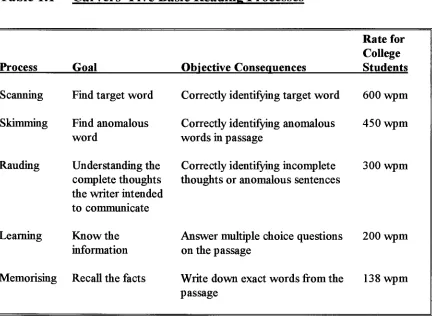
Objective Consequences
Correctly identifying target word
Correctly identifying anomalous words in passage
Correctly identifying incomplete thoughts or anomalous sentences
Answer multiple choice questions on the passage
Write down exact words from the passage Rate for College Students 600 wpm 450 wpm 300 wpm 200 wpm 138 wpm Process Scanning Skimming Rauding Learning Memorising Goal
Find target word
Find anomalous word
Understanding the complete thoughts the writer intended to communicate
Know the information
Recall the facts
Carver (1990a) distinguished five basic reading processes which are tabulated below. This study is however principally concerned with normal everyday reading for meaning; which corresponds to the reading process Carver calls rauding.
Table 1.1 Carvers' Five Basic Reading Processes
Wpm = standard words, ie., six character spaces per minute.
acceptable nonsense words and by rearranging the words within two clauses to produce non-meaningful phrases. The children were told underlining might help answer the questions about each story, ie., the underlining was possibly seen as a means to an end, rather than an end in itself. Moreover, the children were not told to expect nonsense words. Only a quarter of the nonsense words were underlined by good fourth grade readers and even fewer by the poor fourth grade readers. In contrast, Baker (1984b) as one part of an experiment asked 54 fourth graders to underline anything they thought was a problem in the passages they were reading. Half of the children were told the exact nature of the problems and given two examples of each type. The better fourth grade readers, underlined 71% of nonsense words if given specific instruction, and only 33% if not, while poorer fourth grade readers underlined 38% of nonsense words if given specific instruction and 42% if not. Whilst generally in Baker's study, more nonsense words were underlined than in Paris and Myer's study, nearly three times more were underlined by the good readers given specific instruction to look out for them in Baker's study than by good readers of similar age in Paris and Myer's study. The important point is that knowing clearly what was expected of them may well have enhanced the children's performance.
inconsistencies did so significantly more often than those set to fmd falsehoods and vice versa. It appears therefore, that children can adjust their standard of evaluation of text read to them. It is also clear, given the low rate of detection of comprehension failure of under 50% in this study as well as in the earlier studies, that even given specc instruction and practice in the detection of one error type, children of primary age clearly fmd detecting errors very difficult.
As students' performance can be altered by altering their knowledge of the purpose of the reading they were being asked to carry out, then closely allied to this is the readers interest or motivation to perform optimally. Lunzer and Gardner (1979) report a study by Shnayer (1969). He took a group of about 500 11 to 13 year olds and on the basis of their performance on a test of reading comprehension, split them into seven ability groups. He then gave each subject a number of comprehension tests on passages which had been assessed as being two grade-levels, above the child's own reading age. The children were also asked to rate the interest level of the passages. One important fmding of this study was that there was (with the exception of the lowest ability group), no significant differences between the groups in comprehension of stories rated as high interest. Unfortunately, unambiguous interpretation of this result is not possible as children may prefer a passage they have understood well to one they understood less well.
later, the child received from a second experimenter, a set of six passages: three corresponding to the child's three highest rated topics and three corresponding to the child's lowest rated topics. All of the passages came from the Brittanica Junior Encyclopaedia and were in cloze format with every fifth word missing. The child's task was to read the passage and supply as many of the missing words as possible. In the three studies of fifth and sixth grade children, there was a greater desire to read passages on highly rated topics. The children's comprehension was superior on high-interest passages. In two of the studies, boys' performance was facilitated more than girls' performance by high-interest material. This result would suggest there is an interaction between a reader's interest and their comprehension of the text.
iii) Standards of comprehension
Comprehension of text may not be a unitary construct. Collins and Smith (1982) identified four different types of failure to comprehend a text.
1. Failure to understand a word either because it is new or doesn't make sense in the context.
2. Failure to understand a sentence, either because one can fmd no interpretation, or can only fmd a vague interpretation or there are several possible interpretations.
3. Failure to understand how one sentence relates to another either because the interpretation of one sentence conflicts with another, or one can fmd no connection between sentences or that there are several possible connections between the sentences.
certain episodes occurred, or one cannot understand the motivations of certain characters.
Baker (1985a) argued that there are three standards that readers use to evaluate their understanding of the text: lexical, syntactic and semantic. The lexical standard operates at the level of an individual word where context can be ignored, for example, realising the meaning of a word is unknown to the reader. The syntactic standard judges conformity to the grammatical constraints of a language, for example, realising the order of words in a sentence is jumbled. The semantic standard requires that the passage is continuous and is unambiguous and complete.
Barrett (quoted in Clymer 1972) devised a five category taxonomy of reading comprehension:
a) literal comprehension b) reorganisation
c) inferential comprehension d) evaluation
e) appreciation
later reduced to 4 categories by the elimination of b) reorganisation (Smith and Barrett 1974).
These are only three of numerous classification systems In that they all segment reading comprehension into categories they have implications for the measurement of comprehension. Many tests of comprehension do not make any distinction between categories of comprehension. For example, a frequently used individual measure of reading comprehension is the Neale Analysis of Reading Ability. Both in its second edition (Neale 1966) and new revised edition (Neale 1989) it does not differentiate between categories of comprehension. Though used by Yuill and Oakhill (1991) as a measure of inferential comprehension, it also contains questions which deal only with surface features of the text. For example, in one story about a surprise parcel which arrived one Saturday, one of eight questions on that story asks on what day the parcel was delivered. As no day other than Saturday is mentioned, purely lexical monitoring would have enabled this question to be correctly answered. In contrast, another question asked how the reader knew the recipients were not expecting the parcel. This requires them to infer that as it was a surprise, they had no prior knowledge of its arrival. Most measures of comprehension used with primary and young secondary pupils are of this mixed variety giving a global measure of the reader's lexical, syntactic and semantic understanding of the prose. The evaluative and appreciative elements whilst by no means being absent from the primary curriculum, are notable by their absence from normative measures of reading comprehension for this age range.
overemphasise word pronunciation at the expense of passage comprehension (Frederiksen 1979, Goodman and Goodman 1979, HMI 1989).
This idea of reading each word with little or no reference to what has gone before, or comes after, as a reason for poor comprehension is not new. In 1908, Huey in his Psychology and Pedagogy of Reading wrote 'until the insidious thought of reading as word-pronouncing is well worked out of our heads, it is well to place the emphasis strongly where it really belongs, on reading as thought-getting independently of expression.' (page 350). Thorndike (1917) also noted 'The vice of the poor reader is to say the words to himself without actively making judgements concerning what they reveal.' Thorndike regarded reading as 'a very elaborate procedure, involving a weighing of each of many elements in a sentence, their organisation in the proper relations one to another, the selection of certain of their connotations and the rejection of others, and the co-operation of many forces to determine fmal response. In fact, we shall find that the act of answering simple questions about a simple paragraph includes all the features characteristic of typical reasonings.' (Thorndike 1917 p323)
The possibility that some children experience poor comprehension because they read each word with little or no reference to the rest of the text continues to be advanced (Baker 1985a, Cromer 1970, Garner 1981, Isakson and Miller 1976, Paris and Myers 1981). The most direct evidence of children reading word by word is provided by Baker (1984b).
problematic sections as they went along. The subjects had previously been selected as better or less good readers on the basis of their reading scores on the California Achievement Test. Half the children were only given general instructions while half were given specific instructions and two examples of each type of problem.
Better readers identified more problems than less good readers and eleven year olds also identified more problems than nine year olds. Children receiving specific instructions about the problems identified more than those children only given general instructions. More nonsense words than either prior knowledge violations or internal consistencies were identified. Thirty five percent of nine year olds and seventeen percent of eleven year olds identified only nonsense words. This latter result suggested that one in three nine year olds in this study were only applying a lexical standard of comprehension. However the younger children missed about 50 per cent of the nonsense words and in her commentary on this experiment Baker (1985a) speculated that these children may have been applying a decodability standard i.e. accepting any word they could sound out as being non-problematic.
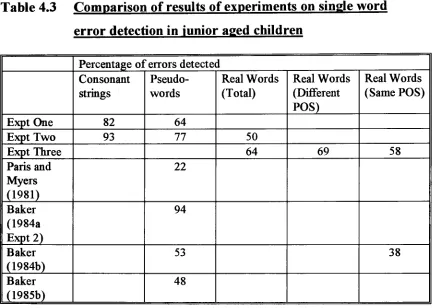
relatively few nonsense words. For example 11 year olds in her 1984a study identified 94 percent of nonsense words as compared to 60 percent in her 1984b study. It may be the passages used by Baker (1984b) were too hard for many of her subjects. However the detection of nonsense words which can be achieved through the application of a lexical standard is likely to be less strongly influenced by giving students too hard passages than the detection of real word substitutions which would involve the use of the surrounding context. If fewer real word substitutions whose identification requires the application of a semantic standard are detected than nonsense words and giving children harder versions of passages decreases their detection rate for real word errors more than nonsense words then a possible alternative explanation for the large number of students whom Baker (1984b) found to be only employing a lexical standard of comprehension would be that the passages were too hard. The fourth set of experiments in this study will investigate the effect of changes in passage readability on the detection of different classes of substitution.
iv) Prior knowledge
One factor in the absence of the appreciative category from normative measures of reading comprehension for primary age pupils may be that while most categorisations of reading comprehension acknowledge the role of prior knowledge, this is much more evidently a factor when one is contrasting two stories or putting them within a social or literary context.
flesh out this scene to convey much more than the few lines actually say. We can guess that it is an Italian restaurant at which he is known, that he's probably sitting at the table and ordering pasta and something of significance is about to pass between Spillane and the restaurant's owner.
high knowledge did not recall more, or summarise better than students with low reading ability and high knowledge.
Theories of Comprehension
i) Introduction
A number of factors have been identified as influencing comprehension. A problem is that these factors may interact in a complex way. For example, on encountering what Armbruster (1984) refers to as inconsiderate text a reader may lose interest and fail to persevere or alternatively may shift down to a slower reading rate involving rereading and so preserve comprehension. This latter strategy is likely to be more successful in the presence of prior knowledge of the subject matter of the text. This does not imply a strength in one area will necessarily by itself enhance comprehension, nor that a weakness in one aspect of reading will necessarily result in a weakness in comprehension. For example Yuill and Oakhill (1991) gave case studies of children who read accurately but who were able to answer fewer questions correctly than other children who read the same passage haltingly and made more mistakes.
No unified theory of reading comprehension which takes into account all the factors identified above has been developed. However one approach to reading that emphasising metacognition (e.g. Garner 1987) has features which may make its use productive.
cognition about anything pertaining to memory (e.g. that certain kinds of information are harder to learn and remember than others)'.
Research by Flavell, Friedricks and Hoyt (1970) on developmental changes in the memorisation process indicated that only older children of 7 and 9 years of age used a specific strategy over time. Older children were also far better than younger children of 4 and 6 at estimating their own memory span in advance and also at assessing their recall readiness after attempting memorisation.
Flavell and Wellman (1977) constructed a model of what a person might come to know, or know how to fmd out concerning memory in the course of cognitive growth and learning experience. They identified two categories of metamemory:
1. Sensitivity to the need for effort to prepare for future retrieval.
2. Knowledge of what variables interact to affect how well an individual will perform on a particular retrieval problem.
Their model also proposed three classes of variable within the latter category of metamemory: person, task and strategy:
i) Person what the person is like as a rememberer. ii) Task what the memory problem is like.
iii) Strategy what behaviour is engaged in to remember.
Wellman (1977) were used by Myers and Paris (1978) to investigate children's metacognitive knowledge about reading.
Myers and Paris interviewed children in the second and sixth grade on their metacognitive knowledge about reading. Person, task and strategy knowledge was assessed. Compared to the sixth grade readers, the younger readers did not know:
a) readers have special skills
b) motivation is linked to reading performance c) reading silently is faster than reading aloud
d) the first and last sentences of a paragraph are particularly important
e) retelling a story is more efficiently done by conveying the gist than by verbatim recall
f) skimming is reading the words that yield most information
g) rereading is an important strategy for resolving comprehension failure.
The skills of selecting and monitoring the reading process are a subset of those skills identified by Brown (1978) as skills used in controlling and co-ordinating deliberate attempts to solve problems. These include:
1. predicting the system's capacity limitations
2. being aware of available strategies and their usefulness 3. defining the problem
4. planning appropriate problem solving strategies 5. monitoring the effectiveness of those strategies
6. evaluating operations in the face of success or failure.
Brown suggests these skills are the basic characteristics of thinking efficiently in a wide range of learning situations. A metacognitive approach to reading would regard it as an active thinking or problem solving process.
In addition to providing a framework for examining reading as a problem solving activity, the metacognitive approach to reading has utilised as its dominant research technique error detection. Error detection differs from other measures of comprehension such as doze, sentence completion, short questions or multiple choice in which the element where meaning is lost or needs to be constructed is identified for the reader. Error detection, which requires the reader to identify loss of comprehension may offer a more satisfactory measure of the reader's habitual standard of comprehension when reading material such as newspapers, magazines or stories. That is error detection may offer a method of assessing comprehension of reading material as it is used outside of academic situations, e.g., in everyday life.
embedded errors'. They did however, also identify 12 possible alternative explanations other than that the reader's comprehension monitoring abilities are poor. These were:
1. The reader's lack of relevant background knowledge may cause him to overlook the error.
2. Readers may suspend disbelief because they have read so much that is unbelievable.
3. Older readers may have an overriding faith that speakers and writers intend their messages to be truthful, relevant and unambiguous.
4. The readers may not believe that texts can, and do contain errors.
5. Readers may make inferences that seem to resolve the errors and discrepancies.
6. Young children may not recall inconsistent information presented earlier. 7. Subjects may lack the logical capacity to make the necessary inferences. 8. Subjects may be hesitant to criticise the experimenter in a test situation. 9. Subjects may draw upon prior knowledge to supplement explicitly
presented information.
10. Subjects may assign alternative meanings to the text.
11. Subjects may assume the writer has made a mistake and ignore it.
12. Subjects may notice the error but assume that subsequent information will resolve the problem.
to the class of errors. The influence of readability on different standards of comprehension will also be investigated.
The particular standard of comprehension of interest to this study is the semantic standard, ie., judgements as to the internal and external consistency of the text. This can only be judged in relation to the text as a whole, ie., it involves intersentential judgements. It is difficult to conceive of an efficient system for making these which does not rely on the construction or use of an overarching framework. For example, a sequence of separate judgements only as to the consistency of adjacent sentences would fail to detect the inconsistency in the short story:
Jack was all alone on the hill. He had gone up the hill to fetch a pail of water. Some water slopped out of the pail. Jill slipped on the water and fell against Jack.
distinguish whether they had heard a sentence in the story or a semantically identical one. Subjects warned about having a memory test had no trouble with making these distinctions which suggests that their text representations were similar to the text structure.
ii) Yuill and Oakhill (1991)
A recent mental model theory of reading comprehension based on experimental work carried out in schools in England is that of Yuill and Oakhill (1991). They advanced a model of reading comprehension which involved the reader building 'a mental model of the situation described in a text' (p13) by recognising individual words, understanding the grammatical and semantic relations between the words, integrating the ideas in the text and making inferences to aid this integration as they go along.
Yuill and Oakhill (1991) were particularly interested in children who were fluent readers but showed little evidence of understanding what they read.
The Neale Analysis also differs from a similar test the New MacMillan Reading Analysis (Vincent and de la Mare 1985) in that after reading the passage, it is unavailable for inspection when questions are asked on the passage. The reader is alerted to the need to remember the story at the start of the test. It would follow that one would expect the good comprehenders on this test to do well on tasks involving working memory. This was found in an experiment in which children had to recall the final digits of each set of three numbers making up lists of variable length with each set of three numbers being presented one at a time. Less predictable was the finding of no difference between the more and less skilled comprehenders on measures of short term memory.
Yuill and Oakhill (1991) carried out a replication of Isakson and Miller's (1976) experiment in which children read sentences which were either:
i) meaningful, e.g., The old farmer planted the bean seeds in the rich, brown soil.
ii) semantically anomalous, e.g., The old farmer paid the bean seeds in the rich, brown soil.
iii) syntactically and semantically anomalous, e.g., The old farmer went the bean seeds in the rich, brown soil.
Yuill and Oakhill however, did find that whilst skilled comprehenders did not have better verbatim recall than less skilled comprehenders, they were able to recall the gist of sentences better. In general, they also found little difference between more skilled and less skilled comprehenders in their overall comprehension of sentences of varying grammatical complexity. The exception to this was that more skilled comprehenders appeared to better understand sentences containing pronouns.
Yuill and Oakhill found more skilled comprehenders were better at resolving to whom a pronoun referred in a sentence than less skilled comprehenders. Skilled comprehenders were also better at filling in a missing pronoun in a sentence as well as judging whether a statement based on the story which required the addition of the appropriate pronoun was true or not. Pronouns are only one type of cohesive device used in text. Yuill and Oakhill examined readers' comprehension of other anaphoric expressions in establishing text cohesion using a 700 word story read individually to 16 children in each reading comprehension group. The skilled comprehenders were better at identifying the meanings of the anaphors.
literal or inferential questions on passages they had just read and could or could not refer to, it was only on the inferential questions that the skilled comprehenders outperformed the less skilled comprehenders when the passage was present. Yuill and Oakill considered this was consistent with skilled comprehenders being 'more likely to use relevant general knowledge to make sense of information that is only implicit in a text' (p73).
Yuill and Oakhill also investigated children's ability to read stories of the type:
Paul has fifty pence to spend at the fair.
1) If Paul didn't buy a hot dog, he could ride on the big wheel.
2) Paul didn't buy a hot dog.
3) Later, Paul was very happy.
4) Why was Paul very happy?
They found that poor comprehenders gave fewer correct answers than good comprehenders. This as it stands gives little additional information as to the features distinguishing comprehenders selected as better on the basis of correctly answering more questions on passages they read than less good comprehenders. Were the experimental passages to have been presented orally one could then have drawn some inferences as to the generality of the comprehension performance tapped by the Neale Analysis.
on cards making up the Picture Arrangement Test of the Wechsler Intelligence Scale for Children - Revised (Wechsler 1974) than less skilled comprehenders.
They also found more skilled comprehenders were better at identifying inconsistencies in stories than less skilled comprehenders and that their ability to resolve ambiguities in stories was greater than less skilled comprehenders when the anomaly and its resolution were not adjacent.
In an exploratory study of riddles, Yuill and Oakhill found better comprehenders were better at retelling and explaining riddles than less good comprehenders. However, this finding has to be assessed in the light of the selection of good comprehenders being based on their ability to answer questions on a passage they had read but could not refer to. Moreover, explaining riddles may relate not just to the listener's comprehension of it but their ability to articulate this. Again, the good comprehenders had shown themselves capable of articulating more acceptable responses to the questions posed them from the Neale Analysis. Though in a follow up experiment they found a significant correlation between recall of riddles and comprehension on the Neale this does not negate the plausible alternative hypothesis that the correlation relates to a commonality between the retelling task and the measure of reading comprehension used.
Mary who is carrying a milk jug and a puddle of milk on the floor. Better comprehenders were able to more accurately recall stories in their original format, or with order disrupted whilst retaining referential continuity but there was no difference between the skill groups in recall of fully randomised stories. This result could be used to support the assertion that better comprehenders can use a mental model to assist in recall of text. Alternatively, it may reflect that the good comprehenders were selected on their ability to respond to questions on a short story just read but unavailable for reference.
Overall, however, the good comprehenders produced a more coherent story on recall than the less skilled comprehenders.
In summary, Yuill and Oakhill found that good comprehenders were better at recalling the gist of text, resolving pronominal reference and understanding cohesive devices in text. They were better able to draw inferences from text and identify the main point of a story. They were also better able to identify inconsistencies in stories and resolve ambiguities.
of the figures given in the summary table to tally. It is also of note that no significant difference was found between scores on a comprehension test administered 2 weeks after training and 6 months after training suggesting there was no carry over effect of training in this experiment.
Yuill and Oakhill found story titles describing the main consequences of a story prompted correct answering of comprehension questions more than titles listing the characters in the story. Single illustrations also assisted less skilled comprehenders in answering comprehension questions more than three separate pictures interspersed through the text, but had no significant effect for more skilled comprehenders. They also found training 9 and 10 year olds to use imagery when reading a story improved their performance on comprehension questions on the story. Poor comprehenders benefited more from the training than under control conditions. (See Appendix C for a review of other empirically evaluated interventions designed to improve reading comprehension.)
In conclusion, Yuill and Oakhill claimed their work demonstrated 'that comprehension problems are not necessarily due to difficulties in decoding words or accessing their meanings.' (p216). They claim that poor comprehenders who fall into this group have three main areas of weakness:
1. They are less likely than skilled comprehenders to integrate information from different parts of a text and make relevant inferences to help them integrate the text.
2. They have poor working memories.
They noted that their poor comprehenders appeared deficient in listening comprehension as well and that this may enable problems with comprehension of text to be idented earlier. They also suggest that training techniques could be adapted for listening comprehension tasks presumably with a view to improving the listener's ability to construct mental models; a skill which could then transfer to reading comprehension. In this, they follow Curtis (1980) who argued that 'Practice in comprehension independent of the demands of decoding has many practical as well as theoretical advantages. It would not only allow the child whose reading comprehension suffers because of inefficient word processing the opportunity to practise these skills at a level seldom reached during reading but it would also place the child in a situation where the probability of success at comprehending is much higher than in reading.' (p668).
iii) Carver's Rauding Theory
lexical comprehension monitoring which as it would not require the construction of a mental model should remain relatively unaffected by changes to a story's readability.
Carver (1977, 1987, 1990 a, b) in contrast quite explicitly predicts that spending more time reading and rereading a text will increase comprehension of that text. This position is based on Carver's (1990a) distinction between five different reading processes of scanning, skimming, rauding, learning and memorising.
The most powerful is the memorising process which is also the slowest as it involves rehearsal and repeat reading. The least powerful is the scanning process which is also the fastest and only involves the reader in looking for a target word. In moving up or down through these processes, one spends more or less time reading. Carver believes the rauding rate is the normal or typical reading rate for material at the reader's instructional reading level. However, when someone is given a passage which is hard for them to understand, they may shift down to a slower reading rate, consequently spending longer on the passage.
respectively. When individuals raud a text of difficulty DL, then Carver (1990b) has empirically derived a formula for predicting comprehension accuracy at the rauding rate for that passage (Ar).
Ar = 0.03951 (AL - DL) + 0.6446 (Equation 1.1)
Carver (1990a) gives an example where a new 3,000 sentence textbook with a DL of 5.8 grade equivalent units is being considered for a class of average AL = 7.6, Rr = 11.1 and RL = 7.1. Substituting into Equation 1.1 it can be estimated that typical students would comprehend 72% of it. However, if the group read the book twice, ie., spent twice as long on it then Carver (1990a) would predict from that rauding accuracy level that the typical student would now comprehend 84% of the book.
While Carver's Rauding Theory is precise at the level of predicting group comprehension product it is silent on the mechanisms by which this is achieved except in as much as he is clear that spending time reading and rereading a text will increase comprehension of that text.
Carver's (1987) third principle is the Practice Principle, which is that students 'ordinarily improve on any reading-related task simply by practising on that task' (p116). This would have to be taken into account in the interpretation of any experiment.
to a passage was unlikely to substantially facilitate comprehension of that passage during typical or normal reading, but that general prior knowledge as measured by reading and answering questions on many short passages does influence how much of a longer passage will be comprehended.
The Aims of this Thesis
This study will investigate comprehension of narrative prose in children aged between eight and ten using predominantly error detection tasks. Explanations of differences between children's reading comprehension in terms of the application of different standards of comprehension using Baker's (1985a) distinction between lexical, syntactic and semantic standards of comprehension will be investigated with particular reference to whether significant numbers of children exclusively use only lexical standards of comprehension. The influence of textual factors on the detection of different classes of errors will also be examined.
CHAPTER TWO
COMPREHENSION OF TEXT AT THE SINGLE WORD LEVEL
If one can assume a child reader is motivated to perform optimally, has sufficient prior knowledge of the subject matter in the text and is aware of the specific purpose of the reading task, then two factors that seem likely to influence the outcome are the standards against which he evaluates his comprehension of the text and the strategies he adopts to regulate his comprehension.
The simplest level at which comprehension can break down is at the single word level. The word might not be able to be decoded, might not be previously known or not make sense in the context in which it is found. On coming across such a word, the reader could:
1. Ignore it and read on
2. Suspend judgement and hope further information will be provided 3. Form a tentative hypothesis
4. Reread the sentence, looking for a revised interpretation 5. Reread the previous context
6. Go to an expert source, e.g., a dictionary
But before any of these strategies can be applied, the child has to notice there is a problem.
a story out loud. Each grade level had a different story, all of which were eight sentences in length. In each version of the story, two sentences had modified nouns, two sentences had modified verbs and four sentences were unmodified. The order of these modifications was rotated so the result was each story appeared in eight versions. The first grade children showed no significant disruption that was due to the appearance of a pseudoword in a sentence the children were reading. By grades two and three when a pseudoword appeared in the sentence, reading was disturbed and showed a higher proportion of errors on words surrounding the pseudowords. The pseudowords were decodeable.
nonsense words identified 58% of them, whilst those receiving general instructions identified 44%. Poorer readers from the fourth grade only underlined 38% of nonsense words after specific instruction, whilst the good readers given specific instruction managed to underline 71% of the nonsense words.
The fourth grade readers in the Paris and Myers (1981) and Baker (1984b) studies were failing to underline at least one in four nonsense words, even if they were good readers and were given specific instructions for what they were looking. One possibility is that rather than evaluating word understanding, the poorer readers in particular were evaluating decodability. Paris and Myers (1981) in a second experiment obtained some evidence to support this hypothesis. In this experiment, two groups, one of 14 good and one of 14 poor fourth grade readers were asked to read and study a story. They had the use of a dictionary and were able to ask questions. The passage they were asked to read contained several difficult vocabulary words. Six of the good readers looked up words in the dictionary and none of the poor readers did. The poor readers appeared more concerned with pronunciation than meaning and the four poor readers who asked about unknown words only wanted help in pronouncing them.
second grade children (mean age 7 years 9 months) would seek assistance from an external agency. The trend for second graders to respond 'sound out' and sixth graders to respond 'dictionary' was statistically significant. This is not unambiguous evidence of younger children perceiving the goal of reading as decoding. For example, younger children may well know more words by sound than by sight, so sounding out may be a route to deriving meaning. Nevertheless, Myers and Paris (1978) investigation of children's metacognitive knowledge about reading led them to conclude that 'In general, second graders focused on decoding goals rather than semantically related goals for reading ...'
A distinction should however be drawn between perceiving the goal of reading as being decoding and being sensitive to the rules of phonics. Adults are unlikely to perceive reading as only sounding out but they appear to be very sensitive to phonological legality. This was demonstrated in a study of proof-reading amongst Finnish undergraduates by Niemi and Virjamo (1986) in which the frequency and length of altered words were controlled. They found misprints were hardest to detect in words which retained the original visual shape, but that nearly all the words containing phonologically illegal letter strings were detected. Visual deformation contributed only marginally to the detection of misprints in phonologically illegal strings, though the hit rate was so high for these, there was little room for improvement.
words, e.g., consonant strings than decodable nonsense words. However, unknown words are only of significance when they contribute to the meaning of the passage of which they are part. This raises the question as to whether some presumably good readers read in such a way as to automatically infer the meanings of unknown words given significant clues in the text and ignore unknown unimportant words and any investigation of error detection would have to take this possibility into account.
EXPERIMENT ONE
Subjects
The subjects were all selected from Year Five of an urban junior school catering for predominantly working class families. There were 59 possible subjects in this year in three classes. The pupils' teachers were asked to rate them on a scale of one (poor) to ten (excellent) for reading ability, following the suggestion of Francis (1992) that teachers can identify from their own monitoring children's reading progress.
Using each class's own mean rated reading ability score, they were divided into boys in the upper and lower half and girls in the upper and lower half. A sample consisting of 24 pupils from the lower half of their class and 24 pupils from the upper half of their class in each case consisting of 12 boys and 12 girls made up the total sample of 48 pupils. The final sample ranged in age from 9 years 1 month, to 10 years 1 month, with a mean age of 9 years 7 months and a standard deviation of three months.
Materials
Two passages each of 100 words were written. They are reproduced in Appendix B. Both experimental passages were of similar difficulty, and were capable of being read by an average reader of between 71/4 and WA years of age. (For details of the calculation of the passages' readability please see Appendix A.)
other version, to consonant strings of four letters in length. Three of the words changed were important nouns or verbs, and three of the words changed were unimportant adjectives or adverbs. The important words were selected by a group of 3 educational psychologists from those nouns and verbs which occurred only once in the story and were central to the meaning of the story. The unimportant words were selected by the same group.
Procedure
Each subject was seen individually. The task was introduced by the experimenter saying, 'I would like your help. I have got two stories here which I would like to put in a book. I want to make sure the children reading them can understand them. Would you please read this story to yourself and underline any word you don't understand.' Each subject silently read both passages either one passage with decodable nonsense words as substitutions followed by the other passage with consonant strings as substitutions or vice versa. The order of presentation of the four possible sequences was randomised within each group of subjects. When the children fmished reading the decodable versions of the passages, they were asked to read from flashcards all the decodable words they had not underlined and they were also asked what these words meant.
Results
Table 2.1 Substitutions underlined by part of speech and type of substitutions
Part of speech substituted Type of substitution Decodable Nonsense
Word
Consonant String
Noun 44a 56
Verb 45 59
Adjective 45 60
Adverb 50 60
Total: 184 235
a out of a possible 72
The frequency of underlining of either important (noun or verb) or unimportant (adjective or adverb) substitutions was analysed for each passage by obtaining a score out of a possible three for each type of substitution for each subject and comparing the relative size of the scores using a Wilcoxon Matched-Pairs Signed-Ranks Test. In none of the passages in either decodable or consonant string form did the distribution of scores reach significance at the 0.05 level. Indeed, only in one passage was there a greater number of different scores between the two categories of substitutions than tied scores. Overall the consistency with which both important and less important substitutions within a given passage were underlined is compatible with the hypothesis that the children were reading for decodability rather than meaning. The relative importance of the substituted words will not be included in further analysis.
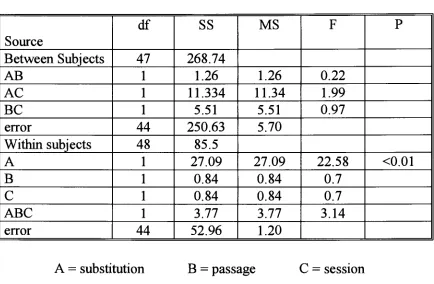
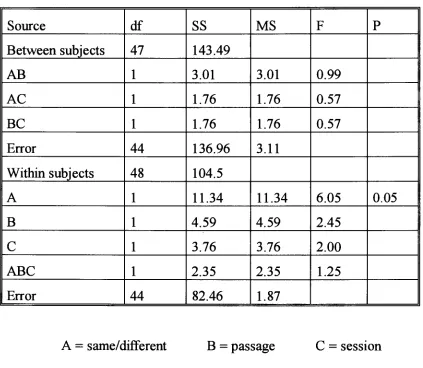
Table 2.2 Summary of Analysis of Variance for Experiment One
Source
df SS MS F P
Between Subjects 47 268.74
AB 1 1.26 1.26 0.22
AC 1 11.334 11.34 1.99
BC 1 5.51 5.51 0.97
error 44 250.63 5.70
Within subjects 48 85.5
A 1 27.09 27.09 22.58 <0.01
B 1 0.84 0.84 0.7
C 1 0.84 0.84 0.7
ABC 1 3.77 3.77 3.14
error 44 52.96 1.20
A = substitution B = passage C = session
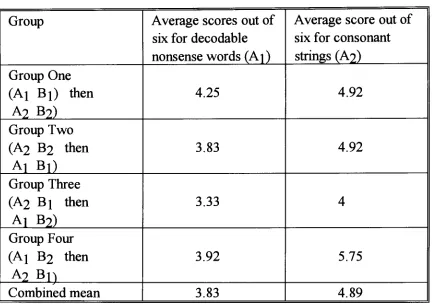
Table 2.3 Mean scores for each subject group
Group Average scores out of
six for decodable nonsense words (Al)
Average score out of six for consonant strings (A2) Group One
(A1 B1) then A2 B2)
4.25 4.92
Group Two (A2 B2 then
Al B1)
3.83 4.92
Group Three (A2 B1 then
Al B2)
3.33 4
Group Four (A1 B2 then
A2 Bo
3.92 5.75
Combined mean 3.83 4.89
B1 = Passage One B2 = Passage Two
these were reading fest as fast so the passage would read, 'Ben, talked fast
about this morning on the way home.' The other was believing sant was
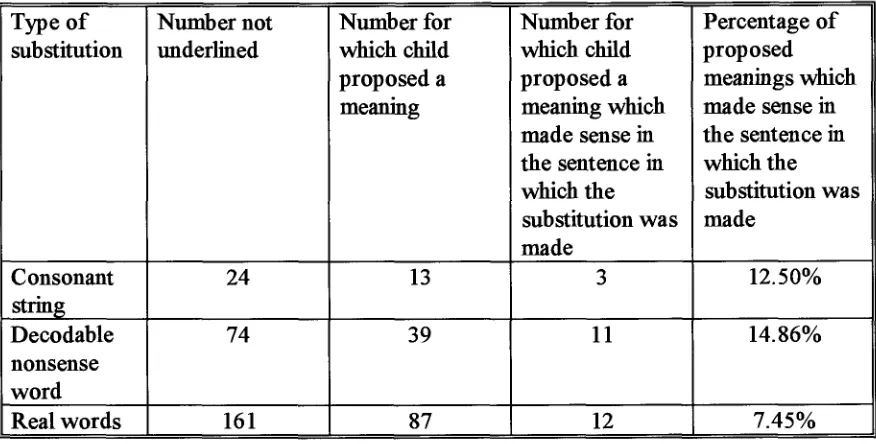
the name of somewhere, so the passage would read, 'he would go to sant.' The rest of the meanings given made no sense in the context of the passage. Clearly then, it is not because decodable words were given a plausible meaning within the context of the passage that fewer of them were underlined.
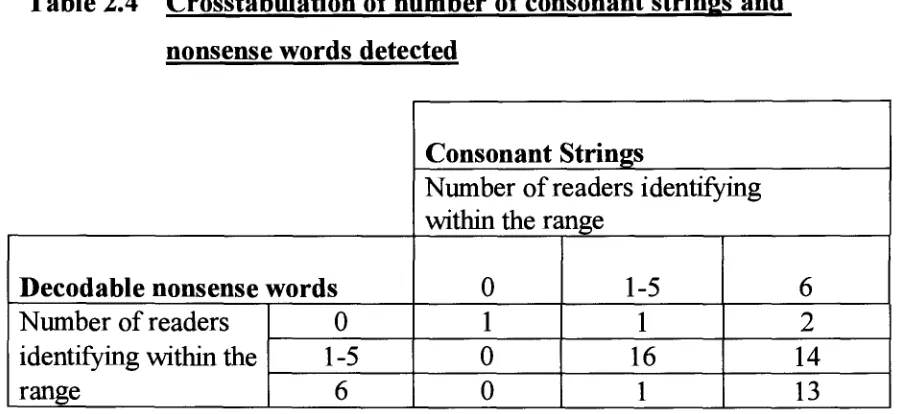
Table 2.4 Crosstabulation of number of consonant strings and nonsense words detected
Consonant Strings
Number of readers identifying within the range
Decodable nonsense words 0 1-5 6
Number of readers identifying within the range
0 1 1 2
1-5 0 16 14
6 0 1 13
If the results are examined at the level of individual readers, most readers detected more consonant strings than decodable nonsense words. However, only two children identified all the consonant strings and none of the decodable words. So only two children are likely to see the goal of reading as just being able to sound out words.
This was investigated by comparing within each class the rating given each child for their reading ability to their overall detection of substitutions. Because the numbers in some classes were small, because the rating was subjective and because correlations are only as good as the underlying data and are sensitive to discrepancies a categoric comparison was adopted. The results are presented in Table 2.5. Five children were omitted as they lay exactly on a median point.
Table 2.5 Crosstabulation of teacher rating with overall score summed across the classes
Substitutions Detected
Below Median Above Median
Rating Below Median 14 7
Above Median 7 15
Two thirds of the children lie in the quadrant one would predict from the teacher rating. Those children rated better readers by teachers are more likely to do better on the error detection task used in this experiment
Discussion
Taken overall, the results of this experiment were consistent with young readers sometimes accepting decodability as a sufficient criterion for judging they understood a word rather than as a necessary, but not sufficient criterion. The prediction that followed from this that children would underline more undecodable consonant strings than decodable nonsense words when asked to underline words they didn't understand, was supported by the results. Additionally, there was no evidence that the children were failing to underline the decodable nonsense words because they were investing them with plausible meanings. Moreover, the frequency of detection of substitutions within any passage did not seem to be dependent on the importance they had for understanding the meaning of the passage. This combined with the low rate of detecting consonant strings with roughly one in five going undetected, does not instil confidence that overall, the readers were good at monitoring their comprehension of the passage at the single word level.
There was at least one potential source of error in this experiment for which it is difficult to formulate a solution. This was the confounding of relative importance with part of speech: the important words for which substitutions were made were verbs and nouns while the unimportant substitutions were adjectives and adverbs. It may well be this is intrinsic to language, except where the adjectives or adverbs differentiate between nouns or verbs.
over the visual similarity of the decodable nonsense words and the consonant strings could have been much improved. In this experiment, it was controlled by having all substitutions four letters in length, e.g., colk and rmng. However, if it is indeed just being decodable that is important, then three of the letters can be held constant and a vowel substituted for the fourth, e.g., colk and crlk so maintaining a much greater visual similarity between them.
CHAPTER THREE
READING AS A PIECEMEAL PROCESS
In Chapter Two, the idea that some children used decodability as the criterion against which they measured their comprehension of text was explored. This however, may just be one aspect of a way of reading which involves serial processing of text with each word being read in turn on a word-by-word basis, but not congealing to form the total meaning the writer of the text intended to convey.
to them as meaningful phrases. Cromer interpreted this result combined with this group's comprehension not being disrupted by the single word or fragmented mode of presentation compared with sentences as demonstrating that these poor comprehenders typically read word-by-word.
Superficially, there appears to be a discrepancy between the findings of Garner (1981) of fifth and sixth grade students readily identifying difficult vocabulary in passages and the study by Paris and Myers (1981) discussed in Chapter Two in which fourth graders found considerable difficulty in identifying decodable nonsense words in passages. A possible explanation is that the nonsense words were short, e.g., kales, while the difficult words were long e.g., multifarious. Baker (1985b) as reported in Garner (1987) investigated this by asking third and fifth grade students to read a series of short paragraphs. Each child read eight paragraphs with one-syllable nonsense words inserted and eight paragraphs with three-syllable nonsense words inserted. The detection rate for one-syllable nonsense words was 38% while for three-syllable nonsense words it was 58%. The results suggest that longer words are more readily identified and if comparisons are to be made between rates of identcation of different types of nonsense words, then their length should be held constant.
coinage. From the results, it seems clear that the good comprehenders rated the altered passages harder to understand, while poor comprehenders, though generally rating the passages harder to understand than the good comprehenders, made little distinction between altered and unaltered passages.
EXPERIMENT TWO
Sub'ects
The subjects were randomly selected from the three Year Four classes of an urban junior school so that each class contributed 9 boys and 9 girls. The sample of 27 boys and 27 girls ranged in age from 8 years 10 months to 9 years 10 months, with a mean age of 9 years 4 months and a standard deviation of 4 months.
Materials
Three passages each of 100 words, were written. The experimental passages were of similar difficulty and were capable of being read by an average reader of between 71/2 and 81/2 years of age. (For details of the calculation of the passages readability please see Appendix A.)
Each passage was modified so that the same six words were changed in one version to decodable nonsense words of four letters in length, in another version, to consonant strings of four letters in length and in a third version, to real but contextually inappropriate four letter words. In each version, three of the letters were held constant and only one was changed, e.g., dert
dcrt dart.
Procedure
Each subject was seen individually. The task was introduced by the experimenter saying, 'I would like your help. I have got some stories here which I would like to put in a book. I want to make sure the children reading them can understand them. Would you please read this story to yourself and underline any word that doesn't make sense in the story'.
Each subject was then presented in succession with all three passages so that each of the subjects was exposed to all three different types of substitution. The order of presentation and type of substitution was grouped into nine different sequences:
First Second Third Mean Age (Sd) Group 1 Al Bl A2 B2 A3 B3 9 yrs 2 mths (4 mths) Group 2 A3 B2 Al B3 A2 B1 9 yrs 5 mths (4 mths) Group 3 A2 B3 A3 B1 Al B2 9 yrs 3 mths (3 mths) Group 4 Al B2 A2 B3 A3 B1 9 yrs 6 mths (5 mths) Group 5 A3 B3 Al B1 A2 B2 9 yrs 6 mths (4 mths) Group 6 A2 B1 A3 B2 Al B3 9 yrs 4 mths (4 mths) Group 7 Al B3 A2 B1 A3 B2 9 yrs 6 mths (2 mths) Group 8 A3 B1 Al B2 A2 B3 9 yrs 4 mths (4 mths) Group 9 A2 B2 A3 B3 Al B1 9 yrs 2 mths (3 mths)
A: Type of substitution Al = nonsense words A2 = consonant strings
After reading each passage, each subject was asked to read from the passage any substitution they had not underlined and they were also asked what the word meant in the story they had just read.
Results
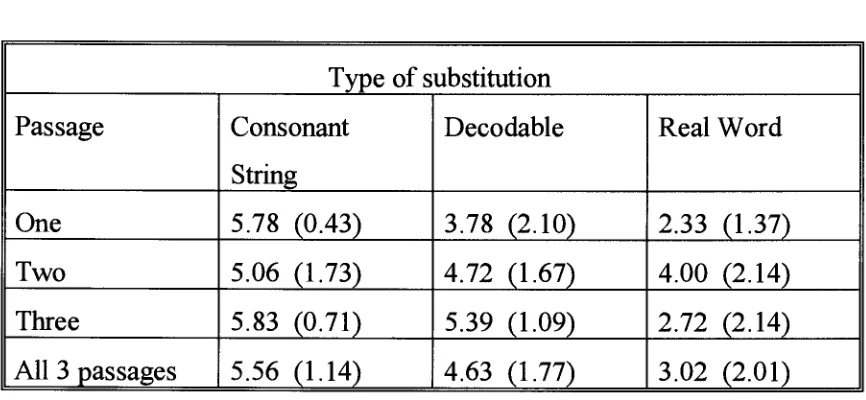
A preliminary breakdown of the substitutions underlined by passage and type of substitution is given in Table 3.1.
Table 3.1 Mean scores (and standard deviations) by passage and type of substitution
Type of substitution
Passage Consonant
String
Decodable Real Word
One 5.78 (0.43) 3.78 (2.10) 2.33 (1.37)
Two 5.06 (1.73) 4.72 (1.67) 4.00 (2.14)
Three 5.83 (0.71) 5.39 (1.09) 2.72 (2.14)
A113 passages 5.56 (1.14) 4.63 (1.77) 3.02 (2.01)
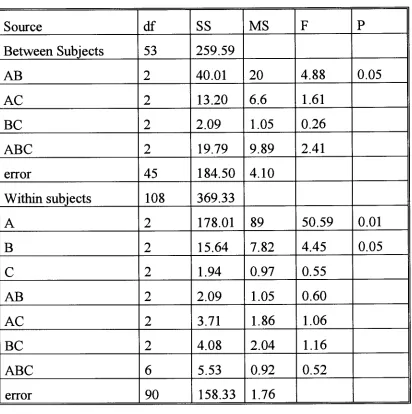
Further analysis using a Type V analysis of variance (Lindquist 1956) was conducted with three within subject factors: type of substitution, passage and session part. The results are summarised in Table 3.2.
Table 3.2 Summary of analysis of variance for Experiment Two
Source df SS MS F P
Between Subjects 53 259.59
AB 2 40.01 20 4.88 0.05
AC 2 13.20 6.6 1.61
BC 2 2.09 1.05 0.26
ABC 2 19.79 9.89 2.41
error 45 184.50 4.10
Within subjects 108 369.33
A 2 178.01 89 50.59 0.01
B 2 15.64 7.82 4.45 0.05
C 2 1.94 0.97 0.55
AB 2 2.09 1.05 0.60
AC 2 3.71 1.86 1.06
BC 2 4.08 2.04 1.16
ABC 6 5.53 0.92 0.52
error 90 158.33 1.76