ABSTRACT
ALDEN, KATHRYN RHODES. Predictors of Early Academic Success and Program
Completion Among Baccalaureate Nursing Students. (Under the direction of Duane Akroyd.)
The Nursing Undergraduate Retention and Success (NURS) Model (Jeffreys, 2004) was the theoretical framework for a study that examined the predictive value of selected cognitive (cumulative GPA, science GPA, science credits, previous degree, reading comprehension, math skill), noncognitive (stress), and demographic (age, ethnicity) student profile
Predictors of Early Academic Success and Program Completion Among Baccalaureate Nursing Students
by
Kathryn Rhodes Alden
A dissertation submitted to the Graduate Faculty of North Carolina State University
in partial fulfillment of the requirements for the Degree of
Doctor of Education
Adult and Community College Education
Raleigh, North Carolina 2008
APPROVED BY:
__________________________________ _____________________________ Susan Bracken, PhD Donna W. Bailey, RN, PhD
___________________________________ Theodore J. Branoff, PhD
________________________________ Duane Akroyd, PhD
DEDICATION
I dedicate this dissertation to my husband, Trip, who has provided constant love and support throughout our lives together and especially over the past ten years since I began doctoral study. I could never have done this without him.
This dissertation is also dedicated to the memory of my mother and father, Jack and
Geraldine Rhodes, who raised me to believe that all things are possible (Philippians 4:8 – “I can do all things through Christ who gives me strength.”). Although they were not privileged to attend college, they believed in the importance of education and sacrificed so that my brothers and I were able to attend. Dad loved N.C. State and would be especially proud of this project.
BIOGRAPHY
Kathryn Rhodes Alden is an experienced clinician and educator. A native of Brevard, North Carolina, she received a baccalaureate of science in nursing degree from the University of North Carolina at Charlotte and a master of science degree in nursing from the University of North Carolina at Chapel Hill. Her nursing career has focused on care of women, infants, and children with a specialization in human lactation. With over 20 years of experience as an educator and over 30 years as a professional nurse, Ms. Alden has taught in the undergraduate baccalaureate nursing programs at both the University of North Carolina at Charlotte and the University of North
Carolina at Chapel Hill. Currently, Ms. Alden is a Clinical Associate Professor in the School of Nursing at UNC Chapel Hill where she serves as the coordinator of the undergraduate
Maternal/Newborn Nursing course and as an academic counselor for undergraduate nursing students. In addition, she is a certified lactation consultant for Rex Health Care in Raleigh, North Carolina. She has written extensively for maternity textbooks and has conducted numerous workshops for students and professional nurses on breastfeeding and human lactation.
ACKNOWLEDGEMENTS
With sincere gratitude, I wish to acknowledge all those persons in my life who have walked with me throughout this process, providing encouragement, support, and assistance:
• My husband, Trip, for his encouragement, patience, assistance, and support
• My children, Allison, Amber, and Ashley, and my son-in-law, Matt, for
believing in me
• My grandchildren, Alden and Hudson, for bringing special joy to my life • Carol, for her friendship, prayers, support, and encouragement
• My Emmaus Reunion Group, especially Marsha, Jan, Betty, Mary, Barbara,
Jayne, and all the others who have prayed for me
• Faculty and staff at UNC Chapel Hill School of Nursing for their support and
assistance
• Dr. Akroyd for his guidance in completion of this dissertation project
• Dr. Bailey, Dr. Bracken, and Dr. Branoff for serving on my dissertation
committee
TABLE OF CONTENTS
LIST OF TABLES……….. vi
LIST OF FIGURES………. vii
LIST OF ABBREVIATIONS………. viii
INTRODUCTION………... 1
Statement of the Problem………... 5
Conceptual Framework……….. 14
Purpose of the Study……….. 18
Research Questions……… 18
Definition of Terms……… 20
LITERATURE REVIEW……… 24
Review of Retention Theories……… 24
Theoretical Frameworks of Nursing Studies……….. 30
Studies of Academic Success and Retention in Nursing Students………. 38
Studies of NCLEX-RN Success………. 39
Studies of Academic Success as Program Outcome……….. 50
METHODOLOGY………. 81
Design of the Study……… 81
Setting……… 81
Population and Sample……….. 82
Data Collection…..……….... 82
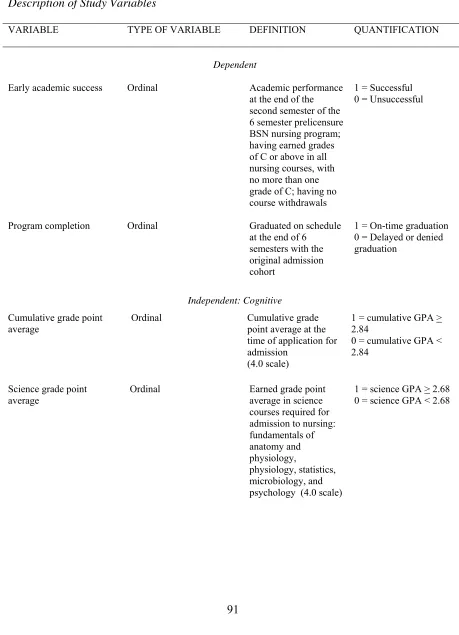
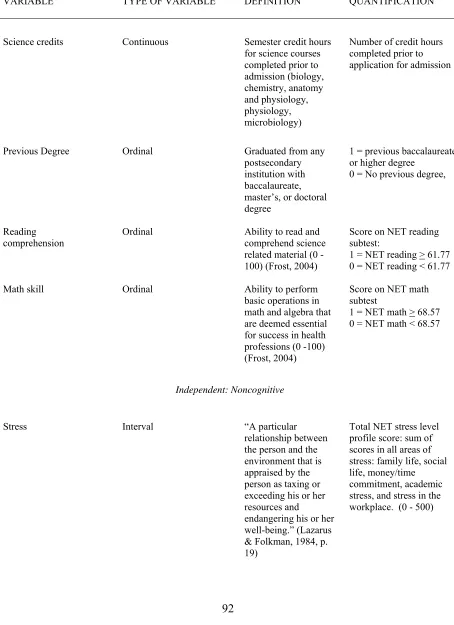
Study Variables……….. 83
Data Analysis………. 93
RESULTS……… 96
Description of Sample……… 96
Descriptive Statistics of Other Independent Variables……….. 99
Dependent Variables……….. 106
Results of Correlational Analysis………... 107
Results of Logistic Regression Analysis Predicting Early Academic Success….. 111
Results of Logistic Regression Analysis Predicting Program Completion……… 116
CONCLUSIONS………. 121
Dependent Variables……….. 121
Significant Independent Variables………. 124
Non-significant Independent Variables………..…... 140
Implications for Practice……… 152
Limitations of the Study………. 164
Recommendations for Future Research………. 165
REFERENCES……… 176
APPENDIX………. 196
UNC Chapel Hill School of Nursing Six Semester BSN Curriculum………….. 197
LIST OF TABLES
Table 1.1 On-Time Graduation Rates for the Prelicensure Six Semester BSN
Program at UNC-CH……….………... 13
Table 3.1 Description of Study Variables………... 91
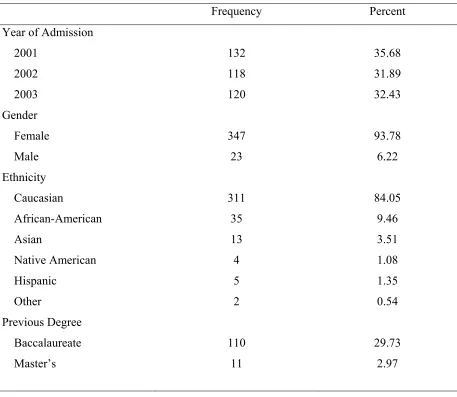
Table 4.1 Description of the Sample………..……….. 97
Table 4.2 Nurse Entrance Test: Reading, Math, and Stress Level Profile
Scores – Sample Means Compared with ERI Norms………..… 105 Table 4.3 Correlation Matrix of Study Variables……….….... 110 Table 4.4 Tolerance and Variance Inflation Factors for Independent
Variables………..…. 111 Table 4.5 Summary of Logistic Regression Analysis for Variables Predicting
Early Academic Success……….. 113
Table 4.6 Summary of Logistic Regression Analysis for Variables Predicting
Program Completion……… 117
LIST OF FIGURES
Figure 1.1 Model of Nursing Undergraduate Student Retention (NURS)…... 15
Figure 1.2 Conceptual Model A: Predictors of Early Academic Success…… 17
Figure 1.3 Conceptual Model B: Predictors of Program Completion….……. 17
Figure 4.1 Histogram of Age……….…... 99
Figure 4.2 Stem and Leaf Plot for Cumulative Grade Point Average…….…. 101
Figure 4.3 Stem and Leaf Plot for Science Grade Point Average….………... 101
Figure 4.4 Histogram of Science Credits……….………. 102
Figure 4.5 Histogram of NET Reading Scores……….………… 103
Figure 4.6 Histogram of NET Math Scores………. 104
Figure 4.7 Histogram of Total Stress Level Profile Scores………. 105
LIST OF ABBREVIATIONS AACN American Association of Colleges of Nursing BSN Baccalaureate of science in nursing
GPA Grade point average
NCLEX-RN National Council Licensure Examination for Registered Nurses
NET Nurse Entrance Test
NLN National League for Nursing
NURS Model Nursing Undergraduate Retention and Success Model
OR Odds ratio
RN Registered nurse
SD Standard deviation
URM Underrepresented minority
CHAPTER ONE INTRODUCTION
The academic success and retention of nursing students is gaining increased attention
as the nation braces for the most severe nursing shortage in history. The current nursing
shortage is forecast to reach crisis levels within the next 10-15 years when a large number of
nurses will be retiring from the profession. A recent report suggested that the demand for
nurses is increasing at the rate of 2-3% per year and subsequently, the nursing shortage could
reach 500,000 by 2025 (Buerhaus, Staiger, & Auerbach, 2008). The decline in the number of
working nurses combined with the aging population and increased demands for nursing care
are predicted to result in a nursing shortage of greater severity and longer duration than
previously experienced in the United States (Buerhaus et al., 2008; Goodin, 2003; Nevidjon
& Erickson, 2001).
The critical nature of the current and future nursing shortage in the United States
raises societal and institutional expectations of college and university nursing education
programs. Schools of nursing are expected to produce increasing numbers of graduates who
will soon begin work as professional nurses. According to the Health Resources and Services
Administration (HRSA), nursing programs in the United States must graduate approximately
90% more nurses to meet the projected growth in demand for registered nurses (HRSA,
2006). Although BSN programs reported a 7.4% increase in graduations in 2007, nursing
schools are falling far short of this goal (AACN, 2008).
While there is a need for greater numbers of registered nurses in general, there is a
baccalaureate nursing education programs are under considerable pressure to produce the
maximum number of graduates each year, and graduates are expected to pass the national
licensure exam (NCLEX-RN) so that they may enter practice as soon as possible. Students
are expected to complete the nursing program in the time frame dictated by their starting
semester and the curriculum sequence of the program. For example, those who enroll
full-time in a six semester nursing program are expected to complete course and clinical
requirements and graduate on schedule at the end of two years.
Unfortunately, every student who is admitted to a baccalaureate nursing education
program will not graduate, most often because of academic problems. For some students,
graduation may be delayed as the result of failing grades or withdrawal from nursing courses
and the subsequent need to repeat required courses. The need to change from full-time to
part-time study or temporarily dropping out of the program can prolong the time until
graduation. (Jeffreys, 2004)
Attrition (noncompletion) and delayed graduation of baccalaureate nursing students
are major concerns in contemporary times. Placement in nursing education programs is in
great demand. Over the past five years, the number of applicants to baccalaureate nursing
programs in the United States has increased dramatically (AACN, 2008). Applicants are
more qualified than ever before, with many students bringing impressive academic
credentials and a wealth of life and work experiences into the nursing education arena.
Unfortunately, enrollments in baccalaureate nursing programs have not increased
concomitantly with the steep rise in the number of applicants. Although the total enrollment
30,000 qualified applicants were turned away from entry-level baccalaureate nursing
programs in 2007. Enrollment is restricted by faculty shortages, financial constraints, and
limited availability of clinical sites and classroom space (AACN, 2008).
There is a critical need for more nurses to be prepared at the baccalaureate level. The
future of health care in the United States is largely dependent on nurses who are capable of
managing care along a continuum, working as members of interdisciplinary health care teams
with knowledge of community resources. Baccalaureate education, with its broad foundation
in the physical, behavioral, social and management sciences, prepares practitioners who are
capable of critical thinking, problem-solving, communicating and analyzing data. There is
evidence that BSN graduates bring unique skills to their practice as clinicians and play a vital
role in the delivery of competent and effective patient care. Patient outcomes are improved in
hospitals with higher proportions of baccalaureate nurses. Fewer medication errors and
procedural violations are committed by nurses who were educated in BSN programs (Aiken,
Clarke, Cheung, Sloane, & Silber, 2003). Baccalaureate graduates are more likely to assume
management and RN specialty positions within health care institutions. Nursing
administrators prefer to hire nurses with baccalaureate degrees, recognizing distinct
differences in competencies of nurses based on their education. (Goode, Pinkerton,
McCausland, Southard, Graham, & Krsek, 2001; National Council of State Boards of
Nursing, 2002)
The consequences and implications of nursing student attrition and delayed program
completion are far-reaching, beginning with the individual student and extending into society
experience financial and occupational loss. Psychological repercussions may be even more
devastating in terms of disappointment, decreased self-esteem, and sense of failure. In
addition, for the individual student, there is often personal shame and social stigma
associated with “dropping out” or extending the program of study (McSherry & Marland,
1999; Tinto, 1993; Yorke & Longden, 2004).
Attrition means loss of revenue to colleges and universities; students who leave the
program may receive some reimbursement of tuition costs, depending on when they
withdraw inside a semester. Because students are not routinely admitted to the nursing
program to replace those who leave, the institution is losing tuition dollars for the remainder
of the program. Attrition may directly affect institutional or state allocated funding and
financial support by alumni (Yorke & Longden, 2004).
Attrition also impacts students who desire to enroll in a nursing program. For every
student who does not complete the program, it means that another qualified student who was
denied admission could have had the slot and completed the program. Because of limitations
in enrollment capacities, delayed graduation can reduce the number of students who are
admitted into the next class.
Delayed graduation and attrition mean that there are fewer nurses entering practice.
This has implications for health care agencies who are seeking to hire staff as well as for the
public – the recipients of nursing care.
Concerns about attrition, delayed graduation, and the nursing shortage bring attention
to the need for examination of factors that are predictive of academic success and retention
noncognitive, and demographic factors influence the academic success and retention of
students in nursing education programs. Awareness and understanding of these factors can
inform admission policies and decisions and enable faculty to identify at-risk students early
in the program such that early and ongoing interventions can be implemented to promote
academic success and graduation. Such interventions have been shown to dramatically
increase student success and retention (Peter, 2005; Higgins, 2004; Tracey, 2003; Lockie &
Burke, 1999; Symes, Tart, & Travis, 2005). Early assessment and intervention can enhance
students’ chances of achieving success in the nursing education program, completing the
program on schedule, and going on to pass NCLEX-RN so that they may enter the nursing
workforce.
Statement of the Problem
The literature reflects that nursing researchers have been investigating nursing student
success and retention for the last three decades. However, there is an obvious paucity in the
number of studies appearing in nursing and higher education journals that have based their
findings within a theoretical framework (Aiken, Cervero, & Bailey, 2001; Campbell &
Dickson, 1996; Janes, 1997; Jeffreys, 1998, 2001, 2002, 2007; Lockie & Burke, 1999;
Manifold & Rambur; 2001; Shelton, 2003).
Only one well-defined model of nursing student retention is reported in the literature,
and this model is relatively new (Jeffreys, 2004). The Nursing Undergraduate Retention and
Success (NURS) Model developed by Marianne Jeffreys is described in her book, Nursing
Student Retention: Understanding the Process and Making a Difference (2004). The model is
authors. There are few studies reported in the literature since the publication of the NURS
model that were based on this new model (Horton, 2006; Jeffreys, 2007). The obvious lack of
research on this model supports the need for further testing and validation of nursing
retention using this theoretical framework.
Assorted dependent variables have been studied in various combinations by
researchers who have examined nursing student success and retention. The dependent
variables represent an array of time periods in the nursing education program, ranging from
first semester to graduation. Academic success has been operationalized in a variety of ways
such as grades in specific courses, overall GPA at the end of a particular semester or year in
the nursing curriculum, and cumulative GPA for all nursing courses.
The majority of studies on baccalaureate nursing student success have examined the
dependent variable of passing NCLEX-RN, the National Licensure Examination for
Registered Nurses (Abbott, Schwartz, Hercinger, Miller, & Foyt, 2008; Alexander & Brophy,
1997; Arathuzik & Aber, 1998; Barkley, Rhodes, & DuFour, 1998; Beeman & Waterhouse,
2001; Beeson & Kissling, 2001; Bondmass, Moonie, & Kowalski, 2008; Crow, Handley,
Morrison, & Shelton, 2004; Daley, Kirkpatrick, Frazier, Chung, & Moser, 2003; Hall, 1996;
Henriques, 2002; Giddens & Gloeckner, 2005; Lauchner, Newman, & Britt, 2005; Morris,
1999; Newman, Britt, & Lauchner, 2005; Nibert & Young, 2005; Nibert, Young &
Adamson, 2005; Seldomridge & Dibartolo, 2004; Waterhouse & Beeman, 2003; Waterhouse,
Bucher, & Beeman, 1994; Washington & Perkel, 1999; Waterhouse, Carroll, & Beeman,
It is important to note that fewer studies have examined early academic success as a
dependent variable in samples of baccalaureate students (Abdur-Rahman, Femea, & Gaines,
1994; Brennan, Best, & Small, 1996; Femea, Gaines, Braithwaite, & Abdur-Rahman, 1995;
Griffiths, Bevil, O’Connor, & Wieland, 1995; Newton, Smith & Moore, 2007; Newton,
Smith, Moore & Magnan, 2007; Potolosky, Cohen, & Taylor, 2003). This is a notable gap in
the literature because it is recognized that during the first year of study, attrition rates are
highest and early intervention is most critical to increase the likelihood of nursing student
success (Jeffreys, 2004; Ehrenfield, Rotenberg, Sharon, & Bergman, 1997). The first year of
the nursing program represents a period of adjustment and challenges for beginning students.
Nursing curricula are unique compared with most other types of educational programs.
Students must adjust to the rigors of courses that may include theoretical, as well as skills
laboratory and clinical components (Burris, 2001; Jeffreys, 2004). Early courses with a
strong science basis such as pathophysiology and pharmacology can be particularly
challenging for students. Additionally, it is during the first year of study that students are
enrolled in the initial clinical course. Numerous concerns and uncertainties surround the
clinical experience as students are placed in a “human lab” where variables are not easily
controlled and situations are unpredictable. Students can feel overwhelmed by the demands
of assuming responsibility for patient care and safety. Stress associated with the clinical
experience can impact academic performance. (Beck, Hackett, Srivastava, McKim, &
Rockwell, 1997; Cuthbertson, Lauder, Cleary, & Bradshaw, 2004; Hegge & Larson, 2008;
Kirkland, 1998; Lindop, 1999; Mahat, 1998; Steele, Lauder, Caperchione, & Anastasi, 2005;
of academic success during the first year of the program can enable faculty to identify those
at risk of poor performance. With early identification of at-risk students, interventions can be
designed and implemented to promote their success.
Relatively few researchers have identified nursing program completion or graduation
as a dependent variable. (Byrd, Garza, & Nieswiadomy, 1999; Carroll, 2001; Horton, 2006;
Jeffreys, 1998; Manifold & Rambur, 2001; Simmons & Haupt, 2003; Simmons, Haupt, &
Davis, 2004; Schafer, 2002; Symes, et al., 2005). As nursing education programs are
challenged to produce as many graduates as possible in an effort to reduce the nursing
shortage, it is critical that research is done to identify factors that predict program
completion. Students must complete the nursing program before they can take the national
licensure examination (NCLEX-RN) and enter nursing practice. Factors that predict program
completion need to be identified as early as possible in the curriculum, even at the time of
entry. Students at risk for attrition or delayed completion can then be identified so that
appropriate interventions can be implemented to increase the likelihood of completing the
program and doing so on time.
A wide range of cognitive, noncognitive, and demographic student characteristics
have been examined in relation to BSN nursing student success and retention. Variables have
been combined in a variety of predictor models and findings have been inconsistent. For
those studies that have included pre-admission variables, the most common were cognitive
factors such as cumulative grade point average, grades in science courses or other
prerequisite courses, and ACT or SAT scores. Few studies have examined the predictive
predicting student success among samples of baccalaureate nursing students (Abdur-Rahman
et al., 1994; Femea et al., 1995; Newton, Smith & Moore, 2007; Simmons & Haupt, 2003;
Simmons, Haupt, & Davis, 2004; Newton, Smith, Moore & Magnan, 2007).
While most studies have focused on cognitive variables, there are a limited number of
studies that have explored the influence of noncognitive student characteristics on student
success and retention. Stress appears to be the most common noncognitive factor that has
been studied in relation to nursing student retention and success, although the majority of
researchers have focused on levels of stress occurring during the nursing program, not at the
time of entry (Beck et al., 1997; Cuthbertson et al., 2004; Hegge & Larson, 2008; Lindop,
1999; Mahat, 1998; Steele et al., 2005; Timmins & Kaliszer, 2002). Few studies have
examined the impact of stress levels at the time of program entry on academic outcomes. In
most of those studies, the dependent variables were measures of academic performance at
program end (Abdur-Rahman et al., 1994; Sayles, Shelton, & Powell, 2003; Simmons &
Haupt, 2003; Simmons et al., 2004). The relationship between student stress at program entry
and academic performance during the first year of the program is unclear. Further research
needs to examine the predictive value of early stress levels on academic performance during
the first year of the program when attrition rates are highest. It is also important to examine
the relationship between student stress at the beginning of the program and its influence on
graduation. Individualized assistance and group programs can then be developed to assist
students to cope with stressors in their lives as they proceed in the nursing program.
Demographic characteristics of students have been included in various combinations
in general, have been found to be weak predictors. Age and ethnicity have been shown to be
the strongest demographic predictors of academic success and retention among nursing
students (Aber & Arathuzik, 1996; Beeson & Kissling, 2001; Campbell & Dickson, 1996;
Crow et al., 2004; Endres, 1997; Lewis & Lewis, 2000; Wong & Wong, 1999).
The role of demographics in predicting nursing student success needs to be
re-examined in light of the evolving profiles of contemporary nursing students (Wells, 2003).
Although success and retention of nursing students has been studied since the 1960’s, the
bulk of research was conducted in the late 1980’s and early 1990’s as schools were faced
with declining enrollments in the midst of a national nursing shortage (Campbell & Dickson,
1996). The nation is again facing a critical shortage in the nursing workforce, yet the
attributes and qualifications of those seeking to enter the profession are distinctly different
(AACN, 2008). Changing times warrant new research to re-examine the relationship between
student success and demographics such as age and ethnicity. Student demographics are
changing dramatically as ethnic and racial diversity are increasing among nursing students.
While it is critical that minority representation in the nursing workforce is increased, it is
recognized that retention rates are often lower for minorities (Childs, Jones, Nugent, & Cook,
2004; Barbee & Gibson, 2001; Bessent, 1997; Tucker-Allen & Long, 1999). Increasing
numbers of nontraditional students are enrolling in nursing education programs. Entering
students are often older; many are changing careers, bringing a variety of college and work
experiences along with more sophisticated expectations of their educational program. Many
students are employed part-time or full-time and raising families while attending nursing
evidence that nontraditional nursing students may be more serious about their studies and
demonstrate higher levels of academic performance, there is a concomitant concern about
increased risk of attrition due to personal and family obligations (Jeffreys, 2004; Wells,
2003)
The majority of research studies on nursing student success and retention have been
descriptive or correlational in design. There is a need for more predictive studies to be
conducted, using regression analysis to identify factors that are predictive of early student
success and retention. The results of predictive analyses can provide educators with
meaningful and useful information as they refine admission criteria to reflect the changing
profile of applicants to nursing programs, as they attempt to identify at-risk students, and as
they design programs to assist those who may be at risk of academic difficulty during the
nursing program. The pragmatic value of study findings can be enhanced using
benchmarking to create independent variables that clearly differentiate between students who
are most likely to succeed and those who are likely to experience negative outcomes. This
methodology has been reported by a minimal number of researchers who studied predictors
of nursing student success and retention (Bondmass, 2008).
Researchers have studied student success and retention in nursing programs with
varying enrollments and curricular designs, located in public and private institutions.
Convenience sampling is the norm, with samples most often confined to a single institution.
Because of the variations in philosophy, curriculum, and student profiles among individual
nursing programs, generalizability of research findings is limited. It is essential that
retention. In addition, it is important that increasing numbers of institutions conduct
investigations of student success and retention such that patterns and trends might be
recognized across similar institutions.
While the literature contains articles that describe programs designed to assist at-risk
students, there is little information related to selection criteria for student participation in
these programs (Higgins, 2004; Peter, 2005; Lockie & Burke, 1999; Symes et al., 2005;
Tracey, 2003). There is a need for research findings that identify the most appropriate criteria
for identifying at-risk students within and across BSN programs. Results of predictive studies
can provide evidence toward that end.
The University of North Carolina at Chapel Hill School of Nursing offers an
opportune setting to study student success and retention among a population of a
baccalaureate nursing students at a large public university. Consistent with national trends,
increasing numbers of applicants are seeking admission to the undergraduate nursing
program. This surge in applications creates workload issues for administrative personnel and
for faculty who serve on the Admissions Committee. Based on the number of applicants and
the changing characteristics and qualifications of applicants, in 2004, the committee initiated
a process of refining admission criteria to be more selective. To that end, a pilot study on
predictors of student success was conducted by an experienced researcher on the School of
Nursing faculty. Results of multiple regression analysis indicated that the best predictor of
student success in terms of cumulative GPA at program end was science GPA, based on
grades in required prerequisite science courses (Lynn, 2005). The study did not examine
of findings of this initial investigation and will provide the Admissions Committee with
further evidence to possibly refine admission criteria.
Retention of nursing students in the six semester pre-licensure BSN program at UNC
Chapel Hill is an ongoing concern for faculty and administrators. On-time graduation rates
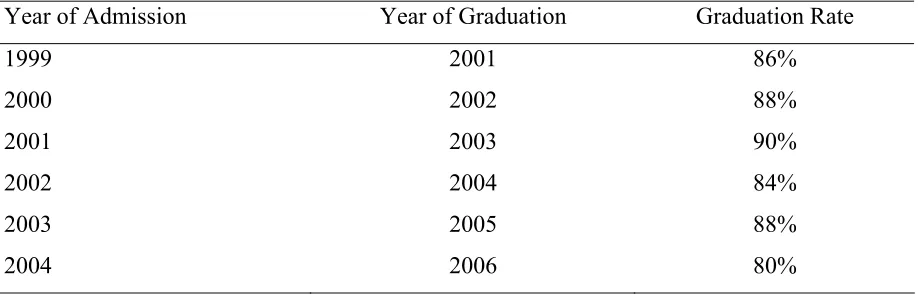
ranged from a low of 80% in 2006 to a high of 90% in 2003 (Cronenwett, 2006). Graduation
rates are displayed in Table 1.1.
As the national nursing shortage worsens, it is more important than ever that the
School of Nursing contributes the maximum number of new graduates each year to the
nursing workforce and that graduation rates increase and do not show further decline.
Toward that end, this study will help identify the unique cognitive, noncognitive, and
demographic factors that are predictive of early success and program completion among
students enrolled in the six semester prelicensure BSN program at UNC Chapel Hill.
Table 1.1
On-Time Graduation Rates for the Prelicensure Six Semester BSN Program at UNC-CH
Year of Admission Year of Graduation Graduation Rate
1999 2001 86%
2000 2002 88%
2001 2003 90%
2002 2004 84%
2003 2005 88%
2004 2006 80%
The results of the study will inform admission policies and decisions, providing data
The findings will provide faculty with information they can use to identify students who are
likely to encounter difficulty during the program and those who are at risk of delayed
graduation or attrition from the program. Early identification of at-risk students will enable
faculty to design and implement interventions to promote academic success and timely
graduation. The findings are also pertinent for other BSN programs as they determine the
student profile characteristics that are predictive of success and retention among their student
populations.
Conceptual Framework
Nursing student success and retention are complex, dynamic, multidimensional
phenomena influenced by the interaction of personal, academic, and environmental factors
(Jeffreys, 2004). Traditional retention models have attempted to explain the longitudinal
process that leads students to persist in educational programs until graduation (Astin, 1970,
1984, 1985; Bean, 1980; Bean & Eaton, 2000; Bean & Metzner, 1985; Cabrera, Nora, &
Castanada, 1992; Metzner & Bean, 1987; Pascarella, 1980, 1985; Spady, 1970; Tinto, 1975,
1987, 1993, 1998), and while these models have relevance to nursing education, it is most
pertinent to employ a nursing theory as the theoretical framework for this study. Therefore,
the conceptual framework for this study is based on the Nursing Undergraduate Student
Retention (NURS) model developed by Marianne Jeffreys (2004). The NURS model, with its
foundation in traditional retention theories, presents an organizing framework to examine the
multidimensional factors that affect the retention of undergraduate nursing students (See
Figure 1.1: Model of Nursing Undergraduate Student Retention (NURS)
________________________________________________________________________ From Nursing Student Retention: Understanding the Process and Making a Difference. M.R. Jeffreys, 2004,
p.6. Copyright 2004 by Springer Publishing, LLC, New York, New York 10036. Used with permission of publisher.
profile characteristics, student affective factors, academic factors, environmental factors,
professional integration factors, academic outcomes, psychological outcomes, and outside
surrounding factors (Jeffreys, 2004).
While many models of student retention emphasize the role of social integration in
professional integration factors. Within the context of professional socialization and career
development, the professional integration factors enhance students’ interaction with the
college environment and are instrumental in persistence and retention decisions (Jeffreys,
2004).
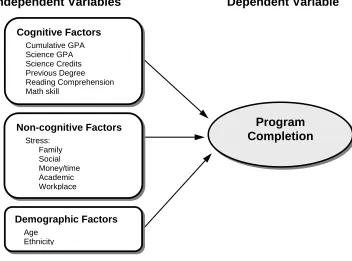
While it is not within the scope of this study to test the entire NURS model, the
conceptual models for this research study (Figure 1.2 and Figure 1.3) are based on Jeffreys’
model of Nursing Undergraduate Student Retention and illustrate the predictive relationship
of selected factors from the model that have been shown to have an effect on academic
success and retention. This study represents a unique combination of variables that have not
been studied as such by previous researchers.
Two dependent variables have been selected for this study. Because the dependent
variables represent two distinct points in time, there are two conceptual models. The
dependent variable in the first conceptual model for this study is early academic success,
categorized by Jeffreys (2004) as an “academic outcome”. The dependent variable for the
second model is program completion, labeled in Jeffreys’ model as “retention”. The
independent variables in the conceptual models are categorized for the purposes of this study
as cognitive, noncognitive, and demographic. The cognitive variables include cumulative
GPA, science GPA, number of science credits, previous degree, reading comprehension, and
math skill. These are consistent with Jeffreys’ category of “prior educational experience”
which is a subset of “student profile characteristics” at the beginning of the NURS model.
The single noncognitive independent variable in this research study is stress, which is
Independent Variables Dependent Variable
Early Academic Success Cognitive Factors Cumulative GPA Science GPA Science Credits Previous Degree Reading Comprehension Math skill Non-cognitive Factors Stress: Family Social Money/time Academic Workplace Demographic Factors Age Ethnicity
Figure 1.2 Conceptual model A - predictors of early academic success
Independent Variables Dependent Variable
Program Completion Cognitive Factors Cumulative GPA Science GPA Science Credits Previous Degree Reading Comprehension Math skill Non-cognitive Factors Stress: Family Social Money/time Academic Workplace Demographic Factors Age Ethnicity
conceptualized in this study, stress relates to five important areas of personal coping: family
life, social life, money/time commitments, academic stress, and stress in the workplace.
Demographic variables in the conceptual models are age and ethnicity, which are consistent
with “student profile characteristics” in the NURS model.
Purpose of the Study
The purpose of this study was to examine the predictive value of selected cognitive,
noncognitive, and demographic characteristics of prelicensure baccalaureate nursing students
on their early academic success and on-time program completion.
Research Questions
1. What is the predictive value of selected cognitive (cumulative GPA, science GPA, number
of science credits, previous degree, reading comprehension, math skill), noncognitive
(stress), and demographic (age, ethnicity) student profile characteristics on the early
academic success of students enrolled in a prelicensure baccalaureate nursing education
program?
2. What is the predictive value of selected cognitive (cumulative GPA, science GPA, number
of science credits, previous degree, reading comprehension, math skill), noncognitive
(stress), and demographic (age, ethnicity) student profile characteristics on BSN program
completion?
Significance of the Study
The results of this research study will provide a broader understanding of student
be most pertinent and significant for the baccalaureate nursing education program that is the
setting for the study, there are also important personal, institutional, and societal
implications. Those who are likely to benefit from the study include students, faculty,
administrators, future employers, and the public who will become the recipients of nursing
care.
The study findings should be of particular interest to the faculty at the UNC Chapel
Hill School of Nursing. Faculty who are serving on the Admissions Committee will benefit
from the findings of this study in terms of identifying student attributes that are predictive of
success and retention in the nursing program. Admission policies can be evaluated and
revised as needed to incorporate student characteristics that are associated with success and
timely graduation.
Through the identification of factors that are predictive of early student success and
program completion, it is possible to determine which students may be at risk of academic
difficulty in the first two semesters of the nursing program and those who may be at risk of
delayed graduation or attrition. Because these factors are known either on admission or
within the first few days of the nursing program, at-risk students can be identified early. They
can be counseled and supported to promote academic success and to increase the likelihood
that they will graduate at the end of six semesters with their admitting class.
It is important to determine if the same student profile characteristics that predict
early academic success are also predictive of program completion. Findings of the study have
The findings of the study will provide administrators with a greater understanding of
variables that are associated with academic success and retention in the nursing program.
This information can be utilized in evaluating and revising the nursing curriculum and
educational practices to more effectively meet student needs.
Although the investigation is confined to the nursing program of a large public
university and the findings are institution-specific, other nursing programs with similar
characteristics may find the results to be useful. Factors that are identified as indicative of
academic success and program completion are likely to be similar and applicable in other
similar baccalaureate programs. Additionally, the findings of this study may prompt other
nursing programs to examine the factors that are predictive of academic success and program
completion. As more studies are conducted across other university baccalaureate programs,
findings can be compared and possible trends identified. This may result in sharing of ideas
and strategies to enhance student success in nursing education programs.
There is significance of the study for potential employers, and to the public, in
general, related to concerns about the nursing shortage and nursing competence. Students
who are at risk of having academic difficulty can be identified and counseled early so that
they are more likely to complete the program within two years, graduate, and enter the
practice arena, thus, contributing to the nursing workforce.
Definition of Terms
At-risk: the likelihood that a student will experience difficulty in achievement during the
less than C in nursing courses during the first two semesters, as well withdrawal from
any course
Attrition: noncompletion of the nursing program; withdrawal from the nursing program,
either voluntarily or involuntarily, prior to graduation
Cognitive student profile characteristics: variables that are evidence of a student’s academic
ability and educational background; cumulative grade point average, science grade
point average, number of science credits, previous degree, reading comprehension,
math skill
Cumulative GPA: grade point average on admission to the School of Nursing, based on all
courses completed by the student after high school
Early academic success: academic performance at the end of the first semester of the six
semester prelicensure nursing program; having earned grades of C or above in all
nursing courses, with no more than one grade of C, and having no course withdrawals
Ethnicity: a student’s self-reported ethnic origin
Math skill: ability to perform basic operations in math and algebra that are deemed
essential for success in health care professions (Frost, 2004)
NCLEX-RN: National Licensure Examination for Registered Nurses
NCLEX-RN success: passing the National Licensure Examination for Registered Nurses on
the first attempt
Noncognitive student profile characteristics: stress related to personal and environmental
Nursing: “The protection, promotion, and optimization of health and abilities, prevention of
illness and injury, alleviation of suffering through the diagnosis and treatment of
human response, and advocacy in the care of individuals, families, communities, and
populations.” (American Nurses’ Association, 2003, p. 6)
Previous degree: earned baccalaureate, master’s, or doctoral degree in any area
Program completion: graduating from the nursing program on schedule at the end of the six
semester curriculum
Reading comprehension: the ability to read and understand science related materials at the
inferential level (Frost, 2004)
Retention: continuous enrollment in the nursing program resulting in graduation
Science GPA: grade point average in required science courses including anatomy and
physiology, physiology, microbiology, psychology, and statistics
Stress: “a particular relationship between the person and the environment that is appraised by
the person as taxing or exceeding his or her resources and endangering his or her
well-being.” (Lazarus & Folkman, 1984, p. 19)
Summary
This study examined the predictive value of selected cognitive, noncognitive, and
demographic student profile characteristics on early academic success and on-time program
completion among students enrolled in a six semester pre-licensure baccalaureate nursing
education program. The study findings are most important for the nursing program that is the
setting for the study. Results of the study will be used by faculty to evaluate admission
so that prompt and ongoing intervention plans can be implemented. This increases the
likelihood that every student who is admitted can be successful in completing the program on
CHAPTER II LITERATURE REVIEW
The primary focus of this literature review is on studies that have investigated the
academic success and retention of baccalaureate nursing students. The majority of studies in
the review were conducted by nursing researchers in the United States and published in
nursing and education journals during the last ten years. The review also includes relevant
studies from the dissertation literature.
This chapter begins with an overview of the major theories of student retention that
are foundational to the Nursing Undergraduate Retention Model (Jeffreys, 2004), the
theoretical framework on which this study is based. This is followed by descriptions of the
limited number of nursing research studies on student success and retention that have based
the findings within the context of a theoretical framework. Subsequently, nursing studies of
academic success and retention are described based on operational definitions of dependent
variables and the various cognitive and noncognitive factors that have been examined in
relation to both academic success and retention.
Review of Retention Theories
The conceptual model for this study is based on the Nursing Undergraduate Student
Retention (NURS) model developed by Marianne Jeffreys (2004). This model of student
retention reflects the distinctiveness of nursing education programs, presenting an organizing
framework to examine the multidimensional factors that affect the retention of undergraduate
nursing students. Although Jeffreys’ model is new and warrants further testing, its
understanding of student retention, it is important to review some of the major theoretical
models of student retention developed by experts in higher education.
Braxton (2000) notes that interest in student retention and persistence at the university
level has been in existence for over fifty years. Review of the literature on retention reveals
an array of theoretical constructs proposed by experts who have drawn inspiration from a
variety of disciplines. While none of the theories are monodisciplinary in nature, there is
evidence of influence from psychology, sociology, and organizational theory (Yorke &
Longden, 2004).
One of the first theoretical models of student departure, or “drop-out” was developed
by Spady (1970). This model was based on Durkheim’s (1951) theory of suicide which
postulated that suicide is inversely related to the individual’s degree of social integration.
Spady likened dropping out to suicide in that both are directly affected by social conditions: a
lack of consistent, intimate interactions with others, having values and orientations that are
different from the general social collective, and incompatibility with the immediate social
system. Spady proposed that adjustment to college is a longitudinal process involving
interaction between the student and the academic and social systems of the institution. The
degree of integration into these systems, in combination with background characteristics,
directly influences the student’s decision to persist or withdraw. (Spady, 1970)
The interactionalist theory of student departure developed by Tinto (1975, 1987,
1993, 1998) “enjoys near paradigmatic stature in the study of college student departure”
(Braxton, 2000, p.2). Tinto proposed a multivariate longitudinal model to explain attrition
a function of student pre-entry characteristics and the interaction between the academic and
social systems of the campus environment. Pre-entry characteristics include family and
community backgrounds, personal attributes such as age, sex, skills (intellectual and social),
as well as precollege educational experiences and achievements (SAT and achievement test
scores, and high school grade point average). These pre-entry characteristics have a direct
influence on student departure decisions, student commitment to the institution, and
commitment to the goal of graduation. Academic variables focus on academic performance
in college and interactions with faculty/staff. Social system variables include such things as
involvement in peer group interactions and extracurricular activities. Tinto theorized that the
greater the interaction with the academic and social systems of the institution, the greater the
probability of persisting through to graduation. The likelihood of withdrawal is increased
when there is limited social integration into the campus environment. This is related to a lack
of commitment to the institution and holds true even when academic performance is
satisfactory (Tinto, 1975, 1987). Later work by Tinto led to further development of the model
of student departure. To the original model, he added adjustment, difficulty, incongruence,
isolation, finances, learning, and external obligations or commitments as factors influencing
persistence. Tinto recognized that different types of students (e.g. at-risk, adult, transfer) and
various types of postsecondary institutions (residential, nonresidential two-year, urban, and
large public universities) require different types of retention programs and policies. (Tinto,
1993, 1998)
The relationship between persistence and student involvement in the academic and
involvement (1970, 1984, 1985). This theory was first proposed as an “input-process-output"
model that placed the student in a passive role, being developed by faculty and university
programs. Astin later presented a talent development model suggesting that student
involvement in higher education resulted in the development of talents inherent to the student
and to the system. He posited that the student plays an integral role in determining the degree
of involvement in college classes, as well as extracurricular and social activities. The level of
student involvement is directly related to the student’s potential and willingness to persist.
(Astin, 1970, 1984, 1985)
Building on the theories of Spady, Astin, and Tinto, Pascarella (1980, 1985)
developed a retention model known as the general causal model of student development.
Pascarella proposed that student persistence is a function of five major sets of variables:
student background and pre-university characteristics, structural and organizational
characteristics of the institution, the institutional environment, interactions with socializing
agents, and the quality of student effort. (Pascarella, 1980, 1985)
Based on the work of Spady, Astin, and Tinto, a causal model of student attrition was
developed by Bean (1980). In his model of student departure, a psychological processes
model, Bean applied organizational behavior theory to student persistence and attrition as he
suggested that reasons for employee departure could be applied to student departure from
higher education. In his model, Bean proposed that student attrition was affected by student
background variables, interaction within the institution, environmental variables (family
support, finances), attitudinal variables (perceived quality and self-satisfaction with the
Recognizing that previous theoretical models of student retention did not
acknowledge the significance of external factors on attrition, Bean and Metzner (1985)
proposed a model of nontraditional student attrition. They described the nontraditional
student as older than 24 years, a commuter, or a part-time student. Bean and Metzner
proposed that a student’s decisions about persisting in college are related to background and
defining variables, academic variables, and environmental variables. The background and
defining variables are concerned with entry characteristics such as age, ethnicity, gender,
educational goals, high school performance, and number of hours enrolled; the most
influential are expected to be high school performance and educational goals. Academic
variables describe student involvement with the academic process at the institution; these
include study skills, study hours, class attendance, academic advising, major and job
certainty, and course availability. Environmental variables are external to the college
environment. Examples include family responsibilities, employment, outside encouragement,
and opportunity to transfer to other colleges or programs. Bean and Metzner theorized that
these sets of variables interact and result in a range of academic and psychological outcomes,
which then influence persistence in school and retention. Environmental variables are
directly related to the decision to drop out of school. This prediction is based on two basic
assumptions. The first is that the interaction of nontraditional students with the college
environment is focused primarily on academic programs due to minimal opportunities for
integration or socialization into extracurricular activities. Secondly, nontraditional students
have more interaction with the environment that is external to the educational setting. (Bean
Cabrera, Nora, and Castenada (1992) recognized the importance of financial factors
in their model of student retention. They proposed a causal model influenced by Tinto and
other major theorists. Cabrera and associates asserted that financial aid equalizes the
opportunities between affluent and low-income students and helps students assimilate into
the academic and social communities of the college; this, in turn, influences the decision to
remain in college. (Cabrera, Nora, & Castaneda, 1992)
The role of psychological processes in academic and social integration is
emphasized in the retention model developed by Bean and Eaton (2000). Their theory is
based on four psychological theories: attitude-behavior theory, coping behavioral
(approach-avoidance) theory, self-efficacy theory, and attribution (locus of control) theory. According
to Bean and Eaton (2000), students enter institutions with psychological attributes resulting
from particular experiences, abilities, and self-assessments. As students interact with the
institution and its representatives in the academic, social, and bureaucratic realms, aspects of
their psychological state undergo change. If the changes are positive, students experience a
greater sense of self-efficacy, decreased stress, increased self-confidence, and an improved
sense of personal control. This leads to academic and social integration, commitment to the
institution, and therefore, to persistence. (Bean and Eaton, 2000)
While the major theories of student retention have relevance for nursing education, it
is important to acknowledge that they are based on research that was conducted primarily
with traditional college students, most often during their first year of study (Braxton &
Hirschy, 2004). Tinto suggested that the important issues for first year students may not be
have been recognized as significant in predicting retention of college students may differ
from those shown to influence success and retention in nursing because nursing students
enter programs of study at a later age than traditional college freshmen, having already
earned at least the equivalent of two years of general college courses. Pre-entry variables
such as high school GPA and standardized test scores (SAT, ACT) that have been associated
with retention in the initial college program may have little, if any, influence on the
educational experience in a nursing program (Jeffreys, 2004).
Theoretical Frameworks of Nursing Studies
Although the literature reflects that nursing researchers have been investigating
student success and retention for the last three decades, there is a scarceness in the number of
studies published in nursing and education journals that have based their findings within a
theoretical framework. In recent years, most of the researchers who have cited theory as the
basis for their studies have reported the use of an integrated theoretical framework; that is,
more than one theory was used as the basis for the research. Studies that have indicated the
use of a theoretical framework are described in the following paragraphs.
Lockie and Burke (1999) utilized integrated Tinto’s (1975, 1987, 1993, 1998) theory
of student departure with Bean and Metzner’s (1985) theory of nontraditional student
attrition as the framework for their quasi-experimental study in which they evaluated a
retention program for at-risk nursing students. Results showed that students who participated
in the retention program were more successful in terms of cumulative GPA and graduation
In a study concerning faculty support and student retention, Shelton (2003) utilized
Tinto’s theory of student departure and Bandura’s (1977) self-efficacy theory as the
foundation for her own model of student retention. Shelton’s Model of Student Retention
proposes that students who are at risk for attrition based on their backgrounds (gender, past
course work, preadmission test scores, past GPA, financial resources, family educational
level, family responsibilities, and employment status) may achieve a satisfactory GPA and
persist to graduation provided they have internal resources and if they use the external
supports available to them. In this correlational study, Shelton administered a perceived
faculty support scale that she had developed to three groups of associate degree nursing
students. Group one consisted of 300 students who persisted until graduation; group two
included 83 students who had voluntarily withdrawn from the program and group three
consisted of 75 students who were dismissed from the program. Results of the study showed
that students who persisted in the program perceived greater functional and psychological
support from faculty than those who withdrew voluntarily or because of academic failure.
Shelton indicated that a limitation of her study was related to a low response rate among
non-completers as compared with those who persisted (Shelton, 2003). (It is interesting to note
that this is the only reference related to Shelton’s model that was found in the review of
literature for this study.)
Using Bandura’s (1977) self-efficacy theory as the framework, Aber and Arathuzik
(1996) conducted a descriptive correlational study to identify the factors associated with
student performance in a sample of 79 generic students and 44 RN students in a
Study Skills Self-Efficacy Instrument. Scores on the two instruments were correlated with
theory and clinical course grades, as well as GPA. Significant correlations were found
between overall GPA and grades in the synthesis course, plans to attend graduate school,
sense of self-efficacy, self-confidence, lack of financial difficulties, motivation and
perseverance to succeed, sense of competency in study skills, and physical assessment skills.
Students reported stress related to family responsibilities, childcare, financial difficulties, and
fatigue, as well as emotional stress associated with combining family, work, and school.
(Aber & Arathuzik, 1996)
In a qualitative study, Janes (1997) examined the baccalaureate nursing school
experiences of eight African-American nursing students using Tinto’s theory of student
departure (Tinto, 1975, 1987, 1993) and Astin’s Student Involvement Theory (Astin, 1984,
1985). Analysis of student interviews revealed that the major factor in student success was
commitment to goal completion. (Janes, 1997)
Aiken, Cervero, and Johnson-Bailey (2001) studied issues affecting participation of
Black women in nursing education completion programs, using Black feminist theory as the
theoretical framework for their investigation. Analysis of interviews with ten Black women
in nursing completion programs showed that these women are constantly aware of being the
“other” in class and in practice; individual and institutional racism were cited as barriers to
program completion. (Aiken et al., 2001)
Three studies by Marianne Jeffreys (1998, 2001, 2002) cited Bean and Metzner’s
theory of nontraditional student attrition (Bean & Metzner, 1985; Metzner & Bean, 1987) as
efficacy theory (Jeffreys, 1998). These studies were foundational to the development of the
NURS model (Jeffreys, 2004).
Using Bean and Metzner’s theory on nontraditional student attrition and Bandura’s
theory of self-efficacy as the theoretical framework, Jeffreys (1998) examined the predictive
value of self-efficacy and selected academic and environmental variables on academic
achievement and retention in a sample of 97 nontraditional nursing students enrolled in the
first semester nursing course of an associate degree program. Data were collected using two
researcher-developed survey tools specifically designed for students in the first semester
nursing course: a self-efficacy questionnaire and a student perception appraisal (SPA)
questionnaire focused on academic and environmental variables as related to retention and
academic achievement. Two independent variables were created from subscales of the
self-efficacy tool: nursing skills subscale and educational requirements subscale. From the SPA,
two independent variables were created: academic variable strength and environmental
variable strength. Linear regression analysis revealed that the four variables accounted for
only 38% of the variance in academic achievement and only 25% of the variance in retention.
Only one variable (academic variable strength) was significant in predicting academic
achievement and retention. Students who were highly efficacious and perceived academic
factors as highly supportive had lower course grades, suggesting that many students did not
have accurate perceptions of the academic skills necessary to be successful in nursing
education. Descriptive results from the sample showed that students perceived environmental
variables as having more influence on academic achievement and retention than academic
The Bean and Metzner (1985) model of nontraditional student attrition provided the
framework for a descriptive exploratory study by Jeffreys (2001) in which she examined
academic and psychological outcomes of student participation in an enrichment program
consisting of peer mentor/tutor led study groups. Jeffreys also explored the variables
perceived by students to be restrictive or supportive of retention in nursing courses. All
students in the convenience sample were nontraditional. Students were assigned to an
intervention or control group based on their participation in the enrichment program. Data
were collected over four semesters, resulting in 257 cases in the intervention group and 851
cases in the control group. Students completed the student perception appraisal-one (SPA-1)
tool revised from the previous study (Jeffreys, 1998) and a satisfaction questionnaire related
to the nursing program and the enrichment program. Data analysis indicated that overall the
intervention group had higher pass rates, lower failure rates, and lower withdrawal rates.
Students in the intervention group reported positive psychological outcomes in terms of
satisfaction with the enrichment program, nursing as a career, the college, as well as nursing
and non-nursing required courses. Variables perceived as severely restrictive of retention
were environmental: family responsibilities and crises, finances, and employment
responsibilities. Students reported the enrichment program and faculty advisement as greatly
supportive of retention in nursing courses. (Jeffreys, 2001).
In a follow-up study based on Bean and Metzner’s model, Jeffreys (2002) explored
student perceptions regarding the restrictiveness or supportiveness of variables influencing
retention at the beginning and end of the semester. The sample (N = 80) included students
SPA-1 at the first and last meeting of the enrichment program during the semester; however,
only 28 students completed both the pre- and post-semester questionnaires and were included
in the data analysis. Descriptive analysis showed that students perceived environmental
variables as having greater influence on retention than academic variables. Environmental
variables rated as severely restrictive were related to family and finances. Highly supportive
variables were academic and included study skills, study hours, faculty advisement, friends
in class, and the enrichment program. Comparison of pretest and posttest ratings showed that
the “severely restrictive” ratings were initially more conservative. Students tended to
overestimate the influence of their study skills and study hours on retention at the beginning
of the semester as compared with their end of semester ratings. (Jeffreys, 2002)
The NURS model, published by Jeffreys in 2004, provided the theoretical framework
for a later study. Jeffreys (2007) conducted a multisite investigation of factors that supported
or restricted student retention. A sample of 1156 nontraditional nursing students completed
the Student Perception Appraisal, developed and refined by the researcher. The variables
most frequently cited as “greatly supportive” were nonacademic and related to emotional
support from family and friends. Moderately supportive variables cited by the students were
academic in nature and included faculty advisement and helpfulness, institutional facilities
(library, skills lab, computer lab), and academic performance. Environmental factors were
most frequently identified as moderately or severely restrictive; these included family
responsibilities, family crisis, financial status, and hours of employment. Factor analysis
revealed five significant factors: environmental, institutional and integration factors, personal
examined the impact of demographic variables on factor scores using multiple regression
analysis. None of the demographic variables (age, gender, ethnicity, and marital status) were
statistically significant. (Jeffreys, 2007)
Only one study was found in the literature that had used Jeffreys’ NURS model as
part of the theoretical framework. In a dissertation research study, Horton (2006) studied the
predictors of graduation and NCLEX success among a sample 351 students who attended a
small midwestern BSN program from 1994-2005. Independent variables included prenursing
science course grades, grades in junior and senior nursing courses, and grade point averages
at various points in the nursing program. Using hierarchical logistic regression analysis,
Horton examined three models to predict graduation and three models to predict NCLEX
success. The first model predicting graduation that included prenursing course grades and
grades in junior and senior level nursing courses was significant (χ2 = 72.65, df = 7, p <
.001). The significant variables were grades in Mental Health (OR = 20.64, p < .001),
Research in Nursing (OR = 4.59, p < .05), and Pathopharmacology (OR = 39.58, p < .01).
The second model predicting graduation included two admission science GPA’s, and GPA at
the end of the junior year of the nursing program. The overall model was significant (χ2 =
196.72, df = 3, p < .001) although the only significant independent variable was junior level
GPA (OR = 667.71, p < .001). Independent variables in the third model represented GPA’s
at the time of admission and at the conclusion of the nursing program; the model was
significant (χ2 = 233.88, df = 2, p < .001). The significant predictors were admission college
GPA (OR = 4.92, p < .001) and nursing GPA (OR = 23489.47, p < .001). The first model