ABSTRACT
CARDONA-RIVERA, ROGELIO ENRIQUE. A Model of Interactive Narrative Affordances. (Under the direction of R. Michael Young and David L. Roberts).
Interactive narratives are systems that mediate a player’s interaction within a virtual environment through a narrative framing. They have become increasingly commonplace in educational, training, and entertainment contexts, but are non-trivial to design and develop. The field of artificial intelli-gence is poised to greatly impact the development of interactive narratives, due to the possibility of algorithmically generating game content. This content creation happens on the basis of a designer’s declarative specification and continues in response to a user’s interaction.
Prior work in the area ofprocedural interactive narrative content generationhas focused on algorithmically creating believable interactive narrative environments, without regard to how players will actually act within them. Because a player’s understanding of an unfolding story may be partial or incorrect, they may consistently act to advance a story that is incompatible with a designer’s intended narrative experience. Automated content generators therefore face the challenge of generating content that will prompt the player to act in a way intended by an interactive narrative designer, independent of the designer’s intervention. To address this automated design challenge effectively, I argue that content generators must reify the player’s cognition – specifically with regard to their intent – during the process of generation.
A Model of Interactive Narrative Affordances
by
Rogelio Enrique Cardona-Rivera
A dissertation submitted to the Graduate Faculty of North Carolina State University
in partial fulfillment of the requirements for the Degree of
Doctor of Philosophy
Computer Science
Raleigh, North Carolina 2019
APPROVED BY:
R. Michael Young
Co-chair of Advisory Committee
David L. Roberts
Co-chair of Advisory Committee
Gabriel Radvansky External Member
Robert St. Amant
DEDICATION
BIOGRAPHY
The author was born on December 27th, 1987 in San Juan, Puerto Rico, is the brother of Francisco Javier Cardona-Rivera and son of Dr. Rogelio José Cardona Cardona and Wanda Rivera Ortiz. Rogelio completed pre-undergraduate studies at the American Military Academy HS in Guaynabo, Puerto Rico in 2005. He then completed his undergraduate education at the University of Puerto Rico at Mayagüez, earning a Bachelor’s Degree in Computer Engineering with minors in Economics and Mathematics and under the mentorship of Drs. Nayda G. Santiago and J. Fernando Vega-Riveros; prior to graduating, he completed internships at Goldman Sachs in Manhattan, NY, USA in 2008 and the MIT Lincoln Laboratory in Lexington, MA, USA in 2009. Upon graduating in 2010, Rogelio earned the National GEM Consortium’s Ph.D. GEM Fellowship, completing an internship at Apple in Cupertino, CA, USA and subsequently enrolling in North Carolina State University’s Ph.D. Program in Computer Science. During his first year of graduate schooling, Rogelio married his now spouse Allison Grisell Martínez-Arocho, sister of Michael Antonio Martínez-Arocho and Melanie Elizabeth Martínez-Arocho and daughter of Jaime (Jimmy) Antonio Martínez Lozada and Grisell Arocho Arocho. At the end of his first year of graduate schooling, Rogelio earned the Department of Energy’s Computational Science Graduate Fellowship. Rogelio worked as a Visiting Scholar at Sandia National Laboratories in Albuquerque, NM, USA during the summer of 2013 and at the end of that same year earned his en-route Master’s Degree in Computer Science; during that Fall season, Rogelio and Alli adopted their cat, Ash Cardona-Martínez. Rogelio then worked as a Computational Narratologist at Disney Research in Pittsburgh, PA, USA in the first half of 2016. In 2017, prior to finishing his graduate education, Rogelio was recognized as a “New and Future Educator in AI” by the Association for the Advancement of Artificial Intelligence. That same year, Rogelio accepted a position at the University of Utah in Salt Lake City, UT, USA, where he founded his Laboratory for Quantitative Experience Design. In 2019, with the submission of the doc-ument you are currently reading, he completed the requirements of his Ph.D. in Computer Science.
ACKNOWLEDGEMENTS
I consider myself incredibly fortunate and privileged to have been afforded the opportunity to com-plete a Ph.D. in Computer Science on the topics of computational psychology, artificial intelligence, game design, and interactive narrative. Knowing full well that trying to acknowledge everyone who contributed to my earning this degree is a futile exercise (because any list I create will necessarily be incomplete), in these pages I shall endeavor to complete this task adequately.
First and foremost, I simply would not be the human I am today if not for R. Michael Young. I remember visiting NC State during the Graduate Recruiting Weekend and feeling disappointed to know you were going to be out of town at the 2010 Game Developers Conference, only to feel extremely humbled and elated when you offered to chat over the phone. Since that first interaction, every exchange we have ever shared has contributed to the rich tapestry of our relationship. As an adviser, as a mentor, as a colleague, and as a friend: you are of the highest kind, quality, and order. Dave Roberts deserves special recognition as (funnily enough) the first person I met in my newly-formed academic career, during a Graduate Recruiting Weekend at Georgia Tech (the institution he was leaving). Dave, thank you for letting me explore interesting topics, giving me advice on experimental design and statistical measures, offering perspective on “the bigger picture” of the work I was pursuing, listening to incoherent-at-the-time ideas, keeping your door open, and being an incredible mentor. You are a source of inspiration and I count myself fortunate to be a part of your academic lineage.
To the rest of my committee, Rob St. Amant, Gabe Radvansky, and Nick Taylor: your thoughtful comments, probing questions, and well-intentioned critiques have unquestionably refined my thinking. I am lucky to have assembled such a constructive dissertation committee. Gabe, meeting you at Notre Dame and interacting with you thereafter catalyzed my thought process in ways I cannot begin to calculate. Nick, it truly is remarkable how you have both served as my coach during the NVIDIA Call of Duty Rivalries tournament and as the Graduate School representative on my committee. I treasure your service in both contexts and I thank you for reminding me to remain productively engaged with researchers in Games Studies. I intend to.
Eger, Colin Potts, and Brandon Thorne: thank you for the questions, comments, tangents, and discussions we exchanged that helped me grow as a logician, mathematician, and games researcher. David R. Winer, thank you for collaborating on the seedling ideas that eventually flourished into this dissertation and for later inviting me to participate on my first doctoral dissertation committee; I’m sure we have invented a new kind of time travel paradox. Camille Barot, thank you for being a veritable spring of guidance, instruction, and support; I will forever maintain that you are the best non-academic scholar and that the academy operates at a loss without you in it. Adam Amos-Binks, thank you for being inquisitive, resourceful, and energetic: your enthusiasm provided a truly refreshing take on the work we pursued in the lab, your perspectives were the source of many intellectual bridges built, and your friendship was effortless and renewing. And finally, Justus Robertson: thank you for being the intellectual counterpart to the most thought-provoking discussions I have ever had, for being an indefatigable supporter of my work, and for blessing me with your kindness and love – a best friend in every sense of that phrase.
My comrades within the CIIGAR group – effectively a sibling to the Liquid Narrative Group – were also an incredible source of support, but two stand out. Brent Harrison, thank you participating in an incredibly productive set of exchanges and guidance that fomented a now longstanding admiration for elegant and precise experimental design, statistics, and machine learning and for being the source of many enjoyable diatribes on games, academia, and life. Ignacio X. Domínguez, thank you for being a source of inspiration, a counterpart of scholarly exchange and rigor, and an awesome collaborator; long live theMimesis Effect!
for being a mentor in the truest sense of the word: your scholarship is inspiring and impactful, your collegiality is one to emulate, and it is so fun to wonder about things with you. And finally, Anne Sullivan, your work had an early and important impact on how I thought about my own work. I greatly appreciate our exchanges about interactive narrative design and development, I am humbled by our interactions, and I really appreciate the reassurance and mentorship you offered me toward the later stages of my career.
I am also thankful of the research experiences I was afforded outside of my direct study at NC State. Thank you Boyang “Albert” Li for agreeing to take me on as a Computational Narratologist at Disney Research Pittsburgh (thereby fulfilling a lifelong dream). Thank you J. Chris Forsythe, Kiran Lakkaraju, and Jon Whetzel for serving as awesome advisers during my visit to the Cognitive Systems and Applications Group at Sandia National Laboratories, Albuquerque. I left both experiences enriched with new ideas, fresh perspectives, and wonderful memories, in addition to a book and two papers!
I owe a debt of gratitude for the intellectual contributions of the scholars who have effected paradigm shifts within the course of my study (both large and small). In addition to everyone I have already mentioned, I would like to thank Neil Cohn, Kate Compton, Mike Debus, Clara Fernández-Vara, Jacob Garbe, Arnav Jhala, David Herman, Max Kreminski, Joe Magliano, Peter Mawhorter, Aaron Reed, James Ryan, Mark Riedl, and Trevor Santarra. Through your work, I have been able to refine my work to be more precise, scholarly, and impactful.
To my new colleagues, and especially Roger Altizer, Ryan Bown, Ashley Brown, Tammy Denning, Bob Kessler, Mark van Langeveld, Corrinne Lewis, Miriah Meyer, Gabe Olsen, Jeff Phillips, Ellen Riloff, Brian Salisbury, Pete Shirley, Vivek Srikumar, Ryan Stutsman, Suresh Venkatasubramanian, Eliane Wiese, and José Zagal: y’all have made the transition to Utah an incredibly smooth one and I count myself incredibly fortunate to be surrounded by such amazing colleagues. Thank you for being willing to lend an ear or two during my time of transition and for offering nothing but guidance, support, and patience while I navigated my dual identity of student and professor. I especially would like to thank Roger, Suresh, Eliane, and José, who have made me feel extraordinarily welcome with their thoughtful critiques, advice, and ideas.
To my students at Utah, Munzer Abusham, Michael Clemens, Ben Barker, Alex Bisberg, Keith Heiner, Run Li, Jennifer Nelson, and Matthew Christensen: thank you for being patient as I finished up the last loose ends of my graduate career. Y’all continue to inspire me with your work and I can only hope to do justice to the confidence invested in me for your careers.
To my undergraduate advisers: Nayda G. Santiago and J. Fernando Vega-Riveros, I would not have dared pursue graduate school without your encouragement and mentorship.
To my parents: You have provided an incredibly loving home, a constructive support of everything I propose to do, and an incredibly stimulating upbringing. You bought me my first Nintendo console in support of non-invasive therapy for my amblyopia when I was 5, and since then you have nurtured my love for games without judgment. You encouraged me to pursue the study of computers, and then further encouraged me to pursue graduate school in the topics I love. I cannot possibly express how much you both mean to me and how thankful I am to be your son. In my very biased opinion, you both raised meexcellently.
To my brother: Thank you for being the Luigi to my Mario and my forever best friend. I have countless things to say which you already probably know, but I’ll summarize it as: I will always be here for you as you are for me. And to your chosen beloved, Giovanna Berríos-Laíno, thank you for believing in me and all that I do.
To my chosen family: Justin and Camille Pilmer, thank you for both for your support, words of encouragement, and experiences. I love you both more than people know.
To my cat: Ash Cardona-Martínez, for stealing my heart with those eyes of yours, flopping when I most needed breaks, and accompanying me while I write these pages, thank you. (The reader may wish to know that I subsequently went to give Ash some scritches, cat-nip, and tasty treats.)
And finally, there will never be enough words to express how much I owe to Allison G. Martínez-Arocho: my spouse, best friend, nesting life partner, long-time confidant, strongest supporter, one-time funder, and forever travel buddy. This dissertation could not have happened without your never-ending bad jokes (and subsequent laughter), your emotional support and labor, your intellectual rigor (I’d like to note that the primary example of this dissertation –The Bard’s Leap– is due to Alli), your creative vision, your tender care, your nerd-self, your reassurances, and most of all your infinite love.Te amo más que el sol y el mar.
Thank you, everyone.
TABLE OF CONTENTS
List of Tables. . . xi
List of Figures. . . xii
Chapter 1 Introduction. . . 1
1.1 Procedural Interactive Narrative Generation . . . 4
1.2 Improving Procedural Interactive Narrative Generation . . . 5
1.2.1 Predicting Perceived Interactive Narrative Affordances . . . 6
1.2.2 The Role of Inferences in Interactive Narrative Design . . . 6
1.2.3 Inferencing as Plan Recognition . . . 8
1.3 Thesis . . . 9
1.4 Summary of Dissertation . . . 10
1.4.1 The PERSONASYSTEM . . . 10
1.4.2 The PERSONAPLAYERMODEL. . . 11
1.4.3 Dissertation Outline . . . 13
Chapter 2 Related Work . . . 15
2.1 Procedural Interactive Narrative Generation . . . 15
2.2 Player Modeling . . . 21
2.2.1 Player Modeling in Interactive Narratives . . . 22
2.2.2 Affect-focused Player Models . . . 22
2.2.3 Preference-focused Player Models . . . 24
2.2.4 Comprehension-focused Player Models . . . 26
2.3 Summary . . . 27
Chapter 3 Formalizing Interactive Narrative Affordances . . . 29
3.1 Foundations of a Model of Interactive Narrative Affordance . . . 30
3.1.1 Affordances in the Design of Artifacts and Experiences . . . 30
3.1.2 Dimensions of Interactive Narrative Affordances . . . 33
3.2 Modeling Interactive Narrative Affordances . . . 34
3.2.1 Plan-Based Interactive Narrative . . . 35
3.2.2 A Motivating Example: The Bard’s Leap inSkyrim. . . 57
3.2.3 Model Elements and Their Definitions . . . 59
3.3 Perceived Interactive Narrative Affordances as Recognized Plans . . . 68
3.3.1 Perceived Interactive Narrative Affordances as Authorial Intentional Attribution 68 3.3.2 Modeling Intentional Attribution through Plan Recognition . . . 74
3.4 Summary . . . 74
Chapter 4 The PERSONAInteractive Narrative Player Model. . . 76
4.1 Characterizing Persona . . . 76
4.2 Plan Recognition . . . 77
4.2.1 Plan Recognition Structures . . . 79
4.3 The PERSONAbaselineSystem . . . 86
4.3.1 Implementation . . . 87
4.3.2 Pilot Study . . . 88
4.3.3 Limitations and Revisions to the PERSONAbaselineModel . . . 93
4.4 Revisiting the Domain Model Assumption . . . 94
4.5 Revisiting the Boundless Rationality Assumption . . . 96
4.5.1 The Event-Indexing Model . . . 97
4.5.2 The Event Horizon Model . . . 100
4.5.3 INDEXTER: A Computational-Cognitive Model of Narrative Memory . . . 101
4.6 The PERSONAModel . . . 103
Chapter 5 The PERSONASYSTEM: Architecture and Implementation . . . .105
5.1 Interactive Environment: Knights of the Emerald Order . . . 105
5.1.1 Characters . . . 105
5.1.2 Items . . . 106
5.1.3 Location Layout . . . 109
5.1.4 Quests . . . 110
5.1.5 Player Experience . . . 112
5.2 Unity General Mediation Engine . . . 118
5.2.1 Intended Narrative Experience Statement . . . 119
5.2.2 Art Assets . . . 138
5.3 PERSONAPLAYERMODEL . . . 139
5.3.1 The Player Domain Model PDDL files . . . 139
5.3.2 Micro-theory of Player Knowledge . . . 139
5.3.3 Narrative Memory Module . . . 140
5.3.4 Off-the-shelf Plan Recognition System . . . 142
5.4 Putting it all together: the PERSONASYSTEMconfigurations . . . 142
Chapter 6 Evaluation of the PERSONAModel . . . .144
6.1 Hypotheses . . . 146
6.2 Experiment Design . . . 149
6.2.1 Method . . . 149
6.2.2 Results and Analysis . . . 151
6.3 Additional Analysis . . . 165
6.3.1 Limitations of Previous Analysis . . . 166
6.3.2 Goal-directed Analysis . . . 167
6.3.3 Playspace Analysis . . . 171
6.4 Discussion . . . 173
Chapter 7 Conclusion. . . .175
7.1 Contributions . . . 176
7.2 Takeaways . . . 178
7.3 Future Work . . . 179
References . . . .181
Ludography . . . .201
Appendix . . . .202
Appendix A Survey Instruments . . . 203
A.1 Demographic Survey . . . 203
A.2 Self-Efficacy Scale . . . 206
A.3 Intrinsic Motivation Scale . . . 206
A.4 Interactive Story Assessment . . . 207
LIST OF TABLES
Table 2.1 A reproduction of the taxonomy of player modeling as developed by Smith
et al. (2011a). . . 28
Table 4.1 Linear regression results for Equation 4.2. Of the parameter estimates, onlyβ4 is practically significant. . . 93
Table 5.1 The 8 primary characters inKnights of the Emerald Order. . . 107
Table 5.2 The 10 secondary characters inKnights of the Emerald Order. . . 108
Table 5.3 The 15 primary items inKnights of the Emerald Order. . . 108
Table 5.4 The 7 secondary items inKnights of the Emerald Order. . . 109
Table 5.5 Domain model manipulations effected by the internal Dialogue Manager. . . . 136
Table 6.1 PERSONASYSTEMconfigurations used for evaluating the hypotheses under consideration. . . 148
Table 6.2 Average runtime for the non-baseline configurations of the PERSONASYSTEM . 153 Table 6.3 ANOVA results, comparing the effect of PERSONASYSTEMconfiguration on runtime. . . 153
Table 6.4 Tukey HSD post hoc test results, comparing average relative effects of the PERSONASYSTEMconfiguration on runtime. . . 155
Table 6.5 Average precision for the non-baseline configurations of the PERSONASYSTEM 158 Table 6.6 ANOVA results, comparing the effect of PERSONASYSTEMconfiguration on precision. . . 158
Table 6.7 Tukey HSD post hoc test results, comparing average relative effects of the PERSONASYSTEMconfiguration on precision. . . 159
Table 6.8 Average recall for the non-baseline configurations of the PERSONASYSTEM . . . 161
Table 6.9 ANOVA results, comparing the effect of PERSONASYSTEMconfiguration on recall.161 Table 6.10 Tukey HSD post hoc test results, comparing average relative effects of the PERSONASYSTEMconfiguration on recall. . . 162
Table 6.11 Average F1 score for the non-baseline configurations of the PERSONASYSTEM . 163 Table 6.12 ANOVA results, comparing the effect of PERSONASYSTEMconfiguration on the F1 Score. . . 163
Table 6.13 Tukey HSD post hoc test results, comparing average relative effects of the PERSONASYSTEMconfiguration on the F1 Score. . . 165
Table 6.14 Wilcoxon rank sum test statistics for Plan Recognition Precision across No Domain Expansion configurations of the PERSONASYSTEM. . . 170
Table 6.15 Wilcoxon rank sum test statistics for Plan Recognition Recall across No Domain Expansion configurations of the PERSONASYSTEM. . . 170
LIST OF FIGURES
Figure 1.1 A block-diagram characterization of the PERSONASYSTEM. . . 12
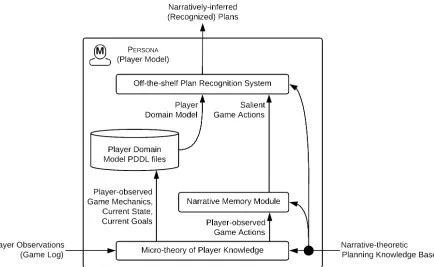
Figure 1.2 A block-diagram characterization of the PERSONAPLAYERMODEL. . . 14
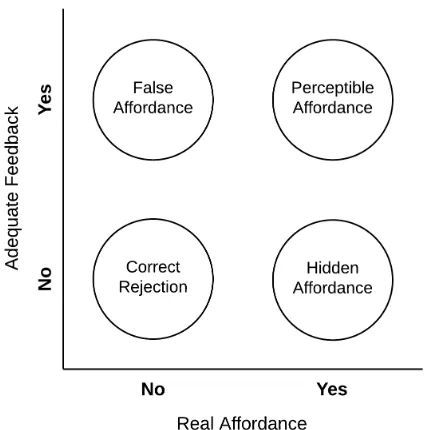
Figure 3.1 A re-creation of a graphic presented in Gaver’s (1991) work on affordances. . . 33
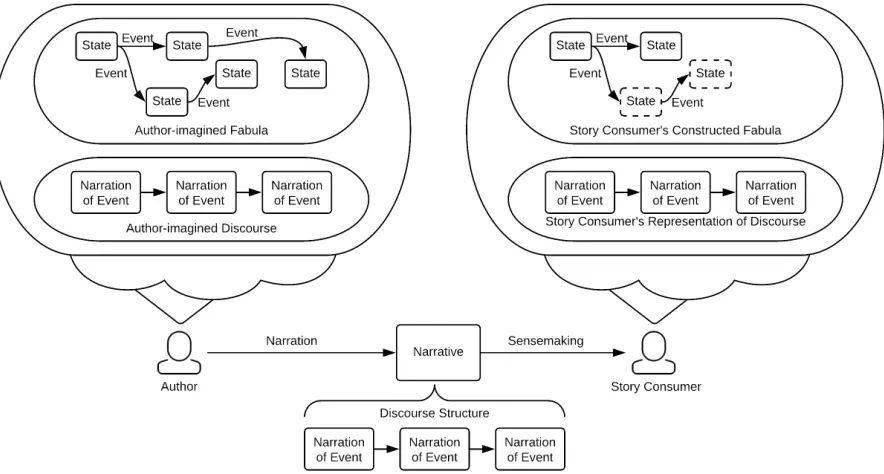
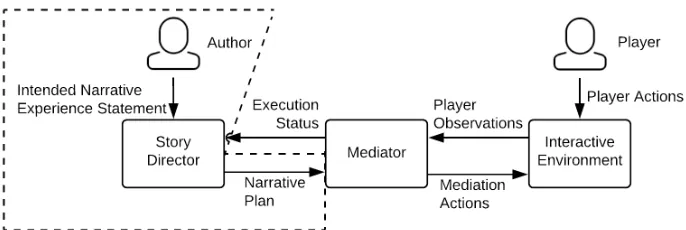
Figure 3.2 An illustration of the process of sensemaking in the context of narrative artifact. 40 Figure 3.3 A Conceptual Model for Plan-Based Narrative . . . 42
Figure 3.4 A Conceptual Model for Plan-Based Interactive Narrative . . . 55
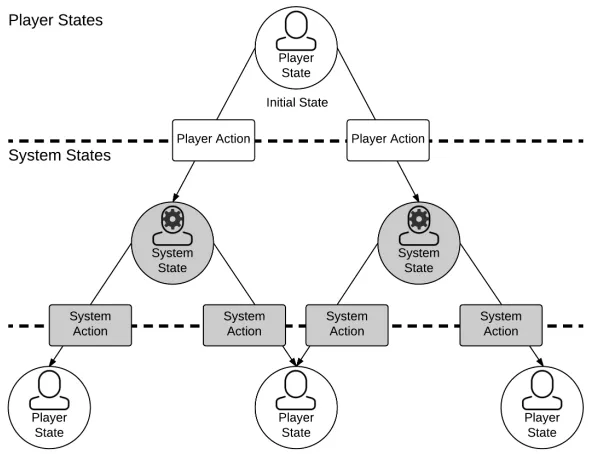
Figure 3.5 An illustration of the game-tree model of turn-taking in the context of plan-based interactive narrative. . . 56
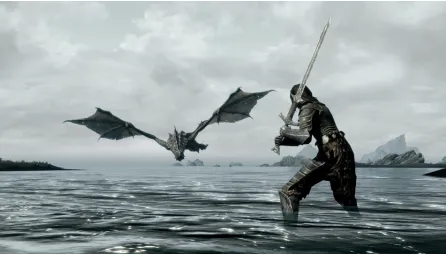
Figure 3.6 A screenshot of the interactive narrative adventure gameThe Elder Scrolls V: Skyrim. . . 58
Figure 3.7 TheBard’s Leap Summit, a landmark withinSkyrim. . . 59
Figure 3.8 In-game discovery of the Bard’s Leap Summit landmark. . . 60
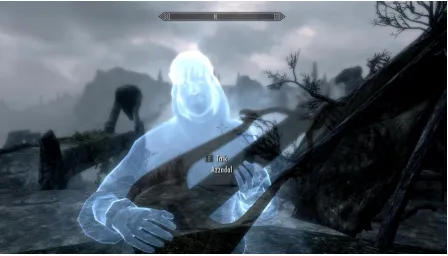
Figure 3.9 The ghost of the bard, Azzadal, a character inSkyrim. . . 61
Figure 3.10 A visual representation of a player model as in Definition 35. . . 67
Figure 4.1 Plan recognition in a robot navigation domain. . . 82
Figure 4.2 An illustration of all the operators in the domain obtained through compila-tion of the observacompila-tions in the classical plan recognicompila-tion problem illustrated in Figure 4.1. . . 83
Figure 4.3 Architecture for the baseline PERSONAimplementation. . . 89
Figure 4.4 An illustration of a procedurally generated game instance generated by the GME from a plan recognition theory. . . 90
Figure 4.5 Regression line for Equation 4.2. . . 94
Figure 5.1 A block-diagram characterization of the PERSONASYSTEM. . . 106
Figure 5.2 Plot synopsis forKnights of the Emerald Order. . . 107
Figure 5.3 The world map forKnights of the Emerald Order. . . 111
Figure 5.4 Title Screen and Preamble screenshots forKnights of the Emerald Order. . . . 114
Figure 5.5 Gameplay screenshots forKnights of the Emerald Order. . . . 116
Figure 5.6 Knights of the Emerald Order, End Screen. . . 117
Figure 5.7 Screenshots from the experiment game,Knights of the Emerald Order. . . 118
Figure 5.8 A screenshot from the
townarch
location within KotEO, which contains theforge
and thehut
and connects to thetownsquare
to the North and to thedocks
to the South. . . 132Figure 5.9 Unity Prefab Assets used to procedurally generateKnights of the Emerald Order. . . 138
Figure 5.10 A block-diagram characterization of the PERSONAPLAYERMODEL. . . 140
Figure 6.1 Runtime box plots for the PERSONASYSTEM. . . 152
Figure 6.2 Runtime over number of player actions, PERSONASYSTEMconfigurations. . . 154
Figure 6.3 Precision box plots for the PERSONASYSTEM. . . 156
Figure 6.5 Recall box plots for the PERSONASYSTEM. . . 159 Figure 6.6 Recall over number of player actions, PERSONASYSTEMconfigurations. . . 160 Figure 6.7 F1 Score box plots for the PERSONASYSTEM. . . 163 Figure 6.8 F1 Score over number of player actions, PERSONASYSTEMconfigurations. . . . 164 Figure 6.9 Precision, Recall, and F1 Scores for the goal-driven analysis, across No Domain
Chapter
1
Introduction
Stories are ubiquitous. While they typically are thought of as artifacts to consume via books or films, they are also a powerful mechanism to make sense of the world around us (Herman, 2013). Storytelling holds great promise for society because a narrative framing makes interaction more compelling; stories make interaction relatable, approachable, and memorable. Stories are thus increasingly formalized in virtual environments to interactively entertain, educate, and engage our society in more compelling ways.Interactive narratives, systems that frame interaction via drama (Riedl and Bulitko, 2013), provide context, motivation, and scaffolding to act in a variety of settings. Despite widespread adoption, they remain challenging to design and develop for several reasons. Concretely, the development of interactive narratives faces three key challenges; development is:
Challenge 1: time-consuming, with developers acknowledging that, although an interactive expe-rience’s development time is a function of its scope, it takes a significant amount of time to ensure that a high-quality experience is delivered (Blow, 2004; Murphy-Hill et al., 2014),
Challenge 2: labor-intensive, due to the amount of content that must be authored to realize the experience that is envisioned by the interactive narrative’s designers (Bruckman, 1990; Blow, 2004), and
These challenges make interactive narrative design and development non-trivial, which is a problem: because narrative is a significant mode of comprehension of the world around us (Bruner, 1991) and a significant number of Americans now interact with story-based media, both for en-tertainment (Lenhart et al., 2008a,b; Duggan, 2015) and in many other serious contexts (Marsella et al., 2003; Rowe et al., 2009; Lohse et al., 2013), it is currently unclear how the creation processes used in these media will scale to growing demands. It is therefore crucial to develop a foundation of tools and processes that can be used to create content in contexts where we already see the use of manually/semi-manually created narratives,e.g.training and learning (Rowe et al., 2009), entertainment (BioWare, 2012; Telltale Games, 2014), rehabilitation therapy (Lohse et al., 2013), intelligence analysis (Barot et al., 2017), cognitive intervention for aging populations (Allaire et al., 2013), news generation (Allen et al., 2010), and healthcare communication (Marsella et al., 2003).
The challenges surrounding the design and development of interactive narratives can in part be ameliorated by the field of artificial intelligence (AI). Specifically, AI facilitates algorithmically generated game content, otherwise known asprocedural content generation(Shaker et al., 2014). In the context of procedural content generation (PCG), “content” refers to “all aspects of the game that affect gameplay other than nonplayer[sic](NPC) behavior and the game engine itself. This set includes such aspects as terrain, maps, levels,stories, dialogue, quests, characters, rule-sets, dynamics, and weapons” (Togelius et al., 2011, emphasis added). Procedural interactive narrative generation can readily address challenges 1 and 2; it is less time-consuming and labor intensive for a designer to specify constraints to an algorithm and iteratively refine the design as opposed to starting with a design from scratch (Smith et al., 2011b). However, for this technique to be effective at addressing challenge 3, the procedural generator system must reason about both the generation of narrative structure and a user’s trajectory through it, much like human developers reason about how the user will fit into the progression of the story experience they want to deliver (Fernández-Vara, 2009; Reed, 2017). A user’s engagement is a function of theirnarrative intelligence(Mateas and Sengers, 2003), the set of cognitive faculties that afford the comprehension and telling of stories. Narrative intelligence enables a user’s transportation into a virtual world and depends on competencies that can be synthesized computationally. Precisely modeling narrative intelligence is key to uncovering the logic that governs how we as humans react to interactive story structures. These systems allow us to evaluate the degree to which we can predict our cognitive and affective responses during interactive narrative play, a central concern of interactive narrative design.
This dissertation concerns theautomateddesign of interactive narratives1in a manner that directly addresses Challenge 3, and which indirectly affords addressing Challenges 1 and 2. I argue that the latter challenges are indirectly addressable by virtue of the solution I present being an AI
1I use the term interactive narrative where others might use the terms interactive drama (Mateas, 2001),
system that is capable of performing in a manner that saves time and labor. How best to structure effective human-machine collaboration is an open problem (Horvitz, 2007) that I do not address here but which is directly relevant to Challenges 1 and 2.
Conceptually, I define interactive narratives asplayable systems(Wardrip-Fruin, 2007) with units of narrative where the understanding of both and the relationship between them is required for asatisfying traversal(Reed, 2017). Satisfaction is defined in terms of two stakeholders. The first, theplayer, is the person interacting with a playable system. The second, thenarrative designer orauthor, is the entity responsible for the creation of the playable system. A traversal is satisfying when both the player and the narrative designer are in general agreement that the interactive narrative was encountered as intended and need not necessarily be replayed. The interactive narratives of concern here are those who invite players to star in a complete story by stepping into a dramatic role to advance a narrative arc and whose game-like qualities center on two aspects: solving puzzles that are integrated into the fiction and exploring a world through movement and object manipulation; these interactive narratives are best exemplified by the video game genre ofadventure games(Fernández-Vara, 2009). Adventure games established aesthetics found in contemporary interactive narratives (Black, 2012) and are one of the few styles of playable systems that foundationally foreground storytelling (Reed, 2017) making them a worthwhile candidate of study.
Concretely, Challenge 3 is addressed in this dissertation through the development of a knowledge representation and reasoning model that computationally affords both (a) generating an interactive narrative and (b) anticipating the effect of the algorithmically generated design on the player during interactive narrative play. This model is centered on actions that advance both game and narrative:interactive narrative affordances. The model allowed an existing AI system called the General Mediation Engineor GME (Robertson and Young, 2019) to generate an interactive narrative for a player to experience. It also afforded the development of aplayer model(Yannakakis and Togelius, 2018) that I call PERSONA, which models a player’sinference-making, a key consideration of interactive narrative design. In this work, the narrative designer is a human working in concert with an AI system; the human specifies constraints to the system that define what a satisfying traversal is and the AI system will (a) algorithmically generate a virtual world with a corresponding story that the player will step into (GME) and (b) model the player’s anticipation of their trajectory through that virtual world (PERSONA). The PERSONAsystem is aplan recognition-based (Sukthankar et al., 2014) model that uses a knowledge representation and reasoning framework drawn fromautomated planning(Ghallab et al., 2004), which has been expanded to account for narrative reasoning. I experimentally evaluated PERSONAto determine its efficacy as a player model.
inter-active narrative affordances, which I argue to be a key consideration of interactive narrative design and which depend on a player’s inference-making faculties. I then present the thesis statement and its corresponding operationalization. Finally, I present a block diagram of the interactive narrative affordance model as well as an outline for the remainder of this document.
1.1
Procedural Interactive Narrative Generation
In order to computationally generate an interactive narrative, it is useful for an AI system to operate on the basis of a precise notion of what a story is (Mateas and Sengers, 2003), as well as a precise formalism for handling interactivity (i.e.the player’s gameplay) in the context of the story (Weyhrauch, 1997).
The precise notion of stories I use is based on representingnarratives as plans(Young et al., 2013) from an AI automated planning context (Ghallab et al., 2004). In this light, a plan represents a narrative’s underlying plot structure (orfabula) as opposed to its discourse (orsyuzhet), a distinction that narratologists (e.g.Chatman, 1980) make when talking about human narrative generation and comprehension:
From a narratological perspective, astoryconsists of a complete conceptualization of the world in which the narrative is set. This includes all the characters, locations, conditions and actions or events that take place during the story’s temporal extent. Two fundamental components of a narrative – its plots and its characters – are defined within the story itself. Distinct from the story, but closely tied to it, is the narrativediscourse.
[The]discourse . . . represents those elements responsible for thetellingof the story, rather than . . . the story elements themselves.
(Young, 2007) The precise formalism I use for handling interactivity within the paradigm of narratives as plans is that of agame-tree model(Gintis, 2009). Automated planning is fundamentally about solving a search problem in a state-transition system. Under the game-tree model, states are partitioned into two sets: system states and player states. A player can interact in the environment in a player state, dictating which state the narrative transitions toward (through the action the player executes). During a system state, the system can react to the player’s action by (for example) moving non-player characters around, instantiating objects, providing in-game text pop-ups, and so on.
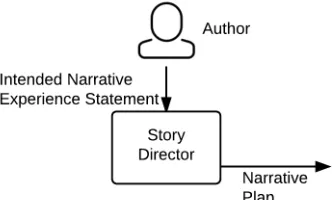
The process of generating an interactive narrative involves two AI agents. The first agent is the story director, responsible for generating theintended narrative experience: a trajectory through the state-transition system defined by the input that is satisfying from the designer’s perspective. As an analogy, the intended narrative experience can be thought of as anarrative scriptfor the player. The trajectory through the state-transition system traverses both player states and system states and player transitions can be thought of as “expectations of action” for the player. However, a player can act in a way that is afforded by the logical state of the world. This enables the possibility of the player acting in a way contrary to the intended narrative experience, which motivates the need for the second AI agent, adrama manager(Weyhrauch, 1997; Riedl et al., 2008). The drama manager is responsible for enforcing the intended narrative experience as designed by the story director. Drama managers can operate within the constraints of the virtual world (i.e.in system states,e.g.by controlling non-player characters) and beyond these constraints (e.g.by directly manipulating the state that results as a consequence of a player transition). Ideally, the drama manager’s operation allows the player to act in a way that keeps them engaged while at the same time ensuring that the intended narrative experience is preserved (Aylett, 2000; Hunicke et al., 2004).
1.2
Improving Procedural Interactive Narrative Generation
The automated generation of interactive narrative environments has historically been performed in a user-agnostic way. Thus, the player can act in a way contrary to the intended narrative experience, but the system has noa prioriknowledge or model to explain why the player might do so. In this dissertation, I am making the simplifying assumption that players are striving to play in a way that (from the system’s perspective) represents optimally-efficient narrative progression,i.e.gameplay that minimally deviates from an author’s intended narrative experience. Not all forms of gameplay privilege optimally-efficient activity (cf.Taylor, 2009; Taylor et al., 2011), but it is reasonable to assume that players will generally act cooperatively during play (Young, 2002; Cardona-Rivera and Young, 2014a). Thus, players may intentionally act to break the story’s progression in order to subvert the story’s flow, but the more interesting context for this work is when players do not intend to interfere with story progression but select actions that do. This case might arise, for instance, because a player’s understanding of the story is partial or incorrect and they intentionally select actions to advance a story incompatible with the one they are playing.
1.2.1 Predicting Perceived Interactive Narrative Affordances
To counter the problem of a player consistently choosing exceptional actions, it is important to understand why the player is pursuing them. Otherwise, the system is at risk of operating in a failure mode, addressing the symptoms and never the root cause of the underlying issue: afailure of design, i.e.a mismatch between what a designer intends to be perceived as meaningful and what a user perceives as meaningful. This mismatch emerges because a designer’sfeedback(as transmitted through the interactive narrative) is ineffective at eliciting the correctperceived affordancesto get the player to enact the designer’s intendedreal affordances, to borrow the terminology developed by Norman (1999).
For the case of interest to this work (wherein a player’s exceptional activity is assumed to be due to their partial or incorrect understanding of the story), the central problem is the modeling of the player’sonline(i.e.during play) narrative comprehension process, which should facilitate their understanding of how they fit into an unfolding story. Specifically, I am interested in what players perceive asaffordedto them by the ongoing interactive narrative. Informally, aninteractive narrative affordanceis an opportunity for a course of action that continues a player’s ongoing inter-active story experience; a storygame successfullyelicitsa perceived interactive narrative affordance for some course of action when a player can imagine that course of action as part of a story that continues their ongoing story experience (Cardona-Rivera, 2011).
1.2.2 The Role of Inferences in Interactive Narrative Design
Inferencing is a key part of narrative comprehension (Magliano et al., 1996). While there is some debate as to the degree and extent to which story consumers construct inferences (c.f.McKoon and Ratcliff, 1986; Graesser et al., 1994), cognitive psychologists generally agree that we construct at least two kinds of inferences during comprehension. The first (and more common) type of inference is termed abridging inference, wherein a story consumer2infers plot content thatmust have occurred between two utterances of the narrative’s discourse. For example, consider the following sequence of discourse content:
(1) There was a boy named Jim. (2) Jim wanted to eat a marshmallow. (3) He lit a fire,
(4) but the surrounding brush was not properly cleared! (5) Jim quickly put out the fire.
2Throughout this dissertation, I refer to an individual experiencing a narrative as astory consumer. This term is
(6) Then he cleared the brush out of the way. (7) He relit the fire,
(8) and roasted his marshmallow. (9) He ate his marshmallow.
Reproduced from Niehaus and Young (2014).
As the reader consumes each sentence, she forms asituation model(Zwaan and Radvansky, 1998) of it in her mind;i.e.a mental representation of the events described by the narrative. Situations are connected mentally via the context in which they occur;e.g.two events are related causally if one event (the antecedent) establishes the conditions in the story world necessary for the second event (the consequent) to occur. In the example above, when a reader consumes sentence 5, she constructs a situation model for which no causal antecedent model has been created. In order to make sense of the situation the text depicts, she must bridge the (conceptual) gap between the previous sentence and the one she has just read. Thus, she constructs the bridging inference (a situation model representing) that “the brush caught fire.” Niehaus and Young (2014) developed a computational model of this type of inferencing process.
By comparison, this work focuses on developing a computational model of the other type of inferencing process: the construction ofelaborative inferences, wherein a story consumer infers plot content thatwill subsequently occurafter an utterance in the narrative’s discourse. For example, consider the following sequence of discourse content:
(1) Jim sat down at the restaurant.
(2) He then received the menu from the waiter.
(3) After reading the menu, Jim decided what he wanted.
Adapted from Schank and Abelson (1975).
narrative reasoning, I argue3that it is a necessary element of interactive narrative reasoning. The main role of an interaction designer is the construction of an artifact that provides feedback to elicit in a useraffordance alignment: that the user’s perception of affordances align with an artifact’s designer-intended real affordances (Norman, 1999, 2002). Thus, a person’s effective construction of elaborative inferences (especially in the context of narratives that have never been encountered before) is a central concern of interactive narrative design. In other words, one of the main issues in interactive narrative design is the correct elicitation of narrative affordances in the minds of players. While script-like knowledge may inform inferences (Li et al., 2012), an interactive narrative player must still reason causally about the events in a script, such that they are fundamentally performing a kinds of means-ends orproblem solving processduring inferencing. This view is further justified in Section 1.2.3.
Current work within cognitive psychology has not posited aprocess modelof how we go about reasoning to construct elaborative inferences (unlike bridging inferences, which have been explained as a causal reconstruction process). The work I present here aims to be one potential process model for the generation of elaborative inferences, which casts thisconstructivist reasoning(Bransford et al., 1972) as aplan recognition process.
1.2.3 Inferencing as Plan Recognition
Two relevant lines of inquiry inform this view of inferencing as plan recognition. The first is the work by Gerrig and Bernardo (1994), which castsreaders as problem solversduring comprehension. In essence, they posit that, as people consume stories, they mentally project themselves into stories and attempt to solve the plot-related problems that the story characters face; this is thought to operate in a medium-independent manner (Zwaan and Radvansky, 1998). Thus, narrative reasoning can be thought of as an act of problem solving in light of information that is presented throughout the story, which deviates from a strict reliance on script-like knowledge. The second is the work by Herman (2013), who argues thatintention attributionis a core competency relevant to a person’s anticipation of un-narrated portions of narrative. Inspired by Dennett’s (1989) work onThe Intentional Stance, Herman reviewed converging evidence in cognitive psychology and narratology that support the idea that when consuming a narrative, the default mode of ascription is in theintentional plane, where we are concerned with beliefs, desires, and intentions (BDI) of an object to explain its behavior. Herman claims that this reasoning goes beyond the attribution of BDI to characters, extending intentional attribution to the author herself. Ascription of intent in the classical AI sense (e.g.Cohen and Levesque, 1990) involves identifying the goal the agent (in our case, the author) is attempting to pursue, and the corresponding plan that will be pursued to
3I elaborate this argument in Section 3.3.1.2, but do not directly experimentally evaluate this position, relying instead
achieve that goal. In other words, it isas if story consumers perform plan recognition to identify where the author intends the narrative to proceed,4i.e.the goal story world state that they expect the author is driving toward and the subsequent events that will evolve the plot toward that state.
1.3
Thesis
The thesis I advance in this document follows:
Thesis: By leveraginga compact knowledge representation and reasoning framework that conceptually draws from design, cognitive science, and narratology,an intelligent system can effectively reason about the generation of an interactive narrativeandthe effect that the generated narrative artifact will have on the cognitive states of human players.
To test this thesis, I developed new concepts, algorithms, and models forplayer-aware interactive narrative generationby incorporating structuralist and reader-response perspectives within nar-ratology, conceptual models on event cognition and memory within cognitive psychology, and frameworks of action representation and cognition within design. These concepts, algorithms, and models were used to implement and evaluate an end-to-end interactive narrative generation system, which I call PERSONA. The system I present is, to the best of my knowledge, the first to reason about both the player’s designer-intended trajectory through a state-space that represents an interactive narrative world and the player’s cognitive state as they experience it. The contributions herein dovetail with the thesis statement:
(a) A Compact Knowledge Representation and Reasoning Framework – Which I target by using an automated planning-based representation that reduces the complexity of the design space. The same representation used to procedurally generate an interactive narrative experience is used to model the effect of that experience on the player. This framework builds on prior characterizations of narratives as plans (Young et al., 2013), which affords its use in a generative context. This contribution is discussed in the first half Chapter 3, where I introduce the planning-based representation and its extension to accommodate interactive narrative phenomena. (b) An Intelligent System (that) can Effectively Reason about the Generation of an Interactive
Narrative – Which I target by introducing the representation and tying it to other perspectives in design, cognitive psychology, narratology, and interactive narrative practice. This contribution is discussed in the second half of Chapter 3, where I formally define my model of interactive narrative affordances.
4I am not claiming that this is the case for all interaction with computer systems (e.g.Reeves and Nass, 1996); I posit
(c) (Modeling) the Effect that the Generated Narrative Artifact will have on the Cognitive States of Human Players – Which I target and directly evaluate, by developing the PERSONAPLAYER MODELand characterizing the degree to which it can capture player behavior. This PERSONA PLAYERMODELoperationalizes current theories in cognitive psychology on how people make sense of narratives and grounds them in a computationally precise formalism. It symbolically processes information for the computation of a player’s inferences, that (when validated) may ameliorate the need for data collection in situations where data is sparse and/or difficult to obtain;e.g.in game prototyping and design (Fullerton et al., 2004). This contribution is discussed in three places: in Chapter 3, where I introduce links between interactive narrative affordances and a player’s inferencing; in Chapter 4, where I present a candidate process model of a player’s inferencing (i.e.the PERSONAPLAYERMODEL) based on automated plan recognition and grounded in definitions for interactive narrative affordances; and in Chapter 6, where I present an empirical evaluation of the PERSONAPLAYERMODELin the context of an interactive narrative adventure game itself generated by the larger PERSONASYSTEM.
1.4
Summary of Dissertation
In this work, I develop concepts, algorithms, and models based on design, cognitive science, and narratology for the automated design of interactive narratives via an intelligent system that is player-aware, called the PERSONASYSTEM. The PERSONASYSTEM’s player-awareness comes from an explicit reification of the player via a player model called the PERSONAPLAYERMODEL, which targets modeling a player’s interactive narrative inferencing, a cognitive activity I argue is key in the design practice of interactive narratives. The concepts, algorithms, models, end-to-end system, and player model can each be considered a contribution in its own right, but are collectively necessary components of a fully-realized interactive narrative system (Roberts, 2011). I find it useful to conceptually group the contributions into two broad categories: the PERSONASYSTEMand the PERSONAPLAYERMODEL. These are briefly reviewed in the sections below.
1.4.1 The PERSONASYSTEM
This section provides a brief overview of the PERSONASYSTEM.5The PERSONASYSTEMuses the
General Mediation Engine(Robertson and Young, 2014b) to procedurally generate an interactive narrative environment that is interactable by a human player. TheGeneral Mediation Engineis a
5The system is so named in reference to Waskul and Lust’s (2004) identification of threeselvesthat exist within an
unified game engine and drama manager that creates and manages gameplay experiences based on classical planning problems. The General Mediation Engine was ported to the Unity3D game engine,6 where it links Unity game assets to internally represented planning data structures (Robertson and Young, 2015). The system also contains the PERSONAPLAYERMODEL, briefly reviewed in the subsequent section. A block-diagram characterization of this system is illustrated in Figure 1.1.
The system depends on a novel knowledge representation that isnarrative-theoretic. In other words, it uses a custom and new knowledge representation that explicitly models concepts and phenomena pertaining to narrative, sensemaking, and interactivity (i.e.it is not an off-the-shelf system). These concepts are the groundwork for modeling the interactive narrative design-oriented notion of interactive narrative affordances. Given a description of character dialogue, art assets, and an intended narrative experience statement (specified in the aforementioned narrative-theoretic knowledge representation), the PERSONASYSTEMgenerated a proof-of-concept game calledKnights
of the Emerald Order(hereafter referred to asKnights).Knightswas designed and deployed atop the Unity General Mediation Engine as a single-player interactive narrative adventure game, inspired by games likeThe Secret of Monkey Island(Gilbert et al., 2009) andThimbleweed Park(Gilbert and Winnick, 2017). In the game, players assume the role of a knight-in-training and are tasked by a wizard to complete three (from five available) objectives in order to secure his blessing to become a full knight.
1.4.2 The PERSONAPLAYERMODEL
The PERSONAPLAYERMODELserves as a proxy for a player’s inference-making in the context of an interactive narrative and is a constituent part of the PERSONASYSTEM; it appears as a module within Figure 1.1. It leverages the same knowledge representation used by the encompassing PERSONA SYSTEMthat frames narratives as plans, and interactive narratives as plans with a distinguished actor, i.e.the player. The predictions that the PERSONAPLAYERMODELcomputes represent what a player in an interactive narrative perceives as interactively narratively afforded by the game to complete the current experience. These perceived interactive narrative affordances correspond to elaborative inferences; as such, the PERSONAPLAYERMODELis a candidate process model for an interactive narrative player’s elaborative inferencing. Whereas the PERSONASYSTEMuses a narrative-theoretic expansion to an off-the-shelf representation, the PERSONAPLAYERMODELuses a narrative-theoretic expansion to an off-the-shelf reasoning system. The baseline reasoning system is a plan recognizer. There are two narrative-theoretic modifications to a plan recognition system that the PERSONA PLAYERMODELencodes in service of identifying what a player perceives as interactive narratively afforded:
(a) Amicro-theory(Guha and Lenat, 1990)of player knowledge. Micro-theories are groups of
Figure 1.1: A block-diagram characterization of the PERSONASYSTEM. Given a description of character
dialogue, art assets, and an intended narrative experience statement, the PERSONA SYSTEM uses the
General Mediation Engine(Robertson and Young, 2014b) to procedurally generate an interactive narrative environment that is interactable by a human player. The same knowledge representation used to generate the environment is itself afforded to the PERSONAPLAYERMODEL, which (given an observation of the player’s activity) produces a recognized plan that the system anticipates the player is pursuing.
(logical) statements about some topic that make special assumptions or simplifications about the world. They are used by automated reasoning systems as a scaffold that may later be substituted for a more nuanced solution. I use a micro-theory because I am interested in modeling the player’s inferencing, which operates on the basis of what the player knows; how the player comes to acquire this knowledge is beyond the scope of my work here, and is what the micro-theory models. In the case of this work (and as will be detailed later) the micro-theory the PERSONA PLAYERMODELuses is meant to represent the player’s limited perceptual abilities and their monotonically increasing knowledge of the game world’s mechanics, state, and their own end goals.
I assume that story consumers perform a kind of problem solving process during narrative comprehension (Gerrig and Bernardo, 1994), and becauseworking memory(Baddeley, 1992) is an important component to problem solving (Hambrick and Engle, 2003), I have developed a model of narrative working memory to modulate the observations that are input to PERSONA.
A block-diagram characterization of the PERSONAPLAYERMODELis illustrated in Figure 1.2. To empirically validate the model, I conducted an extensive human-subjects experiment. The experi-ment asked participants to play the aforeexperi-mentioned adventure game,Knights. During gameplay, Knightsassembles a log of all actions that take place. Given an input log of the player’s activity (which includes the full sequence of actions that has transpired as well as the current state of the game), the PERSONAPLAYERMODELfirst identifies what the player has actually observed of the unfolding narrative world through the micro-theory of player knowledge. Given what the player has observed, the model proceeds to identify what is likely salient in the mind of the player through its model of narrative working memory. What is observed by the player, what is likely salient in her mind, and a model of the domain itself are input to an off-the-shelf plan recognizer, which itself performs plan recognition through planning. The output of the model –i.e.the plans that are recognized – are compared to the player’s in-game activity to see if the former could serve as anadequate proxy for the later. I determine adequacy in terms of runtime performance: Blaylock and Allen (2003) proposed four metrics to evaluate statistical goal recognizers, which I have adapted to this work. These arespeed of computation,early/partial prediction accuracy,convergence, andgeneralizability. The purpose of this evaluation is to evaluate the feasibility of being able to use this sub-system to estimate the player’s mental reasoningonline(i.e.as they play). As will be detailed later, the player model is able to characterize several aspects of a player’s in-game performance but that more work is needed to arrive at a more-accurate cognitive proxy.
1.4.3 Dissertation Outline
This dissertation details the development of a model of interactive narrative affordance. This model is a narrative-theoretic automated planning-based knowledge representation that can be used to (a) procedurally generate an interactive narrative experience, and (b) model the experience’s effect on the mind of the human player via the prediction of a plaer’s anticipation of upcoming narrative structure – which I argue as central for interactive narrative design and which presently is tacitly and non-systematically intuited by designers themselves.
Figure 1.2: A block-diagram characterization of the PERSONAPLAYERMODEL. Given a description of the player’s activity (i.e.a series of observations of their actions or agame log) and a narrative-theoretic planning knowledge base, the model produces narratively-inferred plans via a plan recognition system; these plans are predictions for what the player is anticipatorily thinking about during interactive narrative play. The PERSONA
PLAYERMODELrelies on two things beyond an off-the-shelf plan recognition system: a micro-theory of player knowledge and a narrative memory module; the former characterizes the player’s knowledge of the world as a function of their actions within it and the latter represents their cognitive activity with regards to what is likely within their locus of attention as they are playing in the interactive narrative.
Chapter
2
Related Work
The related work presented in this chapter is bipartite.
The first part is detailed in Section 2.1, and focuses on contextualizing the PERSONASYSTEM relative to other work in the area of procedural interactive narrative generation.
The second part is detailed in Section 2.2, and focuses on contextualizing the PERSONAPLAYER MODEL relative to other work in the area ofplayer modelingin interactive storytelling. Unlike existing work in this area, which has focused on creating player models of affect or preference, PERSONAis a model that focuses on a player’s cognitive reasoning as it relates to interactive story comprehension and reasoning. While there exists work that models the player using the same KRR that PERSONAuses, no model targets the same dimensions; in sum, this section demonstrates that PERSONAis a novel contribution to the vast work on player modeling.
I present each of the parts in turn and summarize their relation to my work in Section 2.3.
2.1
Procedural Interactive Narrative Generation
Procedural interactive narrative generationis a sub-field within procedural content generation. As defined by Togelius et al. (2011) (and as stated earlier in this dissertation), procedural content generation (PCG) refers to:
. . . creating game content automatically, through algorithmic means. . . . the term game content refers to all aspects of the game that affect gameplay other than nonplayer[sic] character (NPC) beavior and the gameplay engine itself. This set includes such aspects as terrain, maps, levels,stories, dialogue, quests, characters, rulesets, dynamics, and weapons. (Emphasis added.)
what it bounds (and thus, what work is exactly related), due to at least two reasons. Firstly, there is an ongoing debate as to the degree to which games contain or constitute a narrative (Togelius et al., 2011). Such a discussion, which revisits the historical ludology v. narratology debates (Frasca, 1999; Jenkins, 2004; Reed, 2017) is indirectly addressed via the precise definitions introduced for these concepts in Chapter 3. However, scholars working from different disciplinary traditions and with different methodologies may approach the same concepts and arrive at different conclusions of what is and is not interactive narrative (Young, 2018) and thus what is and is not procedural interactive narrative generation. Secondly, there is the potential to conflate procedural interactive narrative generation withprocedural narrative generation.1As Riedl and Bulitko (2013) discuss, managing players within interactive narratives that wish to preserve the author’s intended experience currently requires embedding astory generatorwithin the system. While it makes sense to think of storytelling design demands (e.g.in terms of coherence, believability, tellability, quality) of narratives and interactive narratives to be equal, the degree to which they actually correspond remains an open research question. Ultimately, I posit that a procedural narrative generator can be made interactive if there is a principled way to handle interactivity;e.g.choosing which story content to transition to in thePlottoprocedural narrative generation system by Eger et al. (2015) is one way to make it interactive, akin to a Choose Your Own Adventure book (e.g.Packard, 1979). Lacking any formal evaluation of that conjecture, I restrict my attention to the algorithmic and automatic creation of content that provides, and/or enables the pursuit of, a dramatic role in the development of a story, which drives and motivates the primary action that unfolds in a virtual environment. Work in procedural interactive narrative content generation thus prioritizes player interactions related to their role. To date, a significant amount of work exists on procedural interactive narrative generation. In order to systematize my coverage of prior work, I adopt the classification scheme introduced by Riedl and Bulitko; see Figure 2 in their 2013 paper. This scheme has three dimensions of concern, each with a corresponding scale:
• Authorial Intent– A dimension that captures “the extent to which the human author preor-dains the possible narrative experiences or instills the system with the ability to creatively adapt to the user” (Riedl and Bulitko, 2013, p. 70). Systems can havemanually authored narrative content,automatically generated narrative content, or a combination thereof (hybridly authoredsystems).
• Virtual Characters– A dimension that “is concerned with the degree to which computer-controlled entities can act independently of the[drama]manager” (ibid., p. 73). This scale has two endpoints. On one endpoint arestrong storysystems, wherein “virtual characters do not act without the guidance and permission of the[drama]manager” (ibid.). On the other
1For surveys of work on procedural narrative generation, I recommend the articles by Gervás (2009), Mueller (2013),
endpoint arestrong autonomysystems, wherein “each virtual character is a fully autonomous agent, unaware of the needs of the overarching narrative” (ibid.). Riedl and Bulitko argue that most approaches to interactive narrative implement a hybrid approach, affording some degree of autonomy of interaction between NPCs while still enforcing the story through the drama manager (and thus, there exists a third class ofhybrid story progressionsystems); these systems usually attempt to fit the player into pre-existing content, offering a form of dynamic guidance tailored to what the player attempts to perform within the interactive environment. There is (as of yet) no computationally precise way to characterize the degree of autonomy that an interactive narrative system affords its virtual characters. Thus, my classification of interactive narrative systems should be critically examined. I use these labels as a way of describing what theytendto do. If I label a systemstrong autonomyit is because it more closely requires characters to receive instruction from a centralized manager, whereas if I label itstrong autonomyit is because it more closely allows characters to act autonomously; if I label it ashybrid story progression systemit is because it is closer to an equitable balance between the endpoints as opposed to representing either one of them.
• Player Modeling– A dimension that captures whether the drama manager is concerned with “modeling and predicting the user’s preferences for different narrative futures while attempting to preserve the author’s intent” (ibid., p. 75). While defining player modeling on the basis of modeling preferences is fairly narrow relative to other potential models that could exist (as I illustrate in Section 2.2), this dimension is primarily a dichotomy as to whether the interactive narrative performs player modeling or not.
In this section, I focus on interactive narrative generation that is done in a player-agnostic way, which represents a great deal of prior work in this area. For each system I introduce, I state its corresponding interactive narrative model along the first two of the three dimensions discussed by Riedl and Bulitko in order to situate my work in the field. The third dimension, player modeling, is not relevant to these systems; interactive narrative systems that model the player are discussed in Section 2.2.
Choose Your Own Adventure(e.g.Packard, 1979)
Interactive Narrative Model:Strong Story, Manually Authored
advance the story). Every possible narrative trajectory is pre-authored, which guarantees that all potential trajectories are consistent with the author’s intent (even if a subset of these are considered satisfying(Reed, 2017) by both player and author).
Façade(Mateas and Stern, 2003)
Interactive Narrative Model:Hybrid Story Progression, Hybridly Authored
In Façade, the player assumes the role of a dinner guest at the house of a virtual couple, Grace and Trip. During the unfolding interactive narrative, the player discovers that the couple is suffering from marital problems; the player’s interaction affects how the couple interact to resolve the underlying tension. The character behaviors are controlled by a reactive planning system ABL (Mateas and Stern, 2002), itself a descendant of the reactive planning architecture Hap (Loyall and Bates, 1991). Façade allows an author to specifyABL beats, inspired from the practice of dramatic writing; astory beatis considered to be the smallest unit of dramatic action (McKee, 1997). An ABL beat decomposes into a sequence of joint dialogue behaviors, which guide the non-player character behavior; each such behavior is a dramatic exchange of 1 to 5 lines of dialogue between Grace and Trip, organized around a common narrative goal (such as a conflict around a topic). There is a centralized drama manager that is responsible for selecting which ABL beats to transition on the basis of the player’s interaction.
Mimesis(Young et al., 2004)
Interactive Narrative Model:Strong Story, Automatically Generated
Mimesis is a plan-based architecture that affords dynamically generating character behavior in a virtual world; it was integrated into the Unreal (game) Engine.2 It was primarily designed to support the development of interactive narrative games and used the Longbow discourse planning system (Young, 1994) to generate a plan that was then executed within the virtual environment. If the player takes actions that causal threaten any of the plan’s steps, Mimesis engages in a process calledmediation: it either fails the user’s actions (preserving the plan) or accepts the user’s actions and asks Longbow to come up with a new plan. NPCs in this architecture are a means to an end: they are used in service of executing the plan’s steps and have no autonomy to carry out their own goals. An author interested in using this system must specify the inputs to Mimesis, which correspond to the inputs to an automated planning system. The system then guarantees that stories produced are causally coherent insofar as the authored domain is causally coherent. There were several direct extensions to Mimesis that adopted the same general framework. One was the Zocalo system (Vernieri, 2006), which decoupled the Longbow planner from being directly embedded within Mimesis and allowed the architecture to operate using web-service requests to an online version of Longbow via the eXtensible Markup Language (XML) (Bray et al., 1997). Another was the
proactive mediationtechnique introduced by Harris and Young (2009), which (given a user’s plan) identifies potential points of conflict with the plan that the Longbow system computed and which Mimesis will attempt to execute.
Automated Story Director(Riedl et al., 2008)
Interactive Narrative Model:Hybrid Story Progression, Automatically Generated
The Automated Story Director (ASD) is a descendant of the Mimesis architecture. It frames interac-tion with the user using the same underlying mediainterac-tion mechanism as Mimesis, but has addiinterac-tional ways to salvage the generated plan beyond re-planning. Additionally, ASD is game engine agnostic: via an application programming interface (API), it allows its underlying mediator agent (termed experience manager) to sense the virtual environment it is deployed in.
FearNot!(Aylett et al., 2005)
Interactive Narrative Model:Strong Autonomy, Automatically Generated
In the application Fun with Empathic Agents Reaching Novel Outcomes in Teaching (FearNot!), the user engages with artificial agents in the enactment of a story about bullying in school. The FearNot! system requires as input a configuration of the initial setup of the story, but does not impose a pre-defined ending as an authorial constraint. Instead, agents react to the player and each other using an emotion driven planning system on the basis of their emotional appraisal of the unfolding drama. Each agent has an appraisal architecture based on the Ortony et al. (1990) theory of emotion.
Merchant of Venice(Porteous et al., 2010)
Interactive Narrative Model:Strong Story, Automatically Generated
The Merchant of Venice is the name given to the interactive narrative system developed by Porteous et al., whose running example is precisely the generation of an interactive narrative around the events of Shakespeare’s play of the same name. Their system uses a decompositional planning algorithm (e.g.that of Young et al., 1994) to generate an interactive story that satisfies particular state constraints of narrative interest (similar tobeatsin the Façade architecture). Like Mimesis, Merchant of Venice displays the interactive narrative using the Unreal Engine. Unlike Mimesis, Merchant of Venice does not afford direct control of a single character, but instead affords control of how all the characters behave by allowing the user to intervene directly through the adoption of character perspectives.
Versu(Evans and Short, 2014)
Interactive Narrative Model:Hybrid Story Progression, Hybridly Authored
characters to participate in an instantiated social practice, which are similar to AI planning operators in that they have preconditions and effects, and the effects change the world state in which all agents exist. Each social practice has its own set of roles, which can be fulfilled by AI agents or by a single player. Several AI agents have been programmed with distinct personalities, which (given that Versu is a text-based system) are expressed through adverbial modifiers that indicate moods and behaviors. The AI agents also have a degree of variation due to two reasons, such that they are not explicitly bound by the context in which they are situated. Firstly, the agents are capable of role-evaluation, which is essentially one agent’s score of how well all other agents are role-playing. One agent’s appraisal (whether internal or expressed) can in turn spawn new goal situations (e.g.if Bob has evaluated Mary and given her a high “lover”-role score he can then pursue the goal of marrying her). Secondly, agents are able to estimate an action’s consequences in order to foresee the utility they gain from performing their actions and can greedily pursue actions with immediate higher utility. Players can step in and perform whatever roles they wish to pursue or leave at any time, leaving an AI agent in their stead; AI agents pursue goals consistent with their pre-programmed behavior, whereas players are not bound by this limitation. The social practice enables some agents to form their own goals and act upon them, such that the interaction by the centralized manager is limited to ensuring that the story progresses when stuck (i.e.characters have not spawned new goals). Regardless of the direction of the interactive narrative, a cohesive completion to the episodes is guaranteed by the system. Versu is implemented in a scripting language called Praxis, which leverages Exclusion Logic (Evans, 2010) – a type of Deontic Logic – to represent a narrative world in a tree-like manner.
Ceptre(Martens, 2015)
Interactive Narrative Model:Strong Autonomy, Automatically Generated
given the appropriate rule set. The proper specification of such a rule set that would enforce desirable narrative-theoretic properties (like character believability or story comprehensibility) is an open area of work.
<