Volume 1
An investigation into fatigue and cognitive function in advanced multiple sclerosis
ALASTAIR BAILEY
D.Clin.Psy 2003
ProQuest Number: 10016048
All rights reserved
INFORMATION TO ALL USERS
The quality of this reproduction is dependent upon the quality of the copy submitted.
In the unlikely event that the author did not send a complete manuscript and there are missing pages, these will be noted. Also, if material had to be removed,
a note will indicate the deletion.
uest.
ProQuest 10016048
Published by ProQuest LLC(2016). Copyright of the Dissertation is held by the Author.
All rights reserved.
This work is protected against unauthorized copying under Title 17, United States Code. Microform Edition © ProQuest LLC.
ProQuest LLC
789 East Eisenhower Parkway P.O. Box 1346
VOLUME 1: CONTENTS
ABSTRACT
1.0 INTRODUCTION
1.1 Multiple Sclerosis
1.2 Cognitive function in MS 1.3 Fatigue in MS
1.4 Fatigue and cognitive function in MS 1.5 Rationale for the study
1.6 Research question
2.0 METHOD
2.1 Design 2.2 Partcipants 2.3 Ethics 2.4 Measures 2.5 Procedure
3.0 RESULTS
3.1 Analysis of the data
3.2 Results from the neuropsychological measures and matching variables
3.3 The n-back
3.4 Self-reported fatigue and depression
Page number 4 6 14 29 37 43 44 45 45 48 49 57 59 61 63 72
4.0 DISCUSSION
4.1 Summary of the main findings 4.2 Neuropsychological test performance 4.3 Cognitive fatigue on the n-back 4.4 Self reported fatigue and depression
4.5 Limitations of the research study and suggestions for future studies
Page number
4.6 Clinical implications 105
4.7 Conclusions 108
5.0 REFERENCES 111
6.0 APPENDICES
Appendix 6.1: The Fatigue Severity Scale 140
Appendix 6.2: The Expanded Disability Status Scale 141
Appendix 6.3: The Health Screening Interview 142
Appendix 6.4: The Fatigue Rating Scale 143
Appendix 6.5: Ethical approval letter (Royal Hospital for 144 Neuro- disability Medical Research Advisory Committee)
Appendix 6.6: Ethical approval letter (Riverside Research 145 Ethics Committee)
Appendix 6.7: Information sheet (MS group) 146
Appendix 6.8: Information sheet (control group) 147
Appendix 6.9: Consent form (MS group) 148
Abstract
Fatigue is a common symptom of multiple sclerosis (MS) and the impact of fatigue on the
quality of life of a person with MS is significant. It has been associated with overall mental
health, perceived control over the illness and unemployment. Cognitive impairment in MS is
also common. People with MS are often impaired on measures of speed of information
processing, attention, memory, executive function and working memory. As with fatigue, the
psychosocial impact of cognitive dysfunction on the individual with MS is significant.
However, there are relatively few investigations of the link between the two symptoms of MS.
The present study aimed to examine the effects of fatigue on cognitive performance in MS. Of
particular interest, were changes in cognitive performance within a task and across a session
(which may be evidence of cognitive fatigue) and their relationship with self-reported fatigue
and depression.
Sixteen people with advanced MS and 19 healthy control participants completed two
neuropsychological testing sessions. Each testing session involved repeated administration of
a continuous cognitive task (the n-back task). At the beginning and the end of one session
participants completed the 0-back task, a test of sustained attention. In the other session they
completed repeated administration of the 1-back task, which requires sustained attention and
has an additional working memory load. A neuropsychological battery was administered
between each n-back presentation in each session. In addition, self-reported fatigue was
measured at regular intervals during each session. All participants also completed depression
Overall, the performance of the MS group was worse than the control group on the n-back task
and the neuropsychological tests. There was mixed evidence to support the notion that
compared to a healthy control group, people with MS show more objective signs of cognitive
fatigue (a decline in cognitive performance over time) during a continuous cognitive task.
There was no significant evidence that people with MS showed a greater decline in
performance across a neuropsychological testing session compared to a control group.
However, participants with MS did report greater subjective changes in their level of fatigue
across a testing session compared to the control group when the task had a working memory
load. Also, ratings of the symptoms of fatigue were associated with symptoms of depression.
However, a significant finding was the poor association between changes in subjective fatigue
and changes in cognitive performance over the testing session.
These findings suggest that although people with MS may report subjective changes in fatigue
across a testing session, their cognitive performance may not necessarily reflect the same
pattern. In addition, there appears to be a relationship between depression and fatigue that has
1.0 Introduction Section
1.1 Multiple Sclerosis
1.11 What is Multiple Sclerosis?
The French neurologist, Jean-Martin Charcot, is generally credited with first naming the
condition now know as multiple sclerosis (MS) (Charcot, 1877). By the early 20* Century, the
disease that was previously only recognized in individual case reports had become one of the
most common reasons for admission to neurological wards (Compston and Coles, 2002).
There are approximately 2.5 million affected individuals worldwide, accounting for an
estimated £1.2 billion expenditure per annum in the UK (Holmes et al., 1995).
MS is currently recognized as an autoimmune inflammatory disorder that affects the central
nervous system (ffrench-Constant, 1994). The inflammatory response leads to damage in the
myelin sheath covering of nerve cells (demyelination). This damage impairs the normal
transmission of nerve impulses and the symptoms of MS ensue (Feinstein, 1999).
Individual presentations of MS vary, but symptoms may include visual disturbances, muscular
weakness, ataxia, spasticity and bladder dysfunction. Two frequently reported symptoms that
can cause distress and disability are cognitive difficulties and fatigue. The relationship
between these two symptoms of MS will be the focus of this thesis.
1.12 Aetiology / epidemiology
MS has an incidence of approximately seven per 100 000 every year, prevalence of around
common in early adult life and it is twice as prevalent in women as in men (Feinstein, 1999).
Epidemiological studies have emphasized the importance of genetic and environmental
variables.
A frequently reported finding is that the prevalence rate of MS increases as the distance from
the equator increases. For example, Poser (1994) cites a prevalence rate of 99.4 per 100, 000
inhabitants in Iceland (latitude = 65°N), but only 4 per 100 000 in Malta (latitude = 36°N).
However, there are a number of exceptions to the high latitude - high prevalence rule, with
populations living on the same latitude having very different prevalence rates (Poser, 1994).
This finding may be accounted for by genetic susceptibility. Compelling evidence for the role
of genetic susceptibility in certain ethnic groups comes from the finding that the disease is
extremely rare in populations including the Japanese (Kuroiwa et al., 1983), the Chinese (Yu
et al., 1989) and the Maori population of New Zealand (Skegg et al., 1987).
Migration studies have provided additional information about the influence of the environment
and genetics. People who move from a country with a high frequency of MS to a country of
low frequency appear to bring the high risk with them if they immigrate after puberty.
However, if they move before puberty they acquire the low risk of the country of destination
(Alter et al., 1996; Dean and Kurtzke., 1971; Derels et al., 1978). There is also evidence to
suggest that people who move from areas of low frequency to areas of high frequency bring
with them the low risk of their country of origin (Dean et al.„ 1976). However, Poser (1994)
argues that the conclusions drawn from migration studies should be treated with caution. He
suggests that migrants may represent a select group fundamentally different from the general
The role of genetic influences in MS is also supported by twin studies, which indicate
concordance rates of approximately 25% in monozygotic twins (Ebers et al., 1986). This
concordance rate indicates that the mode of inheritance may be polygenetic, with Poser (1992)
suggesting the presence of an MS trait. This trait is speculated to be a systemic non-
pathological condition (a disease waiting to happen) which is acquired from a viral antigenic
challenge in a genetically susceptible individual, from either vaccine or an infection (Poser,
1992). However, in order to clarify the influences of environment and genetics on acquisition
of MS, future research is needed to compare similar ethnic groups under different
environmental conditions (Poser, 1994). O ’Connor (2002) suggests that at present the most
widely accepted hypothesis for the aetiology of MS is that susceptibility to the disease is
genetically determined and that onset is triggered by an environmental factor.
1.13 Pathogenesis and Pathology
The exact pathogenesis of MS is still uncertain (Feinstein, 1999). However, the conventional
view is that it is an organ- or antigen-specific disease caused by immune-mediated injury to
myelin, its cell of origin in the CNS (the oligodentrocyte) and to the underlying axon
(O’Connor, 2002).
Post-mortem studies in people severely affected by MS often show a mild degree of brain
atrophy, with ventricular dilation and sulcal widening (Allen, 1991). Plaques, which show
evidence of demyelination, are often seen in the corpus callosum, the temporal and occipital
the spinal cord as well as in the white matter regions of the basal ganglia, thalamus and
hypothalamus (Trotster, 1998).
1.14 Symptoms / clinical features
MS can present with very different neurological signs according to the location of the plaques
(Feinstein, 1999). Initial symptoms often include weakness in the limbs, incontinence and
retrobulbar or optic neuritis (Knight, 1992).
Making a diagnosis of MS can be difficult. There is no single clinical sign or diagnostic test
that can provide enough information to make an accurate diagnosis. Instead, the process of
diagnosis involves gathering information from clinical examination, clinical history and a
variety of laboratory tests, all intended to rule out alternative causes of disease (McDonald et
al., 2001). To assist clinicians in the process, an International Panel on MS Diagnosis recently
revised existing diagnostic criteria (McDonald et al., 2001). In order to diagnose MS,
objective evidence is needed of at least two lesions typical of MS separated in time and space.
Radiological (e.g. MRI) and laboratory information (e.g. analysis of cerebrospinal fluid) may
assist in the process of diagnosis. The outcome of a diagnostic evaluation can be MS, possible
MS, or not MS.
1.15 Typologies / Disease course
As with the clinical features, the course of the disease is very difficult to predict. The pattern is
usually characterized by “either episodic acute periods of worsening (relapses, exacerbations,
combinations of both” (Lublin and Reingold, 1996). As the disease progresses periods of
remission can become shorter and relapses can leave people more impaired than before the
attack (Brassington and Marsh, 1998).
In attempting to define the clinical course of MS, there has been a degree of confusion in the
literature about terminology (Lublin and Reingold, 1996). This confusion has led to
difficulties comparing clinical studies using different groups of patients. In an attempt to
clarify the descriptive terms currently in use Lublin and Reingold (1996) conducted an
international clinical survey, from which the Advisory Committee on Clinical Trials of New
Agents in MS of the National Multiple Sclerosis Society (USA) agreed on the following
disease types:
Relapsing-remitting MS
The consensus definition refers to clearly defined disease relapses with full recovery or with
sequelae and residual deficit upon recovery; periods between disease relapses characterized by
a lack of disease progression. The defining features of relapsing-remitting MS are episodes of
acute worsening of neurological function followed by a variable degree of recovery, with a
stable course between attacks.
Primary-progressive MS
The consensus definition refers to disease progression from onset with occasional plateaus and
temporary minor improvements allowed. The essential feature of primary-progressive MS is a
gradual, nearly continuously worsening baseline with minor fluctuations but no distinct
Secondary-progressive MS
This definition indicates an initial relapsing-remitting disease course followed by progression
with or without occasional relapses, minor remissions and plateaus. As such, secondary-
progressive MS is seen as the long-term outcome of the relapsing-remitting disease.
Progressive-relapsing MS
The agreed definition was a progressive disease from onset with clear acute relapses, with or
without full recovery, and periods between relapses characterized by continuing progression.
The consensus determined that progressive-relapsing MS was an additional, albeit rare,
clinical course which deserved a separate definition.
Prior to the consensus definitions described above, the term ‘chronic-progressive MS’ was
often used in research to describe primary progressive and secondary progressive disease
courses. It was abandoned as it lacked specificity (Lublin and Reingold, 1996), but continues
to be used as a classification system where there is insufficient information about the early
disease course for someone who has clearly moved to the progressive phase of the disease.
Consensus definitions were also provided for two levels of disease severity. Benign MS is a disease course in which the patient remains fully functional in all neurological systems 15-
years after disease onset. Malignant MS refers to a disease with a rapid progressive course, leading to significant disability in multiple neurological systems or death in a relatively short
time after disease onset.
However, Feinstein (1999) suggests that these definitions are rarely static and that patients can
Goodkin et al., (1989) followed a group of 254 people with MS over a period of between one
and five years and found that adherence to the initially defined disease course varied
considerably.
There is currently no explanation for the relapses, remissions and progression in the disease
(Brassington and Marsh, 1998). However, Grant et al., (1989) found that many people
experienced stressful life events in the year prior to symptom onset. In addition, Warren et al
(1991) compared patients experiencing an exacerbation and patients in remission. The group
who were having an exacerbation of symptoms scored more highly on measures of emotional
disturbance and intensity of stressful events than the group in remission.
1.16 Psychological issues associated with MS
MS is associated with a number of psychological symptoms, of which the most frequently
reported include depression and other affective disorders (e.g. euphoria, or manic episodes),
cognitive dysfunction and fatigue.
Lifetime prevalence for major depression in people with MS varies between 25 and 50%
(Minden and Schiffer, 1990), which is almost three times the lifetime prevalence in the US
population (Kessler et al., 1994). However, the heterogeneity of the individual symptoms
comprising the syndrome of depression (e.g. low mood, anger, irritability, sleep problems and
fatigue) and the potential confusion with somatic complaints of MS (e.g. fatigue and
sleeplessness), may lead to increased prevalence rates (Feinstein, 1999). Even so, if the
somatically loaded items are removed from depression scales such as the Beck Depression
still been reported to be significantly higher than in healthy control groups or many other
neurological disorders (Minden et al., 1987). In addition, it has been suggested that the clinical
features of a major depressive disorder due to MS may differ from those in people without
MS. Symptoms such as irritability, worry and discouragement are commonly found in people
with MS, whereas withdrawal, apathy, guilt and worthlessness seem more common in
depression without MS (Minden et al., 1987). A lower frequency of reported guilt and self
reproach in MS has also been reported by Johnson et al., (1996) and high rates of reported
irritability have been found by Ron and Longsdale (1989).
In a large scale controlled study, Rao et al., (1991a) suggest that just under half (43%) of their
entire community based sample of people with MS were impaired on four or more of a battery
of thirty-one neuropsychological tests. The impact of cognitive dysfunction on the individual
with MS is wide reaching. Rao et al (1991b) compared people with MS and cognitive
impairment to MS participants without cognitive impairment in a number of social and
occupational areas. They found that the cognitively impaired group was less likely to be
working, engaged in fewer social and vocational activities, reported more sexual dysfunction,
experienced greater difficulty in daily household tasks and exhibited more psychopathology
than a cognitively intact group.
Up to 90% of people with MS report fatigue as a major problem (Krupp et al., 1988). As with
depression and cognitive dysfunction, the impact of fatigue on the quality of life of a person
with MS is significant. It is suggested to be related to overall mental health and perceived
control over the illness (Schwartz et al., 1996) and is strongly associated with unemployment
1.2 Cognitive Function in MS
Rao’s (1991a) finding that just under half of his sample of people with MS were impaired on
four or more neuropsychological tests represents a relatively recent acceptance that cognitive
decline is a common symptom for many people with MS (Feinstein, 1999). As recently as
1970, Kurtzke had suggested that less than 5% of people with MS were affected by cognitive
difficulties. This underestimation may be accounted for by two related factors (Fischer, 2001).
Firstly, that MS related cognitive decline is difficult to detect during brief clinic visits
(frequently the method used for assessing cognitive dysfunction) and secondly, the prevailing
belief that cognitive impairment rarely occurred in MS and then in the late stages of the
disease. However, more recent studies using community and clinic based samples and
neuropsychological testing (Rao et al., 1991a; Heaton et al., 1985), have found prevalence
rates of cognitive impairment of approximately 45%.
1.21 Common deficits
With a growing acceptance that MS is frequently associated with cognitive deficits, there has
been interest in delineating specific cognitive impairments due to the MS disease course.
Research has tended to concentrate on general intellectual functioning, memory, attention /
information processing, working memory and executive function.
1.211 General Intellectual Functioning
Rao et al (1991a) found that 100 people with MS had a significantly lower Verbal IQ on the
Wechsler Adult Intelligence Scale - Revised (WAIS-R) (Wechsler, 1981) than a healthy
control group. In addition, Ron et al (1991) compared the current intellectual functioning
of a group of people with MS, a group with clinically isolated lesions and a healthy control
group. They found that compared to the NART scores, the WAIS-R scores of the MS group
indicated a decline of 6.8 IQ points. The healthy control group showed a small improvement
on their WAIS-R scores, whilst the group with clinically isolated lesions had a decline of 2.2
points. Furthermore, in a longitudinal study. Penman (1991) reported a small but significant
decline in general intellectual functioning over time. Performance IQ was more affected than
verbal IQ, perhaps a function of psychomotor difficulties associated with MS. However,
Feinstein (1999) suggests that considerable variability exists in the IQ scores of people with
MS and that focusing on group scores may obscure significant individual differences.
1.212 Memory
People with MS often complain of memory problems, which appear to be present in around
40-60% of all patients (Rao et al., 1993). However, the term ‘memory’ refers to a number of
distinct (though related) neuropsychological processes which may be affected to differing
degrees in MS (Feinstein, 1999).
Implicit and procedural memory are not reliant on conscious recall and include memory
processes such as priming, conditioning and motor skill learning. These facets of memory are
commonly found to be intact in people with MS (e.g. Beatty et al., 1990).
Long-term memory is commonly subdivided into episodic memory (e.g. memory for events)
and semantic memory (e.g. memory for facts and concepts). There is very little evidence to
of studies have demonstrated difficulties with episodic memory, in both verbal and visual
domains (Camp et al., 1999; Rao et al., 1991a).
Rao et al (1986) noted that problems with long term memory in MS are more evident in recall
rather than recognition. This discrepancy led some authors to conclude that memory problems
were due to specific difficulties in retrieval whereas encoding processes were relatively spared
(Beatty et al., 1989; Rao et al., 1989a). In support of the retrieval deficit hypothesis are
findings that people with MS have normal rates of forgetting (Rao et al., 1989a) and normal
immediate recall of short spans of information (Litvan et al., 1988). However, there is
contradictory evidence to suggest that people with MS may have difficulty with encoding and
storage but not retrieval. Using a word list learning task, DeLuca et al (1994) found that
although people with MS required more trials to leam a word list, once the information was
learned retrieval was comparable with the control group. Furthermore, Amett et al (1997)
found that people with MS were less likely to use learning strategies such as semantic
clustering to facilitate encoding and retention of information. Similarly, Armstrong et al
(1996) suggested that some of the long term memory difficulties in MS may be due to limited
use of temporal order information. A number of authors (Armstrong et al., 1996; Beatty et al.,
1996; Ryan et al., 1996) have suggested that there may be subgroups of memory impairment
in MS that would warrant further investigation. However, at present the available evidence
only allows the conclusion that MS can result in impaired encoding, storage and retrieval of
long term memory. Some of these difficulties may be due to slowed information processing
1.213 Speed o f Information Processing / Attention
Many people with MS report feeling mentally “slowed down” (Fischer, 2001). Indeed, over a
century ago, Charcot described slowness of thinking as one of the hallmarks of cognition in
people with MS (Feinstein, 1999). It has been suggested that slowed information processing
may underlie many of the cognitive problems exhibited by people with MS (Litvan et al.,
1988; Rao et al., 1989c). Using the Sternberg Memory scanning test Rao et al (1989c)
compared a group of 36 people with MS to a group of 26 healthy control subjects. They found
that the MS group had an overall slower reaction time than the control group. In addition, their
scanning rate, a measure of pure cognitive speed (independent of the effects of physical
impairment), was also significantly slower than the control group. The results suggested that
people with MS exhibit a slowing of mental processing that is independent of motor
involvement.
Many people with MS also have attentional problems (Fisher, 2001). William James (1890)
described attention as “the taking possession by the mind in clear and vivid form of one out of
what seem several simultaneous objects or trains of thought”. However, now attention is
conceptualised as a function of an interaction of at least four component processes under the
influence of multiple brain systems (Cohen et al., 1998). Coull (1998) suggests that attention
can be divided into the following four sub-processes: 1) attentional orientation (the direction
of attention to a particular stimulus); 2) selective attention (giving priority to one stimulus over
another); 3) sustained attention (attending to a particular stimulus for a prolonged period of
time; and 4) divided attention (dividing attention between two or more different stimuli). In
MS deficits in selective (Camp et al., 1999; DeLuca et al., 1993; Litvan et al., 1988) and
Coull (1998) defines selective attention as “attending to one location or stimulus in favour of another”. The Stroop colour-naming test (Stroop, 1935) is often used as a measure of selective
attention (Coull, 1998). In the Stroop test, participants are asked to name the colour of the ink
in which a colour word is written. The word may be of a congruent colour (i.e. ‘green’ written
in green ink) or an incongruent colour ( ‘green’ written in red ink). This task has been
associated with activation in the anterior cingulate area of the frontal lobes (Pardo et al.,
1990). A number of studies (Foong et al., 1997; Kujala et al., 1995; Nocentini et al., 2001)
have demonstrated impaired performance on the Stroop test in MS.
The Paced Auditory Serial Addition Task (PASAT)(Gronwall, 1977) is frequently used as a
measure of selective attention (e.g. Camp et al., 1999) and as such has been used in a number
of studies with participants with MS. The PAS AT requires the person to add consecutive
numbers as they are presented on an auditory tape and respond orally with the accurate sum.
As each digit is presented, the patient must add that number to the digit that was presented
prior to it. DeLuca et al (1993) found that participants with MS and Chronic Fatigue
Syndrome exhibited difficulties on the PASAT compared to healthy participants. Litvan et al
(1988) also found that people with MS were significantly worse than a control group on the
PASAT. The MS participants were impaired compared to the control group when the stimuli
were presented at a rapid rate (1.2 and 1.6 seconds) but not at slower rates (2.0 and 2.4
seconds); a finding which is consistent with the research on selective attention described
above. This finding suggests that the degree to which selective attention may or may not be
impaired in MS depends on the task demands (Fisher, 2001). On self-paced tasks, in which the
compared to a control group. Moreover, the performance of people with MS is comparable
with healthy participants when there are few stimuli or response choices (Demaree et al.,
1999; Kujala et al., 1994; Paul et al., 1998b).
Fockert et al (2001) suggest that the concept of working memory (see below) may overlap
with selective attention. They asked healthy participants to perform a selective attention task
that required them to ignore distractor faces while holding in mind a series of digits that were
in the same order (low working memory load) or a different order (high working memory
load) on every trial. Higher working memory load was associated with increased interference
effects and increased neural activity in areas of the frontal lobes associated with working
memory load (Cohen, 1997). They argue that working memory is crucial for reducing
distraction by maintaining the prioritisation of relevant information. Their finding may help to
explain why selective attention is impaired under some conditions in MS (on the PASAT) but
not others (Fischer, 2001). Faster rates of stimulus presentation on the PASAT are likely
increase working memory load, which may be impaired in people with MS (D’Esposito et al.,
1996; Rao et al., 1993).
Coull (1998) suggests that sustained attention is the ability to “maintain attention to a
particular stimulus or location for prolonged periods of time” . Sustained attention appears to
involve arousal more than other attention tasks as length of time between targets continues.
The term ‘vigilance’ is often used interchangeably with sustained attention, although Coull
argues that vigilance is required on sustained attention tasks when the target stimuli occur at
very low frequency. Vigilance has been defined as a “state of readiness to detect and respond
1957). Seidman et al (1998) suggest that sustained attention tasks require participants to not
only sustain attention, but also minimise distractibility to irrelevant stimuli and to maintain
adequate alertness over time.
Wilkins et al (1987) found that participants with lesions in the right frontal lobe were impaired
on a simple vigilance task that required them to count stimuli presented at one-second
intervals. Similarly, Ruekert and Grafman (1996) found that participants with frontal lobe
lesions were impaired relative to a control group on a task that required participants to respond
selectively to one letter and to ignore distractors. Using a visual vigilance task Kujala et al
(1995) demonstrated impaired performance in a group of people with MS who were also
mildly cognitively impaired. Moreover, Nocentini (2001) found that people with secondary
progressive MS were impaired on a sustained auditory attention task. Taken together, these
findings suggest that impaired sustained attention may be an important feature of MS.
1.214 Working Memory / Executive Function
The concept of working memory has a number of different definitions, but all seem to agree
that it refers to a “multi-component set of processes involving temporary storage and
manipulation of information for use in various cognitive operations” (Seidman et al., 1998).
To a certain extent, the brain structures involved in working memory tasks appear to overlap
with those involved in attentional tasks (Seidman et al., 1998), particularly the central
executive component (Baddeley, 1986) and the supervisory attentional system (Norman and
Shallice, 1986). Specifically, there is overwhelming evidence (Gazzaniga, Ivry and Man gun,
2002) to suggest that the lateral prefrontal cortex is an essential neural substrate for working
memory. Two main hypotheses have been put forward to explain the relative contributions of
The working memory model described by Alan Baddeley (1986) is a content-based
hypothesis. In the model, working memory is not a unitary process, but is comprised of a
central executive controlling and directing verbal (the phonological loop) and spatial (visuo-
spatial sketchpad) slave systems. Within the model, there is an expectation that the
phonological loop is represented in the left hemisphere of the lateral prefrontal cortex and the
visuo-spatial sketchpad in the right hemisphere of the prefrontal cortex. A meta-analysis by
D'Esposito et al (1998) supported the notion that spatial working tasks are associated with
activation in the right prefrontal cortex and nonspatial tasks with the left hemisphere. Rao et al
(1993) found that people with MS had an exaggerated word length effect, despite normal
digit-span. This was thought to reflect an impairment in the articulatory rehearsal process of
the phonological loop. Furthermore, D'Esposito et al (1996) investigated the hypothesis that
the central executive system of working memory is impaired in people with MS using a dual
task paradigm. Participants were asked to carry out a judgement of line orientation task whilst
concurrently finger tapping, humming a melody, or reciting the alphabet. They found that the
MS participants were significantly more impaired than the healthy control group during the
demanding dual-task conditions. This was taken as evidence that people with MS have a
working memory deficit reflecting an impaired central executive system.
Process based accounts of working memory (Owen et al., 1996) suggest that the type of
processing necessary for task completion determines the recruitment of specific neural areas.
The model suggests that ventrolateral areas of the prefrontal cortex are activated when
memory content has to be “maintained”, but that additional “monitoring” and “manipulation”
current neuro-imaging data (D'Esposito et al., 1998). Delayed matching paradigms, such as
the ‘n-back’ tasks are commonly used to vary working memory load. The n-back task requires
the participants to respond when the stimulus matches a target shown n trials before (usually n
= 0, 1, 2, or 3).
The finding that people with MS have difficulty on faster rates of stimulus presentation on the
PASAT is consistent with a hypothesis that tasks that place additional working memory
demands are more likely to be impaired.
Norman and Shallice (1986) described a model of executive control to account for goal
oriented behaviour. In the model, our actions are governed by schema control units which
compete with one another for dominance. The schema control units receive input from the
perceptual system, contention scheduling and a supervisory attention system. The model
suggests that contention scheduling facilitates the selection of schemas for routine actions (e.g.
riding a bike). However, when the demands of the situation are non-routine, the supervisory
attentional system provides a flexible response selection mechanism. Gazzaniga et al (2002)
suggest that the supervisory attention system may be required in situations such as: 1) when a
task requires planning or decision making; 2) when the task requirements are novel or not well
learned; 3) when the situation requires a response that competes with a strong habitual
response; 4) when the situation requires error detection; and 5) when the situation is difficult
or dangerous. They also propose that the supervisory attention system is unlikely to be
represented in a single brain area, but is more likely to be a distributed network of neural
Many of the executive functions described in the Norman and Shallice (1986) model may be
impaired in people with MS. Foong et al (1997) demonstrated that people with MS had
difficulties on the Tower of London Test (Shallice 1982) a task that requires planning. In
addition to assessing selective attention, the Stroop test examines the ability to inhibit a strong
habitual response. As described above, performance on the Stroop test has been shown to
impaired in participants with MS (Nocentini et al., 2001). People with MS have also been
shown to have difficulties on the Wisconsin Card Sorting Test (WCST) (Heaton, 1981) which
requires error detection and cognitive flexibility (Rao et al., 1987). It is also likely that these
deficits in executive function are likely to affect a number of other cognitive tasks which are
frequently shown to be impaired in MS, such as explicit memory tasks (Fischer, 2001).
1.215 Summary
In summary, slowed information processing speed appears to be an important feature of the
cognitive difficulties displayed by people with MS (Brassington and Marsh, 1998). These
difficulties are likely to interact with a number of other impairments associated with MS that
have a greater cortical involvement, such as verbal memory (DeLuca et al., 1994; Litvan et al.,
1998; Rao et al., 1989b). Moreover, the pattern of increased impairment with greater task
complexity, which has been illustrated in the literature on attention and MS, is hypothesised to
be associated with the concepts of working memory and executive functions. People with MS
are frequently impaired on tasks that place demands on the working memory system
(D'Esposito et al., 1996; Rao et al., 1993; Litvan et al., 1998) and executive functions (Foong
1.22 Neuroanatomy and physiology of cognitive decline
Attempts to clarify the relationship between disease pathology and cognitive decline have
been facilitated by the development of neuroimaging techniques such as Magnetic Resonance
Imaging (MRI). Using imaging techniques, a number of studies have attempted to identify
localized brain abnormalities and specific cognitive deficits (Feinstein, 1999).
MRI is a sensitive technique for identifying lesions due to the MS disease (Feinstein, 1999).
Using MRI, patients with cognitive impairments have consistently been shown to have more
lesions than those who remain cognitively intact (Rao et al., 1989b; Ron et al., 1991). In the
study by Rao et al (1989b) total lesion area was significantly correlated with 25 out of a
battery of 34 cognitive tests. The authors suggested that when total lesion area exceeded a
particular cut-off point, the probability of cognitive dysfunction was high.
Ryan et al (1996) found that visuospatial ability correlated with corpus callosum lesions and
that impaired memory performance was linked to white matter lesions in the left parietal lobe.
Furthermore, Rao et al (1989b) found that corpus callosum abnormalities were associated with
speed of information processing and rapid problem solving.
Foong et al (1997) examined the relationship between frontal lobe pathology and executive
function in a group of 42 people with MS. They found that although a number of executive
tasks correlated with the severity of frontal lobe lesion load (MRI), it was difficult to
disentangle the specific contribution of frontal lobe pathology to the impairment on executive
tasks in the presence of widespread lesions. Specifically, they found that a significant
total lesion load was controlled, a finding which was also reported by Rovaris et al (1998) and
Nocentini et al (2001). Foong and colleagues (1997) argued that their findings provided
evidence for the hypothesis that executive functions are subserved by a different, widely
distributed neural systems (Burgess and Shallice, 1992). However, in a recent study, Benedict
et al (2002) identified a strong correlation between frontal cortex atrophy and performance on
neuropsychological tests conunonly associated with frontal lobe activity.
There are also reports of cognitive dysfunction being associated with periventricular lesions
(Feinstein, 1999). Anzola et al (1992), found that periventricular demyelination was associated
with difficulties in concept formation, non-verbal reasoning and verbal memory tests.
Similarly, Maurelli et al. (1991) identified an association between memory impairment and
periventricular demyelination. Feinstein (1999) suggests that periventricular lesions may affect
the function of more distant sites, through the process of disconnection, or interruption of
neural circuitry. Maurelli et al (1991) propose that the disconnection may be between limbic
and prefrontal structures.
1.23 Clinical correlates
The relationship between cognitive function in MS and disease course, time since diagnosis,
severity of symptoms, depression and fatigue have been the focus of a number of
investigations. However, Fischer (2001) suggests that efforts to identify clinical variables
predictive of MS related cognitive impairment have been disappointing.
Severity of MS is frequently assessed using the Expanded Disability Status Scale (EDSS)
systems (pyramidal, cerebellar, brain stem, sensory, bowel and bladder, visual, cerebral
(mental) and ‘other’). Despite being the gold standard research tool for measuring impairment
in research studies the EDSS has been criticized for a lack of sensitivity for clinical changes
that do not affect mobility (Brassington and Marsh, 1998). EDSS is only a modest predictor of
overall cognitive function (Heaton et al., 1985; Rao et al., 1991a).
The lack of association between depressed mood and cognitive function in MS has been well
documented (Moller et al., 1994; Rao et al., 1991a). In a sample of 25 people with MS, Moller
et al (1994) found that depression was unrelated to age, gender, status of disability, or the
results of a cognitive assessment.
Unlike a number of other clinical variables, disease course does appear to be related to
cognitive function. People with a primary progressive disease course have been shown to be
more cognitively impaired than healthy control groups (Camp et al., 1999) and those with a
relapsing remitting course (Heaton et al., 1985). In addition, Comi et al (1995) reported a
greater frequency of cognitive impairment in a sample of people with secondary progressive
MS when compared to a group with a primary progressive disease course.
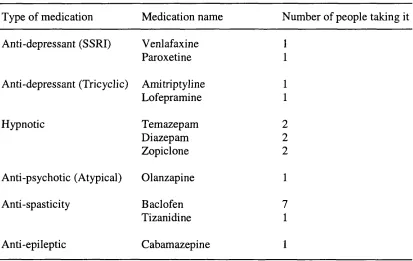
A large number of people with MS take psychotropic medication to reduce psychiatric
morbidity. Stenager et al (1994) investigated the association between medication and cognitive
performance in a sample of 92 people with MS in which approximately two thirds were taking
medication. The majority of the participants were taking medication with a sedative effect.
When administered a battery of cognitive tests, there was no association between performance
In addition, Rao et al (1991a) failed to find a significant association between duration of
illness and cognitive function. However, in a longitudinal study, Amato et al (1995) examined
changes in cognitive function over a 4-year period. They found that most patients had a
decline in cognitive performance at 4-years follow-up. However, in a 3-year follow-up study,
Kujala et al (1997) found that cognitive decline only occurred in patients who had shown an
initial cognitive impairment. They suggest that cognitive function can remain stable in MS,
but that incipient cognitive decline is widespread and progressive in nature.
Fisher (2001) suggests that the relationship between cognitive function and fatigue is not yet
clear. This issue will be investigated further in section 1.4.
1.24 Psychosocial impact
The functional impact of cognitive dysfunction in MS is profound. Rao et al (1991b) classified
100 people with MS as either cognitively intact, or cognitively impaired. The two groups were
compared on a number of measures of mood and social functioning. The cognitively impaired
group were less likely to be working, engaged in fewer social activities, reported greater
sexual dysfunction, more difficulty performing routine household tasks and exhibited greater
psychopathology than the cognitively intact group.
1.25 Treatment
Treatment of cognitive decline in MS is still in its infancy (Fisher, 2001). Approaches have
Compensatory strategies for cognitive difficulties are frequently employed by people with MS.
Sullivan (1990) noted that the use of an external memory aid was commonly used. In addition,
daily planners, lists and other written cues may help to alleviate some of the memory and
planning problems reported in many people with MS (Bennett et al., 1991). Very little
attention appears to have been paid to remedial (as opposed to compensatory) strategies in
people with MS. Feinstein (1999) suggests that this may be due to the progressive nature of
cognitive decline in MS, which is unlike other conditions such as head injury or stroke, where
the insult is followed by a period of expected recovery. However, promising results have been
presented in a controlled trial of cognitive rehabilitation (Jonnson et al., 1993). The study
compared remediation plus compensation to non-specific diffuse mental stimulation. They
found that the remediation plus compensation group showed improved visual perception and
visuo-spatial memory. The gains were maintained at six months follow-up.
There is preliminary evidence to suggest that disease-modifying treatments may also have a
beneficial effect on cognitive function. IFN-p-lb (Betaseron) was shown to lead to
improvements in visual memory (Pliskin et al., 1996). Similarly encouraging improvements in
complex attention, concentration, visual learning and recall have been reported by Barak and
Achiron (2002). In addition, IFN-P-Ia (Avonex) was shown to have a beneficial effect on
complex attentional processes and memory (Fisher et al., 2000). There was also a trend
towards improved executive functioning and memory. Fisher (2001) suggests that clinicians
should consider monitoring cognitive functioning in patients undergoing disease modifying
1.3 Fatigue in MS
Krupp and Pollina (1996) define fatigue in progressive neurological disorders as:
"an overwhelming sense o f tiredness, lack o f energy and feeling o f exhaustion. It is distinguished from symptoms o f depression, which include lack o f self-esteem, despair, or
feelings o f hopelessness. Fatigue is also distinguished from limb weakness”
In MS, fatigue appears to be a particularly common and disabling symptom of the disease. A
study (Freal et al., 1984) which defined fatigue as “tiredness or exhaustion distinct from
depressed mood or limb weakness”, reported that 87% of patients considered fatigue to be a
problem. Other studies (Fisk et al., 1994; Krupp et al., 1988; Krupp et al., 1989) have cited
prevalence rates of between 76 and 92%. Fatigue was described as the worst symptom (14%)
or one of the worst (55%) in a sample of 85 people with MS in a study by Fisk et al (1994).
Similarly, Krupp et al (1988) reported 28% of their sample described fatigue as their “most
troubling symptom”. Amato et al (2001) found severity of fatigue to be an independent
predictor of quality of life. Fisk et al (1994) suggest that the disruption of MS patients’ lives
caused by the need to accommodate fatigue or its potential occurrence, adversely affects their
mental health.
Though fatigue is ubiquitous, Lauren Krupp and colleagues (1988) propose that the following
features distinguish MS fatigue from ‘normal fatigue’: it comes on easily; it is worsened by
heat; it prevents sustained physical activity; it interferes with responsibilities; it interferes with
physical functioning; and it causes frequent problems. In general, it appears that the major
incapacity associated with MS fatigue (Multiple Sclerosis Council for Clinical Practice
Guidelines, 1998). Recently, the importance of distinguishing the symptom called fatigue and
the signs of fatigue has been emphasized (Iriarte, Subira and Purificacion de Castro, 2000).
The symptoms of fatigue include tiredness, lack of energy and exhaustion (Krupp and Pollina,
1996), whilst the signs of fatigue in a system are the lower effectiveness of this function as
time passes.
1.31 Measurement of Fatigue in MS
A variety of self-report measures have been developed to quantify fatigue in MS. These
measures rely on the participant’s subjective assessment of functioning (Krupp and Pollina,
1996). Two of the most commonly used measures are the Fatigue Severity Scale (FSS) (Krupp
et al., 1989) and the Fatigue Impact Scale (FIS) (Fisk et al., 1994). The FSS is a nine-item
scale which has been used to assess the effects of fatigue on activities of daily living. It is
brief, easy to administer and is reliable (Krupp, 1997). However, it may not be sensitive to
changes associated with treatment. The FIS is a 40 item scale which assesses physical,
cognitive and social dimensions. It has been shown to distinguish fatigue in MS from fatigue
in people with hypertension (Fisk et al., 1994). However, compared to the FSS the FIS is
rather lengthy.
In attempt to distinguish the symptom and the signs of fatigue, Iriarte and de Castro (1994)
have developed the Fatigue Descriptive Scale (FDS). Iriarte et al (2000) suggest that the scale
differentiates fatigue as a symptom that includes three different clinical entities: asthenia
(fatigue at rest); fatigability (fatigue with exercise), and worsening of symptoms. Using the
relationship to the symptom fatigue. In a recent investigation into to the association between
muscular fatigue (measured by maximum strength on a hand dynamometer) and symptom
fatigue (measured using the FSS and FDS), Iriarte and de Castro (1998) found that not only
did the MS group show more physical fatigue, but that there was also a negative linear
correlation between baseline strength and fatigue as a symptom.
Recent studies (Krupp and Elkins, 2000; Kujala et al., 1995) have suggested that in addition to
experiencing physical fatigue (in a maximal force output paradigm), people with MS may
suffer from cognitive fatigue. In these studies cognitive fatigue has been operationalized as a
decline in cognitive performance over time. This issue will be reviewed in greater detail in
section 1.4.
Considering physical fatigue (measured by an inability to sustain a specified force during
exercise) and cognitive fatigue, Chaudhuri and Behan (2000) suggest a distinction between
central fatigue and peripheral fatigue. Central fatigue represents a failure of physical and
mental tasks that require self-motivation and internal cues in the absence of demonstrable
cognitive failure or motor weakness. They suggest that pathological central fatigue is similar
to the brief episodes of self-limiting central fatigue that may follow periods of acute stress or
viral infections. In contrast, they suggest that peripheral fatigue is associated with physical
fatigue but not mental fatigue.
In conclusion, there is an emerging tendency to not only measure the symptom of fatigue
(quantified using self report measures such as the FSS), but also to measure the signs of
the FSS) Giovannonni (2002) suggests that specific and well validated fatigue outcome
measures should be developed,
1.32 Fatigue in other conditions
Fatigue is a common complaint in a number of other chronic medical disorders. In Parkinson’s
disease, fatigue is common (Friedman and Friedman, 1993), and can often antedate the
development of the motor symptoms of the disorder (Chaudhuri and Behan, 2000). Cimprich
(1995), found that patients with cancer had difficulty with sustained attention tasks, which
may be evidence of cognitive fatigue. In addition, many people with HIV and AIDS report
fatigue as a symptom at some point during the disease (Tindall et al., 1988).
Post-Concussional Syndrome (PCS) is a term often used to describe symptoms that follow a
brain injury (e.g. headache, dizziness, irritability, and fatigue) and persist past the initial post-
traumatic period. McMillan and Glucksman (1987) suggested that within the first seven days
of sustaining a traumatic brain injury, 75% of patients report fatigue as a symptom. Thereafter
the incidence of symptoms of PCS appears to decline. At three months post injury up to 37%
of patients may continue to report disturbing levels of fatigue (Keshavan et al., 1981).
LaChapelle and Finlayson (1998) compared 30 people with brain injuries to a matched healthy
control group on three subjective and one objective measure of fatigue. The FSS and FIS were
used as two of the subjective measures, and fatigue was objectively measured by comparing
four 40 second intervals of continual thumb pressing. The mean length of time between brain
injury and participation in the study was 44.3 months (SD=45.2). Their findings indicated that
the participants with brain injuries had significantly greater subjective ratings of fatigue
thumb-pressing task but the difference between groups did not reach statistical significance. It is of
note that 50% of the brain injury group described fatigue as one of their worst symptoms.
However, Riese et al (1999) failed to find evidence of cognitive fatigue after very severe head
injury on two continuous divided attention tasks.
Chronic fatigue syndrome is a controversial diagnostic entity (Marshall et al., 1996), but
which has persistent, debilitating exhaustion as its hallmark feature. People who complain of
chronic fatigue syndrome also report significant functional disability in activities of daily
living and social activities (Chistodoulou et al., 1998). Moreover, cognitive difficulties are
often reported, with consistently documented impairments in the areas of complex information
processing speed and efficiency (Tiersky et al., 1997). There appear to be few differences
between people with MS and those with chronic fatigue syndrome on a number of
neuropsychological test measures (Krupp et al., 1994). However, people with MS often have
more extensive neuropsychological impairment (DeLuca and Johnson, 1993).
1.33 Clinical correlates
People who are depressed often report fatigue. Moreover, it is a one of the features of the
DSM-IV (American Psychiatric Association, 1994) diagnosis of major depressive disorder.
Depression is also common in MS (Feinstein, 1999), and disentangling fatigue as a symptom
of MS and fatigue as a symptom of depression is complex. Some studies have shown a
positive correlation between fatigue severity and depression (Fisk et al., 1994; Kroencke et al.,
2000), whilst others have not (Krupp et al., 1989; Moller et al., 1994; Vercoulen et al., 1996).
Medications such as amantadine have been shown to be useful in reducing fatigue but appear
fatigue and depression in MS often overlap, future research is needed examining the way that
they CO vary (Kroenke et al., 2000). This research appears to be particularly important as
Chauhudri and Behan (2000) point out that there has been a tendency of clinicians to equate
fatigue with depression. As such, they suggest that clinicians have often chosen to ignore
fatigue in conditions such as MS or felt it necessary to equate fatigue with depression,
somnolence or disinclination, seeking to explain the mechanism of fatigue by paradigms based
on psychoanalytic models.
As with depression and fatigue, some authors (Kroenke et al., 2000; Krupp et al., 1995) report
a correlation between self reported fatigue and level of physical impairment, as measured by
the Expanded Disability Status Score (EDSS)(Kurtzke, 1993), whilst others do not (Fisk et al.,
1994; Vercoulen et al., 1996).
In addition, there are reports of more severe fatigue in progressive MS (Mainero et al., 1999)
than in relapsing-remitting MS, although contradictory findings have also been found
(Giovannoni et al., 2001)
1.34 Neuroanatomy of fatigue
Col umbo et al (2000) found structural differences between people with MS who complain of
fatigue and those who do not. Lesion load in a T2 weighted MRI was found to be higher in
MS patients complaining of fatigue than in those not doing so. There were significant
differences in the parietal lobe, internal capsule, and trigone. Large differences were also
found in the in frontal lobes and periventricular areas. They suggest that fatigue may be due to
damage, or of a demyelination in critical sites of the CNS such as the cortico-spinal tract.
However, using magnetization transfer and diffusion tensor MRI, Codella et al (2002) failed to
find an association between FSS scores and MRI derived quantities. They suggest that the
severity of overall pathology in the brain is not a critical factor in the development of fatigue
in MS.
Roelke et al (1997) compared a group of participants with MS who complained of fatigue to
one that did not using a PET scan. The study measured regional cerebral glucose metabolism,
which they suggest is closely related to regional cerebral blood flow and local synaptic
activity. Reduced glucose metabolism in the frontal cortex and basal ganglia was found in the
participants who complain of fatigue but not in those who did not. Reduction was marked in
the bilateral prefrontal cortex, premotor and supplemental motor cortex, putamen and in the
white matter extending from the rostral putamen to the head of the caudate nucleus. The
authors suggest that the abnormal pattern of glucose metabolism at rest may reflect abnormal
neuronal activity which makes patients susceptible to fatigue. Codella et al (2002) suggest that
these grey matter metabolic abnormalities may be attributed to functional impairment of nerve
conduction along frontal cortical - subcortical circuits rather than to their disruption. Roelke et
al (1997) speculate that the “dorsolateral-prefrontal” and “motor” circuits (Alexander et al.,
1990) may have a specific role in the pathogenesis of fatigue, and that fatigue may be
associated with an impaired interaction between functionally related areas in the basal ganglia
and the frontal lobes.
Moreover, Chaudhuri and Behan (2001) propose that ‘central’ fatigue may occur due to a
affecting the striatal - thalamic - frontal cortical system. In the context of disease pathology,
they accept that multiple pathologies can affect the input to the frontal cortex e.g. anatomical
changes and biochemical changes.
It is apparent that more research is needed on the physiopathology of fatigue in MS, but
existing data strongly suggests a dysfunction of metabolic and structural pathways in the basal
ganglia and frontal lobes. Most existing studies have utilized self report measures to quantify
fatigue, which are subjective and rely on an individual accurately appraising their own
functioning. It appears to be particularly important to elucidate the changes occurring when
the signs of fatigue occur, not just in the people who report fatigue as a symptom.
1.35 Treatment
Comi et al. (2001) suggest that in treating fatigue in MS, the first step is to inform the patient
and the family that the symptom is genuine. They propose that the patient’s self esteem is
enhanced when they are informed that the sense of exhaustion is not a mere psychological
reaction to the disease but rather is due to nervous tissue damage produced by the disease.
Subsequent management strategies for fatigue may include medication, and exercise
programmes.
Amantadine (an antiviral agent with anti-parkinsonian effects) and pemoline (a stimulant) are
commonly used in the management of fatigue in MS. Krupp et al (1995) compared
amantadine, pemoline, and a placebo in a double-blind randomized controlled trial. They
found that amantadine led to significantly greater reductions in self reported fatigue than both
amantadine was not due to changes in sleep, depression, or neurological disability. However,
the authors suggest that the mechanism for amantadine’s treatment effect is not known.
Given the effectiveness of medication in treating fatigue, and the potential association between
fatigue and cognitive function in MS, Geisler et al (1996) investigated effects of amantadine
and pemoline on cognitive function. They found that amantadine and pemoline did not
improve cognitive function. Based on their results they proposed that cognitive functioning is
independent of fatigue in MS. However, their study failed to find a time by group interaction
of fatigue measured before and after treatment, which is in contrast to the findings of the
Krupp et al (1995) study. The authors suggest that this may have been due to insufficient drug
doses or duration of treatment, a suggestion which calls into question their conclusion that
cognitive functioning and fatigue are independent.
Exercise appears to be important in combating deconditioning (Comi et al., 2001). Di Fabio et
al., (1998) found that participation in a 15 week programme of aerobic exercise led to a
reduction of fatigue and an improved quality of life. In addition, Comi et al., (2001) suggest
that behavioural therapy may be useful for patients with fatigue and mood disorders. However,
controlled studies are lacking in this area.
1.4 Fatigue and Cognitive Function in MS
In summary, the existing literature indicates that both cognitive difficulties and fatigue are
particularly prevalent and pernicious features of MS. The domains of cognitive function which
seem most vulnerable to the MS disease process are memory, executive function, attention,
and brain areas associated with specific deficits include the corpus callosum, periventricular
areas, and the deep white matter of the frontal lobes.
It has been suggested that fatigue in MS is qualitatively different to ‘normal’ fatigue. Fatigue
in MS is associated with greater incapacity and reduced quality of life. Neuroanatomical
findings have suggested an association between MRI lesion load and severity of fatigue. There
is emerging evidence implicating a disconnection between the basal ganglia and the frontal
lobes in the pathogenisis of fatigue in MS.
However, despite the large literature on cognitive function in MS and fatigue, there have been
relatively few investigations of the link between the two symptoms.
1.41 Neuro anatomical considerations
There are converging lines of evidence from neuroimaging studies to suggest an association
between fatigue and cognitive dysfunction in MS. Roelke et al (1997) suggested that fatigue in
MS may be due to frontal cortex and basal ganglia dysfunction. The dorsolateral-prefrontal
circuit (Alexander and DeLong, 1990), which links the dorsolateral prefrontal cortex with the
lateral head of the caudate nucleus, was implicated as a potential neuroanatomical substrate for
the pathogenesis of fatigue. Lesions of the dorsolateral prefrontal cortex have been associated
with deficits in the control, regulation and integration of behaviour (Lezak, 1995), whilst
lesions to the caudate nucleus frequently result in low initiative, motivation, and poor task
maintenance (Cummins, 1993). By implication, it seems plausible to link fatigue in MS with
specific cognitive deficits associated with disruptions to the dorso-lateral prefrontal circuit.
Sandroni et al (1992) studied ten people with MS and complaints of fatigue using reaction
Participants were compared when they were rested and when fatigued. When fatigued reaction
times became longer and there were changes in the potential latency and amplitudes of the
evoked potentials. On the basis of their findings, the authors postulated that fatigue in MS
affects neural processes acting after stimulus evaluation but before activation of the primary
motor pathways. The Multiple Sclerosis Council for Clinical Practice Guidelines (1998)
suggest that the findings of Sandoni et al (1992) and Roelke et al (1997) are consistent with
the hypothesis that fatigue in MS has a cortical component, perhaps a conduction block
involving intracortical circuits.
1.42 Neuropsychological Investigations
There have been relatively few investigations into the link between neuropsychological
functioning when people with MS are fatigued. Moreover, the results of the existing studies
are at times contradictory.
A recent study by Parmenter et al (2003) asked a group of people with MS to complete a
battery of neuropsychological tests on two occasions: during a period of the day when they
reported the highest severity of fatigue and during a period of relatively low fatigue. The
findings showed that although people with MS thought that they had performed more poorly
during the period of high fatigue, there were in fact no differences between the two time
periods.
Kujala et al (1995) compared two groups of participants with MS, one with mild cognitive
impairments and one without cognitive impairment, to a healthy control group on a number of
participants were visually presented with 600 letters on a computer screen and asked to press
the space bar every time they saw the letter Y or L. Performance (reaction time, correct and
incorrect responses) was compared over three, five-minute periods to explore the effects of
fatigue. Their findings indicated that both the MS groups exhibited an increased decline in
performance (reaction time) over time when compared to the control group. Their conclusion
was tentatively attributed to mental fatigue.
Schwid et al (2000) also examined the effects of fatigue during a cognitive task. Participants
with MS were asked to complete the PAS AT and their within task performance was examined.
They found during the three-minute test administration, participants with MS experienced an
average decline in correct responses of 17.8 percent. They also found that individual declines
in cognitive performance were unrelated to self-reported fatigue (FSS), level of disability
(EDSS), cognitive impairment (total PASAT score), or motor fatigue. Unfortunately, there
was no control group in the study, so it is unclear if the observed decline in performance was
due to the symptoms of MS.
However, contradictory findings have been reported in two studies (Johnson et al., 1997; and
Paul et al., 1998a). Johnson et al (1997) compared participants with MS, Chronic Fatigue
Syndrome (CFS), or Depression, to fifteen healthy participants on repeated administrations of
the Paced Auditory Serial Addition Test (PASAT) during a single three-hour long testing
session. Between repeat PASAT administrations, participants were asked to complete a series
of “standard neuropsychological tests” primarily included to induce fatigue. The findings
indicated that all groups showed the same improvement in PASAT scores over time. This was
compared a group of participants with MS to healthy participants on grip strength, verbal
fluency, vigilance, and subjective fatigue, before and after the administration of a “cognitive
work battery” (verbal fluency and WAIS-R subtests) intended to induce fatigue. The battery
lasted for thirty minutes and included the WAIS-R vocabulary and comprehension subtests, a
famous faces test, and verbal and category fluency tasks. Despite subjective ratings of
increased fatigue over time in the MS group there were non-significant changes in
performance on the “objective” measures of fatigue (grip strength, verbal fluency, and
vigilance). Both studies question the assumption that fatigue in MS leads to a cognitive
decline, and propose that people with MS overestimate their level of fatigue. However, a
major criticism of both studies is that they used non-specific “work batteries” to induce fatigue
(Krupp and Elkins, 2000) and did not examine within-task declines in performance.
Krupp and Elkins (2000) compared 45 participants with MS to 14 healthy participants on a
modified form of a neuropsychological test battery sensitive to MS related cognitive decline
(Brief Repeatable Battery) before and after a “continuously cognitively effortful task” (the
Alpha-Arithmetic Test). The MS group were recruited from an outpatient clinic and were all
ambulatory, with EDSS scores of less than 6.5. Eight participants had primary progressive
MS, 13 had secondary progressive MS, and 24 had relapsing remitting MS. The
neuropsychological test battery included tests of verbal planning, visual memory, verbal
memory, verbal fluency, and digit-span. The Alpha-Arithmetic Test (Logan and Klapp, 1991)
was administered by computer and required participants to add the numbers 0, 2, 3, or 4 to the
letters A through to T of the alphabet. The participant is shown an equation and is asked to
judge if it is true or false (e.g. B + 2 = D o r D + 2 = G). Performance was measured using