University of South Carolina
Scholar Commons
Theses and Dissertations
2016
Three Essays On Institutional Sensemaking Of
Political Connectedness
Tolga Ulusemre
University of South Carolina
Follow this and additional works at:https://scholarcommons.sc.edu/etd
Part of theBusiness Administration, Management, and Operations Commons
This Open Access Dissertation is brought to you by Scholar Commons. It has been accepted for inclusion in Theses and Dissertations by an authorized administrator of Scholar Commons. For more information, please [email protected].
Recommended Citation
Ulusemre, T.(2016).Three Essays On Institutional Sensemaking Of Political Connectedness.(Doctoral dissertation). Retrieved from
THREE ESSAYS ON INSTITUTIONAL SENSEMAKING OF POLITICAL CONNECTEDNESS
by
Tolga Ulusemre Bachelor of Science Marmara University, 2004
Master of Science University of Bath, 2008
Submitted in Partial Fulfillment of the Requirements For the Degree of Doctor of Philosophy in
Business Administration
Darla Moore School of Business University of South Carolina
2016 Accepted by:
Andrew Spicer, Major Professor
Kendall Roth, Committee Member Michael Murphree, Committee Member
Yasemin Kor, Committee Member
ii
iii
DEDICATION
I dedicate this dissertation to my parents, Yılmaz and Güzin Ulusemre, who have always loved and sacrificed for me, and to my uncle, Doğan Ulusemre, who have always loved and supported his only nephew. I would not be where I am today without them. I also dedicate this dissertation to my wife, Xiaolei, who have encouraged me throughout
iv
ACKNOWLEDGEMENTS
I thank the members of my dissertation committee, Andrew Spicer, Kendall Roth, Michael Murphree, and Yasemin Kor, for guiding me through this dissertation. I am extremely grateful to Yasemin, with whom I began to interact early in my PhD career, and who have always provided genuine support and constructive feedback on my manuscripts. She is the one who inspired to me to focus on the role of executives in shaping firm strategy. The strategic management class she taught us was my favorite class in the PhD program. I am also grateful to Andrew Spicer and Michael Murphree, who encouraged me to do a field research in China and helped me with the presentation of my findings.
I also would like to thank Robert Ployhart, who taught me the statistical methods of hierarchical linear modeling and structural equation modeling. His class was most helpful and inspiring, not only for me, I believe, but for all the PhD students who have taken it.
Finally, I thank Beth Busby, our department secretary, and Scott Ranges, our PhD coordinator, both of whom have always helped me to navigate the school and the
v
ABSTRACT
Through a collection of three integrated essays, this dissertation investigates how institutional logics shape the way firms and their decision makers perceive, interpret, and respond to political connectedness. More specifically, it elaborates on the cognitive mechanisms through which institutional logics affect responses to political
connectedness. Essay 1 provides a fresh perspective to studying political connectedness by showing how the differences in the interplay between multiple institutional logics generate opposing logics – bureaucratic logic in developed countries vs. patrimonial logic in emerging countries –, which lead to two dissimilar forms of firm-government
vi
TABLE OF CONTENTS
DEDICATION ... iii
ACKNOWLEDGEMENTS ... iv
ABSTRACT ...v
LIST OF TABLES ... viii
LIST OF FIGURES ... ix
CHAPTER 1:OVERVIEW ...1
1.1ESSAY 1 ...1
1.2ESSAY 2 ...2
1.3ESSAY 3 ...5
CHAPTER 2:WHAT IS THE LOGIC BEHIND POLITICAL CONNECTEDNESS? ...9
2.1INSTITUTIONAL LOGICS ...12
2.2LEGITIMACY OF EXCHANGES BETWEEN FIRMS AND GOVERNMENTS ...25
2.3THE LOGIC BEHIND POLITICAL CONNECTEDNESS ...32
2.4VARIETIES OF FIRM-GOVERNMENT INTERACTIONS ...35
2.5DISCUSSION ...38
2.6CONCLUSION ...43
CHAPTER 3:MAKING SENSE OF POLITICAL CONNECTEDNESS: CORRUPTION OR STRATEGY? ...51
3.1MOTIVATION ...51
vii
3.3THEORETICAL BACKGROUND ...56
3.4DECONSTRUCTING THE INTERNATIONAL BUSINESS LITERATURE ON POLITICAL CONNECTEDNESS BY USING THE INSTITUTIONAL SENSEMAKING FRAMEWORK ...60
3.5METHODOLOGY ...62
3.6CONTENT ANALYSIS ...64
3.7BLENDING DISSIMILAR LOGICS OF FIRM-GOVERNMENT INTERACTION ...67
3.8CONCLUSION ...71
3.9DISCUSSION ...72
CHAPTER 4:INSTITUTIONAL LOGICS,MANAGERIAL SENSEMAKING, AND INTERNATIONALIZATION STRATEGY:MANAGERIAL ATTENTION AS THE COGNITIVE UNDERPINNING OF FIRM’S STRATEGIC RESPONSES TO DISSIMILAR INSTITUTIONAL LOGICS OF FIRM-GOVERNMENT INTERACTION ...85
4.1INTERNATIONALIZATION AS A STRATEGIC RESPONSE TO DISSIMILAR INSTITUTIONAL LOGICS ...88
4.2MANAGERIAL ATTENTION ...91
4.3HYPOTHESES ...92
4.4METHODOLOGY ...96
4.5RESULTS ...102
4.6DISCUSSION ...104
4.7IMPLICATIONS AND FURTHER RESEARCH ...106
4.8CONCLUSION ...106
viii
LIST OF TABLES
Table 1.1 Dissertation overview ...8
Table 2.1 Institutional orders that shape firm-government interaction ...45
Table 2.2 Institutional logics and corresponding remedies for corruption………46
Table 2.3 Varieties of firm-government interactions ...47
Table 2.4 Blends of logics across countries ...48
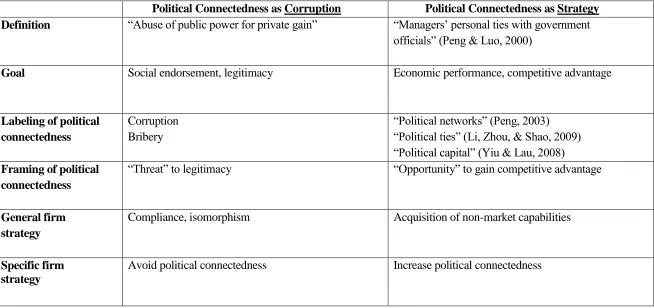
Table 3.1 Two perspectives on political connectedness ...77
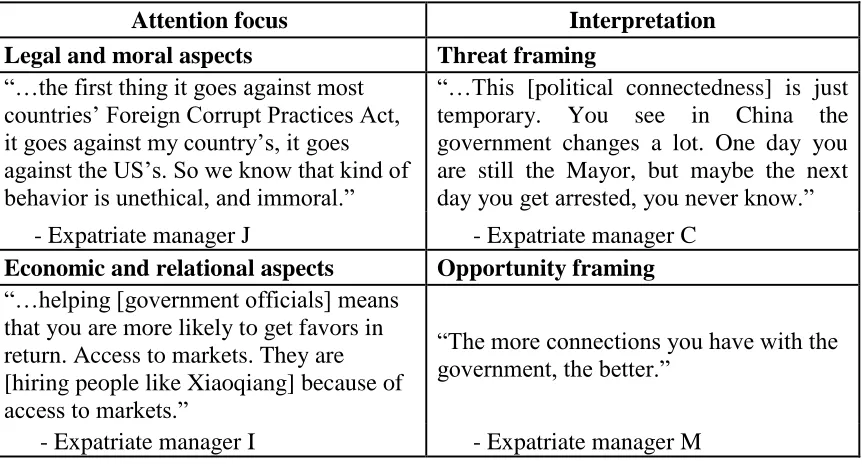
Table 3.2 Institutional sensemaking of political connectedness ...78
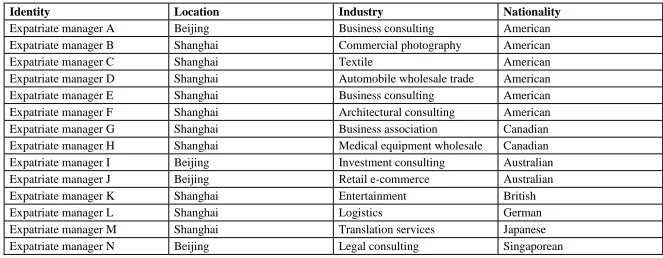
Table 3.3 Sample of expatriate managers by location, industry, and nationality ...79
Table 3.4 Sample sentences used for coding ...80
Table 4.1 Firm’s external environment ...107
Table 4.2 Global industries in which sampled firms operate ...108
Table 4.3 Samples of keywords used for automated coding ...109
Table 4.4 Descriptive statistics and correlations...110
ix
LIST OF FIGURES
Figure 2.1 Cross-level model of institutional logics ...49
Figure 2.2 Interplay among institutional logics across countries………..50
Figure 3.1 Micro-level model of sensemaking ...81
Figure 3.2 Cross-level model of institutional sensemaking ...82
Figure 3.3 Model of institutional sensemaking of political connectedness ...83
1
CHAPTER
1
OVERVIEW
My dissertation is organized as a collection of three integrated essays. Each of the three essays has been developed to make contributions both to the institutional frameworks used in international business and to our understanding of the international business phenomena in emerging countries. Essay 1 is a perspective paper that proposes a new lens to study political connectedness by drawing on the institutional logics perspective. Essay 2 is a qualitative paper that develops the theory of institutional sensemaking of political connectedness by integrating the institutional logics framework and the tripartite sensemaking framework with the insights that I gained into the political connectedness phenomenon during my field research in China. Essay 3 is an empirical paper that examines the relationship between managerial sensemaking and firm’s strategic responses to political connectedness through an analysis of panel data. Overall, my dissertation comprises a new theoretical framework and two unique datasets: one longitudinal and one cross-sectional obtained through interviews. Both of these datasets have great potential to be used in numerous future studies.
1.1 Essay 1
2
concerning international business research from an institutional logics perspective, by which I identify the prevailing logics that shape firm-government interaction in
developed and emerging countries. In line with the extant international business research, I conclude that prevailing logics in emerging countries and those in developed countries are not different in degree, but rather different in kind (Jackson & Deeg, 2008). Then I build on the institutional logics perspective to provide a new perspective to studying differences in firm-government interaction across countries. In this regard, I argue that patrimonial logic is generated when weak logics of the market and the state blend with the strong logics of the family and the community, which results in the prevalence of patronage ties between firms and governments. Such patrimonial logic and the
consequent patronage ties exist in emerging countries to various extents. In developed countries, on the other hand, market logic and state logic dominate the institutional system, “insulating” the domain of firm-government relations against the logics of the family and the community. This results in bureaucratic logic, which leads to the
prevalence of rule-based, impersonal exchanges between firms and governments. This essay contributes to the international business literature on corruption, a deconstruction of which in the essay reveals that our knowledge of firm-government interaction is to a large extent shaped by Western bureaucratic logic, and hence fails to explain such a
non-Western phenomenon as political connectedness (Tsui, 2007).
1.2 Essay 2
3
legitimate exchanges between firms and governments from illegitimate ones. More specifically, the essay shows how different institutional logics differently shape the way managers make sense of and respond to political connectedness by integrating the
institutional logics framework and the tripartite sensemaking framework with the insights gained into the political connectedness phenomenon in China through field research. In this regard, I argue that under bureaucratic logic, managerial attention will be directed to the legal and moral aspects of political connectedness. As a result, political
connectedness will be framed in negative terms, and managers will try to avoid political connectedness. Under patrimonial logic, on the other hand, managerial attention will be directed to the economic and relational aspects of political connectedness. As a result, political connectedness will be framed in positive terms, and managers will try to increase political connectedness.
4
are utilized. Therefore, although these managers essentially seek to increase political connectedness to gain economic benefits in China, they avoid engaging in practices that are blatantly illegal and blatantly immoral in their home country. In other words,
although they do not want to commit to the white area, at the same time they want to avoid the black area. Thus, they end up navigating in the Chinese institutional system by
operating in the gray area, in which they find a balance between the two dissimilar logics.
1.2.1 Methodology
In the field research, I conducted interviews on expatriate managers in China, who were all from countries in which bureaucratic logic is prevalent. In order to prompt participants to talk such a sensitive topic as and political connectedness, I use a scenario in the interviews as a stimulus material. The scenario is based on the corruption scandals of JPMorgan, which routinely hired sons and daughters of government officials to win government contracts (New York Times, 2013). By evaluating the behavior described in the scenario, the participants reveal 1) what aspects of political connectedness they focus their attention on (legal/moral aspects vs. economic/relational aspects), 2) how they frame political connectedness (threat vs. opportunity), and finally 3) how their framings influence their responses, including their likelihood to engage in political connectedness, the solutions they propose, and their perceptions of the causes of political connectedness. The interview data was analyzed by using NVivo software. The theory and the findings of this research contribute to the institutional logics literature by elaborating on the
5
the managerial level and independent of the environment, but is rather embedded in institutions.
1.3 Essay 3
In the final essay, entitled, Institutional logics, managerial sensemaking, and internationalization strategy, I examine how managerial sensemaking shapes firm’s
responses to dissimilar logics of firm-government interaction by looking at the relationship between managerial attention to firm’s external environment and firm’s internationalization strategies.
Drawing on the managerial sensemaking literature (Daft et al., 1988; Nadkarni & Barr, 2008), I argue that managers either focus their attention on the market environment or on the institutional environment. I also propose that such differences in scanning emphasis will affect whether dissimilar institutional logics such as patrimonial logic are framed by managers either as a threat or an opportunity, which in turn will affect their internationalization choices such as whether expand into developed countries, in which bureaucratic logic prevails, or into emerging countries, in which patrimonial logic prevails. Analysis of the panel data shows that managerial attention to the market environment is positively associated with firm expansion into developed countries, whereas managerial attention to the institutional environment is positively associated with firm expansion into emerging countries,. Thus, the essay contributes to the
6
1.3.1 Methodology
This essay uses a panel of 152 U.S. manufacturing firms operating in global industries from 2003 to 2007 to test the arguments. The sample is limited to global industries only because firms within such industries pursue global strategies. The implication is that the market environment and the economic environment should be paramount for the decision makers of these firms, whereas institutional differences across countries should not draw considerable attention. If the results of this study support this argument for firms in global industries, however, then the findings can be easily
generalized to firms in other industries, as managers in multi-domestic and transnational industries are under more pressures to adapt their strategies to local contexts, and hence are more likely to focus their attention on the institutional discrepancies between countries.
Following the extant sensemaking literature (Levy, 2005; Nadkarni et al., 2011), I use CEO’s letters to shareholders published in the annual reports to elicit data for
7
8
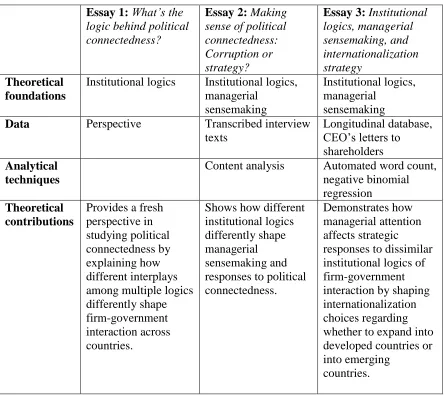
Table 1.1: Dissertation overview
Essay 1: What’s the
logic behind political connectedness?
Essay 2:Making
sense of political connectedness: Corruption or strategy?
Essay 3:Institutional logics, managerial sensemaking, and internationalization strategy Theoretical foundations
Institutional logics Institutional logics, managerial
sensemaking
Institutional logics, managerial
sensemaking
Data Perspective Transcribed interview
texts
Longitudinal database, CEO’s letters to shareholders
Analytical techniques
Content analysis Automated word count, negative binomial regression
Theoretical contributions
Provides a fresh perspective in studying political connectedness by explaining how different interplays among multiple logics differently shape firm-government interaction across countries.
Shows how different institutional logics differently shape managerial sensemaking and responses to political connectedness.
Demonstrates how managerial attention affects strategic responses to dissimilar institutional logics of firm-government interaction by shaping internationalization choices regarding whether to expand into developed countries or into emerging
9
CHAPTER 2
WHAT IS THE LOGIC BEHIND POLITICAL CONNECTEDNESS?
“Some call it gratuities. Some call them questionable payments. Some call it extortion. Some call it grease. Some call it bribery. I look at these payments as necessary to sell a product. I never felt I was doing
anything wrong.” (New York Times, 2008)
Carl Kotchian, former chief operating officer (COO) and vice chairman of Lockheed reflected his bitterness in this way in a 1977 profile in the New York Times, at the Lockheed directors who ousted him from his positions in 1976 based on his $38 million of “questionable payments”. He admitted paying millions of dollars over more than a decade to the Dutch, Japanese and West German politicians, to Italian officials and generals, and to other highly placed figures from Hong Kong to Saudi Arabia, in order to guarantee contracts for military aircrafts. This led to tremendous political upheaval in these countries in the 1970s: Japan's prime minister was jailed, the Italian President resigned, The Dutch Queen threatened to abdicate, etc.
10
legal standpoint, they are illegal and hence undermine the rule of law (Bardhan, 1997; Cuervo-Cazurra, 2008; Kaufmann, 1997; Rose-Ackerman, 1999; Spencer & Gomez, 2011). However, Mr. Kotchian never admitted paying a bribe. Although he admitted paying government officials around the world to purchase his company’s products, he maintained that those payments comprised a necessary part of an exchange between a corporation and a government. This raises questions such as “what constitutes a bribe?”, and “how do we distinguish a bribe from a legitimate exchange between firm and the government?”
Research on corruption and political connectedness in international business is yet to address these questions (Svensson, 2005). In this regard, most studies have not sought to elaborate on the principle or set of principles that distinguish a legitimate exchange between a firm and a government from an illegitimate one (Harstad & Svensson, 2011). Instead, the boundary that separates between legitimate and illegitimate exchanges in researchers’ countries – developed countries – has been taken for granted, and was imposed on countries – emerging countries – whose institutions are fundamentally dissimilar in kind (Jackson & Deeg, 2008; Tsui, 2007). In this regard, personalized exchanges between firms and governments that transcend beyond the legitimate
practices of influence-buying such as lobbying and campaign contributions is labeled as corruption. As a result, most research have ended up applying rational-legal and
11
shift the definitions of a legitimate exchange and make different types of action or practice “rational” or “normal” in different countries (Hall & Soskice, 2001; Witt & Redding, 2009). In this paper, I fill these voids by addressing two research questions:
Research question 1: How is the boundary that separates legitimate and illegitimate exchanges between firms and governments in a society drawn?
Research question 2: How does this boundary differ across countries?
I aim to answer to these questions by drawing on the institutional logics perspective (Friedland & Alford, 1991; Thornton, Ocasio, & Lounsbury, 2012). Institutional logics are defined as “overarching sets of principles that prescribe how to interpret organizational reality, what constitutes appropriate behavior, and how to succeed (Thornton, 2004: 70). Logics, in other words, provide guidelines on how to interpret and function in social situations (Greenwood et al., 2011: 318). The notion of institutional multiplicity or complexity in this perspective suggests that society is constituted through multiple institutional logics, each of whom governs an institutional order, such as the market, state, family, community, religion, etc. The logic of each institutional order differentially shapes the meanings that people give to the situations they face (Thornton et al., 2012). The logics of these institutional orders “are
12
different meaning. Therefore, paying government officials to win government contracts may be considered as grease, or a breach of law, or kin loyalty, or a reciprocal obligation, depending on which logic is applied to make sense of the issue. Based on this, I argue that it is the outcome of the interplay among multiple institutional logics in a given context that determines how corporate actors draw the boundary separating legitimate and illegitimate exchanges between firms and governments.
As for the second research question, I argue that in many emerging countries, weak logics of the market and the state blend with the strong logics of the family and the community to generate patrimonial logic, which results in the prevalence of patronage ties between firms and governments. In developed countries, on the other hand, market logic and state logic dominate the institutional system, “insulating” the domain of firm-government relations against the logics of the family and the community. This results in bureaucratic logic, which leads to the prevalence of rule-based, impersonal exchanges between firms and governments.
2.1 Institutional logics
Institutional logics are defined as “overarching sets of principles that prescribe how to interpret organizational reality, what constitutes appropriate behavior, and how to succeed (Thornton, 2004: 70). Logics, in other words, shape individual and
13
limited. I employ institutional logics framework as the base theoretical foundation for this essay for three reasons.
First, the institutional logics perspective is based on the premise that institutions comprise both material and symbolic elements. Structures and practices materialize the ideas represented by symbols, while symbols give meaning to these structures and practices (Thornton & Ocasio, 1999; Zilber, 2008). This suggests that structures and common practices that constitute the business environment in emerging countries cannot be understood without their underlying meanings. For example, political connectedness may be corruption in developed countries, but it may be a non-market capability in emerging countries. In this regard, the institutional logics approach complements the social perspective in international business, which focuses solely on the observable material aspects of institutions and attaches a priori meanings to them.
Second, international business literature typically emphasizes either economic or social aspects of institutions. In this regard, the economic view focuses on the incentive structures determined by institutions, while the latter stresses the isomorphic pressures exerted by institutions, to explain responses to emerging country institutions. Yet, the institutional logics perspective suggests that actors can be motivated by both economic and social considerations (Friedland & Alford, 1991; Thornton et al., 2012).
14
Finally, the institutional logics perspective suggests that organizational and
individual sensemaking are nested within institutions that are simultaneously constraining and enabling (Thornton et al., 2012). Institutions constrain sensemaking in the sense that the interests, identities and assumptions of actors are embedded in prevailing institutional logics. In this respect, logics are rule-like, socially shared understandings that form the cognitive underpinnings of existing social structures and common practices. At the same time, institutional logics enable sensemaking in the sense that they provide actors with the opportunities to elaborate on and develop prevailing institutional logics. In this respect, institutional logics are toolkits that can be used by actors. This suggests that the way firms and decision makers respond to political connectedness can vary depending on the logic they use to make sense of it. For example, managers of a developed country firm can make sense of political connectedness as a non-market capability if they learn patrimonial logic and apply it to the firm-government context in emerging countries.
15
are, their logics of action, how they act, their vocabularies of motive, and what language is salient, etc.
16
in such countries is theorized more as a family – or a tribe – comprised of network of individuals – i.e. family logic – or groups, than as a bureaucratic organization – i.e. state logic (Friedland & Alford, 1991). Under these circumstances, it is reasonable to expect the government in these countries to be governed more by family logic than state logic. This sort of interplay among logics should also influence the way firm-government relations occur, which will be discussed in the following section.
The concept of inter-institutional system was first introduced by Friedland and Alford (1991), whose purpose was to identify the central institutions of the contemporary Western societies. In this regard, they identified capitalist market, bureaucratic state, democracy, nuclear family, and Christianity as the pillars that shape preferences, interests, and behavior in those societies. This conceptualization was first modified by Thornton (2004), and subsequently by Thornton et al. (2012). The aim of these authors differed from that of Friedland and Alford (1991) in the sense that they sought toadvance the theory of institutional logics by making itsuitable for empirical inquiry through the developmentof a typology of ideal types (Thornton et al., 2012), rather than identifying the central institutional orders in a particular society or societies. To this end, Thornton et al. identified seven institutional orders: family, community, religion, state, market,
profession, and corporation.
17
extents, and in different interactions with each other. Therefore, the way that logics of ideal types blend is what causes heterogeneity across time and space. Based on the extant literature, I identify four institutional orders, or ideal types, that shape behavior in the domain of firm-government interaction: market (Lui, 1985; Tanzi, 1998), state (Collins, 1980; Polanyi, 2001), family (Roth, 1968; Weber, 1968) and community (Budd, 2004; Fukuyama, 2011). I argue that the different blending of these four orders explain variations across countries in the way government-business relations take place.
2.1.1 Market logic
This logic is concerned with the activities human undertake in order to conduct exchange in the most efficient manner (Friedland & Alford, 1991). According to this, individuals’ behavior is a consequence of independent, rational choices they make based on the objective assessments of their interests (Smith, 1776).
18
However, many economists reject the notion of perfect markets. As Friedman (1962) states, markets work as long as transactions are voluntary and informed, but markets alone do not have any mechanisms to ensure this. Therefore, he argues that markets work only if states make and enforce the rules that enforce contracts, define property rights, and facilitate information sharing. North (1990) goes further and argues that market activities are shaped by not only formal, but also by informal rules. Many social science researchers similarly criticized market logic for focusing narrowly on the market and ignoring the other logics embedded in the broad institutional and social structures that shape market activities (DiMaggio & Powell, 1983; Friedland & Alford, 1991; Granovetter, 1985; North, 1990; Polanyi, 2001).
19
2.1.2 State logic
This logic concerns the regulation and coordination of human activity through bureaucratic hierarchies, with the aim of increasing social well-being (Friedland & Alford, 1991; Weber, 1968). Bureaucratized state, the paramount actor in state logic, is based on specialized professional administrators and on a law made and applied by full-time professional jurists for a populace characterized by rights of citizenship (Weber, 1968; Collins, 1980).
The emergence of state logic dates back to the rise of the bureaucratic states in the late seventeenth- and eighteenth-century (Collins, 1980). Before that, legal systems were characterized by patrimonial or magical-religious procedures, by differential application to different social groups and by different localities, and by the practices of officials seeking private gain (: 930). The rise of bureaucratic state, however, led to the enforcement of written laws which ascribed culpability to the individual rather than groups (Friedland & Alford, 1991). In this sense, bureaucratic state constituted the individual as an abstract legal subject with rights –specified independently of social structure – before the law, responsible for his or her actions (: 239).
20
institutional order, any personalized exchange between firms and governments are seen as illegitimate, and labeled as corruption.
A big problem emerges when state logic is transposed to understand firm-government interaction in emerging countries. Although we see some elements of state logic in these countries, it is not strong enough in the institutional system to impose a rational-legal order. The notion of bureaucratic states that attempt to convert diverse individual situations into the basis for routine official decisions (Friedland & Alford, 1991: 249), does not necessarily apply to the context of emerging countries.
Consequently, we should see a shift in the boundary that defines legitimate exchanges between firms and governments where emerging countries are considered. This will be discussed in more detail in the subsequent sections of the paper.
2.1.3 Family logic
21
Family logic and firm-government interaction. In developed countries, the unconditional loyalties which are the ideal of familial relations do not provide a legitimate model for economic behavior. In fact, the logic of the family is allowed to influence economic behavior only on the margins of Western societies, such as the Mafia, or small businesses that are rooted in immigrant communities (Fukuyama, 1996; Tan & Peng, 2002). Once such practices are spotted, they are regarded as deviant,
traditionalistic, and even pathological (Friedland & Alford, 1991).In emerging countries, however, it is widely recognized that allegiance to kinship-based or clan-based loyalties often takes precedence over self-interest and formal rules (Bardhan, 1997, Budd, 2004; Fukuyama, 2011; Roth, 1968; Theobald, 1982; Uricoechea, 1980). Under such
circumstances, it may be “rational” for people to continue to exchange with those who they are related with, to the exclusion of others, even though there are more profitable alternatives.
The situation described above is not limited to exchanges within the market, but also applies to exchanges between firms and governments. In the West, where legal standards – state logic – are applied to such exchanges, anonymous bureaucratic rules strictly regulate the relations between government and business. In developing countries, however, where legal standards are subdued by relational norms – or when state logic is subdued by family logic –, exchanges between business and government become
22
753). This suggests that to the extent that exchanges between firms and governments are not subject to the formal rule of law, they are likely to be subject to the informal rules of relational obligations. It is this characteristic of developing countries that makes
personalized, relationship-based exchanges between firms and governments “rational”, and “legitimate”.
2.1.4 Community logic
Contemporary communities approach (O'Mahony and Lakhani, 2011) defines community as “a group of people who coalesce around any number of identity sources”. This definition includes communities ranging from local communities, socio-political movements, religious groups, social classes, diaspora, etc. The logic of all these
communities is based on the motivation of human activity through reciprocal obligations with the aim of increasing the status of the community (Thornton et al., 2012).
23
firms and governments. In short, the arguments made for the role of family logic in emerging countries can be made also for community logic. The difference between family logic and community logic is that the former concerns unconditional obligations based on kinship and clanship, whereas the latter is related to reciprocal obligations based on a shared identity (Bardhan, 1997; Fukuyama, 2011). In this regard, the influence of community logic in an institutional system is likely to lead to horizontal networks between firms and governments, or so-called cronyism, whereas that of family logic is likely result in vertical networks between firms and governments, or so-called patron-client relationships, or patronage ties.
2.1.5 Blending institutional logics
As explained before, the notion of institutional complexity in the institutional logics perspective suggests that multiple logics simultaneously exist and shape behavior (Thornton et al., 2012). In this sense, it is likely that firm-government interaction in a particular context is guided by multiple logics.
24
the basis for a reliable system of banking, investment, property, and contracts, and set the stage for the industrial revolution in the first place (Collins, 1980). It was the strong bureaucratic states of the West that formed the institutional underpinnings of markets, and hence created Polanyi (2001) similarly argues that the modern market system – market logic – cannot be understood independent of the modern nation-state – state logic. In this regard, he gives a very detailed historical study of how markets, which did not exist prior to the Industrial Revolution, were created for the first time. In the 18th century British statesmen, who were informed by the theories of classical economists – i.e. market logic –, tried to create an economic system based on the notion of self-regulated markets. Though created and sustained by state logic, this system was thought to be independent of the state and society – in line with market logic. After market came to be successful with the Industrial Revolution in Britain, market logic spread throughout the world. In short, market – and its logic –, is not a natural phenomenon that has existed since the beginning of humanity, but rather a superimposition by the British State on its society in the 18th century (Collins, 1980; Polanyi, 2001). The implication is that market logic cannot take roots unless state logic is already developed. In this sense, a strong state logic may not necessarily lead to strong market logic, but is a prerequisite for it (Cuervo-Cazurra & Dau, 2009; Kaufman et al., 1999; Williamson, 2004).
25
relational conception of the person, where identities are constructed through the internalization of others' judgments. Guanxi thus depends upon creating identities, whatever the basis, between people such that norms of mutual obligation can be activated. Gift giving is an aggressive material and symbolical construction of
commonality of insideness, from which obligation logically flows (Friedland & Alford, 1991: 258–259). Put in this way, guanxi-based gift giving reflects a community logic that aims to increase the community’s status by creating a common identity and reciprocal obligations between members. This is distinct from market logic that is based on impersonal, one-time exchanges. Yet, this is not to argue that guanxi-based gift-giving does not include any elements of market logic. It is not realistic to assume that parties of such an exchange are not driven by self-interest whatsoever. Yet, interests and how to maximize them are shaped by the interaction between market logic and community logic, rather than the former alone. In this sense, Chinese people are not necessarily repulsed by the notion of self-interest, but the blend of market logic and community logic provides them a different understanding of self-interest, as well as of how to achieve it.
2.2 Legitimacy of exchanges between firms and governments
2.2.1 Corruption
26
research on corruption has been dominated by two perspectives. A careful reading of these perspectives reveals that they embody three logics. One perspective is solely concerned with the role of rational self-interest and efficiency pressures, and is thus dominated by market logic (Klitgaard, 1988; Leff, 1989; Lui, 1985; Tanzi, 1998). The other perspective deals with the regulation of corruption through both disciplinary market forces and law, and hence is more influenced by a blend of market and state logics
(Bardhan, 1997; Cuervo-Cazurra, 2006; Kaufmann, 1997; La Porta et al., 1999; Mauro, 1995; Schleifer & Vishny, 1993).
The first perspective applies market logic to the issue of corruption. In other words, actors are considered to engage in corruption simply because they have incentives do so. One stream of research in this perspective even suggests that the presence of the state distorts supply and demand, while corruption is a mechanism that equalizes it (Leff, 1989; Lui, 1985). According to this, it is the state that creates the motivation for
corruption by impeding free markets. This point is bluntly illustrated by Tanzi (1998): “If we abolish the state, we abolish corruption” (: 566). Overall, this perspective sees
corruption either as a way to overcome excessive regulatory burdens that inhibit markets to operate, or as an incentive for the government officials to work harder. The former argument is usually applied to developing countries in which state intervention is an issue, whereas the latter applies to developed countries too (Mauro, 1995). Such arguments clearly epitomize market logic.
27
Vishny, 1993; Rodriguez, Uhlenbruck, & Eden, 2005; Spencer & Gomez, 2011;
Svensson, 2005; Treisman, 2000; Voyer & Beamish, 2004), and is also officially adopted by the World Bank, as well as Transparency International. The term “abuse of public power”, of course, typically constitutes a breach of rule of law, and hence involves applying a rational-legal standard to the issue (Misangyi et al., 2008; Svensson, 2005). Thus, it can be argued that the lens through which we view, explain, and address corruption, is rooted in state logic. The approach of International Country Risk Guide (ICRG) to corruption epitomizes this. In this regard, the organization sees corruption as a serious threat to the government’s ability to establish and maintain order, and hence a factor that dramatically increases country risk:
“…insidious sorts of corruption are potentially of much greater risk to foreign business in that they can lead to popular discontent, unrealistic and inefficient controls on the state economy, and encourage the development of the black market.
The greatest risk in such corruption is that at some time it will become so overweening, or some major scandal will be suddenly revealed, as to provoke a popular backlash, resulting in a fall or overthrow of the government, a major reorganizing or restructuring of the country's
political institutions, or, at worst, a breakdown in law and order, rendering the country ungovernable.” (ICRG, 2013)
28
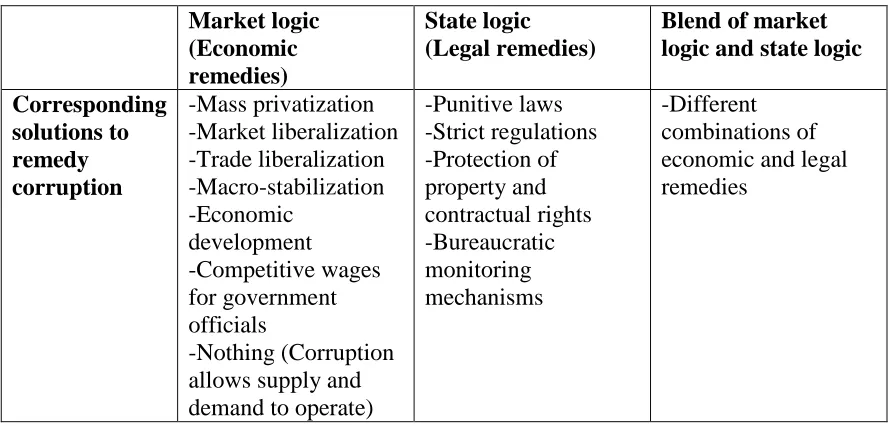
al., 2008: 751). In this regard, corruption is thought to be best remedied both by curtailing discretionary power – e.g. strengthening rule of law, which is a manifestation of state logic – (Cuervo-Cazurra, 2006; La Porta et al., 1999; Mauro, 1995; Voyer & Beamish, 2004), and by incentives to avoid corrupt activities – e.g. increasing government
officials’ wages (Klitgaard, 1988), which is a manifestation of market logic. In addition to this, an influential stream of research within this perspective is based on the view that laws determine the level of corruption in a society indirectly by shaping incentive structures (Kaufmann, 1997; Schleifer & Vishny, 1993), e.g. strictly enforced laws increase the cost of corruption and hence deter people from engaging in it.
However, corruption is a complex phenomenon and understanding and changing a corrupt system requires a more holistic view. Institutional logics approach tells us that the institutional system is not confined to the logic of either the market or the state, but rather is composed of several orders. It may be true that it is predominantly market and state logics that influence actors’ cognitive and behavioral repertoires in the West, but in other countries, different logics may be in play. As a result, practice that is perceived as a corrupt transaction in the West, may be interpreted as loyalty or as reciprocal obligation in other countries, which may increase the prevalence of that practice in those countries.
This holistic view of corruption is in line with the neo-institutional approach to corruption in international business, which takes into consideration the factors beyond the market and the state. In this regard, Spencer and Gomez (2011) demonstrate that when multinationals’ managers perceive that a corrupt practice such as bribery has become institutionalized in a society, they are more likely to conform to those societal
29
empirical evidence that managers in India who perceived corruption to reflect ‘the way things are done’ locally were more likely to engage in corrupt practices, even when they personally viewed them negatively. Uhlenbruck et al. (2006) show that multinationals’ subsidiaries engage in corruption in highly corrupt countries in order to be congruent with local institutions. Despite extending the view on corruption by taking into consideration the domains other than the market and the state, this literature in
international business has neglected to conceptualize corruption. Those scholars rather took the Western definition of corruption for granted, and applied it to emerging country contexts, assuming that multinationals either challenge or conform to the universally defined “corrupt” practices they face in emerging countries. As a result, the literature failed to address how multinationals and their decision makers draw the boundary that separates between legitimate and illegitimate exchanges.
30
2.2.2 Political connectedness
International Country Risk Guide (2013) does not provide a definition of political connectedness but merely identifies it as a form of corruption: “Political connections represent a type of corruption, taking such forms as excessive patronage, nepotism, job reservations, 'favor-for-favors', or secret party funding”. Yet, literature on political connectedness separates from the general corruption literature. This suggests that political connectedness is a distinct phenomenon from corruption.
Peng and Luo (2000) define political ties as individual connections with officers at various levels of government. Faccio (2006), in her pioneering empirical study on political connectedness around the world, defines a company as politically connected if “at least one of its large shareholders – anyone controlling at least 10 percent of voting shares – or one of its top officers – i.e. CEO, president, vice-president, chairman, or secretary – is a member of parliament, a minister, or is closely related to a top politician or party.” (: 369). Similarly, Sun, Mellahi, and Wright (2012) define political connections as “boundary-spanning personal and institutional linkages between firms and the
constituent parts of public authorities.” (: 68). All these definitions suggest that political connectedness involves a long-term interpersonal relationship as opposed to a one-time exchange, which has been the main focus of the general corruption literature.
31
their patron falls from power, leading closely connected firms to underperform under the new regime. Siegel (2007) reports that Korean firms’ network ties to the political regime increases their cross-border alliance activity, while their network ties to the enemies of the political regime decreases it. These empirical studies demonstrate that political connectedness concerns long-term and personal relationships embedded in the political system, and such relationships cannot be easily formed or abandoned, as opposed to impersonal exchanges, which are transient and business oriented in nature.
However, most studies do not elaborate on the nature of those relationships, despite some notable exceptions, such as Siegel (2007) and Sun et al. (2012). In this regard, the implicit assumption in most of the literature is that the parties build and maintain these relationships primarily because they benefit from them (Peng, 2003). This understanding embodies market logic that presumes rational behavior informed by the principles of utility maximization. Similarly, the literature influenced by state logic does not recognize relationships occurring outside the formal rules and roles. It does not distinguish corruption from political connectedness, and labels the exchanges that are facilitated by personal ties between firms and governments as corruption (Cuervo-Cazurra, 2006; Kaufmann, 1997; Rodriguez et al., 2005). Therefore, we need to look at other institutional logics such as family logic and community logic, in order to
32
2.3 The logic behind political connectedness
It is very well known that firms and governments are interconnected all over the world (Faccio, 2006). This includes the developed countries where state is largely
withdrawn from the market, such as Canada, and the U.K. Business-government relations are believed to be very important for U.S. businesses too (Fisman et al., 2012). Otherwise there would not be 12,503 lobbyists in Washington D.C. (Reuters, 2009), the heart a political system that seemingly champions market logic at the expense of state logic around the world. In this sense, we can look at firm-government interaction as a universal phenomenon.
Yet, this is not to say that this interconnection is attained and utilized in the same manner globally. As explained before, most research on political connectedness has looked at informal ties in emerging countries. There is little evidence suggesting that business-government interaction in developed countries may also be facilitated by informal ties. In this regard, Fisman et al. (2012) examined U.S. firms’ political ties to Vice President Dick Cheney. They estimated the value of these ties for firms precisely as zero, meaning that firms did not benefit from being connected to Dick Cheney. The conclusion drawn from this finding is that personal ties to politicians do not yield value to firms in the U.S. Fisman et al. attributed this to the existence of formal control
mechanisms that regulate government-business relations in the U.S. In short, the study suggests that firms cannot leverage informal political ties in countries whose formal institutions are strong.
33
higher in these countries. Siegel (2007) shows that networks with the political regime increased the rate at which Korean companies formed cross-border strategic alliances. Claessens, Feijen, and Laeven (2008) find that Brazilian firms which provided
contributions to elected federal deputies experienced higher stock returns than firms that did not. Peng and Luo (2000) document that managers’ ties with politicians in China increase firm performance. Yiu and Lau (2008) report that network ties with the government in China increases the intensity of firms’ engagement in corporate
entrepreneurial activities, which in turn increases firms’ relative performance. Yiu, Lau, and Bruton (2007) show that political network ties in China positively affect international venturing.
Overall, the literature regards political connectedness as a rational and interest-seeking response to the existing formal institutional arrangements in a country.
34
Overall, most of the literature on political connectedness considers all sorts of informal exchanges between firms and governments as a consequence of institutional underdevelopment, and – either implicitly or explicitly – labels them all as inefficient forms of business-government interaction. Yet, political connectedness could just be one of many ways that enable strategic interaction between firms and governments. From an institutional logics perspective, different blends of logics across countries make different strategies of interacting with the government available to firms. Thus, the different forms of firm-government interaction we see between developed countries and emerging countries are primarily caused by different blending of institutional logics. In developed countries, market and state logics – i.e. impersonal logics – take precedence over family and community logics – i.e. relational logics –, which makes firm-government interaction subject to formal control mechanisms such as laws and regulations (North, 1990; Peng, 2003). As a result, exchanges between firms and governments in these countries tend to be impersonal and rule-based. In emerging countries, on the other hand, relational logics prevail over impersonal logics, which makes firm-government interaction subject to informal control mechanisms such as unconditional loyalties or reciprocal obligations. As a result, exchanges between firms and governments in these countries tend to be
personalized and relationship-based.
Firms’ rule-based, impersonal – formal – exchanges with governments are facilitated by political action committees, lobbying entities, as well as through inter-organizational ties with other government bodies, such as a joint venture with a state-owned enterprise (Sun, Mellahi, & Thun, 2010). On the other hand, personalized,
35
political ties, such as those 1) between corporate executives and politicians or
government officials, e.g. friendships and kinships; 2) between politicians and firms, e.g. politicians sitting on corporate boards; and 3) between corporate executives and political institutions, e.g. executives appointed as politicians (Faccio, 2006). Table 2.3 contrasts the two types of firm-government interaction.
2.4 Varieties of Firm Government Interactions
The domination of an institutional system by a combination of market logic and state logic is a mixture of the ideal economic systems of the two logics, i.e. market capitalism and welfare capitalism. The consequent economic system is one in which neither can market dominate for economic gain nor can state for social gain. This is in fact the case in all developed countries2, in which the government provides with the legal and regulatory framework that regulates and coordinates market exchange with the aim of increasing social well-being, but also in which there is always some market exchange that exists beyond the state's reach. I call this blend of market and state logics bureaucratic logic.
Emerging countries, on the other hand, have other logics than those of the state and of the market that shape their economic systems. Weak state logic in these countries mean that rule of law is not strong. The implication is that although the states in these countries may attempt to regulate and coordinate economic activity, they are not
36
strong family logic and community logic in these countries make unconditional loyalties and reciprocal obligations important factors that shape behavior. Drawing on the extant literature (Budd, 2004; Fukuyama, 2011; Roth, 1968; Theobald, 1982; Uricoechea, 1980), I call this blend of institutional logics – i.e. weak market and state logics, combined with strong family and community logics – patrimonial logic. In such a system, patronage ties between corporate actors and political actors constitute a common practice. Considering this, the existence of patrimonial logic as opposed to bureaucratic logic is probably the most important element that distinguishes emerging countries from developed countries.
The German sociologist Max Weber (1968) originally coined the term
patrimonialism. According to him, patrimonialism meant that the governmental offices originate in the household administration of the patriarchal ruler. Patrimonialism, in this sense, is a result of the extension of patriarchal rule to the military, economic, and
political functions of the state. In other words, patrimonialism occurs when the personage representing the ruling family is amalgamated with the state. This diffusion of patriarchal rule to bureaucracy corresponds to the blend between family logic and state logic in this paper. Scholars who built on Weber subsequently added community logic to this blend. For example, Fukuyama (2011) argues that patronage ties are based on the two principles of kin selection and reciprocal altruism. In this case, the former clearly corresponds to family logic, while the latter certainly amounts to community logic.
37
literature sees patronage ties as a consequence of weak or absent impersonal institutions. In this regard, Weber identified patrimonialism as one of the three forms of traditional domination, the other two being charismatic leadership and feudalism. Although scholars like Fukuyama extended and contributed to Weber’s original conceptualization of
patrimonialism, the view of patronage ties as an inferior, archaic, exotic, and an ineffective form of governance has remained consistent in the literature. For example, Roth (1968) describes several features of patrimonialism including the survival of a traditional regime, “where the researcher, if he gains access at all, can almost perform the feat of travelling into the past” (p. 195-196). Uricoechea (1980), in hisanalysis of
patrimonial foundations of the Brazilian Bureaucratic State, equates patrimonialism with the militarization of the Brazilian society and the consequent human rights abuses: “Monstrosity may be defined as a mode of being, the essential changes of which are contingent and accidental. If we accept this definition, we can readily apply it to
patrimonial bureaucracy" (p. 43). Similar to this, Budd (2004) argues that patrimonialism hinders democracy and economic growth in emerging countries. Finally, Fukuyama (2011) sees patrimonialism as a source of political decay, and an impediment to state building.
As explained earlier, however, an important tenet of this paper is that institutions are not universal (Jackson & Deeg, 2008; Tsui, 2007; Whetten, 2009). Impersonal institutions, i.e. bureaucratic logic that shapes firm-government interaction in the West are not necessarily the norm. Neither is the patrimonial logic that shapes
38
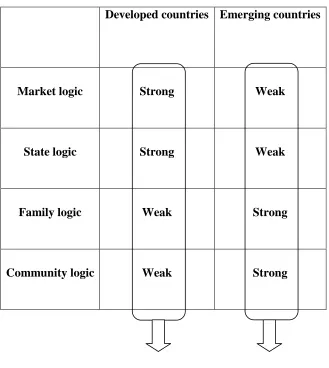
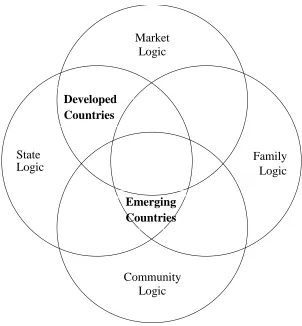
gives rise not just to differences of degree, but the fundamental differences in kind (Jackson & Deeg, 2008). Overall, different forms of firm-government relations across countries are determined by different interplays among institutional logics that create a systemic logic that makes a certain form of firm-government interaction prevalent. In this sense, formal exchanges between firms and governments should be more common in countries where market logic and state logic are strong enough to confine family logic and community logic to their domains. On the other hand, informal exchanges between firms and governments should be more common in countries where logic of the family and community are strong enough to suppress the logics of the market and the state. Figure 2.2 shows countries according to the interplay among institutional logics.
2.5 Discussion
In developed countries, where bureaucratic logic dominates, the boundary that separates legitimate exchanges between firms and governments from the illegitimate ones is determined primarily determined by one principle: the exchange should be based on impersonal rules. Under bureaucratic logic, there is a strict separation between public and private, and hence government officials avoid personalized exchanges, as well as using their power for personal gain. Therefore, in developed countries, a legitimate firm-government interaction is mainly in the form of lobbying or campaign contributions. In emerging countries, however, where family and community logics dominate, exchanges between firms and governments are often personalized. Thus, it is legitimate for
39
normal and rational for exchanges between firms and governments to be facilitated by horizontal and vertical networks between corporate and political actors. This, however, is deemed as corruption in developed countries, as family and community logics are weak, while state logic is strong. This addresses the research questions of this paper by
explaining 1) how the boundary between legitimate and illegitimate exchanges between firms and governments are drawn, and 2) how this boundary differs across countries.
There have been very few attempts to define what corruption and political connectedness are, and how they differ from each other. In this respect, one definition, “abuse of public power for personal gain”, has been taken for granted, and deeply influenced the scholarly approach to the issue. This definition, however, embodies bureaucratic logic, which shapes the way firms and governments interact with each other in the West. In emerging countries, on the other hand, patrimonial logic provides
different strategies of action, and hence leads to different forms of exchanges between firms and governments. In this regard, most studies on emerging countries have ended up imposing Western bureaucratic logic on non-Western phenomena (Tsui, 2007), and erroneously labeled all kinds of informal ties between firms and governments as corruption. Drawing from the institutional logics perspective, this study offers a fresh lens to study firm-government interaction in emerging country contexts, where, not only the logics of the market and the state, but also those of the family and the community together shape the boundary that separates legitimate and illegitimate exchanges between firms and governments.
40
focused on a single dominant logic that shapes the entire institutional system. For example, Lounsbury (2002) documented that during the 1980s, the regulatory logic that emphasized bank lending in the US financial sector yielded to a market logic, which gave rise to retail-oriented financial services competition. Similarly, Lounsbury (2007)
demonstrated that the mutual fund industry in Boston is dominated by trustee logic, which represents a traditional, long-term oriented, and craft-based approach to money management. He found that the mutual fund industry in New York, on the other hand, is dominated by a performance logic, which represents a modern, short-term oriented, professional approach to money management. Although some other studies in the logics literature have acknowledged the co-existence of competing logics, these scholars have assumed that such different logics separately guide different actors. For example, Reay and Hinnings (2009) argued that physicians in the Canadian health care industry adhered to professional logic, whereas the government supported business logic. Marquis and Lounsbury (2007) argued that two logics in the US banking industry compete to
dominate the organizational field: national logic manifested through national banks, and community logic reflected through community banks. Similarly, Greenwood et al. (2010) found that the downsizing decisions of large firms concentrated in regions whose
governments champion regional distinctiveness are influenced by regional logic, whereas those of smaller firms are shaped by family logic. Luo (2007) identified two logics that determine training attitudes across countries: statism, which emphasizes state authority over civil society, and corporatism, which emphasizes a guild-based system with collective bargaining and apprenticeship over a market system with hire-and-fire
41
to prefer continuous learning model of training. Although some exceptional studies have tried to explain how different how logics blend, such attempts have remained scarce. For example, Glynn & Lounsbury (2005) studied how the aesthetic logic that traditionally informs the practices of the symphony and the commercially oriented market logic blended with each other in the context of Atlanta Symphony Orchestra. This paper follows the footsteps of Glynn and Lounsbury by explaining logic blending in the international context of firm-government interaction.
2.5.1 Implications for International Business
The premise of the institutional logics perspective that institutions are simultaneously material and symbolic makes it distinct from neo-institutional
frameworks used in international business (Busenitz, Gomez, & Spencer, 2000; Kostova & Roth, 2002). In this regard, institutional logics are more than regulative, normative, and cognitive structures that impose predictable patterns of behavior through legal and social sanctions, or cultural indoctrination. Logics shape behavior not due to the coercive, normative, and mimetic pressures they exert, but because logics define actors’ interests and enable them to pursue their objectives in a certain way. In this sense, institutions are providers of resources and capabilities that allow its constituents to undertake some activities more successfully than others (Jackson & Deeg, 2008). The implication of this for firm-government interaction is that political connectedness occurs in emerging countries not because it is highly valued by people or imposed by law, but because it is a capability which firms employ when they interact with the government.
42
43
Institutional logics approach has also implications for the broader economic perspective in international business, which solely emphasizes the role of incentive structures as the primary cause of corruption and political connectedness. Regardless of the differences in the antecedents of the incentives – either formal institutions or pure market forces –, all economic perspectives converge on the assumption that actors engage in corruption and political connections mainly because they have interest in doing so. However, institutional logics approach suggests that there are no objective incentives that can be understood independently of actors’ understandings. Institutional logics shape both the ends to which their behavior should be directed, and the means by which those ends are achieved (Friedland & Alford, 1991). In this sense, logics shape the rules by which utility is defined and pursued. As a result, incentives are not universal, but rather contingent on institutions.
2.6 Conclusion
This perspective paper addressed two research questions: 1) What draws the boundary that separates legitimate and illegitimate exchanges between firms and
44
emerging countries in the way that firms and governments interact with each other. In this respect, I argued that political connectedness in emerging countries arises from the interplay among four institutional orders: the market, the state, the family, and the community, which together generate a patrimonial logic. In developed countries, on the other hand, state logic and market logic come together to generate bureaucratic logic, which pervades the institutional systems of these countries, and insulates the logics of the family and the community from the domain of firm-government relations. This results in the prevalence of formal, impersonal exchanges between firms and governments in developed countries.
NOTES
1
i.e. voice and accountability, political stability and absence of violence, government effectiveness, regulatory quality, rule of law, control of corruption.
2
45
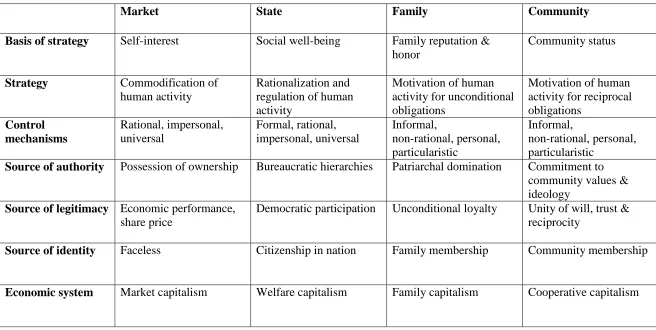
Table 2.1: Institutional orders that shape firm-government interaction, adapted from Thornton, Ocasio, & Lounsbury (2012)
Market State Family Community
Basis of strategy Self-interest Social well-being Family reputation &
honor
Community status
Strategy Commodification of
human activity
Rationalization and regulation of human activity
Motivation of human activity for unconditional obligations
Motivation of human activity for reciprocal obligations Control mechanisms Rational, impersonal, universal Formal, rational, impersonal, universal Informal, non-rational, personal, particularistic Informal, non-rational, personal, particularistic
Source of authority Possession of ownership Bureaucratic hierarchies Patriarchal domination Commitment to
community values & ideology
Source of legitimacy Economic performance,
share price
Democratic participation Unconditional loyalty Unity of will, trust & reciprocity
Source of identity Faceless Citizenship in nation Family membership Community membership
46
Table 2.2: Institutional logics and corresponding remedies for corruption
Market logic (Economic remedies)
State logic (Legal remedies)
Blend of market logic and state logic
Corresponding solutions to remedy corruption -Mass privatization -Market liberalization -Trade liberalization -Macro-stabilization -Economic development -Competitive wages for government officials -Nothing (Corruption allows supply and demand to operate)
47
Table 2.3: Varieties of firm-government interactions, adapted from Faccio (2006) and Sun et al. (2010)
Formal exchanges Informal exchanges
Political action committees Personal ties between corporate executives and politicians or government officials (e.g. kinship, friendship)
Lobbying entities Personal ties between politicians and firms (e.g. politicians sitting on corporate boards)
Inter-organizational ties between firms and political institutions (e.g. joint ventures between public firms and state owned enterprises)
48
Table 2.4: Blends of logics across countries
Developed countries Emerging countries
Market logic Strong Weak
State logic Strong Weak
Family logic Weak Strong
Community logic Weak Strong
49 Macro
(Society)
Micro
(Organizational/ Individual)
Figure 2.1: Cross-level model of institutional logics, adapted from Thornton et al. (2012)
Institutional Logics
Structures and Common Practices
Enacting Logics Learning
Logics
50
Figure 2.2: Interplay among institutional logics across countries
Market Logic
Family Logic
Community Logic State
Logic
Developed Countries
51
CHAPTER 3
MAKING SENSE OF POLITICAL CONNECTEDNESS: CORRUPTION
OR STRATEGY?
3.1. Motivation
JPMorgan Chase hired the son of a former Chinese banking regulator who is now the chairman of the China Everbright Group, a state-controlled financial conglomerate. After the chairman’s son came on board, JPMorgan secured multiple coveted assignments from the Chinese conglomerate, including advising a subsidiary of the company on a stock offering.
The Hong Kong office of JPMorgan hired the daughter of a Chinese railway official when The China Railway Group, a state-controlled
construction company that builds railways for the Chinese government, was in the process of selecting JPMorgan to advise on its plans to become a public company. With JPMorgan’s help, China Railway raised more than $5 billion when it went public in 2007. (New York Times, 2013)
Such hiring practices by JP Morgan in China epitomize the role of political connectedness in emerging countries. In this regard, the incentive for corporations to become politically connected has been recognized among scholars. The source of such value is not limited to preferential treatment by state-owned enterprises or the
52
connectedness in emerging markets in economic and relational terms, and therefore frame them as an opportunity for firms.
Yet, forming direct or indirect ties to foreign government officials poses challenges to multinational enterprises from developed countries. Because such practices violate the legal and social norms in their home countries, developed country firms are likely to face legal and social sanctions if they engage in political
connectedness abroad (Rodriguez et al., 2005; Spencer & Gomez, 2011). Thus, political connectedness may hurt a developed country firm’s legitimacy not only in their home countries, but all around the world (Kostova & Zaheer, 1999). For instance, the Securities and Exchange Commission opened an anti-bribery into JP Morgan’s hiring practices in China. Further, this investigation, along with the hiring practices themselves, is extensively reported by the global media, which negatively affects the JP Morgan’s international reputation. In this respect, the international business literature on corruption conceptualizes political connectedness in social terms, and frames them as a threat to firms.