Accepted Article
Title:
Electronic effects of aromatic rings on the catalytic activity of
�dioxidomolybdenum(VI)-hydrazone complexes
Authors:
Rahman Bikas, Vito Lippolis, Nader Noshiranzadeh, Hossein
Farzaneh-Bonab�, Alexander J. � Blake, Milosz Siczek�,
Hassan Hosseini-Monfared�, and Tadeusz Lis
This manuscript has been accepted after peer review and appears as an
Accepted Article online prior to editing, proofing, and formal publication
of the final Version of Record (VoR). This work is currently citable by
using the Digital Object Identifier (DOI) given below. The VoR will be
published online in Early View as soon as possible and may be different
to this Accepted Article as a result of editing. Readers should obtain
the VoR from the journal website shown below when it is published
to ensure accuracy of information. The authors are responsible for the
content of this Accepted Article.
To be cited as:
Eur. J. Inorg. Chem.
10.1002/ejic.201601359
Electronic effects of aromatic rings on the catalytic activity of
dioxidomolybdenum(VI)-hydrazone complexes
Rahman Bikas,
[a,*]Vito Lippolis,
[b,*]Nader Noshiranzadeh,
[a]Hossein Farzaneh-Bonab,
[a]Alexander J.
Blake,
[c]Milosz Siczek,
[d]Hassan Hosseini-Monfared,
[a]and Tadeusz Lis
[d]Abstract: Nine dioxidomolybdenum(VI) complexes were synthesized by the reaction of MoO3 with tridentate hydrazone Schiff
base ligands obtained from the reaction of aromatic acid hydrazides (3-hydroxy-2-naphthoic acid hydrazide, 4-pyridine carboxylic acid hydrazide or 2-furane carboxylic acid hydrazide) and ortho-hydroxy aldehyde derivatives (5-iodo-2-hydroxybenzaldehyde, 2-hydroxy-1-naphthaldehyde or 2-hydroxy-3-methoxybenzaldehyde). All ligands and complexes were characterized by elemental analysis and spectroscopic methods. The structures of seven complexes were further elucidated by single-crystal X-ray diffraction analysis which indicated a distorted octahedral geometry at the metal centre. Spectroscopic and X-ray analyses indicated that the ligands are coordinated to the molybdenum(VI) ion as dinegative ligands due to deprotonation of phenolic OH and amidic NH groups upon complexation. These complexes were used as catalyst in the oxidation of cyclooctene and thioanisole in the presence of hydrogen peroxide as environmental friendly oxidant. In order to achieve the highest catalytic activity, the effects of important parameters such as solvent, temperature and the molar ratio of oxidant to substrate were optimized. The results indicate that electron-withdrawing substituents on the ligands increase the catalytic activity of dioxidomolybdenum(VI)-hydrazone complexes.
Introduction
Oxidation of organic compounds is an important chemical reaction found both in nature and in the chemical industry.1 In
the latter, oxidation reactions are essential for the production of oxygenated species which allow access to a large variety of important organic compounds.2 Since most oxidation reactions
are very slow in the absence of catalysts, the catalytic oxidation of organic substrates by transition metal complexes has become
an important research area in organic synthesis and bioinorganic modeling of oxygen transfer metalloenzymes.3 Over
the past decades, several transition metals have been widely used as homogenous or heterogeneous catalysts in various oxidation systems.4 Epoxidation of olefins and selective
oxidation of sulfides to sulfoxides are two kinds of oxidation reactions which have attracted considerable attention during recent decades.5 This interest is mainly due to their diverse
application in various fields. Sulfoxides are useful building blocks as chiral auxiliaries in organic synthesis6 and possess a wide
range of biological activities, e.g. antimicrobial properties,7
inhibition of the biosynthesis of uric acid and gastric acid secretion8 or the regulation of cholesterol catabolism.9 Epoxides
are well-known as interesting and versatile intermediates or precursors for the synthesis of pharmaceuticals, agrochemicals, and many other compounds.10 Treating alkenes with
peroxide-containing reagents that donate a single oxygen atom in the presence of transition metal catalysts is a famous reaction for generating epoxides under mild conditions.11 Using H
2O2 as a
source of an O atom is very attractive in this method because aqueous H2O2 is inexpensive, environmentally benign and easy
to handle.12 The reaction of H
2O2 with the metal generates the
active metal catalyst with a peroxy ligand (MOOR), which then transfers an O center to the substrate.13
Increasing catalytic activity and selectivity is one of the challenges in chemical science and it has attracted considerable attention in recent decades. In catalytic reactions it is obvious that the catalytic activity and product selectivity depend on several parameters.14 Reagents and experimental conditions for
catalytic reactions must be carefully chosen in order to maximize conversion and minimize wastes. The structure and composition of catalyst, the nature of oxidant and the temperature are some of the well-known parameters which have powerful influences on the activity of catalytic systems.15 In some cases, catalysts can
be modified with a range of additives or promoters that enhance rates or selectivity.16 Some studies have shown that specific
steric and electronic properties of the ligand are also essential parameters which may provide an opportunity to further enhance the catalytic activity or selectivity.17
Among metal-based catalysts, Mo-containing compounds are known to be highly active catalysts for oxidation reactions in the presence of peroxides and some of them are currently used in several industrial processes. Mo(VI)-oxido complexes synthesized from the reaction of molybdenum(VI) ions and organic ligands are one of the most efficient class of
[a] Department of Chemistry, Faculty of Sciences, University of Zanjan 45195-313, Zanjan, Iran.
[b] Dipartimento di Scienze Chimiche e Geologiche, Università degli Studi di Cagliari S.S. 554 Bivio per Sestu 09042 Monserrato, Italy.
[c] School of Chemistry, The University of Nottingham, The University Park, NG7 2RD Nottingham, UK.
[d] Faculty of Chemistry, University of Wroclaw, Joliot-Curie 14, Wroclaw 50-383, Poland.
FULL PAPER
complexes have structural similarities with a class of mononuclear molybdoenzymes capable of transferring oxygen atoms and can be use as suitable models for mimicking biological systems.19 Although several studies have been
reported on the catalytic properties of Mo(VI) complexes, information regarding the effects of various organic ligands on the catalytic activity of such catalytic systems is relatively rare. Hydrazone ligands obtained from the reaction of aromatic acid hydrazides, R-C(=O)–NH–NH2, with ortho-hydroxybenzaldehyde
derivatives are special class of N- and O-donor Schiff base ligands which have a high tendency to form transition metal complexes.20 These ligands can stabilize transition metal ions in
high oxidation states and their complexes have high stability under the conditions found in catalytic oxidation reactions.21
Although this type of ligand is usually tridentate (ONO), depending on the nature of R-group connected to the –C(=O)– NH–N= moiety they can act as ditopic ligands to form multinuclear transition metal complexes and coordination polymers.22 They can form Mo(VI) complexes with general
formula of Mo(VI)O2L (L = hydrazone ligand) which are known to
be efficient (pre)catalysts for various oxidation reactions.23
By considering the catalytic applications of dioxidomolybdenum(VI) complexes in oxidation reactions and our studies of the catalytic properties of hydrazone complexes, we aimed to prepare Mo(VI)-hydrazone complexes and use them in the oxidation of olefins and sulfides. In the present work we report the synthesis, characterization, crystal structures and catalytic activity of nine dioxidomolybdenum(VI) complexes obtained from the reaction of MoO3 with the hydrazone Schiff
base ligands showed in Scheme 1. In this project we have studied the effects of aromatic rings connected to the –C(=O)– NH–N= group on the catalytic activity of Mo(VI)-hydrazone complexes.
Scheme 1. a) Hydrazone Schiff-base ligands and b) Mo(VI)-complexes synthesized in the present work.
Results and Discussion
Synthesis of the ligands and Mo(VI)-complexes
The reaction of aromatic (hydroxynaphthalen, 4-pyridine or 2-furane) carboxylic acid hydrazides with aromatic o -hydroxyaldehyde derivatives in methanol gave the desired tridentate Schiff base ligands (H2Lna-c, n = 1, 2, 3, see Scheme 1)
in excellent yields and purity. Dioxidomolybdenum(VI) complexes of these hydrazone Schiff base ligands were synthesized by the reaction of the appropriate ligand with equimolar amount of MoO3 in methanol (see Experimental
Section and Electronic Supporting Information).† 1H and 13C
NMR spectral data of the ligands in DMSO-d6 confirmed the
proposed structure of the ligands. The signal at δ 12.08–12.68 ppm in the spectra of H2Lna-c (n = 1, 2, 3) is assigned to the
common NH-group, concomitant with the observation of a rapid loss of these signals when D2O is added to the solution. The
signals in the range δ 10.69-12.24 in the spectra of H2Lna-c (n = 1,
2, 3) are also lost upon addition of D2O to the solution. Hence,
this signal is assigned to the aromatic –OH group. The resonances observed in the range δ 8.3–8.7 ppm are attributed to the azomethine group (–CH=N–) in the spectra of H2Lna-c (n =
1, 2, 3). The chemical shifts for the complexes are comparable and very close to each other. On complexation the absence of amidic N–H and phenolic O–H 1H NMR signal indicates the
coordination of ligands as dianionic ligands in the enol form. In complexes 1, 2 and 3 the peak at about 11 ppm is due to the naphtholic O–H group. In the 1H NMR spectrum of complexes
(except complexes 4 and 5) the peak at about 3.7 ppm is due to the presence of methanol in the structure of complexes. The peak of OH group of methanol appears at about 4.1 ppm. A comparison of the IR spectra of the complexes with free ligands provides evidence for the coordination of the ligands in the complexes. A list of the important vibrational frequencies (IR spectra) of the free ligands and their dioxidomolybdenum complexes, which are useful for determining the mode of coordination of the ligands, are given in the in the Electronic Supporting Information (ESI).† All hydrazone Schiff base ligands [H2Lna-c (n = 1, 2, 3)] exhibit a broad band between 3170–3270
cm−1 due to the amidic –NH-vibrations. In addition a broad band
centered at 3400–3460 cm-1 in H
2Lna-c is due to the aromatic O–
H groups, probably involved in hydrogen bonding interactions. In the IR spectra of H2Lna-c a very strong band appears around
1645–1680 cm−1 which is due to C=O-vibration.24 On
complexation the absence of N-H and C=O bands and red shifts in azomethine (–C=N–) band of the ligands show coordination of H2Lna-c in the enol form. The infrared spectra of complexes
display IR absorption band around 1600 cm-1 which can be
assigned to the C=N stretching frequency of the coordinated hydrazone ligand whereas for the free ligands the same band is observed around 1610 cm-1.25 Two strong bands at 920–940
cm−1 and 960–985 cm−1 are observed as new peaks assigned to ν(Mo=O), which are not present in the spectra of the free ligands.
Description of crystal structures
crystals of 1-6 and 9 (Scheme 1, see Experimental Section). Selected bond lengths and angles are collected in Table S1 (in the Electronic Supplementary Information, ESI).†
The molecular structure with the atom numbering scheme of complex 1 is shown in Fig. 1a (see Figs. S1-S4 for complexes 2,
3, 5, 9, respectively). These complexes are neutral mononuclear complexes of dioxidomolybdenum(VI) and in general have similar coordination geometries at the metal centre.
Fig. 1. a) The structure of complex [MoO2(L1a)(CH3OH)] (1) with
the atom numbering scheme. Displacement ellipsoids are drawn at the 30% probability level; b) Dimeric unit formed by intermolecular hydrogen bonding in complex 1. Hydrogen bonds are shown as green dashed lines (see Tables S1 and S2 for selected bond distances and angles).
The molybdenum atom in these complexes has distorted octahedral geometry in an NO5 donor environment with the
nitrogen and two oxygen atoms provided by the Schiff base ligand, two oxygen atoms from oxido ligands and one oxygen atom from a coordinated methanol molecule. The O,N,O donor atoms from the Schiff base ligands together with the oxido ligand, O2, form the basal plane of the pseudo-octahedral coordination environment, while the oxygen atom of methanol molecule and second oxido ligand O1 are located in the axial positions. The oxido ligands, O1, O2, are mutually cis. The short Mo–Ooxido
distance (≈1.69 Å) indicates the presence of a molybdenum– oxygen double bond which is commonly found in cis-[MoO2]2+
complexes.26 The Mo–O
methanol bond length is longer than the
other Mo–O bond distances, which can be attributed to the trans influence of the oxido group. The equatorial MoNO3 unit is far
from planar. The deviation of the molybdenum atom from the mean plane defined by the independent hydrazone Schiff base nitrogen atom N1 and oxygen atoms O3, O4, and the oxygen atom O2 is 0.337(6), 0.305(8), 0.351(3), 0.320(1) and 0.331(4) Å
for 1-3,5 and 9, respectively. The molybdenum to oxygen bond lengths follows the order Mo–oxido oxygen < Mo–phenolate oxygen < Mo–enolate oxygen < Mo–methanol oxygen. The amidic hydrogen of the ligands has been eliminated during the complexation. The C8–O4 and C8–N2 bond lengths are close to those reported for hydrazone based ligands coordinating to a metal centre in the enolic form.27 This finding indicates that
ligands H2L1a-c, H2L2b, and H2L3c act as tridentate dinegative
ligands in the reported Mo complexes. In complexes 1-3, 5, and
9 two molecules of complex are connected together by intermolecular O(methanol)–H···O (in 1-3) or O(methanol)–H···N (in 5
and 9) hydrogen bonds, thus creating a pseudo-dimer as depicted in Fig. 1b (for 1) and Figs. S1-S4 (for complexes 2, 3, 5,
9, respectively). This intermolecular hydrogen bond stabilizes the crystal structure of the mentioned complexes. There is an intramolecular O(naphthol)–H···N hydrogen bond in the crystal
structure of 1-3 with the N atom of amidic group acting as hydrogen bond acceptor, while in complex 5 an intramolecular π-π stacking interaction between the pyridyl moieties of the hydrazone ligands contributes to stabilize the dimers. Parameters of hydrogen bonding geometry are given in Table S2.
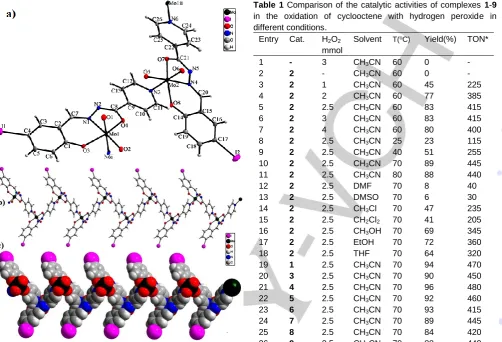
The molecular structure with the atom numbering scheme of complex 4 is shown in Fig. 2a (see Fig. S5 for 6). These compounds are neutral, one-dimensional coordination polymers of dioxidomolybdenum(VI) and show a similar geometry. The repetitive unit of these coordination polymers features two crystallographically independent molecules of complex [MoO2(L)] (L = (L2a)2- (4), (L2c)2- (6)) connected head-to-tail by the
pyridyl moiety of the hydrazone ligand via an Mo–N coordination bond (see Figs. 2 and S5). In 4 and 6, each Mo(VI) atom is six-coordinated by O1enol, N1imine, and O1phenol atoms from dinegative
hydrazone ligands (L2a)2- and (L2c)2-, respectively. The two oxido
ligands O1 and O2 and the N4-py from the second hydrazone
ligand complete a distorted octahedral coordination sphere. The O,N,O donor atoms of the Schiff base ligands together with oxygen atom of the oxido ligand O2 form the basal plane. One axial position is occupied by the oxygen atom from oxido ligand O1, while the other is occupied by the pyridyl nitrogen atom from the hydrazone ligand of a second complex unit. As a result, the hydrazone ligands H2L2a and H2L2c in their dianionic forms act as
ditopic ligands by coordinating one Mo(VI) core through the O,N,O-donor set, and the second Mo(VI) core by N atom from the pyridyl moiety. The Mo–N4-Py bond length is longer than the
other bond distances due to the trans influence of the oxido ligand. The short Mo–Ooxido distances (≈1.69 Å) confirm the
presence of a molybdenum–oxygen double bond. The C8–O4 and C8–N2 bond lengths are close to those reported for hydrazone based ligands coordinating to a metal centre in the enolic form.27 There are several C–H···O, C–H···π and π···π
interactions in the crystal packing of both compounds 4 and 6
which stabilize the crystal structure and convert one-dimensional polymeric chains to two-dimensional polymeric sheet (Figs. S6, S7). It is noteworthy that polymeric complexes such as 4 and 6
[image:4.595.50.291.174.431.2]FULL PAPER
Fig. 2. a) The structure of compound [MoO2(L2a)]n (4) with the
atom numbering scheme. Displacement ellipsoids are drawn at the 30% probability level; one-dimensional polymeric chain of compound 4 shown in b) ball and stick mode and c) space-filling mode (see Tables S1 and S2 for selected bond distances and angles).
Catalytic studies
The catalytic oxidation of cyclooctene as a representative substrate for olefins and methyl phenyl sulfide (thioanisole) as a representative substrate for sulfides with hydrogen peroxide was studied in the presence of Mo(VI) complexes. Aqueous solution of hydrogen peroxide (30 wt%) was selected as cheap and environmental benign oxidant in these reactions. The results of control experiments revealed that the presence of both catalyst and oxidant (H2O2) are essential for the oxidation reactions.
Preliminary tests indicated that the reactivity of thioanisole is very high in comparison to cyclooctene, so the reactions for thioanisole were carried out under different conditions from those for cyclooctene. Results of the studies for cyclooctene and thioanisole are summarized in Tables 1 and 2, respectively. Some reaction conditions which can be changed to achieve the maximum oxidation of substrates, such as the oxidant concentration (moles of oxidant per moles of substrate), temperature and solvent of the reaction were investigated. Since the active core of complexes have the same geometry, complex
2 was used to establish suitable reaction conditions.
Table 1 Comparison of the catalytic activities of complexes 1-9
in the oxidation of cyclooctene with hydrogen peroxide in different conditions.
Entry Cat. H2O2
mmol
Solvent T(oC) Yield(%) TON*
1 - 3 CH3CN 60 0 -
2 2 - CH3CN 60 0 -
3 2 1 CH3CN 60 45 225
4 2 2 CH3CN 60 77 385
5 2 2.5 CH3CN 60 83 415
6 2 3 CH3CN 60 83 415
7 2 4 CH3CN 60 80 400
8 2 2.5 CH3CN 25 23 115
9 2 2.5 CH3CN 40 51 255
10 2 2.5 CH3CN 70 89 445
11 2 2.5 CH3CN 80 88 440
12 2 2.5 DMF 70 8 40
13 2 2.5 DMSO 70 6 30 14 2 2.5 CH3Cl 70 47 235
15 2 2.5 CH2Cl2 70 41 205
16 2 2.5 CH3OH 70 69 345
17 2 2.5 EtOH 70 72 360 18 2 2.5 THF 70 64 320 19 1 2.5 CH3CN 70 94 470
20 3 2.5 CH3CN 70 90 450
21 4 2.5 CH3CN 70 96 480
22 5 2.5 CH3CN 70 92 460
23 6 2.5 CH3CN 70 93 415
24 7 2.5 CH3CN 70 89 445
25 8 2.5 CH3CN 70 84 420
26 9 2.5 CH3CN 70 88 440
Reaction conditions: catalyst, 2 μmol; cyclooctene, 1 mmol; solvent, 3 mL; time, 4 h. * TON = (mmol of epoxide)/(mmol of catalyst).
Control reactions indicated that the catalytic behavior of complexes 4 and 6 which have polymeric structures is quite similar to that of mononuclear complexes and there is no significant difference in their catalytic behaviors. The catalytic oxidation of cyclooctene by H2O2 in the presence of complexes 1-9 indicates that cyclooctene converts to the corresponding epoxide with 100% selectivity at 60 °C. The effect of oxidant concentration on the oxidation reactions by 2 at 60 °C is illustrated in Fig. 3 and Table 1 (entries 3-7).
With other conditions such as solvent, temperature and the ratio of substrate to catalyst kept constant, different oxidant/substrate molar ratios (1:1, 2:1, 2.5:1, 3:1 and 4:1) were investigated. As shown in Table 1, the conversion was increased with increasing the hydrogen peroxide:cyclooctene molar ratios from 1:1 to 2.5:1; further increasing of the amount of H2O2 did not improve
the conversion. At H2O2:cyclooctene molar ratio of 1:1, 2:1 and
[image:5.595.51.554.85.427.2] [image:5.595.268.541.118.437.2]H2O2:cyclooctene was selected as the optimal value to achieve
the highest yields of epoxide.
Fig. 3. Effect of H2O2 concentration on the oxidation of
cyclooctene by 2. Reaction conditions: catalyst, complex 2, 2 μmol; CH3CN, 3 mL; cyclooctene, 1 mmol; temperature, 60±2 °C.
Cyclooctene conversions (%) are reported with error bars.
Due to considerable effects of solvents in the homogeneous catalytic systems, the influence of different solvents (including acetonitrile, DMF, DMSO, methanol, ethanol, dichloromethane, chloroform and THF) was studied in the catalytic oxidation of cyclooctene in the presence of complex 2 and H2O2. Table 1
illustrates the influence of the solvent on the catalytic oxidation of cyclooctene. Acetonitrile was found to be the most suitable solvent for the catalytic system being studied, with the highest conversion of cyclooctene, 83%, obtained after 4 hours in acetonitrile at 60 °C. In DMF and DMSO the reaction was very slow and the maximum conversion of cyclootene in these solvents was below 10% after 4 hours; this can be attributed to the higher donor number and coordinating ability to the metal core of these solvents. Similar observation has been seen in methanol and ethanol whose their coordinating ability is higher than acetonitrile but is lower than DMF and DMSO. Dichloromethane and chloroform have low donor properties but the activity of complex 2 in these solvents also is lower than in acetonitrile. This finding can be attributed to the fact that the polarities of these solvents are low and also they are immiscible with hydrogen peroxide. In addition the solubilities of dioxidomolybdenum complexes in these solvents are low in comparison with other solvents. In general, it is seen that the solvents with moderate donation ability and high polarities seemed to favour the oxidation reaction being studied. Solvents with high coordinating properties and solvents with low polarities are therefore not suitable solvents for this reaction.
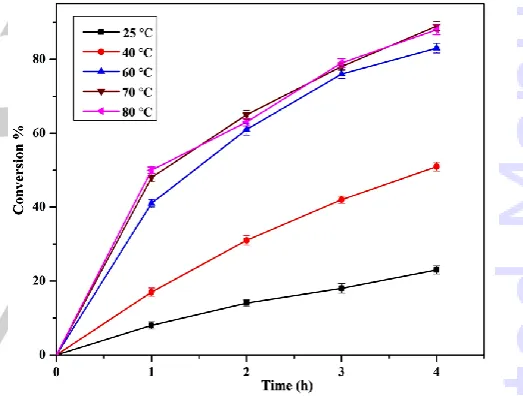
Temperature can be considered as one of the other most important factors in the activity of various catalytic systems. Many biological and industrial catalytic systems are sensitive to temperature and show higher activity in particular temperature ranges. Thus, the oxidation of cyclooctene was also studied at
various temperatures including room temperature (25 C), 40, 60, 70 and 80 °C (see Fig. 4). The results of these studies show that the catalytic activity of complex 2 increases with increasing temperature up to 70 °C but a further increase to 80 °C does not improve the conversion.
The catalytic activity of 1-9 in the epoxidation of cyclooctene was compared under the optimized conditions for catalyst 2
(H2O2:substrate molar ratio = 2.5:1, acetonitrile, reaction
temperature 70 °C) and showed little variation in their catalytic activity. All complexes are able to convert cyclooctene to cycloctene oxide with 100% yield and selectivity after 5 hours. However, by focusing on the results of catalytic reactions after 4 hours it is clearly seen that the complexes with electron-withdrawing groups show higher catalytic activity. This finding indicates that the substituents on ligands can affect the activity of these complexes. The comparison of the catalytic activity of complexes with same salicylidine moiety but different group connected to hydrazone group, {(1, 4, 7), (2, 5, 8) or (3, 6, 9)}, shows that the catalytic activity of complexes with pyridine ring (4-6) is a little higher than complexes with 2-naphtholic (1-3) or furan (7-9) rings.
Fig. 4. Effect of the reaction temperature on the oxidation of cyclooctene by 2. Reaction conditions: catalyst, complex 2, 2 μmol; CH3CN, 3 mL; cyclooctene, 1 mmol; H2O2, 2.5 mmol.
Cyclooctene conversions (%) are reported with error bars.
This finding indicates that electron-withdrawing group connected to the −C=(O)−NH−N=C moiety increases the catalytic activity of dioxidomolybdenum-hydrazone complexes. Moreover, comparing the catalytic reactivity of complexes with the same ring connected to the hydrazone moiety but with various salicylidine part confirms this finding. Complexes with the electron-donating −OCH3 substituent have relatively lower
[image:6.595.47.290.108.305.2] [image:6.595.301.563.322.520.2]dioxidomolybdenum-FULL PAPER
hydrazone complexes with stronger electron-withdrawing groups will show even higher levels of catalytic activity.
Since sulfoxides are useful building blocks in organic synthesis,6
selective oxidation of sulfides to sulfoxides is an other important transformations in organic chemistry. Oxidation of sulfides occurs under milder conditions than olefins and a wide range of transition metal complexes can catalyze this reaction in the presence of a suitable oxidant. However, the oxidation of sulfides is very low in the absence of catalyst.28 In order to study
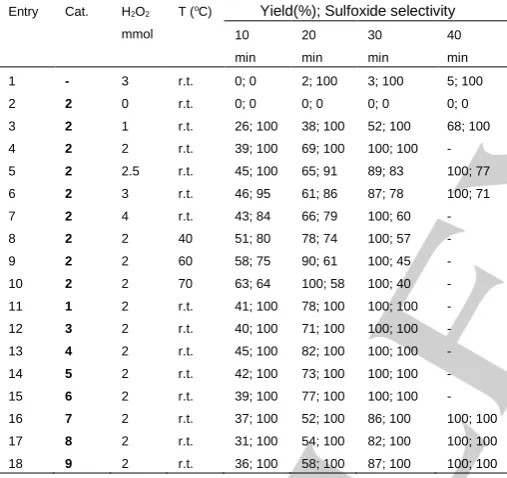
the catalytic properties of complexes 1-9 in the oxidation of sulfides, the oxidation of thioanisole was studied under various conditions in the presence of complex 2. The results (Table 2) show that thioanisole is converted to the corresponding sulfoxide with 100% selectivity by these complexes at room temperature (25 oC).
Table 2 Comparison of the catalytic activities of complexes 1-9
in the oxidation of thioanisole with hydrogen peroxide in different conditions.
Entry Cat. H2O2
mmol
T (oC) Yield(%); Sulfoxide selectivity
10 min
20 min
30 min
40 min
1 - 3 r.t. 0; 0 2; 100 3; 100 5; 100 2 2 0 r.t. 0; 0 0; 0 0; 0 0; 0 3 2 1 r.t. 26; 100 38; 100 52; 100 68; 100 4 2 2 r.t. 39; 100 69; 100 100; 100 - 5 2 2.5 r.t. 45; 100 65; 91 89; 83 100; 77 6 2 3 r.t. 46; 95 61; 86 87; 78 100; 71 7 2 4 r.t. 43; 84 66; 79 100; 60 - 8 2 2 40 51; 80 78; 74 100; 57 - 9 2 2 60 58; 75 90; 61 100; 45 - 10 2 2 70 63; 64 100; 58 100; 40 - 11 1 2 r.t. 41; 100 78; 100 100; 100 - 12 3 2 r.t. 40; 100 71; 100 100; 100 - 13 4 2 r.t. 45; 100 82; 100 100; 100 - 14 5 2 r.t. 42; 100 73; 100 100; 100 - 15 6 2 r.t. 39; 100 77; 100 100; 100 - 16 7 2 r.t. 37; 100 52; 100 86; 100 100; 100 17 8 2 r.t. 31; 100 54; 100 82; 100 100; 100 18 9 2 r.t. 36; 100 58; 100 87; 100 100; 100 Reaction conditions: catalyst, 2 μmol; thioanisole, 1 mmol; acetonitrile 3 mL, r.t. = 25 oC.
Higher temperature increased the conversion of sulfide in a shorter time of reaction. Nevertheless, the selectivity of sulfoxide decreased when the reaction was carried out at higher temperatures (40, 60 and 70 °C) (Table 2). At high temperatures methylsulfonylbenzene (sulfone) was obtained as a byproduct by further oxidation of methylsulfinylbenzene (sulfoxide). As shown in Table 2, at room temperature the conversion of thioanisole increases considerably as the molar ratio of H2O2 to
thioanisole is raised from 1.0 to 2, but a further increase decreases the selectivity towards sulfoxide. This shows that the higher amount of H2O2 facilitates the over-oxidation of sulfoxide
to sulfone. The effect of solvent in the oxidation of thioanisole was very similar to the solvent effect in the oxidation of cyclooctene. By considering the results obtained from the
oxidation of thioanisole in the presence of complex 2, the oxidation of thioanisole was studied in the presence of other oxidomolybdenum(VI) complexes (1, 3-9). The results are collected in Table 2 and indicate these complexes have quite similar catalytic activity in the oxidation of thioanisole and can be considered as selective catalysts for the oxidation of sulfide to sulfoxide at room temperature.
Although the details of catalytic mechanism are not studied in the present work, by considering the previous studies on similar systems18,29 and also on the basis of the electronic absorption
spectroscopy studies of complex 2 (see Fig. S8), it is predicted that the key step in this catalytic process is the oxidation of substrates by oxidoperoxidomolybdenum-hydrazone species. Electronic absorption spectroscopy indicates that the solution of complex 2 in methanol is sensitive towards addition of H2O2. By
increasing H2O2 to the methanolic solution of complex 2, the
intensity of absorption bands at about 220, 290 and 330 nm increases. Moreover, the shoulder at about 400 nm disappears by addition of H2O2. These changes can be attributed to the
formation of oxidoperoxidomolybdenum species.18b,29,30 This is in
agreement with the hypothesis that electron-withdrawing substituents on the hydrazone ligands might effect the formation of such species and consequently the overall catalytic activity. In comparison with the previously reported articles based on catalytic oxidation of olefins and sulfides by Mo(VI) complexes18,29 the catalytic activities of complexes reported in
this study are in the normal range expected for Mo(VI) complexes.
Conclusions
In this work nine dioxidomolybdenum(VI) complexes of tridentate Schiff base ligands were synthesized and characterized by spectroscopic methods and single crystal X-ray diffraction. Spectroscopic and X-ray analyses indicated that the ligands are coordinated to the metal core as dinegative ligands by deporotonation through phenolic OH and amidic NH groups. These complexes were used as catalysts in the oxidation of cyclooctene and thioanisole in the presence of hydrogen peroxide as environmental benign oxidant. The effects of parameters such as solvent, temperature and the molar ratio of oxidant to substrate were studied. These complexes are effective and selective catalysts for oxidation of cyclooctene and thioanisole and our results indicate that electron-withdrawing substituents on the ligands increase the catalytic activity of dioxidomolybdenum(VI) hydrazone complexes as they can facilitate the nucleophilic attack of hydrogen peroxide to the metal centre during the reaction.
Experimental Section
Materials and instrumentations
[image:7.595.42.296.299.538.2]obtained using a Carlo ERBA Model EA 1108 analyzer. Atomic absorption analyses were carried out using Varian Spectra AA 220 equipment. 1H and 13C NMR spectra of the ligands and
complexes in DMSO-d6 solution were recorded on a Bruker
spectrometer and chemical shifts were indicated in ppm relative to tetramethylsilane (TMS). The products of oxidation reactions were determined and analyzed using an HP Agilent 6890 gas chromatograph equipped with a HP-5 capillary column (phenyl methyl siloxane 30 m × 320 m × 0.25 m) and gas chromatograph-mass spectrometry using an Hewlett-Packard 5973 Series MS-HP gas chromatograph with a mass-selective detector.
Synthesis of the ligands. All ligands were prepared in a similar manner by refluxing an equimolar mixture of the appropriate aromatic acid hydrazide (3-hydroxy-2-naphthoic acid hydrazide, 4-pyridine carboxylic acid hydrazide or 2-furane carboxylic acid hydrazide) and the ortho-hydroxy aldehyde derivative (5-iodo-2-hydroxybenzaldehyde, 2-hydroxy-1-naphthaldehyde or 2-hydroxy-3-methoxybenzaldehyde) in methanol (20 mL) for 3-6 h. The solvent volume was then reduced to 5 mL by evaporation on a steam bath and cooled to room temperature. The solids obtained were separated and filtered off, washed with cooled methanol (5 mL) and then dried in air. Completeness of the reactions was checked by TLC on silica gel plates. Analytical characterization of the ligands is reported in the ESI.†
Synthesis of the complexes. The complexes were synthesized by the reaction of 1.0 mmol of the appropriate ligand [H2Lna-c (n =
1, 2, 3)] and 1.0 mmol (0.144 g) of MoO3 using thermal gradient
method in a branched tube.31 General method: The appropriate
amount of materials was placed into the main arm of a branched tube. Methanol was carefully added to fill the arms, the tube was sealed and the reagents containing arm was immersed in an oil bath at 60 C while the other arm was kept at ambient temperature. The complexes were produced in the hot arm during a week and slowly collected into the cooler arm. The complexes were collected at cooler arm as high quality single crystal (in case of complexes 1, 2, 3, 4, 5, 6 and 9) or pure low quality crystals (in 7 and 8). After a week, the resulting complexes were separated, washed with cooled absolute ethanol and dried at room temperature. Analytical characterization of the complexes is reported in the ESI.†
X-ray crystallography. A summary of the crystal data and refinement details for the compounds discussed in this paper are given in Table S3. Only special features of the analyses are mentioned here. Single crystal data collection was performed on a Bruker SMART APEX CCD area detector for 2, 4, 5 and 6 and on KUMA-KM4, Xcalibur R (RUBY detector) and Xcalibur PX (ONYX detector) diffractometers for 1, 3 and 9, respectively which were equipped with an Oxford Cryosystems open-flow nitrogen cryostat, using scans and a graphite-monochromated Mo K ( = 0.71073 Å) radiation. The data were corrected for Lorentz-polarization effects as well as for absorption. Data collection, cell refinement, data reduction, analysis and absorption correction were carried out using either Bruker SMART32a or CryssAlisPro software.32b The structures were
solved by direct methods with SHELXS and refined by a full-matrix least-squares technique on F2 using SHELXL-9733 with
anisotropic displacement parameters for all ordered non-H atoms. The H atoms were found in the difference Fourier maps, but in the final refinement cycles they were repositioned in their calculated positions and refined using a riding model, with C–H = 0.95 Å (for aromatic CH), 0.98 Å (for CH3), and with Uiso(H) =
1.2Ueq(C) (for CH groups) and 1.5Ueq(C (for CH3 groups). The
O-bonded hydrogen atoms were located from difference maps and treated with Uiso(H) = 1.5Ueq(O). The structure plots were
prepared with DIAMOND.34
CCDC 1501045-1501050 and 1501051 contain the supplementary crystallographic data for complexes 1–6 and 9, respectively. These data can be obtained free of charge from The Cambridge Crystallographic Data Centre via
www.ccdc.cam.ac.uk/data_request/cif, or from the Cambridge Crystallographic Data Centre, 12 Union Road, Cambridge CB2 1EZ, UK; fax: (+44) 1223-336-033; or e-mail:
Catalytic studies. Liquid phase catalytic oxidations were carried out under air (atmospheric pressure) in a 25 mL round bottom flask equipped with a magnetic stirrer. In a typical experiment, H2O2 (30 wt% aqueous solution) was added to a flask containing
the complex (2 × 10⁻³ mmol) and substrate (1 mmol) in a solvent
(3 mL). The course of the reaction was monitored using a gas chromatograph equipped with a capillary column and a flame ionization detector. The oxidation products were identified by comparing their retention times with those of authentic reference samples or by 1H NMR and GC–MS analyses. Control reactions
were carried out in the absence of catalyst or oxidant, under the same conditions as the catalytic runs. Each experiment was repeated three times and the reported conversions (%) with error bars (standard deviations, Figs. 3 and 4) are the average of the results obtained in the repeated experiments.
Acknowledgments
The authors are grateful to the University of Zanjan and the Università degli Studi di Cagliari for financial support of this study. We also thank EPSRC (UK) for funding.
Appendix
Electronic ESI (ESI) available: Additional information as noted in the text including synthetic details for the preparation of ligands H2Lna-c (n = 1, 2, 3) and complexes 1-9, Selected bond lengths
(Å) and angles (deg) in the crystal structure of complexes 1-6, and 9 (Table S1), parameters of hydrogen bonding geometry ( Table S2), crystal data for complexes 1-6, and 9 (Table S3), molecular structures of complexes 2, 3, 5 and 9, view of the crystal structure for complexes 2-6, 9 (Figs. S1-S7) See DOI: .
FULL PAPER
References
[1] a)M. Hudlický, Oxidations in Organic Chemistry, 1990, Washington, D.C.: American Chemical Society; b) C. K. Remucal, M. Ginder-Vogel,
Environ. Sci.: Processes Impacts, 2014, 16, 1247–1266; c) W. Zhao, C. Yang, Z. Cheng, Z. Zhang, Green Chem., 2016, 18, 995–998;d) X. Lang, X. Chen, J. Zhao, Chem. Soc. Rev., 2014, 43, 473–486. [2] a) T. J. Korstanje, E. Folkertsma, M. Lutz, J. T. B. H. Jastrzebski, R. J.
M. K. Gebbink, Eur. J. Inorg. Chem. 2013, 2195–2204; b) T. C. R. Rocha, A. Oestereich, D. V. Demidov, M. Hävecker, S. Zafeiratos, G. Weinberg, V. I. Bukhtiyarov, A. Knop-Gericke, R. Schlögl, Phys. Chem. Chem. Phys., 2012, 14, 4554–4564; c) M. R. Maurya, B. Uprety, F. Avecilla, Eur. J. Inorg. Chem.,2016, 4802–4813.
[3] a) M. Raynal, P. Ballester, A. Vidal-Ferran, P. W. N. M. Leeuwen,
Chem. Soc. Rev., 2014, 43, 1660–1733; b) C. Freire, C. Pereira, S. Rebelo, Catalysis, 2012, 24, 116–203; c) Z. Chen, B. Wang, J. Zhang, W. Yu, Z. Liu, Y. Zhang, Org. Chem. Front., 2015, 2, 1107–1295; d) Z. Shi, C. Zhang, C. Tang, N. Jiao, Chem. Soc. Rev., 2012, 41, 3381– 3430; e) C. Schulzke, Eur. J. Inorg. Chem. 2011, 1189–1199. [4] a) S. Albonetti, R. Mazzoni, F. Cavani, CHAPTER 1 : Homogeneous,
Heterogeneous, Nanocatalysis, in Transition Metal Catalysis in Aerobic Alcohol Oxidation, 2014, pp. 1–39; b) A. Ducrot, B. Scattergood, B. Coulson, R. N. Perutz, A.-K. Duhme-Klair, Eur. J. Inorg. Chem., 2015, 3562–3571.
[5] a) R. Mayilmurugan, P. Traar, J. A. Schachner, M. Volpe, N. C. Mösch-Zanetti, Eur. J. Inorg. Chem.,2013, 3664–3670; b) J. Liu, L. Chen, H. Cui, J. Zhang, L. Zhang, C.-Y. Su, Chem. Soc. Rev., 2014, 43, 6011– 6061; c) A. Dupé, M. K. Hossain, J. A. Schachner, F. Belaj, A. Lehtonen, E. Nordlander, N. C. Mösch-Zanetti, Eur. J. Inorg. Chem.,
2015, 3572–3579.
[6] a) H. Pellissier, Tetrahedron, 2006, 62, 5559–5561; b) J. Seydon-Penne, Chiral Auxilaries and Ligands in Asymmetric Synthesis; Wiley: New York, 1995; c) M. C. Carreño, Chem. Rev. 1995, 95, 1717–1760. d) H. B. Kagan, P. Diter, Organosulfur Chemistry; Vol. 2. Academic Press: New York, 1998.
[7] K. H. Kyung, D. C. Han, H. P. Fleming, J. Food Sci., 1997, 62, 406–409. [8] H. Cotton, T. Elebring, M. Larsson, L. Li, H. Sörensen, S. V. Unge,
Tetrahedron:Asymm., 2000, 11, 3819–3825.
[9] W. Komatsu, Y. Miura, K. Yagasaki, Lipids, 1998, 33, 499–503. [10] a) D. M. Hodgson, T. J. Buxton, I. D. Cameron, E. Gras, E. H. M. Kirton,
Org. Biomol. Chem., 2003, 1, 4293–4301; b) R. Chawla, A. K. Singh, L. D. S. Yadav, RSC Adv., 2013, 3, 11385–11403.
[11] a) G. D. Faveri, G. Ilyashenko, M. Watkinson, Chem. Soc. Rev., 2011,
40, 1722–1760; b) Z. Shi, C. Zhang, C. Tang, N. Jiao, Chem. Soc. Rev., 2012, 41, 3381–3430.
[12]. a) I. D. Ivanchikova, J. S. Lee, N. V. Maksimchuk, A. N. Shmakov, Y. A. Chesalov, A. B. Ayupov, Y. K. Hwang, C.-H. Jun, J.-S. Chang, O. A. Kholdeeva, Eur. J. Inorg. Chem., 2014, 132–139, b) C. J. Carrasco, F. Montilla, E. Álvarez, C. Mealli, G. Manca, A. Galindo, Dalton Trans., 2014, 43, 13711–13730.
[13] W. R. Thiel, J. Mol. Catal. A: Chem., 1997, 117, 449–454. [14] Y. Li, F. Zaera,Catal. Sci. Technol., 2015, 5, 3773–3778.
[15] a) A. Riisiö, A. Lehtonen, M. M. Hänninen, R. Sillanpää, Eur. J. Inorg. Chem. 2013, 1499–1508b)H. Hosseini-Monfared, R. Bikas, P. Mayer,
Inorg. Chim. Acta, 2010, 363, 2574–2583; c) H. Shafaghat, P. S. Rezaei, W. M. A. W. Daud, RSC Adv., 2015, 5, 103999–104042. [16] a) V. Costa, B. Guichard, M. Digne, C. Legens, P. Lecour, K. Marchand,
P. Raybaud, E. Krebs, C. Geantet, Catal. Sci. Technol., 2013, 3, 140-151; b) J. García-Serna, T. Moreno, P. Biasi, M. J. Cocero, J.-P. Mikkola, T. O. Salmi, Green Chem., 2014, 16, 2320–2343; c) J.-F. Yuan, C.-Q. Luo, Q. Yu, A.-P. Jia, G.-S. Hu, J.-Q. Lu, M.-F. Luo, Catal. Sci. Technol., 2016, 6, 4294–4305; d) Y. Li, L. Wang, R. Yan, J. Han, S. Zhang, Catal. Sci. Technol., 2016, 6, 5453–5463.
[17] a) D. Benitez, E. Tkatchouk, A. Z. Gonzalez, W. A. Goddard, F. D. Toste,Org. Lett., 2009, 11, 4798–4801; b) U. Nettekoven, M. Widhalm, H. Kalchhauser, P. C. J. Kamer, P. W. N. M. Leeuwen, M. Lutz, A. L.
Spek, J. Org. Chem., 2001, 66, 759–770; c) V. Vrdoljak, J. Pisk, B. Prugovečki, D. Agustin, P. Novak, D. Matković-Čalogović, RSC Adv., 2016, 6, 36384-36393.
[18] a) M. R. Maurya, N. Saini, F. Avecilla, RSC Adv., 2015, 5, 101076– 101088; b) M. R. Maurya, N. Saini, F. Avecilla, RSC Adv., 2016, 6, 12993–13009; c) M. R. Maurya, S. Dhaka, F. Avecilla, Polyhedron, 2015, 96, 79–87.
[19] a) C. G. Young, Eur. J. Inorg. Chem., 2016, 2357–2376; b) P. V. Bernhardt, Chem. Commun., 2011, 47, 1663–1673; b) U. Kappler, A. S. Nouwens, Metallomics, 2013, 5, 325–334; c) J. M. Berg, R. H. Holm, J. Am. Chem. Soc., 1984, 106, 3035–3036.
[20] a) K. Roztocki, A. Senkovska, S. Kaskel, D. Matoga, Eur. J. Inorg. Chem.,
2016, 4450–4456; b) E. Jayanthi, S. Kalaiselvi, V. V. Padma, N. S. P. Bhuvanesh, N. Dharmaraj, Dalton Trans., 2016, 45, 1693–1707; c) S. Biswas, S. Das, G. Rogez, V. Chandrasekhar, Eur. J. Inorg. Chem.,
2016, 3322–3329,
[21] a) M. R. Maurya, C. Haldar, A. Kumar, M. L. Kuznetsov, F. Avecilla, J. C. Pessoa, Dalton Trans., 2013, 42, 11941–11962; b) M. R. Maurya, N. Chaudhary, F. Avecilla, P. Adão, J. C. Pessoa, Dalton Trans., 2015, 44, 1211–1232; c). C. Radunsky, J. Kösters, M. C. Letzel, S. Yogendra, C. Schwickert, S. Manck, B. Sarkar, R. Pöttgen, J. J. Weigand, J. Neugebauer, J. Müller, Eur. J. Inorg. Chem.,2015, 4006–4012. [22] a) R. Bikas, N. Noshiranzadeh, L. Sieroń, H. Hosseini-Monfared, J. M.
Barandiaran, T. Lis, J. Alonso, Inorg. Chem. Commun., 2016, 67, 85– 89; b) R. Bikas, H. Hosseini-Monfared, M. Siczek, A. Gutierrez, M. S. Krawczyk, T. Lis, Polyhedron, 2014, 67, 396–404.
[23] a) J. Pisk, B. Prugovečki, D. Matković-Čalogović, T. Jednačak, P. Novak, D. Agustin, V. Vrdoljak, RSC Adv., 2014, 4, 39000-39010; b) M. Ghorbanloo, R. Bikas, G. Małecki, Inorg. Chim. Acta,2016, 445, 8-16. [24] a) R. Bikas, H. Hosseini-Monfared, V. Vasylyeva, J. Sanchiz, J. Alonso, J.
M. Barandiarand, C. Janiak, Dalton Trans., 2014, 43, 11925–11935; b) R. Bikas, H. Hosseini-Monfared, M. Korabik, M. S. Krawczyk, T. Lis,
Polyhedron, 2014, 81, 282–289; c) R. Bikas, H. Hosseini-Monfared, P. Aleshkevych, R. Szymczak, M. Siczek, T. Lis, Polyhedron, 2015, 88, 48–56; d) N. Noshiranzadeh, A. Heidari, F. Haghi, R. Bikas, T. Lis, J. Mol. Struct., 2017, 1128, 391–399.
[25] a) K. Nakamoto, Infrared, Raman Spectra of Inorganic and Coordination Compounds, Sixth Ed., John Wiley & Sons, Inc., 2009, Hoboken, New Jersey; b) R. T. Conley, Infrared Spectroscopy, Allyn & Bacon, 1966, Boston.
[26] R. Bikas, P. Aleshkevych, H. Hosseini-Monfared, J. Sanchiz, R. Szymczak, T. Lis, Dalton Trans., 2015, 44, 1782–1789.
[27] a) H. Hosseini-Monfared, R. Bikas, M. Siczek, T. Lis, R. Szymczak, P. Aleshkevych, Inorg. Chem. Commun., 2013, 35, 172–175; b) R. Bikas, H. Hosseini-Monfared, M. Siczek, S. Demeshko, B. Soltani, T. Lis,
Inorg. Chem. Commun., 2015, 62, 60–63.
[28] a) N. Moussa, J. M. Fraile, A. Ghorbel, J. A. Mayoral, J. Mol. Catal. A: Chem., 2006, 255, 62–68; b) I. Sheikhshoaie, A. Rezaeifard, N. Monadi, S. Kaafi, Polyhedron, 2009, 28, 733–738.
[29] a) F. D. Furia, R. Fornasier, U. Tonellato, J. Mol. Catal., 1983, 19, 81– 84; b) J. M. Mitchell, N. S. Finney, J. Am. Chem. Soc. 2001, 123, 862– 869; c) A. Bezaatpour, S. Khatami, M. Amiri, RSC Adv., 2016, 6, 27452–27459; d) M.R. Maurya, L. Rana, F. Avecilla, Inorg. Chim. Acta, 2015, 429, 138–147.
[30] M. R. Maurya, S. Dhaka, F. Avecilla, Polyhedron, 2014, 67, 145–159. [31] a) R. Bikas, M. Ghorbanloo, S. Jafari, V. Eigner, M. Dusek, Inorg. Chim.
Acta, 2016, 453, 78-85; b) R. Bikas, R. Karimian, M. Siczek, S. Demeshko, H. Hosseini-Monfared, T. Lis, Inorg. Chem. Commun., 2016,
70, 219–222.
[32] a) Bruker SMART version 5. 625. Bruker AXS Inc., Madison, Wisconsin, USA, 2001; b) CrysAalisPro in Xcalibur R software. Agilent Technologies Inc, Yarnton, Oxfordshire, UK.
[33] G. M. Sheldrick, Acta Cryst.2008, A64, 112–122.
Entry for the Table of Contents
Layout 1:
FULL PAPER
Text for Table of Contents Author(s), Corresponding Author(s)*
Page No. – Page No.
Title
Layout 2:
FULL PAPER
Text for Table of Contents
The catalytic activity of dioxidomolybdenum(VI) hydrazone complexes in the oxidation of cyclooctene and thioanisole in the presence of H2O2 is significantly
affected by the nature of the aromatic substituents in the hydrazine ligands.
Rahman Bikas,[a,*] Vito Lippolis,[b,*] Nader
Noshiranzadeh,[a] Hossein
Farzaneh-Bonab,[a] Alexander J. Blake,[c] Milosz
Siczek,[d] Hassan Hosseini-Monfared,[a] and
Tadeusz Lis[d]
Page No. – Page No.
Electronic effects of aromatic rings on the catalytic activity of
![Fig. 1. a) The structure of complex [MoO2(L1a)(CH3OH)] (1) with the atom numbering scheme](https://thumb-us.123doks.com/thumbv2/123dok_us/8596414.371716/4.595.50.291.174.431/fig-structure-complex-moo-ch-atom-numbering-scheme.webp)