University Münster and University of Twente
Anti-Corruption
Methods in the
Education Sector in
Iraq
A Bachelor thesis on corruption in fragile contexts and the combat of corruption in the sector of education in order to reach SDG4
Bachelor of Science
Public Governance across Borders
First supervisor: Veronica Junjan Second supervisor: Irna van der Molen
“Corruption is the thief of economic and social development; stealing the opportunities of ordinary people to progress and to prosper."
- Yury Fedotov, Executive Director of the
Abstract
iv
Table of contents
Abbreviations ... vi
1. Background: Introduction and Research Question ... 1
2. Theory ... 5
2.1 Functions of State and Fragility ... 5
2.2 Corruption ... 7
2.3 Corruption in Education: Areas and Typologies ... 11
3. Data/Documents ... 13
3.1 Methodology ... 13
3.2 Conceptualisation and Operationalisation ... 14
3.3 Data Collection Methods ... 16
4. Analysis ... 16
4.1 Context Iraq ... 17
4.1.1 Iraq before 1958 and General Information ... 17
4.1.2 Iraq between 1958 and 2003 ... 18
4.1.3 Iraq after 2003 ... 19
4.1.4 Consequences of Political-administrative Evolution ... 19
4.2 Perception and Drivers of Corruption in Iraq ... 21
4.3 Iraq’s Education System ... 25
4.4 Anti-Corruption Efforts: UNDP Anti-Corruption Methods ... 28
4.4.1 Rule of Law ... 28
4.4.1.1 Legislation ... 28
4.4.1.2 Sanctions ... 30
4.4.1.3 Code of Conduct ... 31
4.4.2 Public Administration and System ... 32
4.4.2.1 Financial System ... 32
4.4.2.1.1 Financial Management ... 33
4.4.2.1.2 School Grants Disbursement ... 33
4.4.2.2. Independent Audit Bodies ... 34
4.4.2.3 IT Systems for Administration ... 35
4.4.3. Transparency and Accountability ... 36
4.4.3.1. Advocacy and Awareness-raising ... 36
v
4.4.3.3. Open and Transparent Procurement Processes ... 38
4.4.3.4. Participatory Monitoring and Social Accountability... 40
4.4.3.4.1. Role of School Management Committees ... 40
4.4.3.4.2. Budget Tracking and Monitoring ... 41
4.4.3.4.2.1 Score Cards and Children’s Monitoring ... 41
4.4.3.5. Information and the Use of Media ... 42
4.4.3.6. Accountability Mechanisms Around Teacher Absenteeism ... 43
4.4.3.7. Surveys ... 43
4.4.4. Capacity Development ... 45
5. Conclusion ... 45
6. References ... 49
vi
Abbreviations
COI Commission of Integrity
CPA Coalition Provisional Authority
CSO Civil Society Organisation
EMIS Educational Management Information System
FBSA Federal Board of Supreme Audit
GDP Gross domestic product
GIZ Gesellschaft für Internationale Zusammenarbeit
IDP Internal Displaced People
IGC Iraqi Governing Council
IGs Inspector Generals
ISIS Islamic State of Iraq and Syria
MDG Millennium Development Goal
MTEFs Medium-term expenditure frameworks
NGO Non-Governmental Organisation
OECD Organisation for Economic Co-operation and Development
PEM Public expenditure management
PFM Public financial management
PTA Parents Teacher Association
SDG Sustainable Development Goal
SIM Student Information Management
SMCs School management committees
TI Transparency International
TNA Transitional National Assembly
UN United Nations
UNDP United Nations Development Programme
UNESCO United Nations Educational, Scientific and Cultural Organization
UNICEF United Nations Children’s Fund
UNDOC United Nations Office on Drugs and Crime
1
1. Background: Introduction and Research Question
This thesis focuses on the United Nations Development Programme (UNDP) anti-corruption methods and tools in education and their implementation in Iraq to increase the chances of achieving the Sustainable Development Goal 4 (Qualitative Education) by 2030. It is written in the perspective of public governance, and addresses fragility, corruption, and corruption in relation to education.
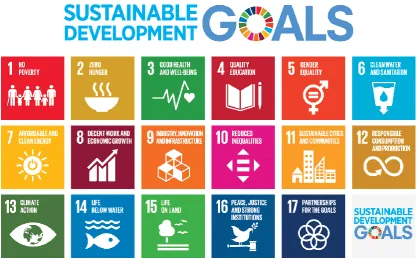
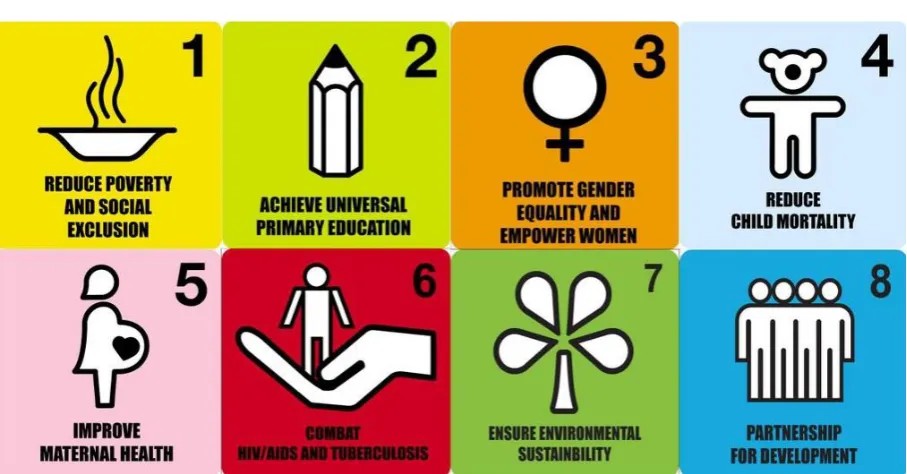
In September 2015, the world community agreed upon the 2030 Agenda for Sustainable Development with its 17 Sustainable Development Goals1 (SDGs), including the SDG4 (United Nations, 2015a). The SDGs are the successors of the Millennium Development Goals (MDGs)2 (UNDP, 2018). In contrast to the MDGs, the SDGs have a broader framework ranging from hunger and poverty to climate change while not only addressing developing countries but also including developed nations. The SDGs aim to hold the entire world accountable for to sustainable development.
Looking at the outcome of the MDGs, countries characterized by violent circumstances and weak institutional capacity had their difficulties in achieving the MDGs (UNDP, 2016b). Well-established, effective and successful policy implementations, as it can be found in stable and developed countries, cannot be presumed in a fragile context. For that reason, a special focus on fragile contexts and their policy implementation is necessary, since the prevailing research does not sufficiently consider fragile environments and their circumstances. Fragile states are characterized by weak state capacity and the risks of breakdown due to unplanned events, often being unable to fully accomplish basic service deliveries such as health services, education and clean water (OECD, 2009b). Iraq itself suffers from instability, which originates from various violent conflicts in the past. Currently it is exposed to new rising conflicts and terrorism such as ISIS, failing to provide basic services. This situation is reflected in the ranking of the Fragile States Index in 2017 and 2018. The index ranks the most fragile states and categorized Iraq on place 10 and 11. Thus, Iraq was chosen as adequate example of a fragile country (Messner, 2017, 2018).
Just like other fragile countries, Iraq has not been able to fulfil all MDGs (UNDP, 2015). To control the achievement of the SDGs, the SDG Index Score is monitoring the progress of the countries, calculating a ranking of countries measuring how many of the SDGs have been realised. In this ranking, Iraq occupies position 118 of 157, indicating persisting problems in the successful implementation. In one goal (no poverty) only Iraq receives a
1 An overview of the SDGs is provided in the Appendix, Figure 2 2
2 green rating indicating SDG achievement; however, nine goals (2, 3, 4, 5, 8, 9, 14, 15, 16)3 are ranked red, signifying distance from SDG achievement (Sachs, Schmidt-Traub, Kroll, Durand-Delacre, & Teksoz, 2017). According to UNDP “fragility remains the greatest impediment of the aspirations of the 2030 Agenda for Sustainable Development” (UNDP, 2016b, p.13).
This thesis is developing a description of the factors that may hamper policy implementation as well as presenting anti-corruption tools, in order to support the successful implementation of the SDGs in Iraq. Analysing the implementation of 17 goals is beyond the scope of this paper; therefore, the focus lies on the Education Goal, stated in SDG4. The goal promises inclusive and equitable quality education and promotes lifelong learning opportunities for all (UNESCO, 2016). According to SDG Index and Dashboards Report Sachs et al. (2017), Qualitative Education belongs to the goals, which is far from being reached in Iraq. This goal has been chosen because of its importance for social development, economic growth and the reduction of poverty. Infant child mortality, for instance, reduces with the higher education of the mothers (Campos & Pradhan, 2012; Schultz, 2002). On the personal economic perspective, each year of schooling raises the chance of employment and at the same time increases the personal income according to the number of years at school (Psacharopoulos & Patrinos, 2004; UNICEF, 2017a). Yet, many are excluded from education. In 2016, 263 million children and youth were not participating in any education, losing the potential for their development and the development of their home country (UNESCO, 2018). Appropriately, the Nobel peace prize winner Malala Yousafzai acknowledged the importance of education during the World Largest Lesson:
“All the SDGs come down to Education. If we have more educated population we will reduce the poverty levels and achieve zero hunger, we will assure better child and maternal health, we will reduce inequalities and gender discrimination, and we will realize children’s rights and human rights.” (Yousafzai, 2015)
Scientists back the multidimensional importance of education for society, as described in Yousafzai’s quote. Especially in countries affected by conflict, good basic education plays a decisive role. The provision of education services can, for example, strengthen the capacity of reconstruction by preparing opportunities for peace-building (Vaux & Visman, 2015). Hanushek and Woessmann (2007) found that education has positive effects on the economic
3 development of a country. Education has an impact on monetary and non-monetary aspects, leading to higher civic participation; it impacts health and to some extent social cohesion (Haveman & Wolfe, 1984; Preston & Green; Tarabini, 2010). Education also affects various other developments within a nation positively. These include the disaster preparedness, sustainable practices and agricultural productivity. Furthermore, studies show that access to the justice system for an individual improves with wider education (Antoninis et al., 2016). Concluding, Qualitative Education, as laid out in SDG4, has a significant impact on various positive milestones on both, the personal and national level. It requires special attention in order to promote its sucessful implementation in each country.
Next to fragility, various scholars identified corruption as one of the major obstacles in achieving the MDGs; it continuously negatively affects the implementation of the SDGs by 2030 (Anger, 2010; Dridi, 2014; Goetze, 2017; Timilsina & Torres, 2014). Currently, Iraq is on position 169 of 180 on the Corruption Perception Index 2017 (Transparency International, 2018a). Corruption is a cross-sectional phenomenon that not only hinders economic growth by slowing down (foreign) direct investments, but also degrades the welfare of the poorest by increasing inequality and causing underfunding of the education and health sector. Corruption facilitates terrorism, arms smuggling, drug trafficking and money laundering indirectly, by enabling money to flow into these organisations (Anderson, Kaufmann, & Recanatini, 2003; Collier, 2002; Kaufmann, 1997; Mauro, 1995; Tanzi, 1998).
In line with high corruption rates, student dropout figures are five times higher in countries with higher corruption than in countries with lower rates (Dridi, 2014). Moreover, corruption has a negative and significant effect on school enrolment rates and school persistence to grade five in primary education while it increases illiteracy and repetition rates (Dridi, 2014). Consequently, corruption does not only affect the economy as such but also the educational sector to quite an extent. The “Iraq Country Report on Out-of School Children“ reflects that 28.4 percent of the children in Iraq (without Kurdistan region) were out of school in 2013 (UNICEF, 2017b). Decreasing corruption in education and by thus increasing educational quality in Iraq entails great social benefits. Reducing corruption improves education outcomes largely by improving the effectiveness of public expenditure (Azfar, 2005). To explore meaningful approaches within the field of corruption in education, more research is needed, as indicated by several reports (Transparency International, 2013b; Wood & Antonowicz, 2011).
4 with the acknowledgement that in 2013, 23 percent of the Iraqi population believed that their education system is corrupt/extremely corrupt, improvement is desirable (Transparency International, 2013a). To breach this gap, this thesis will address the issue of the impact of corruption in the framework of achieving the Sustainable Development Goal 4 (Qualitative Education) in Iraq.
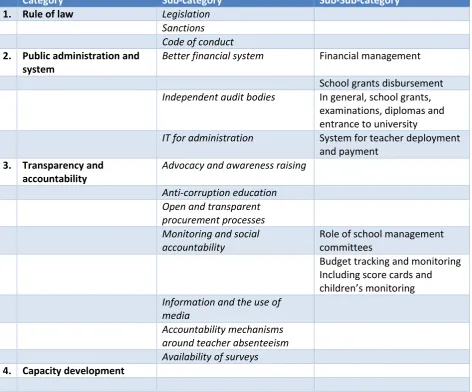
The UNDP published a report focusing on methods, tools and good practices in fighting corruption in the education sector. Four main categories are being identified to tackle corruption in the education sector, namely rule of law, public administration and systems, transparency and accountability as well as capacity development (Wood & Antonowicz, 2011). By analysing the implementation of those methods and tools within the mentioned categories, this paper seeks to identify whether Iraq has adopted the advised methods to reduce corruption in the education sector, taking into account that corruption is a major obstacle in achieving the SDG4. The UNPD report has been chosen due to its measurable categories and comprehensive literature review of successful approaches to combat corruption in education. As such, it is a good reference point to compare the actions undertaken in Iraq. In order to provide this information, background knowledge on Iraq’s context, the concept of fragility and Iraq’s perception of corruption will be provided. To discern how corruption in education can be tackled, Iraq’s anti-corruption methods in education will be collected. Additionally, this paper contributes towards the achievement of SDG4 in Iraq in the long run, as it helps assessing its obstacles systematically. This will benefit the children and youth as well as the development of the country. Hence, the implementation of methods and tools to reduce corruption in education are a focal point. This research will concentrate on the following descriptive question:
To what extent has Iraq’s government implemented the methods and tools to fight
corruption in education as indicated by UNDP in order to achieve the Sustainable
Development Goal 4?
Before providing an answer to the main question, four sub-questions will be analysed, providing an in-depth understanding of the research topic.
1) What explanations does the current literature provide for the existence of corruption?
Within this sub-question, various concepts of corruption are laid out, while possible reasons for corruption as well as places where corruption might occur are being pointed out.
2) What is the evolution of the political-administrative relations in Iraq and how did that
5 Here, an overview of the political-administrative environment in Iraq’s history is provided, explaining the roots of fragility.
3) What is the perception of corruption in Iraq, how has it developed and what is the
current extent of corruption?
The link between the political-administrative evolutions is being presented to identify possible corruption threats and perceptions of corruption in the Iraqi context.
4) What is the current organisation of Iraq’s education system and what are its
challenges?
This sub-question, describes the way the education system is organised in Iraq and outlines the main challenges.
The underlying assumption is that as long as the UNPD anti-corruption methods and tools are not applied, a full achievement of SDG4 is unlikely due to the ongoing setback constituted by corruption. Despite this, one needs to keep in mind that various factors influence the success of the quality of the educational sector: corruption is one major hindrance but by far not the only one. Whereas limited financial capital, quality of teachers or infrastructure are factors that impact on the quality of education, this paper focuses on corruption. The paper is structured as follows: The subsequent chapter presents the theoretical framework, providing background to the concepts of fragility, corruption and corruption in education. This is followed by the data and document chapter, outlining the methodology and data collection methods. The analysis answers the sub-questions and the main question before the conclusion of this thesis is posed.
2. Theory
The following chapter provides the theoretical background on service delivery, fragile states, corruption, and corruption in education, in particular. The theoretical background provides the theoretical lenses needed to conduct the analysis.
2.1 Functions of State and Fragility
6 a state and is exercised by administration. Frederickson, Smith, Larimer, and Licari (2015) outlined that Weber and Wilson see politics and administration as two separate spheres. Each sphere has its own tasks. Typically politics instruct the administration, while at the same time politics aim to control administration (Frederickson et al., 2015). According to the New Public Management, service delivery should be conducted using market mechanisms and promoting deregulations to enable a more effective service delivery for the state citizens (Frederickson et al., 2015).
In a fragile context, states are often unable to provide service deliveries as described in New Public Management. For fragile states, the sustainment of core functions, that is defense, international affairs, economy, government operations and the rule of law, is already a difficult task; especially challenging is the provision of security, enabling economic development and the safeguarding of essential needs (Jennings et al., 2011; OECD, 2009b). In academic literature, the term fragile is considered to be the precursor of state failure. Although, on an international level, the term of ‘fragile state’ has not been defined precisely, nevertheless many refer to the OECD definition; “([s]tates are fragile when state structure lack political will and/or capacity to provide the basic functions needed for poverty reduction, development and to safeguard the security and human rights of their population “ (OECD, 2009a, p. 16). However, this definition has been criticized because of the missing differentiation between ‘fragility’ and the general conditions of so-called ‘underdevelopment’ (Putzel, 2010). According to Putzel (2010) not only fragile countries but all poor countries lack the capacity to reduce poverty and promote development. For this reason, explaining why some poor countries are unstable while others achieve stable conditions under low economic growth is necessary to define the causes of fragility.
According to Putzel (2010), the Crisis State Research Centre identified four indicators of state fragility: 1) failure of the state to exercise a monopoly over the legitimate use of force, 2) failure to develop rudimental bureaucratic capacity, 3) failure to enforce institutional rules and 4) deficit in territorial control. As mentioned previously, basic service deliveries are often performed poorly in the fragile context including social services like health, education and clean water (Barid, 2010). The provision of quality education in Iraq takes place in such a fragile context, where the state is challenged with security threats such as ISIS (O'Driscoll & van Zoonen, 2017).
7 several causes such as colonial legacy, maladministration by an elite, legacy of interference or abandonment by forewing powers for fragile situations. Besides these, Hirschmann (2016) defined four historical causes of state fragility. The first one is the constructed statehood due to the colonial times; especially in Africa and Asia arbitrary border demarcation took place by the European colonist, resulting in the emergence of unnatural countries. The second cause is identified as the collapse of artificial socialist states and the fragility of the neighbouring countries. State weakness through involuntary integration of different ethnic groups can be the third possible cause for fragility. Lastly, the fundamental questioning of the government system due to undesirable developments in important policy areas can cause fragility (Hirschmann, 2016).
When the borders of the Arabic states were drawn under the rule of the French and the British, long-term consequences had not been given much consideration (Buchta, 2016). The effects of fragility are multifaceted, ranging from the tarnished relationship between states and people to the occurrence of conflicts. People in fragile states often experience an inadequate rule of law. As described by OECD (2009b), Jennings et al. (2011) and Barid (2010), the state does not provide the people with all the necessary services; in that case, other actors try to step in and fill this gap. As a result of this development, criminality, terrorism and arms smuggling may increase. In fragile states, the relationship between state and citizens is weakened by corruption, clientelism, missing rule of law and maladministration (Hirschmann, 2016). Hence, fragile states are often characterized by poor economic performance, authoritarianism or militarism, as a result, which is accompanied by a rapid population growth (Gros, 1996).
2.2 Corruption
8 abuse of entrusted power for private gain” (Transparency International, 2018b).
The literal meaning of corruption is “something spoilt” (Caiden, Dwivedi, & Jabbra, 2001). Corruption itself is barely a new phenomenon, considering that it has been discussed in the book ‘Arthashastra’ over 2000 years ago (Noonan, 1984). Notwithstanding, today corruption is a major obstacle to providing the necessary conditions for effective policy implementation and service delivery by weakening resource base, wasting available resources or reducing the general access to services (Anderson et al., 2003).
Depending on the theoretical lens, definitions of corruption can differ. With regard to the principal-agent theory4 “corruption occurs when an agent betrays the principal’s interest in pursuit of their own.“ (Klitgaard,1988, p. 24). Johnston (1996) supports this definition, as it takes the issue of accountability in the conduct of public office into account. William (1999) suggested that definitions of corruption need to aid to our understanding of corruption, rather than providing obstacles for doing so. Therefore, new concepts are needed regardless of whether they can include all facets of corruption. The new concepts may still provide a more comprehensive insight into corruption (Williams, 1999). He points out that “[h]ow corruption is defined depends on the context in which it is located, the perspectives of the definers and their purpose in defining it.” (Williams, 1999, p. 512). Acknowledging the cultural differences is of vital importance, since some countries perceive gifts as corruption, while in others they are simply viewed as a polite gesture without any intention. Along these lines the definition of corruption has to be carefully evaluated within the context of Iraq.
Treisman (2000) identified six robust and significant variables. The causes for reduced corruption included British heritage, protestant traditions, log per capita GDP, federal structure, uninterrupted democracy as well as the openness to imports (Treisman, 2000). One year before, results of good governance research were published, a concept which includes the aim for corruption-free governance. This analysis suggested that rich nations have better governments than poor ones; ethnolinguistically homogeneous countries have better governments than the heterogeneous ones. In addition, common law countries possess better governments than the French civil law or socialist law countries and predominantly protestant countries enjoy better governments than other predominant religious groups (La Porta, López de Silanes, Shleifer, & Vishny, 1999).
Researchers focused on specific causes of corruption such as the degree of democracy, federalism or media. The results suggest that a low degree of democracy, fiscal centralisation and low media coverage contribute to the existence of corruption (Arikan, 2004; Chowdhury,
4
9 2004; Di Tella & Franceschelli, 2011). Pellegrini and Gerlagh (2008) conducted another analysis of the general causes of corruption, with a higher sample size and the theoretical background of Treisman (2000). Their results differed from previous analyses stating that they did not find any evidence for history of common law, history of British rule, or the association between decentralization and corruption. In contrast, they found evidence that protestant culture is associated with lower levels of corruption and that richer countries are less corrupt. Long exposure to uninterrupted democracy, broad media coverage and higher wages were found to lead to lower corruption, while political instability has increased the level of corruption (Pellegrini & Gerlagh, 2008).
Having addressed the term and causes of corruption, possible theories to explain corruption in a broad sense will be outlined. The variety of definitions suggests that there are also different theoretical lenses. One predominant theory, which builds the backdrop for many anti-corruption efforts is the principal-agent theory (Andvig et al., 2001; Johnston, 2005; Lawson, 2009; Riley, 1998). This theory is based on two key assumptions: first of all there is a conflict of interest between the principal and the agent, whereas the agents have more information compared to the principal, resulting in an information asymmetry in favour of the agent (Klitgaard, 1988; Rose-Ackerman, 1997; Williams, 1999). Depending on the perspective the definition of the principal and agent may differ; sometimes the principals are the rulers, while the agents are the bureaucrats. This perspective is the classical version of the principal-agent model (Frederickson et al., 2015). The less classical perspective refers to the rulers as agents while the citizens act as principals. In this context, the ruling elite has to be controlled by the public, rather than the bureaucrats (Adserà, Boix, & Payne, 2003; Besley, 2006). The underlying assumptions are that the problem of corruption comes from the agent and that the principal will always take responsibility for controlling corruption (Persson, Rothstein, & Teorell, 2013). Thus, the classical principal-agent theory ignores the corrupt behaviour of the ruling elites around the world and is therefore limited.
10 able to realize their full potential; a collective benefit is not provided which produces the ‘tragedy of the commons’ as proposed by Hardin (1968). Corruption causes loss of state resources and leads to a reduced ability of delivering public services. As Marquette and Pfeiffer (2015) suggested, collective benefit can be conceptualized as the percentage of the public purse allocated to the provisions of services, whereas free riding reduces the state capacity to care of all citizens.
Marquette and Pfeiffer (2015) used a different approach arguing that the theories of principal-agent, collective action and problem-solving need to be combined to explain corruption and achieve success in anti-corruption efforts. Each theory has components giving causes of corruption. The principal-agent theory highlights the individual role by referring to the principal and the agent who have diverging interests. The problem is described as double principal-agent problem where in the first scenario the political leader is the principal and the agent are the bureaucrats while in the second scenario the officials, politicians and bureaucrats, are described as agents whereas the public is the principle. The theory concentrates on the rational choices of individuals and focusing is on monitoring mechanisms, transparency in governments and attempts to implement watchdogs.
The second theory, the collective action, concentrates on the context in which corruption takes place. It highlights the importance of group dynamics in an environment where corruption is perceived to be normal, suggesting that anti-corruption efforts are less likely to be effective. Collective action sees corruption as the manifestation of free riding, where personal interests possess a higher degree of importance than the benefit of the group, such as the benefit of good governance principles (Marquette & Pfeiffer, 2015).
11 described situations where corruption can offer social protection mechanisms or where patronage works as reducer of poverty by giving the poor resource security. In this context, the family is often attributed high value, creating a network to find ways of accessing social services (Marquette & Pfeiffer, 2015).
2.3 Corruption in Education: Areas and Typologies
Education is an area that is very sensitive to corruption mainly for three reasons. First, it has an attractive structure for patronage and manipulation of local sentiment due to a high visibility representation. Second, decisions are often made by gatekeepers who can influence them according to their will. Third, most of the time, funds are spent in small amounts with weak accounting and monitoring systems, enabling division of funds. Beside financial losses and ineffective systems, the real damage occurs when a new generation grows up believing that personal success comes through favouritism, bribery or fraud, rather than hard and honest work (Chapman, 2005). This is a major contribution to the pervasive nature of corruption, making corrupt behaviour into something ordinary.
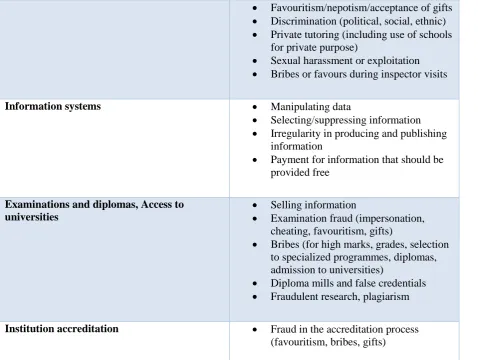
Corruption can manifest in the education sector in various ways. There are blatantly illegal acts of bribery or fraud, next to actions undertaken to secure a modest income by educational personnel paid too little or late. Sometimes, it is difficult to identify corruption, since the cultural perspective on what is considered corruption may differ per country, as outlined in chapter 2.2. In some instances, corruption occurs simply because of incompetence of the involved people. Wherefore training particularly in accounting may have a high impact and lead to the reduction of corruption (Chapman, 2005). For a clear definition, Hallak and Poisson (2001) characterized corruption in education as "the systematic use of public office for private benefit whose impact is significant on access, quality or equity in education.” (p. 8). In addition, they developed a systematic overview of possible corrupt practices in the education sector in the areas of 1) Finance, 2) Allocation of specific allowances, 3) Construction, maintenance and school repairs, 4) Distribution of equipment, furniture and materials, 5) Writing of textbooks, 6) Teacher appointment and management, 7) Teacher behavior, 8) Information system, 9) Examinations and diplomas, and 10) Institution accreditation, which can be seen in the Appendix, Table 1 (Hallak & Poisson, 2007).
12 typology which addresses the direct or indirect effect on students can be identified. Here, the typology distinguishes between the student and faculty exchange, the student and administrator exchange, and last the student-staff exchange (Cárdenas, 2006). The fourth typology of Azfar (2001) is based on the administrative procedures providing loop holes for
corruption.
Acknowledging corruptive practices in education, Heyneman (2004) tried to develop specific characteristics of a corruption-free education system, consisting of (1) equality of access to educational opportunity, (2) fairness in the distribution of educational curricula and materials, (3) fairness in accreditation in which all institutions are judged by professional standards equally applied and open to public scrutiny, (4) fairness in the acquisition of educational goods and services as well as the (5) balance and generosity in curricular treatment of cultural minorities and geographical neighbours and the (6) maintenance of professional standards of conduct by those who administer education institutions and who teach in them, whether public or private (Heyneman, 2004). By defining the characteristics, corruption may be easier to identify within the education setting.
Although all suggested anti-corruption methods may have been implemented, there is still a risk that corruption occurs again, hence sustainability of the reforms needs to be assured. Several case studies (de Asis, 2000; Klitgaard, Maclean-Abaroa, & Parris, 2000) have shown that anti-corruption methods and reforms may have been successful but after a while fields lapse back into corruption. Recorruption expresses the new occurrence of corruption in a before nearly corruption-free place where anti-corruption strategies have been deployed successfully before. Reforms should aim to improve attitudes and professional incentives as well as to strengthen accountability and reduce opportunities for different types of corruption. Following, anti-corruption reforms must include prevention, education and enforcement in order to be effective. In addition, a system of external accountability needs to be established. Everyone in government and administration need to be conscious of the ongoing fight against corruption, a single reform is not enough (Dininio, 2005).
13 state and population is weakened and enables the rise of corruption and clientelism. Fragility and corruption are highly intertwined and influence each other, while worsening the situation of the state. The definition of corruption is highly controversial, which influences the research for causes of corruption. However, as William (1999) stated, it is rather important to see the definition of corruption in each cultural context. The specific causes of corruption can differ in each country depending on the circumstances and the characteristics of state and society. Nevertheless, researchers identified general causes for the existence of corruption. These include interrupted democracy, low media coverage, political instability, high level of poverty, heterogeneity, and a non-protestant culture (Pellegrini & Gerlagh, 2008; Treisman, 2000). The theories of principal-agent, collective action theory and problem-solving theory identify different causes of corruption. The first one assumes that corruption comes into existence because of misconduct of the agent, which is classically the administration. The second argues that corruption arises due to free riding in society instead of working for the benefit of the group. The last theory states that corruption occurs because of the need of citizens to access services and should rather be seen as a solution mechanism.
Concluding, the explanation of the existence of corruption is difficult due to its multidimensional facets and wide-ranging causes, starting from history over mismanagement of the government to the personal gain of some people. Therefore, the reasons for the existence of corruption always need to be considered carefully for each context, taking the theory and the countries social and historical background into account.
3. Data/Documents
3.1 Methodology
The thesis is going to examine UNDP anti-corruption measures in the sector of education in Iraq, via explaining different theories of corruption, taking the Iraqi context and its background with corruption into account. The aim of the research is to evaluate the implementation of the suggested UNDP anti-corruption methods and tools in the area of education, in order to reach the SDG4 in the long-run.
14 time, a broader picture of the situation in Iraq in regard to corruption can be explored. Since all the findings relate to just one country, Iraq, an intensive research in this particular setting is enabled. The findings of the thesis will not be generalized, since all results are based on one case. In qualitative research, one rather talks about transferability than generalizability (Maxwell, 2009).
The thesis uses an intensive research design, addressing and concentrating on a narrow and specific phenomenon in a particular context and providing in-depth research. This intensive research is contrast to an extensive research, where several studies are undertaken, and aims to lay out differences and comparability of the data (Maxwell, 2009). Maxwell’s (2009) suggestions are applied in order to address validity threats and biases. The triangulation and searching for discrepant evidence and negative cases will be applied. Within the triangulation, diverse information collection takes place, while the search for discrepant evidence is necessary to avoid ignoring data and drawing conclusions which may not be right (Maxwell, 2009). Triangulation is secured by including different sources from international organisation, national ministries or non-governmental organisation (NGO). Eurocentrism and Westernized interpretations can be reduced through including the analysis of the work of researchers such as Abdullah (2017b) and Al-Ali (2014), who originate from Iraq. In order to provide answers to the sub-research questions and consecutively answer the main research question, an analysis taking the theoretical framework as groundwork is necessary. Hereby, the theoretical knowledge will be applied to the Iraqi context, assessing its applicability. First, the analysis section will start with an introduction of the Iraqi context, to provide an overview of the political-administrative evolution in Iraq. This is followed by the application of the theoretical reasons for fragility within the Iraqi context. Moreover, the history of the perception of corruption and the current status of corruption in Iraq is provided. Afterwards, the education system of Iraq is presented for a better understanding of possible problems within the system and to identify possible corruption loopholes, which will then be analysed in the next sub-category. The analysis chapter concludes with a detailed examination of the application and implementation of the suggested anti-corruption methods and tools by UNDP in Iraq.
3.2 Conceptualisation and Operationalisation
15 education, working towards the achievement of SDG4 in Iraq. Hereby, the fragile context of Iraq needs to be considered. Fragility is a sensitive term, pushing countries sometimes unwillingly in a specific category, possibly causing multi-layered consequences for the attractiveness of a country for example. In this thesis, fragility is operationalized as followed: Fragility occurs when four characteristics take place. State fragility therefore exists when the state fails to exercise a monopoly over the legitimate use of force, fails to develop rudimental bureaucratic capacity and fails to enforce institutional rules. Moreover, it has deficits in its territorial control (Putzel, 2010). Indices such as the Fragile State Index and the Transformation Index provide empirical data on that topic (Bertelsmann Stiftung, 2018; Messner, 2018).
The delivery of education (public service) is influenced by corruption. Thus, anti-corruption efforts in education will be operationalized to reduce anti-corruption in education. Hereby, anti-corruption methods will be operationalized by using the methods and tools as suggested by UNDP, and follows their suggested operationalisation. The methods and tools of UNDP are categorized within the dimensions of 1) rule of law, 2) public administration and systems, 3) transparency and accountability and 4) capacity development (Wood & Antonowicz, 2011).
16 school management committees as well as the budget tracking and monitoring. Other sub-categories totalling up to seven, are the information and the use of media, the available accountability mechanisms around teacher absenteeism and the availability of surveys regarding public expenditure or service delivery surveys. The last category includes “capacity development” in forms of, for example, training for education budgeting or trainings for headmasters in school management (Wood & Antonowicz, 2011). An overview of the operationalisation of the anti-corruption methods can be found in the Appendix, Table 2.
3.3 Data Collection Methods
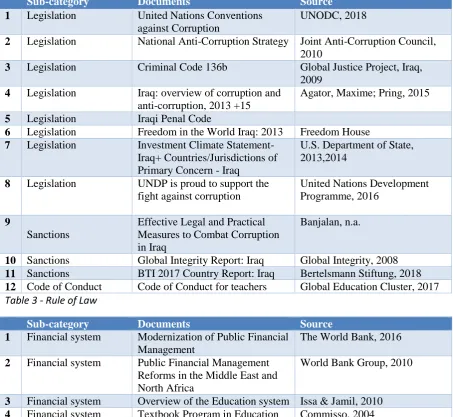
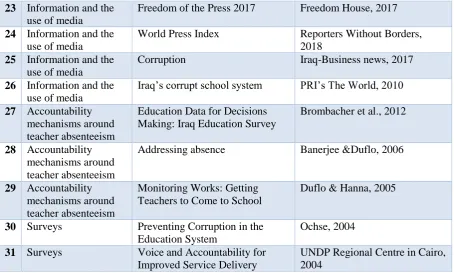
The research question will be explored by analysing mainly qualitative, secondary data. The researcher is going to rely on secondary data from trustworthy sources, since the opportunity to conduct surveys or interviews is not given. Considering possible language barriers, the researcher is only able to work with documents translated into English. Another limitation could be the accessibility of data in a fragile context like Iraq. Therefore, the researcher works with the so called “snowball system” starting with documents from established universities, international organisations, newspaper articles or foundations such TI or Bertelsmann Stiftung. By studying these sources, new documents can be identified to explore further information on the specific topic of anti-corruption methods in education in Iraq. Specifically, information from ETICO, from the International Institute for Educational Planning, from documents of the Ministry of Education of Iraq will be extracted. Furthermore, documents of the Commission of Integrity of the Republic of Iraq are being used as well as policy documents from cooperation partners such as UNDP, UNICEF, UNESCO or the World Bank. An overview of the applied documents for the main research question can be found in the Appendix, Table 3-6.
4. Analysis
17 4.1 Context Iraq
4.1.1 Iraq before 1958 and General Information
Iraq has been part of the Osmania Empire since 1534, since then and until today; Iraq is the most ethnic and confessionally diverse country of all the 22 Arab States. The population consists of Arabs, Kurds, Assyrians, Turkmen and other small minorities. The Arabs hold the majority with a share of 75-80 percent in the population, followed by the Kurds who make up 15-20 percent of the Iraqi population. Regarding regional disparity, the Kurds live predominantly in the north and northeast. Iraq has always been a Muslim country, with the application of the Arab Shia. However, the Muslim community is divided into the Shiites and the Sunni population. Currently, Iraq has a population of 39 million citizens, divided in 29-34 percent Sunnis and 64-69 percent Shiites (CIA Factbook, 2018).
During the First World War, British troops occupied Baghdad and promised the Arabs support for the development for an independent Arabic state if they started an armed rebellion against the Ottomans. In 1918, the British occupied Iraq and put it under direct rule of the British Empire, which was against their promise to the Arabs, who had undertaken the armed rebellion as agreed. The background to the event is the Skypes-Picot-Agreement between the French and British, dividing the Ottman Empire into two zones of influence. After the First World War, the League of Nations confirmed the artificial borders without any consideration of the ethnical and cultural background of the people living there (Buchta, 2016). This decision has had massive impact until today. It caused various conflicts and contributed to the rise of terrorist groups (Hirschmann, 2016).
18 4.1.2 Iraq between 1958 and 2003
Together with a bloody military coup in 1958, the liberal-democratic monarchy found is end and was followed by a row of authoritarian regimes lead by Sunni military. Its peak was reached with the Baath rule in 1968, where General Hassan al-Bakr jointly with his relative Saddam Hussein organised the coup. The Baath regime secured its power through a totalitarian ruling system, applying repressions and terror. The Muhkabarats (secret police) was very active during this time, encouraging citizens towards denunciation of close relatives who might work against the regime (Al-Ali, 2014). In contrast to the oppression, the regime worked for the modernisation of the country and the strengthening of women rights. Due to the nationalisation of the oil sector and the oil boom in 1973, the government was able to offer a comprehensive welfare programme. Together with the establishment of thousands of public jobs this calmed the critics in society, the Baath party soon turned into a mass party. In any event, the Kurds were still rebellious, aiming for autonomy. In 1974, a civil war with the Kurds broke out; who were supported by Iran, which increased pre-existing rivalry between the two countries. During the conflict, Iraq and Iran came to an agreement on Iran ceasing to support the Kurds while in turn receiving territorial concessions, which resulted in the defeat of the Kurds. From then onwards, the Iraqi government put their efforts towards an Arabization of the Kurds region in North Iraq (Buchta, 2016).
In 1979, Saddam took over the power, by forcing al-Bakr’s rescission and executing 500 high-level party members of Baath. Scared of being whipped away by the ongoing revolution in Iran, Saddam started a prevention war in 1980. Eight years later, a cease-fire agreement was signed, ending the war with over 150,000 dead in Iraq and 300,000 in Iran. During the war massive human rights violations took place especially against the Kurds. Although it was a military deadlock, Saddam was able to promote the end of the war as his victory. Saddam tried to reach a debt relief from the Gulf States, which financed the war against Iran, by threatening them with Iraq’s military power. The Iraqi government had serious debts, the economy was weak, and the majority of the industrial infrastructure was damaged. These factors increased the fear of instability and rebellion (Buchta, 2016).
19 pronounced disappointment towards the U.S. (Buchta, 2016). The international community reacted with UN sanctions, forbidding imports to and exports from Iraq. The sanctions lead to a depletion of the country, to thousands of deaths because of starvation and the non-investments in education, infrastructure and housing. Saddam retribalized Iraq and empowered the Islam to strengthen his power. Later the sanctions were reduced with the ‘Oil for Food Programme’ enabling Iraq to export oil for financing basic food requirements (Al-Ali, 2014).
4.1.3 Iraq after 2003
As a consequence of the 9/11 attacks, the U.S. got concerned about Iraq’s military strength and worried about Iraq sending weapons to Al-Qaida. The U.S. did not consider that Iraq and al-Qaida were ideological opposites, and without any UN authorisation, the U.S. and UK invaded Iraq in March 2003 with the Coalition of the Willing (Al-Ali, 2014).
The Coalition Provisional Authority (CPA), established by the U.S., started with a so-called De-Baathification with the De-Nazification as a role model. Leading personnel in Civil Service and the top four ranks of the Baath Party leadership were removed from office. Furthermore, the Iraqi military, security services and other organisations were dissolved to demolish any opportunity for the Baathist to come back into power (Al-Saiedi & Sissons, 2013). In June 2004, the power transfer from the CPA back to the Iraqi government started, which was responsible for preparing democratic elections in 2005. During the transition time, Iraq was confronted with increasing security threats and bombings. The Transitional National Assembly (TNA), which was elected in 2005, decided that a committee out of members of parliament should be constituted to discuss a new constitution. Yet, the Sunni boycotted the elections, they were under-represented in the committees and because of the U.S. wish not to extend the referendum date, “consensus-building was sacrificed in order to satisfy external political concerns” (Al-Ali & Dann, 2006, p.440). The constitution referendum showed the division between Shiites (95-98 percent yes votes) and the Sunni (81-97 percent no votes) in the country. Society and politics got increasingly polarized along the lines of the sectarian powers, which culminated into a civil war between the Sunnis and Shiites from 2006-2008. Terrorist groups such as Al-Qaida played in important role in the outburst of civil war (Buchta, 2016).
4.1.4 Consequences of Political-administrative Evolution
20 constructed state as a consequence of colonial times. It is unlikely that the ethnic groups (Kurds, Sunni Arabs and Shiites) would have formed a country under different conditions. As can be seen, the Kurds in North Iraq have been striving for their independence and autonomy since the establishment of the country itself. The Shiites and Sunnis have their political conflicts, sometimes resulting in violence. Iraq is an artificial, constructed country, created by the colonial powers France and Great Britain with the Sykes-Picot-Agreement. The random fixation of borders has contributed significantly to the fragility of the country, as pre-existing natural or ethnical borders were disregarded. Jointly, France and Great Britain supported minorities in Iraq to slow down the construction of a nation state, in order to increase their own influence in the area and delay any form of Arabic nationalism. In this fashion, they put the Sunni king in power to decrease the power of the majority population, the Shiites. Throughout their history, fragility was fuelled by playing with the ethnical and secretariat differences of the population. Saddam also used this technique to increase his power, knowing full well that this may further divide society. This is particularly evident in the killing of 10,000 Shiites after the rebellion.
The invasion in 2003 significantly contributed to the increasing fragility of the country through the dissolution of the military and security services, the dissolution of the existing state structures through the removal of high officials. All this was done during the process of De-Baathification, resulting in a more fragile and insecure state, faced with increasing security threats. The unstructured re-building of the Iraqi state after the invasion, led to a power- vacuum, providing favourable conditions for radical and terrorist groups to take over. The state fragility of Iraq needs to be seen in the context of internal and external factors contributing to its fragility. After all, one can argue that the “[e]xternal invasion, in this sense, was the most effective factor of state fragility in Iraq while historical factors reinforced the problem.” (Ibrahimi, 2018, p. 9). Domestic political change is usually not peaceful and stable when external actors intervene militarily, as this weakens the already weak structures of the state, causing further fragility (Flibbert, 2013).
21 emergence of corruption. Consequently, the next chapter analyses the development of the drivers and perception of corruption in Iraq.
4.2 Perception and Drivers of Corruption in Iraq
Highly intertwined with the historical context and the social, political and economic development of Iraq is the emergence of corruption. The theoretical causes of corruption as discussed in theoretical section will be applied to the Iraqi context.
With its history as described, Iraq qualifies for the first cause of corruption, the interrupted democracy. Iraq had a politically rather instable environment, especially after the invasion of 2003, confirmed by the Political Instability Index of the Economist Intelligence Unit that ranks Iraq at place 6 of 165 (the lower rank the more stable), which fulfils the second condition (The Economist, 2009). The numbers of corruption cases reduce when media coverage is high, enabling the public to name and shame, and creating fear of getting caught in its illegal actions. Freedom House (2017) certified Iraq’s Press Freedom Status as “not free”, giving a score of 71 points of 100, with 0 signifying most free and 100 least free. The World Press Freedom Index by Reporters Without Borders (2018a) indicated the same by scoring Iraq on rank 160 out of 180 countries, with rank 180 standing for most oppressed. Both stated that Iraq is one of the world’s deadliest countries for media representatives, exposed to political and economic pressure. Insulting the government, for instance, is highly punishable and investigations about corruption or embezzlement often lead to serious threats towards the journalist (Freedom House, 2013). Subsequently, the media coverage is relatively low, especially in topics sensitive to influential people, fostering corruption further, condition three is met. As mentioned, another cause for corruption may be the poverty level. According to the World Bank (2018) the poverty rate increased from 19.8 percent to 22.5 percent in 2014. Due to the various ethnical groups in Iraq, several languages are spoken, leading to a heterogenic ethnolinguistically country. Nevertheless, the majority can speak Arabic. Following the argument of La Porta et al. (1999), this heterogeneity is another cause for corruption (condition five). To sum up, Iraq fulfils five identified theoretical causes of corruption, namely interrupted democracy, low media coverage, political instability, high level of poverty, heterogeneity in an ethnolinguistic population.
22 elites, or for constructing palaces for personal use. In consequence, a centralized patronage system, a patron-client network was in place. Saddam used an extensive system of state patronage to sustain his power, a system which some commentators would define as a corrupt form of clientelism. Every form of non-state corruption was severely punished by the government. Any form of corruption or misuse of public money was considered as act against the Baath party and by association the president and the Iraqi system. Because of strict punishment including the death penalty, Iraq was free of corruption in regard to bureaucratic corruption during the authoritarian regime (Abdullah, 2017a). State corruption, as described above, was limited to the closer circle of Saddam.
After the invasion of Kuwait, the situation changed from a national centralized system of political patronage towards a nepotistic form of corruption. Due to the high cost of the war, funds were limited, Saddam had to reduce the state patronage system. As a consequence, he no longer supported his allies with money but placed his family in strategic government positions, maintaining control over state institutions. In connection with the UN sanctions, the administrative corruption to gain access to public services such as education increased dramatically (Abdullah, 2017a).
23 to the ethnic groups (Abdullah, 2017a). Thus, the creation of communitarian citizenship between Iraqis has been undermined, focussing on the sectarian division of power. This development had high impact in the design of the constitution, which resulted in the formation of a government with sectarian quotas, called muhasassa system (Al-Ali, 2014).
Next to the three political drivers, there are four economic drivers of corruption. Most of the economic drivers got established through the economic reforms by the CPA. Only few Iraqi experts were contacted to be involved in the reconstruction process and most of them had been living in exile for years. Moreover, next to the low numbers of experts, a language problem existed, resulting in only little Arabic communication about the reconstruction process to the public. As a consequence, many perspectives on the reconstruction process remained unheard as relevant stakeholders were not consulted. Secondly, the budgetary spending of the CPA system had problems in accounting and transparency. The CPA received its funds from two sources, one being the Iraqi oil revenues and the second one U.S taxpayers’ money. The majority of the Iraqi funds were used by 2004, while the U.S. fund still stood around 15 billion (from 18 billion in total). The interim government had only 2.8 billion US-Dollar left to spend (Le Billon, 2005). It stayed unclear for which project which money was spent and accountability was missing on why which funds (Iraqi or U.S.) were used. The strong pro-market policy was the third driver of economic corruption; however, in fact the CPA administration was an occupying power, enabling Iraqi market opportunities to foreigners, especially US firms. In many occasions, limited competition and an intransparent bidding process could have been observed (Abdullah, 2017a). In numbers, Iraqi companies received only two percent of the value from reconstructions contracts, while UK and US firms got contracts in volume of 85 percent of the value (Whyte, 2007). The fourth economic driver for corruption is intertwined with the free market policy and the entry of political elites into the economic system. Connected with the muhasassa division, many political actors have become active in the market economy, using their position to influence the market or receive economic benefits, by maintaining favourable connections to companies and thus creating massive misallocation of public funds. This may result in rent-seeking that occurs from an artificial monopoly, which is another form of corruption in Iraq (Abdullah, 2017a).
24 which may affect the education sector will be explored.
Together with the reconstruction of Iraq after the invasion, it was assumed that the patronage network in the public-sector would be replaced by fair standards in selecting people for their jobs. However, with the creation of the sectarian division in the Iraqi government, a new criterion to select people occurred, contradicting the principle of equality. The sector of education does fall into the category of public sector jobs. People supporting the politicians may be rewarded with jobs, which goes hand in hand with the expectations that they would vote in favour of that politician. Originating in procedures, the problem of unqualified personnel emerges. Another aspect, which imposed massive problems on Iraq are the so called ‘ghost jobs’. The Iraqi military, is a prominent example, where 50,000 ‘ghosts’ are confirmed. There are two types of ghosts, the ones who do not turn up for work and therefore are absent, and those who exist only on paper but not in reality, producing salaries for real identities/people (Abdullah, Gray, & Clough, 2018). Abdullah et al. (2018) indicated that the security sector is not the only area facing such issues. Different scholars (Abadzi, 2007; Bold et al., 2017; Chaudhury, Hammer, Kremer, Muralidharan, & Rogers, 2006) reported massive ghost or absenteeism practices in the area of education, indicating that every fifth government primary teacher in developing countries is absent. Correspondingly, it may be assumed that the educational sector has similar problems; this assessment will be conducted in the main research question. Taking the massive negative effects into account that ghost jobs create, their prevention is indeed of utmost importance in each sector. Independent of the area, ghost jobs waste an immense amount of public money, decreasing the efficiency of organisations and in case of education and thus, deny children access to qualitative education.
A third major type of public sector corruption, is the so called ‘corruption protection’, which is defined as “an action carried out to prevent perpetrators of corruption from being brought to justice.” (Abdullah, 2017a, p. 69). Anti-corruption bodies in Iraq act in a politicised environment and are prone to corruption themselves due to corruption protection. Powerful groups in Iraq influence the corruption investigation and are thus able to manipulate the system. Correspondingly, they influence who is brought to court and who will be protected from the anti-corruption system (Abdullah, 2017a). As a consequence, trust in the anti-corruption bodies has dwindled, seeing they are affected by political and sectarian powers. To combat corruption in education the functioning of anti-corruption institutions are of utmost importance.
25 Summing up, historical moments – colonialism, authoritarian regime, and invasion – have influenced the perception and the amount of corruption in Iraq. In the beginning of the authoritarian regime corruption was limited to the elites and the patronage network. As a consequence of the UN sanctions and the Oil for Food Programme, the amount of corruption dramatically increased and was no longer limited to the government. Caused by the deteriorating situation of the population, who suffered most from the imposed sanctions, already basic services were often only available through providing a bribe to the responsible public servants. The rising instability caused by the invasion and the system of sectarianism led once again to an increase in types and amount of corruption. Hereby, one distinguishes between political and economic drivers of corruption. The political ones include the lack of security, the formation of militias and the introduction of the sectarianism. On the economic side, the drivers are highly intertwined with the CPA economic reforms. The drivers are intransparency in the reconstruction process, problems in accountability of the CPA budget, strong pro-market policy and, fourth, the rise of artificial monopolies due to political elites entering into the economic system, which were enabled to rent-seek with the muhasassa system. The predominance of corruption may be attributed to this system, supporting nepotism, clientelism and affiliated religious groups. The muhasassa system influenced the emergence of corruption-protection, as new persistent form of corruption in Iraq, which leads to the inefficiency of the anti-corruption bodies. All those developments led to the weak ranking of Iraq in the Corruption Perception Index of TI.
4.3 Iraq’s Education System
Corruption affects all factors needed for the achievement of SDG4 negatively, for instance sufficient infrastructure or the availability of qualified teachers. To understand the ways in which corruption affects the education sector, the next step is to consider the educational system itself. The following chapter provides the answer to the fourth sub-question, “What is the current organisation of Iraqis’ education system and what are its challenges?“.
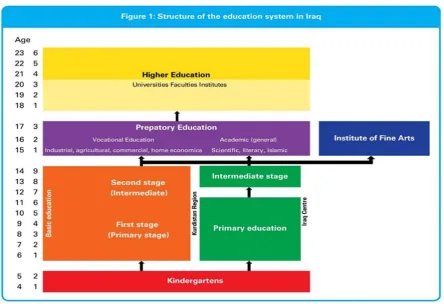
26 education and three years upper secondary level.
Figure 1 - Structure of the education system in Iraq (UNICEF, 2017a)
The National Education Strategy and Higher Education for the years 2011-2020 provides the framework for the educational system to improve the institutional framework and the education infrastructure. Along with access and retention, which includes education for children with disabilities and girls, the quality of education as well as education finance and research possibilities are addressed (UNICEF, 2012, 2017a).
The quality of education remains a significant concern in Iraq. Currently, 3 out of 10 schools teach the curriculum via conducting multiple shifts5. Students who learn in one of the 4326 primary schools or 1665 secondary schools in Central Iraq with a shifting system have lower passing rates. In Iraq, the overall passing rate is 91 percent. Of students attending in a morning class 87 percent pass, while only 67 percent of evening class students pass. Thus, the shift system affects learning outcomes negatively and is therefore not the desired outcome of SDG 4, the qualitative education. Simultaneously the school infrastructure shows large deficits, many schools are suffering from poor maintenance. According to UNICEF (2017a), a survey of the Ministry of Education of 2016 states, that more than 40 percent of the schools need renovation. Not only is renovation needed, some schools do not actually meet Iraq’s
5 Due to the high number of students, the capacities of the schools are not sufficient. It follows a shift system,
27 construction standards: this concerns 15.3 percent of primary schools. In total, more than 50 percent of the public schools in Iraq do either offer unqualified education or do need rehabilitation. However, in contrast to the rising demand of financial capital for the infrastructure of schools, only 5.7 percent of the government expenditure is spent in the educational sector which brings Iraq to the bottom rank of the Middle East countries. Often, the expenses (6.8 Trillion IQD (approx. 5.6 Billion US-Dollar) in 2015-16) are not spent in investment projects (e.g. new schools or maintenance) and the budget is poorly implemented (UNICEF, 2017a).
Further great problems of the current education system are the dropout rates and the high level of repetition in Centre Iraq. The dropout rates, in nearly all educational levels, have increased; with the girl’s dropout rates being comparatively higher to those of the boys. In the lower secondary levels 4.7 percent of the girls dropped out of school, while 3.6 percent of the boys left school. The repetition rates are alarming, ranging from 14.6 percent in primary school to 27 percent in lower secondary school and 22.1 percent in upper secondary school. The Kurdistan region has significant lower repetition rates than Centre Iraq. It is important to consider, that high dropout rates in schools are not only significant regarding the human rights situation in Iraq6 but rather cause long-term economic issues for the individual as well as for society. This contribute further to the high youth unemployment (71 percent of young men employed, 7.8 percent of young women employed). Furthermore, it highlights the existing gender gap in enrolment and employment, which needs to be closed to reach SDG4. The Iraqi government has lost 1.5 trillion IQD (1.2 Billion US-Dollar) alone, owning to inefficient use of resources resulting from high dropout rates and repetitions. The Iraqi economy was losing around 1.1 trillion IQD (907 Mio. US-Dollar) because of unrealised potential wages in 2014-2015, since education carries high value through life-long higher earning of workers, increasing with more years spent at school (UNICEF, 2017a).
As a result of the security threats from ISIS in Syria and Iraq, the Iraq government is facing problems with increasing enrolment rates due to Internal Displaced People (IDPs). In 2016, 48, 3 percent of all IDPs children were out of school. At the same time, the number of teachers has not increased which results in a lower pupil-teacher ratio. Likewise, not all teachers active in the educational sector are qualified for the job which then affects again the quality of the teaching in schools, which could result in higher repetition rates. As a result,
6 Education is a human right according to Article 26 of the Universal Declarations of Human Rights (United
28 Iraq now experiences a rapid growth of private schools, trying to offer better qualitative educational services (UNICEF, 2017a). This situation should be closely monitored to not develop a two-class system for the poor and the rich. Although, private schools may help to decrease the pressure on the public-school system, it still needs to be supported financially to lower the school fees, enabling a more inclusive learning for all. Concluding, one major challenge of the Iraqi education system is the shifting system, which results in a higher level of repetitions and elevated dropout rates. Moreover, there is a big gender gap in enrolment and the system is increasingly constrained by the number of IDPs. On top of that, the quality of teachers is not always according to the Iraqi standard and the demand of investments in schools (e.g. renovation, materials) is very high.
4.4 Anti-Corruption Efforts: UNDP Anti-Corruption Methods
The following section outlines the categories of the UNDP anti-corruption methods and their implementation in Iraq. Hereby, the Iraqi interpretation of categories of rule of law, the public administration and system, transparency and accountability, and the capacity development is explained. The aim of the chapter is to identify if the Iraqi government has implemented the methods and tools taking into the account the good practices described in the UNDP document, after its publication in 2011. Some of these recommendations are rather general, which is why actions to combat corruption in the education sector taking place before 2011 will also be outlined.
4.4.1 Rule of Law
The rule of law category consists of legislation, sanctions and the existence of a code of conduct. In the following, Iraqis implementation of rule of law, with regard to the mentioned sub-categories will be analysed.
4.4.1.1 Legislation