PARALLELIZATION OF BACKPROPAGATION ALGORITHM AND BENCHMARKING
*,1
Ishan Borker,
2Ruchika,
1
Department of Computer Science and Engineering, Veltech Dr.
2Centre for Development in Advanced Computing (C
ARTICLE INFO ABSTRACT
Back propagation Algorithm is a technique to train Artificial Neural Networks to calculate the gradient of the
weights to propagation networks. Open
used to produce more efficient neural networks. This technique executes the algorithm in parallel. This paper summarizes the basic Back
the serial code.
like code profiling, code optimization are being used. Also, the need to perform benchmarking is required to check the relative performance of the program on different system architectures.
Copyright©2017, Ishan Borker et al. This is an open access article distributed under the Creative Commons Att distribution, and reproduction in any medium, provided the original work is properly cited.
INTRODUCTION
Machine learning is the domain in computer science that is used to design complex algorithms and models. It gives the chance to the computers to learn without programming explicitly. Applications for machine learning include bioinformatics, classifying DNA sequences,
game playing, internet fraud detection, marketing natural language processing, robotlocomotion
handwriting recognition. Artificial Neural Network is the of algorithm in machine learning. It is a computing system made up of a number of simple, highly interconnected processing elements, which process information by their dynamic state response to external inputs (Khatri
ANN is composed of multiple nodes. The neurons are connected by links and they interact with each other. The result is then passed to the other neurons. The output at each node is called its activation or node value. Each link is associated
with weight (https://www.tutorialspoint.com/artificial_
intelligence/artificial_intelligence_neural_networks.htm propagation is a method used with gradient
calculates the gradient of a loss function with respect to all the weights in the network.
*Corresponding author: Ishan Borker,
Department of Computer Science and Engineering, Veltech Dr. RR and Dr. SR University, Chennai, Tamil Nadu India
ISSN: 0975-833X
Article History:
Received 20th March, 2017
Received in revised form 18th April, 2017
Accepted 10th May, 2017
Published online 20th June, 2017
Citation: Ishan Borker, Ruchika, Vinoth Kumar, R. and Aditya Kumar Sinha International Journal of Current Research, 9, (06), 51818
Key words:
Artificial Neural Networks (ANN), Backpropagation algorithm (BPA), Open MP, Fork-join.
RESEARCH ARTICLE
PARALLELIZATION OF BACKPROPAGATION ALGORITHM AND BENCHMARKING
Ruchika,
1Vinoth Kumar, R. and
2Aditya Kumar Sinha
Department of Computer Science and Engineering, Veltech Dr. RR and Dr. SR University,
Tamil Nadu, India
Centre for Development in Advanced Computing (C-DAC), Pune, India
ABSTRACT
propagation Algorithm is a technique to train Artificial Neural Networks to calculate the gradient of the error function with respect to all the weights. This gradient is then used to update the weights to reduce the error function (https://mattmazur.com/2015/03/17/a
propagation-example/). Back propagation Algorithm is a supervised learning approach in neural networks. Open MP is a model used for parallel programming to improve efficiency
used to produce more efficient neural networks. This technique executes the algorithm in parallel. This paper summarizes the basic Back propagation Algorithm and measures the time of execution of the serial code. It is then compared with the time of execution of parallel code. Also various methods like code profiling, code optimization are being used. Also, the need to perform benchmarking is required to check the relative performance of the program on different system architectures.
is an open access article distributed under the Creative Commons Attribution License, which distribution, and reproduction in any medium, provided the original work is properly cited.
Machine learning is the domain in computer science that is used to design complex algorithms and models. It gives the without programming Applications for machine learning include , computer vision, marketing, economics, robotlocomotion, speech and Artificial Neural Network is the type e learning. It is a computing system of simple, highly interconnected processing elements, which process information by their
Khatri et al., 2015).
ANN is composed of multiple nodes. The neurons are connected by links and they interact with each other. The result The output at each node is Each link is associated tps://www.tutorialspoint.com/artificial_ intelligence/artificial_intelligence_neural_networks.htm). Back with gradient descent. It with respect to all the
Department of Computer Science and Engineering, Veltech Dr. RR and Dr. SR University, Chennai, Tamil Nadu India.
The gradient is fed to the optimization method which the weights to minimize the loss function.
requires the desired output for each calculate the loss function gradient 2015/03/17/a-step-by-step backpropagation MP is a technique used to write a
provides the platform independent set of compiler pragmas, directives, function calls and environment variables to use the
parallelism (Yadav et al., 2010
number of threads as required (
We use Open MP for improving the back algorithm to achieve better efficiency with an
of threads. Also, the speedup of the program increases with the increase in the number of threads. Parallelism can be done in BP by node parallelism. Here weight updating takes place by evaluating each node in a single layer in parallel
2003).
MATERIALS AND METHODS
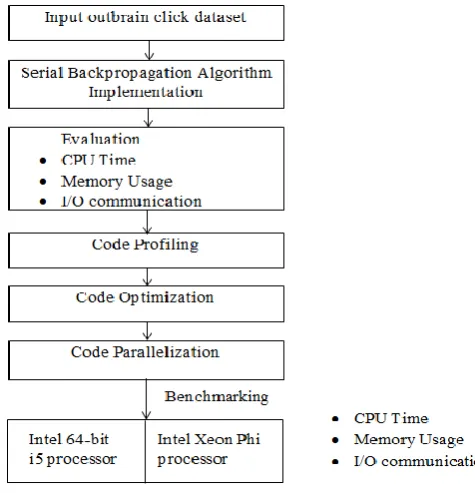
Figure 3 represents the proposed architecture of the paper. It consists of 5 sections:
1. Input the out brain click data required for execution of BPA.
2. Serial computation of BP algorithm:
serial manner is being generated and put into execution. International Journal of Current Research
Vol. 9, Issue, 06, pp.51818-51822, June, 2017
Ishan Borker, Ruchika, Vinoth Kumar, R. and Aditya Kumar Sinha, 2017. “Parallelization of Backpropagation Algorithm and Benchmarking 51818-51822.
PARALLELIZATION OF BACKPROPAGATION ALGORITHM AND BENCHMARKING
Aditya Kumar Sinha
SR University, Chennai,
DAC), Pune, India
propagation Algorithm is a technique to train Artificial Neural Networks to calculate the error function with respect to all the weights. This gradient is then used to update the https://mattmazur.com/2015/03/17/a-step-by-step back propagation Algorithm is a supervised learning approach in neural MP is a model used for parallel programming to improve efficiency and time. It is used to produce more efficient neural networks. This technique executes the algorithm in parallel. propagation Algorithm and measures the time of execution of e time of execution of parallel code. Also various methods like code profiling, code optimization are being used. Also, the need to perform benchmarking is required to check the relative performance of the program on different system architectures.
ribution License, which permits unrestricted use,
The gradient is fed to the optimization method which updates the weights to minimize the loss function. Back propagation output for each input value in order to gradient (https://mattmazur.com/ step backpropagation-example/). Open MP is a technique used to write amulti-threaded application. It provides the platform independent set of compiler pragmas, directives, function calls and environment variables to use the ., 2010). Master thread spawns the (Schuessler and Loyola, 2011). MP for improving the back propagation algorithm to achieve better efficiency with an available number the speedup of the program increases with the increase in the number of threads. Parallelism can be done in arallelism. Here weight updating takes place by
evaluating each node in a single layer in parallel (Pethick et al.,
MATERIALS AND METHODS
Figure 3 represents the proposed architecture of the paper. It
brain click data set: It is the input dataset
2. Serial computation of BP algorithm: Here program code in
serial manner is being generated and put into execution.
INTERNATIONAL JOURNAL OF CURRENT RESEARCH
3. Output in the form of updating the weights: It gives the desired result by updating the weights in the neural network.
4. Various other techniques like Profiling of the code using flat profile and call graph etc, Optimization of the code from o2 to o4 levels and Parallelization of the code using Open MP is being carried out.
[image:2.595.312.550.158.405.2]5. Benchmarking: Here the testing of the parallel, as well as serial code, is done on different system architectures like Intel 64-bit i5 processor and Intel Xeon Phi processor with an increase in the number of threads. It is done to evaluate the performance with respect to CPU time, memory, I/O communication.
Figure 1. Simple ANN
[image:2.595.63.270.230.390.2](athttps://www.tutorialspoint.com/artificial_intelligence/artificial_ intelligence_neural_networks.htm)
Figure 2. Fork-join model of Open MP
Figure 3. Architectural Diagram
[image:2.595.48.280.433.567.2]Figure 4 represents the workflow of the paper. The stages performed are following: Input dataset of different sizes. Implement the Serial code of BP algorithm. Evaluate the code with respect to CPU time, memory usage, and I/O communication. Then perform code profiling using techniques like flat profile, call graph. Also, perform code optimization from o2 to o4 levels. Finally perform the benchmarking on the64-bit i5 processor, Intel Xeon Phi processor.
Figure 4. Workflow
Implementation
The out brain click dataset has been used as input for the BP algorithm. The dataset is taken for different sizes (24MB, 96MB, 250MB, 500MB, 750MB and 1GB).The attributes of the dataset are display_id, clicked, input, input weight, and output weight. Apply BP algorithm on this dataset. The result can be calculated based on updating the weights. Then we calculate the time of execution of serial code, memory usage and I/O communication. After this task, we perform profiling and optimization of the code. After this we use Open MP for parallelizing the code and then calculate the time of execution of serial code, memory usage and I/O communication and compare it with that to the serial code. Finally benchmarking of both the serial and parallel code is done on Intel 64-bit processor and Intel Xeon processor.
[image:2.595.35.268.583.783.2]RESULTS ANALYSIS
Table I. Comparison of serial and parallel code with respect to CPU Time (in seconds) (Intel 64-bit processor)
Size of Dataset Serial code Parallel code 4 threads 8 threads
24MB 20.07 19.37 19.36
96MB 81.54 77.73 76.83
250MB 219.50 212.09 210.44
500MB 442.81 404.22 400.3
750MB 642.76 572.63 567.70
[image:2.595.319.546.689.770.2]Table II. Comparison of serial and parallel code with respect to Memory usage (in bytes) (Intel 64-bit processor)
Size of Dataset Serial code Parallel code 4 threads 8 threads
24MB 12191 12122 12232
96MB 12324 12384 12430
250MB 7045 6146 6187
500MB 6985 6224 6279
750MB 9495 9521 9565
1GB 9678 9716 9757
III. Serial Code
Table III and IV. Comparison of serial and parallel code with respect to I/O communication (Intel 64-bit processor)
Size of Dataset
Average CPU (%) %
user % nice
% system
% iowait
% Idle
24MB 19.59 0.05 11.91 1.23 67.22
96MB 19.38 0.05 11.75 1.20 67.62
250MB 19.45 0.08 11.03 1.89 67.55
500MB 18.32 0.09 10.72 2.06 68.81
750MB 21.2 0.06 12.09 1.56 65.09
1GB 19.68 0.05 11.96 1.23 67.08
Size of dataset
Average CPU (%) %
user
% nice
% system
% Iowait
% Idle 4 threads 8 threads 4 threads 8 threads 4 threads 8 threads 4 threads 8 threads 4 threads 8 threads
24MB 19.52 19.47 0.05 0.05 11.87 11.86 1.2 1.2 67.34 67.4
96MB 19.36 19.33 0.05 0.05 11.74 11.72 1.2 1.2 67.66 67.7
250MB 17.41 17.31 0.11 0.11 10.03 9.96 2.45 2.43 70 70.19
500MB 18.36 18.44 0.09 0.09 10.77 10.84 2.07 2.08 68.71 68.55
750MB 17.61 17.8 0.04 0.04 10.74 10.94 1.12 1.09 70.48 70.12
1GB 19.86 19.92 0.05 0.05 12.08 12.11 1.24 1.24 66.77 66.68
[image:3.595.175.415.484.564.2]IV. Parallel Code
Table V. Comparison of serial and parallel code with respect to CPU Time (in seconds) (Intel Xeon processor)
Size of Dataset Serial code Parallel code 4 threads 8 threads
24MB 21.93 19.12 18.92
96MB 86.54 77.28 78.44
250MB 223.57 215.09 213.37
500MB 442.4 424.42 428.28
750MB 633.77 605.47 610.95
[image:3.595.181.407.596.675.2]1GB 914.83 851.4 854.12
Table VI. Comparison of serial and parallel code with respect to Memory usage (in bytes) (Intel Xeon processor)
Size of Dataset Serial code Parallel code 4 threads 8 threads
24MB 9329 14986 15073
96MB 9409 6419 6834
250MB 9463 7348 7695
500MB 9519 8170 8751
750MB 9567 8850 8917
1GB 9630 8979 9049
[image:3.595.125.466.722.801.2]VII. Serial Code
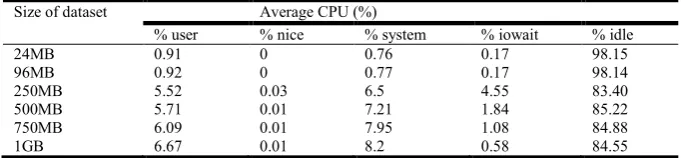
Table VII and VIII. Comparison of serial and parallel code with respect to I/O communication (Intel Xeon processor)
Size of dataset Average CPU (%)
% user % nice % system % iowait % idle
24MB 0.91 0 0.76 0.17 98.15
96MB 0.92 0 0.77 0.17 98.14
250MB 5.52 0.03 6.5 4.55 83.40
500MB 5.71 0.01 7.21 1.84 85.22
750MB 6.09 0.01 7.95 1.08 84.88
VIII. Parallel Code
Figure 5. Graph representing the comparison of serial and parallel code with respect to CPU Time (in seconds) on 1GB
dataset
Figure 6. Graph representing the comparison of serial and parallel code with respect to Memory usage (in bytes) on 1GB
dataset
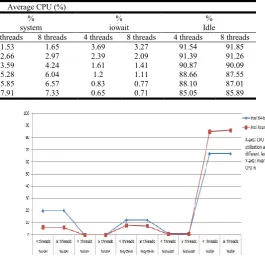
[image:4.595.40.291.414.562.2]Figure 7. Graph representing the serial code with respect to I/O communication (in average CPU %) on 1GB dataset
Figure 8. Graph representing the parallel code with respect to I/O communication (in average CPU %) on 1GB dataset
Conclusion
Various algorithms on machine learning were studied. Most efficient was back propagation algorithm. The serial code of this algorithm was implemented on different datasets of different sizes and executed on Intel 64-bit processor. We evaluate the performance with respect to CPU time, memory usage, and I/O communication. After this, code profiling and code optimization were carried out. Then we execute parallel code using OpenMP for all the datasets and evaluate the performance with respect to the above-mentioned parameters. Then we perform benchmarking of both the codes on Intel Xeon processor. It is observed that the time for execution, memory consumed and I/O communication in serial time is more than compared to the parallel code. Also, these factors get reduced on increasing the number of threads. In addition, Intel Xeon allows smooth execution of both the serial as well as parallel code as compared to that on Intel 64-bit processor.
Acknowledgment
I would like to thank Mr. Vinoth Kumar R. of Veltech University Chennai for his valuable suggestions and Mr. Aditya Kumar Sinha and Ms. Ruchika from C-DAC Pune for providing me infrastructure and motivation during the coursework. This work is done as part of M. Tech dissertation work.
REFERENCES
Jiang, P. Chen, C. and Liu, X. 2016. "Time series prediction for evolutions of complex systems: A deep learning
approach," 2016 IEEE International Conference on Control
and Robotics Engineering (ICCRE), Singapore, pp. 1-6.
Khatri, S. K., Dutta, S. and Johri, P. 2015. "Recognizing images of handwritten digits using learning vector VIII. Parallel Code
Size of dataset
Average CPU (%) %
user
% nice
% system
% iowait
% Idle
4 threads 8 threads 4 threads 8 threads 4 threads 8 threads 4 threads 8 threads 4 threads 8 threads
24MB 3.2 3.18 0.04 0.04 1.53 1.65 3.69 3.27 91.54 91.85
96MB 3.54 3.65 0.03 0.03 2.66 2.97 2.39 2.09 91.39 91.26
250MB 3.92 4.24 0.02 0.02 3.59 4.24 1.61 1.41 90.87 90.09
500MB 4.84 5.29 0.02 0.02 5.28 6.04 1.2 1.11 88.66 87.55
750MB 5.21 5.63 0.01 0.01 5.85 6.57 0.83 0.77 88.10 87.01
[image:4.595.41.282.616.772.2]quantization artificial neural network," 2015 4th
International Conference on Reliability, Infocom
Technologies and Optimization (ICRITO) (Trends and
Future Directions), Noida, pp. 1-4.
Shrestha, S., Bochenek, Z. and Smith, C. "Artificial Neural Network (ANN) beyond cots remote sensing packages: Implementation of Extreme Learning Machine (ELM) in
MATLAB," 2012 IEEE International Geoscience and
Remote Sensing Symposium, Munich, 2012, pp.
6301-6304.
Chen, X. and Long, S. 2009. "Adaptive Multi-versioning for OpenMP Parallelization via Machine Learning," 2009 15th International Conference on Parallel and Distributed
Systems, Shenzhen, pp. 907-912.
Yadav, R., Singh, M. D. and Mahajan, N. 2010. "Parallelism
through dynamic instrumentation at runtime," 2010 Second International Conference on Machine Learning and
Computing, Bangalore, pp. 321-325.