The CASS Technique for
Evaluating the Performance of Argument Mining
Rory Duthie1, John Lawrence1, Katarzyna Budzynska1,2, and Chris Reed1 1Centre for Argument Technology, University of Dundee, Scotland
2Institute of Philosophy and Sociology, Polish Academy of Sciences, Poland
Abstract
Argument mining integrates many distinct computational linguistics tasks, and as a result, reporting agreement between anno-tators or between automated output and gold standard is particularly challenging. More worrying for the field, agreement and performance are also reported in a wide variety of different ways, making comparison between approaches difficult. To solve this problem, we propose the CASS technique for combining metrics covering different parts of the argument mining task. CASS delivers a justified method of integrating results yielding con-fusion matrices from which CASS-κ and CASS-F1 scores can be calculated.
1 Introduction
To calculate the agreement, or similarity, between two different argumentative structures is an im-portant and commonly occurring task in argument mining. For example, measures of similarity are required to determine the efficacy of annotation guidelines via inter-annotator agreement, and to compare test analyses against a gold standard, whether these test analyses are produced by stu-dents, or automated argument mining techniques (cf.(Moens, 2013; Peldszus and Stede, 2013)).
To find the the similarity of automatic and man-ually segmented texts and what impact these seg-ments have on agreement between annotations for an overall argument structure, is a complex task. Similar to these problems is the task of evaluat-ing the argumentative structure of annotations us-ing pre-segmented text. Despite the relative ease of manually analysing these situations, arguments with long relations can easily make this task com-plex.
Commonly to find the agreement of manual annotators or the effectiveness of an automatic solution, two scores are given, Cohen’s kappa (Cohen, 1960), which takes into account the ob-served agreement between two annotators and the chance agreement, giving an overall kappa value for agreement, and F1 score (Rijsbergen, 1979), which is the harmonic mean of the precision and recall of an algorithm. The way in which these scores are utilised can over penalise differences in argumentative structures. In particular, if used in-correctly, Cohen’s kappa can penalise doubly (pe-nalise for segmentation and pe(pe-nalise segmentation in argumentative structures) if not split into sepa-rate tasks or penalise too harshly when annotations have only slight differences, again if the calcula-tion is not split by argumentative structure. When using theF1 score the same problems arise with-out split calculations.
To combat these issues this paper introduces two advances: first, the definition of an overall score, the Combined Argument Similarity Score (CASS), which incorporates a separate segmen-tation score, propositional content relation score and dialogical content relation score; and second, the deployment of an automatic system of compar-ative statistics for calculating the agreement be-tween annotations over the two steps needed to ultimately perform argument mining: manual an-notations compared with manual anan-notations (cor-pora compared with cor(cor-pora) and automatic anno-tations evaluated against a gold standard (automat-ically created argument structures compared with a manually annotated corpus).
2 Related Work
Creating the CASS technique and an automatic system to calculate it, is based on theories estab-lished in linguistics and computational linguistics.
In (Afantenos et al., 2012), a discourse graph is considered and split into discourse units and rela-tions, to calculate agreement usingF1 score. This gives what is described as a “brutal estimation” which gives an underestimation of the agreement. To combat this it is suggested that reasoning over the structures is needed.
In (Artstein and Poesio, 2008) a survey is given of agreement values in computational linguistics. Different measures of the statistics both Cohen’s kappa and Krippendorff’s alpha (Krippendorff, 2007) along with other variations are considered for different tasks. On the task of segmentation, it is noted that kappa in any form does not account for near misses (where a boundary missed by a word or two words) and that instead other mea-sures (see Section 4) should be considered. On the topic of relations and discourse entities, again kappa in its various forms and alpha are consid-ered. For both relations and discourse entities the kappa score is low overall because partial agree-ment is not considered. Instead the idea of a par-tial agreement coefficient is introduced as being applicable.
In (Habernal and Gurevych, 2016), Krippen-dorff’s unitized alpha (αU) is proposed as an
eval-uation method, to take into account both labels and boundaries of segments by reducing the task to a token level. The αU is calculated over a
contin-uous series of documents removing the need for averaging on a document level, but is dependent on the ordering of documents where the error rate of ordering is low.
Finally, in (Kirschner et al., 2015) meth-ods for calculating inter-annotator agreement are specified: adapted percentage agreement (APA), weighted average and a graph based technique (see also Section 3.2).
APA takes the total number of agreed annota-tions and divides it by the total number of anno-tations, on a sentence level of argument but not corrected for chance. Chance is taken into ac-count, when performing the weighted average. A weight is provided for the distance between related propositions when the distance is not greater than six. Meaning any relation with a distance greater than six is discounted. This is justified with only 5% of relations having a distance greater than two. Chance is accounted for by using this weighted av-erage for multi-annotator kappa andF1 score. Fi-nally, a graph based approach is defined, where the
distance between nodes is taken for each annota-tion with each node distance as a fracannota-tion. The dis-tance is added, then multiplied by the overall num-ber of edges giving a normalised score for both annotations, not considering the direction or types of relations or any unconnected propositions. The harmonic mean is then taken to provide the agree-ment between the annotations.
Results are also provided when considering re-lation types for weighted average and nodes with distance less than six for inter-annotator agree-ment on propositional content nodes for a pre-segmented text.
If we consider the papers submitted to the 2nd workshop on argumentation mining, we can see there is an inconsistency in the area when cal-culating inter-annotator agreement and overall ar-gument mining results. To calculate the agree-ment between annotators, three papers used Co-hen’s kappa (cf. (Bilu et al., 2015; Carstens and Toni, 2015; Sobhani et al., 2015)), three papers used inter-annotator agreement as a percentage (cf.
(Green, 2015; Nguyen and Litman, 2015; Kiesel et al., 2015)), two used precision and recall (cf.
(Sardianos et al., 2015; Oraby et al., 2015)) and three others used different methods (cf.(Kirschner et al., 2015; Yanase et al., 2015; Reisert et al., 2015)). To calculate the results of argument min-ing, four papers used accuracy (cf. (Bilu et al., 2015; Kiesel et al., 2015; Nguyen and Litman, 2015; Yanase et al., 2015)) and five papers used precision, recall andF1 score (cf. (Lawrence and Reed, 2015; Sobhani et al., 2015; Park et al., 2015; Nguyen and Litman, 2015; Peldszus and Stede, 2015)) with one paper using a macro-averagedF1. What is required in the area of argument mining is a coherent model to give results for both annotator agreement but also the results of argument mining. In the area of text summarization, Recall-Oriented Understudy for Gisting Evaluation (ROUGE) (Lin, 2004) was created exactly for the purpose of having a coherent measure to allow systems in the Document Understanding Confer-ence (DUC) to be evaluated. In creating the CASS technique we aim to emulate ROUGE, and provide consistency in the area of argument mining.
3 Foundation
3.1 Representing Argument
the development of the CASS technique, as this score must be applicable to different ways of rep-resenting argument.
Scheme for Argumentative Microtexts. In (Peldszus and Stede, 2013) an annotation scheme was defined which was incorporated in a corpus of 122 argumentative microtexts (Peldszus and Stede, 2015). In this annotation scheme an argu-ment is defined as a non-empty premise, that is a premise which holds some form of relation which supports a conclusion. Graphically this is repre-sented by proposition nodes and support relations, with support relations represented as an arrow be-tween the node and its conclusion.
The scheme defined builds on and extends the work of (Freeman, 2011). Support relations are defined in the most basic way, as an argument in the form of premise and conclusion. This accompanied by attack relations where rebutting is defined for when an argument is attacked di-rectly and undercutting when a premise is at-tacked. Counter attacks then allow rebuttals of an attack support, the undercutting of an attack sup-port and a counter consideration argument. Each microtext is pre-segmented to avoid bias from an-notators segmenting text in their own style, with rules defined in the scheme which allow annota-tors to change the segmentation.
Internet Argument Corpus (IAC). Argument data is also represented use quote-response pairs (QR pairs) in the IAC (Walker et al., 2012). The IAC provides 390,704 individual posts automati-cally extracted from an Internet forum. Each post is related to a response which is provided through a tree structure of all the posts on the forum.
QR pairs work with a pre-defined segmentation which can allow annotators to identify relations between a quote (post) and a response. Relations can be on a number of levels with the most ba-sic of these, agree and disagree, to the more com-plex, sarcasm where an annotator decides if a re-sponse is of sarcastic manner using their own in-tuition where a formal definition or annotation is near impossible without being present during the vocalisation of the point.
Argument Interchange Format (AIF). Argu-ment data can also be represented according to the AIF (Ches˜nevar et al., 2006) implemented in the AIFdb1database (Lawrence et al., 2012). The
1http://www.aifdb.org
AIF was developed as a means of describing ar-gument networks that would provide a flexible, yet semantically rich, specification of argumenta-tion structures. Central to the AIF core ontology are two types of nodes: Information- (I-) nodes (propositional contents) and Scheme (S-) nodes (relations between contents). I-nodes represent propositional information contained in an argu-ment, such as a conclusion, premise etc. A subset of I-nodes refers to propositional reports specif-ically about discourse events: these are L-nodes (locutions).
S-nodes capture the application of schemes of three categories: argumentative, illocutionary and dialogical. Amongst argumentative patterns there are inferences or reasoning (RA-nodes), conflict (CA-nodes) and rephrase (MA-nodes). Dialogical transitions (TA-nodes) are schemes of interaction or protocol of a given dialogue game which de-termine possible relations between locutions. Il-locutionary schemes are patterns of communica-tive intentions which speakers use to introduce propositional contents.2 Illocutionary connections (YA-nodes) can be either anchored (associated, as-signed) in locutions or in transitions. In the first case (see e.g. asserting, challenging, question-ing), the locution provides enough information to reconstruct illocutionary force and content. Illo-cutionary connections are anchored in a transi-tion when we need to know what a locutransi-tion is a response to and to understand an illocution or its content. AIFdb Corpora allows for operation with either an individual NodeSet, or any group-ing of NodeSets captured in a corpus. By integrat-ing closely with the OVA+ (Online Visualisation of Argument) analysis tool (Janier et al., 2014), AIFdb Corpora allows for the rapid creation of large corpora compliant with AIF.
AIFdb provides the largest publicly available dataset comprising multiple corpora of analysed argumentation; and in addition AIF works as an interlingua facilitating translation from other rep-resentation languages with both the IAC and Mi-crotext corpora in AIF format, for example. For both of these reasons, we have used AIF for our examples here (although the CASS technique it-self is largely independent of annotation scheme).
Figure 1: Segmentation boundaries and mass for first and second annotators.
3.2 Comparing Analysis
Calculating the inter-annotator agreement of man-ual analysis, can be problematic when using tra-ditional methods such as Cohen’s kappa. In (Kirschner et al., 2015, p.3), the authors highlight this challenge: “as soon as the annotation of one entity depends on the annotation of another entity, or some entities have a higher overall probability for a specific annotation than others, the measures may yield misleadingly high or low values. (...) Therefore, many researchers still report raw per-centage agreement without chance correction.”
In the comparative statistics module we look to extend the solution in (Kirschner et al., 2015) in seven ways, by: (i) Calculating the segmentation differences between two annotations; (ii) Calculat-ing propositional content relations usCalculat-ing confusion matrices, accounting for all the nodes within an argument map and accounting for a differing seg-mentation; (iii) Calculating dialogical content re-lations (if they are contained in an argument map) using confusion matrices, accounting for all the nodes within an argument map and accounting for a differing segmentation; (iv) Defining the CASS technique to allow calculation scores to be com-bined; (v) Allowing the use of any metric for the CASS technique, which uses a confusion matrix, to give consistency to the area of argument mining; (vi) Providing results for not just inter-annotator agreement, but also, the comparison of manually annotated corpora against corpora automatically created by argument mining; (vii) Allowing the comparison of analysis given in different annota-tion schemes but migrated to AIF (e.g. compare text annotated in IAC to the annotation scheme from the Microtext corpus).
4 Comparative Statistics: Segmentation Comparative statistics can provide for a number of cases with two main motivations: evaluation of automatic annotations against manual gold stan-dards, and comparison of multiple manual annota-tions. The calculation is given between two sepa-rate annotations3A1andA2available in two sepa-3Throughout this paperAis used to denote annotation,l denotes a locution,pa propositional content node,taa
tran-rate corpora in AIFdb.
To account for a differing segmentation which does not doubly penalise the argument structure, the agreement calculation involves smaller sub-calculations which can give an overview of the full agreement between annotators. Segmentation agreement considers the number of possible seg-ments on which two annotators agree. A segmen-tation which differs between annosegmen-tations can have a substantial effect on argument structure, such as the assignment of relations between proposition. An example is provided in Figure 1where segmen-tation is given for a first annotator (S1) and a sec-ond annotator (S2). In this case the two annota-tions give segments which resemble very similar mass(the number of words in a segment), however, more boundaries are placed inS2when compared toS1with a difference in granularity and a bound-ary misplaced by a word.
Three techniques are provided to tackle this problem with each recognising that a near miss (two segments that differ by a small margin, e.g. a word) should not be as heavily penalised as a full miss on the placement of segment boundaries. Performing the same calculation withF1 score or Cohen’s kappa would result in a heavily penalised segmentation.
The Pk statistic (Beeferman et al., 1999),
in-volves sliding a window of length k (where k is half the average segment size) over the segmented text. For each position of the window, the words at each end of the window are taken and the segment in which they lie is considered.
The WindowDiff statistic (Pevzner and Hearst, 2002), takes into account situations in which Pk
fails. InPkfalse negatives are penalised more than
false positives, thus the agreement value could be unfair. The WindowDiff statistic remedies this by taking into account the number of reference boundaries and comparing this to the number of hypothesised boundaries.
The segmentation similarity statistic (S)(Fournier and Inkpen, 2012), again takes into account perceived failings of thePkand
Win-dowDiff statistics. Where both WinWin-dowDiff and
Pk use fixed sized windows, which can adversely
Figure 2: Propositional Content Relations for an annotation from AIFdb with first and second an-notators.4
affect the outcome of an agreement calculation,S
proposes that a minimum edit distance, scaled to the overall segmentation size, is considered. This edit distance allows near misses to be penalised but not to the same degree as a full miss.
5 Comparative Statistics: Propositional Relations
To compare relations it is important to calcu-late the agreement between each of the individ-ual items which are annotated within an argument analysis. By providing calculations for individual items in an annotation we take into account that segmentation’s may differ but do not penalise on this basis.
In the case of analysis with a differing seg-mentation, we use a guaranteed matching formula. This formula makes use of the Levenshtein dis-tance (Levenshtein, 1966), where each locution or proposition in an annotation is compared with ev-ery locution or proposition in a second annotation. The Levenshtein distance for each comparison is taken and normalised, this is extended by using the position of words within the annotations taken from the original text. The position of words in the original text is important to correctly match propositions and locutions and therefore a propo-sition or locution which does not have matching positional words cannot be a match. In this situa-tion the Levenshtein distance is increased (moved to zero) to account for a non-match. Each calcula-tion taken is then stored in a matrix. The matrix is then traversed to find the smallest distance (high-est value between zero and one), selecting the pair of locutions or propositions. This is continued un-til all nodes are matched or there are no matches which can be made, thus giving a Pareto optimal 4Numbered nodes represent propositions in the overall text and arrows represent support relations.
solution, a solution for which any match between propositions and locutions makes those individ-ual matches consistent without making any other match worse and vice-versa.
An agreement calculation is given for all propo-sitional content relations (support and attack rela-tions). This calculation is based on the location of support and attack nodes within an analysis and the nodes to which they are connected. For a full agreement between annotators, a support or attack node must be connected between two propositions
pi, pj, with these propositions being a match in
A1 and A2. A support or attack node also has full agreement when one annotation is more fine grained but holds the same propositional content as the other annotation. For example, if annota-tion A1 contains a support node which begins its relation in pbc and gives a relation between pbc
and pa, then this is the same as if A2 had a sup-port node with two separate propositions, pb and
pcand related topa. This notion is extended when
considering Figure 1 and Figure 2.
The differing segmentation in Figure 1 has an effect on the comparison between propo-sitions. When considering propositions, non-identical propositions lead to a near zero similar-ity on support relations between these annotations. This is however an unintuitive approach to take, as the overall argumentative structure is penalised doubly (if we consider the segmentation and argu-mentative structure as different tasks) by the dif-fering segmentation.
This is demonstrated in Figure 2 where the two annotators agree that there is a convergent argu-ment been nodes four and five in annotation 1 and nodes five and seven in annotation 2. Extending this is proposition two of both annotations, where in annotation 1, proposition two is connected to four and five by a convergent argument. Yet in annotation 2, proposition 2 is a separate support relation. In the first instance of a convergent argu-ment, splitting the segmentation calculation from the propositional relation calculation gives a fair representation of the argument structure without penalising for segmentation doubly.
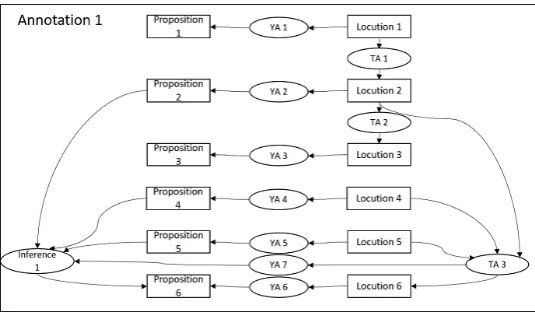
Figure 3: Full AIF IAT diagram for the annotation from the first annotator.
same node) a disagreement is shown because of the connection type if we consider Cohen’s kappa or F1 score purely. Two options are available when calculating the similarity for this situation, either a similarity of zero is given or two sepa-rate calculations could be used with agreement on a premise conclusion basis but no agreement on the type of argument, thus giving a penalty.
To provide a confusion matrix all the possible node pairs to which a propositional content rela-tion could be connected have to be considered. Any node pairs which both annotators have not connected are then counted and all nodes which are matched are counted, giving the observed agreement. All node pairs which the annotators do not agree upon are also counted.
6 Comparative Statistics: Dialogical Relations
Dialogical relations consider only the dialogue of an argument with the intentions of the speaker noted. A differing segmentation in various anal-ysis can lead to low kappa orF1 scores. By split-ting dialogical relations into a separate calculation it removes the double penalty assigned by segmen-tation. When comparing dialogical relations again we use the Levenshtein distance as described in Section 5.
A calculation is provided for illocutionary con-nections (YA) anchored in TAs or in Locu-tions. This calculation involves multiple cate-gories, meaning a multiple category confusion ma-trix, due to the large number of possible YA-node types which can be chosen by annotators. An agreement is observed when both annotators select the same illocutionary connections. WhenA1
con-tains a YA-node which is anchored inliand when
A2 contains the same YA anchored in li, then an
agreement is observed. This also holds for TA’s. The overall calculation then involves a confusion matrix where all disagreements are observed when YA nodes do not match. If we consider Figures 3 and 4 we can see between both annotations that there are a difference of four YA nodes.
A second calculation for YA-nodes, checking the agreement on the propositional content nodes in which they anchor and to where they are an-chored (locution or TA), is also given. This calcu-lation involves a multiple category confusion ma-trix. An example of when agreement is observed is whenA1containspjanchored in a YA and the YA
anchored inli and in A2 the same structure with
pj andli is observed with the same YA node. The
multi-category confusion matrix is calculated with disagreements observed when propositions and lo-cutions do not match. When considering Figures 3 and 4 we see an example of agreement between the annotators on propositions 1, 2 and 3. Proposition 4, in Figure 3 and proposition 5, in Figure 4 also match and the same for proposition 5, in Figure 3 and proposition 7, in Figure 4. Disagreements are then observed with propositions 4 and 6 in Fig-ure 4.
Three separate calculations are also given for TA-nodes. The first concerns the position of a TA node within locutions. Agreement is observed whenA1contains a TA which is anchored inliand
anchorslj andA2contains the same TA anchored inliand anchoringlj. For the final calculation all
Figure 4: Full AIF IAT diagram for the annotation from the second annotator. Differences from Figure 3 are highlighted.
is a agreement between the annotators on TA 1, 2 and TA 3 in Figure 3 and TA 6, in Figure 4. A second calculation is then given for pairs of propo-sitional content nodes and TA-nodes. When pj is
anchored in tai for A1 and the same structure is observed inA2for the same propositional content node then there is agreement between the annota-tors. The overall confusion matrix is calculated by considering all pairs of TA-nodes and propositions and all disagreements between annotators. A third and final calculation is given for TA-nodes anchor-ing propositional content relations. For A1 if rai
is anchored finally intai and raj is anchored
fi-nally inraj, inA2then agreement is observed. The overall confusion matrix is calculated by consid-ering all possible pairs of TA’s and propositional content relations. In Figures 3 and 4 agreement is observed only on inference 1 in Figure 3 and infer-ence 4 in Figure 4. This provides a small penalty between the annotations for the added inference 2 in Figure 4, where earlier in Section 5 no penalty was given.
7 Aggregating into the CASS technique Sections 4, 5 and 6 provide calculations for seg-mentation, propositional content relations and di-alogical content relations. We have defined CASS which incorporates all of these calculation figures to provide a single figure for the agreement be-tween annotators or a manual analysis and an au-tomatic one, using both propositional content rela-tions and dialogical content relarela-tions.
M=
∑P+ ∑D
n (1) CASS=2M
∗S
M+S (2)
In equation 1 the arithmetic mean,M, is the the sum of all propositional content calculations, P, plus the sum of all dialogical content calculations,
D, over the total number of calculations made,n. We use this figure along with the segmentation similarity score to perform the harmonic mean and provide an overall agreement figure normalised and taking into account any penalties for segmen-tation errors. Equation 2 gives the CASS tech-nique as the arithmetic mean, M, combined with the segmentation similarity,S.
The CASS technique allows for any consis-tent combination of scores to be used as either the propositional content calculations or dialogical calculations. That is to say that the CASS tech-nique is not solely dependent on Cohen’s kappa, orF1 score and can instead be substituted for any other overall measure. For the purpose of this ex-ample we will use the Cohen’s kappa metric, as both annotations were annotated manually. We also use the S statistic for segmentation similar-ity as it handles the errors inPk and WindowDiff
statistics more effectively.
Method Overall Score Cohen’sκ 0.44
CASS-κ 0.59
[image:8.595.123.241.59.122.2]F1 score 0.66 CASS-F1 0.74
Table 1: Scores are provided for Cohen’s kappa andF1 score, for both segmentation and structure, and CASS withSfor segmentation and both kappa andF1 for structure.
Figure 5: Screenshot of the comparative statistics module within Argument Analytics.
7.1 Extending Relation Comparisons
The CASS technique and comparative statistics module caters for the creation of confusion matri-ces for each calculation, allowing for the adaption of the overall results. This allows kappa, accu-racy, precision, recall andF1 score all to be cal-culated, but, other metrics can also be considered for evaluating automatic analyses when using the CASS technique. Balanced accuracy (Brodersen et al., 2010), allows the evaluation of imbalanced datasets. When one class is much larger than the other Balanced Accuracy takes this into account and lowers the score appropriately. Informedness (Powers, 2011), gives the probability that an au-tomatic system is making an informed decision when performing classification. A select set of metrics are part of the comparative statistics mod-ule, although, no metric is ruled out from this, al-lowing any metric employing a confusion matrix to use the CASS technique.
7.2 Deployment
Comparative statistics (see Figure 5) is part of the Argument Analytics suite which is to be publicly accessible athttp://analytics.arg.tech/. It provides a suite of techniques for analysing sets of AIF data, with components ranging from the detailed statistics required for discourse analysis or argument mining, to graphic visual represen-tations, offering insights in a way that is acces-sible to a general audience. Modules are avail-able for: viewing simple statistical data, which provides both an overview of the argument struc-ture and frequencies of patterns such as argumen-tation schemes; dialogical data highlighting the behaviour of participants of the dialogue; and real-time data allowing for the graphical representation of a developing over time argument structure. 8 Conclusions
Despite the widespread use of Cohen’s kappa and
F1 score in reporting agreement and performance, they present two key problems when applied to argument mining. First, they do not effectively handle errors of segmentation (or unitization); and second, they are not sensitive to the variety of structural facets of argumentation. These two problems lead to kappa and F1 underestimating performance or agreement of argument annota-tion.
The CASS technique allows for the integration of results for segmentation with those for struc-tural annotation yielding coherent confusion ma-trices from which new CASS-κ and CASS-F1 scores can be derived. CASS is straightforward to implement, and we have shown that it can be included in web-based analytics for quickly calcu-lating agreement or performance between online datasets. CASS offers an opportunity for increas-ing coherence within the community, aidincreas-ing it to emulate the academic success of other subfields of computational linguistics such as summarization; and its subsequent deployment offers a simple way of applying it to future community efforts such as shared tasks and competitions.
Acknowledgments
[image:8.595.96.268.190.429.2]References
Stergos Afantenos, Nicholas Asher, Farah Benamara, Myriam Bras, C´ecile Fabre, Lydia-Mai Ho-Dac, Anne Le Draoulec, Philippe Muller, Marie-Paule P´ery-Woodley, Laurent Pr´evot, et al. 2012. An empirical resource for discovering cognitive prin-ciples of discourse organisation: the annodis cor-pus. In Proceedings of the Eight International Conference on Language Resources and Evaluation (LREC’12). European Language Resources Associ-ation (ELRA).
Ron Artstein and Massimo Poesio. 2008. Inter-coder agreement for computational linguistics. Computa-tional Linguistics, 34(4):555–596.
Doug Beeferman, Adam Berger, and John Lafferty. 1999. Statistical models for text segmentation. Ma-chine learning, 34(1-3):177–210.
Yonatan Bilu, Daniel Hershcovich, and Noam Slonim. 2015. Automatic claim negation: Why, how and when. InProceedings of the Second Workshop on Argumentation Mining. Association for Computa-tional Linguistics, pages 84–93.
K. H. Brodersen, C. S. Ong, K. E. Stephan, and J. M. Buhmann. 2010. The balanced accuracy and its posterior distribution. In Pattern Recogni-tion (ICPR), 2010 20th InternaRecogni-tional Conference on, pages 3121–3124.
Lucas Carstens and Francesca Toni. 2015. Towards re-lation based argumentation mining. InProceedings of the Second Workshop on Argumentation Mining. Association for Computational Linguistics, pages 29–34.
Carlos Ches˜nevar, Sanjay Modgil, Iyad Rahwan, Chris Reed, Guillermo Simari, Matthew South, Gerard Vreeswijk, Steven Willmott, et al. 2006. Towards an Argument Interchange Format. The Knowledge Engineering Review, 21(04):293–316.
Jacob Cohen. 1960. A coefficient of agreement for nominal scales. Educational and Psychological Measurement, 20(1):37–46.
Chris Fournier and Diana Inkpen. 2012. Segmenta-tion similarity and agreement. InProceedings of the 2012 Conference of the North American Chapter of the Association for Computational Linguistics: Hu-man Language Technologies, pages 152–161. Asso-ciation for Computational Linguistics.
James B Freeman. 2011. Argument Structure: Repre-sentation and Theory. Springer.
Nancy L Green. 2015. Identifying argumentation schemes in genetics research articles. In Proceed-ings of the Second Workshop on Argumentation Mining. Association for Computational Linguistics, pages 12–21.
Ivan Habernal and Iryna Gurevych. 2016. Argumenta-tion mining in user-generated web discourse. Com-putational Linguistics.
Mathilde Janier, John Lawrence, and Chris Reed. 2014. OVA+: An argument analysis interface. In S. Parsons, N. Oren, C. Reed, and F. Cerutti, editors, Proceedings of the Fifth International Conference on Computational Models of Argument (COMMA 2014), pages 463–464, Pitlochry. IOS Press. Johannes Kiesel, Khalid Al-Khatib, Matthias Hagen,
and Benno Stein. 2015. A shared task on argu-mentation mining in newspaper editorials. In Pro-ceedings of the Second Workshop on Argumentation Mining. Association for Computational Linguistics, pages 35–38.
Christian Kirschner, Judith Eckle-Kohler, and Iryna Gurevych. 2015. Linking the thoughts: Analy-sis of argumentation structures in scientific publi-cations. In Proceedings of the Second Workshop on Argumentation Mining. Association for Compu-tational Linguistics, pages 1–11.
Klaus Krippendorff. 2007. Computing Krippendorff’s alpha reliability. Departmental papers (ASC), page 43.
John Lawrence and Chris Reed. 2015. Combining ar-gument mining techniques. In Proceedings of the Second Workshop on Argumentation Mining. Asso-ciation for Computational Linguistics, pages 127– 136.
John Lawrence, Floris Bex, Chris Reed, and Mark Snaith. 2012. AIFdb: Infrastructure for the Argu-ment Web. In Proceedings of the Fourth Interna-tional Conference on ComputaInterna-tional Models of Ar-gument (COMMA 2012), pages 515–516.
V. I. Levenshtein. 1966. Binary Codes Capable of Cor-recting Deletions, Insertions and Reversals. Soviet Physics Doklady, 10:707.
Chin-Yew Lin. 2004. Rouge: A package for auto-matic evaluation of summaries. InText summariza-tion branches out: Proceedings of the ACL-04 work-shop, volume 8.
Marie-Francine Moens. 2013. Argumentation mining: Where are we now, where do we want to be and how do we get there? InFIRE ’13 Proceedings of the 5th 2013 Forum on Information Retrieval Evaluation. Huy V Nguyen and Diane J Litman. 2015.
Mining. Association for Computational Linguistics, pages 116–126.
Joonsuk Park, Arzoo Katiyar, and Bishan Yang. 2015. Conditional random fields for identifying appropri-ate types of support for propositions in online user comments. InProceedings of the Second Workshop on Argumentation Mining. Association for Compu-tational Linguistics, pages 39–44.
Andreas Peldszus and Manfred Stede. 2013. From ar-gument diagrams to arar-gumentation mining in texts: a survey. International Journal of Cognitive Infor-matics and Natural Intelligence (IJCINI), 7(1):1–31.
Andreas Peldszus and Manfred Stede. 2015. An anno-tated corpus of argumentative microtexts. Proceed-ings of the First Conference on Argumentation, Lis-bon, Portugal, June. to appear.
Lev Pevzner and Marti A Hearst. 2002. A critique and improvement of an evaluation metric for text seg-mentation. Computational Linguistics, 28(1):19– 36.
D.M.W. Powers. 2011. Evaluation: from precision, recall and f-measure to roc, informedness, marked-ness and correlation. Journal of Machine Learning Technologies, 2:27–63.
Paul Reisert, Naoya Inoue, Naoaki Okazaki, and Ken-taro Inui. 2015. A computational approach for generating toulmin model argumentation. In Pro-ceedings of the Second Workshop on Argumentation Mining. Association for Computational Linguistics, pages 45–55.
C. J. Van Rijsbergen. 1979. Information Retrieval. Butterworth-Heinemann, Newton, MA, USA, 2nd edition.
Christos Sardianos, Ioannis Manousos Katakis, Geor-gios Petasis, and Vangelis Karkaletsis. 2015. Argu-ment extraction from news. In Proceedings of the Second Workshop on Argumentation Mining. Asso-ciation for Computational Linguistics, pages 56–66.
John R. Searle and Daniel Vanderveken. 1985. Foun-dations of illocutionary logic. Cambridge Univer-sity Press.
John R. Searle. 1969. Speech acts: An essay in the phi-losophy of language. Cambridge University Press.
Parinaz Sobhani, Diana Inkpen, and Stan Matwin. 2015. From argumentation mining to stance clas-sification. InProceedings of the Second Workshop on Argumentation Mining. Association for Compu-tational Linguistics, pages 67–77.
Marilyn A Walker, Jean E Fox Tree, Pranav Anand, Rob Abbott, and Joseph King. 2012. A corpus for research on deliberation and debate. InLREC, pages 812–817.