www.editada.org
_______________________________________________________________________________________
Editorial for Volume 11 Number 1: Signal Processing and Production Processes in
Advanced Engineering
Vianey Guadalupe Cruz Sánchez1, Humberto de Jesús Ochoa Domínguez1, Osslan Osiris Vergara Villegas2,
and Vicente García Jiménez1
1 Universidad Autónoma de Ciudad Juárez, Instituto de Ingeniería y Tecnología, Departamento de Ingeniería
Eléctrica y Computación
2 Universidad Autónoma de Ciudad Juárez, Instituto de Ingeniería y Tecnología, Departamento de Ingeniería
Industrial y Manufactura
{vianey.cruz, hochoa, overgara, vicente.jimenez}@uacj.mx
Abstract. Advanced engineering is essential for the evolution of today´s society. The possibility of mixing several disciplines allows academics and industries to align and survive to the fourth industrial revolution. The mix of signal processing and production processes disciplines was detected by Universidad Autonoma de Ciudad Juarez (UACJ) to create the Ph.D. program of advanced engineering science. Therefore, in this paper, an overview of the latest works in both disciplines applied to advanced engineering are discussed. First, we discuss the reasons of what advanced engineering implies, followed by a justification to mix signal processing and production processes. Then, original research works in computer vision, digital image processing, augmented reality and pattern recognition are discussed. After that, the discipline of the production process is addressed by discussing works in lean manufacturing, ergonomics and human factors, and supply chain. At the end, the future of the proposed mixture is discussed.
Keywords: Advanced engineering; Signal Processing; Production processes.
Article Info
Received Sep 11, 2018 Accepted Sep 11, 2019
1
Introduction
In today’s society, the role of engineers is becoming fundamental, because they are the engine that drives most of our society technological changes. Engineers can find improvements to current techniques and technologies to cause a constant renewal of knowledge.
By looking for a definition of what engineering is, one can find a number of proposals [1, 2]. A dictionary definition of engineering is: “The application of scientific and mathematical principles to practical ends” [3]. The work of [4] defined engineering as a transform process performed by a team using related scientific knowledge and technical measures. In [5], engineering was defined by Association for Computing Machinery (ACM) as the application of scientific knowledge and rigorous design methodology to reliably predict and, thus, help improve the consistency, usability, economy, and safety of solutions to practical problems.
On the other hand, Advanced Engineering (AE) refers to technological processes and knowledge concerning any manufacturing sector that can provide innovative entrepreneurial solutions or a cutting edge. AE spans a whole range of areas including renewable energy, advanced silicon design, Internet of Things (IoT), Big Data (BD), Robotics, 4.0 Industry, signal processing, and production processes, among others. For example, although, several signal processing techniques have been applied to a large variety of manufacturing process, such as monitoring [6] and fault detection [7], the IoT has transformed the use of variables measured by multiple sensors as reality for their exploitation using signal processing techniques to enhance the data collected [6].
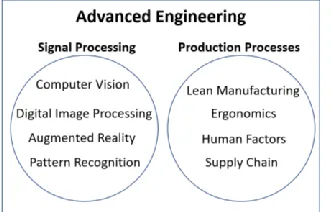
Juarez (UACJ) as a research field that might lead to an introduction of new methodologies and applications. Consequently, in 2017, the Ph.D. program of advanced engineering science was created. At UACJ, we are convinced that the engineering community is experimenting a growth in the application of signal processing and industrial automation processes to face the fourth industrial revolution. Therefore, the program aims to empower collaborative research as well as single research. In this sense, for each main research area, we also have detected four sub disciplines, as are depicted in Figure 1, that address some significant concerns such as super-resolution in medical imaging, large-scale machine learning algorithms, structural equation models in industry, computer vision in mechatronics, mobile augmented reality, human performance on companies with complex robotic system, among others.
Fig. 1. The fields of interest related to advanced engineering at UACJ.
The main contributions of this paper are related to the review of the latest works developed in each discipline. Also, a brief comment about the trends of each subarea is offered.
The rest of the paper is organized as follows. In Section 2, a brief theory about signal processing is presented. Besides, the latest works in computer vision, image processing, augmented reality and pattern recognition are discussed. The theory of production processes and the discussion of original works covering lean manufacturing, ergonomics, and human factors and supply chain are presented in Section 3. Finally, the conclusions of this work are presented in Section 4.
2 Signal processing
Signal processing is a branch of electrical engineering which consists on the application of several logical operations to a data set coming from a signal. The processing of a signal is carried out either with software or with hardware. When signal processing also considers the problem of converting an analog signal to its correspondent digital signal, then it is called digital signal processing. The block diagram of a classical signal processing system is shown in Figure 2.
Fig. 2. Digital signal processing system.
The Institute of Electrical and Electronics Engineers (IEEE), argues that signal processing is the heart of the modern world, and it is fundamental for powering today’s entertainment and tomorrows technology. Due to signal processing is the science behind a digital life it encounters many application fields including computer vision, digital image processing, augmented reality, and pattern recognition, among others.
2.1 Computer Vision
[image:2.612.126.487.484.570.2]In the field of agriculture, computer vision plays an important role to verify the quality of vegetables and fruits. The work of [8], presented a survey of several mathematical CV frameworks used to identify, inspect, sort and grade the various diseases presented in fruits and vegetables. The research also includes a comparison of the performance among different machine learning approaches to verify the quality of agriculture products.
Deep Learning (DL), is gaining attention as an important tool to solve CV problems. Actually, the CV community develops several contributions to the area of autonomous cars thanks to DL. The work presented by [9], discusses many technological advances based on DL applied to self-driving cars. The tasks discussed include obstacle perception, route planning, cloud simulation, high-definition maps, and the importance of use chips to potentialize automated driving.
CV has played an important role to generate many innovations in construction industry. According to [10], the main innovation consists in the use of robots to support the construction process. When the robot is constructing a structure, CV serves as a monitoring system and to perform a safety analysis. Also, CV has been used for construction material classification and to recognize the current stage of the construction.
Assistive technologies (AT) are important to overcome functional limitations/disabilities of people. The work presented by [11] analyses CV systems used for the development of AT oriented to mental functions, personal mobility, sensory functions, and daily living activities. In the field of mental functions, CV has been used to analyze human behavior utilizing facial emotion recognition and human actions. In the field of personal mobility, CV has been used for the visual controller of a prosthetic limb, and also for the creation of virtual environments for helping in rehabilitation activities. For the issue of sensory functions, CV has been used to assist blind individuals to independently access, understand, and explore both indoor and outdoor environments. Finally, in the field of daily living activities, CV serves for general health status monitoring, domestic environment monitoring, and remote-control interfaces.
Due to increase of meat consuming in people diet, there is a need to ensure public health by checking its quality. Unfortunately, meat quality assessment is expensive and time-consuming. The work of [12] presented a CV-based system to asses various quality parameters of muscle foods. The products examined included pork, lamb, beef, chicken, and fish-based on parameters as color, texture, marbling, pH, tenderness, and freshness. The findings proved the effectiveness of CV in quality assessment of meat products.
Even when several successful applications have been presented in the field of CV, today is still an extremely hard problem to solve. The difficulty lies because there is no exists a universal theory of vision, and the number of variables involved [13], therefore, CV has a lot of open challenges to be solved.
2.2 Digital Image Processing
Digital Image Processing (DIP) refers to processing digital images using a digital computer. Digital images are one of the most important sources of information in the modern era. Image processing has been used for solving several problems in the fields of biomedical, industrial automation, robotics, and instrumentation, among others.
DIP has been used for extracting the physiological information from many clinical procedures. The work of [14], discussed the used of DIP to solve case studies related to neurosciences, functional imaging, and cardiovascular systems. The discussed systems deal with images acquired from electrocardiogram (ECG), electromyogram (EMG), and electroencephalogram (EEG). At the end, the four main stages to process biomedical images were established as a) Acquire the relevant biomedical information using sensors, b) Pre-processing the images, c) Use filtering and feature extraction techniques to convey the condition of biomedical system and d) Classification and diagnostic (determine normal and abnormal samples).
The fields of industrial automation, instrumentation, and robotics are consolidating thanks to DIP. The paper of [15], presented four examples of DIP applications including rim detection in automotive wheel images, dimensional verification of crankshafts, measurement of wheel alignment angles of a car, and a stereo visual odometry algorithm for mobile robotics. At the end, the paper highlights the importance of DIP to solve scientific and industrial problems successfully.
Processing medical images is one of the most challenging procedures in DIP; therefore, in the literature, several successful systems have been presented based on DL, particularly using Convolutional Neural Networks (CNNs). The work of [17], summarizes over 300 contributions in the field of medical image processing. The survey demonstrated the successful use of CNNs in task such as object detection, segmentation, registration, and classification.
Several authors agree that having the expert knowledge about the task to be solved is important to obtain better DIP results. Another important aspect is that related with the CNN architecture used. Another issue to be considered includes the data preprocessing algorithms and the data augmentation techniques. Therefore, DIP will continue to be a very studied topic in the coming years. Fortunately, every day a hundred of thousands of images are generated, which implies that always exist the necessity of processing that images.
2.3 Augmented Reality
Augmented Reality (AR), has been proclaimed several times as the great event of the past 30 years. However, several years of efforts have occurred to pass from a science fiction concept to a truly scientific concept. At present, AR appears in our daily lives, however, it is still in its infancy, therefore, the search for its consolidation is just happening. AR is a way to “augment” the real world with virtual objects, and one can find applications in different fields including education, maintenance, and Industry 4.0.
In the field of education, a number of AR applications can be found in the literature. The work of [18] explores the role of AR for health care education including a tour of a patient own endoscopy, a device to assist with vein localization, and for training in cardiopulmonary resuscitation, among others. The use of AR to increase the speed in reading is shown in the work of [19]. The work of [20], developed a human anatomy learning system using AR technology based on 3D image visualization. On the other hand, the study of [21], investigates the effects of problem-based learning assisted with AR towards physics subjects.
A systematic literature review of the use of AR in 30 maintenance applications is shown in the work of [22]. In the work, maintenance was defined as all the actions which aim to restore any functionality of a product within its lifecycle. The main fields in which AR was used for maintenance include aviation industry, plant maintenance, mechanical maintenance, consumer technology, nuclear industry, and remote applications, while the main operations include assemble and disassembly, repair, inspection, diagnosis, and training. The most used hardware to display AR was the head-mounted display (HMD), followed by the hand-held display (HHD).
The work presented by [23], argues that AR is an integral part of Industry 4.0 concepts. The study discovered critical success factors and challenges for implementing industrial AR projects, which is still challenging because specific standards and guidelines are missing. The factors that influence the success of an implementation includes user interface design, tracking accuracy, weight of HMDs, rendering precision, ergonomics, spatial mapping, robust voice control, and scalability.
Unfortunately, today still exist several technical aspects that need to be addressed to really implement the use of AR in industry and education. Both hardware and software are included as technical problems that avoid AR successful implementation. According to [24], the AR market is projected to reach $95 billion by 2025, representing a great economy portion of the next decade. Therefore, it is important the hard work carried out for AR consolidation.
2.4 Pattern Recognition
Pattern Recognition (PR) is a branch of AI that focuses on the description, measurement, and classification of patterns involved in various data. A typical PR system is composed of: a) data acquisition, b) data preprocessing, c) feature extraction, and d) data classification. Nowadays, the challenges and opportunities to carry out research in the field of PR are growing due we are in the era of Big Data (BD). Moreover, several machine learning algorithms, mainly based in DL, are greatly influencing the advance of PR research, due to the dependency on human-crafted feature extraction is solved with a stage of automatic high-level feature extraction. In the literature have been presented applications for myoelectric control, for human activity recognition (HAR), and for biometrics, among others.
RMS-SRC could improve the robustness of EMG-PR system against intermittent noises associated with long-term practical use in real life.
The paper presented by [24], conducted a survey about the use of DL for human activity recognition (HAR). With HAR a profound high-level knowledge about human activity from raw sensor inputs can be obtained. Several challenges in this area were detected including online and mobile deep activity recognition, more accurate unsupervised activity recognition, flexible models to recognize high-level activities, light-weight deep models, non-invasive activity sensing, and beyond activity recognition: assessment and assistant.
On mobile devices, the limited area of fingerprint sensors brings demand of partial fingerprint matching. Currently, fingerprint authentication algorithms are based on handcrafted features, including minutiae topological structure and ridge patterns. However, the accuracy decreases due to the lack of features. Fortunately, the newest optical fingerprint sensors can capture high-resolution fingerprints with rich details as pores, scars, and shape of ridges to cover the shortage of minutiae insufficiency. However, it is challenging to make good use of them, since they are irregular and unstable. In the paper of [27], a novel matching algorithm for such fingerprints by taking advantage of deep learned features was presented. In order to learn a high- and low-level minutiae features a couple of depth CNNs was used, and the results demonstrated that the proposal outperforms several of the state-of-the-art approaches.
The algorithms of PR can help to solve problems in different fields, and the solution encounter more areas of applicability thanks to the development of sensors and powerful computing resources. Today, still open issues need to be faced in the PR area, mainly oriented to understand better human perception, reasoning, and ability to capture new knowledge.
3 Production Processes
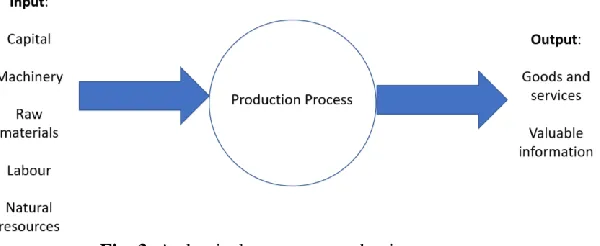
[image:5.612.160.460.414.537.2]The today’s companies are daily exposed to competition; therefore, its production process needs to be improved to create shorter life cycles, increase the quality, response to specific customer requirements, and offer a competitive price [26]. A production process defines the way a service is created by considering customer demand and company goals. The block diagram of a classical production process is shown in Figure 3.
Fig. 3. A classical company production process.
In order to increase its competitiveness, the today’s companies add to the production processes techniques such lean manufacturing, studies about ergonomics and human factors, supply chain optimization, which naturally leads to obtain better performance.
3.1 Lean Manufacturing
Lean Manufacturing (LM) is a methodology to improve productivity and decrease costs in manufacturing organizations. However, with the current trend of making smart factories different challenges appears, that must be solved to implement LM aligned with industry 4.0 requirements.
to improve industrial performance. On the other hand, the work of [31], presented a literature review and discussion of research that proposes a link between LM and industry 4.0. As a result, further research necessities were detected including a) measuring the impact of Industry 4.0 on soft lean practices, b) the facilitating effect of LM on Industry 4.0 implementations, c) studies on the performance implications of an Industry 4.0 and lean manufacturing integration, d) add environmental factors on the integration of Industry 4.0 and LM, and e) establish a framework to integrate Industry 4.0 and LM.
As was discussed, LM is the most prominent manufacturing paradigm of recent times. The possibility of inserting LM principles in an industry can lead to obtain great results, however, the implementation usually can be very difficult. Therefore, industries of new era must invest money looking to automate as much as possible its production processes. A trend detected consisted on integrate technological systems to the production lines, train the workers with high-level knowledge to reduce workforces, motivate the workers to implement and accept the changes, and experiment changes in companies’ culture.
3.2 Ergonomics and Human Factors
Ergonomics was defined as the set of scientific knowledge aimed to improve work, systems, products, and environment in order to adapt it to the physical and mental capabilities and limitations of a person. Therefore, ergonomics needs to deal with the human performance which usually commit errors when performing a task. Environmental conditions such as lighting and temperature, operator health, and the time needed to perform a task can lead a person to commit and error. Currently, ergonomic studies have been implemented in areas such as aviation.
The work by [32], identified the incidence of human factors and errors in the security screening process. Notably, in the aviation area, the possibility of performing a good screening process becomes imperative. Therefore, a proposal to evaluate labor conditions in the security checkpoints of Brazilian airports was presented. As a result of the evaluation, it was observed that key factors contributing to errors include repetitive a monotonous work procedure, attention lost, performing two or more activities at the same time, and low experience, among others. At the end, several recommendations were offered to decrease the incidence of human factors and errors in the security checkpoint of airports.
Musculoskeletal disorders are frequent in workers which executed repetitive tasks. According to [33], in the past 12 months, 8.6% of workers in the United States of America (USA) experienced work-related health problems. Specifically, 70% of Spanish fisherman have been exposed to one or more factors adversely affecting physical health. Most health problems reported included body back, neck, shoulder, arm and hand, and stress, depression, and anxiety. Therefore, a proposal is presented to redesign the workplace aboard small fishing vessels. At the beginning, the equipment and procedures for catching, handling, and storing fish were studied. Then, the work postures of the fishermen were simulated and assessed by means of an ergonomic digital human modeling system. At the third stage, the environment was modified based on acceptable simulated work postures to prevent repetitive movements. Finally, ergonomic design parameters were provided to vessel designers.
The future of ergonomics seems to be focused on the particular impacts of companies increased automation. For example, a worker manipulating a complex robotic system, or handling a precision manufacturing system, implied take account factors that before were not frequently ever studied such as cognitive ergonomics and demands.
3.3 Supply Chain
Every production process in an industry generates a series of links to create a production chain. Business depend on the Supply Chain (SC) to provide what they need to survive and thrive. SC comprises of vendors, producers, wholesaler, retailer, and end client and it intends to synchronize demand and supply.
The work presented by [34], revealed that manufacturing companies need to speed up in shifting the focus towards sustainability and make use of technology like ‘Internet of Things’ (IoT) to meet the organization’s goal. Based on a review, a framework for assessing the readiness of SC organization from various perspectives has been proposed to meet the requirements of the fourth Industrial Revolution. At the end, the criteria of business, technology, sustainable development, collaboration, and management strategy were detected as important for a company to be ready for industry 4.0 transformation.
of the developed framework. At the end, the stakeholder preference, and company-specific data indicators were considered as relevant fields to properly function of the proposed framework.
In recent years, the world environmental problems have become more serious, which have led to an increase of academic research about environmental issues. In this context, the Green Supply Chain Management (GSCM) concept arises. To create a GSC it is necessary to integrate environmental thinking to product design, selection and sourcing of materials, manufacturing processes, delivery of the final product to the consumer, as well as end-of-life product management [36].
The work of [37] aims to review GSCM literature published in the period from 1998 to 2017. The study finds a consistent growth in the evaluation of GSCM practices and performance, and the need of applying mathematical optimization models for enhancing decision making in pursuit of environmental performance. In addition, the work detected a lack of research on BD, which is important for GSCM evaluation. Finally, the authors in this discipline must paid attention into the use of real-life data which are imperative to retract the real scenario of a company.
For modern SC it is necessary to include stages of reuse and recycling, outsourcing, determine the appropriate weights for various indicators with different preferences, interdependence between some indicators, fast SC reconfigurations, and SC classification (supplier or producer-driven).
4 Conclusions
This paper has discussed a representative sample of several research areas in the context of signal processing and production processes, where the jointly use of both fields have given birth a Ph.D. program at the UACJ that aims to face ambitious research questions focused on the frontiers of science. From the signal processing area, we can mention some vital subdisciplines such as computer vision, digital image processing, augmented reality and pattern recognition. The summary on each discipline has showed important challenges focused on the industry 4.0.
From the production processes, we can mention the following subdisciplines: lean manufacturing, ergonomics, human factors, and supply chain. These have a strong relationship with the Industry 4.0 focused on some issues such as environment responsibilities for helping to mitigate environmental impacts, human performance on companies with a deep automatization, and the GSCM to design products with emphasis in environmental problems.
As future work, the Ph.D. program aims to consolidate the synergy between both research areas to jointly address some challenges using complementary skills, knowledge, and resources.
References
1. Mendenhall, W., Sincich, T.: Statistics for Engineering and the Sciences, CRC Press, 6th Edition, 2016.
2. Burchardt, C., Maisch, B.: Advanced Agile Approaches to Improve Engineering Activities, Procedia Manufacturing, vol. 25, pp. 202-212, 2018.
3. Merrian-Webster: The Merriam-Webster Dictionary, Merrian-Webster, 2019 Edition, 2019.
4. Liancheng, W.: Engineering System Theory – A new Engineering Meta-discipline, Journal of Systems Engineering and Electronics, vol. 10, no. 1, pp. 1-3, 1999.
5. Blandford, A.: Engineering Works: What is (and is not) “Engineering” for Interactive Computer Systems? Proceedings of the 5th ACM SIGCHI symposium on Engineering interactive computing systems, New York, USA, pp. 1-2, 2013.
6. Li, C.J.: Signal Processing in Manufacturing Monitoring. Conditioning Monitoring and Control for Intelligent Manufacturing, Springer Series in Advanced Manufacturing, Springer, London, 2006.
7. Teti, R.: Advanced IT Methods of Signal Processing and Decision Making for Zero Defect Manufacturing in Machining, Procedia CIRP, vol. 28, pp. 3-15, 2015.
8. Kumar, M., Maktedar D.: A Role of Computer Vision in Fruits and Vegetables Among Various Horticulture Products of Agriculture Fields: A Survey, Information Processing in Agriculture, Article in Press, pp. 1-34, 2019.
9. Daily, M., Medasani, S., Behringer, R., Trivedi. M.: Self-Driving Cars, Computers, vol. 50, no. 12, pp. 19-23, 2017.
10. Kazemian, A., Yuan, X., Davtalab, O., Khoshnevis, B.: Computer Vision for Real-Time Extrusion Quality Monitoring and Control in Robotic Construction, Automation in Construction, vol. 101, pp. 92-98, 2019.
11. Leo, M., Medioni, G., Trivedi, M., Kanade, T., Farinella, G.: Computer Vision for Assistive Technologies, Computer Vision and Image Undesrtanding, vol. 154, pp. 1-15, 2017.
12. Taheri-Garavand, A., Fatahi, S., Omid, M., Makino, Y.: Meat Quality Evaluation Based on Computer Vision Technique: A review, Meat Science, vol. 156, pp. 183-195, 2019.
14. Rajeswari, J., Jagannath, M.: Advances in Biomedical Signal and Image Processing – A systematic Review, Informatics in Medicine Unlocked, vol. 8, pp. 13-19, 2017.
15. Gardel, P., Díaz, A.: Applications of Image Processing in Robotics and instrumentation, Mechanical Systems and Signal Processing, vol. 124, pp. 142-169, 2019.
16. Zhang, X., Dahu, W.: Application of Artificial Intelligence Algorithms in Image Processing, Journal of Visual Communication and Image Representation, vol. 61, pp. 42-49, 2019.
17. Litjens, G., Kooi, T., Ehteshami, B., Arindra, A., Ciompi, F., Ghafoorian, M., van der Laak, J., van Ginneken, B., Sánchez, C.: A survey on Deep Learning in Medical Image Analysis, Medical Image Analysis, vol. 42, pp. 60-88, 2017.
18. McCarthy, C., Uppot, R.: Advances in Virtual and Augmented Reality – Exploring the Role in Health-Care Education, Journal of Radiology Nursing, vol. 38, pp. 104-105, 2019.
19. Patrick, P., Zheng, J., Guo, Z., Li, J.: Speed Reading on Virtual Reality and Augmented Reality, computers & Education, vol. 125, pp. 240-245, 2018.
20. Kurniawan, M., Suharjito, D., Witjaksono, G.: Human Anatomy Learning Systems Using Augmented Reality on Mobile Application, Procedia Computer Science, vol. 135, pp. 80-88, 2018.
21. Fidan, M., Tuncel, M.: Integrating Augmented Reality into Problem Based Learning: The effects on Learning Achievement and Attitude in Physics Education, Computers & Education, vol. 14, pp. 1-15, Article in Press, 2019.
22. Palmarini, R., Ahmet, J., Roy, R., Torabmostaedi, H.: A Systematic Review of Augmented Reality Applications in Maintenance, Robotics and Computer-Integrated Manufacturing, vol. 49, pp. 215-228, 2018.
23. Masood, T., Egger, J.: Augmented Reality in Support of Industry 4.0 – Implementation Challenges and Success Factors, Robotics and Computer Integrated Manufacturing, vol. 58, pp. 181-195, 2019.
24. Li, H., Gupta, A., Zhang, J., Flor, N.: Who Will use Augmented Reality? An Integral Approach Based on Text Analytics and Field Survey, European Journal of Operation Research, Article in press, pp. 1-15, 2019.
25. Geng, Y., Ouyang, Y., Williams, O., Chen, S., Lu, X., Lin, C., Li, G.: A Robust Sparse Representation Based Pattern Recognition Approach for Myoelectric Control, Access, vol. 6, pp. 38326-38335, 2018.
26. Wang, J., Chen, Y., Hao, S., Peng, X., Hu, L.: Deep Learning for Sensor-Based Activity Recognition: A survey, Pattern Recognition Letters, vol. 119, pp. 3-11, 2019.
27. Zhang, F., Xin, S., Feng, J.: Combining Global and Minutia Deep Features for Partial High-Resolution Fingerprint matching, Pattern Recognition Letters, vol. 119, pp. 139-147, 2019.
28. Joppen, R., von Enzberg, S., Kuhn, A., Dumitrescu, R.: A practical framework for The Optimization of Production Management Processes, Procedia Manufacturing, vol. 33, pp. 406-413, 2019.
29. Bai, C., Satir, A., Sarkis, J.: Investing in Lean Manufacturing Practices: An environmental and Operational Perspective, International Journal of Production Research, pp. 1-15, 2018.
30. Sartal, A., Llach, J., Vázquez, X., Castro, R.: How Much Does Lean Manufacturing Need Environmental and Information Technologies? Journal of Manufacturing Systems, vol. 45, pp. 260-272, 2017.
31. Buer, S., Strandhagen, J., Chan, F.: The Link Between Industry 4.0 and Lean Manufacturing: Mapping Current Research and Establishing a Research Agenda, International Journal of Production Research, vol. 56, no. 8, pp. 2924-2940, 2018.
32. Arcúrio, M., Nakamura, E., Armborst, T.: Human Factors and Errors in Security Aviation: An Ergonomic perspective, Journal of Advanced Transportation, vol. 2018, pp. 1-9, 2018.
33. Alvárez-Casado, E., Zhang, B., Tello, S., Mondelo, P.: Using ergonomic digital human modeling in evaluation of workplace design and prevention of work‐related musculoskeletal disorders aboard small fishing vessels, Human Factors and Ergonomics in Manufacturing & Service Industries, vol. 26, no. 4, pp. 463-472, 2016.
34. Manavalan, E., Jayakrishna, K.: A Review of Internet of Things (IoT) Embedded Sustainable Supply Chain for Industry 4.0 Requirements, Computers & Industrial Engineering, vol. 127 pp. 925-953, 2019.
35. Xu, M., Cui, Y., Hu, M., Xu, X., Zhang, Z., Liang, S., Qu, S.: Supply Chain Sustainability Risk and Assessment, Journal of Cleaner Production, vol. 225, pp. 857-867, 2019.
36. Dallasega, P., Sarkis, J., Understanding Greening Supply Chains: Proximity Analysis Can Help, Resources, Conservation and Recycling, vol. 139, pp. 76-77, 2018.