Thesis Title
Languaging and Learning Compared across
EFL Course Delivery Modes
Author
Andrew Edward Sampson
Department
Linguistics and English Language
Faculty
Arts and Social Sciences
Submission Date
September 2018
This thesis is submitted for the degree of PhD in Applied Linguistics by Thesis and Coursework.
iii
ABSTRACT
The present study investigates the effects of delivery mode in adult EFL courses by comparing a) languaging, the “process of making meaning and shaping knowledge and experience through language” (Swain 2006: 98) and b) learning in
three settings that are representative of common course delivery modes: i) face-to-face group classes; ii) one-to-one private tutoring sessions; and iii) individual online courses. Conducted within a Vygotskian (1978, 1987) sociocultural framework, data for this quasi-experimental study include recordings of pairwork in group classes and of tutor-learner interaction in one-to-one classes, and also think-alouds of individuals in online courses, thus drawing on Vygotsky’s concept of inner speech and more recent work on self-scaffolding (Holton & Clark 2006; Knouzi, Swain, Lapkin, & Brooks 2009). The analysis is a mixed-methods approach of microgenetic qualitative analysis of learner talk and quantitative analysis of LRE number, focus, resolution and engagement, and includes questionnaire responses and scores from post-tests.
Findings indicate that languaging, evidenced in Language-Related Episodes (LREs), occurred in all three modes. While individuals in the online mode produced significantly fewer LREs than learner-learner dyads in group classes or learner-teacher dyads in one-to-one tuition, online individual numbers were similar to LREs initiated by each learner in learner-learner dyads, suggesting individuals identified language problems with a similar frequency as their group counterparts. Learner-learner dyads in group classes and one-to-one learner-teacher dyads produced similar numbers of LREs, but one-to-one episodes were more closely associated with learning than group or individual LREs, as observed in instances of microgenetic development and post-test responses. This may be because one-to-one episodes were better quality in terms of correct resolution and greater resolution by the learner, rather than the teacher. In one-to-one, resolutions followed scaffolding in the form of elicitations and prompts contingent on learners’ tentative responses and teachers’ perceptions of learners’ current knowledge. Such teacher guidance towards learner resolution may have made outcomes more memorable for subsequent post-test recall.
iv
teachers sensed their role was to correct learners’ written language. Regarding LRE resolution, proportions of correctly resolved episodes were similar between group and online individual modes, although the individual proportion was based on fewer LREs, suggesting individual learners did not initiate episodes they would be unable to resolve. The extent to which LREs were characterised by limited engagement (linguistic preferences were stated without further deliberation) or elaborate engagement (there was evidence of a cognitive self-regulation strategy) did not differ significantly between modes. In learner-learner interaction in group mode, the prominence of LREs characterised by limited engagement in one learner and elaborate engagement in the other suggested it was unnecessary for both participants to be elaborately engaged for episodes to be languaged and resolved.
Learners across modes averaged post-test scores of 70% to 80% of items resolved in agreement with LRE resolution in the task, suggesting associations between languaging and learning. However, group learners attempted significantly fewer test items relating to their LREs than individual or one-to-one learners, which suggests that forms languaged individually or with a tutor are more memorable.
Methodological implications of this research include the limitation of think aloud protocols in making microgenetic development visible to the researcher, while pedagogical recommendations include:
i) that learners in all modes be exposed to tasks that focus on form and provide languaging opportunities;
ii) that group learners be encouraged to seek gaps in their interlocutor’s knowledge by asking the kinds of questions that teachers ask;
iii) that teachers in one-to-one contexts scaffold learners towards resolving LREs; and
iv) that online learners seek out an interlocutor – whether a teacher or another learner – the presence of which appears to be positively associated with LRE numbers, correct resolution and microgenetic development.
v
ACKNOWLEDGMENTS
vi
TABLE OF CONTENTS
ABSTRACT
ACKNOWLEDGMENTS
CHAPTER I: INTRODUCTION
1.1 Introduction
1.2 Contribution to knowledge
1.3 Theoretical framework: an introduction 1.4 Definition of terms and operationalisations 1.4.1 Languaging
1.4.2 Language-Related Episodes 1.4.3 Focus on Form
1.4.4 Uptake and repair 1.4.5 LRE focus
1.4.6 Engagement
1.4.7 Learning, microgenetic development and consolidation 1.4.8 Inner speech and private speech
1.4.9 Think-aloud protocols, stimulated recall and immediate recall 1.4.10 Reactivity and veridicality
1.4.11 Tasks: meaning-focussed, language-focussed, input-providing and output- prompting
1.4.12 Tailor-made testing 1.5 Outline of the thesis
CHAPTER II: LITERATURE REVIEW
2.1 Theoretical frameworks
2.1.1 Vygotskian Sociocultural Theory (SCT)
2.1.1.1 Mediation, internalisation, and spontaneous versus scientific concepts
2.1.1.2 Scaffolding
2.1.1.3 Inner speech, private speech and self-scaffolding 2.1.2 The Output Hypothesis
2.2 Online versus face-to-face learning 2.3 Group versus one-to-one learning 2.4 Features of teacher-learner interaction 2.4.1 IRF and scaffolding
2.4.2 “Socratic” tutoring
2.4.3 Teacher talk and negotiation of form 2.4.4 Perception of roles
2.5 Student-student interaction: LREs and learning
vii
2.6 Pair versus individual conditions: effects on linguistic product and learning
2.7 Different participant numbers in groups: effects on LREs and learning 2.8 Pair versus individual conditions: effects on LREs and learning 2.9 Dimensions of the expert-novice relationship: effects on LREs and
learning
2.9.1 Effects of pairing NS with NNS speakers
2.9.2 Effects of different proficiency levels within learner dyads 2.9.3 Effects of interaction patterns
2.9.4 Effects of learners’ perceptions of interlocutor proficiency 2.10 Engagement
2.10.1 Theoretical construct 2.10.2 Cognitive engagement
2.10.3 Engagement, attention, awareness and elaborate noticing within Applied Linguistics: empirical research
2.11 Task type: effects on LREs
2.12 Research questions for main study
CHAPTER III: METHODOLOGY
3.1 Method 3.2 Pilot studies
3.2.1 First pilot study
3.2.1.1 Purpose
3.2.1.2 Method
3.2.1.3 Task
3.2.1.4 Results and discussion
3.2.2 Second pilot study
3.3 The main study: overview of procedure 3.4. Participants
3.4.1 Demographic information
3.4.2 Reasons for choosing current study mode
3.4.2.1 Specific skills practice favoured by each mode 3.4.2.2 Wanting to focus on general or specific language
3.4.2.3 Value for money
3.4.2.4 Location / distance to school 3.4.2.5 Routine / flexibility
3.4.3 Preference for a different mode 3.4.4 Language level
3.5 Course content and duration 3.6 Teachers
3.7 Ethical consent 3.8 Pre-task modelling 3.9 Tasks
viii
3.9.1 Passage editing 3.9.2 Written composition 3.10 Think-aloud protocols 3.10.1 Overview
3.10.2 Potential limitations
3.10.3 Alternatives to think-aloud protocols 3.11 Post-test
3.12 Questionnaire 3.13 Interviews
3.14 Data analysis methods 3.14.1 Transcription 3.14.2 LRE identification 3.14.3 Types of LREs
3.14.3.1 Focus and sub-focus
3.14.3.2 Resolution
3.14.3.3 Engagement
3.14.3.4 Initiator and resolver
3.14.3.5 Microgenetic development
3.14.4 Test responses
3.14.5 Quantitative analytical methods
CHAPTER IV: RESULTS
4.1 Introduction
4.2 Number, focus and resolution of LREs 4.2.1 Number of LREs
4.2.1.1 Passage editing versus written composition 4.2.2 LRE focus
4.2.2.1 Lexis
4.2.2.2 Grammar
4.2.2.3 Discourse
4.2.2.4 Mechanics
4.2.3 LRE sub-focus
4.2.3.1 Grammar – tense
4.2.3.2 Grammar – morphology
4.2.3.3 Grammar – syntax
4.2.3.4 Discourse – register and text cohesion
4.2.3.5 Mechanics – spelling
4.2.3.6 Mechanics – punctuation, capitalisation and contractions 4.2.4 Resolution of LREs
4.2.4.1 Correctly resolved LREs
4.2.4.2 Incorrectly resolved LREs
4.2.4.3 Unresolved LREs
ix
4.2.5 Identity of LRE initiator and resolver
4.2.5.1 LRE initiator
4.2.5.2 LRE resolver
4.2.5.3 Same initiator and resolver 4.3 Engagement in LREs
4.3.1 Elaborate engagement 4.3.2 Limited engagement
4.3.3 Elaborate + limited engagement
4.3.3.1 Identity of elaborate and limited participants 4.3.4 Correct resolution and engagement: correlations
4.4 Learning of forms topicalised in LREs: microgenetic development and post-test performance
4.4.1 Microgenetic development 4.4.2 Test scores
4.4.2.1 Items that corresponded to LREs
4.4.2.2 Test items attempted
4.4.2.3 Test items corrected i) in agreement with LRE resolution, ii) in disagreement with LRE resolution, iii) when the LRE has been left unresolved and iv) only partially 4.4.2.4 Test items attempted relating to forms not languaged 4.4.2.5 Correctness of LRE resolution and test responses:
correlations
4.4.2.6 Engagement and test responses: correlations
CHAPTER V: ANALYSIS
5.1 Introduction
5.2 RQ1
5.2.1 Numbers of LREs
5.2.1.1 No significant differences between numbers of group and one-to-one LREs
5.2.1.2 Individual learners produced significantly fewer LREs 5.2.1.3 Individuals initiated a similar number of LREs to each
one of the learners in student-student dyads 5.2.1.4 Significantly more LREs in PE than in WC 5.2.2 Focus and sub-focus of LREs
5.2.2.1 Lexis: the most languaged focus, but no significant difference between modes
5.2.2.2 Grammar: focussed on significantly more by dyads than by individuals
5.2.2.3 Discourse: no significant differences between modes 5.2.2.4 Mechanics: a significantly greater focus on spelling in
one-to-one
5.2.3 LRE resolution
x
5.2.3.1 Significantly more correct LRE resolution in one-to-one 5.2.3.2 Structural differences in interaction: LRE initiation,
resolution and scaffolding
5.2.3.3 Initiator differences less significant in WC
5.2.3.4 Learner–learner resolution: more cooperative than collaborative
5.2.3.5 No significant differences in correct resolution between group and individual
5.2.3.6 Incorrect LRE resolution: uncommon across modes and tasks, but significantly lower in one-to-one
5.2.3.7 Unresolved LREs: a significantly lower proportion in one-to-one
5.3 RQ2
5.3.1 A significantly higher proportion of elaborate engagement in individuals, and a significantly lower proportion of limited engagement in one-to-one
5.3.2 Elaborate + limited engagement LREs: evidence that engagement in both participants is not necessary for languaging and resolution 5.3.3 Differences in elaborate engagement less significant in WC
5.4 RQ3
5.4.1 Microgenetic development
5.4.1.1 Significantly more MGD in one-to-one
5.4.1.2 Individual MGD only observed on one occasion
5.4.1.3 Group MGD occurred, although to a lesser extent than in one-to-one
5.4.1.4 MGD differences between modes not significant in WC
5.4.2 Test responses
5.4.2.1 Most test items corresponded to LREs
5.4.2.2 Group learners attempted significantly fewer test items relating to their LREs than individual or one-to-one learners
5.4.2.3 Most test items attempted resolved in agreement with LRE resolution
5.4.2.4 Few test items attempted resolved in disagreement with LRE resolution
5.4.2.5 Very few tests items resolved when there had been no LRE resolution, or no corresponding LRE
5.4.2.6 No significant differences between modes in test items attempted and resolved only partially
xi
CHAPTER VI: DISCUSSION AND CONCLUSIONS
6.1 Introduction
6.2 Theoretical implications
6.3 Methodological implications and potential limitations 6.3.1 The think-aloud protocol
6.3.2 The post-test
6.3.3 Tasks and interaction as representative of classrooms 6.4 Pedagogical implications
6.4.1 Opportunities for languaging are opportunities for learning 6.4.2 Gap-creating by teachers benefits learning, so could learners be
encouraged to create gaps too?
6.4.3 Monitoring and feedback by group teachers matter 6.4.4 Online learners could usefully seek out an interlocutor 6.4.5 Delivery mode has implications for materials design and
administration
6.4.6 Mode choice may be unrelated to reasons for learning English, but is associated with practical learner circumstances
6.5 Directions for future research 6.6 Conclusion
REFERENCES APPENDICES
Appendix 1: First pilot passage editing task Appendix 2: Revised passage editing task Appendix 3: Exit questionnaire
Appendix 4: Lancaster University Ethics application Appendix 5: Lancaster University Ethics approval
Appendix 6: Participant Information Sheet and Consent Form Appendix 7: Written composition
Appendix 8: Post-test
Appendix 9: Interview guide
Appendix 10: Transcription conventions Appendix 11: LRE categories
Appendix 12: Sample passage editing transcript Appendix 13: Sample completed post-test
xii LIST OF TABLES AND FIGURES
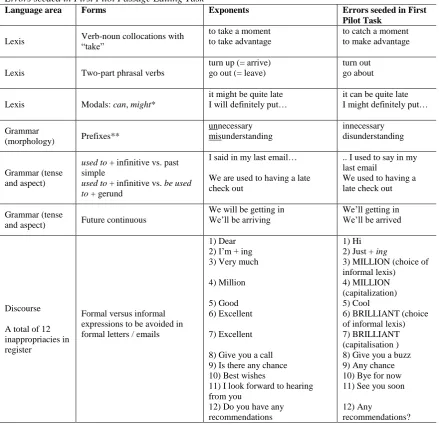
Table 1: Errors seeded in First Pilot Passage Editing Task
Table 2: LREs in prompted and unprompted conditions, First Pilot Passage Editing Task
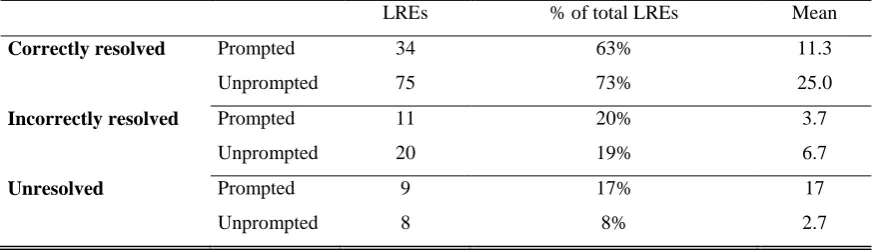
Table 3: LRE resolution in prompted and unprompted conditions, First Pilot Passage Editing Task
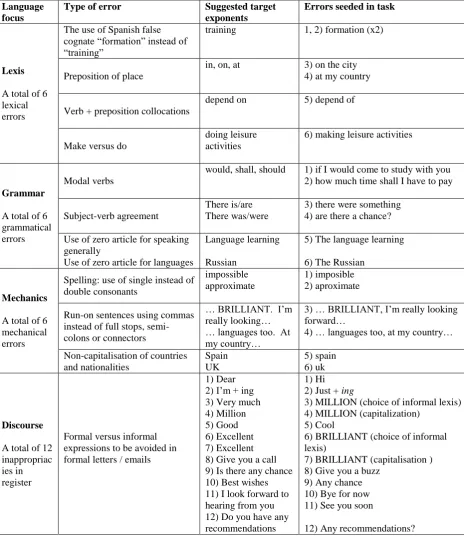
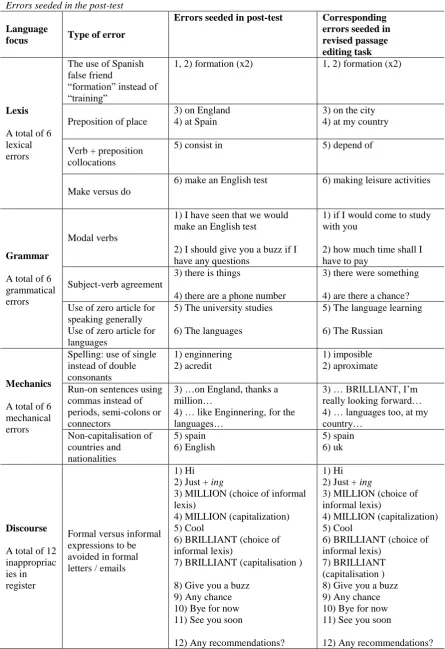
Table 4: Errors seeded in the Revised Passage Editing Task
Table 5: Participant demographics, years studying English, reasons for studying and previous study modes
Table 6: Mean ratings out of 4 awarded to each reason for choosing current study mode
Table 7: Number of participants who would prefer to be studying in a different mode
Table 8: Errors seeded in the post-test
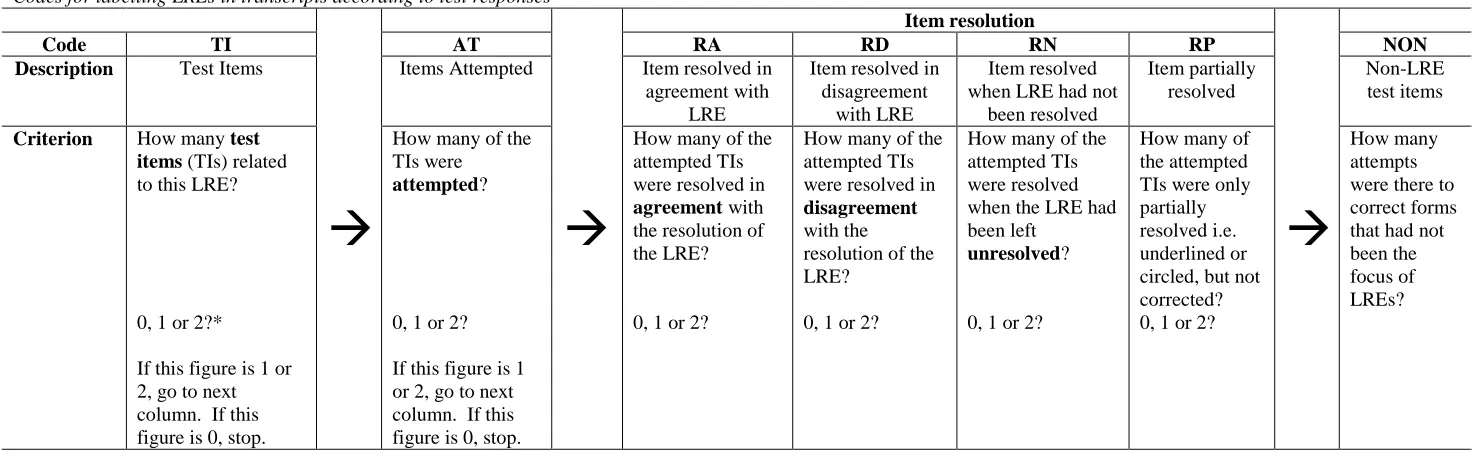
Table 9: Codes for labelling LREs in transcripts according to test responses
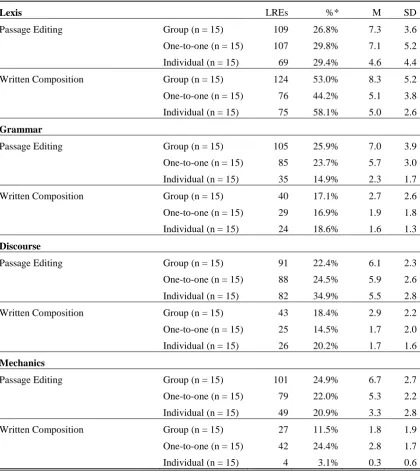
Table 10: Number of LREs in group, one-to-one and individual modes Table 11: Focus of LREs in group, one-to-one and individual modes Table 12: LRE sub-focus in group, one-to-one and individual modes Table 13: LRE resolution in group, one-to-one and individual modes Table 14: Identity of initiator in group and one-to-one modes
Table 15: Identity of resolver in group and one-to-one modes
Table 16: Same initiator and resolver of LREs in group and one-to-one modes
Table 17: Engagement in LREs in group, one-to-one and individual modes Table 18: Identity of elaborate and limited participants in elaborate +
limited LREs in group and one-to-one modes
Table 19: Rho and p-values for Spearman’s correlations between resolution and engagement
Table 20: Instances of microgenetic development observed in group, one-to-one and individual modes
Table 21: Post-test items that corresponded to LREs in group, one-to-one and individual modes
Table 22: Post-test items attempted in group, one-to-one and individual modes
Table 23: Post-test items corrected i) in agreement with LRE resolution, ii) in disagreement with LRE resolution, iii) when the LRE had been unresolved and iv) only partially
Table 24: Post-test items attempted relating to forms not languaged in group, one-to-one and individual modes
Table 25: Rho and p-values for Spearman’s correlations between resolution and test responses
xiii
Table 26: Rho and p-values for Spearman’s correlations between engagement and test responses
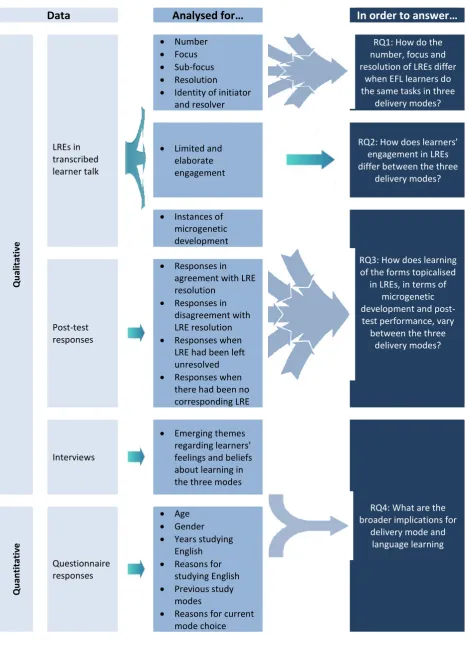
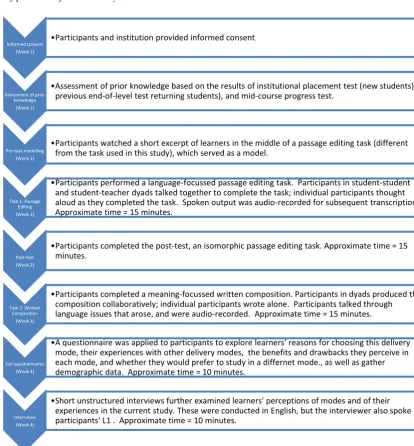
Figure 1: A mixed-methods approach to data collection and analysis Figure 2: Overview of procedure for main study
116
1
CHAPTER I: INTRODUCTION
1.1 Introduction
The present research investigates the impact of delivery mode on learner interaction in adult English as a Foreign Language (EFL) courses and the significance for learning. Given the growth in demand for asynchronous online language learning platforms, its aim is to compare the learning processes that occur when learners do language tasks working alone, as is usually the case in asynchronous online EFL contexts, with those that occur in student-teacher dyads in private one-to-one tuition contexts, and also with student-student dyads in face-to-face group EFL classes1.
Specifically, the study compares the quantity and quality of languaging, defined by Swain (2006: 98) as the “process of making meaning and shaping knowledge and experience through language” and rooted in a Vygotskian sociocultural framework in which language mediates cognition and learning, between the three modes. Languaging is observable in learners’ language-related episodes (LREs), instances in which “students talk about the language they are producing, question their language use, or other- or self-correct” (Swain 1998: 70), and is claimed to positively impact on language learning (Gass & Mackey 2007; Kim & McDonough 2011; Gilabert & Barón 2013). LREs may differ in quality and quantity depending on whether tasks are performed in student-student dyads, as is often the case in face-to-face group EFL classes; in student-teacher dyads, as happens in private one-to-one tuition contexts; or by individual learners working alone, as occurs in asynchronous online EFL contexts. By analyzing and comparing performance on near-identical tasks between delivery modes, the research aims to observe similarities and differences in the languaging and learning that occurs in each.
In my role as a teacher and Director of Studies at a private sector language school in Spain that offers the same course content through the three modes of delivery, I am sometimes asked by learners which mode is “best” in terms of the
1
2
amount of English they will learn. Learners often have preconceived ideas about this: a common belief is that one-to-one tuition is more effective than group classes, and so greater learning gains can be made in shorter periods of time. This belief is so widespread, in fact, that many private sector language learners are prepared to pay several times the hourly group rate in order to receive one-to-one classes. Companies, for example, often invest in expensive one-to-one tuition for executives. Furthermore, learners in my local context often assume that online tuition should only be considered as a last resort, believing it is in some way inferior to face-to-face group or one-to-one tuition. This research therefore has the capacity to investigate and, potentially, challenge such preconceptions, inform learner decisions regarding course delivery mode, and also contribute to decisions regarding programme development and curricular designs. Given the growing interest in providing courses online, it also has broader social implications for improving access to language education for those who for geographical, financial or other reasons are unable to attend face-to-face lessons.
1.2 Contribution to Knowledge
The present study will contribute to knowledge because:
(a) While previous educational research comparing the effectiveness of different delivery modes for learning indicate that students in online conditions demonstrate slightly better educational outcomes than students learning the same material in face-to-face classrooms (Zhao 2002 and US Department of Education 2009 provide meta-analyses), very little of this research focusses on language education;
3
to answering questions about how humans are capable of learning alone, without assistance from others;
(c) there is no research, to my knowledge, that compares educational outcomes of group language classes and one-to-one language tutoring contexts. By comparing these contexts, the present study will contribute to a more complete understanding of learning in one-to-one settings, and will also be of interest to cognitive SLA researchers investigating the effects of external feedback from tutors.
(d) only a small number of studies (Swain & Lapkin 1995 and Kim 2008 are two of the few) have examined LREs when learners perform tasks individually, with most studies interpreting LREs as collaborative events. However, Swain & Lapkin’s
(1995) conceptualisation of LREs, and the Vygotskian sociocultural framework (1978, 1987) in which they are rooted – specifically Vygotsky’s notion of inner speech – allow for LREs to be events that can occur in individual learners’ thinking. By
examining this thinking and the LREs it contains, a better understanding can be reached regarding learning in the individual condition compared to pair-work, which has been much more extensively researched.
1.3 Theoretical Framework: An Introduction
The present research is informed by the work of Vygotsky and SCT. Vygotsky (1978, 1987) argued that higher mental processes (cognition) are mediated: humans use mediating physical artefacts and symbolic tools, such as numeracy, literacy and language to act upon the world, with language being one of the most important tools employed to mediate thinking, whether in social interaction or alone. Vygotsky’s
4
“distance between the actual developmental level as determined by independent problem solving and the level of potential development as determined through problem solving under adult guidance, or in collaboration with more capable peers” (Vygotsky 1978: 86).
More recently (e.g. Donato 1994; Storch 2002, 2005) the concept of scaffolding has been applied to peer interaction. Because language learners have different expertise in different areas of language and language skills, peers in dyads can provide scaffolding to mediate each other’s development.
SCT is also an appropriate framework for examining language as a mediational tool when learners perform tasks alone, given Vygotsky’s concept of inner speech
(1987), which is silent language used by individuals to mediate thinking: by using language to think through problems, adults reach new insights, solve problems and construct knowledge. This process involves self-scaffolding (Holton & Clark 2006, Knouzi et al 2009), a “form of internalized conversation in which the student interrogates their epistemic self” (Holton & Clark 2006: 128). While learners clearly
cannot impart to themselves concepts they do not know, they can self-scaffold by, for example, breaking down problems into smaller parts, starting with simpler problems first, and making optimal use of available resources (Bickhard 2005).
Given its capacity to explain language use and learning in both expert-novice and individual settings, SCT is of key relevance to my study of course delivery modes, as it may help to explain how learning occurs when learners do tasks individually, with a teacher, or with a peer.
5
1.4 Definitions of Terms and Operationalisations
There follows a list of definitions and operationalisations of the key terminology employed in the present study.
1.4.1 Languaging. Swain’s concept of languaging refers broadly to the
“process of making meaning and shaping knowledge and experience through language” (2006: 98). Languaging is rooted in the Vygotskian view that language is not solely the expression of thought, but that “thought is restructured as it is transformed in speech. It is not expressed but completed in the word” (Vygotsky
1987: 150). Languaging is therefore “a vehicle through which thinking is articulated and transformed into an artifactual form” (Swain 2006: 98), and it is this process of “talking it through… to another, with another or with the self” (p. 98) that brings
humans to understanding and learning. As an example of languaging, Swain highlights self-explaining, in which language is used to talk oneself through a complex problem and, potentially, reach new insights.
While some recent research (e.g. Suzuki 2012; Moradian, Miri & Hossein Nasab 2016) has examined languaging in written form, the present study follows most published research by interpreting languaging as existing in the spoken rather than the written word. It should also be noted that the term languaging was used in earlier research by Lado (1979) to refer to processes quite different from Swain’s intention, but it is Swain’s definition of languaging that is the most widely understood today, and the one adhered to in this thesis.
During Swain’s research trajectory in the late 1990s and 2000s, her theoretical
6
1.4.2 Language-Related Episodes. Languaging is observable in learners’ language-related episodes (LREs), instances in which “students talk about the language they are producing, question their language use, or other- or self-correct” (Swain 1998: 70). LREs involve negotiation of form (Ellis 2000), the explicit discussion of linguistic forms tending to arise when learners temporarily attend to form as they complete a communicative task and attempt to convey meanings in the most accurate, appropriate and coherent way.
This conscious reflection on language may involve questioning the meaning of a word, its spelling, pronunciation or grammatical form, and / or correction of one’s own or another’s language use (Basterrechea & García Mayo 2013). LREs include a range of actions believed to be associated with language learning, such as noticing the gap between learner language and a target language feature (Gass & Mackey 2007; Gilabert & Barón 2013), formulating recasts and engaging in metalinguistic discussions (Kim & McDonough 2011; Gilabert & Barón 2013) and conducting hypothesis testing and self-repair (Gilabert & Barón 2013).
LREs are often interpreted as events that occur in collaborative dialogue with an interlocutor. Fortune (2013: 173), for example, claims “LREs are identifiable elements in collaborative task dialogue” (author’s italics), and therefore chooses to exclude self-correction in his own definition of LREs. However, Swain asserts that languaging, the process in which LREs arise, is “made visible as learners talk through
with themselves or others the meanings they have, and make sense of them” (2006:
95, my italics). Vygotsky considered inner and private speech tools that mediate learning, and this view of language use by individuals as a mediational tool lends support to the interpretation taken in the present study, which is that languaging may occur either collaboratively or individually.
7
“focal attentional resources are allocated ... during an otherwise meaning-focused classroom lesson … an occasional shift of attention to linguistic code
features – by the teacher and/or one or more students – triggered by perceived problems with comprehension or production” (Long & Robinson 1998: 23).
It is noteworthy that Long & Robinsons’ requirement that the lesson be “otherwise-meaning focussed” is not always met in the research on languaging, in
which some tasks are almost entirely form-focussed. This wider interpretation seems to be reflected in Spada’s broader definition of FonF as “any pedagogical effort which
is used to draw the learners’ attention to language form either implicitly or explicitly” (1997: 73). It is this wider definition that is adhered to in this study.
1.4.4 Uptake and Repair. Within research on teacher-learner and learner-learner interaction, uptake refers to a student’s utterance that immediately follows feedback from a tutor or peer, and which in some way responds to that feedback (Lyster & Ranta 1998). Uptake may or may not consist of repair, in which the student correctly reformulates the error focussed on in the feedback.
1.4.5. LRE Focus. LREs usually have a linguistic focus, such as lexis (Swain 1998, Storch 2007), grammar (Williams 2001, Storch 2007), or discourse (García Mayo 2002a, Fortune 2005). In studies that employ LREs as a unit of analysis, LREs are often first categorised by linguistic focus, before being categorised by some other characteristic, such as the correctness of resolution, depth of engagement or pattern of collaboration.
1.4.6. Engagement. While a great deal of research has centred on the focus and resolution of LREs, learners’ level of engagement in LREs has, as observed by
Storch (2008, 2010), attracted relatively little attention thus far. Engagement has been defined as “a state of heightened attention and involvement” (Philp & Duchesne 2016: 52) that “requires energy and effort” and “drives learning” (Christenson, Reschly &
8
“draws on the idea of investment; it incorporates thoughtfulness and willingness to exert the effort necessary to comprehend complex ideas and master difficult skills” (Fredericks et al 2004: 60).
Cognitive engagement is observable in learners’ memorisation of forms (Fredericks et al 2004: 61), instances of flexibility in problem solving, a preference for hard work, and positive coping when failure comes (Connell & Wellborn 1991). It may also be observed in the use of metacognitive strategies to plan, monitor, and evaluate cognition when performing tasks (Pintrich & De Groot 1990). While some of these operationalisations of cognitive engagement closely mirror aspects of intrinsic motivation (Harter 1981), the present study adopts Reeve’s (2012: 150) view that engagement relates to the learner’s active involvement in a learning activity such as a
task (lasting a few minutes) or a course (lasting a few weeks or months), which can be publically observed in behaviour, whereas motivation is a more private “force that
energizes and directs behaviour.” Understood thus, motivation may be a source of engagement in a given task.
In recent research focussing on languaging (e.g. Storch 2008; Edstrom 2015), two levels of engagement have been observed: limited engagement, in which learners state a linguistic preference or resolution without further deliberation; and elaborate engagement, in which learners seek and / or provide confirmation and explanations, and / or suggest alternative forms. In the present study, each participant’s engagement is coded as one of these two types, limited or elaborate.
1.4.7 Learning, Microgenetic Development and Consolidation. This study adopts Vygotsky’s view of learning as“a necessary and universal aspect of the
process of developing culturally organized, specifically human psychological functions” (1978: 90). Specifically, language learning is the process through which
9
the need to document the process of learning “in flight”, by describing in analytical detail the activity over a very short period of time, such as the time required to complete task – that is, to conduct a microgenetic analysis of development. The present study conducts such a microgenetic analysis of transcribed learner interaction and individual think-aloud protocols.
The present research, however, is concerned not only with observing learning as a microgenetic process, but also learning in terms of product, that is learners’ retention of and subsequent receptive and / or productive ability with the form focussed on. The term microgenetic development is therefore employed in the present study to refer specifically to the restructuring of knowledge that appears to take place within the short duration of an LRE or series of LREs, whereas learning is used to refer to the longer-term subsequent receptive understanding or productive use of forms topicalised in LREs, as observed in the post-test.
It should be noted that at higher levels, such as the upper-intermediate level observed in the present study, what often occurs is not the learning of a completely new grammatical or lexical form; rather, learning constitutes the consolidation of existing knowledge in the form of greater control of forms that have already been studied (Ellis 1997) or the extending of existing knowledge to new contexts (Swain & Lapkin 1995, 1998). Such consolidation is implicit in Swain’s definition of language learning as the process of language taking on new significance (2006). In this study, the term learning also encompasses such consolidation.
In the present study the term acquisition will be avoided, except in the acronym SLA, given its connotations with the unconscious process of internalising rules through exposure to comprehensible input (Richards & Schmidt 2002), as opposed to learning associated with focus on form. Learning – which is the English translation of the term used in Vygotsky’s writings – has greater connotations with the explicit study of rules and the monitoring of one’s own performance, as often occurs
in FL classrooms of the kind under investigation in this study.
10
context may resemble private speech (Vygotsky 1987), which is audible self-directed talk that can occur when an adult is alone or in interaction (Hauser 2015), and which
“surfaces … when a person faces a complex problem and tries to regain
control of his or her cognitive activity by focussing on key features of the problem” (Swain 2013: 201).
Vocalised inner speech in a research context, however, differs from private speech, because the former is produced to comply with the researcher’s demands. Private speech in naturalistic settings tends to be produced only when tasks are cognitively complex, and serves as a means of mediating thinking and remembering key information. Furthermore, in naturalistic inner and private speech, much of the “linguistic garb” is shed, leaving “pure meaning” (Lantolf & Thorne 2006: 72). As
Vygotsky (1987: 88) observes, “thought can function without any word images”, which implies that naturalistic inner speech may also be interpolated with non-verbal thoughts.
1.4.9 Think-Aloud Protocols, Stimulated Recall and Immediate Recall.
The present studyinvolves learners in the individual context performing think-aloud protocols as they complete tasks in order to verbalise inner speech. Think-aloud protocols, a subset of introspective methodology, are concurrent, online verbal reports produced by participants at the same time as they perform a task (Gass & Mackey 2000; Bowles 2010). They resemble Cohen’s (1998) self-revelation procedures, and also what Shavelson, Webb & Burstein (1986) term talk-alouds. They differ from stimulated recalls, also referred to by Gass & Mackey (2000) as postprocess oral observation, and by Shavelson, Webb & Burstein (1986) as prompted interviews, in that stimulated recalls take place after participants have completed a task, and involve participants in viewing a video recording or hearing audio of themselves completing the task (or, in the case of a writing task, being exposed to the text produced) and describing what they were thinking while they completed the task.
11
thinking without explanation or justification, are referred to as non-metacognitive (Bowles 2010) or Type 1 (Ericsson and Simon 1993) verbalisations.
Immediate recall (Gutiérrez 2013) is a think-aloud in which the researcher, if she or he believes the participant is not verbalising, interrupts to provide an auditory prompt such as a knock on the desk (Philp 2003) or a spoken request (Gutiérrez 2013) for a verbalisation.
For reasons discussed in Chapter III, the introspective methodology employed in the present study is think-alouds, that is, concurrent verbal reports produced without the presence of prompting or a recall support system.
1.4.10 Reactivity and Veridicality. In concurrent verbal reports the act of verbalising may constitute an additional task that alters the cognitive processes taking place to complete the main task. This potential for concurrent verbal reports to alter thought processes is referred to as reactivity (Ellis 2001; Jourdenais 2001). Since stimulated recalls, on the other hand, take place after the task has been completed, they are not subject to reactivity but rather have the potential to be affected by memory decay, an erosion over time of participants’ ability to accurately verbalise what they were thinking. The threat of memory decay to the internal validity of the recall instrument is referred to as an issue of veridicality (Bowles 2010).
As discussed in Chapter III, the concept of reactivity is not entirely consistent with Vygotskian theories of language and thought, but is nevertheless useful for considering the relationship between learner verbalisations and individual task performance.
12
explicit (Ellis 2009). Similarly, language-focussed tasks reflect Willis’ (2004) simulation activities, which contain language that looks realistic but focus on practice of particular forms.
In meaning-focussed tasks, on the other hand, attention to language forms is “incidental” (Storch 2013: 45), usually occurring only when a learner encounters a
difficulty. Meaning-focussed tasks resemble Ellis’ (2009) unfocussed tasks, which provide general communicative language practice without focussing on a specific linguistic feature, and also Willis’ (2004) replication activities, which replicate real
world communication insofar as language users decide what to communicate.
In the present study tasks are also categorised as input-providing (focusing on reading and listening), output-prompting (focusing on speaking and writing), or integrative (involving two or more skills) (Ellis 2009).
1.4.12 Tailor-Made Testing. In the present study reference is made to tailor- made testing. Tailor-made, or a posteriori test designs have been used in the research to trace learning from LREs and examine possible associations between languaging and learning of the forms focussed on. Tailor-made test items, developed after the LREs have occurred and which test the language items that actually arise in LREs rather than the forms seeded in the task, help overcome the difficulty of measuring learning when learners engage in LREs about forms not seeded in the task (Storch 2013).
1.5 Outline of the Thesis
The remainder of the thesis is organised as follows.
Chapter II begins with a review of the literature relating to the theoretical frameworks underpinning the present study. It goes on to review published research that has attempted to:
i) compare online and face-to-face learning; ii) compare face-to-face and one-to-one learning;
13
iv) assess the effects of collaborative and individual conditions on linguistic product, LREs and leaning;
v) examine the effects on languaging and learning of differences in dimensions of the expert-novice relationship;
vi) investigate engagement in LREs;
vii) consider the effects of task dimensions on LREs; and
viii) study the potential for reactivity in verbal think-aloud protocols.
Chapter II concludes by formulating the research questions for the present study.
Chapter III describes the methodology of the present study by discussing:
i) itsquasi-experimental classroom method; ii) the two pilots that preceded the main study; iii) the participants;
iv) course content and duration;
v) steps taken to ensure ethical consent; vi) pre-task modelling;
vii) the two tasks employed;
viii) think-aloud protocols in the individual mode; ix) the post-test;
x) the questionnaire; xi) interviews;
xii) the methodology of data analysis; and
xiii) the quantitative analytical methods employed.
Addressing each research question in turn, Chapter IV presents the results and statistical analyses for LRE numbers, focus, resolution, and engagement, in addition to test scores and questionnaire responses.
14
15
CHAPTER II: LITERATURE REVIEW
This literature review is organised as follows. Firstly, there is a description of the theoretical frameworks that underpin the present study, specifically Vygotskian Sociocultural Theory (SCT) and the related concept of scaffolding, and Swain’s
Output Hypothesis. Secondly, there is a consideration of comparative analyses of online and face-to face learning, and of face-to-face and one-to-one learning. The review then discusses features that characterise learner-teacher and learner-learner interaction, before going on to define languaging and LREs and explore the relationship between these and learning. It then examines comparative effects of collaborative and individual conditions on language, LREs and learning, and discusses differences in LREs associated with varying dimensions of the expert-novice relationship. There then follows a discussion of studies observing engagement in LREs, and a review of the effects of task dimensions on LREs. The literature review concludes with the formulation of the research questions for the present study.
2.1 Theoretical Frameworks
2.1.1 Vygotskian Sociocultural Theory
2.1.1.1 Mediation, internalisation, spontaneous versus scientific concepts,
and an interpretation of “sociocultural”. The present study is theoretically informed primarily by the work of Vygotsky and SCT. Vygotsky (1978, 1987) argued that higher mental processes (cognition), which differ from lower mental processes in that they are socially rather than genetically acquired and are subject to intellectualisation, are mediated. Humans use mediating physical artefacts and symbolic tools such as numeracy, literacy and language to act upon the world, with language being one of the most important mediating artefacts of the mind. Mediation may consist of the use of silent or spoken or written language to complete and externalise thought in cognitively complex tasks. In this sense, language mediates cognition.
16
events, on the one hand, and the language and practices of the courtroom, on the other. Interpersonal mediation of this type occurs in situations typically characterised by difference, difficulty, or social distance (Baynham 1993), of which language classrooms – given the differences between teachers and students in terms of linguistic and life experiences (Gibbons 2003) – may be considered an example.
Vygotsky reasoned that mediation may be considered the process through which the spontaneous concepts that derive from everyday experience and direct contact with the world – such as the client’s version of events, or a learner’s ability to use, but not fully understand, a grammatical structure – are transformed into scientific concepts, or higher forms of thinking – such as the lawyer’s case, or an understanding of an underlying grammatical system. Scientific concepts are therefore derivative of mediated collaboration. Whereas in the use of spontaneous concepts the system’s function may not yet be fully understood, scientific concepts “restructure and raise spontaneous concepts to a higher level’ (Vygotsky, 1987: 220) and are made evident
by an awareness of structure.
Vygotsky’s best-known research focussed on children’s interactions with
adults in non-language teaching contexts, where it was observed that higher cognitive functions appear twice: first on the social, intermental plane, with learning constructed by novices in collaboration with experts, and later on the psychological, intramental plane. Symbolic artefacts such as language become psychological artefacts through a process of internalisation, in which they shed their exclusive social nature (for use in communicative activity) and assume a bidirectional quality, that is, they function for social others and also for the self (Lantolf 2006).
In this study, I adopt Lantolf’s (2006) understanding of sociocultural as relating specifically to the social constructivist view of learning proposed by Vygotsky (1978, 1987), in which mediation and internalization advance development. Vygotskian SCT, also known as cultural psychology or cultural-historical psychology (Cole 1996; Ratner 2002), is a lens through which dyadic interaction and individual learner talk can be analysed in order to identify development at the microgenetic level.
17
alternative interpretation of SCT taken by Norton (2002) and Hall (1997). Such contextual factors, while undoubtedly influential on learning, are largely beyond the scope of this study, in which data collected from learners is limited to the language they produce during the tasks, and to the limited information relating to their background collected in the questionnaires and interviews. The quasi-experimental design, in which LREs and questionnaire responses are compared between the three modes, limits the data collected to that necessary for comparisons to be drawn regarding languaging and learning. The ethical consent provided by participants in this study also limits data collection to this specific focus, rather than allowing a wider inspection of learners’ social and cultural backgrounds and contexts.
2.1.1.2 Scaffolding. The application of SCT has been extended beyond the child-adult interactions observed by Vygotsky to expert-novice relationships within teacher-student interactions (Wood et al 1976), where teachers can provide scaffolding – finely-tuned support – to aid students’ development from their current to potential level. While scaffolding itself is not a Vygotskian concept, it is closely related to Vygotsky’s Zone of Proximal Development (ZPD), the
“distance between the actual developmental level as determined by independent problem solving and the level of potential development as determined through problem solving under adult guidance, or in collaboration with more capable peers” (Vygotsky 1978: 86).
Scaffolding may be heuristic (Holton and Clarke 2006) or cooperative (Bickhard 1992), where the expert models or simplifies a task in order to help the novice complete it, or it may be conceptual (Holton and Clarke 2006) or informational (Bickhard 1992), where the expert imparts new information to the novice. Scaffolding has particular characteristics that distinguish it from support in more general terms, with scaffolding usually being characterised by:
i) contingency – the amount of support is dependent upon the teacher’s
ongoing assessment of the learner’s current level;
18
iii) transfer of responsibility from the teacher to the learner – the learner may
eventually complete the same task autonomously (van de Pol, Volman &
Beishuizen 2010).
Since the mid-1990s the concept of scaffolding has been extended beyond student-teacher interaction and has been applied to peer interactions in language classrooms. Since language learners have different levels of expertise in different areas of language and language skills, peers in dyads can provide scaffolding to mediate each other’s development (Donato 1994; Ohta 2000, 2001; Storch 2002,
2005). In one of the earliest studies to observe peer scaffolding, Donato (1994) performed a microgenetic analysis on protocol data produced by a triad of university French learners preparing a presentation. Instances of scaffolded help included collectively managing aspects of linguistic problems, identifying discrepancies between the language produced and what learners perceived to be the ideal solution, and reducing frustration by drawing on the group’s collective resources. Donato’s
study is significant because at the time, the observation of linguistic change as a result of co-construction of knowledge in a joint linguistic activity was at odds with the prevailing SLA concepts of input, comprehensible input and output. Furthermore, scaffolding had previously been conceptually dependant on the presence of an expert teacher who could support the novice, whereas Donato argued that learners could concurrently be both experts and novices, and that individual expertise within groups could be pooled in order to benefit each individual’s learning.
Similarly, Ohta (2001) identified instances of peer scaffolding in protocols produced by Japanese university learners, in which participation in LREs exposed learners to language input and feedback (positive or corrective), and focussed attention on language choices. Ohta claimed that even less proficient learners were able to scaffold the learning of more proficient peers, and that collectively, learners were able to produce language that was above the level of any one individual learner. These findings were supported by Storch’s (2005) study of ESL learners performing a
collaborative writing task, in which most dyads demonstrated collaborative scaffolding in the form of completing each other’s ideas, proposing alternative
19
2.1.1.3 Inner speech, private speech and self-scaffolding. SCT as a framework can be used to examine language as a mediational tool not only in collaboration but also when learners perform tasks alone. The Vygotskian concept of inner speech (1978, 1987) refers to silent language used by individuals to mediate thinking. By using language to think through problems, humans reach new insights, construct knowledge and, potentially, achieve independent problem solving. When problems are cognitively complex, this inner speech may surface as (sub)vocalised private speech, or “self-talk” (Lantolf 2006: 95), which occurs
“when a person faces a complex problem and tries to regain control of his or her cognitive activity by focussing on key features of the problem” (Swain
2013: 201).
Private speech serves the functions of mediating and regulating internal cognitive processes, and of facilitating the internalization of mental functions (Lantolf 2006). In research contexts that require participants to vocalise inner speech in a think-aloud protocol, the speech produced may resemble private speech, but it must borne in mind that vocalised inner speech is being produced to comply with the researcher’s demands, whereas private speech in naturalistic setting surfaces less frequently, and only when tasks are cognitively complex.
The use of silent or (sub)vocalized self-talk to facilitate cognitive regulation or internalisation has been referred to as “self-scaffolding” (Holton & Clark 2006; Knouzi et al 2009), a “form of internalized conversation in which the student interrogates their epistemic self” (Holton & Clark 2006: 128). While learners clearly
cannot impart to themselves concepts they do not know – that is, they cannot provide themselves with conceptual (Holton and Clarke 2006) or informational (Bickhard 1992) scaffolding – they can self-scaffold heuristically by, for example, breaking down problems into smaller parts, starting with simpler problems first, and making optimal use of the resources they have available to them (Bickhard 2005). Likewise, they may employ focus features (Lantolf 2006), elements such as “now,” “next,” “let’s see,” “oh,” or “OK,” in private speech in order to regulate their thinking.
20
In Chi, Bassok, Lewis, Reimann & Glaser (1989), for example, ten undergraduate learners’ self-explanations of problems relating to Newtonian physical phenomena
were observed using a think-aloud protocol. Learners were asked to overtly explain to themselves what they had understood after reading each line of a worked example. The authors highlighted functions of self-talk, such as self-explaining, where learners said something substantial about the subject matter in the example; monitoring, where learners reflected on their current state of comprehension; and, in the case of more able learners, asking themselves specific questions about what they had not understood, which may then be resolved through self-explanation in a process akin to the interrogation of the epistemic self described by Holton & Clark (2006). Chi et al proposed that the more self-explaining that occurred, the better learners’ understanding of the material, a claim based on the assumption that longer protocols were a reflection of greater cognitive processing. However, there were no post-tests employed to assess whether such processing was associated with immediate or delayed demonstration of retention of the subject matter.
Within Applied Linguistics, functions of self-scaffolding in a French language classroom were identified by Knouzi et al (2009), who observed the self-scaffolding of a high languager (the participant who in a prior study had produced the most “languaging units”) and a low languager (who had produced the fewest languaging units), as they self-explained concepts of the French voice system presented to them on cards. Some of the languaging was concept-bound, that is, “cognitively complex talk directed at understanding a conceptual unit” (p30) that consisted of paraphrasing, inferencing and analysing, whereas other examples were non-concept bound, consisting of self-assessment in which participants’ monitored their understanding (for example by stating “I don’t understand this part” or “this is not clear”) and re-reading
21
connect spontaneous and scientific concepts. She also talked it through with herself when faced with conflicts, creating hypotheses that she later attempted to test. The low languager, on the other hand, left many cognitive conflicts unresolved. The results are of particular relevance to the online individual mode in the present study, as they provide evidence of scaffolding, problem solving and learning even when no external feedback is available from a teacher or peer.
Doctoral research conducted by Neguerela (2003) also highlighted functions of individual languaging and self-explaining, and made claims for its impact on learning. University Spanish L2 learners were assigned homework tasks that consisted of verbalising the target concepts of aspect, mood and tense in Spanish grammar. The verbalisation task was theoretically situated within a framework of Gal’perin’s (1969, 1992) Systemic Theoretical Instruction (STI), which proposes the organisation of instruction into theoretical conceptual units, the use of charts and diagrams to represent target concepts, and learner verbalisations of concepts in order to promote understanding and internalisation. Learners were recorded self-explaining concepts on six occasions during a 16-week course. The author claimed that these self-explanations helped learners internalise concepts and more accurately produce written work relating to them. While the absence of a control group represented a limitation, and it is also difficult to separate the verbalisation from the other aspects of the STI approach, it appeared that the internalisation deriving from verbalisations of concepts aided the mediation of subsequent written communicative ability.
In sum, given the applications to languaging and learning in expert-novice, peer-to-peer and individual settings, SCT and scaffolding are of key relevance to my study of course delivery modes, as they account for learning that occurs when learners do tasks with a teacher, with a peer or individually.
2.1.2 The Output Hypothesis. The role of learner output in interaction in SLA was highlighted in Swain’s (1985, 1993, 1995) research on English-speaking learners at Canadian French immersion schools. Swain noticed that while learners were communicatively competent, that is, they were able to convey and comprehend a variety of meanings, the accuracy of their linguistic output usually did not reach a level that could be considered “native-like”. In other words, their linguistic resources
22
they were less able to perform the syntactic processing necessary for accurate production.
Swain’s Output Hypothesis therefore proposed the use of language tasks that would push learners’ output by encouraging them to focus on more sophisticated
language forms. Such pushed output serves three functions: firstly, to help learners notice the hole between their current level and the level required by the task (the noticing function), which coincides with Schmidt & Frota’s (1986) concept of noticing the gap between the learner’s current level and native-like forms; secondly, to
allow learners to test out different linguistic hypotheses and check their appropriateness against feedback from a teacher or peer (the hypothesis testing function); and thirdly, to reflect and evaluate on their linguistic product (the metalinguistic function).
With regards to the present study, the hypothesis testing function, while available to group and one-to-one learners, is not available to students working alone. Given the evidence from a number of studies in the late 1990s and early 2000s that lent support to the Output Hypothesis by making claims for the use of collaborative form-focussed tasks as a means of providing learners with access to the three functions it described, this is potentially problematic for individual learners. In Storch’s (1999) study of adult ESL learners performing cloze, text reconstruction and short composition tasks, student-student collaboration, when compared to individual performance, had a positive effect on the overall grammatical accuracy of the texts produced, particularly in terms of morphology. Pairs interacted, provided each other with feedback on their output, revised their work, and made corrections much more than individuals. The greater accuracy of texts produced collaboratively may have also related to the longer time spent on tasks in pairs, which was almost double that of individuals. Likewise, in Storch’s (2005) study of learners producing a written
description of a graphic prompt, pairs produced shorter but better texts than individuals in terms of task fulfilment, grammatical accuracy and complexity. Collaboration afforded opportunities to pool ideas and give each other feedback in ways not possible for individual learners.
23
(input) and feedback from a peer or tutor on the correctness of utterances (interaction). Feedback may be explicit, such as corrections and metalinguistic explanations, or implicit, such as clarification requests, comprehension checks and confirmation checks – the “three C’s of negotiation for meaning” (Gass & Mackey 2007).
However, since the late 1990s Swain’s theoretical perspective has shifted away
from her Output Hypothesis, in which learner output was conceptualised as a fixed message expressed using language that had already existed as thought, and towards the Vygotskian sociocultural perspective of language as a constructive agent of meaning making. In other words, her perspective shifted towards a view of language as both a conveyer of message and as a cognitive tool, and closer to the Vygotskian principal of “process analysis as opposed to object analysis” (Vygotsky 1978: 65).
Recent language teaching research has tended to follow this shift, by drawing on SCT, or a combination of SCT and the Output Hypothesis, rather than on Swain’s earlier
work alone. For the purposes of the present study, the main limitation of both Long’s Interaction Hypothesis and Swain’s Output Hypothesis is their inability to account for
learning that occurs when individuals work alone, in the way that a sociocultural perspective, with its contemplation of inner and private speech, is able to.
2.2 Online versus Face-to-Face Learning
There are relatively few studies that compare face-to-face (FTF) and asynchronous online language learning outcomes, partly because the myriad differences that can exist between the two modes can make comparability problematic (Blake 2011). However, evidence from the studies comparing learning outcomes between FTF learners and learners studying online, either asynchronously or with some element of synchronous computer-mediated communication (SCMC), indicates slightly more favourable results for students in online conditions. Furthermore, blended learning (a combination of online and FTF) may be even more effective than purely FTF or purely online instruction.
24
postgraduate level, and only one (Al-Jarf 2004) related to language instruction, the effectiveness of online learning did not appear to depend on subject content or age, which suggests findings may also be applicable to adult language education. However, the largest effect sizes were in studies where online instruction was collaborative or instructor–directed, rather than independent asynchronous online learning of the kind examined in the present study.
These findings support results from a previous synthesis (Zhao 2002) of studies comparing the effectiveness of computer-assisted language learning (CALL) and traditional instruction of the four language skills and lexis. Zhao concluded that CALL applications are as effective as, if not more effective than, traditional classroom instruction. The increased time CALL learners spent with L2 materials, compared to FTF classroom learners, may be responsible for the greater effectiveness observed (a claim also supported by Blake 2011 and US Department of Education 2009).
Further benefits of synchronous online learning compared to FTF were identified by Lai & Zhao (2006) and Gurzynski-Weiss & Baralt (2014). Their findings suggested that synchronous computer-mediated communication (SCMC), compared to FTF interaction, increased the time that learners had available to them to focus on language forms, and enabled learners to have forms more permanently available to them for consultation. This made it easier for learners to return to feedback on target structures provided by their interlocutor (a peer or a teacher). Lai & Zhao (2006) identified more negotiation of meaning in dyads interacting via SCMC, compared to FTF, although no differences in noticing of recasts or modified output were found. However, it should again be stressed that in these studies communication was synchronous, rather than the asynchronous learning under investigation in the present study, and there was no observation of LREs.
25
than in traditional FTF classrooms. This later study observed greater engagement, operationalised as attention to language forms, reflection on language, interactive support and positive attitudes, in the FTF classroom, especially when tasks were cognitively complex. In the SCMC mode, conversely, there was little engagement and little discussion, agreement or disagreement on language forms. Results from post-test questionnaires suggested that this may have related to learner preferences for individual online work over pair-work.
To summarise, while the above findings suggest that online learning may be associated with slightly more positive learning outcomes than purely FTF learning, such results are not unanimous and are rarely based on observations of language learners. Furthermore, there has been no comparison of FTF language classrooms with asynchronous learning in which learners complete tasks alone, with the focus so far being on interactive SCMC. Moreover, very little research has explored possible associations between delivery mode and languaging. The present study aims to fill these gaps in the literature by comparing from a sociocultural perspective group FTF with asynchronous individual online languaging and learning.
2.3 Group versus One-to-One Learning
As with online versus FTF language instruction, very little research has compared FTF group with FTF one-to-one language teaching. Furthermore, in the most recent studies comparing group and one-to-one tutoring for non-language subjects, “tutoring” is defined as additional classes that supplement group lessons,
often for remedial purposes, rather than replace them, as is the case in the one-to-one mode in the present study. There is evidence (for example Mischo & Haag 2002; Obaidul Hamid, Sussex & Khan 2009) that students receiving additional remedial one-to-one tutoring demonstrate an improvement in school marks that is higher than students who receive no additional tutoring, but also that the effect of tutoring on educational outcomes depends on a range of variables, including tutors’ qualifications and learners’ objectives for contracting one-to-one classes (Bray 2006). However,
26
One early study (Bloom 1984) in a non-linguistic context attempted to compare learning gains made in stand-alone tuition contexts with group classes. Students of Probability and Cartography were randomly assigned to one of three methods of instruction:
i) conventional group classes consisting of one teacher and around 30 students, and in which tests were given periodically to determine learning;
ii) mastery classes, the same as conventional classes but with corrective procedures and formative tests; and
iii) tutoring, the same as mastery but in one, two or one-to-three contexts.
The final achievement measures of students in the tutoring context were around two standard deviations above the mastery students – a result Bloom refers to as the “2 Sigma effect” – and the mastery students were around one standard deviation
above the conventional students. Bloom claimed that no other variable has as much impact on learning as the mode of delivery, as no other variable or combination of variables could produce achievement measures that were two standard deviation measures above those of a control group. It is noteworthy that the amount of total class time spent on-task changed according to the delivery mode – 65% under conventional instruction, 75% in mastery and over 90% in tutoring – and this may have impacted on learning gains. The findings need to be interpreted with caution, however, as there were a number of limitations: as delivery mode was not the only independent variable under investigation, differences in learning gains may have been attributable to other variables, such as different testing procedures. Furthermore, there was no profile of the students (for example ages), indication of how many students participated or details regarding the content of the tests.