© 2019, IRJET | Impact Factor value: 7.34 | ISO 9001:2008 Certified Journal
| Page 1597
SPEED CONTROL OF BRUSHLESS DC MOTOR USING PULSE WIDTH
MODULATION TECHNIQUE
Poojashree J
1, Dr. Ashok Kusagur
21
M.Tech in Engineering Power Systems, Dept. of E&E, UBDT College of Engineering, Davanagere, Karnataka, India
2Chairman, Dept. of E&E, UBDT College of Engineering, Davanagere, Karnataka, India
---***---ABSTRACT :- This paper deals with the speed control of 3
phase brushless DC motor (BLDC) fed with voltage source inverter (VSI) which utilizes a low frequency switching of VSI for low Switching losses. BLDC motor as a cost effective solution for low power applications. The speed control of BLDC motor is achieved by varying the duty cycles(PWM Pulses) from the microcontroller and delivers the desired output to switch the motor drives so as to control the speed of the BLDC motor. The user can enter the delay time to adjust the desired speed and the motor will run at that exact speed. This proposed system provides a very precise and effective speed control system.
KEY WORDS: BLDC, VSI, Microcontroller,
1. INTRODUCTION
Brushless DC motor (BLDC) have more advantages than any other motors like induction motors, DC motors due to compact size, higher efficiency, noiseless operation, higher dynamic response, long life and electronic commutation [1]. Due to these advantages they find applications in numerous area like aerospace, motion control and robotics, transportation. BLDC motor is a three phase synchronous motor consisting of a stator having three phase concentrated windings and rotor having permanent magnets [2]. It does not have mechanical brushes and commutator assembly hence wear and tear of the brushes and sparking issues are eliminated. Sensing rotor position is very important to generate proper switching sequences from the three phase inverter [3]. To do so three hall sensors are provided with the BLDC motor for three phases of the motor. Following the operation of BLDC motor a three phase inverter is designed in hardware in this paper. This drive system can change the speed of the motor as well.
Microcontroller is very useful because of its several features such as faster speed, small chip size, low cost[4]. So, in this design microcontroller is used to generate required switching for the three phase inverter. The generated pulse from microcontroller is send to the gate driver circuit which drives the three phase inverter. Several output parameters of the inverter such as line to line
voltages and phase voltages for varying switching pulse width are checked.
The block diagram for speed control of BLDC motor is shown in fig.1.The gate signals from the microcontroller are given to the gate signals of the MOSFET module through the gate driver circuit. The pulses trigger the inverter which drives the BLDC motor. The inverter uses an 12V DC supply to drive the motor. Fig.2 shows the speed control of BLDC motor using inverters and gate driver circuit [5]. The main objective of an inverter is to produce AC output waveforms from a DC power supply.
Fig.1. Block diagram of BLDC motor loop speed control
Single phase VSI cover low range power applications and three phase cover the medium to high power applications. The main purpose of these topologies is to provide a three phase voltage source, where the amplitude phase and frequency of the voltages should always be controllable. The square pulses (PWM) are generated from the Microcontroller which is given to the gate port of three phase inverter through the gate driver circuit. The inverter is powered from a DC source of 12V. The inverter drives the motor.
© 2019, IRJET | Impact Factor value: 7.34 | ISO 9001:2008 Certified Journal
| Page 1598
switches drain is connected to 12V supply, lower switches drain is connected to ground and output is taken from source. It is a 1800 conduction mode inverter and switching
occurs at every T/6 or (600) angle interval. In order to
avoid undefined states in the VSI and thus undefined AC output line voltages, the switches of any leg of the inverter cannot be switched off simultaneously as this will result in voltages and will depend upon the respective line current polarity. One cycle of 3600 is divided into six intervals of
600 each. These intervals are named as 1, 2,3,4,5 and 6 in
each interval three MOSFETs are conducted. The way of conduction is 561, 612, 123, 234, 345, 456.
Fig.2. BLDC motor fed by inverter
1.1 The switching function representation of three phase inverter
Consider the inverter in Fig.3 where S=0 when the switch is open and S=1 when the switch is closed. Inspection of the network reveals that [6]
Va0 = VdcS1 ; Va0 = Vdc(1-S4) ……….(1)
Vb0= VdcS2 ; Vb0 = Vdc(1-S5) ……….(2)
Vc0= VdcS3 ; Vc0 = Vdc(1-S6) ………(3)
The top and bottom switches can never be closed at same time. Furthermore, for continuity considerations in each phase leg.
S1 + S4 = 1
S2 + S5 = 1
S3 + S6 = 1
The above (1) (2) and (3) equations can be rewritten into simplified form. Introducing the new variables Sa = S1= S4 ;
Sb = S2 = S5 ; Sc = S3 = S6; yields the simplified equation
Va0 = VdcSa ... (4)
Vb0= VdcSb ... (5)
Vc0= VdcSc ... (6)
Fig.3. Three phase inverter with star connected
Where Sa, Sb, Sc {0,1} hence the switch states of the each leg
now expressed by a single switch state for the whole leg. Subsequently the line to line voltages are given by
Vab = Va0 – Vb0 = Vdc(Sa-Sb) (7)
Vbc = Vb0 – Vc0 = Vdc(Sb-Sc) (8)
© 2019, IRJET | Impact Factor value: 7.34 | ISO 9001:2008 Certified Journal
| Page 1599
Where Sa, Sb, Sc {0,1} hence the switch states of the each leg
now expressed by a single switch state for the whole leg. Subsequently [nthe line to line voltages are given by
Vab = Va0 – Vb0 = Vdc(Sa-Sb) (10)
Vbc = Vb0 – Vc0 = Vdc(Sb-Sc) (11)
Vca = Vc0 – Va0 = Vdc(Sc-Sa) (12)
The dc line current is expressed in terms of the phase currents as
idc= iaSa+ ibSb+ icSc (13)
or of line to line current as
idc = iab (Sa – Sb) + ibc (Sb– Sbc) + ica (Sc– Sa) (14)
in case of Y connected the voltages can be expressed with respect to the neutral point denoted subscript n. the phase voltages are
Van = Vdc( 2/3Sa – 1/3Sb - 1/3Sc) (15)
Vbn = Vdc( 2/3Sb – 1/3Sa - 1/3Sc) (16)
Vcn = Vdc( 2/3Sc – 1/3Sa - 1/3Sb) (17)
[image:3.612.336.561.102.213.2]Inverter controls the BLDC motor speed depends on the gate pulses obtained from the MOSFET gate driver circuit. Its works like a optocoupler and uses buffer logic type means the output behaviour is opposite to NOT gate. Driver circuit is used to change the propagation delay.
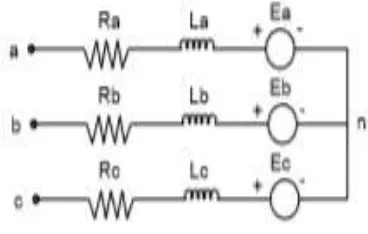
[image:3.612.72.256.498.615.2]Fig 4: Equivalent circuit of BLDC motor
Fig 5: Space vector representation of current in Stationary and rotating frame
The brushless dc motor have permanent magnet rotor with wide pole arc .The stator has three concentrated phase winding which are displaced by 1200 each and each
winding spans 600 on each side. The DC voltage is applied
through three phase voltage source inverter(VSI). So that the stator coils are excited and due to the interaction of stator flux and rotor flux starts rotating. To maintain this rotation the orientation of the magnetic flux should be rotated sequentially in either clockwise direction or in anti-clockwise direction. Fig.4 shows the Equivalent circuit of BLDC motor.
1.2 Modelling of BLDC motor
The power transformations (Clarke and Park transformation) are used in superior drive application for various electrical machines drive [7]. The Clarke transformation is used three phase currents ia, ib and ic to
calculate currents in the quadrature two phase stator axis iα & iβ. Using Park transformation currents can be converted from stationary reference frame to rotating reference frame.
The equations are derived from Fig.5,
iα=2/3ia-1/3(ib-ic) (18)
iβ=2/√3(ib-ic) (19)
i0=2/3(ia+ib+ic) (20)
where iα, iβ currents are in two axis reference frame and io is the zero sequence current of the system. This component can be neglected.consideria+ib+ic=0,then transformations
become,
iα=ia (21)
iβ=1/√3 ia +2/√3 ib (22)
© 2019, IRJET | Impact Factor value: 7.34 | ISO 9001:2008 Certified Journal
| Page 1600
Isq=-iαsinθ+ iβcosθ (24)
The above equations and their inverse transformations are necessary for coding purpose. The rotating reference frame is employed for developing the mathematical model of the BLDC motor. The analytical equations are derived in line with [12]. The machine equation in terms of voltage and current can be written as,
Va=RaIa+ Pλa (25)
Vb=RbIb+Pλb (26)
Vc=RcIc+Pλc (27)
The flux linkage equations are :
λa=LaaIa +Labib+Lacic+ λma (28)
λb= LabIa +Lbbib+Lbcic+ λmb (27)
λc=LacIa +Lbcib+Lccic+ λmc (29)
Let the symmetry of mutual inductance such a Lab=Lba and
self-inductance Laa=Lbb=Lcc
flux linkage λma=λmb=λmc= λm
For this model the output power Pi can be represented as
i=Vaia+Vbib+Vcic (30)
Applying these conversions (18)-(24) to the different equations (25)-(29), we get the following equations as
Vq=(Rs+LqP)iq+WrLdid+WrLm (31)
Vd=(Rs+LdP)id-WrLqiq+WrLm (32)
Ld and Lq are called d- and q-axis synchronous inductances,
respectively. Instantaneous power Pi can be derived from above power equation via transformation as,
Pi=3/2(Vqiq+Vdid) (33)
The produced torque is,
Te=(3/2)(P/2)(λmiq+(Ld-Lq)idiq) (34)
The equation for the motor dynamics is,
(Te-Tl)=P/2(jPw0+Bw0) (35)
The various PWM techniques have been developed to obtain variable voltage and frequency supply. The most popular among those are conventional sinusoidal PWM .
2. Design and Implementation of Speed Control Of
BLDC Motor
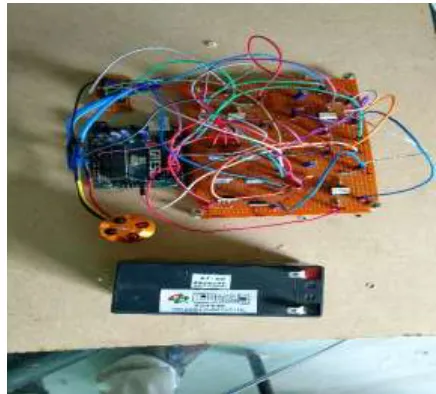
Fig.6 shows the hardware implementation of open loop control of BLDC motor which mainly consists of 8051microcontroller MOSFET module, BLDC motor, Gate Driver circuit , 8051 microcontroller .Table-2 shows the specifications of BLDC motor. The gate pulses (PWM) are given from the 8051 microcontroller to the gate of inverter through the gate driver circuit which consists of a buffer, isolator and a gate driver. The gate driver circuit is powered from 12V battery. The inverter is given a 12V dc supply through a Regulated power supply/battery.
Fig. 6 Hardware implementation of Speed control of BLDC motor
[image:4.612.338.556.304.501.2]© 2019, IRJET | Impact Factor value: 7.34 | ISO 9001:2008 Certified Journal
| Page 1601
modulation also known as PWM method is a technique of modulation used to encode a signal into a pulsating signal. PWM is mainly used to control the electronic devices such as switches which are connected to the dynamic loads. This method helps switching it ON/OFF at faster rates. PWM uses a term called duty cycle which describes the ratio of ON time to the total period time of the switch.
TLP250 Gate Driver Circuit which is used for isolation and buffering of the gate signals to the power circuit from a microcontroller. This circuit is used to drive the gate ports of the inverter through the microcontroller. It has three main components in it which are:-Buffer, Isolator and Gate driver IC .IRFZ44N MOSFET Module is a component in which the switches are structured together in a small component which can take higher voltages and higher currents. It generates the three phase ac supplyfor electronic commutation between three pairs of stator coils needs to provide rotating field.
[image:5.612.57.273.399.671.2]3. RESULTS AND DISCUSSIONS
Fig.7 represents the switching pulses of the inverter of 50% duty cycle and to show the phase shift and the inversion of PWM pulses for the switches.
Fig.7 .Hardware model output of PWM pulses
4. CONCLUSION
The BLDCM are considered in most of the applications because of their less weight, more speed and low cost and less maintenance. In this paper, speed control of three phase BLDCM was done by Hardware. the speed increases when the duty cycle increases and speed decreases when the duty cycle decreases . BLDCM which are stepper motors can be used in open loop speed control for the application like robotic arm movement for industrial application, can be used in space for projection of satellite panels, can be used for actuators in aerospace applications, feed drives for the CNC machine. The proposed drive system has shown satisfactory result in all aspects and in a recommended solution for low power BLDC motor drives.
Table 1: Specifications of BLDCM
5. REFERENCES
1) J.F. Gieras and M. Wing, “Permanent magnet motor technology design and application”, Mareel Dekker Inc., NewYork, 2002.
2) C.L. Xia, “Permanent Magnet Brushless DC Motor Drives Controls”, Wiley Press, Beijing, 2012
3) X huang, A. Goodman, C. Gerada, Y.Fang and Q. Lu “A Single Sided Matrix Converter Drive For A Brushless DC Motor in Aerospace Applications”, IEEE Trans. Ind. Electron, Vol. 59, No.9, pp. 3542: 3552 Sept. 2012.
4) P. Pilla and R. Krishnan. “Modelling, Simulation and Analysis of Parmanent Magnet Motor Drives”, IEEE Trans. Ind.1989
5) Ravindra Kumar, VivekSanadhya, “Vector Controll Of PMSM, IEEE transaction on Power Electronics”, Vol.13, ppp.388:400, 2008Pranay S. Shete. Rohith G. Kanojiya. And Niraj Kumar S. Mourya (2012), “Performance of Sinusoidal Pulsewidth Modulation based Three Phase Inverter”. International Conference on Emerging Forntiers in Technology for Rural area (EFIRTA)
Number of Cells 2-4 Li-Poly 4-7 NiCd
Kv 2200rpm/v
Maximum Efficiency 80%
Maximum Efficiency
Current in Amps 14-24 A
No Load Current 1.4 @ 10V
Resistance in ohms 0.045Ω Maximum Current in amps 28A
Maximum Watts 300W
© 2019, IRJET | Impact Factor value: 7.34 | ISO 9001:2008 Certified Journal
| Page 1602
6) Dr. Ashok kusagur, Dr.S.F.Kodad “AI based design of a fuzzy logic scheme for speed control of induction motors using SVPWM technique” power electronics Hydrabad-85,Andrapradesh, India.12-14-2017