Towards “After-Modern” Design: A Practice-Based Inquiry
Lisa Thomas
HighWire Centre for Doctoral Training Lancaster University
i
Abstract
This practice-based PhD investigates the possibility that neutral understandings of technology associated with the instrumentally rational modern worldview restrict product design education from contributing to sustainability in a substantive manner. The concept of “after-modern” design is developed as a means of addressing the shortcomings of the modern and postmodern worldviews – and to support design education to move beyond these worldviews.
A theoretical basis for “after-modern” design is developed by synthesising insights from the philosophy of technology (especially phenomenology and postphenomenology), critical approaches to design, and human values literature relating to self-enhancement and self-transcendence values. The concept of “after
-modern” design is further advanced via a research through design approach and by conducting workshops with design students. The original contributions to knowledge that this thesis makes relate to:
• The research method of conducting “after-modern” design inquiries: This method advocates creating highly conceptual “inquiring objects” to investigate how unsustainable self-enhancement values become embodied in technological artefacts and associated systems. These objects invite the design student to “see” familiar technologies through a lens of unfamiliar materials and ideas. In doing so, the objects support the discernment of directions for design that are rooted in an alternate set of values that challenge the unsustainable norms of late-modernity.
• The process of creating “inquiring objects”: Aspects of the designing process are identified that support design students to challenge the limitations that the prevailing modern worldview places upon their practice.
ii
Declaration
This thesis is submitted in partial fulfillment of the requirements for the degree of Doctor of Philosophy. I declare that this thesis is my own work and has not been submitted in substantially the same form for the award of a higher degree elsewhere. To the best of my knowledge it does not contain any materials previously published or written by another person except where due references is made in the text.
Signed:
iii
Acknowledgements
I would like to thank my two brilliant supervisors, Professor Stuart Walker and Dr. Lynne Blair for their unwavering support throughout my PhD. I am truly grateful to Stuart for sharing his immense knowledge and insight about designing for sustainability and to Lynne for her fantastic attention to detail that has helped bring clarity to this thesis. Both Stuart and Lynne have guided me through the process with enthusiasm, generosity and kindness. I could not have wished for more.
A big thank you to all the students who participated in this study and contributed many invaluable insights to the process.
My sincere thanks to Professor Gordon Blair for giving me the opportunity to undertake a funded PhD in the HighWire Doctoral Training Centre at Lancaster University.
I would also like to thank Tish Brown for her support and excellent writing retreats.
iv
Table of contents
ABSTRACT ... I
DECLARATION ... II
ACKNOWLEDGEMENTS ... III
TABLE OF CONTENTS ... IV
LIST OF FIGURES ... IX
1 INTRODUCTION ... 1
1.1 Context of study ... 2
1.2 Research aim and objectives ... 6
1.3 Thesis overview ... 7
2 THE MODERN WORLDVIEW: DESIGN AND UNSUSTAINABILITY ... 12
2.1 Introduction ... 12
2.2 Loss of meaning in modernity ... 12
2.3 Instrumental rationality ... 15
2.4 Technological advancement ... 17
2.5 Design and instrumental rationality ... 18
2.6 Design and sustainability ... 21
2.7 Criticism of design approaches to sustainability... 22
2.8 Discussion: a basis for “after-modern” design ... 24
2.8.1Re-framing unsustainability as a crisis in human values ... 25
2.8.2 Emphasising the “right” hemisphere ... 26
2.9 Chapter conclusion ... 27
3 CRITICAL PERSPECTIVES OF TECHNOLOGY ... 30
3.1 Introduction ... 30
3.2 The philosophy of technology ... 31
3.3 Phenomenological perspectives on technology ... 32
3.4 Martyn Heidegger: The “technological enframing” ... 34
3.5 Albert Borgmann: The device paradigm ... 37
3.6 Postphenomenology ... 40
v
3.8 Peter-Paul Verbeek: The technological mediation of morality ... 44
3.9 Discussion: insights for “after-modern” design ... 46
3.9.1 Technological mediation of human-world relations ... 47
3.9.2 Quality of mediation ... 48
3.9.3 Magnification and reduction structure of technologies ... 49
3.9.4 Moral agency of technologies ... 49
3.9.5 Methods ... 50
3.10 Chapter conclusion ... 51
4 INVESTIGATING VALUES FOR “AFTER-MODERN” DESIGN ... 54
4.1 Introduction ... 54
4.2 Values ... 55
4.3 Schwartz theory of basic values... 56
4.3.1 Dynamic structure of basic values ... 58
4.3.2 Dynamic contrasts of basic values ... 60
4.3.3 Sustainability, self-enhancement and self-transcendence values ... 61
4.4 Design, self-enhancement and self-transcendence values ... 63
4.5 Alternative values in design... 64
4.5.1 Critical design... 64
4.5.2 Propositional design ... 66
4.5.3 Critical making ... 68
4.6 Discussion: values for “after-modern” design ... 68
4.6.1 Exploring “being” through design ... 68
4.6.2 Pursuing universalism values as “ends” for product design education ... 70
4.7 Chapter conclusion ... 72
4.7.1 Overall conclusions of the contextual review ... 73
4.7.2 Articulating “after-modern” design ... 74
5 “AFTER-MODERN” DESIGN INQUIRIES ... 76
5.1 Introduction ... 76
5.2 Research through design ... 77
5.3 “After-modern” design inquiries ... 78
vi
5.3.2 Google Diary ... 84
5.3.3 Yours Truly ... 87
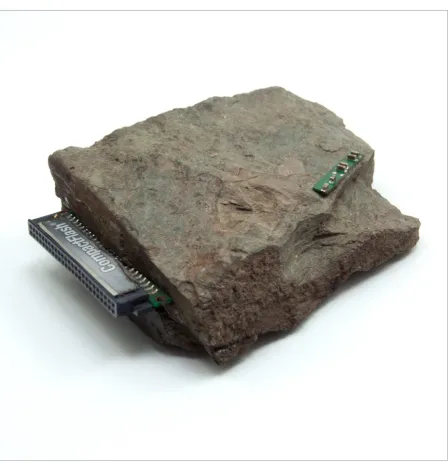
5.3.4 Lakeland Data Stone ... 90
5.3.5 KintsugiPhone ... 93
5.3.6 Anaesthesia ... 96
5.4 Discussion: “after-modern” aspects of the design process ... 98
5.4.1 A disruptive process ... 98
5.4.2 Meaningful engagement with philosophical ideas ... 99
5.4.3 A different “end” for design ... 101
5.5 Conclusion ... 102
6 A FRAMEWORK FOR “AFTER-MODERN” DESIGN ... 104
6.1 Introduction ... 104
6.2 Memento Box ... 104
6.3 Developing the framework for “after-modern” design ... 105
6.4 An eight-point framework for “after-modern” design ... 107
6.4.1 A participatory design process ... 107
6.4.2 Distinctive digital objects and interfaces ... 109
6.4.3 Honest, sensory materials ... 110
6.4.4 Meaningful limits ... 113
6.4.5 Contextually-rich digital objects and data ... 114
6.4.6 Purposeful digital objects ... 116
6.4.7 A sense of tradition ... 117
6.4.8 “Releasement” from the digital world ... 119
6.5 Relationship of Memento Boxto “after-modern” design directions ... 121
Discussion: Implications for “after-modern” design ... 124
6.5.1 Re-thinking the “use” phase ... 124
6.5.2 Universalism values as “ends” ... 125
6.5.3 Towards digital “things” ... 127
6.6 Conclusion ... 128
7 “INQUIRING OBJECTS”: THIRD-PARTY PERSPECTIVES ... 131
vii
7.2 Methodology ... 131
7.3 Engaging with “inquiring objects” ... 134
7.3.1 University no.1: Results of workshop and discussion ... 134
7.3.2 University no.2: Results of workshop and discussion ... 137
7.3.3 University no.3: Results of workshops and discussion ... 140
7.4 Creating “inquiring objects” ... 142
7.4.1 Breathing Machine ... 143
7.4.2 Digital Detox Survival Kit ... 144
7.4.3 Unnecessary medicines ... 145
7.4.4 Transparent Smartphone ... 146
7.4.5 Tablet case ... 147
7.4.6 Nocturnal Device ... 148
7.4.7 Childhood Simulator ... 149
7.5 Discussion: Design knowledge revisited ... 150
7.5.1 A disruptive process ... 150
7.5.1.1 Late-modern understandings of function ... 151
7.5.1.2 The role of the designer in late-modernity ... 152
7.5.2 Meaningful engagement with philosophical ideas ... 154
7.5.2.1 An effective learning tool ... 154
7.5.2.2 A sense of empowerment ... 156
7.5.3 A different “end” for design ... 158
7.5.3.1 An expanded sense of sustainability ... 159
7.6 Discussion: opportunities for design education... 160
7.7 Conclusion ... 163
8 THESIS CONCLUSIONS ... 165
8.1 Introduction ... 165
8.2 Summary of chapters... 165
8.3 Main conclusions of thesis ... 169
8.4 Contributions to knowledge ... 171
8.4.1 The method of conducting “after-modern” design inquiries... 171
8.4.2 “After-modern” design process knowledge ... 172
8.4.3 Framework for “after-modern” design ... 173
viii
8.6 Final remarks ... 175
BIBLIOGRAPHY ... 177
ix
List of Figures
Figure 1: Thesis overview………11
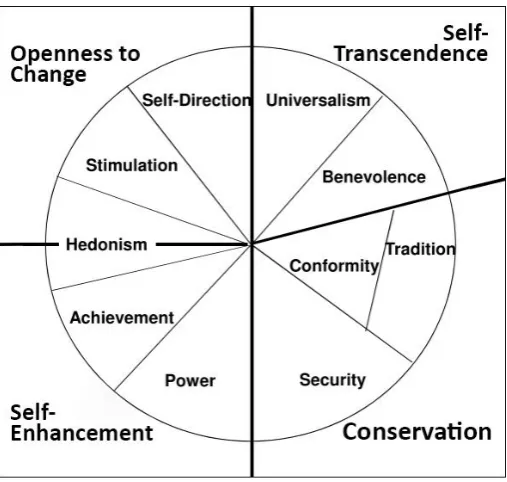
Figure 2: Motivational value types (Schwartz, 2012, pp. 5–7)…………..………...………..57
Figure 3: Relations among the ten universal value types (Schwartz, 2012, p. 9)……….58
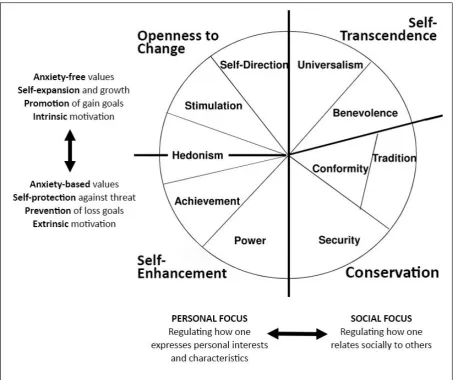
Figure 4: Dynamic contrasts that underlie the circular structure of relations………..60
Figure 5: Propositional design journey……….67
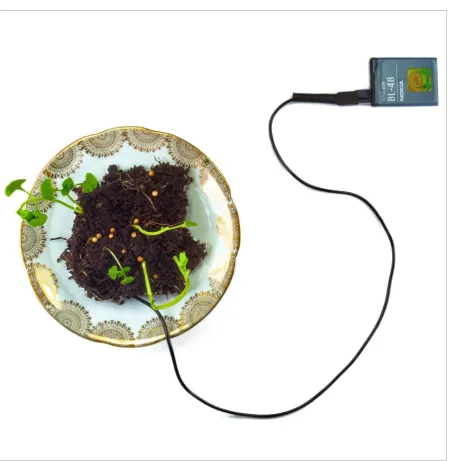
Figure 6: Earth Re-Charger……….81
Figure 7: Google Diary………..84
Figure 8: Yours Truly………..87
Figure 9: Lakeland Data Stone……….90
Figure 10: KintsugiPhone……….93
Figure 11: Anaesthesia………..……..96
Figure 12: Memento Box………..105
Figure 13: Relationship between design directions and Memento Box………..123
Figure 14: Values structure of “after-modern” design………126
Figure 15: Summary of “after-modern” design process……….130
1
1
Introduction
This thesis is motivated by personal experiences of being a design student, a
professional designer and a design educator. These experiences left me discontented with orthodox design practices and agreeing with Thackara’s (2001, p. 48) view that “we can do amazing things with technology, and we’re filling the world with amazing systems and
devices, but we find it hard to explain what this new stuff is for, or what value it adds to our lives”. At the time of writing, Thackara’s (2001, p. 48) view is almost twenty years old but
feels especially resonant today in a world populated by increasingly digital and connected systems and devices – a world that is changing the nature of product design. The idea that we struggle to explain the purpose of these “amazing systems and devices” or articulate the
value they bring to our lives is especially baffling when considered in the context of the unprecedented environmental degradation and social inequities that result from their unsustainable cycle of production and consumption.
2
design. This thesis therefore aims to contribute to the notion of “meaningful” design. It does so by contextualising product design education within the unsustainable modern worldview, which emphasises self-enhancement “having” values, which are incompatible with
developing more sustainable ways of living. An alternate strategy for product design education is proposed. This strategy proposes that product design education challenge self-enhancement values and instead prioritise self-transcendence “being” values, which are generally considered as ethical values that compatible with developing more sustainable ways of living.
1.1 Context of study
The late-modern phenomenon of unsustainability shows no sign of abating and whilst its root causes are disputed, its major symptoms are widely recognised. Davison (2001, p.2) summarises the symptoms of unsustainability as follows:
• More than half the human population living in poverty.
• Widening economic disparity.
• Overconsumption of resources by wealthy nations.
• Social, physiological and psychological pathologies of overconsumption.
• Disempowerment of women and indigenous peoples by development strategies.
• Depletion and contamination of non-renewable natural resources.
• Escalation of technologically mediated risks to ecological and human health.
• Rapid, irrecoverable loss of biological and cultural diversity.
• Degradation of global ecological life-support processes.
3
• Environmental problem solving (Dryzek, 2005, p. 15) proposes adjustments to the
political-economic status quo to cope with environmental problems e.g. putting price tags on environmental harms and benefits and institutionalising environmental concern and expertise in its operating procedures.
• Survivalism (Dryzek, 2005, p. 15) is an apocalyptic discourse which holds that the
earth’s stock of natural resources will curtail continued economic and population
growth. This discourse advocates a wholesale redistribution of power within the industrial political economy and a reorientation of perpetual economic growth but only sees solutions in terms of options set by industrialism such as greater control of existing systems by administrators, scientists and other responsible elites.
• Sustainability (Dryzek, 2005, p. 16) comprises sustainable development and ecological
modernisation (eco-modernism). This discourse advocates environmentally benign
growth, viewing environmental and economic values as being complementary.
• Green radicalism (Dryzek, 2005, p. 181) comprises green politics and green
consciousness. This discourse rejects the basic structure of industrial society and the
way it conceptualises the environment. Green politics emphasises targeting social, economic and political structures and practices directly whereas green consciousness advocates changing how people think about the world and each other.
The sustainability discourse, especially sustainable development, has become the most popular of the four basis discourses in late-modernity (Dryzek, 2005, p. 143). Sustainable development was popularised by the 1987 Brundtland report and has since become the leading transnational environmental discourse due to its integrative and co-operative nature (Wever & Vogtlander, 2015, p. 515). The sustainability discourse
4
domestic products (Davison, 2001, p. 28). Sustainable development seeks to “combine ecological protection, economic growth, social justice, and intergenerational equality, not just locally and immediately, but globally and in perpetuity” (Dryzek, 2005, p. 143). A widely
accepted approach to sustainable development is Elkington’s Triple Bottom Line model of sustainable development (Wever & Vogtlander, 2015, p. 515). This model affords equal weight in corporate activities to people, profit and planet. The Triple Bottom Line
encourages a balance between the social aspects of employees in a company, the ecological consequences of a company’s products and economic profitability (Wever & Vogtlander,
2015, p. 515). Despite such models however, there has been limited development of wholesale movements in policies, practices, and institutions at all levels from the local to global (Dryzek, 2005, p. 160).
Another prominent aspect of the sustainability discourse is “eco-modernism”, which considers environmental interests in terms of how they can be translated into economic language (Barry, 2005, p. 315). Eco-modern approaches to the environment are
instrumental, technocratic and efficiency-driven, focusing upon minimising pollution, energy and material resources, but they ignore important elements such as biodiversity
conservation (Hajer & Dryzek, 1995, p. 32; Barry, 2005, p. 316). Eco-modernism is a more effective global movement than sustainable development because it is more precisely defined with a sharper focus on restructuring the capitalist political economy along more environmentally sound lines (Dryzek, 2005, p. 167 - p. 169). Eco-modernism advocates that environmental degradation can be addressed by re-organising the economy in a
collaborative manner in which industry cooperates in the design and implementation of policy rather than have it imposed upon them by governments (Dryzek, 2005, p. 167). Eco-modernism is based on the premise that businesses can make money out of being more environmentally sound provided the business is far-sighted (Dryzek, 2005, p. 167). There are several ways in which addressing environmental concerns can be profitable:
• Reducing pollution can lead to more efficient manufacturing processes.
• Unpolluted environments can result in happier, more productive workers.
5
• Increased public awareness can encourage the selling of green goods and services 1.
Like sustainable development therefore, eco-modernism values the natural world
extrinsically in terms of its potential to support economic growth (Dryzek, 2005, p. 168-170). And given that technological progress is the driver of economic growth in late-modernity (Walker, 2013b, p.446), there is widespread “uncritical optimism that the congenital disabilities of modernity - its iniquity, myopia and profligacy - can be designed out by a combination of ethical aspiration and techno-scientific ingenuity” (Davison, 2013, p. 44). Paredis (2011, p. 196) points out however that despite the prevailing faith in technological solutions, it is remarkable that “the articles, books and policy debates on sustainability
seldom explicitly draw in a discussion of the nature of technology, how technology influences society, and what this implies for sustainable development”.
The current sustainability discourse is unlikely to be ultimately successful because it fails to challenge the unsustainable values that modernity has emphasised (Davison, 2001, pp. 107–108). Due to its prioritisation of technological development and economic growth, there is an overproduction of disposable products that have no intrinsic value and often little functional or aesthetic value, which are destined for the landfill (Bakker &
Schouwenberg, 2013, p. 387). Compounding this, a “disposable technology paradigm” yields technological artefacts that are expected to have short functional lifetimes despite the potential for longer lifetimes (Huang & Truong, 2008, p. 323). The sustainability discourse allows consumption to continue unabated, often addressing environmental concerns
through things to buy (Badke, 2013, p. 393). Consequently, there is a danger of the so-called “rebound effect”, which occurs when consumption increases as a result of increased
efficiency and reduced consumer costs (Berners-Lee & Clark, 2013, pp. 50–54; Verbeek, 2011, p. 93; Wever & Vogtlander, 2015, p. 534). There are three types of rebound effect: a direct rebound effect, an indirect rebound effect and a long term rebound effect (Wever &
_____________________________________________
1 Davison (2001, pp. 27-29) identifies three dominant eco-modern trajectories of industrial ecology,
dematerialisation and decarbonisation. Industrial ecology addresses the overall design of modern techno-systems, viewing them as evolutionary processes that feed off one another until eventually, the fittest––i.e. the most efficient and productive––version survives (Davison, 2001, p. 28). Dematerialisation and
6
Vogtlander, 2015, p. 534). The direct rebound effect occurs in the same function; for example, people not turning lights off as much because energy efficient light bulbs have been installed. An indirect rebound effect occurs when, for example, people might travel more when money has been saved through energy conservation. A long term rebound effect occurs when, for example, production and consumption of cars increases as they become more efficient and affordable (Wever & Vogtlander, 2015, p. 534). Despite the evident shortcomings of the sustainability discourse however, Fry (2005) asserts that:
Industry is still overwhelmingly deaf to those voices that speak of the complexity of
unsustainability, the poverty of current responses to it, the misplaced faith in technological
solutions, the myopia of present political and corporate leadership and the extent of changes
that are required if a psychology, culture and economy of sustainment are to ever arrive.
1.2 Research aim and objectives
In light of the issues outlined above, the aims of this research are:
• To determine how product design education might contribute more substantively to
sustainability.
• To develop conceptual and practical ideas that support product design education to
contribute more substantively to sustainability.
To address the overall aims, the objectives of this research are:
1) To determine how the modern worldview influences Design for Sustainability.
2) To identify insights from the philosophy of technology that could support product design education to address sustainability in a more substantive manner than the modern worldview permits.
7
4) To develop a design research method that addresses sustainability in a more substantive manner than the modern worldview permits.
5) To develop a framework that supports the design of personal digital devices and associated technologies that challenge the dominant values of the modern worldview.
6) To explore how the method of conducting “after-modern” design inquiries can support design students to address sustainability in a more substantive manner than the modern worldview permits.
1.3 Thesis overview
Chapter 2 reviews and critically reflects upon literature to address the first objective: To determine how the modern worldview influences Design for Sustainability. This chapter
contextualises Design for Sustainability in the instrumentally rational modern worldview. This chapter reveals that the instrumentally rational nature of the modern worldview is a major contributor to unsustainability as this form of rationality does not reflect upon the value of the ends being served via technological means. The chapter concludes by
suggesting an alternate path for design by introducing the concept of “after-modern” design
and articulating some of its key conceptual features. The term “after-modern” is used to highlight the shortcomings of the modern and postmodern worldviews – and to suggest a need to move beyond these worldviews if we are to address sustainability issues more effectively. The concept of “after-modern” design advocates developing approaches to product design education that challenge instrumental rationality by using the creative activity of designing as a research method for investigating a re-framed conception of sustainability – which is that unsustainability be viewed as a crisis in human values rather than as a technical challenge.
Chapter 3 addresses the second objective: To identify insights from the philosophy of technology that could support product design education to address sustainability in a more
substantive manner than the modern worldview permits. This chapter reviews and critically
8
the non-neutral nature of technologies. This chapter focuses on phenomenological and postphenomenological perspectives of technology as these perspectives offer insights into how technologies can undermine human values that are important for developing more sustainable ways of living. These perspectives offer conceptual and practical insights into the worldbuilding nature of technologies, especially through the postphenomenological insight that technologies mediate human-world relations. The chapter concludes with a discussion that draws out the implications of these perspectives for addressing sustainability in a more substantive manner than the late-modern context permits.
Chapter 4 addresses the third objective: To identify values that are compatible with developing more sustainable ways of living, and to consider how design currently engages
with these values. This chapter reviews and critically reflects upon literature relating to
human values and critical approaches to design. This chapter explores values that are detrimental or beneficial for developing more sustainable ways of living, focusing on Schwartz’s conceptualisation of self-enhancement and self-transcendence values. Design is
discussed in terms of fostering unsustainable self-enhancement values and some critical approaches to design are explored that challenge these values. Chapter 4 concludes by synthesising the three literature chapters to articulate a basis for “after-modern” design. This basis advocates that “after-modern” design:
• Seeks to recognise, challenge and overcome some of the limitations that the modern
worldview places upon Design for Sustainability.
• Harness and prioritise the creative activity of designing to investigate how
self-enhancement values become embodied in technologies and subsequently mediate human-world relations.
9
It is envisaged that using design practice as a mode of research could help to overcome the modern propensity to prioritise rationalistic approaches in research, which tend to yield incremental changes to products that appear to be insufficient for addressing sustainability effectively.
Chapter 5 addresses the fourth objective: To develop a design research method that addresses sustainability in a more substantive manner than the modern worldview permits.
This chapter discusses the main methodological approach of this study, which is research through design. The chapter introduces, describes and demonstrates a design-based, critical research method, which is that of conducting “after-modern” design inquiries. This method is the first original contribution to knowledge that this thesis makes. The method aims to support design students to investigate how modern values become embodied in
technological artefacts and systems. Central to conducting “after-modern” design inquiries is the creation of an “inquiring object”, which aims to explore issues from the literature, transmuting the issues into tangible forms. Each inquiry comprises an “inquiring object”, a discussion of the issues being investigated and reflection upon the object – its aesthetics, form, configuration, materials, etc. Based on these reflections, each inquiry concludes with a set of “after-modern” design directions, which suggest a pathway for the design of
technological artefacts and systems that are based in an alternate set of values to those prevalent in late modernity. This chapter concludes by reflecting upon the designing process of “inquiring objects” to develop knowledge about how the process supports the concept of “after-modern” design.
Chapter 6 addresses the fifth objective: To develop a framework that supports the design of personal digital devices and associated technologies that challenge the dominant
values of the modern worldview. This chapter continues with a research through design
approach to consider the applicability of the “after-modern” design directions developed in chapter 5. The design directions are used to inform the design of a digital artefact entitled Memento Box. This artefact challenges late-modern self-enhancement values by
emphasising self-transcendence values. Memento Box is scrutinised from a
10
results in the second main contribution of the thesis, which is a framework for “after-modern” design (associated with the design of personal digital devices and related technologies). This framework identifies eight key transferable aspects of Memento Box, which are judged important for “after-modern” design. The qualities are:
1) A participatory design process. 2) Honest, sensory material.
3) Distinctive digital objects and associated technologies. 4) Meaningful limits.
5) Contextually-rich data. 6) Purposeful digital objects. 7) A sense of tradition.
8) “Releasement” from the digital world.
Chapter 7 addresses the sixth objective: To explore how the method of conducting “after-modern” design inquiries can support design students to address sustainability in a
more substantive manner than the modern worldview permits. This chapter builds upon the
author’s engagement in “after-modern” design inquiries by conducting workshops with
design students. Combined with the findings of chapter 5, the final contribution to knowledge that this thesis makes relates to the designing process of “inquiring objects”. Three main aspects of the designing process are exposed and defined that can be
understood as “after-modern”. These aspects relate to the disruptive nature of conducting
“after-modern” design inquiries, the capacity of the designing process to support
11
[image:21.595.71.525.133.577.2]Figure 1 provides an overview of the thesis and illustrates the relationships between the primary research, secondary research and the contributions.
12
2
The Modern Worldview: Design and Unsustainability
2.1 Introduction
This chapter addresses the first research objective: To determine how the modern worldview influences Design for Sustainability. To address this objective, literature is
reviewed that contextualises Design for Sustainability in the instrumentally rational, modern worldview. The chapter concludes by reflecting upon the literature to draw out its
implications for the overall aims of this research – which are to determine how product design education might contribute to sustainability in a more substantive manner, and to offer conceptual and practical ideas accordingly. To this end, an alternate “after-modern” path for design is proposed and some of the key conceptual features of this path are articulated.
2.2 Loss of meaning in modernity
The intermingled cultural epochs of the Renaissance (circa 1300-1600), the Reformation (circa 1517-1650), the Scientific Revolution (circa 1540-1690) and the Enlightenment (circa 1700-1800) formed the modern worldview (Tarnas, 1993, p. 223). Together, these epochs radically altered human perception of the world by eroding
traditional, religious understandings in favour of scientific understandings, characterised by empiricism and rationalistic thinking (Tarnas, 1993, p. 282). The emerging scientific outlook dictated that the world no longer be viewed as “a meaningful and value-filled cosmos [but] as a vast aggregate of material objects in causal interactions” (Guignon, 2004, p. 22). As the modern worldview eclipsed the traditional worldview, especially in north-west Europe, people began to perceive themselves as increasingly insular, “defining and
self-contained rather than as the extended self of earlier times” (Guignon, 2004). This emerging
13
potential, his capacity for certain knowledge, his mastery over nature [and] his progressive destiny” (Tarnas, 1993, p. 393). By the end of the 19th century, the idea of progress had
found its guarantee in the “promise” of technology, which holds that technology is the route to freedom and happiness (Feenberg, 2012, p. 1-2; Fromm, 1976, p. 11). Indeed, as early as the seventeenth century, Descartes predicted that the “technological application of science
would yield an unlimited number of devices that would allow people to effortlessly enjoy all the benefits the earth [WS1]could offer them” (Brey, 2015, p. 366). The notion of progress,
specifically economic and technological progress, became a matter of ultimate concern in modernity: an end in itself and a path to meaning (Taylor, 2009, pp. 715–716).
The economic and technological emphasis of modernity ushered in the consumer society and a culture of “having” as the acquisition of goods and commodities was
promoted as a route to the “good life” (Fromm, 1976, pp. 15–16; Ihde, 1998, p. 106). Concomitantly, human relationships became increasingly negotiated based on utility, greed and competition as capitalism and consumerism accelerated (McGilchrist, 2009, p. 390). Consequently, Fromm (1976, p. 13) argues that modernity has failed to fulfil its promise that individual wealth and “having” is the path to happiness. At the core of this failure are two
main psychological premises of modernity: The first premise is that happiness can be achieved through the satisfaction of any desire a person may feel – especially through material acquisition; the second premise is that the egotism, selfishness and greed required for the industrial system to function leads to harmony and peace (Fromm, 1976, pp. 12–16). Fromm (1976, p. 28-37) contends however that the “having” mode of existence is viewed as the most natural mode of existence in advanced industrial societies – and yet these societies are comprised of “notoriously unhappy people: lonely, anxious, depressed, destructive,
dependent – people who are glad when we have killed the time we are trying to save” (Fromm, 1976, p. 15). By contrast, there is a rare “being” mode of existence, which is infinitely more difficult to define and has long since preoccupied Western philosophy (Fromm, 1976, p. 3-37). For Fromm (1976, p. 33), the “being” mode is related to the notion of “aliveness and authentic relatedness to the world” – for example, a student in the
“having” mode will acquire information from lectures as a means of passing an exam
14
of thoughts, enriching and developing it (Fromm, 1976, p. 37) 2. The “being” mode is
therefore concerned with “inner activity” directed at renewing oneself, being interested and
transcending one’s isolated ego. Modernity has however undermined the “being mode” of
existence by engendering “a way of life characterized by obsessive pursuits that lead to alienation not only from others, but from one’s own self as a human being with feelings and needs (Guignon, 2004, p. 25).
In his seminal work The master and the emissary: The divided brain and the making of the western world, McGilchrist (2009, p. 176) develops the thesis that during modernity, the
so-called “left hemisphere” ––associated with rationality, reason, detached analysis, etc.–– has achieved a position of dominance compared with the “right hemisphere”, which is associated with emotion, intuition, holism, etc. (McGilchrist, 2009, p. 6) 3. McGilchrist
describes the right hemisphere as being “in direct contact with the embodied, lived world: the left hemisphere world is, by comparison, a virtual, bloodless affair” (McGilchrist, 2009,
pp. 199–200). For McGilchrist (2009, p. 6-7), the “excessive and misplaced rationalism” of modernity has distorted how we view the world, engendering “An increasingly mechanistic,
fragmented, decontextualized world, marked by unwarranted optimism mixed with paranoia and a feeling of emptiness”. Importantly, the way we comprehend the world has
significant implications for how we perceive it and engage with it – moreover, we can measure the consequences of how we comprehend the world by what happens to it, and by what happens to us (McGilchrist, 2009, p. 176). Given that the “left hemisphere” has more affinity with the abstract and the impersonal, the material world reflects its innate
structures through identical, repeatable, mechanic forms such as cubes, perfect circles and
_____________________________________________
2 Fromm (1976, pp. 39–54) discusses the differences between “having” and “being” using a range of examples
including remembering, conversing, reading, exercising authority, having knowledge or knowing, faith and loving.
3 McGilchrist (2009, p. 1) uses the terms “left hemisphere” and “right hemisphere” extensively to distinguish
15
straight lines – none of which can be found anywhere in the natural world and are inimical to the human body (McGilchrist, 2009, pp. 386–387). The “imperfection” of the human hand was increasingly eliminated as the Industrial Revolution took hold, replacing variations in form that occur from natural processes with invariant forms (McGilchrist, 2009, pp. 386– 387). For McGilchrist (2009, p. 387), this mechanical nature of the material world and excessive management and exploitation of the natural world are antithetical to what it means to be human. Consequently, we experience a loss of richness; for example, Le Corbusier’s dispassionate definition of a home as a “machine for living” is quite different
from the emotional refrain of “home, sweet home” (Feenberg, 2011, p.866). Similarly, understanding food in a purely functional calorific sense is different to understanding its complex cultural associations, which can bring people together in meaningful ways (Feenberg, 2011, p.866). By contrast, in pre-modernity, objects were often understood in terms of meanings and values rather than simply functions and affordances – and
technological development was constrained by craft traditions and religious, ethical and aesthetic conceptions (Feenberg, 2011, p. 871-872). Furthermore, objects were understood for the meanings they acquire through use, associations, significance and belonging to particular ways of life (Feenberg, 2011, p. 866).
2.3 Instrumental rationality
The modern scientific outlook ensured that instrumental rationality emerged as the dominant form of rationality in modernity (Feenberg, 2011, p. 865). This form of rationality prioritises the selection of efficient and expedient means to achieve desired ends, without reflecting upon the value of those ends (Dryzek, 2005, p. 195; Feenberg, 2011, p. 867).
Accordingly, Davison (2001, p 95) suggests that instrumental rationality leads modern societies to, “. . . blindly [build] a deformed world. Our late-modern world is unsustaining
because it is deformed. And the blindness of our technological agency is the cause of our world’s deformation”. In this context, technologies are largely developed and selected
16
political or moral solution to a social problem – is politically and morally significant (Veak, 2012, p. 186).
As Winner (2010, p. 11) suggests:
The very act of using the kinds of machines, techniques, and systems available to us generates
patterns of activities and expectations that soon become ‘second nature.’ We do indeed ‘use’
telephones, automobiles, electric lights, and computers in the conventional sense of picking
them up and putting them down. But our world soon becomes one in which telephony,
automobility, electric lighting, and computing are forms of life in the most powerful sense: life
would scarcely be thinkable without them.
Instrumental rationality allows natural objects to be separated artificially and isolated from their original contexts to be integrated into technical systems (Feenberg, 2012, p. 203). When natural objects have been reduced to aspects that allow them to become
incorporated into a technical network, these aspects become of primary importance to the technical subject; for example, the tree trunk was primarily valued for its roundness when focused upon for making a wheel whilst its pre-technical qualities such as its role as a habitat and as a living species become meaningless (Feenberg, 2012, p. 204). Or, for example, when a river becomes primarily valued for its kinetic energy, it is rational to develop this resource for human use (Davison, 2001, p. 85). This happened, for example, during the Industrial Revolution as the kinetic energy of rivers was exploited for running machinery associated with watermills or more recently for hydroelectric power generators. Consequently, nature is valued extrinsically and exposed to utilitarian evaluations as it is “. . . fragmented into bits and pieces that appear as technically useful after being abstracted
from all specific contexts” (Feenberg, 2012, p. 203). For Dryzek (2001, p. 95; 2005, p. 193),
instrumental rationality therefore warps how humans perceive the world and their place in it.
Similarly, instrumental rationality subjects people within technical systems to the same arbitrary plans as things. As Berman (1988, p. 44) suggests, “It is impossible to miss some of [modernity’s] ominous undertows: a lack of empathy, an emotional aridity, a
17
Habermas discerns an “objectivating attitude” in which the “The buyer on the market abstracts from the human relation to the seller and simply seeks his own advantage. The bureaucrat and businessman too relate to the human objects of their activity in a strictly objective manner, applying rules impersonally and hiring and firing with indifference”
(Feenberg, 2011, p. 866). Similarly, for Ellul and Horkheimer, the purely instrumental value of efficiency replaces all others in modern societies as it not only guides technological development but creates a competitive and destructive social pattern as people become incorporated into impersonal technical systems as passive producers and consumers (Feenberg, 2011, p. 867-868). As Ellul suggest “We think we are free and that technology has enhanced our powers when actually we are dominated by technology and increasingly channelled into the paths the pursuit of efficiency opens for us” (Feenberg, 2011, p. 867). Both Ellul and Horkheimer reflect favourably upon the conditions of pre-modernity as a basis for developing their critiques, suggesting that lessons can be learned from the past about what is now missing in order to reconstruct modern societies more humanely (Feenberg, 2011, p. 867).
2.4 Technological advancement
18
however came "productive technologies”, which impact more intensely on the environment as they displace less destructive technologies (Commoner, 1972, p. 175). For example: natural soaps have been superseded by highly processed detergents, materials such as flax replaced by cotton, which in turn has been increasingly replaced by synthetic fibres; wood by plastics; and natural farming by intensive industrial farming along with escalating use of fertilisers and pesticides (Commoner, 1972, p. 175). Consequently, the promise of
technology appears unfulfilled as Smith (1991, p. 376) describes “an ever tightening technological web encompassing us, complete with impending shortages, ecological imbalances, noxious industrial residues, decreased privacy, a shrinking, overpopulated world”. And yet the promise of technology endures as attention focuses on [WS2]the future
possibilities of technology rather than the social changes it has wrought (Borgmann, 1987, p. 36; Davison, 2001, p. 104; Verbeek, 2005, p. 176).
2.5 Design and instrumental rationality
Design emerged as a profession within the advanced stages of modernity, deeply rooted in industrialisation; from the beginning therefore, it was embedded in consumer culture (Margolin, 1998). Consequently, in late-modernity product design education largely caters to “the values and virtues of instantaneity (instant and fast foods, meals, and other satisfactions) and of disposability (cups, plates, cutlery, packaging, napkins, clothing etc)”
19
fundamentally mixed-up” notion of progress that modernity has emphasised by concealing its unsustainable trajectory. Consequently, Thackara (1988, p. 11) suggests that “design has been disarticulated in the public mind from progress, and has managed somehow to evade blame for the negative consequences of its role in our thoroughly modern lives”. This is further compounded by product design education having no independent critical tradition upon which to base an alternative because it is thoroughly integrated in the modern capitalist system (Thackara, 1988, p. 22). For Miller (2013, p. 1) however, it ought to be unimaginable for a profession that spends its entire time designing products not to critically reflect upon what the consequences of a particular product might be.
Means-focused approaches to design are also prevalent in design education, which often favours honing technical and marketing skills to simulate the working world of design practice (Tatum, 2004, p. 76). This is symptomatic of what Churchman (1961, p. 1) describes as the most astonishing feature of the 20th century, which is that people developed such elaborate ways of doing things but no ways of justifying any of them. For example, Chan (2018, p. 189) asks: where is that fastest car in the world going? What are the reasons for building the tallest building? And why is a watch that answers our phone calls even
necessary? For Thackara (2001, p. 9), this leaves us “brilliant on means, but pretty hopeless when it comes to ends”. Consequently, there is a modern dilemma in which we are “trapped between the growing cleverness of our science and technology and our seeming incapacity to act wisely” (Orr, 2002, p. 29). In this context, the end of the design process is usually a
commercially viable product of practical utility that is typically judged by the quality of ideas and execution as they relate to function and efficiency (Malpass, 2015, p. 64; Tatum, 2004, p. 76). These criteria may include client expectations, potential to fulfil or stimulate market demand, cost, technical feasibility, usability, eco-efficiency, etc. Ehrenfeld (2008, p. 213) argues however that when everyday consumer goods are judged against humanistic rather than utilitarian and economic values, they possess more “bads” than “goods”. The “ultimate ends” of design––for example, enhanced community or satisfying work––are rarely
20 Tatum (2004, p. 76) concedes that:
Perhaps this is because no final agreement can be expected on ends, and because no simple
analytical practice can be universally accepted as a means for arriving at such ends. . . . Yet these
should not be accepted as excuses for allowing ultimate ends to remain unexamined-everywhere
implicit in design, but nowhere explicitly identified, analyzed, or discussed. Every design serves
certain interests, certain objectives, to the relative disadvantage of other real or possible
interests and objectives. Ignoring this fact is no less a moral or value-based position than
attending to the matter explicitly. (Tatum, 2004, p. 76)
For Tatum (2004, p.76), considering “ultimate ends” will be critical to developing more responsible approaches to design. Tatum (2004, p. 76) advocates that students should not be instructed as to what the “correct” ends might be but rather should be encouraged to
“carefully examine both their own sense of desirable directions and their commitments to
processes for arriving at social and political definitions of desirable directions and objectives for society”. Tatum (2004, pp. 76–77) suggests considering what each “end” might entail and analysing how one or another particular design might undermine or support these ends. Importantly, this process cannot proceed based on assumptions that narrow technical analyses, which focus upon questions such as "What is the most efficient?" and "What is the most cost effective?" can provide the best answers (Tatum, 2004, p. 69). Similarly,
technological development cannot be guided by pre-empting the solution, for example:
. . . we may compare six different alternatives for digital data storage and retrieval; but we
proceed as though the task itself had been set for us in the nature of the world, rather than
selected as a product of our own focus of attention. (Why, digital data at all, as opposed to some
other channel of development? Does "reality" propel the home computer as sustainable solar
electricity, for example, languishes in the wings?). (Tatum, 2004, p. 69)
21 2.6 Design and sustainability
Despite the significant contributions that design makes to unsustainability, it is widely acknowledged that design can play a substantive role in developing more sustainable ways of living (Chapman, 2009; Davison, 2001; Ehrenfeld, 2008; Manzini & Cullars, 1992; Orr, 2002; Thackara, 1988; Walker, 2017). The latter half of the twentieth century saw a growing interest in exploring the potential of design to create a more sustainable world (Papanek, 1974; Fuller & Kuromiya, 1982). A proliferation of design approaches emerged that came under the umbrella movement of Design for Environment and later, Ecodesign (Sheldrick & Rahimifard, 2013, p. 35). Aligned with the values of the modern worldview, such approaches are efficiency-focused and attempt to improve the ecological aspects of products whilst maintaining price, performance and quality (Ramani et al., 2010, pp. 1004–2). Eco-efficiency is based on the premise that industry can “do more with less” by developing cleaner
machines and processes without having to significantly change its structures or compromise its profit margins (Braungart & McDonough, 2002, p. 51). At the turn of the century,
industries across the globe considered eco-efficiency to be the most promising approach for effecting change through the “three Rs” – reduce, reuse, and recycle (Braungart &
McDonough, 2002, p. 51).
The term “Design for Sustainability” emerged later to reflect an expanded approach to
Ecodesign that attempts to be more holistic by accounting for the whole life-cycle of a product, including its social impacts (Sheldrick & Rahimifard, 2013, p. 35). Design for Sustainability is based on Elkington’s Triple Bottom Line of sustainability, which is the dominant model for guiding the efforts of industry to be more sustainable (Wever & Vogtlander, 2015, p. 515). The Triple Bottom Line affords equal weight in corporate
activities to people, profit and planet, encouraging a balance to be found between the social aspects of employees in a company, the ecological consequences of a company’s products and economic profitability (Wever & Vogtlander, 2015, p. 515). The main design approaches are Cradle-to Cradle and Circular Economy, both of which are technologically and
22
nutrients in materials determine design and that products are made from biodegradable materials, which become food for biological cycles or by staying in uncontaminated closed-loop technical cycles (Braungart & McDonough, 2002, p. 104). Similarly, the Circular Economy seeks to eliminate or deplete materials by reducing toxic emissions through
recycling but focuses upon business model innovation relating to restructuring the industrial economy from linear––fast replacement and disposal––to circular, which is based upon reusing and recycling products (Wever & Vogtlander, 2015, p. 517-519). Both Cradle-to-Cradle and Circular Economy approaches claim to be more comprehensive and effective than eco-efficiency because they emphasise the positive effects of commerce and industry, especially with respect to developing restorative strategies as opposed to the eco-efficient emphasis upon minimising negative impacts such as waste (MBDC, 2010, pp. 3–4).
2.7 Criticism of design approaches to sustainability
There is widespread criticism of the dominant design approaches to sustainability due to the impact that the instrumentally rational modern worldview has exerted upon them (Davison, 2013, p. 48; Ehrenfeld, 2013, p. 17; Giard & Schneiderman, 2013, p. 134; Walker, 2013b, p. 446). Accordingly, technological instrumentalism––in its combination of neutrality and human control––dominates the sustainability debate (Paredis, 2011, p. 202). For
Davison (2013, p. 52) therefore, “In accepting as given a reality made of autonomous moral ends and neutral technological means, the quest for sustainability runs with the grain of modern worlds”. This is particularly evident in the pursuit of eco-efficiency, which can only
slow environmental destruction down, not stop it (Braungart & McDonough, 2002, p. 54; Verbeek, 2011, p. 92). Indeed for Ehrenfeld (2008, p. 7), “Almost everything being done in the name of sustainable development addresses and attempts to reduce unsustainability. But reducing unsustainability, although critical, does not and will not create sustainability”.
23
independent value; rather it is dependent upon the overall aim it is contributing to
(Braungart & McDonough, 2002, pp. 62). For Braungart and McDonough (2002, pp. 61-62) therefore “Relying on eco-efficiency to save the environment will in fact achieve the opposite; it will let industry finish off everything, quietly, persistently, and completely. Cradle-to-Cradle and Circular Economy practitioners claim that these approaches are more effective than eco-efficiency approaches as they do not rely solely on efficiency and
reducing negative impacts but Wever and Vogtländer (2015, p. 517) claim that in practice, the achievements of these approaches are similar to those of eco-efficiency. Furthermore, sustainability is not always thoroughly embedded within an organisation, which leaves it vulnerable to being viewed as an add-on rather than informing the inception of the design process, which is critical to its success (Ramani et al., 2010, pp. 1004–3; Sheldrick &
Rahimifard, 2013, p. 39; Wever & Vogtlander, 2015, p. 546).
Despite Design for Sustainability being a comparatively expansive approach compared to Ecodesign, for Walker (2013b, p. 446) the modern worldview makes it “virtually
impossible for the discipline of design to effectively and substantially address the
interrelated issues of environmental responsibility, social obligation and personal meaning”. Walker (2013a, p. 96) criticises the Triple Bottom Line basis of Design for Sustainability as being too impersonal to address sustainability substantively and instead proposes a
Quadruple Bottom Line model for sustainability. This model includes “personal meaning” as the fourth concern to acknowledge that sustainability must be relevant to the individual person (Walker, 2013a, pp. 99–100). The term “personal meaning” encompasses a broad range of understandings and practices that are congruent with deeper values and profound, meaning seeking aspects of our humanity (Walker, 2011, p. 127). In the Quadruple Bottom Line model for sustainability, “personal meaning” is placed alongside social and
environmental concerns whilst economic concerns are de-emphasised as they play a fundamental role in driving unsustainability (Walker, 2013a, p. 96). The incorporation of “personal meaning” into Design for Sustainability resonates with growing recognition that
24 2.8 Discussion: a basis for “after-modern” design
This section reflects upon the literature reviewed in this chapter to draw out implications for the overall aims of this research – which are to determine how product design education might contribute to sustainability in a more substantive manner, and to offer conceptual and practical support accordingly. Based on the literature, this section begins to articulate a basis for “after-modern” design. The basis for “after-modern” design proposes that product design education recognise and challenge the instrumentally rational nature of the modern worldview. This is an important consideration because as the
literature revealed, instrumental rationality is detrimental to developing more sustainable ways of living as it emphasises neutral technological means over the ends they may serve, without reflecting upon the value of those ends. Moreover, instrumental rationality
pervades how product design education contributes to developing more sustainable ways of living. In this context, sustainability is viewed in discreet, fragmented terms as an economic opportunity and a technical challenge. Furthermore, sustainability is viewed as an end that can be pursued via neutral technological means. When understood in neutral terms
however, it is not logical to consider the myriad and complex ways in which technologies shape our actions, behaviours, attitudes and values – all of which are critically important to developing more sustainable ways of living. The potential consequences of technologies therefore remain largely unscrutinised by those involved in their design. “After-modern” design must therefore seek to de-emphasise instrumental rationality. It is proposed in this thesis that instrumental rationality can be de-emphasised by:
1) Counteracting the dominance of the so-called “left hemisphere” in technological development by harnessing the “right hemisphere” (see p.14) to conduct research into how the modern worldview negatively impacts upon the design of technological artefacts and systems.
25
2.8.1 Re-framing unsustainability as a crisis in human values
Whilst the instrumentally rational modern worldview is deeply problematic for developing more sustainable ways of living because it allows technologies to be viewed in neutral terms – it would be wrong to assume that technology per se is the problem. Or that, as Davison (2001, p. 4) suggests is often the case, that technology has simply not yet been developed enough to fix the problem. Einstein (2007, p. 387) once contended that problems arising from technological development should not be attributed to technologies
themselves because the real problem lies in the hearts and minds of people. Similarly, Vergragt (2013, p. 364) asserts that “technology in itself is not the main problem: the problem lies in values, lifestyles, and economic growth, and present technology is just an expression of these values”. The mounting evidence of unsustainability suggests that
Braungart and McDonough (2002, pp. 61-62) are correct in their assertion that relying upon the technological fix of eco-efficiency is insufficient for addressing sustainability in a
substantive manner (see p. 23).
Whilst the dominant approaches to sustainability adopted by product design
education––such as Cradle-to-Cradle and Circular Economy––are more expansive than eco-efficiency, they are uncritical of consumption. These approaches therefore support the modern culture of “having”, which can trigger an undesirable “rebound effect” (see p.5). As
26 2.8.2 Emphasising the “right” hemisphere
The design industry has so far responded poorly to the complexities of unsustainability (Fry, 2005). This is due in part to largely retaining traditional, product-oriented approaches, which favour incremental re-designing rather than the radical re-thinking required for
developing more sustainable ways of living (Marchand, 2009). Despite this, it is Ehrendfeld’s (2013, p. 25) view that design offers a very “deliberate way out of the unsustainable,
dominating, and addictive patterns of individual and social behaviours that have become the norms in . . . affluent, consumerist societies”. For this to happen however, Ehrendfeld (2013, p. 26) suggests that radical change must occur as:
The methods must enable designers to operate at depths of understanding deeper than those
that have been available for much of the modern era. The designers themselves, must be willing
and competent to think in new ways and be brave enough to break the proverbial mold. If not,
we will continue to see marvellous new designs with unheard-of capacities for efficiency,
intelligence, speed, and characteristics of which we are as yet unaware, but we will also continue
to see unsustainability grow at the same time.
Despite design being an inherently creative activity, increasingly rationalistic methods were developed during modernity for making design decisions (Swann, 2002, p. 50). This is often reflected in design interventions that seek to address sustainability. For example,
Brynjarsdottir et al. (2012, p. 950-951) found that many persuasive “sustainable technologies” are “deeply” informed by the four modern values of calculability,
predictability, efficiency and top-down control. Consequently, these values constrained the imaginative capacity of designers to focusing mainly on domestic energy consumption as a means of addressing sustainability issues (Brynjarsdottir et al., 2012, p. 953). This study concluded that “persuasive sustainability can be understood as a modernist technology that
works by narrowing its vision to define sustainability as resource optimization pursued by individual rational actors conceptualized apart from the messy realities of everyday life” (Brynjarsdottir et al., 2012, p. 953).
27
. . . a narrowing of vision [that] brings into sharp focus certain limited aspects of an otherwise far
more complex and unwieldy reality. This very simplification, in turn, makes the phenomenon at
the center of the field of vision more legible and hence more susceptible to careful
measurement and calculation.
Popular Life Cycle Assessment tools such as the EcoDesign Checklist (Appendix 1), and the Life Cycle Design Strategy (also known as the LiDS Wheel) (Appendix 2) support such analytical approaches that focus on separate aspects of the problem. These tools are therefore limited in scope; for example, Life Cycle Assessment focuses solely upon the environmental aspect of sustainability whilst the LiDS Wheel can result in the wrong
trade-offs as the value of its various evaluations relative to others is unknown – for example, between the energy a product requires to function compared with the environmental burden of its transportation (Wever & Vogtlander, 2015, pp. 525–526). The analytical nature of these tools therefore restricts designers from developing a full picture about what
addressing sustainability needs to entail. Furthermore, and unsurprisingly, these tools are often perceived to be overly extensive and complicated, which contributes to a perception that designing for sustainability is a complex, expensive and laborious process (Lofthouse, 2006, pp. 1390–1391; Wever & Vogtlander, 2015, p. 523-524).
It is apparent that design research for sustainability would benefit from gaining a fuller picture about how technological artefacts and systems impact upon developing more
sustainable ways of living. For Davison (2001, pp. 101-102), this can be achieved by
recognising technologies as “the practices through which we come to know ourselves, each
other, and our shared world”. This view suggests the need for more holistic, emotional
approaches to developing technologies than is currently the case. It is proposed therefore that design research for sustainability may benefit from methods that seek to de-emphasise the rationalistic, analytical, calculative side of being human to instead emphasise the so-called “right hemisphere”, which is associated with holism, intuition, emotion and empathy.
2.9 Chapter conclusion
28
unsustainability as emerging from the significant inter-related values that modernity has emphasised, such as values relating to instrumental rationality, industrialism, individualism, technological development, economic growth, consumerism, capitalism and so on. The negative influence that these values have upon Design for Sustainability was discussed and a basis for “after-modern” design was proposed. From this chapter, the conclusions drawn are as follows:
• Instrumental rationality continues to play a fundamental role in contributing to the
phenomenon of unsustainability. Moreover, instrumental rationality pervades efforts to develop more sustainable ways of living, which leaves Design for
Sustainability operating comfortably within the current capitalist system – in which it largely values the environment extrinsically in terms of resources for human use. Design for Sustainability may benefit therefore from approaches that attempt to challenge and temper instrumental rationality and that seek to make interventions that encourage the intrinsic valuing of both environment and people.
• Instrumental rationality is especially problematic for design because it allows
technological artefacts to be viewed as neutral. It is therefore almost impossible for designers to address sustainability in a more substantive manner because
technological artefacts are understood simply, in terms of their functions and affordances. Consequently, the significant role that technological artefacts play in influencing people’s behaviour, and more fundamentally, people’s values––both of which are critical to developing more sustainable ways of living––remains largely unexamined. Design for Sustainability is likely to benefit therefore from developing approaches that view technologies in non-neutral terms.
• The dominant approaches and methods associated with Design for Sustainability
29
that seek to harness the so-called “right hemisphere” which is associated with holism, empathy, emotion and intuition. These attributes may expand a designer’s imaginative range and in doing so, support them to challenge and move beyond the confines of the modern worldview. Approaching sustainability in this way mitigates against addressing sustainability via the same mindset that created the problem.
30
3
Critical Perspectives of Technology
3.1 Introduction
This chapter addresses the research objective: To identify insights from the philosophy of technology that could support product design education to address sustainability in a
more substantive manner than the modern worldview permits. This objective is addressed
by conducting a literature review and reflecting upon it. This objective builds upon the findings of chapter 2, which revealed that the technologically optimistic outlook of the instrumentally rational, modern worldview is incompatible with developing more sustainable ways of living. Chapter 2 concluded by proposing a basis for “after-modern” design. This basis advocates viewing unsustainability as resulting from a crisis in human values and emphasising the so-called “right hemisphere” in research approaches that seek to address this crisis.
This chapter further develops the concept of “after-modern” design by turning to the philosophy of technology to investigate non-neutral understandings of technologies. The chapter focuses on four philosophers whose ideas are based in phenomenology. The chapter firstly explores the phenomenological perspective of technology espoused by prominent twentieth century philosopher Martyn Heidegger, before turning to Albert Borgmann who investigates the social aspects of consumer devices (Introna, 2008, pp. 49– 50). These philosophers are relevant for developing “after-modern” design as they are both concerned with how technologies support and undermine substantive notions of human meaning. Additionally, Don Ihde and Peter-Paul Verbeek’s postphenomenological
perspectives of technology are explored. Ihde is relevant for “after-modern” design for his discernment of different “human-world” relations that technologies mediate, which shed
light on the powerful ways in which technologies influence how people perceive the world and act in it. Verbeek is relevant for “after-modern” design for his focus on how
31
introduces phenomenology before providing an overview of these four philosophers. The chapter concludes by drawing out the implications of the literature for the overall aims of this research – which are to determine how product design education might contribute to sustainability in a more substantive manner than current approaches, and to offer
conceptual and practical ideas accordingly.
3.2 The philosophy of technology
The philosophy of technology is driven by three fundamental questions (Brey, 2010, p. 42):
1) What is technology?
2) How can the consequences of technology for society and the human condition be understood and evaluated?
3) How should we act in relation to technology?
The philosophy of technology emerged as a distinct field during the twentieth century through a variety of phenomenological, hermeneutic, existential, theological and critical theory approaches that came to be characterised as the classical philosophy of technology (Brey, 2010, p. 36). Classical philosophy of technology views technology as being central to modern life and as concealing the essence of nature and our connection to it (Brey, 2010, p. 36). Classical philosophy of technology is criticised however for being overly pessimistic and deterministic, i.e. viewing technologies as having their own autonomous functional logic that can be explained without reference to society (Brey, 2010, p. 38). The classical field is also criticised for being too abstract due to its tendency to study technology as a whole, whereas more contemporary understandings seek to evaluate the implications of