© 2019, IRJET | Impact Factor value: 7.211 | ISO 9001:2008 Certified Journal
| Page 2344
Seismic Analysis of Building Resting on Sloping Ground with Soil
Structure Interaction
Ajit C. Suryawanshi
1, V. M. Bogar
21
PG Scholar, Applied Mechanics Department, Government College of Engineering, Karad, Maharashtra,
India-415124
2
Asst.Professor, Applied Mechanics Department, Government College of Engineering, Karad, Maharashtra,
India-415124
---***---Abstract -RCC structures been used along with and without soil structure interaction on sloping ground to compare the displacement, story shear, story drift and base shear of buildings. RCC structures are commonly used on plain ground without SSI (soil structure interaction). The above parameters are evaluated for buildings with and without soil structure interaction in buildings on sloping ground. The performances of structures have been evaluated using response spectrum analysis. To achieve this objective; G+19 structures with and without soil structure interaction are carried out in ETABS 2016, and from the obtained results, the values of parameters such as displacement, story drift, story shear, base shear are compared .
Key Words: RCC, SSI, Response Spectrum Analysis,
ETABS-2016
1. INTRODUCTION
The main aim is to response spectrum analysis on RCC building on sloping ground with 20 stories. Seismic response of a building usually depends on the behaviour of the soil, on which the building is laid. The response of the building varies as the soil type changes and also this dynamic response, depends upon the state of one type of soil at a particular instant. The response values of the building subjected to seismic analysis, under the effect of soil structure interaction are greater than the response values obtained from seismic analysis of building, with fixed base. Therefore it very important to consider the effect of soil structure interaction, to get more appropriate values of response of the building subjected to seismic forces. Soil structure interaction is defined as a process, in which the response of soil for seismic force affects the motion of the structure and the motion of the structure, in turn affects the response of the soil.
1.1 Scope of Work
1) To study the seismic response of multi-storey building with Soil Structure Interaction resting on sloping ground.
2) To study the seismic response of multi-storey building with Soil Structure Interaction resting on sloping ground with varying angles.
3) To compare various parameters like Base shear, Storey drift, Storey displacements, story shear of structures.
1.2 Structural Modeling
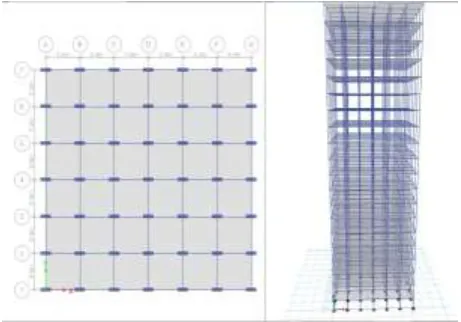
[image:1.595.324.555.378.539.2]For the purpose of this study, G+19 story RCC framed buildings with and without SSI are designed in order to determine the behavior of the structure during high seismic activity. The material properties are selected on the basis of displacement limitations and strength as per IS 1893. The models are designed as,
[image:1.595.326.553.552.731.2]Fig. 1 Plan and Elevation of building on plane ground model.
© 2019, IRJET | Impact Factor value: 7.211 | ISO 9001:2008 Certified Journal
| Page 2345
[image:2.595.46.275.415.606.2]Fig. 3 Plan and Elevation of building having 20°slope.
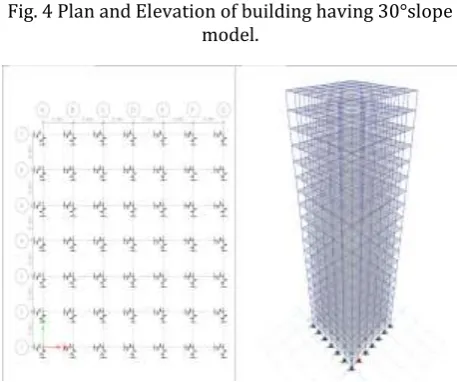
Fig. 4 Plan and Elevation of building having 30°slope model.
Fig. 4 Plan and Elevation of soil structure interaction model
2. Structures Considered For Analysis
Model 1:20 story structure on plane ground
Model 2:20story structure on plane ground with soft soil, medium soil and hard soil.
Model 3: 20story structure having 10°slope on ground
Model 4: 20story structure having 10°slope on ground with soft soil, medium soil and hard soil.
Model 5: 20story structure having 20°slope on ground
Model 6: 20story structure having 20°slope on ground with soft soil, medium soil and hard soil.
Model 7: 20story structure having 30°slope on ground
Model 8: 20story structure having 30°slope on ground with soft soil, medium soil and hard soil.
3. METHODOLOGY
This research paper deals with comparative study of behaviour of structures building frames with three geometrical configurations and different slope of ground. This study is attempted in following steps:
1. Selection of building geometry, 6 bays of 3 meters in length and 20story of 2D frame.
2. Selection of sloping angle of ground (0°, 10°, 20°, 30°).
3. Modelling of building frames using ETABs-2016 software.
4. Response spectrum analysis is carried out in software and gives appropriate solution for each plan configuration.
…… (1)
…… (2)
…… (3)
such that L≥ B and size of the foundation is 2L x 2B.
Where is Shear Modulus and 𝜗is poison’s ratio of the soil.
SPRING CONSTANTS
TYPE OF SOIL SOFT
SOIL MEDIUM SOIL HARD SOIL
Kx 2763.5 5527.019 11054.138
Ky 2763.5 5527.019 11054.138
© 2019, IRJET | Impact Factor value: 7.211 | ISO 9001:2008 Certified Journal
| Page 2346
Serial no. Material properties
1 Column size 300x900mm
2 Beam size 300x600mm
3 Height of ground floor 3 m
4 Thickness of slab 150mm
5 Grade of steel HYSD415
6 Grade of concrete M30
7 Live load 2 KN/m2
8 Floor finish 1 KN/m2
9 No. of stories G+19
10 Floor to floor height 3 m
11 Type of soil Soft Medium
Hard Soil
12 Seismic zone V
13 Importance factor 1.5
4. RESULT AND DISCUSSION
4.1 Displacement Comparison along with slope
Model Type Angle Maximum Displacement(m m)
On plane ground 0 92.19 Sloping ground 10 93.70 Sloping ground 20 94.99 Sloping ground 30 96.13
Chart -1: Displacement chart on slope
4.2 Displacement Comparison along with soil structure interaction.
Model Type Angle Soil
Type Maximum Displacement (mm)
On plane ground 0 Soft 849.17 On plane ground 10 Soft 860.17 On plane ground 20 Soft 893.96
On sloping ground 30 Soft 923.23 On plane ground 0 Mediu
m 447.04
On sloping ground 10 Mediu
m 452.04
On sloping ground 20 Mediu
m 473.30
On sloping ground 30 Mediu
m 493.30
On plane ground 0 Hard 246.12 On sloping ground 10 Hard 248.13 On sloping ground 20 Hard 252.30 On sloping ground 30 Hard 275.40
Chart -1: Displacement chart on soil type.
4.3 Drift Comparison along with slope
Model Type Angle Story Drift On plane ground 0 0.001943 Sloping ground 10 0.001843 Sloping ground 20 0.002549 Sloping ground 30 0.003381
© 2019, IRJET | Impact Factor value: 7.211 | ISO 9001:2008 Certified Journal
| Page 2347
4.4 Drift Comparison along with soil structure interaction.
Model Type Angle Soil Type Story Drift On plane
ground 0 Soft 0.01546
On plane
ground 0 Medium 0.008682
On plane
ground 0 Hard 0.005213
On sloping
ground 10 Soft 0.014159
On sloping
ground 10 Medium 0.007702
On sloping
ground 10 Hard 0.004449
On sloping
ground 20 Soft 0.01465
On sloping
ground 20 Medium 0.008214
On sloping
ground 20 Hard 0.004972
On sloping
ground 30 Soft 0.015209
On sloping
ground 30 Medium 0.008673
On sloping
ground 30 Hard 0.00549
Chart -4: Drift chart on soil type
4.5 Base Shear Comparison along with slope
Model Type Angle Base Shear (KN) On plane ground 0 4149.25
Sloping ground 10 3938.52 Sloping ground 20 3902.59 Sloping ground 30 3880.30
Chart -5: Base Shear on Slope chart
4.2 Base Shear Comparison along with soil structure interaction.
Model
Type Angle Soil Type Base Shear(KN) On plane
ground 0 Soft 1206.24
On plane
ground 0 Medium 1206.24
On plane
ground 0 Hard 1240.24
On sloping
ground 10 Soft 1154.41
On sloping
ground 10 Medium 1154.41
On sloping
ground 10 Hard 1192.75
On sloping
ground 20 soft 1164.52
On sloping
ground 20 Medium 1164.52
On sloping
ground 20 Hard 1190.29
On sloping
ground 30 soft 1175.90
On sloping
ground 30 Medium 1175.90
On sloping
© 2019, IRJET | Impact Factor value: 7.211 | ISO 9001:2008 Certified Journal
| Page 2348
Chart -6: Base Shear on soil type
5. CONCLUSIONS
In this study the G+19 building models analysed for different angles and including soil structure interaction. The results lead to following conclusions.
1. Story displacement of the building models with SSI is more when compared to conventional fixed base (NSSI) models. It also increases with the soft soil.
2. Story displacement is maximum in 30°slope type of building model in soft, medium and hard soil with and without SSI.
3. It is observed that in conventional fixed base the base shear value was increasing with increase in models having fixed base whereas it is decreasing in case of SSI models.
4. Story displacement and story drifts are maximum in case of building with soil structure interaction than fixed base buildings (NSSI).
REFERENCES
[1] Pratiksha Thombre, Dr.S.G.Makarande “Seismic Analysis
of Building Resting on Sloping Ground” Journal of Emerging Technologies and Innovative Research Volume-3 Issuse 6 (ISSN-2349-5162), (2016).
[2] B.G. Birajdar and S.S. Nalawade, Seismic analysis of
buildings resting on sloping ground, 13th world conference on earthquake engineering, Vancuover,B.C., Canada, August 1-6, 2004, paper No. 1472. , vol. 26, No.3, October 1999, pp.179-185
[3] S. A. Halkude " Seismic Analysis of Buildings Resting on
Sloping Ground With Varying Number of Bays and Hill Slopes " International Journal of Engineering Research and Technology ISSN:2278-0181,Vol.2 Issue 12, December-2013, pp 3632- 3640
[4] Sreerama, A. K. and Ramancharla, P. K., “Earthquake
behaviour of reinforcedconcrete framed buildings on hill slopes”, International Symposium on New Technologies for Urban Safety of Mega Cities in Asia (USMCA 2013), Report No:IIIT/TR/2013/-1.
[5] Patel, “A Performance study and seismic evaluation of
RC frame buildings on sloping ground” IOSR Journal of Mechanical and Civil Engineering (IOSR-JMCE) e-ISSN: 2278-1684, p-ISSN: 2320-334X-, PP 51-58, 2014.
[6] Mr.Achin Jain, Dr.Rakesh Patel,” Analysis Of Building
Constructed On Sloping Ground For Different Types Of Soil” International Journal For Technological Research In Engineering Volume 4, Issue 12, August-2017 ISSN (Online): 2347 - 4718
[7] Prof. L. R. Wankhade, Prerana R. Telang,” Effect of Soil
Structure Interaction in Seismic Response of Building resting on Elevated Surface “International Journal of Engineering Trends and Technology (IJETT) – Volume-41 Number-4 - November 2016 ISSN: 2231-5381
[8] Amar R Chougule, S S Dyayanal “Seismic Soil Structural
Interaction of Buildings with Rigid and Flexible Foundation” International Journal of Science and Research (IJSR) ISSN Index Copernicus Value (2013)
[9] Qudsia Bhavikatti , Swapnil B. Cholekar, “Soil Structure
Interaction Effect For A Building Resting On Sloping Ground Including Infiill Subjected To Seismic Analysis” International Research Journal of Engineering and Technology (IRJET) e-ISSN: 2395-0056 Volume: 04 Issue: 07 | July -2017
[10] Arun Kumar Y M And Nishil Alva ,”Seismic Response of
Reinforced Concrete Frames on Sloping Ground considering Soil Structure Interaction” International Journal of Earth science and Engineering ISSN 0974-5904, Volume 08, No. 02
[11] Nagarjuna Shivkumar B. Patil “Lateral Stability of