Original citation:
Atkins, Katie, Baguelin, Marc, Brand, Samuel, Jit, Mark, Keeling, Matthew James, Kibinge, Nelson, Kinyanjui, Timothy, Medley, Graham, Melegaro, Alessia, Munywoki, Patrick, Nokes, D. James, Panovska-Griffiths, Jasmina, Pan-Ngum, Wurichada , Pellis, Lorenzo and White, Lisa (2017) RSV modelling meeting. University of Warwick, Coventry: School of Life Science and Zeeman Institute SBIDER Centre, University of Warwick, UK and KEMRI-Wellcome Trust Research Programme , Kilifi, Kenya. (Unpublished)
Permanent WRAP URL:
http://wrap.warwick.ac.uk/88000
Copyright and reuse:
The Warwick Research Archive Portal (WRAP) makes this work by researchers of the University of Warwick available open access under the following conditions. Copyright © and all moral rights to the version of the paper presented here belong to the individual author(s) and/or other copyright owners. To the extent reasonable and practicable the material made available in WRAP has been checked for eligibility before being made available.
Copies of full items can be used for personal research or study, educational, or not-for-profit purposes without prior permission or charge. Provided that the authors, title and full bibliographic details are credited, a hyperlink and/or URL is given for the original metadata page and the content is not changed in any way.
A note on versions:
The version presented here is a working paper or pre-print that may be later published elsewhere. If a published version is known of, the above WRAP URL will contain details on finding it.
RSV Modelling Meeting
Systems Biology and Infectious Disease Epidemiology Research (SBIDER) Centre
– Zeeman Institute
University of Warwick
21
stMarch 2017
Participants: Katie Atkins, Marc Baguelin, Sam Brand*, Mark Jit, Matt Keeling, Nelson
Kibinge, Timothy Kinyanjui*, Graham Medley, Alessia Melegaro, Patrick Munywoki, James
Nokes*, Jasmina Panovska-Griffiths, Wurichada Pan-Ngum, Lorenzo Pellis, Lisa White
Executive summary
A group of investigators gathered to review the landscape of predictive mathematical modelling of RSV intervention programmes, and to identify gaps in knowledge and strategy options being explored. The objective was to set an agenda for future modelling and related research, to explore possible areas for collaborations, and provide an informed status update for various stakeholders.
A review of the current literature (5 published) and work in progress (3 studies) reveals a range of model structures adopted. However, all but one model is dynamic i.e. they allow for reduced circulation of virus due to some form of immunity development (reduced risk of infection or of infectivity on infection), hence indirect effects are possible (particularly important in view of the marked age-dependence in RSV severity, for example). There is no consensus over the mode of development and sustaining of this immunity, which results to structural variation in models (levels of exposure / immunity development). Deterministic and probabilistic individual-based frameworks are being adopted, with the latter allowing for explicit household and school structure (and hence more explicit vaccination strategies) in addition to age-structure, but with associated costs in data needs, complexity and computing time.
Studies investigate vaccine impact on infant disease through a range of strategies (including passive and active, in seronegatives and seropositives). One model addresses elderly disease control. Models focus on low- and middle- income countries (LMIC) and high income countries (HIC), though setting variety is limited. A singe cost-effectiveness study has been published and one is in progress (submitted), both focusing on childhood impact in the high income country setting.
A summary of model findings is that (i) the impact of strategies targeting infant and early childhood disease (hospitalisation) could well be very significant, particularly through post-natal vaccination in early or delayed infancy or in annual school vaccination (with less clear picture for maternal
vaccination), and (ii) this impact may result from a major contribution of indirect protection (a herd immunity component). Furthermore, (iii) RSV disease in the elderly might be more effectively reduced by preventing infection in school going children (spreaders), again through indirect effects; and (iv) strategies for preventing childhood disease may be cost-effective, particularly through routine infant vaccination or seasonal infant vaccination, with sensitivity to assumptions of costs associated with parents off work for child care.
The modelling work rests on many assumptions and key unknowns remain. Amongst the most important gaps in knowledge are, (i) the mechanism whereby immunity is generated by repeated in infection and wanes in the absence of infection; (ii) the role of reinfections as a reservoir of
transmitters in the community, which will depend on their infectivity and population contact structures – neither of which are well defined; (iii) the degree of protection conferred by vaccines to infection and to disease, and how this relates to the recipient status with regard to maternal, naturally acquired, passive or vaccine induced antibodies; (iv) the role of antigenic variation and evolutionary implications of vaccination, and (v) lack of information on RSV QALY/DALYs and costs in LMICs.
An agenda for activities moving forward was developed. Future modelling work should include (i) exploration of influence of reinfection in relation to contact structure; (ii) comparison of model structures that incorporate epidemiological and immunological uncertainty; (iii) combined
Contents
Executive summary ... 2
Glossary ... 4
Preamble ... 5
Objectives ... 5
Review of Modelling Studies ... 6
Published research ... 6
Modelling the impact of delayed infant vaccination in Kenya – herd immunity ... 6
A consensus modelling approach to explore the population level impact of TPPs ... 7
An individual based model (IBM) structured by household and school for the LMIC setting ... 8
Modelling work in progress ... 9
Combined household, school and meta-population structured model for Kenya ... 9
PHE modelling on RSV ... 10
Modelling the impact and cost-effectiveness of RSV vaccination for England ... 10
Cost-effectiveness of vaccinating children against RSV in the UK ... 11
Modelling landscape – findings, challenges, knowledge gaps ... 18
Main findings ... 18
Structure of models ... 18
Knowledge gaps ... 19
Agenda for future work ... 22
Next steps – modeling, data and vaccine requirements ... 22
Modelling work ... 22
Epidemiological ... 22
Vaccines ... 22
Cost-effectiveness ... 22
Opportunities for collaboration ... 22
Report and review ... 22
References ... 23
Appendices ... 24
Appendix 1. Meeting programme ... 24
Appendix 2. List of individuals attending and affiliations ... 25
Glossary
IBM Individual based model ODE Ordinary differential equation
BWI Boosted waning immunity
SAI Sequential acquisition of immunity LMIC Low / middle income countries RAS Realistic age structured RSV Respiratory syncytial model
HPEHI High potency extended half-life immunoglobulin GAVI Global Alliance for Vaccination and Immunization BMGF Bill and Melinda Gates Foundation
JCVI Joint Committee on Vaccination and Immunization WHO World Health Organisation
MORU Mahidol Oxford Research Unit
KWTRP KEMRI-Wellcome Trust Research Programme NITAG National Immunization Technical Advisory Group
SAGE WHO Strategic Advisory Group of Experts on immunization ICER Incremental cost effectiveness ratio
Preamble
Respiratory syncytial virus (RSV) is recognised to be the most important viral cause of infant and early childhood lower respiratory tract infection (LRTI) worldwide. It is also a significant cause of disease and death in the elderly and immunocompromised. Although the majority of disease and death occur in low income and middle income countries (LMIC), RSV is also a recognised problem for high income country (HIC) settings. RSV is perceived as a disease requiring intervention in both LMICs and HICs.
A vaccine to prevent RSV disease has been a long time coming. Presently, the development pipeline is healthy with over 60 candidates, and 15 or so in clinical trials. Most major pharmaceutical
companies and a number of young biotech companies are involved. It is likely that the first vaccine, a maternal antibody boosting vaccine, will be licensed within 5-10 years. Disease prevention through use of high potency immunoglobulin is also being considered alongside the ‘vaccine’ option.
Implementation of vaccination or immunization is challenging due to the complexity of the situation. Disease arises in different age groups, with multiple options for vaccine delivery, requiring a range of product types. More fundamentally, RSV epidemiology is complex, not least because many of the drivers of infection and disease are highly age- and exposure-dependent. There is also a lack of understanding of the importance of antigenic diversity and related evolutionary implications of vaccination.
Given this context, in advance of vaccine licensure, predictive mathematical modelling has an important role in examining the potential impact of different intervention programmes on RSV disease and to explore the cost-effectiveness of various possible options. The literature already includes a number of modelling exercises. The approaches used exhibit considerable diversity of (a) RSV epidemiology (b) strategy options (c) target age groups and (d) income settings.
Currently, WHO are working to produce a road map for the development of RSV
vaccine/immunization strategies [1], and other major stakeholders including BMGF and GAVI are entering the arena. The WHO SAGE has produced early recommendations [2]. However, at present there is little in the way of a focused quantitative appraisal of the different options available that would be necessary for national recommendation and advisory groups (NITAGs).
With this background in mind a group of investigators involved in RSV modelling, representative of most—though not all—research groups and institutes involved in the field, gathered for a one day meeting (see Programme and participants in Appendices 1 and 2) to review, compare and critique the current modelling studies, identify work in progress or planned, gaps in RSV knowledge and in intervention strategies, and draw up a future research agenda.
Objectives
• Review current status of RSV modelling (published, unpublished and in preparation).
• Identify knowledge gaps relevant to model construction, and in vaccine control options and target combinations considered.
• Set out a research agenda and between-group collaboration based on current plans and new ideas from the meeting
Review of Modelling Studies
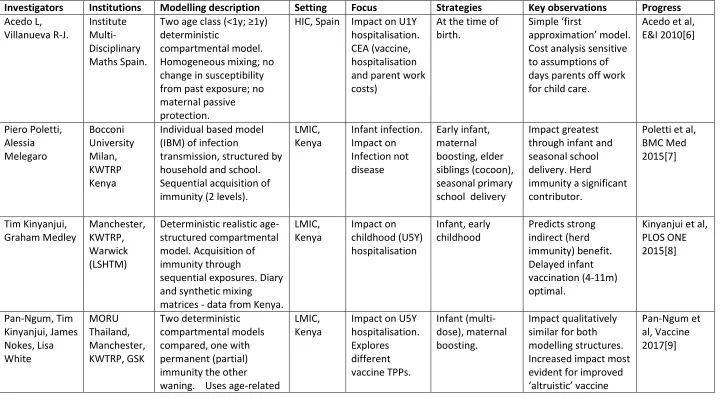
Table 1 provides a summary of models of RSV that explore vaccine intervention strategies (or plan to). This review does not include all modelling work on RSV transmission such as exploring factors relating to seasonal variation and antigenic diversity [3-5]
To date, there are 5 published studies that explore the potential impact of RSV immunization programmes; they include both low income (Kenya) and high income (Spain, USA) settings.
At the meeting we heard reports on published studies and studies in the pipeline. The meeting did not have representatives from all currently active RSV modelling groups. Notable omissions were the groups led by Alison Galvani (Yale, USA) and Kathryn Glass (ANU, Australia). A list of the key
research groups/teams involved in RSV modelling of immunization programmes is given in Appendix 3.
Detailed reviews of published work were presented by teams from Manchester University and Mahidol Oxford Research Unity (MORU) in Bangkok, and from Bocconi University, Milan, and work in progress from teams from KWTRP Kenya/Warwick, and UCL/PHE/LSHTM. Summaries are given in the following sub-sections and in Table 1 (models) and Table 2 (vaccine strategy options)
Published research
Modelling the impact of delayed infant vaccination in Kenya – herd immunity
Timothy Kinyanjui (University of Manchester), Graham Medley (LSHTM), James Nokes (KEMRI-Wellcome Trust, University of Warwick)
Overview
Deterministic compartmental fully age structured model for LMIC setting used to explore the potential of delayed infant and early childhood vaccination motivated by recognition that vaccines for early infants face serious challenges. Identifies significant indirect (herd immunity) effect, with optimal impact of (live attenuated) vaccine at 4-10 months of age.
Model description and summary of findings • Model detail: Comprises three sub-models
(i) Epidemiological: assumes individuals born into a maternal antibody class; repeated infection of susceptible individuals builds immunity (up to third infection), resulting in reduced risk of infection, reduced infectivity (duration, infectiousness) and reduced risk of disease. In later form this model is referred to as the Sequential Immunity Acquisition (SIA) model. (ii) Disease: The risk of disease is a strongly age-dependent process, which is a key factor leading to the indirect benefit (on hospitalisation) arising from vaccination. (iii) Vaccination: vaccine equivalent to wild type infection, ie provides equivalent level of protection for naïve susceptibles (baseline), and partial susceptibles (ie those previously recovered from past infection and lost temporary resistance).
• Data: Model parameter estimation and optimisation arise from rural Kenya, including age-related disease risk and also the contact matrix which is of two forms - diary and synthetic (household occupancy and school mixing). Scaling factor to fit hospitalisation data is estimated.
age 4-10 months provides optimal impact for all levels of coverage: possible delivery with 9m measles vaccine (in LMICs)
• Shortcomings: structural uncertainty (poor understanding of some epidemiological / immunological processes); vaccine features (how would a vaccine compare with natural infection; possible boosting of immunity; dosing regimes not included; only for LMIC setting. The role of re-infections, relative to primary infections, in driving RSV transmission dynamics was found to differ for different age-related mixing structures. Clarification of this role would reduce modelling uncertainty.
A consensus modelling approach to explore the population level impact of TPPs
Wurichada Pan-Ngum (MORU Thailand), Timothy Kinyanjui (University of Manchester), James Nokes (KEMRI-Wellcome Trust, University of Warwick), Sylvia Taylor, Thierry van Effelterre
(GlaxoSmithKline), Lisa White (MORU)
Overview
Application of two structurally different deterministic compartmental models to explore a range of vaccine Target Product Profiles (TPP) on paediatric hospitalisations in the LMIC setting. Models harmonised: same contact structures, disease risks and optimisation. Aim of exercise was to define vaccine features that could have most influence on impact taking into account major uncertainty in immunity development and loss. Exploration of early infant and maternal vaccine strategies (not combined). Both models yield qualitatively similar predicted impact on RSV hospitalization; most influential vaccine features were those leading to indirect benefits (ie reduced infection period and infectivity).
Model description and summary of findings
• Model detail: Two models, (i) SAI (described above, Fig.1c) and (ii) boosted waning immunity (BWI) (see Fig. 1d) reflect structural uncertainty in modelling acquisition of immunity to RSV: previously infected susceptibles can revert to fully susceptible status. The BWI model assumes individual born into a maternal antibody protected class, then flow into a primary fully
susceptible class, and upon infection move to one of the infected classes of differing severity, all recovering into a partially susceptible class. Subsequent Infection is then at lower risk and also resultant lower disease risk (age and exposure related) with recovery back into the partially susceptible class, or the partially susceptible individuals can lose immunity if not infected to flow back to the primary susceptible class (albeit of older age with different contact and lower risk of disease, than when first infected.)
• Data: Parametization and optimisation were harmonised for the two models using data primarily for the LMIC setting of Kenya.
• Vaccine implementation and effects: Multiple dosing up to 3 doses. Replicate the compartments for each vaccine dose, then flowing back between vaccine classes to unvaccinated classes (see eg Fig1d.) Wide range of vaccine features explored including immunity duration, infectivity and duration of infection in vaccine failures, various effects on disease risk.
• Limitations: Uncertainty exists in the impact of post-natal vaccination in the presence of maternal antibodies or of acquired immunity. Impact of combined maternal and infant vaccination not explored. Assumes a vaccine can be delivered in the first few weeks of life.
Question and answers
• Using a synthetic social mixing matrix results in a reduced vaccine impact on hospitalisations when compared with results from a diary-based mixing matrix (i.e. vaccine impact result is contingent on contact structure and infectiousness of older individuals). Uncertainty of contact structure and infectiousness of later infections.
• Response: Importance of secondary cases depends on contact structure. RSV acts more like a SIR infection for diary model (driven by primary cases) and more like a SIRS for synthetic model (driven by secondary cases.)
• Schedule of vaccination – 2, 4, 6 months overcrowds or is new. May not be plausible for some settings.
An individual based model (IBM) structured by household and school for the LMIC setting
Research teamPiero Poletti, Alessia Melegaro (Bocconi University, Milan); Stefano Merler (Bruno Kesler
Foundation, Turin), Piero Manfredi (University of Pisa); Patrick Munywoki and James Nokes (KWTRP, Kenya).
Overview
A simulation model that tracks individuals of a LMIC population that has contacts structured according to realistic household groups, school attendance and the general population. Sequential immunity acquisition (SAI) to RSV is assumed. A wide range of vaccine strategy scenarios are explored including maternal, early infant, school, and targeted sibling. Impact on RSV infection was assessed, with the key results under realistic coverage assumptions, that (a) maternal vaccination is highly dependent upon the duration of maternally derived passive protection, (b) early infant and repeated annual primary school vaccination were most effective and (c) household cocooning and catch-up least effective.
Model description and summary of findings
• Model detail: An individual based (probability) model of a population of ~200,000 in a LMIC setting (Kenya), structured by transmission within households, schools, and general community, assuming acquisition of immunity up to second infection. Individuals born into a maternally protected class from which they flow to become primary susceptible, infected and recovered, with loss of solid immunity to become partially protected (i.e. less) susceptible and so forth.
• Data: Bayesian statistical analysis. Model modelled to simulate Kenya household and school data and fitted to infection and serological data from within a rural Kenya birth cohort.
• Vaccine implementation and effects: Maternal vaccine adds duration to existing estimated maternal passive protection; post-natal infant at 3 months; primary school entry or annual primary school age groups; household sibling vaccine boosting; routine plus campaign catch-up (up to age 15 years).
campaign and targeted school siblings of transient benefit and minimal benefit, respectively. Maternal vaccination simply dependent on duration of addition protection.
• Limitations: Modelled infection not disease – and hence impact conservative since not realising benefit of age-related risk of disease coupled to indirect effects of reduced transmission. No seasonality in transmission. Assumes vaccine effective at boosting previously infected individuals (ie susceptible seropositives).
Questions and answers
• Vaccine trial - We need to know what immunity can be vaccine induced in seropositive / previously infected individuals (IBM model). Prevention or reduction in virus shedding
• Inclusion of seasonality?
• Breaking chain strategy – vaccinating elder students. Why not good?
• No contact matrix – but it’s more a household / synthetic matrix – is this less likely to produce major impact (as with Kinyanjui model)
Modelling work in progress
Combined household, school and meta-population structured model for Kenya
Research teamSam Brand, James Nokes, Matt Keeling (University of Warwick and KWTRP, Kenya)
Overview
An individual based simulation model to explore countrywide transmission and vaccine impact of a range of respiratory viruses that takes into account population density heterogeneity, but with explicit household and school organisation. The epidemiological sub-model is as for the Kinyanjui SIA model. Mobility and population flux data (eg from Google Android or Safaricom mobile phone data) will be required to link the meta-populations or Counties in the Kenya setting. The model structure is motivated by (i) observation that models using only age structure fail to capture the ‘spikiness’ of RSV time series, and (ii) the likely phylogeny of RSV samples seems to indicate preferential within household transmission. The goal is to produce a model capable of including: (a) marked variation in the population density across Kenya that may account for spatial and temporal dynamics of RSV, (b) explicitly simulate vaccine uptake variation spatially, (c) incorporate sequence data on relatedness of virus variants across the country being identified through countrywide ILI/SARI surveillance, and (d) explicit modelling of within household "cocoon" vaccination.
Model description and summary of findings and limitations
The work is in development stage. The benefits of incorporating household structure into a
countrywide model is at this stage uncertain – although early results indicate the model can capture the temporal ‘spikiness’ of seasonal fluctuations well. Computationally the model is currently too slow. Constructing the joint distribution of household size and age structure is computationally expenses and requires a ‘fix’ – validity? Would it be better to revert from an IBM probabilistic model to an ODE (ordinary differential equation) deterministic model?
Question and answers
• Importance of distribution of durations, eg duration of protection (exponential decay versus equal length for all (step function)). This may influence the model simulations, for example, multiple reinfections in the same season – which is not observed.
• Simulations are slow – needs optimisation. Provide age distribution of household members as an input rather than simulate.
• Effect of heterogeneity in birth rates, demographics?
• This is RSV specific? Why not generalise to be not RSV specific
• Additional data – HDSS in Kenya. Urban/Rural + migration
PHE modelling on RSV
OverviewMarc Baguelin gave an overview of the PHE/LSHTM/UCL research programme on RSV.
The principle aim is to integrate relevant data into a modelling, statistical and economic analysis to advise JCVI. Vaccine recommendations are underpinned by incremental cost-effectiveness analysis – ICER.
The team: Marc Baguelin and Richard Pebody (PHE), Katie Atkins (LSHTM), Jasmina Panovska-Griffiths (UCL), Rachel Reeve UCL (supervised by Richard) and David Hodgson (supervised by Katie, Marc, Richard and Jasmina). Historically driven by PHE (modelling) but Warwick has now become a second opinion group.
Two streams of work – Epidemiology and modelling. Eventually cost-effectiveness analysis.
• Burden studies using regression modelling / mathematical models / QALY estimate studies / CEA
• Cromer et al, influenza 2014 look in Appendix for RSV contribution (dominant)
• Reeve et al 2017 contribution of RSV to bronchiolitis, pneumonia etc
• Hodgson – review of RSV model structure and parameterisation
• Mathematical modelling – explore passive, direct and indirect strategies
• Collaboration possible with not-for-profit organisations.
Modelling the impact and cost-effectiveness of RSV vaccination for England
Research TeamDavid Hodgson (UCL), Jasmina Panovska-Griffiths (UCL), Katie Atkins (LSHTM), Marc Baguelin (PHE/LSHTM), Richard Pebody (PHE)
Overview
Model description and summary of findings and limitations
Individuals born with maternal antibody protection become susceptible, exposed, infectious or asymptomatic and then recover, then with the loss of transient immunity the process SE(AI)RS (with two infection states: asymptomatic (A) and symptomatic (I)) process continues taking three further exposures to generate the highest level of immunity. An ODE deterministic model chosen as opposed to IBM for two reasons: (i) it is deemed suitable to model the main strategies for immunization and can conservatively estimate the effect of household cocooning, and (ii) can be calibrated to seasonal RSV data in more easily. Contact structure is based on the POLYMOD UK study enhanced by a recently published infant contact study (under-represented in POLYMOD). Output will be in the form of Incremental Cost Effectiveness Ratio (ICER) and £/QALY. The strategies to be explored:
1) Passive protection strategies: Antepartum and post-partum (high potency extended half-life) 2) Direct protection: Infants, elderly
3) Indirect protection strategies: Cocoon, paediatric
Questions and answers
• Why the 4 level structure (others have 2 or 3)?
• Probability of asymptomatic infection by age?
• Effect of heterogeneity in birth?
• How to evaluate Cocoon strategy (parents, children, HH members)? Static vaccination: Directly reducing the infant’s force of infection by a percentage—an over-estimate and not ideal for public health decision-making; Dynamic: Infant effective contact rate is changed and is conservative estimate, but maintains model tractability for calibration; Structural: Stratify models by households
• Cost effectiveness evaluation ICER/QALY? QALY for RSV not well estimated. QALY loss for age-dependent clinical outcomes. Investigatory study being conducted using postal questionnaire for households with a child detected positive for RSV at hospital. This study will provide QALY estimates for children older than five years and adults. It will also provide unvalidated estimates for children less than five (as no validated Quality of Life instrument has been developed)
Cost-effectiveness of vaccinating children against RSV in the UK
Research TeamMark Jit (LSHTM/ PHE), Deborah Cromer (UNSW), AJ Van Hoek (RIVM)
Overview
Studies concentrating on health and economic burden of maternal, neonatal or infant immunization strategies, motivated by need to inform JCVI, and currently in submission. Analysis is based on cohort, rather than dynamic, modelling to explore relative cost-effectiveness. Results indicate a range of strategies would be cost-effective, but benefit is highest for childhood immunization compared to maternal or neonatal, and by offering protection just before each seasonal outbreak. Needs to be done in other parts of the world. CEA of elderly vaccination in development (AJ van Hoek).
Questions and answers
• Model is static – yet we expect prevention of early infection to have indirect impact? Model provides lower bound on the cost effectiveness. Introducing dynamics and herd effects can only make it better.
• Timing of immunization? – Seasonal infant dose eg during winter or just before
Table 1. Summary of vaccine strategy modelling to date (see structures in Fig.1 appended)
Investigators Institutions Modelling description Setting Focus Strategies Key observations Progress
Acedo L, Villanueva R-J. Institute Multi-Disciplinary Maths Spain.
Two age class (<1y; ≥1y) deterministic
compartmental model. Homogeneous mixing; no change in susceptibility from past exposure; no maternal passive protection.
HIC, Spain Impact on U1Y hospitalisation. CEA (vaccine, hospitalisation and parent work costs)
At the time of birth.
Simple ‘first
approximation’ model. Cost analysis sensitive to assumptions of days parents off work for child care.
Acedo et al, E&I 2010[6] Piero Poletti, Alessia Melegaro Bocconi University Milan, KWTRP Kenya
Individual based model (IBM) of infection
transmission, structured by household and school. Sequential acquisition of immunity (2 levels).
LMIC, Kenya Infant infection. Impact on Infection not disease Early infant, maternal boosting, elder siblings (cocoon), seasonal primary school delivery
Impact greatest through infant and seasonal school delivery. Herd
immunity a significant contributor.
Poletti et al, BMC Med 2015[7] Tim Kinyanjui, Graham Medley Manchester, KWTRP, Warwick (LSHTM)
Deterministic realistic age-structured compartmental model. Acquisition of immunity through
sequential exposures. Diary and synthetic mixing matrices - data from Kenya.
LMIC, Kenya Impact on childhood (U5Y) hospitalisation Infant, early childhood Predicts strong indirect (herd immunity) benefit. Delayed infant vaccination (4-11m) optimal.
Kinyanjui et al, PLOS ONE 2015[8] Pan-Ngum, Tim Kinyanjui, James Nokes, Lisa White MORU Thailand, Manchester, KWTRP, GSK Two deterministic compartmental models compared, one with permanent (partial) immunity the other waning. Uses age-related
LMIC, Kenya
Impact on U5Y hospitalisation. Explores different vaccine TPPs. Infant (multi-dose), maternal boosting. Impact qualitatively similar for both modelling structures. Increased impact most evident for improved ‘altruistic’ vaccine
contact rates specific to Kenya.
properties, ie reduced infectivity Alexandra Hogan, Hannah Moore, Kathryn Glass CSIRO, National Uni Australia; Uni Western Australia.
Compartmental ODE, two age classes <12m, 12-23m. No maternal M class.
HIC, Australia Impact on hospitalisation U1Y, severe cases U2Y.
Early infant (not yet
implemented). Limited strategy options given age structure and absence of M.
Awaits vaccine
implementation stage.
Hogan et al, Theo Pop Bio 2016[3]; Moore et al, PLOS ONE 2014.[10] Dan Yamin, John de Vincenzo, Alison Galvani Yale, USA; Uni of Tel Aviv, Israel.
Compartmental age-stratified ODE model. Incorporates (i) infectivity changes based on shedding data and (ii) social
distancing effects of contact rates in infecteds. Uses UK (POLYMOD) contact data.
HIC, USA Impact on U5Y and adults + all ages Annual vaccination of specified age groups (with influenza vaccine)
Vaccination of U5Y most efficient for children and adults. Indirect protection: vaccination of U5Y more protective to adults than adult vaccination itself.
Yamin et al, PNAS 2016[11] Tim Kinyanjui, Pan-Ngum, James Nokes, Lisa White Manchester, MORU, KWTRP, GSK Two deterministic compartmental models compared, one with permanent (partial) immunity the other
boosted waning immunity. Uses PHE age-related and time series case data for E&W. Uses UK (POLYMOD) contact data.
HIC, UK Impact on U5Y hospitalisation. Explores different vaccine Target Product Profiles (TPP). Infant, maternal boosting.
Not yet available Draft paper
David Hodgson, Jasmina Panovska-Griffiths, Katie Atkins, Marc UCL, LSHTM, PHE
Deterministic realistic age-structured model.
Acquisition of immunity through sequential exposures (4 levels).
HIC, UK Impact on children and adults. Cost-effectiveness of strategies. ICER
Maternal/neonat al passive; direct (infant and adult) and indirect
Baguelin, Richard Pebody
Contact matrix UK. QALY and
and £/QALY. Advise JCVI.
(paediatric /cocoon) Mark Jit,
Deborah Cromer, AJ Van Hoek
LSHTM, PHE, UNSW/ RIVM
Cohort (static) model of disease prevention.
HIC, eg UK
Health and economic costs. Advise JCVI.
Maternal, neonatal and infant.
Each strategy cost-effective. Infant routine vaccination most cost-effective – better if seasonal.
Submitted
Table 2. Review of vaccine strategy options
Strategy Description Vaccine type, products, status
Implementation / delivery
Type of immunity: against infection or Disease
Issues
Maternal booster vaccine (antepartum)1
Boost matenal RSV specific antibody prior to delivery to increase duration of infant protection.
Sub-unit F with /without adjuvant eg Novavax Nanoparticle, Phase 3 pregnant women ANC attendance. With influenza vaccine? Passive immunity. Disease prevention. Systemic neutralising antibodies. Reduced severity related to reduced transmission => indirect protection.
1. Gestational age at ANC presentation
2. Coverage - Proportion attending ANC
3. Adverse events
4. Factors affecting transfer of maternal Ab
5. Level of Nt Ab induced 6. Attitudes of women
High potency immunoglobulin (post-partum)
High potency extended half life immunization to protect infant through early months of life / 1st RSV season
Eg Medi8897, Phase 2 trials
BCG vaccination in 1st week, first dose routine eg 6 weeks OR pre-RSV season Passive immunity. Disease prevention. Systemic neutralising antibodies. Reduced severity related to reduced transmission => indirect protection.
1. Interference with wild type infection or infant vaccination
2. Low coverage at brith eg BCG.
3. Mechanism for delivery at start of RSV season
Routine infant Integrate with routine EPI infant schedule
1. Live attenuated vaccines (LAV) eg NIH and vectored eg Mediimne bovine PIV 2. Sub-unit
adjuvanted?
Routine EPI eg 6, 10, 14 weeks. 1. Intranasal delivery for LAV. 2. Oarenteral sub-unit
LAV: Acive mucosal in seronegatives. Infection prevention. Acts like wid type infection. Inidirect benefit. Sub-unit: Prevents disease but infecton?
1. Concerns over type of immunity elicited, if not LAV.
2. Over-attenuation to be safe.
3. Efficacy in presence of Mat Ab?
1 Possibility also of vaccinating mothers at birth (which is likely a lower efficacy strategy), but could still be a back-up option if the mother was not vaccinated during
Delayed infant Delayed vaccination in later months in infancy to pretect recipeients and reduce circulation in community (indirect protection / herd immunity)
1. Live attenuated vaccines (LAV) eg NIH and vectored eg Mediimne bovine PIV 2. Sub-unit
adjuvanted?
Eg with measles vaccination (9m LMIC).
Seasonal – eg before annual outbreak.
LAV: Acive mucosal in seronegatives. Infection prevention. Acts like wid type infection. Inidirect benefit. Sub-unit: Prevents disease but infecton?
1. Vaccine variant
tranmsitted to early infant 2. Unliley to boost exisiting antobody unless less attenuated
Catch-up At start of infant routine programme vaccine
campaign to immunizae pre-school and primary pre-school age groups.
According to age group.
Campaign Aim to reduce
circulation of virus
Unknown if would prevent infection and hence reduce circulation.
School based Seasonal booster vaccination to prevent spread to community and into households
Sub-unit with or without adjuvant. With influenza vaccine Boost systemic immunity. Boost mucosal immunity?
Unknown if would prevent infection and hence reduce circulation.
Target chain of transmission
Vaccinate individuals known to infect infant and break chain of transsmission.
Sub-unit with or without adjuvant.
Vaccinated elder siblings / mother at Immunization clinic (when infant receives EPI vaccines) Boost systemic immunity. Boost mucosal immunity?
Unknown if would prevent infection and hence reduce circulation.
Family cocoon Vaccinate family members of households with an infant
Sub-unit with or without adjuvant.
Vaccinated elder siblings / mother at Immunization clinic (when infant receives EPI vaccines) Boost systemic immunity. Boost mucosal immunity?
Unknown if would prevent infection and hence reduce circulation.
Elderly Protect elderly who are at risk of very severe RSV reinfection
Sub-unit with or without adjuvant.
With influenza vaccine
Boost systemic immunity.
Modelling landscape – findings, challenges, knowledge gaps
Main findings
Modelling of RSV immunization strategies is at a nascent stage but there are some distinctive findings already. The next year or so will undoubtedly see a significant addition of modelling studies and new observations. A summary is given here of the key findings from all studies (Table 1) and not only those presented at the meeting.
1. Focus of modelling. Most studies to date target infection/disease in infants and young children.
One from the US (Yamin) investigates impact on disease in the elderly.
2. Impact. Models all predict a significant impact from vaccine strategies targeting
disease/infection in infants and young children.
3. Herd immunity. Models in their present structural format (except static cohort model of Jit) do
suggest a role for both direct protection and indirect benefit from vaccination, at least for post-natal vaccination, and particularly when the main outcome under focus is hospitalisation. This is due to the fact that all models assume some form of protected or reduced susceptibility stage post recovery from infection which is recapitulated by vaccination. In addition, most assume marked age-dependence in severe disease, such that even slight increase in the average age at infection (first and repeat) would significantly alter the risk (down) of severe disease and hospitalisation. In the US study, school-child vaccination was more effective at preventing disease in the elderly than was direct vaccination of the elderly (due to indirect protection). Models show that varying assumptions surrounding the effective age-related contact rate changes the magnitude of impact of vaccination although the age at which it is optimal to vaccinate is less sensitive to these assumptions [8].
4. Model structures and structural robustness. There is a wide range of model structure – see
below. One study explored impact based on fundamentally different understanding of the way RSV immunity builds [9] but finds qualitatively similar results on the impact of vaccination.
5. Cost-effectiveness analysis. Two studies to date report on CEA – one dynamic [6] and one static
cohort (Jit). Both record vaccination to be cost-effective, though sensitive to costs of time off work [6]. Jit indicated QALYs most influenced by non-hospitalised disease, whereas costs most influenced by hospitalisation/ICU.
6. Settings. Modelling based on the demographic structure of LMIC and HIC settings have been
explored. Thus far there is no clear discrepancy between impact in different settings.
7. Strategies. A wide range of immunization programmes modelled but rarely in combination (eg
maternal + infant). See Table 2.
8. Vaccine design – Target Product Profiles (TPPs). Pan-Ngum [9] study addresses issue of
influence of vaccine characteristics on impact and finds that features affecting infectivity upon infection in vaccines are of importance (follows from herd immunity point above).
Structure of models
Considerable variation in model structure exists.
1. Model structure. Do we know enough about the natural history of infection in the individual?
2. Dynamic versus static. All but one model described is dynamic, ie changes in numbers getting
infected feeds back to influence risk of exposure and age at infection. This is particularly important for RSV due to if there is an age-dependent disease risk process and if age-mixing is heterogeneous. Static models (eg Presented by Jit) can be useful as a first approximation and may be a good approximation for a maternal immunization strategy that has a high passive protective efficacy.
3. Deterministic or probabilistic. Models thus far are either ODE or IBM. The former is generally
used to model large populations and the latter where local extinction may arise and to take account of more detail in transmission groups. IBM models can capture greater degree of contact structure but at cost of increased computer resources/time and are generally less amenable to model calibration. Models of Poletti and Brand use IBM to capture household and school related mixing groups, and are applying them to relatively small populations [7] or countrywide Kenya (Brand).
4. Inclusion of households and schools. Households are known to be favourable for RSV
transmission, although there is little information about the importance of schools. Inclusion of these social structures in the models enables the modelling of explicitly targeted vaccine strategies eg the vaccination of school age siblings or cocooning (either directly through methods similar to Brand and Poletti (see 3. above) or indirectly via methods used for cocoon modelling [12].)
5. Age structure. At present not all models include full age range. Most of observed dynamics are
in the first few years of life and so models can capture this with limited age range. However, to address vaccine impact wider age range required to account for indirect effects, age-structured contacts, reinfections, and school and elderly vaccination.
6. Age-related mixing patterns. Patterns of mixing are (a) structured by age-related contacts from
diary or synthetic matrices (comprising household occupancy, school attendance and otherwise), or b) inherent within model structure into households, school etc. The US study [11] uses UK contact data. The relative importance of age-related mixing patterns has not yet been established.
7. Demographic structure and range of settings. Modelling based on the demographic structure of
LMIC and HIC settings have been explored. The importance of pyramidal versus uniform age structure on RSV dynamics and control remains an unknown but where the focus is disease of the infant this is unlikely to be an issue. But demography in LMIC may be influential when considering elderly – this issue has not yet been addressed.
8. Seasonality. Current dynamic models use a smooth repetitive oscillation (cosine function) to
drive seasonal transmission and is supplemented by demography as force of infection varies over the year. This forced seasonality is fitted to the model, and does not provide an explanatory mechanisms through which there is elevated transmission during RSV peak season.
9. Antigenic diversity. Not included in any models used to explore the impact of immunization.
The potential consequences on infection and disease associated with RSV are largely unknown.
Knowledge gaps
1. Natural history and epidemiology. Gaps remain in understanding of the transmission dynamics
of RSV.
population is not known. First, the infectivity of the reinfected individuals is not fully known and second the structure of contact patterns in the community will determine what role these reinfections play in the dynamics. This is shown in the paper by Kinyanjui which explores two different contact structures that differ in the relative magnitude of school age child mixing. Where school mixing is relative low (diary based) then primary infected play a dominant role and where high (synthetic matrix)
reinfecteds drive transmission. Hence (i) more data are required on mixing structure relevant to RSV transmission and (ii) better data on the infectivity of those experiencing reinfections is needed (eg Munywoki et al 2015 [13]). This also suggests that the inclusion of virus load profiles for primary, reinfected and asymptomatic cases (as a correlate of infectivity) in models as in Yamin et al [11] is warranted.
b. Contact structure. Age-related contact rates have been defined from diary based or similar studies but tend not to provide detailed structure for the youngest age classes (for example the POLYMOD European studies partition in 5 year age bands). This does not suit RSV well given that the disease-related risks change dramatically in the first two years of life. To what degree RSV is driven by school age children is unknown and dependent on age-related mixing (Munywoki et al 2012[14] study reveals how influential they could be).
c. Seasonality. The key drivers of seasonal transmission are not well understood. To what degree school children play a role in seasonality is not known. Studies of infectivity and contact rates of school age groups would be informative.
2. Immunity to infection. This is an area of considerable uncertainty. The process of immunity
development is poorly understood. Generally, too little attention is placed on immunity to infection rather than disease, when the former is fundamental to transmission.
a. Development and maintenance of immunity. It is not known to what degree immune memory is lost in the absence of boosting (refer to SAI versus BWI models of Pan-Ngum). This is interconnected with the role or reinfecteds described above. If RSV is more of a SIR type model where the reinfecteds play little role (ie they are not an important infectious reservoir), then vaccination is likely to result in a significant increase in the average age at infection and a reduced force of infection. Under this situation whether or not boosting is important to maintenance of ‘immunity’ and resultant infectivity on reinfection might be of considerable importance to the outcome of an immunization programme.
b. Maternal antibody protection. The relationship between presence or level of maternal passive antibody and immunity to infection and disease is poorly understood.
c. Antigenic diversity. The influence of antigenic variation and evolution on RSV persistence is not well understood and hence the potential implications to vaccine impact are hard to ascertain. Role of antigenic diversity in evasion of immunity to infection and disease?
d. Vaccine interaction. How will boosted maternal antibody or high potency extended half-life immunization interact with post-natal vaccination?
3. Factors associated with disease. Age and past exposure. The importance of past exposure to the
4. Demographic structure. Little work has yet investigated RSV dynamics and control in relation to
demographic structure.
a. Heterogeneity in population density. RSV seasonality is known to vary even within countries. This may result from delays in the spread of the virus between foci of higher density. To what degree heterogeneity in population density can affect RSV transmission patterns and also affect vaccine programme effectiveness or even influence the design of control programmes is unknown.
b. The implications of population age-structure on vaccine impact are not known. The proportion of the population in older age groups may influence the impact of strategies designed to control disease in the elderly – which needs to be addressed together with contact rates between the elderly and other ages in relation to reservoirs of infectivity.
c. Unknown how different RSV types circulate around communities, populations and regions. The interaction between geography and RSV genetics might be critical.
5. Vaccine induced immunity. Little attention has been placed in models in the way vaccines
behave (in generating immunity to infection and disease) in comparison to wild type infection (Pan-Ngum study explored different scenarios).
a. Vaccine effectiveness (against reinfection, disease and infectiousness) in the presence of maternal antibody or in recovered individuals who are now partially susceptible.
b. Differences in vaccine effectiveness in relation to vaccine type (live attenuated or sub-unit; intranasal versus injected)
6. Vaccine characteristics. Knowledge of how vaccines work in different sections of the population
and their safety needs more consideration in modelling studies. How do vaccines act in the presence of maternal antibodies? Will vaccination of seropositive individuals reduce risk of reinfection and infectivity?
7. Cost-effectiveness. QALYs/DALYs in both HIC LMIC setting are unclear. QALY estimates for
Agenda for future work
Next steps – modeling, data and vaccine requirements
Modelling work
The role of reinfected individuals in relation to contact structure and vaccine impact
Consensus outcomes for structural forms (eg levels of exposure for immunity development) Combinations of targets for immunization eg maternal and delayed infant
Demographic heterogeneity, seasonality and vaccine strategies Incorporating costs into modelling in LMICs
Epidemiological
Contact patterns – focus on early childhood, school age, elderly
Infectivity in relation to primary and repeat infection – reinfection reservoir role
Vaccines
Vaccine effect in the presence of maternal antibody or in seropositive susceptibles
Does vaccine boosting reduce infection risk? Important for school age and cocoon strategies Infectivity upon reinfection following vaccination?
Vaccine trials (i) maternal vaccination / passive immunization in LMICs (ii) follow up of vaccinated seropositives (siblings, pregnant women, school ages)
Traditional vaccine design: are they adequate to capture efficacy against multiple outcomes? Influence on RSV genetics – strain replacement, evolution of virulence/pathogenicity, etc
Cost-effectiveness
CEA for each major strategy and combinations of strategy. Determination of costs, DALY and CEA in LMIC settings
Opportunities for collaboration
Integration of health economics into models for LMICs – well defined for HIC Joint modelling exercise to explain why important to measure certain values Link to industry (not for PHE)
Funding opportunities – which calls coming up?
Report and review
References
1. Giersing BK, Karron RA, Vekemans J, Kaslow DC, Moorthy VS (2017) Meeting report: WHO consultation on Respiratory Syncytial Virus (RSV) vaccine development, Geneva, 25-26 April 2016. Vaccine.
2. (2016) Meeting of the Strategic Advisory Group of Experts on immunization, April 2016 - conclusions and recommendations. Wkly Epidemiol Rec 91: 266-284.
3. Hogan AB, Glass K, Moore HC, Anderssen RS (2016) Exploring the dynamics of respiratory syncytial virus (RSV) transmission in children. Theor Popul Biol 110: 78-85.
4. Paynter S, Yakob L, Simoes EA, Lucero MG, Tallo V, et al. (2014) Using mathematical transmission modelling to investigate drivers of respiratory syncytial virus seasonality in children in the Philippines. PLoS One 9: e90094.
5. Pitzer VE, Viboud C, Alonso WJ, Wilcox T, Metcalf CJ, et al. (2015) Environmental drivers of the spatiotemporal dynamics of respiratory syncytial virus in the United States. PLoS Pathog 11: e1004591.
6. Acedo L, Diez-Domingo J, Morano JA, Villanueva RJ (2010) Mathematical modelling of respiratory syncytial virus (RSV): vaccination strategies and budget applications. Epidemiol Infect 138: 853-860.
7. Poletti P, Merler S, Ajelli M, Manfredi P, Munywoki PK, et al. (2015) Evaluating vaccination strategies for reducing infant respiratory syncytial virus infection in low-income settings. BMC Med 13: 49.
8. Kinyanjui TM, House TA, Kiti MC, Cane PA, Nokes DJ, et al. (2015) Vaccine Induced Herd Immunity for Control of Respiratory Syncytial Virus Disease in a Low-Income Country Setting. PLoS One 10: e0138018.
9. Pan-Ngum W, Kinyanjui T, Kiti M, Taylor S, Toussaint JF, et al. (2017) Predicting the relative impacts of maternal and neonatal respiratory syncytial virus (RSV) vaccine target product profiles: A consensus modelling approach. Vaccine 35: 403-409.
10. Moore HC, Jacoby P, Hogan AB, Blyth CC, Mercer GN (2014) Modelling the seasonal epidemics of respiratory syncytial virus in young children. PLoS One 9: e100422.
11. Yamin D, Jones FK, DeVincenzo JP, Gertler S, Kobiler O, et al. (2016) Vaccination strategies against respiratory syncytial virus. Proc Natl Acad Sci U S A 113: 13239-13244.
12. Atkins KE, Fitzpatrick MC, Galvani AP, Townsend JP (2016) Cost-Effectiveness of Pertussis Vaccination During Pregnancy in the United States. Am J Epidemiol 183: 1159-1170. 13. Munywoki PK, Koech DC, Agoti CN, Bett A, Cane PA, et al. (2015) Frequent Asymptomatic
Respiratory Syncytial Virus Infections During an Epidemic in a Rural Kenyan Household Cohort. J Infect Dis 212: 1711-1718.
Appendices
Appendix 1. Meeting programme
RSV Modelling Meeting Programme, Tuesday, 21st March 2017
Zeeman Institute: SBIDER Centre, Senate House, University of Warwick
09.30 Arrival - Coffee/Tea
10:00 Introductions/ Scene setting – James Nokes
10.15 Modelling work: published, in progress or planned – Tim Kinyanjui
MORU/Manchester/Oxford - Tim Kinyanjui (25 min)
Bocconi – Alessia Melegaro (Skype) (15 mins)
Warwick / KWTRP Kilifi – Sam Brand (15 mins)
Coffee/Tea
PHE/LSHTM - Marc Baguelin (15 min)
UCL/LSHTM/PHE – Katie Atkins (15 mins)
LSHTM – Mark Jit (Skype) (15 min)
12.15 Modelling landscape: critique – Sam Brand / James Nokes
Modeling structures (list) – advantages, disadvantages
Challenges: epi / immunity / vaccine understanding, data needs?
Main outcomes/conclusions from work so far
13.00 Lunch
14:00 Next questions for modelling: round table – Graham Medley / Matt Keeling
What’s missing – approaches, strategies and combinations, settings, CEA?
What perspective, who needs to know – who is the audience?
Consensus, collaborative modelling, synergies and overlap?
15.15 What do NITAGs/JCVI/SAGE want from modelling?
15.30 Tea / coffee break
15.45 Agenda for the way ahead – James Nokes
List of modeling work and data requirements
Opportunities for collaborations, links eg University, Industry, funders, Govt
Funding requirements, opportunities, next steps?
Do we need a collective voice – if so how? Summary review to circulate?
Appendix 2. List of individuals attending and affiliations
Name Affiliation Skype Email
Katie Atkins LSHTM N [email protected]
Marc Baguelin PHE / LSHTM N [email protected]
Sam Brand Warwick N [email protected]
Mark Jit LSHTM / PHE Y [email protected]
Matt Keeling Warwick N [email protected]
Nelson Kibinge KWTRP / Warwick N [email protected]
Tim Kinyanjui Manchester N [email protected]
Graham Medley LSHTM N [email protected]
Alessia Melegaro Bocconi, Italy Y [email protected]
Patrick Munywoki KWTRP, Kenya Y [email protected]
James Nokes KWTRP / Warwick N [email protected]
Wurichada Pan-Ngum MORU, Bangkok Y [email protected]
Jasmina Panovska-Griffiths UCL N [email protected]
Lorenzo Pellis Warwick N [email protected]
Appendix 3. Research groups / teams working on RSV immunization strategy
modelling
Group Research team Affiliations Key area of interest
1 Lisa White, Wurichada Pan-Ngum
Timothy Kinyanjui
James Nokes
Mathematics and Economics Modelling (MAEMOD) group, Mahidol Oxford Research Unit (MORU), Bangkok, Thailand Mathematics Institute, University of Manchester
KEMRI-Wellcome Trust Research Programme
Modelling impact of RSV vaccines in LMICs (eg Thailand and Kenya). Industry link: GSK vaccine TPPs for LMIC (Kenya) and HIC (England and Wales).
2 Alessia Melegaro, Piero Poletti, Stefano Merler, Marco Ajelli, Piero Mafredi
University of Bocconi, Milan Italy
Bruno Kesler Foundation, Trento, Italy
University of Pisa, Italy
Investigating the impact of demographic transition on the transmission dynamics of infectious diseases
3 Sam Brand, Matt Keeling, James Nokes
Ivy Kombe, Graham Medley, Marc Baguelin
SBIDER Centre, Zeeman Institute, University of Warwick; KEMRI-Wellcome Trust Research Programme
LSHTM
RSV vaccine impact modelling for LMIC setting (Kenya).
4 Mark Jit
Deborah Cromer (UNSW)
AJ van Hoek (RIVM)
PHE / LSHTM UNSW, Australia
RIVM, Netherlands
Cost effectiveness analysis; UK, Europe, SE Asia, Africa, Australia.
5 David Hodgson, Jasmina Panovska-Griffiths, Rachel Reeve Katie Atkins Marc Baguelin, Richard Pebody UCL LSHTM PHE
Set of interconnected projects addressing epidemiology and cost-effectiveness of RSV in England: disease burden, modelling, QALY estimation and CEA. Models of passive, direct and indirect strategies. Interest in translation LMICs.
7 Alexandra Hogan
Kathryn Glass Hannah Moore
Australian National University
University of Western Australia
Deterministic modelling of RSV for Australia
8 Alison Galvani Yale RSV vaccine control coupled to