PREVENTING AVOIDABLE HOSPITALIZATIONS FROM LONG TERM CARE FACILITIES THROUGH A COLLABORATIVE CARE MODEL
A PROJECT SUBMITTED TO THE SCHOOL OF NURSING & DENTAL HYGIENE, UNIVERSITY OF HAWAI`I AT MĀNOA IN PARTIAL FULFILLMENT OF THE REQUIREMENTS
FOR THE DEGREE OF DOCTOR OF NURSING PRACTICE
By
Victoria Mathis
DNP Committee:
Maureen Shannon, Chairperson Susan Driscoll
Eric Yee
ii Abstract
Background: Avoidable hospital admissions can have a significant financial cost and impact on quality of life for Long Term Care (LTC) facility residents. The Ambulatory Care Sensitive (ACS) diagnoses of pneumonia, urinary tract infections, congestive heart failure, dehydration, and chronic obstructive pulmonary disease have been identified as the most common ACS diagnoses linked to avoidable hospitalizations from nursing homes.
Methods: An evidence based practice quality improvement project supported implementation of a collaborative care model in a LTC facility on Kaua`i with the primary objective of reducing avoidable hospital admissions. The target population consisted of LTC facility residents aged 65 years and older with a participating medical doctor (MD). Phase 1 of the project began with facility staff in-services on four of the five main ACS conditions. Phase 2 focused on implementation of the collaborative care model.
Outcomes: Both phase 1 and 2 had a favorable impact on reducing hospital admissions for ACS conditions. Both staff MDs perceptions and the availability of in house diagnostic testing had a significant effect on the decision to transfer to the ER. The physical presence of a nurse practitioner (NP) provided timely face-to-face primary care visits for residents in addition to support and mentoring of LTC facility staff.
Conclusion: MD-NP collaboration is a significant factor in preventing hospital admissions from LTC facilities. The perception of both facility staff and MDs did reveal a variation in the decision to transfer to the ER, as did the availability of in house
iii Table of Contents
Abstract ...ii
List of Tables ... vii
List of Figures ... viii
Chapter 1: Executive Summary ... 1
Background ... 1 Purpose... 1 Literature review ... 1 Methodology ... 2 Results ... 2 Conclusion ... 3 Chapter 2: Problem ... 4 Statement of Problem ... 5
Evidence Based Practice Conceptual Framework ... 7
Review of Literature ... 8
Data Sources and Search Strategy. ... 8
Methodological Quality. ... 9
Results ... 9
Synthesis of Literature ... 10
Factors that Lead to Avoidable Hospitalizations ... 10
ACS conditions. ... 10
iv
APRN active primary care management model. ... 12
Interventions to Reduce Acute Care Transfers ... 13
Interprofessional Collaboration ... 15
Summary... 16
Gaps in Evidence Based Practice ... 18
Preliminary Recommendations ... 19 Purpose Statement ... 21 Clinical Question ... 21 Design ... 21 Conceptual Framework ... 22 Operational Definitions ... 24 Setting ... 24 Sample ... 25
Population and Eligibility Criteria. ... 25
Sample Size ... 25
Data Collection Plan ... 25
Data Collection. ... 26
Data Analysis ... 26
Procedure and Program Intervention Plan ... 26
Phase 1: Facility Staff In-Services. ... 26
Phase 2: Collaborative Care Practice Model. ... 27
v
Program Measures ... 29
Program Goals ... 29
Stakeholder Descriptions ... 29
Evaluation Methodology ... 32
Human Subjects Considerations ... 33
Project Limitations and Strengths ... 33
Summary... 33
Chapter 4: Results ... 35
Objectives ... 35
Description of Sample ... 35
Perception Survey ... 35
Trend Analysis for Process and Outcome Measures ... 37
Process Measures ... 37
Facility Staff In-services ... 37
Participation. ... 37
Pre- and post-tests. ... 38
Program Implementation and Participation... 39
Outcome Measures ... 39
Early Detection and Treatment of ACS Conditions. ... 39
Reduction in Emergency Room Visits and Avoidable Hospital Admissions. 40 Program Satisfaction ... 40
vi Summary of Results ... 43 Chapter 5: Discussion ... 45 Evolution of Project ... 45 Facilitators ... 45 Barriers ... 46
Expected vs. Actual Outcomes ... 47
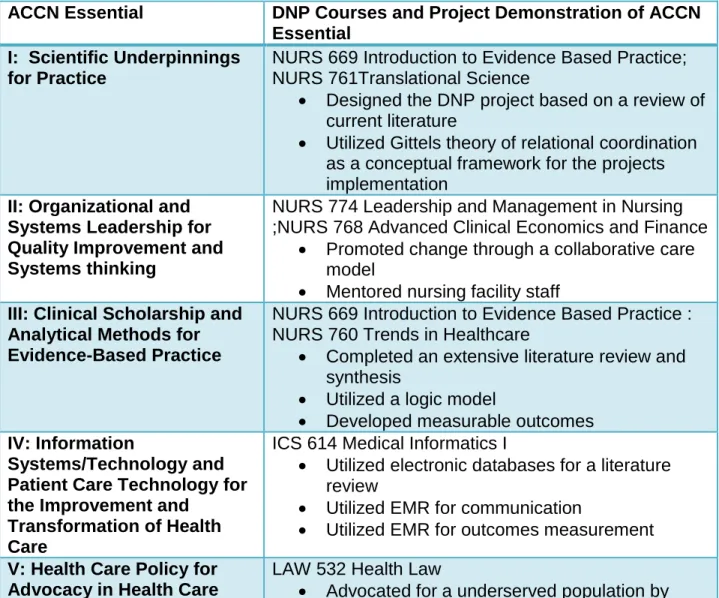
American Association of Colleges of Nursing Essentials ... 47
Limitations ... 49
Interpretation and Implications of Findings ... 50
Plans for Dissemination ... 52
Summary... 52
Appendix A: Staff Perception Survey ... 62
Appendix B: Collaboration Survey ... 64
Appendix C: Satisfaction Survey ... 68
Appendix D: Sample In-service Handouts ... 69
Appendix E: Sample Module Learning Outcomes ... 74
vii List of Tables
Table 3.1 In-service Topics ... 27
Table 3.2 Program Measures ... 29
Table 3.3 Evaluation Methods ... 32
Table 4.1 Perception Survey Completion ... 36
Table 4.2 Summary of Perception Survey Responses ... 37
Table 4.3 Staff Attendance ... 38
Table 4.4 Summary of Reasons for ER visits and hospitalizations ... 40
Table 4.5 Facility Staff Satisfaction Survey Completion Results ... 41
Table 4.6 Summary of Satisfaction Survey Responses ... 42
viii List of Figures
Figure 3.1 Gittels’ Relational Coordination Framework ... 23 Figure 3.2 Logic Model ... 31 Figure 4.1 Results of Pre- and Post-test ... 39
1
Chapter 1: Executive Summary Background
Nurse practitioners (NPs) are in a position to play a key role in preventing
avoidable hospitalizations by meeting the demand for higher acuity nursing home care. The Ambulatory Care Sensitive (ACS) diagnoses of pneumonia, urinary tract infections, congestive heart failure, dehydration, and chronic obstructive pulmonary disease have been identified as the most common ACS diagnoses linked to avoidable hospitalizations from nursing homes. The ACS conditions are defined as conditions for which
hospitalization is preventable if appropriately managed on an ambulatory basis. Purpose
The purpose of this evidence based practice (EBP) project was to implement and test the efficacy of a collaborative practice model to reduce hospital admission of
residents from a long term care (LTC) facility. Literature review
Several studies have identified ACS conditions as a significant cause of
avoidable hospitalizations from nursing homes. However, these studies also implied that ACS conditions were not the only reason for hospitalizations and other significant
variables impacted the decision to hospitalize. Staff perceptions were a significant determinant of hospitalization in nursing home residents. Multiple other variables have been isolated including number of physicians per facility, Do Not Resuscitate (DNR) status, the ability to provide intravenous (IV) fluid and staff mix. All these variables have
2
a significant impact on preventing avoidable hospitalizations. In addition, multiple studies have also shown that collaboration can improve patient outcomes.
Methodology
This project was implemented in one LTC nursing facility on Kaua`i. The target population consisted of residents aged 65 and older with a participating attending physician. Quantitative baseline de-identified data on program measures was extracted from the resident charts and at 30 days post intervention and analyzed using descriptive statistics. Outcomes measures related to hospitalizations and emergency room(ER) visits were compared to benchmarks.
An EBP quality improvement (QI) project supported implementation of a collaborative care model in a LTC facility on Kaua`i with the primary objective of reducing avoidable hospital admissions. Collaboration within the interdisciplinary healthcare team focused on the medical doctor (MD), nurse practitioner (NP) and
registered nurse (RN). Phase 1 of the project began with facility staff in-services on four of the five main ACS conditions. Phase 2 focused on implementation of the
collaborative care model. Process and outcome evaluation of predetermined measures assessed the projects impact and effectiveness.
Results
Overall, the collaborative practice model had a positive impact on reducing avoidable ER visits and hospitalizations for ACS conditions. Both phase 1 and 2 had a favorable impact on reducing hospital transfers. However, a longer implementation period for phase 2 would have provided more outcome data. The perception of both staff and MDs did reveal a significant variable in the decision to transfer as did the
3
availability of in house diagnostic testing. The physical presence of a NP provided timely face-to-face visits for patients but also was important for support and mentoring of nursing facility staff.
Conclusion
Collaboration was a significant factor in preventing hospital admissions. However, these relationships take time to develop and lack of knowledge of the LTC facility environment and regulations can impede full collaboration from facility staff. Education of both facility staff and MDs on the NPs’ role within the interdisciplinary team is necessary for successful implementation of a collaborative care model. The LTC facility environment and services are also critical in enabling the facility to provide care of residents with ACS conditions. Nursing staff confidence in their professional ability to manage residents with ACS conditions in the facility has to be increased in order to reduce hospital admission rates. Nursing perception does clearly relate to transfer to both the ER and hospital. However, MDs’ perceptions of nurses’ ability to assess and manage ACS conditions was also a factor that needs to be addressed. The increased use of advance directives and open and regular discussions about code status,
treatment and transfer can improve outcomes in relation to hospital admissions for ACS conditions.
The DNP project demonstrated that physical presence of a NP who provides primary care in the LTC facility on a regular scheduled basis does lead to the early identification of ACS conditions and their treatment of ACS in the facility.
4
Chapter 2: Problem
The number of older adults in the United States (US) is rapidly increasing. The Centers of Disease Control and Prevention (CDC) predict that by 2030 about three million older adults will live in nursing homes representing approximately five percent of the older adult population (CDC, 2012). In 2009, 13.2% of the population over 85 lived in nursing homes (AOA, 2011). Furthermore, the oldest old (over 85 years) are
expected to reach nineteen million by 2050 (US Census Bureau, 2012). Changes to the Medicaid case-mix payment system increased the average acuity of long stay nursing home residents and this trend is likely to continue (Feng, Grabowski, Intrator & Mor, 2006). The rapidly increasing number of older Americans has extensive implications for our healthcare system and places extraordinary demands on the provision of health care in nursing homes. NPs are in a position to play a key role in preventing avoidable hospitalizations by meeting the demand for higher acuity LTC nursing facility care.
There are a number of practice models used by NPs in LTC that demonstrate improvements in quality of care and cost effectiveness. McAiney, Haughton, Jennings, Farr, Hillier and Morden (2008) suggested that practice models designed to meet the distinctive needs of LTC and residents can enhance quality of care.The use of the Active Primary Care practice model by NPs was effective in managing the cost of care more effectively (Kane, Keckhafer, Flood, Bershadsky, & Siadaty , 2003). Rapp (2003) explored the role of APRNs in LTC and suggested that the NP-MD collaborative model has strengths. The LTC setting requires that NPs develop and implement collaborative practice models designed to meet unique needs of the populations served.
5
NPs are also in a position to make a substantial contribution to the future of nursing by improving the quality of health care in LTC through collaborative practice. In recent years the NP role has expanded in both numbers and competencies. The Consensus Model of APRN regulation (2008) has removed barriers to NP practice and NPs have a greater opportunity take a lead role in program development and implementation. With this expanded practice capability, the opportunity to transform the traditional
relationships with MDs and other members of the interdisciplinary team, into collaborative relationships is possible.
Interdisciplinary collaboration has multiple definitions within the literature. The multiple definitions have contributed to the difficulty in comparing literature on this issue. Petri (2010) described interdisciplinary collaboration to encompass working together, focusing on solving problems and mutual goals. However, Bronstein (2004) defined interdisciplinary collaboration as maintaining relationships that focus on
interdependence, collective goals, and flexibility. The working alliance was the basis for Kocha, Egbert, & Coeling (2005) definition of interdisciplinary collaboration within research teams. The working alliance is comprised of mutual goals, shared
commitments and strong relational connections between team members. It is clear that before interdisciplinary collaboration can be successful there must be interdisciplinary role awareness, interpersonal relationship skills, deliberate goal setting, and ongoing support.
Statement of Problem
Hospitalizations that result from a transfer of residents from LTC facilities have a negative effect health care costs and quality of life. The cost of hospitalizations is an
6
area of major concern for the American healthcare system. The Affordable Care Act has key provisions to improve the quality of care by reducing hospital readmissions (CMS, 2012). Avoidable hospital admissions can have a significant financial cost and impact on quality of life for nursing facility residents (Ouslander et al., 2010). The Institute for Health Improvement (2009) has gathered a number of promising interventions to reduce hospitalizations some of which focus on LTC. Cost savings are estimated to be
$103,000 per year per nurse practitioner in the Evercare LTC model (Kane et al., 2003). The significant cost savings underscore the need for NP driven EBP models in LTC.
Transfers to hospital for acute care are a common occurrence among LTC facility residents. ACS conditions are a major reason for hospitalization of LTC facility
residents. The ACS conditions are defined as conditions for which hospitalization is preventable if appropriately managed on an ambulatory basis. The list of ACS
diagnoses includes angina pectoris; asthma, cellulitis; chronic obstructive pulmonary disease(COPD), congestive heart failure(CHF), dehydration, diabetes mellitus, gastroenteritis, epilepsy, hypertension, hypoglycemia, urinary tract infections(UTI), pneumonia and ear, nose, and throat infections (Intrator, Zinn & Mor, 2004). The ACS diagnosis of pneumonia, UTI, CHF, dehydration, and COPD are the most common ACS diagnoses linked to avoidable hospitalizations from nursing homes (Grabowski,
O’Malley & Barhydt, 2007; Graverholt et al., 2011). Hospital admissions for residents of LTC facilities generate significant costs to Medicare and Medicaid. Therefore, reducing avoidable hospitalizations for ACS conditions could save Medicare and Medicaid
7
The Center for Medicare and Medicaid Services (CMS) is supporting an initiative to reduce avoidable hospitalizations and improve care in nursing facilities through evidence-based interventions (CMS, 2012). Avoiding hospitalization for LTC facility residents has crucial cost benefits in today’s financial health care climate. In addition, these efforts to reduce avoidable hospitalizations have resulted in higher acuity in LTC facilities which requires more acute medical treatment by NPs and MDs. CMS (2012) suggest that approximately 45% of hospital admissions from LTC facilities could have been avoided. The cost to Medicare of these 314,000 potentially avoidable
hospitalizations is proposed to have been $2.6 billion in 2005. Furthermore, CMS is planning to use pay for performance, bundled payments, and other approaches to provide financial reasons to reduce avoidable hospitalizations of patients from nursing homes (Lourde, 2011). Evidence-based interventions are needed that address the higher acuity of LTC residents and focus on reducing avoidable hospitalizations from LTC facilities.
Evidence Based Practice Conceptual Framework
Rosswurm and Larrabees’ (1999) EBP model guides healthcare providers through an organized process for evidence-based practice change utilizing change theory and quantitative and qualitative data along with clinical expertise. This EBP model appeared to be most applicable of this EBP project in the LTC setting on Kaua`i. This six step model guides clinicians through assessing the need for change in practice to the integration of an evidence-based protocol. Step one, the assessment phase of the review, examined the need for change in clinical practice. In step two, the problem of avoidable hospitalizations from LTC was linked with the interventions in the literature.
8
The third step, synthesizing best evidence, was conducted by examining the available research data and determining the quality of evidence by grading the evidence;
identifying the rigor of the methodology strength and consistency of the studies; and identifying the benefit and achievability. At the fourth step, design a change in practice, the EBP project was designed and supported by the evidence gathered in step 3. The fifth step, implement the change, took place during summer 2014. The last step of Rosswurm and Larrabees’ Model is evaluate the change in practice, and integrate and maintain the change. This step was completed during spring and summer 2016.
Several studies have used Rosswurm and Larrabees' EBP theory as a
conceptual basis for the design of EBP projects. An acute stroke program established that improvements could be made for a disease-specific population through the use of the EBP, interdisciplinary teamwork, planning, and collaboration (Kavanagh, Connolly, & Cohen, 2006). The study used outcome measures based on existing clinical practice guidelines. Similarly a primary care based EBP intervention self-management
intervention designed for patients with COPD used Rosswurm and Larrabees’ EBP model (Facchiano, Hoffman Snyder, & Nunez, 2011). The settings for the design of these two EBP studies included an acute care setting and an office based primary care setting. However, it seems feasible that this EBP model could be effective as a
conceptual basis for designing projects based in LTC as both settings have commonalities with LTC.
Review of Literature
Data Sources and Search Strategy. The MEDLINE and the Cumulative Index to Nursing and Allied Health Literature (CINAHL) were used to search for
English-9
language articles and covered a 13-year period from 2002 to 2015. The electronic searches used subject headings of: nursing home residents, long-term care, collaboration, avoidable hospitalizations, preventable hospitalizations, ASC, nurse practitioners. Studies of designs using qualitative and quantitative data collection methods as well as quality improvement projects were considered. In CINAHL
methodological filters of publication types for systematic reviews and research articles were used. In addition an electronic search using Google Scholar was conducted.
Methodological Quality. Methodological quality of the current evidence on the topic is variable. The difficulty and complexity involved with conducting randomized controlled studies in nursing homes is a significant factor that is acknowledged in the literature; therefore, QI projects and systematic reviews were included. Mosby’s grading tool was used to determine the level of evidence of all articles.
Results
Twenty-two articles were identified in the initial search. After initial review, 10 were excluded that were not relevant to the LTC setting. Of the remaining 12 articles, four were excluded after abstract review because they addressed conditions other than ACS conditions. Each of the remaining eight articles underwent full review. The Google Scholar yielded one systematic review. Therefore, there were a total of nine articles included in the review of the literature for this project. Three studies met the criteria for level IV(Kane et al., 2003; Ouslander, et al., 2011;Tena-Nelson, Santos, Weingast, Amrhein, Ouslander, & Boockvar, 2012), one study met level V criteria (Polniaszek & Walsh, 2011) and five met level VI criteria(Intrator, Zinn, & Mor, 2004; Ouslander et al.,
10
2010; Young, Barhydt, Broderick, Colello, & Hannan, 2010; Lamb, Tappen, Diaz, Herndon, & Ouslander, 2011; Walsh et al., 2012).
Synthesis of Literature
A synthesis of the literature identified three main themes: factors that lead to avoidable hospitalizations; interventions to reduce acute care transfers; and
interdisciplinary collaboration.
Factors that Lead to Avoidable Hospitalizations
ACS conditions. Several studies have identified ACS conditions as a significant cause of avoidable hospitalizations from nursing homes (Ouslander et al., 2010; Walsh, Wiener, Haber, Bragg, Freiman, & Ouslander, 2012). However, these studies also implied that ACS conditions alone were not the only reasons for hospitalizations with other significant variables impacting the decision to hospitalize patients.
Ouslander et al., (2010) conducted a retrospective QI project that examined the potential for avoidable hospitalizations in residents in 20 nursing homes in Georgia. The admitting diagnoses were noted as being potentially avoidable and correlated with ACS conditions. The results of the project implied that DNR status, the presence of an NP or medical doctor (MD) in the facility and patients’ race were significant variables that affected the outcome of potentially avoidable hospitalizations. The authors used an expert panel to identify factors that had the potential to prevent avoidable admissions. The ability to provide intravenous (IV) therapy, lab results within 3 hours, and NP or MD presence were all identified as significant factors in preventing avoidable hospitalizations related to ACS conditions. This QI project demonstrated the clear need
11
for EBP projects that design interventions that include educational components related to IV therapy, a NP-MD collaborative practice model and advance care planning.
A retrospective study of hospital admissions in 2005 found that five ACS conditions were responsible for the majority of hospital admissions of dually eligible beneficiaries (Walsh et al., 2012). Pneumonia was determined to be the number one reason for admission from nursing homes. The authors demonstrated that educational interventions aimed at early recognition of ACS conditions and the use of a collaborative practice model involving a NP in the primary care management of nursing homes residents have potential to reduce ACS related hospital admissions. This study clearly illustrated that it is essential that EBP projects that are addressing hospital admissions from LTC facilities focus on ACS conditions, particularly the five that result in the majority of avoidable hospitalizations from nursing homes.
Facility staff perceptions. Two studies have examined the perception of facility
staff on avoidable hospital admissions. Staff perceptions were found to be a significant determinant of hospitalizations of nursing home residents (Young, Barhydt, Broderick, Colello, & Hannan, 2010; Lamb, Tappen, Diaz, Herndon, & Ouslander, 2011). Missing early symptoms, family wishes and communication gaps were some of the reasons staff perceived a hospital transfer as unavoidable (Lamb et al., 2011). Directors of Nursing (DONs) were the participants in a study by Young et al., 2010 which also found that perceptions of DONs about the patients impacted avoidable hospitalizations.
Interestingly, DONs noted that physicians’ lack of willingness to treat in the facility was a major reason for hospitalization of nursing home patients. This finding clearly
12
hospitalizations from LTC settings to include identifying and addressing existing staff perceptions about when and how to treat patients in LTC settings.
Interventions to Reduce Avoidable Hospitalizations
APRN active primary care management model. Two studies suggested that the use of NPs for patient management in nursing homes reduces avoidable
hospitalizations (Intrator et al., 2004; Kane et al., 2003). In addition, a number of other variables were identified as contributing reasons for avoidable hospitalizations. Kane et al. (2003) focused on the Evercare program and used an active primary care model to demonstrate reductions in potentially avoidable hospitalizations. Interestingly, only one third of NP time focused on direct patient management, which suggests that other NP roles and responsibilities may be contributing to reductions in avoidable hospital admissions. For example, approximately 30% of NP time was spent in communication with other healthcare providers and patients’ families. The NPs in this model also
provided both formal and informal education to nursing home staff. However, there was no separate analysis of these other factors and their impact on reducing avoidable hospital admissions; therefore, their statistical significance is unknown. The Evercare model also uses a financial incentive system for nursing homes to keep residents in the facility. Again, the impact of the incentives was not examined independently of the NP active primary care model. Consequently, EBP projects should include outcome measures that assess the impact of NP communication and education of other health care team members on reducing avoidable hospitalizations.
In another study, primary care management of residents in nursing homes by NPs and physician assistants reduced hospitalizations related to ACS conditions
13
(Intrator, Zinn, & Mor, 2004). This study took place in a number of states and had a large number of participating nursing homes. Multiple variables were identified including number of physicians per facility, DNR status, ability to provide IV fluid and type of staff. The results of this study found that all these variables had a significant impact on
preventing avoidable hospitalizations. Therefore, the results of this study provides further support the need for an EBP project that separates and addresses these variables and measures their impact.
A systematic review supported by the US Department of Health and Human Services (USDHHS) recommended increasing the use of NPs in nursing homes for primary care management as a potential intervention to reduce avoidable
hospitalizations (Polniaszek & Walsh, 2011). Furthermore, they clearly pointed out that this alone may not be sufficient. The authors refer to the Evercare model that also
includes communication with nursing home staff and collaboration with MDs. Therefore, the NPs’ multi-faceted role in LTC facilities clearly dictates a need for a multidisciplinary approach to reducing avoidable hospitalizations.
Interventions to Reduce Acute Care Transfers
The Interventions to Reduce Acute Care Transfers (INTERACT) II has been used in a number of studies that focused on preventing avoidable hospitalizations from
nursing homes (Ouslander, et al., 2011; Tena-Nelson, Santos, Weingast, Amrhein, Ouslander, & Boockvar, 2012). The INTERACT is a quality improvement intervention that includes a group of tools and strategies intended to assist nursing home staff in early identification, assessment, communication, and documentation about changes in resident status. However, the INTERACT studies have not been able to demonstrate
14
significant reproducible results. The INTERACT tool kit was used by Tena-Nelson et al., (2012) as an intervention to reduce avoidable hospitalizations in nursing homes in New York state. The study intervention consisted of an educational program and provision of INTERACT tools for staff use. Facilities voluntarily choose to use the tools in their facilities. Facilities that chose to implement the INTERACT tools had higher reductions in preventable hospitalizations than those that attended the educational program only. However, neither group had statistically significant reductions in avoidable
hospitalizations. The authors suggested that this was due to relatively low rates of avoidable hospitalizations prior to the intervention and suggest INTERACT may have more utility in facilities with existing high rates of avoidable hospitalizations.
Consequently, a comparison facility may demonstrate effectiveness of interventions in facilities with existing lower rates of avoidable hospitalizations.
Nursing homes in three states were the settings for a QI project to evaluate the effectiveness of INTERACT II in reducing avoidable admissions by Ouslander et al. (2011). During biweekly teleconference, a NP facilitated the implementation of the INTERACT II intervention in addition to in-services, and the provision of the INTERACT tools. The findings of this QI project found a 24% reduction in avoidable hospital
admissions compared to 3% in a comparison group. Based on the findings, the authors suggested that cost savings are possible using INTERACT II to prevent avoidable hospitalizations. However, the authors also acknowledged the QI project has significant limitations. Of particular interest is the lack of involvement of MDs and NPs in the
project although it is recognized that they play an important role in the decision to hospitalize. Most would agree that MDs and NPs have a central role in preventing
15
avoidable hospitalizations. Consequently, it is crucial that they are actively involved in any EBP intervention that aims to provide evidence for the reduction in avoidable hospitalizations from nursing homes.
Interprofessional Collaboration
Collaboration between NPs and MDs is an important health care delivery approach that can improve health care outcomes. However, the tension between the theoretical definition of collaboration and its practical reality has negative consequences on health outcomes. The resulting strain on professional relationships can prevent a collaborative approach to care. Arling, Abrahamson, Miech, Inui, & Arling (2014) suggested that both formal and informal communication can improve health outcomes for nursing home residents when framed within a collaborative approach to QI. A key element of NPs’ ability to practice to the full extent of their knowledge and skills is autonomy. Interprofessional collaboration is one of the essential elements of NP
education and successful collaboration is critical to providing safe, comprehensive care. However, MDs often view a collaborative relationship with NPs as being one involving their supervision of NPs who are dependent on MDs to practice (Bridges,
2014;Maylone, Ranieri, Quinn Griffin, McNulty, & Fitzpatrick, 2011;). One study explored NP-MD perspectives of collaboration within a nursing home environment (O'Brien, Martin, Heyworth, & Meyer, 2009) with the findings indicating that although NPs and MDs define collaboration in similar terms, their working perceptions of collaborative practice differ. In addition, personal factors have both positive and negative consequences on a NP-MD collaborative practice model (Bridges, 2014). A number of precursors such as autonomy, role clarity and mutual respect are required for
16
successful collaboration. These influences must be addressed for successful collaborative practice to occur.
A Cochrane review by Zwarenstein, Goldman, & Reeves (2015) suggested that there is inadequate examination of interprofessional collaboration within current studies and recommended conceptualization and measurement of collaboration in future
studies in order to improve professional practice and healthcare outcomes. Dogherty and Larson (2005) completed a review of scales that measured NP-MD collaboration and found that five instruments were recommended valid and reliable for use in future studies measuring nurse-physician collaboration. In a literature review by Tang, Chan, Zhou, & Liaw (2013) the importance and quality of nurse-physician collaboration emerged as a significant factor in the quality of patient care.regardless of the scale used. However, most of the scales used measure RN-MD collaboration only and did not measure NP-MD collaboration.
The Provider Collaboration Survey (PCS) explores NP-MD collaboration and satisfaction with collaboration. This survey was developed and pilot tested byWay, Jones & Baskerville (2001) to measure collaboration and collaboration satisfaction between NPs and MDs in primary care in Canada, however, there was no discussion about the validity and reliability of the survey. Additionally, it was used to test NP-MD collaboration in LTC settings (Donald et al., 2009). Therefore, it appears an appropriate survey to utilize the PCS to measure MD-NP collaborations and satisfaction with
collaborations in both primary care and LTC settings. Summary
17
Overall there are a very limited number of published studies that focused on EBP interventions to reduce avoidable hospitalizations from nursing homes. The strength of the evidence is variable and there is a lack of consistency across studies. For example, the studies using the INTERACT II tools had inconsistent results when these tools were used in nursing homes that had lower existing hospitalization rates. Moreover, multiple studies identify a number of factors that can influence avoidable hospitalizations
including staff perceptions, NP-MD collaboration, the use of INTERACT II, and a NP primary care model. These factors deserve consideration when designing an EBP intervention to reduce avoidable hospitalizations from LTC facilities.
APRNs are in a position to make a substantial contribution to the future of nursing by improving the quality of health care in LTC through collaborative practice. Establishing relationships with health care stakeholders and health care colleagues is the basis for nursing practice. APRNs already have skills in this area and can use them to advance collaborative practice. Recently, the Institute of Medicine’s (IOM) partnered with the Robert Wood Johnson Foundation (RJW) to promote collaborative practice as noted in the Future of Nursing report statement “APRN’s are now in a strong position to impact the success of the IOM’s vision of the future of nursing through collaborative practice” (RWJ, 2011). Multiple studies provide evidence that collaboration among health care professionals can improve patient outcomes (Gilbert, Staley, Lydall-Smith, & Castle, 2008; Herrmann & Zabramski, 2005; Rapp, 2003; San Martin Rodriguez, D’ Amour & Leduc, 2008). The evidence also suggests that APRNs in LTC facilities need to develop collaborative practice models assess NP-MD collaboration in a systematic way i.e. using existing measures of NP-MD collaboration. Collaborative practice models
18
support advancement of the nursing profession, and highlight APRNs’ critical role in providing quality health care to residents of LTC facilities. The increased use of NPs in LTC facilities engaging in collaborative practice models is an important strategic
approach to reduce avoidable hospitalizations (Kane, 2003; Polniaszek & Walsh, 2011). Gaps in Evidence Based Practice
The majority of studies investigating avoidable hospitalizations are concerned with identifying the factors associated with avoidable hospitalizations rather than with interventions to reduce them. Several interventions have demonstrated some success; however, findings from studies are inconsistent and vary depending on the health care settings. Research suggests that the use of NPs and tools like INTERACT II may reduce avoidable hospitalizations. However, although previous research has
described staff perceptions of avoidable hospitalizations it has failed to address the casual relationship between perception and staff behavior in the nursing home on avoidable hospital admissions. In addition, current research into avoidable
hospitalizations has been limited to the Eastern parts of the US and therefore, it is uncertain if the results are generalizable to other parts of the US. Moreover, the literature does not address the nursing home practice environment which includes the multidisciplinary approach to care. Consequently, there is a lack of evidence that links other multidisciplinary team members in LTC facilities to avoidable hospitalizations.
Collaborative practice is a strategic focus of the health care community and it is receiving worldwide support from several major organizations. However, there is a lack of existing evidence that demonstrates that collaborative practice in nursing homes significantly reduces avoidable hospitalizations. Recently, health care professionals’
19
education has included the development of curricula based on the competencies for interprofessional education in order to support concepts and experiences in
collaborative practice that will foster this approach to health care when the students graduate (IPEC, 2011). The nursing home environment is viewed as an ideal site for students to develop competencies related to interdisciplinary collaboration (Mezey, Mitty, & Burger, 2009).In addition, policy initiatives by the IOM are promoting the
collaborative practice model in the Future of Nursing report (RWJ, 2011). Collaborative practice is also receiving international support from the World Health Organization (WHO). The WHO is supporting initiatives that focus on collaborative practice using shared governance and team based protocols (Mickan, Hoffman, & Nasmith, 2010; WHO, 2010). These worldwide initiatives to facilitate greater collaboration between all healthcare professionals highlight the current necessity for collaborative practice models to be developed to meet the need of underserved, vulnerable populations such as the elderly in LTC facilities.
Preliminary Recommendations
Evidence suggests that APRN’s are in a key position to develop collaborative practice models in LTC facilities to reduce avoidable hospitalizations. Research suggests the presence of a geriatric NP (GNP) in the LTC facility setting at least one day a week is effective in reducing avoidable hospitalizations(Kane et al., 2003;Intrator et al., 2004; Intrator, Zinn, & Mor, 2004; Polniaszek & Walsh, 2011). These visits enable the GNP to actively engage primary care management related to both acute and chronic conditions for LTC facility residents. In addition, it is essential that staff in-services
20
failure, dehydration and the need for advanced care planning. These in-services can be provided by GNP for all registered nurses and licensed practical nurses (LPNs) as part of the implementation of the EBP project. Another vital component is educational in-services for all staff related to acute care management skills and communication skills.
Development of a survey instrument to assess staff perceptions related to the problem of avoidable hospitalizations is needed before an effective plan to address the problem can be developed. It is also imperative that consideration about the facility practice environment be a part of this assessment. A team approach to care includes clear and effective routes of communication with the attending physicians by all team members. The measurement of collaboration efforts and satisfaction with collaboration by the team members can serve to modify and improve existing practices. Conceptual support for a collaborative practice NP model is indispensable and, in this regard, Gittels’ Relational Coordination Theory which has three main underpinnings: shared goals, shared knowledge, and mutual respect for work(Gittell, Weinberg, Pfefferle, & Bishop, 2008) is an appropriate model to effectively support the professional
collaborative relationship between the NP, MD and other multidisciplinary team members.
21
Chapter 3: Methods
LTC is a unique care environment requiring staff have specialized skill sets and that there is care from multiple disciplines. The LTC setting can generate a significant number of costly acute care episodes that require the expertise of a medical specialist who also a specialist understands the LTC environment. It is apparent that the APRNs role in LTC is extremely complex. NPs not only provide primary care but also manage chronic conditions, palliative care, and family counseling. In addition, they are often responsible for managing high acuity residents who have acute conditions and, if not treated in a timely manner, may require hospitalizations. Furthermore, the highly regulated nature of the LTC environment requires an effective collaborative multidisciplinary approach to care.
This chapter will describe the methods and process for implementation of the EBP QI project. This includes presentation about the setting, sample, data collection plan and tools. The project procedure includes the evaluation plan and program outcome measures.
Purpose Statement
The purpose of this EBP project was to develop, implement, and test the efficacy of a collaborative practice model to reduce hospital admission of residents from a LTC facility.
Clinical Question
For residents of a long term care facility, how does a collaborative practice model compare to the current standard of care to reduce hospital admissions?
22
The fourth step of Rosswurm and Larrabees’ (1999) Model, which is to design a change in practice, relates to this project. The fifth step of this model includes the implementation and evaluation of the change in practice. Finally, the sixth step of the model focuses on the integration and sustainability of the change, which are discussed in subsequent chapters.
Conceptual Framework
Conceptual frameworks that support the effectiveness of collaborative practice in LTC are lacking; however, clear theoretical/conceptual frameworks do support
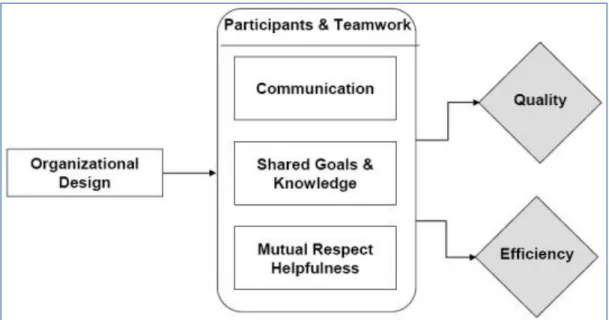
collaboration as an effective approach to treatment interventions (Reeves et al., 2011; Schmitt, 2001). Interactional, organizational and systemic factors form the framework for successful collaboration (D’Amour, Ferrada-Videla, San Martin Rodriguez, & Beulieu, 2005; San Martin Rodruguez, Beulieu, D’Amour & Ferrada-Videla, 2005). Gittels’ (2000) relational coordination theory (RCT) provides a foundation for the conceptualization of this project. This theory has three main underpinnings: shared goals, shared
knowledge, and mutual respect for work. Shared goals motivate team members to act with greater concern for the overall patient care process and outcomes; shared
knowledge informs team members about how their tasks and those of others contribute to the overall patient care process and outcomes (Gittell, Weinberg, Pfefferle & Bishop, 2008). All multidisciplinary team members must have mutual respect for each other’s work in order to further reinforce the inclination to act in line with the goals of the overall patient care process to achieve the healthcare outcome goals.
23
Figure 3.1 Gittels’ Relational Coordination Framework (Gittel et al., 2008).
Several studies use Gittels’ theory as a conceptual basis for investigations into the relational aspects of improved outcomes. Havens, Vasey, Gittell, and Lin (2010) used RCT as a conceptual basis for a study that demonstrated improvement in quality of care through enhanced relational coordination between nurses and other providers. They suggested that RCT is applicable to nursing home settings, using it as evidence for improved outcomes in LTC. However, the outcomes that they measured were related to nursing tasks rather than APRN or physician medical management. In
addition, RCT has been associated with improved outcome performance in relation to a healthcare supply chain. This was independent of external financial motivations (Shah, Goldstein, Unger & Henry, 2008). This finding has implications for the LTC environment because part of the chain of care in LTC facilities includes multiple independent health care providers and organizations. In a study by Bae, Mark and Fried (2010) RCT improved group cohesion and coordination and impacted patient satisfaction. In a
24
second study, relational coordination was associated with higher quality care and improved healthcare system outcomes including length of stay (Gittell, Seidner, & Wimbush, 2008). Therefore, RCT can enhance group cohesion within the LTC
environment and provide conceptual support for the development and implementation of a collaborative practice model that has the potential to improve healthcare outcomes. Operational Definitions
An avoidable hospital admission is defined as a hospitalization for Ambulatory Care Sensitive (ACS) conditions that are preventable if appropriately managed on an ambulatory basis. An ambulatory setting is defined as an outpatient setting. Hospital admission is defined as an admission to an acute hospital bed with an ACS admitting diagnosis. An emergency room (ER) visit is defined as a transfer out of the nursing facility for an acute evaluation and treatment of an ACS condition or signs and
symptoms of an ACS condition. If an ER visit leads to an admission, it will be counted as both an ER visit and hospital admission. A long-term care facility is defined as one which has both skilled nursing facility and intermediate care facility beds. A LTC resident is a person who resides in a LTC facility.
Setting
Hale Kapuna Heritage Home (HKHH) is an 89-bed nursing home located in Lawai on the island of Kaua`i, Hawai`i. The HKHH is one of two facilities on Kaua`i owned by Ohana Pacific Management Group and has both skilled nursing facility (SNF) and intermediate nursing facility (ICF) beds. The HKHH has three separate nursing facility units in three ground level buildings. The facility provides SNF care for short-term rehabilitation through a multidisciplinary approach from a team of physical therapists,
25
occupational therapists, dieticians, speech therapists, social workers, registered nurses (RNs) and certified nurse aides. Clinical Laboratories provide laboratory services three times a week for the HKHH residents. Kaua`i Medical Clinic provides other outpatient services and Wilcox Memorial Hospital provides ancillary services. Wilcox Memorial Hospital also provides emergency care and hospital admissions for acute conditions.
Primary care physicians from Kaua`i Medical Clinic (KMC) and private physicians who practice on Kaua`i provide medical care at HKHH. Both KMC and Wilcox Memorial Hospital are affiliated with Hawai`i Pacific Health (HPH). Dr. Eric Yee is the medical director for the HKHH. Dr. Yee is a board certified family practice physician and geriatrician affiliated with Straub Clinic on Oahu, which is also affiliated with HPH. During the implementation of the project, KMC employed a part-time gerontology NP (GNP) who worked in collaborative practice with Dr. Yee.
Sample
Population and Eligibility Criteria. The projects target population consisted of HKHH residents aged 65 years and older with a participating KMC attending physician. In total, five attending physicians participated in the project. Residents with a physician who was not a KMC member were excluded.
Sample Size
The sample consisted of the entire population of residents who met the inclusion criteria during the project implementation period. As the sample size was less than 30 residents utilizing the entire population will help ensure an accurate level of precision and limit sampling error.
26
Data Collection. A survey was used to evaluate LTC facility staffs’ perceptions of ER visits and hospitalizations of nursing facility residents (Appendix A). The
information was used to ensure that the staffs’ needs are met during subsequent the in-services about the four ACS conditions and collaboration. Baseline data was extracted from the residents’ charts using a data collection tool, and again at 30 days post
intervention to assess any change in program measures. A second survey collected qualitative and quantitative data to evaluate KMC provider collaboration (Appendix B)
and facility staff satisfaction with the implementation of the project (Appendix C). Survey data were then transcribed into an MS Excel spreadsheet for analysis.
Data Analysis
Descriptive statistics were calculated from quantitative data collected via staffs’, facility administrators’ and MDs survey responses. Frequencies and percentages were used for nominal and ordinal data. Outcome measures related to hospitalizations and ER visits were compared to benchmarks. Tables and graphs in the following sections illustrate the results of the data analysis.
Procedure and Program Intervention Plan
The project was a quality improvement project consisting of two phases. Phase 1 consisted of the implementation of the LTC facility education component. The DNP candidate developed and taught the facility curriculum. Phase 2 focused on the implementation of the collaborative care practice model.
Phase 1: Facility Staff In-Services. The in-services covered the ACS conditions and their management, advanced care planning, communication and documentation. The most common ACS diagnoses are pneumonia, urinary tract infections, congestive
27
heart failure, dehydration, and COPD (Grabowski, O’Malley and Barhydt, 2007; Graverholt et al., 2011). However, as COPD is not an ACS diagnosis relevant to this LTC facility it was excluded. Therefore the in-services addressed each of the remaining four ACS diagnoses.
The in-service implementation spanned a three-week period and took place on different days each week to promote staff attendance. There were three modules that also included interdisciplinary communication, documentation, and advanced care planning. A PowerPoint format handout provided staff with an outline and a place to write notes about the topics that were covered (Appendix D).
Table 3.1 In-service Topics
Module Topic
Module 1 Urinary tract infections (UTI) Module 2 Dehydration & Pneumonia Module 3 Congestive heart failure(CHF)
Each module had student learning outcomes related to the topic (Appendix E). A written pre- and post-test (Appendix F) evaluated student learning in addition to an assessment of learning through the group application activities. Gittels’ RCT (2008) three main tenants of mutual respect, shared knowledge and shared goals structured the in-service approach to the interdisciplinary management of the ACS conditions.
Phase 2: Collaborative Care Practice Model. The collaborative care practice model provided an approach to the provision of care that is based on interdisciplinary healthcare team members working in collaboration. The MD, NP and registered nurse (RN) were the primary members. Although the collaborative care practice model
28 1. Early detection of ACS conditions
2. Early and active management of ACS conditions 3. Follow up for residents with identified ACS conditions
The NP was on site in the facility two days a week for approximately 12-16 hours total time. This enabled RNs to verbally report signs and symptoms of ACS conditions promptly to the NP. In addition, the presence of the NP in the facility on a regular basis enabled Gitels' RCT (2008) to be used to promote communication, collaboration and ongoing development of staff knowledge. The NP completed an episodic visit for all identified residents with acute illnesses. This visit included a history of present illness, medication review, food, fluids and weight review, focused exam and development of a treatment plan. For those residents who had an ACS treatment plan initiated by the MD over the phone, the NP completed a chart review, discussed the resident with the facility RN and, if medically necessary, completed a visit within 24 hours to assess the
progress of the resident. The NP identified residents with a history of ACS conditions or previous hospitalization for ACS conditions through a chart review at the initiation of the project. Ongoing communication with the facility RN enabled close monitoring of these residents. The NP and MD communication utilized email, telephone and electronic devices including documentation in the EPIC electronic medical record. In addition, the NP completed required visits on participating residents as often as needed. This
enabled the NP to develop knowledge of the resident and his/her medical problems in addition to closely monitoring and proactively managing ACS conditions.
29
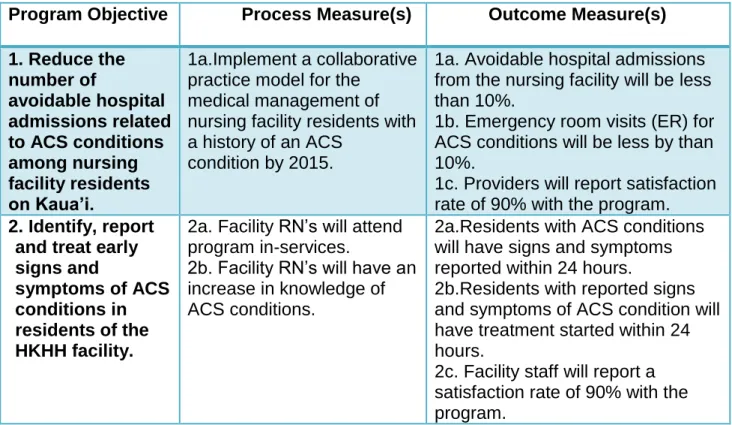
The program evaluation plan included both process and outcome measures related to the two program objectives. Table 3.2 illustrates the measures.
Program Measures
Table 3.2 Program Measures
Program Objective Process Measure(s) Outcome Measure(s) 1. Reduce the number of avoidable hospital admissions related to ACS conditions among nursing facility residents on Kaua’i. 1a.Implement a collaborative practice model for the
medical management of nursing facility residents with a history of an ACS
condition by 2015.
1a. Avoidable hospital admissions from the nursing facility will be less than 10%.
1b. Emergency room visits (ER) for ACS conditions will be less by than 10%.
1c. Providers will report satisfaction rate of 90% with the program. 2. Identify, report
and treat early signs and
symptoms of ACS conditions in residents of the HKHH facility.
2a. Facility RN’s will attend program in-services.
2b. Facility RN’s will have an increase in knowledge of ACS conditions.
2a.Residents with ACS conditions will have signs and symptoms reported within 24 hours.
2b.Residents with reported signs and symptoms of ACS condition will have treatment started within 24 hours.
2c. Facility staff will report a satisfaction rate of 90% with the program.
Program Goals
The overall program goal was to reduce preventable hospital readmissions by providing LTC facility residents with a collaborative practice model of care based on
current evidence. Both process and outcome evaluation will guide future program
improvement, and support program sustainability. Stakeholder Descriptions
The HKHH administrator was supportive of the project as the facility received benefits from residents remaining in the facility for care and improvement in the quality
30
of care. In addition, the DONs’ support was vital to facilitate the staff in-services and sustainability of staff knowledge.
The NP who participated in the project was employed per diem by KMC and paid an hourly rate. The KMC processed the bills for the resident visits and obtained the income generated by the NP visits.
The KMC MDs consisted of approximately six family practice and internal medicine physicians. The KMC attending MDs primary practice site is the KMC ambulatory care clinic. In addition to preventing hospitalizations, improved care coordination, less time spent on episodic visits and care management over the phone was viewed as beneficial to KMC MDs.
31 Figure 3.2 Logic Model
OUTPUTS OUTCOMES
ASSUMPTIONS
There is demand for a collaborative practice model that reduces avoidable hospital admissions
Number of NP’s working in LTC on Kauai will increase
Facilities support development of a collaborative practice model
EXTERNAL FACTORS
Strong facility support
National focus on reducing avoidable hospital admissions Literature supports interventions to reduce avoidable admissions Situation Residents from LTC nursing facilities are being transferred to the ER and admitted to hospital for ACS conditions ACS conditions can be managed in the facility and hospitalization avoided Nurse Practitioner Registered Nurses Activities Develop staff in service curriculum Participation Facility Administration Number of staff participating in collaborative practice model
Implement staff In-services Number of participants in program in-services Facility/provider partnership building Number of providers participating in collaborative practice model
Short Intermediate Long
Staff identifies and reports signs and symptoms of ACS conditions Residents’ signs and symptoms of ACS conditions resolved in the facility Residents receive early medical management of ACS conditions Reduction in ER visits Reduction in hospitalization rates Facility satisfaction with program Provider satisfaction with program Market program Process Evaluation Outcome Evaluation Collaborative practice model development Recruit participants students Develop CC curriculum Physicians INPUTS Maintenance of facility bed census MD-NP
Collaboration improves
32 Evaluation Methodology
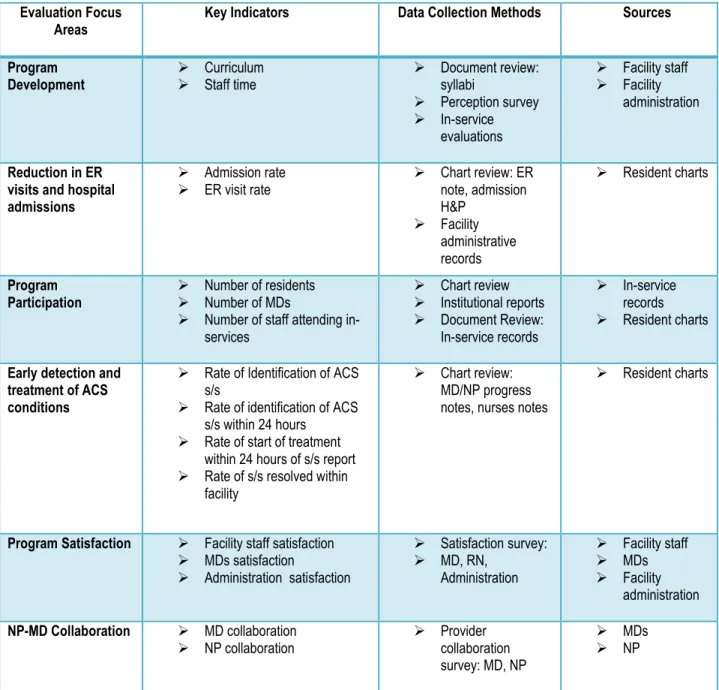
Evaluation includes both direct and indirect methods utilizing quantitative and qualitative data. Table 3.3 illustrates the evaluation focus areas and methods.
Table 3.3 Evaluation Methods Evaluation Focus
Areas Key Indicators Data Collection Methods Sources Program Development Curriculum Staff time Document review: syllabi Perception survey In-service evaluations Facility staff Facility administration Reduction in ER visits and hospital admissions Admission rate ER visit rate Chart review: ER note, admission H&P Facility administrative records Resident charts Program Participation Number of residents Number of MDs
Number of staff attending
in-services Chart review Institutional reports Document Review: In-service records In-service records Resident charts
Early detection and treatment of ACS conditions
Rate of Identification of ACS
s/s
Rate of identification of ACS
s/s within 24 hours
Rate of start of treatment
within 24 hours of s/s report
Rate of s/s resolved within
facility
Chart review:
MD/NP progress notes, nurses notes
Resident charts
Program Satisfaction Facility staff satisfaction
MDs satisfaction Administration satisfaction Satisfaction survey: MD, RN, Administration Facility staff MDs Facility administration NP-MD Collaboration MD collaboration NP collaboration Provider collaboration survey: MD, NP MDs NP
33 Human Subjects Considerations
The project was an evidence-based QI project and is, therefore, exempt from institutional review board approval. Chart review was consistent with usual practices at the LTC facility. The HKHH administration reviewed and approved the project proposal. There were no patient identifiers used when information about baseline and subsequent data were collected and analyzed. Ethical considerations included the protection of patient information according to the agencies’ policies under the Health Insurance Portability and Accountability Act (HIPPA) promulgated by the USDHHS (USDHHS, n.d.). In addition, staff identifiers were not used when data were collected from the LTC facility staff’s participation in the in-service pre- and post-tests.
Project Limitations and Strengths
This project had a number of limitations. It was limited by its small sample size. Differing interdisciplinary definitions of collaboration may have impacted responses of staff about the collaborative team practice. In addition, the project implementation in one nursing facility on Kaua`i does not allow generalizability to any other LTC facilities.
Since this was a QI project, the effects of the small sample size on statistical significance are not relevant. Having a single project site to implement the project made staff participation and data collection simpler. Another strong component of this project was that it was based on current published evidence. Finally, the provision of a
conceptual model that supported both the design and implementation of the project strengthened the project.
34
This evidence-based QI project involved the implementation and evaluation of a collaborative care practice model in a LTC facility on Kaua`i with the primary objective of reducing LTC residents’ avoidable hospital admissions. Collaboration within the
interdisciplinary healthcare team focused on the physician, NP and RN. Phase 1 of the project began with facility staff in-services on four of the five main ACS conditions. Phase 2 focused on implementation of the collaborative care model. Process and outcome evaluation of predetermined measures assessed the projects impact and effectiveness.
35 Chapter 4: Results Objectives
The overall program goal was to reduce avoidable hospital readmissions by providing LTC facility residents services that utilize a collaborative practice model of care based on current evidence. The DNP project had two main objectives:
1. Reduce the number of avoidable hospital admissions related to ACS conditions among nursing facility residents at the HKHH on Kaua`i. 2. Identify report and treat early signs and symptoms of ACS conditions in
residents of the HKHH facility. Description of Sample
The project implementation took place in one LTC nursing facility on the island of Kaua`i from 5/28/2015 to 8/13/2015. Five of six KMC medical doctors (MD) participated in the collaborative care model and their combined resident panels totaled 27-29
residents, comprising approximately 34% of the facility census. A total of 15 facility staff participated in the projects in-services. Facility staff participation in the collaborative care model included the six RNs scheduled on a 12-hour day shift, two resident managers and a DON.
Perception Survey
Facility staff completed a paper version of the perception survey before the start of an in-service which focused on ACS conditions, satisfaction with treatment and
transfer and collaboration. Table 4.1 illustrates the information about the number of staff completing the survey.
36 Table 4.1 Perception Survey Completion
Discipline Number of surveys
completed Completion rate by discipline RN 11 85% LPN 2 100% Facility administrator 1 100% Facility DON 1 100% Attending MD’s 1 16%
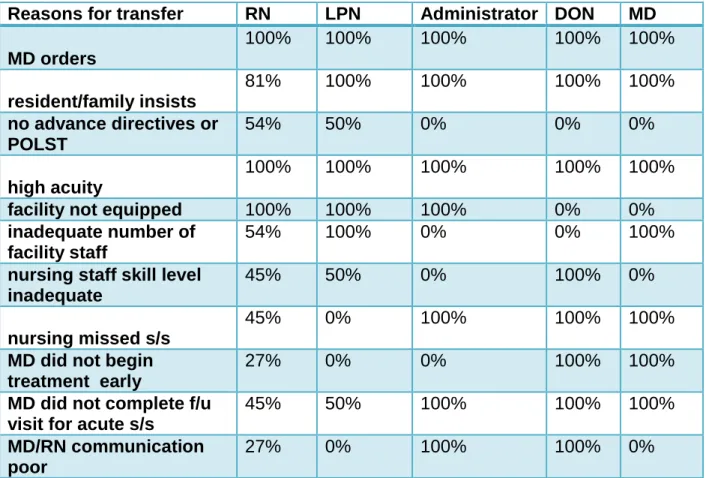
The results of the survey addressing perceptions revealed that overall 90% the facility staffs were satisfied that transfers and admissions to hospital from the HKHH were unavoidable. The main reasons that were identified by the staff for transfer of HKHH residents to the hospital were that the MD ordered the transfer, the HKHH resident and/or the family insisted, and high acuity condition of the resident. Staff from all disciplines who participated in the project identified these reasons. However,
perceptions about the reasons for the transfer of residents to the hospital did differ by discipline for some of the questions. Overall, the RNs and the MDs felt that RN-MD communication was effective. The RNs and LPNs responding to the survey questions felt that the lack of a Provider Orders for Life Saving Treatment (POLST) did impact the decision to transfer; however, MDs did not think this was a significant factor. The MDs felt that difficulty in obtaining an accurate assessment of a resident’s condition often prompted a transfer. The high acuity of the resident was consistently seen as a reason that transfer was unavoidable. Perception survey questions can be found in appendix A and relate to the reasons for transfer in table 4.2. Table 4.2 summarizes the perception survey results.
37
Table 4.2 Summary of Perception Survey Responses
Trend Analysis for Process and Outcome Measures
Data for both process and outcome measures provided a complete analysis of the projects outcomes.
Process Measures
The projects two process measures were: 1) Facility RNs will attend program in-services; and 2) Facility RNs will have an increase in knowledge of ACS conditions. Facility Staff In-services
Participation. The HKHH facility employs 36 licensed staff; 30 RNs and six LPNs. Staff attendance at the project’s in-services required leaving the floor for a total Reasons for transfer RN LPN Administrator DON MD MD orders 100% 100% 100% 100% 100% resident/family insists 81% 100% 100% 100% 100% no advance directives or POLST 54% 50% 0% 0% 0% high acuity 100% 100% 100% 100% 100%
facility not equipped 100% 100% 100% 0% 0%
inadequate number of facility staff
54% 100% 0% 0% 100%
nursing staff skill level inadequate
45% 50% 0% 100% 0%
nursing missed s/s
45% 0% 100% 100% 100%
MD did not begin treatment early
27% 0% 0% 100% 100%
MD did not complete f/u visit for acute s/s
45% 50% 100% 100% 100%
MD/RN communication poor
38
of three hours per staff member. Due to the nature of the LTC facility work environment, it was difficult for all of the licensed staff to leave the floor on some days when the in-service sessions were held. Table 4.3 illustrates staff attendance at the in-in-services.
Table 4.3 In-Service Staff Attendance
RN LPN Total licensed staff
Module 1 13 2 15
Module 2 8 1 9
Module 3 9 1 10
Mdule1,2,3 4 1 5
Pre- and post-tests. The pre-test is a formative evaluation of current knowledge and serves as a basis for comparison for the post-test results. The pre- and post-test survey questions were aligned with the student learning outcomes for the modules. Both tests used a variety of questions including multiple choice, and short answer options. The staff completed both the pre- and post-tests under similar conditions. The staff completed pre-tests at the beginning of the service and post-tests at the end of the in-service. As figure 4.1 demonstrates the staff’s knowledge increased in all areas.
However, by module 3 the only area where staff knowledge increased was
transfer/complications, which suggests application of knowledge gained in previous modules.
39 Figure 4.1 Results of Pre- and Post-test
Program Implementation and Participation. The program was implemented during the summer of 2015 and high participation by staff met the expected outcomes for the project. All RNs who were scheduled to work during the projects implementation period participated both phase 1 and 2 of the project, in addition to five physicians. Outcome Measures
Early Detection and Treatment of ACS Conditions. During the project
implementation period 13% (4/29) LTC residents presented with ACS conditions. All of the HKHH residents who had signs and symptoms of ACS conditions had these
reported to the NP or MD within 24 hours of onset. Among those residents with ACS conditions the most common diagnosis (75%; 3/4) was a UTI. In addition, treatment was initiated in the facility within 24 hours for three of the four (75%) residents with an ACS
0 2 4 6 8 10 12 14 pre test post test pre test post test pre test post test Module 1 Module 2 Module 3
co rr e ct re sp o n ses
signs and symptoms
transfer/complications
diagnostic & treatment options
assessment & treatment
interdisciplinary communication
40
condition. Only one resident of those with an ACS condition did not have treatment initiated prior to an ER visit and subsequent hospitalization.
Reduction in Emergency Room Visits and Avoidable Hospital Admissions. ER visits were initiated for 17% (5/29) of the residents; however, three of the five (60%) were for non ACS conditions. Table 4.4 summarizes the reasons for transfer of
residents to the ER and subsequent hospitalization.
Table 4.4 Summary of Reasons for ER Visits and Hospitalizations ER diagnosis Admitting diagnosis Discharge disposition Sepsis r/t foot wound Sepsis r/t foot wound Died LOC changes LOC changes
Sepsis cause unknown
Died
UTI UTI Returned to facility
Sepsis r/t UTI Sepsis r/t UTI Died
Fx femur Fx femur Returned to facility
One of the residents who was transferred to the ER and was admitted to the hospital for the ACS condition of UTI had treatment for this condition initiated in the facility without improvement. The other resident who was transferred and admitted had developed signs and symptoms of sepsis prior to transfer, but there were no signs and symptoms that might have indicated an ACS condition was developing prior to the sepsis signs and symptoms. Although the overall numbers are small, ER visits and hospital admissions were prevented for 50% of the residents who developed an ACS condition after implementation of the projects’ in-services.
41
The HKHH facility staff completed a paper version of a satisfaction survey at the completion of the project. As noted in table 4.5, there was a high percentage of staff completing the survey.
Table 4.5 Facility Staff Satisfaction Survey Completion Results
Discipline Number of surveys
completed Completion rate by discipline RN 6 83% Resident managers 2 100% Facility DON 1 100%
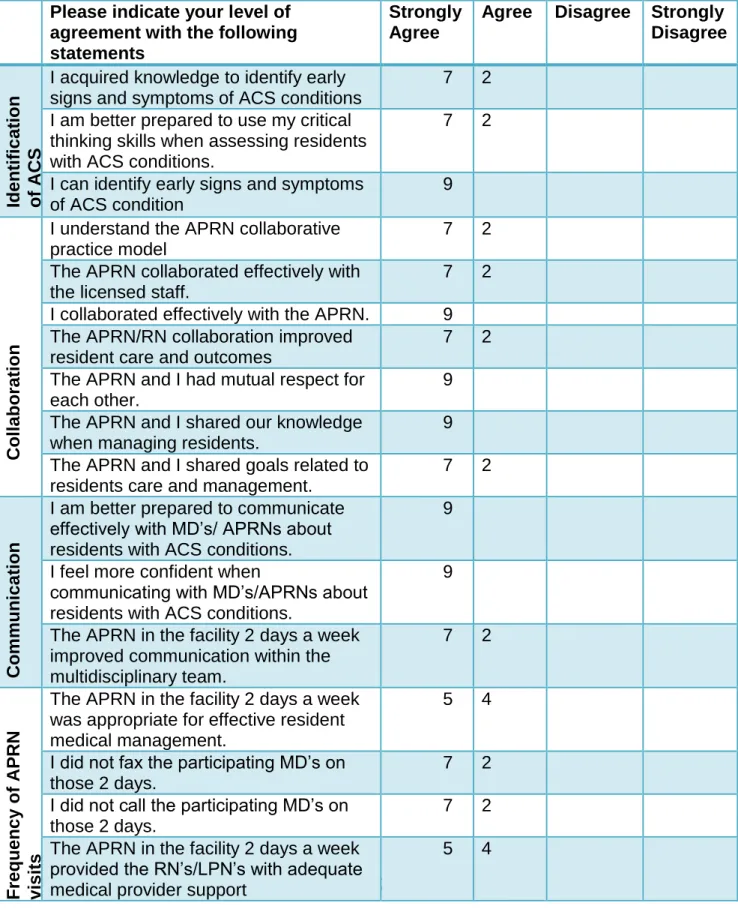
The satisfaction survey results are presented in table 4.6 and reveal that 100% of the facility staffs were satisfied with the collaborative care practice model. Overall, the RNs were satisfied with the communication and collaboration with the NP using this model. In addition, the RNs indicated that they felt more confident in identifying ACS conditions.