East Tennessee State University
Digital Commons @ East
Tennessee State University
Electronic Theses and Dissertations Student Works
5-2015
Radiography Faculty Perceptions of the
Effectiveness of Asynchronous Online Courses
Shirley J. CherryEast Tennessee State University
Follow this and additional works at:https://dc.etsu.edu/etd
Part of theEducational Leadership Commons, and theOther Medicine and Health Sciences Commons
This Dissertation - Open Access is brought to you for free and open access by the Student Works at Digital Commons @ East Tennessee State University. It has been accepted for inclusion in Electronic Theses and Dissertations by an authorized administrator of Digital Commons @ East Tennessee State University. For more information, please [email protected].
Recommended Citation
Cherry, Shirley J., "Radiography Faculty Perceptions of the Effectiveness of Asynchronous Online Courses" (2015).Electronic Theses and Dissertations.Paper 2501. https://dc.etsu.edu/etd/2501
Radiography Faculty Perceptions of the Effectiveness of Asynchronous Online Courses _____________________
A dissertation presented to
the faculty of the Department of Educational Leadership and Policy Analysis East Tennessee State University
In partial fulfillment of the requirements for the degree Doctor of Education in Educational Leadership
_____________________
by
Shirley J. Cherry May 2015
_____________________
Dr. Bethany Flora, Chair Dr. Harold Lee Daniels
Dr. Donald Good Dr. Jasmine Renner
Keywords: Asynchronous Online Courses, Asynchronous Learning, Distance Education, Distance Learning, Faculty Perceptions, Faculty Satisfaction, Online Education, Technology
ABSTRACT
Radiography Faculty Perceptions of the Effectiveness of Asynchronous Online Courses by
Shirley J. Cherry
The purpose of this study was to assess radiography faculty perceptions of the effectiveness of asynchronous online courses. Learning effectiveness in a web-based virtual learning
environment (VLE) was the conceptual framework for this project (Piccoli, Ahmad, & Ives, 2001). For the purposes of this study, learning effectiveness was defined as the quality of learning being comparable between online and traditional courses (Moore, 2011).
Ten research questions were used to guide this study, and statistical tests were conducted to evaluate 17 null hypotheses. The statistical tests included use of one-way analysis of variance (ANOVA), Pearson correlations, and single-sample t-tests. Ten of the 17 null hypotheses were rejected.
Research findings indicate that the effectiveness of online courses is not significantly affected by faculty position, type of institution, faculty age, or years of teaching experience. Faculty
perceptions of the effectiveness of online courses increase with years teaching online courses, number of online courses taught in the past 5 years, and perceived competence with use of technology.
Faculty satisfaction with interaction in online courses increases as the years teaching online courses increased. On the other hand, the number of years teaching online courses was not related to faculty satisfaction with teaching online courses or faculty satisfaction with
institutional support. Online technology acceptance had a positive relationship with perceived ease of use and a strong positive relationship with perceived usefulness of online technology. Additionally, use of technology-enhanced learning methods had a strong positive relationship with technological self-efficacy.
Participants reported satisfaction with teaching online courses and institutional support but had nearly neutral responses regarding interactions in online courses. Overall, radiography faculty members perceived that online courses were effective to a significant extent.
Copyright 2015 by Shirley J. Cherry All Rights Reserved
DEDICATION
I dedicate my dissertation to my family. I owe a special gratitude to my dad, the late James Robert Varner Cherry and my mother, Louise Ann Cherry Muzuruk as well as my grandfather, the late James Woodruff Cherry. Throughout my childhood, my parents and grandfather instilled the values of integrity, dedication, commitment, motivation, and resilience in me. They encouraged me to pursue additional education and wanted me to find happiness in my work. I wish that my father and grandfather were still alive to see me graduate; however, I know that they have been watching and encouraging me from heaven for more than 20 years. I feel blessed that my Mom is still with me and forever grateful that she will see me graduate.
I also dedicate my dissertation to my sisters, brothers, nieces, and nephews. They have always inspired and supported me. I am grateful to my sisters, Cynthia Jones and Catherine Phillips, for believing in me and for their endless support during my difficult two year divorce. I love you both dearly. I dedicate my dissertation to my niece and best friend, Annette Phillips who passed away 31 years ago. You were a vivacious individual and had a huge impact on my life. I have missed you dearly Annette, but I will see you again in heaven.
I also dedicate my dissertation to Bill Pearce, my significant other and best friend. He provided me with love and encouragement while I worked on my dissertation. Thank you for your support, for believing in me, and for being my rock. Finally, I dedicate my dissertation to my dog and child, Sassy. She patiently sat by my side and on my lap while I typed and worked hundreds of late hours. Thank you my little Sassy for your patience and unconditional love. I love you too.
ACKNOWLEDGEMENTS
I never would have been able to complete my dissertation with the guidance of my committee chair and members. I express my sincere gratitude to my chair, Dr. Bethany Flora, for her patience, encouragement, and guidance. Thank you for helping me grow as a researcher and writer. You have been a wonderful chair, and I appreciate everything you have done. I also extend my appreciation to Dr. Don Good for guiding my research and for providing extensive feedback. You are a wonderful mentor and a dedicated professor. I am grateful to Dr. Jasmine Renner for her encouragement and insightful comments. Thank you for being a wonderful professor and for sharing your knowledge and passion for educational law. Thank you Dr. Lee Daniels for participating on my committee over the final months of my dissertation. Thank you for your insight and helpful feedback. Finally, I am forever grateful for dissertation boot camp. Thank you Emily Redd for organizing and scheduling dissertation boot camp sessions. Boot camp offered a separate location away from distractions to write. Thank you Emily Redd, Dr. John Taylor, Dr. Don Good, Dr. Joseph Jones, and Dr. Marie Jones for assisting me during boot camp sessions.
TABLE OF CONTENTS Page ABSTRACT ...2 DEDICATION ...5 ACKNOWLEDGEMENTS ...6 LIST OF TABLES ...11 LIST OF FIGURES ...13 Chapter 1. INTRODUCTION ...14
Statement of the Problem ...19
Research Questions ...20
Significance of the Study ...22
Definitions of Terms ...22
Limitations and Delimitations ...24
Overview of Study ...24
2. LITERATURE REVIEW ...26
Virtual Learning Environment ...26
The Human Dimension: Faculty ...28
The Human Dimension: Students ...31
The Design Dimension: Technology ...35
Online Radiography Education ...50
Chapter Summary ...55
3. RESEARCH METHODOLOGY...57
Research Questions and Null Hypotheses ...58
Instrumentation ...60
Sample...66
Institutional Review Board ...67
Data Collection ...67 Data Analysis ...68 Chapter Summary ...70 4. FINDINGS ...71 Demographics ...72 Reliability ...74
Analysis of Research Questions...75
Research Question #1a ...75
Research Question #1b ...77
Research Question #2a ...79
Research Question #2b ...80
Research Question #2c ...81
Research Question #2d ...82
Research Question #2e ...82
Research Question #3a ...83
Research Question #3c ...85 Research Question #4 ...85 Research Question #5 ...86 Research Question #6 ...87 Research Question #7 ...88 Research Question #8 ...92 Research Question #9 ...95 Research Question #10 ...98 Chapter Summary ...101
5. SUMMARY, CONCLUSIONS, AND RECOMMENDATIONS ...102
Summary ...102
Discussion and Summary of Findings ...103
Recommendations for Policy ...111
Recommendations for Practice ...112
Recommendations for Further Research ...113
Conclusion ...114
REFERENCES ...116
APPENDICES ...122
Appendix A: Permission to Use and Modify the Online Faculty Satisfaction Survey ...122
Appendix B: Permission to Use and Modify the Technology Acceptance Survey ...124
Appendix C: Permission to Use and Modify the Factors Affecting Faculty Use of Technology Survey ...125
Appendix E: IRB Exempt Approval ...129
Appendix F: E-mail Invitation to Survey...131
Appendix G: Introduction to Electronic Survey ...132
Appendix H: Radiography Faculty Perceptions of Online Education Survey ...133
Appendix I: Research Questions and Corresponding Statistical Procedures...138
LIST OF TABLES
Table Page
1. Development of Radiography Faculty Perceptions of Online Education Survey Instrument ...63 2. Respondent Demographic Information by Faculty Position and Type of Institution ...73 3. Respondent Demographic Information by Faculty Position and Other Variables ...74 4. Reliability Scores ...75 5. Means and Standard Deviations to Evaluate the Relationship Between Radiography
Faculty Perceptions and Faculty Position ...76 6. Means and Standard Deviations to Evaluate the Relationship Between Radiography
Faculty Perceptions and Type of Institution ...78 7. Pearson Correlations Between Radiography Faculty Perceptions and Variables ...80 8. Pearson Correlations Between Faculty Satisfaction and Number of Years Teaching
Online Courses ...84 9. Pearson Correlations Between Variables and Online Technology Acceptance ...86 10. Pearson Correlation Between Self-Efficacy and Use of Technology-Enhanced Learning Methods...88 11. Means and Standard Deviations for Selected Aspects of Faculty Satisfaction and
Perceptions with Online Courses ...89 12. Descriptive Statistics for Faculty Satisfaction with Teaching Online Courses ...91
13. Descriptive Statistics for Faculty Satisfaction with Interaction in Online Courses ...94 14. Descriptive Statistics for Faculty Satisfaction with Institutional Support ...97 15. Descriptive Statistics for Radiography Faculty Perceptions of the Effectiveness of
LIST OF FIGURES
Figure Page
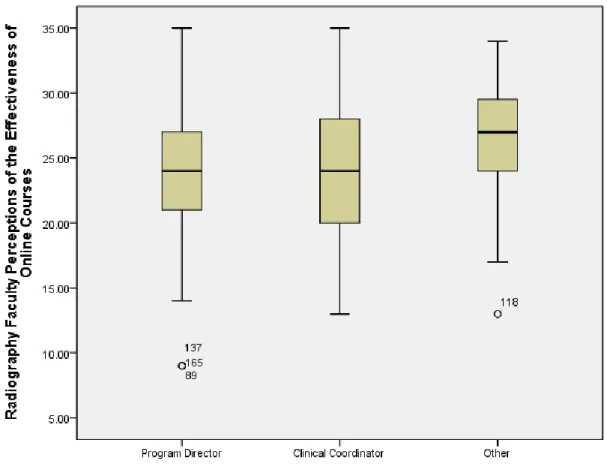
1. Means and Standard Deviations to Evaluate the Relationship Between Radiography
Faculty Perceptions and Faculty Position ...77
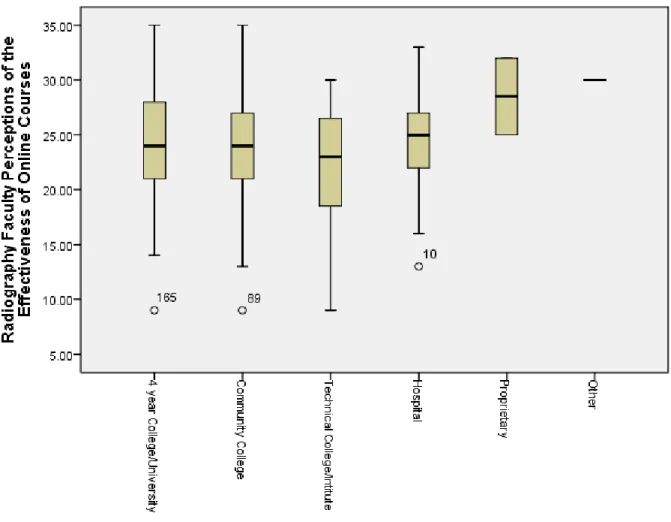
2. Means and Standard Deviations to Evaluate the Relationship Between Radiography Faculty Perceptions and Type of Institution ...79
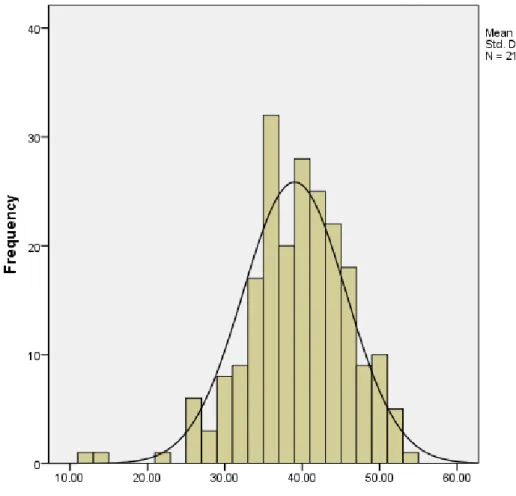
3. Distribution of Faculty Satisfaction with Teaching Online Courses ...90
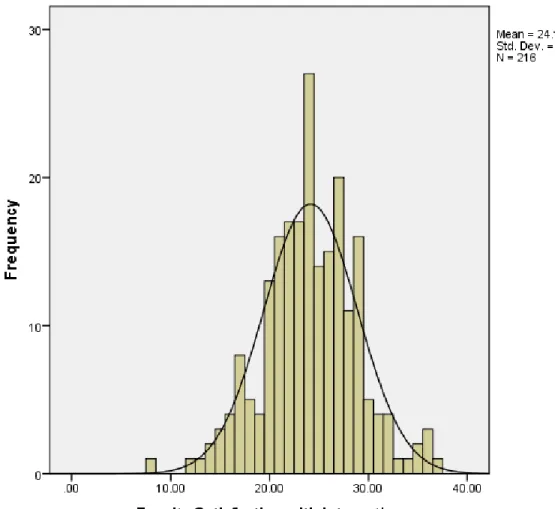
4. Distribution of Faculty Satisfaction with Interactions in Online Courses ...93
5. Distribution of Faculty Satisfaction with Institutional Support in Online Courses ...96
CHAPTER 1 INTRODUCTION
The growth and expansion of online learning is occurring across the continuum of educational institutions beginning with grade schools and ending with graduate schools
(Ferguson & DeFelice, 2010). Specifically, the number of students enrolled in at least one online course in U.S. institutions of higher education increased from 1.6 million in fall 2002 to 7.1 million in fall 2012 (Allen & Seaman, 2014). Within the last year of that study, online enrollments increased by 411,000 (Allen & Seaman, 2014).
Online learning is an integral and component of higher education. The number of senior academic officers in the U.S. report that online education is critical to their long-term strategy, increasing from 48.8% in 2002 to 66% in 2013 (Allen & Seaman, 2014). This growth of online education is increasing more rapidly within higher education institutions than inclusion of the educational methodology in strategic plans (Allen & Seaman, 2014).
Only 30.2% of academic leaders in 2012 indicate that faculty at their institutions consider online education as a valuable and legitimate learning option (Allen & Seaman, 2013). In
contrast with the continued growth in online education, academic leaders’ perception that faculty accept online education decreased from 32.9% in 2006. In 2007, 61.1% of academic leaders expressed concern that the lack of faculty acceptance of online courses represents a barrier to adoption of this mode of educational delivery. That number rose to 66.8% in 2012 (Allen & Seaman, 2013).
Academic leaders have mixed perceptions when comparing learning outcomes in online courses to those offered in the traditional classroom. The percentage of leaders reporting that
learning outcomes in online courses are inferior increased from 23% in 2012 to 26% in 2013 (Allen & Seaman, 2014). Nevertheless, academic leaders at large institutions of higher education offer the majority of online courses and have the highest opinion of the educational quality of the classes. The implications for higher education policy include that the online education delivery method must be evaluated as a viable learning option in the higher education environment (Allen & Seaman, 2014).
The relevance and importance of online learning raised national attention at the University of Virginia in June 2012 when the governing board forced President Sullivan to resign (Association of American University Professors (AAUP), 2013). The board of visitors accused the President of not establishing a strategic plan to address challenges facing the University within the next decade. The challenges included changes in both federal and state funding to the university, increased faculty workload with corresponding decreases in faculty compensation, and inclusion of online education. The board of visitors reinstated President Sullivan 2 weeks later and charged a strategic planning committee with developing a strategic vision and direction to address the issues facing the university (AAUP, 2013).
Several institutions of higher education define an online course as having 80% or more of the content delivered online, and generally, there are no face-to-face meetings (Allen & Seaman, 2014; Bejerano, 2008; Wasilik & Bolliger, 2009). Students in online courses are educated in a common virtual environment but a different physical space (Martino & Odle, 2008). Faculty use of active learning strategies and technology are used to shift students from passive to lifelong learners. Because the virtual classroom has lower levels of direct instructor or classmate presence, students become self-directed learners who benefit from time management skills. Indeed, instructors are charged with engaging students and designing the course with pedagogy
conducive to the online environment, and students are expected to be motivated and engrossed in the learning process (Martino & Odle, 2008).
The web-based virtual learning environment (VLE) effectiveness model is the conceptual framework for this study (Piccoli et al., 2001). The VLE is the learning community for faculty and students in an online course and has two dimensions: (1) the human dimension [faculty and students] and (2) the design dimension [technology] (Piccoli et al., 2001). Therefore, faculty, students, and technology are three elements that can be used determine online learning
effectiveness. Because the purpose of the study is to assess radiography faculty perceptions of the effectiveness of asynchronous online courses, faculty, students, and technology are the variables used to operationalize the construct of online learning effectiveness.
Faculty are the first to consider with regard to learning effectiveness in the online environment. When teaching in the online environment, faculty shift from being at the front of the classroom to being facilitators, instructional designers, and guides on the side (Jones, 2006; Mashhadi & Kargozari, 2011). Faculty are facilitators of knowledge who design courses to provide effective and engaging learning experiences for students. Faculty teaching online courses express satisfaction with flexible schedules (Hodges, Way, & Shepherd, 2013; Shea, 2007; Wasilik & Bolliger, 2009), greater access to materials, increased student involvement (Wasilik & Bolliger, 2009), increased student access (Shea, 2007; Wasilik & Bolliger, 2009), and learning new technology (Shea, 2007). On the other hand, faculty dissatisfaction is expressed regarding technological problems, lack of personal contact with students (Hodges et al., 2013; Wasilik & Bolliger, 2009), increased workload (Bender, Wood, & Vredevoogd, 2004; Shea, 2007; Taft, Perkowski, & Martin, 2011), inadequate compensation for increased workload (Shea, 2007), and diminished student involvement (Wasilik & Bolliger, 2009). Overall,
increased workload in teaching online courses is generally the greatest area of concern for faculty (Barbera & Linder-VanBerschot, 2011; Bejerano, 2008; Bender et al., 2004; Britt, 2006;
Hodges et al., 2013; Shea, 2007; Taft et al., 2011; Wasilik & Bolliger, 2009). Gender, age, employment status, type of institution (community college or university), and computer skills influence faculty motivation in teaching online courses (Shea, 2007). Instructor learning preferences do not impact faculty satisfaction with online learning, but faculty who are auditory learners have the lowest satisfaction with teaching online (McLawhon & Cutright, 2011).
Students are the second component to consider with regard to learning effectiveness in the online environment. In the virtual environment, students become active, self-directed learners who experience increased interaction with classmates as well as with the instructor (Jones, 2006; Mashhadi & Kargozari, 2011). Variables that predict student satisfaction with online education and learning effectiveness include student interest and attitude in performing learning tasks, perceived instructional quality (Artino, 2007), self-efficacy (Artino, 2007; Barbera & Linder-VanBerschot, 2011), and workload. Nevertheless, workload is not a concern among students if course expectations are addressed during course enrollment (Barbera & Linder-VanBerschot, 2011). The factors that influence student perceptions of learning effectiveness are: Grade Point Average (GPA) and American College Testing (ACT) scores (Altmyer & Yang, 2010), attrition (Willging & Johnson, 2009), appropriate interactions among students (Chao, Hwu, & Chang, 2011), multiple activities used in online courses, instructor presence, and meaningful interaction between students and the instructor (Dixson, 2010). Furthermore, employment status, distance from home, prior experience with taking an online course, and current enrollment in an online course impact student enrollment in additional online courses (Changchit & Klaus, 2008)
Technology is the third component related to learning effectiveness in the online environment. Technologies and media can support and enhance instruction, learning, increase student satisfaction, decrease attrition, and lead to a student-centered learning environment (Revere & Kovach, 2011). Some studies found that effective use of technology increases student engagement (Donathan & Hanks, 2010; Khan, 2009; Revere & Kovach, 2011), improves
interaction between students and faculty (Khan, 2009), and enhances experiences and
collaboration among students (Boulos, Maramba, & Wheeler, 2006). Implications for higher education policy include that faculty training improves Internet self-efficacy and increases use of technology. Appropriate investments in technical infrastructure and support should be made to increase use of technology (Buchanan, Sainter, & Saunders, 2013).
Online course effectiveness is the fourth component. Faculty-related factors critical to online learning effectiveness are instructional design elements and instructor presence (Lockee, Burton, & Potter, 2010; Sheridan & Kelly, 2010). Assessment of online instruction at
institutions of higher education enable faculty to maintain educational quality standards (Parietti & Turi, 2011). Furthermore, faculty use a complement of formative and summative evaluation strategies to determine effectiveness of online courses (Lockee, Moore, & Burton, 2002).
Student-related factors critical to online learning effectiveness include active learning, student-student interactions, and student-instructor interactions (Ferguson & DeFelice, 2010; Hu & Gramling, 2009; Kirtman, 2009; Pate, Smaldino, Mayall, & Luetkehans, 2009).
Self-monitoring, setting goals, effective time management skills, and seeking help of classmates or the instructor also improve online learning (Hu & Gramling, 2009). Finally, instructor-generated media (Mandernach, 2009), interactive media, simulations, and tools (Means, Toyama, Murphy, Bakia, & Jones, 2010) are technology-related factors critical to online learning effectiveness. In
summary, three elements that determine online learning effectiveness in the VLE are faculty, students, and technology.
Effectiveness of online education in the radiologic sciences is not a topic that has been evaluated frequently. The research projects in this profession explored faculty and student attitudes regarding online education (Britt, 2006), compared effectiveness of two online radiologic science courses (Johnston, 2008), considered the prominence of online education in the radiologic sciences, and explored course management systems, course design, and
technology used in the online course environment (Martino & Odle, 2008). Findings from these prior studies are not applicable to all radiologic science programs in the U.S. because there is a limitation of radiography education studies conducted nationally and that study had a size of 102. Only 26 of the respondents in the sample completed the study and taught at program that offered online courses (Kowalczyk & Copley, 2013). Thus, there is a sampling gap in the existing literature related to the effectiveness of online education in the radiologic sciences. This study addresses the sampling gap by examining the perceptions of radiography educators regarding the effectiveness of online courses using a national sample.
Statement of the Problem
Academic leaders at higher education institutions who rated online learning outcomes as the same or superior to those in the classroom environment increased from 57% in 2003 to 77% in 2012; however, the percentage decreased slightly to 74 in 2013 (Allen & Seaman, 2014). Clearly, there remains a minority, but still a strong number of academic leaders who are not confident in student learning outcomes from online courses taught in higher education.
There is a preponderance of research that has been conducted on the effectiveness of online education in various disciplines; however, the vast majority of these studies were conducted locally. Moreover, the literature is rich with online learning experiences and best practices, but a limited number of research projects were conducted on the effectiveness of online education in the radiologic sciences. This establishes the need for a national survey of radiography faculty perceptions of the effectiveness of asynchronous online courses.
Research Questions
The research questions below guided the line of inquiry into faculty perceptions of the effectiveness of asynchronous online courses:
1. Is there a significant difference between radiography faculty perceptions of the
effectiveness of online courses as compared by faculty position and type of institution? a. Is there a significant difference between radiography faculty perceptions of the
effectiveness of online courses as compared by faculty position?
b. Is there a significant difference between radiography faculty perceptions of the effectiveness of online courses as compared by type of institution?
2. Is there a significant relationship between radiography faculty perceptions of the effectiveness of online courses and age, years of teaching experience, years teaching online courses, number of online courses taught in the past 5 years, and perceived competence with use of technology?
a. Is there a significant relationship between radiography faculty perceptions of the effectiveness of online courses and age?
b. Is there a significant relationship between radiography faculty perceptions of the effectiveness of online courses and years of teaching experience?
c. Is there a significant relationship between radiography faculty perceptions of the effectiveness of online courses and years teaching online courses?
d. Is there a significant relationship between radiography faculty perceptions of the effectiveness of online courses and number of online courses taught in the past 5 years?
e. Is there a significant relationship between radiography faculty perceptions of the effectiveness of online courses and perceived competence with use of technology? 3. Is there a significant relationship between the number of years teaching online courses
and selected aspects of faculty satisfaction with online courses?
a. Is there a significant relationship between the number of years teaching online courses and faculty satisfaction with teaching online courses?
b. Is there a significant relationship between the number of years teaching online courses and faculty satisfaction with interaction in online courses?
c. Is there a significant relationship between the number of years teaching online courses and faculty satisfaction with institutional support while teaching online courses?
4. Is there a significant relationship between perceived ease of use of technology and online technology acceptance?
5. Is there a significant relationship between perceived usefulness of technology and online technology acceptance?
6. Is there a significant relationship between technological self-efficacy and use of technology-enhanced learning methods?
7. Are radiography faculty satisfied to a significant degree with teaching online courses? 8. Are radiography faculty satisfied to a significant degree with interaction in online
courses?
9. Are radiography faculty satisfied to a significant degree with institutional support while teaching online courses?
10.Do radiography faculty perceive to a significant degree that online courses are effective?
Significance of the Study
The study was used to assess radiography faculty perceptions of the effectiveness of asynchronous online courses and contributes to the current body of knowledge. Effectiveness of teaching and learning in online courses was examined in this study and serves to benefit both faculty and students. Faculty, students, and technology were the constructs used to explore online effectiveness in this research project.
This study employed a national sample of faculty from 615 radiography programs located throughout the U.S. The research findings inform online education in the field of radiography and may be transferable to other disciplinary areas within online higher education.
Definitions of Terms
Specialized terms that are specific to asynchronous online education in higher education are included in the study. The following terms are defined for the purpose of clarity and
Asynchronous learning - Exchange of information and ideas that occur at different times and location (Bejerano, 2008).
Course Management System(CMS) - System (e.g., Blackboard, WebCT, D2L, Moodle, etc.) that
provides a virtual learning environment for online courses (Kowalczyk & Copley, 2013).
Faculty satisfaction - The degree to which faculty enjoy teaching online courses. Faculty members continually improve their pedagogical methods in the online environment, benefit from interacting with students, and receive institutional support while teaching online courses (Wasilik & Bolliger, 2009).
Learning effectiveness – quality of learning as comparable between online and traditional courses (Moore, 2011).
Nontraditional students - Undergraduate students who are 25 or older and/or have
responsibilities that affect their lives. These individuals tend to receive no assistance or aid from a parent or guardian (Altmyer & Yang, 2010).
Online learning - Educational delivery method that is independent of location (Bejerano, 2008). Online learning is a form of distance education.
Synchronous learning - Exchange of information and ideas that occur in real time (Bejerano, 2008)
Technology-enhanced learning - Process by which technology is used within teaching practices to support the learning processes (Buchanan et al., 2013).
Traditional classroom instruction - Face-to-face instruction with a teacher and a group of students (Kirtman, 2009).
Traditional students - Undergraduate students who are 19 to 24 years of age. These students tend to receive assistance from a parent or guardian (Altmyer & Yang, 2010).
Limitations and Delimitations
One limitation of the study is the use of self-reported data to capture the perceptions of radiography faculty. Despite this limitation, self-reported data is frequently used in social science research, particularly in the field of educational evaluation and effectiveness (Simon & Goes, 2013). Another limitation is that the method of data collection limited the sample size. Therefore, the results may not be generalizable to the population of online radiography educators (Simon & Goes, 2013).
The purpose and research questions delimited the study to online radiography educators (Simon & Goes, 2013). The criteria limited the sample size by excluding a large number of radiography educators. Radiography program directors and clinical coordinators; didactic instructors were not included in the sample. Thus, caution should be made when generalizing the findings of this research to radiography programs that include online components taught by didactic faculty.
Overview of Study
The purpose of this study is to assess radiography faculty perceptions of the effectiveness of asynchronous online courses. The study examines the effectiveness of teaching and learning that occurs in online courses; findings benefit both faculty and students. This dissertation is organized into five distinct chapters. The introduction, statement of the problem, research questions, significance of the study, definition of terms, limitations, and delimitations of the study are included in Chapter one. Chapter two contains a review of the literature. Chapter three explains the methodology used in the study. Findings and data analyses are presented in Chapter
four. Chapter five provides the summary, findings, conclusions, and recommendations for this study.
CHAPTER 2 LITERATURE REVIEW
Learning effectiveness in a web-based virtual learning environment (VLE) is the
conceptual framework for this research project. Ideally, a VLE is the setting for an online course that involves interaction within a learning community. Furthermore, the learning environment has a wide range of resources that increase learning effectiveness (Piccoli et al., 2001). The appropriate design of courses in the VLE facilitates learning, engages students, and enhances social presence (Dunlap & Lowenthal, 2009). Specific elements of the VLE that include the faculty perspective, student perspective, technology, and effectiveness were examined in the research project.
Virtual Learning Environment
The VLE has human and design dimensions that lead to effectiveness in online courses. The human dimension is composed of faculty and students; the design dimension incorporates the learning model, technology, learner control, content, and interaction. Effectiveness consists of performance, self-efficacy, and satisfaction.
Faculty serve as managers, technical advisors, facilitators, social directors, and educators in the online environment (Mayes, Ku, Akarasriworn, Luebeck, & Korkmaz, 2011). The
instructor must facilitate a collaborative and student-centered environment as well as engage online learners (Mayes et al., 2011). Attitudinal measures of effective learning include the instructor’s positive attitude toward technology, interaction with students, and control of technology (Piccoli et al., 2001). Instructor self-efficacy is another contributing factor that
enhances learning in the VLE. The instructor must be available to students and willing to devote time and energy to enhance the learning experience. An instructor’s attitude, self-efficacy, and availability enhance students’ reactions (Piccoli et al., 2001).
Students are the primary focus in the educational environment, and the VLE enables students to assume control and responsibility for learning (Piccoli et al., 2011). Characteristics of successful online learners include self-motivation and self-direction. Furthermore, online students must accept responsibility for learning and actively participate in the virtual
environment (Mayes et al., 2011). Students who have work or family-related responsibilities eagerly participate in the online environment because of its flexibility (Piccoli et al., 2001). Comfort with technology and a positive attitude toward use of technological tools lead to student success. Prior experience in completing online courses is an element related to success in the VLE. As students gain practical experience, they develop learning strategies that reduce anxiety and enhance performance (Piccoli et al., 2001).
The design dimension is the second construct that contributes to learning effectiveness in the VLE (Piccoli et al., 2001). An effective online course includes the appropriate technology, addresses the social community, focuses on pedagogy with a constructivist approach,
incorporates frequent online assessment with clear expectations, and includes student-centered course content. Therefore, strategies to enhance online learning include quality instructional technology, an online community built by collaborative activities, and educational content (Mayes et al., 2011).
The human and design dimensions lead to learning effectiveness (Piccoli et al., 2001). Faculty members measure performance, self-efficacy, and student satisfaction to evaluate learning effectiveness in the VLE. Student performance in an online course is measured by
achievement on exams and assignments. Self-efficacy can be evaluated through the assessment of information technology skills. Finally, satisfaction can be evaluated with the factors of student evaluation of the learning experience, attrition, and anxiety levels (Piccoli et al., 2001).
The Human Dimension: Faculty
Faculty are the facilitators of knowledge in the online environment. Several
researchers explored the faculty perspective related to teaching courses in the online environment and discovered consistent findings. This section includes a review of literature related to the human dimension of VLE: faculty.
Wasilik and Bolliger (2009) conducted a study of faculty satisfaction with online
education at a public research university in the United States. They developed and administered the Online Faculty Satisfaction Survey (OFSS) with questions related to students, teaching, and institutions. Participants included 102 online educators. Faculty expressed moderate satisfaction with teaching online. After collecting data, the researchers divided the faculty members into two groups based on whether they were more or less satisfied with online teaching to conduct further data analysis. Discriminant analysis was conducted to evaluate levels of satisfaction between the two groups of faculty based on teaching, student, and institutional-related variables. Faculty in the more satisfied group disclosed that they had greater incidences of faculty-student interaction in their online courses (Wasilik & Bolliger, 2009).
Faculty described technological problems, lack of personal contact with students, and diminished student involvement as major frustrations. Moreover, a few educators reported dissatisfaction with student involvement. Faculty expressed satisfaction with flexible schedules, greater access to materials, and increased access for students who were unable to attend classes
in the traditional classroom. There were contradictory findings in the 2009 study. Researchers discovered that a lack of personal contact with students was an area of frustration for some faculty while other educators were pleased with student involvement. Online faculty possessed only a moderate interest in teaching online. The minority (38.2%) of respondents stated they were more satisfied with teaching online than in other delivery methods. The majority (93.1%) of participants were eager to teach another online course (Wasilik & Bolliger, 2009).
Hodges et al. (2013) examined faculty satisfaction with online education at a university in the U.S. Faculty completed Wasilik and Bolliger’s Online Faculty Satisfaction Survey, and the researchers used both quantitative and qualitative methods to analyze data. Findings revealed that convenience and flexibility of teaching online courses were areas of faculty satisfaction; areas of dissatisfaction were the increased workload and decreased interaction with students. Further data analysis prompted the researchers to recommend that institutions provide faculty with current and reliable technology as well as technical support, course librarians, library resources, and online training (Hodges et al., 2013).
Shea (2007) examined factors that motivate and demotivate faculty to teach in the online learning environment. This research utilized a broader sample of 386 faculty in 36 different colleges within one university system. Confirming prior findings at single institutions, flexibility was cited by faculty as the greatest motivating factor to teach online courses. Other benefits identified were learning new technology and increased access for students. Inadequate
compensation for increased workload was cited as the greatest barrier for faculty. Gender, age, employment status, type of institution (community college or university), and computer skills influenced faculty members’ motivation to teach online courses. Faculty most motivated to teach online courses were younger (under 45), female instructors with part-time status at
community colleges. Furthermore, the institution motivated computer savvy faculty to serve as mentors (Shea, 2007).
A study of online instructors in a community college utilized the National Study of Postsecondary Faculty (NSOPF) job satisfaction survey and the READI Assessment (McLawhon & Cutright, 2011). Findings indicated that instructor learning preferences (auditory, verbal, and kinesthetic) do not impact faculty satisfaction with online teaching; however, faculty who were auditory learners reported the least satisfaction with teaching online courses. Therefore, auditory learners may need accommodations, such as synchronous meetings, in the online environment (McLawhon & Cutright, 2011).
Bender et al. (2004) compared workload for teaching the same course using two delivery methods. The study was used to assess the time to teach the course in the traditional classroom compared with the online environment. The courses had the same objectives, assignments, tests, and grading criteria. Classroom courses had 111 students and 38 undergraduate teaching
assistants. On the other hand, there were 18 students and five undergraduate teaching assistants in the asynchronous online course. The instructor and teaching assistants maintained a log of time and tasks committed to each section to permit consistent data collection. The classroom course required more total teaching time than the online version of the same course. Further analysis corrected for the difference in enrollment per course, and workload was two times greater for the online course. Teaching courses asynchronously increased workload (Bender et al., 2004).
A literature review linked higher faculty workload to online courses than courses taught in the classroom (Taft et al., 2011). Faculty perceived that the quality of learning decreased with increased enrollment because less time is available for interaction and engagement with students
in the online environment. Research from various disciplines revealed that course enrollment impacts interactions among students as well as between faculty and students, and large course section enrollment negatively impacts student learning. The researchers disclosed that course with a student to faculty ratio of greater than 30:1 resulted in one-way communication from faculty to students unless the instructor assigned students to discussion groups. Overall, the literature recommended approximately 25 students per section. Other than in doctoral education, there is little support for extremely small class sizes of 3 to 10 students. Nevertheless, the
researchers encouraged administrators to collaborate with faculty to determine course section enrollments (Taft et al., 2011).
Faculty members design courses to provide effective and engaging learning experiences for students. These individuals expressed satisfaction with flexible schedules (Hodges et al., 2013; Piccoli et al., 2001; Shea, 2007; Wasilik & Bolliger, 2009), greater access to materials, higher student involvement (Piccoli et al., 2001; Wasilik & Bolliger, 2009), increased student access (Shea, 2007; Wasilik & Bolliger, 2009), and learning new technology (Shea, 2007). Gender, age, employment status, type of institution (community college or university), and computer skills influenced faculty members’ motivation in teaching online courses (Shea, 2007). Instructor learning preferences do not impact faculty satisfaction with online learning, but faculty who are auditory learners expressed the least satisfaction with teaching online courses
(McLawhon & Cutright, 2011).
The Human Dimension: Students
to interact with fellow classmates and the instructor. Several authors explored the student perspective related to learning in the online education and discovered consistent findings. This section includes a review of literature related to the human dimension of VLE: student.
Artino (2007) explored personal motivation, perceptions of instructional quality, and student satisfaction with an online course. The greatest predictors of student satisfaction were student interest and attitude in performing learning tasks, self-efficacy, and perceived
instructional quality (Artino, 2007).
Altmyer and Yang (2010) analyzed student learning outcomes in undergraduate business courses delivered in both traditional lecture and asynchronous online learning methodologies at a small mid-western university. GPA and ACT scores were the best predictors of learning
outcomes for both delivery methods. Students with higher GPAs had better study habits and were self-motivated in the online environment, and students with lower GPAs struggled in online courses and benefited from the structured format and interaction with an instructor in a
traditional classroom course. Online students outperformed the traditional students on tests by a minimal margin. Overall, successful online students were nontraditional, motivated, independent learners who appreciated the convenience and flexibility of online courses (Altmyer & Yang, 2010).
Barbera and Linder-VanBerschot (2011) explored factors related to learners, instructors, institutions, instruction, and learning outcomes at three universities located in the United States, Spain, and China. The authors sent precourse and postcourse surveys to 921 online students and their instructors. Students and instructors from different cultures were satisfied but had different perceptions of this educational methodology; self-efficacy was directly related to online learning outcomes; and course expectations addressed during enrollment assured that students were not
distressed about the increased workload in online courses (Barbera & Linder-VanBerschot, 2011).
Willging and Johnson (2009) evaluated attrition of students enrolled in an online master’s degree program at a university in the U.S. The majority of students withdrew from the program after completing the first few courses. Regression analysis was conducted to evaluate
independent variables that included age, gender, cohort, ethnicity, occupation, location, and GPA; however, the researchers concluded that these factors did not impact attrition. Reasons for attrition were categorized into personal, job, program, and technology-related reasons. The most common documented reason for withdrawing was full-time employment as a graduate student. Overall, the results did not vary greatly from students who withdrew from traditional programs (Willging & Johnson, 2009).
Changchit and Klaus (2008) assessed student perceptions of factors that influenced their decision to take additional online courses. Two hundred twenty-five students enrolled in a traditional class at a mid-sized university completed a survey. Two groups of participants were created based on student preference for online or traditional courses. Then, t-tests were used to evaluate the impact of student demographics and perceptions of online courses on preference. Two factors impacting student preferences were perceived usefulness and perceived difficulty. Employment status, distance from home, prior experience with taking an online course, and current enrollment in an online course impacted students’ preference to enroll in additional online courses (Changchit & Klaus, 2008)
Chao et al. (2011) investigated interactions among participants in an online course to discern learning effectiveness. An infrastructure named Knowledge Sharing (KS) was developed, used as the methodology in the research study, validated in an experiment, and
reported in the data analysis. Participants included 128 students between 16 and 18 years of age at a junior college in Taiwan. Students were randomly selected into three teams and used only one teaching method throughout the online course. Students in team A used the KS system, team B employed blogs, and Team C used a fundamental learning system without external support. The researchers evaluated the data and verified the success of the KS system. Appropriate student interactions using the KS concept facilitated learning effectiveness. Accordingly, interactions are crucial in the teaching and learning process (Chao et al., 2011).
Dixson (2010) explored student engagement in completing online activities. Participants included 186 students from six campuses in 38 courses in two universities. No single type of activity independently engaged students, but a combination of multiple activities together
engaged them. Announcements, e-mails, discussion forums, online lectures, and/or chat sessions provided instructor presence in the online course as well as meaningful student-instructor
interaction (Dixson, 2010).
Research studies revealed numerous variables that predicted student satisfaction with online education. Variables that predicted student satisfaction were student interest and attitude in performing learning tasks, perceived instructional quality (Artino, 2007), self-efficacy (Artino, 2007; Barbera & Linder-VanBerschot, 2011), and workload. Workload was not a concern among students if course expectations were addressed during enrollment (Barbera & Linder-VanBerschot). GPA and ACT scores (Altmyer & Yang, 2010), attrition (Willging & Johnson, 2009), appropriate interactions among students (Chao et al., 2011), multiple activities
incorporated in an online course, instructor presence, and meaningful interaction between students and the instructor influenced student perceptions of learning effectiveness (Dixson, 2010). Furthermore, employment status, distance from home, prior experience taking an online
course, and current enrollment in an online course impacted students’ preference to enroll in additional online courses (Changchit & Klaus, 2008).
The Design Dimension: Technology
Effective use of technology in the online environment enhances learning effectiveness. Several authors explored online technology and discovered consistent findings. This section includes a review of literature related to the design dimension of VLE: technology.
Mashhadi and Kargozari (2011) defined educational technology as a method to
communicate with students without face-to-face contact. The use of technology to deliver online education became prominent in the 1990s and permeated higher education in both traditional classroom and online courses. Faculty learned to integrate technology in asynchronous online education to provide meaningful learning experiences and opportunities for students to interact and collaborate with classmates and the instructor. Therefore, faculty used technology as a platform to enhance the learning experience and support curricular development (Mashhadi & Kargozari, 2011).
DeMaria and Bongiovanni (2012) discussed that faculty should focus on technology that enhanced online courses rather than incorporating practices previously used to teach in the traditional environment. The authors stressed that students are more engaged in online courses that are designed with appropriate activities. Examples of engaging activities for online courses include analysis of case studies, discussion boards, blogs, and synchronous online meetings with text and chat. Online faculty who incorporated technology that increased engagement cultivated creativity and enriched the virtual classroom discussion. Furthermore, the virtual environment was a safe medium for quiet students to express themselves (DeMaria & Bongiovanni, 2012).
Gibson, Harris, and Colaric (2008) assessed faculty perception of online education using Davis’ technology acceptance model (TAM). The researchers adapted the survey questions for use among faculty in higher education to address the perceived ease of use of online technology and perceived usefulness of online education. Faculty from the colleges of business and
education at a large regional university were invited to complete the instrument, and a 46.8% survey response rate resulted in 110 participants. Findings revealed that perceived usefulness predicted use of technology in online education; however, ease of use was not a concern among participants. Types of technology and demographic characteristics such as gender and age were not variables in this study. The authors recommended repeating the study at other universities in various disciplines. It was also recommended that demographic characteristics and ease of use of various technologies be incorporated into future studies (Gibson et al., 2008).
Further research indicated that there was a relationship between faculty use of technology and internet self-efficacy as well as if there was a relationship between faculty use of technology and barriers with adoption of technology (Buchanan et al., 2013). The specific barriers identified were structural constraints within the university and perceived usefulness of the technology (Buchanan et al., 2013).
Bickle and Carroll (2003) examined tools used in designing online courses and outcomes for students, instructors, and the institution. An instructor developed a checklist of 24
suggestions to enhance quality of instruction in online courses. The checklist included elements such as providing an introductory welcome, templates for lectures, learning objectives for each lecture, technical directions, online quizzes, and copyright guidelines. Outcomes were beneficial to students, instructors, and the community. Students benefited from access to classes without concern about course schedules, capacity, or physically attending class. Instructors profited from
marketing their work, program, and the institution. Finally, online courses promoted the institution and provided a service to the community (Bickle & Carroll, 2003).
Salyers, Carter, Barrett, and Williams (2010) conducted a mixed method study to
examine faculty and student perceptions and satisfaction with the Introduction, Connect, Apply, Reflect, and Extend (ICARE) framework. The ICARE framework provided an effective learning environment for both faculty and students. The participants recommended that that the
framework be used to design online courses (Salyers et al., 2010).
Revere and Kovach (2011) explored online technology that included discussion boards, chat sessions, blogs, Wikis, group projects, peer assessment, Twitter, Google calendar, Google e-mail, Google tasks, Google documents, and Wimba Collaboration Suite. Faculty created
podcasts and vodcasts to post on YouTube, iTunes or ITunes University and streaming media to provide lectures, instructions, or interviews to students in the online environment. Effective use of online technology supported and enhanced learning, increased student engagement and satisfaction, and decreased attrition. The appropriate integration of pedagogy and technology lead to a student-centered learning environment (Revere & Kovach, 2011).
Khan (2009) completed a study to explore the relationship between engagement and student perceptions of the use of computers. The researcher administered a survey to a sample of 690 students in 28 different classrooms in two community college districts. Students perceived that computers increased engagement in the learning process and also increased interactions with instructors and their fellow classmates (Khan, 2009).
English as a Second Language (ESL) and English as a Foreign Language (EFL) students completed a survey about perceptions of asynchronous instructional audio feedback used as an instructional tool in online courses (Olesova, Weasenforth, Richardson, & Meloni, 2011).
Researchers examined potential differences between the ESL and EFL students in perceptions of audio and text feedback as well as sense of presence when receiving audio feedback. Both groups of students perceived that the written and audio feedback were beneficial. Furthermore, the majority of students from both groups stated that the audio feedback was more personal and understandable. The audio feedback also increased students’ interest, involvement, and
motivation in the online course (Olesova et al., 2011).
Wikis, blogs, podcasts, and vodcasts are a new generation of web-based tools used for collaboration in the educational environment (Boulos et al., 2006). A wiki is a website with content that can be edited by multiple individuals and used to gather information or serve as a location for online collaboration. A blog is a web-based application enabling students to add content that cannot be edited by other use and involves the addition of content in reverse chronological order. Podcasts and vodcasts are downloadable audio and video files that can be stored and played from a portable electronic device or computer. Podcasts or vodcasts can be used to deliver educational material, are portable, can be downloaded at any time, and provide beneficial learning experiences for auditory and visual leaners. Professors create podcasts or vodcasts to make classroom lectures available for online students. If used in an effective
manner, wikis, blogs, podcasts, and vodcasts can enhance learning experiences and collaboration between students, clinicians, and patients (Boulos et al., 2006).
Zingaro and Oztok (2012) evaluated potential predictors of interaction in an asynchronous graduate online course in education. Researchers evaluated 1166 weekly discussion posts related to course content. Posts that were introductory, private, initiated discussions, had no content other than in the subject line, and more than two dates late were eliminated for the purpose of this study. Students wrote a mean number of 53 posts, and the
instructor wrote 63 posts. The researchers discovered that responses to discussion posts
increased when written earlier in the week, when they included at least one question, and when they were longer in length. Reading ease and the author of the posts had little to no impact on the number of responses. Study limitations included that it was narrowed to one online course. Therefore, results may not be generalized to all courses in various disciplines (Zingaro & Oztok, 2012).
Aleksic-Maslac, Magzan, and Juric (2009) reviewed synchronous discussions among 290 students in two online freshman courses at an institution of higher education to examine the impact of digital interaction on collaborative learning. Data analyses were conducted to assess the impact of student motivation, final course grades, and dominant participants on the quality of online discussions. Research findings revealed that students motivated to participate in
discussion posts in one course were more likely to participate in another course. Secondly, faculty motivated students to actively participate when the quality of the response was correlated with a course grade. Finally, active involvement in discussion posts enhanced learning. Digital interaction created learning communities since faculty encouraged students to present ideas, contribute meaningful comments, debate issues related to the course topic, and collaborate to solve problems. Student dialogue was an essential component to comprehension of course content. Online educators must enhance interaction and collaboration among students to add meaning to courses (Aleksic-Maslac et al., 2009).
A radiography educator and instructional designer at one university created a group project as a method to induce active learning and ameliorate student interaction and engagement in online courses (Donathan & Hanks, 2010). The researchers designed a project for online courses in which radiography students were divided into groups with 5 or less members. The
professor provided the groups with access to discussion boards, e-mail, chat areas, and a location in which to exchange files. A topic was assigned to each group, and the project included
preparing a summary, developing discussion questions, and leading a discussion with the entire class. Additionally, the authors discussed components of a rubric to grade the project. The authors recommended that faculty enlist the assistance of an instructional designer to develop tools for online courses. The authors identified that the benefit of assigning group projects in online courses was to prepare engaging activities (Donathan & Hanks, 2010).
Morgan, Cameron, and Williams (2009) evaluated student perceptions of group processes in the online classroom. The researchers sent an online survey with closed and open-ended items to 125 undergraduate students enrolled in 6 online courses with group projects. The response rate was 47%. Research findings revealed that instructors need to support students in the group process and facilitate social task development in online courses (Morgan et al., 2009).
Researchers considered types of technology and evaluated their impact on the virtual learning environment. Use of technologies and media can support and enhance learning, increase student satisfaction, decrease attrition, and lead to a student-centered learning environment (Revere & Kovach, 2011). Furthermore, effective use of technology supports delivery of online courses and may increase student engagement (Donathan & Hanks, 2010; Khan, 2009; Revere & Kovach, 2011), improves interaction between students and faculty (Khan, 2009), and enhances experiences and collaboration among students (Boulos et al., 2006).
Implications for higher education policy include that faculty training may improve internet self-efficacy and increase use of technology. Therefore, appropriate investments in technical
Online Course Effectiveness
Online course effectiveness is related to faculty, students, and the use of appropriate technology. Numerous researchers evaluated online course effectiveness. This section is a review of studies that explored online course effectiveness concluding with a summary of findings.
Faculty implemented formative or summative strategies to determine online course effectiveness (Lockee et al., 2002). Formative evaluation included design review, one-on-one review, small group review, field trials, or ongoing reviews. Summative evaluation includes inputs, outcomes, and concerns related to course implementation. Evaluation was best achieved with a complement of both types of formative and summative strategies to garner information about the quality of online courses (Lockee et al., 2002).
In a later study, Lockee et al. (2010) employed qualitative methods to analyze standards related to online courses. This study was conducted to evaluate perceptions from twelve organizations that included accrediting agencies, professional organizations, and non-profit organizations. Data gathered included a review of each organization’s website and policy manuals as well as phone interviews with employees and clients. Results of the study provided the educational community with information related to instructional design of distance education courses as well as informed researchers who wish to investigate online course effectiveness (Lockee et al., 2010).
Head, Lockee, and Oliver (2002) proposed a framework of three variables to evaluate the effectiveness of distance education. The three elements were the method, media, and mode. The instructional method included the various techniques used to disseminate course material to students. Examples of methods were lecture, discussion, group projects, etc. The second
element, media, referred to the technology or tools used to disseminate course material.
Examples of media were verbal instruction, computer software, podcasts, etc. The final element was mode related to the instructional delivery at a specific place or time. Faculty members used asynchronous web-based instruction at a different place and time than students. The framework of method, media, and mode provided a systematic approach to evaluate online course
effectiveness (Head et al., 2002).
A meta-analysis prepared for the U.S. Department of Education identified all research studies published between 1996 and 2008 that compared the learning effectiveness between online to face-to-face courses (Means et al., 2010). The researchers identified 45 studies with 50 independent effects; the majority of the studies were samples of medical higher education. Faculty taught the online courses using asynchronous, synchronous, and blended learning methodologies. Eleven studies revealed more effectiveness in the online learning environment, and three reported better outcomes in the face-to-face environment. Authors of the research studies identified various technology applications that supported learning; however, overall findings revealed that media incorporated in the online environment did not alter learning outcomes. Alternatively, use of interactive media, simulations, and tools increased reflection among students and positively supported their learning. Furthermore, regulation, and self-monitoring improved student learning outcomes. Overall, findings revealed that there were similar learning outcomes between fully online courses and face-to-face courses (Means et al., 2010).
A meta-analysis was used to analyze semester-length online courses and discuss implications for access and retention of low-income and underserved students. Findings indicated that the seven online courses had low enrollment of only 18 to 20 students and were
taught at mid-sized or large universities. Five of the universities had selective admission criteria. Over half of the studies were conducted to evaluate technology or electronic communication courses. Online courses have higher attrition rates but have comparable learning outcomes than face-to-face courses. Since less academically prepared students withdrew from online courses, those remaining were likely to earn a higher grade. The notion that learning outcomes were equal between fully online courses and face-to-face courses may be skewed because the outcomes were not applicable to less-prepared students who withdrew. Low-income students have barriers related to cost of tuition, lack of computers and software, and may not have internet access at home (Jaggars & Bailey, 2010).
Online learning was an attractive substitute to traditional courses offered on campus (Bejerano, 2008). Online learning enhanced interaction between students and the instructor in a virtual environment supported with a computer and is also flexible in both location and time. Both students and the instructor accessed the virtual classroom from any location, and learning could either be synchronous or asynchronous. Communication and exchange of information occurred among participants in both types of learning; however, synchronous learning transpired in real time, and asynchronous learning occurred at times convenient for participants and the faculty member.
Individual preference for online courses was generally related to nontraditional students who were employed, with families, and are unable to attend traditional courses offered on
campus. Students who lived on campus enrolled in online courses to avoid difficulty in enrolling in traditional courses with limited capacities and the perception that online courses were less rigorous than traditional courses (Bejerano, 2008).
Some critics of online education questioned whether online courses are comparable in quality compared to traditional courses. Several disadvantages were identified for students in online courses. First, students were unable to socially integrate in the on-campus community and may feel a lack support and engagement in online courses. The isolation led to attrition.
Secondly, online courses were structured to place the responsibility for learning on students. Therefore, online students must be motivated and responsible for their learning. Students must be prepared to seek assistance from instructors and ask questions as they would in the traditional classroom (Bejerano, 2008).
Another disadvantage was the impact of the virtual environment on faculty. Teaching online increased faculty workload during course design, organization, and selecting technology and tools. Additionally, faculty may not find teaching online rewarding because there is less interaction with students. The online environment may not offer faculty with the opportunity to display their passion and joy for teaching and limited faculty ability to motivate and engage students as in a face-to-face in the traditional classroom. Furthermore, online methodology may not be suitable for certain courses and content. Finally, the perception that employers found online degrees less desirable is a concern for students, graduates, and institutions of higher education (Bejerano, 2008).
Kirtman (2009) compared learning outcomes in three asynchronous online courses and three traditional courses for students enrolled in a master’s program in a public university. The courses were taught over a 2 year period, and the study included 71 students in the online courses and 69 in the traditional sections. The instructor and pedagogy was the same for both courses. The data for the study were exam grades, paper (literature review and mini-literature review) grades, and an anonymous course evaluation at the end of the semester. Supporting Clark’s
(1994) findings that instructional variables rather than deliver medium are the critical factors in learning outcomes, grade analysis of the papers revealed no difference in scores. The traditional students outperformed the online students on the midterm exam, and online students
outperformed the traditional students on the final.
Students reported on surveys that there was no difference in learning between the two methods; however, online students indicated that they missed interactions with peers and learning from verbal discussions or questions asked during traditional classes. The online students self-reported a sense of responsibility for learning and used the opportunity to review course material as many times as necessary. The majority of online students reported the intention to listen to lessons more than once and ask more questions about material in future online courses. Finally, online students appreciated not having to allocate time or money traveling to class and were able to place full attention on learning the course material. Overall, active learning, student-student interactions, and student-instructor interaction were identified as key components of learning (Kirtman, 2009).
Quantitative analysis of performance indicators were used to highlight similarities and differences in learning outcomes between traditional and online delivery methods of a social science course taught in 85 sections over a period of 4 academic years from 2005 to 2009 (Sussman & Dutter, 2010). Factors explored were student demand, motivation, learning outcomes, student attrition, and delivery time for online courses. Enrollment was found to be statistically higher in the online sections. Even though traditional sections were cancelled more often due to low enrollment, more students withdrew from the online sections during the first week of the semester. Demand for the online delivery method was greater between