University of Connecticut
OpenCommons@UConn
Doctoral Dissertations University of Connecticut Graduate School
4-14-2016
The Impact of Social Class in the Hiring Process
Nicole CJ YoungUniversity of Connecticut - Storrs, [email protected]
Follow this and additional works at:https://opencommons.uconn.edu/dissertations
Recommended Citation
Young, Nicole CJ, "The Impact of Social Class in the Hiring Process" (2016).Doctoral Dissertations. 1045. https://opencommons.uconn.edu/dissertations/1045
The Impact of Social Class in the Hiring Process Nicole Carrie Jones Young, PhD
University of Connecticut, 2016 ABSTRACT
Social class describes individuals’ possession of economic, social, and cultural capital, and their subjective social rankings relative to others (Bourdieu, 1984). As social class can be easily detected, it is quite likely that it plays a significant role in many workplace processes, such as selection. By considering the context of the hiring process, my dissertation explores the impact of social class from the perspective of hiring managers. First, I conducted a construct clarity study to clarify the multidimensional nature of the construct of social class. Second, using the factors found from my construct clarity study, I developed applicant stimulus materials (e.g., referral email, resume, video interviews) representative of three stages of the hiring process (e.g., acquiring, screening, and interviewing). Stimulus materials were presented to 78 participants in the acquiring stage, 105 participants in the screening stage, and 220 participants in the
interviewing stage. Results of this dissertation find that hiring managers’ perceptions of applicant P-O fit are influenced by applicants’ social class. These effects are found during the acquiring stage and decrease in significance and prevalence as the hiring process progresses. Implications to research and practice as well as future directions for continued research on social class in the management literature are presented.
ii The Impact of Social Class in the Hiring Process
Nicole Carrie Jones Young
B.A., Towson University, 2003
M.B.A., Fairleigh Dickinson University, 2007
A Dissertation
Submitted in Partial Fulfillment of the Requirements for the Degree of
Doctorate of Philosophy at the
University of Connecticut
iii Copyright by
Nicole Carrie Jones Young
iv APPROVAL PAGE
Doctor of Philosophy Dissertation
The Impact of Social Class in the Hiring Process
Presented by
Nicole Carrie Jones Young, B.A., M.B.A.
Major Advisor _________________________________________________________________ Dr. Greg Reilly Associate Advisor ______________________________________________________________ Dr. John Mathieu Associate Advisor ______________________________________________________________ Dr. Travis Grosser External Reader ________________________________________________________________ Dr. Stacy Blake-Beard University of Connecticut 2016
v Acknowledgements
Although my name is the only name to appear on the title page, this dissertation was a result of the support received from a variety of individuals.
First and foremost, I have to thank my family. My husband Eugene has been a true supporter throughout this entire experience, and our daughter Madison has served as my
inspiration and drive. My parents, Reginald and Beverly Jones, encouraged me to persist. From listening to my ideas to reading my work, they were extremely instrumental in my success. My brother, Bryan Jones, is wise beyond his years. He provided me with numerous key pieces of advice that proved quite useful during my PhD experience. To my other family members and friends who really took the time to understand my process and my research interests, thank you.
My dissertation chair, Dr. Greg Reilly, was immensely helpful. He took a chance on me, and for that I am forever grateful. I also appreciate my other dissertation committee members, Dr. John Mathieu, Dr. Travis Grosser, and Dr. Stacy Blake-Beard. My committee made time to provide me with feedback and have discussions, but most importantly, they made time to understand me and made me a better scholar. I would also like to thank the remainder of the faculty, staff, and PhD students at the University of Connecticut who made time to get to know me and always had their doors open despite their busy schedules.
Lastly, I extend a huge thank you to my fellow members of the Management Doctoral Students Association and the PhD Project. This organization truly made a difference for me, and without this level of support, I may not have completed this dissertation. I appreciate all of the opportunities to engage in meaningful exchanges and to serve in a leadership capacity, which significantly broadened my network and perspectives.
vi Table of Contents
Chapter 1: Introduction a. Background & Overview
i. Social class
ii. Person-Organization Fit Chapter 2: Construct Development
a. Social class perspectives b. Social class defined
c. Categorizations of social class d. Social class in the workplace e. Social class differentiated f. Results of construct clarity Chapter 3: Hypothesis Development
a. Social class and perceptions of P-O fit
b. Emergence of the forms of social class during the selection stages c. Hiring manager and applicant social class similarity
d. Applicant social class consistency Chapter 4: Methods a. Study design b. Sample c. Power analysis d. Survey development e. Survey testing f. Survey deployment g. Measures
Chapter 5: Analysis & Results a. Analysis overview b. Sample
c. Measures d. Design
e. Hypothesis testing overview f. Results
Chapter 6: Discussion, Implications, & Conclusion a. Discussion
b. Research & practical implications c. Future directions
d. Limitations e. Conclusion
vii References
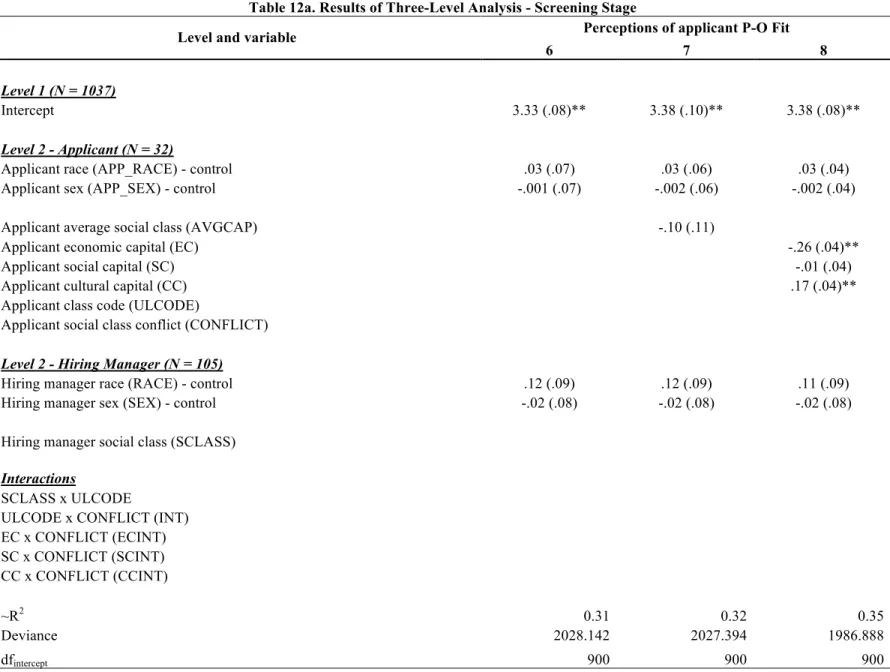
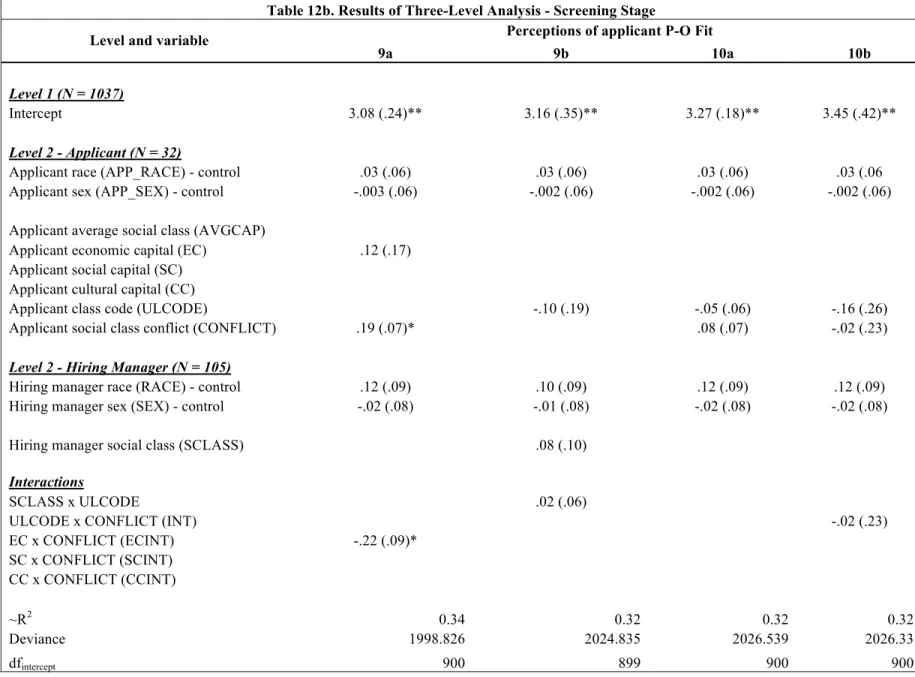
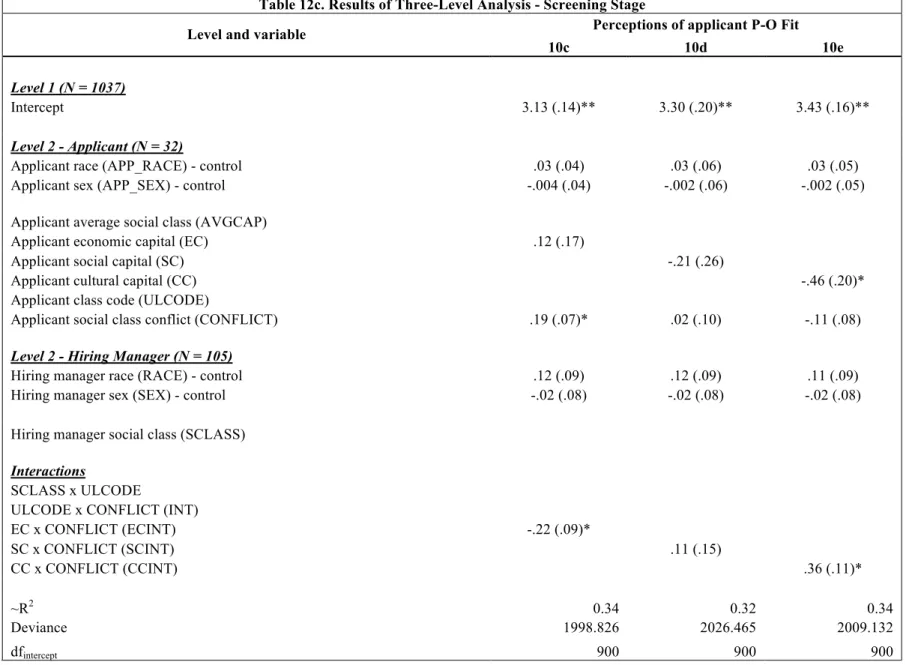
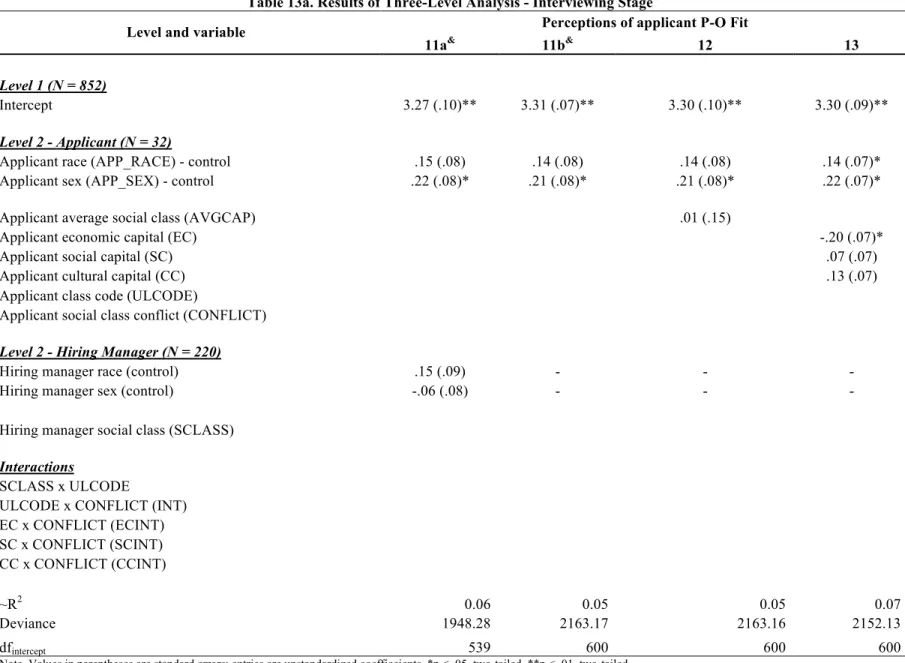
Tables
a. Table 1 - Various measures of social class b. Table 2 – Total combination of applicants
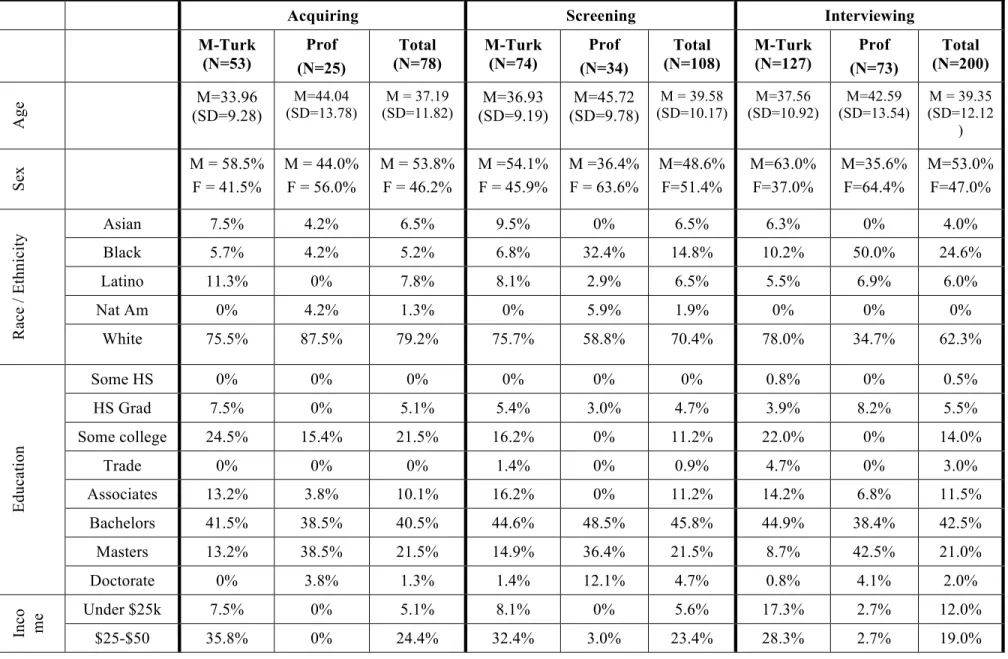
c. Table 3 – Amazon Mechanical Turk (MTurk) screening process d. Table 4 - Organizational culture profile – Values (40 items) e. Table 5 – Demographic overview – All stages
f. Table 6 – Counterbalancing – All stages
g. Table 7 – Percentage of variance for each hiring stage h. Table 8 – Means, SD, correlations – Acquiring stage i. Table 9 – Means, SD, correlations – Screening stage j. Table 10 – Means, SD, correlations – Interviewing stage
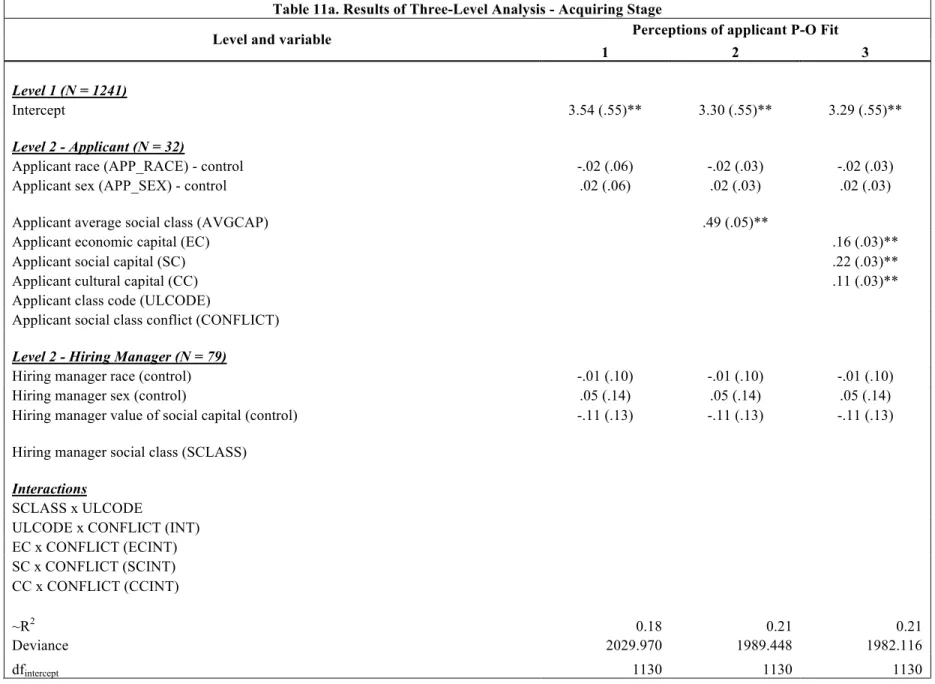
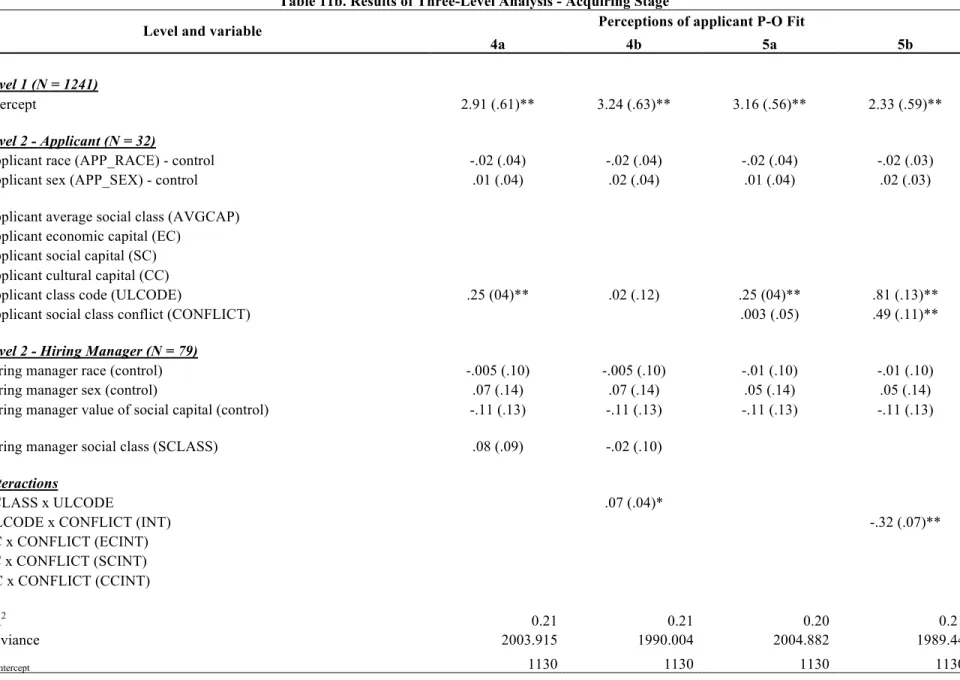
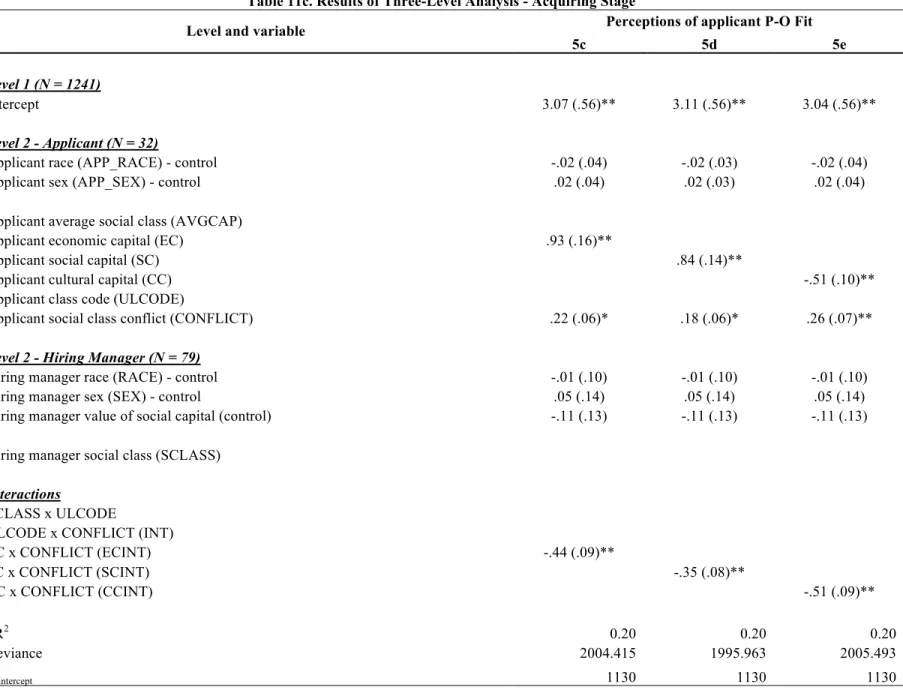
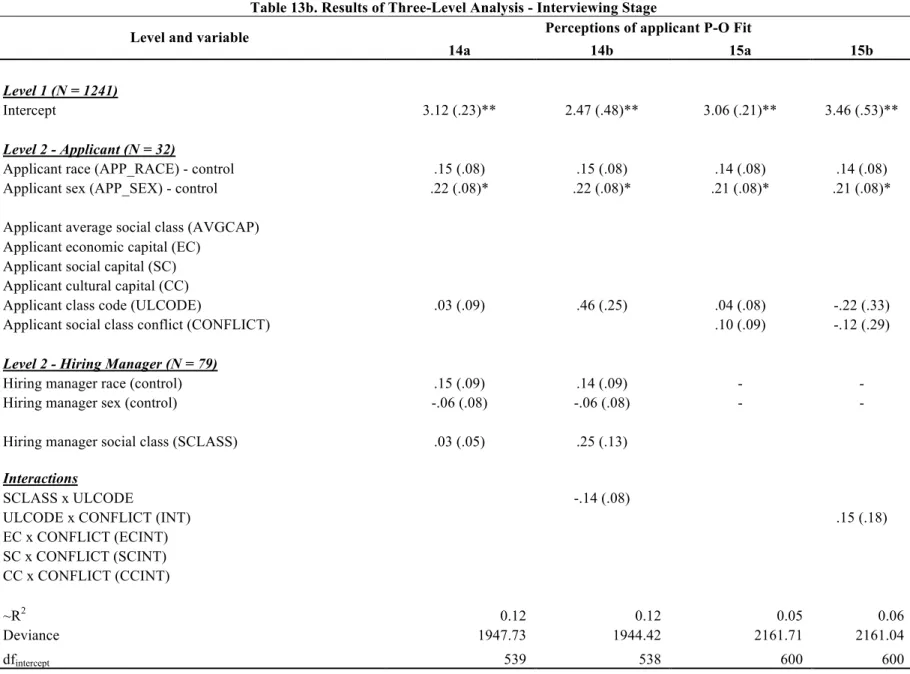
k. Tables 11a-c – Results of three-level analysis – Acquiring stage l. Tables 12a-c – Results of three-level analysis – Screening stage m. Tables 13a-c – Results of three-level analysis – Interviewing stage n. Table 14 – Hypothesis summary – Overview
o. Table 15 – Hypothesis summary – Detailed p. Table 16 – Manager’s summary
Figures
a. Figure 1 – Model depicting the impact of applicant social class and hiring managers’ perception of P-O fit
b. Figure 2 – Forms of capital in current literature
c. Figure 3 - Forms of capital based on construct clarity study
d. Figure 4 - Power Analysis from Optimal Design – Stage One: Referral Email e. Figure 5 - Power Analysis from Optimal Design – Stage Two: Applicant Resume f. Figure 6 - Power Analysis from Optimal Design – Stage Three: Applicant Interview g. Figure 7 – Interaction graph (Hypothesis five - Acquiring stage)
h. Figure 8 – Interaction graph (Hypothesis six - Acquiring stage) i. Figure 9 – Interaction graph (Hypothesis five - Screening stage) j. Figure 10 – Interaction graph (Hypothesis six - Screening stage) k. Figure 11 – Interaction graph (Hypothesis five - Interviewing stage) l. Figure 12 – Interaction graph (Hypothesis six - Interviewing stage) Examples
m. Example 1 - Sample Referral Email n. Example 2 - Sample Applicant Resume
o. Example 3 - Sample Applicant Interview Script p. Example 4 - Overview of directions for each stage Appendix A: Construct Clarity Study
a. Table 17 – Economic capital item by sample type b. Table 18 – Social capital item loadings by sample type c. Table 19 – Cultural capital item loadings by sample type
viii Appendix B: Resume Pilot Study
d. Example 4 – Working class sample resume e. Example 5 – Middle class sample resume Appendix C: Development of stimulus material
a. Table 20 - Most popular boys and girls’ names in New York in 2009 b. Table 21 - Most popular boys and girls’ names in New York in 2010 c. Table 22 - Most popular boys and girls’ names in Maryland in 2011 d. Example 6 – Actor recruitment email
1 CHAPTER 1: INTRODUCTION
The divide between those with and without resources in the United States is growing. Although income was virtually similar through the 1960’s, beginning in the 1970’s income differentials began to create separation, resulting in a divide between the top 5% and the bottom 20%. By 2010 income gains for the top 1% were 200%, while income gains for the bottom 20% were only 40% (Stone, Trisi, Sherman, & DeBot, 2014). According to the U.S. Census (2014) only 28.8% of adults aged 25 or older completed a Bachelor’s degree or above. While this is a substantial increase since the first collection by the U.S. Census in 1940, college attainment for low-income individuals has remained virtually stable (Rampell, 2013). Occupational changes have also occurred, shifting from manufacturing and agriculture to professional and service industries over the 20th century (Wyatt & Hecker, 2006). Despite this shift, the majority of the ten largest professions continue to be of low occupational prestige (e.g., waitresses,
administrative assistants) (Bureau of Labor Statistics, 2014b). These aforementioned factors often have far reaching effects, such as impacting our perceptions and categorizations of class. Therefore, understanding the differences between the classes and the implications of those differences is of critical importance.
The U.S. tends to separate rich from poor and lump everyone else in the middle. However, as Tirado (2014) explains the lives of those living “hand to mouth”, various classes exist between these extremes. She categorizes classes by those who are impoverished, poor, working class, middle class, and rich. Some researchers have attempted to separate the large “middle class” into the “middle” and “working” classes (Zweig, 2004). Despite the different terms, one thing we can agree on is that individuals often categorized in this large “middle” class are not similar. While some individuals such as Tirado (2014), have first hand experience in a
2 class above impoverished but below middle, some individuals may have to consciously explore different classes to broaden their perspectives. In an effort to explore the lives of “working” class individuals, author Barbara Ehrenreich (2001) assumed various low wage jobs and found that many of her new working class colleagues had additional differences besides their lower income, educational levels, and occupational prestige. She realized that who was in their social network and how or why they relied those individuals differed. Furthermore, she often experienced difficulty trying to understand the divergent perspectives or values of some of her new colleagues, which differed from those held by her middle class colleagues. Thus, social class differences may not only result in separation, but also a lack of understanding, which may subsequently impact our perceptions.
Social class is defined as the possession of resources related to economic, social, and cultural capital, and their subjective social rankings relative to others (Bourdieu, 1984).
Economic capital is “immediately and directly convertible into money” (Bourdieu, 1986, p. 242). Social capital describes actual or potential relationships (Bourdieu, 1986) and the differential amount of resources possessed by these individuals (Lin, Vaughn & Ensel, 1981). Cultural capital describes tastes, knowledge, and practices that are displayed through an individual’s behaviors, beliefs, and values (Bourdieu, 1984; Holt, 1998). Within the workplace, social class can manifest and influence organizations in a variety of ways. As suggested by Scully and Blake-Beard (2006), class can operate as a structure, style, and process. Thus, it can impact various factors such as how reward structures are developed or even the type of clothing individuals decide to wear.
Although social class has been considered to be quite relevant and has been explored within the disciplines of psychology (e.g., Kraus, Piff, Mendoza-Denton, Rheinschmidt, &
3 Keltner, 2012; Stephens, Markus, & Townsend, 2007), sociology (e.g., Centers, 1953; Zweig, 2004, 2000), and economics (e.g., Ludwig, Duncan, Gennetian, Katz, Kessler, Kling, & Sanbonmatsu, 2013; Smith, 1998), social class has received scant attention in the management literature (e.g., Audretsch, Bönte, & Tamvada, 2013; Gray, & Kish-Gephart, 2013). However, because the professional workplace tends to be more aligned with middle or upper class values and norms (Ridgeway & Fiske, 2012), consideration of social class within management literature may actually help to explain many of the inequities that persist within organizations (Acker, 2006). From a research perspective, it may also help to clarify many of the assumptions we hold about how individuals interact within the workplace. Consequently, it is critical to understand how social class impacts workplace processes to increase our relevance and inclusivity within an increasingly diverse workforce.
The hiring process is believed to be “the primary way an organization influences its diversity and human capital” (Ployhart, 2006, p. 868). Thus, selecting applicants who contribute and align with an organization is an important process. Person-organizational fit (P-O fit), which is defined as “the congruence between the norms and values of organizations and the values of persons” (Chatman, 1991, p. 476), provides a commonly used theory to explore how hiring managers interpret applicants. Although social class has been shown to be quite relevant to both interactions within the workplace (Gray & Kish-Gephart, 2013) and hiring decisions (Rivera, 2012), much of the diversity research related to the selection process has focused on the impact of demographic characteristics such as race (e.g., McKay & Avery, 2006; Thomas & Wise, 1999), gender (e.g., Goldberg, 2005; Graves & Powell, 1995), and age (e.g., Goldberg, 2003). While consideration of these aforementioned demographic characteristics has provided a strong foundation, because the majority of management samples continue to rely on middle class
4 participants (e.g., college students, managers) (Liu, 2001), failure to consider social class may have limited prior research and theoretical frameworks. Therefore, consideration of social class within the realm of selection deserves further attention.
Considering the above rationale, the contribution of this dissertation is two-fold. First, I intend to clarify the construct of social class. Social class is a multidimensional construct, thus it is imperative that the factors selected within this dissertation adequately represent the construct I seek to observe (MacKenzie, 2003). A variety of factors (e.g., education, level of qualifications) have been used to highlight the different forms of capital that comprise social class. However, many of these factors are representative of multiple forms of capital (e.g., education), which limits our ability to clearly explore the various factors of capital and make assertions about their implications. In short, while our current assessments of social class and its associated forms of capital provide a foundation, some of the relationships may be muddled. Therefore, I conduct and present a construct clarity study that relies on three different sample types to confirm the factors that adequately represent the three forms of capital (e.g., economic, social, cultural) of the social class construct. This study also helps to confirm what factors are considered representative of upper and lower class individuals. To incorporate the social class indicators identified during my construct clarity study, I develop applicant stimulus materials (i.e., referral email, resume, and video interviews) representative of items hiring managers would expect during the hiring process. Next, I examine how applicants’ social class impacts hiring managers’ perceptions of person-organization fit. Research has shown that individuals are able to accurately perceive individuals’ social class (Kraus & Keltner, 2009). Thus, while hiring managers are expected to make unbiased assessments about applicants, they frequently make judgments using job-irrelevant employment characteristics or stereotypes (Perry, Davis-Blake, & Kulik, 1994).
5 Therefore, I examine the impact of applicant social class as related to hiring managers’
perceptions of applicant P-O fit during the hiring process. To explore these relationships I rely on a three-part scenario-based design, formatted to align with three hiring stages (i.e., acquiring, screening, interviewing), which will explore the construct of social class and its impact to applicants during the hiring process.
Before proceeding, it is important to note the context of focus for this dissertation. First, due to the differences in conceptions of social class throughout the world, this dissertation is limited to the U.S. context. Second, while the hiring process is relevant within a variety of workplace contexts, I am focused on the professional workplace and related occupations (e.g., computer and mathematical, legal, education, or community and social science occupations), in accordance with the Bureau of Labor Statistics (2014a). The professional workplace often emphasizes the importance of strategic human capital, which provides organizations with a competitive advantage (Ployhart, Nyberg, Reilly & Maltarich, 2014). Conversely, employers within the support professions are concerned with generic work behavior, such as tracking attendance (Hunt, 1996). While a decision to focus exclusively on the professional workplace may in and of itself seem classist and align with an upper class bias, it is likely that the professional and support workplace environments and associated processes (i.e., hiring) are limited in comparability. Lastly, for purposes of this study, I assume that applicants meet the minimum qualifications, such that significant differences related to knowledge, skills, or abilities do not exist.
6 Overview & Background
Social class
Researchers have explored the impact of social class on a variety of topics such as work attitudes and interactions (e.g., Benjamin, Bernstein, & Motzafi-Haller, 2011; Gray & Kish-Gephart, 2013; Judge & Hurst, 2007), careers and career mobility (e.g., Audretsch et al., 2013; McLeod, O'Donohoe, & Townley, 2009; Snipp, 1985), work life balance (e.g., Lautsch & Scully, 2007), job performance (e.g., Johnson, Messe, & Crano, 1984), and perceptions of risk (e.g., Cooper, 2008). This research often found distinctions between individuals of varying social class. However, rather than simply creating a laundry list of findings, it is important to understand why these distinctions may have occurred. Because social class is comprised of economic, social, and cultural capital, these forms of capital often influence our experiences and beliefs, creating subtle differences between those of varying social classes. Thus, despite our limited consideration of social class as a demographic characteristic within the management literature, we should expect that social class will influence the workplace.
Considering impression management as an example, we can illustrate how social class may impact the workplace and our associated assumptions. Impression management tactics allow individuals to maintain or create an image of themselves that they promote to another individual (Bozeman & Kacmar, 1997). While use of impression management has been found to positively relate to interview outcomes (Bolino, Kacmar, Turnley, & Gilstrap, 2008), engaging in these types of actions is often opposed by those of lower class (Williams, 2012). Lower classes may find that these actions display a “two-face” behavior (Lamont, 2000, p. 108). Therefore, while the value and propensity to engage in impression management may be an expected behavior for those of upper class, researchers may have not adequately considered the perspective of lower
7 class individuals. As such, differences in workplace preferences, attitudes, and behaviors may be attributed to some of the underlying distinctions applicable to social class. Consequently, it is important to understand some of the most notable differences that have been found within the social class literature.
One of the biggest differences between upper and lower class individuals relates to their perspective on individualistic and communal behavior. Individualism refers to those who are more intently focused on their self-reliance and personal goals, whereas communal behavior refers to those who place greater emphasis on their relationships with others (Piff, Stancato, Martinez, Kraus, & Keltner, 2012). These beliefs may be partially attributed to the difference in resources possessed by those of varying social class. As upper class individuals generally have more access to resources they are less likely to need to rely or understand the need to provide resources to others (Piff et al., 2012). In a study comparing individuals who earned below
$25,000 and above $100,000, those earning less actually donated 4.2% of income as compared to only 2.7% of income donated by those earning more (Independent Sector, 2002). This statistic was examined further in a study on prosocial behavior using various samples of lower and upper class undergraduate participants. Despite using a variety of different scenarios, researchers found that the lower class participants were more likely to help their upper class counterparts, and upper class individuals were not likely to reciprocate these actions (Piff, Kraus, Côté, Cheng, Keltner, 2010). In society these differences often manifest into divergent perspectives regarding governmental programs or tax codes (Zweig, 2000). However, in the workplace these differences may result in uncomfortable interactions (Gray & Kish-Gephart, 2013) or discrepant viewpoints about what successful behaviors in the workplace entail.
8 Another critical difference between those of varying social class relates to choice. Choice is believed to be positive for individuals, resulting in happier and healthier lives (Deci & Ryan, 1985). However, the assumption about the benefit of choice may be an upper class perspective. Choice—in and of itself—assumes that individuals have available resources (e.g., time,
education, money) to seek out the best alternatives and make a decision. Upper class individuals often have access to knowledge and information (Stephens, Fryberg, & Markus, 2012), which may explain their intense desire to select different options. However, as described by Markus and Conner (2013, p. 96), “because the people taking the bus can’t be in the driver’s seat, lower-class Americans master skills other than choosing and controlling…” As children, those of upper class are encouraged to be unique and select professions that are reflective of their personalities
(Kusserow, 2012). Thus, they often adopt an “independent model of agency” (Stephens et al., 2012, p. 93), where they assume and prefer to make controllable personal decisions reflective of their own preferences (Markus & Kitayama, 2003). Conversely, lower class children are
encouraged to be disciplined and follow a particular structure (Kusserow, 2012). While they may be encouraged to explore and think critically, lower class children will simultaneously be taught to be “resourceful and aware” (Tirado, 2014, p. 129). As these children often grow up with choices already made on their behalf, the ability to choose often has a decreased importance even starting at an early age.
Using a sample of upper and lower class individuals (i.e., MBAs and firefighters), Stephens and colleagues (2007) were able to illustrate that even when choice is simple and without much meaning, upper and lower class participants will differ in their selections. When presented with a number of different colored pens, upper class individuals were more likely to select the pen color that was in lower quantity, signaling a unique choice, whereas lower class
9 individuals were more likely to select the pen color that was in the majority. When exploring this finding with something of more value, such a car selection, upper class—particularly White upper class—individuals became frustrated when a friend selected the same car, whereas lower individuals were happy knowing that they had the same car as a friend. As aligned with the aforementioned beliefs about individualistic and communal behaviors, lower class individuals may use choice as a way to build and maintain connections whereas upper class individuals tend to use choice as a way to highlight their individuality and uniqueness.
Perceptions of control also often diverge between those of different social class. As noted, while upper class individuals often have access to more resources, lower class individuals are constantly reminded of their lesser quality educational resources, lower occupational prestige job roles, and increased health risks (Adler et al., 1994). Not surprisingly, lower class individuals tend to perceive a lack of control and associate external contextual conditions as determinant of their opportunities (Kraus, Piff, & Keltner, 2009). Even in situations where individuals can exert control, such as parents in their child’s education, lower class parents often opted not to
intervene and adhered to the belief that the teacher was the expert and they had limited control to assist in the outcome (Lareau & Calarco, 2012). This perspective stands in stark contrast to upper class individuals, who believe they exert control and that opportunities are attributed to
individual effort (Kraus et al., 2009). Furthermore, upper class individuals tend to assert that injustice and negative ramifications are due to personal choice rather than circumstance (Kraus et al., 2012), which aligns with beliefs related to the just-world perspective (Lerner, 1980). As Lerner (1980, p. 11) asserted, “people ‘get what they deserve.’” Consideration of these
perspectives provides significant insight into the worldviews of upper class individuals and how they starkly differ from those of lower class individuals.
10 Another underlying difference relates to perspectives of chaos. Chaos can be
characterized by disorganization or unpredictable events that may interfere with daily life (Evans, Gonnella, Marcynyszyn, Gentile, & Salpekar, 2005). In a study comparing upper class individuals from Manhattan’s Upper East Side to lower class individuals from a lower class neighborhood in Queens, the upper class individuals described the world as “safe” and
“welcoming”, whereas the lower class individuals from Queens described the world as “filled with ups and downs” and “potentially dangerous” (Kusserow, 2012). In a separate study, individuals were asked about their future expectations of chaos by selecting a graph that was generally linear with few varying points versus a graph that highlighted significant variation. Although upper class individuals may encounter chaos, they often have enough resources to successfully navigate their obstacle, allowing them to perceive their lives as stable. Instead lower class individuals were more likely to select the tumultuous graph, perceiving their lives as more chaotic (Piff et al., 2012). In effect, chaotic situations such as unreliable transportation (Gurley & Bruce, 2005) or childcare (Brooks & Buckner, 1996; Gennetian, Crosby, Huston & Lowe, 2004) are often difficult for lower class individuals with limited resources to navigate. Perspectives about chaos have been shown to impact work related factors such as career choice. In a qualitative study that explored creative career choices, many upper or elite class parents were supportive of their child exploring creative careers, whereas those of lower class often
encouraged their children to seek more stable careers (McLeod et al., 2009). As lower class parents were likely hoping their children would be able to navigate chaotic situations, selection of a stable career often takes precedence for lower class individuals.
It should be noted that the previous description of resources are not purely economic, as such, differences in perspectives regarding who to trust or how trust is developed also underlie
11 upper and lower class differences. Upper class individuals are less likely to personally
experience negative situations in their surrounding environment (Ross & Jang, 2000). This limited exposure to negative life events and outcomes helps to substantiate the belief that the world is generally a positive place, resulting in a generalized feeling of trust (Fiske, Moya Russell, & Bearns, 2012). In effect, upper class individuals tend to have a more positive outlook on life and are more likely to extend trust to others.
In contrast, lower class individuals generally have a lower overall sense of positivity. First, individuals with access to fewer material resources have been shown to have higher levels of cynicism and mistrust (Gallo & Matthews, 2003). Furthermore, lower class individuals are more likely to have a higher level of exposure to negative situations (e.g., crime, noise,
violence), resulting in a desire to seek comfort from close-knit social capital networks (Ross & Jang, 2000). Therefore, lower class individuals may have a high level of trust for those closest to them (e.g. family, friends), but a much lower level of trust for those outside of their immediate close social capital networks (Tyler, Rasinski, & McGraw, 1985). As such, mistrust toward those outside of their immediate networks is quite common for those of lower social class and may be unlikely to dissipate in institutionalized settings (i.e., the workplace), which are primarily comprised of higher social class individuals (Stephens et al., 2007).
Although the aforementioned differences prompted by social class are not representative of an all-inclusive list, these differences highlight why we may expect divergent perspectives in the workplace that have not previously been considered within the current management
literature. As shown in Figure 1, it is important to consider how applicant social class and other related factors may impact hiring managers as they assess the P-O fit of applicants. Thus, in addition to applicants’ social class I also consider the importance of each form of capital (i.e.,
12 economic, social, cultural) to perceptions of P-O fit, as well as whether these relationships are altered due to the hiring process stage. Next, diversity research has suggested that demographic similarity or dissimilarity impacts hiring managers’ perceptions of applicants. Therefore, I explore how perceptions of applicant P-O fit may shift depending on the hiring managers’ own social class. Lastly, although individuals are expected to detect social class accurately (Kraus & Keltner, 2009), this finding may assume that alignment exists between all three forms of capital. As such, I draw attention to how hiring managers interpret P-O fit for applicants with conflicting forms of capital.
Person-Organizational Fit
Kristof (1996, p. 4) asserts that P-O fit is “the compatibility between people and
organizations that occurs when: (a) at least one entity provides what the other needs, or (b) they share similar fundamental characteristics, or (c) both.” As P-O congruence is synonymous with congruence between a person and an organizational culture, the term of “person-culture fit” (O’Reilly, Chatman, & Caldwell, 1991), is often used interchangeably. Person-organization fit is a part of the larger environment (P-E) fit literature. Other types of fit such as person-vocation (P-V), person-group (P-G), person-job (P-J), and person-supervisor (P-S) fit have all been investigated and shown to have some overlap with P-O fit. In a meta-analysis that
investigated pre- and post-entry factors related to different types of fit, each type was associated with different variables (Kristof-Brown, Zimmerman, & Johnson, 2005). Organizational
commitment is most influenced by P-O fit, job satisfaction by P-J fit, satisfaction with coworkers by P-G fit, and satisfaction with supervisor by P-S fit. Despite these various forms of fit and their associated consequences, P-O and P-J fit are the most commonly investigated (Lauver & Kristof,
13 2001), and have been quite influential during various phases and perspectives of the selection process (e.g., Cable & Judge, 1996; Goldberg, 2003).
As related to pre-entry factors, P-O and P-J fit had similar correlations to the
organization’s intent to hire, and P-O fit had a moderate correlation with job offers (Kristof-Brown et al., 2005). In sum, perceived fit has a positive relationship to hiring recommendations (Higgins & Judge, 2004), and determinations of fit during the employee hiring process have been shown to be an antecedent to subsequent positive perceptions of P-O fit (Chatman, 1991). As such, this is dissertation is focused solely on the perception of P-O fit. It should be acknowledged that a significant amount of research exists related to the applicant’s perception fit and its
implications during the hiring process (e.g., Cable & Judge, 1996; Dineen, Ash, & Noe 2002; Ruiz-Palomino, Martínez-Cañas, & Fontrodona, 2013). However, as my focus is on the hiring managers’ perceived fit of applicants I do not consider the applicant’s perceptions of fit.
Beginning with an early study conducted by Rynes and Gerhart (1990), these researchers confirmed that assessing fit is different than assessing general employability. In effect, firm-specific information (e.g., culture, expectations) will influence hiring manager perceptions of fit over and above general applicant qualifications. This research was furthered as Adkins, Russell, and Werbel (1994) investigated the importance of the actual hiring manager. Using a sample of corporate recruiters, they completed surveys about their personal and organization’s work value as well as pre- and post-surveys after conducting candidate interviews. While recruiters’
congruence with work values did not influence their initial perceptions of applicant
employability, they did influence their perceptions of organizational-fit during later stages of the selection process. In a subsequent study using professional recruiters, researchers were able to identify a latent model related to the subjective impressions of interviews (Wade & Kinicki,
14 1997). These interpretations of applicants’ qualifications mediated the relationship between applicant experiences and hiring decisions, highlighting that hiring managers may be accounting for other factors such as applicant fit, in addition to simply assessing objective criteria.
Another area of interest related to hiring manager perceptions of P-O fit is focused on the role of applicant characteristics and behaviors. Hiring managers have been shown to rely on a variety of indicators to assess applicant fit, and reliance on subjective applicant factors may be considered just as relevant as objective applicant factors during the selection process (Wade & Kinicki, 1997). Parsons and Liden (1984) suggested that hiring managers considered applicant non-verbal cues within their overall perception of qualifications. Personality factors have also been shown to provide hiring managers with indicators of applicant P-O fit (Kristof, 2000). Applicant race (King, Mendoza, Madera, Hebl, & Knight, 2006) and gender (Fernandez & Mors, 2008) have been shown to relate to hiring managers’ decisions of applicant suitability. Even factors such as applicant attractiveness impact recruiter perceptions of applicant fit (Rynes & Gerhart, 1990). Despite the relevance of demographic characteristics in fit perceptions, many of these effects have been inconsistent. For instance, perceived demographic similarity was shown to impact applicant liking and performance expectations, but not fit perceptions (García,
Posthuma, & Colella, 2008). Sex similarity has also resulted in conflicting findings, as female hiring managers found male applicants to be more similar and in turn, extended more positive ratings to applicants of the opposite sex (Graves & Powell, 1995). Clearly, significant variation is expected as related to demographic characteristics and perceptions of fit (Bowen, Ledford, & Nathan, 1991).
Hiring managers have also been shown to compare their values to those of applicants. Although information asymmetry may prevent full access to accurate information between hiring
15 managers and applicants (Spence, 1973), hiring managers are able to detect value congruence relatively accurately between applicants and organizations (Cable & Judge, 1997). Once detected, value congruence between applicants and recruiters was a determinant of fit perceptions and employability (Adkins et al., 1994). Upon further exploration of this aforementioned relationship, Cable and Judge (1997) determined that perceived value congruence between hiring managers and applicants directly related to hiring managers’
perceptions of organizational fit. Rivera (2012) lent additional support to these findings with her study on hiring and cultural matching. Specifically, she suggested that hiring managers seek applicants who are culturally similar to themselves and the larger organization. Taken together, we can assert that hiring managers’ perception of applicant P-O fit is impacted by applicant characteristics.
Conceptualizations of fit. Various conceptualizations of P-O fit have emerged within the literature, with the five most common as supplementary, complementary, demands-abilities, needs-supplies, and supplies-values fit (Cable & DeRue, 2002; Morley, 2007).
Supplementary and complementary fit. Applicants who possess similar characteristics as compared to current employees may be considered to provide supplementary fit to that
organizational environment, which has been shown to result in higher performance and more stable employment (Muchinsky & Monahan, 1987). Individuals have a desire to participate in organizations with similar individuals in accordance with theories such as similarity attraction (Byrne, 1971), social categorization (Turner, 1985), or the attraction-selection-attrition (ASA) framework (Schneider, 1987). However, the process of determining supplementary fit can be challenging, as it requires both applicants and organizations to have detailed information to ensure similarity is achieved (Muchinsky & Monahan, 1987). As attrition provides a way for
16 employees to exit the organization when compatibility is determined not to exist, ASA may be the theoretical framework most associated as an antecedent to achieving supplementary P-O fit, (Ruiz-Palomino, Martínez-Cañas, & Fontrodona, 2013).
Complementary fit emphasizes when “weaknesses or needs of the environment are offset by the strength of the individual, and vice-versa” (Muchinsky & Monahan, 1987, p. 271). In short, complementary fit allows organizations to fill areas of deficiency (Muchinsky & Monahan, 1987). As such, organizations identify their needs and seek individuals with abilities to match those needs. Research on psychological need fulfillment (Edwards, 1991), which examines how fit influences work attitudes and outcomes (Cable & Edwards, 2004), provides the basis for complementary fit.
Although complementary and supplementary fits have generally developed separately (Cable & Edwards, 2004), research has found these types of fit to be highly correlated (Kristof-Brown, 2000). For instance, team members’ perceptions of supplementary and complementary fit were found to closely relate to person-group fit (Seong, Kristof-Brown, Park, Huong, & Shin, 2012). However, some perspectives suggest that one type of fit is better suited for certain
activities than another. Werbel and Johnson (2001) posited that supplementary fit influences group cohesiveness whereas complementary fit may be most relevant for group task orientation or boundary spanning activities. Subsequent research has shown complementary fit can be beneficial in situations where homogeneity can be harmful. For instance, in a study of
extraversion, Kristof-Brown, Barrick, and Stevens (2005) found that team members had higher levels of attraction to their teams when the level of extraversion was dissimilar. In sum,
17 Demand-abilities, need-supplies, and supplies-values fit. Demands-abilities (D-A) fit is a “match between environmental demands and a person’s abilities” (Edwards, 1996: 296). Thus, it emphasizes individuals’ abilities and the demand for those abilities within an organization (Hoffman & Woehr, 2006). In effect, D-A fit may be a version of complementary fit, only a bit more specific as D-A fit highlights the need for employees to not only fit the larger organization, but also the specific job role.
Needs-supplies fit results when “an organization satisfies individuals’ needs, desires, or preferences” (Kristof, 1996, p. 3). Congruence between employees and organizations on the basis of basic needs (e.g., salary, benefits) is often critically important for employees. In fact, Cable and DeRue (2002) suggest that from an employee’s perspective, needs-supplies fit may be the most important type of fit. Similar to demand-abilities fit, needs-supplies fit is also a form of complementary fit, as they allow both individuals and organizations to fill areas of deficiency (Muchinsky & Monahan, 1987).
Although supplies-values (S-V) fit could be perceived as a form of needs-supplies fit, it is clear that employees conceptualize the three types of fit differently (Cable & DeRue, 2002). S-V fit is focused on whether employees and organizations possess the same values (Cable &
Edwards, 2004). Congruence between individual and organizational values has been shown to result in increased positive behaviors, such as extra-role behavior (Lauver & Kristof-Brown, 2001). As such, it is most closely related to supplementary fit (Muchinsky & Monahan, 1987).
Comparisons between S-V and D-A fit are quite common. For instance, in a study about creativity only S-V fit was significantly related to job satisfaction, whereas high D-A fit was related to increased job commitment (Livingstone, Nelson, & Barr, 1997). As highlighted by Edwards (1996), S-V fit is more closely aligned to job dissatisfaction, such that when a
18 mismatch between values and supplies occurs employees are more likely to be dissatisfied, resulting in strain. Conversely, because D-A fit is more closely associated with knowledge, skills, and abilities (KSAs), a mismatch is more likely to result in outcomes related to increased tension and strain. Clearly, each type of fit may be relevant and alter perceptions of applicants throughout the hiring process.
Measures of PO fit. In addition to the different conceptualizations, P-O fit has also been measured quite differently in the literature, resulting in different outcomes. P-O fit has been assessed perceptively, subjectively, and objectively. As described by Verquer, Beehr, and Wagner (2003), perceived P-O fit captures individuals’ description of themselves and their organization on similar dimensions allowing for a comparison. Subjective fit captures
individuals’ viewpoint on how well they think their characteristics align with their organizational characteristics. Lastly, objective fit requires feedback from two sources, such that the individuals describe their own characteristics and another individual describes the organizational
characteristics on the same dimensions, allowing for a comparison. The determination of when to use each type of fit may be most dependent on the topic. For instance, subjective fit provides stronger relationships when assessing employee outcomes (Verquer et al., 2003), but perceived and objective measurements may be more useful when assessing employee attitudes (Hoffman & Woehr, 2005). As this dissertation is focused on the attitudes hiring managers hold as related to applicants of varying social class, I consider the perceived fit hiring managers have toward applicants of varying social class.
19 CHAPTER 2: CONSTRUCT DEVELOPMENT
Social class is a form of a stratification system, which describes how individuals interpret inequalities and arrange themselves and others into a social order. According to Grusky (1994, p. 3), the three important factors for the foundation of stratification systems are:
“(1) the institutional processes that define certain types of goods as valuable and desirable, (2) the rules of allocation that distribute these goods across various positions or occupations in the division of labor (e.g., doctor, farmer, or “housewife”), and (3) the mobility mechanisms that link individuals to occupations and thereby generate unequal control over valued resources.”
Relying on the above, determinations about how to categorize or rank individuals within
societies can occur. Once stratification systems are established, they remain in tact due to a clear inequality of distribution among individuals, a rigid social standing over time, biological traits that allow for classification, and strong correlations between certain individuals and their levels of resources (Grusky, 1994). These factors have allowed societies to create and maintain various stratification systems to organize individuals since the beginning of time.
Early societies of hunter-gatherers relied on a meritocracy system. As men and women were often selected for positions they were naturally inclined to do (Schmitt, Realo, Voracek, Allik, 2008), positions were determined solely on your ability to achieve the needed goals. Fuedalism separated individuals into nobility, clergy, and commoners, and was readily adopted by those of the Roman Catholic empire. The basis for this distinction was based upon economic power, which created clear distinctions between individuals who owned property (e.g., lords) and those who did not (e.g., serfs). In fact, these beliefs were so strong that serfs had to remain in their physical locations because moving to a city was considered a form of property theft (Wright & Wright, 1985).
20 Systems of slavery were similarly dependent on economic power; however, they also encompassed the idea of natural selection, most popularly introduced by Darwin (1859). The timing of Darwin aligned with other race related theories of the 17th and 18th centuries, which purported the view that “God had ordained that Europe should rule” (Zuberi, 2001).
Consequently, slavery—particularly in the United States—reinforced beliefs about stratification due to biological characteristics present at birth and correlations between certain individuals and levels of resources. Slavery was similar to the caste system used in India, which was justified by the prominent ideology of Hinduism. This system is extremely rigid (Audretsch et al., 2013), even preventing marriage between those of differing castes. As suggested by Grusky (1994), rigidity and belief that you are born into a particular system, in this case a caste, is one of the main reasons why the caste system in India has remained the predominant stratification system over time.
The above examples are not exhaustive, as there were numerous types of stratification systems that have existed in various cultures, such as those imposed by societies in Egypt, Nazi Germany, or Rwanda. In each case, one group of individuals has claimed dominance or power over another group of individuals based on factors related to economic (e.g., possession of land; Marx & Engels, 1848), social (e.g., powerful networks; Coleman, 1990), and cultural (e.g., consumption, lifestyle; Bourdieu, 1977; 1984) inequalities. Thus, each group is associated with higher or lower levels of these aforementioned factors. For instance, nobility owned property and had labor power over the serfs (Wright, 1980). In an attempt to understand these societal
categorizations, researchers have adopted the term social class. Therefore, it is important to understand the various perspectives that have provided a foundation for this construct. Social class perspectives
21 While social classes have been embedded in societies for centuries and scholars have sought to understand them, the most prominent perspectives that have explored social class, developed theories, and driven continued research may have been from Darwin (1859), Marx (1845), Wright (1980), Weber (1930), and Bourdieu (1977; 1984). While different, each perspective contributed significant value to our understanding of the social class concept.
Therefore, researchers of varying disciplines continue to rely on these competing perspectives in current research on the topic of social class.
Charles Darwin perspective. Charles Darwin proposed a view of natural selection, but one that differed slightly from prior viewpoints of evolution (Darwin, 1859). Darwin suggested that over time individuals would not simply become “better”, but instead, they become more diverse and develop adaptations applicable for their surroundings. Second, Darwin posited that species are different and may evolve into one another. Within the context of human progression, this significantly impacted previous beliefs about race. Specifically, Darwin suggested that individuals have biological differences that allow some races to emerge as superior over others.
Within countries such as the United States, this perspective was particularly influential in justifying the existence of slavery (Zuberi, 2001). Using Darwin as a foundation, Whites could argue that Africans were inferior beings and slavery improved their quality of life, as they would be unable to care for themselves otherwise. Despite these prevailing views and alignment
between Darwinistic beliefs and later imposed structures such as Jim Crow (i.e., racial segregation laws), American social scientists eventually abandoned the theories of Darwin (Zuberi, 2001). However, the teachings of Darwin remain a highly influential viewpoint and may have subtle influences on other social class perspectives.
22 Karl Marx perspective. In a similar timeframe as Darwin, Karl Marx emerged with a different perspective—the labor perspective. Unlike the theory of Darwin, Marx’s perspective was more widely embraced and continues to be relied on significantly within social class research. Initial conceptions of Marx and Engel (1848) suggested the existence of two classes, the bourgeoisie and proletariat. The difference between these two classes was primarily related to capital distinctions (Marx, 1981). The bourgeoisie was representative of the ruling class, or those who possessed the resources and controlled the value, and thus the capital, to be earned by those in the proletariat class. Conversely, the proletariat class was described as the “modern working class” or the “class of laborers”, who had limited access to resources and were subject to the rules determined by the bourgeoisie. This capitalist perspective suggested clear distinctions, such that individuals were divided into categories (e.g., capitalists, workers) as opposed to in relation to each other (e.g., upper, lower) (Wright, 1980). These distinctions were based primarily on economic capital or labor distinctions. Thus, Marx posited that it was an exchange of labor for capital that created the value of working men and constantly reproduced the capitalist class (Marx, 1968).
The differences in power and control over wages allowed Marx and Engel (1848) to suggest the rise of unions, which would be formed of proletariat class members against the bourgeoisie or ruling class. Although they acknowledged that any successes by the working class would be short-lived, the authors did acknowledge that the ruling power of the bourgeoisie would also be unsustainable. They suggested that the proletariat class will eventually be unable to maintain even their lower level of capital, relegating them to the status of a “pauper.” As this lowest status is believed to be even more difficult to emerge from, the bourgeoisie will
23 perspective was unsupportive of capitalism, suggesting that labor inequities will ultimately result in negative outcomes. Marx’s perspective provided the foundation for “The Communist
Manifesto,” (1848) which promoted the disadvantages of the capitalist system and the eventual rise of the communist system to address differences in class. While all who rely on Marx’s perspective are not communists, his perspective has remained prominent due to its central focus on the role of labor and capital within social class distinctions.
Numerous theoretical perspectives emerged subsequent to Marx’s initial underpinnings. Interestingly, many of these theoretical perspectives seemed to align because of their inherent disapproval of Marx’s conception of class. For instance, Ralf Dahrendorf (1959) agreed with Marx that industrial production serves as the root of change within the newly formed capitalist societies. As such, his conceptualization of class also focused on authority and capital, however, he disagreed with Marx about the differentiation of ownership and roles. Marx (1845) suggested that the difference between classes relates to the alienation of work, which is premised on the idea that work is not pleasurable, but is done to satisfy needs. This difference results in one man who can execute the labor (i.e., worker) and another who sets the value (i.e., authority figure with power and control). Dahrendorf suggested that this conception did not account for arrangements such as joint-stock ownership companies, where workers are now closer to ownership and owners are not simply concerned with the exploitation of workers.
Dahrendorf also suggested that other factors impacted social standing, resulting in a more complex social stratification. Specifically, he suggested a rise of the “new middle class” or bureaucrats, which resemble the previous bourgeoisie and engage in the interests and attitudes of supreme society members. Additionally, the remaining individuals, white-collar and industrial workers, may share more similarities than they do differences. Due to the difference in time
24 when these perspectives were proposed, I will not suggest this was necessarily counter to what was proposed by Marx. Instead, I posit that Dahrendorf built on the initial foundation provided by Marx, likely fueled by prominent changes within the economy.
Erik Olin Wright perspective. Wright (1984) offered a slightly different perspective, which acknowledged a relational aspect between the classes. Therefore, while possession of capital was considered, Wright focused on inequality and the domination of one group over another. For instance, lords were dominant to serfs during feudalism and plantation owners were dominant to Blacks during slavery. It was suggested that many reasons exist for domination of one group over another (e.g., sex, race, nationality, economic), and social class is one of the many ways individuals can be dominated, and no one reason is more important than another.
Wright (1984) challenged the social class categories posited by Marx, by considering the idea of a “contradictory location,” which accounted for more nuanced roles such as managers and supervisors, small employers, and semiautonomous employees. In all cases, Wright
suggested that these categories of employees had a contradictory placement between two social class statuses due to their simultaneous ability to dominate over others while having others dominate over them. In short, Wright (1980) suggested that these categorizations force
individuals to rely on a limited set of criteria (e.g., education, income) to assess someone’s class without accounting for other relevant factors. For instance, categories of individuals such as managers are trapped between the working class and the capitalist class, such that they have control over their physical work, but no control over larger decisions related to how capital is allocated (e.g., merger or acquisition of a company) (Wright, 1976). As such, his conception of social class was more relational.
25 Despite these differences, his overall viewpoint did consider differences in domination and authority, which aligned with Marx’s perspective.
Max Weber perspective. Another prominent perspective was that of Weber (1946), who believed that power was the underpinning of the differentiator of class. His objection to Marx centered on the belief that economic power was just one type of power, and that class must also consider the importance of social order and social honor, which are the basis of authority (e.g., political, head of household, authority at work). Specifically, individuals acquire power based on market exchange, or the value of goods that they bring into the market (Wright, 1980).
Therefore, those with a higher authority can command more power.
Weber also introduced the terms “status groups” and “status honor” as opposed to class, as he believed the term “class” to be primarily associated with economics. Instead, his focus was a “style of life” (Weber, 1946, p. 634), such that individuals who share the same status honor will have similar expectations and may associate with those of similar status. Thus, status honor perpetuates stratification by encouraging exclusivity and discouraging intermingling between those of varying status. Therefore, signals of status honor may become obvious through lifestyle preferences or privileges such as access to certain types of food or participation in activities (Weber, 1946).
Although Weber differed from Marx, he agreed that social order is dependent on economic order. However, Weber encouraged the consideration of additional factors besides economics to determine status, which was subsequently developed further by Bourdieu.
Pierre Bourdieu perspective. Building on some of Weber’s conceptions, Bourdieu (1984) also emphasized the importance of the social position of individuals and their lifestyles (e.g., consumption patterns) as significantly related to individuals’ development of social class.
26 Bourdieu posited that individuals have two consumption patterns described as the tastes of
luxury and tastes of necessity. Once individuals have necessities, the dominant classes have their spending separated into food, culture, and presentation, and each class spends differently in these areas. For instance, working classes place emphasis on the function rather than the form of their clothing. Thus spending on food is less expansive for teachers than professionals.
Bourdieu also relied heavily on the concept of habitus, which he defined as a
“meaningful necessity internalized and converted into a disposition that generates meaningful practices and meaning-giving perceptions” (Bourdieu, 1994, p. 405). Habitus provides an organizing structure for practices and perceptions as well as allows comparisons of social
statuses by individuals. This incorporation of lifestyle indicators provides the unique departure of Bourdieu from prior perspectives. Continuing in this realm, Bourdieu (1986) suggested there were three forms of capital: economic, social, and cultural, which inform individuals’ class status. In a review of social class by Côté (2011), economic capital has been most frequently conceptualized using the categories of income, education, and occupation. Social capital has often been highlighted using differences in the power or status of individuals within a social capital network (e.g., Lin et al., 1981), how individuals develop trust (e.g., Fiske et al., 2012), and the purpose or expectations of their social capital network (e.g., Piff et al., 2012). As cultural capital itself has three dimensions—embodied, objectified, and institutionalized—research has relied on these dimensions to investigate the impact of values and understanding of customs (e.g., Dacin, Munir, & Tracey, 2010), possession of goods (e.g., Holt, 1998), and comparisons of levels of achievement (e.g., Jaeger, 2011). Although he asserted that all forms of capital
stemmed from economic capital, he considered the importance and relevance of these additional forms of capital within social class distinctions.
27 These competing perspectives have resulted in various outgrowths within the realm of social class. Mann (1973) suggested that individuals must understand and realize that they are members of a particular class by engaging in stages described as “class identity, class opposition, class totality, and the conception of an alternative society” (Wallace & Junisbai, 2004, p. 388). While individuals may experience these revelations separately, Mann (1973) asserted that class consciousness must occur by all individuals of a particular class to ensure a class. Additionally, while various events may unify individuals (e.g. Occupy Wall Street), short-term movements are often not enough to ensure class consciousness will be sustained.
Using this premise, Liu (2001) developed the social class worldview model, which centered on the various factors needed to assess social class and the awareness of individuals to place themselves within a hierarchy. Some perspectives were more focused on outcomes, such as those found in health psychology, which considered the differential outcomes experienced by upper and lower class individuals (e.g., Kawachi, Kennedy, Lochner, & Prothrow-Stith, 1997; Kessler, 1982; Sallume & Notestein, 1932). Finally, some literatures sought to combine prior perspectives, such as the social cognitive perspective (Kraus et al., 2012), which integrated the labor and cultural perspectives and proposed that objective resources and the experiences
surrounding them will determine subsequent thoughts and behaviors. In sum, the aforementioned perspectives have been critical in establishing a foundation for the continued research on social class.
Social class defined
Due to the varying perspectives related to social class, it is “one of the most frequently used and inconsistently defined concepts in the social sciences” (Evans & Mills, 1998, p. 87).
28 These varied definitions have also resulted in different measures of social class, as shown in Table 1. Although social class has been found to be one of the most relevant predictors of how individuals behave and interact in the workplace (Côté, 2011) consensus on a definition of social class is challenging. As noted by Scott and Leonhardt (2005, p. 2):
"one difficulty in talking about class is that the word means different things to different people. Class is rank, it is tribe, it is culture and taste. It is attitudes and assumptions, a source of identity, a system of exclusion. To some, it is just money. It is an accident of birth that can influence the outcome of a life. Some Americans barely notice it; others feel its weight in powerful ways."
Some definitions have primarily relied on objective factors. Piff and colleagues (2010, p. 772) relied on various scholars who described social class as “a multifaceted construct that is rooted in both objective features of material wealth and access to resources (income, education; Oakes & Rossi, 2003) as well as in conceptions of socioeconomic status (SES) rank vis-a`-vis others in society” (subjective SES; Adler, Epel, Castellazzo, & Ickovics, 2000). However, other researchers have acknowledged the importance and relevance of both objective and subjective factors. Côté (2011) suggested that social class is the possession of objective material resources and the associated subjective perceptions of those resources relative to others. Further adding to this definition, Côté, Piff, and Willer (2013, p. 491) considered the perceptions and comparisons between individuals, as noted in the following:
"Psychologists view social class as a relatively stable individual-level
characteristic that is rooted in objective, socially valued resources (e.g., income, education, and occupational prestige) and corresponding subjective perceptions of rank vis-a`-vis others (Kraus et al., 2012; Snibbe & Markus, 2005; Stephens et al., 2007).”
Despite the variation of definitions, Bourdieu’s (1984) consideration of cultural capital may have provided the most robust addition. As cultural capital often drives our values and behaviors and is commonly shared by other members of the same class, it critical to consider. In
29 a recent theoretical exploration of social class within the management literature, Gray & Kish-Gephart (2013) adopted the definition proposed by Bourdieu (1984). As such, I similarly define social class as the possession of resources related to economic, social, and cultural capital, and their subjective social rankings relative to others.
Forms of capital. Economic capital is “immediately and directly convertible into money” (Bourdieu, 1986, p. 242), allowing it to often be used interchangeably with
socioeconomic status (SES). In accordance with the American Psychological Association (2014), SES accounts for the social standing comparisons between individuals as related to their income, education, and occupation. Lower class individuals often have lower levels of income, less prestigious occupations, and less prestigious educational experiences as compared to upper class individuals (Zweig, 2004). However, all three factors do not have to align to assess the economic capital and subsequent social class of individuals.
Social capital is an aspect of the social structure (Coleman, 1990), describing actual or potential relationships (Bourdieu, 2008). Within the context of social class, social resources theory provides the foundation. Thus, emphasis is on the value or quality of members within a social capital network (Lin, 2000). It also acknowledges the role of socioeconomic factors in creating the inequality of social capital networks (Lin, 2000). For instance, Scott (2005) described how three individuals of different social classes received different types of medical treatment, subsequent care, and support after suffering a heart attack due to the resources available through their social capital networks. Other prominent perspectives, such as weak tie theory (Granovetter, 1973), may be less applicable within the context of social class. Although a weak tie can provide significant benefit in a workplace context, allowing for the transference of non-redundant information, this belief may be most applicable for upper class individuals. As
30 discussed, upper and lower class individuals establish trust and rely on their networks for
different purposes. Therefore, despite the value of a weak tie, because it may take longer for a lower class individual to develop a trusting relationship, this value may not be similarly recognized or utilized by individuals of varying social class.
Lastly, cultural capital describes tastes, knowledge, and practices that are displayed by an individual’s behaviors, beliefs, and values (Bourdieu, 1984; Holt, 1998), and can take three forms—embodied (i.e., acquired by a person through upbringing and interactions), objectified (i.e., observable in a tangible form), and institutionalized (i.e., established criteria allowing for comparisons between individuals). While different contexts may require or regard certain norms as acceptable, having the “right” form of cultural capital is often deeply embedded in social institutions and has become a status symbol of an elite population (Bourdieu, 1984). Thus, formal and institutionalized contexts may provide the ultimate setting for displays of cultural capital competence (Dacin et al., 2010).
As shown in Figure 2, different factors have been associated with each interrelated form of capital, allowing individuals to develop social class categorizations of others.
Categorizations of social class
Similar to the various perspectives and definitions of social class, reaching consensus regarding how to categorize social classes has been equally challenging. While social class distinctions may have been clearly delineated by possession of resources or status, previous relevant markers such as clothes, cars, political affiliations, or even race may no longer directly correlate to social class statuses (Scott & Leonhardt, 2005). Additionally, due to the varying levels of value individuals attach to resources, social class categorizations can be quite complex.
31 The complexity of social class categorization may be best highlighted in a study by Lenski (1952). Individuals in a community were asked to categorize neighboring families by social class levels. Despite the familiarity with the families in the sample, individual responses varied substantially both in the number of social class levels and the number of families categorized into those levels. In a subsequent study, Centers (1953) asked participants to categorize occupational titles into four social class categories: upper, middle, working, and lower. While consistency existed for the upper and lower class occupations, categorization of middle and working class occupational titles proved to be quite challenging.
Some more recent researchers have increased the number of classes to five, describing the categories as elite class (i.e., capitalist and institutional elite subgroups), professional or "upper" middle class, middle class, working class, and poor (Bullock, 2004). Conversely, some researchers simplified the classes to three, with upper, middle, and working classes (McLeod, et al., 2009), whereas Resnick and Wolff (2003) returned to four classes, upper, middle, working, and lower. These authors posited that the middle class exerts power and has power exerted over them, whereas the working class has less power and autonomy with limited or no input on their work conditions. However, as Wright suggested, contradictory locations are likely. As explained by Zweig (2004), a working class employee who earns a considerable amount through overtime may earn a similar wage as compared to a middle class employee, but may still have limited autonomy over their work. Not surprisingly class categorizations often result in social class misclassification of oneself and others (DiMaggio, 2012; Hout, 2008). Thus, individuals may be unable to be categorized into a finite grouping. As such, throughout this dissertation I rely on the terms “upper class” and “lower class” to allow for the continuous nature of class statuses. Before proceeding, it is important to confirm my population of focus within this dissertation.