Loyola eCommons
Loyola eCommons
Dissertations Theses and Dissertations
2018
An Analysis of the Implementation and Effectiveness of
An Analysis of the Implementation and Effectiveness of
Successmaker Reading on Closing the Achievement Gap Through
Successmaker Reading on Closing the Achievement Gap Through
a Separate Class Middle School Reading Intervention
a Separate Class Middle School Reading Intervention
Tanya Branch HousingLoyola University Chicago
Follow this and additional works at: https://ecommons.luc.edu/luc_diss
Part of the Elementary Education Commons
Recommended Citation Recommended Citation
Branch Housing, Tanya, "An Analysis of the Implementation and Effectiveness of Successmaker Reading on Closing the Achievement Gap Through a Separate Class Middle School Reading Intervention" (2018). Dissertations. 2774.
https://ecommons.luc.edu/luc_diss/2774
This Dissertation is brought to you for free and open access by the Theses and Dissertations at Loyola eCommons. It has been accepted for inclusion in Dissertations by an authorized administrator of Loyola eCommons. For more information, please contact [email protected].
LOYOLA UNIVERSITY CHICAGO
AN ANALYSIS OF THE IMPLEMENTATION AND EFFECTIVENESS OF SUCCESSMAKER READING ON CLOSING THE ACHIEVEMENT GAP THROUGH A SEPARATE CLASS MIDDLE SCHOOL READING INTERVENTION
A DISSERTATION SUBMITTED TO
THE FACULTY OF THE GRADUATE SCHOOL OF EDUCATION IN CANDIDACY FOR THE DEGREE OF
DOCTOR OF EDUCATION
PROGRAM IN ADMINISTRATION AND SUPERVISION
BY
TANYA BRANCH-HOUSING CHICAGO, ILLINOIS
Copyright by Tanya Branch-Housing, 2018 All rights reserved.
iii
ACKNOWLEDGEMENTS
There have been many people who have walked beside me during the last four years. They have guided me, motivated me and been a listening ear. I am lucky to have been given the supportive gift of amazing people in my life, without all of whom, this work would not have been completed. I would like to thank each and every one of them. I would like to especially thank Dr. Michelle Lia and Dr. Diane Morrison – without your support, collegiality and mentorship the road would have seemed a lonely place.
Enormous gratitude is due to Dr. Michael Karner for his amazing kindness in assisting me through this process from start to finish. Since we met in 2016 you have gone above and beyond to make my life easier and through this process have become my best friend. I sincerely respect your intelligence and value your friendship.
DEDICATION
v
TABLE OF CONTENTS
ACKNOWLEDGEMENTS ... iii
LIST OF TABLES ... viii
LIST OF FIGURES ... x ABSTRACT ... xi CHAPTER I. INTRODUCTION ... 1 Introduction ...1 Public Law PL 107-110 ...2
Response to Intervention (RtI) ... 3
At-Risk Students ... 6
Setting for the Intervention ...7
What is Pirate Time? ...8
Problem Statement ...12
Purpose of the Study ...14
Significance of the Study ...14
Overview of the Methodology ...15
Conceptual Framework ...17
Research Questions ...18
Key Terms ...19
Summary ...20
II. REVIEW OF THE LITERATURE ... 22
Introduction ...22
Body of the Literature Review ...22
Closing the Achievement Gap ...23
Improving Learners Literacy Skills ...26
MyPerspectives ...28
Response to Intervention (RtI) ...30
Integrated Learning Systems...33
READ 180 ...34
SuccessMaker Reading ...35
Competing Perspectives ...40
Conceptual Framework ...41
Theoretical Framework ...42
Synthesis of the Research ...44
Critical Analysis...45
vi III. METHODOLOGY ... 47 Introduction ...47 Population ...48 Sample...49 Instrumentation ...50 NWEA-MAP... 50 MyPerspectives Assessments... 51
Composite reading growth ... 51
Gap statistic ... 52
Percent reading growth ... 52
Language arts quarter and semester course grade ... 53
Characteristics of students ... 53 Gender of students ... 53 Race of students ... 53 Comparison group ... 53 Investigational group ... 54 Data Collection ...54
Data Analysis Procedures ...55
Protection of Human Subjects ...59
Assumptions ...59 Conclusion ...60 IV. FINDINGS ... 61 Introduction ...61 Research Questions ...61 Demographic Characteristics ...63 Data Analysis ...67 Research Question 1 ...67 Research Question 2 ...70 Research Question 3 ...72 Research Question 4 ...72 Research Question 5 ...78 Research Question 6 ...80 Summary ...82
V. SUMMARY OF THE STUDY AND FINDINGS ... 85
Summary of the Study ...85
Summary of the Findings ...87
Conclusions of the Study ...89
Implications...92
Recommendations for Future Research ...93
vii APPENDIX
A. RESEARCH QUESTION 1 TABLES... 96
B. RESEARCH QUESTION 2 TABLES... 99
C. RESEARCH QUESTION 3 TABLES... 105
D. RESEARCH QUESTION 4 TABLES... 107
E. RESEARCH QUESTION 5 TABLES... 121
F. RESEARCH QUESTION 6 TABLES... 124
REFERENCE LIST ...128
viii
LIST OF TABLES
Table Page
1. 8 Year Trend Average RIT Score Data...8
2. Frequency Distribution of Study Subjects by Grade ...49
3. Frequency Distribution of Study Subjects ...63
4. Frequency Distribution of Study Subjects by Gender ...64
5. Frequency Distribution of Study Subjects by Race ...65
6. Demographics for SuccessMaker Users and non-SuccessMaker Users in 7th and 8th Grade ... 66
7. All Grades Mean, Median, and Standard Deviation for Composite Reading Growth and Percent Reading Growth ...68
8. Language Arts MyPerspectives Pre-Assessment and Post-Assessment Grades...73
9. Mean, Median, and Standard Deviation for MyPerspectives Pre and Post Assessments ... 74
10. Mean of All Grades for MyPerspectives Pre and Post Assessments ...75
11. Language Arts Grades for All Grades of SuccessMaker and non- SuccessMaker Users ... 76
12. Mean, Median, and Standard Deviation for Language Arts Grades ...77
13. Mean of All Grades for 1st Quarter to 2nd Quarter Grade Change ...77
14. Mean of All Grades for 1st Quarter to 1st Semester Grade Change ... 78
15. Mean of All Grades for 2nd Quarter to 1st Semester Grade Change... 78
16. Correlations of Composite Reading Growth and Time Spent in SuccessMaker Reading ...79
ix
17. Correlations of Percent Reading Growth and Time Spent in
SuccessMaker Reading ...80 18. Correlations of Composite Reading Growth and Incremental Growth in
SuccessMaker Reading ...81 19. Correlations of Percent Reading Growth and Incremental Growth in
x
LIST OF FIGURES
Figure Page
1. RtI 3-Tiered Model ... 4
2. The advantages and disadvantages of the protocol model ... 32
3. The advantages and disadvantages of the problem-solving model ... 33
4. SuccessMaker Reading Instructional Strands ...37
5. SuccessMaker Reading Instructional Strands ...38
xi ABSTRACT
The purpose of this study was to determine if SuccessMaker Reading had an effect on at-risk students when used with a Language Arts course. SuccessMaker Reading is a web-based system that provides reading skills practice that align with state standards. The sample of this study consisted of seventh (2019) and eighth (2018) grade classes from a Midwestern suburban middle school district during the fall of the 2017-2018 school year.
At-risk Language Arts students who have not achieved proficiency in reading were enrolled in SuccessMaker Reading. This study analyzed if SuccessMaker Reading had an effect on growth on the NWEA-MAP winter reading assessment, MyPerspectives pre and post assessments, and a student’s Language Arts course grades. A comparison was performed on students who were not enrolled in SuccessMaker Reading. This study was a quasi-experimental study using a pretest-posttest design.
The results of this study indicated that SuccessMaker users closed the
achievement gap on the NWEA-MAP reading assessment by 31.0%. SuccessMaker users had higher mean composite/percent reading growth, slightly higher means on the
MyPerspectives post assessment and higher mean quarter and semester grades than non- SuccessMaker users. There was statistical significance with NWEA-MAP winter reading growth, grade, gender, race, and time spent or incremental growth on SuccessMaker Reading.
xii
According to the 2016 Illinois School Report Card, only 38% of reading students met or exceeded the goal of the Partnership for Assessment of Readiness for College and Careers (PARCC) exam. This past 2017 school year only 36% of students met or
exceeded the reading goal for PARCC (Illinois School Report Card, 2017). If students are to prepare for college and career the percentage of students meeting or exceeding the goal established by PARCC must improve. Educators need proven interventions to assist students in learning the skills necessary to meet the outlined criteria of proficiency.
1 CHAPTER I INTRODUCTION
Introduction
In 2012, the Illinois State Board of Education raised the lowest possible score (cut score) needed for a student to be considered proficient for the Illinois Standards
Achievement Test (ISAT). In Illinois, students would now be held to higher criteria to be considered average. Once the cut score and rigor of the test was raised, the overall passing rate decreased from 82.1% in 2012 to 61.9% in 2013 for the math, reading, and science portions of the ISAT assessment (Bock, 2013). Students were not meeting the new expectations to be considered college or career ready.
In 2010, Illinois adopted the new national learning standards called the Common Core State Standards (CCSS), which defined what English and math skills students would learn at each grade level. The CCSS were created to ensure that students had the necessary skills to succeed in college, career, and life (Common Core State Standards Initiatives, 2017). Students were required to meet proficiency in the K-12 standards by graduation of high school.
The CCSS for reading consists of key ideas and details, craft and structure, integration of knowledge and ideas, and range of reading and level of text complexity (Common Core State Standards Initiatives, 2017). The new learning standards tied reading to math in ways that required proficiency in reading as a prerequisite to success
in math. Schools were forced to keep pace with raised expectations to prepare students for college and beyond.
In 2013, about 20% of the ISAT assessment questions aligned to the CCSS (Illinois State Board of Education, 2017). Schools did not fully implement the CCSS into evaluation and curriculum in the 2013-2014 school year. Students across the state
struggled to demonstrate proficiency when assessed by these new standards thus widening the achievement gap even further between students of color and their White peers (Illinois State Board of Education, 2017). This research examined the effect of implementing SuccessMaker Reading as a separate class intervention in addition to a Language Arts course and examined whether White, Black or Latino students’ scores were effected.
Public Law PL 107-110
Public Law PL 107-110, the No Child Left Behind Act of 2001 (2013) was passed to increase school and teacher accountability, improve learning goals, provide research-based best practices and increase parent choice of schools. Schools were responsible for ensuring that all students were 100% proficient in reading and math to close the academic and the achievement gap between economically disadvantaged students, students from different economic, ethnic, and racial backgrounds as well as students with disabilities (Yell, 2006). Strategic planning was required by schools to ensure all students had equity of opportunity to a quality education. The No Child Left Behind Act required schools to increase achievement in reading each year and reach 100% reading proficiency by 2014. A critical piece of the solution to ensuring that students were 100% at reading proficiency
involved exploring interventions to bridge the gap between where students are to where they need to be with the new CCSS.
Response to Intervention (RtI)
According to Edmonds et al., (2009), adolescents with reading difficulties benefit from explicit and systematic intervention organized around their instructional needs. In 2004, an intervention model was developed in response to struggling students in schools across the nation. The official definition, Response to Intervention (RtI) falls under the larger umbrella of Multi-Tiered Systems of Support (MTSS) and is a tiered service model that,
identifies students who are struggling in the classroom to remediate academic deficits, distinguishes between students who are behind due to a history of poor instructional experiences, and those in need of special education services for remediation of an actual learning disability. (Moors, Weisenburgh-Snyder, & Robbins, 2010, p. 227)
The RtI model requires that educators provide support for students in all core subject areas as all students are entitled to the rigorous instruction necessary to compete in society.
All students deserve access to high-quality education (Mellard, McKnight, & Jordan, 2010). Schools must find successful ways to educate all students. This quasi-experimental study evaluated a Tier 2 intervention in a Midwestern suburban middle school to determine if there was an impact on low-performing reading students and if the scores of White, Black, and Latino students were affected differently. Each level of the
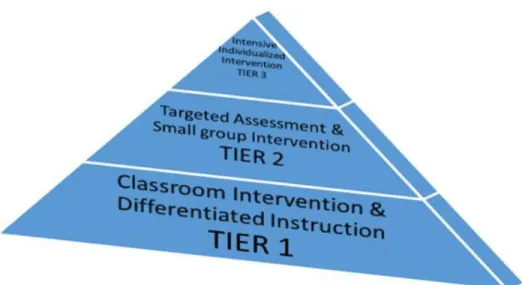
RtI model provides different responses to implement for students based on their tier, as indicated in Figure 1 below.
RtI model displaying the three tiers of intervention as students move up based on their need for interventions. All students start at Tier 1.
Adapted from “Reading Plus: The Perfect Solution for Kentucky and Ohio RtI Programs,” by Reading Plus (2017, May 23). Retrieved from https://academicedge.com/news/reading-plus-perfect-solution-kentucky-ohio-rti-programs/
Figure 1. RtI 3-Tiered Model
There are three tiers in the RtI model, with each tier providing “increasingly intense student interventions” (Fletcher, Lyon, Fuchs, & Barnes, 2007, p. 1). Each tier is designed to assist struggling learners and provide the necessary tools to be successful in the classroom. Tier 1 interventions represent 80% of the student population, Tier 2 represents 15%, and Tier 3 represents 5% (Mellard et al., 2010).
According to Reschly (2005), the primary differences in the tiers of instruction are with “intervention intensity and measurement precision” (p. 511). This structure
indicates that each level increases the depth of strategies used to meet the needs of students. Students move through the tiers based on need and response to applied interventions.
The Institute of Educational Sciences' Practice Guide Report (2009), contain five components identified as essential elements of an RtI model. The model includes: (1) screening all students, (2) monitoring students who are not meeting the benchmark, (3) differentiating instruction, (4) providing Tier 2 small group sessions, and (5) providing Tier 3 intensive small group interventions. The availability of a scientifically based system of strategies is relevant to all educators, along with a plan for intervening with students who do not respond to instruction (Daly, Martens, Barnett, Witt & Olson, 2007). The use of these five intervention components are indicators of a school districts focus on student success.
Interventions have become prominent across the United States since the adoption of the CCSS. Thousands of adolescents across the world are participating in a wide range of intervention efforts designed to improve their literacy achievement (Calhoon,
Scarborough, & Miller, 2013). Students are now required to demonstrate competency by analyzing, comprehending and critiquing complex texts and it is imperative that
educators can address the varying skill levels that students bring to the classroom. According to Hartry, Fitzgerald, and Porter (2008), a variety of tools are needed to assist in these efforts. These efforts include additional classes during the school day, afterschool programming opportunities, before school programs, peer tutors, computer interventions (Soper & Marquis-Cox, 2012).
At-Risk Students
At-risk refers to students who have difficulty achieving the basic level of
proficiency. According to the American School Counselors Association (2006-2008), at-risk students refers to students who could potentially drop out of school or engage in self-destructive behaviors that interfere with academic success. Behaviors including
absenteeism, performing below academic potential or participating in activities that may be harmful to self and others such as substance abuse, threats, and intimidation, and physical violence. At-risk students with deficient skills are more likely to stay at their current skill level and not improve unless they receive additional support (Fletcher & Lyon, 1998).For this study,at-risk students refer to students who are performing below academic potential and are not achieving basic levels of proficiency in reading and are not at grade level.
For this study, at-risk reading students were placed into Pirate Time (reading intervention) whose name is adapted after the school mascot the Pirate. The reading intervention is an additional class period using SuccessMaker Reading to assist students in meeting their reading goal on the Northwest Evaluation Association Measures of Academic Progress (NWEA-MAP) reading assessment. A Rasch Unit Scale score (RIT) is used to identify at-risk reading students. Students at or below the 50th percentile are considered at-risk for the purposes of this study. RIT are stable, equal interval scales that use individual item difficulty values to measure student achievement independent of grade level (NWEA.org, 2017). The 50th percentile is considered an average score.
Nationally, students identified for this study have deficient skills in a combination of reading areas (i.e., vocabulary acquisition and use, literature, and informational text).
Setting for the Intervention
Since 2008, a Midwestern middle school on average has not met the 50th percentile in reading (see Table 1). To ensure students are college and or career ready, administrators and teachers needed to find a way to deliver relevant, differentiated instruction based on student need. During the 2015-16 school year, this Midwestern middle school adapted the MyPerspectives reading curriculum published by Pearson. “My Perspectives” is aligned to the CCSS. MyPerspectives reading is a student-centered curriculum with activities that encourage students to read and respond using conversation and writing. MyPerspectives promotes critical thinking and higher ordered decision making skills. The curriculum design models the gradual release method with a focus on student engagement. The gradual release model provides teachers with an instructional framework for moving from teacher knowledge to student understanding and application (Fisher, 2008). The instructional format facilitates differentiation based on student need and emphasizes a combination of small group, whole group and individual practice.
In this Midwestern middle school, students were placed in one of three class levels (i.e., regular, advanced or honors) during a 90-minute literacy block. Regular classes were designed for students below the 50th percentile on NWEA-MAP, advanced classes were designed for students within the 50th and 79th percentile on NWEA-MAP, and honors classes were designed for those students who score at or above the 80th percentile on the NWEA-MAP end of year data. The 50th percentile Spring Reading RIT
for 7th grade is 218. The 50th percentile Spring Reading RIT for 8th grade is 220. The 50th to 79th percentile Spring Reading RIT for 7th grade is 219-230. The 50th to 79th percentile Spring Reading RIT for 8th grade is 220-233. The 80th percentile Spring Reading RIT for 7th grade is 231 and the 80th percentile Spring Reading RIT for 8th grade is 233.
Table 1
8 Year Trend Average RIT Score Data
_____________________________________________________________________ NWEA-MAP Spring Average RIT Reading Score
Year 7th Grade 8th Grade
2009-2010 209.4 214.8 2010-2011 211.5 211.3 2011-2012 214.1 216.9 2012-2013 210.1 212.4 2013-2014 209.6 215.9 2014-2015 214.8 217.4 2015-2016 214.0 218.7 2016-2017 210.8 217.0 __________________________________________________________________
What is Pirate Time?
SuccessMaker Reading is a web-based system that supplements regular reading instruction with targeted instruction, practice and assessment. Focus is placed on the essential reading skills based on state standards. SuccessMaker Reading is a product of Pearson guided by agreements and conclusions supported by well-respected names in the
field of reading (Pearson Education Inc., 2017). The instructional software aims to improve skills in the areas of phonological awareness, phonics, fluency, vocabulary, comprehension, grammar, spelling, and concepts of print. Instruction adapts as students work through lessons and matches student skill level and progress.
To assist in improving reading growth and reading proficiency of the at-risk population of reading students, the reading intervention class “Pirate Time” was created by the principal during the spring of 2017 to help students performing at or below the 50th percentile on the NWEA-MAP spring reading assessment. The purpose of the additional reading intervention class was to improve deficient reading skills and help students reach their NWEA-MAP goal.
Pirate Time is a 25-minute, daily, additional class period built into student
schedules. The class is in addition to the 90-minute block of reading instruction provided to all students. Pirate Time is a semester or yearlong course taught by a certified teacher and is held the period before the student’s lunch period. Students utilize SuccessMaker Reading for 20 minutes during Pirate Time.
Pirate Time is held in a regular classroom setting equipped with a set of 28 Chromebooks. There are 18 eighth grade intervention classes and 13 seventh grade intervention classes. Each class is taught by a certified teacher and includes no more than seventeen students. Students receive a pass/fail grade every five weeks of each quarter. Grades in Pirate Time are based on the weekly cumulative performance of time spent, percentage correct, exercises attempted and gains.
Teachers received six hours of training over a two-day period in August on how to deliver and progress monitor the intervention. Teachers run the end of session report daily to monitor student completion and to target students who need additional support. Intervention teachers meet regularly with the students’ Language Arts teachers and the reading intervention specialist to discuss student progress and skill deficits. Together, teachers plan how to best meet the needs of students based on current relevant data. Additional training was provided in November due to a lack of growth in at-risks students based on cumulative performance.
Teachers progress monitor students weekly during the intervention period and report every five weeks on each student's progress. When necessary, students are regrouped afterthe fifth-week mark to allow for more individualized instruction for students with similar needs.
Pirate Time allows for movement of students to provide more strategic instruction of students with similar needs. To exit Pirate Time, students must score above the 50th percentile on NWEA-MAP taken in January. Students are placed into Pirate Time during the school year if they meet one of the following criteria: (1) failing Language Arts grade, (2) NWEA-MAP score at or below the 50th percentile in either Winter or Spring, or (3) the Problem Solving Team (PST) recommends placement. Any change to the student's schedule is made in conjunction with the student, parent, student services and
administrative team.
The What Works Clearinghouse (WWC) identified SuccessMaker Reading as “a set of computer-based courses designed to supplement regular K-8 reading instruction”
(U.S. Department of Education, 2015). The program aims to improve skills in areas such as phonological awareness, phonics, fluency, vocabulary, comprehension, concepts of print, grammar, and spelling. Foundations courses contain basic skill building exercises, while Explore-ware courses focus on reading and writing activities aimed at building higher-level analytical skills. SuccessMaker Reading analyzes a student's progress and assigns specific segments of the lesson, introducing new skills as they become
appropriate. As the student progresses, an algorithm calculates the probability of the student answering the next exercise correctly, which determines the next step of the lesson (U.S. Department of Education, 2015).
When students begin SuccessMaker Reading, a pre-assessment is administered and students are placed at their instructional reading level with 75% accuracy based on the student's Lexile Reader score. The Lexile Reader score represents a person’s reading ability. Two types of activities in the pre-assessment include a short section of text (250-500 words) followed by five questions or a series of five short passage slices (125-175 words) with one question each. The problems are presented in the form of literal, interpretive and applied. Decisions on student performance are made after every five questions (Pearson, 2017d). The assessment takes between 15-60 minutes depending on the student's reading rate and consists of 30-50 questions (Pearson, 2017d).
Once the pre-assessment is completed students are given their present level of ability and yields an Initial Placement score. SuccessMaker Reading’s Adaptive Motion Learning Model designs a path for the student based on the Initial Placement score. Students work independently on skill areas that are unique to the student. Movement
through SuccessMaker Reading is based on a student’ mastery of skills and learning objectives. Students revisit mastered objectives to maintain mastery of the objective. Student reading performance is measured by not mastered, at risk, or mastered.
The assessment of student progress is reviewed weekly to determine progress or the need for additional remediation. At the end of the semester the cumulative report is reviewed to determine student overall incremental growth.
Problem Statement
ACT Corporation (2008) found that fewer than two in ten 8th graders were on target to be ready for college level work by the time they graduate from high school. In 2015, the Illinois School report card indicated that 38% of reading students met or exceeded the reading goal for the Partnership for Assessment of Readiness for College and Careers (PARCC) exam. In 2016, only 36% of reading students met or exceeded this standard (Illinois School Report Card, 2017). Students failing to achieve basic levels of proficiency in the major subjects are considered at-risk (Kaufman, Bradbury, & Owings, 1992, p. 2). The Georgetown University Center on Education project found that by 2018, 62% of U.S. jobs will require education beyond high school (Carnevale, Smith, & Strohl, 2011).
Since 1975, despite gains in literacy the percentage of students scoring at or above proficiency in reading continues to vary by racial category (U.S. Department of
Education, 2013). In 2013, 21% of Latino and 16% of Blacks reached the NAEP cut point for reading proficiency (Cullen, 2014). At this Midwestern suburban middle school 70% of students fell below the 60th percentile on the NWEA-MAP reading assessment
during the winter of the 2016-2017 school year. NWEA-MAP states that students are likely to be college ready if the perform between the 59th to 69th percentile on the reading assessment (Meng Thum, & Matta, 2015). In addition, White students outperform Black and Latino students on average by double to triple RIT points (Northwest Evaluation Association, 2017).
The problem of this study was to determine the effectiveness of the intervention SuccessMaker Reading during Pirate Time for at-risk seventh and eighth-grade students while also enrolled in a Language Arts course which is aligned to CCSS. There is a significant need to identify the effectiveness of the reading intervention and its effect on student RIT growth on the NWEA-MAP reading assessment, to determine if students are college and or career ready, and to close the achievement gap between minority and non-minority students.
This study examined the implementation and effectiveness of SuccessMaker Reading during Pirate Time as a separate class intervention for at-risk reading students. This study will help to determine if a reading intervention can help close the achievement gap, improve RIT scores on the NWEA-MAP reading assessment for seventh and eighth grade at-risk reading students, and determine if the scores of White, Black and Latino students are affected differently. The results of this study will assist educators expand the strategies within the instructional toolbox to address reading difficulties for 7th and 8th grade students failing to meet basic levels of proficiency.
Purpose of the Study
No scholarly studies were available using SuccessMaker Reading as an
intervention or a supplemental learning tool for a reading class. SuccessMaker Reading has the potential to assist low performing students and effectively monitor student progress. No previous research studies have investigated the use of SuccessMaker Reading along with the NWEA-MAP reading assessment or measured student growth and success with regards to reading scores, course grades, and MyPerspectives
assessments.
The purpose of this quasi-experimental study was to measure the effectiveness of SuccessMaker Reading during Pirate Time when used in addition with a Language Arts course. This study analyzed if SuccessMaker Reading as a separate class had an effect on RIT growth from the NWEA-MAP reading assessment, a student's Language Arts course grade, and MyPerspectives assessments compared to students in a Language Arts course who did not use SuccessMaker Reading.
Significance of the Study
This study has significant implications for schools tasked with finding ways to meet the needs of diverse student populations. Given the challenges facing educators of at-risk reading students with a vast range of abilities, interventions are needed to address skill deficiencies among readers. The findings of this research will inform educators about how a web-based reading intervention can assist at-risk reading students. Students using SuccessMaker Reading during Pirate Time will provide educators with information
about progress monitoring and assessment data that will help determine if the intervention benefits students when provided as a separate class.
Using NWEA-MAP RIT reading scores from the reading assessment provides educators with a tool to measure growth over the course of one semester and determine the effectiveness of the intervention. Educators will have a method to measure the effectiveness of the intervention with at-risk student growth data. This information will provide a better understanding of the specific needs of at-risk students and offer insight on how to implement this intervention to ensure student success.
Overview of the Methodology
This quasi-experimental study is relevant to educators concerned with ensuring that all students can read at grade level and have the necessary skills to be college and career ready. Since 2003, public and private universities have seen an increase in remedial courses taken by first-year students (Parsad & Lewis, 2003). Students are leaving elementary and high school unprepared for college (Kirst & Venezia, 2006). This study answers questions about the effectiveness of the intervention SuccessMaker
Reading to improve student growth on the NWEA-MAP reading assessment. Campbell and Stanley (1963) noted that a quasi-experimental study is an
imperfect experiment where full experimental control is lacking, the researcher is aware of the imperfections in the design of the study, and the researcher is aware of competing interpretations of the data. This quasi-experimental study used a quantitative approach which allows the researcher to determine the relationship between the reading
intervention (independent variable) and student growth (dependent variable) of seventh and eighth-grade at-risk middle school students in a Midwestern suburban middle school. The quantitative data collected during the study includes Spring 2017 and Winter 2018 NWEA-MAP reading RIT scores from the NWEA-MAP reading assessment of all students at or below the 50th percentile to measure student growth. Additional
comparisons will evaluate the differences in scores between White, Black, and Latino students. In addition, Language Arts course grades and MyPerspectives pre and post assessments are collected to determine if the intervention has an effect on a student’s overall progress in reading.
The sample for this quantitative, quasi-experimental study consists of one
Midwestern suburban middle school of seventh and eighth-grade students, with 89%. Of students coming from low-income families. There are approximately 548 students attending the school. There are 304 eighth graders and 244 seventh graders.
Certified teachers lead the reading intervention during Pirate Time. Teachers received six hours of training from Pearson intervention specialists on how to implement the intervention. An intervention specialist provides support to teachers throughout the school year. The intervention specialist is available and in the building daily to assist teachers. Intervention teachers, the students’ reading teacher and the intervention specialist meet formally once each week to discuss student progress and instructional needs.
Data collected during the study include: Language Arts course grades, progress monitoring data, MyPerspectives assessment data, and NWEA-MAP winter and spring
reading RIT scores. Data sources used are SuccessMaker reading, weekly progress monitoring reports, semester course grades, MyPerspectives classroom evaluation reports, and spring and winter NWEA-MAP reading growth reports. A quantitative framework was used to analyze all data and report findings.
Conceptual Framework
It is critical for educators to confront difficult social topics within schools in order to transform educational practices. Fullan (2010) states thatschools need moral purpose and high expectations for improvement. Those who lead schools and those who teach students should hold the belief that all students regardless of social, cultural or economic status deserve equity in educational outcomes. Academic performance, retention rates, standardized testing scores, college attrition, graduation rates, and most significantly, economic disparities, are widely thought to be the key significant factors in educational inequity (Orfield & Lee, 2005). These categories reveal that inequities remain and implementing solutions with urgency are required if the goal is a society based on social justice.
The conceptual framework for this study is social justice. According to Marshall and Oliva (2010) social justice has five characteristics:
1. A consciousness of the broader social, cultural, and political contexts of schools.
2. The critique of the marginalizing behaviors and predispositions of schools and their leadership.
3. A commitment to the more genuine enactment of democratic principles in schools.
4. A moral obligation to articulate a counter-hegemonic vision or narrative of hope regarding education.
5. A determination to move from rhetoric to civil rights activism.
By acknowledging and addressing inequities, schools have the ability to transform instruction, curriculum and learning environments. This practice has implications on larger structures in society beyond the school environment and legislative community. Social justice has grown in popularity and has created both a sense of celebration and anger given the disconnection between policy and practice.
Despite more than 20 years of school reform efforts policymakers and educators have yet to fulfill the promise of all means all. By utilizing social justice as the
conceptual framework for this study the researcher is providing a moral basis for accountability and student learning. Educating every child for success must be the
priority. Social justice is a driving force for improving conditions in communities that are underserved (Marshall & Oliva, 2010).
Research Questions
This study will address the following research questions:
1. Do Language Arts students who use SuccessMaker Reading during Pirate Time demonstrate improvement as measured by student reading growth on NWEA-MAP reading assessment and how do these results compare to non-SuccessMaker Reading students?
2. Is performance by Language Arts students who use SuccessMaker Reading during Pirate Time consistent irrespective of the grade, gender, and race? 3. Are Language Arts students who use SuccessMaker Reading during Pirate
Time able to improve performance relative to non-SuccessMaker Reading students as measured by pre-defined gap statistic and if so, to what degree? 4. Do Language Arts students who use SuccessMaker Reading during Pirate
Time demonstrate growth on Language Arts pre and post assessments, quarter and semester grades and how do these results compare to non-SuccessMaker Reading students?
5. Is there a statistically significant association between NWEA-MAP reading growth and time spent on SuccessMaker Reading by students during Pirate Time?
6. Is there a statistically significant relationship between NWEA-MAP reading growth and incremental growth by students who use SuccessMaker Reading during Pirate Time?
Key Terms
Assessment. The evaluation or estimation of the nature, quality, or ability of someone or something (Merriam-Webster, 2017).
At-risk students. Students who are likely to leave school before receiving a high school diploma (Kagan, 1990).
Course grade. A particular level of rank, quality, proficiency, intensity or value (Merriam-Webster, 2017).
Growth. A stage or condition in increasing, developing or maturing (Merriam-Webster, 2017).
Intervention. Integrated, strategic, meaningful, and if necessary, intensive curriculum and instruction to powerfully enrich and expand adolescents’ reading lives (Greenleaf & Roller, 2002, p. 495).
Northwest Evaluation Association-Measures of Academic Progress (NWEA-MAP). A computerized adaptive assessment to measure growth in student achievement (Olson, 2007).
Partnership for Assessment of Readiness for College and Career (PARCC). A group of states working together to develop a set of assessments that measure whether students are on track to be successful in college and career (PARCC, 2017).
Response to Intervention (RtI). A tiered, integrated system of assessment and instruction, with efforts primarily targeted at improving student achievement in the area of reading (Jones, Yssel & Grant, 2012).
SuccessMaker Reading. A set of computer-based courses designed to supplement regular K-8 reading instruction (U.S. Department of Education, 2015).
Summary
Research of reading interventions and SuccessMaker Reading will help to identify successes in improving at-risk students’ reading skills on the NWEA-MAP reading assessments. Currently there are no research studies on Language Arts students using SuccessMaker Reading and measuring RIT growth on the NWEA-MAP reading assessments. Any measured differences between students who use SuccessMaker
Reading during Pirate Time or students who do not use SuccessMaker Reading will help to support the use of this reading intervention.
The review of literature in Chapter II will review related literature which provides historical information on RtI, closing the achievement gap, improving literacy skills, and reading interventions. The review will also investigate research studies on SuccessMaker Reading and multiple computer-based reading interventions.
Chapter III will present a review of the research questions, sample populations, the study’s design, data, and assumptions and limitations and delimitations. Chapter IV presents the data analysis and results of the findings of the study. Chapter V discusses conclusions and implications for further research based on findings from the study. Appendices and References will conclude the study.
22 CHAPTER II
REVIEW OF THE LITERATURE
Introduction
Moral dilemmas arise daily within schools from teacher evaluations, student discipline, management of school funds, or negotiations of community controversies (Shapiro & Stefkovich, 2011). Closing the achievement gap remains a priority and moral dilemma facing schools today. A large number of studies spanning the past three decades link high-quality leadership with positive school outcomes, including student
achievement (Hallinger & Heck, 1998). Students who face significant challenges with reading in middle school do so because they have struggled with literacy in early grades. Reading interventions can help at-risk students deficient in literacy skills close the achievement gap. Educators have a moral obligation to have high expectations of all students and to implement practices which ensure that all students have equity of
opportunity for success in schools regardless of race, ethnicity, or socioeconomic status.
Body of the Literature Review
Success in middle school is dependent on a student’s ability not only to read, but to read and comprehend a variety of text well. Educators are ethically and morally obligated to teach skills and strategies so that students comprehend the words they read.
The analysis of this literature review consists of five fundamental areas of focus; how educators close the achievement gap between White, Black and Latino students, how
educators improve learner literacy skills, the outcomes of Tier 2 interventions in a separate class setting, how successful Integrated Learning Systems have been in improving reading achievement, and programs that appear to yield student growth.
Closing the Achievement Gap
In the last half of the 20th Century, the promise was access to education to larger segments of the population. Brown V. Topeka declared that separate was unequal (Pearson Education, 2005), Lyndon B. Johnson’s Elementary and Secondary Education Act promised equal educational opportunity for children in low-income communities (U.S. Department of Education, 2010). Title IX sought to ensure equal access by gender (U.S. Department of Labor, 2003), Lau V. Nichols required schools to address the needs of language minority students (Summary of Lau v. Nichols, n.d.). Public Law 94-142 ensured a Free and Appropriate Public Education for children with disabilities (Public Law 94-142, n.d.). Nevertheless, achievement gaps persisted (Uline & Johnson, 2017). Today, more than two-thirds of all eighth graders read at less than a proficient level, and half of those students are so far behind that they are scoring below what the United States Department of Education considers as its basic level of reading
performance (Heller & Greenleaf, 2007). There are a variety of factors contributing to why the achievement gap exists. These include the situation to which children are exposed before schooling begins, demographics, social dynamics of schools and the gap attributable to school policies and practices (Robinson, 2004).
The National Assessment of Educational Progress reports almost half of all Black and Latino eighth graders read below basic level (NAEP, 2003). Since 1975, despite
gains in literacy the percentage of students scoring at or above proficiency in reading continues to vary by racial category (U.S. Department of Education, 2013). In 2013, 21% of Latino and 16% of Blacks reached the NAEP cut point for reading proficiency (Cullen, 2014). Only 13% are reading at or above proficient level compared to 41% of White eighth graders.
The best way to close the gap is through effective instruction (Chall, 2000). Effective instruction takes time, and struggling students need the additional time provided during the intervention to develop missing skills (Brown-Chidsey, Bronaugh & McGraw, 2009). Researchers have discovered that intensive, early and remedial instruction is needed to help beginning and at-risk readers towards securing the skill of reading (Maiao, Darch, & Rabren, 2002).
Children enter school with varying levels of academic skills, and these differences often correspond with race/ethnicity. Current research attributes the White/Black and White/Latino test score gaps to differences in the quality of schools attended by children (Potter & Morris, 2017). By the age of 18, the average Black student is academically four years behind the average White student, and many Black students leave high school unable to read, write or do simple math (Thernstrom & Thernstrom, 2003). In this Midwestern suburban middle schoolstudents live in the same community and attend the same schools, yet the gap persists. There must be other contributing factors to explain the reasons for the achievement gap.
Children that come from lower socioeconomic status families tend to perform worse in school than children from more privileged backgrounds (Von Stuum, 2017).
This information is evident in the early stages of school and widens throughout the final years of secondary education (Von Stumm, 2016). Closing the achievement gap is crucial if we are to reduce racial inequality in educational attainment and financial earnings (Jencks & Phillips, 1998). It is the responsibility of the schools to find practical solutions to close the achievement gap and ensure that all students learn. This responsibility is a complicated task attempted by many over the past few decades.
Explanations for disparities in academic achievement of low income minority and mainstream students have a long, complex, and contested history in the United States (Banks, 2009). The United States education system has historically marginalized students with diverse backgrounds which has contributed to the achievement gap. In order to close the achievement gap, the historical educational experience of certain student groups must be understood if the goal is to understand their current performance in education.
Closing the achievement gap requires raising expectations and standards in education, raising the curriculum rigor, increasing parent involvement and by requiring higher expectations of teachers.
According to Perry, Steele and Hilliard (2003), the gap should be between the current performance and levels of excellence. He continues to state “when we choose excellent performance as the goal, academically and socially, we change the teaching and learning paradigm in fundamental ways” (p. 138). By setting the required performance at excellence, we require excellent performance to be articulated. Many educators enter schools without adequately understanding the: backgrounds, religions, social classes,
histories, languages, cultures, structures, race and other characteristics of their students and families.
Teacher expectations attribute to low student achievement (Mayer, 2002). The problems of racism and mainstream White hegemony are pervasive in public education (Clark, 1984). Confronting racism head on by engaging in dialogue is required first to address the issues to assist in closing the gap. Engaging in this dialogue is uncomfortable for many because it requires deep internal reflection of biases that all people keep hidden and will not readily acknowledge to others out of fear of being judged.
Improving Learners Literacy Skills
To respond to the growing problem of deficiencies in adolescent readers, the United States Federal Government launched an unprecedented effort of education reform for literacy and overall academic expectations, the No Child Left Behind (NCLB) Act of 2001. Studies show that children who have not developed some basic literacy skills by the time they enter school are three to four times more likely to drop out in later years (National Adult Literacy Survey, 2003). President George W. Bush created a $100 million reading intervention program as part of NCLB in 2004 for middle and high school students to address the problem of literacy development. The President's budget included $200 million to support the striving readers’ initiative to improve the reading skills of middle and high school students (White House Press Release, 2005).
Researchers noted that poor readers in elementary school often remain poor readers throughout their school years, with difficulties intensifying each year (Carlson & Francis, 2002). Deficits in early reading skills tend to remain or even increase through
elementary school, widening the gap between those who possess good literacy skills and those who do not (Stanovich, 2000). A child who completes the second grade without being able to read has only a 25% chance of reading at grade level by the end of elementary school (Snow, Burns, & Griffin, 1998).
Moje, Young, Readence, and Moore (2005) stated that current literacy
development processes used in class traditionally are based on the premise that learning to read ends in elementary school, specifically the fifth grade. During the transition from elementary to middle school is when students need to shift from learning to read to reading to learn (Herber, 1978). However, if a student has not learned to read by middle school they are left to struggle and fail or even worse are pushed through by social promotion without the necessary skills for success.
Many theories are found in research to improve literacy skills. Direct, explicit instruction is the best model for improving the reading ability of adolescent struggling readers (Rosenshine, Meister & Chapman, 1996). Frequent progress monitoring provides feedback to students and teachers, which improves instruction (Lester, 2003). This feedback yields valuable information to meet the needs of students to correct issues before they worsen. By offering support in addition to the regular reading class a student is able to build skills. An extended block of time for reading is best (Hong & Hong, 2009). Coupling this support through a medium enjoyed by students encourages participation.
Adolescents enjoy computer-assisted instruction (Christmann, Badgett &
more independent reading when text is matched to ability level. Independent reading increases comprehension levels. Reading comprehension is the most important component in reading for adolescents (Franzak, 2006).
To assist struggling students during this process, educators move beyond helping students survive through trial-and-error tactics to putting in place researched based reading interventions that are explicit, intense, motivating, culturally affirming, and responsive (McCray, 2001). Goldman (2012) notes that effective readers must be able to apply different knowledge, reading, and reasoning processes to various types of content, from fiction to history, to science, to news accounts and user manuals. Readers must assess sources of information for relevance, reliability, impartiality, and completeness, and connect information across multiple sources. Successful readers must use not only general reading skills but also pay close attention to discipline-specific processes.
MyPerspectives
MyPerspectives is a core Language Arts curriculum designed by Pearson. MyPerspectives English Language Arts (ELA) is a grade six-12 student-centered curriculum that provides a connected approach to improving student learning and achievement. Students read a text and engage in activities that inspire thoughtful conversation, discussion, and debate (Pearson, 2017a).
According to Pearson (2017b), MyPerspectives ELA for grade seven and eight have appropriately rigorous, and rich text accompanied by cohesive writing and speaking questions with a task that build over time while providing support for students who struggle. The materials provide practice and production opportunities for students to grow
their literacy skills in multiple areas as they build knowledge as well. Students have many opportunities to learn skills by working with varied tasks and in advancing research and critical thinking abilities.
Materials are organized to support writing instruction, vocabulary development and independent reading of complex text over the course of the school year. The materials include support for educators to implement, plan and differentiate the standards-based materials, to leverage digital resources when appropriate. Text within these grade levels meets the expectation for all Gateway criteria established. According to Pearson (2017a), the Gateway Report evaluates a text/program for text quality, complexity and alignment to standard components. It looks for building knowledge with texts, vocabulary, and task. There are three possible rating categories: Does not meet expectations, Partially meets expectations, and Meets expectations. The three areas evaluated are usability, text quality, and building knowledge.
In the usability category, MyPerspectives Meets expectations. According to Pearson (2017a), the instructional materials are easy to use, and the design is simple and facilitates student learning. Planning, instruction, and assessment are well supported with quality resources (print and digital), standards-aligned assessments, support for
differentiated instruction and the effective use of technology.
In the text quality category, MyPerspectives meets expectations. According to Pearson (2017a), the text students encounter is rich and varied, providing rigorous opportunities to build literacy skills over the course of the year while engaging with a balance of text genres and modes.
In the building knowledge category, MyPerspectives Meets expectations.
According to Pearson (2017a), instructional materials integrate reading, writing, speaking and listening through topically organized sets framed by an Essential Question. Students engage in research supported by text-dependent questions and tasks as they build and demonstrate knowledge and skills in all areas of ELA.
Response to Intervention (RtI)
Response to Intervention was designed to assist children by applying solutions to learning difficulties and monitoring progress. For this study, research deals exclusively with Tier 1 and Tier 2. The tiers refer to different types of instruction used with students (Brown-Chidsey et al., 2009). The first tier consists of teaching or core curriculum and is viewed as being preventative with its methods and interventions (Berkeley, Bender, Peaster, & Saunders, 2009). Tier 1 encompasses the entire student population and the core instructional curriculum. The primary goal of Tier 1 is to provide high-quality instruction through the curriculum (Mellard et al., 2010).
The Tier 1 process includes the development of school leadership teams and grade level teams to improve the classroom environment by differentiating instruction, in-class interventions and a variety of teaching strategies (Mellard et al., 2010). Although Tier 1 practices contain a variety of methods to meet the needs of the entire student population, there are many instances where students experience difficulties learning as concepts become more rigorous.
Students who struggle with grade-level work may experience greater gaps in learning as they move through more difficult curricula (Daly et al., 2007). The ability to
read is an important skill for children’s academic success and overall well-being (National Reading Panel, 2000; Snow et al., 1998). Students who struggle with reading may begin to exhibit issues in other subject areas and behaviors. When core instructional strategies are unsuccessful, it is time for a more intensive method to ensure students do not fall too far behind as reading is at the base of all learning.
Tier 2 is designed to target those students who struggled with the core curriculum and have not been successful in Tier 1. Research suggests that at least 20% of children have some difficulty in mastering the skills necessary to become proficient readers
(Fletcher et al., 2007). In Tier 2 settings, students work with general education teachers or intervention specialists. Implementation of computer-based programs (Gatti Evaluation Inc., 2011; Given et al., 2009; Pearson, 2017; Scholastic, 2011; The University of Utah Reading Clinic, 2015; U.S. Department of Education, 2009), separate classes (Taylor, Frye & Maruyama, 1990; Viadero, 2008; Wren, 2002) to address their deficient skills. Identification of students occurs through a screening process that may consist of grades, assessment data or other pre-determined methods to monitor student progress (Ball & Christ, 2012).
Students in Tier 2, have learning and achievement disabilities (Mellard et al., 2010). These are students that have not been identified as special education students but struggle with the necessary skills to be proficient at grade level. Once a student shows progress during Tier 2, they are removed from RtI, if not they proceed to Tier 3. The research in this study focuses on Tier 2 to address reading deficiencies.
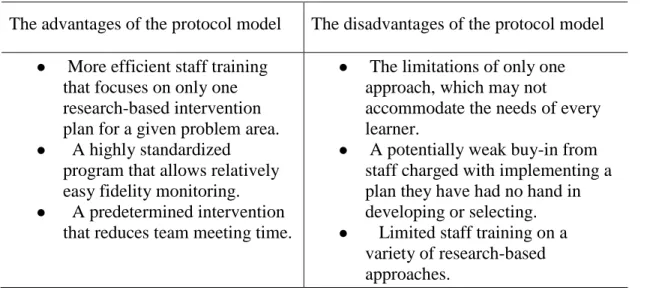
There are two protocols for implementing the Tiered RtI model. The Protocol design and the Problem-solving model. The Protocol design prescribes a particular intervention for the entire staff for all students who fall below established criteria (Searle, 2010). Staff is carefully trained and monitored for fidelity of implementation of the intervention (see Figure 2).
The advantages of the protocol model The disadvantages of the protocol model
● More efficient staff training that focuses on only one research-based intervention plan for a given problem area.
● A highly standardized program that allows relatively easy fidelity monitoring.
● A predetermined intervention that reduces team meeting time.
● The limitations of only one approach, which may not
accommodate the needs of every learner.
● A potentially weak buy-in from staff charged with implementing a plan they have had no hand in developing or selecting.
● Limited staff training on a variety of research-based approaches.
Note. This figure shows the advantages and disadvantages (Searle, 2010). Figure 2. The advantages and disadvantages of the protocol model
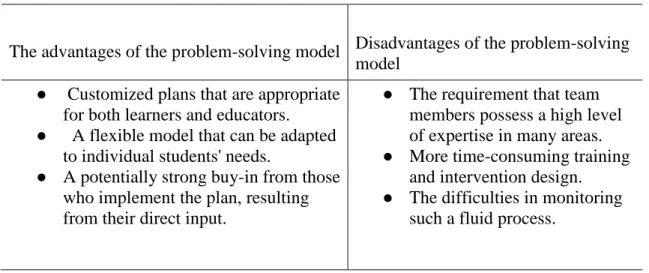
The Problem-solving model prescribes a team of trained individuals using a systematic approach to create an action plan for the intervention (see Figure 3). The problem-solving model is considered as an extension of pre-existing child study (Child find) teams (Cameron, Parks, Schulte, & Stiefel, 2006).
The advantages of the problem-solving model Disadvantages of the problem-solving model
● Customized plans that are appropriate for both learners and educators. ● A flexible model that can be adapted
to individual students' needs.
● A potentially strong buy-in from those who implement the plan, resulting from their direct input.
● The requirement that team members possess a high level of expertise in many areas. ● More time-consuming training
and intervention design. ● The difficulties in monitoring
such a fluid process.
This figure shows the advantages and disadvantages (Searle, 2010).
Figure 3. The advantages and disadvantages of the problem-solving model
Like most methods, there are advantages and disadvantages to these protocols. However, the standard protocol has several advantages over the problem-solving method; it includes all staff and one intervention strategy, it is easier to assess accuracy, more students can participate in the intervention, and it lends itself to group analysis (Carney & Stiefel, 2008). The most efficient approach to RtI is to use a combination of the two. This research will use a combination of the two to most effectively reach students and focus on growth and proficiency.
Integrated Learning Systems
Research shows that the use of Integrated Learning Systems (ILS) have proven successful in improving student reading achievement. Utilizing ILS have shown to increase abilities and deficient skills. Hannafin and Foshay (2006) found students who participated in computer-based programs had significantly higher test scores than students who did not participate in computer-based programs. Hasselbring (1986)
conducted research and found that computer-based instruction had positive effects on evaluative studies.
Kulik and Kulik (1991) provided a meta-analysis of findings from 254 studies on the effect of computer-based instruction. The studies included Special Education,
Elementary Education, Secondary Education and College Education. The mean effect of the sizes was an average of .42 and increased final exam scores by .30 standard
deviations. Shannon, Styles, Wilkerson, and Peery (2015), discovered that when students engage in computer-assisted learning that incorporates progress monitoring, continuous feedback, and independent reading practice aligned with their interest and ability levels, their reading outcomes increase significantly. Hughes, Phillips and Reed (2013) note that self-paced computer approaches may have utility in developing reading skills at a greater rate. These impacts on reading suggest that the improvements observed with computer programs over longer periods of time can be replicated.
READ 180
READ 180 is a computer-assisted, research based comprehensive reading instruction program to improve the reading achievement for adolescent readers
(Scholastic, 2011). It is designed for smaller classes where students rotate through a CAI format (Scholastic, 2011). The instructional content of Read 180 consist of phonemic awareness, phonics, fluency, vocabulary and comprehension. The design follows a three-part teaching plan on a daily basis: (1) whole group, (2) small group and (3) wrap up.
READ 180 provides continuous assessment and immediate feedback. It is designed specifically to be an intervention reading program for struggling students.
SuccessMaker Reading
SuccessMaker Reading is an advanced form of computer-based instruction (CBI) that is comprised of both courseware and management tools. The computer-based
courseware covers several grade levels and content area. The classroom management tool includes sophisticated teacher reporting features, online achievement test, and student progress reports (Brush, Armstrong, Barbrow, & McGraw, 1999).
In a “White Paper" on its website, Pearson Digital Learning provides one-page reports from several school divisions stating significant results in reading after
implementation of SuccessMaker Reading (Given et al., 2009). SuccessMaker Reading is instructional software that provides elementary and middle school learners with adaptive, personalized paths for mastery of essential reading concepts and delivers outcome-based data to inform educational decision making (Pearson, 2017). With programs such as SuccessMaker Reading, schools can implement a cost-effective intervention while improving students' reading abilities.
An overview of SuccessMaker Reading was conducted by the University of Utah Reading Clinic (2015). According to this review, SuccessMaker Reading is an adaptive, interactive multimedia course that delivers supplemental reading instruction on students’ instructional level. Students are placed based on the result of the SuccessMaker Reading placement test. Lessons are adaptive as movement through the course is determined by the student’s response to and interaction with the course learning objective. The program adapts based on the student's task performance and demonstration of understanding of concepts and content.
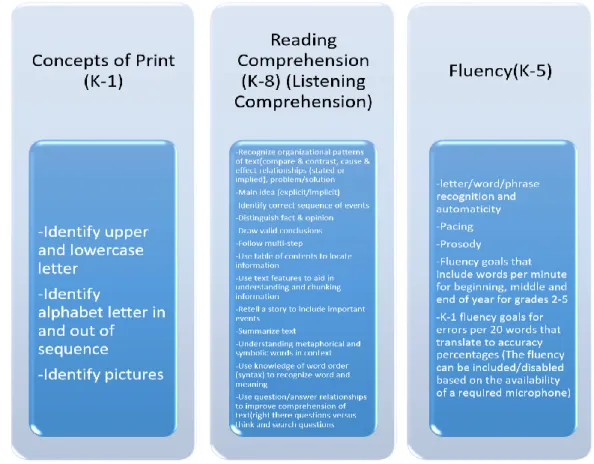
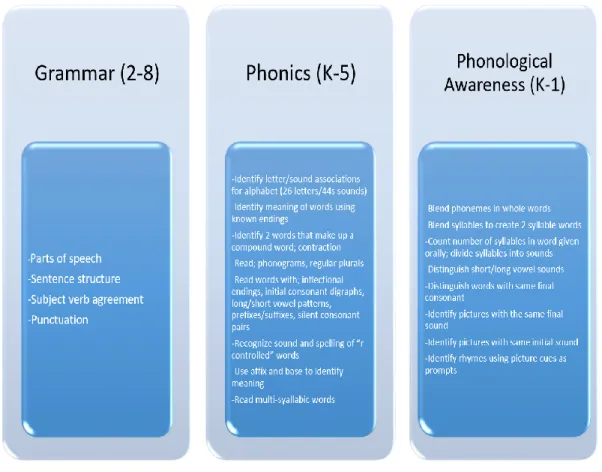
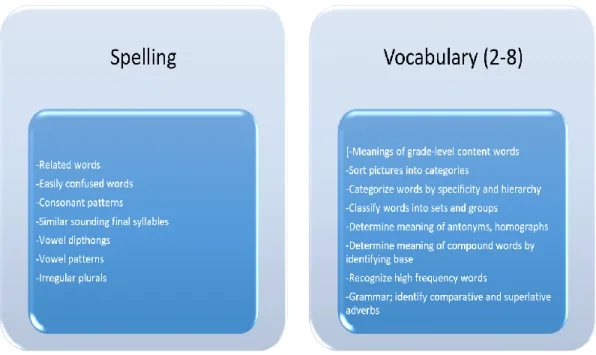
According to the University of Utah Reading Clinic (2015), the target population for SuccessMaker Reading are students in grades K-12, identified as Special and General Education, Gifted, At-risk, and ELL. SuccessMaker Reading will adapt instruction based on each student's abilities even for students in demographic grades 9-12. If student levels drop into the grades 3-5 range, the instructional videos will have an appearance that is age appropriate for secondary students. Figures 4, 5 and 6 below list the instructional strands with SuccessMaker Reading.
According to the review conducted by the University of Utah Reading Clinic (2015), the lesson format divides into five areas: Guided Practice, Remediation, Fluency assessment, Independent Practice, and Retention. Guided practice is based on the
student's instructional reading level and the appropriate strand level. The Guided Practice set is comprised of four lessons with some readers at higher level Lexile scores to ensure students are exposed to a wider range of vocabulary and build listening comprehension. When a student assessment is less than 65% accuracy in response to phonics,
comprehension, or vocabulary items, remediation follows each guided practice lesson. The system reintroduces activities considered unsuccessful in Delayed Presentation.
Note. These are three of the instructional strands from SuccessMaker Reading. A student would use this intervention in Pirate Time. Adapted from Overview of HB513 USOE Software Programs (SuccessMaker) by University of Utah Reading Clinic, 2015.
Note. These are three of the instructional strands from SuccessMaker Reading. A student would use this intervention in Pirate Time. Adapted from Overview of HB513 USOE Software Programs (SuccessMaker) by University of Utah Reading Clinic, 2015.
Note.These are two of the instructional strands from SuccessMaker Reading. A student would use this intervention in Pirate Time. Adapted from Overview of HB513 USOE Software Programs (SuccessMaker) by University of Utah Reading Clinic, 2015.
Figure 6. SuccessMaker Reading Instructional Strands
Fluency Assessment allows students to practice skills and fluency by recording and assessing their performance. Students can practice reading text, phrases, words, and letters. Recorded fluency files are stored for teachers to access and use as needed. Both word fluency, the ability to read a word correctly on sight and fluency, reading a passage with accuracy, speed, and inflection fall under the category of Fluency.
Independent practice lessons provide a passage that the student reads and then answers questions. The passage is either at a lower Lexile, the student's independent reading level or the level determined by the program that the student can comprehend with 90% accuracy. Audio support is inactive in independent practice. The last area is
Retention, where a mixed presentation of items that the student has passed before moving them to the next lesson set.
The University of Utah Reading Clinic (2015) reports that the suggested usage of SuccessMaker Reading is 15 minutes per day or one hour per week. For this research students received 25 minutes, five days each week. The average student is expected to complete a full lesson in 15 minutes. A unit, which is composed of three to six lessons, is approximately 120 minutes in length. Student progress reports outline areas of difficulty, cumulative performance, last session, prescriptive scheduling, student performance and system enrollment and usage.
According to the U.S. Department of Education (2009), three studies of SuccessMaker Reading met WWC evidence standards with reservations. These three studies included 450 students ages 9-16 years in grades 4-10. Based on the three studies, the WWC considers the extent of the evidence for SuccessMaker Reading to be small for alphabetic, reading fluency and general literacy achievement, but medium to large for reading comprehension and reading achievement. According to Gatti Evaluation Inc. (2011), students who clocked 16 hours or more of program use on SuccessMaker Reading for a year significantly outperformed the comparison group.
Competing Perspectives
Dietrichson, Bøg, Filges, and Klint Jørgesen (2017) examined interventions that aim to improve the educational achievement of low socio economic status (SES) students in elementary and middle school. Standardized assessments in reading measure outcomes and the analysis showed that there are interventions that improve the educational
achievement of low SES students. The interventions examined revealed that tutoring, feedback and progress monitoring, and cooperative learning have comparatively vast and robust average effect sizes. Dietrichson et al. (2017) discuss that although the magnitudes of the mean effect sizes for tutoring (0.36), feedback and progress monitoring (0.32), and cooperative learning are not broad enough to close the gap between high and low SES students, they represent a substantial reduction of that gap if targeted towards low SES students.
Conceptual Framework
According to Fullan (2010), moral purpose focuses on raising the bar and closing the gap for all children and youth in society relative to those dispositions and skills essential for surviving and thriving in a complex, interdependent global society. Fullan believes that people with this sense of moral purpose believe that every child can learn given the right approach and amount of time. When people see this confirmed daily in the most difficult circumstances, they feel it even more deeply.
Marshall and Oliva (2010) state that leadership for social justice investigate and pose solutions for issues that generate and reproduce societal inequities. They continue that advocates for social justice continually strive for a more equitable and socially just society by moving from passive discourse and involvement to conscious, deliberate, and proactive practice that will produce socially just outcomes for all children.
Marshall and Oliva (2010) conclude by noting that leaders for social justice take the moral position to critically deconstruct as well as reconstruct schools in a fashion that demands that schools are sites for the equitable treatment of all students. Leaders must