Wayne State University Dissertations
1-1-2016
Program Evaluation Of The Wayne State University
(wsu) Transition To Independence Program (tip)
Dinah AynaWayne State University,
Follow this and additional works at:https://digitalcommons.wayne.edu/oa_dissertations
Part of theOther Education Commons,Psychology Commons, and theSocial Work Commons
This Open Access Dissertation is brought to you for free and open access by DigitalCommons@WayneState. It has been accepted for inclusion in Wayne State University Dissertations by an authorized administrator of DigitalCommons@WayneState.
Recommended Citation
Ayna, Dinah, "Program Evaluation Of The Wayne State University (wsu) Transition To Independence Program (tip)" (2016).Wayne State University Dissertations. 1514.
PROGRAM EVALUATION OF THE WAYNE STATE UNIVERSITY (WSU) TRANSITION TO INDEPENDENCE PROGRAM (TIP)
by
DINAH AYNA DISSERTATION
Submitted to the Graduate School of Wayne State University,
Detroit, Michigan
in partial fulfillment of the requirements for the degree of
DOCTOR OF PHILOSOPHY
2016
MAJOR: PSYCHOLOGY (CLINICAL)
Approved By: _______________________________________ Advisor Date _______________________________________ _______________________________________ _______________________________________ _______________________________________
© COPYRIGHT BY DINAH AYNA
2016
ii
DEDICATION
To my parents, Fayza and Kassem; To my brother, Adel;
iii
ACKNOWLEDGEMENTS
This project would never have seen fruition without the support of many people in my life, personally, academically, and professionally.
First and foremost: my parents. Their endless sacrifice and unconditional love led me to and through this PhD endeavor. During eight challenging years, my mother gave up of her life to support me through debilitating personal struggles. She literally traveled across the world to be present with me multiple times, provided emotional support that only a mother can give, and so much more. Alongside her, my father has been the rock of our world, with his wisdom, guidance, patience, passion, progressive outlook, and trust in me.
Academically, I owe my retention to my advisor, Emily Grekin, Ph.D. Having her as an advisor and a mentor has been an answer to my parents’ prayers. I cannot thank her enough for the infinite support and encouragement; numerous hours and painstaking reviews of my work; and priceless feedback moments in critiques and suggestions. Dr. Grekin has left a life-long mark beyond what I could ever explain.
Another champion of my growth is Douglas Barnett, Ph.D., who warmly offered clinical and personal mentorship with a genuine appreciation for me in my development and life situations. His intellect, personality, mercifulness, and uniquely deep understanding of human relationships has kept my sanity and taught me to tolerate and challenge; to criticize and accept; to be patient and quick; and to always remember that “even a broken clock is right twice a day.” I feel blessed to have been influenced by Dr. Barnett in ways that only he could have impacted.
I give special thanks to Dr. Kuentzel, Dr. Day, and Dr. Toro. In times of chaos and my self-doubt, Jeffrey Kuentzel, Ph.D. was always there to ground my fears and highlight my strengths. I, and fellow graduate students, am forever grateful for Dr. Kuentzel’s insights and
iv
invaluable moments of wisdom. Angelique Day, Ph.D., supportively shared her program’s dataset for this project. She gave her time and experience in multiple meetings to maximize gathering critical data points. Paul Toro, Ph.D., graciously served as co-chair of my dissertation committee. Dr. Day and Dr. Toro both combine advocacy, social justice, and applicable research, which was a skill I sought to learn.
Acknowledgement is also due to our Director of Clinical Training, Mark Lumley, Ph.D., for his incessant efforts at modeling data-informed practices, sharing the blunt truth, and keeping us in check. In addition, I must recognize our Graduate Advisor, Alia Allen, M.A., the lifeline of all graduate processes and the ultimate advocate for students.
I am grateful for my mates in Dr. Grekin’s lab who empathically listened, cheerfully assisted, and gave feedback: Amy Graham, Amy Loree, Anthony Kostecki, Ben Laliberte, Brian Klassen, Katherine Zumberg-Smith, Damaris Pop, and Jennifer Ellis. Many more individuals not specifically named here deserve credit and I am thankful for each and every one of them.
Personally, I am indebted to Shaymaa and Zain Zahawi, and Frosina and Goran Sepasevski with endless hours of babysitting and dear friendships. I could never have dreamed of better neighbors.
v
TABLE OF CONTENTS
Dedication ... ii
Acknowledgements ... iii
List of Tables ... vii
List of Figures ... viii
Chapter 1 “Introduction” ...1
Academic Achievement among Foster Youth ...3
Potential Explanations of Low Academic Achievement among Foster Students in College ...5
Programs Designed to Increase Resources for Foster Care Youth ...15
Interventions to Improve Academic Outcomes among Foster Youth ...16
The Current Study ...18
Chapter 2: “Method” ...20
Description of the Transition to Independence Program (TIP) ...20
Funding ...26
Sample ...27
Study Variables ...28
Procedure ...31
Chapter 3: “Results” ...33
Between-Subjects Data Screening ...33
Samples Descriptives ...33
Outcomes of Academic Achievement: Between Group Comparisons ...35
TIP Within Subjects Comparisons ...38
vi
TIP Service Utilization and Academic Outcomes ...40
Casey Pre-Survey Scores Predicting Utilization of TIP Services ...41
Utilization of TIP Services Predicting Casey Post-Survey Scores ...41
Chapter 4: “Discussion” ...42
TIP Utilization and Academic Outcomes ...42
Academic Outcomes of TIP Students Compared to Low Income and Foster Non-TIP Students ...44
Limitations ...45
Conclusions and Future Directions ...47
Appendix A: TIP Brochure ... 60
Appendix B: APX1000 Syllabus ...62
Appendix C: The Annie E. Casey Foundation Pre-Survey ...73
Appendix D: The Annie E. Casey Foundation Post-Survey ...80
References ...87
Abstract ...109
vii
LIST OF TABLES
Table 1: First Enrollment Semester by Group ...48 Table 2: Means, Standard Deviations, and Percentages of Predictor Variables by Group ...49 Table 3: Summary of Binary Logistic Regression Analyses on Group Membership Predicting
Lifetime Financial Hold and Being a Transfer Student ...50 Table 4: Means, Standard Deviations, and Percentages of Academic Outcome Variables by Group ...51 Table 5: Logistic Regression Analyses for Group Membership Predicting Academic Performance
Variables ...52 Table 6: TIP Students’ Frequency of Needs and Concerns in Casey Pre-and Post-Surveys and Total Utilization of TIP Services ...53 Table 7: Significant Logistic Regression Analyses Predicting First Year Retention from TIP Utilization ...54 Table 8: Pearson’s Correlation between Casey Pre-Survey Categories of Needs and Frequency of TIP Contacts and Services ...55 Table 9: Pearson’s Correlation between Casey Post-Survey Categories of Concerns and Frequency of TIP Contacts and Services ...55
viii
LIST OF FIGURES
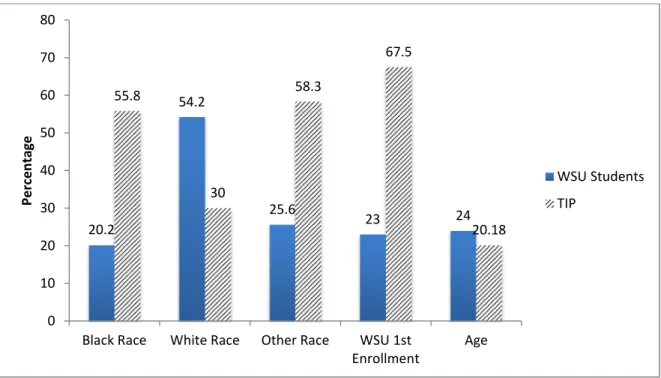
Figure 1: TIP Students Compared to the WSU Undergraduate Population Race, Age, and WSU 1st College Enrollment ...57 Figure 2: Low-Income Students Compared to the WSU Undergraduate Population Race, Age, and WSU 1st College Enrollment ...58 Figure 3: Foster Non-TIP Students Compared to the WSU Undergraduate Population Race, Age, and WSU 1st College Enrollment ...59
CHAPTER 1: INTRODUCTION
Foster care is a system in which a child is placed in the custody of the State until a permanent home is secured. More specifically, the U.S. Code of Federal Regulations defines foster care as “24-hour substitute care for children outside their own homes” (Government Printing Office, 2014). Approximately 415,000 children (i.e. 5 out of every 1000) were in the U.S. foster care system at the end of 2014 (U.S. Department of Health and Human Services – DHHS – AFCARS Report 2015), and 250,000 new children enter the system every year (U.S. DHHS, 2011). Moreover, the Department of Health and Human Services reports that 3 in 10 foster children were in kinship care by the end of 2014 (US DHHS AFCARS Report, 2015).
Foster care settings are diverse and can include: non-relative foster homes, relative foster homes, group homes, emergency shelters, residential facilities, and pre-adoptive homes (Child Welfare Information Gateway, 2013); however, the majority of placements (79%) are with pre-adoptive, relative and non-relative foster families (US DHHS AFCARS Report, 2015).
Most foster care children spend more than a year in the system. For example, in 2014, the median amount of time spent in foster care was 12.6 months and the average amount of time was 20.8 months. Notably, however, 28% of foster youth spend over 2 years in the system, and 7% spend at least 5 years in the system (US DHHS AFCARS Report, 2015). Thirty percent of foster youth are between the ages of 13 and 20 and many of these ‘older’ youth spend a significant portion of their adolescence in the system (US DHHS AFCARS Report, 2015).
Youth in foster care face a number of challenges. In particular, many foster care youth have experienced maltreatment. The US Center for Disease Control and Prevention (CDC) defines child maltreatment as “Any act or series of acts of commission or omission by a parent or other caregiver (e.g. clergy, coach, teacher) that results in harm, potential for harm, or threat of
harm to a child” (CDC, 2014). The Children’s Bureau (2012) reports that, in 2012, an estimated 247,000 children had been referred to the foster care system because of substantiated maltreatment reports (US DHHS, 2012). Thus, approximately 62% of foster children in the U.S. were removed from their biological parents because of abuse or neglect. In addition to maltreatment, other reasons for placement in the foster care system include parental dysfunction, parent death, or inability of parents to afford health care for the child (US DHHS, 2009).
Patterns of exiting the system are complex and depend on a variety of factors, including type of placement (e.g. kin home, non-kin home, group home), permanency outcome (i.e. reunification with biological family, adoption, relative guardianship, or emancipation by age 19; Akin, 2011; Courtney, 1994), child characteristics (Becker, Jordan, & Larsen, 2007; Benedict & White, 1991; McDonald et al., 2007; Wells & Gue, 1999), and family characteristics (e.g. family functioning, social support, parenting; Glisson, Baily, & Post, 2000; McDonald, 2007; Wells & Guo, 1999). Permanent living arrangements are expected to be established upon discharge from the system for older youth; however, one such permanency outcome is Another Permanency Planned Living Arrangement – Emancipation (APPLA-E) which does not provide a connection to a permanent, caring adult. Despite state and federal efforts (e.g. transitional living programs, child welfare funds) to support emancipated youth, many of these youth feel extremely unprepared for independent living after leaving the foster system (Courtney et al., 2001; Merdinger, Hines, Lemon-Osterling, & Wyatt, 2005).
Foster care youth are at risk for multiple, often related, negative outcomes, including psychopathology (Burns et al., 2004; Chernoff et al., 1994; Kaplan, Skolnik, & Turnbull, 2009; Scannapieco, Connell-Carrick, & Painter, 2007; Simms, Dubowitz, & Szilagyi, M.A. 2000), homelessness (Dworsky & Courtney, 2009; Fowler, Toro, & Bart, 2009; Park, Metrax, &
Culhane, 2005; Kushel et al., 2007; Pecora et al., 2006a), incarceration (Courtney et al., 2001; Courtney et al, 2007; Vaughn, Shook, & McMillen, 2008), substance use (Kim & Leve, 2011; Substance Abuse & Mental Health Administration, SAMSHA, 2005; Vaughn, Ollie, McMillen, Scott, & Munson, 2007), early parenting (Chase, Maxwell, Knight, & Aggleton, 2006; Dworsky & Courtney, 2010; Svoboda, Shaw, Barth, & Bright, 2012), and unemployment (Courtney, Piliavin, Grogan-Kaylor, & Nesmith, 2001; Dworsky, 2005). Notably, research suggests that unstable housing continues to affect foster youth well into their early adulthood years, having negative impacts on the mental health, educational achievement, and employment outcomes of emancipated young adults (Fowler, Toro & Miles, 2011; Macomber, 2008). While an examination of all of these outcomes is beyond the scope of this study, the current project will focus on one particularly prevalent and potentially modifiable outcome: low educational achievement. More specifically, this study aims to evaluate a broad, state-funded program, designed to increase postsecondary academic achievement among youth aging out of the foster care system.
Academic Achievement among Foster Youth
Discrepancies between the educational achievement of foster and non-foster youth begin early in life. Children in foster care perform significantly worse than their peers in pre-reading skills, such as phonological awareness, alphabetic knowledge, and oral language ability (Pears, Heywood, Kim, & Fisher, 2011), as well as in more advanced skills such as reading, writing, numeracy, and language (Mitic & Rimer, 2002). Academic discrepancies between foster and non-foster care youth can be seen early in elementary school (Al Otaiba & Fuchs, 2006; Fantuzzo & Perlman, 2007) and persist even when controlling for other risk factors such as birth (e.g. prenatal care, premature birth, low birth weight) and poverty (e.g. receiving free or reduced
school lunch) risks (Fantuzzo & Perlman, 2007). In a meta-analysis of 31 studies on the educational achievements of children in out-of-home care, Scherr (2007) found that these children are: 1) disproportionately represented in special education, and 2) frequently disciplined in schools. In general, foster students are more likely than their non-foster peers to repeat a grade (Choice et al., 2001), attend under achieving high schools that do not prepare them for college (Blome, 1997), and score 15-20 percentile points below non-foster youth on statewide achievement tests (Burley & Halpern, 2001). Moreover, foster youth are less likely than the general population to successfully complete high school and go to college (Reily, 2003; Scannapieco, Connell-Carrick, & Painter, 2007; U.S. Department of Education, 2016; Wolanin, 2005). Just over half of foster youth (about 57%) complete high school compared to 70% of their non-foster counterparts (Reily, 2003; Sheehy et al., 2001; Wolanin, 2005). Moreover, foster youth attain general equivalence degrees (GEDs), instead of high school diplomas, at 6 times the rate of the general population (28.5% vs. 5%) (Pecora et al., 2006b). Notably, individuals who earn high school diplomas are more than twice as likely to enroll in post-secondary education as individuals who earn GEDs (Bozick & DeLuca, 2005) and earning a GED significantly improves occupational prospects only when followed by postsecondary education (Hamilton & Hamilton, 2006).
The relationship between foster care placement and poor academic achievement also extends to the college years. Foster students are less likely than their peers to enroll in, and graduate from college (although 70% of foster youth express a desire to earn a college degree) (Cochrane and Szabo-Kubitz, 2009; Davis, 2006). More specifically, only 20% of foster youth who are qualified to go to college attend college, compared to 60% of their non-foster counterparts (Walonin, 2005). In addition, while youth, in general, struggle with persisting
through college to degree completion (Alon & Tienda, 2005; Griffith, 2008; National Center for Public Policy and Education, 2010), foster youth are less likely than other students to earn a credential (Davis, 2006). For example, Radford et al. (2010) found that 58% of a representative sample of undergraduates completed a four-year college degree in 6 years, whereas 6-year completion rates for foster youth range from 6 to 50% (Davis, 2006; Day, Dworsky, and Feng, 2013). Moreover, data indicate that 1-11% of foster youth, aged 25-34, complete a postsecondary degree (Pecora et al., 2006b; Wolanin, 2005), as compared to 33% of same-age youth in the general population (U.S. Census Bureau, 2015). These numbers suggest that college students from the foster care system face distinctive challenges as they seek postsecondary education.
Potential Explanations of Low Academic Achievement among Foster Students in College
Foster care is associated with multiple factors that predict poor academic achievement (e.g. lack of home base, financial need, lack of social support, homelessness, history of neglect/abuse). These factors often co-occur, and are uniquely and interactively associated with negative academic outcomes (e.g. Becker and Luthar, 2002; Li, Lerner, & Lerner, 2010; Monti, Pomerantz, & Roisman, 2014; Robinson et al., 2012; Rouse & Fantuzzo, 2009; Rumberger & Larson, 1998; Suldo, Gormley, DePaul, & Anderson-Butcher, 2014; Taussig, 2002). To illustrate, the following 4 risk factors will be discussed: maltreatment, lack of social support, chronic stress, and lack of resources.
Maltreatment
As mentioned earlier, a large percentage of foster youth have experienced maltreatment. Maltreatment has been associated with poor academic achievement in studies of both foster and non-foster care youth. For example, Rouse and Fantuzzo (2009) found that, in a large
population-based sample, child maltreatment was the strongest predictor of poor reading performance (OR=1.60), poor mathematics achievement (OR=1.50), and second grade retention (OR=1.80). Landsford et al. (2002) found that adolescents maltreated early in life were absent from school for 1.5 times as many days as non-maltreated adolescents. Crozier and Barth (2005) found that children and adolescents receiving child welfare services due to child maltreatment were more likely than a normative sample to score one or more standard deviations below the mean on standardized measures of cognitive functioning and academic achievement. Other studies have yielded similar results and suggest that neglect and abuse have detrimental effects on test scores, GPA (Kelley, Thornberry, & Smith, 1997; Nomura & Chemtob, 2007), absenteeism (Leiter, 2007; Leiter & Johnsen, 1997), school behavior (Eckenrode et al., 1993; Kendall-Tackett & Eceknrode, 1996; Leiter and Johnsen, 1997), and need for special education (Jonson-Reid et al., 2004; Kinard, 1999; Leiter & Johnsen, 1997).
There are a number of paths through which maltreatment might become associated with poor academic achievement. Some of these paths are fairly direct. For example, neglected children may be malnourished, which may, in turn, make it difficult for them to concentrate in school (Taras, 2005; Woodhouse & Lamport, 2012). Similarly, physical abuse may cause brain injuries, which may result in poor academic functioning. In fact, research indicates that approximately 25% of brain injuries in children result from abuse (Sobsey, 2002). It should also be noted that children with cognitive disabilities are much more vulnerable to abuse than their peers. In fact, studies indicate that children with disabilities are between 1.67 and 7.7 times more likely to experience maltreatment than children without disabilities (Crosse et al, 1993; Sullivan & Knutson, 2000; Verdugo et al, 1995). As such, maltreatment leads to exposure to complex trauma, i.e. exposure to repeated or chronic and prolonged adverse events throughout the
developmental years that increase the risk for mental health problems that, in turn, interfere with academic performance well into postsecondary education years. For example, in a longitudinal study examining mental health service use among older youth, McMillen et al. (2004) found exceptionally high rates of inpatient hospitalization (42%) and use of residential programs (77%). Moreover, over 21% of foster alumni have a diagnosis of Posttraumatic Stress Disorder (PTSD), a rate higher than that of war veterans (Pecora et al., 2003). PTSD symptoms have been associated with low self-efficacy for learning and maladaptive academic goal orientation (Ness, Middleton, & Hildebrandt, 2015; Willis & Nagel, 2015). Thus, the pattern of abuse experienced by foster youth leads to significant mental health challenges, which negatively impacts attention and the ability to learn, and may exacerbate existing academic difficulties, and create a negative cycle of abuse and cognitive impairment.
Other paths between maltreatment and academic functioning are less direct. For example, there are a number of factors that predict both abuse risk and poor child academic functioning, including prenatal alcohol abuse (Bada et al., 2002; Magura & Laudet, 1996; Meyer, McWey, McKendrick, & Hendersen, 2010; Smith, Johnson, Pears, Fisher, & DeGarmo, 2007), exposure to violence, poverty (Beckwith, Howard, Espinosa, & Tyler, 1999; McLloyd, 1998), and parental cognitive impairment (Levy, Hay, McStephen, Wood, & Waldman, 1997; Plomin, Price, Eley, Dale, & Stevenson, 2002). Moreover, some research highlights a pathway in which maltreatment leads to child aggression and impulsivity, which leads to problems with peers, which leads to poor academic functioning (Lansford et al., 2002; Sobsey, 2002; Wolfe, 1999).
Studies of brain development have also focused on the effects of maltreatment. In particular, a number of studies suggest that child maltreatment is associated with hypothalamic-pituitary-adrenal (HPA) axis dysregulation. The HPA axis is central to the body’s response to
threat. Detection of threat activates the hypothalamus to release corticotropin releasing factor (CRF), which leads the pituitary gland to release adrenocorticotropic hormone (ACTH), which results in secretion of glucocorticoid (cortisol) from the adrenal gland. This process results in arousal -related physiological responses such as increased heart rate, increased blood pressure, disturbed sleep, and hypervigilance. Notably, prolonged disruption to the HPA system can lead to deleterious effects on physical development, the immune system, and cognitive functioning (Johnson, Kamilaris, Chrousos, & Gold, 1992; Lupien, Maheu, Tu, Fiocco, & Shramek, 2007; Sapolsky et al., 2000; Twardosz & Lutzker, 2010). Moreover, prolonged HPA axis dysregulation has been associated with the development of anxiety disorders, affective disorders, and disruptive behavior disorders (Heim & Nemeroff, 2001; Kaufman & Charney, 2001; Levine, 2005; Repetti, Taylor, & Seeman, 2002), all of which disrupt attention and concentration required for optimal school performance.
Maltreatment has been found to profoundly alter the development and subsequent functioning of the HPA system (Bremmer & Vermetten, 2001; Gunnar & Vazwurd, 2001; Sanchez, Ladd, & Plotsky, 2001). Causal links have been documented in animal studies between repeated or long periods of maternal separation and (1) increases in ACTH and CRF, (2) hippocampal changes (Anisman et al., 1998; Levine, Wiener, & Coe, 1993; Makino, Smith, & Gold, 1995), (3) anxiety-like behaviors and hypervigilance, and (4) mild cognitive impairments (Meaney & Szyf, 2005; Sanchez et al., 2001). Similar results have been found in maltreated humans. For example, Heim et al. (2000) found that women who were abused as children had greater ACTH and cortisol responses to mild stressors, such as public speaking (a common expectation in many college courses) or mental arithmetic, than a control group and a group of depressed women without a history of abuse. Moreover, Heim, Mletzko, Pursell, Musselman, &
Nemeroff, (2008) found similar results in a group of maltreated men exposed to stressors, suggesting that early maltreatment can have long-term effects on the stress response of both males and females.
Maltreatment may also be associated with other physiological and developmental challenges. For example, brain research has linked early maltreatment experiences to smaller corpus callosum sizes. Reduced corpus callosum size has been associated with diminished communication between brain hemispheres and subsequent problems with processing information, an important skill for success in college. Controlled animal studies have shown a causal link between early stressors such as isolation or neglect and a reduction in the midsaggital area of the corpus callosum in male rats (Berrebi et al., 1988) and male rhesus monkeys (Sanchez et al., 1998). Similar associations have been detected in human studies. In 2 separate studies, Teicher et al. (1997) and De Bellis et al. (1999) found a reduction in the midsaggital area of the corpus callosum among psychiatrically ill children with a history of abuse or neglect. Moreover, early maltreatment experiences have been associated with increased hemispheric laterality and decreased hemispheric integration in humans (Schiffer, Teicher, & Papanicolaou, 1995). These abnormalities in brain morphology among maltreated children are thought to be related to the etiology of various psychiatric disorders, particularly borderline personality disorder (Teicher et al., 1997; Teicher, Tomoda, & Andersen, 2006) and posttraumatic stress disorder (De Bellis et al., 1999).
Although these studies of brain development are somewhat reductionistic and may account for only a very small part of maltreatment outcomes, they are nonetheless informative and suggest that, at a basic biological level, children with dysregulated HPA functioning and abnormalities in corpus callosum development may struggle to manage stress and negative
emotion, and to accurately interpret information. Deficits in these core skills may, in turn, interfere with the ability to perform well in school.
Lack of Social Support
Support from parents (or other caregivers) and educators plays a pivotal role in motivating students to succeed academically (Chen & Carroll, 2005; Seymour & Hewett, 1997). Notably, youth with foster care histories often receive less parental/other caregiver and peer support than non-foster care youth. Many (though not all) foster children have no contact with their biological parents. Moreover, biological parents of foster children often struggle with issues, such as homelessness, substance abuse, and mental health problems which limit their ability to provide support (Zlotnick, Kronstadt, & Klee, 1998; Zlotnick, Tam, and Zerger, 2012).
Foster care children may also receive limited support from their foster parents who are often less involved in their foster child’s school than non-foster parents (Maryland Department of Human Resources, 2014). In addition, because foster youth change homes and schools frequently, it is difficult for even dedicated foster parents to become meaningfully involved in the school or to form long-term relationships with teachers. Furthermore, school practitioners (e.g. teachers, counselors, social workers) often do not communicate with child welfare agencies, and are thus unable to identify foster youth and tailor for their educational wellbeing (Day, Somers, Smith-Darden, and Yoon, 2014). It should also be noted that late graduating foster children typically attend high-poverty, under-funded, and low-achieving high schools upon aging out of the foster system, i.e. after reaching the age of 18 or 21 (Smithgall et al., 2004). This significantly reduces their chances of having educators who are engaging and invested in preparing students for college. Moreover, late graduation from high school impedes access to time limited resources. For example, Education Training Vouchers (ETVs) are inaccessible after
age 21, and, Pell Grants, a form of federal loans that does not necessitate repayment, have been limited to 6 full years (Day, Brin, & Toro, 2015).
Another factor that tends to limit social support among foster care children is a lack of residential stability. An estimated one-third of foster children experience three or more home care placements, and approximately 12% experience at least five placements (Choice et al., 2001). In a study of 659 foster alumni, Pecora et al. (2006b) found that about one third of the sample reported 10 or more school changes from elementary through high school, although some of these changes occurred before entering or after discharge from foster care. Moreover, an estimated 16% to 40% of children who leave foster care will re-enter the system at some point (Barth et al., 2008; Jonson-Reid, 2003; Sangmoo, Jonson-Reid, & Drake, 2012; Taussig, Clyman, & Landsverk, 2001). These multiple placements lead to frequent school changes and prevent the formation of peer networks that buffer against alienation and school disengagement. This, in turn, prevents foster youth from developing healthy, long-term attachments with both peers and adults and reduces the prospect of receiving long-term support and guidance (Newton, Litrownick, & Landsverk, 2000; Webster, Barth, & Needell, 2000). Indeed, foster youth who do complete a college degree identify school stability, preparation for college, and supportive teachers as the major external factors contributing to this success (Merdinger et al., 2005).
Social support also plays a pivotal role in success during college. Research suggests that family support can buffer the negative effects of transition to college or university and is associated with better collegiate adjustment. For example, Holahan, Valentiner, and Moos (1994) found that initial parental support predicted better psychological adjustment 2 years into college. Support from peers is also related to academic success. For example Dennis, Phinney, and Chuateco (2005) conducted longitudinal focus groups on 100 ethnic minority
first-generation college students and found that lack of peer support in the fall was a predictor of poor college adjustment and lower GPA the following spring.
Notably, parental and other supports (e.g. mentors, peers) can increase academic motivation in many ways. For example, self-determination theory (SDT; Deci & Ryan, 1985) differentiates between intrinsic motivation (i.e. coming from within the individual, marked by internal reward such as peace of mind or personal satisfaction) and extrinsic motivation (i.e. coming from outside the individual, marked by external rewards such as money or recognition) and maintains that both play a role in academic achievement. In particular, intrinsic motivation has been associated with high-quality learning and creativity (Ryan & Deci, 2000) and can be systematically increased or undermined by parental and educator support (Ryan & Stiller, 1991). Chronic Stress
Another approach to understanding foster youth challenges in academia may be found in the idea of chronic, ‘toxic’ stress. The National Scientific Council on the Developing Child (NSCDC, 2005) defines 3 types of stress responses (positive, tolerable, and toxic) and proposes a framework that links the type of stress response to brain structure and general short and long-term wellbeing. Positive stress refers to the body’s reactions to short-lived, normal stressors (e.g. adjusting to a new childcare setting or injected immunization) in the presence of appropriate support, and features healthy development. Positive stress responses are characterized by brief increases in heart rate and mild elevations in hormone levels. Tolerable stress responses are characterized by the activation of the body’s alert systems to more severe, longer-lasting difficulties (e.g. loss of a loved one, frightening injury, natural disaster) with potential to change the architecture of the developing brain. If those stressors are time-limited and buffered by positive relationships with supportive adults who help the child adapt, effects can be reversed.
Toxic stress, however, occurs when a child experiences strong, frequent, and/or prolonged adversity (e.g. physical/emotional abuse, neglect, frequent disruptions) in the absence of adequate adult support. This response can disrupt the development of brain architecture and other organ systems, increasing the risk of stress-related problems and cognitive impairments that last well into the adult years (NSCDC, 2005). Children exposed to toxic stress produce higher levels of cortisol over extended periods of time, which can impair areas of the brain necessary for learning and memory (Lupien et al., 1998).
The life style of youth in foster care is often characterized by insecurity and stress. One of the major causes of this stress is residential instability. As mentioned above, many foster care youth experience multiple placements, and many who leave foster care ultimately re-enter the system (Barth et al., 2008; Choice et al., 2001; Jonson-Reid, 2003; Sangmoo, Jonson-Reid, & Drake, 2012; Taussig et al., 2001) and continue to have housing instability during their collegiate years (Berzin, Rhodes, & Curtis, 2011; Center for Public Policy Priorities, 2001). Such changes create a ‘domino effect,’ whereby each removal from the home is multi-dimensional affecting areas such as sleep, school, attachments, etc. In the absence of supportive, responsive relationships with caring adults as described above, this stress can quickly become toxic. In addition to physiological and psychological sequela, lack of residential stability creates a host of pragmatic obstacles, as agencies and youth attempt to retrieve school documents from multiple districts, (e.g. report cards for college applications, etc.). Moreover, the average foster child spends significantly more time than his/her peers dealing with immediate concerns such as adjusting, acclimating to new environments, and trying to survive, which consumes physical and psychological energy, and consequently provides less chance to focus on academic achievement and building a successful future.
Lack of Resources
Foster care youth often struggle to obtain resources, both during their foster care placements, and after aging out of the system. Many foster families are financially challenged. Although foster parents receive some governmental and private support, they often do not receive enough to cover the basic expenses of caring for a child. The U.S. Department of Health and Human Services provides financial support to foster families through child welfare and through Temporary Assistance for Needy Families (TANF), a program designed to help needy families achieve self-sufficiency. Notably, financial benefits from both sources fall short of the estimated monthly amount needed to raise one child ($990) or two children ($1980): foster care pays only 52% of the estimated cost of raising one ($511) or two children ($990), while TANF covers 25% ($249) of raising one child and 17% ($344) of raising two (The Annie E. Casey Foundation Policy Report, 2012). Moreover, foster parents make, on average, one third the income of non-foster parents, although they typically have more children in the home (O’Hare, 2008). As a result of this financial pressure, foster children are often provided with limited financial and material resources. Moreover, many foster care youth have an increased need for resources (despite their limited access to them). For example, Scannapieco, Connell-Carrick, & Painter (2007) found that 47% of foster youth had a disabling condition and 37% suffered clinically significant emotional distress. Sixty eight percent of foster youth are identified as having special needs and 36% receive special education services (Cochrane & Szabo-Kubitz, 2009).
The transition out of the foster system (at age 18 or 21) is also often characterized by a struggle to obtain resources. Many youths experience outcomes such as victimization, sexual assault, incarceration, poverty, or homelessness after aging out of the foster care system
(Scannapieco, Connell-Carrick, & Painter, 2007). For example, Courtney and Dworsky (2005) found that, by age 19, one in seven former foster youth (i.e. those that have aged out of the system) have been homeless, about half receive public benefits, up to 90% earn poverty-level wages, and more than a quarter have been arrested. Other studies indicate that approximately 20% of youth become homeless within 2 years of aging out of the foster system (Dworsky & Courtney, 2009; Kushel et al., 2007; Fowler, Toro, & Bart, 2009; Pecora et al., 2003).
Upon aging out of the foster care system, many youths find that they are unable to pursue desired career paths. In particular, foster youths who want to attend college are often unable to do so because of a lack of resources. At a basic level, only about one-quarter to one-third of foster alumni report having resources such as a driver’s license, cash, or dishes and utensils upon aging out of the system (Pecora et al., 2006a). In addition, foster youth are often unable to access other resources, such as college scholarships and financial aid due to limited mentoring, education and navigation support (Cochrane & Szabo-Kubitz, 2009).
Programs Designed to Increase Resources for Foster Care Youth
Over the past 15 years, a number of programs have been created to help foster youth access resources. In particular, the federal government has attempted to increase resources for foster students by: (1) passing multiple laws to facilitate coordination of services between agencies involved in the academic attainment of foster youth; and (2) providing funding to programs assisting those youth through their transition to independence. For example, the Fostering Connections to Success and Increasing Adoption Act of 2008 (FCSA) mandates that factors such as current educational setting, proximity to school, and remaining in the same school, all be considered when making placement decisions. In addition, FCSA requires agencies to (1) provide immediate enrollment in and transfers of records to new schools and (2)
develop transition plans for youth who want to attend college. Importantly, this law allows foster youth to voluntarily remain in the State’s custody until age 21 and to utilize consequent benefits (see Day & Preston, 2012, for an analysis of FCSA). More recently, the Uninterrupted Scholars Act of 2013 (USA) allows child welfare agencies, caseworkers, and others involved in the protection of students to access student educational records without obtaining parental consent. Additionally, the Foster Care Independence Act of 1999 provided $140 million in funding to state governments to improve and expand programs aimed at promoting independence in youth aging out of the foster care system. The Promoting Safe and Stable Families Amendment of 2001 enhanced this act with an additional $60 million to aid states in promoting postsecondary education and training for youth aging out. This amendment also funds the Educational Training Voucher (ETV) program, which provides up to $5000 per year for foster youth in college who are under 23 years of age and who enrolled by age 21.
States have also attempted to address some of the needs of this population in the form of providing financial support. For example, the State of California has established an “Office of the Foster Care Ombudsman” that is dedicated to helping foster youth attend college. In addition, they provide scholarships/grants that are only available to children from the foster care system (e.g. The California Chafee Grant and The Orphan Foundation of America Scholarships for Youth in Foster Care; http://www.fosteryouthhelp.ca.gov/College.html). Many states (e.g. Connecticut, Florida, Maine) have passed tuition waivers for foster youth. Private institutions such as Casey Family Programs and Foster Care to Success are also stepping in, but the need continues to exceed available resources.
The presence of multiple predisposing conditions places the foster student population at an increased risk for poor academic performance. Consequently, any intervention designed to
assist those students must be flexible, and comprehensive, and must allow for individualized service delivery that may be irrelevant to other populations in the collegiate student body.
Interventions to Improve Academic Outcomes among Foster Youth
Universities across Michigan and the U.S. are beginning to recognize the distinctive needs of foster students due to concentrated policy efforts by involved educators. The Michigan Legislature passed Appropriations House Bill 5365, Public Act 200 of 2012, which gives the Michigan Department of Human Services $1.8 million (~ $300k per school) for scholarships and programming at nine foster care friendly academic institutions, including Wayne State University. A few college-level programs have been developed which specifically target the needs of foster youth, including the Fostering Academic, Mentoring Excellence (FAME) Program at Michigan State University (http://socialwork.msu.edu/Programs/Community-Outreach/FAME), Seita program at Western Michigan University (http://www.fullerton.edu/guardianscholars/), Transition to Independence Program (TIP) at Wayne State University (http://tipwaynestate.org), the Mentorship Access Guidance in College (MAGIC) program at Eastern Michigan University (http://www.emich.edu/magic/), the Guardian Scholars Program at California State universities and colleges (http://www.fosteryouthhelp.ca.gov/pdfs/guardianscholars.pdf), and the Passport for Foster
Youth Promise Program at Washington State University
(http://universitycollege.wsu.edu/units/Passport/index.html). These programs vary in their comprehensiveness and criteria for student eligibility; however, they follow the general framework established by the Casey Family Foundation, the nation’s largest institution focusing on reducing the need for foster care and improving the safety and success of children in the system (www.casey.org). The Casey Family foundation framework necessitates securing basic
needs of students first, such as housing, food, and social support before attending to psychological, academic, and career counseling needs (Casey Family Programs, 2010). In particular, Casey Family Programs (2010) determined that all effective programs designed to help foster students succeed academically share the following characteristics: 1) maximizing use of existing college and community resources; 2) employing effective leadership within student support services; and 3) having strong backing from their college administration. Moreover, the Pell Institute for the Study of Opportunity in Higher Education examined a sample of identified factors thought to be effective in improving college retention and graduation rates for foster youth. Those include intentional academic planning; special programs providing tailored advising, support and a sense of belonging on campus; shared values; financial aid for high achievers; and specific efforts at innovating retention policies (Muraskin, Lee, Wilner, & Swail, 2004).
The Current Study
The current study will focus on one particular program, the Transition to Independence Program (TIP) at Wayne State University (WSU). TIP was founded in 2012 by Dr. Angelique Day, a faculty member in the School of Social Work at WSU, following her development of FAME at Michigan State University. The program aims to “increase college access and improve graduation rates of foster care youth in Southeast Michigan” (www.tipwaynestate.org) by providing services in the areas of life skills development, housing, financial assistance and planning, mental and physical health, and social support. The current study will evaluate the effectiveness of TIP in improving student academic outcomes by comparing TIP students to: 1) low income students who have not been wards of the State; and 2) students who have been wards of the State but are not involved in TIP. TIP students were hypothesized to have: 1) better
academic outcomes (e.g. GPA, retention, academic probation, graduation) than foster students not involved in TIP; and 2) similar academic outcomes to low-income, non-foster students. A secondary goal of the study is to examine, in an exploratory way, whether attainment of various life skills (self-care, relationship skills, career skills, etc.) is associated with degree of program involvement (i.e. use of TIP services). It is possible that mastery of life skills at baseline is associated with more involvement in the TIP program or that involvement in the TIP program is associated with mastery of life skills after year two of the program. Because these questions are exploratory, no hypotheses are put forth.
CHAPTER 2: METHOD
Description of the Transition to Independence Program (TIP)
The TIP program is a broad initiative designed to increase access to college and improve the graduation rates of youth aging out of the foster care system in Southeast Michigan (See Appendix A for TIP Brochure). All Wayne State students who have been wards of the court (as
defined by the U.S Department of Education:
http://legcounsel.house.gov/Comps/HEA65_CMD.pdf; page 545) at any point in their lives are eligible for TIP services. Eligible students are identified via endorsement of question 52 (Have you ever been a ward of the court?) on the Free Application for Federal Student Aid (FAFSA) and then verified by the WSU Office of Financial Aid. Foster care status is then verified through data matching via the Department of Human Services.
One objective of the TIP program is to centralize resources and tailor them to the unique needs of the foster population by utilizing existing university resources and collaborating with external community entities. The more specific goals of the program are to provide practical support for students in: 1) their academic endeavors in the form of traditional academic support such as tutoring and skills trainings; and 2) their non-academic life challenges, such as lack of social support, housing, and employment. TIP focuses on the “3 C’s” of coaching, confidence, and career preparation. Coaching is the process of guidance to goal achievement through mentoring and skills training. Confidence is achieved via contact with caring, supportive individuals. Career preparation is achieved through assessments of individual abilities, skills training, financial support, and mentoring. The specific ways in which these services (e.g. mentoring, skills training, financial support, and contact with supportive individuals) are provided are described below.
Mentoring. The process of mentoring is one that allows a senior, more accomplished person to provide instruction and support to a novice. At TIP, there are two forms of mentoring: peer-to-peer mentoring and career-based mentoring.
In peer-to-peer mentoring, students are matched with more senior students (i.e. ‘peer mentors’) based on academic interests and schedule availability. Peer mentors serve as a resource for mentees by (1) providing information about available services (academic, financial, and social), and (2) helping the mentee understand and register for these services. Mentors also provide support, camaraderie, and guidance to mentees, and may be readily available in times of need or crisis.
In order to become a TIP mentor, students must have successfully completed their Sophomore year in college and must have a cumulative GPA of 2.5 or higher. Students must also be willing to be involved in activity planning and leadership roles, such as giving presentations, planning events, and providing tutoring. Students with an adequate GPA are identified via their academic records and sent an email invitation to apply to become a peer mentor. Peer mentors are TIP Students who are paid $300 over the academic year in 4 payments of $75 each.
Career-based mentoring involves matching TIP students with accomplished college graduates from both Wayne State University (WSU) and the larger metro-Detroit community. Career mentors are identified through alumni associations, community talks, and presentations, and are matched with students based on gender and similar interests. Career mentors teach students career-oriented skills and strategies designed to increase their chances of occupational success. These mentors help guide students and serve as “door openers,” providing letters of recommendation, advice about resumes and applications, and exposure to careers of interest.
Students were eligible for career mentoring until 23 years of age in year 1, as per the guidelines of Child Safe Michigan, a foster care, adoption, and mentoring agency that oversaw the mentor/mentee matching process; however, starting in year 2, the matching was conducted by program staff, the age restriction was removed, and all TIP students were encouraged to participate.
A total of 10 and 13 students received mentoring services of any kind in years 1 and 2, respectively.
Financial support. TIP offers financial support in 3 ways: 1) The Foster Care Youth Scholarship Program, 2) Move-in/Care Packages, and (3) Miscellaneous scholarships.
The Foster Care Youth Scholarship Program provides $2000 scholarships to TIP students at a level of $1000 per semester. These scholarships are available through the WSU Office of Financial Aid and are renewable for up to 6 years. Students are eligible for this scholarship if they were in foster care for at least one day, at any point in their lives. A total of 12 students have received this scholarship since the TIP program was initiated (6 in both year 1 and year 2). In Year 2, the TIP program received a grant from the State Department of Treasury’s Education Trust program (MET) to support students who joined foster care after their 13th birthday. In the Winter of 2013, 13 students received scholarships of $1000 from this grant. Furthermore, in year 2, the WSU Learning Communities provided $3000 for the mentoring program. Additionally, 5 students received income through the Work-Study Program in year 1, and 20 students in year 2. None of the students received any family contributions.
Move-in packages are given to students upon moving to WSU and are prepared by Big Family of Michigan, a community organization supporting children in and aging out of the foster care system. Care packages are prepared by The Faith-Based Community Coalition on Foster
Youth, and are dispensed during finals weeks in the Fall and Spring semesters. They are comprised of nonperishable food items, gift cards to restaurants and stores, personal hygiene items, and school supplies. The care packages are designed to provide informal emotional and financial support to students. In order to receive care packages, students have to come to the TIP office or to a TIP event. In Year 1, 193 care packages were distributed to 27 students. In year 2, 44 care packages were distributed to 22 students. This type of support is thought to be essential in the promotion of academic success and retention (Catling, Mason, & Jones, 2013; Kim & Johnson, 2012).
Contact with Campus Coach, champions, and/or community partners. This component of TIP aims to provide life coaching and support that non-foster care youth tend to receive from family or friends. This is accomplished by facilitating contact with the Campus Coach, champions, and community partners. The Campus Coach is a TIP employee who is a licensed master’s level social worker, available for students as a listening ear and a helper in practical matters, such as filling out paperwork and finding resources. The Campus Coach is easily accessible and provides guidance or advice as needed.
Champions are non-TIP employees who have agreed to be advocates and reference points for TIP students in their respective fields. Foster care champions are identified in student support services across campus and these champions are trained to understand the unique needs of foster care youth. They have been invited to attend a one-hour training every fall and winter term since the program’s inception. Currently, there is 1 champion for legal matters outside WSU, and 1 champion in each of the following WSU divisions: Counseling and Psychological Services (CAPS), Academic Success Center (ACS), Admissions, and Student Activities.
institutions that partner with TIP. These include the Third Judicial Circuit Court of Michigan, Wayne County Family Court and Michigan Children’s Law Center (MICLC), providing legal counsel; Detroit Employment Solutions Corporation, A Michigan Works! Agency, providing career counseling and training; PNC Bank, offering financial counseling; Lutheran Social Services of Michigan, helping foster children and parents; Wayne County Community College District, coordinating with WSU on preparing foster youth for college; Wayne County Regional Educational Service Agency (Wayne RESA) providing special education needs and assistance with navigating school records; and the Michigan Department of Human Services, the governmental resource for foster youth. Community partners also sponsor events for TIP students, such as dinners where students meet and greet other students in the program, as well as others who are willing to support them.
APEX class. TIP offers its students the opportunity to register for a 2-credit course (APX1000), designed specifically to help students from the foster care system learn strategies for college success. This class is part of the APEX Scholars program at WSU, an alternative admissions program designed to help high-risk students (i.e. those at increased risk for dropping out) with their transition to and progress through the university. The APEX program offers a series of pre-college ‘bridge’ programs designed to help students prepare and apply for college Once students are admitted into the university, APEX offers a variety of services including academic counseling and targeted academic support (e.g. help with course selection, strategic planning for graduation) in preparation for regular academic status. Additionally, some special courses, such as APX1000 for TIP, are offered under the APEX Scholars umbrella. The first APEX 1000 class was offered in year 1 of the TIP program and was comprised of lectures and guest speakers. The class was redesigned in year 2 to focus mainly on applied skills training.
Currently, the APEX 1000 class has two components; a life skills component and a mental health component. The life skills component is guided by principles from the Annie E. Casey Family Services Program (www.casey.org), an organization focused on foster care and improving the child welfare system in the US. The Annie E. Casey Program has identified a set of core life skills that are often weaker among foster care youth (Ansell, Morse, Nollan, & Hoskins, 2004; Pecora et al., 2003). These skills include: physical health maintenance, mental health maintenance, social skills, academic skills, housing security, financial literacy, and employment. The APEX 1000 class works to improve these skills in several ways. First, students are educated on these topics either by the class instructors or by select guest speakers who are familiar with TIP students’ needs. Second, students are taught hands-on skills that they practice through in-class exercises and homework assignments. Last, students are expected to complete a real-life project on a related topic of their choice, which they ultimately present to the class.
The mental health component of the class focuses on teaching students mindfulness and distress tolerance skills. Mindfulness refers to a state of being calm, non-judgmental, and focused on the present (i.e. being aware of feelings, thoughts, sensations, etc.). Mindfulness training has been shown to increase awareness and attentional control and has been associated with reductions in depression, anxiety, and substance use (Grossman et al., 2004; Teasdale, Segal, Williams, & Teasdale, 2012). Distress tolerance skills focus on helping individuals cope with states of distress (e.g., anxiety, depression, anger) in healthy, non-harmful ways (e.g., through distraction, relaxation, self-soothing, etc.). Distress tolerance training has been associated with reductions in stress and harmful coping behaviors, such as substance use, binge eating and self-mutilation (Linehan, 1993). In the APEX 1000 class, lessons on mindfulness and
distress tolerance are based on the manual of Dialectical Behavioral Therapy (DBT; Linehan, 1993). DBT is a comprehensive model of psychological treatment that combines traditional therapy and skills training. DBT was originally designed for individuals with Borderline Personality Disorder but has become the treatment of choice for suicidality and para-suicidal behaviors (e.g. Dimeff & Linehan, 2008), and has also been found to be effective in reducing emotionality, substance use, and traumatic distress in non-clinical populations (Wahl, 2012). In year 1, 6 students registered for the APEX Course and 6 audited the course; in year 2, 6 students registered for the course but none audited. See Appendix B for class syllabus.
Other services. The website designed by TIP (www.tipwaynestate.org) provides a myriad of resources for students who have been in the foster care system. Students are directed to the website via email blasts that are sent monthly to alert them to new resources and program updates. These resources include identification of TIP staff, Champion affiliates, help with clothing, information about affordable health and dental care, food assistance, child care access, information on upcoming group events, and much more.
Funding
Funding for the TIP program is obtained from a number of sources. The Department of Human Services (DHS) provides a grant to serve youth, under age 21, who have been in the foster care system on or after their 14th birthday. These criteria are set by federal policy through the Foster Care Independence Act of 1999, aka the Chaffee Act. This grant funds one full person to serve every 12-25 students. The university matches DHS funds, via the Retention Initiative from the Provost’s Office, to serve those students who have a verified foster care history, but do not meet Chaffee eligibility guidelines. The program gets additional support such as: 1) the Learning Communities internal grant in the amount of $7800 that covers peer mentoring and the
Life Skills course; 2) Two interns assigned by the School of Social Work for 16 hours a week each; 3) a university GRA that assists with research needs; and 4) individual/community contributions.
Sample
TIP Sample. The TIP sample is comprised of the 120 Wayne State students who enrolled in the TIP program during the 2012/2013 academic year (N=46), the 2013/2014 academic year (N=59), or both academic years (N=15). WSU students were invited to enroll in the program if they: 1) indicated that they had been “a ward of the court” in their Free Application for Federal Student Aid (FAFSA) typically completed with admission to WSU, 2) were under 23 years of age when they applied to college, and 3) had a verifiable foster care status as determined by the DHS. The WSU Office of Financial Aid provided this information. In the 2012/2013 academic year, 104 students were eligible for TIP out of 482 wards of the court. In the 2013/2014 academic year, 78 students were eligible for TIP out of 490 wards of the court. Eligible students were contacted by the TIP staff through email and phone calls, and were given a thorough explanation of the TIP program. Of the 120 students who actually enrolled in TIP, 67.5% (N = 81) were substantiated by DHS for abuse/neglect and 52.5% (N = 63) had aged out of the child welfare system without a permanency plan.
Comparison Samples. The TIP sample was compared to two groups: (1) a non-foster care, low income group and (2) a foster care, non-TIP eligible group.
Low income sample. The Office of Financial Aid supplied information on 938 students
who were the first in their families to attend college, did not identify as Wards of the Court, and qualified for the TRIO Program definition for poverty in the academic year 2012/2013, i.e; “an individual whose family’s taxable income for the preceding year did not exceed 150 percent of
the poverty level amount” (http://www2.ed.gov/about/offices/list/ope/trio/incomelevels.html; retrieved July 14, 2015). One hundred and twenty of these students were matched with the TIP group on enrollment period, i.e. first semester of enrollment in WSU. TIP enrollment occurred between Fall 2005 and Winter 2014, totaling 19 semesters. Three students were missing their enrollment semester. Perfect matching was possible for 101 students on 16 of the 19 semesters, using random sampling in SPSS. Relevant cases were filtered out for each of the 16 semesters and a random sample selected to match the number of cases in the TIP group for that semester. The remaining 16 students who had enrollment data were matched to the nearest neighbor, by choosing a semester closest to the unmatched period. Random semesters were chosen to match the TIP students missing their enrollment period. After matching, the two groups did not differ significantly on enrollment semester (χ2 (18, N = 237) = 21.0, p > .05). See Table 1 for a division of each group by enrollment semester.
Foster non-TIP sample. The Office of Financial Aid supplied information on 26 students who identified as Wards of the Court at some point in their lives, but were not eligible for TIP services (i.e. they were over 23 years of age when they applied to college, or they selected ward of the court on the FAFSA form, but were not able to be verified by DHS). Because of the limited number of students in this group, matching with the TIP group was not possible. Additionally, two cases were deleted because they had enrolled at WSU in Winter 2015, leaving a final sample of 24.
Study Variables
Demographic and Academic Variables. Demographic and academic variables were supplied by the Office of Financial Aid (Wayne State University Student Information System Data). Demographic variables supplied included age, gender, race (with 8 categories), and
financial holds in the academic years 2012/2013 (Y1) and 2013/2014 (Y2). Academic variables supplied included high school or transfer GPA; first college (i.e. is WSU the student’s first college or did he/she transfer); enrollment status for Y1, Y2, and Fall 2014 (enrolled vs. non-enrolled); cumulative GPA for Y1 and Y2; satisfactory academic progress for Y1 and Y2 (yes/no); enrollment in remedial classes in Y1 and Y2 (yes/no); and graduation status (whether a student graduated, Yes/No) for Y1 and Y2.
Variables listed above were used to create new variables that were used in the analyses. In particular, race categories were collapsed into 3 main categories of Black, White, and Other; financial holds from both Y1 and Y2 were combined to create a “Lifetime Hold” variable; first college was transformed to create a dichotomous “Transfer Status” variable; and satisfactory academic progress was used to create a dichotomous “Lifetime Probation Status” variable defined as at least one semester of unsatisfactory academic progress over the 2-year period. High school and transfer GPAs were combined to create High School/Transfer GPA, such that for those who had both variables, the transfer GPA value was used. In addition, enrollment and graduation statuses were combined to create First Year Retention, such that a student was considered retained if they either (1) graduated or (2) enrolled in either the Fall or Winter semesters of the following year.
Ansell-Casey Life Skills Assessment (Casey et al., 2010; see Appendix C). The Annie E. Casey Foundation Family Programs developed a list of 113 items designed to assess behaviors and competencies (i.e. life skills) that are often lacking in foster care youth (Pecora et al., 2003). Items on the scale cover the following 7 areas: Daily Living (n=17; “I know where to go to get on the internet”); Self Care (n=17; “I can take care of my own minor injuries and illnesses”); Relationship and Communication (n=18; “I can speak up for myself”); Housing and Money
Management (n=23; “I understand how interest rates work on loans or credit purchases”); Work and Study Life (n=20; “I know how to develop a resume”); Career and Educational Planning (n=9; “I know how to find work-related internships”); and Looking Forward (n=8; “I believe I can influence how my life will turn out”). Response options for each item include; “No,” “Mostly No,” “Somewhat,” “Mostly Yes,” and “Yes.” For the purposes of the current study, items within each category were dichotomized such that responses of “No” and “Mostly No” reflected the presence of a need, whereas responses of “Somewhat,” “Mostly Yes,” and “Yes” reflected the absence of a need. The total number of needs within each category was then calculated. While psychometric properties for this version of the tool are not available, the original version on which this tool expands has shown test-retest reliability coefficients between .67 and .91 (Nollan, Downs, Pecora, & Horn, 2002).
Casey Life Skills Postsecondary or Training Assessment (Casey Family Programs, 1999; See Appendix D). This measure is comprised of 105 items designed to assess skills relevant to postsecondary education or training. Items cover the following areas: School or Program (n=17; “My campus is a safe place”); Motivation and Participation (n=19; “I have a strong desire to finish college or my training program”); Study and Technology (n=22; “I have taken a study skills class or workshop”); Supports (n=16; I can name at least one person outside of school who expects me to graduate”); Financial Aid & Budgeting (n=7; “I meet with a school financial aid counselor several times a year”); health (n=15; “I have health insurance coverage”); Career and Educational Planning (n=4; “I would like to do an internship in my major”); and Foster Care Issues (n=5; “I have informed my financial aid counselor that I am an independent student who was in foster care”). Response options for each item include; “No,” “Mostly No,” “Somewhat,” “Mostly Yes,” and “Yes.” As with the Ansell-Casey Life Skills Assessment, all