Concordia University St. Paul Concordia University St. Paul
DigitalCommons@CSP
DigitalCommons@CSP
CUP Ed.D. Dissertations Concordia University Portland Graduate Research 9-1-2018
A Case Study of How Principals Create Collaborative
A Case Study of How Principals Create Collaborative
Environments
Environments
Amy BlakeyConcordia University - Portland, [email protected]
Follow this and additional works at: https://digitalcommons.csp.edu/cup_commons_grad_edd Part of the Education Commons
Recommended Citation Recommended Citation
Blakey, A. (2018). A Case Study of How Principals Create Collaborative Environments (Thesis, Concordia University, St. Paul). Retrieved from https://digitalcommons.csp.edu/
cup_commons_grad_edd/235
This Dissertation is brought to you for free and open access by the Concordia University Portland Graduate Research at DigitalCommons@CSP. It has been accepted for inclusion in CUP Ed.D. Dissertations by an authorized
Concordia University - Portland
CU Commons
Ed.D. Dissertations Graduate Theses & Dissertations
9-2018
A Case Study of How Principals Create
Collaborative Environments
Amy Blakey
Concordia University - Portland
Follow this and additional works at:https://commons.cu-portland.edu/edudissertations
Part of theEducation Commons
This Open Access Dissertation is brought to you for free and open access by the Graduate Theses & Dissertations at CU Commons. It has been accepted for inclusion in Ed.D. Dissertations by an authorized administrator of CU Commons. For more information, please contact [email protected].
CU Commons Citation
Blakey, Amy, "A Case Study of How Principals Create Collaborative Environments" (2018).Ed.D. Dissertations. 161. https://commons.cu-portland.edu/edudissertations/161
Concordia University–Portland College of Education Doctorate of Education Program
WE, THE UNDERSIGNED MEMBERS OF THE DISSERTATION COMMITTEE CERTIFY THAT WE HAVE READ AND APPROVE THE DISSERTATION OF
Amy Cathryn Blakey
CANDIDATE FOR THE DEGREE OF DOCTOR OF EDUCATION
James Therrell, Ph.D., Faculty Chair Dissertation Committee Genelle Morris, Ed.D., Content Specialist
A Case Study of How Principals Create Collaborative Environments
Amy Cathryn Blakey Concordia University—Portland
College of Education
Dissertation submitted to the Faculty of the College of Education in partial fulfillment of the requirements for the degree of
Doctor of Education in Transformational Leadership
James Therrell, Ph.D., Faculty Chair Dissertation Committee Genelle Morris, Ed.D., Content Specialist
Jacqueline Lookabaugh, Ed.D., Content Reader
Concordia University–Portland 2018
Abstract
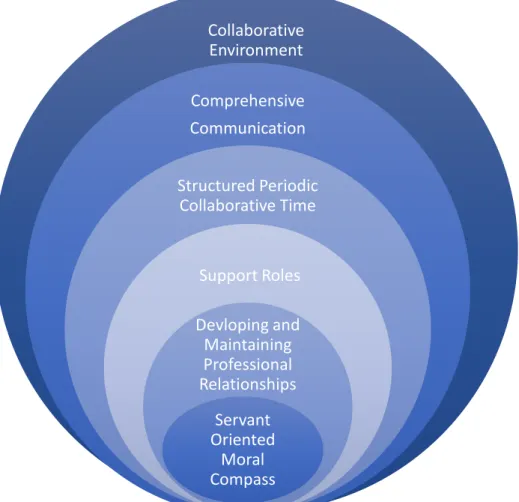
This study examines the perceptions of principals and their respective teachers regarding the principals’ abilities to create a collaborative environment at the elementary level. Isolation of teachers has been a historical practice in most American schools and contributed to a lack of growth among practitioners. Increasing collaboration and ending isolation is one way to improve our country’s educational system for students and teachers. The methodology applied in this study employed a qualitative multiple case study design which provided an in-depth perspective of three elementary school principals and staff respective staff. The participants in this study included three elementary principals and their respective staff The participants were selected through the process of non-probability convenience sampling, and all of the schools were located the Pacific Northwest The major findings of the data collected from interviews, focus groups and observations revealed leaders who possess abilities and support systems including: (a) servant oriented moral compass, (b) developing and maintaining professional relationships, (c) support roles, (d) structured periodic collaborative time, and (e) comprehensive communication are most able to create a collaborative environment. This studies key themes were identified specific behaviors and character traits principals possess and practice who are able to create a collaborative environment. This study yielded important results which could be utilized to further research which would provide valuable insight for practitioners regarding how effective principals’ creation of collaborative teams were at ending teacher isolation.
Dedication
This work is dedicated to my dad, Keith Welch, who passed before I completed this journey, he never doubted my ability to accomplish anything I determined to do, he was a loyal, humble, faithful man of God, an example of Christ to all who had the privilege to know him. He was my hero and I could not have attained this goal without his love and support. And to my loving mom, Connie Welch, and my three brilliant children, Leah, Olivia and Gabriel, and my perfect granddaughter, Isabelle, your encouragement, love, and patience with me during the last four years gave me the strength to finish the race. And to this passage from the Bible:
Therefore, since we are surrounded by such a huge crowd of witnesses to the life of faith, let us strip off every weight that slows us down, especially the sin that so easily trips us up. And let us run with endurance the race God has set before us. (Hebrews 12:1 New Living Translation)
Acknowledgements
The following people were instrumental in completing this dissertation. Dr. Therrell, thank you for your time, guidance, understanding, support, and positive encouragement. I would not have been able to reach the finish line without you. Dr. Morris, thank you for your time and the professional and academic lens you viewed my research through. Dr. Lookabaugh, thank you for your time and energy, patience and support, attention to detail, APA format, and willingness to accommodate my timelines. Dr. Beck, Dr. Morelock, and Dr. Deboy, your friendship, and professional support over the past four years enabled me to balance my
responsibilities as a principal, student, mom, and daughter. I have sincere appreciation and love for each of you! Kari Montgomery for your humor, friendship, support and editing skills, with much love, thank you for helping to keep a smile on my face! Mary Ziadeh, for your wisdom, insight, friendship, and gift for the precision of detail to my manuscript, all my love and appreciation!
Table of Contents
Abstract ... ii
Dedication ... iii
Acknowledgements ... iv
Table of Contents ...v
List of Tables ... viii
List of Figures ... ix
Chapter 1: Introduction ...1
The Study Topic ...1
The Context ...2
The Significance ...3
The Problem Statement ...4
The Organization ...4
Conceptual Framework ...5
Chapter 2: Literature Review ...9
Review of Research Literature and Methodological Literature ...9
Review of Methodological Issues ...11
Synthesis of Research Findings ...13
Critique of Previous Research ...16
Summary ...21
Chapter 3: Methodology ...23
Research Questions ...24
Research Population and Sampling Method ...26
Data Collection and Procedures ...27
Data Analysis Procedures ...32
Limitations of the Research ...35
Validation ...35
Anticipated Findings ...36
Ethical Issues ...37
Summary ...38
Chapter 4: Data Analysis and Results ...40
Description of Sample...40
Research Methodology and Analysis...43
Methodological Grounding ...45
Analysis...48
Summary of the Findings ...51
Presentation of the Data and Results ...53
Research Question: How Do Principals Create a Collaborative Culture at the Elementary Level? ...54
Structured Periodic Collaborative Time ...65
Chapter 4 Summary ...91
Chapter 5: Discussion and Conclusion ...93
Summary of the Results ...93
Discussion of the Results ...96
Discussion of the Results in Relation to the Literature...102
Implication of the Results for Practice, Policy, and Theory ...105
Recommendations for Further Research ...111
Conclusion ...111
References ...113
Appendices ...121
Appendix A: Research Timeline ...122
Appendix B: Principal Interview Questions ...123
Appendix C: Teacher Focus Group Questions ...125
Appendix D: Consent Form ...127
List of Tables
Table 1 Elementary School Demographic Comparison ...3
Table 2 Participant Demographics ...42
Table 3 Observable Evidence of a Collaborative Team at School A in April 2018 ...69
Table 4 Observable Evidence of a Collaborative Team at School A in May 2018 ...74
Table 5 Observable Evidence of a Collaborative Team at School B in April 2018 ...77
Table 6 Observable Evidence of a Collaborative Team at School B in May 2018 ...79
Table 7 Observable Evidence of a Collaborative Team at School C in April 2018 ...78
List of Figures
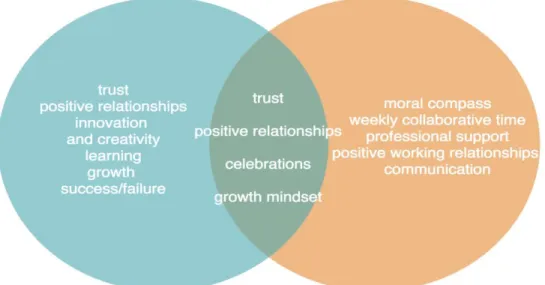
Figure 1: Conceptual Framework ...6 Figure 2: Revised Conceptual Framework ...54 Figure 3: Venn Diagram Intersection of Commonalities of the Initial and Revised Conceptual
Chapter 1: Introduction
For over a century the American education system has tended to isolate teachers from colleagues and rob them of the opportunity to learn and grow through collaboration (Little, 1987, 1990; Lortie, 1975; Powell, Farrar, & Cohen, 1985). Mike Schmoker (2006) stated, “Isolation is the enemy of improvement” (p. 23). In other professions, as novice workers transitioned from the University to the field, teams worked together to refine their craft, provide each other with real-time feedback, and grow under the direct guidance of veterans and experts, alongside other newcomers to the field. In the medical, legal, and engineering fields, this practice is expected, welcomed and systematized (City, Elmore, Fiarman & Teitel, 2009).
Contrary to these best practices, it was my experience as a first-year teacher, as well as the principal of several new educators over the last eleven years, that teachers are often given standards, curriculum, and class lists and told to change the world. Educators who are fortunate may have a mentor program in place at the schools where they work, perhaps some scheduled time for professional development, and a few hours a week to meet with their grade level teams. Unfortunately, as a professional currently working in the education system, it is my experience that there is a long way to go with respect to implementing grade level teacher teams to the same degree of effectiveness that has been established in other professional fields.
The Study Topic
Collaboration is an essential process for ending teacher isolation and transforming education. I have discovered that most teachers are amazing individuals who love to learn and want to share their passion for learning with their students. They need opportunities to continue to learn and grow to reach their full potential. Principals are responsible for creating these learning opportunities for their staff. Also, principals must build trust, promote positive
relationships, support innovation, foster creativity, and motivate their staff (Brown, Finch, MacGregor & Watson, 2012; Patterson, Grenny, McMillan & Switzler, 2013). Educational leaders start with establishing a shared vision among stakeholders. The literature suggests schools that have successful collaborative teams also have the same positive school culture with high levels of trust and strong relationships evident in their schools. As a result, my research question became: How do principals create a collaborative environment at the elementary level?
The Context
Over the past two decades, research on collaboration in education has increased. The awareness of the educational community with regards to the importance of ending teacher isolation, coupled with the work done by many districts in the area of professional learning communities, has brought to light the need for change (Schmoker, 2006). DuFour and Eaker (1998) have led the way DuFour specifically by sharing his experiences as an administrator, and leading his school to become a collaborative learning organization. However, in many schools across the country, a lack of collaboration persists. The literature suggests this is due to missing or dysfunctional systems and the overwhelming power of cultural status quo (Schmoker, 2006). This study takes place at three elementary schools located in the Pacific Northwestern United States. All three schools are kindergarten through fifth grade. Two of the schools have Spanish Immersion programs. The school demographics are summarized in Table 1, below.
Table 1
Elementary School Demographic Comparison
Schools Number of Students Certificated Staff Principal Tenure Students Proficient in Math Students Proficient in Reading Socio-Econ Dist. % EL Students School A (Spanish Immersion) 562 32 18 55 61 32 17 School B (Spanish Immersion) 436 26 16 16 29 70 61 School C 558 30 8 51 55 44 31 The Significance
The continued research of collaboration in education is necessary for an increase in successful implementation of a systemic and cultural transformation of American schools (DuFour & Eaker, 1998). In high-achieving districts where a large percentage of their students are proficient or advanced, a sense of urgency to change may not be present. In schools like these, the challenge to inspire, motivate, and lead change can be daunting for principals.
However, for the small percentage of students who are not growing academically, these changes are critical.
Principals and teachers in historically exemplary schools and districts can be resistant to change. Muhammad (2009) describes these educators as fundamentalists:
They are vanguards of tradition and the protectors of the status quo. They are relentless in their attempts to discourage change and protect a system that has allowed them to function and thrive, and they organize to protect this traditional way of practice. (p. 61)
The current system may be working for a significant percentage of the students, but not all of them. Educational leaders are tasked with creating a sense of urgency around the growth and success for all students, not just most or some (Buffum, Mattos & Webber, 2009; DuFour & Eaker, 1998; Muhammad, 2009). Additional research in the targeted area of high achieving schools and implementation of collaborative cultures would benefit many in the educational community. Furthermore, the research would support the work of leaders with a desire to end teacher isolation, increase collaboration, and academic growth for all students (Barnett & McCormick, 2004; Conner, 2015; Crum, Sherman, & Myran, 2009; Csiksezentmihalyi, 1997; Doidge, 2012; Gheusi, Ortega-Perez, Murray, & Lledo (2009); Hallowell, 1999; Hattie, 2009; Mitchell & Castle, 2005; Szczesiul & Huizenga, 2014; Tschannen-Moran, 2000).
The Problem Statement
How do principals create collaborative environments at the elementary level? In many schools across the country, a lack of collaboration between teachers persists. Elementary school teachers are unique in their needs regarding leadership style, culture, and systems, which can cultivate transformation. The literature suggests this is due to missing or dysfunctional systems and the overwhelming power of cultural status quo. Principals of elementary schools must balance the role of learning leader, as well as being the building and safety manager. These competing priorities can make leading a culture change a daunting task for even veteran leaders. Moreover, in historically high-achieving districts and schools, how are leaders able to motivate change among staff who are satisfied with the status quo.
The Organization
Review of the literature supports the conceptual framework of my study. As such, the following review begins with analyzing the importance of a shared vision (Barnett &
McCormick, 2004; Conner, 2015; Crum, Sherman, & Myran, 2009; Csiksezentmihalyi, 1997; Doidge, 2012; Gheusi, Ortega-Perez, Murray, & Lledo (2009); Hallowell, 1999; Hattie, 2009; Mitchell & Castle, 2005; Szczesiul & Huizenga, 2014; Tschannen-Moran, 2000). Next, the six foundational components of collaboration include: (a) building trust; (b) promoting positive relationships; (c) supporting innovation; (d) fostering creativity; (e) leading the learning; and (f) motivating are reviewed. A majority of the research shares common themes and findings with regards to collaboration. For example, trust and positive relationships were observed in most studies that examine collaboration in schools. However, principals as learning leaders who model a growth mindset in their own work, and teacher motivation are not as frequently analyzed or focused on for data collection in connection to a collaborative culture. The literature review will thoroughly dissect scholarly articles, which encapsulate current research-based best practices in creating collaborative environments.
Conceptual Framework
Rativich and Riggins (2017) define a conceptual framework as, “An argument about why the topic one wishes to study matters, and why the means proposed to study it are appropriate and rigorous” (p. 3). A conceptual framework should move beyond a flow chart embedded in one section of a thesis. It should represent the essence of the work and correlate to each detail of the research, as illustrated in Figure 1, below.
Figure 1. A flow chart of describing the relationship of principal leadership and the social constructivist theory this study is based on, with the foundational components of culture and vision which support the five key factors needed for principals to create a collaborative culture.
The conceptual framework for this research is based on the collaboration theory which stems in large part from Vygotsky (1978) and his version of social constructivist theory. The application of this theory to my study translates into: when teachers learn together, they construct meaning and grow through the social interaction. Principals lead change by creating a
collaborative culture which promotes transformation (DuFour & Eaker, 1998; Fullan, 2008; Hallowell, 2005). In the elementary setting, collaboration is defined “as teams of teachers who work interdependently to achieve common goals—goals linked to the purpose of learning for all—for which members are held mutually accountable” (DuFour & Eaker, 2009). The literature also states that specific characteristics are found in healthy organizations with high levels of
Principal as Transformational Leader (based on Constructivism/Co gnitive Learning Theories) Create a Collabortive Culture Shared Vision
Build Trust Promote Positive Relationships
Support Innovation
& Foster Creativity Lead the Learning
Motivate: Growth Mindset and Celebrate Success
2009; Csiksezentmihalyi, 1997; Doidge, 2012; Gheusi, 2009; Hallowell, 1999; Hatti, 2009; Mitchell & Castle, 2005; Szczesiul & Huizenga, 2014; Tschannen-Moran, 2000). Some of those key characteristics are trust, positive relationships, innovation and creativity, learning, growth from success, and unsuccessful endeavors (DuFour & Eaker, 1998; Fullan, 2008; Hallowell, 1999; Hattie, 2009; Tschannen-Moran, 2000). This dissertation will explore these key characteristics, as well as the best practices and current research that recommend what educational leaders should do to create collaborative environments at the elementary level.
Educational leaders are responsible for creating a shared vision for their organization (DuFour & Eaker, 1998; Fullan, 2008). The vision is developed collectively and is a dream of what could be. Educators imagine the best instructional environment, student potential for learning outcomes, and utopian school–this is what a shared vision is (Conner, 2015; Crum, et al., 2009; Doidge, 2012; Gheusi, Ortega-Perez, Murray & Lledo, 2009; Hallowell, 1999; Hattie, 2009; Mitchell & Castle, 2005; Szczesiul & Huizenga, 2014; Tschannen-Moran, 2000). The collective group lead by the principal develops this vision, which drives all of the work that is done moving forward (DuFour & Eaker, 1998). The importance of collaboration, creating vision, and setting a mission and goals, is similarly stated by Valdez and Ikemodo (2015):
Through an in-depth analysis of more than 200 public schools, New Leaders found that the most effective principals took action in three intersecting areas: as instructional leaders, principals support teachers in improving classroom instruction; as talent managers, principals manage staff (such as recruiting, hiring, developing, and retaining exceptional talent), build learning communities, and provide ongoing feedback; and as culture builders, principals create great places to work and learn. (p. 7)
The research by Valdez and Ikemodo (2015) shows the importance of principals possessing three distinct characteristics, (a) instructional leadership, (b) recruitment and retention of gifted
Chapter 2: Literature Review
The purpose of the research literature and methodological literature review is to present foundational evidence for the new study (Concordia, 2016, pp. 6–7). This review will provide empirical and theoretical analysis of the current research regarding the effectiveness of
elementary school principals in creating a collaborative culture. The empirical review provides a synthesis of the state of the research, while the theoretical review provides analysis of the
theories proposed in the research (Concordia, 2016).
Review of Research Literature and Methodological Literature
The foundation of the collaborative organization is built on trust (DuFour & Eaker, 1998; Fullan, 2008; Leithwood & Steinbach, 1995; Tschannen-Moran, 2000). The leader must
establish the trust for relationships to grow and individuals to work effectively (DuFour & Eaker, 1998; Fullan, 2008; Leithwood & Steinbach, 1995; Tschannen-Moran, 2000). Trust is
established by honoring commitments, following through with plans and being true to standards of excellence (Leithwood & Steinbach, 1995; Tschannen-Moran, 2000). Trust is created
between the principal and teacher leaders, as well as within collegial peer groups. Trust allows for positive relationships to grow. Healthy relationships within a safe environment contribute to the collaborative process and enhance the ability of teams to accomplish tasks (Barnett & McCormick, 2004; Conner, 2015; Crum, et al., 2009; Csiksezentmihalyi, 1997; Doidge, 2012; Gheusi, Ortega-Perez, et al., 2009; Hallowell, 1999; Hattie, 2009; Mitchell & Castle, 2005; Szczesiul & Huizenga, 2014; Tschannen-Moran, 2000). The encouragement of connection between staff is an important part of the principal’s role as transformational leader (Christakis & Fowler, 2010; Hallowell, 1999; Hattie, 2009).
Furthermore, in the field of neuroscience, researchers have discovered special binding neurons called “mirror neurons” which connect humans mentally and emotionally (Iacobni, 2008). This finding–in combination with neuroplasticity, the ability of the brain to regenerate, repair, and grow–creates a scientific basis for endless possibilities when humans collaborate. This new brain research has implications for the working relationships of educators (Christakis & Fowler, 2010; Hallowell, 1999). Teachers work closely at the elementary level, often sharing students within grade levels as well as vertically. This unique dynamic creates many
opportunities for interaction on a regular basis where staff discuss student growth and progress towards goals (DuFour & Eaker, 1998).
Once a solid foundation of trust and positive relationships has been established by the principal and staff, innovation and creativity are then given the space to thrive. Teachers need to feel supported and free to take risks without fear of negative evaluations (Conner, 2015; Crum, Sherman & Myran, 2009; Doidge, 2012; Gheusi, Ortega-Perez, et al., 2009; Hallowell, 1999; Hattie, 2009; Mitchell & Castle, 2005; Szczesiul & Huizenga, 2014; Tschannen-Moran, 2000). Principals model failing gracefully when their own schoolwide initiatives do not go as planned (Cherkowski & Walker, 2013). Learning from failed attempts can be transformational for individuals and organizations. Also, play and enjoyment increase innovation and creativity (Brown, 2009; Patterson, Grenny, McMillan, Switzler, & Maxfield, 2013).
An important part of leading collaboration is supporting the teachers in acquiring new knowledge and the skills necessary to provide the best instruction for their students (Conner, 2015; Crum, et al., 2009;; Doidge, 2012; Gheusi, Ortega-Perez, et al., 2009; Hallowell, 1999; Hattie, 2009; Mitchell & Castle, 2005; Szczesiul & Huizenga, 2014; Tschannen-Moran, 2000). Principals must take the time to establish trust, nurture relationships, and set the stage for
creative innovations. Their own learning, however, is equally important: principals must be lear ning leaders. The never-ending cycle of improvement is an internal process which begins with the educational leader (Conner, 2015; Crum, et al., 2009; Doidge, 2012; Gheusi, Ortega-Perez, et al., 2009; Hallowell, 1999; Hattie, 2009; Mitchell & Castle, 2005; Szczesiul & Huizenga, 2014; Tschannen-Moran, 2000). Successful principals prioritize their professional development and growth, maintaining their knowledge of current best practices in the field of education (Fullan, 2014). Their passion for growth is contagious and motivates staff, students and their
communities to adopt their love of learning (Fullan, 2014; Hattie, 2009; Kirtman, 2013). Part of the learning process is making mistakes. How a principal responds to a teacher’s misstep can dramatically influence the teacher’s future willingness to take risks, learn, and grow. The opportunity to learn from mistakes, improve, adjust, and try again is exactly how excellence is achieved. Principals who can create a collaborative culture celebrate success and learn from failures (DuFour & Eaker, 1998; Fullan, 2008; Hallowell, 2005). DuFour and Eaker (1998) emphasized the importantance of celebrating small achievements along the journey. Take notice of any effort to move in the right direction. A kind word, specific verbal, face-to-face praise is powerful and will make a huge difference in morale (DuFour & Eaker, 1998; Hallowell, 2005).
Review of Methodological Issues
The term “methodological issue” is used to describe the analysis an author conducts of previous studies in the literature review process. Specifically, as Boote and Beile (2005) stated, “Any sophisticated review of literature should also consider the research methods used in that literature and consider the strengths and weaknesses of those research methods in relation to the state of the field” (pp. 7–9). Hence, a researcher should carefully conduct a review of the literature to gain clarity about the methodologies and methods used to knowledgeably choose
relevant, logical methods and ways to use methods which might then compensate for weakness or limitations of other studies.
The methodological analysis of the literature related to principals creating a collaborative culture in elementary schools reveals best practices in the field with logical methods used in the majority of the research (Conner, 2015; Crum, et al., 2009; Doidge, 2012; Gheusi, Ortega-Perez, et al., 2009; Hallowell, 1999; Hattie, 2009; Mitchell & Castle, 2005; Szczesiul & Huizenga, 2014; Tschannen-Moran, 2000). The studies reviewed used mostly qualitative methods to gather data. More specifically, interviews, observations, and focus groups were the frequently
identified used methods. The interviews and focus groups were informative. However, during the actual collaboration time, little observational data was typically gathered. In this study, in-depth interviews with principals and staff coupled with observations of real-time collaboration, could provide meaningful data regarding how administrators may create collaborative cultures.
Observations are used by researchers to collect accurate information to support their theses. Observations are time-consuming, however, they offer an in-depth perspective that is inaccessible by other methods of data collection. The opportunity to gather data from
observations of collaboration in action would significantly improve the understanding of the process, and how principals can best support this effort in their schools (DeMatthews, 2014). Machi and McEvoy (2016) stated that high-quality data are accurate, precise, and authoritative, and the importance of the proximate standard. The authors stressed the closeness of the
researcher who influences the relevancy of the data collected (p. 49). Therefore, the increased use of observations, in addition to interviews and focus groups, is a valuable part of a new research design.
Synthesis of Research Findings
The purpose of a literature review is to synthesize relevant studies in such a way as to support the design and research question of a new study. Synthesis of research findings is a major step in the process by which researchers may illuminate consistencies in the current research. Then researchers are able to support further studies or differences which may lead the to the development of a unique framework and set of methodologies to answer their particular question (Connor, 2015; Crum, Sherman, & Myran, 2009; Doidge, 2007; Gheusi, Ortega-Perez, Murray, & Lledo, 2009; Hallowell, 1999; Hattie, 2009; Mitchell & Castle, 2005; Szczesiul & Huizenga, 2014; Tschannen-Moran, 2000). .Furthermore, the synthesis of the literature is necessary for the researcher to establish an argument of authority for their study. According to Machi and McEvoy (2016), “The researcher uses an implicative argument of authority to justify the thesis” (p. 126). Therefore, the synthesis is a critical and foundational part of the literature review which guides the new research. The synthesis of literature regarding how educational leaders create collaborative environments appears to rely on three prominent theories: (a) culture; (b) relationship; and (c) systems.
Culture. First, the culture of a school influences the effectiveness of collaboration. Moreover, the evidence is clear that the school culture is strongly influenced by the leadership. In addition to school culture, the relationships and trust among the principal and staff, and between staff and their peers, is found to be another significant theory (Barnett & McCormick, 2004; Connor, 2015; Crum et al., 2009; Csikszentmihalyi, 1997; Doidge, 2012; Gheusi, Ortega-Perez, Murray, & Lledo, 2009; Hallowell, 1999; Hattie, 2009; Mitchell & Castle, 2005;
Szczesiul & Huizenga, 2014; Tschannen-Moran, 2000). The structure and systems in place impact collaboration in schools as well. Standardized and systemic approaches allow for
innovation and creativity, and the staff have more frequent and effective collaboration (Demir, 2015; Hallowell, 1999; Tschannen-Moran, 2000; Wasley, Hampel, & Clark, 1997; Weick, 1996).
The literature shows how successful principals must first develop a positive culture before implementing systemic structural change. At the August 2016 PLC Institute, Mattos (2016) stated, “Culture trumps structure every time.” Trust is the foundation on which a new culture can be birthed. Moreover, administrators are responsible for establishing trust by being authentic leaders, following through on commitments, honoring traditions, creating a shared vision, and leadership (DuFour & Eaker, 1998; Fullan, 2008; Leithwood & Steinbach, 1995; Tschannen-Moran, 2001). Fullan (2014) advises that principals can maximize their impact by adopting three key roles: those of “learning leader, system player, and agent of change” (p. 9). Organizational studies research by Weick (1985), cite a lack of trust as one of four reasons for resistance to change: “People persist when they don’t trust the person who tells them to change” (p. 306). DeMatthews (2014), Demir (2015), DuFour and Eaker (2009), and Tschannen-Moran (2000) theorize trust as an essential base for a healthy school culture.
Relationships. Relationships in an elementary school can be a powerful political asset or potential liability for principals who attempt to create a collaborative culture. The teacher-to-principal as well as teacher-to-teacher relationships are equally important. Tschannen-Moran (2000) theorized collaboration between these groups was correlated to the relationships between the groups and their level of trust. The research quantified the correlation between collaboration and trust. Kilinc (2014) examined the relationship between teacher leadership and school culture. The researcher theorized, “Teacher leaders can serve as facilitators of learning and teaching, mentors for their colleagues and experts in their fields” (p.1730). Kilinc (2014) refers to Fullan (1994) and the “Significant role in building positive relationships among colleagues,
facilitating professional learning for both themselves and others and leading change” (p. 1730). Positive principal-teacher connections are vital to creating a collaborative environment.
Systems. Principals who can establish systems and structures which encourage creativity, innovation, and collaboration are prevalent theories found in the literature review. Leaders who provide and protect time for staff to meet regularly empower teams to learn, experiment, explore and grow in their knowledge and skills, are successful in creating positive collaboration. Hallowell’s (2011) brain research theorizes that in order for individuals to “shine” there are five steps leaders can take to get the most out of their employees. Those steps include: (a) placement of people in the right jobs so their brains light up, (b) restoring positive human connections, which fuel peak performance; (c) encouraging play (i.e., imaginative engagement); (d) and grapple and grow to create conditions where people want to work (Hallowell, 2011, pp. 2–20). These structures and systems are purposefully implemented by the educational leaders who have the authority to establish new processes.
It is the principal’s responsibility to know their staff and ensure proper placement of teachers. Also, efficient and effective systems regarding curriculum, communication, and management of the school, are essential elements to sustaining collaboration (Fullan, 2014; Hallowell, 2011). Fahey (2011) theorized the “Critical Friends” protocols are a successful structure, “principals clearly needed the support and learning from each other the Critical Friends Group gave them. They became a PLC and were then able to go to their respective schools and implement the same types of structures” (p. 32). PLC stands for Professional Learning
Community (Stoll, Bolam, McMahon, Wallace & Thomas, 2006). Stoll and colleagues (2006) assert that while there is no universally recognized definition of PLCs, it is understood this term generally applies to “a group of people sharing and critically interrogating their practice in an
on-going, reflective, collaborative, inclusive, learning-oriented, growth-promoting way” (Stoll et al., 2006, p. 223). Systems and structures of support for leaders as well as staff contribute to a collaborative culture.
Critique of Previous Research
The critique of the research analyzes the relationship between the theories/claims the literature presents, the findings and methodologies used, and the warrants/conclusions made by the researcher. Machi and McEvoy (2016) define literature critique as that which “interprets the current understanding of the research topic and logically determines how this knowledge answers the research question” (p. 108). The critique uses descriptive reasoning to assess the data and determine the “if, then” relationships presented in the literature (Machi & McEvoy, 2016). Machi and McEvoy (2016) list nine logic patterns, which can be applied to an argument in the research and determine the legitimacy of the conclusions drawn from findings. This study will use the reference to authority logic pattern, “The rule of logic states that because the expert finds the case to be true, and the expert is a valid source, then it is true” (Machi & McEvoy, 2016, p. 119). It is also the purpose of the critique to determine if the scientific process is flawed, contains weaknesses or fallacies in the arguments, findings, and/or conclusions drawn by the research. Furthermore, the outcome of the critique of the literature review can support the need for new research and contribute to the justification of a new claim (Machi & McEvoy, 2016).
The literature review indicates school culture and trust to be common characteristics found in schools which reported a collaborative environment. The study conducted by Tschannen-Moran (2000) used quantitative methods to determine the canonical correlation between the two variables of collaboration and trust. The study methods included two separate questionnaires developed by the research team, one pertaining to trust, the other collaboration.
The questions separated out perceptions of trust and collaboration with the principal, teacher and clients (parents and students). The research team conducted a pilot study prior to conducting the study with the 45 sample schools. The study found stronger correlations between trust and collaboration between the school and parents, as well as the teachers and their colleagues. However, “Collaboration with the principal had little influence” (p. 327).
Demir’s (2015) research examined the effect of trust of elementary staff with relations to their organization and the perception of the school’s culture of teacher leadership. The method used was a causal-comparative design with two scales for questions related to the personal information of teachers. Specifically, the Teacher Leadership Culture Scale-developed by Demir – and the Omnibus T-Scale were used in the research. The study found a principal’s ability to empower teacher leaders resulted in greater trust among staff, and an increase in positive culture and collaboration. Demir (2015), citing Angella, Nixon, Norton, and Niles (2011), “observed that in schools where the teacher leadership model is successfully implemented, school
administrators gained the trust of teachers and changed school conditions favorably for teacher leadership” (p. 630).
A qualitative study of five high schools provided in-depth information on leadership and collaboration (Wasley, Hampel & Clark, 1997). Wasley, Hampel, and Clark (1997) used an interactive collaborative inquiry design model to collect data on school reform and change efforts, and the specific “clues” which focused on types of collaboration necessary to promote change. The data collected was from “snap shots” based on observations, focus groups, interviews, and journal notes completed by students and teachers that were collected as researchers shadowed students in the school over the course of the week. The data was then provided to the school staff for analysis and action was taken based on the results deduced from
the data. The process yielded the following important “clues” which address vision, continuous improvement, feedback, self-analysis, simultaneous redesign, and parental involvement (pp. 4-11).
The research conducted by Wasley, Hampel, and Clark (1997) was a significant part of the foundation DuFour and Eaker (1998) used in their work to develop the Professional Learning Communities (PLC) model. They define PLC’s as “an ongoing process in which educators work collaboratively in recurring cycles of collective inquiry and action research to achieve better results for the students they serve” (p. 11). Du Four and Eaker (1998) identify six
characteristics of PLC’s: (a) shared mission, vision, and values; (b) collective inquiry; (c) collaborative teams; (d) action orientation and experimentation; (e) continuous improvement; and (f) results orientation. Despite the fact the work done by Wasley, Hampel, and Clark (1997) was taken from high schools, it has been my experience the fundamental components are true at the elementary level as well.
Another important theme evident in the literature review is the influence collegial relationships have in creating a collaborative culture. Relationships that principals have with their respective staff, as well as peer-to-peer educator relationships, all contribute to the collaborative culture. Crum, Sherman, and Myran (2009) conducted research on the best practices of elementary school leaders. Their design methodology was an inductive exploratory study which revealed how principals facilitate to promote a positive culture, which in turn leads to high student achievement. Twelve principals participated in in-depth interviews. The findings resulted in the following categories: “leadership with data; honesty and relationships; fostering ownership and collaboration; recognizing and developing leadership; and instructional awareness and involvement.” (p. 54) In the area of honesty and relationships, principals
reported the importance of trust in creating relationships, delegating and empowering staff to make decisions, working as a team, and specific feedback on performance (Crum et al., 2009).
The power of relationships is the key element and a common theme in most research regarding creation of a collaborative environment. The methodologies used in the literature review support the theories presented. Trust, transparency, and the ability for leaders to model this behavior is revealed in the methods used. The use of interviews, observations, focus groups, and surveys in several of the studies revealed the importance of healthy relationships between principals and teachers (Crum et al., 2009; Demir, 2015; DuFour & Eaker, 2004; Tschannen-Moran, 2000; Wasley, Hampel, & Clark, 1997).
The methodological analysis of the literature related to principals creating a collaborative culture in the elementary schools revealed best practices in the field with logical methods used in the majority of the research (Barnett & McCormick, 2004; Conner, 2015; Crum, et al., 2009; Doidge, 2012; Gheusi, Ortega-Perez, et al., 2009; Hallowell, 1999; Hattie, 2009; Mitchell & Castle, 2005; Szczesiul & Huizenga, 2014; Tschannen-Moran, 2000). Moreover, the methods used to collect data aligned effectively with the research questions upon which the studies were focused. The studies reviewed mostly implemented qualitative methods to gather data. Several of the studies used interviews of teachers and principals, focus groups, and observations of staff during collaborative times. The study conducted by Tschannen-Moran (2001) used empirical evidence linking collaboration and trust in schools. Tschannen-Moran (2001) clearly articulated the purpose of the study and significance of establishing a connection between trust and
collaboration. The review of the literature was balanced incorporating research done by Leithwood and Steinback (1995) which presented data on characteristics of successful school principals. In addition, Tschannen-Moran (2001) included research done by Bartunek and Keys
(1975), which painted a less optimistic perspective on collaboration in schools. The synthesis of the research provided a clear rationale for the focus on trust and collaboration. The findings established stronger correlations between trust and collaboration between the school and parents, as well as the teachers and their colleagues. However, “Collaboration with the principal had little influence” (Tschanned-Moran, 2001, p. 327). The findings confirmed the hypothesis that collaboration and trust are strongly related in the relationships between teaching staff, and staff and parents.
The study conducted by DeMatthews (2014) examined principal and teacher
collaboration and distributed leadership in learning communities. This qualitative multi-case study took place in six elementary schools in West Texas. The districts were similar due to the isolated areas where they were located. The schools were considered effective in their
implementation of PLCs. The researchers used surveys, interviews and observations regarding the teachers’ perspectives of their collaboration. DeMatthews stated, “Teachers described their PLCs using a variety of terms including, “a safe place to share and grow”, and a place “where everyone comes together to solve problems, address concerns, and learn” (p. 189). The findings aligned with the hypothesis made by DeMatthews (2014). Several of the anecdotal notes
described the principals’ views of the importance of teacher leaders and how they can influence a staff in a way that may elude to an administrator. The analysis procedures of the data collected were appropriate for the research. The findings explained in-depth the connections and common themes between each of the data points. The findings in the surveys, interviews and observations supported the validity of the data used, with each of them revealing positive outcomes in learning communities for schools where principals supported distributed leadership (DeMatthews, 2014).
Szczesiul and Huizenga (2014) collected qualitative data from two different schools located in the Northeastern United States. Teachers were interviewed and observed during their collaborative team meetings. The researchers gathered information on how principals motivated staff to engage in the professional development and implement best practices. The methods used were effective in collecting valuable and insightful data regarding the principals’ abilities to encourage collaboration. The results supported the hypothesis which identifies a burden of leadership for principals. The data revealed challenges for administrators with regards to implementing systems while creating a rationale and buy-in for real collaboration. The use of interviews and observations is a robust method for collecting meaningful data regarding
behaviors principals use which affect collaboration positively or negatively (Machi & McEvoy, 2016).
Summary
The review of the current literature overwhelmingly supports further research and the importance of asking: How do principals create a collaborative culture at the elementary level? Because collaboration is a complex topic, additional focused studies are needed regarding how administrators can create healthy cultures. Regarding the study above, Machi and McEvoy (2016) stated, “Reference to authority is the most common argument pattern type used in forming a research question. The logic employed depends on reliable expert testimony or
observation that directly applies to the case defined in the research question” (p.119). Therefore, additional in-depth case studies would be a valuable addition to the current body of research on the topic of principals’ leadership of collaboration. Moreover, an in-depth case study of
principals and their teachers’ collaboration over the course of the school year could provide fresh insights beneficial to practitioners in the field of educational leadership.
Chapter 3: Methodology
The purpose of this chapter was to describe the methodology applied in this study to identify how principals create a collaborative culture at the elementary level. This chapter was the cornerstone of the study because it turned the theories regarding principal leadership into action, and provided practical application to the field as it relates to effective collaboration. The following information acted as a map for research, a guide to support replication, data collection processes, and to establish credible and valid findings (Krathwohl & Smith, 2005). The study connected previous research theories and findings to the goals and objectives of the conceptual framework in this study. This study employed a qualitative case study design which provided an in-depth perspective of three elementary school principals and their respective staff.
The philosophical foundation of this study was based on a non-positivism perspective. Trochim (2006) from the Web Center for Social Research Methods defines positivism, which is contrary to non-positivism, as:
A position that holds that the goal of knowledge is simply to describe the phenomena that we experience. . . . The purpose of science is simply to stick to what we can observe and measure. Knowledge of anything beyond that, a positivist would hold, is impossible (3rd para).
This study collected data on the perspective of the participants regarding the principal’s creation of a collaborative culture. The philosophy align with the reality of the participants and researcher as significant but was not strictly observable or measurable. The teachers' responses to interview questions or observations of a collaborative meeting is one example of observable perspectives. Therefore, the study philosophically represented non-positivism which states that reality is not directly knowable but is inferred by convention or consensus (Bruner, 1960).
This study was also based on a social constructivist philosophy with the purpose to gather a broad understanding of the situation. Vygotsky's theories stress the fundamental role of social interaction in the development of cognition, as he believed strongly that community plays a central role in the process of “making meaning“ (McLeod & Seashore, 2006). The goal of this study was to gather rich data about the creation of a collaborative culture through interviews and observation of the social interactions of the principal and staff. The stakeholders’ perspectives were critical to the process and generalized theories which support the inquiry. The study included an inductive research approach, which was focused on meaning outcomes and human interest.
Research Questions
According to Creswell (2002), qualitative research is an inquiry-based approach where the researcher “explores a central phenomenon” and focuses on broad general questions (p. 58). A good qualitative research question seeks to explore, understand, and discover one key concept. The critical, overall question addressed that was presented in this research is: How do principals create a collaborative culture at the elementary level? The specific research question, which provides a reasonable scope and focus for study, then became: What specific strategies and systems do principals use with their teachers to develop a culture of collaboration? The case study gathered detailed information from the principal and staff on the conceptual framework of the study which included a shared vision, trust, positive relationships, innovation creativity, learning, and growth.
Purpose and Design of the Study
The purpose of this study was to gather rich descriptive data on the topic of collaboration in an elementary school. The focus was on the principal and how that individual created a
culture which supported authentic, interdependent teamwork with their staff. Ending teacher isolation is the key to ongoing continuous improvement of education practice (Schmoker, 2006). As the leader of the school, the principal has the authority to establish and support a culture and system which will end isolation and develop a collaborative environment (DuFour & Eaker, 1998). The literature includes overwhelming evidence that a principal’s shared vision, ability to create trust and positive relationships are the factors necessary to create a collaborative
environment.
This study employed a qualitative methodology. The literature reviewed in chapter 2 of this study included several qualitative studies which used a variety of methods, including: (a) a canonical correlation by Tschannen-Moran (2000); (b) a causal-comparative design by Demir (2013); (c) the multi-case study by DeMatthews (2014); and (d) a multi-case study by Szczesiul and Huizenga (2014). A qualitative case study provided detailed insight into the perspectives of three principals and their staff in their collaborative journeys.
The data collected from this process may contribute to the general understanding of how practitioners can improve upon their own collaborative culture. This study used Creswell's (2013) process which enabled the researcher to envision the steps and plan for a successful case study. Creswell recommended the use of multi data collection sources including observations, interviews, documents, audio-visual recordings, and triangulation of the data to ensure validity. This study used: (a) interviews; (b) focus groups; (c) monthly observations of collaborative meetings; and (d) documents specific to the principal and teacher teamwork.
Observations of real-time team collaboration, interviews with the principal and staff, and focus groups were the methods employed in this study. Yin (2014) described the broad lens which a case study enables a researcher to adopt. A case study can provide a researcher with a
perspective unlike that of ethnographic or grounded theory approaches, yielding powerful, rich data on the topic. Merriam (1998) stated:
The researcher brings a construction of reality to the research situation, which interacts with other people’s constructions or interpretations of the phenomenon being studied. The final product of this type of study is yet another interpretation by the researcher of others’ views filtered through his or her own. (p. 22)
Research Population and Sampling Method
The schools’ populations ranged from 500–604 students in kindergarten through fifth grade. Each grade level had between three and four teachers for a total of 66 classroom certificated staff as well as several support staff. Creswell (2013) recommended five to 25 participants in a qualitative case study. The DeMathews study (2014) engaged six principals and their respective staff. Tschannen-Moran (2000) used 45 participants at one school which
included the principal and teachers, and Szczesiul and Huizenga (2014) included fifteen teachers. In the fall of 2018, the subject school had a complete Spanish Immersion program with an
immersion class offered at each grade level in kindergarten through fifth grade. The principals’ experiences as elementary school administrators ranged from eight to twelve years in the role of principal.
The sampling method for this study was non-probability convenience sampling which the literature cautions is more apt to contain bias (Creswell, 2013; Neuman, 2006). This method was used to produce a representative sample since randomization is not possible. The principals, and one volunteer team from each school site, were the focus of the study. In order to respect the role of each principal, their district policies and union relationships, this researcher did not invite the participation of individual teacher teams. Instead, after the principal agreed to participate, he
or she then shared the letter provided by the researcher, which outlined the purpose of the study and an invitation for teams to volunteer. Once those teams were identified, the principal
provided the researcher with the contact information of the volunteers, and the consent to
communicate with them in order to schedule focus groups and observations. The researcher was also invited to a staff meeting, and introduced to the teachers at the school as well as the
participant team.
Confidentiality. As part of the consent process, participants were provided with details regarding the process and steps taken to protect their identities. The following language was included in the documents shared prior to the start of the study. Pseudonyms were used in the study to ensure confidentially of all participants:
When we or any of our investigators look at the data, none of the data will have your name or identifying information. We will refer to your data with a code that only the principal investigator knows links to you. This way, your identifiable information will not be stored with the data. We will not identify you in any publication or report. Your information will be kept private at all times, and then all study documents will be destroyed three years after we conclude this study. (IRB Consent Form, 2018; see Appendix D)
Data Collection and Procedures
Case study data generation should capture the perspective of the participants (Creswell, 2013). In previous studies, data were collected during multiple observations, over the course of months and in a few cases, years (DeMatthews, 2014; Demir, 2013; Szczesiul & Huizenga, 2014; Tschannen-Moran, 2000). This study used observations of staff and team collaborative meetings, semi-structured interviews, and focus groups as methods of data collection. The
teachers’ focus groups and observations of collaborative team meetings generated data regarding how staff perceive their principal's ability to create collaborative culture. The interview and focus group questions are located in Appendices C and D.
Interviews. The purpose of the interviews in this case study was to generate data on the topic of a principal’s creation of a collaborative environment from the perspective of the teachers and administrator. Baškarada (2013) stated, “Interviews are guided conversations that are
usually one of the most important sources of case study evidence” (p. 8). Seidman (2006) stated, “At the root of in-depth interviewing is an interest in understanding the lived experience of other people and the meaning they make of that experience” (p. 9). Seidman (2013)
recommended that researchers implement a three-part interview series. Part one was the history of the participant as it relates to the focus topic, the second was the experience as it relates to the topic, and the third was the reflection on the meaning of the experience in the second part (pp. 6–19). The recommended length of each interview was 90 minutes. Seidman (2013) offered this as the ideal amount of time because one hour could cause participants to feel rushed, and two hours would be too long to sustain focus. Moreover, Seidman suggested a structure which allows for a few days in between each of the three interviews. This structure allowed for a positive relationship to be established and enough time between interviews to work with participants.
The interview questions were semi-structured to allow for more freedom of discussion, which allowed for exploration of priority themes or patterns that may have occurred with the participants during interview sessions (Creswell, 2013). The interview and focus group questions were created for the study, and piloted before use in the case study. The interviews were scheduled to be 60 minutes in duration, and focus groups sessions were intended to last for
60 minutes.
Focus Groups. There are many benefits to focus groups. This structure does not discriminate against participants who may be illiterate, it encourages reluctant participants, and empowers those who might not share their perspectives without the contribution and support of others (Kitzinger, 1995). Also, focus groups offer a more cost-effective approach to
interviewing, and are time-saving for the researcher and participants. Initially, focus groups were used within communication and marketing industries. However, they are widely used to generate data in the educational setting. The focus group provides multiple perspectives and encourages reflection and innovation during the discussion which only happens in a group setting. Kitzinger (1995) recommends four to ten participants in each session using a theoretical sampling model. She also advises the groups be homogeneous in their general makeup and attitude to create a safe space for participants to authentically respond to questions (Kitzinger, 1995, pp. 299–302). Kitzinger (1995) stated sessions could run from one to two hours, taking place in a single meeting or a series of meetings. Moreover, a comfortable environment with refreshments and a circular configuration are advised. The researcher can use a range of activities with the participants to keep the focus on each other and the topic as opposed to the facilitator. An audio-visual recording or transcription is highly recommended. The data generated from this type of interaction between participants can be used to achieve seven main aims:
1. To highlight the respondents' attitudes, priorities, language, and framework of understanding;
2. To encourage research participants to generate and explore their questions and develop their own analyses of common experiences;
3. To encourage a variety of communication from participants – tapping into a wide range and form of understanding;
4. To help to identify group norms and cultural values;
5. To provide insight into the operation of group social processes in the articulation of knowledge (for example, through the examination of what information is censored 6. or muted within the group);
7. To encourage open conversation about embarrassing subjects and to permit the expression of criticism;
8. Generally, to facilitate the expression of ideas and experiences that might be left underdeveloped in an interview and to illuminate the research participants' perspectives on the debate within the group (Kitzinger, 2006, p. 302).
Observations. Observations were the third method this study used to generate data. Kawulich (2005) stated:
Observation methods are useful to researchers in a variety of ways. They provide researchers with ways to check for nonverbal expression of feelings, determine who interacts with whom, grasp how participants communicate with each other, and check for how much time is spent on various activities. (para. 8)
Hancock and Algozzine (2006) presented five factors when designing an observation for research. The first and most important was identifying what must be observed to shed light on possible answers to the research question. Second, the authors suggested creating an observation guide with detailed information specific to the observation(s). For example, the guide should include setting, people present, date, time, location and other important environmental factors. Third, researchers must gain access to a proper research setting. Fourth, the researcher must
identify personal bias which will influence the generation of the data. Last, Hancock and
Algozzine (2006) stated following ethical and legal requirements regarding research participants is critical.
Procedures. The interviews and focus groups began with the primary research question of this study, “How does your principal create a collaborative environment?“ The questions are located in Appendices C and D. This study collected data using a systematic process, during pre-scheduled weekly collaborative meetings, as well as pre-scheduled interviews and focus groups times, over the course of a seven-month period during the 2017–2018 school year. The
researcher used audio recordings to support the internal validity and reliability, reduce bias, and decrease the rate of error of the data being collected (Creswell, 2013). The participants, as well as specific dates and times, are located in Appendix A.
This study began with an initial introduction to the staff of the researcher and the purpose of the study, detailing their involvement and the potential contribution of the findings to the field. The researcher reviewed the process, timeline and participants’ rights and responsibilities before starting the research. Volunteer teams were selected by each principal. Once the grade level teams were determined, the researcher scheduled observations and focus groups with the participating teachers.
The focus groups were conducted first to assist in developing the relationship between the researcher and participants. The groups were given the research question, “How do
principals create a collaborative environment at the elementary level?“ The researcher then used DuFour, DuFour, Eakers and Many’s (2010) PLC needs assessment survey tool to focus the discussion. A copy of the tool is included in Appendix E. Teachers rated their teams and
schools using the tool, and were asked to explain their rationale for the ratings given, citing specific examples to support their rating.
The first set of observations was conducted following the initial principal interviews. The second set of observations was conducted after the teacher focus groups, but prior to the final principal interview. This researcher was looking for evidence of a high-functioning team during observations of the collaborative meeting times. Solution Tree defined a collaborative team as, “A group of people working interdependently to achieve a common goal for which members are held mutually accountable. Collaborative teams are the fundamental building blocks of PLCs” (Global PD, 2014, p.19). The authors list the following as observable evidence of a collaborative team: (a) structured time to meet within the work week; (b) focus on the four learning questions; (c) generate products; (d) establish norms; (e) use SMART goals to assess progress; and (f) provide relevant information. A SMART goal is defined as a goal that is: (a) specific; (b) measurable; (c) achievable; (d) results-focused; and (e) time-bound (Doran, 1981). A rubric was used to collect data on the observable evidence. Field notes were taken on related behaviors, the environment and reflection of the researcher’s personal bias as recommended by Hancock and Algozzine (2006). A copy of the observation rubric can be found in Appendix F.
Data Analysis and Procedures
This study used in vivo and pattern coding processes to analyze the generated data. Creswell (2009) recommended a detailed coding process which organizes the material into chunks or segments. Szczesiul and Huizenga (2014) stated:
We coded interview data thematically for core practices, attending specifically to teachers’ descriptions of how their principals carried out the practices…We then looked at how teachers’ descriptions of principal leadership practices related to the levels of
efficacy and motivation they described bringing to their collaborative interactions with colleagues during common planning time. (p. 180)
This study used a similar coding progress with the interview, focus group, and observational data. Creswell (2009) advised the following six step approach to coding data:
1. Organize and prepare the data for analysis.
2. Read through all the data. Gain a general sense of the information and reflect on the overall meaning.
3. Conduct analysis based on the specific theoretical approach and method (e.g. narrative, content, grounded theory, discourse, archival, semiotics and phonemic analysis techniques). This often involves coding or organizing related segments of data into categories.
4. Generate a description of the setting or people and identify themes from the coding. Search for theme connections.
5. Represent the data within a research report. 6. Interpret the larger meaning of the data
This study used the computer-assisted qualitative data analysis software (CAQDAS), Atlas-ti for Macs, to help code, disaggregate, manage the electronic data, identify emerging themes and support the analysis of the study. The interview data was coded for core practices that the principal and teachers’ perceptions identified as the administrator’s use of: (a) vision; (b) mission; (c) established trust; (d) positive relationships; (e) school culture; (f) innovation
learning; and (g) celebration of success to create a collaborative environment. The focus group data was coded for the same aligned practices and common themes that emerged in the analysis process.
The observational data offered a third data point to uncover the relationship between the principal's practices, structures, and systems which support the collaborative environment. The interviews, focus groups, and observations allowed triangulation of the data. Creswell (2009) explained the need to “triangulate different data sources of information by examining evidence from the sources and using it to build a coherent justification for themes” (p. 191). I anticipated that the data points would support each other by confirming the literature review theories
regarding creating a collaborative environment with reoccurring themes and increase the validity of the research.
Limitations
Design limitations of a research study are contextual situations or events that could influence or restrain the study (Krathwohl & Smith, 2005; Smagorinsky, 2008). Limitations affect the creditability of the data generated by the researcher. Qualitative studies that are not generalizable though transferability may be developed and applied with due consideration of context by other researchers and practitioners in the field of education (Krathwohl & Smith, 2005; Smagorinsky, 2008). The following were anticipated limitations of this study:
1. The sample size of the case study was not representative of the general population and the findings cannot be quantified. The goal of this study was to discover and affirm practices that elementary school principals use successfully to create a
collaborative culture. The research provided an in-depth look at three principals and one team of their teachers to gain a general understanding of best practices in leading via collaborative practices schools through the lens of three schools.
2. The second limitation of the study was the researcher bias. This researcher is an elementary school principal, and is therefore sympathetic to the opinions of the other