University of Vermont
ScholarWorks @ UVM
Graduate College Dissertations and Theses Dissertations and Theses
2018
An Examination of the College Decision-Making
Process of High School Students in Rural Vermont:
A Cross-Case Analysis
Jon Reidel University of Vermont
Follow this and additional works at:https://scholarworks.uvm.edu/graddis Part of theHigher Education Commons
This Dissertation is brought to you for free and open access by the Dissertations and Theses at ScholarWorks @ UVM. It has been accepted for inclusion in Graduate College Dissertations and Theses by an authorized administrator of ScholarWorks @ UVM. For more information, please contact
[email protected]. Recommended Citation
Reidel, Jon, "An Examination of the College Decision-Making Process of High School Students in Rural Vermont: A Cross-Case Analysis" (2018).Graduate College Dissertations and Theses. 908.
AN EXAMINATION OF THE COLLEGE DECISION-MAKING PROCESS OF HIGH SCHOOL STUDENTS IN RURAL VERMONT: A CROSS-CASE ANALYSIS
A Dissertation Presented
by Jon Reidel
to
The Faculty of the Graduate College of
The University of Vermont
In Partial Fulfillment of the Requirements for the Degree of Doctor of Education
Specializing in Educational Leadership and Policy Studies
May, 2018
Defense Date: February, 21 2018 Dissertation Examination Committee: Tammy Kolbe, Ed.D., Advisor Christopher Koliba, Ph.D., Chairperson Scott Thomas, Ph.D. Jill Tarule, Ed.D. Cynthia J. Forehand, Ph.D., Dean of the Graduate College
ABSTRACT
Earning a college degree has been shown to have a number of positive socioeconomic impacts on individuals and society as a whole. Although researchers acknowledge that the decision to attend college is a complex process involving multiple factors, studies have focused primarily on individual reasons as part of a linear college choice paradigm. Individual obstacles to college attendance that consistently emerge in this strand of research include academic preparation, socioeconomic status, cost, family background, parental influence, motivation, and guidance counselor support (Harris & Halpin, 2002).
College attendance rates are particularly low among students living in rural areas. Nationwide, only 59 percent of students from rural America choose to attend college, compared to 62 percent of their urban counterparts and 67 percent of students from suburban areas. (National Student Clearinghouse, 2015). The purpose of this study was to examine the college decision-making process of high school students in rural Vermont to better understand why fewer than 61 percent choose to attend college, despite more than 90 percent aspiring to do so at some point during their K-12 academic career (VSAC, 2016). A qualitative ethnographic case study approach was used to provide a unique student-focused perspective on the complexities of the college-decision making process as they go through it during their senior year of high school. A series of in-depth
interviews were conducted with 10 students at two rural high schools throughout their senior year as they wrestled with an influx of information from multiple sources creating a series of pushes and pulls from guidance counselors, family members and friends with varying motives.
Individual case study analyses were conducted on the following three groups of students based on their level of commitment to attend college at the start of their senior year: College Confident, College Considering and College Conflicted. A cross-case analysis of those three groups was also conducted. The result is a detailed account of how students in each group internalized and acted upon new information about their post-secondary plans, which depended heavily on when they received it, who they received it from and its quality. In most cases, the experience proved to be a frustrating, convoluted process that waxed and waned with each new piece of information. Ultimately, students made final college-going decisions based heavily on a combination of information that was not always accurate, sometimes misleading, and on the advice of at least one parent they perceived as having their best interest in mind.
ii
DEDICATION
I would like to acknowledge three individuals who passed away between the time I first applied to the Educational Leadership and Policy Studies (Ed.D.) program and started
writing my dissertation proposal.
First, I am forever indebted to my daughter Bridgette Dawn Martin, who my wife and I adopted when she was 12 years old, for her inspiration to study why so few children in
Vermont attend college, especially those who spent time in foster care like her. She passed away at age 20, but defied the odds by being accepted to Castleton State
University where she spent one semester.
Secondly, I want to recognize my father, Carl Reidel, Ph.D., for keeping me on track throughout life and for his inspiration as the first in his family to graduate college.
Thirdly, my mother, Jean Andrews, also the first in her family to graduate college, and I had many meaningful conversations near the end of her life about her own doctoral
dissertation, which she gave me just before she passed away in 2016.
iii
ACKNOWLEDEMENTS
There is not enough room on this page to thank all of the people who have helped guide me through this dissertation journey. It would not have been possible without the willingness of the principals, guidance counselors, VSAC staff members, and most importantly, the students who were willing to share their lives with me throughout their senior year. Their personal stories provided rich qualitative data, which was the heart and soul of this dissertation. I wish them nothing but success as they move forward.
No one has been more supportive or endured more throughout this entire process than my wife Lisa. She has been the ultimate partner and positive presence in my life since the day I met her in high school more than 30 years ago. Our children, Anthony, Angus, Caitlin and Bridgette, have been our greatest joy, and unbeknownst to them, served as my own little pre-dissertation case study.
I would also like to thank the members of my dissertation committee for taking the time out their busy schedules to provide their professional expertise, insight and guidance. They brought decades of experience producing top tier research to the process with each offering specific areas of expertise. I can only hope this dissertation reflects the rigor and professionalism they brought to the experience.
Finally, thanks to the 16 members of my doctoral cohort, especially Xavier De Freitas, Tom Geisler and Sarah Childs for their friendship, humor and support. Our dissertation work sessions at local restaurants and cafes often turned into needed therapy sessions on the way to the finish line.
iv
TABLE OF CONTENTS
DEDICATION ... ii
ACKNOWLEDGEMENTS ... iii
LIST OF FIGURES ... vii
CHAPTER 1: INTRODUCTION ...1
Vermont Context ...4
Purpose of the Study ...8
Significance of Research...10
CHAPTER 2: LITERATURE REVIEW ...11
Decision Theory ...12
College Choice Models ...18
Predisposition ...18
Search ...20
Choice ...20
The Role of Information ...22
Reasons for Not Attending College ...23
Cost of Attendance ...24
Guidance Counselor Support ...27
Socioeconomic Status, First Generation Students, and Family Support ...30
Issues Facing Students from Rural America ...34
Educational Aspirations ...38
Vermont-Based Research...48
Gaps in the Literature...51
CHAPTER 3: METHODOLOGY ...53
Problem ...53
Purpose ...54
Ethnographic Case Study ...55
Delimitations and Limitations ...59
Theoretical Framework ...61
Participant Selection, Recruitment and Site Selection ...64
Research Design...66
Data Collection ...67
Semi-structured Interviews of Primary Participants ...68
Secondary Participant Interviews ...70
Data Analysis ...71
Validation and Trustworthiness ...73
v
Ethical Considerations ...76
Relationship Between Society and Science ...77
Professional Issues ...77
Treatment of Participants ...77
CHAPTER 4: FINDINGS AND ANALYSIS ...79
Student Classification ...80
Group I: College Confident (Case Study) ...82
Introduction ...82
College Aspirations: Not ‘If,’ but ‘Where’ ...83
Building an (Unrealistic) College List ...86
Navigating the College Application Process ...88
Questioning College...96
College Rejections Prompting a Reality Check ...98
The College Choice...100
Conclusion ...104
Group II: College Considering (Case Study) ...105
Introduction ...105
College Aspirations/Expectations ...105
Non-college Options Still on the Table ...107
The Application Process ...110
Information and Parental Influence ...112
The Final Decision: “Relying on the Person You Trust Most” ...118
Group III: College Conflicted (Case Analysis) ...124
Introduction ...124
College Aspirations/Expectations ...125
Postsecondary Plans Remain Fluid ...128
Parental Influence ...131
The Final Decision ...132
Cross-Case Analysis ...135
College Aspirations Versus Expectations ...135
The Critical Role of Information ...136
Information/Guidance Shifts to Parents ...141
Decision Time: Confiding in a ‘Trusted’ Individual ...146
Theoretical Framework ...151
CHAPTER 5: DISCUSSION, CONCLUSIONS AND RECOMMENDATIONS ...154
Discussion of Findings ...154
The Role of Aspirations Versus Expectations ...156
The Impact of Information on Postsecondary Choice ...158
The Consequences of a Chaotic Process ...161
Key influencers on Final Postsecondary Decisions ...163
vi
Parental Programming ...167
Narrowing the Information Highway to Control the Chaos ...169
Making the Case for College ...174
Playing a Role in Final Postsecondary Decisions ...176
Future Research ...177 Researcher Reflection ...179 REFERENCES ...182 APPENDIX A ...192 APPENDIX B ...194 APPENDIX C ...196 APPENDIX D ...197
vii
LIST OF FIGURES
Figure 1: The Postsecondary Aspirations for the Vermont Class of
2014 (n=5,331) ...6
Figure 2: Postsecondary Enrollment Rates of the Vermont Class of 2014,
by County ...7
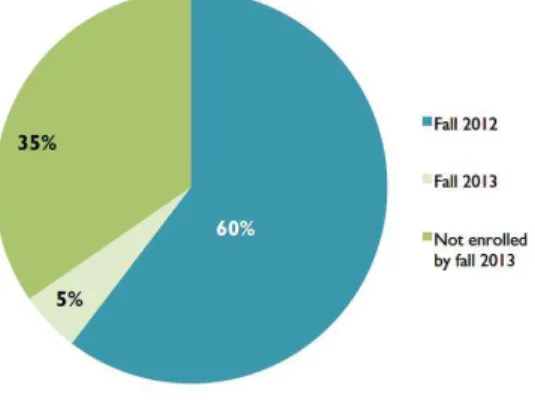
Figure 3. Hossler & Gallagher (1987) College Choice Model ...19 Figure 4: Vermont Postsecondary Education Aspiration Rate by County ...45 Figure 5: Vermont Postsecondary Enrollment by Fall 2013 for the Vermont
Class of 2012 (n=5,853) ...46 Figure 6: Trends in Aspiration Rates for Recent High school Graduates by
Gender and Parent’s Educational Attainment Level ...49 Figure 7: Class of 2012 Immediate College Enrollment by Family Education
1
CHAPTER 1: INTRODUCTION
As perhaps never before, the attention of state policymakers and researchers has galvanized around the need for a college degree in the United States to improve the educational attainment of its population since it is increasingly required for the economic and social well-being not only of individuals, but also of society (Perna & Finney, 2014). These concerns are well-founded considering that current levels of production in the US economy are expected to produce a shortfall of five million college-educated workers by 2020 (Georgetown University Center on Education and the Workforce, 2013) with an estimated 65 percent of all jobs requiring bachelor’s or associate’s degrees or some other education beyond high school, particularly in the fastest growing occupations—science, technology, engineering, mathematics, health care, and community service (Bergeron & Martin, 2015). There are many reasons why earning a college degree is beneficial to individuals and society. These include college graduates’ larger earnings over a lifetime, lower unemployment rates, lower crime rates, better health outcomes, and greater civic involvement (Rose, 2013). For every dollar earned by college graduates, those who drop out without a degree earn 60 cents less (Selingo, 2013). The U.S. Department of
Education (2006) estimates that individuals with a bachelor’s degree earn nearly twice as much as a high school graduate, averaging $2.1 million over a lifetime. Clearly, the nation’s economy demands workers that possess increasing levels of knowledge, skills, and abilities that are best acquired through postsecondary education (Bergeron & Martin, 2015). Helping young people from the lowest income bracket who are 15 percent less likely than those from the highest income quintile (Baum, Ma, & Payea, 2013) to attend
2
college would go a long way in reducing an increasingly widening income disparity gap in America. Currently, the richest 5 percent of U.S. households has an average income 13 times higher than the poorest 20 percent of households (Estelle, Price, & Wazeter, 2016). The picture is particularly bleak for rural America, where high school graduates choose to attend college at a lower rate (59 percent) than their urban counterparts (62 percent) as well as students from suburban areas (67 percent) (National Student Clearinghouse, 2015). In any given year, more than 6 percent of America’s nonmetropolitan bachelor’s degree-holders migrate to a metropolitan area creating a phenomenon known as rural brain drain (Carr & Kefalas, 2010). For every thriving metropolis now, there are dozens of agro-industrial brain-drain areas where economic growth has stalled (Carr & Kefalas, 2010).
In his first address to a joint session of Congress in 2009, President Barack Obama set an ambitious goal: “By 2020, America will once again have the highest
proportion of college graduates in the world” (https://www.whitehouse.gov, 2009). At the time, just over 40 percent of Americans above the age of 25 had some form of
postsecondary degree. Since then, the US has increased its college graduation rate by just under one percentage point per year (Carnavale, Smith, & Strohl, 2013) while other countries have increased at varying rates. This has not always been the case as the
percentage of young Americans age 25 to 29 with a bachelor’s degree has increased from 15 percent in 1950 to 25 percent by 1995 to 33.5 percent by 2012 (Ingels & Dalton, 2013). America’s transition from a manufacturing to a service economy lead to a parallel shift from a high school to a college economy (Carnevale & Rose, 2015). Unless
3
educational attainment improves, workers in the US will lack the educational skills and training required to meet the workforce demands of a global knowledge economy (Perna, 2004). By 2018, it is estimated that 62 percent of jobs in the US will require a college education, and that over half of those jobs will require a four-year degree (Dyce, Albold, & Long, 2012). If the US maintains its current college graduate production rate, the country will face a shortage of 16 to 23 million college-educated adults in the workforce by 2025 (Lumina Foundation, 2009). However, even with these increases in college attainment and the aforementioned benefits, the demand for college-educated workers, especially in science, technology, engineering and math (STEM) – related fields far exceeds the number of current workers with a college degree – in some case by as much as 40 percentage points (Bidwell, 2014).
Yet, for all the importance placed on the need for more Americans attaining college degrees, there has been surprisingly little research conducted on the college decision-making process that students and their families go through (Hossler, Schmidt, & Vesper, 1999). Much of the research in this area has focused on the decision-making process of students deciding on which college to attend as opposed to whether to attend college. In both cases, the process of choosing whether and where to attend college is frequently viewed as a comprehensive process in which students realize their college-going aspirations (or not) through the use of several linear steps leading to enrollment (Bergerson, 2009). The most widely cited and used college choice model is Hossler and Gallagher’s College Choice Model (1987), which emphasizes a three-stage process: Predisposition, Search, and Choice. At the heart of this established college choice model
4
is a set of assumptions about college aspirants’ decision making – including a sequential, linear process, and an array of possible alternatives – that does not hold true for various groups of students (Cox, 2016). Historically, three perspectives have framed this overall process: sociological, psychological, and economic (Paulsen, 1990). More recently, literature has focused on specific factors negatively affecting the chances of college enrolment such as a lack of parental support (Engle, 2007), socioeconomic background, a lack of resources, college readiness, race, and cost (Burdman, 2005), among others. However, most of these studies have been focused on one potential determinant, leaving the need for an examination of how students weigh each of these options as part of a larger, more complex overall decision-making process.
The primary focus of this dissertation is to examine the factors that shape decision making, in totality, to better understand how they work together or against students’ decision to enter college. Also of interest is the points in time where certain factors are more or less influential, which should help better understand the complicating conditions and moments of non-choice that shape the loops, detours, and stop-outs of some students’ postsecondary paths (Cox, 2016). Studying decision making wholistically, as well as the temporal decision-making process, holds promise for furthering our understanding about the decision to attend college.
Vermont Context
To varying degrees, all 50 states must improve higher education performance in order to ensure the nation’s continued economic prosperity in a global knowledge-based society (Perna, 2004). Increased educational attainment has a positive fiscal impact on
5
state and local budgets and is especially important for states facing significant budget challenges (Baum et al., 2013). In states like Vermont, where there are an anticipated 132,000 job openings in the next decade requiring education and training beyond high school, there is reason for concern. Postsecondary college enrollment in Vermont is below the national average of 68.4 percent with only 60.2 percent of Vermont high school graduates choosing to attend a 2- or 4-year postsecondary institution. (Vermont Student Assistance Program (VSAC), 2016). In response to this postsecondary degree deficit, the Vermont Commission on Higher Education Funding (VCHEF) recommended increasing the total percentage of Vermonters with college degrees from 42 percent to 60 percent by 2019 (VCHEF, 2009). More recently, a collective-action organization called 70x2025vt involving some of Vermont’s most influential leaders in education, business, nonprofits, philanthropy, and local, state and federal government set an ambitious goal of assuring that 70 percent of Vermonters possess a postsecondary degree or credential of value by 2025 (www.70x2025vt.org, 2017). To achieve that goal, at least 30,000 more Vermonters will need to earn an associate’s or bachelor’s degree or “credential of value” (i.e., electrician’s license) within the next eight years. VSAC was selected as the home for the new initiative, led by chief executive officers from both the private and nonprofit sectors, members of the administration of Governor Phil Scott, including the secretaries of the Agency of Education (AOE) and the Agency of Commerce and Community Development (ACCD), and leaders of the House and Senate education committees.
Vermont consistently ranks first in New England and among the top 10 states nationally for high school graduation rates, including an 87.7 percent rate for the
2014-6
2015 schoolyear (U.S. Department of Education, 2016), yet ranks among the bottom 10 states for the percentage of high school graduates it sends to college (U.S. Department of Education, 2016).The reasons why a relatively high percentage of Vermonters choose not to attend college have become an increasingly debated topic among educators and state policymakers alike. The Vermont Agency of Education (AOE) and VSAC have addressed the issue in recent years by producing extensive reports. One of the most revealing findings is that the postsecondary “aspiration rate” of high school seniors in Vermont is higher than the national average. Approximately 90 percent of graduating high school seniors from the class of 2014 reported “aspiring to attend college” at some point during K-12 academic career (VSAC, 2016). By the fall of 2014, however, only 75 percent of those students who participated in the survey still intended to pursue some form of postsecondary education. A primary goal of this study is to understand why.
Figure 1: The Postsecondary Aspirations for the Vermont Class of 2014 (n=5,331) 75%
Aspired to PSE as HS
Senior
Yes No 90%Ever aspired to PSE
Yes No
7
Further examination of VSAC data shows incongruent levels of college-going aspirations across the state, as well as significant differences in college attendance rates, which are noticeably lower in more rural areas of Vermont. The State’s most populace county (Chittenden), for example, sends 67.8 percent of its high school graduates to college, while Orleans and Lamoille Counties – two of Vermont’s least populated counties – have the lowest college enrollment rate at 47.2 and 53.2, respectively.
Source: VSAC, 2016
Figure 2: Postsecondary Enrollment Rates of the Vermont Class of 2014 who enrolled at 2- or 4-year institutions in fall 2014, by County
8
The fact that high school students from rural areas are less likely to attend college is not unique to Vermont. In fact, of the 42 percent of people between the ages 18 and 24 who are enrolled in all of higher education, according to the National Center for
Education Statistics, only 29 percent come from rural areas, compared to nearly 48 percent from cities. The U.S. Census Bureau (2014) defines “rural” as all population, housing, and territory not located within Urbanized Areas (UAs) of 50,000 or more people or Urban Clusters (UCs) of at least 2,500 and less than 50,000 people. Residents living in rural areas between the ages of 18-29 have the lowest enrollment in
undergraduate programs nationwide by far (Brown, 2011). This issue is especially critical to states like Vermont, where 61.1 percent of its total population lives in rural areas, joining Maine, Mississippi and West Virginia as the only states with the majority of their populations living rural areas.
Purpose of the Study
The decision to go to college is one of the first noncompulsory decisions made by American adolescents and is an important marker in their transition from the final stages of childhood to the first steps of adulthood (Hossler et al., 1999). Despite some observers questioning whether everyone should attend college, higher education is undoubtedly growing in importance to the social and economic prosperity of individuals and society (Perna, 2006). Yet, we know very little about this process and how students go about making this critical decision that has lifelong consequences. The purpose of this study is to examine high school students living in rural Vermont as they go through the college decision-making process to better understand why a relatively high number choose not to
9
pursue postsecondary education, contributing to the state’s low overall college attendance rate. An ethnographic case study approach was used involving a series of 36 in-depth interviews with 10 students at two rural high schools throughout their senior year as went through the college-decision making process. Individual case study analyses were
conducted on the following three groups of students that emerged after initial interviews based on their level of commitment to attend college at the start of their senior year: College Confident, College Considering and College Conflicted. A cross-case analysis was then conducted on the three groups to highlight any key differences and similarities between the three groups. Secondary interviews were also conducted with select guidance counselors, parents and VSAC counselors.
The following four research questions guided this study:
1. What factors play a role in the college decision-making process of high school students in rural Vermont?
2. How do students weigh these factors as they experience them at different stages of their senior year while trying to decide whether or where to attend college?
3. What impact does the level of college going aspirations by a student entering their senior have on their final postsecondary decision.
4. What role does information play in the decision-making process of seniors as they decide whether or where to attend college?
5. Who do students rely on most for information and guidance when making a final decision about whether or where to attend college?
10
Significance of Research
Increasing the number of college educated citizens has become an increasingly important priority for local, state and federal officials seeking to meet the demands of a 21st Century economy. Gaining a better understanding of the college decision-making process of high school students as they go through this complex life experience leading to a final postsecondary choice should help policymakers create more effective strategies for increasing college enrollment. The aim of this study was to provide insight into that process by interviewing and observing students as they grapple with a barrage of information from school counselors, family and friends that is not always accurate or in the best interest of the student. By identifying the causal mechanisms and when they occurred in the process leading to a final decision by students, local and state
11
CHAPTER 2: LITERATURE REVIEW
In the field of education, the college decision is one of both practical and theoretical importance for researchers studying real-life decision making, and is an important and difficult life decision faced by over two million students in the US each year (Galotti & Mark, 1994). Research in this area has focused primarily on individual reasons why students decide whether or not to attend college such as cost, socioeconomic status, race, family background, academic performance and lack of parental and guidance counselor support. Less available is literature focused on the actual college decision-making process of high school students, especially in rural America, to better understand the causal mechanisms that lead to a final postsecondary decision. With that gap in mind, this literature review starts with an examination of decision theory to establish a
foundation for how individuals make decisions in general, followed by a review of literature on the primary reasons why students choose not to attend college. Research on educational aspirations is also examined since this study started by establishing the college aspiration levels of 10 high school students in Vermont, where 9-of-10 seniors report having aspired to attend college at some point during their K-12 academic career (VSAC, 2016). An assessment of the most widely cited college decision-making models is also included to highlight the stages that students go through while attempting to make this complex life choice. Most of these models, however, are focused on how students choose where to attend college rather than if they should pursue a college degree. Helping to fill this gap in the literature on the actual decision-making process of students as they consider whether to attend college is the primary goal of this study. Part of this chasm
12
includes a lack of understanding for why students from rural areas such as Vermont enroll in college at lower rates than their urban and suburban counterparts. A review of the minimal, but growing amount of literature on the unique issues facing rural students when it comes to college enrollment is followed by a section on Vermont-based research to provide context and highlight issues that may be unique to rural areas in the state, such as the counties where the two high schools in this study are located.
Decision Theory
Numerous studies have shown that the decision to attend college has a lasting impact on the careers, livelihoods, and lifestyles of individual Americans and of society as a whole (Hossler et al., 1999). Despite the established importance of an educated society, there is limited literature focused on the actual process of how students arrive at the potentially life-altering decision to pursue a college degree. There is a large body of research about how people make decisions in general; however, that could shed light on the college decision making process of high school students like the ones in this study. Social scientists have studied decision-making in general since the 18th century and have produced a large body of theory and experiments that deal with individual decision-making (Edwards, 1954). The study of decision decision-making, consequently, has touched multiple intellectual disciplines: mathematics, sociology, psychology, economics, and political science, to name a few (Buchanon & O’Connell, 2006). As a result, decision theories have embodied several prevalent concepts and models, which exert significant influence over almost all the biological, cognitive, and social sciences (Doyle & Thomason, 1999). Decision theorists from all disciplines share a number of basic
13
concepts and distinctions, however. To start with, most agree that it makes sense to distinguish between descriptive and normative decision theory (Peterson, 2009). Descriptive decision theories seek to explain and predict how people actually make decisions, which is the focus on this study. This is an empirical discipline, stemming from experimental psychology (Peterson, 2009). Normative theories seek to yield prescriptions about what decision makers are rationally required – or ought – to do. Descriptive and normative decision theory are, thus, two separate fields of inquiry, which may be studied independently of each other (Peterson, 2009). Some researchers have also focused on prescriptive decision theory, which tries to guide or give procedures on how or what we should do in order to make the best decision in line with normative theory. In the book, Descriptive, Normative and Prescriptive Interactions in Decision Making (Bell, Raiffa, & Tversky, 1988), researchers focus their attention on the individual decision maker facing a choice involving uncertainty about outcomes – not unlike the 10 students in this study. They augment the aforementioned dichotomy that distinguishes the
normative and descriptive sides (the “ought” and the “is”) of decision making, by adding a third component: the prescriptive side. They do so to address what other researchers have failed to take into consideration: that decision makers are not economic
automations; they make mistakes, have remorse, suffer anxieties, and cannot make up their minds; not all people have well thought out preferences, but that they might be viewed as having divided minds with different aspirations, that decision making, even for the individual, is an act of compromise among the different selves (Bell et al., 1988). The role of emotions in decision making is an important one in relation to this study as the 10
14
students involved experienced a wider range of emotions as they considered whether or where to attend college. In particular, there is a small body of emerging research that highlights the important influence of immediate emotions – emotions experienced at the time of decision making (Loewenstein & Lerner, 2003). Immediate emotions can influence decisions indirectly by altering the decision maker’s perceptions of probabilities or outcomes or by altering the quality and quantity of processing of decision-relevant clues. They can also affect behavior directly. As the intensity of immediate emotions intensifies, they progressively take control of decision making and override rational decision making (Loewenstein & Lerner, 2003). Further, especially in the case of students in this study, immediate emotions can distort people’s judgment of self-interest. Even when people have a realistic understanding of their own self-interest, immediate emotions can cause people to “lose control” of their own behavior
(Loewenstein & Lerner, 2003). Decisions may be influenced by one’s emotional state at the time a decision is made (Plous, 1993). Emotions can also derail the steps typically followed as part of a standard decision making process. According to Fischhoff (1999), in real life people often make choices out of habit or tradition, without going through the decision-making steps systematically. Decisions may be made under social pressure or time constraints that interfere with a careful consideration of the options and
consequences (Reason, 1990).
A number of decision making models have focused on the psychological aspects of decision-making. In rational decision-making models, for example, decision makers analyze a number of possible alternatives from different scenarios before selecting a
15
choice (Oliveira, 2007). These scenarios are weighted by probabilities, and decision makers can determine the expected scenarios for each alternative. The final choice would be the one presenting the best-expected scenario and with the highest probability of outcome. Both rational and psychological decision-making models have people as their central element either as decision makers or as the ones who are affected by decisions (Oliveira, 2007). This area of decision-making is especially relevant to this study in that students are the ones who will be the decision-maker, albeit with influence from family members and other influencers, and will be the most affected by the decision. The overall essence of decision making integrates both the beliefs about specific events and people’s subjective reactions to those events, according to Oliveira (2007), who posits that
decisions are responses to situations that may include three aspects: First, there may be more than one possible course of action under consideration. Second, decision makers can form expectations concerning future events that are often described in terms of probabilities or degrees of confidence. Finally, consequences associated with possible outcomes can be assessed in terms of reflecting personal values and current goals. A number of researchers have also discussed the significance of beliefs, values and
behavior in the decision-making process (Geva & Mintz, 1997; Higgins & Bargh, 1987; Meneghetti & Seel, 2001) and the effect of culture on those three factors. On the other side of the spectrum are researchers who have shown that taking a more pragmatic, emotionless statistically-based approach produces the best results. In the book, Making Decisions, author D.V. Lindley a former statistics professor at University College
16
use of three basic principles – assigning probabilities to the uncertain events; assigning utilities to the possible consequences; and choosing that decision that maximizes
expected utility – decisions can be reached more efficiently and with less disagreement. It shows that only maximization of expected utility leads to sensible decision-making (Lindley, 1991).
It is important to note that some researchers have pointed to the fact that
adolescents approach decision-making differently than adults. They have different brain functioning than adults do, which can affect their decision-making skills (Snyder & Blackmore, 2015). Achieving a long-term goal, like graduating from college is challenging for all adolescents because their executive functioning is still developing (Snyder & Blackmore). When we are overwhelmed by the enormity of a decision, our brains may employ strategies that lead to poor decision-making as a defense mechanism (Castleman, Baum, & Schwartz, 2015). In regard to students considering whether to apply to college, cognitive overload can occur, which can lead to procrastination. When faced with too many choices or with a process that is perplexing, people frequently go with the path of least resistance, often the default option (Castleman et al., 2015), which in this particular study resulted in a student deciding not to complete the FAFSA to receive financial aid. Over time researchers have learned that, in many ways, student decision making is not quite so straightforward as the simple benefit-cost model would suggest (Castleman et al., 2015). One assumption built into that model, for instance, is that students have access to complete information about the various options that are available to them, as well as a comprehensive understanding of the benefits and costs
17
associated with each option. How though would we expect low-income students – who are often the first in their families to go to college – to have a good idea of what each postsecondary option has to offer? (Castleman et al., 2015). These questions are ones this dissertation is designed to address in hopes of making an empirical contribution to existing literature.
In the field of education, the process of choosing whether and where to attend college is frequently viewed as a comprehensive process in which students realize their college-going aspirations (or not) through the use of several steps leading to enrollment (Bergerson, 2009). Historically, three perspectives have framed this process: sociological, psychological, and economic (Paulsen, 1990). The sociological perspective focuses on college choice as part of the status attainment process, with emphasis on individual background factors that influence the decision of whether and where to go to college (Bergerson, 2009). These include race, ethnicity, family income, parent education, peer groups, school contexts, parental expectations, student and parent educational aspirations, academic achievement, and high school curriculum (Bergerson, 2009). In studies framed by the sociological perspective, researchers found that student background characteristics have a significant impact on students’ postsecondary choices, both in developing college predisposition and influencing their institutional choices (Bergerson, 2009). The
psychological perspective focuses on the climate and how perceptions of that climate influence students’ institutional choices (Paulsen, 1990). This perspective focused more on institutional characteristics such as cost of tuition, room and board, and curriculum play into the psychological aspect of choosing a particular college as opposed to
18
attending college or not. The economic perspective constructed the college choice process as an investment decision in which students weigh the costs and benefits of attending college and make choices based on their evaluation of the economic benefits of a postsecondary education (Paulsen, 1990). Historically, economic-based research argued that students are more likely to enroll in college when the perceived return on the
investment is greater than the cumulative costs (Kodde & Ritzen, 1988).
College Choice Models
A handful of college choice models emerged from the sociological, psychological, and economic perspectives that have framed this process. The most widely cited and replicated model is Hossler and Gallagher’s (1987) College Choice Model, which emphasizes a three-stage process: Predisposition, Search, and Choice.
Predisposition. The initial Predisposition phase can start as early as elementary school for some students and is shaped by a number of background characteristics and influences. This initial phase is helpful in determining the predisposition of a student and their likelihood of attending college because it focuses on the development of aspirations to go to college (Bergerson, 2009). During this phase, students arrive at a tentative conclusion to continue, or not continue, their formal education after high school graduation (Hossler, Braxton, & Coopersmith (1989). It takes into considerations the following factors: socioeconomic status, parental involvement, peers, interaction with higher education institutions, significant others such as teachers and guidance counselors, high school involvement, and the relative value placed on attending college (Bergerson, 2009). The empirical methods used to determine a student’s predisposition level was
19
based on interviews with each student early in their high school career and throughout their college choice process leading to a decision. Although family variables clearly shape the Predisposition phase of the choice process, significant others such as peers, teachers, and counselors also influence students’ perceptions of and aspirations for postsecondary education (Bergerson, 2009). Further, a student’s understanding of college and his or her ability to access information about higher education also play into the predisposition phase (Hossler et al., 2009).
Figure 3. Hossler & Gallagher (1987) College Choice Model
Although Hossler agreed via an email query that the search and choice phases might not be as applicable to this dissertation if a student does not progress past the Predisposition phase, he did say that they could still offer guidance for students on the fence who have not yet given up on their college going aspirations. For example, if a student starts gathering information on specific colleges such as admissions or marketing information, he or she has technically entered the search phase.
20
Search. In this phase, students form choice sets and determine which institutional characteristics are most important, which involves learning more about themselves and the institutions in which they are interested (Bergerson, 2009). They also consider taking college entrance examinations like the SAT or ACT that further influences their college choices based on their scores. Choices are also determined by students’ socioeconomic status, their parents’ education, and the availability of financial support. The search phase generally occurs during the 10th through 12th grades (Cabrera & LaNasa, 2000). If a student reaches the final choice phase of the Hossler and Gallagher (1987) model during which they use information to select an institution and complete the enrollment process, they are highly likely to end up attending college.
Choice. For the purposes of this study, observing students who make it to the choice stage versus those that do not may offer some key insights into what ultimately leads to the sustainment or loss of college going aspirations. That said, this model has significant limitations for researchers interested in using it to determine why students choose not to attend college as opposed to those who are choosing between colleges.
Future college choice models attempted to expand or improve Hossler and Gallagher’s (1987) model, but generally all included various stages on the way to a decision. Cabrera and LaNasa’s (2000) model of college choice, developed through a review of literature, conceptualize the choice process as including direct and indirect influences on the ultimate decision. For example, the availability of information about higher education influences a student’s aspirations, which directly affect his or her choice, but information also affects parental encouragement and the saliency of a
21
student’s choices (Bergerson, 2009). Perna’s (2006) conceptual model of college choice illustrates the complexity of the process and includes four layers of influence on student’s college choice. These include habitus, borrowing from Bourdieu’s (1977) work that includes an understanding of a student’s background characteristics; school and community context such as school size, availability of counseling; higher education context that includes factors such as nearby institutions and regional and cultural norms toward higher education; and the social, economic and policy context including labor markets, demographics and polices that support or discourage college enrollment
(Bergerson, 2009). Other models focused on similar aspects of the college choice process including Breen and Goldthorpe’s Rational Choice Model (1997); Tierney and Venega’s Cultural Framework Model (2009); and Henrickson and McKelvey’s Agent-Based Model (2002) focusing on the interactions between students and institutions during the choice process, among others. The central mechanism that Breen and Goldthorpe (1997) used in an attempt to explain class inequalities in educational participation rates was that of relative risk aversion: that is, young people have, as their major educational goal, the acquisition of a level of education that will allow them to attain a class position at least as good as that of their family of origin. More simply, their chief concern is to avoid
downward mobility. Tierney and Venega (2009) created a “cultural ecological model” that builds upon what is known about how students make (or do not make) the decision to go to college. In this case, the model focuses on financial aid access and the contexts that affect aid availability. The authors’ work, like the work of many of others like Perna (2007) suggests that there are multiple environmental influences that play a role in access
22
to financial aid. They posit that the ideas that flow from such a model may help to increase college going by delineating financial aid programs in three states with different types of funding programs – California, Nevada, and Kansas – to demonstrate that students and families lack information about how much college costs and how to access aid for college. Although new college choice models are being developed, it is clear that the complexity of environments, systemic issues, and individual differences complicate the process for individual students and constrain the degree to which a comprehensive model can explain this process (Bergerson, 2009).
The Role of Information
Information overload is increasingly perceived as having an adverse effect on decision making (Buchanan & Kock, 2001). This is somewhat in contrast to much of the decision-making literature which assumes that individuals start from a position of a lack of information or simply have sufficient information (Buchanan & Kock, 2001). Buchanan and Kock (2001) conducted a study focused on the perceived existence of information overload and its effect on decision making by surveying and interviewing a sample of MBA students from New Zealand and the US. Results showed that
approximately 60 percent of the reasons given for information overload related to task factors; principally information and time pressure issues. The remaining 40 percent of reasons are attributable to individual factors, notably a lack of organizing skills and issues relating to the style (decision, management, cognitive) of the decision maker. This offers some insight into the process of students trying to decide whether or where to attend college, while simultaneously being bombarded with large amounts of information from
23
multiple sources. In some cases, informational asymmetries exist in the market for higher education, in that students lack information on which colleges are available, how to take standardized tests, what preparatory classes are needed, and how to apply for admission and financial aid (Horn, Chen, & Chapman, 2003). This lack of information is likely the most severe for students with few college-going peers or college-educated parents and for those who attend high schools with few college counseling resources (Avery & Kane, 2005; Page & Scott-Clayton, 2016). These informational inequalities create an imbalance among students even in the same high school as was the case in this study, in that
students are not playing on an equal informational playing field. Further, when people lack adequate information or skills, they may make less than optimal decisions
(Fischhoff, 1992). Even when people have time and information, they often do a poor job of understanding the probabilities of consequences; even when they know the statistics, they are more likely to rely on personal experience than information about probabilities (National Research Council, 1989). Some students in this study were provided with substantial amounts of data and information, yet made decisions that were not based on this information, instead relying on advice from their parents and their personal
experiences.
Reasons for Not Attending College
Ingrained in American society is a belief that higher education is an investment in human capital (DeYoung, 1989) that benefits the individuals who earn the college degree and society as whole. Yet, for a variety of reasons, just under half of America’s
24
college educated workers and a growing income disparity gap has spurred a new body of research focused on the reasons why some high school students choose to attend college while others do not (Hossler et al., 1999). Despite the fact that many researchers
acknowledge that the decision to attend college or not is a complex process involving multiple factors, most studies have focused on individual factors in isolation or as part of a college choice paradigm. Individual obstacles to college attendance that consistently emerge in this strand of research include academic preparation, cost, family background, motivation, peer influence, and guidance counselor support (Harris & Halpin, 2002). Hossler and Stage (1992) list multiple factors such as student ability, parental educational levels, expectations and encouragement, encouragement from high school teachers and counselors, race/ethnicity; socioeconomic status; and gender. One study relied on survey data from a state university system asking students why they decided to attend college as first-year student and again as seniors (Dole & Digman, 1967). The following 13 factors emerged from the survey data: social reasons, conformity, curiosity, vocational reason, academic value, material value, altruistic value, school influence, experience, avocational influence, science interest, humanities interest, and verbal interest (hearing positive things about college). Interestingly, students listed most of the same factors as seniors that they did as first-year students, strengthening the confidence in the stability of the major factors within groups (Dole & Digman, 1967).
Cost of attendance. An increasing number of studies and surveys show that the cost of college attendance is emerging as the top reason why students choose not to enroll. As the cost of college continues to rise at a faster rate than family income (College
25
Board, 2013), the overall price of attendance and the byzantine financial aid process have become leading obstacles to why students choose not to apply to college. Indeed, tuition has increased by almost 50 percent in the last 30 years, prompting some people to ask whether college is still worth the price of admission (Greenstone & Looney, 2012). Yet, millions continue to enroll in higher education with plans to work, borrow, and save, only to find that their funds fall short (primarily at public institutions), due in large part to an untimely choice by state governments to spend less on education just as Americans decided that college was essential (Goldrick-Rab, 2016). At the same time, the financial aid system, long intended to make college affordable, failed to keep up with the growing student and family need while the cost of attending a four-year college increased by $10,000 between 1974-75 and 2013-14. The median income in 1974 for men was $8,452 ($36,650 adjusted for inflation) and for women was $3,082 ($13,364 adjusted for
inflation), making tuition 7 percent of men’s median income and 20 percent of women’s median income per year (College Board, 2014). In 2015, the median income for men was $37,138 and $23,769 for women, making tuition 25 percent of men’s median income and 39 percent of women’s median income per year (U.S. Census Bureau, 2014). More recently, students and families have had to absorb a 54 percent increase in the cost of attendance at public universities since 2000 (Goldrick-Rab, 2016). A national survey of high school guidance counselors indicates that they perceive lack of finances as the primary reason college-qualified students choose not to enroll directly into a four-year institution (Hahn & Price, 2008). They (guidance counselors) marked both “not enough financial aid” and “tuition too high” as “almost always” or “frequently” important over
26
70 percent of the time for why students choose not to enroll in college (Hahn & Price, 2008). Researchers have tried to quantify the effect of higher tuition rates on attendance with one study using composite data from 25 studies showing that a $100 tuition price increase results in a 0.6 percentage point decline in the 18-24-year-old participation rate, and an enrollment decline of 1.8 percent (Leslie & Brinkman, 1987). In Vermont, a decrease in college enrollment is due in part to the rising cost of college and the potential debt burden for attending higher education, according to survey data compiled for the Vermont Public School Dropout and High School Completion report (2014). The increase in price, as well as the complexity of the financial aid process, has shown to disproportionately affect students from lower socioeconomic backgrounds. For low-income/Pell-eligible students, financing an education is one of the primary factors in determining whether higher education is an option to pursue (Perna, 2004). In order to cover the gap between rising tuition and cost and stagnant family income, there has been an increased dependency on student loans and other sources of financial support
(Cunningham & Santiago, 2008). Even so, trying to understand the access to these resources for students and families has proven challenging, in particular for those students and families who come from low-income backgrounds and experiences (Perna, 2004). Students with parents who attended college have been shown to have an advantage when applying for financial aid. In more rural areas of Vermont, where a lower
percentage of residents own a college degree, this could prove problematic for students trying to understand the financial aid and application process, potentially resulting in the decision not to apply. The hard truth is that while financial aid reduces the
ever-27
increasing cost of college, more often than not it still leaves families with unmanageable prices (Goldrick-Rab, 2016). Based on a growing body of literature it is hard to deny that these increasingly unmanageable prices, coupled with a confusing financial aid system, has emerged as perhaps the primary reason why students choose not to attend college.
Guidance counselor support. An extensive body of research has shown that the support of a guidance counselor can have a major impact on whether a student chooses to apply to college. One of the more significant influences on whether high school students attend college is the advice given by their guidance counselor (Perna, 2008). School counselors help create a school’s college-going culture and shape students’ and parents’ perceptions and expectations of potential college options (McDonough, 2005).
Counselors can also influence students’ aspirations for and understanding of college, academic preparation for college, and college-related decisions, as well as parents’ support for their children's college aspirations (McDonough, 2005). School guidance counselors play an especially critical role in helping students traverse the challenges of high school and providing insight into the many options available to them following graduation (Hurwitz & Howell, 2013). A study by Belasco (2013) using data from the 2002 Educational Longitudinal Study showed visiting a counselor for college entrance information had a positive and significant influence on students’ likelihood of
postsecondary enrollment, and that counseling-related effects are greatest for students from low socioeconomic status. Among college qualified 1992 high school graduates, 52 percent reported receiving help with completing their college applications from school officials, 3 percent with preparing an admissions essay, and 46 percent with arranging
28
days off to visit colleges (Horn & Nunez, 2000). Unfortunately, there is also a growing body of evidence suggesting that counselors have neither the time nor the skills needed to adequately facilitate college transition, especially for low-SES students (Belasco, 2013). The National Survey of School Counselors (2011) captured the frustrations of 5,300 middle and high school guidance counselors, most of whom reported wanting to help students graduate high school and attend college, but lacked necessary resources and time – much of which is spent on non-student administrative work. A research brief by the College Board Advocacy & Policy Center showed that the addition of one high school guidance counselor is predicted to induce a 10 percentage point increase in four-year college enrollment (Hurwitz & Howell, 2013). Perna (2008) and her colleagues
conducted case studies at high schools in five states and found that the student-counselor ratio exceeded the recommended 100:1, resulting in low availability and lack of support for students considering college. Unfortunately, many high schools are facing shrinking school budgets with guidance counselors often the first to get eliminated despite an increasing number of students wanting to attend college (Perna, 2008). Correlations were drawn with higher student-counselor ratios resulting in higher college attendance rates. More guidance counselors do not always produce the desired results, however, as Cook (2007) found that guidance counselors are more than passive gatekeepers as suggested by previous scholars, playing a more assertive role in funneling black male students away from college altogether or into California Community Colleges. According to Cook’s (2007) study, non-African American counselors showed an unwillingness to consistently provide unequivocal, adequate and sufficient college-related pedagogical practices,
29
options, pathways, and services to African-American males (Cook, 2007). Other studies showed that by simplifying the financial aid process and award criteria and educating guidance counselors about the process, guidance counselors felt more confident advising students on the availability of state and federal aid, resulting in more students filling out college applications (Perna, 2008). Freedman (2011) points out that by simplifying the FAFSA – the form used to calculate financial need – more students felt comfortable applying to college. Evidence shows that an increase in the number of guidance counselors focused on the college admission process has a positive impact on college enrollment. However, with many local and state governments facing rising educational costs and shrinking budgets, the likelihood of a reduction in guidance counselors could be a real possibility. In fiscally austere times in public schools, counseling positions are among the ‘nonessentials’ cut. When not eliminated, counselors’ main jobs – as defined by principals and demanded by accountability systems – are scheduling, testing, and discipline (McDonough, 2005). After that, in public schools located in middle and upper class neighborhoods, the priority is college counseling. But in schools in poor
neighborhoods with large numbers of students of color, the next counseling priorities are dropout, drug, pregnancy, and suicide prevention, along with sexuality, personal and crisis counseling (McDonough, 2005). A third of American counselors are in high-poverty public high schools, the schools that enroll the vast majority of low-income students and students of color, the schools that enroll a significant proportion of the 12.8 million high school students today (U.S. Department of Education, 2004). Despite these disparities, counseling is generally agreed upon as one of the three main needs for
30
improving college access for poor students and students of color along with a more rigorous high school curriculum and a better financial aid system (McDonough, 2005).
Socioeconomic status, first generation students, and parental support. The disparities in college access by socioeconomic status are well documented (Castleman et al., 2015). In 2012, just over half of 18- to 24-year-olds from the lowest family income quintile who had earned a high school diploma or GED in the past year enrolled in college, compared to 81 percent of students from the highest family income quintile (Digest of Education Statistics, 2013). What is less apparent is why these disparities have persisted. After all, the federal and state governments have invested hundreds of billions of dollars in need-based financial aid over the last several decades (College Board, 2014). Financial aid is supposed to result in more individuals choosing to attend and complete college, and moderate the long-standing relationship between wealth and opportunities to attain a college degree. Thus, for nearly 50 years, federal, state, and local governments have invested in aid policies that reduce the short-term price of college for individuals who otherwise could not afford a college degree (Long, 2014). Yet somehow, despite these efforts, socioeconomic disparities in higher education persist. A handful of recent studies have shed new light on why this might be occurring with a focus on the college decision-making process of high school students. More specifically, that the difficult process of accessing financial aid (among other byzantine process-oriented obstacles) discourages students from applying to college (Dynarski & Scott-Clayton, 2006). The complexity goes beyond the application for financial aid, as students also must satisfy an array of “satisfactory academic performance standards” (Castleman & Page, 2014). This
31
is one of the key points made by Goldrick-Rab and Kolbe (2016) and one of the contributions this dissertation hopes to make. That is, that this complex higher educational system exacts psychological consequences with subtle, but important, influences on the decision-making process (Goldrick-Rab & Kolbe, 2016). Mental transaction costs, which occur when a decision must be pondered, make college attendance even more costly than the price paid by the student (Szabo, 1999). The decision becomes “is it worth it?” rather than “can I pay for it?” In this context, the existing financial aid system attempts to address the latter question, while complicating the former (Goldrick-Rab & Kolbe, 2016).
Research shows that students from lower socioeconomic backgrounds whose parents did not attend college have a harder time completing the necessary steps in the college application process. In this regard, there is general consensus in educational literature about the importance of parents and families in the education of students (Hrabowski, Maton, & Greif, 1998).Among the factors predicting students’ early
educational plans, parental encouragement is the strongest (Hossler et al., 1999). Parental encouragement has two dimensions. The first is motivational: parents maintain high educational expectations for their children. The second is proactive: parents become involved in school matters, discuss college plans with their children, and save for college (Cabrera & La Nasa, 2000). Development and maintenance of postsecondary education aspirations among high school students is proportionally related to the frequency and consistency with which parents provide encouragement (Flint, 1992). Students from low socioeconomic backgrounds oftentimes lack not only the resources, but the information
32
and support needed to enroll and succeed in postsecondary education (McDonough, 2005; Tierney & Venegas, 2009). More often than not, they live in homes, reside in communities, and attend schools where college-going is not the norm and where few adults, let alone educators, understand the prerequisites to, and benefits of a
postsecondary education (Belasco, 2013). Thus, the road from high school to college is particularly perilous for students from families with limited college experience, because many of these students lack access to information about college entrance requirements, selection criteria, and cost (Woods & Domina, 2014). Without this critical information, it is difficult for students to realize their college expectations, and even high-achieving students fail to make the transition from high school to postsecondary educational institutions (Woods & Domina, 2014). A report by the National Center for Education Statistics (NCES) (2001) found that college enrollment rates vary considerably with parents’ educational attainment. In 1999, for example, 82 percent of students whose parents held a Bachelor’s degree or higher enrolled in college immediately after finishing high school. The rates were much lower for those whose parents had completed high school but not college (54 percent) and even lower for those whose parents had less than a high school diploma (36 percent) (NCES, 2001).
In Vermont, where the more rural areas of the state have a less educated
population, students are at a disadvantage when taking into account the fact that students with at least one college educated parent enroll in post-secondary education at nearly twice the rate of students whose parents do not possess a college degree (Aud, Hussar, Kena, Bianco, Frohlich, Kemp, & Tahan, 2011). Increasingly, students who are the first
33
in their families to attend college, known as first-generation college students, have been receiving the attention of researchers and practitioners (Metah, Newbold, & O’Rourke, 2011) have found that this group contains more minorities, are more likely to be from lower-income families, and have lower academic achievement than their peers whose parents have some experience in college. In addition to demographic differences, this group of students appears to be distinct from their peers in other areas relevant to educational attainment as well. They tend to perceive less family support for attending college (York-Anderson & Bowman, 1991), are less likely to take college preparatory coursework (Horn & Nunez, 2000), and are more likely to have lower grade point averages during their first year of college (Warburton, Bugarin, Nunez, & Carroll, 2001) than students with college-educated parents. The educational background of a student’s parents has also shown to affect the academic self-perception of the student and whether they see themselves as “college material.” When students perceive their ability to succeed in college as low, they tend not to apply, especially if the cost of attendance is too high and does not seem worth the risk (Daun-Barnett, 2013). Much of the literature in this arena focuses exclusively on whether students think they are prepared academically to succeed in college. Daun-Barnett (2013) makes a rare connection between student self-efficacy and cost of attendance and their collective role in whether a student chooses to attend college. It is these types of connections that much of the literature fails to make in the overall college decision-making process of high school students. There are a number of factors that contribute to the development of strong, positive academic identities for all
34
students. It is critical to recognize the role that parent and teacher expectations, race, and socioeconomic status play in the formations of these identities (Howard, 2003).
Issues facing students from rural America. There has been no shortage of research on the educational attainment rates of high school students from America’s most populated urban centers. Far less attention has been paid to the unique obstacles facing students from more rural areas of the US. Rural communities possess distinct
demographic, economic, political, and cultural characteristics that vary by region (Coladarci, 2007). A number of researchers including Breen and Quaglia (1991) report that rural youth have lower educational and career aspirations than their urban peers. More specifically, rural students aspire to lower levels of higher education, express lower levels of self-confidence in completing the degree requirements, and expect to pursue higher education for a shorter time than urban students (Breen & Quaglia, 1991).
Additionally, rural students enroll in college at lower rates than their counterparts in cities and towns, even though they outperform their non- rural peers on achievement exams (Aud, Wilkinson-Flicker, Kristapovich, Rathburn, Wang, & Zhang, 2013). According to Hillman (2016), geography of opportunity is a key concept in understanding the nature and extent of educational inequality in America. For prospective students living in communities where there are few colleges nearby, educational opportunities are constrained not simply by their own preferences and dispositions but also by their community’s educational infrastructure (Hillman, 2016). By applying a spatial lens to college opportunity, we can see that the root cause of inequality in many communities is driven by the simple fact that no accessible college is located nearby. No matter how well
35
informed a student might be, their choices are still constrained by their local environment (Hillman, 2016). Uneven rates of participation in higher education across different segments of U.S. society should be a matter of urgent concern not only to the individuals directly affected, but also to public policymakers at the federal, state, and local levels (Baum et al., 2010). Carr and Kefalas (2011) explore this issue in their seminal book Hollowing Out the Middle: The Rural Brain Drain and What it Means for America that examined the exodus of young people from rural America and the impact on the small towns they left behind. In short, they placed residents into four categories: working class “stayers”; ambitious college-bound “achievers”; “seekers” who head off to war to see what the world beyond offers; and “returners” who circle back to their hometowns. Ironically, many adults in the small communities they examined encouraged the best and brightest young people to leave and attend college. The decisions that young people on the edge of adulthood make about whether to stay or leave home have profound
implications for the future of rural America. The fact is that the birth of a child cannot replace what small towns lose every time a young adult moves away (Carr & Kefalas, 2011). This creates a perplexing situation for local educators who are often measured by the test scores of their students and how many ultimately enroll in college. At the same time, local government officials are desperate to keep young people in their communities as older residents pass away as part of a demographic shift. The picture is particularly bleak for rural America, where, in any given year, more than six percent of America’s nonmetropolitan Bachelor’s degree-holders migrate to a metropolitan area (Carr & Kefalas, 2011). The youth exodus is a zero-sum phenomenon: it benefits the destination