Knight, Dawn (2009) A multi-modal corpus approach to
the analysis of backchanneling behaviour. PhD thesis,
University of Nottingham.
Access from the University of Nottingham repository:
http://eprints.nottingham.ac.uk/10786/1/Phd_Knight.D.pdf
Copyright and reuse:
The Nottingham ePrints service makes this work by researchers of the University of Nottingham available open access under the following conditions.
· Copyright and all moral rights to the version of the paper presented here belong to
the individual author(s) and/or other copyright owners.
· To the extent reasonable and practicable the material made available in Nottingham
ePrints has been checked for eligibility before being made available.
· Copies of full items can be used for personal research or study, educational, or
not-for-profit purposes without prior permission or charge provided that the authors, title and full bibliographic details are credited, a hyperlink and/or URL is given for the original metadata page and the content is not changed in any way.
· Quotations or similar reproductions must be sufficiently acknowledged.
Please see our full end user licence at:
http://eprints.nottingham.ac.uk/end_user_agreement.pdf
A note on versions:
The version presented here may differ from the published version or from the version of record. If you wish to cite this item you are advised to consult the publisher’s version. Please see the repository url above for details on accessing the published version and note that access may require a subscription.
A multi-modal corpus approach to
the analysis of backchanneling
behaviour
A thesis submitted to The University of Nottingham
for the degree of Doctor of Philosophy in
Applied Linguistics
June 2009
Dawn Knight, MA, BA
School of English Studies
The University of Nottingham
Contents
Abstract i
Acknowledgments iii
List of Figures iv
Guide to Acronyms, Corpora and Software vii
Chapter 1: Introduction
1
1.1. General overview 1
1.2. Research questions, aims and objectives 4
1.3. Study design 7
1.4. Thesis overview 12
Chapter 2: Literature Review
15
2.1. Introduction 15
2.2. The history of the corpus linguistic approach 16
2.2.1. Pre-electronic linguistic enquiry
2.2.2. 2ndand 3rdgeneration Corpus Linguistics 2.2.3. 4thgeneration Corpus Linguistics
2.2.4. Current multi-modal corpora
2.3. The functions, forms and relevance of backchanneling 29
2.3.1. Communication and communicative feedback
2.3.1.1. Conceptualising communication 2.3.1.2. Contextualising backchannels 2.3.1.3. Backchannels Vs turns
2.3.1.4. Traditions of backchannel research
2.3.2. Spoken backchannels
2.3.2.1. Forms 2.3.2.2. Functions
2.3.2.3. The relationship between forms and functions 2.3.2.4. Backchanneling in context
2.4. Communication ‘beyond the text’ 60
2.4.1. Language and gesture
2.4.2. Defining non-verbal behaviour
2.4.2.1. NVB Vs NVC
2.4.2.2. The continuum of gesture-in-talk
2.4.2.3. Positioning head nods on the continuum of gesture-in-talk 2.4.2.4. An overview of head nod research
2.5. Summary 87
Chapter 3: Multi-Modal Corpus Design Methodology
89
3.1. Introduction 89
3.2. Outlines for corpus development 89
3.2.1. Mono-modal corpus design
3.2.2. A new design methodology for 4th generation corpora
3.3.2. Blueprints for recording multi-modal corpus datasets
3.3.2.1. The recording set-up
3.3.2.2. The recording set-up used for the NMMC 3.3.2.3. Corpus size
3.3.2.4. Metadata for multimodal corpora 3.3.2.5. A note on ethics
3.4. Transcribing corpora 113
3.4.1. Current transcription methods 3.4.2. Transcribing multi-modal corpora
3.4.2.1. Methodological considerations 3.4.2.2. Tools for transcription
3.4.2.3. Transcription methods used in the NMMC
3.5. Coding and marking-up corpora 122
3.5.1. Coding conventions 3.5.2. Gestural coding schemes 3.5.3. Digital coding tools
3.6. Applying and presenting corpora 136
3.6.1. Key requirements
3.6.2. Presenting multi-modal corpora in DRS
3.7. Summary 141
Chapter 4: Multimodality and Active Listenership
143
4.1. Introduction 143
4.2. Approach 144
4.2.1. Data used
4.2.2. Current corpus analysis conventions
4.2.3. A new methodological approach for analysis
4.2.3.1. Detecting and defining backchannels 4.2.3.2. Coding and marking-up phenomena 4.2.3.3. Presenting data
4.3. Case study results 159
4.3.1. Specifying the areas of focus 4.3.2. Spoken backchannel behaviour
4.3.2.1. Overview 4.3.2.2. Lexical form 4.3.2.3. Function
4.3.2.4. Spoken backchannels with(out) concurrent nods 4.3.2.5. A focus on ‘yeah’
4.3.3. Non-verbal backchannel behaviour
4.3.3.1. Results
4.3.3.2. Nods with(out) concurrent spoken backchannels
4.4. Overview 172
4.5. Summary 173
Chapter 5: Automated Analysis Techniques for Multi-Modal Corpora
175
5.1. Introduction 175
5.2. Automating the approach 176
5.2.2. Reading tracking ‘outputs’
5.3. Analysing the case study data using the head tracker 180
5.3.1. Data 5.3.2. Approach 5.3.3. Results
5.4. The functionality of the tracker 195
5.4.1. Different speakers and videos
5.4.2. Manual Vs automated head nod tracking and definition
5.5. Summary 203
Chapter 6: Analysing Backchannels in a Five-hour Multi-Modal Corpus 204
6.1. Introduction 204
6.2. Overview of approach 205
6.2.1. Approach
6.2.2. Data sample and labels 6.2.3. Statistical relevance testing
6.3. Results 214
6.3.1. Frequency of backchanneling usage
6.3.1.1. General observations
6.3.1.2. Plotting the distribution of backchannel use 6.3.1.3. Summary 6.3.2. Spoken backchannels 6.3.2.1. Overview 6.3.2.2. Lexical structure 6.3.2.3. Lexical form 6.3.2.4. Function
6.3.2.5. The relationship between forms and functions 6.3.2.6. Summary
6.3.3. Non-verbal backchannels
6.3.3.1. Overview 6.3.3.2. Nod type 6.3.3.3. Summary
6.3.4. Combining spoken and non-verbal behaviours
6.3.4.1. Overview 6.3.4.2. General results
6.3.4.3. Backchanneling nods with spoken backchannels 6.3.4.4. Spoken backchannels with nods- a focus on form 6.3.4.5. Spoken backchannels with nods- a focus on function 6.3.4.6. The relationship between lexical function and nod type 6.3.4.7. Summary
6.3.5. Backchanneling in context
6.3.5.1. Overview
6.3.5.2. Backchanneling across turns 6.3.5.3. Sequences of backchannel use
6.3.5.4. The lexical ‘context’ of backchannel use 6.3.5.5. Summary
Chapter 7: Examining the Findings
286
7.1. Introduction 286
7.2. Overview of findings 286
7.2.1. Backchanneling forms and functions 7.3.3. Backchannel use in time and co-text 7.3.4. Aligning the spoken and non-verbal
7.3. A coding matrix for multi-modal backchanneling phenomena 300
7.3.1. Introducing the matrix 7.3.2. Limitations of the matrix
7.4. Summary 308
Chapter 8: Conclusion
310
8.1. Thesis overview 310
8.2. Framing the findings 311
8.2.1. Corpus pragmatics
8.2.2. Language, gesture and cognition 8.2.3. Limitations of the study
8.3. Summary 322
Guide to Appendices 323
Guide to CD-ROM Data Disk 325
Appendices 326
Abstract
Current methodologies in corpus linguistics have revolutionised the way we look at language. They allow us to make objective observations about written and spoken language in use. However, most corpora are limited in scope because they are unable to capture language and communication beyond the word. This is problematic given that interaction is in fact multi-modal, as meaning is constructed through the interplay of text, gesture and prosody; a combination of verbal and non-verbal characteristics.
This thesis outlines, then utilises, a multi-modal approach to corpus linguistics, and examines how such can be used to facilitate our explorations of backchanneling phenomena in conversation, such as gestural and verbal signals of active listenership. Backchannels have been seen as being highly conventionalised, they differ considerably in form, function, interlocutor and location (in context and co-text). Therefore their relevance at any given time in a given conversation is highly conditional.
The thesis provides an in-depth investigation of the use of, and the relationship between, spoken and non-verbal forms of this behaviour, focusing on a particular sub-set of gestural forms: head nods. This investigation is undertaken by analysing the patterned use of specific forms and functions of backchannels within and across sentence boundaries, as evidenced in a five-hour sub-corpus of dyadic multi-modal conversational episodes, taken from the Nottingham Multi-Modal Corpus (NMMC).
The results from this investigation reveal 22 key findings regarding the collaborative and cooperative nature of backchannels, which function to both support and extend what is already known about such behaviours. Using
these findings, the thesis presents an adapted pragmatic-functional linguistic coding matrix for the classification and examination of backchanneling phenomena. This fuses the different, dynamic properties of spoken and non-verbal forms of this behaviour into a single, integrated conceptual model, in order to provide the foundations, a theoretical point-of-entry, for future research of this nature.
Acknowledgements
I am indebted to many people who have helped me during the years of working on this thesis. First and foremost, to my PhD supervisors Svenja Adolphs and Ronald Carter who provided me with ongoing intellectual, practical and moral support.
This work would not have been possible without the financial backing of the Economic and Social Research Council (ESRC), who funded this project through a 3 year studentship (reference PTA-030-2004-00942).
Further thanks go to researchers on the ESRC small grants project HeadTalk (Grant number RES-149-25-1016) and the e-Social Science interdisciplinary Research Node DReSS (funded by the research grants RES-149-25-0035 and RES-149-25-1067), who provided me with the ideas and expertise for effectively undertaking this research.
I would also like to thank the academic and administrative staff in the School of English Studies at the University of Nottingham for their support and patience over the years. Special thanks also go to my fellow PhD students Zoe Formby, Jo Pready and Sarah Atkins who provided inspiration and feedback of various kinds. I am also particularly indebted to Val Durow for her invaluable advice during the final stages of the PhD, and to Rebecca Peck and Denine Carmichael for being so accommodating throughout the course of my studies.
I am grateful to all of my friends and to team mates from Nottingham Forest Ladies FC and Manning Hockey Club, for helping to maintain my composure and for providing some much needed distraction during periods of particularly high pressure and/or stress.
Lastly, thanks to all of my family for their belief, encouragement and financial support they have given over the years.
List of Figures
CHAPTER Chapter 2
TITLE PAGE
Figure 2.1: An index of multi-modal corpora. 23
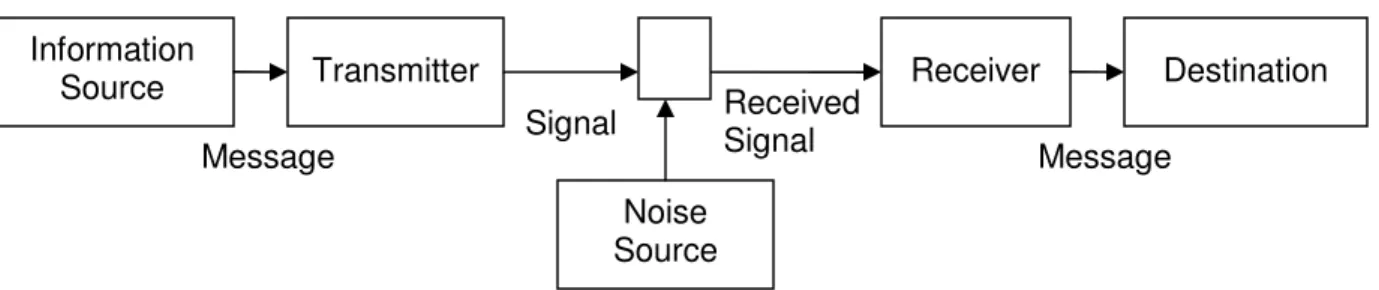
Figure 2.2: Shannon and Weaver’s ‘General model of communication’. 30
Figure 2.3: Feedback attributes (from Allwood et al., 2007a). 33
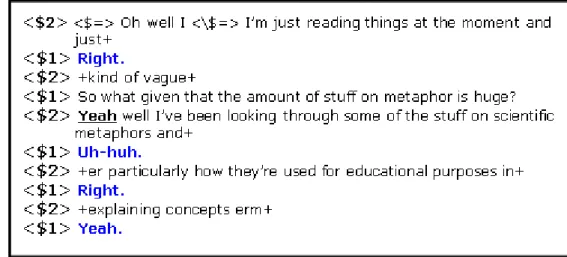
Figure 2.4: An excerpt of a transcript of dyadic communication. 35
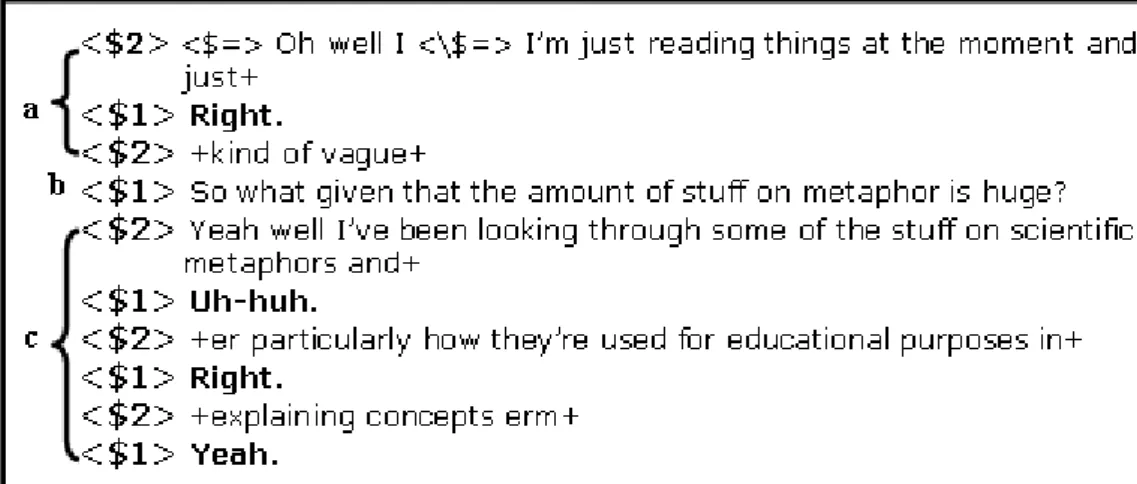
Figure 2.5: Defining backchannels in a transcript excerpt. 38
Figure 2.6: Defining turns in the transcript excerpt. 43
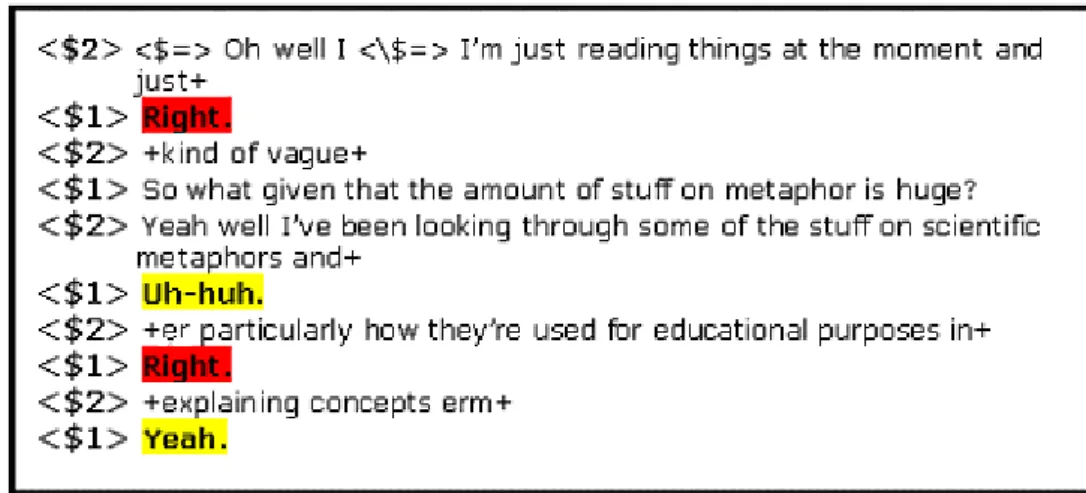
Figure 2.7: Defining the functions of the backchannels seen in the transcript excerpt taken from the NMMC.
55
Figure 2.8: The percentage of use of the most frequent backchannel forms spoken by groups of American English and British English speakers (results taken from Tottie, 1991).
58
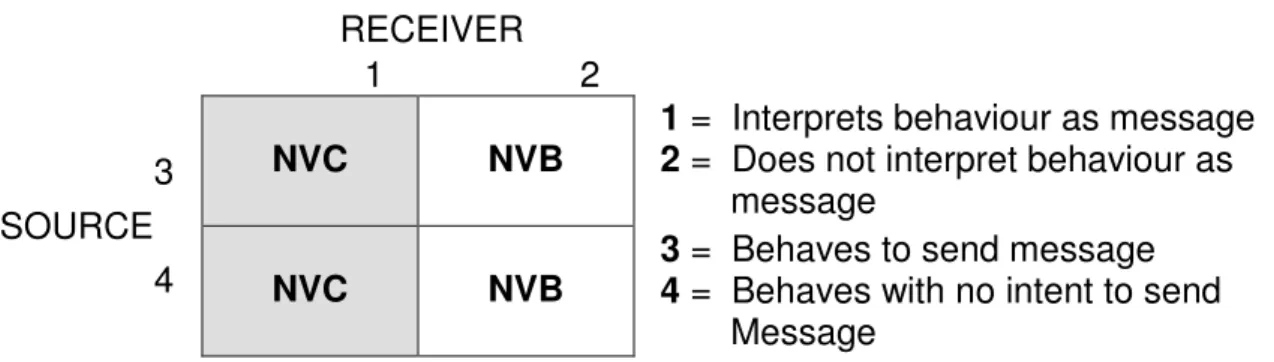
Figure 2.9: The differences between Verbal Behaviour (NVB) and Non-Verbal Communication (NVC).
65
Figure 2.10: Kendon’s continuum of NVC (based on McNeill, 1992). 68
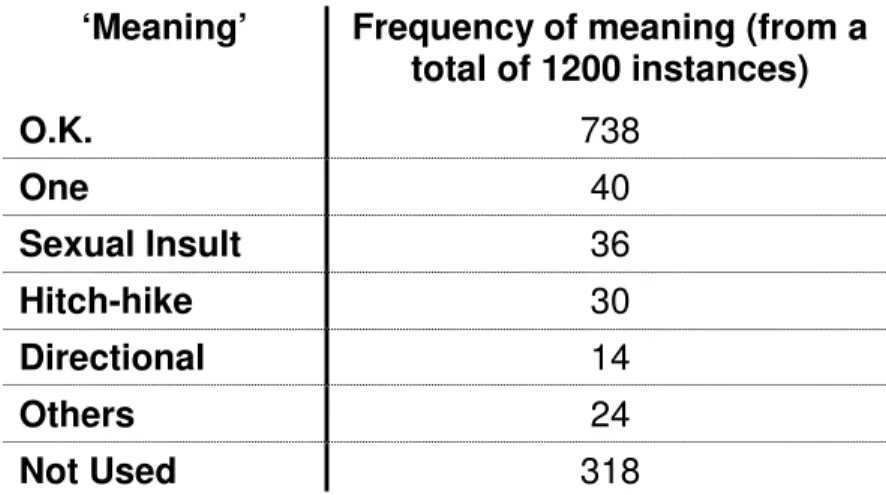
Figure 2.11: A table to show a variety of semantic associations of the ‘thumbs-up’ gesture, based on 1200 participants across 40 different locations around the world (taken from Morris et al., 1979).
69
Chapter 3
Figure 3.1: An example of the recording set-up typically used in specialist meeting room corpora (example taken from the VACE corpus, Chen et al., 2005).
96
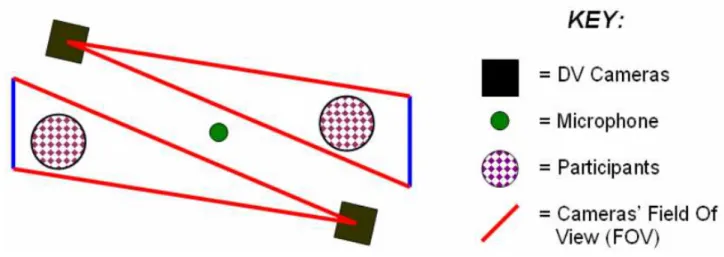
Figure 3.2: A basic recording set-up for multi-modal corpus development, based on the NMMC.
102
Figure 3.3: An excerpt of a time-stamped transcript, taken from the NMMC. 119
Figure 3.4: The Action Units (AUs) that comprise a head nod movement. 127
Figure 3.5: Division of the gesture space for transcription purposes, based on McNeill (1992: 378).
129
Figure 3.6: The coding ‘track viewer’ within the DRS environment. 135
Figure 3.7: An example of 3rdgeneration corpus concordance outputs. 137
Figure 3.8: Exploring backchannel behaviour using the DRS concordancer. 140 Chapter 4
Figure 4.1: Guide to mark-up and transcription conventions used in the case study.
158
Figure 4.2: A table showing the breakdown of frequency counts of spoken backchannels in the excerpt.
160
Figure 4.3: The most common forms of spoken backchannels in the excerpt. 161
Figure 4.4: Frequency counts of spoken backchannel functions in the excerpt.
162
of discourse functions.
Figure 4.6: Spoken backchannels without concurrent head nods- exploring discourse functions.
164
Figure 4.7: Frequency counts of yeah functioning as convergence tokens, and co-occurring types of backchanneling head nods (from the case study data).
165
Figure 4.8: Frequency counts of yeah functioning as continuers, and co-occurring types of backchanneling head nods (from the case study data).
166
Figure 4.9: Frequency counts of backchanneling nods in the excerpt. 167
Figure 4.10: Total frequencies of backchanneling head nod types. 168
Figure 4.11: The frequency counts of backchanneling nods occurring without spoken forms.
169
Figure 4.12: The frequency counts of different backchanneling nod types co-occurring with spoken backchannels.
170
Chapter 5
Figure 5.1: The HeadTalk tracker in action. 177
Figure 5.2: An Excel output from the HeadTalk tracking algorithm. 179
Figure 5.3: Tracking the head movements of <$M> throughout the ten-minute case study data.
182
Figure 5.4: Exploring the most ‘intensive’ nod from <$M> in the case study data.
185
Figure 5.5: ‘Medium’ sized head movements enacted by <$M> throughout the ten-minute case study data.
188
Figure 5.6: Comparing automatic and manual methods of MM data analysis (<$M>).
190
Figure 5.7: Tracking the head movements of <$F> throughout the ten-minute case study data.
191
Figure 5.8: ‘Medium’ sized head movements enacted by <$F> throughout the ten-minute case study data.
193
Figure 5.9: Comparing automatic and manual methods of MM data analysis (<$F>).
195
Figure 5.10: Highlighting data reusability problems. 200 Chapter 6
Figure 6.1: A matrix for the annotation and analysis of backchannels in discourse.
206
Figure 6.2: A guide to data labels used in the main study. 208
Figure 6.3: The raw word frequencies of the main study data. 209
Figure 6.4: The frequencies of spoken backchannels, non-verbal backchannels and words across each speaker and video in the five-hour corpus.
215
Figure 6.5: The ratio between word frequency and spoken / non-verbal backchannel usage across the five-hour corpus.
216
Figure 6.6: The 10 most frequent spoken backchannel forms in the corpus. 228
Figure 6.7: The functions and frequencies of spoken backchannels in the corpus.
Figure 6.8: Mapping the most common functions of the most frequent spoken backchannel forms in the corpus.
236
Figure 6.9: The types and frequencies of non-verbal backchannels in the corpus.
242
Figure 6.10: Nodding across multiple spoken backchannels and turn boundaries.
248
Figure 6.11: Frequencies of spoken and non-verbal backchannel co-occurrence across the corpus.
249
Figure 6.12: Frequencies of non-verbal backchannel behaviour, and its co-occurrence with spoken backchannels.
252
Figure 6.13: Charting the frequencies of spoken backchannel forms and their co-occurrence with specific types of head nods.
255
Figure 6.14: The functions of the most commonly used backchannel forms, and the frequency with which they are used with and without backchanneling nods.
257
Figure 6.15: The relationship between discourse function and concurrent nod type (for the top 10 most frequent spoken backchannel forms).
259
Figure 6.16: Frequency with which spoken backchannels are used with and without concurrent nods across the five-hour corpus.
261
Figure 6.17: Exploring the relationships between the spoken functions and nod types of concurrent spoken and non-verbal backchannels, across the five-hour corpus.
263
Figure 6.18: Exploring sequences of concurrent spoken and non-verbal backchannels.
275
Figure 6.19: Exploring the patterns-of-use of the most common sequences of concurrent spoken and non-verbal backchannels used by each participant.
276
Figure 6.20: Lexical collocates that most frequently follow the use of backchanneling nods in the corpus (i.e. located at position R1).
278
Figure 6.21: Lexical collocates that most frequently precede the use of backchanneling nods in the corpus (i.e. located at position L1).
279
Figure 6.22: Lexical collocates that most frequently precede the use of spoken backchannels (with)out concurrent nods (located at position L1).
280
Figure 6.23: Lexical collocates that most frequently follow the use of spoken backchannels (with)out concurrent nods (located at position R1).
281
Chapter 7
Figure 7.1: Concurrent spoken and non-verbal backchannel use- a basic one-to-one mapping.
293
Figure 7.2: Mapping spoken and non-verbal backchanneling functions. 295
Figure 7.3: Non-verbal backchannels preceding the use of concurrent spoken forms.
296
Figure 7.4: A coding matrix for examining the relationships between spoken and non-verbal backchannels in discourse.
Guide to Acronyms, Corpora and Software
Adobe Premiere Digital editing software developed by Adobe
AL Applied Linguistics
AMI Augmented Multi-Party Interaction Corpus
ANVIL Multimodal annotation and visualisation tool
Atlas.ti A qualitative-based multi-media analysis tool
AU Action Units (part of FACS)
.avi Audio Video Interleaved
BNC British National Corpus
BoE Bank of English Corpus
CA Conversational Analysis
CANCODE Cambridge and Nottingham Corpus of Discourse in English
CES Corpus Encoding Standard
CHILDES Child Language Data Exchange System
CID Corpus of Interactional Data
CL Corpus Linguistic
CLAN Allows for the coding and analysis of text, compatible with the CHILDES corpus/ transcription database
CLAWS Constituent-Likelihood Automatic Word-Tagging System
CNV Convergence Token backchannel
CON Continuer backchannel
Constellations An ‘event based’ analysis tool that allows users to
synchronise and time align multiple modes of data
CV Computer Vision
DA Discourse Analysis
DAMSL Dialog Act Markup in Several Layers
Diver Allows users to synchronise, view and play multiple video
streams (part of Dynapad)
DReSS Digital Records for eSocial Science, a 3 year
ESRC-funded project based at the University of Nottingham.
DRS Digital Replay System
DV Digital Video
Dynapad A multimodal visualisation (representation) tool
ELAN A multimedia analysis and representation tool
ER Engaged Response backchannel
ESRC Economic and Social Research Council (UK)
EUDICO European Distributed Corpora Project
FACS Facial Action Coding Scheme (Ekman and Friesen, 1978)
HamNoSys Hamburg Notion System (for encoding sign language)
HCI Human-Computer Interaction
HH Human-Human Interaction
HMM Hidden Markov Model
ICSI International Computer Science Institute (Berkeley, CA)
IFADV Institute of Phonetic Sciences Free Dialog Video Corpus
IMDI ISLE Metadata Initiative
I-Observe An ethnographic data collection and organisation tool
IR Information Receipt backchannel
LCIE The Limerick Corpus of Irish English
LLC London-Lund Corpus
LOB Lancaster-Oslo/ Bergen Corpus
MDCL Meeting Data Collection Laboratory (held at NIST)
MediaTagger Mac based software that facilitates the codification of
video data at different ‘tiers’, developed at MPI
MI Mutual Information
MIBL Multimodal Instruction-Based Learning Corpus (for Robots)
MM Multi-Modal
MM4 Multi-Modal Meeting Corpus
MPI Max Planck Institute
MSC Mission Survival Corpus
MultiTool A multimodal transcription and analysis tool
MUMIN A Nordic Network for MUltiModal Interfaces
MuTra A multimodal transcription tool
NCeSS National Centre for eSocial Science
NIMM Natural Interaction and Multi-Modal Annotation Schemes
NIST National Institute of Standards and Technology
NITE XML A workbench of tools that allows for the annotation of
natural interactive and multimodal data
NLP Natural Language Processing
NMMC The Nottingham Multi-Modal Corpus
NVB Non-Verbal Behaviour
NVC Non-Verbal Communication
Nvivo A tool that supports the alignment and analysis of multiple
multi-media data streams
OLAC Open Language Archives Community
P-O-S Part of Speech
Praat A fine grained audio analysis tool
S.D. Standard Deviation
SAMMIE Saarbrücken Multimodal MP3 Player Interaction Experiment
SeU Survey of English Usage
SGML Standard Generalised Mark-up Language
SK-P SmartKom Multimodal Corpus
SVC SmartWeb Video Corpus
SyncTool A tool for the transcription and alignment of audio and video
TEI Text Encoding Initiative
The Observer Software for coding and analysing observational data
Tractor A digital tool for the transcription of audio and/or video
records
Transana Qualitative analysis software for video and audio data
Transtool A digital tool for the transcription of audio and/or video
records
TraSA A digital tool for the transcription of audio and/or video
records
TRP Turn Relevance Place
VACE Video Analysis and Content Exploitation
Chapter 1: Introduction
1.1. General overview
Current large-scale multi-million word linguistic corpora (referred to as ‘3rd generation’ corpora in this thesis, see Chapter 2) provide the user with an invaluable resource for generating accurate and objective analyses and inferences of the ‘actual patterns of [language] use’ (Biber et al., 1998: 4). They provide the apparatus for investigating patterns in the frequency of occurrence, co-occurrence (collocation) and the semantic, grammatical and prosodic associations of lexical items across large records of real-life discourse. These enquiries are difficult to undertake manually.
Consequently ‘corpus analysis can be a good tool for filling us in on ‘‘the big picture’’ of language (Conrad, 2002: 77), providing users both with sufficient data for exploring specific linguistic enquiries, the corpora, and with the method of doing so; the Corpus Linguistic approach (see Stubbs, 1996: 41, CL hereafter).
However, current corpora have a fundamental deficiency, owing to the fact that spoken corpora are effectively mono-modal, presenting data in the same physical medium; text-based records. This is problematic because although ‘we speak with our vocal organs….we converse with our whole body’ (Abercrombie, 1963: 55) thus, by presenting the user with mere textual records, current corpora fail to provide adequate means for exploring communication beyond the text. They are inadequate in facilitating a more comprehensive investigation of not only spoken, but also non-verbal elements of language in specific contexts of communication.
It is, therefore, appropriate to propose a new, ‘4th generation’ of corpora (see Chapter 2) and appropriate CL software to fill this void, accommodating a more multi-modalperspective of discourse (MM hereafter). A 4th generation MM corpus is comprised of video, audio and textual records of interaction (and associated metadata information) extracted from recordings of naturally occurring conversational episodes which are streamed in an easy-to-use interface; the MM corpus tool-bench. Amodeof data, in this sense, is crudely defined as the physical format in which a particular phenomenon is presented and observed; thus, heremulti-modality is the culmination of these integrated and aligned data streams. At this point it should be acknowledged that the literature suggests that this definition of multimodality is not without contention, however for ease of reference and to maintain consistency it is
utilised throughout this thesis (this matter is discussed in more detail in Chapter 2).
At present, few large-scale, publicly available 4th generation corpora exist (see Chapter 2 for more information), furthermore there exists no widely established methodological approach for interrogating such datasets. To address this limitation, this thesis presents a bottom-up study of MM corpora, investigating the various issues involved in both the physical construction of such corpora as well as providing a worked example of an approach to the
analysis of specific linguistic phenomena across the multiple streams of data in a MM corpus.
In terms of constructing MM corpora, this thesis examines a range of technological procedures for the collection, storage, annotation, mark-up and coding of data. Through this examination, the thesis outlines a basic way of
integrating annotations of different aspects of communicative events, in order to meet the needs of the end-user, i.e. the corpus linguistic researcher (analyst).
In addition, a corpus-based methodology for the actual investigation of these MM corpora is outlined, demonstrating how new software and methodologies can be utilised to enhance the description and understanding of language and gesture-in-talk. This provides a backdrop to the principal concern of this thesis; the investigation of patterns of the (co)occurrence of spoken backchannels and backchanneling head nods in talk (i.e.HeadTalk).
Using this MM CL approach, the thesis presents a detailed descriptive account of the relationships between the (co)occurrence of spoken and non-verbal backchanneling elements in discourse (see below for definitions). This is undertaken by testing 10 different premises, which act as research questions that were drawn up in Chapter 2, using findings from past research, together with results from the case study analysis (Chapter 4). These premises thus provide the foundations for extending what we already know about backchannels, knowledge that has previously been evidenced by text-based corpus analyses of spoken forms of this phenomenon (and related research).
Using the findings from these enquiries, that is the ‘testing’ of the premises, the thesis constructs a profile of the discursive roles and functions of spoken and non-verbal backchannels. This profile supplies the outlines of a detailed coding scheme/ matrix, for encoding instances of these phenomena, as well as for mapping the relationship between them. This then provides the
foundations for identifying, defining and investigating backchanneling behaviours in future research of this nature.
The thesis presents research relating to developments made during the 3-year ESRC funded DReSS (Understanding New Digital Records for eSocial Science) project based at the University of Nottingham. This interdisciplinary project involved researchers in the area of applied linguistics working in collaboration with computer scientists and psychologists, in order to develop new interfaces and tools for presenting and interrogating large quantities of MM data1. The thesis extends the focus of the DReSS project by providing a more detailed user-based perspective of the requirements for, and practical applications of, MM corpora (for the linguistic community), contextualising these issues through the detailed investigation of a specific linguistic enquiry.
1.2. Research questions, aims and objectives
This study therefore tackles two key issues. The first of these concerns the following:
1) Developing the next generation of linguistic corpora: What are the key technical, practical and ethical issues and challenges faced in the design and construction (i.e. the ‘development’) of MM corpora, and how can these best be approached?
In order to address this, the study concentrates on exploring the issues raised by procedures ofstandardisationin current corpora, outlining requirements for 1
For more information, results and publications from DReSS, please refer to the main project website: http://web.mac.com/andy.crabtree/NCeSS_Digital_Records_Node/Welcome.html
the collection, transcription and codification of new data sets for MM corpora. It also addresses the need for functionality within MM corpora, identifying a range of technical, aesthetic and ethical problems faced when physically presenting multiple streams of audio and video data within an easy-to-use, integrated corpus tool. Drawing on these discussions, certain methodological guidelines are presented, detailing the most effective ways of addressing the issues and challenges faced in MM corpus construction, guidelines which will prove to be an invaluable source of reference in the future.
The second issue concerns the actual usability of MM corpora; how such corpora can be exploited to facilitate explorations of linguistic phenomena
beyond the text. It provides an examination of the frequency of use, and relationship between, spoken and non-verbal backchannel behaviour in discourse, in order to address the second research question (which is the principal linguistic concern of this thesis):
2) Using MM Corpora: What are the roles, forms and functions of non-verbal and spoken backchanneling behaviour in real-life discourse, and what is the relationship between them?
Backchannels are described as short spoken or non-verbal response tokens that are used by a listener as a ‘way of indicating….positive attention to the speaker’ (Coates, 1986: 99) without attempting to take the turn in talk (see Chapter 2 for further details). Whilst ample research into spoken forms of backchannels exists, the majority of this fails to fully investigate the relevance, form and linguistic function of non-verbal backchannels in discourse.
Given this paucity, backchanneling head nods were chosen as the focus of this study because although they are to a certain extent salient and fundamental elements of spoken face-to-face interaction, owing to the sheer frequency with which nods are used (see Chapter 4), little is known about how this phenomenon actually behaves in discourse. Moreover, there is scant information regarding the interoperability of spoken and forms of non-verbal backchannels; observing how and when spoken and non-verbal forms are used alone or, in synchronicity in talk, and in determining the type of effect this has on the associated meaning of such sequences of behaviour. The second focus of the thesis is, therefore, designed to overcome these deficiencies.
The second question is addressed through assessing the following characteristics of spoken and non-verbal backchanneling behaviours:
Frequency: The total number of words spoken by a participant and the total number of spoken backchannels and/or backchanneling nods they use, over the course of a conversation.
Type: The patterns/ characteristics of spoken and non-verbal backchannel use, focusing on the frequency of use of:
Particular forms and discourse functions of spoken backchannels, and specific forms adopting a given function. Individual backchanneling nod types (based on the movement
structure of the nods).
Patterns of co-occurrence: (i.e. the simultaneous use of spoken and non-verbal backchannels), questioning:
Which nod types are most frequently used with spoken backchannels of a specific form and or/ adopting a specific discourse function?
1.3. Study design
This thesis is based on refining and redefining CL approaches and methodologies for MM corpora. A CL approach is an empirically-based methodological approach to the analysis of language. The central premise of CL methodology is the utilisation of large quantities of naturally occurring language-in-use as ‘data’, which is stored electronically as ‘corpora’, in order to investigate a wide range of different linguistic enquiries (see Firth, 1957; Halliday, 1978 and Sinclair, 1996). As previously stated, current CL methodologies generally deal with ‘data’ that comprises text-based records of language, thus are limited in providing the means for investigating MM corpora.
In order to revise current CL approaches, a critique of a range of state-of-the-art technological and theoretical methods and methodologies that enable the extrapolation and exploration of gesture-in-talk is provided. These have been taken from a variety of different disciplines of academic research (including psychology, computer science and sociology), and are adapted to meet the specific needs of the linguist, as outlined in Chapter 3. This examination provides not only the guidelines for a new approach for MM corpus development, addressing question 1, but also lays the foundations for a revised CL approach for MM data analysis, which is addressed as part of the second thesis question.
In order to examine this second question in greater detail, the thesis provides a quantitative, corpus-based numerical assessment of backchannel phenomena in naturally occurring discourse. Two different datasets are drawn upon, comprising dyadic academic supervision sessions (between supervisors and supervisees). These consist of a five-hour sample of MM video data, around 56,000 transcribed words, which is complemented by a ten-minute case study sample of the data, around 2000 transcribed words.
The case study acts as a basis for establishing a framework for examining patterns of backchanneling phenomena. It functions to determine the how of identifying, marking-up and comparing spoken and non-verbal backchannels, and begins to specify what sort of discursive and semantic functions these phenomena adopt to help generate meaning in discourse.
The approaches used in the case study are subsequently extended in the latter part of the thesis, Chapter 6, for the analysis of a five-hour, 56,000-word corpus of MM data. This corpus contains 6 complete supervision episodes, each ranging from 30 to 60 minutes in length. The characteristics of behaviours used are compared, firstly, for each speaker in each video (in order to investigate the possibility of backchanneling as an idiosyncratic activity), then across the two speakers in each dyad, before the entire dataset is analysed and more in-depth comparisons of patterns and results are undertaken.
To provide a systematic analysis of these behaviours, 10 key premises are investigated in this main study. The first 5 of these are based on a culmination of findings made from a range of different, relevant, studies of spoken backchanneling behaviour and/or gesture-in-talk from current literature.
Chapter 2 contextualises each of these premises as part of the extensive literature review. The remaining 5, which focus mainly on non-verbal backchanneling, are based on findings derived directly from the case study analysis (see Chapter 4 for further details). The 10 premises are as follows:2
1- ‘Backchanneling occurs more or less constantly during conversations in all languages and settings’ (Rost, 2002: 52, also Oreström, 1983; Gardner, 1998).
2- If one speaker dominates the conversation significantly then the other will backchannel more.
3- The simple backchanneling form mmm is most frequently used, based on results provided by Oreström, 1983; Gardner, 1997a, 1998 and O’Keeffe and Adolphs, 2008. The simple backchannels
yeah, okay and right will also be fairly prevalent in talk, although they function in different ways to mmm (see O’Keeffe and Adolphs, 2008; Gardner, 1997b).
4- The continuing (CON) function is most commonly adopted by spoken backchannels, as supported by Oreström, 1983 and O’Keeffe and Adolphs, 2008.
5- Complex forms of backchannels commonly function in a more affective, relational way, than simple forms, such asmmmandyeah.
These latter forms instead often function as continuer (CON) tokens, which are often more semantically empty; providing the ‘most minimal’ feedback (O’Keeffe and Adolphs, 2008).
2For definitions of the specific movement
6- Backchanneling head nods are used at the same rate or more
frequently than spoken backchannels since they are even more minimal and non-evasive than spoken forms, imposing even less of a challenge to the floor.
7- The most common types of head nods used in discourse are of a short duration, i.e. types A and C or less intense, multiple, type B
nods. TypesDandEare less frequently used.
8- Nods are used more frequently with concurrent spoken backchannels than alone. Similarly, spoken backchannels are used more frequently with concurrent nods than alone.
9- Spoken backchannels that are used as IR and ER tokens are more likely to co-occur with complex forms of backchanneling nods that vary with intensity, i.e. typesB,DandE,whereas backchannels that exist on the opposite end of the ‘functional cline’ will co-occur with shorter, more simple, typeAandCnods.
10- Spoken and non-verbal backchannels are often used collaboratively in talk, and are shown to cluster and operate in context: within and across turn boundaries.
In order to evaluate these premises, the following 5-stage approach to analysis is undertaken:
Stage 1: Specific non-verbal/ spoken behaviours are identified as
Stage 2: The type of nod, linguistic form and discursive function of the non-verbal and spoken backchannels, respectively, are classified.
Stage 3: The frequency of each backchannel form, type and function are
noted for every speaker in each supervision.
Stage 4: Instances of spoken and non-verbal backchannel co-occurrence
are marked and frequencies of their associated forms and discursive functions, where known, are again noted for each speaker and across each supervision video.
Stage 5: Frequencies of spoken and non-verbal backchannels
(co)occurrence from each speaker and/or video are compared and observations regarding interesting patterns made.
This study effectively adopts a mixed-method approach, combining quantitative explorations of frequencies and patterns of co-occurrence, with more a detailed qualitative assessment, a detailed discourse analytical linguistic commentary on the relevance of the results and patterns seen.
The quantitative analyses (stages 1-4) are centred on providing raw frequency counts of the occasions where features of interest are used, as well as raw percentage comparisons. This provides a simple but sufficient means of illustrating whether, for example, a pattern of behaviour seen for one speaker or dyad of speakers is similar to that shown by other speakers or across all of the supervision videos. The relative pros and cons of using this method, and alterative statistical tests, are discussed further in Chapter 6.
Thus results from such comparisons provide an adequate ‘point-of-entry’ into the analysis of this data.
Whilst the case study data was extracted from one conversational episode (between a young female supervisee and an older male supervisor, who are meeting for the first time in a supervision capacity at the start of an MA dissertation), the extended data-driven study includes a range of different participants, discussing a range of different topics, all of whom are at different stages in their academic careers. Some participants are meeting for the first time, whereas others are meeting during their second or final year of study. The dataset includes participants of various different ages, with examples of interactions between male-male, female-female as well as male-female dyads. This provides a larger cross section of participants than the case study and, potentially, a wider range of factors influencing the frequency, type and patterns ofco-occurrenceof spoken and non-verbal backchannels in the data. This variation helps to provide a more socio-cultural perspective to the analysis, allowing for the examination of the potential effect that, for example, professional status has on the use of backchanneling behaviour in conversational episodes. The impacts of these socio-cultural factors are discussed as part of the qualitative assessment of the results, undertaken as part of stage 5 of the analytical approach, see Chapter 6 for further details.
1.4. Thesis overview
Chapter 2 commences with a review of past research relevant to the current study, in order to provide a theoretical and methodological backdrop to the study.
In Chapter 3, the first aim of the thesis, regarding MM corpus
development, is examined in further detail. The standards that are used in current 3rd generation corpus design and construction are reviewed, and the necessity for adapting and extending these for the next generation of corpora is underlined. The key theoretical, ethical, practical and technological challenges faced in this redevelopment are discussed in this chapter.
The corpus development methodological focus of this chapter is complemented in Chapter 4 by a functional assessment of the issues faced in actual usabilityof MM corpora (addressing the second aim of the thesis). This chapter introduces a 3-step methodological approach for the manual definition and analysis of backchanneling behaviours, which is used to conduct a basic case study analysis of a ten-minute excerpt of MM corpus data.
Building on this initial line of enquiry, Chapter 5 questions whether the labour intensive manual methods of gesture definition and analysis used in Chapter 4 can be further enhanced to enable the analysis of large-scale MM corpora. It explores the potential for automating the processes of backchanneling head nod detection, definition and codification as a means of allowing the analyst to search and manipulate sizeable video datasets quickly (i.e. >100,000 words). The automated method in question is a video tracking device, the HeadTalk tracker, built by computer vision (CV) experts at the University of Nottingham (see links on the DReSS publications page for further information). The chapter questions the practical efficiently and reliability of this tracker. The chapter determines that, at present, the more analyst-led manual approach, as used in Chapter 4, is deemed to be a more accurate means of analysis.
Chapter 6 then provides a systematic investigation of the characteristics of backchannel use (according to the variables identified in section 3, above), as evidenced by the analysis of a five-hour MM corpus of dyadic supervision data. The chapter focuses on testing, supporting or refuting the claims made in the 10 key premises about backchanneling listed above. These results are complemented by a detailed linguistic commentary, in Chapter 7, profiling the key attributes of the (co)occurrence of spoken and non-verbal backchanneling phenomena in real-life interaction. This provides the foundations for a coding matrix for MM backchanneling phenomena, which is offered here, which presents guidelines for categorising and interrogating such behaviours in corpus linguistic research.
Finally, Chapter 8 provides a conclusion to the thesis, drawing all the discussions to a close. The main aims and objectives are revisited and ways in which these have been met are clearly outlined. Furthermore, the strengths and limitations of the study are explored and how these limitations might be overcome in future studies is considered.
Chapter 2: Literature Review
2.1. Introduction
This chapter lays the foundations for the exploration of the spoken and non-verbal backchannels in real-life discourse. It draws specifically on discussions of communicative feedback and overviews the wealth of linguistic research that explores a particular form of feedback, spoken backchanneling phenomena, in detail. Current linguistic research paradigms which can be utilised to examine the forms, roles and discourse functions of spoken backchannels are discussed in order to place the concerns of the current study in the context of previous research in the field, thus providing the basis for the investigation of research question 2.
The chapter then proceeds to highlight the minimal nature of the amount of comparable linguistic research paradigms which have been designed to enable the exploration of non-verbal backchannel behaviours. The history of research into gesture-in-talk from a variety of different disciplines is broadly examined, drawing specifically on studies of head nod behaviour and backchanneling head nods. The chapter outlines the problems faced in the definition and categorisation of the ‘non-verbal’ in communication, emphasising the ways in which 4thgeneration corpora and associated MM CL methods can perhaps help to reduce these problems by providing a platform for the systematic analysis of these behaviours.
2.2. The history of the corpus linguistic approach
2.2.1. Pre-electronic linguistic enquiry
Although the term Corpus Linguistics is relatively new, emerging around 1955, McEnery and Wilson indicate that ‘the methodological ideas, motivations and practices involved in Corpus Linguistics in fact have a long history in linguistics’ (1996: 1). Indeed there are many examples of early empirical studies which explored patterns of actual language-in-use. These involved scholars working with hand-written, purpose-built, collections of texts (corpora) which took an enormous amount of time and effort to design, build and analyse. Corpus studies of this nature included those examining the lexicographical and grammatical properties of language (Käding, 1879 and Boas, 1940), studies of language acquisition (see Ingram, 1978), learning and teaching (see Palmer, 1933; Fries and Traver, 1940 and Bongers, 1947) and biblical studies. Corpora in this ‘pre-electronic’ phase were relatively small in size, and as they were manually constructed and analysed, they were often prone to error. Yet despite this, these types of studies found support in those who believed that ‘the analysis of discourse is, necessarily, the analysis of language of use’ (Brown and Yule, 1983: 1).
However, as a result of these key deficiencies there were many critics of early CL methodologies (see McEnery and Wilson, 1996: 4). Perhaps the most prominent was Noam Chomsky (1965) who maintained that corpora of such small sizes were inherently unaccountable; potentially providing misleading and ungeneralisable observations of language. Consequently, he claimed that quantitative, data-driven, empirical investigations of language undertaken using corpus-based methodologies were essentially ‘skewed’. He
proposed that more rationalistic approaches, involving the qualitative assessment of introspective data, exist as more reliable techniques for linguistic analyses. This supported Bourke’s view that ‘the criterion of truth is not sensory but intellectual and deductive’ (1962: 263).
As a result, there was a general movement from empiricism to rationalism in linguistic research at this time. This was described as the ‘time of discontinuity’, where Corpus Linguistics generally fell out of favour with linguists, although research using CL based methods did not halt completely (McEnery and Wilson, 1996: 4).
2.2.2. 2ndand 3rdgeneration Corpus Linguistics
Since these early days, empirical language analyses have witnessed a resurgence in popularity, one which can primarily be attributed to the advent of computers.
The 2nd generation of corpora, early computerised corpora which embraced the ‘digital age’ in its early stages (until around the 1980s), revolutionised the potential of CL enquiry by enabling linguists to systematically create digital records of corpus data on-screen. They also enabled digital searches of the corpora, rather than the researcher having to trawl through numerous pages of hand-written accounts when analysing data, thus dramatically reducing the time and accuracy with which these enquiries were undertaken. The most renowned of 2nd generation corpora are the Brown corpus, built in 1963, and the Lancaster-Oslo/ Bergen corpus (LOB), built in 1975, a computerised version of components taken from the SeU (Survey of English Usage).
The ever-increasing sophistication of computers, over the past thirty years in particular, has now provided linguists with the ability to compile and ‘handle huge amounts of [corpus] data’ (Kennedy, 1998: 5). Large computerised corpora of this nature are defined as 3rdgeneration corpora within this thesis and include major corpora to date, such as the British National Corpus (BNC-100 million words of written and transcribed spoken discourse), the 524 million-word Bank of English (BoE) and the Cambridge and Nottingham Corpus of Discourse in English (CANCODE3, a 5 million word corpus of transcribed spoken data).
Furthermore, the development of digital concordancing software, such as Wordsmith Tools (Scott, 1999), has also enabled researchers to ‘calculate frequencies, analyse collocates and often calculate statistical measures of the strength of word associations’ (Conrad, 2002: 77) with ‘incredible speed, total accountability, accurate replicability [and] statistical reliability’ (Kennedy, 1998: 5). This has enabled the following types of enquiries about language to be undertaken with relative ease (Conrad, 2002: 77-83):
1. Investigating characteristics associated with the use of a language feature.
2. Examining the realisations of a particular function of language. 3. Characterising a variety of language.
4. Mapping the occurrence of a language feature through a text.
3CANCODE stands for Cambridge and Nottingham Corpus of Discourse in English, a 5
million word corpus of spoken English taken from different contexts across the British Isles. CANCODE was built in collaboration by The University of Nottingham and Cambridge University Press (with whom sole copyright resides).
The various developments in modern Corpus Linguistic methodology have provided a research landscape that contemporary CL enthusiasts believe stands in strong opposition to Chomsky’s alternative, rationalistic approach to language analysis. They cite the following as particular advantages of using CL methodologies (based on McEnery and Wilson, 1996: 8, also see McCarthy, 2001: 125 and Meyer, 2002: 5):
Introspective data is artificial, whereas corpora are natural, unmonitored sources of data.
Frequencies of word / phrase / grammatical construction use cannot be discovered without the use of a corpus. In order to obtain frequency information, CL techniques are the only option, as human beings have only the vaguest notion of the frequency of lexical units and thus need to draw on the naturally occurring data to make accurate statements about word frequency.
The process of introspection may not be at all systematic and is definitely less systematic than a corpus approach.
As a result, while ‘artificial data can have a place in modern corpus linguistics…. it should be used with naturally occurring data which can act as a control, a yard stick if you will’ (McEnery and Wilson, 1996: 16).
Corpus-driven approaches are now used in a wide range of linguistic disciplines, including semantics, pragmatics, stylistics, language learning and pedagogy, and can be adapted beyond the field of linguistics, for example, in psychological and sociological motivated investigations of language-in-use.
2.2.3. 4thgeneration Corpus Linguistics
Despite these strengths, as outlined earlier in the introduction, current spoken corpora are limited as they only have the provision for presenting data in a single format; that is text, in the form of transcripts of interactions (see Knight et al., 2006). They provide little opportunity for exploring non-verbal, gestural aspects of discourse because ‘the reflexivity of gesture, movement and setting is difficult to express in a transcript’ (Saferstein, 2004: 213). Thus, these text-based accounts of interaction only allow for a partial description of discourse delivered through corpus analyses (Wilcox, 2004: 525). 4th generation MM corpora aim to overcome this partiality.
As Lund notes (2007: 289-290):
The term multimodality encompasses a wide variety of phenomena in the literature, including emotions and attitudes conveyed through prosody, applause, laugher or silence in answer to a question, body movements, object manipulations and proxemics, layout and posture……in a different vein, the term multimodal is also often used to signify the medium in which a particular message can be expressed, for example text and graphics.
Therefore, when discussing MM research and MM corpora, essentially, we are looking not only towards the ‘abstract’ elements in discourse; the processes of ‘meaning making’ (i.e. bodily movement and speech, see Kress and van Leeuwen, 2001), but also the ‘media’, the physical mode(s) in which
these abstract elements are conveyed. Thus, as Lund notes, since ‘the mode of gesture is carried out by the media of movements of the body’ (2008: 290, paraphrased from Kress and van Leeuwen, 2001), it seems logical to define the multi-modal as a culmination of these senses of the abstract and the
media.
So while MM behaviours (in interaction) are involved in the processes of meaning generation, the MM corpus is the physical repository, the database, within which records of these behaviours are presented, through the culmination of multiple forms of media, i.e. different modes of representation. Thus, the ‘multi-modal corpus’ is defined as ‘an annotated collection of coordinated content on communication channels including speech, gaze, hand gesture and body language, and is generally based on recorded human behaviour’ (Foster and Oberlander, 2007: 307-308). The integration of textual, audio and video records of communicative events in MM corpora provides a platform for the exploration of a range of lexical, prosodic and gestural features of conversation (the abstract features, see Kress and van Leeuwen, 2001), and for investigations of the ways in which these features interact in real, everyday speech.
2.2.4. Current multi-modal corpora
4thgeneration MM corpora are still very much ‘under development’ (referred to as developing hereafter), and as yet no ready-to-use large corpus of this nature is commercially available. This is owing to a variety of factors, but, principally, due to ‘privacy and copyright restrictions’ (van Son et al., 2008: 1). Those that have been built are often designed to fulfil particular aims of a
research project (see Knight, 2006) and have limited functionality beyond such a project (refer to Figure 2.1 for an index of these).
Current MM corpora also tend to only feature a small number of participants and/or focus on a specific discourse context, providing little utility for describing language use beyond this context. Examples of such include the Fruits Cart Corpus and MIBL Corpus, as detailed in Figure 2.1.
In addition such MM corpora, including the IFADV corpus and Göteborg Spoken Language Corpus for example, are also relatively limited in size, especially compared to the multi-million-word 3rd generation corpora already in existence. Even though the largest MM corpus documented in Figure 2.1, the AMI corpus (see Ashby et al., 2005) comprises an impressive 100 hours of video, the majority of this data exists solely as video records. In other words all of the videos have yet to be transcribed, thus the actual size of this corpus, as a functional MM (i.e. text and video based) tool is not especially large.
However, although one limitation of current MM corpora, related to size, has been postulated here, it is in fact not necessarily valid to gauge size in relation to pre-existing textual corpora. As it is important to note that ‘what is meant by large corpora is however quite a relative notion’ in linguistic research (Blache et al., 2008: 110). ‘In some linguistic fields such as syntax for instance, corpora of several million words are used, whereas in prosody where most of the annotations are made manually, a few hours of speech are considered as a large corpus’ (Blache et al., 2008: 110). Therefore, the appropriateness of size can only really be determined in light of the specific researcher’s requirements. Thus, caution should be exercised when qualifying size as a strength or key shortcoming of a MM corpus.
Name and
Language Origin Size, Composition and Additional Information Reference(s)
AMI Meeting Corpus
(non-native English)
100 hours of recordings taken from 3 different meeting rooms. This corpus was created for the use ‘of a consortium that is developing meeting browsing technology’.
Ashby et al., 2005
CID (Corpus of Interactional Data)
8 hours of dyadic conversations, comprised of 2 participants sat in close proximity of one another, each wearing a microphone headset. Participants were encouraged to chat informally, so with no directions on how to structure the talk- promoting spontaneous discourse.
Bertrand et al., 2006; Blache et al., 2008 Czech Audio-Visual Speech Corpus / Corpus for Recognition with Impaired Conditions
Developed to test and train the ‘Czech audio-visual speech recognition system’ (automatic speech recognition). The first corpus features 25 hours of audio-visual records, from 65 speakers, the second has 20 hours of data across 50 speakers. In both, each speaker was instructed to read 200 sentences each, in laboratory conditions (50 common, 150 specific to the speaker).
Želez y et al., 2006; Trojanová et al., 2008 Fruits Cart Corpus
104 videos of 13 participants, 4-8 minutes each = approx 4000 utterances in total. Comprised of task-orientated dialogues in an academic setting. Designed to explore language comprehension, now used to analyse language production (NLP research).
Aist et al., 2006
Göteborg Spoken Language Corpus
Small components of this 1.2 million word spoken language corpus have been aligned with video records. Conversation is taken from various different social contexts with a range of different speakers talking ‘spontaneously’.
Allwood et al., 2000
IFADV Corpus A free dialog video corpus composed of face-to-face interaction between close friends/ colleagues. This corpus is comprised of twenty 15 minute conversations (5 hours in total).
Van Son et al., 2008 MIBL Corpus Comprised of human-to-human instruction dialogues, with one
participant teaching a card game to the other (similar to map task activities, see the Map Task Corpus, Anderson et al., 1991). This corpus links speech to movement on the screens and is used to train service robots (‘corpus based robotics’).
Wolf and Bugmann, 2006
Mission Survival Corpus 1 (MSC 1)
A meeting corpus which includes a range of short meetings, with up to 6 participants in each. The topics and tasks covered in the meetings are controlled but not scripted.
Mana et al., 2007 MM4 Audio-Visual
Corpus
Features 29 short meetings between 4 people filmed in controlled, experimental conditions. The majority of the meetings were scripted and cover specific, predetermined, topics and tasks.
McCowan et al., 2003 NIST Meeting Room
Phase II Corpus
Part of the NIST MDCL (Meeting Data Collection Laboratory). This corpus contains 15 hours of recordings from 19 meetings; comprised of both scenario-driven meetings and ‘real’ meetings.
Garofolo et al., 2004 NMMC (Nottingham
Multi-Modal Corpus)
250,000 words, 50% single speaker lectures, 50% dyadic academic supervisions. Sessions were video and audio recorded, transcribed and aligned using DRS (the Digital Replay System).
Knight et al., 2009
SK-P 2.0- SmartKom Multimodal Corpus
96 different single ‘users’ were recorded across 172 sessions, each recorded in public spaces such as at the cinema or in a restaurant. Sessions were video and audio recorded. HCI.
Schiel et al., 2002
SmartWeb Video Corpus (SVC)
99 recordings of human-human-machine dialogue, i.e. 1 speaker (recorded) interacting with a human person and a dialogue system (i.e. the main participant is using a Smartphone, which records their face and they are talking to the other participant).
Schiel and Mögele, 2008 VACE Multimodal
Meeting Corpus
Comprised of meeting room-based ‘planning sessions’. Spontaneous talk in controlled environments (participants given specific tasks to fulfil). 5 participants present in each scenario, across 5 scenarios.
Chen et al., 2005
AMI, as with the MM4 Audio-Visual Corpus, MSC1, the VACE Multimodal Meeting Corpus and the NIST Meeting Room Phase II Corpus all feature records of interaction extracted from one specific discourse context, a professional meeting room. In these meeting-based corpora, the primary motivation behind the associated research (and corpus construction) is to enable the development and integration of technologies for displaying and researching meeting room activity. In some of these corpora, the content is scripted or pre-planned to a certain extent and/or the conditions in which the recordings take place are controlled and experimental, with participants being told specifically where to sit, etc.
So, the AMI, despite its commendable size, together with the other meeting corpora seen here, are heavily ‘specialist’, and thus are limited in their usefulness for general CL research because they are so contextually and compositionally specific. 3rd generation specialised corpora are similarly commonplace, such the MICASE corpus4 of academic discourse, and the Wolverhampton Business English Corpus5. These corpora are not necessarily appropriate for addressing research questions that focus on the more interpersonal aspects of communication, beyond this formal, professional contextual domain. This is because the meeting room environment is generally regarded as not being particularly conducive to the frequent occurrence of more informal, interpersonal language and/or behaviours.
4
MICASE, the Michigan Corpus of Academic English, is a 1.7 million word corpus of transcribed interactions recorded at the University of Michigan. For more information see: http://lw.lsa.umich.edu/eli/micase/index.htm
5 The Wolverhampton Business English Corpus is comprised of 10 million words of written
English from the business domain. These texts were collected between the years 1999 and 2000. For more information see:http://www.elda.org/catalogue/en/text/W0028.html
It is relevant to note that it is not merely the specialist business corpora, as featured in Figure 2.1, that are perhaps inappropriate for analysing patterns of spontaneous, innate language use. Both the Czech Audio-Visual Speech Corpus and the Czech Audio-Visual Speech Corpus for Recognition with Impaired Conditions contain purely scripted speech, with participants reading lines of text, rather than featuring naturally occurring interaction. Similarly, the SK-P was filmed in ‘wizard-of-oz’ settings (see Schiel et al., 2002 for further details), with single participants instructed to carry out particular tasks (interacting with a computer screen, HCI- Human-Computer-Interaction), rather than engaging in naturalistic multi-party conversation.
While the SK-P is useful for training and testing simulated dialogues systems, and for other research into specific forms of HCI (Schiel et al., 2002, also see the SAMMIE6 corpus, Kruijft-Korbayova et al., 2006), it has little use beyond this.
As identified in Chapter 3, the NMMC aims to provide the linguist with more naturalistic forms of MM data, away from the scripted content and experimental conditions used in many of the corpora mentioned above. However, it should be noted that although there are plans to record data from a ‘range of contexts’ in the NMMC, this aim has yet to be realised. Currently, the data contained within the NMMC is somewhat specialised and context-specific, in that it only features recordings from academic supervisions. However since it is the only corpus freely available for the purpose of this thesis research, it was the one selected for use here.
The most ‘naturalistic’ of these corpora are the SVC and CID. The SVC is described as containing records of ‘spontaneous’ communication between two participants. However, participants are not strictly involved in face-to-face dialogue. They are instead using Smartphones as a medium for interacting, which simultaneously record the voices and facial images of participants as they talk to each other. Consequently, this corpus can also be described as specialist, as although speakers can see each other, the data comprises human-human-machine interaction, rather than merely human-human. Thus, the transferability of this data beyond this particular context of recording (human-human-machine video phone based dialogue) is again restricted.
In contrast the CID is comprised of real-life interaction between two people sitting next to each other, who are encouraged to discuss any topic or issue they wish. This means that the CID is a more general corpus than those discussed so far, as it seeks to provide conversational data in German (making this particular corpus unsuitable for use here, since this study is focused on English language-in-use) which is as naturalistic and context free as possible. However, the conditions in which these recordings took place are to a certain extent experimental, with participants sitting in a laboratory and wearing headset microphones. Although obviously it can be widely debated whether or not the headsets actually compromise the ‘naturalness’ or authenticity of the data contained within this corpus.
Overall, the various ‘shortcomings’ attributed to these current MM corpora, from the AMI to the VACE corpus, can perhaps be attributed to the fact that current 4th generation MM corpus research projects, in general, tend to concentrate on only one of the following concerns (taken from Gu, 2006: 132):
A: Multi-modal and multimedia studies of discourse B: Speech engineering and corpus annotation
Specific examples of the former (A) include work by Kress and Van Leeuwen (1996), Martinec (1998, 2001), Scollon (1998), Krauss (2002), and Gripsrud (2002). These studies emphasise the importance of Firth and Malinowski’s notion of the ‘context of situation’ (see Malinowski, 1923 and Firth, 1957) and seek to explore how ‘different semiotic modalities make different meanings in different ways according to the different media of expression they use’ (Baldry and Thibault, 2006: 4). They concentrate on actually exploring patterns of behaviour, the abstract elements in discourse (refer back to section 2.2.3, Kress and van Leeuwen, 2001), in different discursive contexts through different technological media. Studies of this nature, therefore, use MM corpora as a means to an end, as a method for actively exploring a particular research question or aim.
Conversely, current MM corpora and corpus projects that focus heavily on the second concern (B) tend to concentrate on actually developing software and hardware tools, the media (Kress and van Leeuwen, 2001), for exploring language behaviours in given contexts of communication, that is facilitating the kind of research conducted by the former type of project. These studies generally support the physical construction of a corpus in some sort of capacity, but one that is limited in utility beyond that immediate discourse context.