Air Force Institute of Technology
AFIT Scholar
Theses and Dissertations Student Graduate Works
3-23-2018
Estimating Defensive Cyber Operator Decision
Confidence
Markus M. Borneman
Follow this and additional works at:https://scholar.afit.edu/etd
Part of theDigital Communications and Networking Commons, and theInformation Security Commons
This Thesis is brought to you for free and open access by the Student Graduate Works at AFIT Scholar. It has been accepted for inclusion in Theses and Dissertations by an authorized administrator of AFIT Scholar. For more information, please [email protected].
Recommended Citation
Borneman, Markus M., "Estimating Defensive Cyber Operator Decision Confidence" (2018).Theses and Dissertations. 1796. https://scholar.afit.edu/etd/1796
ESTIMATING DEFENSIVE CYBER OPERATOR DECISION CONFIDENCE THESIS
Markus M. Borneman, Captain, USAF AFIT-ENG-MS-18-M-013
DEPARTMENT OF THE AIR FORCE AIR UNIVERSITY
AIR FORCE INSTITUTE OF TECHNOLOGY
Wright-Patterson Air Force Base, Ohio DISTRIBUTION STATEMENT A.
The views expressed in this thesis are those of the author and do not reflect the official policy or position of the United States Air Force, Department of Defense, or the United States Government. This material is declared a work of the U.S. Government and is not subject to copyright protection in the United States.
AFIT-ENG-MS-18-M-013
ESTIMATING DEFENSIVE CYBER OPERATOR DECISION CONFIDENCE THESIS
Presented to the Faculty
Department of Electrical and Computer Engineering Graduate School of Engineering and Management
Air Force Institute of Technology Air University
Air Education and Training Command In Partial Fulfillment of the Requirements for the Degree of Master of Science in Cyber Operations
Markus M. Borneman, BS Captain, USAF
March 2018
DISTRIBUTION STATEMENT A.
AFIT-ENG-MS-18-M-013
ESTIMATING DEFENSIVE CYBER OPERATOR DECISION CONFIDENCE
Markus M. Borneman, BS Captain, USAF Committee Membership: Dr. Brett J. Borghetti Chair Dr. Gregory J. Funke Member Dr. Kristen K. Liggett Member
AFIT-ENG-MS-18-M-013
Abstract
As technology continues to advance the domain of cyber defense, signature and heuristic detection mechanisms continue to require human operators to make judgements about the correctness of machine decisions. Human cyber defense operators rely on their experience, expertise, and understanding of network security, when conducting cyber-based investigations, in order to detect and respond to cyber alerts. Ever growing quantities of cyber alerts and network traffic, coupled with systemic manpower issues, mean no one has the time to review or change decisions made by operators. Since these cyber alert decisions ultimately do not get reviewed again, an inaccurate decision could cause grave damage to the network and host systems. The Cyber Intruder Alert Testbed (CIAT), a synthetic task environment (STE), was expanded to include investigative pattern of behavior monitoring and confidence reporting capabilities [1]. By analyzing the behavior and confidence of participants while they conducted cyber-based
investigations, this research was able to identify a mapping between investigative patterns of behavior and decision confidence. The total time spent on a decision, the time spent using different investigative tools, and total number of tool transitions, were all factors which influenced the reported confidence of participants when conducting cyber-based investigations.
Acknowledgments
I would like to express my sincere gratitude to my faculty advisor, Dr. Brett Borghetti, for his guidance and support throughout the course of this thesis effort. The insight and experience was certainly appreciated. I would, also, like to thank Dr. Gregory Funke, Dr. Kristen Liggett, and the 711 Human Performance Wing for their support.
Table of Contents
Page
Abstract ... iv
Acknowledgments...v
List of Figures ... viii
List of Tables ...x I. Introduction ...1 1.1 General Issue/Motivation ...1 1.2 Problem Statement ...2 1.3 Research Questions/Hypotheses ...3 1.4 Research Focus ...4 1.5 Methodology ...5
1.6 Assumptions and Limitations ...7
1.7 Contributions ...8
1.8 Preview ...9
II. Literature Review ...11
2.1 Chapter Overview ...11
2.2 Definitions, Themes, and Concepts ...11
2.3 Decision-Making and Behavior ...17
2.4 Measuring Decision Confidence and Decision-Making ...20
2.5 Conclusions ...28
III. Methodology ...30
3.1 Chapter Overview ...30
3.2 Background ...30
3.4 Assumptions ...54
3.5 Procedures ...54
3.6 Analysis Strategy ...57
3.7 Summary ...61
IV. Analysis and Results ...63
4.1 Chapter Overview ...63
4.2 Behavioral and Subjective Analysis and Results ...63
4.3 Electrophysiological Analysis and Results ...91
4.4 Summary ...91
V. Conclusions and Recommendations ...93
5.1 Conclusions of Research ...93
5.2 Significance of Research ...96
5.3 Recommendations for Future Research ...97
5.4 Summary ...102
Appendix A: IRB Approval Letter ...103
Appendix B: Blank Informed Consent Document (ICD) ...105
Appendix C: Pre-Experiment Questionnaire ...109
Appendix D: Post-Experiment Questionnaire ...110
Appendix E: CIAT 2.0 Alert Interface Overview ...111
Appendix F: General Cyber Alert Investigation Workflow Handout ...112
List of Figures
Page
Figure 1: Alert Difficulty Breakdown... 36
Figure 2: Baselining Questions Sample ... 44
Figure 3: Determine Confidence Sample ... 45
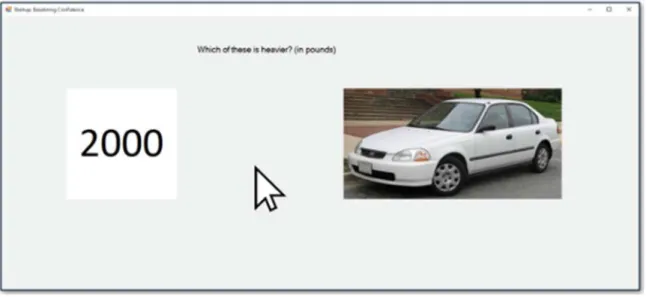
Figure 4: Number-to-Car Baselining Question Sample ... 46
Figure 5: Car-to-Car Baselining Question Sample ... 46
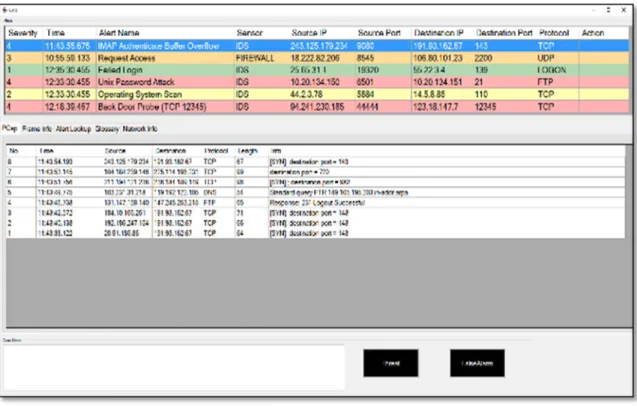
Figure 6: Alerts Screen Sample ... 47
Figure 7: Generalized Workflow ... 48
Figure 8: Alert Confidence Ranking ... 49
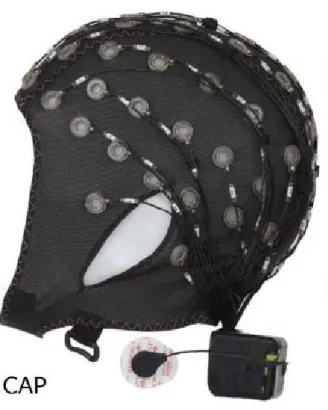
Figure 9: Cognionics Mobile Series Headset EEG Cap and Harness ... 51
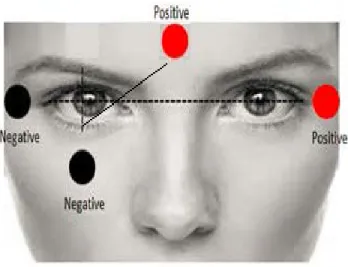
Figure 10: EOG Electrode Placement on Face ... 52
Figure 11: ECG Electrode Placement ... 52
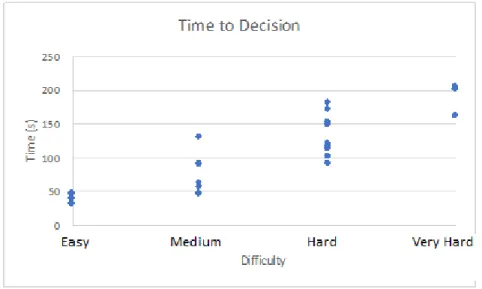
Figure 12: (Notional) Time to Decision ... 59
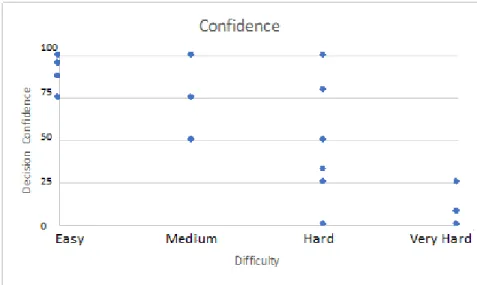
Figure 13: (Notional) Difficulty vs Decision Confidence ... 60
Figure 14: Baseline Comparison of Confidence versus Difficulty ... 64
Figure 15: Baseline Comparison of Accuracy versus Difficulty ... 65
Figure 16: Cyber Alert Comparison of Confidence versus Difficulty (Original Calibration) ... 70
Figure 17: Cyber Alert Comparison of Confidence versus Difficulty (Updated Calibration) ... 71
Figure 18: Time-in-Tool versus Participant (per Tool) ... 73
Figure 20: Confidence vs Time-in-Tool – Participant 1121 ... 75
Figure 21: Time-to-Decision versus Participant (per Difficulty) ... 76
Figure 22: Time-to-Decision versus Confidence (per Difficulty) ... 77
Figure 23: Time to Decision versus Alert (per Difficulty) ... 79
Figure 24: Strict Workflow Tool Transitions ... 81
Figure 25: Combined Workflow of All Participants ... 82
Figure 26: Participant 1108 Heat Maps by Round ... 84
Figure 27: Frequency of Tool Usage by Amount of Alerts (per Difficulty) ... 85
List of Tables
Page
Table 1: Independent Variable Summary ... 35
Table 2: 30 Alerts with Associated Difficulties ... 37
Table 3: Response Variable Summary ... 38
Table 4: Constant Factors Summary ... 39
Table 5: Test Matrix... 40
Table 6: 30 Cyber Alerts for Experiment (Original Calibration) ... 67
Table 7: 30 Cyber Alerts for Experiment (Updated Calibration) ... 69
Table 8: One-way ANOVA for Time-to-Decision Based on Confidence Scores ... 77
Table 9: Average Transition Count Based on Difficulty and Confidence Bins ... 87
Table 10: One-way ANOVA for Transition Count Based on Confidence Scores ... 89
Table 11: Transition Count and Confidence per Difficulty (by Participant) ... 89
ESTIMATING DEFENSIVE CYBER OPERATOR DECISION CONFIDENCE I. Introduction
1.1 General Issue/Motivation
Cyber operators, the colloquial term for humans engaged in cyber defense activities on the Air Force Enterprise Network, are tasked with making judgements and decisions about the correctness of machine decisions, including how to remedy network or host-based threats. For the purposes of this research, only network-based threats are of importance, as they must be delivered over a monitored and defended network to a target machine. The Cyber Intruder Alert Testbed (CIAT) synthetic task environment (STE) mimics a real-world security information and event management (SIEM) system, allowing for cyber-based alerts to be displayed and analyzed by the user [1]. Human operators interact with the system by identifying, validating, and tracking network-based security threats to the network. Thus, operations and training require humans to excel in the understanding of their task, such that they can make informed and correct decisions even if the tools and sensors may not always be correct. Typically it takes 6-12 months to become comfortable and confident on these weapons systems based on personal subjective levels of analysis. Once a human is certified on a system, they must maintain currency and proficiency on a month-to-month basis with yearly evaluations to ensure they are properly prepared to handle their job requirements. A "one size fits all" method of training is not necessarily tailored to individual operator’s areas needing improvement, so those lacking in experience or confidence in select areas may or may not receive the most effective training regimen. It is impractical, if not impossible, to prepare these cyber operators for
every task or scenario they may encounter, thus they will have to rely on their own independent reasoning and problem solving skills based on their training and experience. The investigative process for each alert is dependent on the information available and the operator’s expertise and experience. These investigations ultimately lead to the operator making a decision with some level of confidence. The level of decision confidence may be measured using behavioral indicators, subjective indicators, and even electrophysiological indicators. Decision confidence, defined by Insabato et al., is the feeling of having done something correctly or incorrectly, which is an important aspect of subject experience during decision-making as this increases for correct decisions and decreases for error decisions [2]. With the ability to identify cyber operators in low confidence situations, they can be augmented with increased attentiveness by other cyber operators, which in effect would be a tailored and specific usage of quality control to improve operations. Additionally, these low confidence situations, if detectable, would allow for tailored training to remedy these otherwise lower confidence situations. In worst case scenarios, trends may be established to identify when a cyber operator is in their normal state of decision confidence, be it normally high or low, and flag or alert the operator to decisions made outside their normal threshold.
1.2 Problem Statement
By observing the behavior and estimating the decision confidence of human subjects while they make decisions in a cyber-defense task environment, we may be able to identify when an operator needs assistance. Assistance may then be provided in the form of investigation review, training, and operational work using the new decision
confidence information. Using machine learning-based behavior pattern classifications, we may be able to map changes in confidence levels to address variations in tool compatibility, analyst skillsets or experience, and workload.
Previous human research in decision confidence has primarily focused on interview and survey type experiments where participants were asked to self-assess their decision confidence. The objective is to expand on past human research into decision confidence, specifically in the domain of cyber-defense, by observing the operator’s investigative patterns of behavior. Decision confidence will be estimated using decision performance measures such as time to decision, accuracy/correctness, and the participant’s self-reported confidence. Physiological data will be recorded from electroencephalogram (EEG),
electrocardiogram (ECG), and electrooculography (EOG) equipment, for association with mental and physical behaviors related to decision confidence. The behavior observed while participants investigate cyber-alerts in the CIAT STE will carry over to real-world based alert investigations, as the environment and tools resemble what cyber-defense analysts would use. Understanding the investigative patterns of behavior and estimating decision confidence will lead to a better understanding of how decisions are made.
1.3 Research Questions/Hypotheses
RQ1: What does the pattern of behavior, exhibited while investigating an event, tell us about operator confidence in the formulation of a decision?
RQ2: What investigative and evidence collection techniques does the operator use to make a decision?
Hypothesis: Differences in decision confidence will be evident in both patterns of investigative behavior and differences in the operator’s electrophysiology. RQ3: What are the behavior patterns associated with a confident decision?
Hypothesis: Operator behavior patterns associated with higher confidence will be reflected in faster decision-making and quantifiable electrophysiological metrics. RQ4: What are the behavior patterns associated with a correct and confident decision?
Hypothesis: Operator behavior patterns associated with high confidence and correct decision selection, will exhibit electrophysiological metrics which are quantifiably different from decisions made in lower confidence.
1.4 Research Focus
The focus of this research is to estimate decision confidence during a cyber defense investigation. While investigating the effect of alert difficulty on the investigative patterns of behavior, decision confidence will be determined by mapping the patterns of behavior to self-reported factors and recorded physiological information. If the investigative workflow and behavior patterns can be mapped to known electrophysiological indicators of the formulation of a decision and the associated decision confidence, then the more readily available non-physiological measurements can be used to estimate human decision confidence in order to provide feedback for efficiency and performance enhancement.
1.5 Methodology
The methodology is composed of three distinct parts, because each portion allows for observations which can then be identified and correlated across the other parts in order to model the formulation of a decision. Collecting self-reported confidence scores for each investigation is the easiest to obtain and review, thus it will be the first focus.
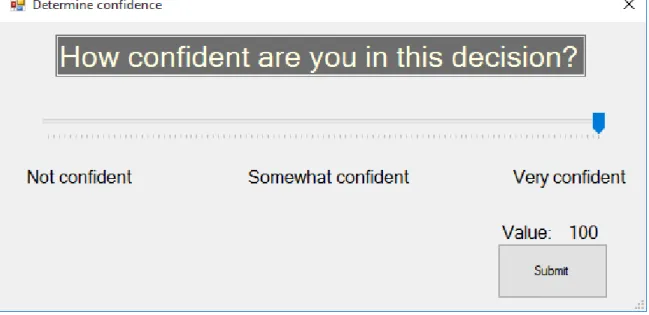
The self-reported confidence scoring was done by presenting the participant’s with Likert scales. Likert-type scales are frequently used in medical education research and clinical studies to measure self-reported data such as anxiety or self-confidence [3], [4]. The typical Likert scale is a 5- or 7- point ordinal scale used by respondents to rate the degree to which they agree or disagree with a statement [3], [5]. The reason a Likert-type scale was selected was to benefit from the ordinal scale. A 3-point ordinal scale of “not confident”, “somewhat confident”, and “very confident” was created. An ordinal scale allowed for distinct answer choices, but made comparing raw values difficult since the scale is not necessarily equidistant. The Likert-type scale used in this experiment was set to a scale of 0-100 values, using 3 subjective anchor words. The CIAT STE would display the Likert scale to the participant during each cyber-alert investigation. After a certain amount of alerts, the participant would be asked to rank the alerts, in order from top-to-bottom, as highest-to-lowest confidence, respectively. This ordering task forces any ties to be broken, should any of the alerts have identical Likert scale values. The numeric
confidence scores are not available to the participant while they complete this ordering task. Since the participants will not have access to their confidence scores, they will have to rely on their notes and short-term memory. The ordering task acts as a validation
control, ensuring the participants understood the confidence scores and the relation of alerts when comparing them to each other.
The second method is a behavioral analysis, made possible by observing and analyzing the workflow of each investigative and decision-making choice. Behavioral analysis involves recording the timing and value of every mouse click and keyboard input. By cataloging and reconstructing this data, a workflow and timeline can be generated for each participant. This workflow will replay the investigation of every alert, including every tool accessed and how long each tool was accessed. In addition, the recorded workflow can identify when tools were skipped or avoided. Skipping or avoiding tools could suggest learning effects or mistakes, dependent on other behavioral features. The intent of the behavioral analysis is to determine whether certain actions cause changes to confidence when reviewing the accuracy of alerts.
The final method to investigate is the relationships of the previous two methods with the participant’s physiological measurements. Various sensors will record the electrophysiological activity of each participant as they complete the cyber-alert investigations. Similar to patterns of behavior, the physiology of each participant will allow for an analysis of the evidence accumulation process when conducting the cyber-alert investigations. Additionally, certain physiological patterns manifest during decision-making, dependent on confidence [2].
1.6 Assumptions and Limitations 1.6.1 Assumptions
All of these methods are susceptible to the learning effect. The learning effect explains accelerated improvement to new or unfamiliar tasks, which would otherwise be negligible if someone was experienced with a task. All participants, especially those without any formal cyber security experience, will be learning and improving their cyber alert investigation process during the experiment. Because human subjects continuously absorb information about their surroundings, they cannot be expected to treat each alert as independent. Tool and process familiarity must be accounted for outside of the
experiment, in order to minimize the effects of workflow improvement during the experiment. Therefore, a 2-hour training phase was created to reduce the learning effect for participants. The training phase involved interface and tool familiarization, as well as a hands-on tutorial with a step-by-step investigation walkthrough using several example alerts. The training phase also included a complete round of alerts, where participants were allowed to practice without assistance. The assumption is that the participant will know enough about how to conduct a cyber-based investigation and make a decision based on the evidence they collect. The 2-hour training phase occurred prior to the experiment. Participant selection assumed that participants would understand how to operate a computer, and be willing to undergo training in order to understand and practice the cyber-alert investigative process.
1.6.2 Limitations
Participants were recruited from students, faculty, and staff of the Air Force Institute of Technology. Because the backgrounds of participants in this experiment may be different from the background of a typical cyber operator, it may be necessary to
conduct additional experiments to validate whether the findings are similar for participants with a background in cyber security who are more familiar with cyber security tools and concepts.
The CIAT STE uses one computer screen, meaning that all of the options and actions available to the participant were presented all at once. The STE differs from real-world scenarios and situations, in that all of the tools are available in one display window and in one location. Real-world systems typically require multiple tools, systems, and computer monitors in order to access relevant information while conducting a cyber-based investigation. In order to eliminate additional timing factors, such as window switching between tools, the design choice of one main window with all tools and alert information was made. Because the tools and interface were only on one screen, as the experiment’s results are limited to environments with similar limitations. The modular nature of this STE allows for relatively easy changes to be made to mimic other capabilities or tools, if that becomes the focus of future research.
1.7 Contributions
This study refines other work on cyber decision-making and decision confidence, with the inclusion of physiological measurements. In addition, the cyber-defense focus on
the patterns of behavior provides empirical evidence of otherwise subjective measurements for decision-making and decision confidence.
Although more analysis is necessary, especially in the realm of EEG, the patterns of behavior deduced from the trove of user-provided mouse clicks and keyboard input suggests that certain activity is repeated throughout the investigative process, up to and including when a decision is made. The usage of tools, and the order at which they were used, provides key insight into the workflow and process each participant uses when gathering information to make an informed decision. The participant’s tendency to alternate between tools, time on a tool, and creation of notes indicates a degree of confidence which may be isolated and compared between participants and across one participant’s completion of 30 alerts. Furthermore, consistency in the participant’s subjective decision confidence and the experiment’s estimated alert difficulty, as well as the average time to complete each investigation and selection of a decision, enables various data features to be analyzed and compared across participants, ensuring the consistency and validity of the intended alert difficulty.
1.8 Preview
The rest of the document will be divided into four chapters. In Chapter II, the Literature Review will define several definitions and concepts which led to the
formulation of this research. The Literature Review identifies gaps in understanding the investigative decision-making process and decision confidence in cyber defense. Chapter III greatly expands upon the methodology and intricacies specific to the setup and creation of the experiment. Chapter IV will describe the compilation and analysis of the data
recorded from the experiment, and present the results. Finally, Chapter V will conclude with a discussion of the results and recommendations for future work.
II. Literature Review
2.1 Chapter Overview
The purpose of this chapter is to provide a synopsis of the known research in the area of cyber defense decision-making. Computer science concepts, relationships, and psychology ideas relevant to the pursuit of this research, will be defined. The major themes of decision-making research are confidence, certitude, and self-confidence. With an understanding of the previously completed work in the realm of cyber defense, the reasons behind the pursuit of researching cyber defense decision confidence should become clear.
2.2 Definitions, Themes, and Concepts
The Merriam-Webster Dictionary defines confidence as a feeling or consciousness of one’s powers or of reliance on one’s circumstances [6]. In the field of cyber defense, analysts and operators rely on their computer systems and skill, in order to make decisions. These decisions may be confined by information availability and the time remaining to make a decision. The feeling of confidence is subjective. Feelings cannot accurately be captured within the bounds of numerical measurements, and feelings can change spontaneously.
Decision confidence describes how confident a person feels when considering how they feel about their decision. Confidence is difficult to measure if the information
available to make the decision, or if the scale used to represent the measuring of confidence, is misunderstood. Therefore a measuring scale for decision-making tasks,
which can record confidence, is required. This scale is known as a decision self-efficacy scale [7].
Self-efficacy is confidence in one’s ability to achieve an intended result [8]. The process leading to the result must be scrutinized for validity, as various effects of bias can corrupt the decision-making process. Bias describes a person’s tendency to view
something from a particular perspective. Biases may prevent or impede a person from being objective and impartial [9].
Several key biases, which this research needs to be aware of during the experimentation process, will be highlighted in this chapter. Biases, with respect to a participant’s decision-making could lead to greatly skewed results. For example, the way in which information is presented to participants could prime or bias them towards this information should they come across it again later during the experiment. Methods for controlling these biases will be expounded upon in the Chapter III, Methodology.
Pfleeger separates biases as status quo, framing effects, optimism, control, confirmation, and the endowment effect [9]. Status quo is simply the resistance of an individual to change their behavior without a reason or incentive. Feedback and repercussions for actions can be used to address and reduce status quo biases. Framing effects bias involves the presentation or manner in which information is presented. The efficacy of a trial can be framed in terms of gains, rather than losses, or by appealing to particular characteristics. This method of information presentation, e.g. ordering or words used, can influence and dramatically affect the decision. Similar to framing effects, priming or anchoring also leads to biases, as information presented earlier is easier to rely on than information presented later.
Optimism bias is the belief that a person will perform or be presented with a higher likelihood of positive events. This bias is an over or under estimation of the likelihood of positive and negative events occurring. Optimism bias may, for example, induce people to ignore preventive care measures, such as patching software, because they believe they are unlikely to be affected [9]. Similar to the optimism bias, control bias is the tendency of people to believe they can control or influence outcomes they clearly cannot.
Confirmation bias is the tendency of favoring or interpreting information based on previously held “confirmed” beliefs. When looking at a situation, a person affected by confirmation bias will tend to place a higher emphasis on confirming and aligning with their previously held beliefs than reviewing the situation across all facets. This short-circuit of the decision-making process can become evident due in part to the speed at which a decision is made, or by creating situations or presenting evidence in a way to catch those who do not review all pertinent areas of the information. The endowment effect bias describes the fact that people usually place a higher value on objects they own than objects they do not own [9]. This may lead people to react more strongly to a loss than to a gain. For example, when an action is expressed as a loss of privacy, rather than a gain in capability, people tend to act negatively.
For the pilot community, Holland and Freeman explored mishaps involving the loss of situation awareness of F-16 pilots, and deemed the occurrences due to channelized attention [10]. Channelized attention is similar to a confirmation bias, in that the human subject’s focus may make them miss or completely dismiss other relevant information due to their preconceived notion or fixation on other elements of information. Cyber defense and piloting aircraft can involve much of the same sorts of tasks, such as accurately
gauging and maintaining situation awareness of the environment. Graphic user interface (GUI) construction, specifically those involving various colors that users must react to, can lead to channelized attention. Users may focus the majority of their time and effort on visual information which is color coded by priority, for example, and disregard relevant but different colored information.
Slight nuances, such as the ordering of cyber alerts, can illicit different behaviors and responses. Network events are typically ordered from newest-to-oldest, due to how host, network, and intrusion detection systems detect and report traffic. Investigating traffic out of order can hide malicious payloads or cause traffic to look benign. This can be dangerous in the cyber defense environment, because the standardization of protocols and traffic may make many things look almost identical. An awareness of participant’s
reliance on past performance or behavior indicators for decision-making, especially when they are new to a task, is of valid concern when reviewing participant behavior.
Outside of biases, there are other concepts that influence decision confidence, such as choice certainty, cues to action, and situation awareness. Decisions are usually
accompanied by a degree of certainty or confidence, which reflects a graded belief about the likelihood of different outcomes [11]. Choice certainty facilitates adaptive regulation of behavior by furnishing a basis for learning from outcome, and supports decision-making in complex environments where subsequent decisions depend on the predicted outcome of recent decisions before the actual consequences are known [12]. Cues to action are events that trigger or remind an individual to take an action they either forgot or were not originally intending to take, such as a reminder about the return date for a DVD
to a service like Redbox, or an overdue library book. By using cues to action, one can influence a user to make a decision or ignore the new information [13].
Situation awareness is a broad theme that can be applied in the cyber defense domain [14]. Without situation awareness, it can be difficult to decide on a course of action. If network defense actions are required, a lack of situation awareness could drastically limit or impede the necessary network actions from taking place to contain a threat and maintain services. Situation awareness in cyber defense ordinarily requires not just an understanding of the local machines and environment, but the context of machines geographically separated and isolated from the defender. This makes it difficult to assess the problem, and this detachment from the real-world environment affects the perceived risk-versus-reward for the operator, as they at least rarely have physical repercussions to worry about due to a decision.
Tyworth and his colleagues assert that the greater research community tends to focus analytical attention on new technologies instead of understanding and improving the underlying socio-cognitive work performed by human cyber security professionals [14]. Their solution argues for distributing situation awareness across human and technological agents, thereby re-focusing and enhancing the human-centric approach needed in cyber defense analysis. Typically, the human resource is the hardest to recruit, train, and
maintain, thus technological solutions seem more valuable in the short-term to cover these gaps by producing rapid and consistent data analysis. Yet, a human is involved in all cases, either as the creator of the hardware and software solution or in-the-loop deciding whether to follow the guidance of the technology. Humans and technology end up not working in tandem, as the technology is still reliant on the human to program or tell it how
to carry out the analysis task. Technology enables the human to create or become aware of a situation, through the use of visual or other sensory cues. Endsley’s experiments on measuring cognitive perspective of human operator’s understanding of an environment at a particular point in time, artificially controlled through the use of freeze-probe
measurements techniques, brought about a well-valued theory of situation awareness in dynamic systems [15]. Tyworth suggests that the situation awareness technique proposed by Endsley, is unable to distinguish between situation awareness based on knowledge and experience of the operator or from the underlying technologies which support the insight alone.
Cyber defense analysts struggle with low situation awareness due in part to the speed and rigor they are required to categorize incoming and outgoing traffic. These analysts may not know why something is or is not worth paying special attention to, because of their limited situation awareness. This situation awareness gap is due in part to policy, but mostly due to the vastness of the threat landscape which analysts are expected to patrol. Cyber defense organizations are typically structured into separate teams or tiers, with increasing levels providing further insight into the network through tools and
capabilities. The cyber defense analyst in this research is typically located at the lowest level in a cyber organization, where they monitor and react to near real-time network alerts. This lowest level is the first, and sometimes only, chance to identify and react to potentially malicious network activity. The goal of this new research is to identify when and how decision confidence plays a role in the formation of decisions by human analysts, such that the correct areas can be focused on for improvement.
The last concept, taken from behavioral science literature, is that recognition is significantly easier than recall [9]. Cyber defenders are tasked with rapidly cataloging, identifying, and responding to potentially malicious traffic. This visually dominated work involves reading and surveying complex text, pictures, and numbers. Recognition tasks should increase confidence, as there is little investigating needing to be done outside of recalling a situation. Therefore, information representation must be uniform throughout the interface in order to produce consistent situation awareness.
2.3 Decision-Making and Behavior
Several papers proposed strategies and models for investigating human decision-making. Whereas one strategy involved comparing and contrasting two popular theories of decision-making strategies, notably Long Term Working Memory (LTWM) and Take-The-First (TTF), a significant exception was a paper which recommended the need to account for and test whether evidence was reliable, as conjecture shows this can affect decision-making and confidence [16], [17]. Yeung and Summerfield explore the “post-decisional locus model” and the findings on how decisions occur and what makes people “change their mind” once a decision is cast. The drift-diffusion model illustrates decisions as an accumulation of evidence over a period of time, until either one of two thresholds, θ or – θ, is met or exceeded. By including the metacognitive process known as error
monitoring, humans are able to adapt both their short- and long-term actions based on outcomes observed prior to their next decision. Mapping this to the drift-diffusion model, future outcomes based on accumulation of evidence to the decision point of one decision may lead a human to either maintain the decision into future situations, based no
additional information, or instead opt to choose the other decision based on the
accumulation of time and evidence. Thus, observation and modeling of the underlying biological components of the brain is necessary, due to the subjective and malleable decision-making process of humans. Error monitoring seems similar, if not identical, to the process of learning, which is of critical importance in human subject experiments, as it is one of the many biases from which the experimental design intends to negate or
minimize the effects. Additionally, when coupled with trust, error monitoring relies on accurate information gathering, which certain tools and systems in the experiment could be modulated to either accurately or inaccurately provide feedback on what course of action to take. Furthermore, a lack of feedback may also have the potential to affect the way in which error monitoring is carried out by the human.
The two decision-making strategies proposed by Belling et al., LTWM and TTF, are likewise of importance due to one of the biggest assumptions of this research, namely the recruitment of human subjects who are not necessarily cyber defense experts [16]. The LTWM theory suggests that experts rely on stored knowledge when placed in a new environment, and the TTF heuristic relies on taking the first action that comes to mind. Their experiment involved several trials with human-subjects, to determine whether time and the number of options generated by participants affected participant accuracy in prediction and response trials. The procedure involved recreational-level soccer players viewing video clips of live soccer matches. The players were tasked to determine the next course of action of the recorded player, when the clip ended or occluded at a critical decision point. In the trials involving prediction, participants illustrated options for any combination of players, actions, movements, and ball position, under the focus of being a
defender. In the response trials, the participant rated how likely they were to pursue each generated course of action. Additionally, only half of the trials involved time constraints. The results challenged the hypothesis on whether time constraints lead to increased use of TTF strategies. Contrary to their expectations, LTWM strategies were employed when participants were under time constraints.
Ward and colleagues reviewed decision-making strategies in various other
disciplines, conducting experiments in competitive chess gameplay [18]. The competitive chess gameplay results pointed to no evidence of performance differences, under time-constraints. In contrast, less skilled chess players showed a significant performance decrement. Extending this research to the cyber domain, future research could compare whether skilled cyber defense analysts maintain effectiveness given varying degrees of time-constraints.
Because real-world cyber defense analysts must make rapid and accurate decisions in order to not become inundated by the volume of alerts, imposing time constraints on decision-making could identify when decisions become hampered by limited time. Likewise, the number of alerts presented to operators is tunable based on the broadening or constricting the signature base matching and heuristic settings of network alert sensors. Flooding operators with alerts and requiring a set amount of decision actions to be taken over a period of time could also affect the decision-making process, but this approach would not align with the results featured from the competitive chess players study.
2.4 Measuring Decision Confidence and Decision-Making
In order to be able to estimate decision confidence, operator behavior has to be observed. Behavioral observation allows for passive analysis, which does not cause interruptions such as those experienced when compiling self-reported measurements, or the operator to don cumbersome equipment such as those needed for measuring
physiological signals. This research augments behavioral analysis with self-reporting by participants and physiological measurements. The physiological measurements are included as they benefit and enhance the behavioral observations, and because it allows a mapping between the physical and mental parts of the body during decision-making. With this combined understanding of the underlying decision-making process, the behavior observation can then be the focus of monitoring and reacting, as this can be passively observed with minimal evasiveness in a cyber-based environment.
2.4.1 Self-Assessment and Reporting
Survey-question based human analysis dominates psychological literature and the vast majority of cyber effects studies involving human subjects [19]–[24].
Survey-questions are reliant on various factors, including the subject’s experience and willingness to honestly self-assess. The timing of the survey questions is the single most influential variable in effecting the outcome. A subject’s perception is ever-changing during an experiment, therefore the timing of a survey question could be heavily influenced by when and how interruptive a question is. As discussed by He, et al., comparing and
understanding surveys for cross-study comparisons proved very difficult due to
attempted to not only compare and group the various definitions used by each study, but also the dimensions of the questioning, further supporting their argument that cross-study comparisons were a difficult undertaking. Survey questioning should occur in distinct phases during an experiment: pre-, intra-, and post-trial. Using surveys during only one or two of these critical phases would bear insufficient holistic information, which is critical in maintaining the consistency in the whole experiment allowing for normalizing of data, and should ease identification of outliers or inconsistent users. Additionally, any result can be questioned in a follow-up interview to further delineate and quantify the results [24].
Several assumptions must be presented. A Likert scale was chosen, as it provided for a method to garner ordinal feedback from participants. Likert scales can be made in a variety of different configurations, but the most common tend to be 5- or 7- point scales. Questionnaires involving more than 5 options were seen as too difficult to accurately align with, by participants. For instance, one study involved a 100-point Likert scale with 10 point increments, effectively making it a 10 option scale, but this was no more effective than asking respondents to rate on a scale of 1 to 5 for how strongly they agreed or disagreed with a presented choice [26], [27]. Likert scales are seen as a way of forcing a choice on the responder, who may not have a definitive answer, but is forced to answer anyway [28]. The NASA Task Load Index (NASA-TLX) questionnaire format closely resembles the Likert scale, although respondents are given the choice of making an in-between measurement, such as a decimal value [29]. Additionally, emoticons were not advised, but an example sentence or example situation for each option of the Likert scale is strongly encouraged in order to help establish the scoring mindset in the responder [24].
Humans are bad at self-assessment, mainly because of various biases which contribute to the inability to objectively evaluate skill [30], [31]. Compeau and Higgins postulated that extraneous factors may bias participant responses due to the nature of the event being measured [32], [33]. Repeated questioning of the same information may lead to fatigue, or disengagement, affecting the authenticity and validity of response.
Another limitation of survey-based questionnaires are the questions themselves. The ordering of questions can have an effect on the outcome of later questions. Since the training, and experiment conditions, and questions will be identical for all of the
participants ordering will not play a role when comparing across participants. A demographic and computer-usage survey will be administered in order to determine if frequent usage of computers in participant’s lives and job influenced their ability to perform the cyber defense based task. The computer-usage survey will aid in identifying trends, or the need for calibration when comparing reported confidence.
Another avenue of procuring self-assessments is through interviews. Interviews allow for the assessor to focus on and examine qualitative features that a self-metered survey will not accurately record. For example, the decision time and accuracy of a decision can be examined, through questioning and ascertaining the exact reasoning for a decision or behavior, if the responder is conscious of the action in question. Unlike the survey methodology that will include questioning during pre-, intra-, and post-trial, the interviews work best before and after the trials or the entire experiment. This allows for minimal distraction, but requires the assessor to maintain notes or logs of the responder’s actions so that they can be discussed by referencing if necessary. Structured interview questions, concerned with analyzing the subject’s time, accuracy, and threshold for
decision-making, leads to a better understanding of their capabilities and expertise [9], [34], [35]. Unstructured, loosely controlled question and answer interviews can make it difficult to conduct cross-study comparisons.
Assuming the structure of the interview can be repeatable across subjects, the compatibility of the results during comparisons and tabulation should be straightforward. Along with the survey information, the interviews will aid in stratifying and separating situations in which the same values or ranks were provided. Since a five point Likert scale is recommended for surveys, further granularity can only be achieved through
interviewing the responder about their answers and comparing trials. Typically, interviews are seen as more favorable by participants, since they allow for more flexibility, compared to the strict numerical representation of their answers in a survey-based questionnaire, including the affordance to explain why or how a certain response is given. Observations and logs will help allow the assessor and responder to share situation awareness of the experiment, allowing for easy recall and play-by-play analysis of decision points and junctions.
As was previously mentioned, consistency can be difficult to guarantee if the structure and rigor of the interviews is not maintained. Additionally, only one interview during each phase should be the limit, as continuous subject interviewing, similar to repeat survey questioning, will lead to frustration and fatigue in the participant. Lastly, another limitation is the timing of the interview. An interview following a trial or experiment should be conducted as soon as possible, as to take advantage of the short-term memory of the participant and to question decisions and actions while they are still fresh on the minds of the participants.
Since most of the benefits attributed to interviews can be contained in a survey questionnaire constructed to allow the participant to rank order their selections during the task and compare their decision based on groupings, an actual interview will be relegated to future experiments whereby it is more feasible or practical to illicit feedback in this manner.
2.4.2 Behavioral Analysis
Workflow and process observation are the crux of this experimental analysis. Pfleeger identified the behavioral aspects of security, as the concept of leveraging what is known about people and their perceptions in order to provide more effective security [9]. Behavioral science literature generally supports and demonstrates that recognition is significantly easier than recall, possibly explaining why LTWM seemed to eclipse TTF in experimentation [16]. Biases also play a significant influence in human behavior,
illustrated by the numerous constraints and assumptions imposed on this experiment in the methodology section. The psychology behind these biases help explain why technological enhancements may not always provide the expected result or effect.
By using both subjective and objective metrics, the state of the human can be estimated. Human cognition is measured through physiological measurements, but associating the subjective measurements taken from investigating alerts may allow for an understanding of how decision confidence and decision-making affect each another. Knowing what is taking place cognitively, by way of physiological measurements, and associating this with the subjective correlation of the alerts, should allow for an
process. With a greater understanding of the underlying mechanics of decision confidence, the ability to provide near-real-time help for operators in low-confidence decision
situations is possible. Likewise, prioritizing the review of decisions made under low confidence situations would allow for quality assurance mechanisms to aid in the verification and checking of decisions made under subpar standards. Lastly, by feeding this information back into training and the user interface design, the focus can be placed on the areas and types of decisions most often associated with low confidence.
2.4.3 Physiological Measurements
Electrophysiological measurements are recorded by the observer and are non-self-reported, objective measurements of brain, heart, and muscle activity as well as other body states. Coupled with self-report based results taken from surveys, electrophysiological measurements such as EEG and ECG provide a general observation of the physical and mental actions taken by a participant [36], [37].
2.4.3.1 Electroencephalography
Lateral Intraparietal Cortex (LIP) neuron measurements have been shown to represent the accumulation of evidence by subjects, leading to the formation of decisions and degrees of certainty [36]. With an EEG measuring apparatus, brain activity can be monitored during the evidence accumulation phase, through the decision-making phase, and into post decision-making phases. This capability will augment our understanding of the stresses experienced by participants. In addition, using the participant’s response times, coupled with network traffic and cognitive workload, it becomes possible to understand how decisions are formulated from the decision-making process.
2.4.3.2 Electrocardiography
ECG will aid in identifying stress points or workload strains of the operator. Biometric monitoring involving EEG and ECG enables human performance-based attributes involving physical and mental manifestations of mobility and thought to be coupled with mental self-assessments inherent in self-reported measurements in order to support otherwise purely subjective-based measurements. Whereas surveys are a
subjective assessment by the human subject, the objectivity of the biometric
measurements is directly characterized by the subconscious mechanics of the human body. Biometric measurement analysis may be coupled with the subjective measurements to determine and characterize what is occurring in the mind and body of the human participant.
2.4.3.3 Electrooculography
Lastly, measuring eye movement and fixation is another non-self-reported element that monitors the subject’s visual field and to what degree they are attention-switching. Visual recognition utilizes the same aforementioned LIP neurons in measuring the formation of decision confidence and degrees of certainty [36]. Cyber defense analysts and operators conduct a visually focused examination of Intrusion Detection System (IDS) alerts, which involves recognition and memory recall. Attentiveness and situation
awareness require focused and directed responses to visual stimuli. Visual stimuli in computer programs are typically presented to the user through graphical user interfaces. These interfaces may lessen or enhance the burden of a user attempting to gain situation awareness. Overloading operator cognitive resources causes performance decrement [38].
This previous work investigated modifying trust in a cyber security tool, by increasing and decreasing the accuracy and reliability of the tool. Tool accuracy was measured by how much information was displayed about an alert. When the tool was more accurate the screen was filled with more information, showing the user what was being detected and acted upon, but this limited and inversely affected the performance of the human user in charge of agreeing or disagreeing with the computers analysis. Applying this work to confidence measurements, the focus on information that is pertinent and relevant to making a decision may not always lead to the most appropriate or correct decision. Thus, it is important to follow the process of information acquisition through the primary means of information presentation in cyber defense, which is visually through an aggregator or correlation platform that is fed alerts from IDS devices. Focus on a part of the screen and a tool, is supporting evidence of fixation and may hint at a cue to action, prior to the
activation of the subject’s fine motor skills that are the result of some decision. Eye-tracking may enable the measurement of tool usage, prioritization of information, and other cognitive attributes related to identifying cyber investigative workflow [27]. Coupled with mouse movements, graphical user interface window focus, and keyboard input, eye-tracking provides insight into workflow, but not decision confidence. This methodology shows what information was reviewed and for how long, based on fixation, but with the assumption that the interface is simple enough in order to differentiate between different graphic elements and windows.
One of the biggest limitations to eye-tracking data collection is that it is only valid inside the context of the training environment, i.e. what can be measured from the user looking at the computer screen and not outside the bounds of the computer screen [39].
Additionally, as mentioned earlier, eye movements map to the participant’s accumulation of evidence and leads to a decision. Thus, this is only another data point to use when analyzing the behavior of the participant when conducting an investigation, which needs to fit into the broader analysis for a holistic view of how and when an operator makes a decision.
2.5 Conclusions
In summary, one of the biggest challenges evident from the literature review is the need to augment the subjective, user-provided information from the survey comparisons with the objective, physiological data. Bridging these two paradigms will provide a greater understanding of the actions humans take when given information and constraints in which to make a decision, as well as objective performance data. The biggest merit to survey questionnaires is the relative ease in performing measurements, but their
consistency and validity can vary as the human participants become fatigued - because of the duration of the task or because of frequent surveying - which can have a negative effect on task attention. EEG, ECG, and other electrophysiological measurements are novel approaches, extended from the medical and psychology domain, to review and analyze reasoning and decision-making. Although they may prove to be impractical outside of baseline tool configuration and workflow analysis, the operator’s decision confidence expresses whether information presentation, user skillset, and physiological effects have any measurable effect on job performance.
Past research has shown that humans are better at resolving ambiguity and providing contextual mission relevant information to automated security systems, rather
than handling large amounts of information and weeding out false alerts, which is not the way humans are often employed in operational units [40]. Trusting the system through accuracy, timeliness, and consistency, allows for human operators to focus their efforts on review and analysis of ambiguous decisions. This may lead to benefits such an improved culling of the seemingly endless alerts present in current cyber defense aggregation and correlation platforms, and an improved prioritization of alerts and situations outside the norm that cause operators to lack confidence in their assessments.
Finally, as was pointed out by the various biases, the design of the experiment and the analysis of the participant data will need to be account for the effects of these biases, as they would affect the findings. The biases which can be controlled will be identified in the methodology chapter.
III. Methodology
3.1 Chapter Overview
The purpose of this chapter is to establishing the research questions and outline how the experiment will be carried out. The various factors and variables which will be
changed, as well as recorded for analysis will be defined. The makeup of the participants, the required assumptions, and the analysis plan will also be covered in this chapter. Additionally, the CIAT STE will be showcased, with examples and pictures of how the tool was configured for the participants.
3.2 Background
Cyber defensive operations continue to be human-intensive activity. While many researchers try to improve detection mechanisms, ultimately human operators will make judgements about the correctness of the machine decisions and how to resolve the alerts. Thus, research in the human component of decision-making during cyber analysis remains vital. This experiment supports research which seeks to identify and characterize the influences of decision confidence on information gathering and investigative processing as it relates to the job of an Air Force Cyber Defense (ACD) Operator.
The study investigates decision-confidence relationships between self-reported confidence, behavior, and psychophysiological signals collected when a participant makes a decision – specifically in the domain of cybersecurity defense. By modeling the
data from operators conducting decisions on cyber network traffic samples, this study investigates the relationships between behavior patterns and decision confidence.
The study determines the key attributes and behaviors, exhibited by cyber defense operators, which affect the accuracy and decision confidence of cyber triage. Correlating the self-reported confidence, physiological measurements, and observed behaviors patterns from human subjects engaged in cyber triage of traffic samples should allow for an understanding which can be represented by model and pattern analysis.
EEG, ECG, and EOG signals will be collected and used to determine what techniques and behavior an operator uses to make a decision. Combined with decision accuracy and self-reported confidence results taken from the alert presentation and
analysis software, electrophysiological measurements will provide another lens into of the physical and mental actions taken by a participant in order to analyze the associated behavior [1][2].
3.2.1 Research Questions
Using the cause and effect relationships for modeling decision confidence from observing behavior patterns, recording self-assessed confidence, and measuring
physiological measurements, the goal is to identify factors which correlate with confidence.
Investigative Question 1: What does the pattern of behavior, exhibited while investigating an event, tell us about operator confidence in the formulation of a decision?
How a participant investigates an alert, identified through their pattern of
investigative behavior, indicates how confident they are in their decision. Behavioral cues, such as repeat visits to certain tools or shorter time spent researching, may indicate a level of confidence related to investigations handled in a similar manner. For this experiment the operator will be asked to report their confidence after making each decision selection. By identifying the patterns of behavior for each investigation, an estimation of operator decision confidence can be inferred.
Investigative Question 2: What investigative and evidence collection techniques does an operator use to make a decision?
Hypothesis: Differences in decision confidence will be evident in both patterns of investigative behavior and differences in the operator’s electrophysiology.
Survey-question based human analysis dominates psychological literature and the vast majority of cyber effects studies involving human subjects. In order to understand how an investigation occurs, it is prudent to observe the behavioral and psychological process, in order to identify patterns. An investigation workflow handout, see Appendix F, will be given to each participant during both the training and experiment. Even with an investigation workflow handout and the associated training day, participants may “cut corners” or rely on tools more than others, which may affect the reported confidence. These investigative behavior patterns will be used to determine when a cyber alert causes the participant to change their behavior to overcome the difficulties of investigating a more difficult alert.
Investigative Question 3: What are the behavior patterns associated with a confident decision?
Hypothesis: Operator behavior patterns associated with higher confidence will be reflected in faster decision-making and quantifiable electrophysiological metrics. The degree of confidence in a decision provides a probabilistic assessment of the expected outcome. Higher confidence would assert that there is a higher probability of the decision being correct. It is generally thought that certainty is informed by a neural
representation of evidence at the time of a decision [36]. Results have shown that decision certainty was inversely correlated with reaction times and directly correlated with motion strength, suggesting that speedy decisions are coincident with lower confidence [11]. The time to a decision and the associated behaviors which led to the formulation of the
decision, are expected to have a ceiling or maximum set of actions which, being
quantifiable, would allow for comparing between decisions made with a higher reported confidence.
Investigative Question 4: What are the behavior patterns associated with a correct and confident decision?
Hypothesis: Operator behavior patterns associated with high confidence and correct decision selection, will exhibit electrophysiological metrics which are quantifiably different from decisions made in lower confidence.
Experience, a trust of the tools, an understanding of presented information, and habitual work all play a role in improving the confidence of operators [41].
3.3 Experiment
Human subject performance studies on decision-making often rely on self-reported mechanisms, such as surveys and interviews – and rarely involve interpreting confidence
from physiological measurements and behavior during the decision-making process [13], [21], [42]. This study intends to augment self-reported subjective results, by incorporating both behavioral and physiological measurements. The combination of self-reported results and physiological measurements will inform an understanding of decision-making
behavior patterns. Through understanding how self-reported results and physiology correlate with behavior patterns, real-world operations could possibly be augmented by only observing human behavior. Behavior can be directly observed and correlated to decision confidence. Observing and analyzing human behavior is the only viable measuring technique during actual real-world cyber defense operations, as self-reported and physiological measuring would be impractical and cumbersome in environments where cyber defenders operate.
Physiological measures included EEG, ECG, and EOG signals. These
measurements were recorded throughout the experiment with the intent to be mapped to the behavior and self-reported results, in order to better understand what lead to decision confidence in cyber defense operators.
3.3.1 Variables
3.3.1.1 Independent Variables
The independent variables, which will be manipulated during the experiment, are listed in Table 1. The variability of the difficulty for the alerts will allow for identification and correlation of purposeful low-confidence situations and situations where a higher-confidence should be achieved.
Table 1: Independent Variable Summary
Alert Difficulty was estimated based on the estimated information needed to make the correct decision, availability of information, and the consistency of available
information. In order to create a consistent difficulty scale for the alerts, the three
difficulty variables were setup to identify perceived difficulty from changing the proposed settings of low or high. Four levels of difficulty were created, in order to aid analysis.
The four types of difficulty include: A. EASY
B. MEDIUM
C. HARD
D. VERY HARD
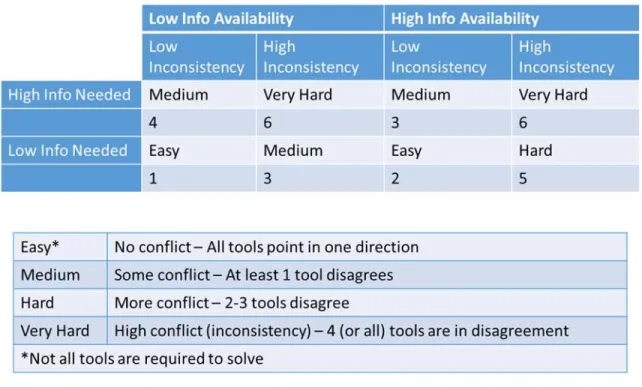
Eight possible alert situations were created using each combination of the three factors. Figure 1 illustrates the difficulties based on each possible setting of independent variables. The numerical values under each difficulty were determined by the subject matter expert (SME). Higher numerical values indicated increasing difficulty. The four difficulty levels were mapped to the six numerical scores.
Control variable Measurement precision Proposed settings Predicted effects Information Availability
(categorical) Amount of information in tools [Low, High]
Less availability = lower confidence
Information Needed
(categorical) Amount of tools needed to review [Low, High]
Less needed = higher confidence Information Inconsistency (categorical) Amount of conflicting information among tools [Low, High] Less inconsistency = higher confidence
Figure 1: Alert Difficulty Breakdown
Using these six numerical scores, mapped to four difficulty levels, the independent variables could be modified in different ways in order to facilitate creating robust alerts. The proportion of the difficulties and number of alerts with false alarm or threat actions were not provided to the participants during the experiment, in order to avoid any counting or other related biases. Using the alert difficulty breakdown as a guideline for alert
creation, a total of 10 Easy, 8 Medium, 6 Hard, and 6 Very Hard alerts were populated into the experiment database, and these correlated to 17 False Alarm and 13 Threat based actions.
It is hypothesized that a variance in these difficulties will roughly correlate to participant decision confidence – the more difficult an investigation, the less confidence the participant should experience in their decision-making.
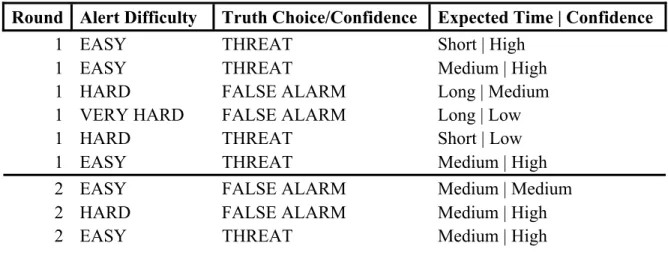
Using the difficulty proportions, the 30 total alerts were randomly distributed into each of the 5 rounds, see Table 2.
Table 2: 30 Alerts with Associated Difficulties AlertID Difficulty AlertID Difficulty
1 Easy 16 Easy 2 Easy 17 Very Hard 3 Hard 18 Medium 4 Very Hard 19 Very Hard 5 Hard 20 Medium 6 Easy 21 Medium 7 Easy 22 Very Hard 8 Hard 23 Easy 9 Easy 24 Hard 10 Easy 25 Medium 11 Medium 26 Medium 12 Very Hard 27 Medium 13 Medium 28 Very Hard 14 Easy 29 Hard 15 Easy 30 Hard 3.3.1.2 Response Variables
Decision confidence is the primary response variable in the experiment. The self-reported comparisons, which measure decision confidence, are assumed to be dependent of the other choice the participants make, which is making a decision involving the selection of either “False Alarm” or “Threat” for an alert. Coordinating the psychometric data and the investigative process behavior will allow for each aspect of the experiment to be replayed and analyzed, as it will be logged and recorded.
Psychophysiological signals will be captured and analyzed in future studies, as the expertise of the experimenter does not support this analysis. The collection of
decision-making and decision confidence scoring. Alpha waves are associated with increases in memory load [43], [44]. Gamma waves are associated with memory load, stimulus novelty, attention, and reaction [45]–[48]. Theta waves are associated with decision certainty and error prediction [49], [50]. The response variables, which will be recorded and measured during the experiment, are listed in Table 3.
Table 3: Response Variable Summary
3.3.1.3 Constant Factors
Table 4 shows the factors which will be constant for each run of the experiment. A total of 30 alerts were chosen to fit the 2 hour time window of the experiment, as this is the upper-bound generally assumed for electrophysiological experiments. A limit of 6 alerts per round was imposed limit in order to rely on the short-term memory of
participants for the greatest subjective scoring efficiency. The number of alerts used for each difficulty will be as close to an even amount as possible, given 30 total alerts. The
Response variable Normal operating level and range Measurement precision and accuracy Relationship of response variable to objective Decision choice
(categorical) [“False Alarm”, “Threat”] Subjective Correctness
Decision confidence
(categorical) [“1”, “2”, “roughly the same”] Subjective Relative confidence
0‐131 Hz at Alpha – (9‐12 Hz)
500 samples/sec Gamma – (30‐60 Hz)
0‐262 Hz at Theta – (4‐8 Hz)
1,000 samples/sec
ECG (numerical) 60‐100 beats per minute Low noise Stress/workload
Depends on age/sex Mean = 17 blinks per minute Reading = 4.5 blinks per minute Time per tool (categorical) Time to decision (categorical) Behavior Subjective The investigative process identifies exploration and/or techniques Ordering of tool use (categorical) EEG (numerical) 0.7 µV RMS from 1‐50 Hz EOG (numerical) 0.7 µV RMS from 1‐50 Hz Movement, vestibule‐ ocular reflex, blink rate, and saccade