Association for Information Systems
AIS Electronic Library (AISeL)
PACIS 2013 Proceedings
Pacific Asia Conference on Information Systems
(PACIS)
6-18-2013
Self-Efficacy and Engagement as Predictors of
Student Programming Performance
Geetha Kanaparan
Victoria University of Wellington, [email protected]
Rowena Cullen
Victoria University of Wellington, [email protected]
David Mason
Victoria University of Wellington, [email protected]
Follow this and additional works at:
http://aisel.aisnet.org/pacis2013
This material is brought to you by the Pacific Asia Conference on Information Systems (PACIS) at AIS Electronic Library (AISeL). It has been accepted for inclusion in PACIS 2013 Proceedings by an authorized administrator of AIS Electronic Library (AISeL). For more information, please [email protected].
Recommended Citation
Kanaparan, Geetha; Cullen, Rowena; and Mason, David, "Self-Efficacy and Engagement as Predictors of Student Programming Performance" (2013).PACIS 2013 Proceedings. 282.
SELF-EFFICACY AND ENGAGEMENT AS PREDICTORS OF
STUDENT PROGRAMMING PERFORMANCE
Geetha Kanaparan, School of Information Management, Victoria Business School, Victoria
University of Wellington, Wellington, New Zealand, [email protected]
Rowena Cullen, School of Information Management, Victoria Business School, Victoria
University of Wellington, Wellington, New Zealand, [email protected]
David Mason, School of Information Management, Victoria Business School, Victoria
University of Wellington, Wellington, New Zealand, [email protected]
Abstract
Programming is a core subject introduced in the first year of an Undergraduate Computer Science programme. Since programming is a core subject, it is a major concern that high attrition and failure rates continue to be reported in such courses. Evidence from the literature suggests that programming is cognitively demanding, and the solutions proposed have had minimal impact on students in introductory programming courses. However, in the literature on learning theory, there is evidence suggesting that the self-efficacy beliefs of students affect their engagement, and that their engagement affects their performance. In the literature on introductory programming courses, there is a lack of research examining the effect of self-efficacy on engagement, and the effect of engagement on the programming performance of students. This leaves a gap in programming research that this research seeks to fill. Based on student engagement frameworks in the literature on learning theory, a conceptual model was developed. To operationalise and validate the conceptual model within the context of learning programming, a study consisting of focus group interviews and a survey on students in introductory programming courses is proposed. The results of the survey will be analysed using structural equation modelling (SEM) techniques.
1
MOTIVATION FOR THE RESEARCH
Programming is a core subject introduced in the first year of an Undergraduate Computer Science programme. The course equips students with the fundamentals of programming, and with the skills to code solutions to programming problems. In the last two decades, there is increasing concern over the high failure and attrition rates reported in introductory programming courses. For instance, the Queensland University of Technology in Australia reported more than 30% failure rates every semester (Teague and Roe, 2009), while the University of Glasgow in Scotland reported that only 50% of students obtained at least a grade C between 2002 and 2003 (Mancy and Reid, 2004). Similarly, other researchers have reported alarming failure and attrition rates in introductory programming courses (Sheard and Hagan, 1998; Rountree and Rountree, 2003; Kinnunen and Malmi, 2006). Research into the difficulties of learning programming goes as far back as the 1970s, suggesting a long-standing issue with learning programming (Weinberg, 1971; Soloway and Spohrer, 1989; Robins, Rountree and Rountree, 2003; Whalley and Lister, 2009). These reported difficulties may be categorised into two broad categories: demanding cognitive load, and the behavioural traits of the student. They appear to have occurred irrespective of the type of programming language, programming environment, and programming paradigm used in the introductory programming course. To help students overcome the cognitive demands of learning programming, a multitude of solutions have been proposed. The solutions include using educational technologies for learning programming (Langton, Hickey and Alterman, 2004; Hou and Austin, 2007), improving the course content (Moskal, Lurie and Cooper, 2004; Ford and Venema, 2010; deBry, 2011), and identifying predictors of programming success (Rountree, Rountree and Robins, 2002; deRaadt et al., 2005). However, the solutions have had minimal impact on the students, and there appears to be little uptake of these solutions at the tertiary education sector.
On the other hand, strong correlations have been reported between the behavioural traits of the student and their performance in programming (Wiedenbeck, 2005; Hughes and Peiris, 2006). Despite this, research on the behavioural traits of students in introductory programming courses is limited, suggesting a possible gap in programming research.
1.1 Research Gap
While a demanding cognitive load is considered as an external factor which is not within the control of the student, research in learning theory suggests that internal factors such as behavioural traits are controllable and alterable by the student, which appear to have a stronger influence on learning and performance (Wigfield, 1994). Two behavioural traits which are of importance to this research are
self-efficacy and student engagement.
Research in learning theory suggests that strong correlations have been observed between the self-efficacy beliefs and the performance of students (Zimmerman, 2000; Yip, 2012). However, from their reading of the literature up to that time, Linnenbrink and Pintrich (2003) argued that self-efficacy impacts on how students engage in learning, and engagement then impacts on the performance of the student. Despite the tendency of succeeding researches that supports this view, the actual links between self-efficacy, engagement, and the student’s performance in learning programming have not been tested. This highlights a gap in programming research which this research proposes to fill, which is to examine the link between self-efficacy, engagement and programming performance.
1.2 Research Question
This research seeks to examine the effect of self-efficacy on engagement, and the effect of engagement on the performance of students in an introductory programming course. This translates into the following research question:
What is the effect of self-efficacy on engagement, and the effect of engagement on the performance of a student in an introductory programming course?
The objective of this research is to examine:
the effect of self-efficacy on the student’s engagement in an introductory programming course.
the effect of engagement on the student’s programming performance. 1.3 Expected Contribution of this Research
It is hoped that the resulting model and survey instrument from this research may benefit teachers and students in introductory programming courses. The model may help explain the effect of a student’s self-efficacy beliefs when learning to program, and how their self-efficacy beliefs may affect the extent of their engagement, which then affects their programming performance. Teachers may use the survey instrument to assess the self-efficacy beliefs, the extent of the student’s engagement, and how these affect might their programming performance. The findings from the survey could lead to early detection of disengagement from learning programming. Teachers may then intervene in the student’s learning in order to help improve the student’s programming performance. This study may also create awareness in students and the survey instrument might enable students to assess the impact of their self-efficacy beliefs in learning to program on their engagement, and how their engagement then affects their programming performance.
2
LITERATURE REVIEW
2.1 Behavioural factors that affect programming performance
Self-efficacy, learning strategies, and self-perceptions are three behavioural factors that have been identified as possible influencers of programming performance. Self-efficacy is what an individual believes he or she is able to do, rather than their characteristics, personality or psychological traits. It is a stronger predictor of behaviour than outcome expectations or previous performance (Bandura, 1977; Zimmerman, 1995). The concept of self-efficacy has its roots in Bandura’s Social Cognitive Theory, which is discussed in the next section.
In programming research, findings suggest that a strong correlation exists between the self-efficacy beliefs of students in introductory programming courses and their programming performance. Research on the self-efficacy beliefs of students in introductory programming courses appears to emphasise the attributes that are strong predictors of self-efficacy beliefs (Askar and Davenport, 2009; Wiedenbeck, 2005; Ramalingam and Wiedenbeck, 1998). Yet other researchers suggest that self-efficacy affects programming performance (Kinnunen and Simon, 2011; Wiedenbeck, 2005; Ramalingam et al., 2004).
Relevant to this research is the finding that proposes that self-efficacy affects computer interest, and that the interest in programming then affects the student’s performance in programming (Wiedenbeck et al., 2007). Interest is an indicator of behavioural engagement, which is discussed in Section 3.2. This finding suggests a possible link between self-efficacy in learning programming, engagement, and programming performance.
Additionally, other studies suggest that the selection and use of a learning strategy (Hughes and Peiris, 2006; deRaadt et al., 2005; Simon et al., 2006), and lack of motivation and confidence (Kinnunen and Malmi, 2006; Teague and Roe, 2008) appear to have an impact on the performance of students in introductory programming courses. As a result, students in introductory programming courses find programming to be less enjoyable and are less confident (Teague and Roe, 2008).
3
THEORETICAL FOUNDATIONS
3.1 Self-efficacy and Social Cognitive Theory
Bandura proposed the self-efficacy construct to predict and explain behavioural change in individuals (Bandura, 1977). Self-efficacy beliefs may determine how an individual copes with a difficult task, the effort they invested, and their persistence in pursuing a task that is perceived to be difficult (Bandura, 1977).
Self-efficacy is defined as “people’s judgments of their capabilities to organize and execute courses
of action required to attain designated types of performances” (Bandura, 1986, pg. 391). This definition implies that the degree of success in completing a specific task or an activity may be influenced by the individual’s perception of their ability, and that their self-efficacy beliefs may differ between tasks. An individual may demonstrate high self-efficacy on one task but low self-efficacy in another task. Therefore, within the context of this research, self-efficacy refers to the student’s judgment of their ability to learn to program.
The self-efficacy construct is an important component in Bandura’s Social Cognitive Theory (SCT) and is based on the premise that human beings have the ability to control their thoughts, feelings, motivation, and actions (Bandura, 1977; Bandura, 1986). SCT explains human behaviour based on three interacting determinants which are components of a triadic reciprocality (see Figure 1). The three interacting determinants include personal factors, behaviour, and the environment. Human behaviour may be described as an interaction between the personal factors, the behaviour of an individual, and the environmental sources surrounding them (Bandura, 1986).
Figure 1. Three-way relationship in triadic reciprocality (Bandura, 1986, pg. 24)
3.2 Student Engagement
How students stay motivated and how they persist in learning have long been of interest to learning theorists. Student engagement is one construct that has recently emerged as a primary theoretical model for determining which students are likely to fail and dropout from school, and for improving student motivation and achievement (Finn 1989; Appleton et al., 2008; Christenson et al., 2012). The engagement construct is viewed as a multi-dimensional construct which is malleable, responsive to contextual factors such as policies and practices of school, family influences, and peers, and alterable based on environmental changes (Fredricks et al., 2004; Appleton et al., 2006). There is value in understanding and examining engagement as engaged students create conducive learning environments for themselves, display productive achievement behaviours, expend effort and persist when faced with difficult tasks, seek help, and self-monitor their learning activities (Schunk and Mullen, 2012). Positive outcomes such as academic success, social, and emotional learning outcomes have been observed as a result of students engaging in learning, and an engaged student is less likely to drop out from school (Fredricks et al., 2004; Appleton et al., 2006; Finn and Zimmer, 2012). The engagement construct has been shown to be iterative, as positive engagement improves outcomes, and an improved outcome will further strengthen engagement (Fredricks et al., 2004; Appleton et al., 2006).
Over the years, several student engagement frameworks have been proposed. Some examples include Finn’s Participation-Identification Framework (Finn, 1989), Linnenbrink and Pintrich’s framework (Linnenbrink and Pintrich, 2003), framework by Appleton and colleagues (Appleton et al., 2006), High School Survey of Student Engagement (HSSE) (Yazzie-Mintz, 2007), Australian Survey of Student Engagement (Coates, 2010), and Reschly and Christenson’s Student Engagement framework (Reschly and Christenson, 2012). These frameworks vary in their identification of dimensions of engagement and the indicators used to measure student engagement. Of relevance to this research is the framework by Linnenbrink and Pintrich (see Figure 2).
Figure 2. General framework for self-efficacy, engagement, and learning (Linnenbrink and Pintrich, 2003)
Linnenbrink and Pintrich (2003) proposed the general framework in Figure 2 in order to examine the effect of one contextual factor - self-efficacy - as an influencer of student engagement, learning, and achievement. While the behavioural and cognitive engagement dimensions appear to be common across the various engagement frameworks, the motivational engagement dimension has also been referred to as emotional engagement (Betts et. al., 2010), psychological engagement (Appleton et. al., 2006), and affective engagement (Reschly and Christenson, 2012). Although the framework in Figure 2 has not been tested, subsequent research does suggest a link between self-efficacy, engagement, and student performance (Walker et. al., 2006; Bresó et. al., 2006). Additionally, the subsequent engagement frameworks by Appleton and colleagues, and Reschly and Christenson, do propose a similar link, but within a wider set of contextual factors that affect student engagement. Therefore, this research proposes to closely model the framework in Figure 2 based on evidence from the literature in learning theory that suggests that there is a link between self-efficacy, engagement, and learning and achievement.
4
PROPOSED CONCEPTUAL MODEL AND RESEARCH
HYPOTHESES
The proposed dimensions and indicators for each construct and their corresponding hypotheses are discussed in this section. The conceptual model proposes three engagement dimensions – behavioural, cognitive, and emotional. Table 1 provides a summary of the proposed indicators for each engagement dimension. The table presents evidence from researchers who have examined the relationships between self-efficacy and engagement, and the relationship between engagement and performance at the tertiary education sector. The information was derived from the literature on programming at the tertiary education section and from research in the broader field of learning theory at the tertiary level.
Dimension Indicators Authors (programming) Authors (other disciplines)
Behavioural Effort McKinney and Denton
(2004); Ventura (2005)
Bandura (1977); Zimmerman (2000); Pintrich and Schunk (1996); Dupeyrat and Marine (2005); Diseth et al. (2010); McLure et al. (2011)
Persistence Bandura (1977); Zimmerman (2000);
Pintrich and Schunk (1996); Bye, Pushkar and Conway (2007); Pintrich et al. (1991); Sansone and Smith (2000) Cognitive Deep learning
approaches
Hughes and Peiris (2006); deRaadt et al. (2005); Simon et al. (2006); Yip (2012)
Phan (2011); Pintrich and DeGroot (1990); Schunk and Mullen (2012) Surface learning
approaches
Emotional Affect Teague and Roe (2008);
Rodrigo et al. (2009)
Sheard, Carbone and Hurst (2010)
Interest McKinney and Denton
(2004); Wiedenbeck et al. (2007)
Linnenbrink and Pintrich (2003); Bandura (1977)
Table 1. Evidence of literature examining the indicators of engagement
Based on Table 1, evidence from the literature suggests that effort and persistence are potential indicators of behavioural engagement, while deep and surface learning approaches are associated with the learning strategy of a student, and are potentially indicators of cognitive engagement. Additionally, affect and interest appear to be possible indicators of a student’s emotional engagement in learning. Figure 3 presents the proposed conceptual model for this research and the proposed hypotheses.
Figure 3. Proposed Conceptual Research Model with Hypotheses
The programming self-efficacy construct proposes two indicators: pre-self-efficacy and post-self-efficacy. This research proposes to measure the changes in self-efficacy beliefs prior to the commencement of and after the completion of the introductory programming course.
The dependent variable, programming performance, refers to the student’s extent of success in attaining the outcomes of the introductory programming course, and is proposed to be assessed using course grades. Course grades are expected to provide an objective measure of the student’s ability and level of understanding in the programming course. Additionally, the framework in Figure 2 suggests that an iterative relationship exists between performance and self-efficacy. Therefore, a relationship is proposed between the programming performance and programming self-efficacy constructs.
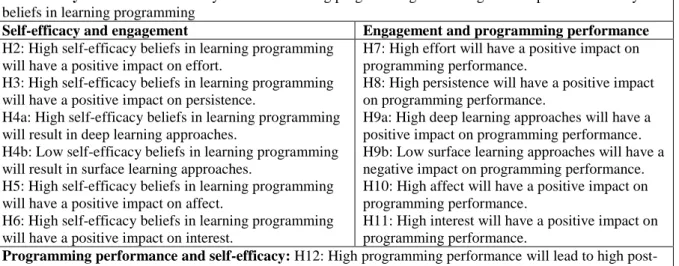
Table 2 presents the corresponding hypotheses for the proposed conceptual model in Figure 3.
Self-efficacy: H1 Post- self-efficacy beliefs in learning programming will be higher than pre- self-efficacy beliefs in learning programming
Self-efficacy and engagement Engagement and programming performance H2: High self-efficacy beliefs in learning programming
will have a positive impact on effort.
H3: High self-efficacy beliefs in learning programming will have a positive impact on persistence.
H4a: High self-efficacy beliefs in learning programming will result in deep learning approaches.
H4b: Low self-efficacy beliefs in learning programming will result in surface learning approaches.
H5: High self-efficacy beliefs in learning programming will have a positive impact on affect.
H6: High self-efficacy beliefs in learning programming will have a positive impact on interest.
H7: High effort will have a positive impact on programming performance.
H8: High persistence will have a positive impact on programming performance.
H9a: High deep learning approaches will have a positive impact on programming performance. H9b: Low surface learning approaches will have a negative impact on programming performance. H10: High affect will have a positive impact on programming performance.
H11: High interest will have a positive impact on programming performance.
Programming performance and self-efficacy: H12: High programming performance will lead to high post-self-efficacy beliefs in learning programming.
Table 2. Proposed hypotheses for the conceptual model
Other intervening variables that are likely to influence the proposed conceptual model is currently being examined and will be addressed during the research design stage.
5
PROPOSED METHODOLOGY
5.1 Theoretical Perspective
The epistemological and ontological perspective of this research is based on a positivist view. The positivist stance of the researcher is based on the field of sciences, where theory is used as a means to explain, predict, and test a phenomenon (Gregor, 2006). This research develops a conceptual model based on theoretical foundations, which will be used to explain, predict, and test the link between self-efficacy, engagement, and the programming performance of the student. Therefore, this approach corresponds to Gregor’s positivist view of reality and existence.
5.2 Research Design
This research proposes a mixed methods approach, which combines both the quantitative and qualitative approaches. A mixed methods research approach is proposed in this research for the purpose of facilitation, as one approach is employed in order to aid research which uses another research approach (Hammersley, 1996). This is because a qualitative approach using focus group interviews is needed to refine the proposed conceptual model, followed by a quantitative approach using survey questionnaires to test and validate the conceptual model. This study proposes a four-phased approach to test and validate the conceptual research model. The stages are briefly described as follows:
Phase 1: Pre- programming self-efficacy survey – This phase involves a survey at the start of an introductory programming course in order to collect data on the programming self-efficacy scores of the students.
Phase 2: Focus Group – Construct Validation – This phase involves focus group interviews with students during the introductory programming course in order to refine the conceptual model.
Phase 3: Survey – Testing the conceptual model – At the end of the introductory programming course, a survey will be administered to address the research questions.
Phase 4: Administer survey to other cohorts – This phase will involve the administration of phases 1 and 3 to other introductory programming cohorts.
5.3 Data Collection and Data Analysis
The focus group in Phase 2 will be organised mid-way through the instruction of the course. A group of 5 to 10 students will be selected from an introductory programming course. The focus group session will be recorded and transcribed. The transcribed data will be analysed in a three-step process involving reducing data, displaying data, and drawing and verifying conclusions, as suggested by Miles and Huberman (1994). Should any new indicators surface as a result of the analysis of the data, the focus group session will be repeated towards the end of the course to confirm the new indicators. Findings from the data analysis will then be used to refine the engagement dimension of the conceptual research model.
The data collected from Phase 1 and Phase 3 of this research will be analysed using a Structural Equation Modeling (SEM) technique. Chin (1998) suggests that SEM is preferred over other techniques like principal components analysis, factor analysis, discriminant analysis, or multiple regressions. SEM offers flexibility in the interplay between theory and data. As the indicators proposed in this conceptual model are reflective of the construct, a component-based approach using Partial Least Squares (PLS) will be used in analysing the data. Additionally, the SEM technique is proposed in this research, as it enables flexibility in the modelling of multiple predictor and criterion variables (Chin, 1998).
5.4 Research Sample
The sampling technique used would be purposive sampling. The target population for this research would be students who are enrolled in an introductory programming course at a college or university. To ensure representativeness of the sample, this research proposes an international study, with data to be collected in Malaysia and New Zealand. Students enrolled in introductory programming courses in colleges and universities in other countries may be approached to participate in the research. This depends on the accessibility of the research participants, and the timing of the commencement date and end date of the introductory programming course.
6
PROPOSED TIMELINES
The proposed research was submitted and presented to the school on March 2013. Comments and feedback were received from the presentation and the proposal is currently undergoing revisions. It is expected that the revisions will take between 2 – 3 months before the researcher proceeds to the next stage of developing the survey instrument for Phase 1 of the research, and the interview protocol for the Phase 2 of this research. Figure 4 outlines the proposed timelines for this research, commencing from the completion of the research proposal, to the completion and submission of the final thesis.
References
Appleton, J. J., Christenson, S. L., Kim, D., & Reschly, A. L. (2006). Measuring cognitive and psychological engagement: Validation of the Student Engagement Instrument. Journal of School Psychology, 44(5), 427-445. doi: http://dx.doi.org/10.1016/j.jsp.2006.04.002
Appleton, J. J., Christenson, S. L., & Furlong, M. J. (2008). Student engagement with school: Critical conceptual and methodological issues of the construct. [Article]. Psychology in the Schools, 45(5), 369-386. doi: 10.1002/pits.20303
Askar, P., & Davenport, D. (2009). An Investigation of factors related to self-efficacy for Java programming among Engineering students. The Turkish Online Journal of Educational Technology – TOJET, 8(1).
Bandura, A. (1997). Self-efficacy: The exercise of control. New York: W H Freeman and Company. Bandura, A. (1986). Social Foundations of Thought and Action. Englewood Cliffs, NJ: Prentice Hall. Bandura, A. (1977a). Social Learning Theory. Englewood Cliffs, New Jersey: Prentice Hall.
Bandura, A. (1977). Self-efficacy: Toward a unifying theory of behavioral change. Psychological Review, 84(2), 191-215. doi: 10.1037/0033-295x.84.2.191
Betts, J. E., Appleton, J. J., Reschly, A. L., Christenson, S. L., & Huebner, E. S. (2010). A study of the factorial invariance of the Student Engagement Instrument (SEI): Results from middle and high school students. School Psychology Quarterly, 25(2), 84-93.
Bresó, E., Schaufeli, W., & Salanova, M. (2011). Can a self-efficacy-based intervention decrease burnout, increase engagement, and enhance performance? A quasi-experimental study. Higher Education, 61(4), 339-355. doi: 10.1007/s10734-010-9334-6
Bye, D., Pushkar, D., & Conway, M. (2007). Motivation, Interest, and Positive Affect in Traditional and Nontraditional Undergraduate Students. [Article]. Adult Education Quarterly, 57(2), 141-158. Chin, W. W. (1998). Commentary: Issues and Opinion on Structural Equation Modeling. MIS
Quarterly, 22(1), vii-xvi. doi: 10.2307/249674
Christenson, S. L., Reschly, A. L., & Wylie, C. (2012). Handbook of Research on Student Engagement . Retrieved from http://VUW.eblib.com/patron/FullRecord.aspx?p=884351
Coates, H. (2010). Development of the Australasian Survey of Student Engagement (AUSSE). Higher Education: The International Journal of Higher Education and Educational Planning, 60(1), 1-17. deBry, R. (2011). A learning space for beginning programming students. J. Comput. Sci. Coll., 27(2),
4-11.
deRaadt, M., Hamilton, M., Lister, R., Tutty, J., Baker, B., Box, I., . . . Tolhurst, D. (2005). Approaches to learning in computer programming students and their effect on success. Paper presented at the 28th HERDSA Annual Conference: Higher Eduation in a Changing World (HERDSA 2005), Sydney, Australia. http://eprints.usq.edu.au/780/
Diseth, Å ., Pallesen, S., Brunborg, G., & Larsen, S. (2010). Academic achievement among first semester undergraduate psychology students: the role of course experience, effort, motives and learning strategies. Higher Education, 59(3), 335-352. doi: 10.1007/s10734-009-9251-8 Dupeyrat, C., & Mariné, C. (2005). Implicit theories of intelligence, goal orientation, cognitive
engagement, and achievement: A test of Dweck’s model with returning to school adults. Contemporary Educational Psychology, 30(1), 43-59. doi:
http://dx.doi.org/10.1016/j.cedpsych.2004.01.007
Finn, J. D. (1989). Withdrawing From School. Review of Educational Research, 59(2), 117-142. doi: 10.3102/00346543059002117
Finn, J. D., & Zimmer, K. S. (2012). Student Engagement: What is it? Why does it matter? In S. L. Christenson, A. L. Reschly & C. R. f. Wylie (Eds.),Handbook of Research on Student Engagement. Dordrecht: Springer Science+Business Media New York. Retrieved from
http://VUW.eblib.com/patron/FullRecord.aspx?p=884351.
Ford, M., & Venema, S. (2010). Assessing the Success of an Introductory Programming Course.
Journal of Information Technology Education, 9, 133-145.
Fredricks, J. A., Blumenfeld, P. C., & Paris, A. H. (2004). School Engagement: Potential of the Concept, State of the Evidence. Review of Educational Research, 74(1), 59-109. doi: 10.2307/1131219
Hammersley, M. (1996). The Relationship between Qualitative and Quantitative Research: Paradigm Loyalty versus Methodological Eclecticism. In J. T. E. Richardson (Ed.), Handbook of Research Methods for Psychology and Social Sciences. Liecester: BPS Books.
Hou, M., & Austin, T. (2007). Use of CSCL tool in Java applications programming: a case study. Paper presented at the Proceedings of the 45th annual southeast regional conference, Winston-Salem, North Carolina.
Hughes, J., & Peiris, D. R. (2006). ASSISTing CS1 students to learn: learning approaches and object-oriented programming. Paper presented at the Proceedings of the 11th annual SIGCSE conference on Innovation and technology in computer science education, Bologna, Italy.
Johnson, B., & Christensen, L. (2012). Educational Research: Quantitative, Qualitative, and Mixed Approaches (4th ed.). California: SAGE Publications, Inc.
Kelleher, C., & Pausch, R. (2005). Lowering the barriers to programming: A taxonomy of
programming environments and languages for novice programmers. ACM Comput. Surv., 37(2), 83-137. doi: 10.1145/1089733.1089734
Kinnunen, P., & Malmi, L. (2006). Why students drop out CS1 course? Paper presented at the
Proceedings of the second international workshop on Computing education research, Canterbury, United Kingdom.
Kinnunen, P., & Simon, B. (2011). CS majors' self-efficacy perceptions in CS1: results in light of social cognitive theory. Paper presented at the Proceedings of the seventh international workshop on Computing education research, Providence, Rhode Island, USA.
Langton, J. T., Hickey, T. J., & Alterman, R. (2004). Integrating tools and resources: a case study in building educational groupware for collaborative programming. J. Comput. Small Coll., 19(5), 140-153.
Linnenbrink, E. A., & Pintrich, P. R. (2003). The role of self-efficacy beliefs in student engagement and learning in the classroom. Reading & Writing Quarterly, 19(2), 119-137. doi:
10.1080/10573560308223
Mancy, R., & Reid, N. (2004). Aspects of cognitive style and programming. Paper presented at the
Sixteenth Annual Workshop of the Psychology of Programming Interest Group (PPIG 2004), Carlow, Ireland.
McKinney, D., & Denton, L. F. (2004). Houston, we have a problem: there's a leak in the CS1 affective oxygen tank. SIGCSE Bull., 36(1), 236-239. doi: 10.1145/1028174.971386
McClure, J., Meyer, L. H., Garisch, J., Fischer, R., Weir, K. F., & Walkey, F. H. (2011). Students’ attributions for their best and worst marks: Do they relate to achievement? Contemporary Educational Psychology, 36(2), 71-81. doi: http://dx.doi.org/10.1016/j.cedpsych.2010.11.001 Miles, M. B., & Huberman, A. M. (1994). Qualitative Data Analysis (2nd ed.). Thousand Oaks, CA:
SAGE.
Milne, I., & Rowe, G. (2002). Difficulties in Learning and Teaching Programming--Views of Students and Tutors. Education and Information Technologies, 7(1), 55-66. doi:
10.1023/a:1015362608943
Moskal, B., Lurie, D., & Cooper, S. (2004). Evaluating the effectiveness of a new instructional approach. SIGCSE Bull., 36(1), 75-79. doi: 10.1145/1028174.971328
Phan, H. P. (2011). Interrelations between self‐efficacy and learning approaches: a developmental approach. Educational Psychology, 31(2), 225-246. doi: 10.1080/01443410.2010.545050 Pintrich, P. R., Smith, D. A., Garcia, T., & McKeachie, W. J. (1991). A manual for the use of the
Motivated Strategies for learning Questionnaire (MSLQ). Ann Arbor: University of Michigan: National Center for Research to Improve Postsecondary Teaching and Learning.
Pintrich, P. R., & de Groot, E. V. (1990). Motivational and self-regulated learning components of classroom academic performance. Journal of Educational Psychology, 82(1), 33-40. doi: 10.1037/0022-0663.82.1.33
Pintrich, P. R., & Schunk, D. H. (1996). Motivation in education: Theory, research and applications (2nd ed.). Upper Saddle River, NJ: Merrill Prentice Hall
Ramalingam, V., & Wiedenbeck, S. (1998). Development and Validation of Scores on a Computer Programming Self-Efficacy Scale and Group Analyses of Novice Programmer Self-Efficacy.
Journal of Educational Computing Research, 19(4), pp 367 - 381 doi: 10.2190/C670-Y3C8-LTJ1-CT3P
Ramalingam, V., LaBelle, D., & Wiedenbeck, S. (2004). Self-efficacy and mental models in learning to program. SIGCSE Bull., 36(3), 171-175. doi: 10.1145/1026487.1008042
Reschly, A. L., & Christenson, S. L. (2012). Jingle, Jangle, and Conceptual Haziness: Evolution and Future Directions of the Engagement Construct. In S. L. Christenson, A. L. Reschly & C. R. f. Wylie (Eds.), Handbook of Research on Student Engagement. Dordrecht: Springer
Science+Business Media New York. Retrieved from http://VUW.eblib.com/patron/FullRecord.aspx?p=884351.
Robins, A., Rountree, J., & Rountree, N. (2003). Learning and Teaching Programming: A Review and Discussion. Computer Science Education, 13(2), 137-172. doi: 10.1076/csed.13.2.137.14200 Rodrigo, M. M. T., Baker, R. S., Jadud, M. C., Amarra, A. C. M., Dy, T., Espejo-Lahoz, M. B. V., . . .
Tabanao, E. S. (2009). Affective and behavioral predictors of novice programmer achievement.
SIGCSE Bull., 41(3), 156-160. doi: 10.1145/1595496.1562929
Rountree, J., & Rountree, N. (2009). Issues regarding threshold concepts in computer science. Paper presented at the Proceedings of the Eleventh Australasian Conference on Computing Education - Volume 95, Wellington, New Zealand.
Rountree, N., Rountree, J., & Robins, A. (2002). Predictors of success and failure in a CS1 course.
SIGCSE Bull., 34(4), 121-124. doi: 10.1145/820127.820182
Sansone, C., & Smith, J. L. (2000). Interest and self-regulation: The relation between having to and wanting to. In C. Sanson & J. M. Harackiewicz (Eds.), Intrinsic and extrinsic motivation: The search for optimal motivation and performance (pp. 341-372). San Diego, CA: Academic Press. Schunk, D. H., & Mullen, C. A. (2012). Self-Efficacy as an Engaged Learner. In S. L. Christenson, A.
L. Reschly & C. R. f. Wylie (Eds.), Handbook of Research on Student Engagement. Dordrecht: Springer Science+Business Media New York. Retrieved from
http://VUW.eblib.com/patron/FullRecord.aspx?p=884351.
Schunk, D. H. (1996). Self-Efficacy for Learning and Performance. Paper presented at the Annual Meeting of the American Educational Research Association, New York.
Sheard, J., Carbone, A., & Hurst, A. J. (2010). Student engagement in first year of an ICT degree: staff and student perceptions. Computer Science Education, 20(1), 1-16. doi:
10.1080/08993400903484396
Sheard, J., & Hagan, D. (1998). Our failing students: a study of a repeat group. SIGCSE Bull., 30(3), 223-227. doi: 10.1145/290320.283550
Simon, Fincher, S., Robins, A., Baker, B., Box, I., Cutts, Q., . . . Tutty, J. (2006). Predictors of success in a first programming course. Paper presented at the Proceedings of the 8th Australasian
Conference on Computing Education - Volume 52, Hobart, Australia.
Soloway, E., & Spohrer, J. C. (Eds.). (1989). Studying the novice programmer. Hilsdale, NJ: Lawrence Erlbaum.
Teague, D. M., & Roe, P. (2009). Learning to program : from pear-shaped to pairs. Paper presented at the Proceedings of the First International Conference on Computer Supported Education, Lisboa, Portugal.
Teague, D., & Roe, P. (2008). Collaborative learning: towards a solution for novice programmers. Paper presented at the Proceedings of the tenth conference on Australasian computing education - Volume 78, Wollongong, NSW, Australia.
Ventura, P. R. (2005). Identifying predictors of success for an objects-first CS1. Computer Science Education, 15(3), 223-243. doi: 10.1080/08993400500224419
Walker, C. O., Greene, B. A., & Mansell, R. A. (2006). Identification with academics,
intrinsic/extrinsic motivation, and self-efficacy as predictors of cognitive engagement. Learning and Individual Differences, 16(1), 1-12. doi: http://dx.doi.org/10.1016/j.lindif.2005.06.004 Weinberg, G. M. (1971). The Psychology of Computer Programming. New York: Van Nostrand
Reinhold Company.
Whalley, J. L., & Lister, R. (2009). The BRACElet 2009.1 (Wellington) specification. Paper
presented at the Proceedings of the Eleventh Australasian Conference on Computing Education - Volume 95, Wellington, New Zealand.
Wiedenbeck, S., Xiaoning, S., & Chintakovid, T. (2007). Antecedents to End Users' Success in Learning to Program in an Introductory Programming Course. Paper presented at the IEEE Symposium on Visual Languages and Human-Centric Computing, 2007. VL/HCC 2007.
Wiedenbeck, S. (2005). Factors affecting the success of non-majors in learning to program. Paper presented at the Proceedings of the first international workshop on Computing education research, Seattle, WA, USA.
Wigfield, A. (1994). Expectancy-value theory of achievement motivation: A developmental perspective. Educational Psychology Review, 6(1), 49-78. doi: 10.1007/bf02209024
Yazzie-Mintz, E. (2007). Voices of students on engagement: A report on the 2006 High School Survey of Student Engagement. Bloomington, IN: Center for Evaluation & Education Policy. Yip, M. C. W. (2012). Learning strategies and self-efficacy as predictors of academic performance: a
preliminary study. [Article]. Quality in Higher Education, 18(1), 23-34. doi: 10.1080/13538322.2012.667263
Zimmerman, B. J. (1995). Self-efficacy and educational development. In A. Bandura (Ed.), Self-efficacy in changing societies (pp. pp. 202-231). New York: Cambridge University Press. Zimmerman, B. J. (2000). Self-Efficacy: An Essential Motive to Learn. Contemporary Educational