IJIRT 102321
INTERNATIONAL JOURNAL OF INNOVATIVE RESEARCH IN TECHNOLOGY1698
Enhance Website Visibility through Implementing Improved
On-page Search Engine Optimization techniques
Deepak Sharma
1, Meenakshi Bansal
21
M.Tech Student,
2Assistant Professor
Department of Computer Engineering, YCOE, Talwandi Sabo, India
Abstract- Website Optimization is about making relevant modifications to various sections of the website. As it is viewed individually, these changes might seem like gradual incremental improvements, but when combined with optimization technique, they could have noticeable impact on website’s user experience and performance in search results. SEO requires considerable time, techniques should be applied in sequence presented in this paper and should keep up to date with frequently changing ranking algorithms and with the associated changing practices of the various tools. Search engine rankings are shaped by three classes of key concepts involved namely, Global business logic, Professionals and End user logic. By using these key concepts the optimization technique makes it easier for the users to search their web contents. In search engine optimization, on-page optimization refers to factors that have an effect on a Web site or Web page listing in natural search results. These factors are controlled by the Website developer or by coding on page. Examples of on-page optimization include actual HTML code, meta tags, keyword placement and keyword density.
Index Terms- search engine optimization, on-page, off-page, organic search, websites, page rank, web-metrics.
I. INTRODUCTION
We can divide search engine optimization technique into three flavours:
White Hat SEO: The proper and best way to optimize any website is called WHITE HAT SEO technique. This type of optimization is well supported and appreciated by all search engines, mainly by Google. Because this technique of SEO is a natural way to achieve better results, if the website is
regularly updated with quality and unique content, gets better links from relevant niche websites and blogs. This means that the webmaster does not take a single attempt to mislead search engine and does not try to cheat.
Gray Hat SEO: If the webmaster uses some irrelevant
techniques tooptimize their website is known as GRAY
HAT SEOtechnique, simply we can say if the optimizer
may buy or exchange links with other websites to get better search engine ranking but it will be not accepted by the search engines. This technique is not long term for search engineranking.
Black Hat SEO: If a webmaster or optimizer is doing spamming in link building or making irrelevant links with some irrelevant niche websites, this will be
considered as Black Hat SEO Technique. This
technique of SEO is very dangerous for long term results because as the regular updates in search engine algorithm crawler will easily judge the spammed techniques to optimize websites.
Types of Search Engine Optimization: We can divide the search engine optimization techniques into two parts. First one is On Page SEO and another isOff Page
SEO. The search engine optimization techniques
divided into two parts:
On Page SEO: in this technique, the optimization part would be done in the coding of website.
On Page SEO Elements:
Title Tag: the title tag is the really important for good search engine ranking. Search engine crawl the content of this tag on the priority basis. A page title is the first thing, a search engine will look.
Meta Tag: there are two primary Meta tags used in Search Engine Optimization, that is keyword and description tag.
Alt Attribute: Search engine only reads the alt attribute of the image tag. Header tags (H1, H2 and H3):
HTML Heading Tags are equally important for search engine point of view.
Permalinks of Web Pages: The Meaning of Permalink is URL (uniform resource locator) of a webpage. It
IJIRT 102321
INTERNATIONAL JOURNAL OF INNOVATIVE RESEARCH IN TECHNOLOGY1699
Linking: Internal Links are hyperlinks that point to the same domain. This factor is also important for search engine point of view.
Keyword Density: Keyword Density is the percentage of times a keyword or phrase appears on the web page compared to the total number of words on the page. Keyword Density is really important in terms of SEO.
Sitemap: In Sitemap, all important website links are available with date and updated information of page.Search Engine will crawl the sitemap links on the priority basis.
Off Page SEO: This is the technique for making back links. Back links are normally termed as link back from other website to our website. Back links are important for SEO because search engine algorithms give credit, if any website has large number of back links. As well as back links increase, website popularity will increase.
II. LITERATURE REVIEW
Sahu and Kapoor (2014): the three areas Web classification, Optimization method (which is used by the web classification method to increase the efficiency or say decrease the complexity) and in the last, Danger Theory (Which could directly reject those web pages which behaves abnormally) has been discussed. This study will certainly be helpful for evaders to have a deep insight in to web page classification and different ways to optimize it. It motivates in the area of optimized web page classification with the help of danger theory [1].
Kushwahan and Chopde (2014): Due to tremendous growth in growth of internet over recent years, huge amount of data collected over the web and search engine users facing problem in search a relevant information by writing few keywords, search engine returns a number of result page and then user have to spend long time to search a relevant information from number of result. In this paper, we propose a hybrid approach for optimizing the webpages for search engine results using document clustering, genetic algorithm and this process starts with query recommendation, based on learning from query logs that predicts user information requirements in which an algorithm has been applied to recommend related queries to a query submitted by user and process of document clustering, genetic algorithm
are applied to resultant pages from query
recommendation to deliver most relevant result to user at minimum time [2].
Bedi and Singh (2014): The availability of information on the internet is growing dramatically. But it will be useful if the user finds the correct information in less amount of time. So in order to stand out from the competition means in order to increase the sites visibility, Search Engine Optimization (SEO) plays an important role. SEO is cost-effective process to promote internet marketing. It helps to bring the customers to the website. SEO can be done by two ways- on page and off page SEO. On-Page optimization can be done on the page like to check broken tags, links, checking Meta tags, Alt tags etc. Off-Page optimization means giving quality back links to the particular web page to improve the website ranking. SEO is a process consist of various
stages keyword research, goal setting, page
optimization, content development, link building and then to follow-up the entire process[3].
Killoran (2013): In the intense competition to achieve higher rankings, some SEO practitioners resort to black hat techniques conceived to game search engines’ algorithms. Among the many such techniques are keyword stuffing, in which excessive keywords are inserted within the coding or cloaked behind the content of a webpage; and link farming, in which sites filled with outbound links are posted for the purpose of making the destinations of those links appear popular to search engines[4].
Jain (2013): The complete Search Engine Optimization procedure works on two types of optimization Techniques, On-Page and Off-Page SEO optimization. Both Techniques have their personal discrete and extensive processes to rank websites on top of search engines. The SEO process starts with on-page SEO optimization, In this process we basically focus on website content and tags. Just the once the whole on-page SEO optimization is complete, the off-on-page SEO
optimization starts. Off-Page Search Engine
Optimization includes tricks which are chosen to make relevant back links towards the website to make the web page appropriate in front of search engine spiders. This Paper describes the techniques and importance of Off-Page Search Engine Optimization [5].
III. PROPOSED WORK
IJIRT 102321
INTERNATIONAL JOURNAL OF INNOVATIVE RESEARCH IN TECHNOLOGY1700
improve the rank of website in search engine resultpage for the keyword that contains the optimised Keyword as well the links it attracts. The two important questions to think before starting is as follows:
a. What contributes to search engine ranking.
b. What can web content creators and webmasters
do on their website and the web in general to make their content in their sites easier to find by audiences using search engine.
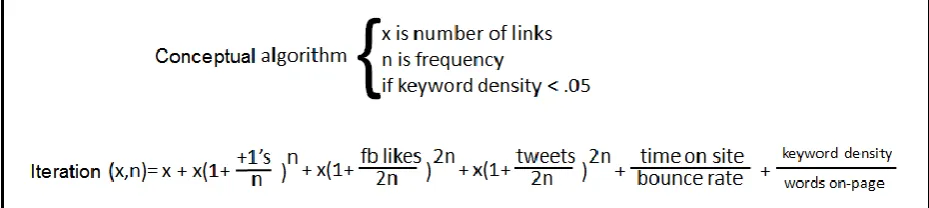
Figure 1: algorithmic approach to the small & continuous modifications
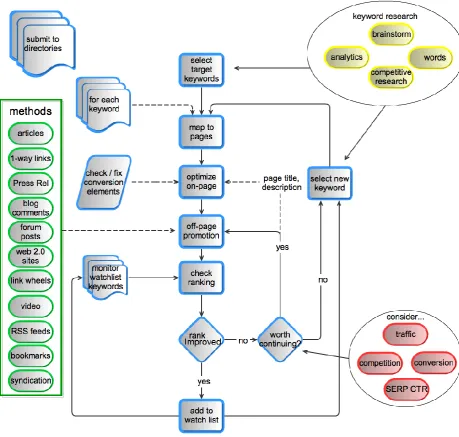
The systems architect establishes the basic structure of th system, defining the essential core design features and elements that provide the framework. The systems architect provides the architects view of the users' vision. In the below diagram user first search the query and then it process from various blocks to finalize the results, so that he will get visibility of
IJIRT 102321
INTERNATIONAL JOURNAL OF INNOVATIVE RESEARCH IN TECHNOLOGY1701
Figure 2: Proposed Technique to improve website ranking
The general considerations in mind before implementing the proposed techniques are listed below:-
1. Consider the web content’s audiences and
website’s competition when analyzing the keywords.
2. Insert the keywords into the web text that will appear on the search engine result pages.
3. Involve the web content and the websites with other web content creators to see the improvement in the rankings.
IV. OBJECTIVES
The main concept introduces a framework for the approach to search engine optimization, describes how the literature was selected, defines search-related terminology, and explains how three classes of participants shape search engine rankings. This paper explores in concrete detail how each that contributes to influence search engine rankings in the three classes of participants shaping the search rankings section.
1. Better Keyword Placement
2. Use Of Page Titles & Meta
Descriptions
3. Accuracy Of HTML & XML
IJIRT 102321
INTERNATIONAL JOURNAL OF INNOVATIVE RESEARCH IN TECHNOLOGY1702
4. Reorganized Internal Linking
Structure
5. Website Architecture & Programming 6. Proper Use Of Domains & Redirects
V. RESULTS
To evaluate the performance of our approach, a series of modifications were conducted following the proposed approach. We carried out this by implementing proposed technique on the content of the website and evaluated the performance by Google Analytics Tool.
VI. FUTURE SCOPE
Accordingly, some content creators orient their sites not just too directly attracting and maintaining the attention of their prospective human audiences but to accommodating and even taking advantage of search engines and their ranking rules, to the extent that orienting a site to search engines has become a professional specialty: search engine optimization (SEO).
VII. CONCLUSION
The optimized websites appear at better ranks in search engine and ordinarily get a higher number of visitors. This research is based on reviewing different available techniques for optimizing individual web-pages or the entire website to make them search engine friendly. Besides, this study also critically analyzes and summarizes the core techniques proposed in the contemporary research work. The paper also offers a comparative study of the previous research work regarding the techniques used in SEO and pinpoints certain gaps in the known search engine optimization techniques. Finally, we have also suggested our own observed methods for search engine optimization. As a
future dimension to this research , we intend to develop an effective and accurate system for search engine optimization for obtaining a higher rank for the websites in the search results.
REFERENCES
[1] N. Sahu and Dr. R. K. Kapoor (2014), “A Review on Optimization in Web Page Classification”, International Journal of Advance Foundation and Research in Computer (IJAFRC), Vol. 1, Issue 9, Pp. 38-44.
[2] A. K. Kushwahan and N. Chopde (2014), “Hybrid Approach for Optimizing the Search Engine Result”, International Journal of Computer Science and Mobile Computing (IJCSMC), Vol. 3, Issue 4, pp.707 – 710.
[3] G. S. Bedi and A. Singh (2014), “Analysis of Search Engine Optimization (SEO) Techniques”, International Journal of Advanced Research in Computer Science and Software Engineering (IJARCSSE), Vol. 4, Issue 3, pp. 563-566.
[4] J. B. Killoran (2013), “Use Search Engine
Optimization Techniques to Increase Website
IJIRT 102321
INTERNATIONAL JOURNAL OF INNOVATIVE RESEARCH IN TECHNOLOGY1703
[5] A. Jain (2013), “The Role of Off Page SearchEngine Optimization in Search Engine Ranking,
International Journal of Advanced Research in Computer Science and Software Engineering Vol.3, Issue 6, pp. 239- 244.
[6] K. Rehman and M. N. A. Khan (2013), “The Foremost Guidelines for Achieving Higher Ranking in Search Results through Search Engine Optimization”,
International Journal of Advanced Science and Technology,Vol. 52, pp. 101-109.
[7] Dr S. Saravanakumar, K. Ramnath, R. Ranjitha and V.G. Gokul (2012),“A New Methodology for Search Engine Optimization without getting Sandboxed International Journal of Advanced Research in Computer and Communication Engineering, Vol. 1, Issue 7, pp. 472-476.
[8] Meng Cui and Songyun Hu (2011),“ Search Engine Optimization Research for Website Promotion”, IEEE,
pp. 100-103.
[9] S. K. Ganta and S. P. K. Somayajula (2011), “Search Engine Optimization through Web Page Rank
Algorithm”, International Journal of Computer Science
and Telecommunications (IJCST), Vol. 2, Issue 3, pp. 427-431.
[10] F. B. Kurniawan and R. Sanjaya (2011), “Search Engine Optimization (SEO) Implementation for
Educational Purposes”, Special Issue of the
International Journal of the Computer, the Internet and Management, Vol. 19, Issue 1, pp. 181-184.
[11] H. Dubey and Prof. B. N. Roy (2011), “An Improved Page Rank Algorithm based on Optimized
Normalization Technique”, International Journal of
Computer Science and Information
Technologies(IJCSIT), Vol. 2 ,Issue 5, pp. 2183-2188.
[12] Wu Oi, Luan Tian, Bai Yan, Wei Liyuan, Li Yanhui (2011), “Study on SEO Monitoring System Based on Keywords & Links”, IEEE , pp. 450-453.
[13] A. H. Al-Badi, A. O. Al Majeeni, P. J. Mayhew and A. S. Al Rashdi (2011), “Improving Website
Ranking through Search Engine Optimization”, Journal
of Internet and e-business Studies, pp. 1-11.
[14] A. A. Al-Ananbeh, B. A. Ata , M. Al-Kabi and I. Alsmadi (2012),”Website Usability Evaluation and Search Engine Optimization for Eighty Arab University Websites”, International Arab conference on
Information Technology (ACIT), Tunisia,Vol. 21, Issue 1, pp. 107-122.
[15] V.Prasath, R.Buvanesvari, R.Kalaivani, M.Megala (2014), “Enhancement of Website Visibility using
Search Engine Optimization Techniques”,International