R E S E A R C H A R T I C L E
Open Access
Development and pilot testing of a decision aid
for drivers with dementia
John Carmody
1,2,3*, Jan Potter
3,4, Kate Lewis
2,3, Sanjay Bhargava
4, Victoria Traynor
2,3and Don Iverson
2,3Abstract
Background:An increasing number of older adults drive automobiles. Given that the prevalence of dementia is rising, it is necessary to address the issue of driving retirement. The purpose of this study is to evaluate how a self-administered decision aid contributed to decision making about driving retirement by individuals living with dementia. The primary outcome measure in this study was decisional conflict. Knowledge, decision, satisfaction with decision, booklet use and booklet acceptability were the secondary outcome measures.
Methods:A mixed methods approach was adopted. Drivers with dementia were recruited from an Aged Care clinic and a Primary Care center in NSW, Australia. Telephone surveys were conducted before and after participants read the decision aid.
Results:Twelve participants were recruited (mean age 75, SD 6.7). The primary outcome measure, decisional conflict, improved following use of the decision aid. Most participants felt that the decision aid: (i) was balanced; (ii) presented information well; and (iii) helped them decide about driving. In addition, mean knowledge scores improved after booklet use.
Conclusions:This decision aid shows promise as an acceptable, useful and low-cost tool for drivers with dementia. A self-administered decision aid can be used to assist individuals with dementia decide about driving retirement. A randomized controlled trial is underway to evaluate the effectiveness of the tool.
Keywords:Automobile, Decision aid, Decision making, Dementia, Driving, Patient education
Background
The rising global prevalence of dementia represents an in-creasingly important medical, societal and economic issue. Alzheimer’s Disease International (ADI) and the World Health Organization (WHO) identified dementia as a pub-lic health priority [1]. Worldwide, there are more than 35.6 million people living with dementia [1]. By 2050 this figure is projected to rise to 115 million and the ADI and WHO have called for a more dementia friendly society [1]. To achieve this goal there needs to be improved planning and provision for individuals living with dementia [1,2].
Dementia is a condition characterized by impairment of memory and at least one other cognitive domain (e.g. ex-ecutive function, language, praxis) which interfere with
daily function and independence [3]. The incidence and prevalence of dementia increase with age [4]. Although Alzheimer’s disease is the most frequent cause of demen-tia, other neurological disorders can be responsible (e.g. vascular dementia, Lewy Body dementia, frontotemporal dementia). For many patients, symptoms begin insidiously and may pass unnoticed for some time [4]. As the condi-tion progresses, the ability to drive safely is eventually lost [5]. Yet, many individuals continue to drive after receiving a diagnosis of dementia [6,7].
As our population is ageing, the number of older drivers is increasing [8-10]. Twenty years ago, 14% of all license holders in the United States were aged 65 years or more [11]; today it is 16.3% [12]. In the United Kingdom, 18.8% of the driving population is over 65 years [10]. This depend-ence by older individuals upon private cars is multifactorial [13,14]: (1) access to a car provides a sense of control, self-worth and independence [15,16]; (2) use of a car can en-hance social interactions [17]; (3) alternative forms of * Correspondence:[email protected]
1
Department of Neurology, Wollongong Hospital, Wollongong, NSW 2500, Australia
2
Faculty of Science, Medicine and Health, University of Wollongong, Wollongong, NSW 2522, Australia
Full list of author information is available at the end of the article
transport are often lacking [18]; and (4) older drivers sel-dom plan for retirement from driving [18]. Furthermore, driving retirement is negatively associated with depression [19], difficulty accessing services [20] and nursing home placement [21].
The subject of driving and dementia raises a range of important ethical and medico-legal issues [15,16,22-24]. In essence, there is a need to balance road safety with the transport requirements of our ageing population [5,25-28]. Unfortunately, much of the literature relating to driving and dementia focuses upon safety rather than mobility [25]. Achieving the correct balance can prove elusive as, despite the existence of evidence-based clinical guidelines [29,30], many physicians simply do not raise the topic of driving retirement with individuals living with a dementia [31-33]. The need for such discussions is underscored by the fragility of older drivers and their elevated risk of in-jury in car crashes [29].
The majority of older drivers do not have dementia. However, given that increasing age is the leading risk fac-tor for developing dementia [34], it is reasonable to expect more and more drivers with dementia on our roads. Thus, there is a pressing need to assist people with dementia in their decision making regarding retirement from driving. The overall purpose of this research project is to establish how a self-administered decision aid (DA) can assist drivers with dementia make decisions about driving retire-ment. The primary outcome measure was decisional con-flict. The secondary outcome measures were knowledge, decision, satisfaction with the decision, booklet use and booklet acceptability.
Use of such a DA promotes a shift in focus away from assessment of fitness to drive. Rather, it emphasizes the need to facilitate planning for driving retirement. Such preparation for driving retirement has been likened to a ‘Ulysses contract’ [26,35] (Ulysses asked his crew to tie him to the ship’s mast on the condition that they ignored his pleas to be released when seduced by the song of the sirens [26]). It is anticipated that, by adopting a collabora-tive approach, individuals living with a dementia will be more likely to raise the subject of driving retirement with their family, carer or healthcare professional.
Theoretical considerations
Decision making refers to the process of making choices between different courses of action or inaction; this process involves weighing up uncertain positive and negative out-comes, leading to decisional conflict [36,37]. DAs facilitate patient involvement in decisions about their healthcare leading to decisions which are informed and consistent with one’s values [38,39]. A recent Cochrane review [40] established that DAs: (1) improve knowledge; (2) reduce decisional conflict; (3) clarify expectations of possible bene-fits and harms; (4) lead to choices consistent with informed
values; and (5) result in greater participation in decision making. Furthermore, DAs appear to have a positive effect on communication with health professionals despite a vari-able effect on actual choices [40]. Given that patients’ healthcare needs and preferences vary, it is appropriate to tailor communication strategies accordingly [41].
The Ottawa Decisional Support Framework (ODSF) [42] is a theoretical framework which is used to address the uncertainty or decisional conflict which may arise around healthcare choices. This framework consists of three components: (1) decisional needs; (2) decisional sup-port; and (3) decisional quality. In line with this frame-work, the authors aimed to meet the decisional needs of drivers with dementia by providing them with adequate support so as to enhance the quality of their decision mak-ing process. The ODSF has been used to develop other dementia-related DAs: (1) respite service choices by carers of people with dementia [43]; and (2) feeding options in end-stage dementia [44].
Methods
DDDA development
The structure of thisdriving with dementia decision aid
(DDDA) was informed by a wide range of resources: (1) the ODSF [42]; (2) the Ottawa Personal Decision Guide [45]; (3) the Australian National Health and Medical Re-search Council guide‘How to prepare and present informa-tion for consumers of health services’ [46]; and (4) the International Patient Decision Aids Standards (IPDAS) col-laboration guidelines [47].
The content of the DDDA was derived from a three-step approach. Firstly, relevant literature addressing driv-ing and dementia was reviewed [24,27,32]. The attitudes of drivers aged over 55 towards existing driving and de-mentia resources were also sought. This served to clarify important deficiencies which apply to currently available resources for individuals planning to retire from driving [48]. Secondly, a development panel was formed which consisted of two clinicians and two senior academics. A draft DDDA was created and refined by the development panel using an iterative process. Thirdly, an expert review panel provided feedback on the draft DDDA. The panel comprised nine members from Australia (n = 7), Canada (n = 1), and the United Kingdom (n = 1), three of whom had experience in the development of DAs. Responses were sought around five categories: (1) layout; (2) reading ease; (3) length; (4) accuracy; and (5) relevance. The find-ings were used to modify the draft DDDA.
DDDA presentation
and support; (3) considering the options; and (4) advis-ing others of one’s decision. Information about the im-pact of dementia upon driving skills is included, and contact details for the Australian National Dementia Hot-line are provided. To enhance reader engagement, detailed content (e.g. author affiliations, disclaimers, funding, refer-ences, scheduled updates) is provided at the end of the booklet.
In line with the recommendations of health communi-cation experts [46,49,50], a range of strategies were used to enhance reader understanding of the content of the DDDA. Information was presented clearly (e.g. large font size, A4 sized pages) and concisely (e.g. 12 pages long, short sentences). A Flesch reading ease of 84.1 and a Flesch-Kincaid grade level of 3.8 were achieved suggesting that most 4thgrade students would be capable of reading the booklet. The pilot version of the DDDA fulfills 40 of 47 IPDAS collaboration quality criteria and is registered on-line with the Ottawa Hospital Research Institute deci-sion aid library inventory [47,51]. The seven unmet quality criteria relate to the effectiveness of a DA and will be ad-dressed in a randomized controlled trial.
Pilot study
This pilot study involved a pre and post study design. Recruitment was undertaken over eight months in 2012. Ethical approval was provided by the regional Human Research and Ethics Committee and the local health district Research Governance Office. Potential participants were approached at two sites in regional New South Wales, Australia: (1) a university-affiliated tertiary hospital Aged Care dementia clinic; and (2) a community-based Primary Care center. Inclusion criteria consisted of: (1) a history of dementia (self-reported or clinically confirmed) regardless of duration or severity; (2) current driver; (3) ability to read English; and (4) ability to provide written consent to partici-pate. Individuals who no longer drive were excluded. A convenience sampling technique was used to recruit partic-ipants; thus, individuals living with a dementia who were patients within these services were approached about pos-sible participation. Potential participants were asked by their treating clinician if they were interested in learning more about a study on driving and dementia.
Procedures
Individuals who expressed interest in becoming involved in this study were provided with a Participant Information Sheet (PIS) and a consent form. Signed consent forms were returned via reply-paid envelope. A research assistant telephoned each participant to complete a pre-booklet survey. The pilot version DDDA was then mailed to par-ticipants. One week later, a post-booklet survey was con-ducted thus affording participants adequate time to reflect upon contents of the booklet.
Measures
Participant demographics, knowledge, decision (about driving retirement) and decisional conflict were recorded during the pre-booklet survey. Except for the demographic details, the post-booklet survey assessed the same mea-sures in addition to booklet use, booklet acceptability, and satisfaction with decision. In addition, open-ended ques-tions were included at the end of the post-booklet survey to assess the acceptability of the DA by participants.
The primary outcome measure, decisional conflict, was measured with a low-literacy decisional conflict scale [52] previously used in other DA studies [53]. This scale mea-sures personal perceptions of: (i) uncertainty in choosing options; and (ii) modifiable factors contributing to uncer-tainty [52]. The secondary outcome measures (knowledge, decision, satisfaction with decision, booklet use and book-let acceptability) were assessed using existing tools. De-mentia knowledge was measured using a 10-item survey based on the Ottawa knowledge questionnaire template [54]. The content of the dementia knowledge quiz was in-formed by reviewing the available literature relating to de-mentia and driving. Participants’decision regarding driving was recorded as: (1) stop driving now; (2) drive less; (3) stop driving later; (4) unsure; or (5) other. Satisfaction with deci-sion was measured using a validated satisfaction with decision scale [55]. Booklet use was reviewed by estab-lishing the length of time required to read the booklet, and whether assistance was required by the participant to use it. Booklet acceptability was measured using an 8-item survey adapted from the Ottawa acceptability tool [56]: this component of the post-booklet survey was used to seek feedback from participants on how the booklet could be improved. Descriptive statistical analysis was performed using SPSS version 21 (IBM, Chicago, USA).
Results
(range 5–60, SD 20.7). All but two participants (n= 10) read the booklet without assistance.
The mean knowledge score was 5.3 pre-booklet (SD 2.4); this rose to 5.8 post-booklet (SD 2.6) (maximum possible score = 10). When asked which driving option was pre-ferred, participants chose: stop driving now (n= 10 pre-booklet, n= 7 post-booklet); drive less (n= 0 pre-booklet,
n = 1 post-booklet); stop driving later (n= 1 pre-booklet,
n = 1 post-booklet); and unsure (n= 1 pre-booklet, n= 3 post-booklet). The low-literacy decisional conflict scale re-sults range from zero to 100 (a high score indicates high decisional conflict) [52]. A mean score of 22.5 was recorded pre-booklet (range 0–60, SD 17.1); this fell to 7.5 post-booklet (range 0–30, SD 9.7). Post-booklet satisfaction with decisions about driving retirement was high (mean 4.68/5, range 4.16-5, SD 0.3).
All participants found the length and information con-tent of the DDDA to be‘just right’(see Table 2). A large majority described the booklet as balanced (83.3%) with information presented in a ‘good’ or ‘excellent’ manner
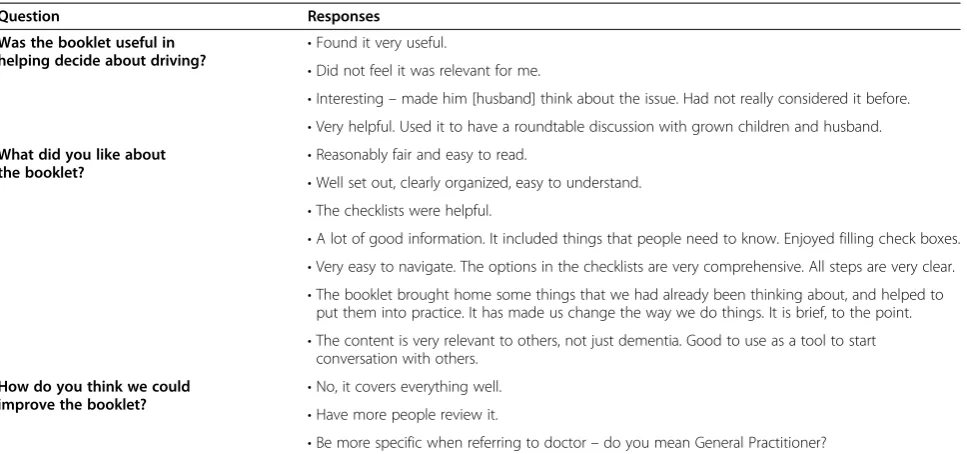
(91.6%). Most participants (91.6%) felt that the DDDA helped them decide about driving and all would recom-mend the booklet to others. Qualitative feedback regard-ing the booklet was favorable (see Table 3).
Discussion
The purpose of this research was to establish if a self-administered DA can assist drivers with dementia make decisions about driving retirement. This pilot study pro-vided an opportunity for individuals with dementia, who are often excluded from medical research, to express their views about the decision to retire from driving [57]. Overly restrictive study protocols often preclude the recruitment of older participants [58], and particularly people with cognitive impairment or multiple co-morbidities. Thus, in-dividuals with dementia can be denied access to new inter-ventions or therapies. This study helped to redress this imbalance through the development and preliminary evaluation of a DA for drivers with dementia.
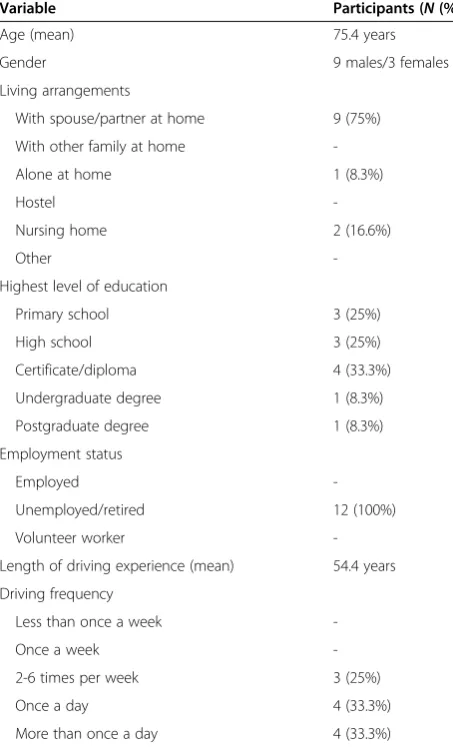
Table 1 Demographic characteristics of study participants
Variable Participants (N(%))
Age (mean) 75.4 years
Gender 9 males/3 females
Living arrangements
With spouse/partner at home 9 (75%)
With other family at home
-Alone at home 1 (8.3%)
Hostel
-Nursing home 2 (16.6%)
Other
-Highest level of education
Primary school 3 (25%)
High school 3 (25%)
Certificate/diploma 4 (33.3%)
Undergraduate degree 1 (8.3%)
Postgraduate degree 1 (8.3%)
Employment status
Employed
-Unemployed/retired 12 (100%)
Volunteer worker
-Length of driving experience (mean) 54.4 years
Driving frequency
Less than once a week
-Once a week
-2-6 times per week 3 (25%)
Once a day 4 (33.3%)
More than once a day 4 (33.3%)
Table 2 Decision aid acceptability
Variable Participants (N(%))
Information presentation
Poor
-Fair 1 (8.3%)
Good 3 (25%)
Excellent 8 (66.6%)
Booklet length
Too long
-Too short
-Just right 12 (100%)
Was there enough information to decide about driving?
Too much information
-Too little information
-Just right 12 (100%)
Was the booklet balanced?
Slanted against driving 1 (8.3%)
Slanted in favor of driving 1 (8.3%)
Balanced 10 (83.3%)
Was the booklet useful in helping decide about driving?
Yes 11 (91.6%)
No 1 (8.3%)
Would you recommend the booklet to others?
Yes 12 (100%)
-Most participants completed the booklet without assist-ance, requiring an average reading time of 30 minutes. A concerted effort was made during the development phase to ensure the study booklet was clear, concise and sensi-tive to the needs (e.g. cognisensi-tive requirements) of individ-uals with dementia. As reported in the development of a low literacy DA elsewhere [59], simple strategies were employed to improve the readability of the DDDA and re-duce the cognitive effort required [50] by using: (1) large font size; (2) active voice; (3) short sentences; and (4) sim-ple diagrams. Consequently, a low Flesch-Kincaid reading grade level of 3.8 was achieved.
The IPDAS collaboration criteria [47] serve as a vali-dated measure of DA quality, as well as a useful guide in the development of new DAs. The DDDA rated highly in two of three quality domains: (1) content 20/20; (2) devel-opment process 20/20; and (3) effectiveness 0/7. The final version of the DDDA booklet will be forwarded to the IPDAS instrument assessment team in Cardiff, United Kingdom [59] for an objective assessment against IPDAS quality criteria. This will serve two important functions: (1) confirm that the DDDA has undergone comprehensive and rigorous development; and (2) provide assurance that it satisfies internationally agreed standards of quality.
It is widely acknowledged that the recruitment of indi-viduals with dementia is fraught with challenges [60,61]. Accordingly, a limitation of this pilot study is its low sam-ple size. An additional limitation is the absence of delayed follow-up data (e.g. six month follow-up survey). Notwith-standing these limitations, encouraging improvements in participant knowledge and decisional conflict were observed following use of the DDDA. In addition, booklet acceptabil-ity was high and qualitative feedback from participants was
favorable. In view of these preliminary findings, a random-ized controlled trial (RCT) has been initiated to better understand the clinical impact of the DDDA (ACTRN 12613000174785). A potential limitation of this pilot study is the nature of the literature review which informed the de-velopment of the DDDA. A systematic review was not undertaken: (1) to avoid undue replication of existing re-views; (2) as a low yield of additional relevant studies was anticipated; (3) as it was unlikely to alter the DDDA devel-opment; and (4) as it was unlikely to alter the methods, re-sults or outcomes of this pilot study.
Conclusion
Discussion with individuals with dementia about driving retirement often represents a challenging clinical encoun-ter for health professionals [24,27]. A Pyrrhic victory may ensue whereby individuals with dementia are instructed to cease driving yet they neither heed their clinician’s advice nor return for medical review. Thus, there exists a clear need to facilitate conversations related to early retirement from driving. Ideally, such discussions would occur shortly after a diagnosis is reached. This pilot study demonstrates how a multi-faceted approach (i.e. development panel, re-view panel and field testing) resulted in the creation of a feasible and acceptable DA for individuals with dementia. This DDDA provides a simple and balanced outline of the benefits and risks of driving. It facilitates clarification of values, promotes planning for retirement from driving and encourages the reader to speak with their doctor. The DA resource was developed in line with the IPDAS collabor-ation guidelines [47] and pilot tested by drivers with de-mentia. However, further research is required to evaluate the impact of this DA in the target group. Accordingly, a Table 3 Qualitative feedback from participants and family
Question Responses
Was the booklet useful in
helping decide about driving? •
Found it very useful.
•Did not feel it was relevant for me.
•Interesting–made him [husband] think about the issue. Had not really considered it before. •Very helpful. Used it to have a roundtable discussion with grown children and husband.
What did you like about
the booklet? •
Reasonably fair and easy to read.
•Well set out, clearly organized, easy to understand. •The checklists were helpful.
•A lot of good information. It included things that people need to know. Enjoyed filling check boxes. •Very easy to navigate. The options in the checklists are very comprehensive. All steps are very clear. •The booklet brought home some things that we had already been thinking about, and helped to
put them into practice. It has made us change the way we do things. It is brief, to the point. •The content is very relevant to others, not just dementia. Good to use as a tool to start
conversation with others.
How do you think we could
improve the booklet? •
No, it covers everything well. •Have more people review it.
randomized controlled trial of drivers with dementia is currently underway.
There is a need for a comprehensive and inclusive ap-proach to older drivers with cognitive impairment [24,27,33,62]. This study describes an intervention which contributes towards the achievement of an important goal: enhancing patients’ quality of life while simultaneously maintaining personal and public safety [62]. It is intended that, ultimately, the DDDA will be made freely available to patients, carers and clinicians by providing copies to (1) local, state and national healthcare authorities, (2) national road safety organizations, and (3) relevant consumer sup-port groups. The booklet is designed to facilitate discus-sion about a frequently neglected issue: driving retirement by individuals with dementia. Although the focus of this study was on drivers with dementia, the methods used should guide future DA development (e.g. driving and epi-lepsy, driving and sleep apnea, dementia and management of finances).
Additional file
Additional file 1:Driving with dementia decision aid.
Abbreviations
ADI:Alzheimer’s Disease International; DA: Decision aid; DDDA: Driving with dementia decision aid; IPDAS: International patient decision aids standards; PIS: Participant information sheets; SD: Standard deviation; SPSS: Statistical package for the social sciences; WHO: World Health Organization.
Competing interests
The authors declare that they have no competing interests.
Authors’contributions
JC, JP, KL, SB, VT and DI contributed to the concept and design of the study. JC secured ethical approval. JP, KL and SB contributed to data collection. JC prepared the manuscript which has been reviewed by the other authors. All authors have approved the final manuscript.
Acknowledgements
The authors would like to thank all of the study participants for their time and invaluable feedback. We would also like to thank Dr George Albert, Mr Robert Reynolds, Ms Catherine Andrew and Prof Elena Marchetti for their generous support and eagerness to collaborate. A/Prof Guy Bashford, Dr Vida Bliokas, Prof Andrew Bonney, Prof Glyn Elwyn’s Decision Laboratory, Ms Robyn Faine, Ms Kate Lewis, Mr Anton Saarimaki and Dr Christine Stirling kindly provided feedback regarding the DA. We would like to acknowledge the Patient Decision Aids Research Group, OHRI, Canada for permitting our research group to adapt some of their work. This research was support through a grant from the Roads and Maritime Services (Department of Transport, NSW). Data from this study was presented at the NSW Older Driver Taskforce, Sydney (October 9th, 2012).
Author details
1Department of Neurology, Wollongong Hospital, Wollongong, NSW 2500, Australia.2Faculty of Science, Medicine and Health, University of
Wollongong, Wollongong, NSW 2522, Australia.3Illawarra Health and Medical Research Institute (IHMRI), University of Wollongong, Wollongong, NSW 2522, Australia.4Department of Aged Care, Wollongong Hospital, Wollongong, NSW 2500, Australia.
Received: 5 August 2013 Accepted: 11 March 2014 Published: 19 March 2014
References
1. World Health Organisation:Dementia: a public health priority; 2012 [http:// www.who.int/mental_health/publications/dementia_report_2012/en/] 2. Lancet Neurology:Public health planning for dementia must start now.
Lancet Neurol2012,11:477.
3. American Psychiatric Association:Diagnostic and statistical manual of mental disorders.5th edition. Washington DC: American Psychiatric Association; 2013. 4. Blass DM, Rabins PV:Dementia: in the clinic.Ann Intern Med2008,148:1–16. 5. Breen DA, Breen DP, Moore JW, Breen PA, O’Neill D:Driving and dementia.
BMJ2007,334:1365–1369.
6. Carr DB, Shead V, Storandt M:Driving cessation in older adults with dementia of the Alzheimer’s type.Gerontologist2005,45:824–827. 7. Herrmann N, Rapoport MJ, Sambrook R, Hebert R, McCracken P, Robillard A:
Predictors of driving cessation in mild to moderate dementia.
CMAJ2006,175:591–595.
8. Martin AJ, Marottoli R, O’Neill D:Driving assessment for maintaining mobility and safety in drivers with dementia.Cochrane Database Syst Rev 2009,1, CD006222.
9. Eby DW, Molnar LJ:Driving fitness and cognitive impairment: issues for physicians.JAMA2010,303:1642–1643.
10. Department for transport:National travel survey 2011.[https://www.gov.uk/ government/publications/national-travel-survey-2011]
11. Federal Highway Administration, US Department of Transport:Distribution of licensed drivers 1993.[http://www.fhwa.dot.gov/ohim/hs93/Sec3.pdf] 12. Federal Highway Administration, US Department of Transport:Distribution of
licensed drivers 2011.[http://www.fhwa.dot.gov/policyinformation/statistics/2011/] 13. Edwards JD, Bart E, O’Connor ML, Cissell G:Ten years down the road:
predictors of driving cessation.Gerontologist2010,50:393–399. 14. Buys L, Snow S, van Megen K, Miller E:Transportation behaviours of older
adults: an investigation into car dependency in urban Australia.
Australas J Ageing2012,31:181–186.
15. Snyder CH:Dementia and driving: autonomy versus safety.J Am Acad Nurse Pract2005,17:393–402.
16. Drazkowski JF, Sirven JI:Driving and neurologic disorders.Neurology2011,
76(Suppl 2):44–49.
17. Musselwhite C, Haddad H:Mobility, accessibility and quality of later life.
Qual Ageing2010,11:25–37.
18. Kostyniuk LP, Shope JT:Driving and alternatives: older drivers in Michigan.J Safety Res2003,34:407–414.
19. Marottoli RA, de Leon CF M, Glass TA, Williams CS, Cooney LM Jr, Berkman LF:Driving cessation and increased depressive symptoms: prospective evidence from the New Haven EPESE.J Am Geriatr Soc1997,45:202–206. 20. Taylor BD, Tripodes S:The effects of driving cessation on the elderly with
dementia and their caregivers.Accid Anal Prev2001,33:519–528. 21. Freeman EE, Gange SJ, Munoz B, West SK:Driving status and risk of entry into
long-term care in older adults.Am J Public Health2006,96:1254–1259. 22. Berger JT, Rosner F:Ethical challenges posed by dementia and driving.
J Clin Ethics2000,11:304–308.
23. Brown LB, Ott BR:Driving and dementia: a review of the literature.
J Geriatr Psychiatry Neurol2004,17:232–240.
24. Carmody J, Traynor V, Iverson D, Marchetti E:Driving, dementia and the Australian physician: primum non nocere.Intern Med J2013,43:625–630. 25. O’Neill D:Driving and dementia.CMAJ2007,176:351.
26. O’Neill D:Deciding on driving cessation and transport planning in older drivers with dementia.Eur Geriatr Med2010,1:22–25.
27. Carmody J, Traynor V, Iverson D:Dementia and driving: an approach for general practice.Aust Fam Physician2012,41:230–233.
28. Carmody J, Traynor V, Iverson D:Fitness to drive: letter of reply.Aust Fam Physician2012,41:459–460.
29. Carr DB, Schwartzberg JG, Manning L, Sempek J:Physician’s guide to assessing and counseling older drivers.2nd edition. Washington, DC: National Highway Traffic Safety Administration; 2010.
30. Iverson DJ, Gronseth GS, Reger MA, Classen S, Dubinsky RM, Rizzo M:
Practice parameter update: evaluation and management of driving risk in dementia. Report of the Quality Standards Subcommittee of the American Academy of Neurology.Neurology2010,74:1316–1324. 31. Drickamer MA, Marottoli RA:Physician responsibility in driver assessment.
Am J Med Sci1993,306:277–281.
33. Jang RW, Man-Son-Hing M, Molnar FJ, Hogan DB, Marshall SC, Auger J, Graham ID, Korner-Bitensky N, Tomlinson G, Kowgier ME, Naglie G:Family physicians’ attitudes and practices regarding assessments of medical fitness to drive in older persons.J Gen Intern Med2007,22:531–543.
34. Ropper AH, Samuels MA:Dementia and the amnesic (Korsakoff) syndrome with comments on the neurology of intelligence and memory.InAdams and Victor’s Principles of Neurology.9th edition. New York: McGraw-Hill; 2009.
35. Howe EG:Improving treatments for patients who are elderly and have dementia.J Clin Ethics2000,11:291–303.
36. O’Connor AM, Jacobsen M, Stacey D:An evidence-based approach to managing women’s decisional conflict.J Obstet Gynaecol Neonatal Nurs 2002,31:570–581.
37. Prunty MC, Sharpe L, Butow P, Fulcher G:The motherhood choice: a decision aid for women with multiple sclerosis.Patient Educ Couns2008,
71:108–115.
38. Feldman-Stewart D, Brennenstuhl S, McIssac K, Austoker J, Charvet A, Hewitson P, Sepucha KR, Whelan T:A systematic review of information in decision aids.Health Expect2007,10:46–61.
39. O’Connor AM, Tugwell P, Wells GA, Elmslie T, Jolly E, Hollingworth G, McPherson R, Bunn H, Graham I, Drake E:A decision aid for women considering hormone replacement therapy after menopause: decision support framework and evaluation.Patient Educ Couns1998,33:267–279. 40. Stacey D, Légaré F, Col NF, Bennett CL, Barry MJ, Eden KB, Holmes-Rovner
M, Llewellyn-Thomas H, Lyddiatt A, Thomson R, Trevena L, Wu JHC:
Decision aids for people facing health treatment or screening decisions.
Cochrane Database Syst Rev2014,10, CD001431.
41. Bensing J, Rimondini M, Visser A:What patients want.Pat Educ Counsel 2013,90:287–290.
42. O’Connor AM:Ottawa decision support framework to address decisional conflict; 2006 [https://decisionaid.ohri.ca/docs/develop/ODSF.pdf] 43. Stirling C, Leggett S, Lloyd B, Scott J, Blizzard L, Quinn S, Robinson A:Decision
aids for respite service choices by carers of people with dementia: development and pilot RCT.BMC Med Inform Decis Mak2012,12:21. 44. Hanson LC, Carey TS, Caprio AJ, Lee TJ, Ersek M, Garrett J, Jackman A,
Gilliam R, Wessell K, Mitchell SL:Improving decision-making for feeding options in advanced dementia: a randomized, controlled trial.J Am Geriatr Soc2011,59:2009–2016.
45. O’Connor AM, Stacey D:Ottawa personal decision guide; 2012 [http://decisionaid.ohri.ca/docs/das/OPDG.pdf]
46. National Health and Medical Research Council (NHMRC):How to prepare and present evidence-based information for consumers of health services: a literature review.Canberra: NHMRC; 1999 [http://www.nhmrc.gov.au/ guidelines/publications/cp72]
47. Elwyn G, O’Connor AM, Stacey D, Volk R, Edwards A, Coulter A, Thomson R, Barratt A, Barry M, Bernstein S, Butow P, Clarke A, Entwistle V, Feldman-Stewart D, Holmes-Rovner M, Llewellyn-Thomas H, Moumjid N, Mulley A, Ruland C, Sepucha K, Sykes A, Whelan T:Developing a quality criteria framework for patient decision aids: online international Delphi consensus process.BMJ2006,333:417–422.
48. Andrew C, Traynor V, Iverson D:Dementia and retirement from driving: people with dementia and their carers critique available tools; 2011 [http://ro.uow.edu.au/cgi/viewcontent.cgi?article=2222&context=hbspapers]. 49. Butow P, Brindle E, McConnell D, Boakes R, Tattersall M:Information
booklets about cancer: factors influencing patient satisfaction and utilization.Patient Educ Couns1998,33:129–141.
50. Hibbard JH, Peters E:Supporting informed consumer health care decisions: data presentation approaches that facilitate the use of information in choice.Annu Rev Public Health2003,24:413–433. 51. Ottawa Hospital Research Institute:Decision aid library inventory.
[http://decisionaid.ohri.ca/cochinvent.php]
52. O’Connor AM:Low literacy decisional conflict scale.[https://decisionaid.ohri. ca/eval_dcs.html]
53. Smith SK, Trevena L, Simpson JM, Barratt A, Nutbeam D, McCaffery KJ:A decision aid to support informed choices about bowel cancer screening among adults with low education: randomized controlled trial.BMJ2010,341:c5370. 54. O’Connor AM:Ottawa knowledge questionnaire.[http://decisionaid.ohri.ca/
eval_know.html]
55. Holmes-Rovner M, Kroll J, Schmitt N, Rovner DR, Breer ML, Rothert ML, Padonu G, Talarczyk G:Patient satisfaction with health care decisions: the satisfaction with decision scale.Med Decis Making1996,16:58–64.
56. O’Connor AM, Cranney A:Ottawa acceptability questionnaire. [http://decisionaid.ohri.ca/eval_accept.html]
57. Taylor JS, DeMers SM, Vig EK, Borson S:The disappearing subject: exclusion of people with cognitive impairment and dementia from geriatrics research.J Am Geriatr Soc2012,60:413–419.
58. Zulman DM, Sussman JB, Chen X, Cigolle CT, Blaum CS, Hayward RA:
Examining the evidence: a systematic review of the inclusion and analysis of older adults in randomized controlled trials.J Gen Intern Med 2011,26:783–790.
59. Elwyn G, O’Connor AM, Bennett C, Newcombe RG, Politi M, Durand MA, Drake E, Joseph-Williams N, Khangura S, Saarimaki A, Sivell S, Stiel M, Bernstein SJ, Col N, Coulter A, Eden K, Härter M, Rovner MH, Moumjid N, Stacey D, Thomson R, Whelan T, van der Weijden T, Edwards A:Assessing the quality of decision support technologies using the International Patient Decision Aid Standards instrument (IPDASi).Plos One2009,4:e4705.
60. Wilcock J, Bryans M, Turner S, O’Carroll R, Keady J, Levin E, Iliffe S:Methodological problems in dementia research in primary care: a case study of a randomized controlled trial.Prim Health Care Res Dev2007,8:12–21.
61. Iliffe S, Curry L, Kharicha K, Rait G, Wilcock J, Lowery D, Tapuria A, Kalra D, Ritchie C:Developing a dementia research registry: a descriptive case study from North Thames DeNDRoN and the EVIDEM programme.
BMC Med Res Methodol2011,11:9.
62. Carr DB, Ott BR:The older adult driver with cognitive impairment: "it’s a very frustrating life".JAMA2010,303:1632–1641.
doi:10.1186/1472-6947-14-19
Cite this article as:Carmodyet al.:Development and pilot testing of a decision aid for drivers with dementia.BMC Medical Informatics and
Decision Making201414:19.
Submit your next manuscript to BioMed Central and take full advantage of:
• Convenient online submission
• Thorough peer review
• No space constraints or color figure charges
• Immediate publication on acceptance
• Inclusion in PubMed, CAS, Scopus and Google Scholar
• Research which is freely available for redistribution