Licensed under Creative Common Page 89
http://ijecm.co.uk/
ISSN 2348 0386
THE APPLICABILITY OF BEYOND BUDGETING IN
STATE UNIVERSITIES IN ZIMBABWE
A CASE OF LUPANE STATE UNIVERSITY
Titshabona Ncube
Faculty of Commerce, Department of Accounting and Finance
Lupane State University, Bulawayo, Zimbabwe
Abstract
The budgeting processes and budgetary controls have been rendered useless especially during
the long decade of economic decline and instability in Zimbabwe. With the global competitive
environment, organisations need to adopt various strategies for survival and competitiveness.
This study examines the applicability of the Beyond Budgeting philosophy in State Universities
in Zimbabwe, using Lupane State University, Zimbabwe as a case in point. The study concludes
that Lupane State University has a strong case to move towards Beyond Budgeting due to the
fact that the match between its vision for alternative model and the Empowered and Adaptive
model is good at 90%. This study adds to the discourse on the useful of traditional budgeting in
the current competitive global environment, and the applicability of Beyond Budgeting in the
African context.
Key words: Budgeting, Beyond Budgeting, Lupane State University, competitive success factors
INTRODUCTION
Most organisations are involved in the budgetary processes in which most cases the budgets
are not fully functional (Morlidge and Player, 2010). The budgeting process at Lupane State
University (LSU) is premised under the principles of Zero Based Budgeting, and participatory budgeting principles. Participative budgeting allows subordinate managers’ considerable say in
how the budgets are established (Guan et al, 2009) departments and sections are expected to
annually prepare their financial and human capital plans for the following year, which is set for
Licensed under Creative Common Page 90 Due to the current economic environment, the government is not able to fully fund the activities
of the state universities hence the Universities have to utilise the revenue they generate from
academic fees and other projects to undertake most of their activities. This calls for the
universities to adopt a different strategy, especially with regards to the budgetary process and
the allocation of the meagre resources.
This study focuses on LSU, one of the ten state universities in Zimbabwe, currently
operating from Bulawayo. The university is in a competitive environment with other state
universities and private universities hence the need for the university to adopt and adapt in this
environment to be able to survive, grow and stand the competition. Utilising the Beyond
Budgeting Round Table (BBRT) Diagnostics template and evaluation of what needs to be
improved, the extent of the change and how ready the universities are and whether change is
necessary (BBRT , 2014).
LITERATURE REVIEW
‘Beyond Budgeting’ means beyond command- and- control but towards a management model
that is more empowered and adaptive (BBRT, 2014; Wallander, 1999). Beyond Budgeting is
about rethinking how we manage organisations in a post industrial world where innovative
management model represent the only sustainable competitive advantage. It is also about
releasing people from burdens of stifling bureaucracy and suffocating control systems, trusting
them with information and giving them time to think, reflect, share learn and improve. Above all it is about learning how to change from the many leaders who have built and managed ‘beyond budgeting’ organisations (BBRT, 2014; Libby and Lindsay, 2003).
According to the Beyond Budgeting Round Table , some of the organisations which have
become empowered and adaptive include organisations that cut across various sectors i.e.
American Express(Financial Services, USA), Coloplast (Medical Products, Denmark),
Google(Internet, USA), Handelsbanken(Universal Bank, Sweden), HCL Technologies(IT
Services, India), John Lewis partnership(Retail, UK), Staoil (Oil and Gas, Norway), Sydney
Water(Water Utility, Australia), Telekom Malaysia(Telecommunications, Malaysia), Toyota(Car
Manufacturer, Japan) and Whole Foods Market(Natural Foods Retailer, USA).From the list it
can be noted that no company that originates from Africa has gone beyond budgeting.
Beyond Budgeting principles
According to BBRT (2011) organisations which have abandoned the command and control
model have adopted common principles. The first six principles are the leadership principles,
Licensed under Creative Common Page 91 front line teams thus enabling them to respond quickly to emerging events and relative
performance. These include principles that have to do with values, governance, transparency,
teams, trust and accountability.
The second six principles are the process principles, which support a more adaptive set
of performance management systems that enable front line teams to be more responsive to the
competitive environment and to customer needs. These principles include goals, rewards,
planning, coordination, resources and controls.
Benefits of Beyond Budgeting
Beyond Budgeting organisations operate with speed and simplicity. Simplicity comes from
reducing complexity in the management process. This can best be achieved by giving front line
people the scope to act immediately and decisively within clear principles, values and strategic
boundaries (BBRT, 2014; Sandalgaard et al, 2014).
In Beyond Budgeting organisations, people work within open and self-managed
environment clear governance principles set the right climate and build the mutual trust needed
to share knowledge and best practices(Wallander, 1999).
Only by seeing process as supplier-customer relationship will people respond to
demands for improvement in quality and cost. Only by eradicating the mentality surrounding
traditional budgets will people be motivated to question fixed costs and seek sustainable long
term cost reduction (BBRT,2014).
Beyond Budgeting organisations place customer value needs at the centre of their
strategy and adopt their processes to satisfying and even delighting them. Fast response to
customer requests is vital (Hope and Fraser,2003).
Criticisms of traditional budgeting methods
Hope and Fraser (2003) focus on the costs associated with preparing and negotiating budgets,
and the costs of following up on those budgets. Along these lines Player (2003) argues that all
of the member companies in BBRT joined because they recognised that the budgeting process
was too long and expensive. Likewise Bogsnes (2009) mentions the cost of making budgets as
an argument for going Beyond Budgeting.
The argument made by Hope and Fraser (2003) is that traditional budgets tend to
become fixed performance contract in which goal achievement is the success criterion,
therefore subordinates will try to obtain the easiest budget goals possible. Furthermore, when a
budget goal is set there is a risk that subordinates will engage in gaming and other dysfunctional
Licensed under Creative Common Page 92 gaming and thereby affect the quality of the budget. Hope and Fraser (2003) argue that
traditional budgeting was developed at a time when the business environment was more stable
and less competitive than it is today. As a result, a more adaptive way of managing is now
needed. Bogsnes (2009) criticises budgets as being unsuitable for the business environment
that companies currently face.
METHODOLOGY
This study is based on a case study utilising Lupane State University due to availability of data
and respondents on the survey instruments. The population consists of state universities in
Zimbabwe, and purposive sampling was used in selecting Lupane State University to represent
the population. This study adopted the Beyond Budgeting Leadership Self- Assessment
Questionnaire to find out if the management model LSU is using will assist in coping with the
challenges of budgeting. The diagnostics has been developed by the Beyond Budgeting Round
Table (BBRT).
The hypothesis on which the survey instrument is based on is that in a complex dynamic competitive environment, an organisation that adopts a “Empowered and Adaptive” model (one that distribute knowledge and decision making power to the ‘frontline’ close to customers)
should achieve sustained superior performance relative to its peers.
EMPIRICAL FINDINGS
Overview of the model
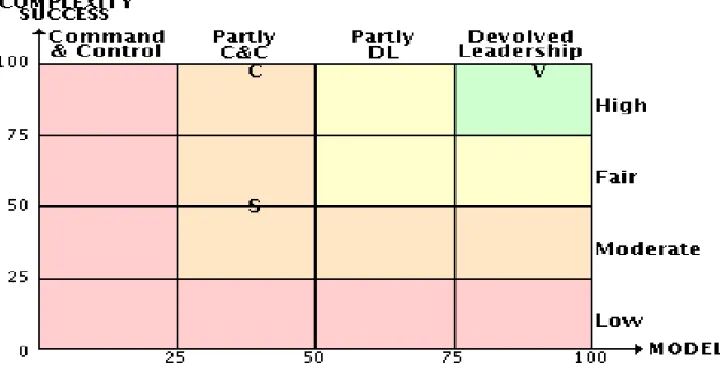
The overview of the model that Lupane State University is shown in Figure 1 below.
Figure 1: Overview
Licensed under Creative Common Page 93 Figure 1 above plots the complexity(C) of the business environment that LSU operates in and its
competitive success(S) against the nature of the current model. The table also plots the complexity(and anticipated success) against the organisation’s vision for alternative model(V). If
the organisation is operating in a dynamic environment, its vision should be in the top right hand
box (green). The extent of the change required to get there is the horizontal gap between ‘C’ and ‘V’ results. In Figure 1, ‘complexity’ is measured by the average importance that was given to the six competitive success factors in the questionnaire (CSF), and ‘success’ is based on the
assessment of the relative competitive success of the organisation today. These are compared
with average scores given to the management model and the vision of the alternative model.
Complexity, competitive success and the current model
The complexity of the environment in which LSU operates in is ‘HIGH’ at 97%, and the competitive success is ‘FAIR’ at 50%, and the current model is about 39% of the way towards ‘EMPOWERED AND ADAPTIVE’
Vision
LSU’s vision is about 90% of the way towards ‘EMPOWERED AND ADAPTIVE’. This means
LSU should consider with some urgency, changing its model to increase competitive success.
Summary scorecard
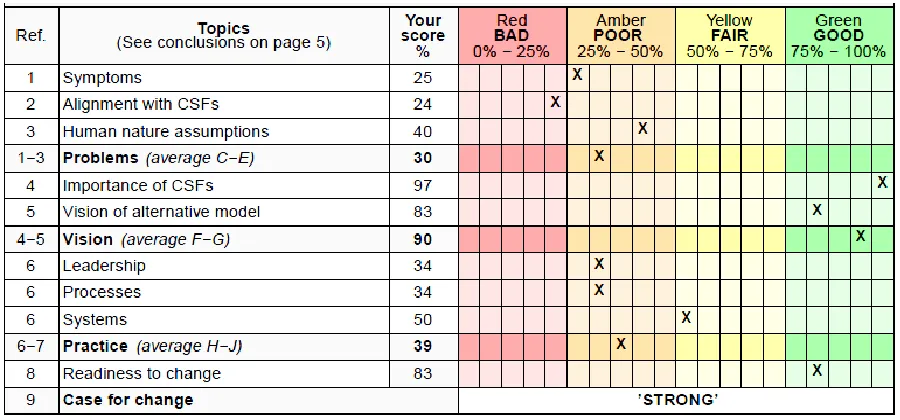
Table 1. Summary scorecard for the BBRT questionnaire
Licensed under Creative Common Page 94 The Table above indicates that the problems with the current management model are ‘SEVERE” at 30% and the match between the vision of an alternative model and the ‘Empowered and Adaptive’ model is ‘GOOD’ at 90% and the current management model is ‘POOR’ at 39%. Overall the case for change at LSU is ‘STRONG’.
Symptoms
The management model at LSU is a ‘COMMAND AND CONTROL’ model. The problems
experienced with the planning process may be symptoms of misalignment of the model with the
CSFs. This means that LSU should consider changing its model and not merely improving on its
planning process.
Alignment with CSFs
The overall score for the alignment between the management model and the CSFs is ‘BAD’ AT
24%. This means that LSU should consider changing or improving its management model to
align it better with its CSFs and thus improve its competitive performance relative to its
competitors.
Assumptions about human nature
The scores show that the assumptions about human nature on which the management model is based are ‘POOR’ at 40%, tending towards Theory X in McGregor’s motivation theories. The
organisation should consider changing its model so that it can attract and retain the best people; increase the productivity of its ‘ knowledge assets’, and at the same time enable its people
individually to grow and develop.
Importance of today’s CSFs
The overall score for the importance of today’s CSFs is ‘HIGH’ at 97%. The organisation should
therefore consider adopting an EMPOWERED AND ADAPTIVE model, which is designed to
cope with a complex dynamic environment. The actual performance of LSU relative to its peers on the CSFs is ‘FAIR’ at 50%.
Vision
Licensed under Creative Common Page 95 Practice
Compared with the ‘Empowered and Adaptive’ model, the overall score for the current leadership practice is ‘POOR’ at 34%; the score for the management processes is ‘POOR’ at 34%; and the score for the information systems and tools is ‘FAIR’ at 50%. Overall LSU’s model is ‘POOR’ at 39%.
Readiness to change
An Empowered and Adaptive model should enable LSU to achieve and sustain superior
competitive performance, but it usually requires a transformation of the traditional model, which
represents some significant challenges. Before embarking on such a change the organisation needs to be ready. The overall score for readiness for LSU is ‘GOOD’ at 83%.
Case for change
The case for change reflects the various pressures for changing the management model. Six of
these have been evaluated, and averaged to determine the overall case for change , which is ‘STRONG’, the organisation should proceed to the next stage of implementation.
What must change?
To build a coherent Empowered and Adaptive model requires all its steering mechanisms to
work together to support. Not conflict with the CSFs. The changes required are evaluated and
ranked in descending order of the extent to change required. There are 16 areas shown in
which changes are potentially required. All these should be in the GREEN zone i.e. having a
gap of less than 25%.
CONCLUSION
This study was based on the Beyond Budgeting Round Table Leadership Self assessment
questionnaire, which was applied to Lupane State University to evaluate the applicability of
Beyond Budgeting in state universities in Zimbabwe.
The findings show that Lupane State University’s current management model, which is
the command and control model is severe at 39%, and that the match between the vision of an
alternative model and the Beyond Budgeting model is good at 90%, therefore the study
concludes that the case for change, which is to move towards an adaptive model (Beyond
Budgeting) is strong.
The current study contributes to the field of management accounting, with special
Licensed under Creative Common Page 96 Budgeting philosophy. The study is limited to a case of Lupane State University due to the ease
to gather the information required and cost of applying the questionnaire. The study utilised the
BBRT questionnaire which was the taster version, and the full version was not updated.
Areas for further research could include, using the fully version of the leadership self
assessment questionnaire on LSU, also the peers of this organisation could be utilised, a
broader study that involves all the state universities can be conducted, and a comparison with
the performance of private universities in Zimbabwe.
REFERENCES
Beyond Budgeting Round Table. (2014). Beyond Budgeting. Retrieved October 20, 2014, from http://www.beyondbudgeting.org/beyond-budgeting/bbwhat.html.
Bosgnes, B. (2009). Implementing Beyond Budgeting - Unlocking the Performance Potential. Wiley, NJ.
Frow, N., Marginson, D. and Ogden, S. (2010). Continuous budgeting: reconciling budget flexibility with budgetary control. Accounting Organisations and Society, 35(4), 444-461.
Holtkamp, R. (2014). Should we go beyond budgeting? Erasmus University in Rotterdam.
Hope, J. and Fraser, R. (2003). Beyond Budgeting: How Managers can break free from the annual performance trap, Harvard Business School Press, Boston, MA.
Hope, J. and Fraser, R. (2003). Who needs budgets? Harvard Business Review, 81(2), 2-8.
Libby, T and Lindsey, R.M. (2003). Budgeting: an unnecessary evil. CMA Magazine, 77(1), 30-33.
Morlidge, S. and Player, S. (2010). Future Ready: How to Master Business Forecasting, John Wiley & Sons, Chichester.
Player, S. (2003). Why some organisations go “Beyond Budgeting”. The Journal of Corporate Accounting and Finance, 14 (3), 3-9.
Sandalgaard, N. and Bukh, P.N. (2014). Beyond Budgeting and change: a case study. Journal of Accounting and Organisational Change. 10(3), 409-423.