Geschke Center
Doctoral Dissertations Theses, Dissertations, Capstones and Projects
2011
The effects of three concept mapping strategies on
seventh-grade students' science achievement at an
urban middle school
Navdeep Dosanjh
Follow this and additional works at:https://repository.usfca.edu/diss Part of theEducation Commons
This Dissertation is brought to you for free and open access by the Theses, Dissertations, Capstones and Projects at USF Scholarship: a digital repository @ Gleeson Library | Geschke Center. It has been accepted for inclusion in Doctoral Dissertations by an authorized administrator of USF Scholarship: a digital repository @ Gleeson Library | Geschke Center. For more information, please [email protected].
Recommended Citation
Dosanjh, Navdeep, "The effects of three concept mapping strategies on seventh-grade students' science achievement at an urban middle school" (2011).Doctoral Dissertations. 285.
The University of San Francisco
THE EFFECTS OF THREE CONCEPT MAPPING STRATEGIES ON SEVENTH-GRADE STUDENTS’ SCIENCE ACHIEVEMENT AT AN URBAN MIDDLE
SCHOOL
A Dissertation Presented to
The Faculty of the School of Education Learning and Instruction Department
In Partial Fulfillment
of the Requirements for the Degree Doctor of Education
by
Navdeep Dosanjh San Francisco
The Effects of Three Concept Mapping Strategies on Seventh-Grade Students’ Science Achievement at an Urban Middle School
There is great concern over students’ poor science achievement in the United
States. Due to the lack of science achievement, students are not pursing science related
careers resulting in an increase in outsourcing to other countries. Learning strategies such
as concept mapping may ameliorate this situation by providing students with tools that
encourage meaningful learning. The purpose of this quasi-experimental study was to
measure the effects of three concept mapping learning strategies (concept identifying,
proposition identifying, student generated) on urban middle school students’
understanding of the circulatory system. Three intact classes of seventh-grade students
were assigned to one of the three concept mapping strategies. The students were given a
pretest on the circulatory system then learned and used their respective concept mapping
strategies while learning about the circulatory system. At the conclusion of the study,
students’ science achievement was measured by performance on an achievement test and
rubric scores of their respective concept identifying, proposition identifying, and student
generated concept maps. The results of the study suggest that all three of the concept
mapping strategies are effective in increasing students’ science achievement.
Additionally, the moderate significant correlations between the posttest and concept map
scores of the current study established that concept maps are a useful measure of student
ii
and approved by the members of the committee, has been presented to and accepted by
the Faculty of the School of Education in partial fulfillment of the requirements for the
degree of Doctor of Education. The content and research methodologies presented in this
work represent the work of the candidate alone.
Navdeep Dosanjh May 10, 2011
Candidate, Navdeep Dosanjh Date
Dissertation Committee
Xornam Apedoe May 10, 2011
Chairperson, Dr. Xornam Apedoe Date
Yvonne Bui May 10, 2011
Dr. Yvonne Bui Date
Gini Shimabukuro May 10, 2011
iii
First and foremost I would like to acknowledge my chairperson Dr. Xornam Apedoe for her continued support and encouragement throughout the entire dissertation process. Her constructive feedback coupled with her enthusiasm regarding the study was extremely motivating. Dr. Apedoe’s confidence in my writing abilities also instilled a level of confidence in me that was essential in successfully completing my dissertation.
Next, I would like to acknowledge Dr. Yvonne Bui and Dr. Gini Shimabukuro for participating on my dissertation committee. Dr. Bui’s knowledge related to the
methodological and data analysis portions of the dissertation was critical in devising a meaninguful study and accurately analyzing the results. Dr. Shimabukuro’s writing expertise and constructive feedback assisted me in creating a well-developed dissertation.
iv
I dedicate this dissertation to my amazing family. Mom and Dad you have always shown me so much love and support that I truly could not have done this without you. Thank you very much for always having faith in me and allowing me to follow my dreams. Joti and Manny you have always found ways to help me realize the brighter, funnier side of situations when I was stressed out. There were multiple times when I had nothing to laugh about but you two always seemed to find a way to make it happen. Jagdip and Sareena the relationships I have with the both of you are truly priceless. I feel so
fortunate to have such a loving older brother and equally loving sister-in-law. Aneil I am very happy that over the last four years we have become closer. I have been fortunate to watch you grow into a wonderful man and want you to know that I will always be here for you. Ria, Alisha, Ronik, Milan, Jaanik, and Amir, I cannot express in words how much love I have for all of you. Thinking about you, talking to you on the phone, or seeing you, instantly puts a smile on my face.
Last but definitely not least, I would also like to dedicate this dissertation to my Baba Ji who was an inspirational advocate of education. I miss you dearly and hope you know the positive impact you had and continue to have on my personal and professional life.
v
TABLE OF CONTENTS ...v
List of Tables ... viii
List of Figures ... ix
Chapter ... Page I. INTRODUCTION ...1
Statement of the Problem ...1
Purpose of the Study ...9
Significance of the Study ...9
Theoretical Rationale ...10
Background and Need ...17
Research Questions ...31
Summary ...32
Definition of Terms...32
II. REVIEW OF THE LITERATURE ...35
Meaningful Learning ...35
Meaningful Learning and Concept Mapping ...37
Concept Mapping in Science ...45
Middle Schools ...45
Varied Concept Mapping Strategies ...53
Concept Maps as Assessment Tools ...61
Assessing Concept Maps ...61
Concept Map Scoring Methods ...63
Previous Research on Concept Map Scoring Methods ...67
Summary ...73
III. METHODOLOGY ...75
Research Questions ...75
Research Design...76
Participants ...77
Qualifications of the Researcher ...78
Protection of Human Subjects ...78
Instrumentation ...79
Circulatory System Test ...80
Concept Identifying and Proposition Identifying Concept Maps ...81
Concept Map Scoring Instrument ...82
vi
Circulatory System Instruction Phase ...90
Posttest Phase ...91
Data Analysis ...92
Research Question 1 ...92
Research Question 2 ...92
Research Question 3 ...93
Summary ...93
IV. RESULTS ...95
Research Question 1 ...96
Research Question 2 ...99
Research Question 3 ...104
Summary of Results ...107
V. CONCLUSIONS, IMPLICATIONS, AND RECOMMENDATIONS ...109
Summary of the Study ...109
Discussion of Research Questions ...111
Conclusions ...118
Limitations ...119
Implications...121
Research Implications ...121
Education Implications ...123
Summary ...124
REFERENCES ...127
APPENDIX A Institutional Review Board Approval Letter ...133
APPENDIX B School District Approval Letter ...135
APPENDIX C Permission Letter ...137
APPENDIX D Informed Consent ...139
APPENDIX E Cover Letter ...144
APPENDIX F Circulatory System Pre/Post Test ...147
APPENDIX G Concept Maps ...152
APPENDIX H Concept Mapping Training Scripts ...157
vii
APPENDIX K Sample Journal Entry ...168
APPENDIX L Examples of Concept Identifying Concept Maps ...170
APPENDIX M Examples of Proposition Identifying Concept Maps ...173
viii
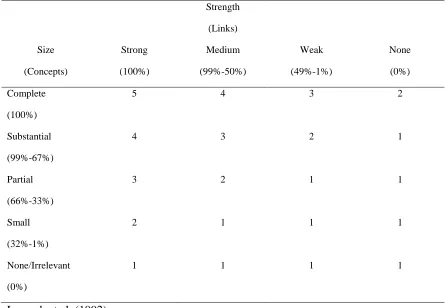
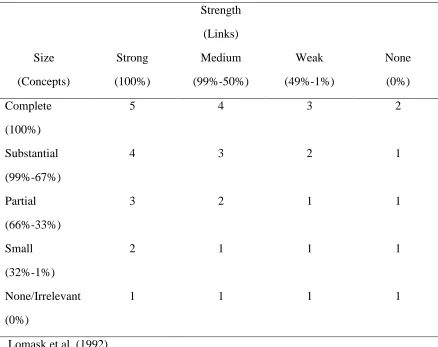
Table 1: Scores Based on Combinations of “Size” and “Strength” of Students’ Concept
Maps ...67
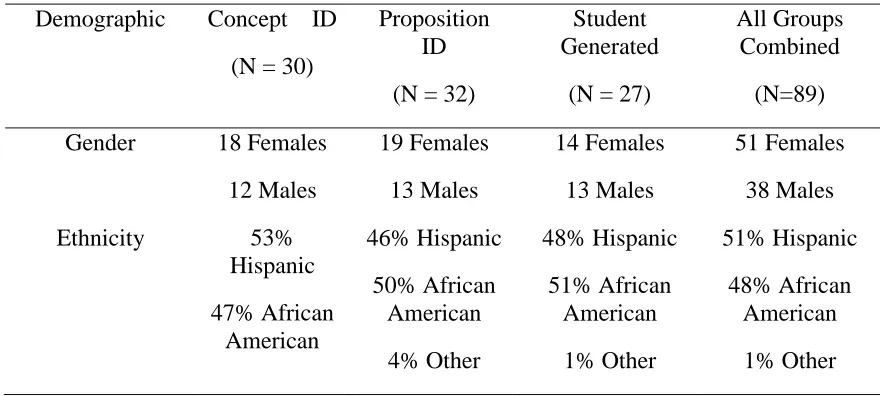
Table 2: Demographic Information of Participants ...78
Table 3: Scores Based on Combinations of “Size” and “Strength” of Students’ Concept Maps ...83
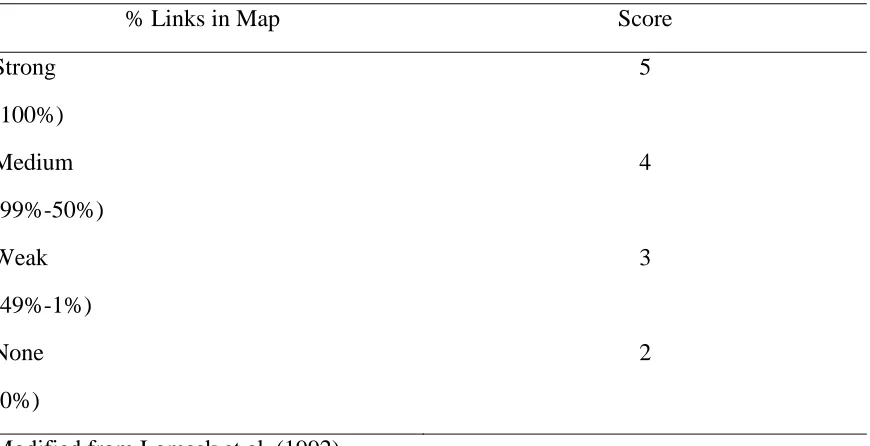
Table 4: Scoring Rubric for Concept Identifying Map ...84
Table 5: Scoring Rubric for Proposition Identifying Map ...85
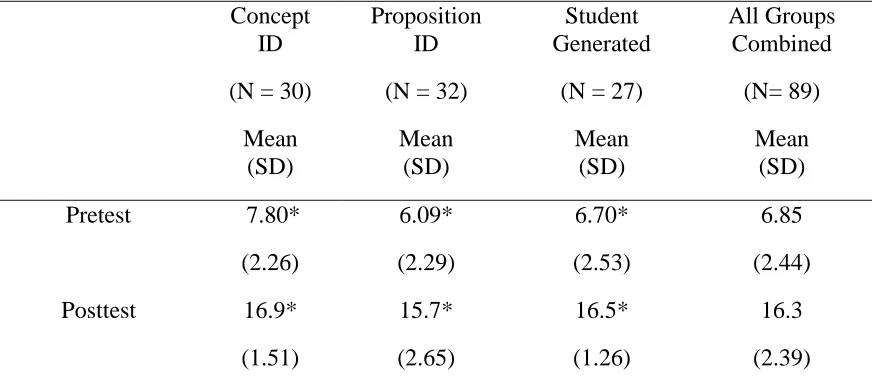
Table 6: Means, Standard Deviations, Pretest, Posttest, and Gain Scores...97
Table 7: Percentages of Students Who Answered Posttest Items Correctly ...98
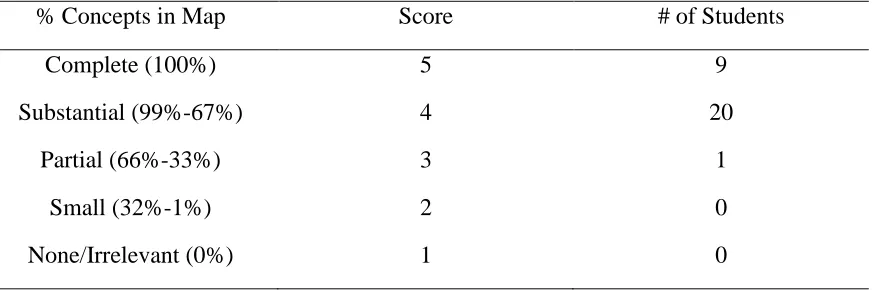
Table 8: Distribution of Concept Identification Students’ Scores ...100
Table 9: Distribution of Proposition Identification Students’ Scores ...101
Table 10: Distribution of Concepts Identified by Students ...102
Table 11: Distribution of Propositions Identified by Students ...102
Table 12: Percentages, Means, and Standard Deviations of Concept Map Scores ...103
Table 13: Correlations of Concept Identifying, Proposition Identifying, and Student Generated Groups ...104
ix
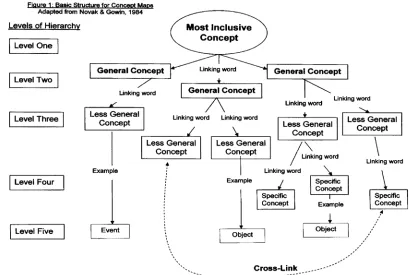
Figure 1: Basic Structures for Concept Maps ...23
CHAPTER I
STATEMENT OF THE PROBLEM
Representatives of the United States Department of Education have expressed
concern with science literacy among students in the United States. (United States
Department of Education, 2004). They have identified that America’s schools are not
producing the science excellence required for global economic leadership and homeland
security in the 21st century (United States Department of Education, 2004). The National
Center for Education Statistics (NCES) is responsible for carrying out the National
Assessment of Educational Progress (NAEP), also known as the Nation’s Report Card,
which is the only nationally representative and continuing assessment of what America’s
students know and can do in school. In 2005, the NCES conducted a study that included a
representative sample of 300,000 students that assessed students’ science achievement in
grades 4, 8, and 12. The results of the study indicated that, compared to middle and high
school students, younger students (4th graders) are making the most progress in science
(NAEP, 2009). Specifically, in 2005, 29% of the fourth graders performed at or above
Proficient and 68% performed at or above Basic. In comparison to the 2000 results, the
percentage of fourth graders performing at Proficient or above and at Basic or above
levels increased by 2% and 5%, respectively. The results further indicated that at grade 8
there has been no overall improvement in science achievement since 2000 (NAEP, 2009).
The percentage of eighth graders performing at Proficient or above decreased by 1%,
with 30% of the eighth graders performing at Proficient or above in 2000 and only 29%
performing at Proficient or above in 2005. The percentage of eighth grade students
percentage of twelfth graders performing at Proficient or above remained stagnant at 18%
between the years of 2000 and 2005. There was a 2% increase from 52% to 54% of
students performing at Basic or above from 2000 and 2005 (NAEP, 2009).
Representatives of the United States Department of Education (2004) asserted that the
longer students stay in the current system the worse they do.
Particular concern exists about urban middle school students’ science
achievement (Parsons, 2008). United States urban schools, which are schools serving
high-poverty and high-minority populations, face significant obstacles due to the
characteristics of their neighborhoods, student backgrounds, teacher preparation, and
school level resources (Ruby, 2006). In 2005, the NCES conducted the first Trial Urban
District Assessment (TUDA) in science to examine the performance of fourth and eighth
grade students in 10 large urban districts. These urban districts serve student populations
that are more diverse than the nation’s public schools overall. In general, large urban
districts educate 25% of all school-age students, 35% of all poor students, 30% of all
English-language learners, and nearly 50% of all minority students (Hewson, Kahle,
Scantlebury, & Davies, 2001). The percentage of eighth-graders performing at or above
Basic in science ranged from 22% to 52% in the districts, compared to 57% for the nation
(NAEP, 2009). The percentage of eighth-graders performing at or above Proficient in
science ranged from 6% to 27% in the districts, compared to 27% for the nation (NAEP,
2009). The results from the TUDA data demonstrate that urban middle school students’
science achievement is lower than the rest of the nation’s public schools.
Students enrolled in urban school districts who are underperforming in their
achieving below the Basic performance level in middle school are often unprepared for
rigorous high school science courses that are aimed to prepare them in furthering their
education in science related fields (Ruby, 2006). As teachers work towards raising
students’ science achievement, under-prepared students enrolled in urban school districts
continue to fall behind.
Not only are students falling behind academically in comparison to their peers in
the United States, these students are also not keeping up with their counterparts in other
countries (National Academy of Sciences, 2007). In 2003, the Organization for Economic
Co-operation and Development (OECD) Program for International Student Assessment
measured the performance of 15 year olds in 49 industrialized countries. One of the
disturbing results from the assessment was that United States students scored 19th in
science literacy (National Academy of Sciences, 2007).
Unfortunately, over the last few decades, middle schools have been labeled, “The
Forgotten Middle,” “Stuck in the Middle,” and “Muddled in the Middle” (Kay, 2009).
Ironically, middle school education is critical in that it is often the last chance for
engaging and motivating students to achieve. The No Child Left Behind (NCLB) Act
proposed by President Bush in 2001 was initiated in response to the decline of
educational achievement among United States students compared to their international
peers (Johnson & Hanegan, 2006). One of the principles that NCLB was built upon was
stronger accountability for results (Johnson & Hanegan, 2006). Accordingly, states have
to implement yearly assessments in mathematics, reading, and science; however, only the
tests administered in math and reading count toward Adequate Yearly Progress (AYP)
by the NCLB Act (Johnson & Hanegan, 2006). Consequently, teachers are focusing on
improving reading, writing, and mathematics scores on high-stakes tests and science is
being left behind across grade levels (Goldston, 2006).
In addition to science instruction being neglected in favor of the tested subjects of
math and reading/language arts, there are a few other reasons why students may be
experiencing difficulty learning science. First, science is a subject that encompasses a
plethora of rules and principles (Ueckert & Newsome, 2008). If students lack an
understanding of these rules and principles they will struggle to understand the scientific
information. Moreover, these rules and principles are often presented to students as
isolated ideas or concepts. Second, students frequently enter the science classroom with
previously established scientific misconceptions (Thompson & Logue, 2007). These
students experience difficulty replacing the erroneous scientific information with true
scientific facts. Lastly, to understand multifaceted science topics, students must have a
well-established foundation of prior science learning (Buntting, Coll, & Campbell, 2006).
Since science is a subject that builds on itself, if students fail to acquire basic science
content, they will likely struggle with the more complex scientific concepts that follow.
Contributing to the low science achievement among middle school students are
the pedagogical approaches used by some teachers. Some science instructors still hold
traditional teacher-directed teaching philosophies that place the learner in a passive
learning role. In these teacher-directed classrooms, students do not actively participate in
the acquisition of scientific knowledge by engaging in meaningful learning (Hill, 2005).
Ausubel (1968) described meaningful learning as the establishment of non-arbitrary
learners are provided the opportunity to relate new information to ideas they already
know, and to do so learners need to be placed in active rather than passive learning roles
(Ausubel, 1968). Unfortunately, students oftentimes are expected to learn through rote
memorization. This type of learning disempowers learners because they do not actively
make connections to their prior knowledge (BouJaoude & Attieh, 2008). In addition,
information learned by rote memorization is frequently forgotten (Cardellini, 2004).
Hence, it is important for students to engage in scientific learning that facilitates
meaningful learning.
There are various learning strategies that are used in science classrooms to
attempt to help students overcome some of the difficulties of learning science. Learning
strategies are activities that students employ to improve their learning of new information
(Liu, 2009). Harrison, Andrews, and Saklofske (2003) suggested that students who use
learning strategies during academic tasks work more effectively than students who do not
use learning strategies. Some of the learning strategies used in science classrooms that
engage students by involving them in the learning process include: underlining,
note-taking, discussing with co-learners, and outlining (Hilbert & Renkl, 2008). Underlining is
a strategy that involves students reading through content and underlining ideas that
appear important to their understanding. Students can participate in the note-taking
strategy in various ways. For example, the teacher may introduce content through
teacher-directed lessons while students take notes. On the other hand, students may be
independently assigned the task of taking notes on material presented in a textbook.
Discussing with co-learners in pairs or small groups is another learning strategy in which
involves students identifying key topics and subtopics and arranging them in outline
form.
Although the learning strategies mentioned above are currently being used by
teachers to assist students with the acquisition of science content, they may not be
encouraging the connection of prior knowledge with new knowledge to enhance
meaningful learning (Hilbert & Renkl, 2008). Concept mapping is a learning strategy that
promotes meaningful learning by requiring students to show the interrelatedness of a
group of concepts and integrating new knowledge with pre-existing knowledge (Plotnick,
2001). Students recall prior knowledge and determine if and how the new information
learned is relevant to their previous understanding of a given topic. The concept mapping
learning strategy is effective because it enables students to make visual connections
between information, thus helping them better understand the subject (Aidman & Egan,
1998). The effectiveness of concept mapping has been compared to the aforementioned
learning techniques, and the results demonstrate that learners who use concept mapping
as a learning strategy perform better on science assessments than learners who use
underlining, note-taking, discussing with co-learners, or outlining (Hilbert & Renkl,
2008).
Furthermore, the concept mapping learning strategy is beneficial in understanding
students’ misconceptions. Student generated concept maps reveal students’ level of
understanding. Teachers and students can analyze concept maps and identify deficiencies,
allowing teachers to address the deficiencies before students attempt to build scientific
Despite the apparent benefits of using concept mapping as a learning strategy,
there is still a need for additional research. Some studies have revealed that not all
variations of the concept mapping learning strategy are equally effective (Wang &
Dwyer, 2004, 2006). There are four types of concept maps: (1) teacher generated, (2)
student generated, (3) concept identifying, and (4) proposition identifying. Teacher
generated concept maps are created entirely by the teacher and given to the students as a
study tool (Lim et al., 2009). In contrast, student generated concept maps are created
entirely by the students (Harpaz, Balik, & Ehrenfeld, 2004; Novak & Gowin, 1984).
Concept identifying concept maps are partially completed concept maps that students
complete by finding the correct concepts to place in the nodes (Wang & Dwyer, 2006).
Similarly, proposition identifying concept maps are also partially completed maps,
however rather than finding the correct concepts to place in the nodes, students complete
them by providing linking word(s) between concepts in order to create propositions or
node-link networks (Wang & Dwyer, 2006).
There is inconsistency with the results demonstrating which variations (e.g.
teacher generated, student generated, concept identifying, or proposition identifying) of
the concept mapping strategies are the most effective (Lim, Lee, & Grabowski, 2009).
Further research that investigates the various concept mapping strategies needs to be
conducted so that students can utilize learning strategies that are the most useful. If
students do not use effective learning strategies in science class to engage in meaningful
learning they will be unprepared to pursue science-related professions.
In addition, the majority of studies examining concept mapping as a learning
studies include students from middle school grades (Guastello, Beasley, & Sinatra, 2000;
Snead & Snead, 2004) and only one of those studies (Guastello et al., 2000) included
seventh-grade inner-city school students. Since it has been suggested that students who
perform poorly in middle school science classes do not pursue careers in science-related
fields, it is important to increase middle school students’ science achievement (Snead &
Snead, 2004). Snead and Snead (2004) also suggested that additional studies involving
middle school students need to be conducted in order to discover ways of increasing the
number of students pursuing science related careers.
Overall, United States middle school students’ science achievement is an issue of
great concern (Snead & Snead, 2004). These students are not demonstrating the same
level of science achievement as their international counterparts. There are many factors
contributing to students’ poor science achievement. One of the factors affecting students’
science achievement is the implementation of teacher-directed lessons that inhibit
meaningful learning. Since many teachers are delivering instruction through
teacher-directed lessons, students are not being taught or encouraged to use learning strategies
that promote meaningful learning. Concept mapping is a learning strategy that has been
suggested to be effective in promoting meaningful learning; therefore, students should be
taught how to use concept maps. However, there are conflicting results related to the
effectiveness of the various concept mapping strategies so additional research that
investigates which concept mapping strategy would be the most useful in helping raise
Purpose of the Study
The purpose of this quasi-experimental study was to measure the effects of three
concept mapping learning strategies (concept identifying, proposition identifying, student
generated) on urban middle school students’ understanding of the circulatory system.
Three intact classes of seventh-grade students were assigned to one of the three concept
mapping strategies. The students were given a pretest on the circulatory system then
learned and used their respective concept mapping strategies while learning about the
circulatory system. At the conclusion of the study, students’ science achievement was
measured by performance on an achievement test and rubric scores of their respective
concept identifying, proposition identifying, and student generated concept maps.
Significance of the Study
The findings of the current study are significant for several reasons. First, the
study contributed to preexisting concept mapping literature by demonstrating that the
three concept mapping strategies (concept identifying, proposition identifying, student
generated) assist in raising students’ science achievement. The majority of the concept
mapping literature evaluates the effectiveness of a single concept mapping strategy.
Moreover, the study contributed to the limited research related to the use of concept
mapping as a learning strategy among urban middle school students. Previous concept
mapping research has predominantly been conducted in high school or
undergraduate/graduate school settings in suburban districts.
Second, this study is significant because the three types of concept maps were
evaluating the concept maps for accuracy. The results of the current study indicated that
based on rubric scores, the students in the concept identifying concept mapping group
had the most accurate concept maps, followed by the students in the proposition
identifying and student generated concept mapping groups. It is essential to evaluate the
concept maps to determine which type of concept mapping learning strategy assists
students in constructing knowledge and accurately demonstrates their understanding of
the concepts learned.
Lastly, this study was significant because the results indicate that particular
concept mapping strategies may be more appropriate for learning specific types of
information. In this study, the circulatory system posttest mean scores revealed that the
students in the concept identifying concept mapping group performed the highest on the
vocabulary and process items and the students in the student generated concept mapping
group performed the highest on the identification items. Moreover, the students in the
proposition identifying concept mapping group performed the lowest on the vocabulary
and identification items. These results suggest that the proposition identifying concept
map may not be a useful learning strategy for learning vocabulary and identification
terms.
Theoretical Rationale
Meaningful Reception Learning Theory
The idea of concept mapping is based on Ausubel’s (1962, 1963a, 1968)
meaningful reception learning theory. Ausubel proposed that meaning occurs when
The meaningful reception learning theory describes these cognitive operations and how
they interact with experience to give rise to learning.
Ausubel (1961) made the distinction that there are two different types of learning
that occur in classrooms: reception and discovery. He suggested that most school learning
is of the reception type. Reception learning is when the learner is presented with all of the
content to be learned in its final form (Ausubel, 1961). The learner’s responsibility is to
internalize the information and store it for future use. Conversely, in discovery learning,
the learner is required to internalize the information presented by rearranging it and
integrating it with the existing cognitive structure. Once the information is integrated
with the existing cognitive structure, it is to be reorganized if needed to create a desired
end product or discover a missing means-end relationship (Ausubel, 1961). The concept
mapping learning strategies encourage discovery learning because learners are required to
integrate new information learned by relating it to pre-existing knowledge.
A second distinction that Ausubel (1961) and Ausubel, Novak, and Hanesian
(1978) made was between rote and meaningful learning. As mentioned previously, rote
learning is the same as verbatim memorization. According to Ausubel, when individuals
engage in rote learning, the new material memorized is not integrated with related
information that is already known. The memorized information stands independently and
isolated from the learners’ pre-existing cognitive structure. In contrast, Ausubel identified
that meaningful learning is when individuals relate meaningful information to what the
learner already knows. Through this process, the information learned is integrated into
the learner’s pre-existing cognitive structure. Ausubel (1961) emphasized that either rote
mapping is a strategy that precipitates meaningful learning because it requires learners to
relate meaningful information to what the learner already knows.
Three conditions are critical for meaningful learning to occur (Ausubel, 1960).
First, the individual must learn the information with the intention of integrating the new
information with his or her pre-existing cognitive structure. If the individual attempts to
simply memorize the information, meaningful learning will not result. Second, the
learning material presented to the individual should be potentially meaningful. In other
words, the learning material should be organized, readable, and relevant so that the
individuals are not failing to learn the material meaningfully because of the manner in
which it is presented. Lastly, the most important condition for meaningful learning is
what learners already know and how that knowledge relates to what they are asked to
learn. Since meaningful learning requires students to integrate new knowledge with
pre-existing knowledge, the learning and retention of the meaningful new material is
dependent on the learner’s prior knowledge.
“The model of cognitive organization proposed for the learning and retention of
meaningful material assumes the existence of a cognitive structure that is hierarchically
organized…” (Ausubel, 1963b, p. 217). Ausubel defined cognitive structure as the
learner’s overall memory structure or integrated body of knowledge. The cognitive
structure is composed of collections of ideas that are arranged hierarchically and by
theme. Within each hierarchy, the most inclusive ideas are the strongest and more stable;
therefore, those ideas are more easily remembered than specific ideas low in the
hierarchy. For an example of cognitive structure, when learning about cells, the most
cells, and cells reproduce by making copies of themselves during mitosis. The specific
ideas included under the inclusive idea “mitosis” might be the different steps involved in
the process of mitosis. According to Ausubel, the general ideas high in the hierarchy
(such as, cells reproduce by making copies of themselves during mitosis) would be more
stable and therefore more easily remembered than specific ideas low in the hierarchy
(such as, the various steps involved in the process of mitosis). Essentially, a learner’s
cognitive structure resembles the format of a concept map, with general ideas higher in
the hierarchy and more specific ideas lower in the hierarchy.
Ausubel (1961) described the cognitive structure as an overall framework into
which new knowledge is incorporated. Furthermore, he described that the integration of
the new knowledge into a pre-existing cognitive structure occurs through anchoring
ideas. Anchoring ideas are the specific, relevant ideas in the learner’s cognitive structure
that provide the entry points for new information to be incorporated (Ausubel, 1961). In
essence, the anchoring ideas are prerequisites to meaningful learning.
There are three ways the new information can be added to an individual’s
cognitive structure (Ausubel 1962). The new information can be subordinate to (lower in
the structure), superordinate to (higher in the structure), or coordinate with (at the same
level in the structure) an existing idea. Ausubel (1962, 1963a, 1968) coined the term
“subsumption” to describe the attachment of new ideas and details to anchoring ideas in a
subordinate fashion. He suggested that new, incoming ideas are subsumed under more
general and inclusive anchoring ideas already in memory. New ideas can be subsumed
Derivative subsumption describes the learning of new examples that are
illustrative of an established concept or previously learned idea. An example of derivative
subsumption is when learners subsume “strawberries” under the established concept
“fruit.” The learner’s cognitive structure may already contain examples of other fruit,
such as apples and oranges; however, the learner would recognize strawberries as
relevant and would subsume the new example under the concept fruit. In derivative
subsumption, the pre-existing concept or idea does not change. Correlative subsumption
refers to the elaboration or modification of a pre-existing concept or idea by the
subsumption of new ideas learned. For example, a learner may have the pre-existing idea
in his or her cognitive structure that all fruits grow on trees. If the learner later discovered
that a grape is a fruit and it does not grow on trees, then the overarching idea that “all
fruits grow on trees” gets modified in the learner’s cognitive structure. In essence, the
new idea interacts with the existing idea to modify the learner’s understanding in some
way. Accordingly, the pre-existing concept or idea gets altered with the addition of the
newly subsumed idea.
Ausubel et al. (1978) recognized that not all learning occurs through the processes
of derivative and correlative subsumption because not all learning occurs in a subordinate
manner. Occasionally, individuals draw on subordinate ideas or examples to discover the
more general superordinate concepts or ideas. Additionally, there are instances when
individuals learn about concepts or ideas that are at the same level in the hierarchy as the
anchoring ideas. For this type of learning, Ausubel et al. (1978) proposed the processes of
Superordinate learning refers to the generation of new, inclusive concepts or ideas
under which pre-existing ideas or examples can be subsumed. For example, if an
individual already had the concepts allele, genotype, and phenotype in their cognitive
structure, creating the concept “genetics” and subsuming the related concepts under
genetics would be superordinate learning. Combinational learning is the process of
acquiring new concepts or ideas that are neither more inclusive of nor subordinate to
relevant anchoring ideas in the cognitive structure. This type of learning occurs when the
new information is related to established knowledge in a general way. In 1978, Ausubel
adopted the label assimilation theory to describe the meaningful learning process of
subsumption, superordinate learning, and combinatorial learning.
One of the ways to raise students’ science achievement is to equip them with
learning strategies such as concept mapping to encourage meaningful learning. Some
researchers (Asan, 2007; Buntting et al., 2006; Roth & Roychoudhury, 1993) investigated
the effects of using concept mapping to promote meaningful learning in science classes.
Roth and Roychoudhury (1993) designed a study to investigate whether concept mapping
encouraged meaningful learning. During the study, students in a university physics
course engaged in concept mapping to demonstrate their understanding of textbook
readings and laboratory experiments. As the course progressed, the concept maps
illustrated an increase in the quality and quantity of concepts and propositions included in
the maps. Additionally, the students expressed that the concept maps encouraged the
subsumption of new knowledge with pre-existing knowledge. Some of the students stated
that while concept mapping they were forced to reorganize their prior knowledge to
meaningful learning instead of rote learning because they were consciously integrating
the new information learned.
Asan (2007) designed a study to determine the effects of incorporating concept
mapping on the achievement of fifth-grade students in science class. Students in both the
control and experimental groups were taught the same content on heat and temperature.
In addition, all of the students were given the same pretest and posttest. The primary
difference between the two groups was that students in the experimental group engaged
in concept mapping during the study. The concept maps produced in the study
demonstrated that the students were able to identify and develop relationships between
concepts. Moreover, the concept maps illustrated that the students engaged in meaningful
learning while concept mapping because the main concepts in the maps were seamlessly
integrated with each other and were arranged in a definite hierarchy to create a logical
network of ideas. According to Ausubel (1961), meaningful learning occurs when
students actively discover relationships between concepts.
In a study designed by Buntting et al. (2006), the researchers aimed to investigate
the effects of concept mapping on students’ ability to make and explain connections
between concepts. The study included students from two separate university level biology
courses at a university. During the study, students were offered six tutorial sessions each
week; two of the six tutorials involved teaching the students how to use concept mapping
as a learning tool. Following the study, the researchers administered surveys to the
students who attended the tutorial sessions. The results of the surveys revealed that some
of the students identified that the concept mapping strategy helped them understand the
outperformed students who did not attend the training sessions on assessment questions
that required an understanding of relationships between concepts. The researchers
suggested that the results of the study demonstrate that concept mapping precipitated
meaningful learning because it required students to identify relationships between
concepts.
In the current study, the students engaged in three concept mapping strategies
(concept identifying, proposition identifying, student generated) while learning about the
circulatory system. According to Ausubel’s (1962) assimilation theory, the students
integrated the information learned into their pre-existing cognitive structure. The
circulatory system is a hierarchical system with different components working together to
circulate blood through the body. The circulatory system content was used during the
study because its hierarchical nature could be illustrated using the three different types of
concept maps. The students assimilated new knowledge of the circulatory system
subordinately, superordinately, or coordinately.
Background and Need
In this section, a background of concept mapping will be provided as well as a
justification as to why the current study is needed. To begin, an explanation of the
importance of science education is provided followed by information regarding students’
science achievement. Next, several aspects of concept mapping are discussed as follows:
(a) definitions and characteristics of concept maps, (b) benefits of concept mapping, (c)
different domains in which concept maps are used, and (d) concept mapping in the
Importance of Science Education
After high school, fewer United States students pursue science and engineering
degrees than students in other countries (National Academy of Sciences, 2007). The lack
of scientific knowledge and ability of students in the United States to pursue science
related careers is detrimental to our country and may reduce the ability of the United
States to compete in a scientifically literate world. In 2001, President George W. Bush
declared that science and technology have never been more essential to the defense of the
nation and health of our economy (U.S. Commission of National Security, 2001). During
the last decade, international competition has led many United States companies to
outsource their work which allows employers to reassign some jobs by contracting them
to specialty firms that can do the jobs better or more cheaply (National Academy of
Sciences, 2007). As a result of this, the United States economy is suffering from low
employment rates and increased competition among United States citizens.
The United States was once the leader in science, technology, engineering, and
mathematics (STEM); however, other countries are challenging the competitive edge of
the United States by producing more STEM professionals and students who outperform
their United States counterparts on international achievement measures (Parsons, 2008).
It is imperative for the United States educational system to enhance students’ science
achievement and future participation in scientific fields.
The domain of science is exceptionally critical to the United States prosperity in
the 21st century. The products of science education are evident in everyday life in the
from infectious diseases, such as smallpox, polio, and cholera, which are no longer a
threat due to scientific advancements such as vaccinations. Without scientific research
and knowledge, the United States may not be equipped to continue the search for cures
for diseases such as cancer, which threaten the lives of individuals. Science education and
research in plant and animal genetics have also led to an increase in farm production
within the United States. Over the last half-century, yields per acre have increased
approximately 2.5 times (National Academy of Sciences, 2007). Continued efforts in
scientific research are necessary to increase farm production in the United States in order
to fuel our economy.
To ensure the continued growth of the biotechnology industry in the United
States, it is vital to increase the science achievement of students. Success in the
biotechnology domain has led to an increase in molecular biology, which in turn has led
to new health therapies. The introduction of various health therapies increases the quality
of life, as well as creates more job opportunities in the medical field for individuals in the
United States (National Academy of Sciences, 2007). Fundamentally, if the United States
continues to lose its scientific competitive edge in the ongoing international competition,
our country’s economy and well-being may suffer as a result of an increased dependency
on the scientific accomplishments of other countries.
Science Achievement
In comparison to elementary school students, middle school students in the United
States are not excelling in science (NAEP, 2009). Snead and Snead (2004) emphasized
gateway to high school science classes. Given that complex science concepts build upon
basic science concepts, it is crucial for students to attain basic science concepts earlier in
their education in order to have a solid foundation to build upon. If middle school
students lack a concrete scientific foundation, more complex science concepts learned in
high school will not be solidified. Inevitably, the inability of students to build upon basic
scientific knowledge leads to poor science achievement.
Students who attend urban middle schools face the same challenges as their
non-urban middle school counterparts; however, students in non-urban middle schools are
confronted with additional challenges that impede their scientific achievement (Johnson,
2009; Ruby, 2006). One of the challenges urban middle school students face is that
schools in urban areas employ the least prepared teachers, many of whom are teaching
out of their content area or without teaching certification (Johnson, Kahle, & Fargo,
2006). The high attrition rates of teachers in urban school districts leads administrators to
seek out novice teachers and/or teachers with any type of valid teaching credential.
Oftentimes, the teacher’s credential is not aligned with the subject matter the teacher is
teaching. To compound the situation, these teachers teach with limited guidance and
support due to inadequate materials, curriculum, and professional development in urban
school districts (Johnson et al., 2006). Essentially, not only are the teachers unprepared,
but they are also unsupported. Guastello et al. (2000) suggested that as students progress
through grade levels they spend more time reading informational text; unfortunately,
students in urban settings experience more problems comprehending informational text
In an attempt to alleviate the difficulties of learning science in an urban middle
school, some teachers incorporate the use of learning strategies in their classrooms. As
mentioned earlier, some of the learning strategies include underlining, note-taking,
discussing with co-learners, and outlining (Hilbert & Renkl, 2008). Based on the results
of science achievement tests, such as those administered by the NCES, it is evident that
these learning strategies have been unsuccessful in raising students’ science achievement.
One reason why the learning strategies may not be effective is because they do not
engage students in active learning. Instead, the learning strategies engage students in rote
learning that does not require students to integrate newly acquired knowledge with
pre-existing knowledge. On the other hand, the concept mapping learning strategy may be a
viable solution in raising students’ science achievement. The concept mapping learning
strategy may be effective because it promotes meaningful learning by requiring students
to actively integrate new information learned with pre-existing knowledge. Additionally,
the concept mapping learning strategy requires students to identify relationships among
concepts.
Definitions and Characteristics of Concept Maps
Historically, the concept map can be traced back to Joseph D. Novak and Bob
Gowin. Novak, Gowin, and Johansen (1983) defined the concept map as a hierarchical
display of text material in a two-dimensional, spatial, node-link network. Since the
development of the concept map, several educational researchers have defined it in
various ways. Plotnick (2001) defined a concept map as “a graphical representation
where nodes (points or vertices) represent concepts, and links (arcs or lines) represent the
made use of figures, lines, arrows, and spatial configurations to demonstrate how
concepts are organized and related, while Douglas (2007) defined a concept map as “a
two-dimensional, graphic schematic diagram illustrating the interconnections, and often
the hierarchy, of a particular concept or topic” (p. 74). Although researchers have
fashioned their own definitions of concept maps, Wang and Dwyer (2004) synthesized
that “concept maps are most commonly defined as two dimensional diagrams that consist
of concepts or nodes linked by labeled lines to show relationships between and among
those concepts” (p. 371). For the purposes of this study, the preceding definition of a
concept map by Wang and Dwyer will be used.
Novak (1998) described the various characteristics of a concept map, explaining
that the nodes, which take the shape of a circle, square, or rectangle, represent concepts.
He defined a concept as “a perceived regularity (or pattern) in events or objects, or
records of events or objects, designated by a label” (p. 1304). When the nodes are joined
together with appropriate one-way, two-way, or non-directional links or lines
accompanied with linking words that explain the relationships among the nodes, the
node-link network describes a proposition (Novak, 1998). Propositions consist of two or
more concepts connected using linking words to form a meaningful statement (Novak &
Canas, 2008). Another characteristic feature of concept maps are cross-links. Cross-links
are the lines depicting the relationships between concepts in different segments of the
concept map (Novak & Canas, 2008). In essence, cross-links assist in demonstrating how
two concepts or sub-concepts may be related to one another. Finally, an important feature
of a concept map is its hierarchical structure. The hierarchical structure of a concept map
generalized concepts arranged appropriately in a lower position (Novak, Gowin, &
Johansen, 1983). Additionally, the concepts are organized into groupings, regions, or
branches that specify a particular level of relationship or divergence. Figure 1 is an
example of a basic structure for concept maps that Hill (2005) adapted from Novak and
Gowin (1984).
Figure 1. Basic structures for concept maps.
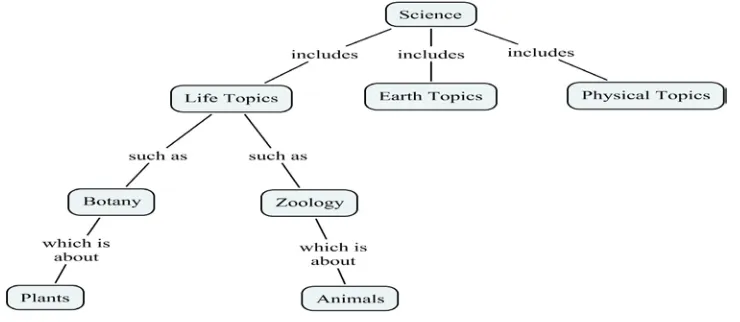
A more practical example is as follows: an over-arching concept that would be
placed at the node on the top of a concept map could be science. Below, there could be
nodes labeled life topics, earth topics, and physical topics that would each be connected
to the over-arching science node by linking words that explain the relationship between
would continue with additional nodes branched off of the life, earth, and physical topics
nodes. For instance, the nodes below life topics could include botany and zoology and the
linking words connecting the two concepts to life topics would describe their
relationship. Additional concepts can be placed under the nodes, such as plants under
botany and animals under zoology with linking words describing their relationships.
Figure 2 demonstrates the concept map described above.
Figure 2. Example of concept map.
In essence, concept maps are pictorial representations of information that illustrate how
concepts can be interrelated while also identifying specific differences among concepts
(Gahr, 2003).
Benefits of Concept Mapping
Concept mapping can benefit students across disciplines, grade levels, and student
populations (Asan, 2007). Concept mapping has been shown to reduce test and content
anxiety, help students learn course material more deeply, raise student achievement,
assist in evaluating students’ differences in learning, and detect misconceptions in student
improve the learning and teaching in science classrooms: (1) as a learning strategy, (2) as
an instructional strategy, (3) as a tool in the instructional design process, and (4) as a
means to assess the students’ understanding of science concepts (Wang & Dwyer, 2006).
Concept mapping can be used by students as a learning strategy when learning new
information, wherein students can produce concept maps to incorporate relevant
information into their existing knowledge base. Finding relationships between
pre-existing knowledge structures and integrating them with new knowledge encourages
meaningful learning while concept mapping. Teachers can use concept maps as an
instructional strategy by presenting concept maps to students in order to demonstrate the
relationship between concepts. In addition, teachers may also use concept maps to plan
instruction by creating a concept map of the instructional themes they plan to teach. This
process may provide teachers with an outline of the concepts that need to be introduced
first (those higher in the hierarchy) and the related concepts that will be taught next
(those lower in the hierarchy). Lastly, similar to the current study, concept maps can be
used to assess students’ understanding. The concept maps can be evaluated to gain insight
on students’ understanding as well as misconceptions.
Domain of Concept Maps
Although the concept mapping strategy has been researched in a variety of
domains, such as mathematics, social studies, and special education, the majority of the
research has been conducted in the science domain. Gerstner and Bogner (2009)
explained that since science education is interdisciplinary, containing a variety of
concepts from many different fields, the concept mapping strategy is effective in
For example, when understanding the genetics concept of cell division, it is important to
integrate that knowledge into pre-existing biological knowledge of the composition of a
cell and how the organelles work harmoniously to fuel the process of cell division. As
students learn new science concepts, they engage in the cognitive process of constructing
meaning and making sense by consciously or subconsciously integrating these new ideas
with their existing knowledge (Vanides, Yin, Tomita, & Ruiz-Primo, 2005).
Investigations designed to determine the effectiveness of concept mapping on
reading comprehension have also been centered on science texts. Oliver (2009) posited
that reading comprehension strategies such as concept mapping should be utilized when
constructing meaning from unfamiliar expository texts, such as science texts. He further
explained that expository texts are often embedded with relational structures, including
comparative (X is different from Y), causative (X results in Y), explanatory (X is also
known as Y), and sequential (X precedes Y); therefore, the concept mapping strategy is
valuable in comprehending expository science texts because students can identify and
express how two linked concepts are related.
Concept Mapping in the Science Domain
Research on using concept mapping as a learning strategy to learn science content
is broad and diverse. Studies performed by Bulunez and Jarrett (2009) and Clariana and
Koul (2008) investigated the effectiveness of collaborative concept mapping on students’
science achievement. In the study by Bulunez and Jarrett (2009), the researchers found
that the group concept mapping activity was helpful to undergraduate early childhood
science content with one another. Clariana and Koul (2008) discovered that the concept
mapping groups that included education graduate students who had prior knowledge in
the content area produced more comprehensive concept maps in comparison to the
concept mapping groups that did not include students with significant prior knowledge in
the content area. Wang and Dwyer (2004, 2006) compared the effects of three concept
mapping strategies: concept identifying, proposition identifying, and student generated
concept mapping on undergraduate students’ science achievement. In both studies, Wang
and Dwyer (2004, 2006) found that the concept identifying groups outperformed the
student generated and proposition identifying concept mapping groups.
One of the ways to raise students’ science achievement is to equip them with
learning strategies such as concept mapping to encourage meaningful learning. Some
researchers (Asan, 2007; Buntting et al., 2006; Roth & Roychoudhury, 1993) investigated
the effects of using concept mapping to promote meaningful learning in science classes.
In all three studies, the researchers found that the concept mapping learning strategy
encouraged meaningful learning. Roth and Roychoudhury (1993) established that the
students in the study were actively integrating new knowledge into their pre-existing
cognitive structure instead of acquiring the knowledge through rote learning. Asan (2007)
and Buntting et al. (2006) collected evidence that demonstrated that students who used
the concept mapping strategy were developing meaningful relationships between
concepts as opposed to learning the concepts as isolated terms.
Although there is research to support that concept mapping precipitates
meaningful learning in the science domain, there are an insufficient number of studies
studies that have been performed in middle school settings have limitations. For example,
Guastello et al. (2000) investigated the effects of the concept mapping strategy on
seventh-grade students’ science achievement at an inner-city middle school. The results
of the study indicated that the students in the concept-mapping group outperformed the
students in the control group on the posttest. One of the limitations was that the students
only received one day of concept mapping training. The researchers did not provide the
students with time to practice the concept mapping strategy before they received
instruction and were asked to create concept maps. Hence, the concept-mapping group
may have been creating inaccurate concept maps while still outperforming the control
group. Guastello et al. (2000) also stated the need for additional research that evaluates
the effectiveness of the various concept-mapping strategies.
Snead and Snead (2004) conducted a study that examined the effects of concept
mapping on the science achievement of middle grade science students. The researchers
found that the concept-mapping group did not significantly outperform the control group.
Therefore, the results are inconsistent with the results of the study conducted by
Guastello et al. (2000). A positive attribute of the study designed by Snead and Snead
(2004) was that the students participated in a few weeks of concept mapping training. On
the other hand, similar to the study by Guastello et al. (2000), the students only engaged
in one of the concept mapping learning strategies (student generated). Consequently,
there is a need for more research to be conducted in the middle school setting that
includes extensive concept mapping training, as well as the analysis of the different types
Some researchers (Lim, et al., 2009; Wang & Dwyer, 2004, 2006) have attempted
to determine the effectiveness of the various concept-mapping strategies. In the two
studies designed by Wang and Dwyer (2004, 2006), the researchers examined the effects
of three concept-mapping strategies (concept identifying, proposition identifying, student
generated) on college students’ science achievement. In both studies, the researchers
found that the concept identifying groups outperformed the proposition identifying and
student generated groups. A study conducted by Lim et al. (2009) investigated the impact
of the four concept mapping strategies (teacher generated, student generated, concept
identifying, proposition identifying) on college students’ science achievement. The
researchers discovered that the students in the student generated concept mapping group
outperformed the students in the other three concept mapping groups. The inconsistent
results of the three studies mentioned above demonstrate the need for additional research
on the effects of the various concept- mapping strategies. Furthermore, these studies add
to the plethora of concept mapping studies conducted in higher education, highlighting
the need for research in the middle school setting.
In addition to being a useful learning tool, concept maps are useful assessment
tools for understanding the student’s cognitive structure. The process of completing
and/or creating a concept map involves the integration of new knowledge with
pre-existing knowledge. There are several concept map scoring rubrics developed by various
researchers (Kinchen & Hay, 2000; Lomask, Baron, Greig, & Harrison, 1992; McClure
& Bell, 1990; Novak & Gowin, 1984; White & Gunstone, 1992) that differ based on the
Although there are scoring methods available for researchers to utilize, many of
the concept-mapping studies do not involve the evaluation of concept maps. Most often,
the concept maps are used as a learning strategy and the final assessment of student
achievement is a criterion-referenced posttest. However, Francisco, Nakhleh, Nurrenbern,
and Miller (2002) designed a study that involved the evaluation of student generated
concept maps. The researchers found that the concept maps revealed useful information
about the students’ conceptions and understanding of the content. In another study by
BouJaoude and Attieh (2008), the researchers correlated students’ posttest scores with the
corresponding student generated concept map scores and found significant correlations
on application and above level questions. The two studies mentioned above demonstrate
that assessing concept maps can be a useful tool to learn about students’ cognitive
structures. There is a need for more research that evaluates the different types of concept
maps and also investigates if one concept mapping strategy is superior over another.
The current study also investigated how the student generated concept maps
produced by the concept identifying and proposition identifying groups compared to the
concept maps produced by the student generated group. There are a few reasons why it
was important to investigate the accuracy of the student generated concept maps
produced by the students in the concept identifying and proposition identifying groups.
First, the studies by Roth and Roychoudhury (1993), Asan (2007), and Buntting, Coll, &
Campbell (2006) suggested that the student generated concept mapping strategy
demonstrated effective engagement of students in meaningful learning. Second, in both
of the studies conducted by Wang and Dwyer (2004, 2006), the results suggested that the
(identification, terminology, and comprehension), compared to the student generated and
proposition identifying groups. Alternatively, the results from the study by Lim, Lee, and
Grabowski (2009) revealed that the students in the student generated concept mapping
group outperformed the students in the partially completed and teacher generated concept
mapping groups on the posttest. Due to the inconsistency of the results, and the
possibility that engagement in the student generated concept mapping learning strategy is
more effective than the concept identifying and/or proposition identifying groups, the
goal was to determine if training in either the concept identifying or the proposition
identifying concept mapping strategy would lead to the construction of more accurate
student generated concept maps.
Research Questions
1. What is the effect of three concept mapping strategies (concept identifying,
proposition identifying, student generated) on urban middle school students’
science knowledge as measured bytheir posttest circulatory system test scores?
2. What is the effect of three concept mapping strategies (concept identifying,
proposition identifying, student generated) on urban middle school students’
science knowledge as measured by rubric scores on their respective concept
maps?
3. What are the differences in the rubric scores of student generated concept maps
constructed by students in the concept identifying or proposition identifying
groups compared to rubric scores of the student generated concept maps
Summary
Students need to be taught learning strategies that promote meaningful learning
and increase science achievement (Hilbert & Renkl, 2008). Concept mapping is a
learning strategy that has been shown to increase students’ science achievement (Bulunez
& Jarrett, 2009; Clariana & Koul, 2008; Guastello et al., 2000); however, additional
research is necessary. The conflicting results regarding the effectiveness of the varied
concept mapping strategies, the lack of research in urban middle school settings, and the
insufficient number of studies evaluating concept maps suggests the need for additional
research. The current study contributed to the literature by examining the effects of three
different concept-mapping strategies on middle school students’ science achievement.
Definition of Terms
Combinational Learning: The process of acquiring new concepts or ideas that are neither
more inclusive of nor subordinate to relevant anchoring ideas in the cognitive
structure (Ausubel, Novak, & Hanesian, 1978).
Cognitive Structure: A learner’s overall memorial structure or integrated body of
knowledge (Ausubel, 1963b).
Concept: A perceived regularity (or pattern) in events or objects, or records of events or
objects, designated by a label (Novak, 2004).
Concept Map: Two-dimensional diagrams that consist of concepts or nodes linked by
labeled lines to show relationships between and among those concepts (Wang &
Concept Identifying Concept Map: Partially completed map that students fill in the nodes
to complete (Wang & Dwyer, 2006).
Correlative Subsumption: The elaboration or modification of a pre-existing concept or
idea by the subsumption of new ideas learned (Ausubel, Novak, & Hanesian,
1978).
Cross-link: A line depicting the relationships between concepts in different segments of
a concept map (Novak & Canas, 2008).
Derivative Subsumption: The learning of new examples that are illustrative of an
established concept or previously learned idea (Ausubel, Novak, & Hanesian,
1978).
Discovery Learning: When individuals are required to internalize the information
presented by rearranging it and integrating it with existing cognitive structure
(Ausubel, 1961).
Learning Strategy: An activity that an individual uses to improve their learning of new
information (Liu, 2009).
Meaningful Learning: The non-arbitrary, substantive relating of new ideas into cognitive
structure (Ausubel, 1968).
Node: Takes the shape of a circle, square, or rectangle and represent concepts (Novak,
2004).
Proposition Identifying Concept Map: Partially completed map that students fill in the
Proposition: Two or more concepts connected using linking words to form a meaningful
statement (Novak & Canas, 2008).
Rote Learning: The arbitrary, verbatim, non-substantive incorporation of new ideas into
the cognitive structure (Ausubel, 1968).
Reception Learning: When an individual learns material that is presented with all of the
content to be learned in its final form (Ausubel, 1961).
Student Generated Concept Map: Concept map created entirely by the student (Novak &
Gowin, 1984).
Subsumption: The attachment of new ideas and details to anchoring ideas in a
subordinate fashion (Ausubel, 1962).
Superordinate Learning: The generation of new, inclusive concepts or ideas which
pre-existing ideas or examples can be subsumed (Ausubel, Novak, & Hanesian,
1978).
Teacher Generated Concept Map: Concept map created entirely by the teacher (Lim et
CHAPTER II
REVIEW OF THE LITERATURE
Introduction
The purpose of this quasi-experimental study was to measure the effects of three
concept-mapping learning strategies, student generated, concept identifying, and
proposition identifying, on seventh-grade students’ understanding of the circulatory
system as measured by performance on an achievement test and concept identifying,
proposition identifying, and student generated concept maps at an urban middle school.
The first section of the literature review will provide an overview of meaningful learning,
then, proceed with studies related to concept mapping for meaningful learning. The
second section analyzes concept mapping studies conducted in middle schools and
concludes with a review of studies that investigated the effectiveness of the various
concept mapping strategies. To conclude, the third section includes information regarding
the use of concept maps as assessment tools. This section discusses: (a) assessing concept
maps, (b) concept map scoring methods, and (c) previous research on concept map
scoring methods.
Meaningful Learning
Meaningful learning, derived from Ausubel’s (1968) assimilation theory of
cognitive learning, is the theoretical foundation for concept mapping (Clayton, 2006;
Hilbert & Renkl, 2008; Simone, 2007). According to Ausubel (1968), meaningful
learning is defined as the non-arbitrary, substantive relating of new ideas into cognitive