Zakaria. World Journal of Pharmaceutical and Medical Research
P300 AND P600 AS INDICATOR FOR COGNITIVE FUNCTION IN DIFFERENT TYPES
OF MULTIPLE SCLEROSIS
Zakaria M. Ahmed*
Department of Neurology, Faculty of Medicine, Al-Azhar University, Cairo, Egypt.
Article Received on 01/09/2017 Article Revised on 22/10/2017 Article Accepted on 12/11/2017
INTRODUCTION
Multiple sclerosis is an autoimmune disease that affects the myelin of the brain and spinal cord. This affects young adults with the mean age of onset at 30 years. Two thirds are women. Eighty five are relapsing remittent type. The residual neurological disability occur over time as a result of relapsing remittent course or progressive course of neurologic dysfunction (Khoury et al; 2006).
Cognitive impairment in MS range between 40-65% of patients. It may occur as an early process in MS patints and smetimes may be the first manifestation. It is suggested that the interruption of the neural connection among cortical associatve areas as well as between cortical and subcortical structures; these changes occur as a result of demyelination followed by axonal degeneration (Jeffery et al; 2007).
The cognetive impairment in MS patients affect mainly speech processing, linguistic and verbal fluency, learning and memory, and excutive function. Memory deficit have been attributed to impaired acqusition or learning (Stephan et al; 2005).
Event related potentials (ERP) are a neurophysiological non-invasive method of measuring brain activity during cognitive processing in the form of positive and negative potentials (e.g. N200, N400, P300 and P600). Most authors suggest that the neurophysilogical examination is useful in assessment of cognitive function for MS patients (Nunez- Pena et al; 2004). P300 (P3) wave is an event related potential that can measured well by electrodes covering parietal lobe. The presence, magnitude, topography and time of this signal reflect the metrics of cognitive function (Polich J. et al; 2006). P300 is undoubtedly the most studied cerebral wave in evaluating cerebral information processing during the course of various neurological diseases because of its easy recording and reliability.The scientific researches used P300 as a measure for the efficacy of various treatment on cognitive function (Makeig, et al; 2004).
Also P600 component of event related potentials, that is generated and/or modulated by the basal ganglia and cingulated gyrus that is considered as index for the working memory operations. The distal latency and amplitude of P600 wave are suggested as a guide for cognitive impairment (Sfagos et al; 2003).
ISSN 2455-3301
WJPMR
AND MEDICAL RESEARCH
www.wjpmr.com
*Corresponding Author: Zakaria M. Ahmed
Department of Neurology, Faculty of Medicine, Al-Azhar University, Cairo, Egypt.
ABSTRACT
Multiple sclerosis is a chronic inflammatory demyelinating disease of the central nervous system. Particular cognitive deficits are frequent symptoms of the disease. Studies showed that up to 65% of MS patients have deficits in memory, attention or executive functions, whereas deficits in language and orientation are very rare. Problems in cognitive performance have a significant impact on quality of life, employability and social live of the patients. A family of ERPs is described in literature such as P300 and P600 which reflect information and memory processing, attention function and linguistic comprehension. The study was carried out on fifty four subjects divided into two main groups: Group I: Included twenty normal healthy volunteers. Their ages ranged between 23 and 43. All subjects were matched for age, sex, education level with group II and free of any physical, psychiatric or neurologic impairment including hearing affection. Group II: Included thirty four patients fulfilled the Revised McDonald's criteria for diagnosis of multiple sclerosis. Results: No significant difference was found between male and female regarding neurophysiological tests (P300 & P600 {latencies and amplitudes}). Prolonged latency and reduced amplitude of ERPs (both P300 and P600waves) was prominent in MS patients. Prolonged latency and reduced amplitude are prominant SPMS than PPMS then RRMS subtypes. P300 wave was significantly affected than P600 in detecting cognitive decline in MS; working memory least affected one.
AIM OF THE STUDY
This study aiming to assess the cognitive dysfunction in MS patients by using the patterns of event related potentials (P300 and P600) compared to control group.
SUBJECTS AND METHODS
The study was carried on fifty four subjects. They were divided into two groups:
Group 1: include twenty normal healthy volunteers (5 males and 15 females). Their age ranged between 23 and 43 years (with the mean age 30.200 + 7.620). All control groups were matched for the age, sex, educational level with group II and free of any physical, psychiatric or neurologic impairment including hearing affection.
Group II: this group included thirty four patients fulfilled the Revised McDonald's criteria for diagnosis of multiple sclerosis (Ploman et al; 2005). This group included 12 males and 22 females; their age ranged between 21 and 47 years (with a mean 29.971+ 6.892 years).
Exclusion criteria
1. Patients not fulfilling McDonald's criteria; 2005. 2. Patients with hearing disturbances.
3. Patients presented with other neurological, psychiatric, and systemic disease affecting the cognition or neurophysiological tests.
4. Drugs that affect cognition.
Equipment: the used equipment is the pure tone audiometer (interacoustic AC 40), sound treated room and immittancemeter (interacoustics AZ 7 and AZ 26) for audiological assessment. Also Nihon Kohden apparatus is used to assess the VEP, P300, and P600 waves.
All patients were subjected to the followings: 1. Complete neurological examination. 2. E.N.T examination.
3. Basic audiological evaluation: which included a. Pure tone audiometry; including air conduction (In
the frequency range from 250-8000 Hz and bone conduction) using the descending ascending technique.
b. Speech audiometry. Including speech reception thresholds (SRT) using arabic spondee words and word discrimination score (WDS).
c. Immitancemetry; including tympanometry at varying pressure from +200 to – 600 dapa, and contralateral acoustic reflex threshold measurement using pure tone stimuli at 500, 1000, 2000, and 4000 Hz.
4. The severity of MS evaluated by Expanded disability status scale; this scale assess five functional integrating system (pyramidal, cerebellar, brain stem, sensory, bowel and bladder). The severity of the EDSS is graded from 0 (normal neurological examination) to 10 (death due to MS).
5. Fulfilling the Rvised McDonald's criteria for diagnosis of MS
6. Neurophysiological assessment (event related potentials P300 and P600 waves):
Stimulus and recoding parameters
P300 and P600 were recorded using an oddball paradigm. Two tones were presented in a random series at a rate of 0.5/sec. A frequent tone (1000 hz) was presented in 80% of testing time, and a target tone (2000 HZ) was presented randomly in 20% of testing time. The two stimuli have a rise/ fall time of 50 msec. and a plateau duration of 200 msec. the stimuli were presented at an intensity of 60 dB SL. An intensity of a fixed sensation had to be used as P300 and P600 parameters may be affected with intensity of the stimuli.
One hundred stimuli were collected in each run. Stimuli were presented monaurally (right and left separately) with distracting sound in the other ear. The neurophysiological activity was filtered from 0.1-30 Hz, and displayed on 750 msec. pre-stimulus recording period was used as a base line for further analysis of P300 and P600 amplitude.
Electrode montage
The response was obtained at CZ by active electrode according to international 10- 20 system and the reference on ipsilateral mastoid. The ground electode placed on the contralateral mastoid.
Procedure: The sites of recording electrodes were cleaned well wit using alcohol. At site of vertex electrode; the hair is parted and the area became bare to be visible and then cleaned with cotton pad soaked with alcohol. Then the CZ electrode was pressed on prepared scalp site and secured with a cotton ball. The silver cup electrodes were filled with gel, and applied for both mastoid and kept in their place by adhesive plaster. All examined subjects were sitting on a chair comfortable with eyes open. They learned and received instructions to follow orders of examiner without troubles. The stimuli were introduced to subjects without recording and were asked to discriminate between the two stimuli. After that the subject could identify both stimuli well, and then he was informed to be mentally attentive and count the number of high pitched stimuli and report this number after each trial. The accepted percentage of the number of target stimuli was judged to be 90% or more. If the percentage result was lesser than accepted one the test was repeated after training.
Response analysis and measurement: analysis of the P300 and P600 has included the waveform identification, amplitude, latency and number of peaks of P300 and P600.
The P600 also recognized as a positive peak, ranged between 600-700 msec.
Latency of P300 and P600: their latency identified as the difference in milli-seconds between the presentation of target stimulus and the most prominent positive peak and a series of peaks. If the single peak was obtained at 250 or more, it considered as P300 and this condition the latency was obtained at the middle of the peak. In the
cases of double and multiple peaks of P300 wave intersect procedure was used. The procedure was applied on P600. The 50 msec. was considered as pre stimulus baseline of P300. The P300 amplitude was identified as the maximum voltage within previous specified latency range relative to the baseline.
Statistical methods: SPSS version 12 used as statistical analysis methodin this study.
RESULTS
Table 1: Comparison between MS patients and control in demographic data. Groups
Control Patients P value
Age 30.7+7.6 29.9 0.190
Education years 12.7+2.2 12.7+2.1 0.992
Sex Female No % 15 (75%) 22 (64.7%) 0.43% Male No % 5 (25%) 12 (35.3%)
There is no significant difference between MS patients and control group as regard age, sex and education years.
Table 2: Comparison of P600 latency between MS patient's subgroups and control group.
P600 latency (msec) ANOVA
Range Mean + SD F P-value
RRMS 607.0 – 755.0 662.2 +51.7
9.308 <0.001 * SPMS 605.0 – 780.0 700.7 + 64.8
PPMS 610.0 – 734.0 674.5 + 62.6 Control 599.0 – 645.0 615.1 + 12.4 Tukey,s test
PR & SP RR & PP RR & C SPP & PP SP & C PP & C 0.126 0.963 0.014* 0.758 <0.001* 0.100
There is significant difference between MS patient's subgroups and control as regard P600 Latency, being more affected in SPMS than PPMS than RRMS without statistically significant difference between MS patient's subgroups.
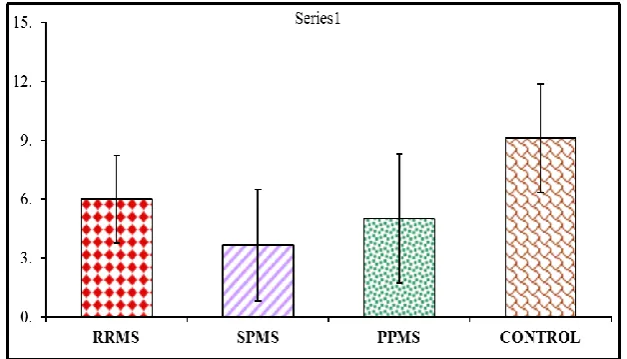
Figure 2: Comparison of P600 Amplitude between MS patient's subgroups and control group.
Table 3: Comparison of P300 latency between MS patient's subgroups and control group.
P300 latency (msec) ANOVA
Mean + SD Range f P-value
RRMS 302.0 – 362.0 331.7 + 20.1
15.729 <0.001 ** SPMS 310.0 – 420.0 365.0 + 37.5
PPMS 315.0 – 399.0 355.2+ 43.4 Control 295.0 – 307.0 307 + 5.6
Tukey,s test
PR & SP RR & PP RR & C SPP & PP SP & C PP & C 0.003** 0.295 0.017* 0.894 <0.001** 0.004**
** mean that there is highly significant difference between MS patient's subgroups and control as regard P300 Latency, being more affected in SPMS than PPMS than RRMS.
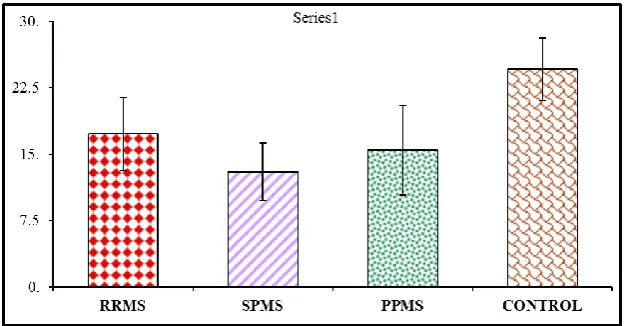
Figure 4: Comparison of P300 Amplitude between MS patient's subgroups and control group.
*There is statistically significant difference as regard P300 Amplitude between MS patients generally and control group also there is statistically significant difference between MS patient's subgroups.
DISCUSSION
Multiple sclerosis (MS) is a chronic demyelinating inflammatory and degenerative neurological disease. It is a physically disabling disease and many patients suffer from cognitive changes as well. Recently cognitive dysfunctions have been increasingly considered to be a contribution to social and professional handicaps experienced by patients with MS. The frequency of cognitive dysfunction in MS throughout their lifetimes ranged between 43 and 72%. Memory, learning, attention, executive functions, and visuo spatial abilities are the most common impaired cognitive abilities. So assessment of the cognitive status by using appropriate psychometric and neurophysiological testing is necessary in every MS patient (Huijbregts et al., 2006; Doreen et al., 2006; Eckart et al., 2006).
In event related potential (ERPs) two principal neurophysiological markers have been considered as an objective index of cognitive processing: latency and amplitude. Latency is a reliable indicator of the speed of cerebral information processing and an increase of latency represents a prolonged processing time. On the other hand, amplitude reduction reflects either a failure in the activation of some generators (frontal and parietal cortex, thalamus and temporo-mesial cortex) or a chronodispersion of information processing.
The delay of P300 latency in MS patients than control appears to be due to a disorder in the processing of change in temporal sound patterns, this may be conceived as an extra time taken to compare the incoming sound with the contents of a temporally ordered sensory memory store (the long auditory store or echoic memory), which generates a response when the next expected frequency change fails to occur. When comparing different subtypes of MS, the P300 latency was prolonged more in SPMS than PPMS then RRMS. This was in agreement with the study of Goodin et al., 1995; Ellger et al., 2002 and Gerschlager et al., 2004 which compared event related potentials in different subtypes of MS in across sectional study and obtained the same results.
P300 amplitude was reduced in MS patients than control. When comparing different subtypes of MS, the P300 amplitude was reduced more in SPMS than PPMS then RRMS. This was in agreement with the studies of Medaglini et al., 1998; Ellger et al., 2002 and Magnano et al., 2006.
This study also demonstrates a significant difference between MS patients and control as regard P600 latency, being prolonged in patients than control this was in agreement with the study of Sfagos et al., 2003. Also there was a difference between MS patients' subgroups, being prolonged in SPMS more than PPMS then RRMS.
In this study there was highly significant difference between MS patients and control as regard P600 amplitude, being reduced in patients than control this was in agreement with the study of Sfagos et al., 2003. Also there was a difference between MS patients' subgroups, being reduced in SPMS more than both PPMS and RRMS; and in PPMS reduced more than RRMS. Cognitive decline was also associated with reduced P600 amplitude.
In this study the ERPs was of benefit in detecting cognitive disability in MS patients even in subtle cases but P300 wave was more significant and more accurate in detecting the deficit than P600, thus the P300 is a fruitful tool in clinical research to identify abnormalities of cognitive processing especially in early stages of the disease when cognitive deficits may be subtle and less frank than in later stages.
A possible explanation of the pattern of abnormalities in ERPs in MS could be due to the main pathophysiological feature of the disease that is the inflammation. The inflammation process directly influences neural activity and since the ERPs come from complex interactions between cortical and subcortical neural circuits, it causes the disruption of network connections giving origin to conduction slowing, conduction block and finally to axonal degeneration. Thus, it may assume that the interruption of the neural connections among cortical associative areas as well as between cortical and subcortical structures may be a consequence of demyelination and axonal degeneration. This functionally disconnects cortex from subcortical regions so that the neurophysiological pattern may be named subcortical disconnection dementia (Amato et al., 2006).
Neurophysiological techniques, with their high temporal resolution, provide useful support to the clinical demonstration of a slowing of information processing speed in MS patients: the latency of the main components of ERPs is prolonged in MS patients. Moreover, the amplitude reduction of the ERP waves suggests that frontal, hippocampus, basal ganglia and parietal areas participating in their generation are partially disconnected. PET studies confirmed a reduction of metabolic activity in the cingulate cortex, thalamus and hippocampus, bilaterally, in MS patients with memory disturbances (Swirsky-Sacchetti et al., 1992).
Studies differ with each other whether P300 and P600 has the same neuronal origin or not. The P600 normally found for a broad range of syntactic anomalies appears to
be ‗just‘ a P300-like component in the sense that it reflects the same process of detecting a task-relevant and unexpected event. The finding that the generation of the P600 is dependent on brain structures (basal ganglia and cingulate gyrus) which do not play a role in eliciting a P300 response is an evidence for the assumption that we deal with two different components (Sfagos et al., 2003).
RECOMMENDATIONS
- Assessment of cognitive decline by neurophysiological tests is a very important step in examination of every MS patient to detect early subtle impairment.
- Follow up of the MS patients using ERPs may be of benefit in detecting cognitive deterioration.
- Further studies using functional MRI in correlation to neurophysiological tests can be of benefit in understanding the neuroanatomical basis and pathophysiology of cognitive dysfunction in MS patients.
REFERENCES
1. Amato MP, Portaccio E, Zipoli V.: Are there protective treatments for cognitive decline in MS? J Neurol Sci, 2006; 245: 183–186.
2. Constantin P, Erasmia G, Georgios K.: Cognitive impairment in different MS subtypes and clinically isolated syndromes Journal of the Neurological Sciences, 2008; 267: 100–106.
3. Doreen S, Bruno K, Annett K, et al., (2006): Cognition in the early stage of multiple Sclerosis J Neurol, 2006; 253: 1002–1010.
4. Eckart L, Mike M, Hela F, et al. Identification and management of cognitive disorders in multiple sclerosis A consensus approach J Neurol, 2006; 253[Suppl 1]: 29–31.
5. Ellger T, Bethke F, Frese A, et al. Event-related potentials in different subtypes of multiple sclerosis—a cross-sectional study. J Neurol Sci, 2002; 205: 35–40.
6. Gerschlager W, Beisteiner R, Deecke L, et al., Electrophysiological, neuropsychological and clinical findings in multiple sclerosis patients receiving interferon h-1b: a 1-year follow-up. Eur Neurol, 2004; 44: 205–209.
7. Goodin DS, Aminoff MJ. Electrophysiological differences between subtypes of dementia. Brain, 1995; 109: 1103–1113.
8. Huijbregts SC, Kalkers NF, DeSonneville LM, et al. Cognitive impairment and decline in different MS subtypes. J Neurol Sci, 2006; 245: 187–194.
9. Jeffrey M, Peter K. Review of cognitive impairment in multiple sclerosis: Evidence-based analysis and recommendations, 2007.
11. Magnano I, Aiello M.R, Piras. Cognitive impairment and neurophysiological correlates in MS Journal of the Neurological Sciences, 2006; 245: 117–122.
12. Makeig S, Delorme A, Westerfield M, et al., "Electroencephalographic brain dynamics following visual targets requiring manual responses" Public Librairy of Science, 2004; 2(6): 747-762.
13. Medaglini T, Locatelli G, Comi M.: ERPs in multiple sclerosis Ital J Neurol Sci, 1998; 19: 408-412.
14. Nunez-Pena MI, Honrubia-Serrano ML. P600 related to rule violation in an arithmetic task. Brain Res Cogn Brain Res, 2004; 18: 130–141.
15. Polich J, Criado JR. ―Neuropsychology and neuropharmacology of P3a and P3b‖ Intl J Psychophysiol, 2006; 60(2): 172-185.
16. Polman CH, Wolinsky JS, Reingold SC. Multiple sclerosis diagnostic criteria: three years later. Mult Scler, 2005; 11: 51-55.
17. Sfagos C, Papageorgiou C, Kosma K, et al. Working memory deficits in multiple sclerosis: a controlled study with auditory P600 correlates. J Neurol Neurosurg Psychiatry, 2003; 74: 1231–1235. 18. Stephan CJ, Huijbregts, Nynke F, et al. Cognitive
impairment and decline in different MS subtypes. , Journal of the Neurological Sciences, 2005; 245: 187–194.