FAO support to date palm development around the
world: 70 years of activity
#
Enrique Arias1*, Alison Jane Hodder2 , Abdallah Oihabi3
1Former FAO Agricultural Offi cer, Horticultural Crops Group, Plant Production and Protection Division, FAO Rome; 2Senior Offi cer-Horticulture,
Plant Production and Protection Division, FAO Rome; 3FAO Programme Coordinator in the Kingdom of Saudi Arabia
INTRODUCTION
The Food and Agriculture Organization of the United Nations (FAO) has been actively engaged in developing the cultivation of the date palm. It recognizes its social, economic and ecological importance in countries, with suitable agro-climatic conditions, where it is traditionally grown.
FAO’s mandate is to eradicate food insecurity and malnutrition, improve agricultural productivity and sustainability, improve livelihoods and enable inclusive and effi cient agricultural food systems. The cultivation of the date palm contributes to achieve this mandate in countries where it is grown. The date palm not only provides a good source of high nutritive value food, but various parts of the plant can be used in other industries. For example, the dried bunches, fronds, leafl ets, fi ber and trunk can be utilized to make handicraft goods, building and packaging materials. The date palm and its by-products offer an extra source of income. For many farmers, the date palm is a source of food and can also be a cash crop.
The date palm industry is labour intensive and contributes to job creation and income generation, for both male and female farmers. It creates job opportunities in rural areas, and thus helps reduce sprawling migration to cities. Women play an important role particularly during the propagation (using traditional methods or in vitro techniques) and post-production phases (including packaging and marketing).
In countries where the date palm is traditionally grown, it is known to create a microclimate suitable for crops to grow under its shade. It protects them from the high temperatures and overexposure to sunlight. Date palm cultivation programmes have raised awareness of its value and its contribution to environmental protection and desertifi cation control. The date palm was used in the Great Green Wall of Africa initiative, whose objective was to tackle the detrimental social, economic and environmental impacts of land degradation and desertifi cation in the Sahel and Sahara. FAO has responded to the requests of its member countries by providing technical support at a regional level in the promotion and introduction of date palm cultivation in small-scale farmer fi elds; the
The date palm provides a good source of high nutritive value food for consumers and is a cash crop for farmers. FAO recognizes the social, economic and ecological importance of the date palm in countries where it is grown and it has been actively engaged in developing the cultivation of date palm. It has been working with governments and local institutions. FAO has provided technical support, and its projects have contributed to training staff and farmers, building local capacity and facilitating the exchange of knowledge and information.
Keywords: Date palm sector; Date palm producers; FAO; Development; Technical expertise and support; Agricultural productivity
doi: 10.9755/ejfa.2015-10-840 http://www.ejfa.me/
R E V I E W A R T I C L E
A B S T R A C T
*Corresponding author:
Alison Jane Hodder, Senior Offi cer-Horticulture, Plant Production and Protection Division, FAO Rome, Phone: +390657054846, E-mail: [email protected]
Received: 14 April 2015; Revised: 06 October 2015; Accepted: 08 October 2015; Published Online: 23 November 2015
#“This article, being a historical account of work over a 70-year period, employs country names that were in use at the time when the respective reported events or initiatives occurred. The
development of the date palm industry; the improvement, rehabilitation and modernization of commercial farms; and the development of packaging and processing plants (see Fig. 1). FAO has also provided technical advice to improve access to local, national and international markets.
FAO has promoted and facilitated communication, collaboration and exchange of experiences among countries interested in date palm production and/or consumption. FAO has organized technical meetings, conferences and networks where researchers and specialists discuss common problems and interests. In addition to the direct advice provided to policymakers, FAO has mobilized specialists of different disciplines related to the date palm industry to provide the required technical assistance.
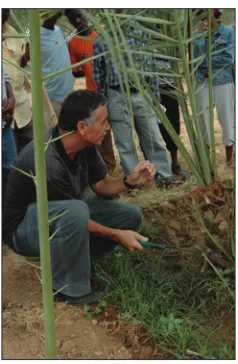
National staff training is an important component of FAO supported activities. Study tours and fi eld trainings are organized to build the local capacity of technical staff and farmers (see Fig. 2). FAO projects facilitate the identifi cation of institutions or local projects to provide in-country training courses.
FAO, not being a fi nancial institution, has helped countries identify potential donors and promoted investments in
benefi ciary countries. FAO provided seed fi nancing to implement Technical Cooperation Programme projects (TCP) and several Units in FAO have provided support to specifi c activities, according to their possibilities, from their Regular Programme funds. Key examples have been selected to illustrate FAO’s intervention and support for date palm activities during its long-term engagement in the sector.
FAO has collaborated with national research institutions and ministries, and international organizations to implement projects and organize meetings, workshops and technical seminars. Among these are: Association of Agricultural Research Institutes in Near East and North Africa (AARINENA), Arab Organization for Agricultural Development (AOAD), Desert Margins Programme (DMP), International Atomic Energy Agency (IAEA), International Centre for Agricultural Research in the Dry Areas (ICARDA), International Center for Biosaline Agriculture (ICBA), International Crops Research Institute for the Semi-Arid Tropics (ICRISAT), International Programme for Arid Land Crops (IPALAC), International Plant Genetic Resources Institute (IPGRI), United Nations Development Programme (UNDP), United Nations Educational, Scientific and Cultural Organization (UNESCO), United Nations Industrial Development Organization (UNIDO) and United Nations Offi ce for Project Services (UNOPS).
INITIAL TECHNICAL MEETINGS
Tripoli, Libya 1959
The First International Technical Meeting on Date Production and Processing was held in Tripoli, Libya on 5 to 11 December, 1959. This meeting provided the basis for the development of future activities in the date palm sector, in particular for FAO activities. It formulated general recommendations on the production, protection and processing of dates.
The Meeting also highlighted the need for promoting closer international cooperation in date palm research and improving information and knowledge exchange between research stations and date workers. FAO was requested to assist date palm growing countries through technical visits by experts in the fi eld and through the knowledge exchange among staff from the research centres of different date palm growing areas.
Other recommendations from the meeting included performing further studies on the selection and breeding work for improving date palm cultivation, particularly in marginal areas. A lack of information was identifi ed on various aspects of date palm culture, including: the causes
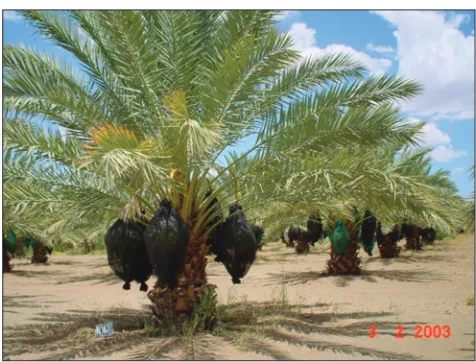
Fig 1. Promotion of communal plantations in Namibia.
that lead to mortality; factors affecting the establishment of offshoots; water, nutritional and ecological requirements, particularly temperature and atmospheric humidity conditions.
There was concern on the extent of damage caused by certain pests and diseases to date groves in various countries. Governments were recommended to perform research on the control of Bayoud disease (the whitening of the fronds of diseased palms) and white scale insects, and to implement strong plant quarantine measures and biological controls.
FAO was requested to prepare and publish harvest indices; collect information on different storage methods and conditions; provide technical advice on the construction of storage facilities for loose and packed dates to conserve the nutritive and commercial value; and collate detailed information on the utilization of suitable fumigants for dates, methods of fumigation and transportation, and particularly on equipment for fi eld transportation and fumigation.
According to the political geography prevailing in 1959, the countries that participated were: France, French Community (Islamic Republic of Mauritania, Sudanese Republic, Republic of Chad, Republic of Niger), Libya, the Netherlands, Saudi Arabia, Somalia (Italian Administration), Sudan, Tunisia, United Kingdom (Somaliland Protectorate) and the United States of America. Furthermore, delegates of private fi rms and universities participated as observers: SERESA (French Community - Islamic Republic of Mauritania); Associated Consulting Engineers and American University (Lebanon); National Bank of Libya, Libyan Public Development and Stabilization Agency, University of Libya, Nazara of Agriculture and Government Date Packing House (Libya); Oases Dates Industries (Pakistan); and ARAMCO (Saudi Arabia).
Baghdad, Iraq 1965
The Second FAO Technical Conference on the Improvement of Date Production and Processing was held in Baghdad, Iraq on 16 to 25 October 1965.
It was recognized that there is lack of information on date palm physiology, growth process and life cycle, propagation, variety selection and irrigation in the date growing regions of Africa, Europe and Asia. There is also a lack of trained and experienced specialists in date production and processing.
The need to assist governments in the exchange of technical information and to enhance interventions on date palm protection was discussed. It was important to take
into consideration the relevant diseases and insect pests affecting date production areas, the selection of resistant varieties with good commercial characteristics, traditional control methods, biological or integrated pest control and quarantine. Other important factors to considered included marketing aspects. The meeting recommended to the governments of date producing countries that an international marketing council should be established under the auspices of FAO.
Governments of date producing countries were recommended to promote research and training on production, handling and processing. This could be done by establishing and strengthening research stations and experimental farms. Governments were also advised to support regional cooperation through training, research and the establishment of a regional centre. FAO was requested to support the efforts of governments in these matters and to provide support for proposals to establish a regional centre for research and training in date production and processing in the Middle East.
Baghdad, Iraq 1975
The Third Technical Conference on the Improvement of Date Production, Processing and Marketing was held in Baghdad, Iraq, on 30 November to 4 December 1975. It was organized with the support of the Government of Iraq and the Arab Organization for Agricultural Development (AOAD).
At the Conference, four major recommendations were made and adopted by the participants:
• Establish the Regional Palm and Date Research Centre • Implement project to establish an organization of date
exporting countries
• Control of the Bayoud disease
• Recognize dates as an international food commodity and its importance in FAO and AOAD activities.
PROJECTS
NENADATES project
Following the recommendations of the above-mentioned conference, FAO held a series of meetings and delegated a mission to visit potential participating countries in the Near East and North Africa. The objective was to ascertain their views and ideas on formulating a regional project and seek participation of Governments (including material and
fi nancial contributions for the project).
Conference in 1975. The Government of Iraq offered to host it, and a project proposal was prepared jointly by FAO and the Government of Iraq. FAO played a central role in establishing the “Regional Project for Palm and Dates Research Centre in the Near East and North Africa”, commonly known as the NENADATES project. The objective was to coordinate the cooperative research work for the improvement and development of date production, processing and marketing in the Near East and North African countries. The headquarters became operational in Baghdad, Iraq on 5 March 1978 until December 1987.
The aim of the project was to transform the National Palm and Dates Research Centre in Baghdad into a Regional Research Centre. It would establish a permanent Regional Centre to perform research on date production, processing and marketing and provided support to participating countries in these fi elds.
This unique regional project has had the strongest impact in the NENA region. It provided assistance, facilitated information exchange and provided support to development initiatives that strengthened the date palm industry in participating countries. Through this project, the Date Palm Journal was published. It was well accepted and appreciated by date palm specialists.
The participating countries were seventeen and included: Algeria, Bahrain, Arab Republic of Egypt, Iraq, Kuwait, Libya, Mauritania, Morocco, Oman, Pakistan, Qatar, Saudi Arabia, Somalia, Sudan, Tunisia, United Arab Emirates, Arab Republic of Yemen and the People’s Democratic Republic of Yemen. The project was funded by all participating countries. The contribution was calculated on the number of date palm trees cultivated and the fi nancial resources of the individual countries. Among these, Iraq and Saudi Arabia were the largest donors.
Bayoud disease control project
A “Bayoud Disease Control” project was implemented in North Africa in two phases between 1988 and 1991. The project was funded by UNDP and implemented by FAO.
The project served as a regional example. Its aim was to limit the spread of Bayoud disease on date palms that have an signifi cant economic importance in Algeria, Morocco and Tunisia. Its immediate objectives included: developing an effective system to reduce the spread of Bayoud disease, performing research on a regional level of a selection of Bayoud-resistant date palm; and establishing a mechanism for regional propagation of new date palms.
Manuals on date palm diseases were produced and workshops on date palm in vitro propagation were organized.
Unilateral Trust Funds (UTF) projects
Unilateral donors fund technical assistance projects in their own countries with national resources or through loans, credit and grants made by international fi nancing institutions. FAO provides technical expertise and support for building capacities in the country, leadership among participants and ownership by the recipient country.
Culture and improvement of date palm in Wadi Hadramawt. This project became operational on 1 May 1994. Its aim was to provide technical advice to the Yemen Arab Republic in all relevant aspects of the date palm industry, with special emphasis was on irrigation and water use.
Date Palm Production Support Programme in Namibia. The project was designed to provide technical and scientifi c skills to dates production enterprises by implementing modern propagation and production techniques, and training personnel. The aim of the project was to achieve economic returns and a highly productive dates cultivation. It would generate jobs, income and extra earnings and create investment opportunities for those in the industry.
This project was the outcome of the successful implementation of the Technical Cooperation Programme (TCP) Preliminary Assistance to Date Palm Growing in Namibia. Since its inception in 1995, the Namibian Government’s Development Corporation has fi nanced the projects. FAO has been the executing agency for more than ten years. The project was implemented in two phases, from the establishment of date palm plantations with commercial varieties to the export of products to Europe, Africa and Asia. The strong decision and support of the Government and the enthusiasm of the national technical staff were key for its success. (See Fig. 3.)
After Namibia had gained experience and expertise in date production, the project expanded to support
other initiatives within and beyond the region. National and international staff provided technical advice on date production to other projects executed by FAO in Eritrea, Mexico, Mozambique and Niger, and the South African region in Botswana, South Africa and Zimbabwe. Swaziland was among the benefi ciaries of Namibia’s experience. The project hosted study tour participants from Burkina Faso, Cameroun, Eritrea, Niger, Saudi Arabia, Senegal, United Arab Emirates and Yemen. Some 20 leafl ets were produced in English and Afrikaans and were used by other projects.
This project lead to the creation of the Date Palm Global Network (DPGN) through the publication of FAO’s Plant Production and Protection Paper 156 Date Palm Cultivation and the formulation and implementation of the Sub-regional TCP project Preliminary Assistance for Date Industry Development in Southern and Eastern Africa.
A Date Palm International Symposium was organized in Windhoek from 22 to 25 February 2000. It gathered more than 100 participants from Algeria, Australia, Canada, Egypt, England, Eritrea, France, Israel, Kingdom of Saudi Arabia, Mali, Morocco, Namibia, Niger, Nigeria, Palestine, Peru, Republic of South Africa, Senegal, Swaziland, United Arab Emirates, the United States of America, and representatives from the following international organizations: DMP, FAO, ICRISAT, IPALAC, Peres Centre for Peace and Proklima International.
During 2005 to 2012, the fi rst and second phases of the Establishment of a Date Palm Research Centre in Al-Hassa project were implemented in the Kingdom of Saudi Arabia (see Fig. 4). This project counted with international assistance as well as local experience. It reinforced and improved capacity building of the Date Palm Research Centre. This project has collaborated with other projects in Djibouti and Mexico. It hosted study tour participants of other FAO executed projects. It is considered a model in the Arabian Peninsula.
The Establishment of an International Date Palm Centre in the Kingdom of Saudi Arabia project started in 2012, and it continues its work to the day. Its objective is to assist the Ministry of Agriculture of the Kingdom of Saudi Arabia in developing its national date centre into an international centre.
FAO Technical Cooperation Programme (TCP) projects In the past two decades, FAO provided technical assistance through the TCP in: Burkina Faso, Cameroon (see Fig. 5), Djibouti (two projects 1991 and 2007), Eritrea (see Fig. 6 and 7), Ethiopia, Mexico, Namibia
(two projects – one in production and the other in post-harvest and processing), Niger, Senegal, Syria and Yemen. In addition, there was a regional African project implemented in Botswana, Namibia, Republic of South Africa, Tanzania, Uganda and Zimbabwe.
Fig 4. Germplasm collection in Al-Hassa, KSA.
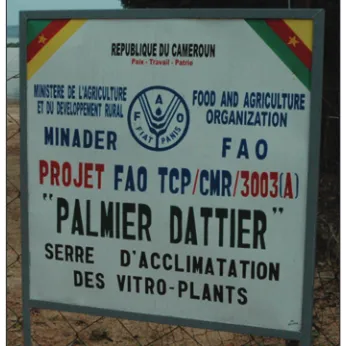
Fig 5. TCP Project in Cameroon.
For the execution phase of these projects, a number of recognized specialists were mobilized from Burkina Faso, France, Iraq, Israel, Kingdom of Saudi Arabia, Mali, Morocco, Namibia, Sudan and Tunisia.
FAO’s contribution through the TCP was targeted and specifi c to the particular needs in each of the countries, following the governments’ requests.
The vegetative materials introduced into the countries were in vitro plants. The introduction of offshoots was not recommended in order to prevent the diffusion of pests and diseases.
The overall objectives were to:
• Provide technical assistance in date palm cultivation, marketing, protection, and traditional and/or in vitro propagation.
• Strengthen and develop the government’s capacities in the agricultural sector within the framework of improved date palm cultivation (oasis agriculture). • Enhance existing date palm and agro-pastoral systems
to improve date palm production and full utilization to increase food security.
• Strengthen the capabilities, skills and knowledge of small farmers to increase date palm production at a household level and contribute to improve the nutritional status of families and provide an extra source of income for medicines, education, and the purchase of other essential commodities.
To achieve these objectives, the following outputs were produced:
• Introduction of selected/modern technologies for date cultivation, production and protection.
• Introduction of superior/high-quality international cultivars (plants produced in vitro) adapted to local agro-ecological conditions.
• Selection and propagation of superior indigenous varieties, clones or genotypes, where applicable. • Establishment of variety and germplasm collections
with imported vegetative materials and local genotypes. • Establishment of high-quality date palm cultivars
plantations to serve as pilot units and demonstration plots, as a source of vegetative materials (off-shoots and meristems).
• Establishment of date palm nurseries and installation of greenhouses for the in vitro acclimatization of date palm plantlets.
• Distribution of date palm offshoots from superior indigenous varieties to communities and villagers within the country.
• Rehabilitation of wild date palm plantations.
• Strengthening national capacities in date palm production and propagation.
• Training national experts through study tours on different aspects of the date palm industry.
• Training government technical staff, extension agents, researchers, leading agro-pastoralists in modern date palm cultivation, production and protection techniques, and marketing.
• Training farmers through practical demonstrations in modern date palm orchard planting and management, and rehabilitation of old wild date palm plantations. • Preparation of local, regional and international
marketing studies, as well as, handling and marketing strategy for the domestic market.
One of the common outputs in all TCP projects was the preparation of medium/long-term action plans and/or follow-up project documents. The aim was to continue the activities of the TCP project at a small-scale or to establish commercial plantations. After the termination of the TCP projects, the governments were responsible for implementing the follow-up activities with their own funds, funds from donors or funds from private investors.
TPC projects implemented in countries in the Sahel were to be taken into consideration. FAO joined efforts with ICRISAT, DMP and IPALAC to promote date palm production systems utilizing low pressure drip irrigation and supporting the African Market Gardens. A regional project document was later formulated by FAO to benefi t approximately 11 countries.
Four production systems were proposed:
1. Intensive model: Associated date palm with fruit trees and vegetable crops with a modern drip irrigation system. 2. Semi-intensive model: Similar to the intensive model but
with a conventional irrigation system.
3. African Market Gardens: Date palm was associated with vegetable crops with a low pressure drip irrigation
system; or Agro-pastoral Model: Associated date palm with horticultural and forage crops established close to villages with conventional irrigation systems. The production would be for local consumption and the surplus would be sold in markets.
4. Pastoral Model: Associated date palm with forage crops where the water table level was not deep (2 to 5 m). It was assumed that date palm, in the adult phase could produce dates and forage even if it was neglected by nomads.
The purpose of the Date Palm Sub-regional TCP Project “Date Production Support Programme in Southern and Eastern Africa” (Botswana, Namibia, Republic of South Africa, Tanzania, Uganda and Zimbabwe) was to coordinated regional activities. There was growing interest in date palms due to its value and export potential in the Southern Hemisphere since the major date production countries are located in the Northern Hemisphere. The region would be able to produce and supply dates to all major markets during the traditional off-season. Another advantage was that the region was free of major pests and diseases, usually present in traditional growing areas.
Each participating country’s situation was studied, as well as its agroecology, to characterize suitable production environments outside traditional date palm cultivation areas. The results were presented at the end of the project during a workshop held in Namibia. The components of a follow-up project were also discussed and agreed upon.
Emergency projects
Date palm was included as one of the crops in FAO’s emergency programme in the West Bank and Gaza Strip. The intervention was mostly in rehabilitating old plantations and establishing a variety collection.
Together with UNIDO, FAO implemented the “Rehabilitation of the date sector in Iraq” project. Direct technical assistance by international staff was not possible due to the prevailing situation in the country, but assistance was provided by highly trained national consultants. The project not only provided agricultural inputs, it also produced manuals in Arabic on different aspects of date production, processing and marketing.
DATE PALM GLOBAL NETWORK (DPGN)
During the implementation of various projects, the need to strengthen communication and the exchange of experiences among date producing countries was highlighted. It was necessary to create a functional mechanism for technical cooperation. The national and international technical
personnel and consultants of the Date Production Support Programme in Namibia took the lead.
An expert consultation to study the feasibility of establishing a DPGN for technical cooperation on date palm and to draft the objectives and guidelines of the network was held in Teheran, Iran, on 13 to 14 October 1999. Scientists from the following countries participated: Egypt, Iran, Libya, Morocco, Namibia, Oman, Pakistan, Saudi Arabia, Sudan, Tunisia and United Arab Emirates. The consultation was hosted by the Iranian Government and supported technically and fi nancially by FAO and AARINENA.
Another preparatory meeting was held in Windhoek, Namibia. It was an important component leading to the Date Palm International Symposium, which was held in Namibia on 22 to 25 February 2000. It was organized by the Date Production Support Programme in Namibia with the technical and fi nancial support of FAO. During this meeting, agreements previously formulated in Karaj, Iran in 1999 were revised and complemented.
The meeting to formally establish the DPGN under the auspices of FAO was held in the United Arab Emirates on 7 to 9 April 2002. It was sponsored by FAO, hosted by the UAE University and organized by the “Date Palm Research and Development Project”.
The meeting was attended by Government Officials, representatives from research and development institutions, and date palm scientists. There were a total of 23 participants from: Chile, Egypt, India, Iran, Jordan, Morocco, Namibia, Philippines, Tunisia and United Arab Emirates. The following international organizations were also represented: IPGRI, ICBA, UNOPS/UNDP, AOAD and FAO.
The establishment of the DPGN was due to the following: • The economic and social importance of date palm
cultivation in many countries in North Africa, the Middle East, Southern Africa, Australia and the United States of America;
• Lack of research and the exchange of information within and among date producing countries worldwide; and
• The need for date exporting countries to follow a coordinated policy in international date markets and to exchange statistics on the world date production and trade.
The participants agreed on:
Coordination of the DPGN and to delegate this responsibility to the Chief Technical Adviser of the “Date Palm Research and Development Project” and the Director of the Date Palm Research and Development Unit at the UAE University.
• The general coordination will be hosted by the elected institution for a period of 4 years (renewable). • The governing body of the DPGN will be formed by
the national focal points.
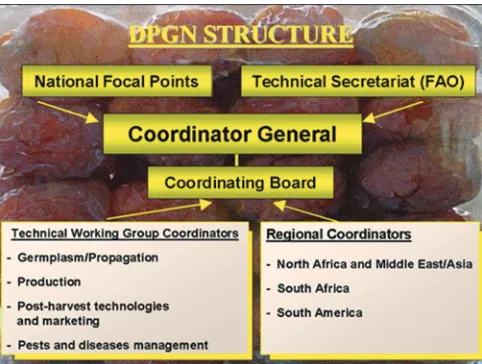
• The DPGN would include national institutions, public or private sectors, government representatives and producers associations, as well as existing regional and inter-regional date palm networks. (See Fig. 8.) • To be a member of the DPGN, the potential participant
should agree to cooperate within its framework and contribute to its maintenance according to the agreed mechanisms.
NETWORK OBJECTIVES
General objective
To increase technical cooperation among all (new and traditional) date producing countries in aspects related to the development and improvement of the date palm industry.
Specifi c objectives
• Collection and dissemination of information on production, planting, marketing, research, post-harvest and processing technologies of dates and date palm by-products and residues.
• Collection, conservation, evaluation and utilization of date palm germplasm.
• Promotion of the ecological and social benefi ts of Date Palms.
• Exchange experiences, expertise, and information, as
well as organize training courses, workshops and expert meetings.
• Contribute to the establishment of national networks in each country to increase collaboration among national institutions and particularly propitiating increased communication between scientifi c institutions and growers.
• Promote the analysis of common problems, their study and research solutions, particularly through the elaboration of joint research/development projects.
Specific tasks were identified by the DPGN to be addressed, forming the basis for technical working groups. Four working groups were established with specific activities:
• Germplasm/propagation • Production
• Pests and diseases management
• Post-harvest technologies and marketing.
It was agreed that the DPGN would search fi nancial support from:
• national research and development programmes; • national and international funds devoted to research
and development;
• funds generated by the DPGN; and • the private sector.
Immediate activities were identifi ed, such as the promotion of the DPGN in each country, international agreements to identify donors, and defi ning means of continuous communication among members.
It was also agreed that the DPGN would be guided by a Coordinating Board and chaired by the Coordinator General of the Network. Its members would include the coordinators of the technical working groups, regional coordinators and representatives of the different regional and inter-regional date palm networks.
The DPGN was designed to operate with the support of three regional coordinators from South Africa, Middle East/Asia and South America. Additional regional coordination may be added as countries join the Network, i.e. Sahel and North America.
Relevant activities of the DPGN supported by FAO include:
• Date Palm Regional Workshop on ecosystem-based IPM for Date Palm in the Gulf Countries. Al Ain - UAE University, 28-30 March 2004.
• The International Workshop on True-To-Typeness of Date Palm Tissue Culture-Derived Plants. Marrakech, Morocco, 23-25 May 2005.
• International Workshop on Date Palm Biodiversity. Al Hassa, Kingdom of Saudi Arabia, 26-28 February 2007.
INTERNATIONAL DATE COUNCIL
The economic, social, environmental and nutritional importance of the date sector in many date producing countries, and its important role in improving the living standards of workers, is contributing to achieve sustainable agricultural development. It also improves food security in rural areas, while maintaining an ecological balance and conserving the soil, especially in dry areas.
Problems and constraints in the production and marketing of dates are similar within date producing countries. It is usually diffi cult for single countries to solve them by themselves. This requires coordination, cooperation and teamwork among producer countries and organizations to effectively solve these problems making use of capacities.
In reference to the experts meeting, 17 countries and 7 international and regional organizations convened following the invitation from the Government of the Kingdom of Saudi Arabia in Riyadh city during 18 to 20 April 2011. The meeting emphasized the importance of enhancement and development of the international cooperation within the dates sector and by establishing an effective international institutional mechanism to intensify the efforts to overcome the challenges facing this sector for the common benefi t of all.
There was a strong desire to establish an international institutional body to promote and develop international cooperation between date producing countries, to achieve sustainable development of dates, to develop and improve transparency in world trade, and to satisfy consumer demands by providing high quality and safe dates at appropriate prices.
Objectives
1. To foster international cooperation between the country members to promote the dates sector. 2. To promote the production and quality of dates and
to work towards improving the industry and national and international marketing.
3. To improve the living standards of workers in the dates sector in order to achieve sustainable agricultural and rural development, food security, ecological balance and the optimum use of natural resources, especially water.
4. To contribute to the development of the international trade of dates and to maintain transparency.
5. To create a database for the collection of dates, their distribution, dissemination and the exchange of basic information related its production, manufacturing, marketing and external trade prices.
6. To set international specifi cation standards for date varieties. To work towards its adaption to the national laws of the member countries and its continuous updating and implementation and monitoring, as well as the standardization of terminologies and names. 7. To issue international indicators for date prices. 8. To develop basic rules for international cooperation
in the date sector for the maintenance of intellectual property rights for the production and industry of dates, consumer protection, integrity of international trade, and to prevent fraud and deception nationally and internationally in the trade of dates.
9. To promote and develop joint international team work to develop human and institutional capacity for the member countries, and to fi nd solutions through scientifi c and applied research, cadre training, dissemination of information and knowledge, promotion of appropriate technology transfer for dates, application of good production, manufacturing and marketing practices and the exchange of experiences and information.
10. To establish an international forum to deal with issues related to the development of dates production, protection and trade in the international and regional forums, and to facilitate the exchange of experiences and information and promote on-going communication between members through regular meetings, and to consolidate the role of the Council as a distinguished international centre for documentation, media and review for all matters related to palms and dates.
During the meeting organized in Riyadh on 1 to 3 December 2013, the International Date Council (IDC) was established with the membership of 11 date producing countries, including: Bahrain, Egypt, India, Jordan, Libya, Morocco, State of Palestine, Saudi Arabia, Sudan, Tunisia and Yemen. The headquarters of the IDC is hosted by the government of Saudi Arabia in Riyadh. The IDC members recommended that funding for IDC activities for the next fi ve years be provided by the Kingdom of Saudi Arabia. Key elements of the IDC mandate are to promote activities related to Date palm cultivation including international cooperation, technical assistance to member countries and promotion of date consumption and trade in international markets.
PUBLICATIONS
databases. The following are examples of some of the information products:
• The Date Palm Journal produced by the NENADATES project. It was an excellent means to diffuse date news. Unfortunately when the project ended its publication was suspended.
• Dates Handling, Processing and Packing. Rome, 1962. The authors were V.H.W. Dowson (FAO Consultant and Date Expert) and A. Aten (Rural Industries Specialist, Agricultural Engineering Branch of the Land and Water Development Division). It was published in English and Spanish as FAO Plant Production and Protection Series 13 and FAO Agricultural Development Paper 72.
• Palm Tissue Culture. Rome, 1981. The author was A. Kovoor. Emphasis was placed on coconut but it was the fi rst FAO/AGP publication to mention Date Palm in vitro propagation. It was published as FAO Plant Production and Protection Paper 30.
• Date Production and Protection. Rome, 1982. It was prepared with a special reference to North Africa and the Near East, and prepared by the Horticultural Crops Group of the Plant Production and Protection Division based on the work of V.H.W. Dowson. It was published as FAO Plant Production and Protection Paper 35. • Date Palm Products. Rome, 1993. It was written by H.
Barreveld, Offi cer of the Agricultural Service Division (AGS), and was published as Agricultural Service Bulletin 101.
• Date Palm Cultivation. Rome, 1999. It was produced within the framework of the UTF/NAM/004/NAM Date Production Support Programme in Namibia and with the contribution of several authors. It was edited by the CTA of the project A. Zaid with the technical coordination of E. Arias (AGPC). It was published in English and Arabic and revised in 2002 as FAO Plant and Production Paper 156.
• Study of the main European markets for dates and of the commercial potential of non-traditional varieties. Rome 2000. It was a study prepared for the Horticultural Products Group Raw Materials, Tropical and Horticultural Products Service. Commodities and Trade Division.
• Date Palm Post-Harvest Processing Technology. El Cairo, 2000. Proceedings of the Workshop on Date Palm Post-Harvest Processing Technology, held in Tehran, Iran, 11-14 October 1999. FAO Regional Offi ce for the Near East.
CONCLUSION
Achieving food security for all is at the heart of FAO’s efforts – to make sure people have regular access to enough
high-quality food to lead active and healthy lives. FAO has recognized the social, economic and ecological importance of the date palm in countries where it is grown, and it has been actively engaged in developing the cultivation of date palm. The date palm industry is contributing to achieve food security in many countries.
Author contributions
Enrique Arias was the main researcher and author of this manuscript. Alison Hodder and Abdallah Oihabi also contributed signifi cantly to the research effort and writing/ editing specifi c sections. Diana Gutiérrez helped in editing and preparation of the fi nal manuscript.
FURTHER READING
1. Date Palm Global Network. 2002. Constitution document. Al-Ain, United Arab Emirates.
2. Date Palm Global Network. 2003. First Technical Meeting of the Coordinating Board. Cairo, Egypt. 3. Dowson, V.H.W. & Pansiot, F.P. 1959. Background
Paper on Date Production. Crop Production and Improvement Branch, Plant Production and Protection Division. FAO, Rome.
4. FAO. 1959. Background Paper on Date Processing and by-Products Utilization. Prepared by FAO’s Agricultural Engineering Branch, Land and Water Development Division. Rome.
5. FAO. 1960. Report of the First FAO International Technical Meeting on Date Production and Processing, held at Tripoli, Libya, 5-11 December 1959.
6. FAO. 1966. Report of the Second FAO Technical Conference on the Improvement of Date Production and Processing, held in Baghdad, Iraq, 16-25 October 1965.
7. FAO. 1976. Report of the Third Technical Conference on the Improvement of Date Production, Processing and Marketing, held in Baghdad, Iraq, 30 November-4 December 1975.
8. FAO. 1980. Second Meeting of the Technical Coordinating Board. Project Director’s Report. Regional Project for Palm and Dates Research Centre in the Near East and North Africa “NENADATES”. Marrakesh, Morocco, 1-7 November 1980.
9. FAO. 1993. Project document TCP/NAM/2255 “Preliminary assistance for the development of a date industry.
10. FAO. 1994. Project document UTF/NAM/004/NAM “Date Production Support Programme in Namibia” 11. FAO. 1998. Project document TCP/RAF/7826
“Preliminary Assistance for Date Industry Development in Southern and Eastern Africa”.
13. FAO. 1999. Project document TCP/SYR/8926 “Seed Potato and Date Palm Seedlings Production through Tissue Culture”.
14. FAO. 2000. Project document TCP/NER/0067 “Promotion de la production du palmier dattier”. 15. FAO. 2001. Project document TCP/BKF/0169
“Promotion de la production du palmier dattier”. 16. FAO. 2001. Project document TCP/YEM/0166
“Improvement of date palm production”.
17. FA O. 2 0 0 4 . P r o j e c t d o c u m e n t T C P / CMR/3003. “Promotion de la production du palmier dattier dans la zone du Nord du Cameroun”.
18. FAO. 2004. Project document TCP/SEN/3003 “Promotion de la production du palmier dattier”. 19. FAO. 2006. Project document TCP/ERI/3101
“Promotion of date palm produc tion”.
20. FAO. 2007. Project document TCP/DJI/3102 “Promotion de la production du palmier dattier”. 21. FAO. 2007. Project document TCP/MEX/3102.
“Promoción de la producción y mejoramiento de dátiles”.
22. FAO. 2008. Project document TCP/ETH/3201. “Assistance to improve date palm production in Afar region”.
23. Subabah, Labib Suleiman, Horticulture Production Specialist. 1996. Culture and Improvement of Date Palm in Wadi Hadramawt. UTF/YEM/019/YEM. Seiyun, Yemen
24. United Nations Development Programme (UNDP). 1989. Thirty-sixth session. Programme Planning. Country and Regional Programmes. Arab States and the European region, 1988. Report of the Administrator.