P R I M A R Y R E S E A R C H
Open Access
Multiplex SNaPshot
—
a new simple and
efficient
CYP2D6
and
ADRB1
genotyping
method
Songtao Ben
1, Rhonda M. Cooper-DeHoff
2, Hanna K. Flaten
3, Oghenero Evero
3, Tracey M. Ferrara
1, Richard A. Spritz
1and Andrew A. Monte
3,4*Abstract
Background:Reliable, inexpensive, high-throughput genotyping methods are required for clinical trials. Traditional assays require numerous enzyme digestions or are too expensive for large sample volumes. Our objective was to develop an inexpensive, efficient, and reliable assay forCYP2D6andADRB1accounting for numerous polymorphisms including gene duplications.
Materials and methods:We utilized the multiplex SNaPshot® custom genotype method to genotypeCYP2D6and
ADRB1. We compared the method to reference standards genotyped using the Taqman Copy Number Variant Assay followed by pyrosequencing quantification and determined assigned genotype concordance.
Results:We genotyped 119 subjects. Seven (5.9 %) were found to beCYP2D6poor metabolizers (PMs), 18 (15.1 %) intermediate metabolizers (IMs), 89 (74.8 %) extensive metabolizers (EMs), and 5 (4.2 %) ultra-rapid metabolizers (UMs). We genotyped two variants in theβ1-adrenoreceptor, rs1801253 (Gly389Arg) and rs1801252 (Ser49Gly). The Gly389Arg genotype is Gly/Gly 18 (15.1 %), Gly/Arg 58 (48.7 %), and Arg/Arg 43 (36.1 %). The Ser49Gly genotype is Ser/Ser 82 (68.9 %), Ser/Gly 32 (26.9), and Gly/Gly 5 (4.2 %). The multiplex SNaPshot method was concordant with genotypes in reference samples.
Conclusions:The multiplex SNaPshot method allows for specific and accurate detection ofCYP2D6genotypes and
ADRB1genotypes and haplotypes. This platform is simple and efficient and suited for high throughput.
Keywords:ADRB1,CYP2D6, Copy number variation, Gene deletion, Genotyping, Personalized medicine, Precision medicine
Background
Cytochrome P450 family 2 subfamily D member 6 (CYP2D6) is one of the most important drug-metabolizing enzymes expressed in humans. The enzyme metabolizes 20–30 % of all xenobiotics including numerous antide-pressants, antipsychotics, anti-emetics, analgesics, and cardiovascular medications. The expression ofCYP2D6is highly polymorphic; more than 70 allelic variants have been identified, and deletion or duplication of the gene leads to variable enzyme function in individual patients [1, 2]. The CYP2D6 gene has been mapped
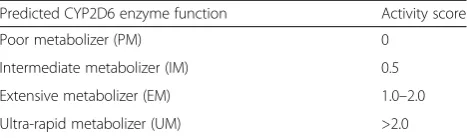
to chromosome 22q13.1 and consists of nine exons with an open reading frame of 1491 base pairs coding for 497 amino acids [2–5]. Variability in enzyme expres-sion has been associated with altered drug effectiveness and safety [2]. In fact, there are four functional genotype groups identified for the enzyme, poor metabolizers (PMs), intermediate metabolizers (IMs), extensive meta-bolizers (EMs), and ultra-rapid metameta-bolizers (UMs) based upon the number and activity of the gene copies the pa-tients express (Table 1) [1, 6]. Therefore, many researchers and clinicians have targeted genotypingCYP2D6in efforts to improve drug therapy.
Expanding on previously published work [7–9], we sought to determine the effectiveness and safety of meto-prolol succinate utilizing a systems biology approach, whereby we genotyped the drug-metabolizing enzyme
* Correspondence:[email protected]
3
Department of Emergency Medicine, School of Medicine, University of Colorado, 12401 E. 17th Ave, B215, Aurora, CO 80045, USA
4Rocky Mountain Poison & Drug Center, Denver Health and Hospital Authority, Denver, CO 80203, USA
Full list of author information is available at the end of the article
CYP2D6 as well as the drug target, β1-adrenoreceptor (ADRB1). Additionally, we captured demographic and clinical factors that are necessary to understand the poten-tial for individualized therapy in patients taking metopro-lol succinate. Metoprometopro-lol is a B1 selective antagonist, known as a beta-blocker. Beta-blockers are first-line treatment for heart failure, hypertension (HTN), angina, and myocardial infarction [10–14]. In 2011, 34.5 million prescriptions for metoprolol were written in the USA [15]. Thus, metoprolol is a first-line therapy for several of the most common chronic diseases and is one of the most commonly prescribed drugs in the USA. CYP2D6 is the only clinically pertinent pathway of metoprolol metabol-ism, and polymorphisms have been associated with altered levels of metoprolol [16, 17]. ADRB1 is the drug target, and polymorphisms in this receptor have been associated with variable drug response [7, 18]. Prediction of drug response with knowledge of one without knowledge of the other could be incomplete since both contribute to the ultimate clinical effect [19]. This highlights the importance of accounting for both factors. Prior investigators have identified imperfect associations with CYP2D6 [16, 17] and ADRB1 [7, 18] genotypes, but no study has been appropriately powered to account for variability in both genotypes [19]. No single assay accounts for variants in both genes. Given that multiple single-nucleotide variants (SNVs) and the presence of gene duplication can affect CYP2D6andADRB1, a simple, efficient, and inexpensive method that identifies both SNVs and gene duplication is required to allow for an adequately powered systems biology approach.
CYP2D6 and ADRB1 variants have been identified using long-range polymerase chain reaction (XL-PCR) with PCR restriction fragment length polymorphism (PCR-RFLP) or microarray analysis. Microarray analysis remains expensive for large-scale genotyping. Commer-cially available tests cost a minimum of $500 per patient. XL-PCR with PCR-RFLP accounts for allele variants, and multiplication is inexpensive, easy, and reliable in patients regardless of ethnicity or race [6]. However, XL-PCR with XL-PCR-RFLP requires numerous enzymatic digestions and multiple amplification steps to identify more than one polymorphism in the CYP2D6 gene. In order to conduct a large-scale clinical trial to determine
the effectiveness and safety of metoprolol in treating hypertension, we sought to develop a simple, rapid, yet less expensive assay for CYP2D6 and ADRB1 that accounts for numerous polymorphisms including gene duplications. Drug effectiveness data will be presented at a later date when the trial closes.
Material and methods Study design and setting
This was a prospective observational clinical trial (NCT02293096) that enrolled patients with uncontrolled HTN from clinics, the emergency department, and across the community at the University of Colorado Hospital in Aurora, Colorado.
Subjects
In accordance with the University of Colorado IRB approval, we enrolled subjects with uncontrolled HTN between 30 and 80 years of age. Exclusion criteria included end-stage liver disease, glomerular filtration rate < 60 ml/min/1.73 m2, pregnancy, American Society of Anesthesiologists (ASA) classification of >3, prisoners or wards of the state, decisionally challenged, heart rate < 60 beats per minute, AV block > 240 ms, active reactive airway disease, illicit drug use in the preceding 30 days (excluding marijuana), allergy to metoprolol succinate, or severe peripheral arterial circulatory disorders.
Drug intervention
Patients were initially managed according to the Eighth Joint National Committee guidelines for management of HTN [20]. Patients were started on angiotensin-converting enzyme inhibitor or angiotensin receptor blockers as first-line therapy. If blood pressure remained uncontrolled, then metoprolol succinate was added. Patients were then followed up and metoprolol titrated weekly for 4 weeks. Drug effectiveness data will be presented at a later date.
DNA isolation
Genomic DNA was extracted from whole blood via the Puregene® Blood Core kit B (Qiagen) according to the manufacturer’s instructions.
Long-range PCR analyses to determine CYP2D6 gene multiplication
We analyzedCYP2D6duplication using long-range PCR with the primers described by Lovlie et al. [21]. This primer combination amplifies a 5.2-kb PCR fragment from theCYP2D7-CYP2D6intergenic regions in all indi-viduals and a 3.6-kb PCR fragment from the CYP2D6-CYP2D6 region in individuals with a duplication of the gene [22]. The amplification was done using the Phusion High-Fidelity DNA Polymerase kit (New England
Table 1PredictedCYP2D6enzyme function based upon the activity score derived from SNV identification
Predicted CYP2D6 enzyme function Activity score
Poor metabolizer (PM) 0
Intermediate metabolizer (IM) 0.5
Extensive metabolizer (EM) 1.0–2.0
Ultra-rapid metabolizer (UM) >2.0
Some genes have partial functionality based upon in vitro enzyme activity for specific substrates. This table is adapted from Crews et al.and Gaedigk et al. [1,6]
Biolabs). The reaction components included 2 μl of 5× Phusion HF buffer, 0.2 μl of 25 mM dNTPs, 0.5 μl of 10μM/μl forward primer, 0.5μl of 10μM/μl reverse pri-mer, 1μl of template DNA, 0.2μl of Phusion DNA poly-merase, 0.3 μl DMSO, 2.5 μl of BETAIN, and 2.8 μl of nuclease-free water. The total reaction volume was 10μl. Thermal cycling conditions were as follows: 98 °C for 30 s followed by 35 cycles of 98 °C for 10 s, 67 °C for 30 s, and 72 °C for 2 min 30 s. After cycling, samples were stored at 4 °C. PCR products were analyzed by electrophoresis.
Long-range PCR analyses to determine CYP2D6 gene deletion
To detect deletion of the entireCYP2D6gene, (CYP2D6 *5) we performed a multiplex longer-PCR reaction with the primers described by Okubo et al. [23]. The reaction com-ponents included 2 μl of 5× Phusion HF buffer, 0.2 μl of 25 mM dNTPs, 0.2μl of 10μM F1 primer, 0.2μl of 10μM R2 primer, 2μl of 10μM F3 primer, 1μl of template DNA, 0.2μl of Phusion DNA polymerase, 2.5μl of BETAIN, and 1.7μl of nuclease-free water. The PCR conditions were as follows: initiation at 98 °C for 3 min, 35 cycles of 98 °C for 10 s and 70 °C for 30 s, termination at 72 °C for 2 min 30 s, and a final elongation at 72 °C for 10 min. The PCR prod-ucts were examined by electrophoresis and include the amplification of a 3.5-kb fragment, which indicatesCYP2D6 *5, and a 4.7-kb fragment, which indicates CYP2D6 wild type.
SNV selection
We detected 20 variants associated with alteredCYP2D6 enzyme activity. SNVs were chosen because they are representative of major haplotypes associated with al-tered enzyme function without providing redundancy of rsIDs leading to the same functional activity within the same allele variant (Table 2). If none of these SNVs were identified, the allele designation was defaulted to the ref-erence allele,CYP2D6*1. Haplotype analysis forCYP2D6 was based upon predicted enzyme activity of the SNVs identified in the genotyping stage.
Additionally, twoADRB1SNVs were genotyped (Table 2) because haplotypes of these alleles are known to be associ-ated with altered clinical response to metoprolol treatment (Table 3). If neither of these SNVs were identified, the al-lele was defaulted to Ser49 and Gly389, the reference allele.
Genotyping
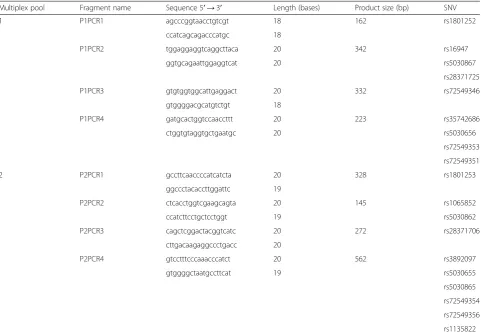
Genotyping was performed using two separate multiplex reactions. First, we used PCR to amplify a purified tem-plate DNA fragment that included the target nucleotide. We designed a total of eight pairs of PCR primers (Table 4) that were divided into two separate pools. The PCR was performed with the AmpliTaq® Gold kit (Applied
Biosystems) using a hot start/touchdown PCR assay. The 10μl reaction included 1 μl of template DNA, 1.6 μl of 10× GeneAmp® PCR Buffer, 0.15 μl of 25 mM/each dNTPs, 0.4μl of 1μM/each primer mix, 2.15μl of 50 mM MgCl2, 0.15 μl of 5 U/μl AmpliTaq Gold, and 4.55 μl of
nuclease-free water. Thermal cycling conditions were as follows: 94 °C for 5 min followed by 15 cycles of 94 °C for 30 s; annealing temperature steps down every cycle by
Table 2CYP2D6andADRB1variant alleles with rsIDs and subsequent effect on the gene sequence
Allele Major nucleotide variation SNV Effect
*1 Presumed NA Wild type
*2 2850C>G rs16947 Arg296Cys
*3 2549delA rs35742686 Frameshift
*4 100C>T rs1065852 Pro34Ser
1846G>A s3892097 Splicing defect
*6 1707delT rs5030655 Frameshift
*7 2935A>C rs5030867 His324Pro
*9 2615_2617delAAG rs5030656 Lys281del
*10 100C>T rs1065852 Pro34Ser
*12 124G>A rs5030862 Gly42Arg
*14 1758G>A rs5030865 Gly169Arg
*17 1023C>T rs28371706 Thr107Ile
2850C>T rs16947 Arg296Cys
*19 2539_2542delAACT rs72549353 255Frameshift
*20 1973_1974insG rs72549354 211Frameshift
*38 2587_2590delGACT rs72549351 271Frameshift
*40 1863_1864insTTTCGCCCCX2 rs72549356 174_175insFRP × 2
*41 2850C>T rs16947 Arg296Cys
2988G>A rs38371725 Splicing defect
*42 3259_3260insGT rs72549346 363Frameshift
*49 100C>T rs1065852 Pro34Ser
1611T>A rs1135822 Phe120Ile
*69 100C>T rs1065852 Pro34Ser
2850C>T rs16947 Arg296Cys
2988G>A rs38371725 Splicing defect
ADRB 1 Ser49Gly
A>G rs1801252 Ser49Gly
ADRB 1 Gly389Arg
G>C rs1801253 Gly389Arg
Table 3ADRB1 haplotype and associated metoprolol clinical effect
ADRB1haplotypes Metoprolol clinical effect
49Ser389Arg/49Ser389Arg Threefold greater diastolic blood pressure reduction [7,12]
49Ser389Arg/49Gly389Arg Good responder [12]
49Ser389Gly/49Gly389Arg and 49Ser389Gly/49Ser389Gly
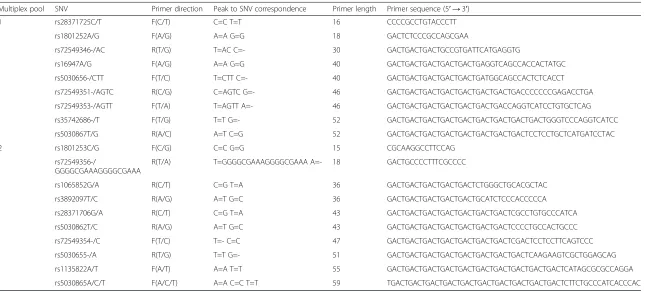
0.5 °C (from 63 to 56.5 °C) every 30 s and then 72 °C for 1 min. The annealing temperature for the final 25 cycles was 56 °C with a denaturation temperature of 94 °C for 30 s and extension temperature of 72 °C for 1 min. After PCR, the products were first treated with shrimp alkaline phosphatase (SAP) and Exonuclease Ι(Exo Ι) to remove excess primers and dNTPs. Two units of SAP and 1 unit of ExoΙwere added to 5μl of PCR product and incubated at 37 °C for 30 min and then 80 °C for 15 min. Second, we performed multiplex single-base extraction (SBE) tions. We designed 19 SBE primers and divided the reac-tions into two pools. See Table 5. Each SBE reaction was carried out in a 10 μl final volume containing 5 μl of SNaPshot Multiplex Ready Reaction Mix, 2 μl of pooled PCR products, 1μl of pooled SNaPshot primers (0.3μmol/ eachμl), and 2μl of deionized water. Extension was per-formed for 25 cycles under the following conditions: 96 °C for 10 s, 50 °C for 5 s, and 60 °C for 30 s. To remove ddNTPs, the SBE reactions were then treated with 1.0 unit of calf-intestinal phosphatase (CIP) and incubated at 37 °C for 30 min. The enzyme was deactivated by incubating at 80 °C for 15 min. The samples were run by electrophoresis on the 3130 Genetic Analyzer (Applied Biosystems). The
subsequent data were analyzed with GeneScan software and GeneScan-120 LIZ size standard.
CYP2D6 multiple-copy allele determination
The SNaPshot Multiplex System (Applied Biosystems) is a primer extension-based method developed for the ana-lysis of SNVs. Theoretically, with the same SNV peak in the same reacting system with the same reaction condi-tions, a comparatively higher density means more DNA copies, and the ratios of any two peak densities of the same sample are relatively inflexible. We identified the copy numbers and duplicated/multiplicated allele by the ratio of the peak densities. In each pool, we designed one primer to identify anADRB1gene’s SNV.ADRB1is a single-copy gene which allowed us to use the peaks of ADRB1 gene’s SNVs as the inner standard peaks. We calculated the ratios of the peak density of CYP2D6 SNVs to the peak density of the ADRB1 SNV. We set the reliability value range of the ratios of each SNV based on the values of the ratio of single-copy control samples with the same SNVs. If a ratio of a SNV of a known duplicated sample was greater than the max-imum of the reference reliability range, this SNV was
Table 4The oligonucleotide PCR primers used for amplification of genomic DNA to obtain template
Multiplex pool Fragment name Sequence 5′→3′ Length (bases) Product size (bp) SNV
1 P1PCR1 agcccggtaacctgtcgt 18 162 rs1801252
ccatcagcagacccatgc 18
P1PCR2 tggaggaggtcaggcttaca 20 342 rs16947
ggtgcagaattggaggtcat 20 rs5030867
rs28371725
P1PCR3 gtgtggtggcattgaggact 20 332 rs72549346
gtggggacgcatgtctgt 18
P1PCR4 gatgcactggtccaaccttt 20 223 rs35742686
ctggtgtaggtgctgaatgc 20 rs5030656
rs72549353
rs72549351
2 P2PCR1 gccttcaaccccatcatcta 20 328 rs1801253
ggccctacaccttggattc 19
P2PCR2 ctcacctggtcgaagcagta 20 145 rs1065852
ccatcttcctgctcctggt 19 rs5030862
P2PCR3 cagctcggactacggtcatc 20 272 rs28371706
cttgacaagaggccctgacc 20
P2PCR4 gtcctttcccaaacccatct 20 562 rs3892097
gtggggctaatgccttcat 19 rs5030655
rs5030865
rs72549354
rs72549356
Table 5The oligonucleotide primers for SNaPshot primer extension reactions
Multiplex pool SNV Primer direction Peak to SNV correspondence Primer length Primer sequence (5′→3′)
1 rs28371725C/T F(C/T) C=C T=T 16 CCCCGCCTGTACCCTT
rs1801252A/G F(A/G) A=A G=G 18 GACTCTCCCGCCAGCGAA
rs72549346-/AC R(T/G) T=AC C=- 30 GACTGACTGACTGCCGTGATTCATGAGGTG
rs16947A/G F(A/G) A=A G=G 40 GACTGACTGACTGACTGACTGAGGTCAGCCACCACTATGC
rs5030656-/CTT F(T/C) T=CTT C=- 40 GACTGACTGACTGACTGACTGATGGCAGCCACTCTCACCT
rs72549351-/AGTC R(C/G) C=AGTC G=- 46 GACTGACTGACTGACTGACTGACTGACTGACCCCCCCGAGACCTGA
rs72549353-/AGTT F(T/A) T=AGTT A=- 46 GACTGACTGACTGACTGACTGACTGACCAGGTCATCCTGTGCTCAG
rs35742686-/T F(T/G) T=T G=- 52 GACTGACTGACTGACTGACTGACTGACTGACTGACTGGGTCCCAGGTCATCC
rs5030867T/G R(A/C) A=T C=G 52 GACTGACTGACTGACTGACTGACTGACTGACTCCTCCTGCTCATGATCCTAC
2 rs1801253C/G F(C/G) C=C G=G 15 CGCAAGGCCTTCCAG
rs72549356-/
GGGGCGAAAGGGGCGAAA
R(T/A) T=GGGGCGAAAGGGGCGAAA A=- 18 GACTGCCCCTTTCGCCCC
rs1065852G/A R(C/T) C=G T=A 36 GACTGACTGACTGACTGACTCTGGGCTGCACGCTAC
rs3892097T/C R(A/G) A=T G=C 36 GACTGACTGACTGACTGACTGCATCTCCCACCCCCA
rs28371706G/A R(C/T) C=G T=A 43 GACTGACTGACTGACTGACTGACTGACTCGCCTGTGCCCATCA
rs5030862T/C R(A/G) A=T G=C 43 GACTGACTGACTGACTGACTGACTGACTCCCCTGCCACTGCCC
rs72549354-/C F(T/C) T=- C=C 47 GACTGACTGACTGACTGACTGACTGACTCGACTCCTCCTTCAGTCCC
rs5030655-/A R(T/G) T=T G=- 51 GACTGACTGACTGACTGACTGACTGACTGACTCAAGAAGTCGCTGGAGCAG
rs1135822A/T F(A/T) A=A T=T 55 GACTGACTGACTGACTGACTGACTGACTGACTGACTGACTCATAGCGCGCCAGGA
rs5030865A/C/T F(A/C/T) A=A C=C T=T 59 TGACTGACTGACTGACTGACTGACTGACTGACTGACTGACTCTTCTGCCCATCACCCAC
Genomic
s
(2016) 10:11
Page
5
of
designated a duplication. We identified the copy number based upon that value. Based on published results and the values of the ratios, we assume all duplicated sam-ples have the total copy number of three since this was the highest number of copy number variants (CNVs) in our controls.
Activity scoring and predicted phenotype assignment
Each identified CYP2D6 SNV was assigned a predicted enzyme activity score [1, 6]. Gene deletions were desig-nated as an activity score of zero. The predicted enzyme phenotype was determined by addition of the individual gene activity scores, accounting for gene copies yielding decreased enzyme activity and gene duplications in each patient. A score of 0 was predicted to be a PM, 0.5 was predicted to be IM, 1–2 was predicted to be an EM, and 2.5 or greater was predicted to have a UM phenotype.
Assay verification
Genotypes were confirmed with known reference geno-type samples from 5 PMs, 4 IMs, and 24 EMs [8, 24]. Copy number variations were determined by Taqman Copy Number Assay (Life Technologies, CA) and then by pyrosequencing allele quantification in the known samples [24].
Results Subjects
The demographics on the initial 79 subjects with un-known haplotypes in this cohort were as follows: the median age was 52 (IQR 45, 60), 46 (58.2 %) were males, 14 (19.9 %) were Hispanic/Latino, 37 (46.8 %) were Black or African American, 3 (3.8 %) were American Indian or Alaskan Native, 3 (3.8 %) were of Asian de-cent, 1 (1.3 %) was Native Hawaiian or Pacific Islander, and 38 (48.1 %) were Caucasian.
Genotypes
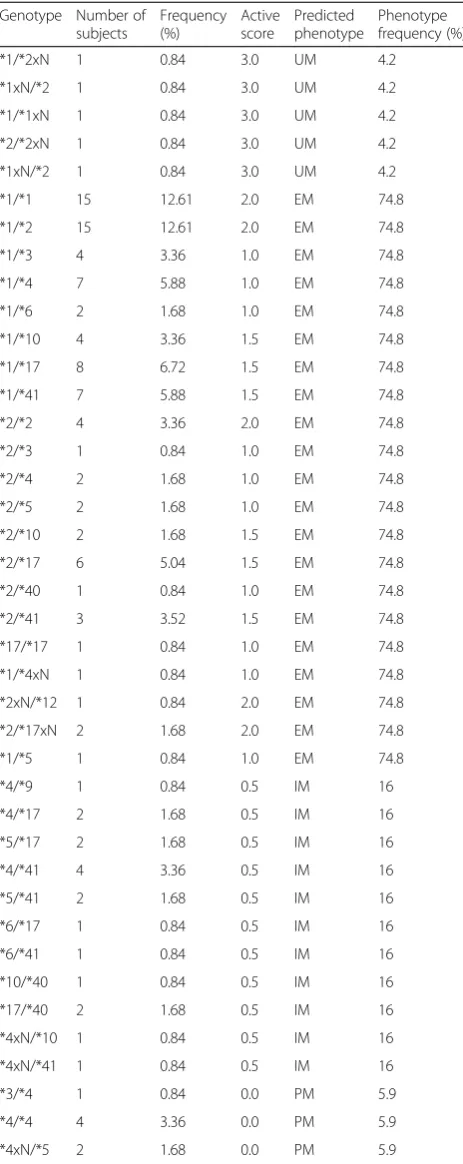
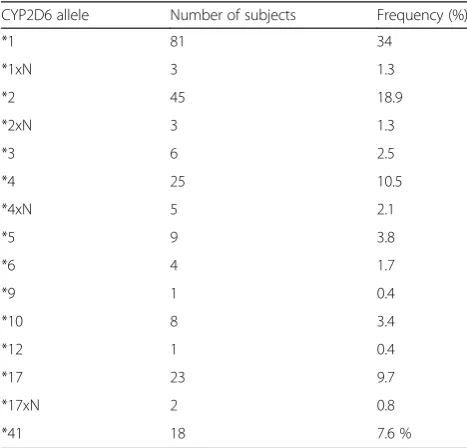
Our genotyping method demonstrated consistent results with all 30 reference standards. The CYP2D6 haplotype analysis revealed 7 (5.88 %) CYP2D6 PMs, 18 (15.1 %) IMs, 89 (74.78 %) EMs, and 5 (4.2 %) UMs (Table 6). We also genotyped two variants of ADRB1, rs1801253 (Gly389Arg) and rs1801252 (Ser49Gly). The Gly389Arg genotype is Gly/Gly 18 (15.1 %), Gly/Arg 58 (48.7 %), and Arg/Arg 43 (36.1 %). The Ser49Gly genotype is Ser/ Ser 82 (68.9 %), Ser/Gly 32 (26.9), and Gly/Gly 5 (4.2 %). See Table 7. CYP2D6 allele frequencies are shown in Table 8. All genotypes were in the Hardy-Weinberg equilibrium (HWE) after allele designation by SNV iden-tification and CNV determination.
Table 6Distribution ofCYP2D6genotypes and phenotypes (n= 119, including 79 unknown subjects and 30 reference subjects)
Genotype Number of subjects
Frequency (%)
Active score
Predicted phenotype
Phenotype frequency (%)
*1/*2xN 1 0.84 3.0 UM 4.2
*1xN/*2 1 0.84 3.0 UM 4.2
*1/*1xN 1 0.84 3.0 UM 4.2
*2/*2xN 1 0.84 3.0 UM 4.2
*1xN/*2 1 0.84 3.0 UM 4.2
*1/*1 15 12.61 2.0 EM 74.8
*1/*2 15 12.61 2.0 EM 74.8
*1/*3 4 3.36 1.0 EM 74.8
*1/*4 7 5.88 1.0 EM 74.8
*1/*6 2 1.68 1.0 EM 74.8
*1/*10 4 3.36 1.5 EM 74.8
*1/*17 8 6.72 1.5 EM 74.8
*1/*41 7 5.88 1.5 EM 74.8
*2/*2 4 3.36 2.0 EM 74.8
*2/*3 1 0.84 1.0 EM 74.8
*2/*4 2 1.68 1.0 EM 74.8
*2/*5 2 1.68 1.0 EM 74.8
*2/*10 2 1.68 1.5 EM 74.8
*2/*17 6 5.04 1.5 EM 74.8
*2/*40 1 0.84 1.0 EM 74.8
*2/*41 3 3.52 1.5 EM 74.8
*17/*17 1 0.84 1.0 EM 74.8
*1/*4xN 1 0.84 1.0 EM 74.8
*2xN/*12 1 0.84 2.0 EM 74.8
*2/*17xN 2 1.68 2.0 EM 74.8
*1/*5 1 0.84 1.0 EM 74.8
*4/*9 1 0.84 0.5 IM 16
*4/*17 2 1.68 0.5 IM 16
*5/*17 2 1.68 0.5 IM 16
*4/*41 4 3.36 0.5 IM 16
*5/*41 2 1.68 0.5 IM 16
*6/*17 1 0.84 0.5 IM 16
*6/*41 1 0.84 0.5 IM 16
*10/*40 1 0.84 0.5 IM 16
*17/*40 2 1.68 0.5 IM 16
*4xN/*10 1 0.84 0.5 IM 16
*4xN/*41 1 0.84 0.5 IM 16
*3/*4 1 0.84 0.0 PM 5.9
*4/*4 4 3.36 0.0 PM 5.9
*4xN/*5 2 1.68 0.0 PM 5.9
PMpoor metabolizer,IMintermediate metabolizer,EMextensive metabolizer,
UMultra-rapid metabolizer
Copy number variants
We identified 13 subjects with CNVs with predicted enzyme activities scores ranging from 0 to 3 (Table 9). An example CNV determination is as follows. One sam-ple had a genotype of *4/*41 and the total gene copy number of three. In this sample, we detected four heterozygous SNVs: rs1065852, rs3892097, rs28371725, and rs16947. The ratio of rs1065852 was 0.92, higher than the maximum of the reference reliability range (0.7–0.85). The ratio of rs3892097 was 0.98, higher than the maximum of the reference reliability range (0.6–0.9). The ratio of rs28371725 was 1.97, lower than the mini-mum of the reference reliability range (2.4–2.9). The ratio of rs16947 was 1.09, lower than minimum of the reference reliability range (1.28–1.38). All these ratios suggest that the variant allele, *4 was duplicated in this sample. Thus, the genotype is *4xN/*41. Since *4 is a non-functional allele, the activity score is assigned 0, and *41 is a reduced function allele, assigned an activity score of 0.5, even if the *4 is duplicated, the activity
score remains 0.5. Hence, the genotype for this sample was designated IM (Table 6).
Assay verification
Genotyping results for the UM alleles showed a high degree of concordance between the Taqman Copy Number Assay paired with pyrosequencing quantification [24] and our SNaPshot methods. In fact, the only difference between the two assays was the identification of an additional CYP2D6*5 gene deletion with our multiplex longer-PCR method. Therefore, this assay is reliable forCYP2D6 geno-typing dependent upon the polymorphisms listed.
Limitations
This method should be validated in an additional cohort with known genotypes to ensure concordance with other haplotype designations. This assay has not been vali-dated to determine more than three CNVs because the control samples did not contain subjects with more than three. However, more than three CNVs of the identified SNVs are universally considered UMs. If additional CNVs of SNVs with associated lower activity scores are found, this may become important for haplotype distinc-tion, depending upon the genotype at the second loci. Additional SNVs with altered predicted enzyme activity will not be captured unless the additional primers are added to the reaction pool. This flexibility of the method is an advantage though the assay is limited by 10 SNVs per pool and identification of allele duplications requires samples to be tested in batches in order to establish ref-erence data. Oversaturation of the assay with additional primers in each pool may lead inconsistent detection of SNVs. Therefore, significantly increasing the number of SNVs identified will require larger volumes of DNA. With the presented assay, less than 60 ng of DNA was necessary to genotype 10 SNVs in these two genes in each sample.
Discussion
We have demonstrated that the SNaPshot method of genotypingCYP2D6 and ADRB1is reliable and efficient
Table 7ADRB1genotype
ADRB1haplotype Number of subjects Frequencies (%) Expected metoprolol clinical effect
49Ser389Arg/49Ser389Arg 30 25.2 Threefold greater diastolic blood pressure reduction [7,12]
49Ser389Arg/49Gly389Arg 8 6.7 Good responder [12]
49Ser389Gly/49Gly389Arg 22 18.5 Non-responders [7,12]
49Ser389Gly/49Ser389Gly 16 13.4 Non-responders [7,12]
49Ser389Gly/49Gly389Gly 2 1.7 Unknown, designated good responders by prior investigators [7,12]
49Ser389Gly/49Ser389Arg 36 30.3 Good responder [12]
49Gly389Arg/49Gly389Arg 5 4.2 Unknown, designated good responders by prior investigators [7,12]
Table 8CYP2D6Allele frequencies
CYP2D6 allele Number of subjects Frequency (%)
*1 81 34
*1xN 3 1.3
*2 45 18.9
*2xN 3 1.3
*3 6 2.5
*4 25 10.5
*4xN 5 2.1
*5 9 3.8
*6 4 1.7
*9 1 0.4
*10 8 3.4
*12 1 0.4
*17 23 9.7
*17xN 2 0.8
for rapidly identifying numerous SNVs. We demonstrate concordance with known reference standards using this method that requires no enzymatic digestion and can be performed at high volumes. The only difference was an additional identification of a CYP2D6*5 gene deletion not identified by the Taqman method. Less than 60-ng genomic DNA was used for each sample in our assay. The assay is flexible; it would be easy to add additional primers to cover more CYP2D6 SNVs should this be necessary. This customizable assay has advantages given the speed of discovery of CYP SNV identification. As demonstrated by the success withCYP2D6, the multiplex SNaPshot method can be used for designing genotype as-says for complex genotyping circumstances rapidly and inexpensively.
This method allows genotyping patients for two genes at only $40 per sample compared to commercially available microarray assays that cost in excess of $500 per sample. While the assay is limited by 10 SNVs per pool, this provided flexibility of the assay to add additional SNVs should they be clinically important. Additional SNVs would require additional DNA, but only 30 ng is required per pool allowing for significant up-scaling of the assay. This method is well suited for pharmacogenes with well-established clinical associa-tions and a finite number of SNVs.
Subjects in our cohort had predicted phenotype fre-quencies similar to European populations.
Genotypes for CYP2D6 and ADRB1demonstrate that 25 % may have a gene-gene interaction affecting their metoprolol therapy. Results in our cohort demonstrate a non-responder haplotype in 31.9 % of subjects. Liu et al.
demonstrated a non-responder phenotype based upon these same haplotypes in 45.9 % of subjects in that trial [18]. Variability in ethnic proportions may explain this discrepancy though the frequencies are similar. These genes do not co-segregate, requiring knowledge of both genotypes to determine this interaction potential. Paired with clinical outcomes, these gene-gene interactions can be further clarified as the cohort matures. Overall, the multiplex SNaPshot represents a valuable tool for systems biology studies in need of flexible genotyping methods.
Conclusion
Our multiplex SNaPshot protocol allows for specific and accurate detection of CYP2D6 and ADRB1 genotypes. This platform is flexible, simple, efficient, and suited for high throughput.
Competing interests
The authors declare that they have no competing interests.
Authors’contributions
SB and AAM designed the assay. SB performed the multiplex assay. RMC provided the standards for the assay. HKF and OE enrolled the subjects and processed the samples. TF and RS coordinated the laboratory where the assay was performed and worked on troubleshooting the assay. AAM is the principle investigator of this study. All authors contributed to the development and critical review of the manuscript. All authors read and approved the final manuscript.
Acknowledgements
None
Disclosures and funding
Dr. Monte receives support from NIH 1 K23 GM110516 and NIH CTSI UL1 TR001082. Dr. Cooper-DeHoff receives funding from NIH U01 GM074492 and U01 HG007269.
Table 9Genotypes, activity score and predicted phenotypes for samples with gene duplications
Genotype (xN) before revision
Activity score Predicted phenotype before revision
Genotype after revision
Activity score Predicted phenotype after revision
*1/*2 3 UM *1/*2xN 3 UM
*4/*41 0.5–1.0 IM OR EM *4xN/*41 0.5 IM
*1/*2 3 UM *1xN/*2 3 UM
*1/*1 3 UM *1/*1xNa 3 UM
*1/*4 1.0–2.0 EM *1/*4xN 1 EM
*4/*5 0 PM *4xN/*5 0 PM
*2/*2 3 UM *2/*2xNa 3 UM
*2/*17 2.0–2.5 UM OR EM *2/*17xN 2 EM
*4/*10 0.5–1.0 IM *4xN/*10b 0.5 IM
*1/*2 3 UM *1xN/*2 3 UM
*2/*17 2.0–2.5 UM OR EM *2/*17xN 2 EM
*4/*5 0 PM *4xN/*5 0 PM
*2/*12 1.0–2.0 EM *2xN/*12 2 EM
a
The number of duplication alleles is far less than single-copy alleles. We assumed the subject was heterozygous for a single-copy allele and the duplicated/multiplicated allele
b
No reference
*4 had a higher distribution or copy number in comparison with *10
Author details
1Human Medical Genetics Program, University of Colorado, Aurora, CO 80045, USA.2Center for Pharmacogenomics, College of Pharmacy, University of Florida, Gainesville, FL 32610, USA.3Department of Emergency Medicine, School of Medicine, University of Colorado, 12401 E. 17th Ave, B215, Aurora, CO 80045, USA.4Rocky Mountain Poison & Drug Center, Denver Health and Hospital Authority, Denver, CO 80203, USA.
Received: 11 March 2016 Accepted: 12 April 2016
References
1. Crews KR, Gaedigk A, Dunnenberger HM, Klein TE, Shen DD, Callaghan JT, Kharasch ED, Skaar TC, Clinical Pharmacogenetics Implementation C. Clinical Pharmacogenetics Implementation Consortium (CPIC) guidelines for codeine therapy in the context of cytochrome P450 2D6 (CYP2D6) genotype. Clin Pharmacol Ther. 2012;91:321–6.
2. Zhou SF. Polymorphism of human cytochrome P450 2D6 and its clinical significance: part I. Clin Pharmacokinet. 2009;48:689–723.
3. Gough AC, Smith CA, Howell SM, Wolf CR, Bryant SP, Spurr NK. Localization of the CYP2D gene locus to human chromosome 22q13.1 by polymerase chain reaction, in situ hybridization, and linkage analysis. Genomics. 1993;15:430–2.
4. Kimura S, Umeno M, Skoda RC, Meyer UA, Gonzalez FJ. The human debrisoquine 4-hydroxylase (CYP2D) locus: sequence and identification of the polymorphic CYP2D6 gene, a related gene, and a pseudogene. Am J Hum Genet. 1989;45:889–904.
5. Eichelbaum M, Baur MP, Dengler HJ, Osikowska-Evers BO, Tieves G, Zekorn C, Rittner C. Chromosomal assignment of human cytochrome P-450 (debrisoquine/ sparteine type) to chromosome 22. Br J Clin Pharmacol. 1987;23:455–8. 6. Gaedigk A, Simon SD, Pearce RE, Bradford LD, Kennedy MJ, Leeder JS. The
CYP2D6 activity score: translating genotype information into a qualitative measure of phenotype. Clin Pharmacol Ther. 2008;83:234–42.
7. Johnson JA, Zineh I, Puckett BJ, McGorray SP, Yarandi HN, Pauly DF. Beta 1-adrenergic receptor polymorphisms and antihypertensive response to metoprolol. Clin Pharmacol Ther. 2003;74:44–52.
8. Hamadeh IS, Langaee TY, Dwivedi R, Garcia S, Burkley BM, Skaar TC, Chapman AB, Gums JG, Turner ST, Gong Y, Cooper-DeHoff RM, Johnson JA. Impact of CYP2D6 polymorphisms on clinical efficacy and tolerability of metoprolol tartrate. Clin Pharmacol Ther. 2014;96:175–81.
9. Terra SG, Pauly DF, Lee CR, Patterson JH, Adams KF, Schofield RS, Belgado BS, Hamilton KK, Aranda JM, Hill JA, Yarandi HN, Walker JR, Phillips MS, Gelfand CA, Johnson JA. beta-Adrenergic receptor polymorphisms and responses during titration of metoprolol controlled release/extended release in heart failure. Clin Pharmacol Ther. 2005;77:127–37.
10. Chobanian AV, Bakris GL, Black HR, Cushman WC, Green LA, Izzo Jr JL, Jones DW, Materson BJ, Oparil S, Wright Jr JT, Roccella EJ. The Seventh Report of the Joint National Committee on Prevention, Detection, Evaluation, and Treatment of High Blood Pressure: the JNC 7 report. Jama. 2003;289:2560–72.
11. Pfeffer MA, Braunwald E, Moye LA, Basta L, Brown Jr EJ, Cuddy TE, Davis BR, Geltman EM, Goldman S, Flaker GC, et al. Effect of captopril on mortality and morbidity in patients with left ventricular dysfunction after myocardial infarction. Results of the survival and ventricular enlargement trial. The SAVE Investigators. N Engl J Med. 1992;327:669–77.
12. Hunt SA, Baker DW, Chin MH, Cinquegrani MP, Feldman AM, Francis GS, Ganiats TG, Goldstein S, Gregoratos G, Jessup ML, Noble RJ, Packer M, Silver MA, Stevenson LW, Gibbons RJ, Antman EM, Alpert JS, Faxon DP, Fuster V, Jacobs AK, Hiratzka LF, Russell RO, Smith Jr SC. ACC/AHA guidelines for the evaluation and management of chronic heart failure in the adult: executive summary: a report of the American College of Cardiology/American Heart Association Task Force on practice guidelines (Committee to Revise the 1995 Guidelines for the Evaluation and Management of Heart Failure): developed in collaboration with the International Society for Heart and Lung Transplantation; endorsed by the Heart Failure Society of America. Circulation. 2001;104:2996–3007.
13. Gibbons RJ, Abrams J, Chatterjee K, Daley J, Deedwania PC, Douglas JS, Ferguson Jr TB, Fihn SD, Fraker Jr TD, Gardin JM, O'Rourke RA, Pasternak RC, Williams SV. ACC/AHA 2002 guideline update for the management of patients with chronic stable angina—summary article: a report of the American College of Cardiology/American Heart Association Task Force on
practice guidelines (Committee on the Management of Patients with Chronic Stable Angina). J Am Coll Cardiol. 2003;41:159–68.
14. Shin J, Johnson JA. Pharmacogenetics of beta-blockers. Pharmacotherapy. 2007;27:874–87.
15. The use of medicines in the United States: review of 2011. IMS Institute for Healthcare Informatics. [https://www.imshealth.com/files/web/IMSH%20 Institute/Reports/The%20Use%20of%20Medicines%20in%20the%20 United%20States%202011/IHII_Medicines_in_U.S_Report_2011]. 16. Goryachkina K, Burbello A, Boldueva S, Babak S, Bergman U, Bertilsson L.
CYP2D6 is a major determinant of metoprolol disposition and effects in hospitalized Russian patients treated for acute myocardial infarction. Eur J Clin Pharmacol. 2008;64:1163–73.
17. Ismail R, Teh LK. The relevance of CYP2D6 genetic polymorphism on chronic metoprolol therapy in cardiovascular patients. J Clin Pharm Ther. 2006;31:99–109.
18. Liu J, Liu ZQ, Yu BN, Xu FH, Mo W, Zhou G, Liu YZ, Li Q, Zhou HH. beta1-Adrenergic receptor polymorphisms influence the response to metoprolol monotherapy in patients with essential hypertension. Clin Pharmacol Ther. 2006;80:23–32.
19. Beitelshees AL, Zineh I, Yarandi HN, Pauly DF, Johnson JA. Influence of phenotype and pharmacokinetics on beta-blocker drug target pharmacogenetics. Pharmacogenomics J. 2006;6:174–8.
20. James PA, Oparil S, Carter BL, Cushman WC, Dennison-Himmelfarb C, Handler J, Lackland DT, LeFevre ML, MacKenzie TD, Ogedegbe O, Smith Jr SC, Svetkey LP, Taler SJ, Townsend RR, Wright Jr JT, Narva AS, Ortiz E. 2014 evidence-based guideline for the management of high blood pressure in adults: report from the panel members appointed to the Eighth Joint National Committee (JNC 8). Jama. 2014;311:507–20.
21. Lovlie R, Daly AK, Molven A, Idle JR, Steen VM. Ultrarapid metabolizers of debrisoquine: characterization and PCR-based detection of alleles with duplication of the CYP2D6 gene. FEBS Lett. 1996;392:30–4.
22. Bathum L, Johansson I, Ingelman-Sundberg M, Horder M, Brosen K. Ultrarapid metabolism of sparteine: frequency of alleles with duplicated CYP2D6 genes in a Danish population as determined by restriction fragment length polymorphism and long polymerase chain reaction. Pharmacogenetics. 1998;8:119–23.
23. Okubo M, Murayama N, Miura J, Shimizu M, Yamazaki H. A rapid multiplex PCR assay that can reliably discriminate the cytochrome P450 2D6 whole-gene deletion allele from 2D6*10 alleles. Clin Chim Acta. 2012;413:1675–7. 24. Langaee T, Hamadeh I, Chapman AB, Gums JG, Johnson JA. A novel simple
method for determining CYP2D6 gene copy number and identifying allele(s) with duplication/multiplication. PLoS One. 2015;10:e0113808.
• We accept pre-submission inquiries
• Our selector tool helps you to find the most relevant journal
• We provide round the clock customer support
• Convenient online submission
• Thorough peer review
• Inclusion in PubMed and all major indexing services
• Maximum visibility for your research Submit your manuscript at
www.biomedcentral.com/submit