Research
Article
User-Centric Energy-Efficient Multimedia
Multicast/Broadcast Solutions: A Survey
Chetna Singhal
1,*and Swades De
11Department of Electrical Engineering and Bharti School of Telecommunication, Indian Institute of Technology Delhi,
New Delhi, India
Abstract
Multimedia multicast/broadcast transmissions provide simultaneous access to a common service to the heterogeneous user equipments (UEs) with different device and channel characteristics. One of the major challenges to the service providers is the exponential growth of energy-constrained UEs. In this context, the optimization of multimedia multicast/broadcast transmissions that consider the constraints imposed by the UEs is a major concern of the service providers to ensure high Quality of Experience levels to the customers with diverseconstraints.Thispaperpresentsanoverviewofthemultimediamulticast/broadcastchallengesandopen issues,identifiesthemainfactorsandtheassociatedconstraintsthatimpactthemultimediatransmission,and provides a comprehensiveclassification, comparison, and analysis of thestate-of-the-art user-centric, energy-efficientmultimediamulticast/broadcastapproaches.
Receivedon 21 March 2015;acceptedon 08 May 2015;publishedon 13 July 2015
Keywords: Multimedia Multicast/Broadcast,Mobile Communications, Scalable Video Coding, Heterogeneous Users, EnergySaving,QualityofExperience,ResourceAllocation
Copyright 2015 © C. Singhal and S. De, licensedto ICST. This is anopen access articledistributedunder theterms of the Creative Commons Attribution license (http://creativecommons.org/licenses/by/3.0/), which permits unlimiteduse,distributionandreproductioninanymediumsolongastheoriginalworkisproperlycited.
doi:10.4108/ue.2.5.e4
1. Introduction
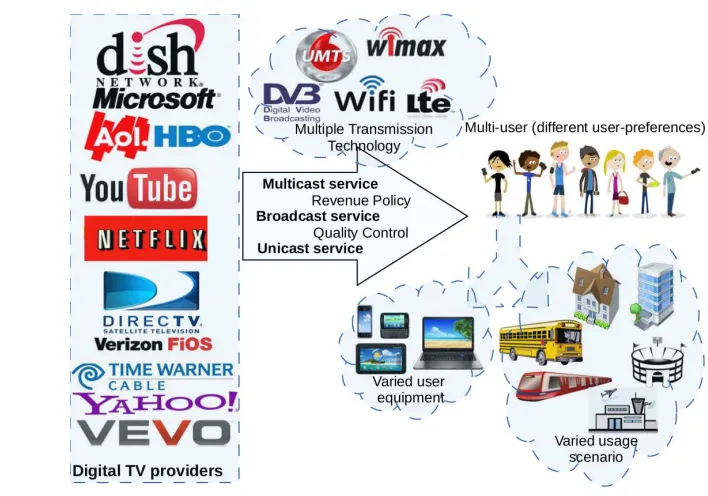
With the latest advancements in communication technologies, the high-end mobile computing devices, like smartphones, tablets, PDAs, small notebooks, have become increasingly affordable and powerful [1– 3]. Improved CPU, graphics, and display capabilities provide support for a better multimedia experience to the mobile users that have higher expectations and increased demands towards rich services at higher quality levels. Advances in mobile, communications, and multimedia technologies have further led to a drastic increase in the number of heterogeneous consumers that watch multimedia content from several sources, under various formats, and on different types of devices, while on the move (e.g., on foot, in car, on bus) or being stationary (e.g., at home, office, airport, coffee bars), as illustrated in Fig.1.
According to Cisco [4], the global mobile data traffic will further increase thirteen-fold by 2017, when compared to 2012. Estimating more than 11.2 exabytes
*
T**Corresponding author. Email:[email protected]
per month will be transferred, out of that 55% will be exchanged over wireless. Because of the growing popularity of video-sharing websites (e.g., YouTube, Facebook) the mobile video traffic is expected to account for 66% of all mobile data traffic by 2017 with 12% of the global mobile data traffic being generated by tablets. According to [1], video is the largest and fastest growing mobile data traffic segment which would increase 55 percent annually until the end of 2019 and would account for more than 50 percent of global mobile traffic. Additionally, a study reported by Google notes that a person spends on average 4.4 hours per day of his/her leisure time in front of screens (e.g., smartphone, laptop/PC, tablet, television) [5]. Moreover, the report shows that 90% of all media interactions of the users on a daily basis are screen based.
Figure 1. Heterogeneous multimedia environment
mobile devices are growing even faster. Consequently, the overall quality of user experience (QoE) is still far from optimal. This is because, all these popular rich multimedia content types (e.g., high definition movies, news or sports video clips, live sport/concert event streaming, video games) put pressure on the existing communication resources in terms of their bandwidth requirements and real-time constraints.
In this context, unicast transmissions are reliable only when the number of users accessing the multimedia content is low. As the number of users increases, the network becomes overloaded and the users might experience high data loss rates and/or service disconnection, leading to significant degradation in the user’s perceived quality. To this end, broadcast delivery of popular multimedia content is an alternative solution to unicast delivery, as it enables delivery of a single data stream to multiple users simultaneously. Thus, it can provide network access to various services for a practically unlimited number of users [11]. An example of such a network is the terrestrial TV broadcast network. However, a major drawback of the broadcast network is that, it is useful only if all the users are interested in the broadcast data. Another alternative is the multicast transmission which represents the best solution if the content is destined only to a certain group of users.
However, the challenges that the network operators are facing include network resources optimization, especially for popular multimedia content delivery while ensuring uninterrupted, continuous, and smooth services over a heterogeneous environment with varying end-user
constraints. Another challenge is the quality of service (QoS) provisioning over wireless networks to a high number of customers. This is due to the constraints of wireless links, user mobility, and diversity of multi-screen, high-end mobile devices (different display size, processing capabilities, channel impairments).
From the end-user perspective, one of the key consumer interests is the battery lifetime of their high-end mobile devices. It is known that real-time applications, in particular those which are based on multimedia, have strict QoS requirements, but they are also the most power-consuming.
This paper aims to provide a comprehensive survey of the current research on user-centric energy-efficient multimedia broadcast/multicast techniques. The main contributions are:
an overview of the multimedia broadcast/multicast transmission and challenges is provided, including discussion on currently supported underlying technologies;
the key factors and the associated constraints that impact the multimedia broadcast/multicast transmissions over the heterogeneous environment are identified and discussed;
a categorization, comparison, and analysis of state-of-the-art user-centric energy-efficient broad-cast/multicast transmission solutions is provided.
The rest of the article is organized as follows: Section
broadcast. Section 3 covers the recent survey stud-ies in the area of multimedia streaming and multi-cast/broadcast and the scope of this article. State-of-the-art multicast/broadcast multimedia delivery solutions in the literature and the associated open research issues are presented in Section4, which is further consolidated and summarized in Section6.
2. Multimedia Multicast/Broadcast
Challenges
2.1. Unicast versus Multicast/Broadcast
The ‘Always Best Connected’ scenario envisions a heterogeneous wireless environment where the switch-over from one network technology to the other, and from one transmission type to another, needs to be done seamlessly – ideally matching the users’ monetary cost/energy/QoS preferences.
The unicast transmissions are defined as one-to-one transmissions where each user sends and receives data individually. The advantages of unicast transmission are that it offers a fine-grain control of each transmission independently. In this way the service providers can offer personalized unicast services, they could offer on-demand and time-shifted viewing for their consumers which are not constrained by the cost of service. From the network perspective, in unicast transmissions the network resources are consumed when the user is actually using the multimedia services only. One very important advantage is that, it enables the network to optimize the transmission based on the network conditions and/or user equipment (UE) characteristics for each user individually, for example, by using adaptive streaming techniques. However the main limitations of unicast transmission are that, it provides unfavorable scaling behavior if there is a high density of users accessing the same multimedia content at the same time (e.g., watching a sports tournament telecast). In such cases the network becomes overloaded and the users might experience high data loss rates and/or service disconnection, leading to a significant degradation in the user’s perceived quality.
This limitation of unicast transmission is overcome by broadcast/multicast transmissions. As compared to unicast delivery to each receiver, simultaneous multicast delivery to several receivers reduces the aggregate bandwidth required [12]. The main advantages of the broadcast/multicast transmission are the reduced implementation costs at the terminals as well as in the network (e.g., cellular broadcast). Moreover, by offloading from the unicast transmission for the same content to broadcast/multicast transmission, it can achieve vital savings in terms of resources on the server side. However the main limitation of such transmissions is that it does not employ feedback about individual
transmission that would aid optimized resource usage and user-perceived quality.
2.2. Factors and Associated Constraints in
Multicast/Broadcast
The main factors and the associated constraints that impact the multimedia broadcast/multicast transmis-sions to the heterogeneous UEs can be categorized as follows:
User-side Constraints. The constraints are defined by
lower resolution of the playback screen, poor channel condition, high mobility of the user, and limited battery of the UE. These user-side constraints appear on one hand because of the advent on the heterogeneous devices supporting multimedia services, and on the other hand because of the higher data rates supported by the evolving wireless technologies.
Feedback. The feedback about channel conditions, UE
constraints, and user-perceived quality of service enables the transmission optimization of the multimedia content. Thus, feedback in multimedia content broadcast will help adapt to the collective user requirements and their individual channel conditions, so as to improve the end-user perceived performance by adapting to the various dynamic conditions.
Video Coding. Another important aspect of
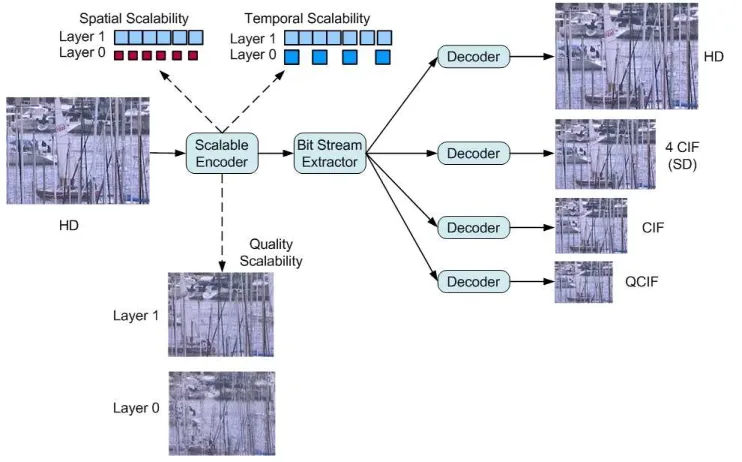
Figure 2. Scalable video coding example
using predictions from the lower layers like the base layer. As illustrated in Fig.2, the spatial scalability of SVC sup-ports different resolutions (e.g., QCIF, CIF, and 4 CIF) in a common bit-stream.Temporal scalabilityis achieved by hierarchical B-picture or low-delay hierarchical P-picture. Quality (SNR) scalability could be considered a special case of spatial scalability with identical picture sizes in base and enhancement layers.
Resource Allocation. Irrespective of the underlying
wireless technology used for multimedia transmission, an important factor is the resource allocation. The two allocation dimensions are time/bit allocation (frame-based) and frequency allocation (sub-carrier based OFDM/OFDMA).
Transmission Rate and Power Allocation. Based on
the channel conditions, different users have different maximum tolerable reception rate. Additional dimension of flexibility is power allocation adaptation that enables the users to receive at a higher rate or with more accuracy.
Energy Saving versus Data Rate Trade-off. There
are two aspects to the trade-off: at the base station (BS) or server side, and at the receiver-side. At the BS rate adaptation based on frequent feedbacks results in more energy consumption in transcoding the multimedia content to suit the tolerable data rate. Additional overhead arises at the server-side for encapsulating the layered multimedia content in transport stream packets, which provides the users an energy saving opportunity by receiving a part of the data. At the receiver-side, with the increase in rate of minimum data to be received by the users (i.e., the base layer, in case of scalable video
content), the energy saving at the small portable device is achieved by discontinuous reception (DRX) scheme, wherein the receiver switches off its radio transceiver during the period it does not need to receive the higher layer content.
Rate versus Distortion Trade-off. For the multimedia
data, with increased data rate the distortion reduces, i.e., the video (and audio) quality improves. This enables optimization formulation with the objective of maximizing the quality under the constraint of total minimum data rate.
3. Related Survey and Scope
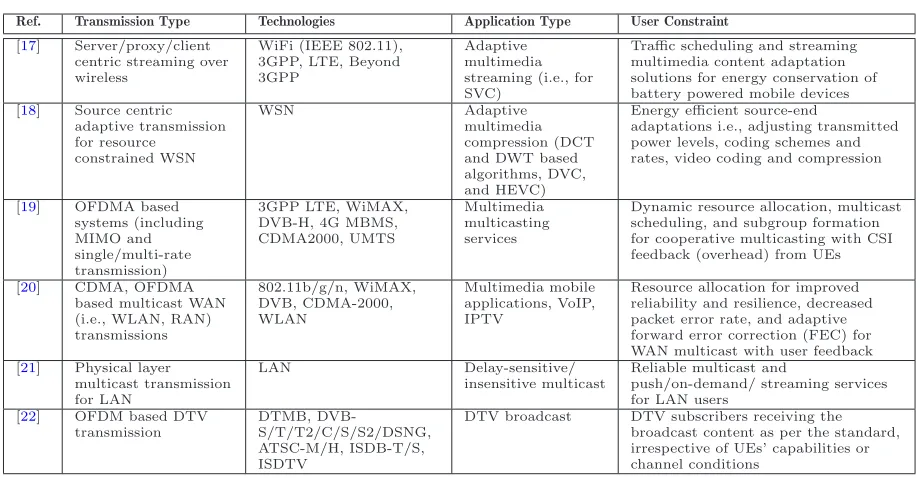
There have been extensive studies on various techniques for user-centric multimedia transmission over the Internet, which are captured in recent surveys [17–22]. The additional scope and contributions of this survey are addressed in this section.
A summary of the existing surveys on multimedia delivery techniques over the Internet is captured in Table
1.
Table 1. Related surveys
Ref. Transmission Type Technologies Application Type User Constraint
[17] Server/proxy/client
centric streaming over wireless
WiFi (IEEE 802.11), 3GPP, LTE, Beyond 3GPP
Adaptive multimedia streaming (i.e., for SVC)
Traffic scheduling and streaming multimedia content adaptation solutions for energy conservation of battery powered mobile devices
[18] Source centric
adaptive transmission for resource
constrained WSN
WSN Adaptive
multimedia compression (DCT and DWT based algorithms, DVC, and HEVC)
Energy efficient source-end
adaptations i.e., adjusting transmitted power levels, coding schemes and rates, video coding and compression
[19] OFDMA based
systems (including MIMO and single/multi-rate transmission)
3GPP LTE, WiMAX, DVB-H, 4G MBMS, CDMA2000, UMTS
Multimedia multicasting services
Dynamic resource allocation, multicast scheduling, and subgroup formation for cooperative multicasting with CSI feedback (overhead) from UEs
[20] CDMA, OFDMA
based multicast WAN (i.e., WLAN, RAN) transmissions
802.11b/g/n, WiMAX, DVB, CDMA-2000, WLAN
Multimedia mobile applications, VoIP, IPTV
Resource allocation for improved reliability and resilience, decreased packet error rate, and adaptive forward error correction (FEC) for WAN multicast with user feedback
[21] Physical layer
multicast transmission for LAN
LAN Delay-sensitive/
insensitive multicast
Reliable multicast and
push/on-demand/ streaming services for LAN users
[22] OFDM based DTV
transmission
DTMB,
DVB-S/T/T2/C/S/S2/DSNG, ATSC-M/H, ISDB-T/S, ISDTV
DTV broadcast DTV subscribers receiving the
broadcast content as per the standard, irrespective of UEs’ capabilities or channel conditions
application layer solutions on SVC, media transcoding and multimedia delivery parameters selection are based on device characteristics, network bandwidth, and CPU heterogeneity. The traffic scheduling and shaping solutions are based on the end points optimization, i.e., pure client-centric, proxy-centric, and server-client centric. The study focused solely on the WiFi (IEEE 802.11 standard), 3GPP, LTE, and Beyond 3GPP standards.
Ma et al. [18] addressed the energy efficiency from the viewpoint of compression and communication techniques in resource-constrained systems, such as WSN and mobile devices. The solutions in [18] can be categorized in two: (1) Multimedia compression – which include energy-efficient image compression methods based on DCT and DWT, video compression based on H.264, DVC, and HEVC standards; (2) Multimedia transmission – which include cross-layer techniques for wireless multimedia communication such as optimization-based (e.g., dynamic programming, discrete ergodic search, and mathematical closed-form) error protection techniques to minimize energy consumption and distortion of the multimedia content, cross-layer optimization using channel code design, and joint compression and communication optimizations considering the power consumption in encoding, compression, and transmission. The authors provided a comprehensive survey on source-end adaptations by adjusting transmit power, source coding, channel coding, and video compression.
Afolabi et al. [19] studied the multicast scheduling and resource allocation algorithms in OFDMA-based
systems. Multicast group formation, group rate determi-nation, channel-aware scheduling, and dynamic resource allocation were discussed. The emphases were on MIMO, single-rate and multi-rate transmission, transmit power control, maximizing spectral efficiency, layered coding and multiple description coding, and CSI feedback over-head. The authors reviewed the algorithms on through-put maximization, fairness and performance complexi-ties. In terms of technology standards the survey mainly covered 3GPP LTE and WiMAX, with a brief discussion on DVB-H, 3G/4G MBMS, CDMA2000, and 3G UMTS. Vella et al. [20] studied various network topologies, including ad hoc networks under the ambit of access net-works (IEEE 802.11b/g/n, WiMAX, DVB, CDMA2000, WLAN). The main focus was on reliability and resilience, feedback-based optimizations, and adaptive channel cod-ing. A categorization of the techniques was presented based on (1) wireless access network, which deals with wireless local area networks related solutions, hybrid solutions involving cooperative approaches, and radio access network related solutions, and (2)schemes classi-fied according to the TCP/IP stack, where layer-specific as well as cross-layer solutions were addressed.
models, namely, push service, on-demand service, and streaming service. Popular congestion control mecha-nisms (window-based, layer-based, rate based) and error control techniques (ARQ, FEC, error-resilient source coding) for multicast communication were noted.
El-Hajjar et al. [22] presented a summary of major developments in the television history, stating the key contributions on standards. A brief discussion on video and coding, transmission technologies, multiplexing formats, was also presented. The DTV standards that were discussed in detail are T, T2, DVB-C, DVB-S, DVB-DSNG, DVB-S2, ATSDVB-C, ATSC-M/H, ISDB, ISDB-T, ISDB-S, ISDTV, and DTMB. The authors compared the DTV standards in terms of video codec, FEC, interleavers, and transmission channel.
Despite the vast amount of research done in this area, the important aspects of multimedia multicast/broadcast optimizations are left out. Thus, the aim of this survey is to offer a comprehensive study on the user-centric, energy-efficient wireless multimedia broadcast/multicast transmission solutions that are available in the literature. In particular, the focus of the current survey is on the following aspects:
rate-distortion trade-off analysis and optimization;
energy saving versus quality studies and optimiza-tion;
UE heterogeneity in optimized resource allocation;
standards-specific solutions on the above aspects.
4. Multimedia Multicast/Broadcast Delivery
Solution Approaches and Open Issues
Due to dynamic wireless channel conditions and user heterogeneity, the main challenge in multimedia broadcast is to negotiate the volume of usable content for different users. Recent research works in the area of multimedia multicast/broadcast for various wireless standards like DVB-H, LTE, and WiMAX, are focused on the heterogeneity of devices within the network and often aim at minimizing the energy consumption either at the transmitting BS or at the UE side. In this section we discuss the recent solutions in literature involving these standards that focus on the energy saving aspect or heterogeneous UEs capability-based multimedia multicast. The existing different resource optimizing research approaches on multimedia multicast/broadcast are first categorized based on the technology used (e.g., DVB-H, LTE, and WiMAX) and then sub-categorized within each technology.
4.1. DVB-H Specific Solution Approaches
DVB-H is a technical specification for mobile TV format that extends the broadcast services to the
mobile handsets. DVB-H was formally adopted as an European Telecommunications Standards Institute (ETSI) standard in November 2004[7, 23]. The two key features in H that were additional to DVB-T are: time-slicing and additional FEC, i.e., multi-protocol encapsulated FEC (MPE-FEC) – both at the link layer. The MPE-FEC provides better signal-to-noise ratio (SNR) and doppler performance in mobile channels for the MPE data. The time-slicing technique of DVB-H benefits in terms of power-saving of the mobile broadcast receivers, by transmission of data in bursts, thereby allowing the receivers to switch-off during the inactive period. At the physical layer there are four additions to the DVB-T specifications: 1) two additional bits in transmitter parameter signaling (TPS) indicating DVB-H service and MPE-FEC usage, 2) additional 4K OFDM mode included due to the trade-offs of mobility and Single Frequency Network (SFN) cell size and allowing receptions in medium size SFN at very high speeds, 3) in-depth interleaving bits over four or two OFDM symbols for 2K and 4K modes which improves tolerance for impulse noise, and 4) the 5 MHz channel bandwidth to be used in non-broadcast bands. DVB-H is backward compatible to DVB-T.
A basic framework of a DVB-H system is shown in Fig. 3. It may be observed that the IP packets are encapsulated with MPE-FEC by the DVB-H IP encapsulator. These packets are multiplexed with the moving picture experts group-2 (MPEG-2) TV service data to give transport stream (TS) packets of size 188 bytes each. The TS packet is then modulated by the modulator using 2K, 8K OFDM modes for DVB-T, and 4K OFDM mode additionally for DVB-H. The modulator performs the function of Reed Solomon (RS) encoding, interleaving, convolution coding, puncturing, symbol mapping, pilot insertion, and inverse fast Fourier transform (IFFT). The modulated signal is then sent via the RF medium/channel to the receiver which comprises of demodulator and decapsulator and performs the inverse functions to that of the transmitter.
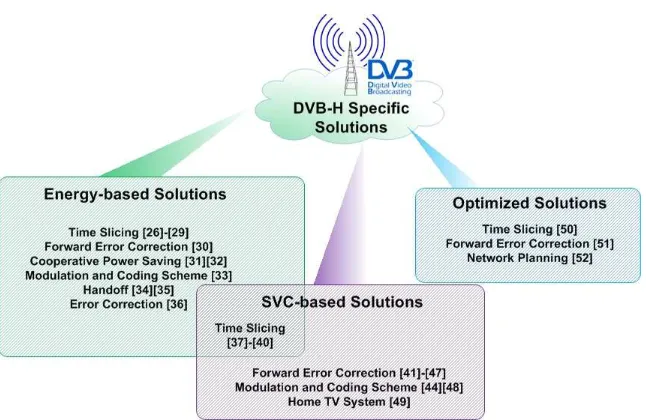
DVB-H provides a built-in function that helps exploiting the video scalability features using the Hierarchical Modulation [24]. It offers an efficient way of carrying multimedia services over terrestrial broadcasting networks to hand-held terminals. However, the standard considers the transmission level details only, and not the UE and channel constraints or the video encoding details. To this end, the existing DVB-H-specific solutions are divided in three categories (Fig.
4).
Energy-based Solutions address the UE energy
Figure 3. DVB-H system framework
Figure 4. Classification of DVB-H-specific solutions
SVC-based Solutions:Several scalable video coding
(SVC)-based approaches are used, such as, Time Slicing [36–39] (these solutions also target UE energy saving), FEC [40–46], MCS [43,47], Home TV Systems [48].
Optimized Solutionstarget at optimizing different
parameters, e.g., minimize download time, mini-mize cost, maximini-mize coverage. However, they do not aim at UE energy saving or the use of SVC. The approaches include Time Slicing [49], FEC [50], Network Planning [51].
Energy-based Solutions.
As noticed in Fig.4, most of the works aim at quantifying the UE energy saving by various approaches.
i)Time-Slicing
Time slicing approach is most common in the energy-based solutions. However the proposed solutions have individually-unique objectives. For example, [25]
proposed the use of a t method, where
delta-t indicates the start time of the Multi-Protocol Encapsulation (MPE) in the current burst. It was argued that this approach increases power saving of the DVB-H receivers. A mathematical estimate of the power consumption was also provided for DVB-H receivers. The simulation results showed that the power saving increases with the optimization of several parameters, such as, increased bit rate, increased burst size, faster transmitter-receiver synchronization. This power saving solution did not explicitly account the multimedia content and encoding details.
optimal burst scheduling algorithm for DVB-H time-slicing systems was proposed in [27]. The aim of the algorithm is to maximize the UE energy saving. The bursts broadcasting is done with a higher bit rate than the video encoding rates, which enables a UE to switch off its radio interface after receiving the burst and thereby save energy. The aspects of UE heterogeneity and source content-specific aspects were unaccounted in these studies.
A trade-off in DVB-H time slicing is UE energy saving versus reception delay. The work in [28] analyzed the optimal channel switching delay with time-sliced DVB-H transmission. The authors studied and optimized the multilateral relationship among compressed video quality, channel switching delay, and UE energy consumption. However, the effects of dynamic wireless channels and the user heterogeneity are marked as open issues that require further studies.
ii)Forward Error Correction (FEC)
An adaptive MPE-FEC decoding based power saving technique for DVB-H was proposed in [29], which is based on the omission of the RS column in the reception processing and uses half RS decoding in the post processing. The proposed mechanism was shown to achieve a higher UE energy saving that depends on the channel errors and current video sequence specific traffic pattern. UE energy saving is studied with respect to mean frame size. Underlying protocols for the proposed solution are IPv4, RTP, and UDP.
iii)Cooperative Power Saving
UE energy saving by using cooperative strategies was proposed in [31] and [32]. Besides the UE -BS communication, the UEs communicate with each other using short-range wireless technology. There are three approaches for the proposed topology-based algorithm are piconet-based centralized, distributed, and the scatternet-based cooperative approach (where some nodes appear in more than one piconet). The UEs receive DVB bursts cooperatively, thereby saving energy due to increased off times. The authors in [32] did simulations to study the multi-hop support that enables UEs to optimize energy consumption even when they are located outside the cooperation range.
iv)Modulation and Coding Scheme (MCS)
The use of MCS at the physical layer increases bandwidth efficiency (successful bits/s/Hz) for signal transmission over wireless fading channels. According to [33], a receiver saves energy by adaptive MCS, so as to have a guaranteed minimum BER. UE energy saving was studied with respect to SNR thresholds at different MCS for a given BER target.
v)Handoff
Seamless handoff for UE energy saving in a DVB-H system was studied in [34, 35]. The authors in [35] addressed the UMTS/cellular network assisted handover. In [34], the handover is based on the modulation error
rate predictions. Both solutions aim at reducing the UE energy consumption by reducing handoff monitoring frequency as compared to RSSI-based algorithms. These studies did not account the UE heterogeneity and SVC encoding optimizations.
vi)Error Correction
An energy efficient cross-layer scheme integrating error correction in physical layer, based on fountain codes and adaptive resolution ADCs, was proposed in [30]. The simulation results show that the proposed scheme achieves a lower power consumption and higher transmission coverage. However the UE energy consumption was studied with respect to the number of low energy sub-bands.
SVC-based Solutions.
SVC-based approaches include the following techniques: i)Time-Slicing
Some of the SVC-based solutions make use of thetime slicing approach in order to achieve both energy savings and optimized scalable video transmission. The approach in [36,37] considers the broadcasting scenario of scalable encoded video streams to enable heterogeneous receivers to render the appropriate video sub-streams. This is done to achieve high energy savings and low channel switching delays by using the layer aware time slicing (LATS) algorithm [36] or the generalized LATS (GLATS) and GLATSB (GLATS with delay bound) algorithms [37]. The authors study the energy saving for different types of UEs receiving layered SVC content. They argue that the scalable streams depend on the device capability and the target energy consumption. The authors propose a rate allocation strategy for different layers derived from uniform, linear, or exponential distributions. However, in reality, the rate of each layer depends on its encoding parameters (e.g. frame rate, quantization level, and spatial resolution). The rate allocation also needs to account for the dynamic channel conditions and the perceived quality of the received video.
SVC, combined with power saving, for DVB-H users was studied in [38]. The proposed approach aims at achieving a trade-off between energy saving and SVC video quality in spatial, temporal, and SNR dimensions. The energy saving is achieved over the SVC layers by using the time-slicing approach at the receivers. The authors use an objective video quality assessment to determine the user-perceived quality, without accounting the user-level heterogeneity.
A proposed Joint Video Coding and Statistical Multiplexing (JVCSM) method in [39] for time-sliced transmission over DVB-H was shown to improve the reception quality and decrease the end-to-end delay. The broadcast receiver heterogeneity was not considered here.
ii)Forward Error Correction
heterogeneous users are to be served at once, (2) when providing conditional access to a specific video quality, (3) when graceful degradation of video quality is desired, (4) when backward compatibility has to be maintained. Here, an example of SVC transmission with unequal protection (UEP) and partial encryption for DVB-H was taken. Another SVC layer-aware FEC scheme for DVB-H based on Raptor codes and UEP is proposed in [41, 42], which shows an increased protection for the base layer without increased bit rate. To compensate for transmission errors in SVC over DVB-H, [43–45] have discussedSVC link layer FEC schemes, like MPE-FEC and MPE-iMPE-FEC, and SVC layer-aware MPE-FEC. In [44, 45], the proposed layer-aware FEC with UEP and transmission scheduling achieves lower packet error rate and improved video quality. The authors make use of an objective metric (PSNR) to measure the user perceived quality at different SNRs. The authors in [46] propose a light-weight inter-layer protection scheme that employs UEP for SVC enhancement and base layer. Thereby, the proposed solution adapts to diverse terminal capabilities and network transmission medium variations. Although the works in [40–46] consider UE heterogeneity, their energy saving aspects are not addressed. The underlying protocols considered are: IP – by all solutions, RTP and SDP – in [40] and [45], UDP additionally in [45], RTP and CDP in [46].
iii)Modulation and Coding Scheme
To reduce error rate and transmission power requirements, hierarchical modulation was proposed in [47]. The performance analysis shows that this scheme increases the number of QVGA services that can be provided on one channel, although the reduction in transmission power was not quantified. In [43], physical layer hierarchical modulation for SVC was discussed as a measure to incorporate SVC in DVB systems. Optimizing these physical layer techniques with application layer SVC encoding would be of interest in cross-layer interaction-based energy saving measures.
iv)Home TV System
The business model and architecture in [48] suggests that, using display devices like home TV for viewing the content received by the mobile handset over DVB-H (e.g., base layer only) is possible by paying for the enhancement layers. The multimedia content may be sent from the mobile handset to TV using WiFi link. High-bandwidth digital content protection system (HDCP), certified output protection Protocol (COPP), and digital transmission content protection (DTCP) are said to be used for content protection in home networks.
Optimized Solutions.
On optimized solutions there are several approaches identified.
i)Time-Slicing
Aiming at mitigating the sensitivity to carrier frequency offset and reduce the high Peak to Average Power Ratio (PAPR), the use of atime-slicing adaptive OFDM was proposed in [49]. To achieve this, the authors replace the cyclic prefix by precoded pseudo-random sequence. Beyond this physical layer studies, UE energy saving and QoE studies are required for a comprehensive performance measure.
ii)Forward Error Correction
In [50], the use of hyper-Tornado code as AL-FEC were proposed to save UE energy by short receiver on-time. This scheme results in a fewer data carousel iterations before error-free reception of carousal object and decreased download-time. The energy saving and content-specific optimizations, leading to a higher user satisfaction, were not considered.
iii)Network Planning
On DVB-H network planning there are two conflicting objectives, namely, cost and coverage area. The authors in [51] propose a genetic algorithm-based multi-objective optimization that minimizes the network infrastructure cost and maximizes the coverage area for DVB-H networks. Although it does not study the energy saving or UE heterogeneity, it is important from the service provider’s viewpoint of maximizing the coverage area to serve an increased number of users without increased infrastructure cost.
4.2. LTE Specific Solution Approaches
LTE is a fourth generation (4G) wireless communication standard for high speed communication specified in the 3GPP LTE [9] release 8 and 9. LTE-Advanced (LTE-A) [52], is an enhancement of LTE that is aimed at providing higher capacity and is standardized as 3GPP release 10. LTE supports peak download rates of up to 299.6 Mbit/s (LTE-A supports up to 3 Gbit/s) and upload rates up to 75.4 Mbit/s (up to 1.5 Gbit/s) based upon the equipment type. It uses OFDMA for downlink and single-carrier frequency division multiple access (SC-FDMA) for the uplink.
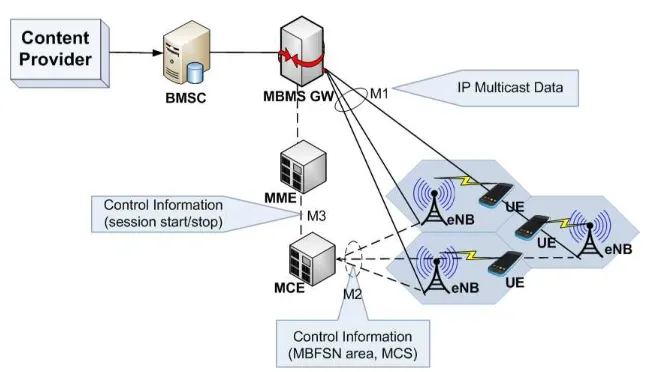
MBMS in LTE uses eMBMS specified in 3GPP release 8 and 9 which provides for good cell coverage, increased spectral efficiency at cell edge, and low power consumption. All these aspects are handled with the realization of a SFN. LTE network architecture for MBMS is shown in the Fig.5.
Figure 5. MBMS LTE network architecture
(MCE) that coordinates the use of the same resources and transmission parameters across all radio cells belonging to a multimedia broadcast single frequency network (MBSFN) area.
To support MBMS in LTE, the following channels have been defined: logical channels are multicast traffic channel (MTCH) and multicast control channel (MCCH), transport channel is multicast channel, and physical channel is physical multicast channel (PMCH). Several MTCH and one MCCH are multiplexed at medium access control (MAC) onto MCH and this is multiplexed to PMCH. At the physical layer, extended cyclic prefix is used for the OFDM to cater to the multiple synchronized transmissions from different base stations in the MBSFN area.
According to the 3GPP Release 11, some improve-ments have been defined for the eMBMS, such as, application layer FEC (AL-FEC), using more number of LTE frequency carriers to provide wider range of high bit-rate services, video codecs for higher resolutions and frame rates, QoE metric definition, and enabled premium video content delivery to many users with secured QoS [53].
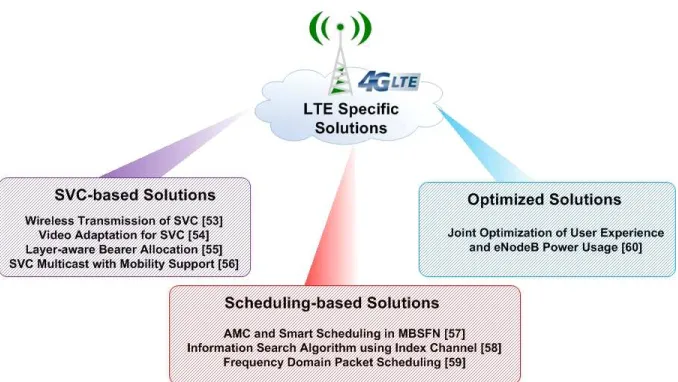
Though various adaptive solutions for multimedia multicast/broadcast in LTE network have been proposed in the literature, they are not as many as on the DVB networks. The existing solutions are classified in three categories (Fig.6).
SVC-based solutions: Several approaches are used, such as, Wireless Transmission of SVC [54], Video Adaptation for SVC [55], SVC Layer-aware Bearer Allocation [56], and SVC Multicast with Mobility Support [57].
Scheduling-based Solutions: Various approaches are identified: AMC and Smart Scheduling in MBSFN [58], Information Search Algorithm using
Index Channel [59] and Frequency Domain Packet Scheduling [60].
Optimized Solutions, which involve multicast optimization. One approach identified is known as Joint Optimization of User Experience and eNodeB Power Usage [61].
SVC-based solutions.
There are four solutions proposed in this category (Fig.
6).
i)Wireless Transmission of SVC
The effects of SVC spatial and temporal scalability and wireless transmission on the video quality was studied in [54] using LTE MBMS OPNET model. The video quality was assessed using two objective quality measures: Structural Similarity Index Measure (SSIM) and PSNR.
ii)Video Adaptation for SVC
Theadaptive SVC approach in [55] considers multicast group formation based on distance from the BS, and transmission of SVC enhancement layers (spatial and temporal scalable layers) only to the users that are nearby the cell center. Compared to the AVC video multicast, this scheme gives increased throughput and video quality (PSNR), reduced jitter and delay. The quantification of UE energy saving and any associated optimizations remain as future work.
iii)Layer-aware Bearer Allocation (LABA)
The authors in [56] looked into eMBMS for LTE and proposed a combination of bearer channel multiplexing and SVC to increase the channel capacity while ensuring only a minor video quality degradation for the users experiencing bad channel conditions. The proposed approach makes use of SVC layer aware MCS allocation, and the video quality assessment is done using PSNR-based objective metric.
Figure 6. Classification of LTE-specific solutions
Multimedia transport for mobile video applications (MEDIEVAL) project [57] studied solutions for personal video broadcasting of SVC video to a group of mobile users. The solutions consider the use of MIPv6, Proxy MIPv6 (PMIPv6), and Protocol Independent Multicast-Sparse Mode (PIM-SM) protocols for mobility support. The authors qualitatively argued that the proposed mechanisms enables the support of multicast source and receiver mobility.
Scheduling-based solutions.
i)AMC and Smart Scheduling in MBSFN
To ensure efficient spectrum usage, an SVC-layers and user-distribution based AMC and frequency scheduling algorithm for MBSFN broadcast was proposed [58]. Performance analysis shows that the proposed solution achieves significant spectrum bandwidth saving, where the authors consider various user distributions in different channel quality regions, however without accounting video scalability and its quality.
ii)Information Search Algorithm using Index Channel In [59], a balance of UE energy conservation and access latency was stated to be achievable by using index-channel basedinformation search algorithm. While the approach is promising, performance quantification is needed.
iii)Frequency Domain Packet Scheduling
It was noted in [60] that, for unicast reception a UE can save energy under the DRX scheme supported by LTE. However, in frequency domain packet scheduling for multicast/broadcast, DRX is not applicable. In order to enable energy conservation in eMBMS transmissions, a broadcast scheduling algorithm was proposed in [62]. The algorithm dynamically allocates the resource blocks to the UEs based on the channel conditions. The solution was shown to achieve increased system throughput and
coverage area. An interesting aspect would be to study the UE energy saving and the associated optimizations.
Optimized Solutions.
This includes Joint optimization of user experience and energy saving for eMBMS services [61]. User grouping is done on the basis of subscribed multicast source, UE position, and the requested video quality. Subsequently channel assignment, multicast/unicast scheduling, and power allocation are done. The transmit power is adjusted per sub-frame and per-channel basis, which did not account UE energy saving.
4.3. WiMAX-Specific Solution Approaches
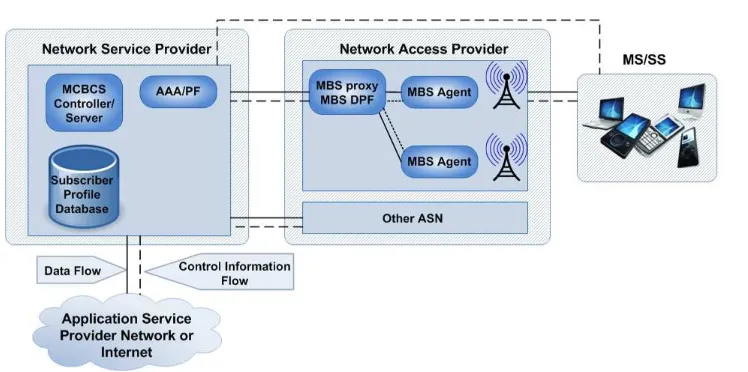
WiMAX is a wireless communication standard that refers to the inter-operable implementation of IEEE 802.16 metropolitan area network (MAN) standards. The WiMAX forum has included multicast and broadcast services (MCBCS) as one of the advanced features of WiMAX release 1 in system profile releases 1.0/1.5 and network release 1.5 [63].
Figure 7. MBMS WiMAX network architecture
construction.Subscriber station/mobile stationis the UE that has subscribed to the MBS containing the MBS client complying to IEEE 802.16-2009. The network service provider (NSP) functional unit in the network architectural framework comprises of AAA, MCBCS server, and subscriber profile database sub-unit, whereas the network access provider (NAP) comprises of BS (consisting of MBS agent and MBS DPF) and the MBS proxy. The MBS network connection procedure includes the session announcement, session start, data transfer, session update and session stop, in this said order at the network side. At the SS/MS side the procedure consists of server/service discovery, subscription, joining, and leaving.
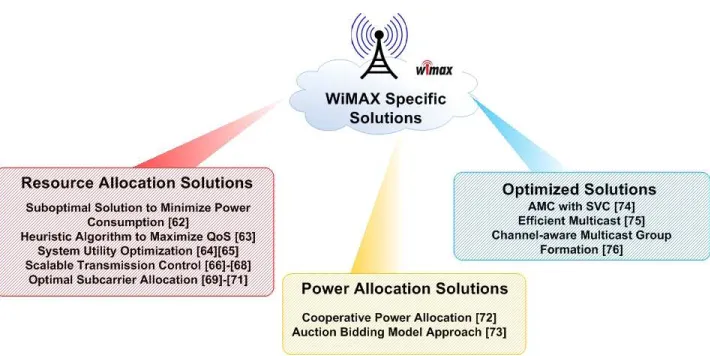
WiMAX based solutions are grouped in three categories (Fig.8).
Resource Allocation Solutions: The approaches
include: suboptimal solution to minimize power consumption [64], heuristic algorithm to maximize QoS [65], system utility optimization [66, 67], scalable transmission control [68–70], and optimal subcarrier allocation [71–73].
Power Allocation Solutions:The notable ones are:
cooperative allocation [74] and auction bidding model [75].
Optimized Solutions: This approach addresses
multicast/broadcast transmission efficiency. The approaches include: AHC with SVC [76], efficient multicast [77], and channel-aware multicast group formation [78].
Resource Allocation Solutions.
Several approaches identified in this category are as follows:
i) Suboptimal Solution to Minimize Power Consump-tion
Discussions in [64] look to minimize the power consumption of UEs by asuboptimal heuristic algorithm for resource allocation. The algorithm minimizes the number of OFDM symbols received by a UE, thereby achieving energy saving. However, UE energy saving is optimized with respect to the number of UEs receiving the multicast content.
ii)Heuristic Algorithm to Maximize QoS
A heuristic algorithm for maximizing the QoS is proposed in [65]. It is defined in terms of number of served subscribers, user-perceived video quality, and the number of SVC-layered broadcast channels. Resource allocation is done in terms of slot assignment in OFDMA frame and modulation rate assignment for the layered video stream. Compared to the greedy algorithms, the proposed mechanism is shown to improve the subscription success rate and perceived QoS.
iii)System Utility Optimization
In order to optimize the system utility, [66] considers the channel condition, video program popularity, and the available radio resources. A gradient-based scheduling and resource allocation algorithm is proposed in [67] that considers the video content, completion deadline requirements, and the transmission history for prioritizing the users’ transmission.
iv)Scalable Transmission Control (STC)
Suboptimal solutions for STC are proposed in [68,69] that suitably integrate hybrid transmission and multicast group control. The proposed radio resource allocation approaches by incremental user assignment is shown to result in improved service coverage and overall system utility. In [70], the authors address the optimal multicast group formation and normalized system utility based optimization to solve the STC problem with resource constraint. This approach achieves improved service coverage and overall system utility.
Figure 8. Classification of WiMAX-specific solutions
Optimizing subcarrier (time/frequency) allocation for video multiplexing is proposed in [71–73] with an aim to maximize net SVC video quality. In [71], the rate constraints of unicast/multicast users and different MCS rates of the multicast groups are considered. In [72], VCG-auction based time-frequency allocation is proposed to check and punish the malicious users for subversion by misrepresentation of video parameters. The auction-based subcarrier allocation in [73] is for revenue maximization, where a closed form solution of the constrained convex optimization for resource allocation was proposed. All these solutions have characterized the bit rate and video quality as a function of the quantization parameters. The scheme in [71] increases video quality. The solutions in [72, 73] maximize the utility in multicast video streaming.
Power Allocation Solutions.
There are two approaches identified for WiMAX systems: i)Cooperative Power Allocation
Acooperative algorithmis proposed in [74] for WiMAX broadcast/multicast services to maximize the data rate.
ii)Auction Bidding Model Approach
In [75], an optimal power allocation based on auction bidding model is proposed, for increased quality and revenue.
Optimized Solutions.
Several approaches aim for efficient multicast transmis-sions:
i)AMC with SVC
An AMC technique for SVC multicast over WiMAX was proposed in [76], where the users receive different number of encoded video layers based on their channel conditions. The approach improves the user perceived quality, assessed in terms of PSNR. The underlying protocols considered by the proposed scheme are IP, RTP, and UDP.
ii)Efficient Multicast
In order to facilitate energy conservation in WiMAX multimedia broadcast, a transmission scheduling algo-rithm based on the substream and burst selection is proposed in [77], which is shown to offer improved video quality, UE energy saving, and resource utilization.
iii)Channel-aware Multicast Group Formation UE channel conditions for multicast video delivery is considered in [78]. Multicast group formation is based on the users’ willingness to pay, and subchannel allocation based on throughput comparison among users. The proposed mechanism achieves higher effective radio resource utilization for SVC video multicast over WiMAX network. Compared to the greedy best-user-first approach, the proposed mechanism reduces the resource consumption and increases throughput.
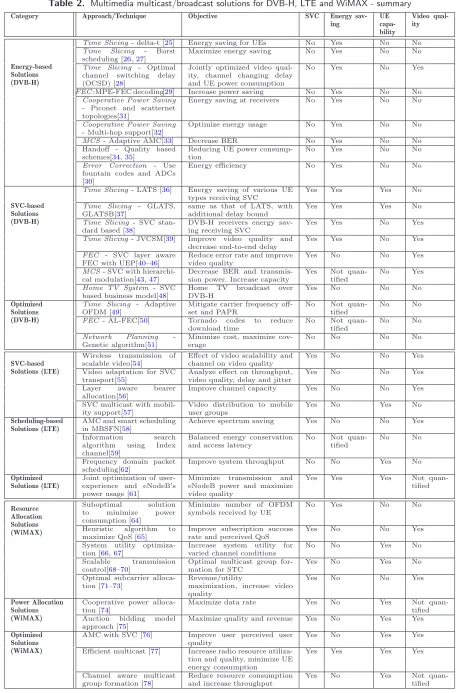
Table 2 presents a summary of the different existing multimedia multicast/broadcast solutions for DVB-H, LTE, and WiMAX systems. The various solution approaches used are identified and their individual objective are listed. The main features are in terms of the use of SVC, energy savings quantification, UE capabilities, and video quality assessment.
4.4. Miscellaneous Solution Approaches
Besides the research works summarized above, there are a number of generic solutions (i.e., not standard or technology specific) that are of interest for optimized multicast/broadcast over wireless networks. These are briefly reviewed here.
Table 2. Multimedia multicast/broadcast solutions for DVB-H, LTE and WiMAX - summary
Category Approach/Technique Objective SVC Energy sav-ing UE capa-bility Video qual-ity Energy-based Solutions (DVB-H)
Time Slicing- delta-t [25] Energy saving for UEs No Yes No No
Time Slicing - Burst scheduling [26,27]
Maximize energy saving No Yes No No
Time Slicing - Optimal
channel switching delay
(OCSD) [28]
Jointly optimized video qual-ity, channel changing delay and UE power consumption
No Yes No Yes
FEC:MPE-FEC decoding[29] Increase power saving No Yes No No
Cooperative Power Saving
- Piconet and scatternet topologies[31]
Energy saving at receivers No Yes No No
Cooperative Power Saving
- Multi-hop support[32]
Optimize energy usage No Yes No No
MCS- Adaptive AMC[33] Decrease BER No Yes No No
Handoff - Quality based schemes[34,35]
Reducing UE power consump-tion
No Yes No No
Error Correction - Use fountain codes and ADCs [30]
Energy efficiency No Yes No No
SVC-based Solutions (DVB-H)
Time Slicing- LATS [36] Energy saving of various UE types receiving SVC
Yes Yes Yes No
Time Slicing - GLATS,
GLATSB[37]
same as that of LATS, with additional delay bound
Yes Yes Yes No
Time Slicing - SVC stan-dard based [38]
DVB-H receivers energy sav-ing receivsav-ing SVC
Yes Yes No Yes
Time Slicing- JVCSM[39] Improve video quality and decrease end-to-end delay
Yes Yes No Yes
FEC - SVC layer aware
FEC with UEP[40–46]
Reduce error rate and improve video quality
Yes No No Yes
MCS- SVC with
hierarchi-cal modulation[43,47]
Decrease BER and transmis-sion power. Increase capacity
Yes Not
quan-tified
No Yes
Home TV System - SVC
based business model[48]
Home TV broadcast over
DVB-H
Yes No No No
Optimized Solutions (DVB-H)
Time Slicing - Adaptive
OFDM [49]
Mitigate carrier frequency off-set and PAPR
No Not
quan-tified
No No
FEC - AL-FEC[50] Tornado codes to reduce
download time
No Not
quan-tified
No No
Network Planning
-Genetic algorithm[51]
Minimize cost, maximize cov-erage
No No No No
SVC-based Solutions (LTE)
Wireless transmission of
scalable video[54]
Effect of video scalability and channel on video quality
Yes No No Yes
Video adaptation for SVC transport[55]
Analyze effect on throughput, video quality, delay and jitter
Yes No No Yes
Layer aware bearer
allocation[56]
Improve channel capacity Yes No No Yes
SVC multicast with mobil-ity support[57]
Video distribution to mobile user groups
Yes No Yes No
Scheduling-based Solutions (LTE)
AMC and smart scheduling
in MBSFN[58]
Achieve spectrum saving Yes No No Yes
Information search
algorithm using Index
channel[59]
Balanced energy conservation and access latency
No Not
quan-tified
No No
Frequency domain packet scheduling[62]
Improve system throughput No No Yes No
Optimized Solutions (LTE)
Joint optimization of user-experience and eNodeB’s
power usage [61]
Minimize transmission and
eNodeB power and maximize video quality
Yes Yes Yes Not
quan-tified Resource Allocation Solutions (WiMAX) Suboptimal solution
to minimize power
consumption [64]
Minimize number of OFDM symbols received by UE
No Yes No No
Heuristic algorithm to
maximize QoS [65]
Improve subscription success rate and perceived QoS
Yes No No Yes
System utility
optimiza-tion [66,67]
Increase system utility for
varied channel conditions
No No Yes No
Scalable transmission
control[68–70]
Optimal multicast group for-mation for STC
Yes No Yes No
Optimal subcarrier alloca-tion [71–73]
Revenue/utility
maximization, increase video quality
Yes No No Yes
Power Allocation Solutions (WiMAX)
Cooperative power alloca-tion [74]
Maximize data rate Yes No Yes Not
quan-tified
Auction bidding model
approach [75]
Maximize quality and revenue Yes No Yes Yes
Optimized Solutions (WiMAX)
AMC with SVC [76] Improve user perceived user
quality
Yes No Yes Yes
Efficient multicast [77] Increase radio resource
utiliza-tion and quality, minimize UE energy consumption
Yes Yes Yes Yes
Channel aware multicast
group formation [78]
Reduce resource consumption and increase throughput
Yes No Yes Not
in OFDM systems (e.g., LTE and WiMAX) [80] is shown to achieve improved system throughput while maintaining fairness among all users.
Thecross-layer adaptive multicast video streaming in [81] considers the application, data link, and physical layers jointly, where a channel-dependent auto rate selection wherein hierarchical video coding is used. In order to combat packet losses over wireless in a multicast scenario, a layered HARQ scheme is proposed in [82], where operating point for the multicast group is selected via Nash bargaining game. The performance evaluation show that the proposed scheme achieves an overall improved video reception quality while maintaining fairness among the heterogeneous receivers. The adaptive scheme in [83] for video unicast/multicast over wireless aims at minimizing the resource consumption while satisfying the diverse QoS requirements. The statistical delay guarantees are modeled in terms of QoS exponent, effective bandwidth/capacity, and delay-bound violation probability. An adaptive multicast over wireless is proposed in [84], where the highest sustainable transmission rate is maintained with suitable FEC to maximize the received video quality. These approaches however did not look for channel-dependent SVC rate adaptation, MCS, or UE constraints.
Research related to resource allocation in case of multimedia multicast/broadcast can be categorized as: 1) cooperative subcarrier allocation [85], 2) optimized subcarrier and power allocation [86], 3)optimized power and rate allocation [87], [87], 4) AMC for layered video broadcast i.e. SVC, for optimized resource (power) allocation [88], [89], [90], 5)power allocation for physical layer network coding [91], 6) power allocation for cooperative broadcast [92], [93].
Several other studied dimensions are: resource utiliza-tion maximizautiliza-tion [94], user-level fairness and multicast efficiency [95], transmission efficiency [96], cooperative transmission of layered video using randomized dis-tributed space-time code [97], and cross-layer design for reducing bandwidth requirement and increasing robust-ness to channel errors [98].
Another aspect of study has been improvement of video quality for multimedia broadcast/multicast by employing video rate adaptation. This is achieved by means of transcoding to complement SVC for reduced bandwidth waste [99], adapting video transmission rate and FEC for multirate wireless network [100], bit rate allocation to layers and providing UEP [101], optimize frame rate allocation [102], rate allocation to video layers for QoE guarantee [103], and rate allocation among multiple video multicast sessions [104].
A recent study [105] considered broadcast receivers with diverse display capabilities and channel conditions. An objective (temporal-spatial rate) distortion metric was used based on Principal Component Analysis distance between frames and optimal layer broadcasting
policy was obtained to maximize the broadcasting utility. However, it did not consider channel adaptive scalability of SVC content, dynamic physical resource allocation, and energy saving at the receiver.
The work in [106] on feedback for multicast/broadcast services has proposed the use of a common feedback channel to reduce the uplink signaling overhead. Thereafter, the limited information provided by the channel is used to improve spectral efficiency by polling a simple-yet-dynamic MCS.
A client’s capability based data download for a video session from several client channels, is proposed in [107], that results in latency reduction. The usage of erasure correction in wireless channels is discussed in [108]. The authors propose an opportunistic multicast scheduling scheme with the objective of jointly exploring multicast gain and multiuser diversity. They determined the transmission rate by using a SNR threshold. Full channel knowledge and partial channel knowledge of the average SNR and fading type were considered. The authors state that for a large multicast group, partial channel knowledge is sufficient to approach the achievable throughput. When exploiting the frequency diversity in OFDM, using the proposed scheme results in considerable delay reduction with negligible reduction in multicast throughput. The proposed technique is generic and valid for all multicast systems, i.e., eMBMS (in LTE), MBS (in WiMAX), and DVB-H.
4.5. Price Bidding Schemes
Price bidding models are used in [109] for optimal power allocation in multimedia multicast. Similar models can be extended with prioritizing the users’ service subscriptions for adaptive video coding. The impact of server memory and disk bandwidth resources on revenue are studied in [110]. Optimal pricing for SVC multicasting to heterogeneous users are investigated in [111]. Additionally, [112] has studied wireless resource allocation for multimedia service discrimination based on bargaining solutions. The additional aspects of interest are: adaptive SVC rate encoding, UE energy saving, and users’ energy or price sensitivity for revenue maximization.
4.6. WiFi Offloading and Inter-Networking
Schemes
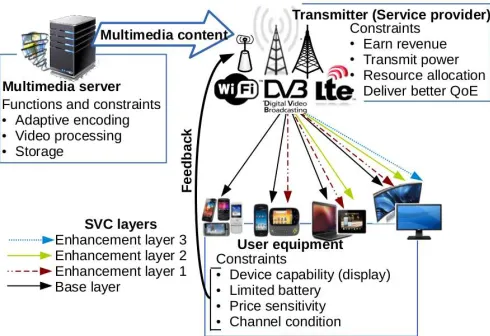
Figure 9. User-centric multimedia broadcast framework
hybrid policy for mobile data offloading in heterogeneous networks. DTV traffic load and video viewing pattern varies with the time of the day and has been reported in [116–118]. Customer load for large-scale sporting events has been considered in [119].
5. User-centric multimedia broadcast
solution
The basic framework for a user-centric multimedia broadcast system is shown in Fig.9. SVC video layers are adaptively encoded by multimedia server and broadcast to heterogeneous UEs with varied display capabilities, channel conditions, and battery capacity. The feedback from the UEs helps the service provider’s transmitter to allocate resources adaptively in order to improve QoE and earn increased revenue. Technological solutions based on this framework have balanced the tradeoff between: UE energy saving and QoE [120, 121]; UE energy saving and price [122]; as well as revenue and served subscriber count [123].
6. Summary and Potential Research
Directions
Rapidly-evolving ICT industry has led to a stealth, but very powerful service-oriented revolution. The smart mobile computing devices have become increasingly powerful and affordable, causing significant growth in the user interest, with advanced processing, communication, and display capabilities. On the other hand, wide range of services, e.g., social websites, mobile TV, banking, gaming, and other entertainment services, are increasingly being launched. Such massively growing services, especially the ones based on interactive multimedia (HD TV, 3D TV), put pressure on both content processing and delivery. Form the network provider’s perspective, there are a wide range of
technologies that enable Internet connectivity and access to the mobile user for various services from anywhere at any time. They include broadcast (e.g. DVB-T2, DVB-H), broadband (e.g. IEEE 802.16, IEEE 802.16e) and cellular (e.g. LTE, UMTS) technologies. Another important aspect is the energy consumption. Currently research efforts are put into the energy optimization and finding sustainable solutions in diverse areas, including ICT, and networking.
In this context this article has aimed to familiarize the readers with the multimedia content delivery over heterogeneous environments including important aspects of the layered coding approaches such as SVC for multimedia transmissions. The main challenges, factors, and associated constraints for multimedia broadcast transmissions have been identified and a comparative study of unicast versus multicast/broadcast transmissions has been provided. Furthermore, this article has presented a comprehensive survey of the current research on the user-centric energy-efficient multimedia multicast/broadcast solutionsand provided a useful categorization based on the technology and main approaches.
The paper has integrated a comprehensive overview of different research approaches to enable the optimization of multimedia broadcast and multicast transmissions to heterogeneous users subscribed to a common service. The techniques have been categorized in terms of their standard specificity and individual objective or technique used. Although several approaches have been worked upon by several researchers, plenty of avenues still remain to be explored in this area with greater intricacy. A summary of advantages and disadvantages of the existing schemes, pointing to apparent research directions, have been listed in Table3.
Acknowledgment
This work has been supported by the Department of Science and Technology (DST) under the grant no. SR/S3/EECE/0248/2014.
References
[1] Ericsson, “Ericsson mobility report,” Google
Report, pp. 1–32, Nov. 2013. [Online].
Available: http://www.ericsson.com/res/docs/2013/ ericsson-mobility-report-november-2013.pdf
[2] M. Chen, L. Zhou, T. Hara, Y. Xiao, and V. C. M. Leung, “Advances in multimedia communications,”Int. J. Commun. Syst., vol. 24, no. 10, pp. 1243–1245, Oct. 2011.
Mobile multimedia - User and Technology Perspective, D. Tjondronegoro, Ed. InTech, 2012.
[4] Cisco, “Cisco visual networking index: Global mobile data traffic forecast update, 2012-2017,”Google Report, 2013.
[5] Google, “The new multi-screen world: Understanding cross-platform consumer behavior,”Google Report, pp. 1–46, Aug. 2012. [Online]. Available: http://services. google.com/fh/files/misc/multiscreenworldfinal.pdf
[6] Digital Video Broadcasting (DVB); Framing structure,
channel coding and modulation for digital terrestrial television, 2009 Ed. (ETSI EN 300 744).
[7] Digital Video Broadcasting (DVB); DVB-H
Implemen-tation Guidelines, 2009 Ed. (ETSI TR 102 377 V1.3.1).
[8] IEEE 802.11n-2009- Amendment 5: Enhancements for
Higher Throughput. IEEE-SA., Oct. 2009.
[9] “3GPP Long-Term Evolution (LTE).” [Online]. Available: http://www.3gpp.org/Highlights/LTE/ LTE.htm
[10] S. Sesia, I. Toufik, and M. Baker, LTE UMTS Long
Term Evolution, From Theory To Practice. John Wiley
and Sons, Ltd., 2009.
[11] K. Rao, Z. S. Bojkovic, and D. A. Milovanoic, Multi-media Communication Systems: Techniques, Standards, Networks. Prentice Hall, 1st ed., 2002.
[12] A. Legout, J. Nonnenmacher, and E. Biersack, “Bandwidth-allocation policies for unicast and multi-cast flows,”IEEE/ACM Trans. Netw., vol. 9, no. 4, pp. 464–478, Aug. 2001.
[13] T. Wiegand, G. J. Sullivan, G. Bjntegaard, and A. Luthra, “Overview of the H.264/AVC video coding standard,”IEEE Trans. Circuits, System and Video Tech., vol. 13, no. 7, pp. 560–576, July 2003.
[14] H. Schwarz, D. Marpe, and T. Wiegand, “Overview of the scalable video coding extension of the H.264/AVC standard,”IEEE Trans. Circuits, System and Video Tech., vol. 17, no. 9, pp. 1103–1120, Sept. 2007. [15] Y. Wang, J. Ostermann, and Y.-Q. Zhang, Video
Processing and Communications. Prentice Hall, 2001.
[16] T. Schierl, T. Stockhammer, and T. Wiegand, “Mobile video transmission using scalable video coding (SVC),”
IEEE Trans. Circuits, System and Video Tech., vol. 17, no. 9, pp. 1204–1217, Sept. 2007.
[17] M. Hoque, M. Siekkinen, and J. Nurminen, “Energy efficient multimedia streaming to mobile devices: A survey,” IEEE Commun. Surveys Tutorials, vol. 16, no. 1, pp. 579–597, Feb. 2012.
[18] T. Ma, M. Hempel, D. Peng, and H. Sharif, “A survey of energy-efficient compression and communication techniques for multimedia in resource constrained systems,”IEEE Commun. Surveys Tutorials, vol. 15, no. 3, pp. 963–972, June 2012.
[19] R. Afolabi, A. Dadlani, and K. Kim, “Multicast scheduling and resource allocation algorithms for OFDMA-based systems: A survey,” IEEE Commun. Surveys Tutorials, vol. 15, no. 1, pp. 240–254, Feb. 2013. [20] J. Vella and S. Zammit, “A survey of multicasting over wireless access networks,”IEEE Commun. Surveys Tutorials, vol. 15, no. 2, pp. 718–753, June 2012. [21] A. Popescu, D. Constantinescu, D. Erman, and D. Ilie,
“A survey of reliable multicast communication,” in
Proc. EuroNGI, Trondheim, Norway, May 2007, pp.
111–118.
[22] M. El-Hajjar and L. Hanzo, “A survey of digital television broadcast transmission techniques,” IEEE
Commun. Surveys Tutorials, vol. 15, no. 4, pp. 1924–
1949, Apr. 2013.
[23] “History of the DVB project.” [Online]. Available:
http://www.dvb.org/
[24] M. Ghandi and M. Ghanbari, “Layered H.264 video transmission with hierarchical QAM,” Elsevier J. Visual Commun. Image Representation, Special Issue
on H.264/AVC, 2006.
[25] S. Loncaric, S. Grgic, and B. Zovko-Cihlar, “Minimizing power consumption of the DVB-H receiver,” in Proc.
ELMAR MSPC, San Jose, CA, USA, Oct. 2006, pp.
309–313.
[26] C.-H. Hsu and M. M. Hefeeda, “Broadcasting video streams encoded with arbitrary bit rates in energy-constrained mobile TV networks,”IEEE/ACM Trans. Netwo., vol. 18, no. 3, pp. 681–694, June 2010. [27] M. M. Hefeeda and C.-H. Hsu, “On burst
transmis-sion scheduling in mobile TV broadcast networks,”
IEEE/ACM Trans. Netw., vol. 18, no. 2, pp. 610–623,
Apr. 2010.
[28] M. Rezaei, I. Bouazizi, V. Vadakital, and M. Gabbouj, “Optimal channel changing delay for mobile TV over DVB-H,” inProc. IEEE PIMRC, Athens, Greece, Sept. 2007, pp. 1–5.
[29] E. de Diego Balaguer, F. Fitzek, O. Olsen, and M. Gade, “Performance evaluation of power saving strategies for DVB-H services using adaptive MPE-FEC decoding,” in Proc. IEEE PIMRC, Berlin, Germany, Sept. 2005, pp. 2221–2226.
[30] X. Shao, R. Schiphorst, and C. H. Slump, “Energy efficient error correction in mobile TV,” inProc. IEEE ICC, Dresden, Germany, June 2009, pp. 1–6.
[31] Q. Zhang, F. H. P. Fitzek, and M. Katz, “Cooperative power saving strategies for IP-services supported over DVB-H networks,” inProc. IEEE WCNC, Hong Kong, China, Mar. 2007, pp. 4107–4111.
[32] X. Sun, F. Ye, and Z. Zhou, “Cooperative power saving strategies in DVB-H network with multi-hop support in short-range link,” inProc. IEEE ISCIT, Tokyo, Japan, Oct. 2010, pp. 362–365.
[33] T. E. Shabrawy and S. Wahed, “Adaptive modulation and coding for broadcast DVB-H systems,” in Proc.
IEEE PIMRC, Tokyo, Japan, Sept. 2009, pp. 1292–
1296.
[34] M. Labate, G. Araniti, A. Molinaro, A. Iera, and B. Orlandi, “Quality based handoff management in DVB-H systems,” in Proc. IEEE PIMRC, Athens, Greece, Sept. 2007, pp. 1–5.
[35] G. Araniti, A. Iera, A. Molinaro, and A. Modafferi, “Quality based handoff in DVB-H systems assisted by cellular network,” in Proc. IEEE VTC, Marina Bay, Singapore, May 2008, pp. 2745–2749.
[36] C.-H. Hsu and M. M. Hefeeda, “Video broadcasting to heterogeneous mobile devices,” inProc. IFIP-TC 6, Aachen, Germany, May 2009, pp. 600–613.
devices,”IEEE Trans. Mob. Comput., vol. 10, no. 3, pp. 406–418, Mar. 2011.
[38] E. Belyaev, V. Grinko, and A. Ukhanova, “Power saving control for the mobile DVB-H receivers based on H.264/SVC standard,” inProc. WTS, Prague, Czech Republic, Apr. 2009, pp. 1–4.
[39] M. Rezaei, I. Bouazizi, and M. Gabbouj, “Joint video coding and statistical multiplexing for broadcasting over DVB-H channels,” IEEE Trans. Multimedia, vol. 10, no. 8, pp. 1455–1464, Dec. 2008.
[40] T. Schierl, C. Hellge, S. Mirta, K. Gruneberg, and T. Wiegand, “Using H.264/AVC-based scalable video coding (SVC) for real time streaming in wireless IP networks,” in Proc. IEEE ISCAS, New Orleans, LA, USA, May 2007, pp. 3455–3458.
[41] C. Hellge, T. Schierl, and T. Wiegand, “Mobile TV using scalable video coding and layer-aware forward error correction,” in Proc. IEEE ICME, Hannover, Germany, June 2008, pp. 1177–1180.
[42] C. Hellge, Schierl, and T. Wiegand, “Receiver driven layered multicast with layer-aware forward error correction,” inProc. IEEE ICIP, San Diego, CA, USA, Oct. 2008, pp. 2304–2307.
[43] D. Gomez-Barquero, K. Nybom, D. Vukobratovic, and V. Stankovic, “Scalable video coding for mobile broadcasting DVB systems,” in Proc. IEEE ICME, Singapore, July 2010, pp. 510–515.
[44] C. Hellge, D. Gomez-Barquero, T. Schierl, and T. Wiegand, “Intra-burst layer aware fec for scalable video coding delivery in DVB-H,” inProc. IEEE ICME, Singapore, July 2010, pp. 498–503.
[45] C. Hellge, Gomez-Barquero, T. Schierl, and T. Wie-gand, “Layer-aware forward error correction for mobile broadcast of layered media,”IEEE Trans. Multimedia, vol. 13, no. 3, pp. 551–562, June 2011.
[46] S.-Y. Chang and H.-T. Chiao, “LIPS A lightweight inter-layer protection scheme for scalable video coding,”
inProc. IEEE ICME, Melbourne, Australia, July 2012,
pp. 908–913.
[47] C. Hellge, S. Mirta, T. Schierl, and T. Wiegand, “Mobile TV with SVC and hierarchical modulation for DVB-H broadcast services,” in Proc. IEEE BMSB, Bilbao, Spain, May 2009, pp. 1–5.
[48] S. Lian, “Digital rights management for the home TV based on scalable video coding,” IEEE Trans.
Consumer Electronics, vol. 54, no. 3, pp. 1287–1293,
Aug. 2008.
[49] X. Wang, M. Rahman, Y. Wu, B. Tian, K. Yi, and J.-Y. Chouinard, “A time slicing adaptive OFDM system for mobile multimedia communications,”IEEE Trans. Broadcasting, vol. 56, no. 2, pp. 226–234, May 2010. [50] K. Nybom, J. Kempe, and J. Bjorkqvist, “Improving
object delivery using application layer tornado codes in DVB-H systems,” inProc. IEEE PIMRC, Helsinki, Finland, Sept. 2006, pp. 1–5.
[51] D. Gomez-Barquero, A. Bria, J. Monserrat, and N. Cardona, “Minimal cost planning of DVB-H networks on existing wireless infrastructure,” inProc.
IEEE PIMRC, Helsinki, Finland, Sept. 2006, pp. 1–5.
[52] J. Wannstrom, “LTE-Advanced,” June 2013. [Online]. Available:http://www.3gpp.org/LTE-Advanced
[53] D. Lecompte and F. Gabin, “Evolved multime-dia broadcast/multicast service (eMBMS) in LTE-advanced: Overview and Rel.-11 enhancements,”IEEE Commun. Mag., vol. 50, no. 11, pp. 68–74, Nov. 2012. [54] P. McDonagh, C. Vallati, A. Pande, P. Mohapatra,
P. Perry, and E. Mingozzi, “Investigation of scalable video delivery using H.264 SVC on an LTE network,”
in Proc. IEEE WPMC, Brest, France, Oct. 2011, pp.
1–5.
[55] R. Radhakrishnan and A. Nayak, “An efficient video adaptation scheme for SVC transport over LTE networks,” in Proc. IEEE ICPADS, Tainan, Taiwan, Dec. 2011, pp. 127–133.
[56] C. Hellge, R. Skupin, J. Cho, T. Schierl, and T. Wiegand, “Capacity improvement in EMBMS using SVC and layer-aware bearer allocation,” inProc. IEEE ICIP, Brussels, Belgium, Sept. 2011, pp. 933–936. [57] S. Figueiredo, M. Wetterwald, T.-T. Nguyen, L.
Eznar-riaga, N. Amram, and R. L. Aguiar, “SVC multicast video mobility support in MEDIEVAL project,” in
Proc. IEEE Future Netw, Berlin, Germany, July 2012,
pp. 1–8.
[58] R. Radhakrishnan, B. Tirouvengadam, and A. Nayak, “Channel quality-based AMC and smart scheduling scheme for SVC video transmission in LTE MBSFN networks,” inProc. IEEE ICC, Ottawa, Canada, June 2012, pp. 6514–6518.
[59] S. Lu, Y. Cai, L. Zhang, J. Li, P. Skov, C. Wang, and Z. He, “Channel-aware frequency domain packet scheduling for MBMS in LTE,” in Proc. IEEE VTC, Barcelona, Spain, Apr. 2009, pp. 1–5.
[60] C. Bontu and E. Illidge, “DRX mechanism for power saving in LTE,”IEEE Commun. Mag., vol. 47, no. 6, pp. 48–55, June 2009.
[61] O. Karimi and L. Jiangchuan, “Power efficient high quality multimedia multicast in LTE wireless networks,” inProc. IEEE MASS, Valencia, Spain, Oct. 2011, pp. 161–163.
[62] H.-Y. Shin, “Evolved broadcast scheduling mechanism supporting energy conserving e-MBMS transmission,”
Wireless Networks, vol. 19, no. 7, pp. 1725–1738, Sept. 2013.
[63] L. Wang and K. Etemad, “Multicast and broadcast multimedia services in mobile WiMax networks,”IEEE Commun. Mag., vol. 47, no. 10, pp. 84–91, Oct. 2009. [64] J. Kim, T. Kwon, and D.-H. Cho, “OFDM resource
allocation scheme for minimizing power consumption in multicast systems,” in Proc. IEEE VTC, Quebec, Canada, May 2006, pp. 1–5.
[65] P.-H. Wu and Y.-H. Hu, “Optimal layered video IPTV multicast streaming over mobile WiMAX systems,”
IEEE Trans. Multimedia, vol. 13, no. 6, pp. 1395–1403, Dec. 2011.
[66] W.-H. Kuo, W. Liao, and T. Liu, “Adaptive resource allocation for layer-encoded IPTV multicasting in IEEE 802.16 WiMAX wireless networks,”IEEE Trans. Multimedia, vol. 13, no. 1, pp. 116–124, Sept. 2011. [67] X. Ji, J. Huang, M. Chiang, G. Lafruit, and