B R I D G E S T O E X C E L L E N C E
A
ccording to the 2014 National Diabetes Statistics Report (1), 29.1 million people in the United States (9.3% of the popula-tion) have diabetes; 28.7% of adults>18 years of age use insulin alone or in combination with oral medica-tions (1). Nearly 35% of U.S. adults are obese, and this rate has steadily increased during the past 20 years (2). With the growing number of adults with diabetes and increasing rates of obesity, there is an increased preva-lence of insulin resistance and thus a need for large daily doses of insulin for glycemic control.
U-500 regular (U-500R) insu-lin has been used for decades but has gained popularity in the past 10 years as a result of the increase in obesity and insulin resistance. The potency of U-500R insulin is five times greater than U-100 insulins; 1 mL of U-500R contains 500 units of insulin compared to 1 mL of stan-dard U-100 insulin, which contains 100 units. The concentrated U-500R is advantageous for patients who are severely insulin resistant, requiring large doses of U-100 insulin because altered insulin absorption and leak-age can occur when large volumes are injected, which reduces efficacy (3,4). To enhance U-100 insulin efficacy, practitioners often split the dose when the volume exceeds 40–60 units per dose. However, from the patient perspective, needing two injections to administer a single dose may be undesirable. For this reason, convert-ing a patient requirconvert-ing high doses of
insulin from U-100 to U-500R could be considered because this option would decrease volume by 80% while still delivering the required number of units.
The pharmacokinetic characteris-tics of U-500R appear to fall between those of NPH insulin and U-100 regular insulin and allow U-500R to provide both basal and mealtime insulin coverage (5). Because of its pharmacokinetic properties, delayed peak effect, and prolonged duration of action, U-500R can be dosed twice daily (6). The dual basal and meal-time coverage provides an advantage, especially when patients require high doses of basal insulin in addition to mealtime insulin.
The use of U-500R can reduce the volume and number of insu-lin doses required. For example, a patient who requires 90 units of basal insulin twice daily and 30 units of rapid-acting or regular insulin three times daily with each meal would be injecting five doses of insulin daily. To enhance the absorption, the basal insulin dose may be divided into two doses of 45 units, but this would increase the number of daily injec-tions to seven. The injection burden may result in patient nonadherence. Furthermore, adherence may be neg-atively affected by cost; the scenario outlined above would require six vials of basal U-100 insulin, two vials of U-100 rapid-acting or regular insulin, and two 100-count boxes of syringes each month. If the patient were tran-sitioned to U-500R, in most cases,
Development and Implementation of a U-500
Regular Insulin Program in a Federally Qualified
Health Center
Kathy F. Shaw1 and Connie A. Valdez2
1University of Colorado Denver College of
Nursing, Aurora, CO
2University of Colorado Skaggs School of
Pharmacy and Pharmaceutical Sciences, Aurora, CO
Corresponding author: Kathy F. Shaw, [email protected]
https://doi.org/10.2337/cd16-0057
only two daily injections would be required, which would replace the numerous basal and mealtime insulin injections needed with U-100 insulin. Fewer daily injections can also reduce patient discomfort and lower the like-lihood of developing lipodystrophy.
Although use of U-500R insulin has advantages, it is not without chal-lenges. The two biggest challenges are weight gain and hypoglycemic events. Weight gain may occur if patient adherence to dietary and physical activity is not maintained. In one meta-analysis (7), the aver-age amount of weight gain was 4.38 kg, although most patients’ weight appears to stabilize within 6 months after initiation of U-500R insulin. In one study (8), weight increased by 3.2% at 3 months and by 1.6% at 12 months in patients who initiated U-500R insulin. These results were similar to a study by Lowery et al. (9), in which a 2% weight gain was observed with U-500R insulin (9).
The risk for hypoglycemic epi-sodes is also intensified with the use of U-500R insulin because of its increased potency, decreased potential for leakage, and improved absorption. Based on a meta-anal-ysis (9), severe hypoglycemia was not reported to be a problem and occurred at similar rates to U-100 regular insulin. However, Dailey and Tannock (5) noted that mild hypo-glycemia increased slightly during the first few months, but then typi-cally declined thereafter. The risk of hypoglycemia from U-500R insulin is especially concerning in patients who are nonadherent to provider instructions and who self-adjust their insulin independently.
Dosing errors are an additional challenge. According to the U.S. Food and Drug Administration (FDA), the majority of errors with U-500R insulin occur during pre-scribing, dosing, or administration (10). The FDA recommends that a conversion chart should always be used when administering doses from a U-500R vial with a U-100 insulin
syringe or 1-mL tuberculin syringe if specific U-500R syringes are not available. The prescribed dose of U-500R insulin should always be expressed in actual units of U-500R, along with corresponding markings on the syringe the patient is using. This is because calculating the dose of U-500R can be confusing to some practitioners because dosing requires conversion to volume. Similarly, because patients on insulin are used to administering doses in units and not in milliliters, drawing up an accurate dose of U-500R can be con-fusing. In either situation, a dosing or dispensing error could result in a fivefold unintentional overdose or underdose, and a fivefold overdose could be fatal (11).
To address the issue of dosing errors, two new developments have emerged. A U-500–specific insulin syringe has been designed by Becton Dickinson and approved by the FDA with commercial availability in November 2016. The new syringe is 0.5 mL with bold U-500 markings in 5-unit increments and allows for dosing up to 250 units. It has a 6 mL
× 31 gauge needle, which is the short-est insulin syringe needle available and is designed to minimize the risk of intramuscular injection (12). In 2016, the FDA approved the U-500R KwikPen by Eli Lilly. This pen dials and doses U-500R insulin up to 300 units per dose and eliminates con-version and dosing errors (13). The pen is convenient and easy to use but may be cost-prohibitive, especially for underserved populations who are uninsured or on government health care programs.
To enhance the safe and appro-priate use of U-500R insulin in the outpatient clinical setting, a dos-ing protocol and a patient-provider U-500R insulin agreement should be considered. Here, we introduce a U-500R Insulin Program that includes a dosing and titration proto-col, as well as an agreement between patient and providers at a federally qualified health center (FQHC).
Methods
Sheridan Health Services, an FQHC affiliated with the University of Colorado College of Nursing in Aurora, serves as a clinical faculty practice site and placement site for a variety of health care professional students. The clinic provides primary care, including women’s health, den-tal care, behavioral health, and clini-cal pharmacy services in an integrat-ed, interprofessional care model. The clinic provides access to a formulary of prescription and nonprescription drugs, including insulin, for unin-sured patients. More than half of all patients (54%) are insured through Medicaid, and >27% prefer to com-municate in Spanish.
Development of the U-500R Insulin Program
The U-500R Insulin Program was de-veloped and initiated for appropriate patients requiring >200 units/day of insulin. Patients who were adherent with medications and clinic visits, had no or minimal cognitive impairment, were able to recognize hypoglycemia, and were willing to have weekly face-to-face or phone consultations with clinical pharmacy services were eligi-ble for the program. It is crucial for patients on insulin, and especially U-500R insulin, to continue healthy lifestyle behaviors such as being phys-ically active and making healthy meal choices; understand the risk, preven-tion, and treatment of hypoglycemia; and adhere to their doses without self-adjustment.
B R I D G E S T O E X C E L L E N C E
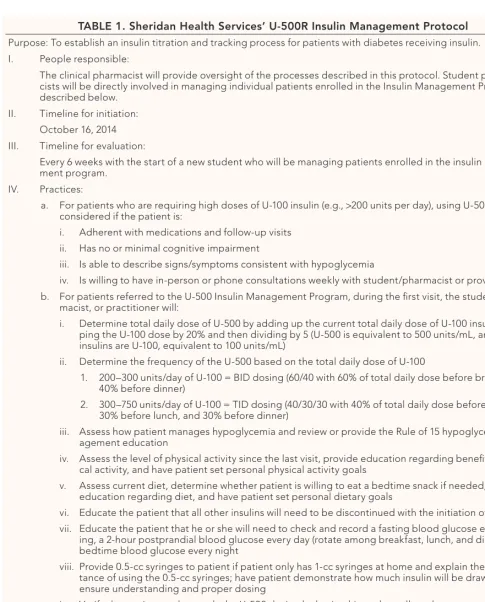
TABLE 1. Sheridan Health Services’ U-500R Insulin Management Protocol
Purpose: To establish an insulin titration and tracking process for patients with diabetes receiving insulin. I. People responsible:
The clinical pharmacist will provide oversight of the processes described in this protocol. Student pharma-cists will be directly involved in managing individual patients enrolled in the Insulin Management Program as described below.
II. Timeline for initiation: October 16, 2014 III. Timeline for evaluation:
Every 6 weeks with the start of a new student who will be managing patients enrolled in the insulin manage-ment program.
IV. Practices:
a. For patients who are requiring high doses of U-100 insulin (e.g., >200 units per day), using U-500 should be considered if the patient is:
i. Adherent with medications and follow-up visits ii. Has no or minimal cognitive impairment
iii. Is able to describe signs/symptoms consistent with hypoglycemia
iv. Is willing to have in-person or phone consultations weekly with student/pharmacist or provider b. For patients referred to the U-500 Insulin Management Program, during the first visit, the student,
phar-macist, or practitioner will:
i. Determine total daily dose of U-500 by adding up the current total daily dose of U-100 insulin, drop-ping the U-100 dose by 20% and then dividing by 5 (U-500 is equivalent to 500 units/mL, and all other insulins are U-100, equivalent to 100 units/mL)
ii. Determine the frequency of the U-500 based on the total daily dose of U-100
1. 200–300 units/day of U-100 = BID dosing (60/40 with 60% of total daily dose before breakfast and 40% before dinner)
2. 300–750 units/day of U-100 = TID dosing (40/30/30 with 40% of total daily dose before breakfast, 30% before lunch, and 30% before dinner)
iii. Assess how patient manages hypoglycemia and review or provide the Rule of 15 hypoglycemia man-agement education
iv. Assess the level of physical activity since the last visit, provide education regarding benefits of physi-cal activity, and have patient set personal physiphysi-cal activity goals
v. Assess current diet, determine whether patient is willing to eat a bedtime snack if needed, provide education regarding diet, and have patient set personal dietary goals
vi. Educate the patient that all other insulins will need to be discontinued with the initiation of U-500 vii. Educate the patient that he or she will need to check and record a fasting blood glucose every
morn-ing, a 2-hour postprandial blood glucose every day (rotate among breakfast, lunch, and dinner), and a bedtime blood glucose every night
viii. Provide 0.5-cc syringes to patient if patient only has 1-cc syringes at home and explain the impor-tance of using the 0.5-cc syringes; have patient demonstrate how much insulin will be drawn up to ensure understanding and proper dosing
ix. Verify that patient understands the U-500 dosing by having him or her tell you how many units will be administered with each dose, what s/he will do with the other insulins (discontinue use), and how s/he plans to manage hypoglycemic episodes and describe personal goals regarding physical activity and diet for the next week
exercise regimens. For this reason, a patient-provider agreement was devel-oped by the clinical pharmacist and
CDE. This agreement was designed to encourage patient adherence with medications and prescribed regimens
for monitoring, diet, exercise, and clinic visits to ensure overall patient safety (Figure 1). The document was
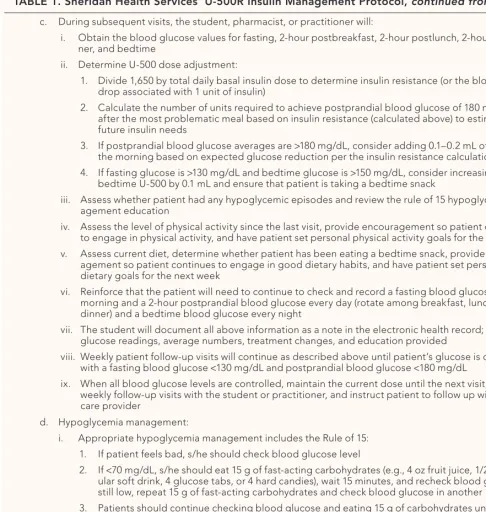
TABLE 1. Sheridan Health Services’ U-500R Insulin Management Protocol
c. During subsequent visits, the student, pharmacist, or practitioner will:
i. Obtain the blood glucose values for fasting, 2-hour postbreakfast, 2-hour postlunch, 2-hour postdin-ner, and bedtime
ii. Determine U-500 dose adjustment:
1. Divide 1,650 by total daily basal insulin dose to determine insulin resistance (or the blood glucose drop associated with 1 unit of insulin)
2. Calculate the number of units required to achieve postprandial blood glucose of 180 mg/dL after the most problematic meal based on insulin resistance (calculated above) to estimate likely future insulin needs
3. If postprandial blood glucose averages are >180 mg/dL, consider adding 0.1–0.2 mL of U-500 in the morning based on expected glucose reduction per the insulin resistance calculation
4. If fasting glucose is >130 mg/dL and bedtime glucose is >150 mg/dL, consider increasing dose of bedtime U-500 by 0.1 mL and ensure that patient is taking a bedtime snack
iii. Assess whether patient had any hypoglycemic episodes and review the rule of 15 hypoglycemia man-agement education
iv. Assess the level of physical activity since the last visit, provide encouragement so patient continues to engage in physical activity, and have patient set personal physical activity goals for the next week v. Assess current diet, determine whether patient has been eating a bedtime snack, provide
encour-agement so patient continues to engage in good dietary habits, and have patient set personal dietary goals for the next week
vi. Reinforce that the patient will need to continue to check and record a fasting blood glucose every morning and a 2-hour postprandial blood glucose every day (rotate among breakfast, lunch, and dinner) and a bedtime blood glucose every night
vii. The student will document all above information as a note in the electronic health record; include glucose readings, average numbers, treatment changes, and education provided
viii. Weekly patient follow-up visits will continue as described above until patient’s glucose is controlled with a fasting blood glucose <130 mg/dL and postprandial blood glucose <180 mg/dL
ix. When all blood glucose levels are controlled, maintain the current dose until the next visit, stop weekly follow-up visits with the student or practitioner, and instruct patient to follow up with primary care provider
d. Hypoglycemia management:
i. Appropriate hypoglycemia management includes the Rule of 15: 1. If patient feels bad, s/he should check blood glucose level
2. If <70 mg/dL, s/he should eat 15 g of fast-acting carbohydrates (e.g., 4 oz fruit juice, 1/2 can reg-ular soft drink, 4 glucose tabs, or 4 hard candies), wait 15 minutes, and recheck blood glucose; if still low, repeat 15 g of fast-acting carbohydrates and check blood glucose in another 15 minutes 3. Patients should continue checking blood glucose and eating 15 g of carbohydrates until blood
glucose is >70 mg/dL, and then eat a protein-rich meal
4. If blood glucose continues to stay low despite appropriate management, seek emergency medi-cal care
ii. If patient is having ≥2 hypoglycemia episodes within 1 week or ≥4 episodes within 1 month, discuss with clinical pharmacist or primary care provider
Sources:
1. Meneghini L, Koenen C, Weng W, Selam JL. The usage of a simplified self-titration dosing guideline (303
Algorithm) for insulin determir in patients with type 2 diabetes: results of the randomized, controlled PREDICTIVE 303 study. Diabetes Obes Metab 2007;9:902–913
2. American Diabetes Association. Clinical practice recommendations 2012. Diabetes Care 2012;35:S1–S100
B R I D G E S T O E X C E L L E N C E
reviewed by the providers to obtain input before implementation. Process for Transitioning Patients From U-100 to U-500R Insulin
During patients’ first visit, a patient assessment is completed and docu-mented. The visit includes conver-sion of U-100 insulin to U-500R insulin, assessment of the patient’s ability to identify hypoglycemic events, discussion of hypoglycemia management, reinforcement of the importance of blood glucose mon-itoring/scheduling, and assessment of current dietary habits and level of
physical activity. Patients are educated about the expectations of enrollment into the program and asked to sign the patient-provider U-500R insulin agreement. After patients agree to ad-here to expectations in the program, the U-500R insulin protocol is initi-ated, and U-100 insulins are discon-tinued. Then patient understanding is verified, and SMART (Specific, Measureable, Actionable, Attainable, Realistic, Timely, and Time-Bound) goals are established. The patient must demonstrate the proper process for drawing up the accurate amount of U-500R insulin, accurately de-scribe when blood glucose testing
will occur, and accurately describe how hypoglycemia will be managed should it occur. Patients must agree to weekly follow-up via phone or face-to-face visits.
Subsequent visits or phone calls with patients occur every 1–2 weeks and focus on reviewing the items discussed at the first visit and titrat-ing insulin per protocol, as indicated by average blood glucose values. If there is deviation from or evidence of nonadherence to the expectations outlined in the patient-provider agree-ment, the agreement is reviewed. At this time, patients are notified that, if they do not abide by the agreement, their U-500R insulin will be discon-tinued, and they will be transitioned back to U-100 insulins.
Results
Three case examples illustrate the ben-efit of the U-500R Insulin Program, which incorporated the use of an in-sulin dosing and titration protocol and a patient-provider agreement. All three cases involved patients with dia-betes who required large doses of in-sulin. Of the three patients switched to U-500R insulin, all had improved glycemic control. One, whose A1C goal was 8% due to age and comor-bidities, had an A1C reduction from 9.2 to 6.9%, which resulted in a re-duction of the U-500R insulin dose. The other two patients each had an A1C goal of 7%; one had a reduction from 10.4 to 8.1%, and the other had a reduction from 10.5 to 7.8% before being titrated off of U-500R insulin and transitioned back to U-100 in advance of a scheduled bariatric sur-gery procedure. All three patients had significant weight gain of 3–6% after initiating U-500R insulin, with an average 10-lb weight gain within the first 2 months after starting U-500R insulin. However, with the initiation of the patient-provider agreement, patients’ weight stabilized within 3–4 months. One patient had hypo-glycemic events on an ongoing basis, primarily due to lifestyle and eating habits. Both issues demonstrate the
importance of frequent and consis-tent communication with patients on U-500R insulin, patient adherence to lifestyle modification, and the devel-opment of patient-centered goals for diabetes care.
Development of a specialized protocol and patient agreement was an effective strategy for managing complex patients when using a collab-orative approach to expand the scope of primary care to a role traditionally carried out by specialty care.
Discussion
The U-500R Insulin Program was de-veloped for the few patients who were severely insulin resistant and whose diabetes was not controlled on large doses of U-100 insulin. Initially, only the U-500R insulin dosing protocol was developed and implemented. The protocol was successful in decreasing patients’ blood glucose values and A1C compared to U-100 insulins. On average, A1C decreased by 2.3–2.7%, with an average reduction of 2.4% af-ter conversion from U-100 insulins to U-500R insulin. This A1C reduction observed with this program was more than what has been demonstrated in the literature. In a study by Eby et al. (14), it was reported that mean A1C in 445 patients on U-500R in-sulin decreased by 0.68% (P <0.0001 compared with baseline A1C) (14).
Furthermore, the patients in this program experienced more weight gain than what was expected. The three example patients who were converted to U-500R gained an addi-tional 3–6% body weight, which was similar to the weight gain observed in previous studies (7–9). Based on patient visit data, it was identified that adherence to diet and exercise was lacking, and this was thought to have contributed to patients’ weight gain.
The study by Eby et al. (14) also noted that the proportion of
patients having hypoglycemic events, captured primarily in outpatient set-tings, increased from 6.7 to 11.9% (P <0.0001). Eby et al. reported that these events also increased from 0.23 to 0.39 incidents per patient per year, which was an increase of 0.13% (P = 0.003). Although the patient in one of our example cases described above was experiencing hypoglycemic epi-sodes, it was determined that he was not eating regularly or adhering to his prescribed schedule for meal timing.
Conclusion
The implementation of a U-500R Insulin Program that included an insulin dosing and titration proto-col and a patient-provider agreement helped to ensure the safe and effec-tive use of U-500R insulin in a small sample of patients in an FQHC. The protocol aided the safe initiation and appropriate titration of U-500R insu-lin. With the use of U-500R insulin, all patients in the program demon-strated an improvement in diabetes control, as indicated by reductions in A1C. Although weight gain and hypoglycemia occurred, they were diminished after implementation of a patient-provider agreement.
Duality of Interest
No potential conflicts of interest relevant to this article were reported.
References
1. Centers for Disease Control and Prevention. National diabetes statistics report: estimates of diabetes and its bur-den in the United States, 2014 [Internet]. Available from http://www.cdc.gov/diabetes/ data/statistics/2014statisticsreport.html. Accessed 1 September 2016
2. Centers for Disease Control and Prevention. Adult obesity facts [Internet]. Available from https://www.cdc.gov/obesity/ data/adult.html. Accessed 1 September 2016 3. Fritsche A, Schweitzer MA, Haring HU. Glimepiride combined with morning insulin glargine, bedtime neutral
prota-mine hagedorn insulin, or bedtime insulin glargine in patients with type 2 diabetes: a randomized, controlled trial. Ann Intern Med 2003;138:952–959
4. Gagnon-Auger M, de Souich P,
Baillargeon PB, et al. Dose-dependent delay of the hypoglycemic effect of short-acting insulin analogs in obese subjects with type 2 diabetes. Diabetes Care 2010;33:2502–2507 5. Dailey AM, Tannock LR. Extreme insu-lin resistance: indications and approaches to use of U-500 insulin in type 2 diabetes mellitus. Curr Diabetes Rep 2011;11:77–82 6. Ballani P, Tran M, Navar M, et al. Clinical experience with U-500 regular insulin in obese, markedly insulin-resistant type 2 diabetic patients. Diabetes Care 2006;29:2504–2505
7. Reutrakul S, Wroblewski M, Brown R. Clinical use of U-500 regular insulin: review and meta-analysis. J Diabetes Sci Technol 2012;6:412–420
8. Wafa W, Khan M. Use of U-500 regular insulin in type 2 diabetes. Diabetes Care 2006;29:2165–2174
9. Lowery J, Donihi AC, Korytkowski MT. U-500 insulin as a component of basal bolus insulin therapy in type 2 diabetes. Diabetes Technol Ther 2012;14:505–507
10. U.S. Food and Drug Administration. Safety: Humulin R (insulin human [rDNA origin] injection), U-500. Detailed View: Safety Labeling Changes Approved by FDA Center for Drug Evaluation and Research. Available from http://www.fda.gov/Safety/ MedWatch/SafetyInformation/ucm250517. htm. Accessed 1 September 2016