News Coverage Analysis of SNSs and the Arab Spring: Using Mixed Methods
Chung Joo Chung
Department of Journalism and Mass Communication Kyungpook National University
Sung-Ho Cho
Department of Journalism and Mass Communication Kyungpook National University
This study evaluates the roles of mass media messages and social networking services (SNSs) in the Middle East, a region largely ignored in this context, by considering four major U.S. newspapers covering the Arab Spring and the issue of SNS-driven changes in authoritarian countries. It uses a mixed-method approach combining the traditional content and semantic network analyses. The results indicate a dramatic increase in recent years in attention to Facebook and Twitter as instruments for a political revolution in the Arab world and several authoritarian countries in Asia and Africa. Newspapers varied in their presentation, but all framed the advent of SNSs as new media and technologies for information seeking and communication.
Keywords: SNS, News Coverage, Arab Spring, Framing Theory, Mixed Methods
Introduction
can publish messages for a potential audience of millions within minutes (Jansen, 2010). The revolutionary and unprecedented political changes in the Middle East have been facilitated by social networking services (SNSs). That is, substantial opportunities for collaboration available to individuals in the Middle East make this form of media an exceptionally powerful tool with the potential to facilitate political change (Ghannam, 2011).
Facebook and Twitter allowed people in Egypt and Iran to organize protests on the ground, promote their causes to mass audiences, and provide real-time updates for fellow citizens and interested people in other countries thousands of miles away. User-generated video clips posted on YouTube showed security services in Syria trying to disperse the crowd with water cannons, which exacerbated the situation. Since Raed Jarrar first gained prominence as the individual referenced in the title of the blog ―Where is Raed?‖ during the 2003 invasion of Iraq and afterward, blogs have become a popular form of media followed and discussed by active online communities, including those of activists, politicians, and journalists.
Decades of oppression have encouraged civilians to use social media to advance their march toward democracy, and this recent collaboration has been achieved through the shared awareness of people in the Middle East, the collective strength of the crowd, and increased visibility to the rest of the world (Goodman, 2011). As SNS access and use become more widespread and take hold in the Middle East, the intrinsic political vitality of the Web is likely to change the way people view their own countries and the rest of the world. Previously unavailable information and news sources are tapped, and the interactive nature of SNSs has fostered the intellectual enfranchisement, opening the way to political change (Seib, 2007).
Given the limited Internet access in most countries in the Middle East, it is expected that more time is necessary for the Internet to be a potent driver of reform. However, there is some concern that tools should not be confused with motivation (Ghannam, 2011). A technological advance is a tool, that is, a method for mobilizing movements, and thus may not be a reason for a civil upheaval. This raises the question of whether the Arab Spring—the mobilization of people for democratic change inaugurated by a massive political upheaval in the Middle East—could have occurred without SNSs (Barnett, 2011) or whether the social revolution could have taken place so quickly.
traditional content analysis and computerized semantic network analysis to better understand not only the issue of SNS-driven revolutionary changes, particularly in the context of politics in the Middle East, but also the positions taken by major newspapers on the Arab Spring. The rest of this paper is organized as follows: The next section discusses SNSs as a political tool in the Middle East, various issues related to democracy and globalization, and news framing and its effects. Then a set of research questions are proposed based on the literature review. Finally, the major findings are presented, and their implications are discussed.
Literature Review
SNSs as a Political Tool in the Middle East
Boyd and Ellison (2007) defined SNSs as web-based services that facilitate three types of actions: constructing a public or semipublic profile available to all users; building a network of friends or connections to other users; and browsing one’s connections and those of other users in the network. Since the beginning of the 21st century, SNSs such as blogs, Facebook, YouTube, and Twitter have become global phenomena not only in Western countries with advanced communications technologies but also in Arab countries with relatively limited online media access.
If the first Gulf War introduced the world to the CNN effect in which the popular 24-hour international cable news channel had a major impact on foreign policy, then the second Gulf War was a coming-out party for blogging (Drezner & Farrell, 2004). Since Salam Pax, the father of Iraqi blogging, started his famous blog ―Where is Raed,‖ people have used the Internet as a place to organize, share their opposition to the war effort, and test the power of each other (Shapiro, 2009). In addition, Facebook, YouTube, and Twitter have been transformed into powerful tools of activism in the Middle East.
Recently, Khaled Said, a young businessman, was beaten to death by the Egyptian police and security services. An anonymous human rights activist created a Facebook page entitled ―We Are All Khaled Said‖ and posted pictures of his battered and bloodied face. These photos were also uploaded on YouTube beside images of his smiling face. As a result, the page became and has remained the biggest dissident Facebook page in Egypt, and even as protests have continued to sweep the country, and it has helped spread the word about demonstrations in Egypt ignited after a revolt in neighboring Tunisia toppled the government (Preston, 2011).
In the Middle East, the use of such social media as new forms of communication has exceeded that of traditional newspapers or broadcast media, which generally remain under the control of anti-democratic governments or royal regimes. As a new form of media based on a new technology, SNSs are more interactive than conventional media, providing a personally tailored look, links for users to follow, and space for comments on each post. Internet-based communication has challenged the traditional regimes of mass communication in the Middle East and has received rapidly increasing popularity. Internet users in the region showed a 6,583% increase from 2000 to 2011 (Internet World Stats, 2011).
Kaid and Postelnicu (2006) argued that Internet-based social media are an important channel for political communication and thus have the potential to enhance populist participation. The Internet is a place where marginalized communities can turn to when they feel shut out of other mainstream media in public discourse. Social media can provide ordinary citizens with opportunities to become involved in public discourse, and as a result, technological innovations in social media have altered the structure and content of political discourse in the Middle East (McCauliff, 2011).
Many countries in the Middle East have shown that weak ties between people on the Internet can become strong ties and forge closer relationships, facilitating effective organization for social change. SNSs can empower users to become new influencers (Breakenridge & Solis, 2009). Young activists in Iran, Egypt, and Syria, like those in nearby Tunisia and elsewhere in the region, have been able to use their access to new SNS tools to publicize demands, call for demonstrations, and win support from broader segments of society (Harsch, 2011).
Spreading Democratic Ideals
online social media have played an increasingly important role in international politics, its impact remains unclear. There are two arguments against the idea of social media making a substantial difference in national politics. The first is that SNSs are not effective by themselves, and the second is that they can facilitate as well as limit democratization (Shirky, 2011) because the availability of mobile phone coverage may increase the probability of violent conflicts (Pierskalla & Hollenbach, 2013).
According to Kalathil and Boas (2003), the Internet is only a tool, and its specific use by political or social actors must be carefully weighed and considered. Kupchan (2002) argued that the international effects of the information revolution depend on the broader political context in which new media and technologies are deployed. In other words, democracy advocates should not view Internet-based social media as a panacea. As in the case of any political enterprise, the ability and characteristics of participants, available resources, other political occurrences near and far, and even good or bad luck can have considerable influence on any given democracy venture (Seib, 2007).
However, the achievements in Egypt and Syria provide no support for the first argument (social media as an insufficient tool for political change). After a dark age of limited access to the Internet, SNSs are now generating political pressure on many authoritarian countries in the Middle East because they are, by themselves, intrinsically democratic. Their structure can awaken even the general public to the value of human rights or democracy and foster political participation. Political dissent is considerably more threatening in the technological age (Anderson, 2011), and therefore suppressive governments are presently working to oppress opposition.
Complete control is not feasible, and oppression cannot stop people from talking. The Internet has the capability to produce political change more effectively than other technologies in the Arab world. Online forums and information providers allow users to react to issues and topics in an open environment facilitating free discussions. No longer are the hegemonic ideals of the local media and dinner table conversations the only outlets for information sharing and interactions. Internet-based social media have altered access to knowledge because it can now be acquired unfiltered (Anderson, 2011). Open access to social media venues and the easy dissemination of uncensored media have allowed people to view wider information as a prelude to democracy. SNSs amplify the views that might have previously gone unheard and thus foster a degree of democratic parity, at least in terms of expanding audience access for those who feel that they have something worthwhile to say (Seib, 2007).
Social media allow users to engage in discussions not only with people in close proximity but also with those with whom face-to-face interactions are limited. Although social media have become a vital platform of political freedom and democracy in the Middle East, they have also been described as a tool with the ability to spread democratic ideals at the global level. As a result, questions about Westernization or Americanization have risen as a global trend (Anderson, 2011). Global communities armed with technological innovations such as SNSs, including Facebook, may further their quest for democratization (Morozov, 2011).
Social justice and freedom are not universal rights. Even in the 21st century, authoritarian governments still overpower and silence their people. The Middle East is the last holdout against the global democratic trend (Ottaway & Carothers, 2004). According to Freedom House (2011), most countries in the Middle East are ranked as either not free or partly free, which is equivalent to other authoritarian countries such as China, North Korea, Cuba, and Tunisia. However, the proliferation of communications technologies, the globalization of media and culture, and the ongoing saturation of everyday life through digital devices have had far-reaching consequences for the Middle East and other oppressed countries, reflecting other parts of the world (Semiti, 2011).
News Framing and Its Effects
events and issues have a bearing on the rest of the world (Teng’o, 2008). Given that the media portray various issues, groups, and regions for a given society, news framing plays an important role in shaping audiences’ view of the Middle East and its inhabitants.
The mass media influence people’s perception and interpretation of agendas by selecting and highlighting certain facts or perspectives while ignoring others (Entman, 1995). According to Gitlin (1980), media frames are persistent patterns of the cognition, interpretation, and presentation of some selection, emphasis, and exclusion by which symbol handlers routinely organize the subject of discourse. He explained that frames are largely unspoken and unacknowledged and can organize the world both for journalists who report it and, to a certain extent, for those relying on news reports. In addition, media frames can serve as working routines for journalists, allowing them to identify and classify information quickly and to package it for efficient delivery to audiences (Gitlin, 1980).
The news frame analysis, particularly the text-analytic approach to framing, is based on text-determinism, which assumes that the media frame influences the collected knowledge an individual has about a given topic. With the development of analytic research on news framing, framing theory has emerged to show that the ways in which news stories are structured influence the recognition and perception of audiences and their behaviors as well as the content and importance of the story itself (Iyengar, 1991; Iyengar & Kinder, 1987). Framing theory focuses on the process of interpreting issues of concern to receivers in which the classical models of public opinion formation and variations do not deeply consider. Therefore, it focuses on the way the content of a message is delivered by the media and the process of interpretation by receivers.
News framing is a structuring method for facilitating the understanding of news in a specific way by audiences or readers. In other words, a news frame is functionally a mechanism for specifying the direction of the audience’s understanding and practically a method for integrating various message factors into a complete story organized in reality. The frame or framing effect offers a starting point for a necessary discussion to explain realistic effects of issues. From this perspective, this study analyzes and compares the coverage of four major U.S. newspapers in the context of SNSs and the Arab Spring.
Derived from the literature review, this study adopts a deductive approach and examines the presence and occurrence of five news frames: the advent of SNSs as new media and technologies, the use of SNSs for information seeking and communication, the function of SNSs for civic or democratic consciousness growth, the spread of the SNS-driven revolution worldwide, and the rise of Americanization or Westernization issues regarding SNSs in the Middle East.
Research Questions
Based on the literature review, this study is guided by the following three research questions:
RQ1. What are the general characteristics of news coverage regarding SNSs and the Arab Spring and the differences between newspapers in terms of 1) the number of news articles, 2) the length and types of news articles, 3) the coverage frequency of each newspaper over time, 4) the use of episodic or thematic framing, 5) SNS types on articles over time, and 6) referred countries?
RQ2. How do newspapers portray SNSs and the Arab Spring in terms of argumentation; the advent, use, and function of SNSs; their spread to other countries; and globalization with respect to SNSs in the Middle East? Are there any differences between newspapers?
Methods
Content Analysis and Data
A mixed method based on the content and semantic network analyses was employed. A keyword search was conducted using Campus Research, an online research service providing access to a comprehensive collection of news resources. The search period was limited to 10 years from July 31, 2001, to July 31, 2011, which included the emergence and increasing use of SNSs in the Middle East.
Four major newspapers were considered: the New York Times and the Washington Post, two opinion leaders; USA Today, a nation-wide newspaper targeting the general public; and the
International Herald Tribune, a specialized newspaper offering international coverage. A total of 291 news stories relevant to the study were evaluated, including 117 from the New York Times, 59 from the Washington Post, 16 from the USA Today, and 99 from the International Herald Tribune.
As a pilot study to establish an appropriate coding scheme for the content analysis, more than one fifth (60 stories, 20.6%) of the sample news stories were analyzed by two trained coders who were graduate students. Scott’s Π for the two coders was α=.91, indicating acceptable inter-coder reliability. To prepare data for the semantic analysis, a list of meaningless words that distorted the analysis were excluded. Such words included most articles, conjunctions, and transitive verbs. In addition, any verbs in the past and past perfect tenses were changed to their present-tense forms. Finally, similar words were combined into single ones to facilitate the analysis (Biddix, Chung, & Park, 2011; Lim, 2009).
Semantic Analysis
0 The Catpac is a neural network computer program optimized for analyzing text and identifying words and semantic networks. Catpac does not require prior categories for analysis, whereas the traditional non-computerized content analysis does (Biddix et al., 2011; Danowski, 1993; Krippendorff, 1980). Instead, Catpac allows categories to emerge from data and large blocks of text to form meaningful conceptual groupings (Park, 2002). In addition, it calculates the frequency of words and generates a word-by-word matrix whose cells represent the likelihood of the co-occurrence of those words (Danowski, 1982). Instead of using a Euclidean distance measure, it measures the distance as an increase in the total sum of squares resulting from the clustering of two objects. Previous studies based on this process provide support for the utility of the semantic network analysis as systematic content (Rice, 2005; Rosen et al., 2003) and quantitative data research (Samkin & Schneider, 2008).
Results
RQ1. General Characteristics of News Coverage and Its Frame Use
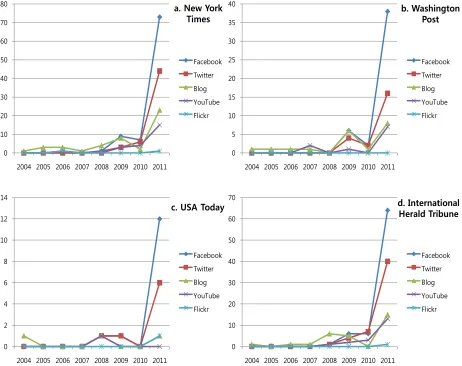
Among the 291 relevant news articles, 212 articles (72.8%) were written in 2011 (January 1 to July 31), followed by 32 in 2009, 19 in 2010, and 11 in 2008. The year 2011 was when the demonstrations in Tunisia and Egypt brought down the authoritarian governments, followed by achievements in other countries in the Middle East. All newspapers started to report SNS-related issues in the Middle East since 2004.
The average number of words per article was 1,171. The USA Today reported the fewest average words (757) per article, whereas the other three newspapers averaged more than 1,000 words per article (the New York Times: 1,136; the Washington Post: 1,130; the International Herald Tribune: 1,037). Feature stories accounted for 51.5% of all stories analyzed, followed by editorial columns or opinion pieces written by newspaper employees (29.6%), straight news (12.0%), and others (6.9%). The New York Times ran feature news (56 stories, 47.9%) the most, followed by editorial or opinion pieces written by newspaper employees or external experts (28.2%), and straight news (17.1%). More than two thirds of the articles (41 stories, 69.5%) in the Washington Post were feature news (straight news: 6.8%; editorial or opinion pieces: 22.0%). The USA Today accounted for only 18.8% of editorial or opinion pieces, whereas the
1
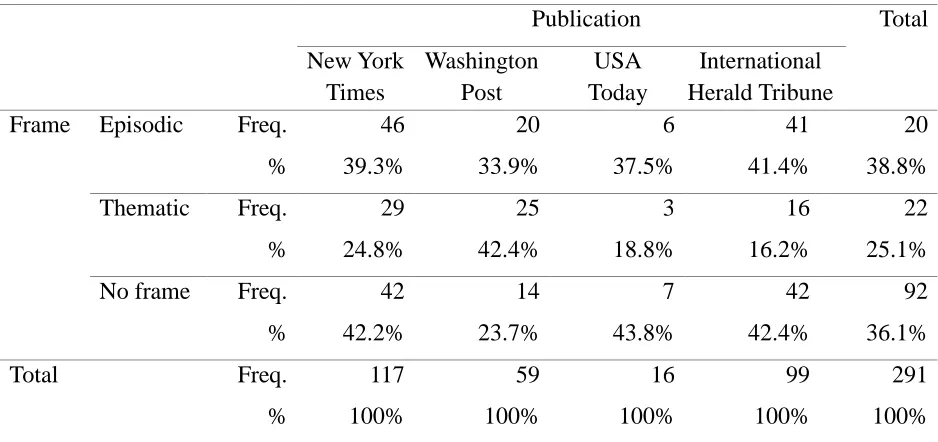
News stories were more likely to reflect episodic frames (113 stories, 38.8%) than thematic ones (73 stories, 25.1%). The Washington Post presented more stories in thematic frames (42.4%) than the other newspapers. The New York Times and the International Herald Tribune articles were more episode-oriented than those in the Washington Post. Table 1 shows the use of frames by the four newspapers (χ2 = 14.847, df = 6, p = .021).
Table 1. Episodic or thematic frames
Publication Total
New York Times Washington Post USA Today International Herald Tribune Frame Episodic Freq.
% 46 39.3% 20 33.9% 6 37.5% 41 41.4% 20 38.8% Thematic Freq.
% 29 24.8% 25 42.4% 3 18.8% 16 16.2% 22 25.1% No frame Freq.
% 42 42.2% 14 23.7% 7 43.8% 42 42.4% 92 36.1%
Total Freq.
% 117 100% 59 100% 16 100% 99 100% 291 100% Note. χ2
= 14.847, df = 6, p = .021. One cell (8.3%) shows an expected count less than five. The minimum expected count (MEC) is 4.01.
2 0 10 20 30 40 50 60 70 80
2004 2005 2006 2007 2008 2009 2010 2011
Facebook Twitter Blog YouTube Flickr 0 5 10 15 20 25 30 35 40
2004 2005 2006 2007 2008 2009 2010 2011
Facebook Twitter Blog YouTube Flickr 0 2 4 6 8 10 12 14
2004 2005 2006 2007 2008 2009 2010 2011
Facebook Twitter Blog YouTube Flickr 0 10 20 30 40 50 60 70
2004 2005 2006 2007 2008 2009 2010 2011
Facebook Twitter Blog YouTube Flickr
a. New York
Times b. Washington Post
c. USA Today d. International
Herald Tribune
Figure 1. Types of SNSs mentioned in articles
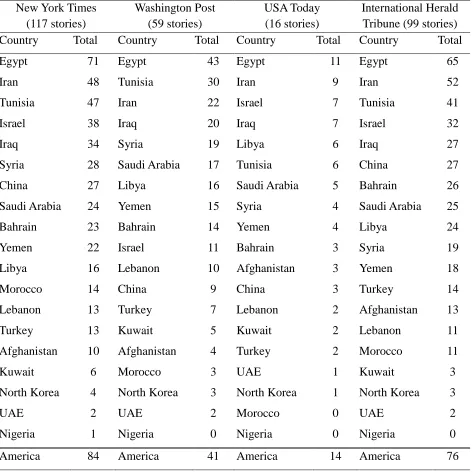
3 Table 2. Number of mentions of each country
New York Times (117 stories)
Washington Post (59 stories)
USA Today (16 stories)
International Herald Tribune (99 stories)
Country Total Country Total Country Total Country Total
Egypt 71 Egypt 43 Egypt 11 Egypt 65
Iran 48 Tunisia 30 Iran 9 Iran 52
Tunisia 47 Iran 22 Israel 7 Tunisia 41
Israel 38 Iraq 20 Iraq 7 Israel 32
Iraq 34 Syria 19 Libya 6 Iraq 27
Syria 28 Saudi Arabia 17 Tunisia 6 China 27
China 27 Libya 16 Saudi Arabia 5 Bahrain 26
Saudi Arabia 24 Yemen 15 Syria 4 Saudi Arabia 25
Bahrain 23 Bahrain 14 Yemen 4 Libya 24
Yemen 22 Israel 11 Bahrain 3 Syria 19
Libya 16 Lebanon 10 Afghanistan 3 Yemen 18
Morocco 14 China 9 China 3 Turkey 14
Lebanon 13 Turkey 7 Lebanon 2 Afghanistan 13
Turkey 13 Kuwait 5 Kuwait 2 Lebanon 11
Afghanistan 10 Afghanistan 4 Turkey 2 Morocco 11
Kuwait 6 Morocco 3 UAE 1 Kuwait 3
North Korea 4 North Korea 3 North Korea 1 North Korea 3
UAE 2 UAE 2 Morocco 0 UAE 2
Nigeria 1 Nigeria 0 Nigeria 0 Nigeria 0
America 84 America 41 America 14 America 76
RQ2. Framing of SNSs and the Arab Spring
4 Middle East, Asia, and Africa, and the rise of Americanization or Westernization in the Middle East in terms of political change through SNSs.
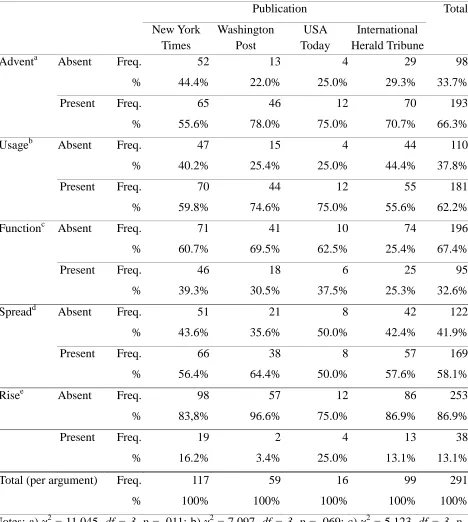
Table 3. Arguments regarding SNSs and democracy issues in the Middle East
Publication Total
New York Times Washington Post USA Today International Herald Tribune Adventa Absent Freq.
% 52 44.4% 13 22.0% 4 25.0% 29 29.3% 98 33.7% Present Freq.
% 65 55.6% 46 78.0% 12 75.0% 70 70.7% 193 66.3% Usageb Absent Freq.
% 47 40.2% 15 25.4% 4 25.0% 44 44.4% 110 37.8% Present Freq.
% 70 59.8% 44 74.6% 12 75.0% 55 55.6% 181 62.2% Functionc Absent Freq.
% 71 60.7% 41 69.5% 10 62.5% 74 25.4% 196 67.4% Present Freq.
% 46 39.3% 18 30.5% 6 37.5% 25 25.3% 95 32.6% Spreadd Absent Freq.
% 51 43.6% 21 35.6% 8 50.0% 42 42.4% 122 41.9% Present Freq.
% 66 56.4% 38 64.4% 8 50.0% 57 57.6% 169 58.1% Risee Absent Freq.
% 98 83,8% 57 96.6% 12 75.0% 86 86.9% 253 86.9% Present Freq.
% 19 16.2% 2 3.4% 4 25.0% 13 13.1% 38 13.1% Total (per argument) Freq.
% 117 100% 59 100% 16 100% 99 100% 291 100% Notes: a) χ2 = 11.045, df = 3, p = .011; b) χ2 = 7.097, df = 3, p = .069; c) χ2 = 5.123, df = 3, p
5 The newspapers differed in their presentation of these arguments (see Table 3). The advent of SNSs as new media and technologies (66.3%) and the use of SNSs for information seeking or communication (62.2%) were the most common arguments. In fact, these two arguments accounted for more than two thirds of all news articles. In addition, at least 50% of all news stories by all four newspapers framed the spread of the SNS-driven revolution to other authoritarian countries. The function of SNSs for civic or democratic consciousness growth in Arab societies was the most frequent argument in the New York Times (39.3%), whereas it was framed least frequently in the International Herald Tribune (25.3%). In comparison to the other newspapers, the Washington Post was least likely to present the function of SNSs for civic or democratic consciousness growth in Arab society (3.4%).
RQ3. Semantic Networks: Frequent Words and Word Clusters
The most frequently occurring words in newspaper coverage of SNSs such as Facebook, Twitter, YouTube, blogs, and Flickr and the Arab Spring—both common across the newspapers and unique to each newspaper—were examined. In addition, the question of whether frequently occurring words constituted notable clusters demonstrating relationships between the words was addressed.
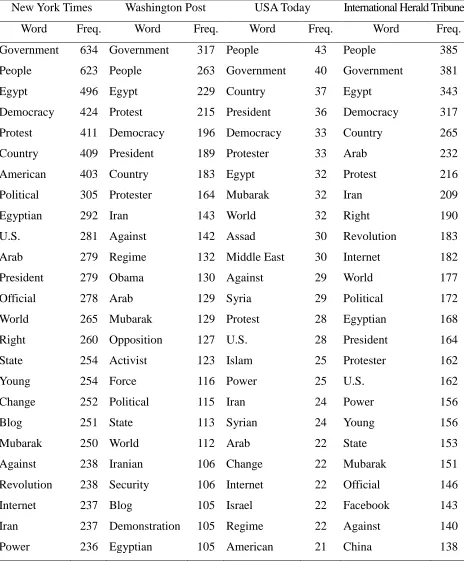
Table 4 lists the top 25 most frequently used words in articles of each newspaper. All newspapers shared 9 of these 25 words in common, the most frequent of which was government
(1,372), followed by people (1,314), Egypt (1,110), democracy (970), country (894), protest
(870), president (668), Arab (662), and Iran (613). The words activist, demonstration, force,
Iranian, Obama, opposition, and security were unique to the Washington Post, whereas the unique words for the USA Today were Islam, Israel, Middle East, Syria, and Syrian. The word
Facebook was a top-25 word only for the International Herald Tribune, and the words blog,
Egyptian, political, and state appeared frequently in the New York Times and the Washington Post
6
Table 4. Top 25 words based on frequency
New York Times Washington Post USA Today International Herald Tribune
Word Freq. Word Freq. Word Freq. Word Freq.
Government 634 Government 317 People 43 People 385
People 623 People 263 Government 40 Government 381
Egypt 496 Egypt 229 Country 37 Egypt 343
Democracy 424 Protest 215 President 36 Democracy 317
Protest 411 Democracy 196 Democracy 33 Country 265
Country 409 President 189 Protester 33 Arab 232
American 403 Country 183 Egypt 32 Protest 216
Political 305 Protester 164 Mubarak 32 Iran 209
Egyptian 292 Iran 143 World 32 Right 190
U.S. 281 Against 142 Assad 30 Revolution 183
Arab 279 Regime 132 Middle East 30 Internet 182
President 279 Obama 130 Against 29 World 177
Official 278 Arab 129 Syria 29 Political 172
World 265 Mubarak 129 Protest 28 Egyptian 168
Right 260 Opposition 127 U.S. 28 President 164
State 254 Activist 123 Islam 25 Protester 162
Young 254 Force 116 Power 25 U.S. 162
Change 252 Political 115 Iran 24 Power 156
Blog 251 State 113 Syrian 24 Young 156
Mubarak 250 World 112 Arab 22 State 153
Against 238 Iranian 106 Change 22 Mubarak 151
Revolution 238 Security 106 Internet 22 Official 146
Internet 237 Blog 105 Israel 22 Facebook 143
Iran 237 Demonstration 105 Regime 22 Against 140
7
a. New York Times b. Washington Post
c. USA Today d. International Herald Tribune
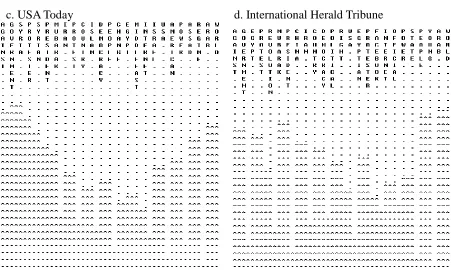
Figure 2. Comparison of co-occurring word clusters: Four newspapers
8 in the coverage of the four newspapers. The noteworthy word clusters for the coverage of the
New York Times were Against-Government-Protest, Egypt-Revolution, Political-Change, and Young-People (see Figure 2a). As shown in Figure 2b, the Washington Post was the only newspaper for which several top-25 words formed the following unique clusters: Activist-Democracy, Security-Force, Demonstration-Against-Government, and Political-Opposition. The news articles in the USA Today produced the following unique clusters: USA-Israel, American-Power, and Protest-Against-Syria-Government (see Figure 2c). As shown in Figure 2d, the
International Herald Tribune formed clusters focusing on protests for political rights in Arab countries (mainly in Egypt) through SNSs such as Facebook (e.g., Egypt-Protest-Revolution, Mubarak-President, and Egyptian-Protester-Facebook).
a. New York
Times b. Washington Post
c. USA Today d. International
Herald Tribune
9
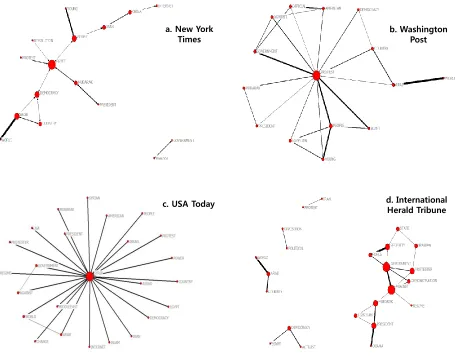
Note: The diameter of each node indicates degree centrality. The line thickness denotes the probability of the co-occurrence of two words that are linked. Nodes with only one connection (pendants) and words with weak connections with probability <.1 were excluded.
Figure 3 shows the networks of the most frequent words based on their co-occurrence and distance based on the Wards method, representing clusters by their central points. As shown in Figure 3a, for the New York Times, protest was the most central word linked to government,
people, and Egypt. The most central words for the Washington Post were against and government. As shown in Figure 3b, they were closely linked to each other and were linking other words, respectively (e.g., Against-Government, Government-Security-Force, Against-Mubarak-Regime-Demonstration). As shown in Figure 3c, Syria was the most central word for the USA Today. It connected other words in the network (e.g., Syria-Government-Against and Arab-World-Syria). Although the word Egypt was the most central one linking most other words, the links of young
and people for Egypt were unique to the International Herald Tribune (see Figure 3d).
Discussion
Newspapers’ Portrayal of SNSs and the Arab Spring
Newspapers present elite views and drive political discourse (Callaghan & Schnell, 2001). This constructivist role of the media is generally referred to as framing (Entman, 1995). Framing research enables a connection between news text and the production and reception process and highlights the construction of a meaning as a product of framing efforts by various actors in a wider context (Carragee & Roefs, 2004). With a mixed method incorporating the content and semantic network analyses, four major U.S. newspapers’ coverage of SNSs and the Arab Spring was compared and analyzed. Based on the general characteristics of the coverage of arguments concerning the advent, use, and function of SNSs, their spread to other countries, globalization trends, diverse perspectives, and the coverage portrayal of newspapers were examined.
0 demonstrations. These victorious conquests have prompted protests in many other countries, most notably in Libya, awakening global attention and becoming a topic of serious interest for the Western media in 2011. There were fewer news articles in 2010 than in 2009, when Iran’s 10th presidential election was held and tech-savvy Iranians were against the country's disputed presidential election through microblogging sites such as Twitter. These tech-savvy Iranians organized and sent messages and pictures to the outside world on a real-time basis as events unfolded. During these periods, all newspapers referred to Facebook the most as a major SNS tool for political change in the Middle East, followed by Twitter and blogs.
Second, although the Washington Post covered SNSs and the Arab Spring less than the
New York Times, its coverage was more thematic. Instead of reporting issues as straight news, the
Washington Post provided more in-depth stories and professional comments though feature articles with thematic frames and editorial pieces. The USA Today, a newspaper usually considered less elitist, was much less likely to cover the developments than the other newspapers based on the number and length of articles. By contrast, the International Herald Tribune, a paper focused on providing the international and perspective, paid close attention to the issue.
Third, while the newspapers differed in terms of their presentation, they framed the advent of SNSs based on the following three arguments: SNSs as new media and technologies, the use of SNSs for information seeking or communication, and the spread of the SNS-driven revolution to other authoritarian countries. Noteworthy is that all newspapers except for the
Washington Post framed the rise of Americanization or Westernization as a source of great concern in the Arab World. This provides support for the results for word frequency and clusters in which the term U.S. or Americans was not part of the top 25 words in the Washington Post.
Fourth, the semantic network results indicate that the New York Times focused on young individuals’ protests against the government for political change in the Middle East. The newspaper seriously portrayed the younger generation’s efforts in the region. The results for the
Washington Post show a fierce political battle between authoritarian regimes and protesters equipped with new media technologies such as SNSs. Substantial weight was given to the power of the U.S. and the country’s relationship with Israel by the USA Today, whereas the
1 between the USA Today (domestic issues) and the International Herald Tribune (international issues).
Framing theory (Entman, 1995) suggests that the media define important issues and tell audiences which issues and what aspects of those issues are more important. The mass media can construct an image of social media and the Arab Spring. If audiences consume similar messages repeatedly over time, the media’s version of reality (Gerbner et al., 1986) is likely to play a crucial role in forming public opinion on those issues. In addition, frames of elite, nationwide, and specialized media outlets in the U.S. may have considerable influence on the media policy of various governments and their decision making on foreign affairs.
SNSs as a Tool for Political Change in the Middle East
It is almost impossible to isolate the effects of social media tools from the general swirl of events that set off the recent popular uprisings across the Middle East. However, there is little doubt that that they provided a new means for ordinary people to connect with human rights advocates trying to amass support to fight police abuse, torture, and authoritarian governments’ permanent emergency laws allowing people to be jailed without charging them.
Facebook, Twitter, and YouTube have facilitated online civic activism in the Middle East. However, this has spurred governments in the region to control access to information and content by expanding technical filtering, laws and regulations, surveillance and monitoring, physical restrictions, and extra-legal harassment and arrests (OpenNet Initiative, 2009). Although threatening, oppression cannot silence people forever.
Citizens are blogging, organizing protests, and using SNSs such Facebook and Twitter for advocacy purposes. The SNS revolution in authoritarian countries demonstrates the potential of Internet-driven communications technologies in the hands of activists. In Iran, journalists and activists have shared a common view that Twitter is a place to circumvent the state-controlled media and find and disseminate relatively unfettered information. Facebook has substantially strengthened the reach and effectiveness of political movements in Egypt. Through Facebook, people can now publicize human rights abuses, organize protests, and reach different segments of society. Throughout the world, an important attribute ascribed to the online media is that it enables activists to establish connections and share information.
2 will continue, although this exposure may have mixed results. If global media outlets and globalized media flows can bring ―neighborhoods‖ together, they can also add tension by constantly circulating narratives of conflict, destruction, and hatred. An additional element in this mix is the extent to which media and communications technologies have accommodated affiliations and associations across geographical boundaries (Semiti, 2011).
Conclusion
Using a mixed-method approach incorporating the traditional content analysis and automated semantic network analysis, this study analyzes the mass media’s coverage of the political role of SNSs in the Middle East. More specifically, the study investigates the issues surrounding political change driven by SNSs, particularly in the Middle East, and the perspectives of major U.S. newspapers on the Arab Spring. The results indicate a dramatic increase in attention to SNSs such as Facebook and Twitter in recent years as tools for the political revolution in the Arab world and several authoritarian countries in Asia and Africa. Future research should compare news coverage between the West and the Middle East for a more comprehensive understanding of global perspectives and views.
Acknowledgement
This research was supported by Kyungpook National University Research Fund, 2013
Chung Joo Chung is an assistant professor in the Department of Journalism and Mass Communication at Kyungpook National University. His areas of interest include new media and technologies, social networks, online communities, and globalization. He has published papers in international journals such as Online Information Review, Internet and Higher Education, Social Science Computer Review, Social Science Information, Telecommunications Policy, Global
3 Sung-Ho Cho (Corresponding Author) is a professor in the Department of Journalism and Mass Communication at Kyungpook National University. His areas of interest include the mass media, programming, and organizational communication. He has published papers in journals such as
Korean Journal of Journalism and Communication Studies and the Journal of Communication Science. He can be reached at the Department of Journalism & Communication, Kyungpook National University, 80 Daehak-ro, Buk-gu, Daegu 702-701, Korea (Tel: 82-53-950-5263; E-mail: [email protected]).
References
Anderson, K. (2011). Revolution in the digital age: Egypt’s Facebook revolution and Internet freedom. Retrieved from http://digitalcommons.calpoly.edu/comssp/63/
Barnett, C. (2011). Theory and events. Geoforum, 42, 263-265.
Barnett, G. A., & Kincaid, D. L. (1983). A mathematical theory of cultural convergence. In W. B. Gudykunst (Ed.) Intercultural communication theory: Current perspectives (pp. 171-179). Thousand Oaks, CA: Sage.
Barnett, G. A., & Woelfel, J. (1988). Reading in the Galileo system: Theory, methods and applications. Dubuque, IA: Kendall/Hunt.
Biddix, J. P., Chung, C., Park, H. W. (2011). Convenience or credibility? A study of college student online research behaviors. Internet and Higher Education, 14(3), 175-182.
Boyd, D. M., & Ellison, N. B. (2007). Social network sites: Definition, history, and scholarship.
Journal of Computer-Mediated Communication, 13, Article 11. Retrieved from http://jcmc.indiana.edu/vol13/issue1/boyd.ellison.html.
Breakenridge, D., & Solis, B. (2009). Putting the public back into public relations: How social media is reinventing the aging business of PR. Upper Saddle River, New Jersey: FT Press
Carragee, K. M., & Roefs, W. (2004). The neglect of power in recent framing research. Journal of Communication, 54, 214-233.
Callaghan, K., & Schnell, F. (2001). Assessing the democratic debate: How the news media frame elite policy discourse. Political Communication, 18, 183-212.
4 comprehension. In L. W. Gregg (Ed.) Cognition in Learning and Memory (pp. 117-138). New York, NY: Wiley.
Danowski, J. A. (1982). A network-based content analysis methodology for computer mediated communication: An illustration with a computer board. Communication Yearbook, 6:
904-925.
Danowski, J. A. (1993). Network analysis of message content. In G. A. Barnett & W. Richards (Eds.) Progress in Communication Sciences (pp. 197-222). Norwood, NJ: Ablex.
Drezner, D. W., & Farrell, H. (2004). Web of influence, 145, 32-40.
Entman, R. M. (1995). Television, democratic theory and the visual construction of poverty.
Research in Political Sociology, 7, 139-159.
Entman, R. M. (2006). Framing: Toward clarification of a fractured paradigm. Journal of Communication, 43, 51-58.
Freedom House (2011). Map of freedom. Retrieved from http://www.freedomhouse.org
Gerbner, G., Gross, L., Morgan, M., & Signorielli, N. (1986). Living with television: The dynamics of the cultivation process. In J. Bryant & D. Zillman (Eds.) Perspectives on Media Effects (pp. 17-40). Hillsdale, NJ: Lawrence Erlbaum Associates.
Goodman, S. D. (2011). Social media: The use of Facebook and Twitter to impact political unrest in the Middle East through the power of collaboration. Retrieved from http://digitalcommons.calpoly.edu/joursp/25/
Ghannam, J. (2011). Freedom beyond 140 characters. The Herald-Sun. March 12, 2011.
Gitlin, T. (1980). The whole world is watching: Mass media in the making and unmaking of the new left. Berkeley: University of California Press.
Gonzales, D., & Harting, S. (2011). Can you hear Libya now? The New York Times. March 4, 2011.
Harsch, E. (2011). Cyber-activists lend savvy to North African revolutions. Retrieved from http://www.newsfromafrica.org/newsfromafrica/articles/art_12438.html
Howard, P. N. (2011). The digital origins of dictatorship and democracy: Information technology and political Islam. New York, NY: Oxford University Press
5 Iyengar, S. (1991). Is anyone responsible? How television frames political issues. Chicago, IL:
University of Chicago Press.
Iyengar, S., & Kinder, D. R. (1987). News that matter: Television and American opinion. Chicago, IL: University of Chicago Press.
Jansen, F. (2010). Digital activism in the Middle East: Mapping issue networks in Egypt, Iran, Syria and Tunisia. Knowledge Management for Development Journal, 6, 37-52.
Kaid, L. L., & Postelnicu, M. (2006). Credibility of political messages on the Internet: A comparison of blog sources. In M. Tremayne (Ed.) Blogging, citizenship, and the future of the media (pp. 149-164). New York, NY: Routledge.
Kalathil, S., & Boas, T. C. (2003). Open networks, closed regimes: The impact of the Internet on authoritarian rule. Washington, DC: Carnegie Endowment for International Peace. Kraidy, M. K., & Mourad, S. (2010). Hypermedia space and global communication studies
lessons from the Middle East. Global Media Journal, 9. Retrieved from
http://lass.calumet.purdue.edu/cca/gmj/PDF_archive/amer_edition/spring2010/GMJ-SP10-article8-kraidy.pdf
Krippendorff, K. (1980). Content analysis: An introduction to its methodology. London: Sage. Kupchan, C. (2002). The end of the American era. New York, NY: Knopf.
Lim, Y. (2009). Semantic Web and contextual information: Semantic network analysis of online journalistic texts. Presented at the BlogTalk 2009.
McCauliff, K. L. (2011). Blogging in Baghdad: The practice of collective citizenship on the blog Baghdad Burning. Communication Studies, 62, 58-73.
Morozov, E. (2011). The net delusion: The dark side of Internet freedom. New York, NY: Public Affairs.
OpenNet Institute (2009). Internet filtering in the Middle East and North Africa. Retrieved from http://opennet.net/sites/opennet.net/files/ONI_MENA_2009.pdf
Ottaway, M., & Carothers, T. (2004). Middle East democracy. Foreign Policy, 145, 22-28.
Park, H. W. (2002). Examining the determinants of who is hyperlinked to whom: A survey of webmasters in Korea. First Monday, 7. Retrieved from
http://firstmonday.org/htbin/cgiwrap/bin/ojs/index.php/fm/article/view/1005/926
6 cell phone coverage on political violence in Africa. American Political Science Review, 107(2), 207-224.
Preston, J. (2011). Movement began with outrage and a Facebook page that gave it an outlet. Retrieved from http://www.nytimes.com/2011/02/06/world/middleeast/06face.html? pagewanted=all
Rice, R. E. (2005). New media/Internet research topics of the association of internet researchers.
The Information Society, 21, 285-299.
Rogers, E. M., & Kincaid, D. L. (1981). Communication networks: Toward a new paradigm for research. New York, NY: Free Press.
Rosen, D., Woelfel, J., Krikorian, D., & Barnett, G. A. (2003). Procedures for analyses of online communities. Journal of Computer-Mediated Communication, 8. Retrieved from http://jcmc.indiana.edu/vol8/issue4/rosen.html#seventh.
Seib, P. (2007). New media and the new Middle East. New York, NY: Palgrave Macmillan. Semati, M. (2011). Communication, culture, media, and the Middle East. Communication
Studies, 62, 1-4.
Semetko, H. A., & Valkenburg, P. M. (2000). Framing European politics: A content analysis of press and television news. Journal of Communication, 50, 93-109.
Shirky, C. (2011). The political power of social media. Foreign Affairs, 90, 28-41.
Teng’o, D. (2008). More of the same: The flow and framing of African news on the Web sites of five western news organizations and an African news aggregator. MA Thesis. Kent State University.
Touri, M. (2009). News blogs: Strengthening democracy through conflict prevention. Asilib Proceeding: New Information Perspective, 61, 170-184.