AJPRHC
Research Article
RELATIONSHIP BETWEEN HYPOMAGNESEMIA AND DYSLIPIDEMIA IN TYPE 2 DIABETES MELLITUS
R. DEEPTI1*, G. NALINI2, ANBAZHAGAN3
1. Tutor, Department of biochemistry, Sri Muthukumaran Medical College and Research Institute, Chennai. Indi a 2. Professor, Department of biochemistry, Sri Ramachandra Medical College and Research Institute, Chennai. India 3. Chief Biochemist, Central Laboratory, Sri Ramachandra Hospital, Chennai. India
*Author for correspondence:[email protected]
This paper is available online at www.jprhc.in
ABSTRACT: Magnesium is an important macro mineral in the mammalian cells. It is a cofactor for many enzymes involved in
lipid metabolism like lipoprotein lipase, pyrophosphatase etc. In magnesium deficiency, these enzymes are defective and leads to dyslipidemia in type 2 diabetic patients. Objective: To observe the association between hypomagnesemia and dyslipidemia in type 2 diabetic patients. Methodology: A case control South Indian population study consisted of control group (40 healthy individuals) and case group (203 patients who were diagnosed as type 2 diabetes). Serum magnesium and lipid profile was analyzed in blood samples using standard kits in fully automated analyzer. The data was analyzed using Student’s ‘t’ test and
correlation coefficient. Result: In the present study, a significant low serum magnesium levels (p<0.01) in case group was observed when compared to control group. A significant decreased cholesterol levels (p<0.05) and serum HDL levels (p<0.001) was observed in case group when compared to control group. In case group, we found a significant increased triglycerides (p<0.05) and LDL levels (p<0.001) when compared to control group. A positive correlation was observed between magnesium and cholesterol (r = 0.195, p<0.01), magnesium and LDL (r = 0.202, p<0.01), magnesium and total cholesterol HDL ratio (r = 0.142, p<0.05) in the case group. Conclusion: We observed hypomagnesemia in type 2 diabetes patients with dyslipidemia.
KEYWORDS: Hypomagnesemia, lipoprotein lipase and dyslipidemia.
INTRODUCTION
Several studies had observed low serum magnesium levels in type 2 diabetes.[1,2] Atherosclerosis risk in community (ARIC) study shows an inverse association between serum magnesium and the risk for coronary heart disease among men with diabetes.[3]Chetan. P. Hans, et al provide evidence that magnesium deficiency affects lipid metabolism.[4]Magnesium play a
salient role in lipoprotein lipase activity which involves in chylomicron and VLDL metabolism.[5]LCAT (lecithin cholesterol acyl transferase) requires magnesium for its activation. LCAT is a essential component in reverse cholesterol transport. Magnesium is also essential for apolipoprotein synthesis.[6]Magnesium is predominantly complexes with ATP. This ATP-Mg complex is the allosteric factor for the enzyme HMG CoA reductase in cholesterol synthesis. Hence magnesium is called as natural statin.[7,8] Pyrophosphatase plays a vital role in the first reaction of lipolysis.[9]In hypomagnesemia conditions, these enzymes are defective and leads to dyslipidemia.Therefore it is of interest, we decided to observe the association between hypomagnesemia and dyslipidemia in patients with type 2 diabetes mellitus.
MATERIALS AND METHODS
The current study has been approved by Institutional Ethical Committee of Sri Ramachandra Medical College
(CSP/12/JUL/24/110). Individuals informed consent was signed by the participants.
Selection of participants: The study comprises of two groups
2 diabetes patients. Exclusion criteria are type 1 diabetes patients, hypertension, cancer, hyperthyroidism, pancreatitis, Cushing’s
disease, renal disease, cardiovascular disease, smokers and alcoholics.
Sample collection: Blood samples were collected from 243 individuals in the fasting state using vacutainers without anticoagulant. These vacutainers were centrifuged at 3500rpm for 10 minutes. Serum were separated and stored at -20.C until use.
METHODOLOGY: Serum magnesium, total cholesterol, LDL cholesterol, HDL cholesterol and triglyceride were processed in
Dimension RxL automated clinical chemistry analyzer using standard kits. Total cholesterol HDL ratio was calculated using the formula
Total cholesterol
Total cholesterol HDL ratio =
HDL
Statistical analysis: The results of all the parameters were expressed as Mean ± standard deviation.Student’s ‘t’ testwas used to arrive the statistical significance (p value) between both groups. The association between magnesium and other parameters in the case group was assessed by the correlation coefficient .
RESULT
The results of the current study are shown below
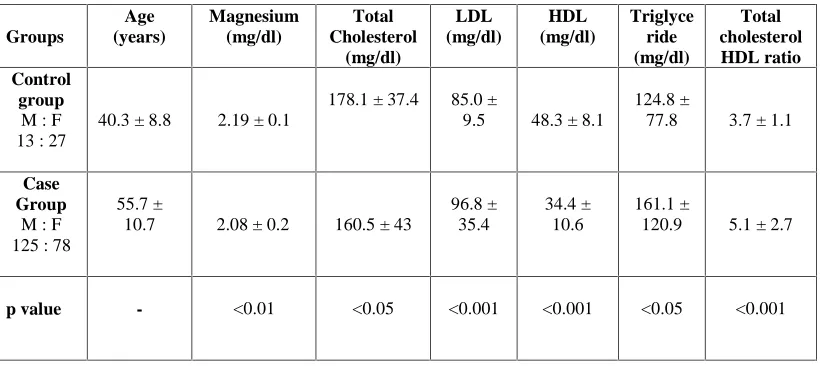
Table 1 represents the mean and standard deviation of biochemical parameters in both groups
Groups Age (years) Magnesium (mg/dl) Total Cholesterol (mg/dl) LDL (mg/dl) HDL (mg/dl) Triglyce ride (mg/dl) Total cholesterol HDL ratio Control group
M : F 13 : 27
40.3 ± 8.8 2.19 ± 0.1
178.1 ± 37.4 85.0 ±
9.5 48.3 ± 8.1
124.8 ±
77.8 3.7 ± 1.1
Case Group
M : F 125 : 78
55.7 ±
10.7 2.08 ± 0.2 160.5 ± 43
96.8 ± 35.4
34.4 ± 10.6
161.1 ±
120.9 5.1 ± 2.7
p value - <0.01 <0.05 <0.001 <0.001 <0.05 <0.001
Figure 1 represents the correlation between serum magnesium and total cholesterol
In the current study, a negligible positive correlation (r = 0.195, p<0,01) between serum magnesium levels and total cholesterol levels was observed (Figure 1).
Figure 2 explains the correlation between serum magnesium and LDL cholesterol
We observed a weak positive correlation between serum magnesium levels and serum LDL cholesterol levels (r = 0.202, p< 0.01) in the case group (Figure 2).
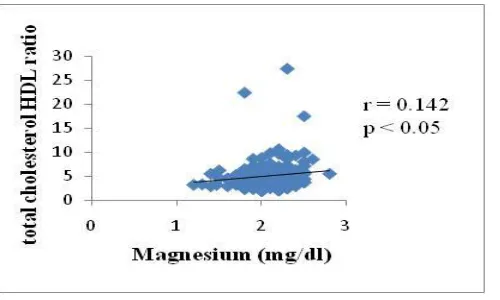
Figure 3 shows a correlation between serum magnesium and total cholesterol HDL ratio
DISCUSSION
Several studies has observed association between lipid metabolism disturbance and magnesium deficiency in type 2 diabetes patients.[10,11,12] The current study observed a significant increase in serum triglyceride levels and serum total cholesterol levels in case group when compared to control group.[13,14]A significant increased serum LDL cholesterol levels was reported in case group when compared with control group. In comparison with control group, we observed a significant decreased serum HDL cholesterol levels in case group.[15]Our study shows a significant increased total cholesterol HDL ratio in the case group when compared to control group.[16]
In the present study, we found a positive correlation between serum magnesium and total cholesterol. S. Swaminathan, et al results are also in accordance with our study.[17] A positive correlation was observed between serum magnesium levels and serum LDL cholesterol levels. Similar results were reported by S. Swaminathan, et al study.[17] Our study shows a positive correlation between serum magnesium and total cholesterol HDL ratio in the case group. A significant increased total cholesterol HDL ratio in the case group implies that magnesium deficiency can contribute to dyslipidemia. The present study reports no correlation between serum magnesium and HDL cholesterol, serum triglycerides. Hamid Nasri, et al work also did not observe correlation between these parameters.[18]On one hand, magnesium deficiency causes lipid metabolism enzymes inactive which in turn leads to dyslipidemia. On the other hand, magnesium deficiency disturbs lipid metabolism through various mechanisms. Magnesium acts as a component of antioxidant system. Magnesium maintains glutathione concentration which is required for enzyme antioxidant like glutathione peroxidase, etc. Glutathione helps in the regeneration of other antioxidants like ascorbate and tocopherol. Decreased levels of these antioxidants contribute to lipid peroxidation.[19,20,21]In the intestine, magnesium forms insoluble complexes with fatty acids and prevents the dietary fat absorption.[19] An inverse relationship was observed between serum magnesium and glycemic control. Type 2 diabetic patients with poor glycemic control was found to be associated with hypomagnesemia. Poor glycemic control is responsible for the development of various complications like dyslipidemia, retinopathy, nephropathy, etc.[22,23]Oral magnesium administration had caused a fall in total cholesterol levels, LDL cholesterol levels, triglyceride levels and in HDL cholesterol levels.[24,25]
CONCLUSION
The current study shows low serum magnesium levels and altered lipid metabolism in type 2 diabetic patients in comparison with healthy individuals. Hypomagnesemia may lead to dyslipidemia in type 2 diabetic patients. Our study suggests that oral
magnesium supplementation to diabetic patients along with hypolipidemic drugs may improve the altered lipid metabolism status.
ACKNOWLEDGEMENT
I like to express my sincere thanks to Dr. M. Anbazhagan, M.Sc, Ph.D, Chief biochemist, Central Laboratory of Sri
Ramachandra Hospital for providing me the laboratory facilities. I wish to thank each and phelobotomist and technicians of Sri Ramachandra Hospital Central Laboratory who guided me in running out my samples. I also grateful to late Mrs. S. Lakshmi, Ph.D research scholar for guiding me in the data analysis.
CONFLICTS OF INTEREST
No conflict of interest.
REFERENCES
1. Diwan AG, Pradhan AB, D. Lingojwar, Krishna KK, Singh P and Almelkar SI. Serum zinc, chromium and magnesium levels in type 2 diabetes. Int Dia Dev Cteries 2006; 26:3.
2, Sharma A, Dabla S, Agarwal PR, Barjatya H, Kochar DK and Kotheri RP. Serum magnesium: an early predictor of course
and complications of diabetes mellitus. J India Assoc 2007; 105: 16.
3, Chhabra N, Chhabra S and Ramessur K. Hypomagnesemia and its implications in type 2 diabetes mellitus: a review article. Webmedcentral 2012; 3[12]: WMCOO3878.
4, Chetan. P. Hans, Sialy R and Devi. D. Bansal. Magnesium deficiency and diabetes mellitus. Current Science 2002; 83: 12. 5, Jennifer. L. King, Rita. J. Miller, James. P. Blue, William. D. O’Brien and John. W. Erdman. Inadequate Dietary magnesium
in take increases atherosclerotic plaque development in rabbits. Nutr Res 2009; 29[5]: 343-349.
6, Gueux E, Rayssiguier Y, Piot MC and Alcindor L. Reduction of plasma lecithin cholesterol acyl transferase activity by acute magnesium deficiency in the rats. J Nutr 1984; 114: 1479- 1483.
8, Rasanoff A and Seeling MS. Comparison of mechanism and functional effects of magnesium and statin pharmaceutical. J Am Coll Nutr 2004; 23[5]: 5015-5055.
9, Carman GM and Han GS. Roles of phosphatidate phosphatase enzymes in lipid metabolism. Trends Biochem Sci 2006; 31[12]: 694-9.
10, Salem M, Kholoussi S, Kholoussi N and Fauzy R. Malondialdehyde and trace element levels in patients with type 2 diabetes mellitus Archives of Hellenic medicine 2011; 28[1]: 83-88.
11, Sales CH and Campos Pedrosa LF. Magnesium and diabetes mellitus. Clinical Nutrition 2006; 25: 554-562.
12, Guize L, Le Heuzey J. Y, Blanchand D, Benoit MO, Pelissier E, Paris M, et al. Magnesium deficiencies in Cardiovascular disease. Arch Mal Coeur Vaiss 1984; 77: 41-47.
13, Haglin L, Backman L and Tornkvist B. A. structural equation model for assessment of links between changes in serum triglycerides, urate, glucose and changes in calcium, phosphate and magnesium in type 2 diabetes and non diabetes metabolism. Cardiovascular Diabetology 2011; 10: 116.
14, Rasheed H, Elahi S and Ajay H. Serum magnesium and atherogenic lipid fractions in type 2 diabetic patients of Lahore,
Pakistan. Biol Trace Elem Res 2012; 148[2]: 165-9.
15, Mishra S, Padmanaban P, Deepti GN, Sarkar G, Sumathi S and Toora BD. Serum magnesium and dyslipidemia in type 2 diabetes mellitus. Biomedical research 2012; 23[2]: 295-300.
16, Aruna V and Ambikadevi K. Hypomagnesemia a cofactor for atherogenesis in non insulin dependent diabetes mellitus. Int J Pharm Bio Sci 2014; 5[1]: 193-200.
17. Swaminthan S, Wilfred M, Gangadaran P and Ghosh M. Association between lipid profile and macro metals calcium and
magnesium. Journal of expermintal sciences 2011; 2[6]: 7-12.
18. Nasri H and Hamid-Reza Baradaran. Lipids in association with serum magnesium in diabetes mellitus patients. Bratisl Lek Listy 2008; 109[7]: 302-206.
19, Rashad. J. Belin and Ka He. Magnesium physiology and pathogenic mechanisms that contribute to the development of the metabolic syndrome. Magnesium research 2007; 20[2]: 107-29.
20, Sakaguchi Y, Shoji T, Hayashi T, Suzuki A, Shimizu M, Mitsumoto K, et al. Hypomagnesemia in type 2 diabetic nephropathy. Diabetes care 2012; 35[7]: 1591-1597.
21, Ankush RD, Suryakar AN and Ankush NR. Hypomagnesemia in type 2 diabetes mellitus patients: a study on the status of oxidative stress. Indian journal of clinical biochemistry 2009; 24[2]: 184-189.
22, Supriya, Mohanty S, Murgod R, Kumar Pinnelli VB and Raghavendra SD. Hypomagnesemia, lipid profile and glycosylated haemoglobin in type 2 diabetes mellitus patients. Intl. J. Chem Pharm Res 2012; 1[5]: 116-123.
23, Dasgupta A, Sarma D and Kaimal Saika U. Hypomagnesemia in type 2 diabetes mellitus. Indian journal of endocrinology and metabolism 2012; 16[6]: 1000-1003.
24, Lal J, Vasudev K, Kela AK and Jain SK. Effect of oral magnesium supplementation on the lipid profile and blood glucose of patients with type 2 diabetes mellitus. J Ass Physicians India 2003; 51: 37-42.