Research Article
a
December
2017
Computer Science and Software Engineering
ISSN: 2277-128X (Volume-7, Issue-12)
Signature Verification Using Artificial Neural Network
Palak Patel*
Computer Science & California State University, Sacramento, United States
Abstract— The human signature is most important for access. Signature of the person is important biometric attribute of a human being which is used to authenticate human identity. There are many biometric characteristics by which one can have own identity like face recognition, fingerprint detection, iris inspection and retina scanning. In non-vision based techniques voice recognition and signature verification are most widely used. Verification can be performed either Online or Offline. Online system of signature verification uses dynamic information of a signature captured at the time the signature is made. Offline system uses scanned image of signature. In this paper, I present a method for Offline Verification of signatures using a set of simple shape based geometric features. As signatures play an important role in financial, commercial and legal transactions, truly secured authentication becomes more and more crucial. This paper presents the off-line signature recognition & verification using neural network in which the human signature is captured and presented in the image format. Various image processing techniques are used to recognize and verify the signature. Preprocessing of a scanned image is necessary to isolate the signature part and to remove any spurious noise present. Initially system use database of signatures obtained from those individuals whose signatures have to be authenticated by the system. Then artificial neural network (ANN) is used to verify and classify the signatures. The implementation details and results are discussed in the paper.
Keywords— Neural Network, Perceptron, Forgery, Preprocessing
I. INTRODUCTION
As signature is the primary mechanism both for authentication and authorization in legal transactions, the need for efficient automated solutions for signature verification has increased. Unlike a password, PIN, PKI or key cards identification data that can be forgotten, lost, stolen or shared the captured values of the handwritten signature are unique to an individual and virtually impossible to duplicate. Signature verification is natural and intuitive. The technology is easy to explain and trust. The primary advantage that signature verification systems have over other type‘s technologies is that signatures are already accepted as the common method of identity verification. A signature verification system and the techniques used to solve this problem can be divided into two classes Online and Off-line. On-line approach uses an electronic tablet and a stylus connected to a computer to extract information about a signature and takes dynamic information like pressure, velocity, speed of writing etc. for verification purpose. Off-line signature verification involves less electronic control and uses signature images captured by scanner or camera. An off-line signature verification system uses features extracted from scanned signature image. The features used for offline signature verification are much simpler. In this only the pixel image needs to be evaluated. But, the off-line systems are difficult to design as many desirable characteristics such as the order of strokes, the velocity and other dynamic information are not available in the off-line case. The verification process has to wholly rely on the features that can be extracted from the trace of the static signature images only.
II. TYPES OF SIGNATURE FORGERIES
The objective of the signature verification system is to discriminate between two signature classes the genuine and fake signature. A bunch of effort has been taken in the field of off-line signature verification. Forgery is a crime that aims at misleading people. Since actual forgeries are difficult to obtain, the instrument and the results of the verification depend on the type of the forgery.
ISSN(E): 2277-128X, ISSN(P): 2277-6451, pp. 40-45
Clearly, the problem of signature verification becomes more and more difficult when passing from random to simple and skilled forgeries, the latter being so difficult a task that even human beings make errors in several cases. Since actual forgeries are difficult to obtain, the instrument and the results of the verification depend on the type of the forgery. Original signature
Fig 1 : Original Signature
There are basically three types of forgeries as
Random forgery - This can normally be represented by a signature sample. Forger has no information about the signature style and the name of the person.
Fig 2 : Random Forgery
Simple forgery - This is a signature with the same shape or the legitimate writer‘s name.
Fig 3 : Simple Forgery
Skilled forgery - This is signed by a person who has had access to a genuine signature for practice.
Fig 4 : Skilled Forgery
Although a great amount of work is determined on random and simple forgery detection, more hard work is still needed to tackle the problem of skilled forgery detection. No verification algorithms are proposed which might be deal with skilled forgeries.
III. SIGNATURE VERIFICATION STEPS
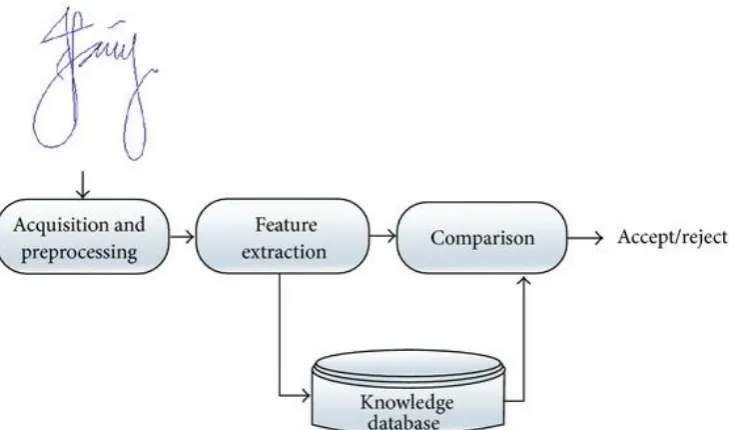
Fig 5 : Workflow of signature verification
Step 1 : Acquition and Preprocessing
ISSN(E): 2277-128X, ISSN(P): 2277-6451, pp. 40-45
step is applied both in training and testing phases. Signatures are scanned in gray. The purpose in this phase is to make signature standard and ready for feature ex-traction. The preprocessing stage improves quality of the image and makes it suitable for feature extraction. The pre-possessing stage includes converting image to binary
A gray scale signature image is converted to binary to make feature extraction simpler. Generally in any image processing application preprocessing is required to remove alteration, from the original input image. Any normal scanner with sufficient resolution can be used as an image attainment device for offline operation. The purpose in this stage is to build signature standard and prepared for feature extraction. The pre-possessing stage includes following processing,
1) Scaling
Let H be the height of the input image & W be the width of the input image. We can fit the image uniform at 100*100 pixels by using the following equation as
Xnew = (Xold * 100)/H; Where Xnew & Xold are calculated & original X coordinate Ynew = (Ynew * 100)/W;
Where Ynew & Yold are calculated & original Y coordinate. With these equations input image is transformed to uniformed 100*100 pixels image.
2) Noise Reduction
Images are contaminated due to stemming from decoding errors or noisy channels. An image also gets degraded because of the detrimental effects due to illumination and other objects in the environment. Median filter is extensively used for smoothing and restoring images corrupted by noise. This is a nonlinear process useful principally in reducing impulsive noise. In a median filter, a window slides over the image, and for each location of the window, the median concentration of the pixels within it decide the intensity of the pixel positioned in the middle of the window. As weigh against to the mean filter, median filter has striking properties for suppressing impulse noise while preserving edges; due to this feature we are recommended this filter in our proposed system.
3) Background Elimination
Numerous image processing applications necessitate segregation of objects from the background. Thresholding is the most trivial and effortlessly appropriate method for this. We used Thresholding method for distinguish the signature from the background. In proposed application, we are concerned in dark objects on light background and hence a threshold value T entitled as the brightness threshold is suitably chosen and applied to image. After the Thresholding, the pixels of the signature would be 1 and the other pixels which belong to the background would be 0. The brightness threshold can be chosen such that it satisfies the following conditions;
Suppose image pixels f(x, y) then, If f(x, y) ≥ T Then f(x, y) = Background Else f(x, y) = Object
4) Signature Normalization
Irregularity in image capturing and scanning process causes dimensions of signature to fluctuate. Height and width of signatures fluctuate from person to person and occasionally even the same person may exercise different sizes of signature. Therefore it is needed to get rid of the size variation and achieve a benchmark signature size for all input signatures. Throughout the normalization process, the characteristic ratio between the width and height of a signature is kept undamaged and following the process, all the signatures will have the similar dimension. Normalization process made use of the following equations:
Xnew = [(Xold-Xmin)/ (Xmax-Xmin)]*M Ynew = [(Yold-Ymin)/ (Ymax-Ymin)]*M
Where, Xnew, Ynew = Pixel coordinates for the normalized signature, Xold, Yold = Pixel coordinates for the original signature, M = Width/height meant for the normalized signature
5) Thinning
The goal of thinning is to eliminate the thickness differences of pen by making the image one pixel thick. Thinning was introduced to describe the global properties of objects and to reduce the original image into a more compact representation. It uses a Stentiford algorithm for thinning process.
Step 2 : Feature Extraction
Features Extraction is the key to develop an offline signature recognition system. We use a set of five global features that cannot be affected by the temporal shift. These features are geometrical features based on the shape and dimensions of a signature image.
Area: Actual number of pixels in the region.
Centroid: Horizontal and vertical centres of gravity of the signature.
ISSN(E): 2277-128X, ISSN(P): 2277-6451, pp. 40-45
Kurtosis: It is a measure of flatness of distribution. It gives an idea of whether the data are peaked or flat relative to a normal distribution.
Skewness: It is a measure of asymmetry of distribution. A distribution, or data set, is symmetric if it looks the same to the left and right of the centres point.
In Feature extraction, the essential features are extorted from the original input signature. The features to be extorted are based on the application and fluctuate accordingly. Characteristic constraints are computed from the sort out data and are used to characterize signature. The choice of a powerful set of features is crucial in signature verification systems. The features that are extracted from this phase are used to create a feature vector. We use a feature vector to uniquely characterize a candidate signature. These features are extracted as follows,
1) Global Features
Global feature offers information regarding shape like signature area, signature height-to-width ratio, slope & slope direction skewness of signature etc. Slope and Slope Direction - To calculate approximately the slope of the signature the algorithm proposed by Ammar is used. This algorithm formulates the use of the thinned image obtained during the pre-processing. A 3*3 sliding window is used for calculation. The window is stimulated starting from the top left pixel to the bottom right pixel, one pixel at a time in a row major order.
Density of Thinned Image - The density of thinned image can be designed after thinning which can be calculated by the following formula.
Density of thinned image = No of non-zero pixels in the thinned image / Total no of pixels in the thinned image.
Width to height ratio is the ratio of range of x coordinates to the range of y coordinates. The formula for calculating width to height ratio is given as,
Width to Height Ratio = (Xmax - Xmin) / (Ymax - Ymin)
Where, Xmax & Xmin = Maximum & Minimum values of x coordinates of non-zero pixels, Ymax & Ymin = Maximum & Minimum values of y coordinates of non-zero pixels.
2) Mask Feature
This provides information about guidelines of the lines of the signature for the reason that the angles of signature have interpersonal variation.
3) Texture Feature
The texture features are the pixel positions with respect to the property of the feature. These can be processed using a matcher which uses co-occurrence matrix of the picture image. It includes End points, Branch points, crossing points. To extract these features, it is necessary to apply the pre-processing techniques like Thresholding and thinning on a gray scale signature image. End points are points where a signature stroke begins or ends. Branch points are points where on signature stroke bifurcates into two strokes. Crossing points are points where one signature stroke crosses another stroke.
Step 3 : Verification
In the verification stage, a signature to be tested is processed and feature extraction is performed on pre-processed test signature image to obtain feature vector of size 60. After normalizing a feature vector it is fed to the trained neural network which will classify a signature as a genuine or forged.
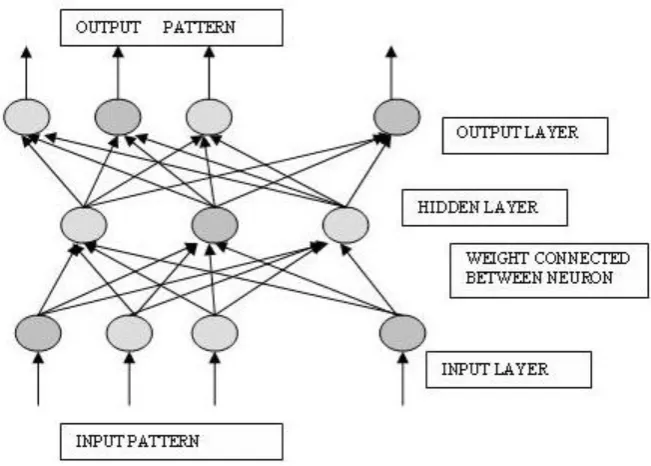
The geometric features are extracted and organized as an input array to the back propogation network. The selected feature vectors are directed as input to the neural network. The trained neural network is used to verify the signature as either genuine or forged. If the signature is match, then it shows genuine otherwise forgery.
IV. ALGORITHM
Algorithm for the offline signature verification system in which neural network is used for verifying the authenticity of signatures.
Input: signature from a database
Output: verified signature classified as genuine or forged. 1. Retrieval of signature image from database.
2. Preprocessing the signatures. 2.1 Converting image to binary. 2.2 Image resizing.
2.3 Thinning.
2.4 Finding bounding box of the signature. 3. Feature extraction
ISSN(E): 2277-128X, ISSN(P): 2277-6451, pp. 40-45
3.2 Extracting features using horizontal splitting.
4. Creation of feature vector by combining extracted features Obtained from horizontal and vertical splitting.
5. Normalizing a feature vector.
6. Training a neural network with normalized feature vector. 7. Steps 1 to 5 are repeated for testing signatures.
8. Applying normalized feature vector of test signature to trained neural network.
9. Using result generated by the output neuron of the neural network declaring signature as genuine or forged.
V. RESULTS AND DISCUSSION
For training and testing of the system many signatures are used. The results given in this paper are obtained using the ―Grupo de Procesado Digital de Senales‖ (GPDS) signature database. The results provided in this research used a total of 1440 signatures. Those 1440 signatures are comprised of 30 sets (i.e. from 30 different people) and, for each person there are 24 samples of genuine signatures and 24 samples of forgeries. To train the system, a subset of this database was taken comprising of 19 genuine samples taken from each of the 30 different individuals and 19 forgeries made by different person for one signature. The features extracted from 19 genuine signatures and 19 forged signatures for each person were used to train a neural network. The architecture of neural network used has input layer, hidden layer and output layer. Number of neurons in the input layer are 120 for 60 feature points as each feature point has a row and a column number, 120 neurons in the hidden layer and one neuron in the output layer. After applying a feature vector of test signature if the output neuron generates value close to +1 test signatures is declared as genuine or if it generates value close to -1 it is declared as forged.
Fig 6 : Feed Forward Neural Network
VI. PERFORMANCE ANALYSIS
False Acceptance Rate (FAR), False Rejection Rate (FRR) and Correct Classification Rate (CCR) are the three parameters used for measuring performance of system.
FAR = Number of forgeries accepted * 100 Number of forgeries tested
FRR = Number of originals rejected * 100 Number of original tested
ISSN(E): 2277-128X, ISSN(P): 2277-6451, pp. 40-45
VII. CONCLUSION
Verify the signature database using other efficient verification methods like Conic Section Function Neural Network (CSFNN), Multi-Layer Perceptron (MLP) Neural Network, and RBF Neural Networked and compares the results of Back Propagation Neural Network with these results. The signature verification can also be changed by changing the features that can be extracted from a signature. So, the future work of the verification of signature can be done with the same Neural Network methods but using different signature features and compares the results with results of the present paper. The precepts of this paper can be used in not only directly related applications like biometric identification, but also in a broad swath of fields of image processing especially. Relating to identification and comparison of images. The concepts in this project can be extended to other biometric identification systems like handwriting and when combined with other biometric aspects, such as speech and face recognition, can present a far better result than any individual system.
REFRENCES
[1] Plamondon.R., Brault J.J., 'A Complexity Measure of Handwritten curves: Modeling of Dynamic Signature Forgery', IEEE Trans. on Systems, Man and Cybernetics, Vol. 23, No.2, 1993, pp. 400-413.
[2] Qi.Y, Hunt B.R., 'Signature Verification using Global and Grid Features', Pattern Recognition, Vol. 27, No. 12, 1994, pp. 1621-1629.
[3] N. Herbst, C. Liu, ‗Automatic signature verification based on accelerometry, Tech. Rep.‘, IBM Journal of Research Development, 1977.
[4] C. Sansone, M. Vento, ‗Signature verification: increasing performance by a multi- stage system‘, Pattern Analysis & Applications, Springer 3 (2000) 169–181.
[5] K . Bowyer , V . Govindaraju, N. Ratha , ‗Introduction to the special issue on recent advances in biometric systems‘ ,IEEE Transactions on Systems , Man and Cybernetics—B 37(5)(2007)1091–1095.
[6] D.Zhang ,J . Campbell , D . Maltoni , R . Bolle , Special issue on biometric systems, IEEE Transactions on Systems ,Manand Cybernetics—C 35(3)(2005)273–275.
[7] S.Prabhakar ,J .Kittler , D . Maltoni , L . O ‘ Gorman ,T .Tan , ‗Introduction to the special issue on biometrics : progress and directions , PAMI 29 (4)(2007)513–516.
[8] S.Liu , M . Silverman, ‗A practical guide to biometric security technology‘ ,IEEE IT Professional3(1)(2001)27– 32.
[9] R . Plamondon , S .Srihari , ‗On-line and off-line handwriting recognition: a comprehensive survey‘ ,IEEE Transactions on Pattern Analysis and Machine Intelligence 22(1)(2000)63–84.
[10] K. Franke, J. R. Del Solar, M. K¨ open, ‗Soft-biometrics: soft computing for biometric-applications‘, Tech.Rep.IPK, 2003.
[11] S.Impedovo, G.Pirlo, ‗Verification of hand written signatures : an overview ,in: ICIAP ‗07:Proceedings of the 14th International Conference on Image Analysis and Processing‘ , IEEE Computer Society , Washington , DC , USA, 2007, pp.191– 196,doi:http://dx.doi.org/10.1109/ICIAP.2007.131.
[12] R. Plafond, ‗Progress in Automatic Signature Verification, World Scientific Publications‘, 1994.
[13] M.Fairhurst, ‗New perspectives in automatic signature verification‘, Tech .Rep. 1, Information Security Technical Report, 1998.
[14] R.W. Canners , C.A. Harlow, ‗A theoretical comparison of texture algorithms, IEEE Transactions on Pattern Analysis and Machine Intelligence ‗2 (3) (1980) 204–222.