ARTIGO ORIGINAL
Clinical and Epidemiological Study of
Complicated Infection by Varicella-Zoster Virus
in the Pediatric Age
Estudo Clínico-Epidemiológico da Infeção Complicada por Vírus Varicela-Zoster
na Idade Pediátrica
1. Serviço de Pediatria Médica. Centro Hospitalar Vila Nova de Gaia/Espinho. Gaia. Portugal. Autor correspondente: Catarina Maia. [email protected]
Recebido: 31 de Janeiro de 2015 - Aceite: 30 de Junho de 2015 | Copyright © Ordem dos Médicos 2015
Catarina MAIA1, Jacinta FONSECA1, Isabel CARVALHO1, Helena SANTOS1, Diana MOREIRA1
Acta Med Port 2015 Nov-Dec;28(6):741-748
RESUMO
Introdução: Em Portugal, a incidência da infeção complicada por vírus varicela-zoster e respetivos custos é desconhecida. O objetivo
deste estudo foi descrever as características clinico-epidemiológicas dos doentes em idade pediátrica internados com o diagnóstico de infeção complicada por vírus varicela-zoster.
Material e Métodos: Estudo descritivo, baseado na análise dos processos clínicos dos doentes internados entre janeiro de 1999 e
julho de 2013, com diagnóstico de infeção complicada por vírus varicela-zoster.
Resultados: Foram internados 94 doentes por infeção complicada a vírus varicela-zoster, dois por reativação de infeção latente. A
mediana da idade foi 38 (IQR 18 - 65) meses. As complicações mais frequentes foram as infeciosas (70,2%), destacando-se a sobre-infeção bacteriana da pele/tecido celular subcutâneo (37,2%) e as complicações respiratórias (24,5%). Seguiram-se as complicações neurológicas (19,1%), gastrointestinais (9,6%), hematológicas (5,3%) e osteoarticulares (4,3%). Diagnosticaram-se 38 (40,4%) in-feções bacterianas invasivas, seis com bacteriemia. A mediana da idade na admissão foi mais elevada nas complicações imunológicas relativamente às complicações infeciosas. As complicações neurológicas ocorreram preferencialmente em crianças saudáveis, en-quanto as complicações infeciosas, nomeadamente as infeções bacterianas invasivas foram mais frequentes nos doentes medicados com ibuprofeno e/ou corticoide. A evolução foi favorável na maioria dos casos.
Discussão: As complicações da infeção pelo vírus varicela-zoster ocorreram preferencialmente em idade pré-escolar e doentes
saudáveis. As complicações infeciosas, nomeadamente as dermatológicas e respiratórias, foram as mais frequentes, tendo sido veri-ficada associação com a terapêutica prévia com ibuprofeno e /ou corticoide.
Conclusão: Estudos multicêntricos deverão ser planeados com o intuito de otimizar e ajustar as estratégias vacinais à nossa
reali-dade.
Palavras-chave: Criança; Criança Hospitalizada; Herpes Zoster; Herpesvirus Humano 3; Portugal; Varicela.
ABSTRACT
Introduction: In Portugal, the incidence of complicated infection by varicella-zoster virus is unknown. The purpose of this study was to
describe the epidemiological and clinical features of complicated infection by varicella-zoster virus in children.
Material and Methods: Retrospective review of the clinical files of patients admitted between January 1999 and July 2013, with a
diagnosis of complicated varicella-zoster virus infection.
Results: Ninety-four patients were hospitalized with complicated varicella-zoster virus infection, two of them by reactivation of latent
infection. The median age was 38 (IQR 18 - 65) months. The most frequent types of complications were bacterial overinfection of the skin and subcutaneous cellular tissue (37.2%) and respiratory complications (24.5%). Other complications were neurologic complications (19.1%), gastrointestinal (9.6%), hematologic (5.3%) and osteoarticular (4.3%). In 38 patients invasive bacterial infections were diagnosed, with bacteremia in 6 patients. The median age was highest in the immunological complications compared with infectious complications. Neurological complications occurred mainly in healthy children, while infectious complications, including the invasive bacterial infections were more frequent in patients treated with ibuprofen and/or corticosteroids. The evolution was favorable in most cases.
Discussion: The complications of varicella-zoster virus infection occurred mainly in pre-school age and in healthy children. Infectious
complications, particularly respiratory complications and bacterial overinfection of the skin and subcutaneous cellular tissue, were the most frequent. There was association between infectious complications and previous therapy with ibuprofen and / or corticosteroids.
Conclusion: Multicenter studies should be planned in order to optimize and adjust the vaccine strategies to our reality.
Keywords: Chickenpox; Child; Child, Hospitalized; Herpesvirus 3, Human; Herpes Zoster; Portugal.
INTRODUCTION
Varicella-zoster virus (VZV) belongs to the Herpesviri-dae family and causes varicella (chickenpox) and herpes zoster (shingles). Varicella commonly occurs in childhood and is highly contagious affecting children aged under 12. An increasing incidence of varicella in children has been found over the time1 with around 95% adults immune to
the condition at the age of 20-29.2 Even though it is usually
a self-limited and benign childhood illness, varicella may
however be associated to complications and to the need for hospital admission in about 2-6% of patients.3-5
The most commonly described complication in varicella is bacterial superinfection of the skin and soft tissues, more frequently involving Staphylococcus aureus and
ARTIGO ORIGINAL Following primary infection, the virus lies dormant in dorsal root ganglia and may reactivate as herpes zoster infection
and follow a clinical progression with complications similar to varicella. This reactivation is rare in children, namely in immunocompetent children and is more frequently described in infant babies infected in utero or on their first year of life.6
VZV infection is not a nationally notifiable disease in Portugal. In total, 310 patients were notified with varicella in 2009, according to the Médicos Sentinela network.7 An
estimated annual incidence of 414.6 cases per 100,000 population was found in general population, 5,194.1 per 100,000 in children aged 0-4 and 2,131.5 per 100,000 in children aged 5-9.7 The Second National Serological
Survey (Segundo Inquérito Serológico Nacional) (Mainland Portugal), held between 2001 and 2002, found that 41.3% of children aged 2-3 had IgG anti-VZV antibodies, rising to 83.6% in children aged 6-7 and to 94.2% in children aged 15-19.8
Varicella vaccine was introduced in Portugal in October 2004 and is individually prescribed and recommended for adolescents (aged 11-13) and high-risk groups, namely for immune adults with high occupational exposure, non-immune women before pregnancy, parents of non-non-immune young children and adults or children in direct contact with immunocompromised patients.9
As regards hospital admissions, complications, mortality and VZV infection-related costs, studies are still scarce in Portugal.10
Our study aimed to clinically and epidemiologically characterise children admitted to hospital with complicated VZV infections, as well as to identify possible predictive factors for the different types of complications.
MATERIAL AND METHODS Study design and population
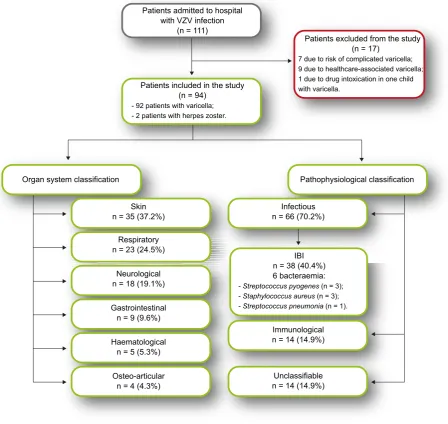
This was a descriptive study of patients admitted to a city hospital at the north of Portugal, between January 1999 and July 2013. All paediatric-aged patients (under the age of 18) admitted with a VZV infection (varicella or herpes zoster) were included in the study. Patients admitted with uncomplicated VZV infection and with varicella lesions that emerged during the hospital stay were excluded from the study (Fig. 1).
Study protocol
The clinical records of patients admitted to the hospital between January 1999 and July 2013 with complicated VZV infection were analysed. Diagnosis was based on clinical symptoms and signs.
Varicella (chickenpox) was characterised by a polymorphic pruritic rash, with lesions in different stages of
development (at first predominantly maculopapular with a centripetal distribution and, some hours later, vesicular with a quick progression into pustular lesions and subsequently with crust formation), with no other possible cause. Herpes zoster (shingles) was characterised by a localised vesicular rash usually following a dermatomal distribution of one or more sensitive nerves.11
The complications of VZV infection were ranked according to the organ system classification and the pathophysiological classification. As regards the system classification, these were ranked into six groups: skin/ soft tissues; neurological, respiratory, gastrointestinal, haematological and osteo-articular. These were ranked into three groups, according to the pathophysiological classification: infectious, immunological and unclassifiable. Invasive bacterial infections (IBI) were included in the group of infectious complications: cellulitis, abscess, mastoiditis, pneumonia, septic arthritis, osteomyelitis, bacteraemia, toxic shock syndrome and sepsis. The immunological complications included: post-varicella cerebellar ataxia, stroke, transverse myelitis, cranial nerve palsy, immune thrombocytopenia and reactive arthritis. Patients unable to tolerate oral medications and those presenting with febrile seizures associated to VZV infections were ranked as presenting with unclassifiable complications.
Immunological depression, respiratory, skin and other chronic diseases, pregnancy and previous therapy with ibuprofen or steroids were considered as risk factors to complicated varicella, regardless of the age of the patient.12
Demographic, clinical and laboratorial variables
The analysis included the following variables: patient’s age, gender, seasonal pattern, source of infection, risk factors for complicated varicella, median timeframe between disease onset and complication, therapy and length of hospital stay.
Statistical analysis
Chi-square test of independence was used in group comparison, based on categorical variables. Whenever chi-square was not applicable, the results of Fisher’s exact test were used. The t-test for independent samples was used for the comparison between both groups based on continuous variables or non-parametric Wilcoxon-Mann-Whitney test for small samples. SPSS version 20 software was used for the statistical analysis. A 0.05 probability of a type I error (α) was considered in inferential analysis.
ARTIGO ORIGINAL RESULTS
Study population
In total, 111 patients were admitted with VZV infection over the study period. From these, 17 patients were excluded from the study due to the absence of complication (seven patients in risk for complicated varicella – six new-born babies with varicella and one immunocompromised patient with varicella, nine patients with varicella arising during the hospital stay and one paracetamol intoxication in a child with varicella).
From a total of 94 patients with complicated VZV infection included in the study, two (2.1%) presented with reactivation of a latent infection (Fig. 1). A median age of 38 months (IQR 18 - 65) was found; 80.9% of the patients were aged under 6 and 6.4% over nine. Around 50% of our patients were male. No patient had received varicella vaccine. The presence of underlying predisposing factors
for complicated varicella was found in 27 (28.7%) patients: atopic dermatitis (n = 5), chronic respiratory disease (n = 9), other chronic conditions (n = 7) and previous non-steroidal anti-inflammatory drug (NSAID) and/or steroid therapy (n = 14). From these 14 patients, ten were on NSAID therapy with ibuprofen at the early stages of the disease. No patient had primary immunodeficiency. The possible infection source was identified in 27 (28.7%) patients and corresponded mainly to children aged under 10 (84.2%). From these, 20 (74%) were intra-family and seven (26%) in school setting. The most frequent complications, according to the organ system classification, were bacterial superinfection of the skin and soft tissues (37.2%), followed by respiratory (24.5%), neurological (19.1%), gastrointestinal (9.6%), haematological (5.3%) and osteo-articular complications (4.3%) (Table 1). No patient presented with necrotising fasciitis. According to the pathophysiological classification,
Figure 1 - Study flow-chart
VZV: Varicella-zoster virus; IBI: Invasive bacterial infection.
Patients admitted to hospital with VZV infection
(n = 111)
Patients excluded from the study (n = 17)
7 due to risk of complicated varicella; 9 due to healthcare-associated varicella; 1 due to drug intoxication in one child with varicella.
IBI n = 38 (40.4%) 6 bacteraemia: - Streptococcus pyogenes (n = 3); - Staphylococcus aureus (n = 3); - Streptococcus pneumonia (n = 1). Patients included in the study
(n = 94) - 92 patients with varicella; - 2 patients with herpes zoster.
Organ system classification Pathophysiological classification
Skin
n = 35 (37.2%) n = 66 (70.2%)Infectious
Immunological n = 14 (14.9%)
Unclassifiable n = 14 (14.9%) Respiratory
n = 23 (24.5%)
Neurological n = 18 (19.1%)
Gastrointestinal n = 9 (9.6%)
Haematological n = 5 (5.3%)
ARTIGO ORIGINAL 66 patients presented with infectious and 14 with immunological complications. Bacterial co-infection was
confirmed in six patients and presumed in 53 patients. In total, 38 patients presented with IBI (40.4%), six from which with bacteraemia: Streptococcus pyogenes (n = 2),
Staphylococcus aureus (n = 2), Streptococcus pneumoniae
(n = 1) and co-infection with Streptococcus pyogenes and Staphylococcus aureus (n = 1). A viral co-infection was confirmed in three patients (three enteroviruses).
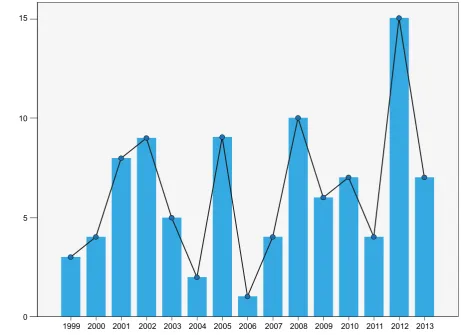
An increasing trend in the number of patients over time was found (from 5.12 patients/year between 1999 and 2006 to 8.05 patients/year between 2007 and 2013), with the highest peak in 2012 (Fig. 2).
A 4.0 (IQR: 3.0-5.0) days median time between the disease onset and the complication and 5.0 (IQR: 3.0-8.3) days median length of hospital stay were found.
Thirty-six patients (38.9%) were given acyclovir and 18 patients were started on oral acyclovir at the early stage of the disease and prior to admission (15 within the first 48 hours of disease and, from these, 13 within the first 24 hours). Eighteen patients were only started on acyclovir at the hospital and by the intravenous route. Early-stage treatment with acyclovir was not related to the severity or type of complication.
An antibiotic therapy was started for 62 patients (66.0%) and as monotherapy for 44 from these (71.0%). The most commonly used antibiotics were: flucloxacillin (n = 14), cefuroxime (n = 24), flucloxacillin-clindamycin combination (n = 4), cefuroxime-clindamycin (n = 4) and ceftriaxone (n = 4). Surgery was necessary in five patients: abscess drainage in a child presenting with osteomyelitis of the ulna (n = 1); soft-tissue abscess drainage (n = 1); arthrocentesis (n = 1) and arthrotomy (n = 1) in patients with septic arthritis and pleural decortication in a child presenting with empyema and a lung abscess (n = 1). Most patients yielded favourable outcomes; however, five patients remained symptomatic (two with osteo-articular, one neurological, one haematological and one respiratory outcome), two of these with severe functional consequences (one osteo-articular and one respiratory). One patient had to be admitted to the Paediatrics Intensive Care Unit. No patient died.
Comparison between the groups of complications
Patient’s median age on admission was significantly higher in patients with immunological vs. infectious complications (64.0 vs. 30.0 months; p = 0.001). The patients with immunological complications were predominantly female (Table 2).
Median time between varicella’s onset and the complication was significantly longer with immunological complications (p = 0.001).
Neurological complications predominantly occurred in health children, while infectious complications (namely IBI) were more frequent in patients previously on ibuprofen and/ or on steroid medication (Fig. 3).
DISCUSSION
Varicella can lead to a significant number of complications
Table 1 - Group of complications in VZV infection according to organ system
Type of Complication
Bacterial superinfection of the skin/soft
tissues 37.2%
Impetigo 24
Cellulitis 15
Abscess 4
Toxic shock syndrome 3
Myositis 1
Respiratory 24.5%
Upper respiratory tract infection (11 AOM)15
Pneumonia ( 3 complicated)13
Oto-mastoiditis 1
Others (bronchiolitis/recurrent wheezing) 5
Neurological 19.1%
Ataxia 5
Meningitis 6
Stroke 1
Myelitis 1
Sixth cranial (abducens) nerve palsy 1
Febrile seizures 8
Gastrointestinal 9.6%
Vomiting 9
Diarrhoea 4
Hepatitis 1
Haematological 5.3%
Immune thrombocytopenia 5
Disseminated intravascular coagulation 2
Osteo-articular 4.3%
Septic arthritis 2
Reactive arthritis 1
Osteomyelitis 1
Total 94
ARTIGO ORIGINAL
requiring hospitalisation and affects not only risk groups but predominantly healthy children.13-17 The incidence of
hospitalisations in Europe vary from 1.3 to 4.5/100,000 patients with varicella, with a 0.05/100,000 mortality rate.5
As expected, the group of pre-school children was the most affected in our study’s population,13-21 as varicella is more
frequent in this age group.
Bacterial superinfection of the skin/soft tissues was the most common complication found, in line with other
studies.14,15,17,18,22-25,27 As expected, this was predominant in
younger children group, while immunological complications, namely neurological, occurred in older children13,17,21,22,28-30
and in later stages of the disease.17,18,22 The agents most
commonly found in infectious complications included
Staphylococcus aureus and Streptococcus pyogenes,
which is also in line with what has been described.11
Respiratory complications were the second most frequent group in our study, in line with what has been described
Figure 2 - Number of patients distribution per year 0
1999 2000 2001 2002 2003 2004 2005 2006 2007 2008 2009 2010 2011 2012 2013 5
10 15
Number of patients
Admission year
Table 2 - Clinical and epidemiological variables by type of complication
Variables complicationsInfectious
n = 66
Immunological complications
n = 14
Total
n = 94 p
Female (%) 45.5 78.6 51.2 0.02
Patient’s age (in months) when admitted to
hospital (median) (IQR: 15 - 55)30 (IQR: 48 - 95)64 (IQR: 18 - 65)38 0.001
Time between disease onset to complication,
in days (median) (IQR: 3.0 - 5.0)4.0 (IQR: 4.0 - 12.5)8.0 (IQR: 2.0 - 6.0)4.0 0.001
Length of hospital stay, in days
(median) (IQR: 3.0 - 8.3)5.0 (IQR: 2.8 - 7.0)5.0 (IQR: 3.0 - 7.0)5.0 NS
ARTIGO ORIGINAL
Number of patients
Figure 3 - Frequency of invasive bacterial infection in patients on NSAIDs and/or steroid medication; p = 0,003
0
No
No
Yes Yes
5 10 15 20
Invasive bacterial infection
NSAIDs and/or steroid
by another Portuguese study.17 However, neurological
complications are generally considered as more frequent than respiratory.15,24 This may be due to the fact that, in
our study, patients presenting with upper respiratory tract infections and with bronchospasm with a presumed viral aetiology were included as presenting with respiratory complications.
There are different studies showing an increased risk for severe skin complications associated to the use of NSAIDs such as ibuprofen in children with varicella. The exposure to NSAIDs is thought to reduce defence against infections due to impairment of neutrophil function.31 An association
between infectious complications, namely IBI and previous therapy with ibuprofen was found in our study, confirming this hypothesis. However, no patient with necrotising fasciitis was found. The contraindication for ibuprofen and steroid medication in varicella should be emphasized.
Acyclovir is the only medication available in Portugal as oral suspension for the treatment of varicella and approved for paediatric use. This therapy is not universally recommended by the American Academy of Pediatrics for the treatment of uncomplicated varicella in healthy children, but should be considered in adolescents aged over 13, in children aged over 12 months and presenting with skin or chronic respiratory diseases, in children on steroid medication and/or aspirin and in the second intra-family case.6 According with literature, the use of acyclovir
is associated to shorter duration of symptoms and number of skin lesions, especially when prescribed on the first 24 hours.32,33 The absence of a statistically significant
relationship between the administration of acyclovir and
the severity and type of complication found in our study may have been influenced by the dimension of our study population. In addition, the absence of a control group prevents us from establishing any adequate conclusions regarding the use of acyclovir and the reduction of lesions as well as the length of hospital stay.
The varicella vaccine was introduced in the USA in 1995 and is universally recommended. This vaccine is composed of the Oka strain of live attenuated virus and is safe for the immunocompetent patient.9 A decreased incidence of
varicella and its complications was found since the vaccine was introduced.34,35 The analysis of the costs related to the
annual epidemics of varicella showed that the programs of universal immunization for healthy children and susceptible adults have a good cost-efficacy relationship and are safe.11
However, the WHO and the CDC stressed the need to ensure a vaccine coverage over 85-90% in the populations where vaccine is introduced, in order to prevent from the risk of affecting the peak of incidence, with an increase of susceptible adolescents and adults, leading to an increased overall morbidity. The increased incidence of herpes zoster is another possible consequence.9 Different European
countries currently recommend the universal vaccination against VZV infection, such as in Germany, Spain, Italy, The Netherlands and in Switzerland.9 In those countries,
the universal implementation of the vaccine proved to be an efficient strategy for the reduction of the number of patients, hospital admissions, medical consultations and deaths.5 In
Portugal, this vaccine was introduced in 2004 and is only recommended for adolescents and risk groups.
A prospective study was started in January 2006 by the Sociedade Portuguesa de Pediatria and the Instituto Nacional de Saúde Dr. Ricardo Jorge, based on the notification by the UVP-SPP network of children and adolescents admitted to Portuguese Departments of Paediatrics with varicella or herpes zoster. In total, 154 patients (148 with varicella and 6 with herpes-zoster) were analysed in 2006 and 2007 (60.0% male and 60.4% aged under 2). According to this study, the most common complications were the bacterial superinfection of the skin and soft tissues (54.0%), followed by neurological (19.0%) and respiratory complications (11.0 %). However, the small number of notifications and predominantly based in the southern region of Portugal (116 patients) prevented from reaching sound conclusions.10
Limitations of the study
ARTIGO ORIGINAL
relied on health professional’s filling of these records, we were unable to obtain some patient’s demographic, clinical and laboratory data that would have influenced the prediction of complications. As the study included patients that were assessed and recorded by different physicians over a 14-year period of time, homogeneity was not possible and some misunderstandings may have been caused. The comparison of complicated vs. uncomplicated patients was also not possible, nor the determination of the real number of patients with varicella within the area of the Centro Hospitalar at Vila Nova de Gaia/Espinho.
CONCLUSION
Complications of VZV infection predominantly affected pre-school children and previously healthy patients. Infectious complications, namely dermatologic and respiratory, were the most common and an association with ibuprofen and/or steroid previous medication was found; these medications should not be prescribed in varicella. Further multi-centric studies should be planned and aimed to determine the national incidence of complicated VZV infections, as well as its social and economic burden, in order to optimise and adjust vaccination strategies to Portuguese reality.
REMARKS
This study was presented as a poster at the 14º Congresso Nacional de Pediatria, in Porto, 3-5 October 2013
HUMAN AND ANIMAL PROTECTION
The authors declare that the followed procedures were according to the regulations established by the responsible body of the Ethics and Clinical Research Committee and according to the Helsinki Declaration of the World Medical Association and the International Committee of Medical Journal Editors (ICMJE).
DATA CONFIDENTIALITY
The authors declare that they have followed the protocols of their work centre on the publication of patient data.
CONFLICTS OF INTEREST
The authors declare that there were no conflicts of interest in writing this manuscript.
FINANCIAL SUPPORT
The authors declare that there was no financial support in writing this manuscript.
REFERENCES
1. Bonhoeffer J, Baer G, Muehleisen B, Aebi C, Nadal D, Schaad U, et al. Prospective surveillance of hospitalisations associated with varicella-zoster virus infections in children and adolescents. Eur J. 2005;164:366– 70.
2. Papaloukas O, Giannouli G, Papaevangelou V. Successes and challenges in varicella vaccine. Ther Adv Vaccines. 2014;2:39-55. 3. American Academy of Pediatrics, Committee on Infectious Diseases.
Prevention of varicella: recommendations for use of varicella vaccines in children, including a recommendation for a routine 2-dose Varicella immunization schedule. Pediatrics. 2007;120:221-9.
4. Heininger U, Seward JF. Varicella. Lancet. 2006;368:1365-76. 5. Bonanni P, Breuer J, Gershon A, Gershon M, Hryniewicz W,
Papaevangelou V, et al. Varicella vaccination in Europe - taking the practical approach. BMC Med. 2009;7:26.
6. Myers MG, Seward JF, LaRussa PS. Varicella-Zoster virus. In: Behrman RE, Kliegman RM, Jenson HB, Stanton BF, editors. Nelson Textbook of Pediatrics. 18th ed. Philadelphia: Saunders Elsevier; 2007. p. 1366-72.
7. Médicos-Sentinela. O que se fez em 2009 (Relatório de Actividades Médicos-Sentinela 23). Departamento de Epidemiologia. Lisboa: Instituto Nacional de Saúde Dr. Ricardo Jorge; 2011.
8. Rodrigues I, Barreiro P. Avaliação do programa Nacional de Vacinação – 2º Inquérito Serológico Nacional Portugal Continental 2001-2002. Lisboa: DGS; 2006. p. 113-22.
9. Sociedade de Infecciologia Pediátrica/Sociedade Portuguesa de Pediatria. Recomendações para a vacinação contra a varicela. Acta Pediatr Port. 2009;40:185-8.
10. Leça A, Branco MJ, Brito MJ, Gouveia C, Neves JF, Nunes B. Varicela ou herpes Zoster em crianças internadas. Sociedade Portuguesa de Pediatria [Consultado 2014 jan 25]. Disponível em: http://www.spp.pt. 11. Arvin AM. Varicella-Zoster virus. In: Long S, Pickering L, Prober C,
editors. Principles and practice of pediatric infectious diseases. 3rd
edition. Edinburgh: Churchil Livingstone; 2008. p.1021-1029.
12. Llop FA. Complicaciones de la varicela en el niño inmunocompetente. An Pediatr. 2003;59:S18-26.
13. Galil K, Brown C, Lin F, Seward J. Hospitalizations for varicella in the United States, 1998 to 1999. Pediat Infect Dis J. 2002;21:931-4.
14. Jackson MA, Burry FV, Olson LI. Complications of varicella requiring hospitalization in previously healthy children. Pediatr Infect Dis J. 1992;11:441-5.
15. Peterson CL, Mascola L, Chao SM. Children hospitalized for varicella: a prevaccine review. J Pediatr. 1996;129:529-36.
16. Bonhoeffer J, Baer G, Muehleisen B, Aebi C, Nadal D, Schaad UB, et al. Prospective surveillance of hospitalisations associated with varicella-zoster virus infections in children and adolescents. Eur J Pediatr. 2005;164:366-70.
17. Carvalho I, Caldeira T, Santos F. Hospitalizações por complicações da varicela. Acta Pediatr Port. 2005;36:229-32.
18. Guess HA, Broughton DD, Melton LJ, Kurland LT. Population-based studies of varicella complications. Pediatrics. 1986;78:S723-7. 19. Yawn BP, Yawn RA, Lydick E. Community impact of childhood varicella
infections. J Pediatr. 1997;130:759–65.
20. Fairley CK, Miller E. Varicella-zoster virus epidemiology: a changing scene? J Infect Dis. 1996;74:314–9.
21. Ziebold C, von Kries R, Lang R, Weigl J, Schmitt HJ. Severe complications of varicella in previously healthy children in Germany: a 1-year survey. Pediatrics. 2001;108:E79.
22. Preblud SR. Varicella: complications and costs. Pediatrics. 1986;78:728– 35.
23. Fleisher G, Henry W, McSorley M, Arbeter A, Plotkin S. Lifethreatening complications of varicella. Am J Dis Child. 1981;135:896-9.
24. Fernandes S, Rocha G, Januário L. Hospitalizações por varicela no Hospital Pediátrico de Coimbra (2000-2007). Acta Pediatr Port. 2010;41:205-8.
25. Maharshak N, Somekh E. Hospitalization for varicella in central Israel. Acta Paediatr. 1999;88:1279–83.
26. Riaza Gomez M, de la Torre Espi M, Mencia Bartolome S, Molina Cabañero JC, Tamariz-Martel Moreno A, et al. Complications of varicella in children. An Esp Pediatr. 1999;50:259–62.
27. Choo PW, Donahue JG, Manson JE, Platt R. The epidemiology of varicella and its complications. J Infect Dis. 1995;172:706–12. 28. Mandelcwajg A, Quinet B, Castello B, Parez N, Grimprel E. Causes of
ARTIGO ORIGINAL
hospital: evolution between 1990 and 2001. Arch Pediatr. 2006;13:429– 35.
29. Koturoglu G, Kurugol Z, Cetin N, Hizarcioglu M, Vardar F, Helvaci M, et al. Complications of varicella in healthy children in Izmir, Turkey. Pediatr Int. 2005;47:296–9.
30. Marcheto S. Epidemiology of hospital admissions for chickenpox in children: an Italian multicentre study in the pre-vaccine era. Acta Paediatr. 2007;96:1490-3.
31. Mikaeloff Y, Kezouh A, Suissa S. Nonsteroidal anti-inflammmatory drug use and the risk of severe skin and soft tissue complications in patients with varicella or zoster disease. BJCP. 2007;65:203-9.
32. Klassen TP, Belseck EM, Wiebe N, Hartling L. Acyclovir for treating varicella in otherwise healthy children and adolescents. Cochrane Database Syst Rev. 2005;4:CD 002980.
33. Margo KL, Shaughnessy AF. Antiviral drugs in healthy children. Am Fam Physician. 1998; 57:1073-7.
34. Seward JF, Watson BM, Peterson CL, Mascola L, Pelosi JW, Zhang JX, et al. Varicella disease after introduction of varicella vaccine in the United States, 1995-2000. JAMA. 2002;287:606-11.