ADAPTATION OF AN EVIDENCE-BASED INTERVENTION (EBI) TO IMPROVE REFERRALS TO HOSPICE FOR HOME- AND COMMUNITY-BASED POPULATIONS
M. Alexis Kirk
A dissertation submitted to the faculty at the University of North Carolina at Chapel Hill in partial fulfillment of the requirements for the degree of Doctor of Philosophy in the Department
of Health Policy and Management in the Gillings School of Global Public Health.
Chapel Hill 2018
ABSTRACT
M. Alexis Kirk: Adaptation of an Evidence-Based Intervention (EBI) to Improve Referrals to Hospice for Home- and Community-Based Populations
(Under the direction of Sarah Birken)
Hospice care offers known benefits for terminally ill patients; however, referrals to hospice are often delayed. The objective of this research was to adapt an existing evidence-based intervention (EBI) developed by Casarett et al. to increase hospice care referrals for home- and community-based populations.
First, we identified core components of the Casarett EBI by interviewing 5 members of the Casarett research team. We identified two core components of the Casarett intervention: re-framing the hospice conversation to a topic that clinicians felt comfortable discussing and standardizing the conversation in some way.
Next, we engaged a stakeholder panel of three home health agencies to identify context differences between the original and new context and necessary adaptations. We identified 14 adaptations to the Casarett intervention, the majority of which were delivery adaptations. We took the 14 adaptations and coded them to develop a theory of how adaptations impact
implementation and intervention outcomes. Our theory built on existing implementation science frameworks and showed that although content and delivery adaptations can be made for any reason, the reason for the adaptation drives the its impact on outcomes. Additionally, different types of adaptations have differential effects on implementation and intervention effectiveness.
qualitative data on outcomes and implementation. Pilot sites implemented intervention activities with high fidelity with relatively low time commitments (5-10 minutes/patient) and minimal re-structuring of clinical workflows. We achieved hospice/palliative care election rates (14%) similar to those found by Casarett (20%). Pilot sites suggested further adaptations to the
intervention to improve its effectiveness in this patient population and strategies for scale-up of the intervention.
Dedicated to the nurses, social workers, aides, clergy, volunteers, therapists, PAs, physicians, and countless other individuals who provide support, comfort, and courage to terminally ill
ACKNOWLEDGEMENTS
First, I would like to thank my chair and mentor, Sarah Birken. Sarah – it will always be my honor to hold the title of your first doctoral student. I cannot express enough my gratitude for your support, advice, and mentorship. To Franzi – beyond this dissertation, your mentorship throughout my career has been invaluable. Here’s to the next phase of my career and us continuing to learn and grow together. To Morris – your leadership and dedication to the department is immeasurable. We are so lucky to have you as our chair, mentor, and friend. Thanks for everything you do (and, of course, for your allegiance to the better blue). To Laura – it’s been an honor working with you over the past several years. Your dedication to improving access to hospice and palliative care is an inspiration, and I have greatly enjoyed learning from your careful thought and insights. To Byron – we’re so delighted you joined the department. I’ve enjoyed learning from you and look forward to continued collaborations.
To the researchers, clinicians, and students that played an invaluable role in this research – I extend my sincerest gratitude. Without the contributions of David Casarett and his research team; UNC and Rex Home Health; and Duke, Transitions LifeCare, and Liberty hospices, this dissertation would not have been possible. To my dear friend and coding buddy, Emily Haines, thanks for being you.
believed in me no matter the cost (literally) or circumstance, thank you. (But also, you’re
TABLE OF CONTENTS
LIST OF TABLES ... xiii
LIST OF FIGURES ... xiv
LIST OF ABBREVIATIONS ... xv
CHAPTER 1: INTRODUCTION ... 1
Hospice Care: Benefits and Utilization... 1
Existing Interventions to Improve Timeliness of Hospice Referrals ... 3
Aims of this Research ... 3
Significance and Implications ... 5
Organization of this Dissertation ... 6
REFERENCES ... 7
CHAPTER 2: FINDINGS FROM AIM 1 ... 9
Background ... 9
The adaptation-fidelity continuum and core components ... 9
Identifying and specifying core components ... 9
Objective of this paper ... 12
Case example ... 12
Methods... 13
Theoretical framework ... 13
Procedures ... 14
Output 2: Usual care pathway, including barriers ... 28
Output 3: EBI Theory of change ... 30
Output 4: Description of core components ... 32
Output 5: Overlay of EBI Little T-theory of change with extant Big-T theory ... 33
Discussion ... 35
Limitations & future directions ... 37
Conclusion ... 39
REFERENCES ... 40
CHAPTER 3: PART A: USING A CONSENSUS-BASED PROCESS TO PLAN ADAPTATIONS TO AN EXISTING INTERVENTION ... 46
Background ... 46
Methods... 48
Overview of approach ... 48
Sample overview: The stakeholder panel ... 50
Data collection procedures and analysis: Overview ... 51
Outputs ... 55
Results ... 56
Context differences ... 56
Necessary Adaptations ... 61
Outputs ... 66
Discussion ... 68
Summary ... 68
Limitations, future applications and research ... 69
CHAPTER 3: PART B: A THEORY OF PLANNED ADAPTATIONS’
INFLUENCE ON INTERVENTION AND IMPLEMENTATION OUTCOMES ... 73
Background ... 73
Adaptations, implementation outcomes, and intervention outcomes: Existing literature and gaps ... 73
Existing frameworks selected for theory development ... 77
Methods & Analytic Results ... 80
Phase 1. Coding of adaptations ... 81
Phase 2. Analysis of coded adaptations & theory development ... 83
Theory with Examples ... 88
Content adaptations – pathway 1 ... 90
Content adaptations – pathway 2 ... 91
Delivery adaptations – pathway 1 ... 91
Delivery adaptations – pathway 2 ... 92
Overall impact of adaptations ... 93
Discussion ... 93
Conclusion ... 96
REFERENCES ... 98
CHAPTER 4: RESULTS OF A PILOT TEST OF AN ADAPTED INTERVENTION TO IMPROVE HOSPICE REFERRALS FOR HOME HEALTH PATIENTS ... 100
Background ... 100
Methods... 105
Study rationale and design ... 105
Measurements ... 107
Analyses ... 110
Results ... 112
Feasibility ... 112
Patient outcomes ... 113
Acceptability ... 114
Qualitative implementation data ... 120
Discussion ... 125
Conclusion ... 129
REFERENCES ... 131
CHAPTER 5: CONCLUSION ... 133
Significance of this Research ... 133
Aim 1: Summary of Findings and Implications for Research and Practice ... 134
Aim 2a: Summary of Findings and Implications for Research and Practice ... 135
Aim 2b: Summary of Findings and Implications for Research and Practice ... 136
Aim 3: Summary of Findings and Implications for Research and Practice ... 137
Future Research ... 138
Conclusion ... 140
REFERENCES ... 141
APPENDIX A: ADDITIONAL FILES AIM 1 ... 142
Additional File 1: Description of Casarett EBI... 142
Additional File 2: Updated Interview Guide ... 143
Additional File 3: Codebook for Analysis of Interview Data ... 146
Additional File 4. Description of Intervention in Template for Intervention Description and Replication (TIDieR) Format ... 150
Additional File 1: Interview Guide – Context Differences: Brainstorming
Differences Between Home Health and Nursing Homes ... 163 Additional File 2: Adapting Casarett Intervention from NH to HH ... 166 Additional File 3: Adapted Casarett Intervention to Improve Timeliness of
Hospice Referrals for Home Health Patients ... 183 APPENDIX C: ADDITIONAL FILES AIM 2B ... 205
Additional File 1: Description of Intervention and Adaptations to move
Intervention from Nursing Home to Home Health Setting ... 205 Additional File 2: A Combined Framework for Classifying Planned
Adaptations: Codebook For Classification Based On Stirman (2013),
Moore (2013), And Proctor (2011) ... 208 APPENDIX D: ADDITIONAL FILES AIM 3 ... 214 Additional File 1: Casarett Intervention Screening Questions ... 214 Additional File 2: Hospice Appropriateness Screening Pilot Study Packet
LIST OF TABLES
Table 2.1. Recommendations for identifying core components ... 15
Table 2.2. Example interview questions for each major topic area ... 18
Table 2.3. Interview participants ... 21
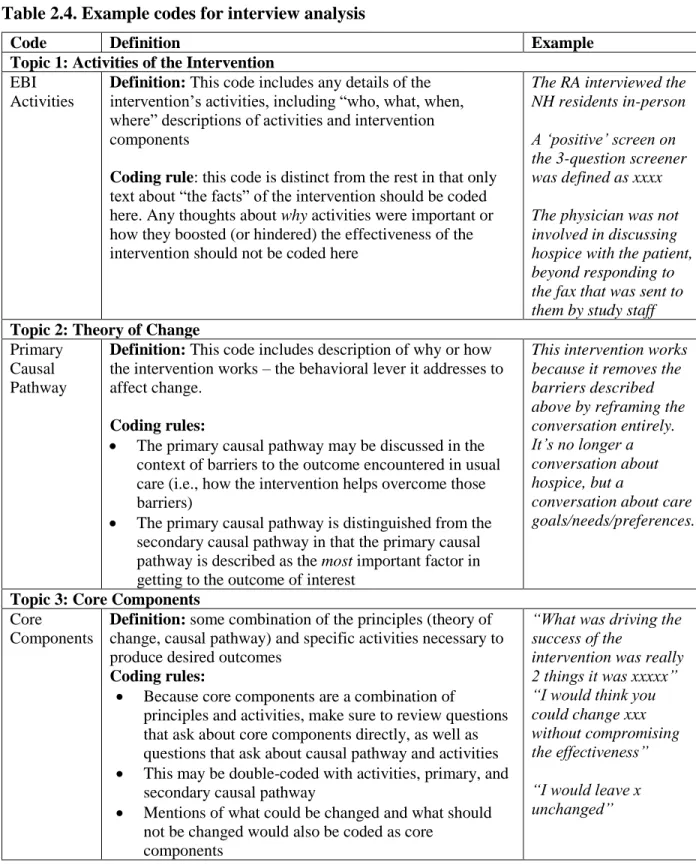
Table 2.4. Example codes for interview analysis ... 23
Table 2.5. Example of core component analysis from Casarett EBI ... 27
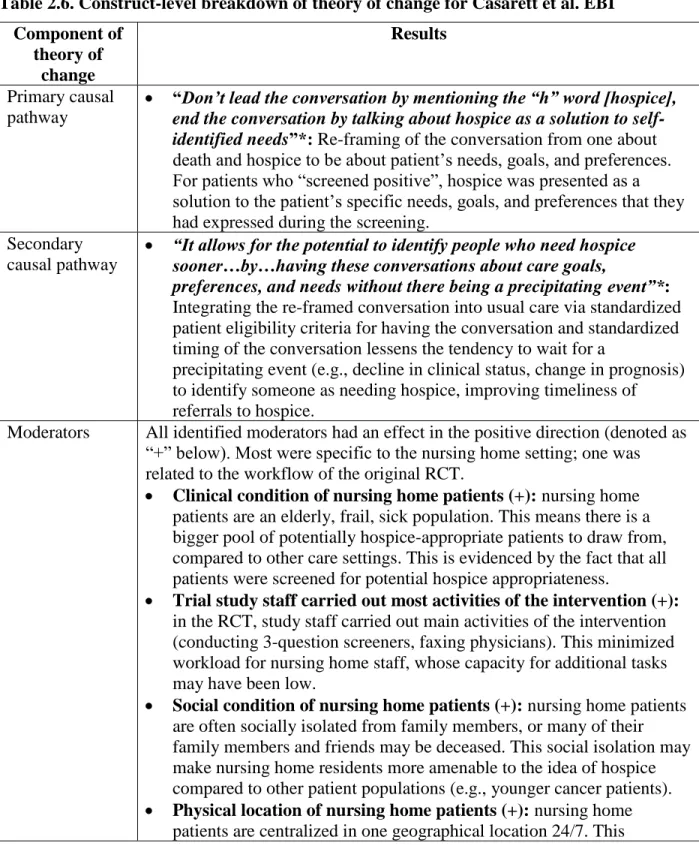
Table 2.6. Construct-level breakdown of theory of change for Casarett et al. EBI ... 31
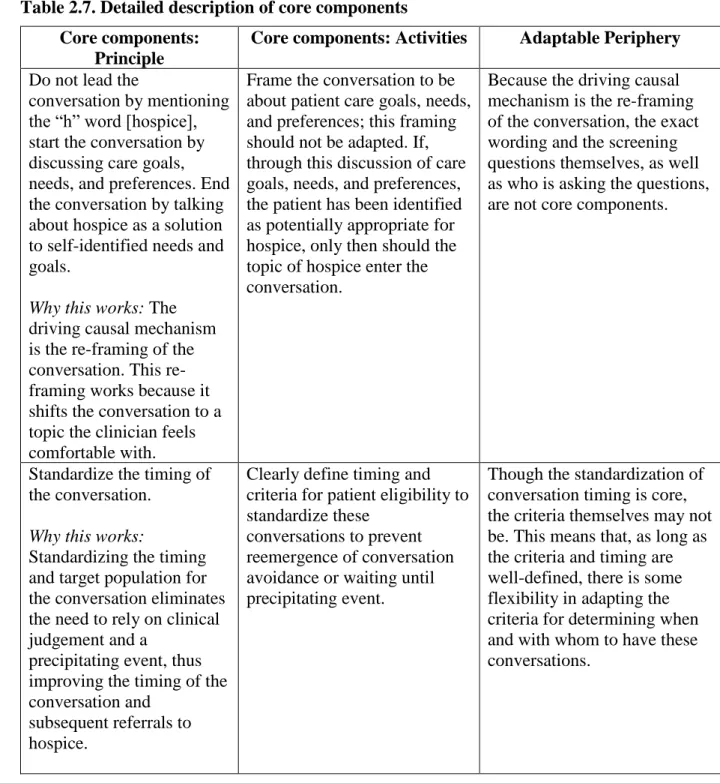
Table 2.7. Detailed description of core components ... 33
Table 3.1. Stakeholder panel ... 51
Table 3.2. Key context differences between nursing home and home health ... 58
Table 3.3. Adaptations to Casarett EBI ... 64
Table 3.4. Key constructs from Stirman, Moore, and Proctor frameworks and theories ... 78
Table 3.5. Codes and definitions... 82
Table 3.6. Quantitative analyses to elucidate pathways ... 84
Table 3.7. Qualitative analyses to elucidate mediating pathways ... 87
Table 4.1. Adaptations to Casarett Intervention ... 103
Table 4.2. Measures and data sources ... 109
Table 4.3. A priori themes for qualitative analysis ... 111
Table 4.4. A priori codes for analysis of implementation data ... 112
Table 4.5. Suggested additional adaptations to intervention ... 117
Table 4.6. Barriers and facilitators to pilot implementation (mapped to CFIR) ... 121
Table 4.7. Implementation strategies (mapped to Powell’s compilation implementation strategies) ... 123
LIST OF FIGURES
Figure 2.1. Relationship between core components, adaptable periphery, and the
theory of change ... 11
Figure 2.2. Planned Adaptation Model ... 14
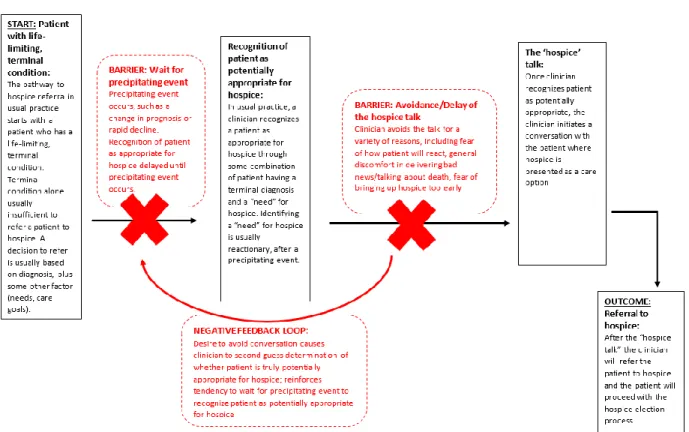
Figure 2.3. Usual care pathway visualization ... 30
Figure 2.4. Transactional model of stress and coping ... 35
Figure 3.1. Planned Adaptation Model ... 47
Figure 3.2. Delphi Method ... 49
Figure 3.3. Screenshot of adapted EBI protocol ... 68
Figure 3.4. A theory of planned adaptations’ influence on intervention and implementation outcomes ... 89
LIST OF ABBREVIATIONS ADL activities of daily living
ALF assisted living facility
CFIR Consolidated Framework for Implementation Research CHF congestive heart failure
CMS Centers for Medicare & Medicaid Services COPD chronic obstructive pulmonary disease CPR cardiopulmonary resuscitation
EBI evidence-based intervention EMR electronic medical record ESRD end stage renal disease HC-POA healthcare power of attorney
HH home health
HIV/AIDS human immunodeficiency virus/acquired immunodeficiency syndrome IRB institutional review board
JAMA Journal of the American Medical Association LAR legally authorized representative
MMSE Mini-mental state examination
NH nursing home
NF nursing facility
OASIS Outcome and Assessment Information Set OT occupational therapist
PAM Planned Adaptation Model
PT physical therapist
RCT randomized controlled trial RN registered nurse
SHP Strategic Healthcare Programs SLP speech language pathologist SNF skilled nursing facility
SUPPORT Study to Understand Prognosis and Preferences for Outcomes and Risks of Treatment
TDF Theoretical Domains Framework
TIDieR Template for Intervention Description and Replication
CHAPTER 1: INTRODUCTION Hospice Care: Benefits and Utilization
Hospice is a specialized set of services that provides care to terminally ill patients and their families at the end-of-life. In the United States (US), hospice care is used when curative care for a terminal condition is no longer a care option – either due to the nature of the disease and its treatment or due to patient choice. In the US, patients typically elect hospice when they have a life expectancy of 6 months or less, should the disease run its normal course; to elect hospice, most patients must give up curative care for their terminal condition (17-18). Hospice care focuses on palliation with the goal of maximizing quality of life and patient comfort. Hospice services are provided by a multi-disciplinary care team, including nurses, chaplains, aides, volunteers, therapists, pharmacists, physicians, social workers, and counselors (17-18). Hospice services are available to patients in a variety of care settings, including community-based settings, long-term care institutions, and inpatient hospice homes (17-18). Hospice care focuses on pain and symptom management, as well as emotional and psychosocial aspects of death and dying. In hospice, the patient and the family are the unit of care. Services provided to the family include coaching the family on how to care for the patient, providing short-term respite care when pain or symptoms become difficult to manage at home, and providing bereavement care to surviving family and friends (17-18).
Hospice care offers known benefits for terminally ill patients and our healthcare system at large, including improved quality of life, decreases in symptom burden and unmet
whose loved one received hospice report fewer unmet needs for symptoms like pain and dyspnea and have overall higher rankings of quality of care (1, 2). Additionally, family members whose loved one received hospice also report higher quality of death and peacefulness of dying, and are better informed and prepared of what to expect at the time of death. Finally, hospice care can also decrease unwanted or invasive care at the end-of-life. One study found that hospice enrollees had lower rates of hospitalization, intensive care unit admission, and invasive procedures at the end-of-life (16).
The need for hospice care is increasing as the US population ages and the number of patients with hospice-eligible diagnoses expands. Moreover, the hospice population has shifted in recent decades – now, the majority of hospice patients are elderly patients (age 65+) with chronic illnesses (e.g., congestive heart failure, chronic obstructive pulmonary disease) or neurological conditions (3). The number of elderly patients and the number of patients with chronic and neurological conditions is only expected to rise in coming years. By 2020, 157 million patients will have at least 1 chronic condition (14), and the elderly population will increase by 36% (15).
Late hospice referrals have been linked to poorer outcomes, including lower satisfaction with hospice services. Specifically, bereaved family members reporting late referral to hospice report higher rates of unmet needs regarding expectations at the time of death, lower confidence in providing care for their loved one, greater concerns with care coordination, and lower overall satisfaction with hospice care (4). In addition, delayed referral and election of hospice may also result in additional costs, as well as invasive or unwanted care at the end-of-life (6).
Existing Interventions to Improve Timeliness of Hospice Referrals
An intervention to improve referrals exists and has been demonstrated efficacious. An intervention developed and tested by Casarett et al. improved hospice referral and election rates (11). A randomized controlled trial of the intervention was successful – 20% of patients screened were referred to hospice within 30 days (referral rate in the intervention group was 19 percentage points higher than the referral rate in the control group) (11). Moreover, patients in the
intervention group had fewer hospital admissions and fewer acute care days. Finally, patients in the intervention group also had higher ratings of quality of care (11). A second unpublished effectiveness study of the intervention also had positive outcomes (12).
The intervention, however, only applies to a minority of hospice-eligible populations, thus limiting the reach and potential impact of the intervention. The intervention was developed and tested in the nursing home setting. Nursing home residents represent a minority (19%) of the hospice general population. Most patients come to hospice from non-institutional settings
(community settings and inpatient hospitals account for 70% of hospice referrals) and receive hospice care in the community (51% receive hospice care at home) (13).
Aims of this Research
benefits of hospice care for this group, including increased quality of life and reductions in unmet needs at the end-of-life. The objective of this work is to adapt the Casarett et al. EBI for home- and community-based populations and evaluate the implementation and intervention outcomes of the adapted EBI. This research will increase our understanding of how to best adapt evidence-based interventions for new contexts while maintaining their ability to produce desired outcomes. It will also increase our understanding of how to improve access to hospice care for home- and community-based populations.
This work includes 3 specific aims:
• Aim 1: Identify core components of the EBI by clearly specifying its theory of change and
major activities. I will interview members of the EBI developer team to specify the theory of change (primary causal pathway, moderators, and secondary causal pathways) and major activities of the EBI.
• Aim 2: Adapt the EBI from nursing home to home- and community-based settings and
populations. I will use the Delphi method to solicit input from relevant stakeholders (e.g., developers of the original EBI, intended target users of the adapted EBI) via self-administered written surveys and in-person focus groups. I will solicit input on: 1) key differences between nursing home and home- and community-based settings and
• Aim 3: Conduct a pilot feasibility test to evaluate the implementation and outcomes of the
adapted EBI. I will pilot-test the adapted EBI in one home and one community-based practice. Using interviews with practice staff and process metrics, I will collect data on implementation of the adapted EBI (e.g., acceptability, cost, fidelity). I will also collect data on intervention outcomes (e.g., rates of hospice referral and election) to determine whether the adapted intervention produces the desired outcomes in the new context.
Significance and Implications
Adapting this intervention for use in broader hospice-eligible populations could improve access to beneficial hospice services for a larger proportion of patients. This research will build on the existing knowledge base regarding intervention adaptation to adapt the EBI for home- and community-based hospice-eligible populations. Building on current knowledge, this research aims to adapt the EBI without compromising its ability to produce desired outcomes.
This research has the potential to fill a knowledge gap that currently exists in the field of implementation science by providing actionable resources (e.g., toolkits) for adapting EBIs. Adapting interventions and the adaptation-fidelity continuum is a burgeoning area of implementation research. Although there exists a knowledge base on general principles and frameworks for intervention adaptation, there are few specific tools and methods that researchers can use to adapt EBIs in a systematic manner. This research will extend the current knowledge base by leveraging existing adaptation frameworks and building on them to develop
Organization of this Dissertation
REFERENCES
1. Teno, Joan M., et al. "Does hospice improve quality of care for persons dying from dementia?." Journal of the American Geriatrics Society 59.8 (2011): 1531-1536. 2. Miller, Susan C., et al. "Does receipt of hospice care in nursing homes improve the
management of pain at the end of life?." Journal of the American Geriatrics Society 50.3 (2002): 507-515.
3. NHPCO Facts and Figures: Hospice Care in America. Alexandria, VA: National Hospice and Palliative Care Organization, October 2012.
http://www.nhpco.org/sites/default/files/public/Statistics_Research/2013_Facts_Figures.p df
4. Teno J, Shu J, Casarett D, Spence C, Rhodes R, Connor S. “Timing of Referral to
Hospice and Quality of Care: Length of Stay and Bereaved Family Members’ Perceptions of the Timing of Hospice Referral.” J Pain Symptom Manage 2007; 34:120-125.
5. Schockett E, Teno J, Miller S, Stuart B. “Late Referral to Hospice and Bereaved Family Member Perception of Quality of End-of-Life Care. J Pain Symptom Manage
2005;30:400-407.
6. Miceli PJ, Mylod DE. Satisfaction of families using end-of-life care: Current successes and challenges in the hospice industry. American Journal of Hospice and Palliative Care. 2003;20:360–370.
7. Friedman B, Harwood K, Shields M. Barriers and Enablers to Hospice Referrals: An Expert Overview. Journal of Palliative Medicine5:1; 2002
8. Cherlin E, Fried T, Prigerson H, Schulman-Green D, Johnson-Hurzeler R, Bradley E. Communication between Pyhsicians and Family Caregivers about Care at the Endo fo Life: When Do Discussions Occur and What Is Said? Journal of Palliative Medicine:8:6, 2005
9. Jenkins T, Chapman K, Ritchie C, Arnett D, McGwin G, Cofield S, Maetz H. Barriers to Hospice Care in Alabama: Provider-Based Perceptions. Am J Palliat Care 2011:28:153. 2010
10. Vig E, Starks H, Taylor J, Hopley E, Fryer-Edwards K. Why Don’t Patients Enroll in Hospice? Can we do anything about it? J Gen Intern Med 25(10): 1009-19.
11. Casarett D, Karlawish J, Morales K, Crowley R, Mirsch T, Asch D. Improving the Use of Hospice Services in Nursing Homes: A Randomized Controlled Trial. JAMA.
2005;294:211-217
14. National Association of Home Care and Hospice. Why Hospice is More Important Today Than Ever Before. http://www.nahc.org/news/why-hospice-is-more-important-today-than-ever-before/
15. US Department of Health and Human Services. Administration on Aging. http://www.aoa.gov/aging_statistics/profile/2011/4.aspx
16. Obermeyer, Z., Makar, M., Abujaber, S., Dominici, F., Block, S., & Cutler, D. M. (2014). Association between the Medicare hospice benefit and health care utilization and costs for patients with poor-prognosis cancer. Journal of the Am
17. National Hospice and Palliative Care Organization. Hospice Care. https://www.nhpco.org/about/hospice-care
18. U.S. Centers for Medicare & Medicaid Services. How Hospice Works.
CHAPTER 2: FINDINGS FROM AIM 1 Background
The adaptation-fidelity continuum and core components
Reproducing the level of effectiveness demonstrated in trials is critical when moving an evidence-based intervention (EBI) into practice. Historically, fidelity to EBI protocol was considered paramount for reproducing effectiveness; adaptations were viewed as threats to effectiveness[1-5]. Increasingly, however, researchers and practitioners recognize that
adaptations can promote effectiveness by improving fit between the EBI and new contexts (e.g., new organizations, patient populations)[6-8]. In this view of adaptation and fidelity, attention shifts from preserving fidelity at all costs to making adaptations that improve fit between EBIs and context[1, 7, 9-13]. To achieve this goal, specification of an EBI’s core components and adaptable periphery is critical. Core components are the essential EBI components that make an EBI effective; adapting these components risks compromising EBI effectiveness[14].
Conversely, an EBI’s adaptable periphery is comprised of components that can be adapted without compromising effectiveness because they are not necessary to produce desired outcomes[11, 15].
Identifying and specifying core components
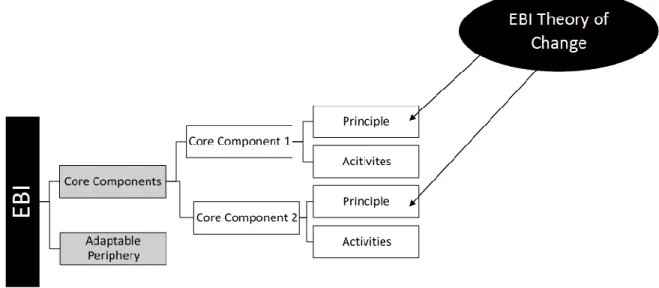
As mechanisms of change, principles are derived directly from an EBI’s theory of change. An EBI’s theory of change specifies all relationships between an EBI and the desired outcomes (e.g., causal pathways, mediators, moderators). As such, a single theory of change may encompass several mechanisms of change (i.e., principles) if the relationship between EBI and outcomes includes multiple causal pathways, mediating relationships, etc. Activities operationalize each theory-based principle by describing the specific actions or behaviors needed to affect change. Delineating principles and activities distinguishes between form and function of an EBI’s components; principles explain the function of an EBI component (why a component matters, how it produces change), while activities denote form (who is doing what, when, and where).
Figure 2.1. Relationship between core components, adaptable periphery, and the theory of change
Core components can be identified experimentally or non-experimentally.
Experimentally, researchers can identify core components through causal research designs testing the EBI’s theory of change or the degree to which fidelity to core components produces positive outcomes[16]. However, due to challenges with conducting factorial trials to test the relative impact of each EBI component[17], core components are often identified
non-experimentally. This approach includes qualitative methods, process evaluations, or correlational designs to specify a theory of change and supporting activities[16].
Ideally, by the time an EBI is ready for implementation, developers or evaluators have clearly identified core components. In practice, however, this is seldom the case; literature shows that developers or evaluators rarely identify core components or offer recommendations on the dosage, strength, and adherence required to achieve desired outcomes[16].
These frameworks also recommend primary data collection, including interviewing EBI
developers[7, 13, 23]. Beyond this high-level guidance on identifying core components post hoc, little has been published on systematic methods and tools. Addressing this gap in the literature is a critical first step to placing more emphasis on identifying core EBI components[12, 16, 29, 30]. Objective of this paper
This paper offers a methodology case study to develop systematic methods and tools for identifying core components post hoc. In the Methods section, we describe our tools in detail so others can use and refine them. We also include recommendations for future use based on lessons learned from this case study. Given that most EBI developers and evaluators do not clearly identify core components in publications or EBI materials[16], the Results section provides an example of how researchers and practitioners may report core components. In the Discussion section, we reflect on our experience, discuss the value of our methods and tools, and recommend future research.
Case example
For this study, we focused on an EBI developed in 2005 by Casarett et al. (hereafter “Casarett EBI”) to improve the timeliness of hospice referrals for nursing home residents.
home residents represent a minority of all hospice patients served, in this study, we adapt the Casarett EBI to home health to extend its overall reach[41, 42].
Methods Theoretical framework
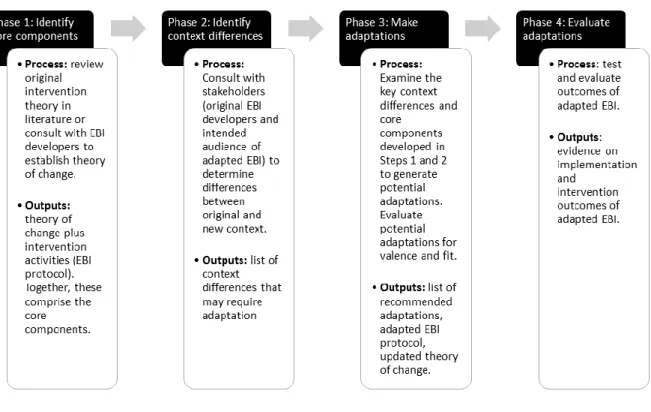
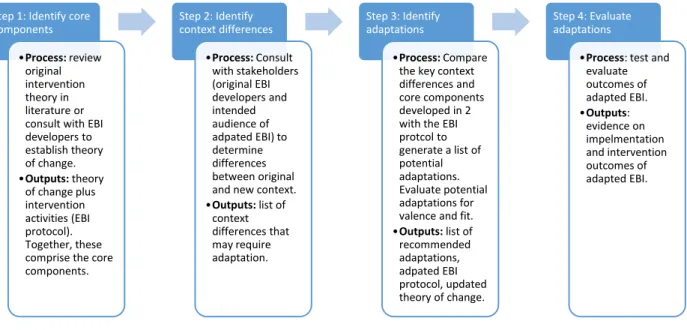
Our overall approach was based on the Planned Adaptation Model (PAM)[23]. We selected PAM because of its high level of specificity on inputs (data sources), processes (steps), and outputs (final products) in the adaptation process. PAM includes four steps in the adaptation process (Figure 2.2), two of which focus on identifying core components: 1) specify the theory of change, including primary and secondary causal pathways and moderators of the EBI, and 2) specify all activities of the EBI. Because the core components are some combination of
Figure 2.2. Planned Adaptation Model
Procedures
Table 2.1. Recommendations for identifying core components
Step Recommendations
Step 1 - Search for and review existing
materials
• Cast a wide net when searching for existing materials – do not limit your search to peer-reviewed literature. Relevant materials may be available as gray literature on program or funder websites. Personal communication with members of the EBI team are also potential sources of existing materials.
• Even if core components and theory of change aren’t specified in existing materials, existing materials can provide useful in other ways (i.e., to provide context for the intervention or guide development of primary data collection materials).
Step 2 – Develop semi-structured interview guide
• Review existing materials to inform development of primary data collection materials.
• Make sure questions are “participant friendly”: avoid jargon in questions, instead, provide definitions of terms and phrase questions in the context of your specific intervention.
o Ex: Instead of “what are the moderators of your
intervention?” ask “were there aspects of xxx intervention (or xxx context) that boosted its effectiveness?”
• Ask about barriers to the outcome of interest encountered in usual care/practice: this can serve as a jumping off point for the rest of the interview, making it easier for participants to think about the theory of change and primary causal pathway. Information on barriers to
change was critical in the analysis phase for specifying the theory of change.
• Core components: Ask about core components directly, after asking about EBI activities and the theory of change. As a lead-in to the questions focusing on core components, provide an explanation of what core components are and why identifying them is important. Again, our explanation avoided jargon and framed core components as the “active ingredients” or “secret sauce” that drove the success of the intervention. We also found it helpful to ask several questions about core components and probe often to ensure respondents were drilling down to “the core” of core components.
• Probe often to ensure you are drilling down to the underlying principles of why certain activities were important to the overall success of the intervention.
• Consider developing supplemental materials (e.g., short descriptions of the intervention’s activities) to distribute to interview participants. Step 3 – Recruit
interview participants
• Try to maximize heterogeneity in your sampling frame and final sample by recruiting a variety of roles (research assistant, statistician, lead developer) from a variety of perspectives (researcher vs
clinician).
Step Recommendations Step 4 – Conduct
interviews
• Use interviews or other bidirectional methods (e.g., focus groups) to allow for probing and follow-up questions
Step 5 – Analyze interview data
• Complete analysis in the following order:
o Activities of the intervention
o Usual care pathway (focusing on barriers to your outcome of interest encountered in usual care)
o Theory of change (primary and secondary causal pathways, moderators)
o Core components
• Identifying the barriers to outcome of interest encountered in usual care is critical to clearly elucidating the causal pathways in the theory of change. The barriers to change provide a clear “gap” that the primary and secondary causal pathways should (ideally) address • When analyzing data on core components, do not limit your analysis
to questions that ask about core components directly. Because core components are a combination of the activities of the intervention as well as the theory of change, data from other portions of the interview may help elucidate and operationalize core components.
• Ensure that descriptions of core components resulting from analysis include both the principle and activity.
Step 6 – Map theory of change onto extant theory from the literature
• Helpful in “validating” the “Little T” theory of change produced in Step 5 analysis
STEP 1: Review existing materials. The first step in identifying core components is to review existing EBI materials to determine if core components or the theory of change have already been specified. To complete this step, we searched for available published and grey literature on the Casarett EBI. We identified one existing public data source: the publication of the randomized controlled trial (RCT) that originally tested the Casarett EBI[40]. This publication did not include a clear description of the core components or the theory of change. We also contacted the research team for a copy of the intervention protocol, which was not publicly available. We conducted an additional literature search to familiarize ourselves with the Casarett EBI and its context. This review of existing materials guided the development of our semi-structured interview guide.
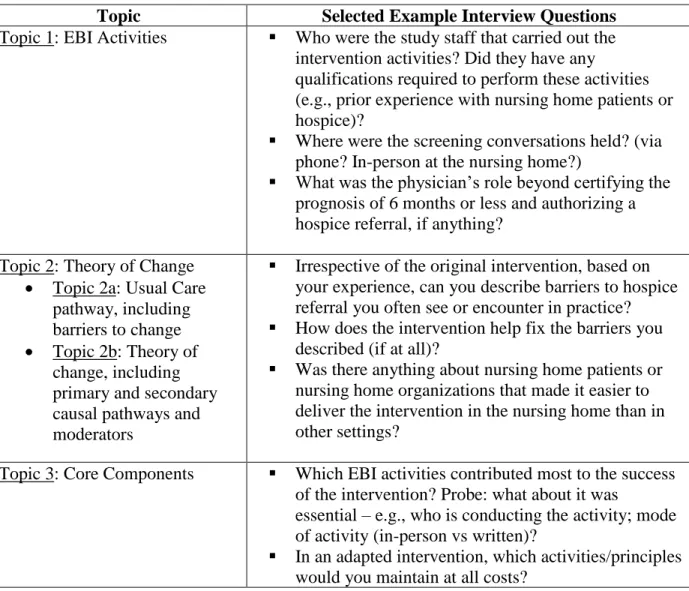
STEP 2: Develop semi-structured interview guide. Because existing materials for the Casarett EBI did not specify the core components, we conducted semi-structured interviews with those involved in EBI development and initial testing. PAM recommends eliciting information on the EBI’s activities, as well as the theory of change to ascertain the core components; these were the first two topics included in our interview guide. The third topic in our interview guide was a direct line of questioning about core components. Table 2.2 contains example interview questions for each topic. After completing our interviews, we updated our final interview guide, refining wording of interview questions and probes (Additional File 2).
Because the RCT of the Casarett EBI occurred ~10 years earlier, we sent a 1-page description (Additional File 1) of the intervention based on the publication[40] to interview participants prior to interviews to refresh their memory. Without prompting, interview
Table 2.2. Example interview questions for each major topic area
Topic Selected Example Interview Questions
Topic 1: EBI Activities ▪ Who were the study staff that carried out the intervention activities? Did they have any
qualifications required to perform these activities (e.g., prior experience with nursing home patients or hospice)?
▪ Where were the screening conversations held? (via phone? In-person at the nursing home?)
▪ What was the physician’s role beyond certifying the prognosis of 6 months or less and authorizing a hospice referral, if anything?
Topic 2: Theory of Change • Topic 2a: Usual Care
pathway, including barriers to change • Topic 2b: Theory of
change, including primary and secondary causal pathways and moderators
▪ Irrespective of the original intervention, based on your experience, can you describe barriers to hospice referral you often see or encounter in practice?
▪ How does the intervention help fix the barriers you described (if at all)?
▪ Was there anything about nursing home patients or nursing home organizations that made it easier to deliver the intervention in the nursing home than in other settings?
Topic 3: Core Components ▪ Which EBI activities contributed most to the success of the intervention? Probe: what about it was
essential – e.g., who is conducting the activity; mode of activity (in-person vs written)?
▪ In an adapted intervention, which activities/principles would you maintain at all costs?
for the reason why clinicians felt uncomfortable to better understand the behavioral levers (and barriers) behind the Casarett EBI.
Topic 1: EBI activities:
Regarding what to ask, we recommend focusing only on activities not already detailed in existing materials and publications. We also recommend capturing contextual details for each activity (e.g., who was completing the activity, what prior skills and training they had). Understanding the contextual details behind each activity helped us later classify activities as part of the adaptable periphery or core components. For example, knowing details about who asked the screening questions in the original trial (non-clinician research assistant who had prior knowledge of hospice) helped us discern whether the role of the individual administering
screening questions was a core component or part of the adaptable periphery. Topic 2a: usual care pathway and Topic 2b: theory of change
Topic 3: core components
Explicit discussion of core components provided an opportunity for participants to synthesize discussion from prior topics, producing richer data: After discussing activities and barriers to change, participants could more clearly articulate what about the Casarett EBI drove its success. Based on our experiences, we updated our interview questions for core components, and recommend a 3-pronged approach to asking about core components: 1) assess which
activities contributed most to the success of the intervention; 2) assess which activities should be maintained at all costs in an adapted intervention, and which could be modified without
compromising the intervention’s success; and 3) probe on both questions to ascertain the principle behind the activity that made it core or adaptable.
STEP 3: Recruit interview participants. Our sampling frame included all six authors on the Casarett publication. These authors represented a variety of roles, including the lead
developer of the intervention, members of the RCT study team (e.g., research assistant, statistician), and staff from the clinical sites. In addition, we employed snowball sampling by asking authors for recommendations on additional participants to interview.
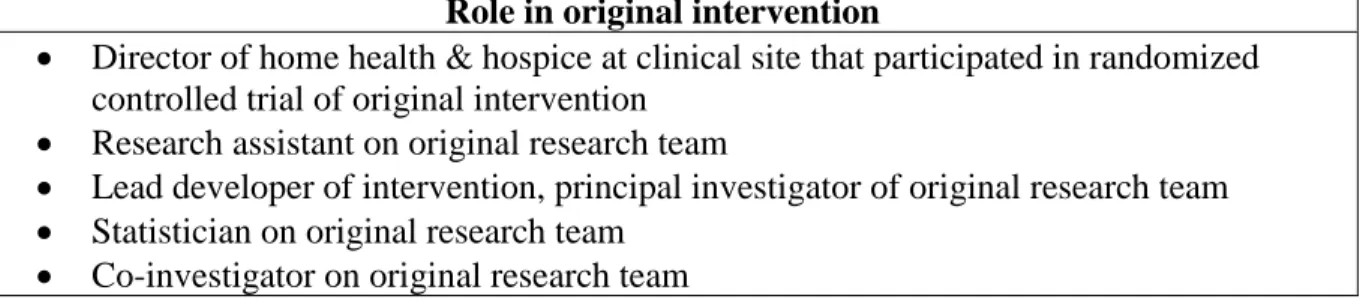
Ultimately, we interviewed 5 of the 6 members of the original research team (1 member declined to participate); Table 2.3 lists their roles in the Casarett EBI. The wide range of roles helped achieve our research objective. Each participant brought a different perspective,
providing richness in our interview data. At a minimum, we recommend a mix of
recruit any additional participants through our snowball sampling; because the original RCT occurred ~10 years before our interviews, recounts of who else was involved in the RCT may have been subject to recall bias. In future applications of these methods, we recommend that researchers employ a snowball sampling technique to maximize sample heterogeneity, particularly in instances where the sampling frame is over-represented by a particular role or group. For example, because authors comprised our initial sample, researchers were
over-represented. Thus, we asked participants to recommend clinical site staff we could speak to about the Casarett EBI.
Table 2.3. Interview participants
Role in original intervention
• Director of home health & hospice at clinical site that participated in randomized controlled trial of original intervention
• Research assistant on original research team
• Lead developer of intervention, principal investigator of original research team • Statistician on original research team
• Co-investigator on original research team
STEP 4: Conduct interviews. We conducted interviews during a 3-month period between April-June 2017. Interviews were conducted by the lead author (AK) via telephone or in-person. All interviews were between 20 and 60 minutes. Overall, interviews were a useful mode of data collection for our research objectives. Our semi-structured approach yielded rich data. Based on our experience, we would not recommend either close-ended questions or surveys; however, other modes of in-depth data collection (e.g., rapid ethnography[43], focus groups[44, 45]) could provide equally rich data.
STEP 5: Analyze interview data. Interviews were audio-recorded, transcribed verbatim, and analyzed using template analysis, which allowed us to identify a priori and emergent
develop the definitions of key constructs in our codebook. Using interview data, we developed coding rules to further operationalize and distinguish between each construct. Select coding definitions and examples are presented in Table 2.4; the final codebook is presented in
Table 2.4. Example codes for interview analysis
Code Definition Example
Topic 1: Activities of the Intervention
EBI Activities
Definition: This code includes any details of the intervention’s activities, including “who, what, when, where” descriptions of activities and intervention components
Coding rule: this code is distinct from the rest in that only text about “the facts” of the intervention should be coded
here. Any thoughts about why activities were important or
how they boosted (or hindered) the effectiveness of the intervention should not be coded here
The RA interviewed the NH residents in-person A ‘positive’ screen on the 3-question screener was defined as xxxx
The physician was not involved in discussing hospice with the patient, beyond responding to the fax that was sent to them by study staff
Topic 2: Theory of Change
Primary Causal Pathway
Definition: This code includes description of why or how the intervention works – the behavioral lever it addresses to affect change.
Coding rules:
• The primary causal pathway may be discussed in the
context of barriers to the outcome encountered in usual care (i.e., how the intervention helps overcome those barriers)
• The primary causal pathway is distinguished from the
secondary causal pathway in that the primary causal
pathway is described as the most important factor in
getting to the outcome of interest
This intervention works because it removes the barriers described above by reframing the conversation entirely. It’s no longer a conversation about hospice, but a
conversation about care goals/needs/preferences.
Topic 3: Core Components
Core Components
Definition: some combination of the principles (theory of change, causal pathway) and specific activities necessary to produce desired outcomes
Coding rules:
• Because core components are a combination of
principles and activities, make sure to review questions that ask about core components directly, as well as questions that ask about causal pathway and activities
• This may be double-coded with activities, primary, and
secondary causal pathway
• Mentions of what could be changed and what should
not be changed would also be coded as core components
“What was driving the success of the
intervention was really 2 things it was xxxxx” “I would think you could change xxx without compromising the effectiveness”
Analysis of Topic 1: EBI activities
We recommend analyzing activities of the EBI first because these findings set a
foundation for identifying theory of change and core components (i.e., to understand why or how an intervention is working, you must first understand the intervention itself).
Analysis of Topic 2a: Usual Care Pathway
Although it was not prescribed by PAM, we outlined the pathway from terminal diagnosis to hospice referral (including barriers to referral) encountered in usual care as a
preliminary step in developing the Casarett EBI theory of change. Conceptualizing the barriers to hospice referral as gaps that the Casarett EBI should ideally fill allowed us to more easily
identify the casual pathways in the theory of change. In this sense, the usual care pathway and EBI theory of change are complementary: the usual care pathway identifies the barriers to change and the theory of change describes the mechanism of change in the intervention that addresses these barriers.
Analysis of Topic 2b: Theory of Change
As prescribed by PAM, the theory of change consists of primary and secondary causal pathways and moderators. We identified the causal pathways by examining barriers to change. For example, one barrier to change for the Casarett EBI was clinician discomfort with discussing hospice. With this in mind, we coded data that addressed this barrier as part of the causal
describe based on their knowledge of the intervention. Such ranking could help distinguish between the primary and secondary causal pathways.
Moderators tended to be discrete factors that were often described as barriers or facilitators to implementing or delivering the Casarett EBI (e.g., the research team had an existing relationship with the clinical sites testing the intervention which improved buy-in from clinical staff). Moderators were also often described in relative terms, as factors that made the Casarett EBI easier or harder to implement in one context over another (e.g., nursing homes have fewer attending physicians than home health, facilitating the coordination and hospice referral process in nursing homes).
Analysis of Topic Area 3: Core Components
Conceptually, a strong understanding of an EBI’s activities and theory of change is necessary to specify core components appropriately (i.e., articulate core component activities and principles). Operationally, this meant that to analyze data on core components, we did not limit our coding to questions where core components were explicitly discussed; we also coded interview data from prior topic areas (activities and theory of change) as part of our core components analysis. As such, much of our interview data were double-coded (i.e., excerpts on causal pathway were double-coded as theory of change causal pathway and core components). Because of this, data on core components should be analyzed last.
portions of activities) that were core and activities that were part of the adaptable periphery. We determined this by relying on the principle behind each core component: if an activity
Table 2.5. Example of core component analysis from Casarett EBI
Construct Example from Casarett EBI
Core Component 1 The primary core component of the Casarett EBI was reframing the hospice conversation
Principle The principle behind this core component was that the re-framing changed the conversations from something clinicians felt
uncomfortable discussing (hospice and death/dying) to something clinicians feel comfortable discussing (care goals, needs, and preferences). This re-framing meant clinicians no longer avoided or delayed the conversation.
Activities The activities supporting this core component were the introduction, framing, and cognitive conceptualization of the conversation (“I’d like to ask you some questions about your care goals, needs, and preferences.” instead of “Based on your
deteriorating condition, I’d like to talk to you about hospice as a care option.”).
Adaptable Periphery Other components like the exact wording of the 3-screening
questions, who was asking the questions, and whether the questions were asked in-person or via phone were deemed part of the
adaptable periphery because they do not impact the frame of the conversation (i.e., they did not compromise the principle
underlying the primary core component).
STEP 6: Map theory of change onto extant theory from the literature. One primary output resulting from Step 5 is a theory of change for the EBI. Step 5 produced a “Little-T” theory of change. Little-T theories explain a phenomenon, elucidating why or how a relationship
functions. However, Little-T theories apply to a narrow context and have not been widely tested and validated[47, 48]. As a final step in our analytic process, we mapped the Little-T theory of change for the Casarett EBI onto an extant “Big-T” theory. Like Little-T theories, Big-T theories seek to explain the mechanism behind a phenomenon; however, Big-T theories are often well-known within a field and have been refined and validated through research[47, 48]. Although this theory mapping is not prescribed by PAM, we included it as a final step because our
confidence that our context-specific explanation is supported by a broader, generalizable explanation of a phenomenon.
To identify a Big-T theory, we first considered the level of change of our intervention (individual level) and the type of change (cognitive perception of the conversation surrounding hospice referral). This consideration helped us narrow down a field for our Big-T theory search. We chose to search for Big-T theories within psychology, a field that seeks to understand
cognitive phenomena at the individual-level. Within psychology, we searched for Big-T theories with similar constructs and levers of change to our Little-T theory.
Results
The outputs from our analysis were: 1) updated description of intervention activities; 2) usual care pathway, including barriers to change; 3) EBI theory of change, including primary and secondary causal pathways and moderators; 4) description of the core components; and 5) overlay of Little-T with extant Big-T theory of change. Although our results are specific to our case example, they may serve as a model for how these types of results could be presented. Output 1: Updated description of the intervention
We presented our description of the intervention (Additional File 4) within an existing intervention reporting framework, Template for Intervention Description and Replication (TIDieR)[49, 50].
Output 2: Usual care pathway, including barriers
the “hospice talk” (broaching hospice as a potential care option with the patient). These two barriers are interrelated, causing a negative feedback loop that further exacerbates delays in hospice referral.
Barrier 1 – Precipitating Event: Although a terminal diagnosis alone should trigger the hospice talk, in usual care, clinicians often wait until after a precipitating event (e.g., rapid change in prognosis, steep clinical decline, symptom exacerbation) to discuss hospice as a care option. Waiting for a precipitating event delays hospice referral; this tendency likely stems from barrier two (discomfort with the hospice talk).
Figure 2.3. Usual care pathway visualization
Output 3: EBI Theory of change
For the theory of change, we developed a text description for each major construct: primary causal pathway, secondary causal pathway, and moderators (Table 2.6). In short, the Casarett EBI’s causal pathways removed the barriers identified in the usual care pathway by re-framing the hospice talk entirely. The conversation shifted from one about hospice to one about care goals, needs, and preferences, more generally. Clinicians felt equipped to and comfortable with discussing the latter and thus, no longer avoided or delayed these conversations.
i.e., were facets of the original intervention and context that boosted the overall effectiveness of the intervention.
Table 2.6. Construct-level breakdown of theory of change for Casarett et al. EBI Component of theory of change Results Primary causal pathway
• “Don’t lead the conversation by mentioning the “h” word [hospice], end the conversation by talking about hospice as a solution to self-identified needs”*: Re-framing of the conversation from one about death and hospice to be about patient’s needs, goals, and preferences. For patients who “screened positive”, hospice was presented as a solution to the patient’s specific needs, goals, and preferences that they had expressed during the screening.
Secondary causal pathway
• “It allows for the potential to identify people who need hospice sooner…by…having these conversations about care goals,
preferences, and needs without there being a precipitating event”*: Integrating the re-framed conversation into usual care via standardized patient eligibility criteria for having the conversation and standardized timing of the conversation lessens the tendency to wait for a
precipitating event (e.g., decline in clinical status, change in prognosis) to identify someone as needing hospice, improving timeliness of referrals to hospice.
Moderators All identified moderators had an effect in the positive direction (denoted as “+” below). Most were specific to the nursing home setting; one was related to the workflow of the original RCT.
• Clinical condition of nursing home patients (+): nursing home patients are an elderly, frail, sick population. This means there is a bigger pool of potentially hospice-appropriate patients to draw from, compared to other care settings. This is evidenced by the fact that all patients were screened for potential hospice appropriateness.
• Trial study staff carried out most activities of the intervention (+): in the RCT, study staff carried out main activities of the intervention (conducting 3-question screeners, faxing physicians). This minimized workload for nursing home staff, whose capacity for additional tasks may have been low.
• Social condition of nursing home patients (+): nursing home patients are often socially isolated from family members, or many of their family members and friends may be deceased. This social isolation may make nursing home residents more amenable to the idea of hospice compared to other patient populations (e.g., younger cancer patients). • Physical location of nursing home patients (+): nursing home
Component of theory of
change
Results
alleviates some of the logistical burden that engaging in these conversations may present in other care settings.
• Number and type of attending physicians at nursing homes (+): in nursing homes, there are typically few attending physicians (5-10) compared to other care settings and most are geriatricians. Given that, in the original RCT, attending physicians had to “sign off” on the referral to hospice, the low number of physicians facilitated ease of sign off. Additionally, geriatricians may be more amenable to hospice care than other physicians in other specialties (e.g., cardiologists,
pulmonologists).
• Existing relationships (+): in the original RCT, the nursing home and hospice had an existing working relationship prior to the start of the trial. Additionally, the research team had local champions at clinical sites who supported the research. Clinical sites had also identified a need for the research based on barriers to referral encountered in usual care, increasing their support for the intervention.
*quote from semi-structured interviews
Output 4: Description of core components
Table 2.7. Detailed description of core components Core components:
Principle
Core components: Activities Adaptable Periphery
Do not lead the
conversation by mentioning the “h” word [hospice], start the conversation by discussing care goals, needs, and preferences. End the conversation by talking about hospice as a solution to self-identified needs and goals.
Why this works: The driving causal mechanism is the re-framing of the conversation. This re-framing works because it shifts the conversation to a topic the clinician feels comfortable with.
Frame the conversation to be about patient care goals, needs, and preferences; this framing should not be adapted. If, through this discussion of care goals, needs, and preferences, the patient has been identified as potentially appropriate for hospice, only then should the topic of hospice enter the conversation.
Because the driving causal mechanism is the re-framing of the conversation, the exact wording and the screening questions themselves, as well as who is asking the questions, are not core components.
Standardize the timing of the conversation.
Why this works:
Standardizing the timing and target population for the conversation eliminates the need to rely on clinical judgement and a
precipitating event, thus improving the timing of the conversation and
subsequent referrals to hospice.
Clearly define timing and criteria for patient eligibility to standardize these
conversations to prevent reemergence of conversation avoidance or waiting until precipitating event.
Though the standardization of conversation timing is core, the criteria themselves may not be. This means that, as long as the criteria and timing are well-defined, there is some flexibility in adapting the criteria for determining when and with whom to have these conversations.
Output 5: Overlay of EBI Little T-theory of change with extant Big-T theory
of its congruence with our Little-T theory constructs. Moreover, Lazarus’ theory has been
validated in several studies, increasing our confidence that our Little T theory of change and core components are legitimate[52, 53, 57-60].
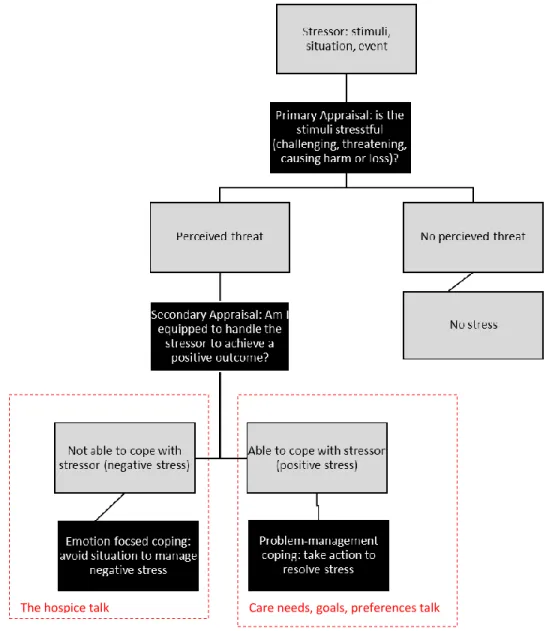
Lazarus’ theory explains both the tendency for clinicians to avoid the hospice talk and why this avoidance behavior is not present when the hospice talk is re-framed as a conversation about care goals, needs, and preferences. In short, Lazarus’ theory posits that our behavior is driven by how we appraise a situation – specifically, whether we see the situation as a threat (primary appraisal) and whether we feel we are equipped to deal with the threat (secondary appraisal). The type of coping behavior exhibited to deal with the threat (stressor) is driven by one’s appraisal of the situation. Feeling equipped to deal with a stressor will lead to positive, problem-based coping in which actions are taken to resolve the stressor. Not feeling equipped to deal with a stressor results in negative, emotional-based coping in which there is a lack of action and avoidance of the stressor. Per Lazarus’ theory, even events perceived as threats can elicit positive coping and positive behavioral responses, provided individuals feel equipped to
The hospice talk Care needs, goals, preferences talk
Figure 2.4. Transactional model of stress and coping
Discussion
in the core component and adaptation literature. The lack of practical, clearly specified methods may limit the ability of researchers or intervention developers to specify core components; it may also diminish the consistency and specificity with which core components are reported (i.e., reporting core components without clear delineation of activities, principles, and the adaptable periphery). The lack of methods may also contribute to the proliferation of frameworks and approaches that we see in the literature. A recent scoping review identified 13 frameworks for adaptation[18], all of which vary in their acknowledgement of the importance of core
components, as well as their approach for identifying core components. Although most
frameworks acknowledge understanding the EBI as a step in the adaptation process[13, 19, 23-25, 28, 61, 63, 64], not all acknowledge core components as integral to the adaptation
process[20-22]. Among those that do, the process for identifying core components is limited to general approaches (e.g., review existing materials, consult with EBI developers, review the EBI logic model or theory of change)[7, 13, 23]. This leads to a literature base that is discordant, limiting the generalizability of this area of research, as well as our ability to build a knowledge base that promotes comparisons across research findings and contexts.
This paper fills an important gap in the current literature by expanding an existing
adaptation framework (PAM) and providing a step-by-step guide – including methods, tools, and recommendations -- for identifying core components post hoc. Although PAM provided a
specific tools (e.g., interview guides, codebooks). Overall, our methods present an extension and operationalization of the current literature.
Our methods extended PAM by adding two additional steps: 1) identifying the usual care pathway and barriers to the outcome of interest encountered in usual care, and 2) mapping Little-T EBI theory of change onto extant Big-Little-T theory. Little-The usual care pathway and barriers to change outlined the gaps that the intervention should fill, allowing us to clearly articulate the underlying theoretical mechanism of our EBI and, ultimately, its core components. Mapping our Little-T theory onto an extant Big-T theory helped assure us that our theory of change is generalizable to current and new contexts.
Our methods operationalize PAM in several important ways. Where PAM recommended general principles and steps, we have produced specific tools to achieve these steps, including the development of sampling approaches, interview guides, and analytic methods. Our sampling approach recommends recruiting participants with a wide range of experiences and expertise. Our interview guide presents questions for discussing three important topic areas, as well as specific techniques for how to ask about these areas. Our codebook and analytic methods further operationalize the constructs set forth in PAM, and offer recommendations for gleaning core components effectively from interview data. Importantly, we outline a detailed analytic approach for interpreting interview data to identify core components.
Limitations & future directions
Each step in our methods served the larger objective for our case example; however, the exact approaches we used may not apply in all contexts. We also realize that our methods and tools were developed and tested in our single case-study, based on an intervention developed over 10 years ago, potentially subjecting our results to recall bias and limiting the
expand the knowledge base for identifying core components post hoc. As these methods are applied and refined by other researchers, a compendium of methods for identifying core components – and methods for adaptation on a larger scale – could be disseminated through adaptation platforms or toolkits, such as the adaptome[17]. The adaptome is a concept for a common data platform that could house systematically captured
information about the impact of adaptations of EBIs across contexts, building a repository of what works where and in what contexts. A platform like the adaptome could be expanded or developed to house similar information on methods for adaptation and identifying core components to expand our knowledge of what methods work where and in what contexts.
The methods described here may be most appropriate for situations where developers and evaluators of the original EBI have not elucidated a theory of change or core components of the intervention. These methods may also prove useful in instances where a theory of change or core components have been identified because research shows that theory is often misused or used superficially[65-67]. Thus, applying our methods in these cases may result in the generation of a theory of change that is richer and more appropriate to the EBI, ultimately leading to clearer and more accurate identification of core components.
Conclusion
REFERENCES
1. Bopp M, Saunders RP, Lattimore D: The tug-of-war: fidelity versus adaptation
throughout the health promotion program life cycle. The journal of primary prevention 2013, 34:193-207.
2. Elliott DS, Mihalic S: Issues in disseminating and replicating effective prevention programs. Prevention Science 2004, 5:47-53.
3. Mowbray CT, Holter MC, Teague GB, Bybee D: Fidelity criteria: Development, measurement, and validation. American journal of evaluation 2003, 24:315-340. 4. Schoenwald SK, Hoagwood K: Effectiveness, transportability, and dissemination of
interventions: What matters when? Psychiatric services 2001, 52:1190-1197.
5. Rabin B: Fidelity and Adaptation for Implementation Science: how can we reconcile the tension? . In Center for Research in Implementation Science and Prevention (CRISP) Seminar Series; University of Colorado Anschutz Medical Campus. 2016
6. Botvin GJ: Advancing prevention science and practice: Challenges, critical issues, and future directions. Prevention Science 2004, 5:69-72.
7. Castro FG, Barrera M, Martinez CR: The cultural adaptation of prevention interventions: Resolving tensions between fidelity and fit. Prevention Science 2004, 5:41-45.
8. Morrison DM, Hoppe MJ, Gillmore MR, Kluver C, Higa D, Wells EA: Replicating an intervention: the tension between fidelity and adaptation. AIDS Education & Prevention 2009, 21:128-140.
9. Cohen DJ, Crabtree BF, Etz RS, Balasubramanian BA, Donahue KE, Leviton LC, Clark EC, Isaacson NF, Stange KC, Green LW: Fidelity versus flexibility: translating evidence-based research into practice. American journal of preventive medicine 2008, 35:S381-S389.
10. Van Daele T, Van Audenhove C, Hermans D, Van Den Bergh O, Van Den Broucke S: Empowerment implementation: enhancing fidelity and adaptation in a
psycho-educational intervention. Health promotion international 2012, 29:212-222.
11. Carvalho ML, Honeycutt S, Escoffery C, Glanz K, Sabbs D, Kegler MC: Balancing fidelity and adaptation: implementing evidence-based chronic disease prevention programs. Journal of Public Health Management and Practice 2013, 19:348-356. 12. Proceedings from the 9th annual conference on the science of dissemination and
13. Backer TE: Finding the balance: Program fidelity and adaptation in substance abuse prevention: A state-of-the-art review. Rockville, MD: Center for Substance Abuse Prevention 2001.
14. Jordanova T, Gerlach, B & Faulkner, M: Developing strategies for child maltreatment prevention A guide for Adapting Evidence-Based Programs. Austin, TX: The University of Texas at Austin September 2015.
15. Fixsen DL, Naoom SF, Blase KA, Friedman RM: Implementation research: a synthesis of the literature. 2005.
16. Blase K, Fixsen D: Core Intervention Components: Identifying and Operationalizing What Makes Programs Work. ASPE Research Brief. US Department of Health and Human Services 2013.
17. Chambers DA, Norton WE: The adaptome: advancing the science of intervention adaptation. American journal of preventive medicine 2016, 51:S124-S131.
18. Escoffery C: A SCOPING STUDY OF PROGRAM ADAPTATION FRAMEWORKS FOR EVIDENCE-BASED INTERVENTIONS. 2016.
19. Bartholomew L, Parcel G, Kok G, Gottlieb N: Intervention Mapping: designing theory and evidence-based health promotion programs. Mountain View. CA: Mayfield 2001. 20. Card JJ, Solomon J, Cunningham SD: How to adapt effective programs for use in new
contexts. Health promotion practice 2011, 12:25-35.
21. Chen EK, Reid M, Parker SJ, Pillemer K: Tailoring evidence-based interventions for new populations: a method for program adaptation through community engagement.
Evaluation & the health professions 2013, 36:73-92.
22. Kumpfer KL, Pinyuchon M, de Melo AT, Whiteside HO: Cultural adaptation process for international dissemination of the Strengthening Families Program. Evaluation & the health professions 2008, 31:226-239.
23. Lee SJ, Altschul I, Mowbray CT: Using planned adaptation to implement evidence‐based programs with new populations. American Journal of Community Psychology 2008, 41:290-303.
24. McKleroy VS, Galbraith JS, Cummings B, Jones P, Harshbarger C, Collins C, Gelaude D, Carey JW, Team A: Adapting evidence–based behavioral interventions for new settings and target populations. AIDS Education & Prevention 2006, 18:59-73. 25. Wingood GM, DiClemente RJ: The ADAPT-ITT model: a novel method of adapting