Advance Publication
Experimental Animals
Received: 2019.8.7
Accepted: 2019.11.21
Model animals
Original paper 1
2 3
A simplified enriched environment increases body temperature and suppresses
4
cancer progression in mice
5 6
Running head: SIMPLIFIED EE INHIBITS ONCOGENESIS
7 8
Jun WATANABE1,2), Nobuyuki KAGAMI2), Mamiko KAWAZOE2) andSatoru
9
ARATA1-3)
10 11
㸯)Center for Biotechnology, Showa University, Tokyo, Japan. 2)Center for Laboratory
12
Animal Science, Showa University, 1-5-8 Hatanodai, Shinagawa-ku, Tokyo 142-8555, 13
Japan. 3)Department of Biochemistry, Faculty of Arts and Sciences, Showa 14
University, 4562 Kamiyoshida, Fujiyoshida-shi, Yamanashi 403-0005, Japan. 15
16
Corresponding author: S. Arata, Center for Biotechnology, Showa University, 1-5-8 17
Hatanodai, Shinagawa-ku, Tokyo 142-8555, Japan. 18
Phone: +81-3-3784-8243; Fax: +81-3-3784-8327; E-mail:
u.ac.jp
20 21
2
Abstract: Mice housed in an enriched environment (EE) have inhibited tumor
22
development because of eustress (positive stress) stimulation. However, the
23
mechanisms underlying increased cancer resistance in EEs remain unclear; this may be
24
due to poor reproducibility of the results because of the complicated EE assembly
25
requirements. In this study, we examined the effects of a simplified EE (sEE) model,
26
consisting only of a nesting shelter and a running wheel, on cancer development in
27
mice. We found that, similar to the complex EE, the sEE promoted motor function and
28
alleviated anxiety in mice. Moreover, the mice housed in the sEE showed inhibited
29
tumor growth and metastasis in addition to a higher average body temperature
30
(especially at the point of transition from light to darkness). Furthermore, mice in the
31
sEE had a decreased brown adipose tissue (BAT) mass, with a significant upregulation
32
of the Ucp1 and Adrb3 genes (which encode uncoupling protein 1 and β-adrenergic
33
receptor, respectively) observed in the BAT at the point of transition from light to
34
darkness. An antibody against the immune checkpoint protein programmed cell death 1
35
was also found to have an additive effect with the sEE against tumor development. Our
36
findings indicate that the established sEE model may be a useful tool for studying the
37
antitumor effects of eustress and can potentially introduce new avenues for cancer
38
prevention and treatment.
39
Key words: animal models of cancer, cancer prevention, eustress, enriched
40
environment, body temperature
41 42
3
Introduction
43 44
Environmental factors including physical living conditions and social
45
stimulation can regulate neuronal activity in the brain and have also been suggested to
46
influence the development of cancer. Psychosocial distress (negative stress) is
47
associated with a higher cancer incidence and poorer survival [6], whereas eustress
48
(positive stress) inhibits cancer development [23]. Housing of rodents in an enriched
49
environment (EE) is a classical in vivo eustress model used to study environmental
50
effects [18]. The EE typically consists of tunnels, nesting material, toys, and running
51
wheels; these components positively affect animal physiology and social behavior,
52
including the reduction of anxiety levels; stimulation of motor functions, learning,
53
and memory; and improved recovery from brain injury [29]. Furthermore, previous
54
studies suggested that EEs were associated with antitumor phenotypes and also
55
inhibited tumor growth in animal models of colon, breast, lung, and pancreatic
56
cancers [5, 13, 15, 27]. However, another study found that the EE did not influence
57
tumor growth rates in mice [32]. The discordant findings regarding the anticancer
58
effects of EEs may be attributed to the complex equipment used to create these
59
environments, which makes them difficult to standardize. Therefore, it is necessary to
60
develop a simpler easy-to-reproduce EE model to investigate EE-induced anticancer
61
mechanisms.
62
It was previously suggested that the EE’s impact on cancer development is
63
mediated by sympathetic nerve activation.Therefore, living in an EE led to significant
64
inhibition of cancer growth through the upregulation of brain-derived neurotrophic
65
factor in the hypothalamus and sympathoneural stimulation, which reduced blood
4
leptin levels [5]. Furthermore, the EE enhanced the anticancer activity and tumor
67
infiltration of natural killer cells in pancreatic and lung cancers via sympathetic
68
activation of the lectin-like receptor NKG2D and C-C chemokine receptor CCR5
69
[27].
70
The EE is also known to decrease adiposity, stimulate energy metabolism,
71
and induce brown-like (beige) cells in white fat [8], which increases body
72
temperature. Hypothermia during surgery enhanced postoperative tumor growth [16],
73
whereas physiologic responses to high body temperature can enhance the tumor
74
microenvironment’s ability to resist tumors [20]. Our own research indicated that the
75
intake of Inonotus obliquus (Chaga mushroom) extract, which is used as a traditional
76
anti-cancer medicine, could prevent cancer development in mice through the
77
maintenance of their body temperature [1]. These data suggest that the induction of
78
lipid metabolism and thermogenesis may be critical for cancer prevention; therefore,
79
we hypothesized that the anticancer benefits of EEs could be associated with
80
thermogenesis.
81
More recent research into immune checkpoint proteins such as programmed
82
cell death 1 (PD-1), which negatively regulate immune activation and thereby limit
83
antitumor responses, has led to the development of PD-1 pathway inhibitors that have
84
revolutionized treatments for patients with various types of cancers [21]. It is well
85
known that cancer immunotherapy is effective, although certain proportions of
86
patients do not show complete responses and may also develop adverse events [25].
87
Based on this background, we considered that eustress modeled by an EE could
88
have beneficial effects as a hindrance to tumor progression and an enhancer of
PD-89
1 checkpoint blockade via sympathetic activation and thermogenesis. Hence, the aim
5
of this study was to establish a simplified EE (sEE) model and investigate its effect on
91
cancer development in mice. The EE in our study consisted only of a shelter and
92
exercise equipment, as this EE can be easily reproduced.
93
94
Materials and Methods
95 96
Animal housing and behavioral testing 97
C57BL/6 mice obtained from Japan SLC Inc. (Shizuoka, Japan) were bred and
98
housed in rooms with constant temperature (23 ± 2°C) and humidity (50 ± 5%) under a
99
12 h light/dark cycle (lights on at 08:00) and with ad libitum access to water and
100
standard rodent chow. Control mice were housed in TM-TPX-5 cages (16.8 × 29.9 ×
101
13.3 cm; Tokiwa Kagaku Kikai Co., Ltd. Tokyo, Japan) with clean paper bedding
102
(Sankyo Lab. Co., Tokyo, Japan). sEE-conditioned mice were housed in TM-TPX-10
103
cages (21.8 × 32.0 × 13.3 cm; Tokiwa Kagaku Kikai Co., Ltd.) with clean paper
104
bedding and a Mouse Igloo and Fast-Trac (Animec, Tokyo, Japan) as a shelter and
105
exercise equipment. Under both conditions, breeding was performed with one male and
106
two female mice, and the pups were weaned at 4–5 weeks of age andhoused under the
107
same conditions (control or EE) throughout the experiment. For behavior experiments
108
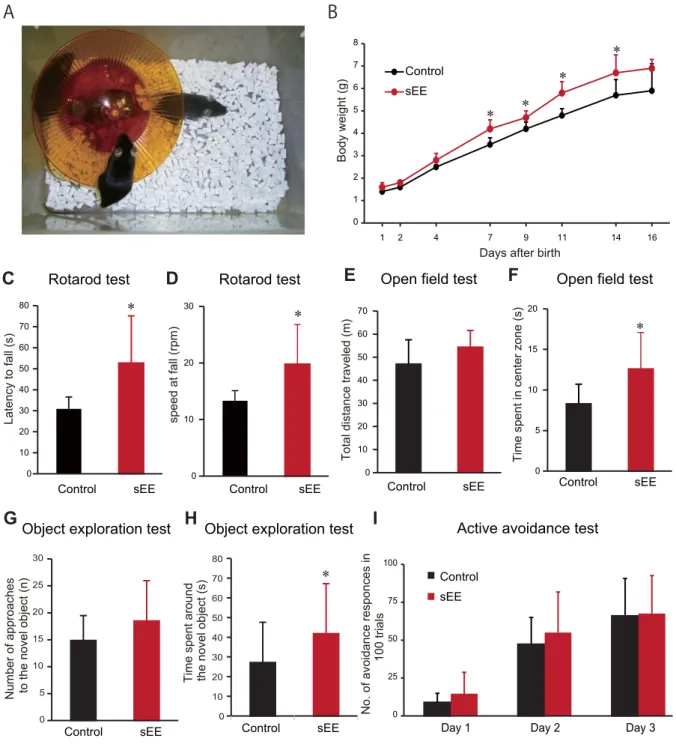
(Fig. 1B-I), eight to fourteen male pups from 14 births by 3 dams per condition were
109
randomly assigned to each experimental group. In the other experiments (Fig. 2-6), four
110
to six female pups from 2-3 dams per condition were randomly assigned to each
111
experimental group. All animal experiments were approved by the Institutional Animal
112
Care and Use Committee of Showa University (Permit Number: 56011), which operates
6
in accordance with the Japanese Government guidelines for the care and use of
114
laboratory animals. All surgical procedures were performed under 4% isoflurane
115
anesthesia, and all efforts were made to minimize suffering.
116 117
Behavioral tests 118
C57BL/6 male mice housed under control or sEE conditions for 10–14 weeks
119
were used for behavioral tests. The open field and novel object tests were performed to
120
assess anxiety-like behavior for two days [2]. The active avoidance test was performed
121
to evaluate memory function on days 2–4 after the novel object test [19]. Motor
122
function was analyzed using the rotarod test [26] one week after the active avoidance
123
test.
124 125
Open field test 126
The aim of the open field test was to assess anxiety and exploratory drive in
127
animals based on their natural tendency for exploration and self-protection as described
128
previously [31]. Each mouse was placed in the center of a peripheral zone within a 40 ×
129
40 cm square arena facing a 40 cm wall and allowed to explore the apparatus for 10 min.
130
The movement of the mouse in the open field arena was continuously recorded using a
131
computerized SMART video-tracking system (version 2.5, Panlab, Barcelona, Spain).
132
The arena was virtually subdivided into a central zone as well as peripheral zones located
133
within 10 cm from the wall, and the time spent in the central zone was measured as an
134
indicator of anxiety. The total distance traveled by the mouse was also measured to assess
135
animal activity.
136 137
7 Novel object test
138
The novel object test examined the ability of the mice to explore a novel object
139
in a familiar environment, as their behavior when doing so reflects the extent of their
140
anxiety. One day after the open field test, the mouse was again positioned in the center of
141
the open field arena that now contained a single novel object (a white container) located
142
in the center of the box, and it was allowed to explore the object for 8 min. The mouse
143
was considered to have approached the novel object when it touched it and to have spent
144
time around the object when it was within 10 cm of it.
145 146
Active avoidance test 147
In the active avoidance test, mice were examined for their ability to associate
148
conditioned and unconditioned stimuli. The experiment was performed using an active
149
avoidance apparatus (Panlab) that consisted of a soundproof box (Le26),
150
programmer/shocker (LE2708), and software (SHUTAVOID). Each trial consisted of 10
151
s of exposure to a conditioned stimulus (light) followed by a 5 s unconditioned stimulus
152
(electrical shock with 60 V delivered through the grid floor). Crossing to the other
153
compartment during the conditioned stimulus was considered an act of avoidance, while
154
failure to cross until the unconditioned stimulus (the shock) was considered an error. Each
155
test was followed by a 20–40 s intertrial interval, with each session consisting of 100 tests.
156
The number of avoidance responses within the 100 tests reflected the mouse’s memory
157
function.
158 159
Rotarod test 160
8
Motor performance was evaluated using a rotarod apparatus (Panlab). Mice were
161
placed for 1 min on rod of the apparatus, which was rotated starting at 4 rpm. The rotation
162
was then accelerated over 2 min to reach a final speed of 40 rpm. The animals were
163
allowed to stay on the rod for a maximum of 2 min, and the time and speed at falling were
164
recorded. The test was repeated five times, and scores from three trials were averaged
165
after excluding the maximum and minimum scores.
166 167
Cancer cell line 168
The Lewis lung carcinoma cell line (3LL) was obtained from the National
169
Institutes of Biomedical Innovation, Health and Nutrition (Osaka, Japan) and maintained
170
in RPMI 1640 medium supplemented with glutamine (2 mM), penicillin (100 U/ml),
171
streptomycin (100 Ɋg/ml), and 10% (v/v) heat-inactivated fetal bovine serum (Thermo
172
Fisher Scientific, Waltham, MA, USA).
173 174
Cancer models 175
Murine cancer models were established as described previously [1]. Briefly,
176
mice living under control or sEE conditions for 14 weeks were injected with 3LL tumor
177
cells (5 × 10⁴) suspended in 0.2 ml of serum-free MEM (Sigma, Saint Louis, MO, USA)
178
subcutaneously in the right flanks to develop solid intra-abdominal tumors
(tumor-179
bearing model). Mice were sacrificed on day 16, and solid tumors were collected and
180
weighed. Alternatively, 3LL cells (1 × 10⁵) were injected into the tail vein to form
181
colonies of metastatic cells in the lung (metastasis model). On day 9 post injection, mice
182
were anesthetized with isoflurane and examined for pulmonary metastatic nodules using
183
computed tomography (CT). To analyze the effect of PD-1 blockade in the sEE model,
9
3LL cells (5 × 10⁴) were injected into the tail veins of mice, and 0.1 mg of anti-mouse
185
PD-1 antibody (clone 4H2) was administered intraperitoneally 7 and 14 days post tumor
186
transplantation. The anti-mouse PD-1 antibody was kindly provided from Ono
187
Pharmaceutical Co., Ltd (Osaka, Japan) [24]. The nodules were visualized and counted
188
in 3D lung micro-CT images (R_mCT2 micro-CT, Rigaku Corporation, Tokyo, Japan)
189
obtained with the following CT scanning parameters: field of view, 24 (φ24 mm × H19
190
mm); tube voltage, 90 kV; and tube current, 160 μA. Humane endpoints were established
191
if tumors had reached 2000 mm3 or more, or if pulmonary metastatic nodules had reached
192
50 or more, or if mice had presented piloerection, stereotyped or aggressive behaviors,
193
pain indicative postures, lack of activity, and tremors or convulsions. Animals were
194
monitored every day on weekdays to assess room temperature and humidity, and their
195
health was assessed by scientists and vivarium technicians with more than 5 years of
196
experience through evaluation of their behavior and general appearance. Once animals
197
reached endpoint criteria, they were euthanized by cervical dislocation within 24 h. All
198
surviving animals were euthanized 36 days after tumor transplantation.
199 200
Body temperature measurement 201
Mouse body temperature was monitored using DST nano-T temperature loggers
202
(17 mm × 6 mm, 1 g; Star-Oddi, Gardabaer, Iceland). The loggers were implanted in the
203
abdomen, and body temperature was continuously measured at 30 min intervals.
204 205
Fat tissue collection and real-time polymerase chain reaction (RT-PCR) 206
Fat tissues including interscapular brown adipose tissue (iBAT), retroperitoneal
207
white adipose tissue (rpWAT), and gonadal white adipose tissue (gWAT) were collected
10
from 24– to 35-week-old mice housed in control and EE conditions. Tissues were
209
weighed, photographed, snap-frozen in liquid nitrogen, and stored at -80°C until analysis.
210
Total RNA was isolated from fat tissues using RNA-BEE (Tel-Test, Friendswood, TX,
211
USA) and an RNeasy Mini Kit (Qiagen, Hilden, Germany), and was then reverse
212
transcribed into cDNA using a PrimeScript RT reagent Kit (Takara Bio Inc., Shiga, Japan).
213
RT-PCR was performed with primers specific for Ucp1 (which codes for uncoupling
214
protein 1 [UCP1]),Adrb3(β-adrenergic receptor 3), Ppargc1a (peroxisome
proliferator-215
activated receptor γ coactivator 1-α), and Gapdh (glyceraldehyde 3-phosphate 216
dehydrogenase); the primer sequences are shown in Table 1. The reactions were
217
performed with SYBR Premix Ex Taq II reagent (Takara Bio. Inc.) in an ABI PRISM
218
7900 sequence detection system (Applied Biosystems, Foster City, CA, USA). Relative
219
gene expression was calculated using the comparative ΔCt method after normalization to
220
the Ct levels of the housekeeping gene (Gapdh) and then to the levels of each gene in the
221
control group.
222 223
Statistical analysis 224
The significance of the differences between the sEE and control groups was
225
evaluated using the unpaired t-test based on at least two independent experiments.
226
Survival rate differences between the sEE and sEE+anti-PD-1 antibody group were
227
evaluated using the log rank test. The BellCurve for Excel software (Social Survey
228
Research Information Co. Ltd., Tokyo, Japan) was used for statistical analyses. P-values
229
<0.05 were considered statistically significant.
230 231
Results
11 233
Establishment of an sEE 234
For good reproducibility of mechanistic studies, we established sEE conditions
235
in lieu of the conventional and more complex EEs; the sEEs included only a shelter and
236
exercise equipment (Fig. 1A). First, we tested whether the sEE had the same beneficial
237
effects on motor, emotional, and cognitive functions as the complex EE. Mouse pups
238
housed in our sEEs gained significantly more weight than control pups (Fig. 1B),
239
suggesting that dams in the sEE had better nursing abilities. After being housed under the
240
control or sEE conditions, mice were examined using a battery of behavioral tests. The
241
rotarod test demonstrated that the sEE improved motor function (Fig. 1C and D), and the
242
open field and object exploration tests showed that the sEE reduced anxiety-like behavior
243
(Fig. 1E–H), similar to results obtained in complex EEs [29]. However, active avoidance
244
tests indicated that the sEE did not improve memory. These data collectively showed that
245
the sEE exerted the same beneficial effects as the complex EE, with the exception of
246
memory function, suggesting that our sEE model could be a good tool for studying the
247
anticancer influence of eustress. Because we found that male mice often fight in the sEE
248
(similar to their behavior in complex EEs) [28], we used female mice in the subsequent
249
experiments.
250 251
Living in an sEE slowed tumor progression and suppressed metastasis in mice 252
To explore whether the sEE could suppress tumor growth, 3LL cells were
253
injected subcutaneously to induce solid intra-abdominal carcinomas. Mice living in the
254
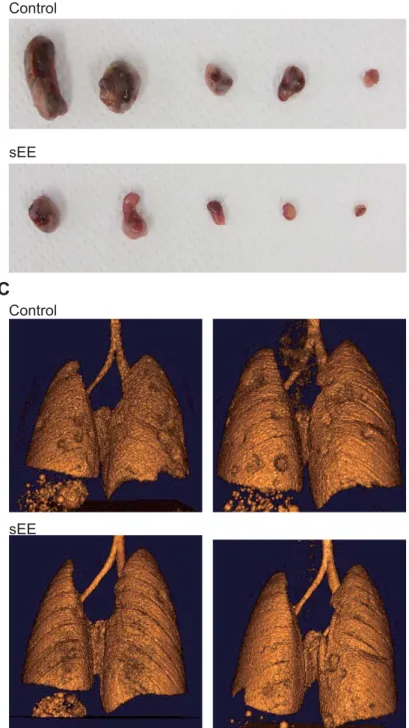
sEE exhibited significantly slower tumor growth, with tumor weights reduced by 70.7%
12
compared wtih the control group (Fig. 2A and B). These results indicated that the sEE
256
inhibited carcinogenesis.
257
To further explore the cancer-suppressing effects of the sEE, we analyzed the
258
development of spontaneous metastases in the lungs. Micro-CT analysis indicated that
259
the sEE significantly decreased the number of tumor nodules in the lungs (Fig. 2C),
260
suggesting that the sEE (similar to the complex EE) prevented tumor spreading.
261 262
The EE increased body temperature in mice during the transition from darkness to light 263
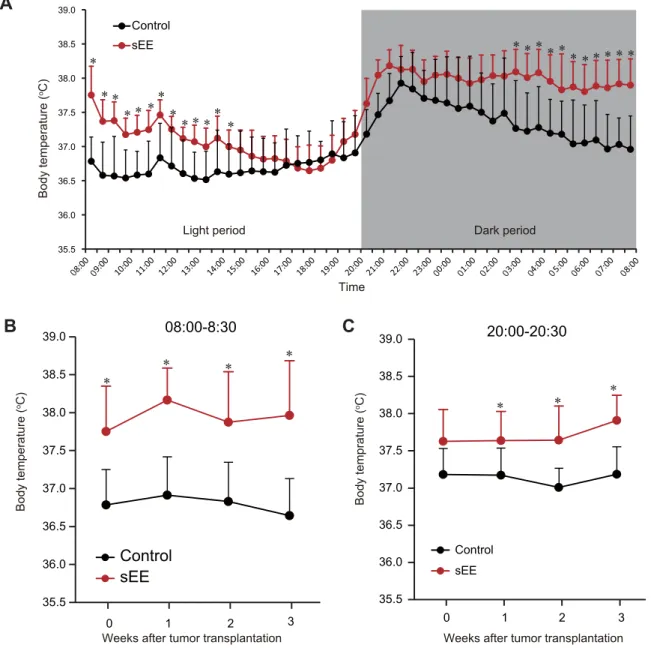
To test whether the maintenance of body temperature could be affected by the
264
sEE as in the complex EE, we monitored the body temperature in real time. As expected,
265
tumor-free mice living in an sEE showed higher body temperatures than control mice (Fig.
266
3A). Increased thermogenesis was also observed in tumor-bearing sEE mice compared
267
with control mice during the transition from light to darkness and from darkness to light
268
(Fig. 3B and C).
269 270
EE-housed mice had a reduced BAT mass at the point of transition from light to darkness 271
To examine whether the sEE affected energy metabolism, we assessed fat
272
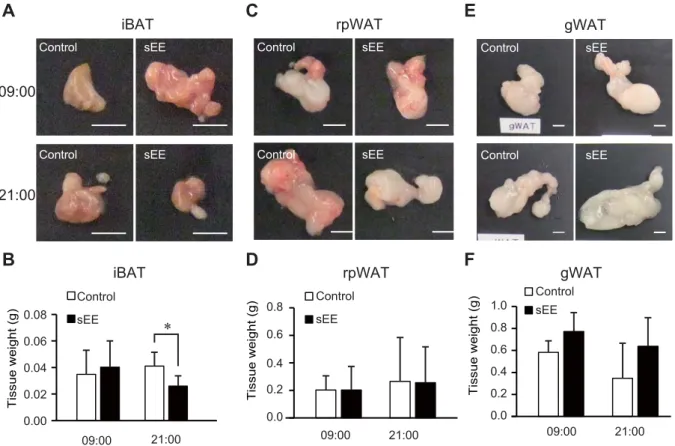
deposition in sEE and control mice. As shown in Fig. 4A and B, sEE mice had a
273
significant (36.6%) reduction in their iBAT mass at the point of transition from light to
274
darkness compared with control mice. However, there was no statistically significant
275
difference between the groups in rpWAT (Fig. 4C and D) and gWAT; gWAT tended to
276
increase in sEE mice (Fig. 4E and F). These data suggest that sEE-housed mice may
277
consume iBAT to generate heat at the point of transition from light to darkness, which
278
increases body temperature.
13
280
The sEE increased Ucp1 and Adrb3 mRNA expression in iBAT at the point of transition 281
from light to darkness 282
Next, we analyzed whether an sEE could modulate the mRNA expression level
283
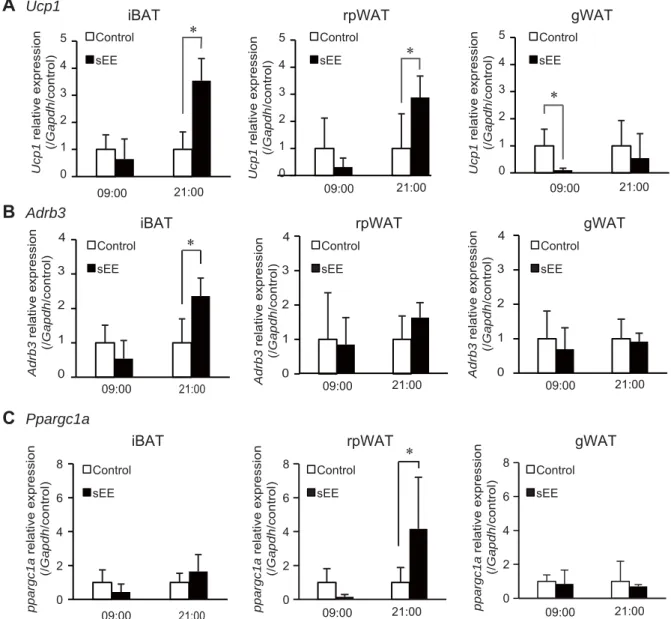
of Ucp1. In sEE mice, the expression of Ucp1 mRNA was increased 3.5-fold in iBAT
284
and 2.9-fold in rpWAT at the point of transition from light to darkness, whereas its
285
expression in gWAT was downregulated to 0.1-fold at the point of transition from
286
darkness to light compared with control mice (Fig. 5A). As β-adrenergic signaling plays
287
an important role in the metabolism of BAT, we also assessed the expression of the Adrb3
288
mRNA and found that it was increased by 2.4-fold in the iBAT of sEE mice at the point
289
of transition from light to darkness compared with control mice (Fig. 5B) PGC-1α is a
290
BAT-specific marker encoded by the Ppargc1a gene, which mediates phenotypic
291
transition from energy storage to energy expenditure [9], and we found that the expression
292
of this gene was upregulated by 4.2-fold in the rpWAT of sEE mice at the point of
293
transition from light to darkness (Fig. 5C). Overall, these data suggest that an EE causes
294
not only thermogenesis in iBAT but may also affect the white-to-brown fat transformation
295
in rpWAT.
296 297
Immune checkpoint blockade and an sEE have additive effects on the survival of mice 298
implanted 3LL cells 299
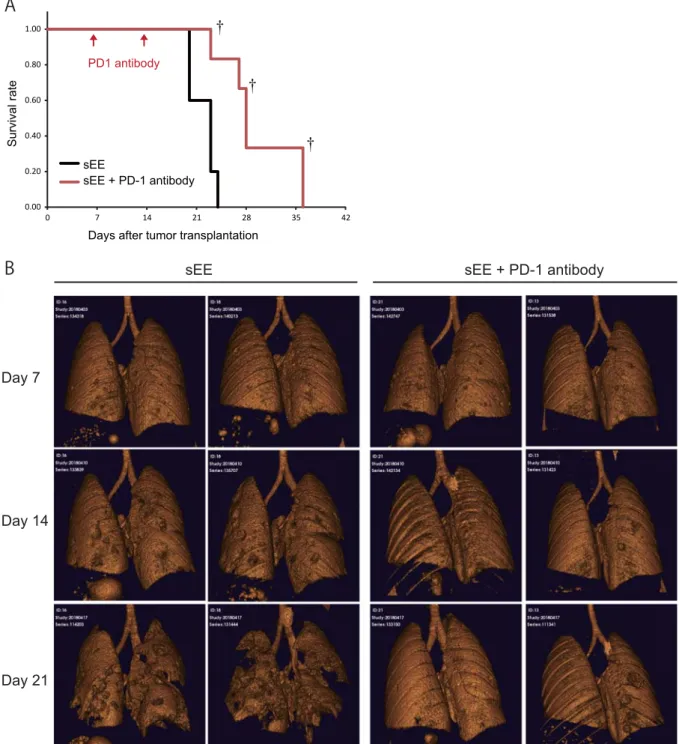
To test whether an sEE can potentiate cancer immunotherapy, mice in our
300
spontaneous metastasis model were housed in an sEE with or without anti-PD-1 therapy.
301
As shown in Fig. 6A, the administration of anti-PD-1 antibody significantly improved the
302
survival rate when combined with an sEE. Micro-CT analysis indicated that the
14
1 therapy suppressed the development of lung tumor nodules (Fig. 6B). These data
304
strongly suggest that the sEE enhanced immune system activity around tumors that are
305
sensitive to PD-1 blockade.
306 307
Discussion
308 309
Ours is the first study showing that the EE increased body temperature at the
310
point of transition from darkness to light and that this could be associated with beneficial
311
effects on cancer, thus suggesting a mechanism for cancer prevention via the EE. Despite
312
a long history of anecdotal and epidemiological reports showing that hyperthermia is
313
associated with anticancer effects, systematic evidence has been poor. The results of our
314
study indicate that, similar to the complex EE, the sEE increases body temperature even
315
after tumor transplantation and that it is associated with the upregulation of
metabolism-316
related genes as well as the inhibition of tumor growth and metastasis. This notion is
317
consistent with earlier findings indicating that increased body temperature may influence
318
the tumor microenvironment through temperature-dependent mechanisms, which in turn
319
affect tumor metabolism and blood supply as well as anticancer immune reactions
320
including lymphocyte infiltration and expression of pro-inflammatory cytokines [20]. Our
321
previous study showing that continuous intake of I. obliquus extract can potentially
322
suppress cancer development through maintenance of body temperature [1] supports the
323
notion of an association between oncogenesis and thermogenesis. Furthermore, it was
324
found that maintaining mice at a higher temperature (30–31°C) slows tumor growth via
325
the reduction of immunosuppressive T cells [11]. These data are in agreement with the
15
previous finding showing that hypothermia activates adipocytes to stimulate tumor
327
growth [7] and suggest that the upregulation of body temperature in an EE could play a
328
critical role in tumor suppression.
329
A previous study showed that a complex EE decreased adiposity, stimulated
330
energy expenditure, and increased brown-like cells in white fat [4]; therefore, an sEE may
331
produce similar effects. Interestingly, a reduction in iBAT mass was observed only at the
332
point of transition from light to darkness, not at the point of transition from darkness to
333
light; this may be attributed to specific circadian signals from the hypothalamus that shape
334
adipose tissue metabolism and can influence glucose uptake and energy expenditure in
335
BAT [17]. BAT dissipates energy in the form of heat through thermogenesis in a process
336
primarily mediated by the mitochondrial protein UCP1. In humans, mRNA expression of
337
UCP1 is highest just before waking up and gradually decreases while awake [12],
338
indicating that BAT participates in glucose clearance. In this scenario, the EE may
339
activate the sympathetic nervous system to maintain glucose consumption and calorie
340
burning in BAT at the start of the active period. In this study, the body temperature of
341
control mice immediately increased after waking up (the point of transition from light to
342
darkness) and gradually decreased during the waking period, reaching the lowest level at
343
the point of transition from darkness to light (Fig. 3A). On the other hand, the body
344
temperature of the mice in the sEE was maintained at a higher level while they were
345
awake and gradually decreased after the point of transition from darkness to light but was
346
still at a higher level than in the control mice. This delayed decrease of body temperature
347
in sEE mice during the daily light cycle could be explained by rapid consumption of iBAT
348
at the point of waking and upregulated consumption of iBAT while they were awake. The
349
weight of iBAT in sEE mice was significantly decreased at 21:00 (the point of transition
16
from light to darkness) but returned to the same level at 08:00 (the point of transition from
351
darkness to light) (Fig. 4A and B). These data support the hypothesis that sEE stimulates
352
energy metabolism.
353
Notably, the upregulation of UCP1, which is involved in the signaling pathway
354
dissipating the mitochondrial proton gradient as well as in heat generation, was only
355
detected at the point of transition from light to darkness. This finding is consistent with
356
the observation that BAT in humans and rodents exhibits rhythmicity in glucose
357
consumption, which peaks before waking [17]. Moreover, the temporal oscillation of
358
UCP1 levels in BAT explants from healthy adults is inversely correlated with the
359
expression pattern of the nuclear receptor REV-ERBα, which is known to participate in
360
the circadian regulation in adipose tissue by directly suppressing Ucp1 expression and
361
thermogenic capacity [17]. Together with our results, these data collectively suggest that
362
the antitumor effects of eustress modeled by the EE are mediated by the regulation of
363
thermogenesis via pathways that are similar in both rodents and humans.
364
Although immunotherapy is a promising treatment, most patients do not show
365
long-lasting remission; this underscores the need to better understand the variation in
366
benefits of PD-1 pathway modulation among patients. Recent studies found that the gut
367
microbiome influences the efficacy of PD-1-based immunotherapy against melanoma and
368
other epithelial tumors [10, 14, 22]. Surprisingly, obesity is also reported to have a
369
positive effect on the efficacy of PD-1 antibody therapy [30], while another study showed
370
that β-adrenergic signaling in mice undermined checkpoint inhibitor efficacy [3]. In our
371
study, we found that PD-1 antibody therapy improved the survival rate of sEE mice
372
implanted with tumor cells. Although further experiments are required to clarify the
17
mechanism of action, our model can be a useful tool because of its reproducibility and
374
the fact that the mice are immunologically naïve.
375
In conclusion, our sEE model produces results that are consistent with those
376
obtained using complex EEs regarding mouse behavior and anticancer effects. Thus, the
377
sEE can potentially be used in further studies to standardize EE conditions. The sEE
378
promoted suppression of tumor growth and lung metastasis, which could correspond to
379
the increase in body temperature and iBAT mass, especially during the transition from
380
darkness to light. Our findings indicate that the sEE model could be a useful tool for
381
studying the antitumor effects of eustress, in combination with existing chemotherapeutic
382
agents such as immune checkpoint inhibitors. The sEE provides motor and social
383
stimulations to the animals, which mimics a social environment for an active lifestyle of
384
humans with adequate physical exercises and supportive social interactions. Therefore,
385
our data potentially open new perspectives in cancer prevention and treatment.
386 387
Acknowledgments
388 389
The authors would like to thank H. Matsuhashi for technical assistance with the
390
experiments and wish to acknowledge Ono Pharmaceutical Co., Ltd for kindly providing
391
the anti-mouse PD-1 antibody.
392 393 394
18
References
395 396
1. Arata S, Watanabe J, Maeda M, Yamamoto M, Matsuhashi H, 397
Mochizuki M, Kagami N, Honda K, Inagaki M. 2016. Continuous 398
intake of the Chaga mushroom (Inonotus obliquus) aqueous extract 399
suppresses cancer progression and maintains body temperature in 400
mice. Heliyon;2:e00111. 401
2. Bailey KR, Crawley JN. Anxiety-Related Behaviors in Mice: CRC 402
Press/Taylor & Francis; 2009. 403
3. Bucsek MJ, Qiao G, MacDonald CR, Giridharan T, Evans L, 404
Niedzwecki B, Liu H, Kokolus KM, Eng JW, Messmer MN, Attwood K, 405
Abrams SI, Hylander BL, Repasky EA. 2017. beta-Adrenergic 406
Signaling in Mice Housed at Standard Temperatures Suppresses an 407
Effector Phenotype in CD8(+) T Cells and Undermines Checkpoint 408
Inhibitor Therapy. Cancer Res;77:5639-5651. 409
4. Cao L, Choi EY, Liu X, Martin A, Wang C, Xu X, During MJ. 2011. 410
White to brown fat phenotypic switch induced by genetic and 411
environmental activation of a hypothalamic-adipocyte axis. Cell 412
metabolism;14:324-338. 413
5. Cao L, Liu X, Lin EJ, Wang C, Choi EY, Riban V, Lin B, During MJ. 414
2010. Environmental and genetic activation of a brain-adipocyte 415
BDNF/leptin axis causes cancer remission and inhibition. Cell;142:52-416
64. 417
6. Chida Y, Hamer M, Wardle J, Steptoe A. 2008. Do stress-related 418
psychosocial factors contribute to cancer incidence and survival? Nat 419
Clin Pract Oncol;5:466-475. 420
7. Du G, Zhao B, Zhang Y, Sun T, Liu W, Li J, Liu Y, Wang Y, Li H, Hou 421
X. 2013. Hypothermia activates adipose tissue to promote malignant 422
lung cancer progression. PLoS One;8:e72044. 423
8. During MJ, Liu X, Huang W, Magee D, Slater A, McMurphy T, Wang 424
C, Cao L. 2015. Adipose VEGF Links the White-to-Brown Fat Switch 425
With Environmental, Genetic, and Pharmacological Stimuli in Male 426
Mice. Endocrinology;156:2059-2073. 427
19
9. Fernandez-Marcos PJ, Auwerx J. 2011. Regulation of PGC-1alpha, a 428
nodal regulator of mitochondrial biogenesis. The American journal of 429
clinical nutrition;93:884s-890. 430
10. Gopalakrishnan V, Spencer CN, Nezi L, Reuben A, Andrews MC, 431
Karpinets TV, Prieto PA, Vicente D, Hoffman K, Wei SC, Cogdill AP, 432
Zhao L, Hudgens CW, Hutchinson DS, Manzo T, Petaccia de Macedo 433
M, Cotechini T, Kumar T, Chen WS, Reddy SM, Szczepaniak Sloane R, 434
Galloway-Pena J, Jiang H, Chen PL, Shpall EJ, Rezvani K, Alousi AM, 435
Chemaly RF, Shelburne S, Vence LM, Okhuysen PC, Jensen VB, 436
Swennes AG, McAllister F, Marcelo Riquelme Sanchez E, Zhang Y, Le 437
Chatelier E, Zitvogel L, Pons N, Austin-Breneman JL, Haydu LE, 438
Burton EM, Gardner JM, Sirmans E, Hu J, Lazar AJ, Tsujikawa T, 439
Diab A, Tawbi H, Glitza IC, Hwu WJ, Patel SP, Woodman SE, Amaria 440
RN, Davies MA, Gershenwald JE, Hwu P, Lee JE, Zhang J, Coussens 441
LM, Cooper ZA, Futreal PA, Daniel CR, Ajami NJ, Petrosino JF, 442
Tetzlaff MT, Sharma P, Allison JP, Jenq RR, Wargo JA. 2018. Gut 443
microbiome modulates response to anti-PD-1 immunotherapy in 444
melanoma patients. Science;359:97-103. 445
11. Kokolus KM, Capitano ML, Lee CT, Eng JW, Waight JD, Hylander BL, 446
Sexton S, Hong CC, Gordon CJ, Abrams SI, Repasky EA. 2013. 447
Baseline tumor growth and immune control in laboratory mice are 448
significantly influenced by subthermoneutral housing temperature. 449
Proc Natl Acad Sci U S A;110:20176-20181. 450
12. Lee P, Bova R, Schofield L, Bryant W, Dieckmann W, Slattery A, 451
Govendir MA, Emmett L, Greenfield JR. 2016. Brown Adipose Tissue 452
Exhibits a Glucose-Responsive Thermogenic Biorhythm in Humans. 453
Cell metabolism;23:602-609. 454
13. Li G, Gan Y, Fan Y, Wu Y, Lin H, Song Y, Cai X, Yu X, Pan W, Yao M, 455
Gu J, Tu H. 2015. Enriched environment inhibits mouse pancreatic 456
cancer growth and down-regulates the expression of mitochondria-457
related genes in cancer cells. Sci Rep;5:7856. 458
14. Matson V, Fessler J, Bao R, Chongsuwat T, Zha Y, Alegre ML, Luke 459
JJ, Gajewski TF. 2018. The commensal microbiome is associated with 460
anti-PD-1 efficacy in metastatic melanoma patients. Science;359:104-461
108. 462
20
15. Nachat-Kappes R, Pinel A, Combe K, Lamas B, Farges MC, Rossary A, 463
Goncalves-Mendes N, Caldefie-Chezet F, Vasson MP, Basu S. 2012. 464
Effects of enriched environment on COX-2, leptin and eicosanoids in a 465
mouse model of breast cancer. PLoS One;7:e51525. 466
16. Nduka CC, Puttick M, Coates P, Yong L, Peck D, Darzi A. 2002. 467
Intraperitoneal hypothermia during surgery enhances postoperative 468
tumor growth. Surgical endoscopy;16:611-615. 469
17. Ninel Hansen S, Peics J, Gerhart-Hines Z. 2017. Keeping fat on time: 470
Circadian control of adipose tissue. Exp Cell Res;360:31-34 471
18. Nithianantharajah J, Hannan AJ. 2006. Enriched environments, 472
experience-dependent plasticity and disorders of the nervous system. 473
Nat Rev Neurosci;7:697-709. 474
19. Peeler DF. 1987. Active avoidance performance in genetically defined 475
mice. Behavioral and neural biology;48:83-89. 476
20. Repasky EA, Evans SS, Dewhirst MW. 2013. Temperature matters! 477
And why it should matter to tumor immunologists. Cancer Immunol 478
Res;1:210-216. 479
21. Ribas A, Wolchok JD. 2018. Cancer immunotherapy using checkpoint 480
blockade. Science;359:1350-1355. 481
22. Routy B, Le Chatelier E, Derosa L, Duong CPM, Alou MT, Daillere R, 482
Fluckiger A, Messaoudene M, Rauber C, Roberti MP, Fidelle M, 483
Flament C, Poirier-Colame V, Opolon P, Klein C, Iribarren K, 484
Mondragon L, Jacquelot N, Qu B, Ferrere G, Clemenson C, Mezquita 485
L, Masip JR, Naltet C, Brosseau S, Kaderbhai C, Richard C, Rizvi H, 486
Levenez F, Galleron N, Quinquis B, Pons N, Ryffel B, Minard-Colin V, 487
Gonin P, Soria JC, Deutsch E, Loriot Y, Ghiringhelli F, Zalcman G, 488
Goldwasser F, Escudier B, Hellmann MD, Eggermont A, Raoult D, 489
Albiges L, Kroemer G, Zitvogel L. 2018. Gut microbiome influences 490
efficacy of PD-1-based immunotherapy against epithelial tumors. 491
Science;359:91-97. 492
23. Sanchis-Gomar F, Garcia-Gimenez JL, Perez-Quilis C, Gomez-Cabrera 493
MC, Pallardo FV, Lippi G. 2012. Physical exercise as an epigenetic 494
modulator: Eustress, the "positive stress" as an effector of gene 495
expression. Journal of strength and conditioning research;26:3469-496
3472. 497
21
24. Selby MJ, Engelhardt JJ, Johnston RJ, Lu LS, Han M, Thudium K, 498
Yao D, Quigley M, Valle J, Wang C, Chen B, Cardarelli PM, Blanset D, 499
Korman AJ. 2016. Preclinical Development of Ipilimumab and 500
Nivolumab Combination Immunotherapy: Mouse Tumor Models, In 501
Vitro Functional Studies, and Cynomolgus Macaque Toxicology. PLoS 502
One;11:e0161779. 503
25. Sharpe AH, Pauken KE. 2018. The diverse functions of the PD1 504
inhibitory pathway. Nature reviews Immunology;18:153-167. 505
26. Shiotsuki H, Yoshimi K, Shimo Y, Funayama M, Takamatsu Y, Ikeda 506
K, Takahashi R, Kitazawa S, Hattori N. 2010. A rotarod test for 507
evaluation of motor skill learning. Journal of neuroscience 508
methods;189:180-185. 509
27. Song Y, Gan Y, Wang Q, Meng Z, Li G, Shen Y, Wu Y, Li P, Yao M, Gu 510
J, Tu H. 2017. Enriching the Housing Environment for Mice Enhances 511
Their NK Cell Antitumor Immunity via Sympathetic Nerve-Dependent 512
Regulation of NKG2D and CCR5. Cancer Res;77:1611-1622. 513
28. Van Loo PL, Van Zutphen LF, Baumans V. 2003. Male management: 514
Coping with aggression problems in male laboratory mice. Laboratory 515
animals;37:300-313. 516
29. van Praag H, Kempermann G, Gage FH. 2000. Neural consequences of 517
environmental enrichment. Nat Rev Neurosci;1:191-198. 518
30. Wang Z, Aguilar EG, Luna JI, Dunai C, Khuat LT, Le CT, Mirsoian A, 519
Minnar CM, Stoffel KM, Sturgill IR, Grossenbacher SK, Withers SS, 520
Rebhun RB, Hartigan-O'Connor DJ, Mendez-Lagares G, Tarantal AF, 521
Isseroff RR, Griffith TS, Schalper KA, Merleev A, Saha A, Maverakis 522
E, Kelly K, Aljumaily R, Ibrahimi S, Mukherjee S, Machiorlatti M, 523
Vesely SK, Longo DL, Blazar BR, Canter RJ, Murphy WJ, Monjazeb 524
AM. 2018. Paradoxical effects of obesity on T cell function during tumor 525
progression and PD-1 checkpoint blockade. Nat Med. 526
31. Watanabe J, Shetty AK, Hattiangady B, Kim DK, Foraker JE, Nishida 527
H, Prockop DJ. 2013. Administration of TSG-6 improves memory after 528
traumatic brain injury in mice. Neurobiol Dis;59:86-99. 529
32. Westwood JA, Darcy PK, Kershaw MH. 2013. Environmental 530
enrichment does not impact on tumor growth in mice. 531
F1000Research;2:140. 532
22 534
23
Figures and legends
535
Fig. 1.
536
Effects of the simplified enriched environment (sEE) on mouse behavior. A, A
537
representative image of mice housed in the sEE. B, Mean body weights of newborn mice
538
housed under control or sEE conditions (n = 12-13). C–I, Behavioral tests (n = 8–
539
14/group): rotarod tests to measure motor functions (C, D), open field test (E, F) and
540
novel object test (G, H) to assess anxiety-like behavior, and the active avoidance test (I)
541
to assess recognition memory. The data are presented as the mean ± standard deviation;
542
*P < 0.05 versus the control group.
543 544
Fig. 2.
545
Housing in a simplified enriched environment (sEE) suppresses tumor development and
546
metastasis in mice implanted with Lewis lung carcinoma (3LL) cells. Mice housed under
547
control or sEE conditions were injected with 3LL cells subcutaneously in their right flanks,
548
and the resulting tumors were excised and weighed. A, Representative images of the
549
excised carcinomas. B, Mean weights of the solid tumors on day 16 after 3LL cell
550
implantation. C, Representative computed tomography (CT) images of lungs containing
551
carcinoma nodules from mice that were living under control or sEE conditions and
552
received intravenous injection of 3LL cells. D, The numbers of nodules measured on the
553
lung CT images on day 9 post cancer-cell injection; each dot represents a single mouse,
554
while lines show mean values (n = 5 per group; *P < 0.05).
555 556
Fig. 3.
24
The simplified enriched environment (sEE) is associated with a higher body temperature
558
in mice. A, Average body temperatures of mice living under control or sEE conditions
559
before tumor implantation. Significantly higher body temperatures are observed in sEE
560
mice than in control mice. B and C, Average body temperature of carcinoma-bearing
561
mice during the transition from light to darkness (08:00–08:30; B) and from darkness to
562
light (20:00–20:30; C). The data are expressed as the mean ± standard deviation (n = 5
563
per group; *P < 0.05).
564 565
Fig. 4.
566
The simplified enriched environment (sEE) reduces brown adipose tissue mass at the
567
point of transition from light to darkness. Representative images of interscapular brown
568
adipose tissue (iBAT; A), retroperitoneal white adipose tissue (rpWAT; C), and
569
gonadal white adipose tissue (gWAT; E) from mice housed under control or sEE
570
conditions. Mean weights of iBAT (B), rpWAT (D) and gWAT (F) at the point of
571
transition from light to darkness (09:00) and from darkness to light (21:00). The data are
572
expressed as the mean ± standard deviation (n = 4–5 per group; *P < 0.05).
573 574
Fig. 5.
575
The simplified enriched environment (sEE) increased Ucp1 and Adrb3 mRNA expression
576
in interscapular brown adipose tissue (iBAT) at the point of transition from light to
577
darkness. Mice living under control or sEE conditions were analyzed for gene expression
578
in iBAT, retroperitoneal white adipose tissue (rpWAT), and gonadal white adipose tissue
579
(gWAT)at the point of transition from light to darkness (09:00) and from darkness to
25
light (21:00). A, Ucp1. B, Adrb3. C, Ppargc1a. The data are expressed as the mean ±
581
standard deviation (n = 4–5 per group; *P < 0.05).
582 583
Fig. 6.
584
Immune checkpoint blockade using an anti-PD-1 antibody has a synergistic effect with
585
sEE on improving the survival of mice implanted with Lewis lung carcinoma cells. A,
586
Kaplan-Meier curves showing survival; P < 0.05, sEE vs. sEE+anti-PD-1 antibody. N=5–
587
6 per group. The † symbol indicates humane endpoint euthanasia. The other animals died
588
before meeting criteria for euthanasia. B, Representative computed tomography images
589
of mouse lungs containing carcinoma nodules on days 7, 14, and 21 post tumor
590
transplantation under sEE conditions with or without the administration of 0.1 mg
anti-591
PD-1 antibody 7 and 14 days post tumor transplantation.
592 593
Gene
symbol Species Forward (5′ to 3′) Reverse (5′ to 3′)
Product size (bp)
Ucp1 Mouse GGCATTCAGAGGCAAATCAGCT CAATGAACACTGCCACACCTC 151
Adrb3 Mouse TCGACATGTTCCTCCACCAA GATGGTCCAAGATGGTGCTT 144
Ppargc1a Mouse CCCTGCCATTGTTAAGACC TGCTGCTGTTCCTGTTTTC 161
Gapdh Mouse GCTACACTGAGGACCAGGTTGT CTCCTGTTATTATGGGGGTCTG 306
C D E F 0 10 20 30 40 50 60 70 80 0 10 20 30 0 10 20 30 40 50 60 70 0 5 10 15 20 0 5 10 15 20 25 30 0 10 20 30 40 50 60 70 80 0 25 50 75 100
Day 1 Day 2 Day 3
B 0 1 2 3 4 5 6 7 8
1 2 4 7 9 11 14 16
Control sEE
Body weight (g)
Days after birth
* * * * Rotarod test Control sEE Rotarod test
Latency to fall (s) speed at fall (rpm)
Control sEE
* *
Control sEE Open field test
Total distance traveled (m)
Control sEE
Time spent in center zone (s)
Open field test *
Object exploration test
G H
Control sEE
No. of avoidance responces in
the novel object (s)
Number of approaches
Time spent around
Object exploration test
Control sEE *
I
Control sEE
Active avoidance test
to the novel object (n)
A
Fig. 1. Watanabe J. et al. Experimental Animals
Control sEE
*
B
Tumor weight (g)
A
Control
sEE
*
Control sEE
D
Lung
n
o
dules
Fig. 2. Watanaeb J. et al. Experimental Animals
sEE Control
35.5 36.0 36.5 37.0 37.5 38.0 38.5 39.0
Control sEE
Fig. 3. Watanabe J. et al. Experimental Animals
Time
Body temperature (
oC)
Light period Dark period
*
A
* * * * *
* *
* * ***
* * * * ** * * * * *
B
Weeks after tumor transplantation
Control sEE
C 20:00-20:30
Control sEE 08:00-8:30
35.5 36.0 36.5 37.0 37.5 38.0 38.5 39.0
Weeks after tumor transplantation
0 1 2 3
35.5 36.0 36.5 37.0 37.5 38.0 38.5 39.0
Body temperature (
oC)
0 1 2 3
*
* * *
Body temprature (
oC) * *
*
0
Control sEE
Control sEE
A
09:00
21:00
iBAT rpWAT gWAT
0.00 0.02 0.04 0.06 0.08
0.0 0.2 0.4 0.6 0.8
0.0 0.2 0.4 0.6 0.8 1.0 Control
sEE
09:00 21:00 09:00 21:00 09:00 21:00
iBAT rpWAT gWAT
Tissue weight (g) Tissue weight (g) Tissue weight (g)
B
C
D
Control sEE
Control sEE
*
Control sEE
Control sEE
Control sEE
Control sEE
E
F
A iBAT rpWAT gWAT
Ucp1
relative expression (/Gapdh
/control)
B
C
Fig. 5. Watanabe J. et al. Experimental Animals
0 1 2 3 4 0 1 2 3 0 1 2 3 4 5 0 1 2 3 4 5 0 2 4 6 8 Ucp1 relative expression (/ Gapdh /control) Ucp1
relative expression (/Gapdh
/control)
Ucp1
09:00 21:00 09:00 21:00 09:00 21:00
4
5 *
*
*
09:00 21:00 09:00 21:00 09:00 21:00
0 1 2 3 4 0 1 2 3 4 Adrb3 relative expression (/ Gapdh /control) Adrb3 relative expression (/ Gapdh /control) Adrb3 relative expression (/ Gapdh /control) Adrb3
iBAT rpWAT gWAT
*
09:00 21:00 09:00 21:00 09:00 21:00
Ppargc1a ppargc1a relative expression (/ Gapdh /control) 0 2 4 6 8 ppargc1a relative expression (/ Gapdh /control) 0 2 4 6 8 ppargc1a relative expression (/ Gapdh /control) *
iBAT rpWAT gWAT
Control sEE Control sEE Control sEE Control sEE Control sEE Control sEE Control sEE Control sEE Control sEE
B A
Fig. 6. Watanabe J. et al. Experimental Animals
0.00 0.20 0.40 0.60 0.80 1.00
0 7 14 21 28 35 42
Surv
iv
al
rate
Days after tumor transplantation sEE
sEE + PD-1 antibody
PD1 antibody
† †
†
sEE sEE + PD-1 antibody
Day 7
Day 14