Address for correspondence Kalpesh C. Ashara
School of Pharmacy, RK University Rajkot, Gujarat, India
Email: [email protected]
Review Article
Emulgel: A novel drug delivery system
Introduction
Topical therapy has been used for centuries for the treatment of dermatological disorders. The spectrum of drugs/agents applied directly to the skin ranges from antiinflammatory, antiseptic, antibacterial, antifungal, antiviral, anti-acne, antipigmentary, anesthetic compounds to skin emollients and protectants. Topical route has the main advantage of direct delivery of drug to the target tissue i.e. skin and mucous membranes, bypassing the firs-pass effect. However, skin permeation of a drug moiety from topical formulation is a multi-step process. It starts as release from the dosage form, diffusion through adhesive layer if it is present between the skin and drug loaded matrix, sorption or adhesion through stratum corneum, diffusion through stratum corneum, entry into the layer of the dermis (Figure 1).1 Stratum corneum is barrier which prevents drug penetration.
Topical formulations can vary in consistency from solid, semisolid to liquid depending on their physicochemical properties. Besides the active substance (drug), each formulation has many non-medicinal ingredients (excipients) with diverse pharmacological functions. Sometimes more than one formulations can be combined to enhance the drug delivery. When a classical gel formulation is combined with an emulsion it is called EMULGEL.2
Emulsion
Emulsions are phases of two or more immiscible liquids. The one phase is dispersed into dispersed medium. Several types as oil in water (O/W), water in oil (W/O), oil in oil (O/O), micro-emulsions, double and multiple emulsions, mixed emulsions etc. for preparation and stability of emulsion the emulsifier is necessary.3 Various factors could affect the process of emulsification, such as the nature of oil, emulsifier, the emulsifier concentration used, rpm, as well as, the temperature.4
Kalpesh Ashara*, Moinuddin Soniwala**, Ketan Shah*
* School of Pharmacy, RK University Rajkot, Gujarat, India
** Department of Pharmaceutics, B. K. Mody Govt. Pharmacy College Rajkot, Gujarat, India
Abstract Topical therapies in cream, ointment, gel and lotion formulation, are an important component of dermatological therapeutic armamentarium. They are relatively free of serious side effects. Emulgel, mixture of emulsion and gel, is relatively a new and novel topical drug delivery system which has many advantages and potential uses in dermatology. An O/W or W/O emulsion from selected oils on the basis of solubility with suitable emulsifier and a gel formulation is prepared. Then emulsion is incorporated into gel base and an optimized formula of emulgel with different grades and different concentration of gelling agent by applying suitable statistical design is obtained. Excipients are selected on the basis of solubility. Oil portion leads to improvement in penetration. All selected excipients could be selected to assist pharmacological action of antimicrobial agent.
Key words
Figure 1 Path of drug penetration in topical dosage.
Table 1 Advantages of emulgels [2]. 1. Incorporation of hydrophobic drugs 2. Better loading capacity
3. Better stability
4. Production feasibility and low preparation cost
5. Controlled release 6. No intensive sonication
Gels
Gels are constituted by entrapment of large amounts of aqueous or hydroalcoholic liquid in a network of colloidal solid particles, which may be inorganic or organic polymers of natural or synthetic origin. The higher aqueous component permits greater dissolution of drugs, and permits easy migration of the drug as compared to the ointment or cream base. However, this makes gels poor vehicle for hydrophobic drugs. This limitation of gels can be overcome by making emulgel.2
Emulgel
Emulsion and gel could be mixed in preparation called emulgel,5 O/W emulsion for lipophilic materials while W/O for hydrophilic materials.6 Emulgels are thixotropic, greaseless, easily spreadable, easily removable, emollient, non-staining, bio-friendly, transparent and cosmetically acceptable.2 They also have good cutaneous penetration7 and long shelf-life.8This all make emulgels an advantageous topical drug delivery system.
Rationale of emulgels as new formulation
Topical preparations like cream, ointment have many limitations like less spreading coefficient, less penetration through stratum corneum, less patient compliance due to stickiness or need to apply with rubbing etc. Similarly gels have the limitation of delivering hydrophobic drugs. Here emulgel could be prepared from selected oil on the term of solubility study of antimicrobial agent in them and emulsifier, so problem of solubility of drug can be almost overcome hence drug can be made available in solubilized form in emulgel, which can penetrate stratum corneum for drug action at viable soft tissue of skin. As globules of drug could penetrate stratum corneum comparatively larger surface area could be available for drug action, so less dose of drug may provide more pharmacological action.2,7,8 Moreover, selected other excipients may assist pharmacological action by one or other way. Emulgel could provide benefits of both emulsion and gel. Emulgel increases drug deposition over to the skin. However, emulsion has more bioavailability than emulgel but there is problem of stability and it has less patient compliance, as well. Topically used emulgel has various advantages over to ointment and gels (Table 1).
Requirements of chemical entities and excipients of an emulgel
Table 2 depicts the requirements and properties of chemical moieties of an emulgel. The relationship between log p value and skin permeability is not directly proportional, it decreases at both low and high end of
Dermis
Epidermis
Stratum
corneum
Adhesive
Table 2 Primary requirements of chemical moiety
Properties Criteria
Effective concentration less than 10 mg
t1/2 ≤10 hr.
Molecular mass 800 Dalton or less; desirably 500 Dalton or less; limit could indeed more than this by a change in permeability of skin.
log p value 0.8 to 5
Skin permeability coefficient ≥ 0.5 x 10⁻³ cm/hr. Irritation to skin Nonirritating
Polarity Less
Molecular size Small
pKa Higher
Table 3 Ideal properties of excipient candidate
Properties Criterion
Skin reaction No-irritant and non-allergic
Effects on final preparation Little or no deleterious effect on activity and stability Regulatory status IIG listed, GRAS listed or biologically safe
Concentration Under regulatory limit
Compatibility Compatible with API and the other excipients etc.
IIG: Inactive ingredients guideline; GRAS: Generally referred as safe; API: Active pharmaceutical ingredient
log p value, so log p value 5 is often taken as the highest limit. Oil to water partition coefficient of a substance gives idea about its lipophilicity and hydrophobicity.7 Excipients utilised should have ideal characteristics shown in Table 3.9,10,11
Constituents [2,9,10]
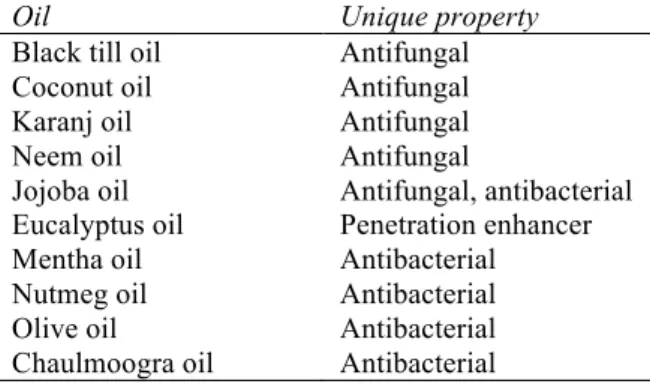
Oils Mineral oil, different oils of vegetable origin (Table 4) or fish liver oil may be used.
Aqueous phaseRose water, sterile water
Emulsifier Tween-20, 40, 60, 80, PEG-300,
400, 600, Acrysol K-140, 150, 160, Glycerine, Span-20, 40, 60, Transcutol®-P, Sepineo™ SE
68.
Gelling agent Sepineo™ P 600, carbomer 934,
934P, 940, sodium alginate, HPMC, sodium CMC, Gellan gum.
Penetration enhancerPropylene glycol, clove
oil, isopropyl myristate, olive oil, urea, DMSO, lauracapram, isopropyl palmitate, oleic acid, SLS, SDS, STGC, SDC, etc.
pHadjusting agent: NaOH, triethanolamine
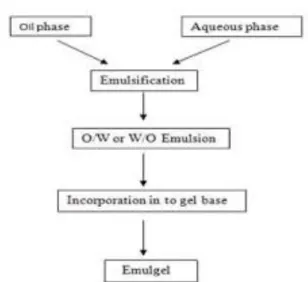
Figure 2 Basic steps in preparation of emulgel [2].
Preparation of emugel
There are three basic steps in the preparation of emulgel (Figure 2).2
Step 1Formulation of emulsion either O/W or
W/O.
Step 2Formulation of gel base.
Step 3Incorporation of emulsion into gel base
Table 4 Different oils which can be used for preparing emulgel.
Oil Unique property
Black till oil Antifungal
Coconut oil Antifungal
Karanj oil Antifungal
Neem oil Antifungal
Jojoba oil Antifungal, antibacterial Eucalyptus oil Penetration enhancer Mentha oil Antibacterial Nutmeg oil Antibacterial
Olive oil Antibacterial
Chaulmoogra oil Antibacterial
For standardization, emulgel can be evaluated by a number of methods.
Evaluation of emulsion
Viscosity Cone and plate rotational viscometer
with spindle can be used to measure viscosity.
pHpH could be measured by digital pH meter.
Drug content Drug-loaded emulsion could be
subjected to extract the drug from the emulsion in an appropriate solvent. Suitable dilution could be made with solvent and concentration could be measured by UV visible spectroscopic method at λmax nm by
keeping solvent as reagent blank.12
Centrifugation This parameter could be
measured to evaluate physical stability. Emulsion could be centrifuged at ambient temperature and 5000 RPM for 10 minutes to evaluate the system for creaming or phase separation. System could be observed visually for appearance.13
ConductivityElectric conductivity of emulsion
could be measured at ambient temperature with digital conductometer.
Dilution test If continuous phase is added into
an emulsion, it could not be separated into phases. 50-100 times continuous phase dilution of emulsion could be carried out and visually checked for phase separation and clarity.14
Zeta potential and micelle size analysis
Micelle size, size distribution and zeta potential of emulsion could be determined using particle size analyzer.
Diffusion study By D-cell at 37oC using rate
skin as a membrane.
Microbial assay of emulsion Ditch plate
technique could be used for evaluation of bacteriostatic or fungistatic activity of an antimicrobial agent.
% inhibition =length ofinhibition
whole length X 100
optimization of emulsion using the suitable design of experiments, screening of gelling agent and its concentration, screening of penetration enhancer and its concentration if any, formulation of antimicrobial agent loaded emulgel.
Evaluation of emulgel
Physical Examinations Physical examination
like Color, homogeneity, consistency, texture, etc.
pH 1% solution in water of emulgel subjected to measure pH by the digital pH meter.
Spreadability measurement 0.5 gm of emulgel
is placed on a glass slide and a circle made around it. Then a second slide is placed over it and a predetermined weight is put on it for specific time period. The increase in diameter is noted as gm-cm/sec.15
Syneresis measurement test On rest gel
shrinks and little liquid is pressed out called syneresis. This could be measured by means of centrifuge tubes in specific apparatus.16
Syneresis(%)=
liquid separated
fromemulgel
Total weightofemulgel
Rheological study Mainly viscosity can be determined at 37℃ by the rheometer.
Drug content determination Drug content in
emulgel could be estimated by the official method prescribed in pharmacopoeia.
Tube test (extrudability test) Determines
force necessary for removal of emulgel from tube and necessary to evaluate emulgel formulation for extrudability.17
Diffusion study By D-cell at 37oC using rate
skin.
Drug release kinetics study Data of diffusion
study could be fitted in models of data treatment as zero, first, Highuchi model and various other models.18
Microbial assay of emulgel Ditch plate
technique could be preferred for microbial assay and zone of inhibition calculated as per equation 1.
Optimization and development of emulgelby
suitable statistical design of the experiment.
Skin irritation test of optimized batch of
emulgel By Draize-patch test in the rabbit.
Microbial assay of optimized batch of
emulgelbyDitch plate technique.
Accelerated stability study of optimized batch
of emulgel Sample emulgel sealed in the
ampoule and then put in equipment at specified temperature and relative humidity.7 Duplicate sample could be withdrawn at 1, 2, 3, 4, 5 and 6 month to evaluate their physicochemical parameters. The physical stability could be evaluated by visual inspection for physical changes. Chemical stability could be expressed as content of drug.19,20
Comparison with available market
preparation prepared optimized batch of
formulation could be compared with available market preparation of that antimicrobial agent by means of microbial assay study and if possible by means of animal study too.
Conclusion
Emulgel topical dosage form is a very useful addition to dermatological pharmacotherapy. If it would be possible to formulate emulgel of any drug moiety especially hydrophobic one, then it will increase drug efficacy, reduce its side effects and improve patients compliance.
Acknowledgement
I take this opportunity to express my deep sense of gratitude to all teaching and non-teaching staff of RK University, Rajkot, Gujarat, India, Dr. Velichka Andonova and Mr. Dimitar Penkov, and
Dr. Kliana
Andreevska
Medical University-Plovdiv,Bulgaria for his encouragement, guidance and inspiration to write this article.
References
1. Ashara KC, Paun JS, Soniwala MM, Chavada JR, Badjatiya JK. Nanoparticulate drug delivery system: a novel approach. Int J Drug Reg Affairs. 2013;1(2):39-48.
2. Peneva P, Andonova V, Pilicheva B, and Kassarova M. In vitro survey of Ketoprofen release from emulgels. Sci Tech. 2014;4:118-21.
3. Madaan VA, Kataria MK, Bilandi A. Emulsion technology and recent trends in emulsion applications. Int Res J Pharm. 2014;5(7):533-42.
4. Ashara KC. Determination of pKA of active pharmaceutical ingredient by spectrometry. Pharma Tutor Pharm Infoped. 2012. ART-1514.
5. N’Da DD. Prodrug strategies for enhancing the percutaneous absorption of drugs. Molecules. 2014;19:20780-807. 6. Mori NM, Ashara KC, Sheth NR. Topical
7. Khullar R, Kumar D, Seth N, Saini S. Formulation and evaluation of mefenamic acid emulgel for topical delivery. Saudi Pharma J. 2012;20:63-7
8. Surjyanarayan M, Mandal SS, Sawant KK. Design and development of microemulsion drug delivery system of atorvastatin and study its intestinal permeability in rats. Int J Drug Dev Tech. 2010;2:69-75.
9. Ashara KC, Chavda JR, Soniwala MM, Mendapara VP, Mori NM. To study effect of polymer and its proportions on release profile of erosion based tablet. Mintage J Pharm Med Sci. 2013;2:63-6.
10. Lowrance MJ, Gareeth DR. Microemulsion based media a Novel drug delivery systems. Adv Drug Dev Rev. 2012;64:175-93.
11. http//www.dermweb.com/therapy. Vincent CH. Principle of skin therapy. [cited 2013, October]
12. Singla V, Sanini S, Rana AC, Singh G. Development and evaluation of topical emulgel of lornoxicam using different polymer bases. Int Pharm Sci. 2012;2(3):36-44.
13. Kalra R, Mulik RSA, Badgujar L, Paradkar AR, Mahadik KR, Bodhankar SL et al. Development and characterization of microemulsion formulations for transdermal delivery of aceclofenac: a research. Int J Drug Form Res. 2010;1(1): 359-86.
14. Andonova1 VY, George S. Georgiev GS, Georgieva VT, Petrova NL, Kasarova M.
Indomethacin nanoparticles for applications in liquid ocular formulations. Folia Medica. 2013;55:76-82.
15. Ashara KC, Paun JS, Mori NM, et al. Topical antifungal microemulgel composition and method of preparation thereof. Indian Patents. 2014. 3169/MUM/2014.
16. Mandal S, Mandal SS. Microemulsion Drug Delivery System: A Platform form improving dissolution rate of poorly water-soluble drug. Int J Pharm Sci Nanotech. 2011;3:1214-9.
17. Charoenrein S, Tatirat O, Rengsutthi K, Thongngam M. Effect of konjac glucomannan on syneresis, textural properties and the microstructure of frozen rice starch gels. Carbohydr Polym. 2011;83: 291-6.
18. Mendapara VP, Purohit PV, Ashara KC et al. SUPAC of immediate release solid oral dosage form-eplerenone. Inventi Rapid Pharm Tech. 2013;2013(3):1-7.
19. Mori NM, Sheth NR, Ashara KC, SLN brain targeting drug delivery for CNS: A novel approach. Int Res J Pharm. 2014;5:658-62.
20. Ashara KC, Paun JS, Soniwala MM,
Chavda JR, Mendapara VP, Mori NM.
![Figure 1 Path of drug penetration in topical dosage. Table 1 Advantages of emulgels [2]](https://thumb-us.123doks.com/thumbv2/123dok_us/7874595.2099321/2.892.119.739.115.233/figure-path-penetration-topical-dosage-table-advantages-emulgels.webp)