Eco 1001-
Introduction to
Macroeconomics
© 2007 Prentice Hall Business Publishing Principles of Economics 8e by Case and Fair
2 of
36
THE SCOPE AND METHOD OF
ECONOMICS
© 2007 Prentice Hall Business Publishing Principles of Economics 8e by Case and Fair
WHY STUDY ECONOMICS?
There are four main reasons to study economics:
•
to learn a way of thinking,
•
to understand society,
•
to understand global affairs, and
•
to be an informed voter.
WHY STUDY ECONOMICS?
Three fundamental concepts:
Opportunity cost
Marginalism
, and
© 2007 Prentice Hall Business Publishing Principles of Economics 8e by Case and Fair
WHY STUDY ECONOMICS?
opportunity cost
The best alternative
that we forgo, or give up, when we
make a choice or a decision.
6 of
36
scarce
Limited.
WHY STUDY ECONOMICS?
Marginalism
The process of analyzing
the additional or incremental costs or
benefits arising from a choice or
decision.
Sunk costs
Costs that cannot
be avoided, regardless of what is
done in the future, because they
have already been incurred.
© 2007 Prentice Hall Business Publishing Principles of Economics 8e by Case and Fair
WHY STUDY ECONOMICS?
Efficient market
A market
in which profit opportunities are
eliminated almost instantaneously.
8 of
36
WHY STUDY ECONOMICS?
Industrial Revolution
The
period in England during the late
eighteenth and early nineteenth
centuries in which new manufacturing
technologies and improved
transportation gave rise to the modern
factory system and a massive
movement of the population from the
countryside to the cities.
© 2007 Prentice Hall Business Publishing Principles of Economics 8e by Case and Fair
WHY STUDY ECONOMICS?
10 of
36
TO UNDERSTAND GLOBAL AFFAIRS
The events of September
11, 2001, dealt a blow to the
tourism industry and left
WHY STUDY ECONOMICS?
TO BE AN INFORMED VOTER
A knowledge of economics is
© 2007 Prentice Hall Business Publishing Principles of Economics 8e by Case and Fair
THE SCOPE OF ECONOMICS
microeconomics
The branch of economics that
examines the functioning of individual industries and the
behavior of individual decision-making units—that is,
business firms and households.
12 of
36
MICROECONOMICS AND MACROECONOMICS
macroeconomics
The branch of economics
that examines the economic behavior of
THE SCOPE OF ECONOMICS
TABLE 1.1
Examples of Microeconomic and Macroeconomic Concerns
DIVISION OF
ECONOMICS
PRODUCTION
PRICES
INCOME
EMPLOYMENT
Microeconomics Production/output in individual industries and businesses
How much steel How much office space
How many cars
Price of individual goods and services
Price of medical care Price of gasoline Food prices Apartment rents
Distribution of income and wealth
Wages in the auto industry Minimum wage Executive salaries Poverty Employment by individual businesses and industries
Jobs in the steel industry
Number of employees in a firm
Number of accountants
Macroeconomics National
production/output
Aggregate price level
National income Employment and unemployment in the economy
© 2007 Prentice Hall Business Publishing Principles of Economics 8e by Case and Fair
THE METHOD OF
ECONOMICS
Positive economics
An approach to economics
that seeks to understand behavior and the
operation of systems without making
judgments. It describes what exists and how it
works.
14 of
36
Consider the following
statements
•
The rate of inflation is greater this year than last year
•
Jamaica’s rate of growth is greater than Barbados’
•
Manchester united deserve to win the league this year
•
Old age pensions ought to be increased
•
Jamaica has a deficit on the balance of payments
•
Raising the minimum wage will lower employment of high
school age workers.
•
Raising the minimum wage is the best way to get families out
of poverty.
© 2007 Prentice Hall Business Publishing Principles of Economics 8e by Case and Fair
THE METHOD OF
ECONOMICS
16 of
36
descriptive economics
The
compilation of data that describe
phenomena and facts.
Descriptive Economics and Economic Theory
economic theory
A statement or set of
related statements about cause and
THE METHOD OF
ECONOMICS
model
A formal statement of a theory,
usually a mathematical statement of a
presumed relationship between two or
more variables.
variable
A measure that can change
from time to time or from observation to
observation.
© 2007 Prentice Hall Business Publishing Principles of Economics 8e by Case and Fair
THE METHOD OF
ECONOMICS
18 of
36
Ockham’s razor
The principle that
irrelevant detail should be cut away.
THE METHOD OF
ECONOMICS
ceteris paribus
,
or
all else equal
A
device used to analyze the relationship
between two variables while the values
of other variables are held unchanged.
© 2007 Prentice Hall Business Publishing Principles of Economics 8e by Case and Fair
THE METHOD OF
ECONOMICS
20 of
36
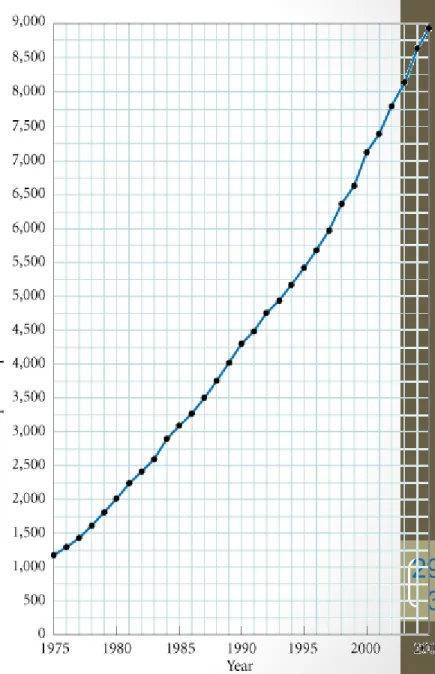
The most common method of expressing
the quantitative relationship between two
variables is graphing that relationship on
a two-dimensional plane.
THE METHOD OF
ECONOMICS
Cautions and Pitfalls
The
Post Hoc
Fallacy
The post hoc fallacy
is the incorrect
belief that because event B occurs after
event A then A caused B.
A common error made in thinking
about causation: If Event A happens
© 2007 Prentice Hall Business Publishing Principles of Economics 8e by Case and Fair
THE METHOD OF
ECONOMICS
22 of
36
The Fallacy of Composition
fallacy of composition
The erroneous
belief that what is true for a part is
THE METHOD OF
ECONOMICS
empirical economics
The
collection and use of data to test
economic theories.
© 2007 Prentice Hall Business Publishing Principles of Economics 8e by Case and Fair
THE METHOD OF
ECONOMICS
24 of
36
ECONOMIC POLICY
Criteria for judging economic outcomes:
1. Efficiency
THE METHOD OF
ECONOMICS
efficiency
In economics,
allocative efficiency. An efficient
economy is one that produces
what people want at the least
possible cost.
Efficiency
equity
Fairness.
© 2007 Prentice Hall Business Publishing Principles of Economics 8e by Case and Fair