CLINIC
AL ST
ATEMENTS
AND GUIDELINES
FOCUSED UPDATE WRITING GROUP* Glenn N. Levine, MD, FACC, FAHA, Chair† Eric R. Bates, MD, FACC, FAHA, FSCAI*‡ John A. Bittl, MD, FACC§
Ralph G. Brindis, MD, MPH, MACC, FAHA‡ Stephan D. Fihn, MD, MPH‡
Lee A. Fleisher, MD, FACC, FAHA║
Christopher B. Granger, MD, FACC, FAHA*‡ Richard A. Lange, MD, MBA, FACC‡ Michael J. Mack, MD, FACC*¶
Laura Mauri, MD, MSc, FACC, FAHA, FSCAI*‡ Roxana Mehran, MD, FACC, FAHA, FSCAI*# Debabrata Mukherjee, MD, FACC, FAHA, FSCAI‡ L. Kristin Newby, MD, MHS, FACC, FAHA*‡ Patrick T. O’Gara, MD, FACC, FAHA‡ Marc S. Sabatine, MD, MPH, FACC, FAHA*‡ Peter K. Smith, MD, FACC‡
Sidney C. Smith, Jr, MD, FACC, FAHA‡
2016 ACC/AHA Guideline Focused Update on Duration of Dual Antiplatelet Therapy in
Patients With Coronary Artery Disease
A Report of the American College of Cardiology/American Heart Association Task Force on Clinical Practice Guidelines An Update of the 2011 ACCF/AHA/SCAI Guideline for Percutaneous Coronary Intervention, 2011 ACCF/AHA Guideline for Coronary Artery Bypass Graft Surgery, 2012 ACC/AHA/ACP/AATS/PCNA/SCAI/STS Guideline for the Diagnosis and Management of Patients With Stable Ischemic Heart Disease, 2013 ACCF/AHA Guideline for the Management of ST-Elevation Myocardial Infarction, 2014 AHA/ACC Guideline for the Management of Patients With Non–ST-Elevation Acute Coronary Syndromes, and 2014 ACC/AHA Guideline on Perioperative Cardiovascular Evaluation and Management of Patients Undergoing Noncardiac Surgery
© 2016 by the American College of Cardiology Foundation and the American Heart Association, Inc.
Key Words: AHA Scientific Statements ◼ acute coronary syndrome ◼ aspirin ◼ coronary artery disease ◼ coronary stents ◼ dual antiplatelet therapy (DAPT) ◼ focused update ◼ P2Y12 inhibitor ◼ stable ischemic heart disease
Developed in Collaboration With the American Association for Tho-racic Surgery, American Society of Anesthesiologists, Society for Cardiovascular Angiography and Interventions, Society of Cardio-vascular Anesthesiologists, and Society of Thoracic Surgeons. Endorsed by Preventive Cardio-vascular Nurses Association and Society for Vascular Surgery
ACC/AHA Task Force Members, see page e143
*Focused Update writing group members are required to recuse themselves from voting on sections to which their specific relationships with industry may apply; see Appendix 1 for detailed information. †ACC/ AHA Task Force on Clinical Practice Guidelines Liaison. ‡ACC/AHA Representative. §Evidence Review Committee Chair. ‖American Society of Anesthesiologists/Society of Cardiovascular Anesthesiologists Representative. ¶American Association for Thoracic Surgery/Society of Thoracic Surgeons Representative. #Society for Cardiovascular Angiography and Interventions Representative.
The American Heart Association requests that this document be cited as follows: Levine GN, Bates ER, Bittl JA, Brindis RG, Fihn SD, Fleisher LA, Granger CB, Lange RA, Mack MJ, Mauri L, Mehran R, Mukherjee D, Newby LK, O’Gara PT, Sabatine MS, Smith PK, Smith SC Jr. 2016 ACC/AHA guideline focused update on duration of dual antiplatelet therapy in patients with coronary artery disease: a report of the American College of Cardiology/American Heart Association Task Force on Clinical Practice Guidelines: an update of the 2011 ACCF/AHA/SCAI guideline for percutaneous coronary intervention, 2011 ACCF/AHA guideline for coronary artery bypass graft surgery, 2012 ACC/AHA/ ACP/AATS/PCNA/SCAI/STS guideline for the diagnosis and management of patients with stable ischemic heart disease, 2013 ACCF/AHA guideline for the management of ST-elevation myocardial infarction, 2014 ACC/AHA guideline for the management of patients with non–ST-elevation acute coronary syndromes, and 2014 ACC/AHA guideline on perioperative cardiovascular evaluation and management of patients undergoing noncardiac surgery. Circulation. 2016;134:e123–e155. DOI: 10.1161/CIR.0000000000000404.
September 6, 2016 Circulation. 2016;134:e123–e155. DOI: 10.1161/CIR.0000000000000404 e124
TABLE oF CoNTENTS
Preamble . . . . e124 1 . Introduction . . . . e125 1 .1 . Methodology and Evidence Review . . . . e126 1 .2 . Organization of the Writing Group . . . . e127 1 .3 . Review and Approval . . . . e127 2 . Critical Questions and Systematic Review Findings . . e127 2 .1 . Critical Questions on Duration of DAPT . . . . e127 2 .2 . Studies of Shorter-Duration DAPT
After Stent Implantation . . . . e127 2 .3 . Studies of Longer-Duration DAPT After
Stent Implantation . . . . e128 2 .4 . Other Studies Relevant to DAPT >1 Year
After MI . . . . e128 2 .5 . Prolonged/Extended DAPT and Mortality Rate . . e128 3 . Overriding Concepts and Recommendations
for DAPT and Duration of Therapy . . . . e129 3 .1 . General Overriding Concepts . . . . e129 3 .2 . Factors Associated With Increased
Ischemic and Bleeding Risk . . . . e129 3 .3 . Specific P2Y12 Inhibitors: Recommendations . . e131 3 .4 . Platelet Function Testing, Genetic Testing,
and Switching of P2Y12 Inhibitors . . . . e131 3 .5 . Proton Pump Inhibitors and DAPT . . . . e132 3 .6 . Aspirin Dosing in Patients Treated With
DAPT: Recommendation . . . . e132 3 .7 . Triple Therapy (Aspirin, P2Y12 Inhibitor,
and Oral Anticoagulant) . . . . e132 4 . Percutaneous Coronary Intervention . . . . e133 4 .1 . Duration of DAPT in Patients With SIHD
Treated With PCI: Recommendations . . . . e133 4 .2 . Duration of DAPT in Patients With ACS
Treated With PCI: Recommendations . . . . e133 4 .3 . Duration of DAPT in Patients With SIHD
and ACS Treated with PCI . . . . e134 5 . Recommendations for Duration of DAPT
in Patients Undergoing CABG . . . . e134 6 . Recommendations for Duration of DAPT
in Patients With SIHD . . . . e135 7 . Acute Coronary Syndrome (NSTE-ACS and STEMI) . . . e137 7 .1 . Duration of DAPT in Patients With
ACS Treated With Medical Therapy Alone (Without Revascularization or
Fibrinolytic Therapy): Recommendations . . . . . e137 7 .2 . Duration of DAPT in Patients With
STEMI Treated With Fibrinolytic
Therapy: Recommendations . . . . e138 7 .3 . Duration of DAPT in Patients With ACS
Treated With PCI: Recommendations . . . . e138 7 .4 . Duration of DAPT in Patients With ACS
Treated With CABG: Recommendation . . . . e138 7 .5 . Duration of DAPT in Patients With ACS . . . . e138 8 . Perioperative Management–Timing of Elective
Noncardiac Surgery in Patients Treated With
PCI and DAPT: Recommendations . . . . e140 References . . . . e143 Appendix 1 . Author Relationships With Industry
and Other Entities (Relevant) . . . . e149 Appendix 2 . Reviewer Relationships With Industry
and Other Entities (Relevant) . . . . e151
PREAMBLE
Incorporation of new study results, medications, or de-vices that merit modification of existing clinical prac-tice guideline recommendations, or the addition of new recommendations, is critical to ensuring that guidelines reflect current knowledge, available treatment options, and optimum medical care . To keep pace with evolving evidence, the American College of Cardiology (ACC)/ American Heart Association (AHA) Task Force on Clini-cal Practice Guidelines (“Task Force”) has issued this focused update to revise existing guideline recommen-dations on the basis of recently published study data . This update has been subject to rigorous, multilevel review and approval, similar to the full guidelines . For specific focused update criteria and additional meth-odological details, please see the ACC/AHA guideline methodology manual .1
Modernization
Processes have evolved over time in response to published reports from the Institute of Medicine2,3
and ACC/AHA mandates,4–7 leading to adoption of a
“knowledge byte” format . This process entails delinea-tion of a recommendadelinea-tion addressing a specific clinical question, followed by concise text (ideally <250 words per recommendation) and hyperlinked to supportive evidence . This approach better accommodates time constraints on busy clinicians, facilitates easier access to recommendations via electronic search engines and other evolving technology, and supports the evolution of guidelines as “living documents” that can be dynamically updated as needed .
Class of Recommendation and Level of Evidence
The Class of Recommendation (COR) and Level of Evi-dence (LOE) are derived independently of each other according to established criteria . The COR indicates the strength of recommendation, encompassing the es-timated magnitude and certainty of benefit of a clinical action in proportion to risk . The LOE rates the quality of scientific evidence supporting the intervention on the basis of the type, quantity, and consistency of data from clinical trials and other sources (Table 1) . Recommenda-tions in this focused update reflect the new 2015 COR/ LOE system, in which LOE B and C are subcategorized for the purpose of increased granularity .1,7,8
Relationships With Industry and other Entities
The ACC and AHA exclusively sponsor the work of guideline writing committees (GWCs) without commer-cial support, and members volunteer time for this ac-tivity . Selected organizations and professional societies with related interests and expertise are invited to
CLINIC
AL ST
ATEMENTS
AND GUIDELINES
ticipate as partners or collaborators . The Task Force makes every effort to avoid actual, potential, or per-ceived conflicts of interest that might arise through re-lationships with industry or other entities (RWI) . All GWC members and reviewers are required to fully disclose current industry relationships or personal interests, be-ginning 12 months before initiation of the writing effort . Management of RWI involves selecting a balanced GWC and requires that both the chair and a majority of GWC members have no relevant RWI (see Appendix 1 for the definition of relevance) . GWC members are restricted with regard to writing or voting on sections to which RWI apply . Members of the GWC who recused themselves from voting are indicated and specific section recusals are noted in Appendixes 1 and 2 . In addition, for trans-parency, GWC members’ comprehensive disclosure in-formation is available as an Online Supplement (http:// circ .ahajournals .org/lookup/suppl/doi:10 .1161/ CIR .0000000000000404/-/DC1) . Comprehensive dis-closure information for the Task Force is also available at http://www .acc .org/guidelines/about-guidelines-and-clinical-documents/guidelines-and-documents-task-forces . The Task Force strives to avoid bias by selecting ex-perts from a broad array of backgrounds representing different geographic regions, genders, ethnicities, intel-lectual perspectives, and scopes of clinical activities .
Intended Use
Guidelines provide recommendations applicable to pa-tients with or at risk of developing cardiovascular dis-ease . The focus is on medical practice in the United States, but guidelines developed in collaboration with other organizations may have a broader target . Although guidelines may be used to inform regulatory or payer decisions, the intent is to improve quality of care and align with patients’ interests . The guidelines are reviewed annually by the Task Force and are official policy of the ACC and AHA . Each guideline is considered current un-less and until it is updated, revised, or superseded by a published addendum .
Related Issues
For additional information pertaining to the methodol-ogy for grading evidence, assessment of benefit and harm, shared decision making between the patient and clinician, structure of evidence tables and summaries, standardized terminology for articulating recommen-dations, organizational involvement, peer review, and policies regarding periodic assessment and updating of guideline documents, we encourage readers to consult the ACC/AHA guideline methodology manual .1
Jonathan L. Halperin, MD, FACC, FAHA Chair, ACC/AHA Task Force on Clinical Practice
Guidelines
1. INTRoDUCTIoN
The scope of this focused update is limited to address-ing recommendations on duration of dual antiplatelet therapy (DAPT) (aspirin plus a P2Y12 inhibitor) in patients with coronary artery disease (CAD) . Recommendations considered are those in 6 guidelines: “2011 ACCF/AHA/ SCAI Guideline for Percutaneous Coronary Intervention”,9
“2011 ACCF/AHA Guideline for Coronary Artery Bypass Graft Surgery”,10 “2012 ACCF/AHA/ACP/AATS/PCNA/
SCAI/STS Guideline for the Diagnosis and Management of Patients With Stable Ischemic Heart Disease”,11,12
“2013 ACC/AHA Guideline for the Management of ST-El-evation Myocardial Infarction”,13 “2014 ACC/AHA
Guide-line for Non–ST-Elevation Acute Coronary Syndromes”,14
and “2014 ACC/AHA Guideline on Perioperative Cardio-vascular Evaluation and Management of Patients Under-going Noncardiac Surgery” .15
The impetus for this focused update review is 11
stud-ies16–27 of patients treated with coronary stent
implanta-tion (predominantly with drug-eluting stents [DES]) as-sessing shorter-duration or longer-duration DAPT, as well as a large, randomized controlled trial (RCT) of patients 1 to 3 years after myocardial infarction (MI) assessing the efficacy of DAPT compared with aspirin monothera-py .28 These studies were published after the formulation
of recommendations for duration of DAPT in prior guide-lines . The specific mandate of the present writing group is to evaluate, update, harmonize, and, when possible, simplify recommendations on duration of DAPT .
Although there are several potential combinations of antiplatelet therapy, the term and acronym DAPT has been used to specifically refer to combination antiplate-let therapy with aspirin and a P2Y12 receptor inhibitor (clopidogrel, prasugrel, or ticagrelor) and will be used similarly in this focused update . Recommendations in this focused update on duration of DAPT, aspirin dosing in patients treated with DAPT, and timing of elective non-cardiac surgery in patients treated with percutaneous coronary intervention (PCI) and DAPT supersede prior corresponding recommendations in the 6 relevant guide-lines . These recommendations for duration of DAPT ap-ply to newer-generation stents and, in general, only to those not treated with oral anticoagulant therapy . For the purposes of this focused update, patients with a history of acute coronary syndrome (ACS) >1 year prior who have since remained free of recurrent ACS are consid-ered to have transitioned to stable ischemic heart dis-ease (SIHD) and are addressed in the section on SIHD . Issues and recommendations with regard to P2Y12 inhibi-tor “pretreatment,” “preloading,” and loading are beyond the scope of this document but are addressed in other guidelines .9,14,29
This focused update is designed to function both as a standalone document and to serve as an update to the relevant sections on duration of DAPT in the 6
September 6, 2016 Circulation. 2016;134:e123-e155. DOI: 10.1161/CIR.0000000000000404 e126
clinical practice guidelines, replacing relevant text, fig-ures, and recommendations . Thus, by necessity, there is some redundancy in different sections of this document . When possible, the “knowledge byte” format was used for recommendations . In some cases, the complexity of this document required a modification of the knowledge byte format, with several interrelated recommendations grouped together, followed by concise associated text (<250 words of text per recommendation) .
1.1. Methodology and Evidence Review
Clinical trials published since the 2011 PCI guideline9 and
the 2011 coronary artery bypass graft (CABG) guide-line,10 published in a peer-reviewed format through
De-cember 2015, were reviewed by the Task Force to iden-tify trials and other key data that might affect guideline recommendations . The information considered important enough to prompt updated recommendations is included in evidence tables in the Data Supplement .
Table 1. Applying Class of Recommendation and Level of Evidence to Clinical Strategies, Interventions, Treatments, or Diagnostic Testing in Patient Care* (Updated August 2015)
CLINIC
AL ST
ATEMENTS
AND GUIDELINES
In accord with recommendations by the Institute of Medicine2,3 and the ACC/AHA Task Force Methodology
Summit,1,6 3 critical (PICOTS-formatted; population,
in-tervention, comparison, outcome, timing, setting) ques-tions were developed to address the critical quesques-tions related to duration of DAPT . These 3 critical questions were the basis of a formal systematic review and evalu-ation of the relevant study data by an Evidence Review Committee (ERC) .30 Concurrent with this process,
writ-ing group members evaluated study data relevant to the numerous current recommendations in the 6 guidelines, including topics not covered in the 3 critical questions (eg, DAPT after CABG) . The findings of the ERC and the writing group members were formally presented and dis-cussed, and then modifications to existing recommen-dations were considered . Recommenrecommen-dations that are based on a body of evidence that includes a systematic review conducted by the ERC are denoted by the su-perscript SR (eg, LOE B-R SR) . See the ERC systematic
review report, “Duration of Dual Antiplatelet Therapy: A Systematic Review for the 2016 ACC/AHA Guideline Fo-cused Update on Duration of Dual Antiplatelet Therapy in Patients With Coronary Artery Disease,” for the com-plete evidence review report .30
1.2. organization of the Writing Group
Recommendations on duration of DAPT are currently in-cluded in 6 clinical practice guidelines, which are interre-lated and overlapping because they address the manage-ment of patients with CAD . Therefore, the writing group consisted of the chairs/vice chairs and/or members of all 6 guidelines, representing the fields of cardiovascular medicine, interventional cardiology, cardiac surgery, inter-nal medicine, and cardiovascular anesthesia, as well as expertise in trial design and statistical analysis .
1.3. Review and Approval
This focused update was reviewed by the writing com-mittee members from the 6 guidelines; by 5 official re-viewers from the ACC and AHA; 2 rere-viewers each from the American Association for Thoracic Surgery, American College of Emergency Physicians, American Society of Anesthesiologists, Preventive Cardiovascular Nurses As-sociation, Society for Cardiovascular Angiography and Interventions, Society of Cardiovascular Anesthesiolo-gists, and the Society of Thoracic Surgeons; and by 23 additional content reviewers . Reviewers’ RWI information is published in this document (Appendix 2) .
This document was approved for publication by the governing bodies of the ACC and the AHA and was en-dorsed by the American Association for Thoracic Sur-gery, American Society of Anesthesiologists, Preventive Cardiovascular Nurses Association, Society for Car-diovascular Angiography and Interventions, Society of
Cardiovascular Anesthesiologists, Society of Thoracic Surgeons, and Society for Vascular Surgery .
2. CRITICAL QUESTIoNS AND SySTEMATIC
REvIEW FINDINGS
2.1. Critical Questions on Duration of DAPT
The 3 critical (PICOTS-formatted) questions on DAPT duration are listed in Table 2 . Most contemporary studies of DAPT have compared either shorter (3 to 6 months)17–21 or longer (18 to 48 months)16,22–26
dura-tion of therapy with 12 months of DAPT, which is the recommended or minimal duration of therapy for most patients in ACC/AHA9,13,14 and European Society of
Cardi-ology31–33 guidelines published between 2011 and 2014 .
Recommendations based on the findings from the criti-cal question–focused systemic reviews are provided in Sections 4 to 8 of the present document .
2.2. Studies of Shorter-Duration DAPT After Stent
Implantation
Five RCTs of patients treated with elective DES implan-tation have compared shorter-duration (3 to 6 months) DAPT with 12 months of DAPT17–21 (Data Supplement 1) .
The trials primarily enrolled low-risk (non-ACS) patients, with only a small proportion having had a recent MI . The main endpoints of these noninferiority trials were compos-ite ischemic events (or net composcompos-ite events) and stent thrombosis . These studies, as well as several
meta-anal-yses34–37 and an analysis by the ERC,30 did not find any
increased risk of stent thrombosis with shorter-duration DAPT . A shorter duration of DAPT results in fewer bleed-ing complications .30,34–36 Shorter-duration DAPT may be
most reasonable in patients currently being treated with
Table 2. Critical (PICoTS-Formatted) Questions on DAPT Duration
Q1: In patients treated with newer (non-first) generation DES for (1) SIHD or (2) ACS, compared with 12 months of DAPT, is 3–6 months of DAPT as effective in preventing stent thrombosis, preventing MACE and/or reducing bleeding complications?
Q2: In patients treated with newer (non-first) generation DES, compared with 12 months of DAPT, does >12 (18–48) months of DAPT result in differences in mortality rate, decreased MACE, decreased stent thrombosis, and/or increased bleeding?
Q3: In post-MI (NSTEMI or STEMI) patients who are clinically stable and >12 months past their event, does continued DAPT, compared with aspirin monotherapy, result in differences in mortality rate, decreased nonfatal MI, decreased MACE, and/or increased bleeding? ACS indicates acute coronary syndrome; DAPT, dual antiplatelet therapy; DES, drug-eluting stents; MACE, major adverse cardiac events; MI, myocardial infarction; NSTEMI, non–ST-elevation myocardial infarction; PICOTS, population, intervention, comparison, outcome, timing, and setting; SIHD, stable ischemic heart disease; and STEMI, ST-elevation myocardial infarction.
September 6, 2016 Circulation. 2016;134:e123–e155. DOI: 10.1161/CIR.0000000000000404 e128
“newer-generation” (eg, everolimus- or zotarolimus-elut-ing) DES, which are associated with lower stent throm-bosis and MI rates than those of “first-generation” (eg, sirolimus- and paclitaxel-eluting) DES, which are rarely, if ever, used in current clinical practice .16,36,38
2.3. Studies of Longer-Duration DAPT
After Stent Implantation
Six RCTs, consisting predominantly of patients treated with elective DES implantation, compared prolonged DAPT (total therapy duration: 18 to 48 months) with 6 to 12 months of DAPT to determine whether extended ther-apy reduces late and very late stent thrombosis and pre-vents ischemic epre-vents associated with disease progres-sion and plaque rupture at other nonstented sites16,22–27
(Data Supplement 2) . In the Dual Antiplatelet Therapy study—the largest of these trials—patients who had un-dergone DES implantation, had been treated with DAPT for 12 months, and were without ischemic or bleeding events during this period were randomized to an addi-tional 18 months of DAPT or to aspirin monotherapy .16
Extended DAPT resulted in a 0 .7% absolute reduction in very late stent thrombosis, a 2 .0% absolute reduction in MI, a 1 .6% absolute reduction in major adverse cardiac events (MACE), and a 0 .9% absolute increase in mod-erate or severe bleeding . In the subgroup of patients treated with everolimus-eluting stents—currently the most commonly used stent—extended DAPT resulted in a 0 .4% absolute reduction in stent thrombosis, a 1 .1% absolute reduction in MI, and a 1 .2% absolute increase in moderate/severe bleeding .39
Taken as a whole, studies of longer-duration (“pro-longed” or “extended”) DAPT16,22–27 for an additional 18
to 36 months after DES found an absolute decrease in late stent thrombosis and ischemic complications of
≈1% to 2% and an absolute increase in bleeding compli-cations of ≈1% (Data Supplements 2 and 3) . A weighted risk-benefit analysis by the ERC of studies of patients treated with DES found 6 fewer MIs and 3 fewer stent thromboses but 5 additional major bleeds per 1000 pa-tients treated with prolonged DAPT per year .30
2.4. other Studies Relevant to DAPT >1 year
After MI
The CHARISMA (Clopidogrel for High Atherothrombotic Risk and Ischemic Stabilization, Management, and Avoid-ance) trial randomized patients with established athero-sclerosis or at high risk of clinical atherosclerotic disease to either DAPT (with clopidogrel) or aspirin monotherapy; with DAPT, no significant reduction was found in ischemic effects at a median follow-up of 28 months, but there was a 0 .4% absolute increase in severe bleeding .40 A post hoc
analysis of patients enrolled in the study with prior MI found a 1 .7% absolute decrease in the composite endpoint of
cardiovascular death, MI, or stroke events with DAPT, with no benefit in those with CAD without prior MI .40,41
Patients in the PEGASUS-TIMI 54 (Prevention of Car-diovascular Events in Patients with Prior Heart Attack Using Ticagrelor Compared to Placebo on a Background of Aspirin—Thrombolysis In Myocardial Infarction 54) trial were randomized 1 to 3 years after MI with addi-tional high-risk features to either DAPT (with ticagrelor 60 mg or 90 mg twice daily) or continued aspirin mono-therapy .28 After a mean of 33 months of therapy, DAPT,
when compared with aspirin monotherapy, resulted in a 1 .2% to 1 .3% absolute reduction in the primary compos-ite endpoint of cardiovascular death, MI, or stroke and a 1 .2% to 1 .5% absolute increase in major bleeding, with no excess in fatal bleeding or intracranial hemorrhage . In subgroup analysis, the greatest reduction in ischemic events with prolonged DAPT was in patients in whom P2Y12 inhibitor therapy either had not been discontinued or had been discontinued for ≤30 days (absolute reduc-tion in MACE: 1 .9% to 2 .5%) . No benefit was seen in patients in whom P2Y12 inhibitor therapy had been dis-continued >1 year before enrollment in the study .42
In the Dual Antiplatelet Therapy study, the benefit/risk ratio for prolonged DAPT was more favorable for those presenting with MI than those with SIHD .43 In an analysis
of patients with a history of prior MI enrolled in 6 RCTs of extended/prolonged DAPT, extended DAPT significantly de-creased the absolute risk of MACE by 1 .1% and significantly increased the absolute risk of major bleeding by 0 .8% .44
Taken as a whole, trials of prolonged or extended DAPT suggest that the benefit/risk ratio of prolonged DAPT may be more favorable for those with prior MI, with an absolute decrease in ischemic events of ≈1% to 3% at the cost of an absolute increase in bleeding events of ≈1% over the course of several years of prolonged or extended therapy (median durations of therapy: 18 to 33 months) (Data Supplements 3 and 4) . This appears biologically plausible because patients with prior MI (usually mediated by plaque rupture) may be at greater risk for future plaque rupture than those without prior MI .37,40,41
2.5. Prolonged/Extended DAPT and
Mortality Rate
An unexpected finding in the Dual Antiplatelet Therapy study16 was a borderline-significant increase in overall
mortality rate (0 .5% absolute increase) with 30 months of DAPT versus 12 months of DAPT in DES-treated pa-tients, which was due to significantly increased deaths from noncardiovascular causes (most commonly cancer), with no increase in cardiovascular deaths, and no signifi-cant increase in fatal bleeding .45 Five subsequent
meta-analyses35–37,46,47 restricted to RCTs of studies enrolling
patients treated with predominantly newer generation DES, published prior to the presentation of the OPTIDUAL (Optimal Dual Antiplatelet Therapy) trial, found
CLINIC
AL ST
ATEMENTS
AND GUIDELINES
ly36,47 or statistically35,37,46 significant increased risk of
all-cause (though not cardiovascular) death associated with prolonged duration of DAPT (Data Supplements 3 and 4) .
In contrast, a meta-analysis that combined studies of DAPT duration after stent implantation with studies of DAPT duration for other indications48 and an analysis of
6 trials restricted to post-MI patients treated with DAPT44
found no increase in cardiovascular or noncardiovascular mortality rate associated with prolonged DAPT (Data Sup-plement 3) . A US Food and Drug Administration drug safe-ty communication, based on an evaluation of long-term clinical trials of patients with cardiovascular disease or stroke treated with clopidogrel, concluded that long-term clopidogrel treatment did not increase the risk of all-cause death or cancer-related death .49 The primary analysis by
the ERC of 11 RCTs (including OPTIDUAL) compared use of DAPT for 18 to 48 months with use of DAPT for 6 to 12 months in patients who had received predominantly newer-generation DES and found no statistically signifi-cant difference in all-cause mortality rate .30
A majority of writing group members believe the data as a whole do not seem to suggest prolonged DAPT results in increased mortality .
3. ovERRIDING CoNCEPTS AND
RECoMMENDATIoNS FoR DAPT AND
DURATIoN oF THERAPy
3.1. General overriding Concepts
Overriding concepts and relevant recommendations for DAPT and duration of therapy are summarized in Table 3 . Intensification of antiplatelet therapy, with the addition of a P2Y12 inhibitor to aspirin monotherapy, ne-cessitates a fundamental tradeoff between decreasing ischemic risk and increasing bleeding risk .40,41,50–52
Simi-larly, longer compared with shorter duration of DAPT generally results in decreased ischemic risk at the ex-pense of increased bleeding risk .16,24,28,30,46 Use of more
potent P2Y12 inhibitors (ticagrelor or prasugrel) in place of clopidogrel also results in decreased ischemic risk and increased bleeding risk .53–55
In general, recommendations for duration of DAPT in the present focused update consist of a Class I rec-ommendation (“should be given”) for a minimum period of time (in most cases 6 to 12 months) and a Class IIb recommendation (“may be considered”) for con-tinuation of DAPT beyond that period of time . Short-er-duration DAPT can be considered for patients at lower ischemic risk with high bleeding risk, whereas longer-duration DAPT may be reasonable for patients at higher ischemic risk with lower bleeding risk . These rec-ommendations do not generally apply to patients treated with oral anticoagulant therapy, who were excluded from almost all studies of DAPT duration and who are at signif-icantly increased bleeding risk (as discussed in Section
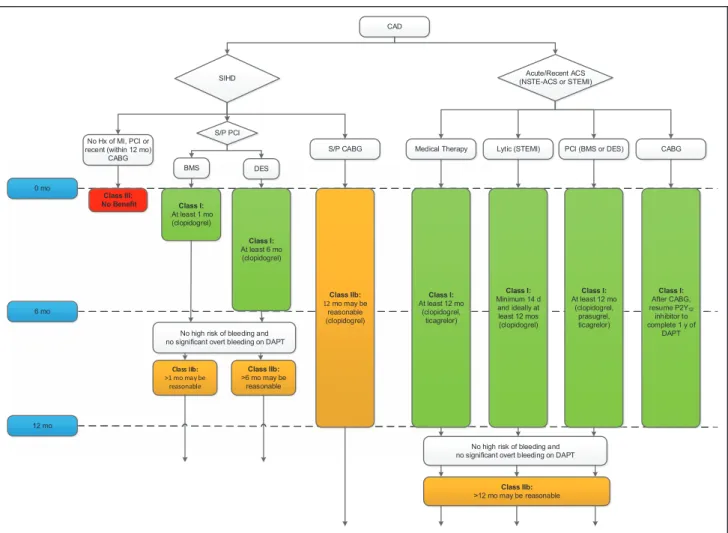
3 .4) . Decisions about duration of DAPT are best made on an individual basis and should integrate clinical judg-ment, assessment of the benefit/risk ratio, and patient preference . Aspirin therapy is almost always continued indefinitely in patients with CAD, and recommendations on duration of DAPT should be taken to mean the recom-mended duration of P2Y12 inhibitor therapy (in addition to aspirin therapy) . Figure 1 summarizes recommendations for duration of DAPT according to clinical status .
3.2. Factors Associated With Increased Ischemic
and Bleeding Risk
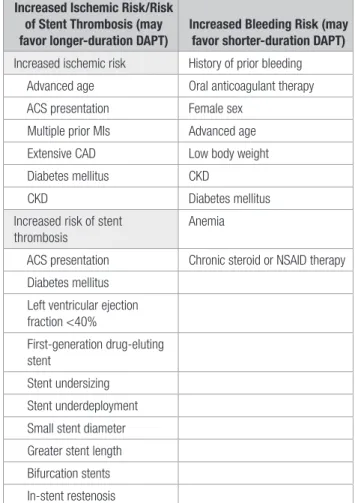
Factors that have been associated with increased isch-emic risk (including increased risk of stent thrombosis)
Table 3. overriding Concepts and Updated Recommendations for DAPT and Duration
Intensification of antiplatelet therapy, with the addition of a P2Y12 inhibitor to aspirin monotherapy, as well as prolongation of DAPT, necessitates a fundamental tradeoff between decreasing ischemic risk and increasing bleeding risk. Decisions about treatment with and duration of DAPT require a thoughtful assessment of the benefit/risk ratio, integration of study data, and consideration of patient preference. In general, shorter-duration DAPT can be considered for patients at lower ischemic risk with high bleeding risk, whereas longer-duration DAPT may be reasonable for patients at higher ischemic risk with lower bleeding risk.
Prior recommendations for duration of DAPT for patients treated with DES were based on data from “first-generation” DES, which are rarely if ever used in current clinical practice. Compared with first-generation stents, newer-first-generation stents have an improved safety profile and lower risk of stent thrombosis. Recommendations in this focused update apply to newer-generation stents.
Updated recommendations for duration of DAPT are now similar for patients with NSTE-ACS and STEMI, as both are part of the spectrum of acute coronary syndrome.
A Class I recommendation (“should be given”) in most clinical settings is made for at least 6–12 months of DAPT (depending on the setting), and a Class IIb recommendation (“may be reasonable”) is made for prolonged DAPT beyond this initial 6- to 12-month period.
In studies of prolonged DAPT after DES implantation or after MI, duration of therapy was limited to several years (akin to many other studied therapies). Thus, in patients for whom the benefit/risk ratio seemingly favors prolonged therapy, the true optimal duration of therapy is unknown. Recommendations in the document apply specifically to duration of P2Y12 inhibitor therapy in patients with CAD treated with DAPT. Aspirin therapy should almost always be continued indefinitely in patients with CAD. Lower daily doses of aspirin, including in patients treated with DAPT, are associated with lower bleeding complications and comparable ischemic protection56–60 than are higher doses of
aspirin. The recommended daily dose of aspirin in patients treated with DAPT is 81 mg (range, 75 mg to 100 mg).
CAD indicates coronary artery disease; DAPT, dual antiplatelet therapy; DES, drug-eluting stent; MI, myocardial infarction; NSTE-ACS, non–ST-elevation acute coronary syndrome; and STEMI, ST-elevation myocardial infarction.
September 6, 2016 Circulation. 2016;134:e123-e155. DOI: 10.1161/CIR.0000000000000404 e130
and increased bleeding risk are listed in Table 4 . Individu-al patients may have factors for both increased ischemic and bleeding risk, and some factors are associated with both increased ischemic and bleeding risk, making it dif-ficult in many patients to assess the benefit/risk ratio of prolonged DAPT .
A new risk score (the “DAPT score”), derived from the Dual Antiplatelet Therapy study, may be useful for deci-sions about whether to continue (prolong or extend) DAPT in patients treated with coronary stent implantation . Analy-sis of study data suggests that in patients treated for 1 year with DAPT without significant bleeding or ischemic events, the benefit/risk ratio with prolonged DAPT may be
favorable for those with a high DAPT score (≥2) because prolonged DAPT reduces net (ischemic plus bleeding) events when compared with nonprolonged DAPT .61
Con-versely, in those with a low DAPT score (<2), the benefit/ risk ratio with prolonged DAPT is not favorable (increased bleeding without a reduction in ischemic events) . Factors that contribute to a high DAPT score include diabetes mel-litus, current cigarette use, prior PCI or prior MI, conges-tive heart failure or left ventricular ejection fraction <30%, MI at presentation, vein graft PCI, and stent diameter <3 mm; older age contributes to a low (less favorable) DAPT score . Factors and their weighting used to calculate a DAPT score are provided in Table 5 .
Figure 1. Master treatment algorithm for duration of P2y12 inhibitor therapy in patients with CAD treated with DAPT.
Colors correspond to Class of Recommendation in Table 1 . Clopidogrel is the only currently used P2Y12 inhibitor studied in
patients with SIHD undergoing PCI . Aspirin therapy is almost always continued indefinitely in patients with CAD . Patients with a history of ACS >1 year prior who have since remained free of recurrent ACS are considered to have transitioned to SIHD . In patients treated with DAPT after DES implantation who develop a high risk of bleeding (eg, treatment with oral anticoagu-lant therapy), are at high risk of severe bleeding complication (eg, major intracranial surgery), or develop significant overt
bleeding, discontinuation of P2Y12 inhibitor therapy after 3 months for SIHD or after 6 months for ACS may be reasonable .
Arrows at the bottom of the figure denote that the optimal duration of prolonged DAPT is not established . ACS indicates acute coronary syndrome; BMS, bare metal stent; CABG, coronary artery bypass graft surgery; CAD, coronary artery disease; DAPT, dual antiplatelet therapy; DES, drug-eluting stent; Hx, history; lytic, fibrinolytic therapy; NSTE-ACS, non–ST-elevation acute coronary syndrome; PCI, percutaneous coronary intervention; SIHD, stable ischemic heart disease; S/P, status post; and STEMI, ST-elevation myocardial infarction .
CAD
SIHD (NSTE-ACS or STEMI)Acute/Recent ACS
No Hx of MI, PCI or recent (within 12 mo)
CABG S/P CABG Medical Therapy Lytic (STEMI) PCI (BMS or DES) CABG
Class III: No Benefit
6 mo
12 mo
S/P PCI
BMS DES
No high risk of bleeding and no significant overt bleeding on DAPT 0 mo
No high risk of bleeding and no significant overt bleeding on DAPT
Class IIb:
>6 mo may be reasonable
Class I:
At least 6 mo (clopidogrel)
Class I:
At least 1 mo (clopidogrel)
Class I:
At least 12 mo (clopidogrel,
ticagrelor)
Class I:
Minimum 14 d and ideally at least 12 mos (clopidogrel)
Class I:
At least 12 mo (clopidogrel,
prasugrel, ticagrelor)
Class I:
After CABG, resume P2Y12
inhibitor to complete 1 y of
DAPT
Class IIb:
>12 mo may be reasonable
Class IIb:
12 mo may be reasonable (clopidogrel)
Class IIb:
>1 mo may be reasonable
CLINIC
AL ST
ATEMENTS
AND GUIDELINES
3.3. Specific P2y
12Inhibitors: Recommendations
See Data Supplement 5 for evidence supporting these
recommendations .
In the PLATO (Platelet Inhibition and Patient Out-comes) trial,53 patients with ACS were treated with
ei-ther medical ei-therapy alone or medical ei-therapy plus PCI . Treatment with ticagrelor 90 mg twice daily, compared with clopidogrel 75 mg once daily, resulted in fewer ischemic complications and stent thromboses but more frequent non–CABG-related bleeding (Data Supplement 5) . In the TRITON-TIMI 38 (Therapeutic Outcomes by Op-timizing Platelet Inhibition With Prasugrel–Thrombolysis In Myocardial Infarction 38)54 study, patients with ACS
undergoing planned PCI were treated with prasugrel 10 mg daily, compared with clopidogrel 75 mg daily . Pra-sugrel treatment resulted in fewer ischemic complica-tions and stent thromboses but more frequent bleeding, including life-threatening and fatal bleeding . Because of increased rates of major bleeding with prasugrel (com-pared with clopidogrel), there was no net benefit of pra-sugrel therapy in those ≥75 years of age and those <60 kg, and there was net harm (including increased risk of intracranial hemorrhage) in those with prior stroke or transient ischemic attack (TIA) . The Class IIa preferential recommendations for ticagrelor 90 mg twice daily and for prasugrel 10 mg once daily (compared with clopi-dogrel) in the 2014 Non–ST-Elevation Acute Coronary Syndromes (NSTE-ACS) guideline are continued in this focused update and are now included in relevant PCI and ST-Elevation Myocardial Infarction (STEMI) recommenda-tions, as well .
In the PEGASUS-TIMI 54 study of post-MI patients, both 60-mg and 90-mg twice-daily doses of ticagre-lor were evaluated .28 The benefit/risk ratio appears
to be numerically more favorable for the 60-mg dose, although no formal statistical comparison was made
between results of the 2 dosing regimens . The 60-mg twice-daily dose has now been approved by the US Food and Drug Administration for reduction in ischemic events in patients with ACS or a history of MI .73
3.4. Platelet Function Testing, Genetic Testing,
and Switching of P2y
12Inhibitors
The role of platelet function testing and genetic testing in patients treated with DAPT is addressed in the 2011 ACCF/AHA/SCAI PCI guideline and the 2014 ACC/AHA NSTE-ACS guideline .9,14 To date, no RCT has
demonstrat-ed that routine platelet function testing or genetic testing to guide P2Y12 inhibitor therapy improves outcome; thus, the routine use of platelet function and genetic testing is not recommended (Class III: No Benefit) .
No randomized data are available on the long-term safety or efficacy of “switching” patients treated for weeks or months with a P2Y12 inhibitor to a different P2Y12 inhibitor .
Table 4. Clinical and Procedural Factors Associated With Increased Ischemic Risk (Including Stent Thrombosis) or Increased Bleeding Risk62–70
Increased Ischemic Risk/Risk of Stent Thrombosis (may favor longer-duration DAPT)
Increased Bleeding Risk (may favor shorter-duration DAPT) Increased ischemic risk History of prior bleeding Advanced age Oral anticoagulant therapy ACS presentation Female sex
Multiple prior MIs Advanced age Extensive CAD Low body weight Diabetes mellitus CKD
CKD Diabetes mellitus
Increased risk of stent thrombosis
Anemia
ACS presentation Chronic steroid or NSAID therapy Diabetes mellitus
Left ventricular ejection fraction <40%
First-generation drug-eluting stent
Stent undersizing Stent underdeployment Small stent diameter Greater stent length Bifurcation stents In-stent restenosis
ACS indicates acute coronary syndrome; CAD, coronary artery disease; CKD, chronic kidney disease; DAPT, dual antiplatelet therapy; MI, myocardial infarction; and NSAID, nonsteroidal anti-inflammatory drug.
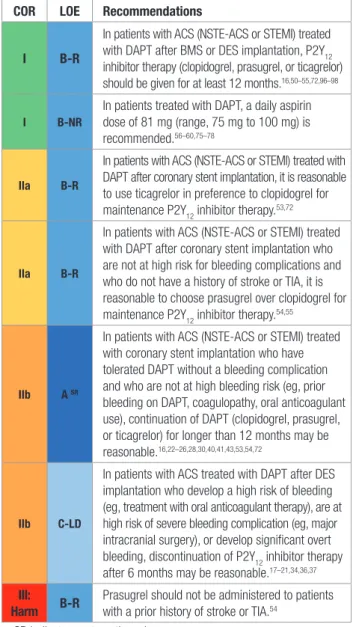
Recommendations for Specific P2y12 Inhibitors
CoR LoE Recommendations
IIa B-R
In patients with ACS (NSTE-ACS or STEMI) treated with DAPT after coronary stent implantation and in patients with NSTE-ACS treated with medical therapy alone (without revascularization), it is reasonable to use ticagrelor in preference to clopidogrel for maintenance P2Y12 inhibitor therapy.53,71,72
IIa B-R
In patients with ACS (NSTE-ACS or STEMI) treated with DAPT after coronary stent implantation who are not at high risk for bleeding complications and who do not have a history of stroke or TIA, it is reasonable to choose prasugrel over clopidogrel for maintenance P2Y12 inhibitor therapy.54,55
III: Harm B-R Prasugrel should not be administered to patients with a prior history of stroke or TIA.54
September 6, 2016 Circulation. 2016;134:e123–e155. DOI: 10.1161/CIR.0000000000000404 e132
3.5. Proton Pump Inhibitors and DAPT
The use of proton pump inhibitors (PPIs) in patients treated with DAPT is discussed in a 2010 ACCF/ACG/ AHA expert consensus document .74 Recommendations
on the use of PPIs are given in the 2011 ACCF/AHA/ SCAI PCI guideline .9 PPIs should be used in patients with
a history of prior gastrointestinal bleeding treated with DAPT (Class I) . In patients with increased risk of gastro-intestinal bleeding, including those with advanced age and those with concomitant use of warfarin, steroids, or nonsteroidal anti-inflammatory drugs, use of PPIs is reasonable (Class IIa) . Routine use of PPIs is not recom-mended for patients at low risk of gastrointestinal bleed-ing (Class III: No Benefit) .
3.6. Aspirin Dosing in Patients Treated With
DAPT: Recommendation
See Data Supplement 6 for evidence supporting this
rec-ommendation .
Because aspirin dosing recommendations across ACC/AHA clinical practice guidelines are not consistent with regard to dose or class of recommendation, and
because aspirin is a component of DAPT, a compre-hensive review of these issues was undertaken . Large overviews, including studies of nearly 200 000 per-sons, have consistently shown that lower aspirin doses (≤100 mg daily) are associated with less major and total bleeding than are higher doses, either when used as monotherapy or when combined with the P2Y12 inhibitor clopidogrel .56,58,75,76,78 Daily aspirin doses as low as 30
mg to 50 mg inactivate the platelet cyclo-oxygenase-1 enzyme and inhibit thromboxane production .79–81
Stud-ies comparing lower (75 mg to 150 mg) with higher aspirin doses have consistently found comparable ischemic event rates with either dose when used as monotherapy or when combined with the P2Y12 inhibitor clopidogrel .56–60,78 The efficacy of ticagrelor seems to
be decreased in patients treated with higher aspirin dos-es (≥300 mg daily) versus lower aspirin doses (≤100 mg daily) .82 On the basis of available data, the optimal
range of aspirin dose in patients treated with DAPT that provides maximal protection from ischemic events and minimizes bleeding risk appears to be 75 mg to 100 mg (Data Supplement 6) . For practical purposes, because the relevant aspirin dose available in the United States is 81 mg, this maintenance dose is recommended in pa-tients with CAD treated with DAPT . The ongoing ADAPT-ABLE (Aspirin Dosing: A Patient-Centric Trial Assessing Benefits and Long-term Effective ness) trial, which the present writing group endorses, is expected to yield ad-ditional information on optimal aspirin dosing in patients with atherosclerotic cardiovascular disease .83
3.7. Triple Therapy (Aspirin, P2y
12Inhibitor,
and oral Anticoagulant)
The recommended management of patients on “triple therapy” (aspirin, P2Y12 inhibitor, and oral anticoagulant) is beyond the scope of this focused update . However, a brief discussion of the topic is included for the purposes of completeness and end-user education .
Compared with oral anticoagulation therapy alone, the addition of DAPT to oral anticoagulant therapy re-sults in at least a 2- to 3-fold increase in bleeding compli-cations .84–87 Discussion and recommendations on triple
therapy are provided in the 2014 ACC/AHA NSTE-ACS guideline,14 a 2014 European joint consensus
docu-ment,88 a North American consensus document,85 and
several comprehensive state-of-the-art papers and re-views . A partial summary and synthesis of these recom-mendations are given in Table 6 .
One trial comparing “double therapy” (oral lant plus clopidogrel) with triple therapy (oral anticoagu-lant plus aspirin and clopidogrel)89 and 1 trial comparing
differing durations of triple therapy have been pub-lished .90 Several more similar trials comparing oral
anti-coagulant therapy plus P2Y12 inhibitor with triple therapy are ongoing .
Recommendation for Aspirin Dosing in Patients Treated With DAPT
CoR LoE Recommendation
I B-NR
In patients treated with DAPT, a daily aspirin dose of 81 mg (range, 75 mg to 100 mg) is recommended.56–60,75–78
Table 5. Factors Used to Calculate a “DAPT Score”
variable Points
Age ≥75 y -2
Age 65 to <75 y -1
Age <65 y 0
Current cigarette smoker 1
Diabetes mellitus 1
MI at presentation 1
Prior PCI or prior MI 1
Stent diameter <3 mm 1
Paclitaxel-eluting stent 1
CHF or LVEF <30% 2
Saphenous vein graft PCI 2
A score of ≥2 is associated with a favorable benefit/risk ratio for prolonged DAPT while a score of <2 is associated with an unfavorable benefit/risk ratio.
CHF indicates congestive heart failure; DAPT, dual antiplatelet therapy; LVEF, left ventricular ejection fraction; MI, myocardial infarction; and PCI, percutaneous coronary intervention.
Adapted with permission from Yeh et al.61
CLINIC
AL ST
ATEMENTS
AND GUIDELINES
4. PERCUTANEoUS CoRoNARy INTERvENTIoN
4.1. Duration of DAPT in Patients With SIHD
Treated With PCI: Recommendations
See Data Supplements 1 to 3 and 6 to 9 for evidence
supporting these recommendations .
4.2. Duration of DAPT in Patients With ACS Treated
With PCI: Recommendations
See Data Supplements 1 to 9 for evidence supporting
these recommendations .
Table 6. Summary and Synthesis of Guideline, Expert Consensus Documents, and Comprehensive Review Article Recommendations on the
Management of Patients Treated With Triple Therapy14,88,91–93
Assess ischemic and bleeding risks using validated risk predictors (eg, CHA2DS2-VASc, HAS-BLED)
Keep triple therapy duration as short as possible; dual therapy only (oral anticoagulant and clopidogrel) may be considered in select patients
Consider a target INR of 2.0–2.5 when warfarin is used Clopidogrel is the P2Y12 inhibitor of choice
Use low-dose (≤100 mg daily) aspirin
PPIs should be used in patients with a history of gastrointestinal bleeding and are reasonable to use in patients with increased risk of gastrointestinal bleeding
CHA2DS2-VASc indicates congestive heart failure, hypertension, age ≥75 years (doubled), diabetes mellitus, prior stroke or transient ischemic attack or thromboembolism (doubled), vascular disease, age 65–74 years, sex category; HAS-BLED, hypertension, abnormal renal/liver function, stroke, bleeding history or predisposition, labile INR, elderly, drugs/alcohol concomitantly; INR, international normalized ratio; and PPIs, proton pump inhibitors.
Recommendations for Duration of DAPT in Patients With SIHD Treated With PCI
CoR LoE Recommendations
I A
In patients with SIHD treated with DAPT after BMS implantation, P2Y12 inhibitor therapy (clopidogrel) should be given for a minimum of 1 month.94,95
I B-RSR
In patients with SIHD treated with DAPT after DES implantation, P2Y12 inhibitor therapy (clopidogrel) should be given for at least 6 months.17,18,21,30,96,97
I B-NR
In patients treated with DAPT, a daily aspirin dose of 81 mg (range, 75 mg to 100 mg) is recommended.56–60,75–78
IIb ASR
In patients with SIHD treated with DAPT after BMS or DES implantation who have tolerated DAPT without a bleeding complication and who are not at high bleeding risk (eg, prior bleeding on DAPT, coagulopathy, oral anticoagulant use), continuation of DAPT with clopidogrel for longer than 1 month in patients treated with BMS or longer than 6 months in patients treated with DES may be reasonable.16,22,24–26,30,50
IIb C-LD
In patients with SIHD treated with DAPT after DES implantation who develop a high risk of bleeding (eg, treatment with oral anticoagulant therapy), are at high risk of severe bleeding complication (eg, major intracranial surgery), or develop significant overt bleeding, discontinuation of P2Y12 inhibitor therapy after 3 months may be reasonable.19,20,34,36,37
SR indicates systematic review.
Recommendations for Duration of DAPT in Patients With SIHD Treated With PCI (Continued)
CoR LoE Recommendations
Recommendations for Duration of DAPT in Patients With ACS Treated With PCI
CoR LoE Recommendations
I B-R
In patients with ACS (NSTE-ACS or STEMI) treated with DAPT after BMS or DES implantation, P2Y12 inhibitor therapy (clopidogrel, prasugrel, or ticagrelor) should be given for at least 12 months.16,50–55,72,96–98
I B-NR
In patients treated with DAPT, a daily aspirin dose of 81 mg (range, 75 mg to 100 mg) is recommended.56–60,75–78
IIa B-R
In patients with ACS (NSTE-ACS or STEMI) treated with DAPT after coronary stent implantation, it is reasonable to use ticagrelor in preference to clopidogrel for maintenance P2Y12 inhibitor therapy.53,72
IIa B-R
In patients with ACS (NSTE-ACS or STEMI) treated with DAPT after coronary stent implantation who are not at high risk for bleeding complications and who do not have a history of stroke or TIA, it is reasonable to choose prasugrel over clopidogrel for maintenance P2Y12 inhibitor therapy.54,55
IIb ASR
In patients with ACS (NSTE-ACS or STEMI) treated with coronary stent implantation who have tolerated DAPT without a bleeding complication and who are not at high bleeding risk (eg, prior bleeding on DAPT, coagulopathy, oral anticoagulant use), continuation of DAPT (clopidogrel, prasugrel, or ticagrelor) for longer than 12 months may be reasonable.16,22–26,28,30,40,41,43,53,54,72
IIb C-LD
In patients with ACS treated with DAPT after DES implantation who develop a high risk of bleeding (eg, treatment with oral anticoagulant therapy), are at high risk of severe bleeding complication (eg, major intracranial surgery), or develop significant overt bleeding, discontinuation of P2Y12 inhibitor therapy after 6 months may be reasonable.17–21,34,36,37
III: Harm B-R
Prasugrel should not be administered to patients with a prior history of stroke or TIA.54
SR indicates systematic review.
September 6, 2016 Circulation. 2016;134:e123–e155. DOI: 10.1161/CIR.0000000000000404 e134
4.3. Duration of DAPT in Patients With SIHD and
ACS Treated with PCI
DAPT in patients treated with coronary stent implanta-tion reduces the risk of stent thrombosis and ischemic events50,51,94,95,99 (Data Supplement 7) . The risk of stent
thrombosis in patients treated with a bare metal stent (BMS) is greatest in the first days to weeks after implan-tation .99,100 Cessation of DAPT during this period,
par-ticularly in cases of patients undergoing surgery, is as-sociated with an unacceptable rate of often catastrophic stent thrombosis .101–103 Thus, a minimum duration of
DAPT of 1 month is generally recommended for patients treated with BMS . In current practice, BMS are generally reserved for patients who cannot receive DAPT for more than ≈1 month for reasons of active bleeding, nonadher-ence to medical therapy, or planned surgery .
The recommended minimum duration of DAPT in pa-tients treated with first-generation DES, based primarily on observational data and one subgroup analysis, has been 12 months .9,51,97,104,105 Compared with first-generation DES,
currently used newer-generation DES have a lower risk of stent thrombosis and appear to require a shorter minimum duration of DAPT .17,18,21,38,96,97 Five RCTs17–21 of primarily
low-risk (non-ACS) patients treated with DES comparing shorter-duration (3 to 6 months) DAPT with 12 months of DAPT, as well as several meta-analyses34–37 and an analysis
by the ERC,30 did not find an increased risk of stent
throm-bosis with shorter-duration DAPT, although the individual tri-als were underpowered to detect such a difference (Data Supplements 1 and 3) . Therefore, in patients with SIHD treated with DES, the minimum recommended duration of DAPT has been decreased from 12 to 6 months .
The PCI-CURE analysis51 of patients in the CURE
(Clopi-dogrel in Unstable Angina to Prevent Recurrent Events) trial52 demonstrated that treatment with DAPT for up to
12 months in patients with NSTE-ACS treated with BMS re-duced ischemic events compared with aspirin monotherapy (Data Supplement 4) . Based primarily on the CURE trial and PCI-CURE analyses, the prior recommendation that patients with NSTE-ACS treated with coronary stent implantation be treated with DAPT for at least 12 months is continued in this update and has been extrapolated to patients with STEMI treated with PCI as well, on the basis of the consideration that NSTE-ACS and STEMI are part of the spectrum of ACS .
As detailed in Section 2, treatment with prolonged (or “extended”) DAPT beyond a minimum recommended dura-tion of therapy necessitates a fundamental tradeoff between decreasing ischemic risk (eg, MI and stent thrombosis) and increasing bleeding risk .16,30,34,36,37,46 Prolonged or extended
DAPT for an additional 18 to 36 months (after an initial 6 to 12 months of DAPT) in patients treated with DES implanta-tion results in an absolute decrease in stent thrombosis and ischemic complications of ≈1% to 2% and an absolute in-crease in bleeding complications of ≈1% (Data Supplements 1, 2, and 3) .16,22–27,30,35–37,46 Newer-generation stents,
par-ticularly everolimus-eluting stents, are associated with lower rates of stent thrombosis, and the absolute reduction in the rate of stent thrombosis with prolonged DAPT in patients treated with everolimus-eluting stents is modest .39,106–109
The benefit/risk ratio of prolonged DAPT in patients treated with PCI may be more favorable for those with prior MI (or ACS) than for those with SIHD .28,41,43
Pre-liminary data suggest that in patients with a high DAPT score the benefit/risk ratio with prolonged DAPT may be favorable and that in those with a low DAPT score the benefit/risk ratio with prolonged DAPT is not favorable .61
In patients treated with coronary stent implantation who have increased bleeding risk (eg, oral anticoagulation), increased risk of severe bleeding complications (eg, ma-jor intracranial surgery), or significant overt bleeding, the benefit/risk ratio may favor shorter-than-recommended duration of DAPT .17–21,34,36 Decisions about treatment with
and duration of DAPT require a thoughtful assessment of the benefit/risk ratio, integration of current and future study data, and consideration of patient preference .
In studies of drug-eluting bioabsorbable polymer stents and bioabsorbable stents (third- and fourth-gener-ation stents), by study protocol, DAPT was continued for at least 6 to 12 months .110–116 In a study of a novel
poly-mer-free and carrier-free drug-coated stent in patients at high risk of bleeding complications, by study protocol, DAPT was continued for only 1 month .117 These stents
have not been included in the studies of shorter- or longer-duration (prolonged/extended) DAPT discussed in this focused update . Because none of these stents (except one biodegradable polymer DES) was approved by the US Food and Drug Administration at the time this focused update was written, recommendations for dura-tion of DAPT for such stents are not included .
Recommendations for duration of DAPT in patients treated with PCI are summarized in Figure 2 .
5. RECoMMENDATIoNS FoR DURATIoN oF
DAPT IN PATIENTS UNDERGoING CABG
See Data Supplements 4, 6, 10, and 11 for evidence
supporting these recommendations .
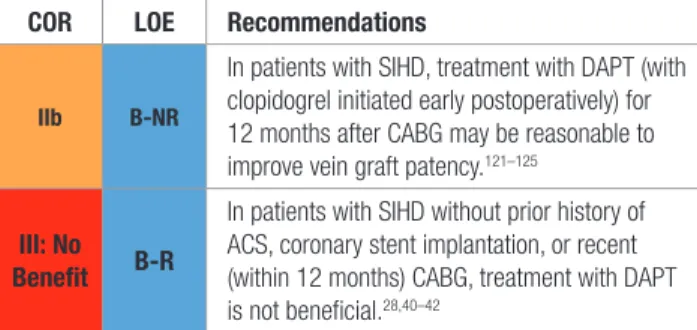
Recommendations for Duration of DAPT in Patients Undergoing CABG
CoR LoE Recommendations
I C-Eo
In patients treated with DAPT after coronary stent implantation who subsequently undergo CABG, P2Y12 inhibitor therapy should be resumed postoperatively so that DAPT continues until the recommended duration of therapy is completed.
I C-LD
In patients with ACS (NSTE-ACS or STEMI) being treated with DAPT who undergo CABG, P2Y12 inhibitor therapy should be resumed after CABG to complete 12 months of DAPT therapy after ACS.52–54,118–120
CLINIC
AL ST
ATEMENTS
AND GUIDELINES
Aspirin therapy after CABG improves vein graft patency, particularly during the first postoperative year, and reduces MACE .126–130 In the CURE study,52 the reduction in ischemic
events in patients treated with aspirin plus clopidogrel who underwent CABG was consistent with the study population as a whole, although benefit was primarily observed mainly before the procedure .118 A propensity score analysis of a
Danish administrative database120 demonstrated during
a mean follow-up of 466±144 days significantly fewer deaths in patients treated with aspirin plus clopidogrel than in those treated with aspirin alone, although there was no reduction in the incidence of recurrent MI .
The impact of clopidogrel on graft occlusion after on-pump CABG has been evaluated in 5 studies (Data Supplement 10) . Several randomized and nonrandom-ized trials and a post hoc substudy analysis of patients predominantly undergoing on-pump CABG did not dem-onstrate any differences in graft patency between anti-platelet monotherapy and DAPT when assessed at fol-low-up ranging from 1 month to 1 year after CABG .131–134
In the only RCT to demonstrate a benefit of DAPT, vein graft patency 3 months after CABG was significantly higher in patients treated with clopidogrel and aspirin (100 mg) than in those receiving aspirin monotherapy .121
Two meta-analyses and 1 systematic overview as-sessed the potential benefits of DAPT after CABG and reported mixed results122,123,135 (Data Supplement 10) . In
the largest meta-analysis of patients pooled from 5 RCTs and 6 observational studies,122 DAPT was associated
with reduced vein graft occlusion and 30-day mortality rate as compared with aspirin monotherapy . A meta-analysis of only the 5 RCTs123 showed that DAPT was
associated with a significantly lower vein graft occlusion at 1 year versus antiplatelet monotherapy but with no im-provement in arterial graft patency . Major bleeding after surgery was more frequent with DAPT .122,123,135
The benefits of DAPT in off-pump CABG patients were noted in terms of improved graft patency124,125 and
clinical outcome136 in single-center observational
stud-ies124,136 and an RCT125 (Data Supplement 10) .
Only data from post hoc analyses are available on the utility of newer P2Y12 inhibitors in patients with ACS who un-dergo CABG . In a retrospective analysis of patients in the TRITON-TIMI 38 study54 who underwent CABG,137 prasugrel
treatment was associated with a significantly lower 30-day mortality rate than that of clopidogrel and more postopera-tive blood loss . A post hoc analysis of patients who under-went CABG in the PLATO study53 showed that the primary
endpoint at 1 year was similar for both treatments, but a significant reduction in cardiovascular mortality was noted with ticagrelor compared with clopidogrel .138,139
Issues related to the timing of discontinuation of DAPT before CABG are beyond the scope of this update but are addressed in the 2011 CABG guideline .10 Figure 3
summa-rizes recommendations for the management and duration of P2Y12 inhibitor therapy in patients undergoing CABG .
6. RECoMMENDATIoNS FoR DURATIoN oF
DAPT IN PATIENTS WITH SIHD
See Data Supplements 1 to 4 and 6 to 11 for evidence
supporting these recommendations .
I B-NR
In patients treated with DAPT, a daily aspirin dose of 81 mg (range, 75 mg to 100 mg) is recommended.56–60,75–78
IIb B-NR
In patients with SIHD, DAPT (with clopidogrel initiated early postoperatively) for 12 months after CABG may be reasonable to improve vein graft patency.121–125
Recommendations for Duration of DAPT in Patients Undergoing CABG (Continued)
CoR LoE Recommendations
Recommendations for Duration of DAPT in Patients With SIHD
CoR LoE Recommendations
I A
In patients with SIHD treated with DAPT after BMS implantation, P2Y12 inhibitor therapy (clopidogrel) should be given for a minimum of 1 month.94,95
I B-RSR
In patients with SIHD treated with DAPT after DES implantation, P2Y12 inhibitor therapy (clopidogrel) should be given for at least 6 months.17,18,21,30,96,97
I B-NR
In patients treated with DAPT, a daily aspirin dose of 81 mg (range, 75 mg to 100 mg) is recommended.56–60,75–78
IIb ASR
In patients with SIHD being treated with DAPT for an MI that occurred 1 to 3 years earlier who have tolerated DAPT without a bleeding complication and who are not at high bleeding risk (eg, prior bleeding on DAPT, coagulopathy, oral anticoagulant use), further continuation of DAPT may be reasonable.28,30,40,41,44
IIb ASR
In patients with SIHD treated with BMS or DES implantation who have tolerated DAPT without a bleeding complication and who are not at high bleeding risk (eg, prior bleeding on DAPT, coagulopathy, oral anticoagulant use), continuation of DAPT with clopidogrel for longer than 1 month in patients treated with BMS or longer than 6 months in patients treated with DES may be reasonable.16,22,24–26,30,50
IIb C-LD
In patients with SIHD treated with DAPT after DES implantation who develop a high risk of bleeding (eg, treatment with oral anticoagulant therapy), are at high risk of severe bleeding complication (eg, major intracranial surgery), or develop significant overt bleeding,
discontinuation of P2Y12 inhibitor therapy after 3 months may be reasonable.19,20,34,36,37
September 6, 2016 Circulation. 2016;134:e123–e155. DOI: 10.1161/CIR.0000000000000404 e136
For the purposes of this update, patients with a his-tory of ACS >1 year prior who have remained free of re-current ACS are considered to have transitioned to SIHD . In the CHARISMA trial, which randomized patients with established atherosclerosis or at high risk of clinical ath-erosclerotic disease to either DAPT (with clopidogrel) or aspirin monotherapy, no significant reduction was found in ischemic effects at a median follow-up of 28 months with DAPT, but a 0 .4% absolute increase was seen in severe bleeding .40 In a post hoc analysis of patients enrolled in
the study with prior MI, a 1 .7% absolute decrease in the composite endpoint of cardiovascular death, MI, or stroke events was observed with DAPT, but no benefit was seen in
Figure 2. Treatment algorithm for duration of P2y12 inhibitor therapy in patients treated with PCI.
Colors correspond to Class of Recommendation in Table 1 . Arrows at the bottom of the figure denote that the optimal duration of
prolonged DAPT is not established . Clopidogrel is the only currently used P2Y12 inhibitor studied in patients with SIHD undergoing
PCI . Aspirin therapy is almost always continued indefinitely in patients with coronary artery disease . *High bleeding risk denotes those who have or develop a high risk of bleeding (eg, treatment with oral anticoagulant therapy) or are at increased risk of severe bleeding complication (eg, major intracranial surgery) . ACS indicates acute coronary syndrome; BMS, bare metal stent; DAPT, dual antiplatelet therapy; DES, drug-eluting stent; PCI, percutaneous coronary intervention; and SIHD, stable ischemic heart disease .
IIb B-NR
In patients with SIHD, treatment with DAPT (with clopidogrel initiated early postoperatively) for 12 months after CABG may be reasonable to improve vein graft patency.121–125
III: No Benefit B-R
In patients with SIHD without prior history of ACS, coronary stent implantation, or recent (within 12 months) CABG, treatment with DAPT is not beneficial.28,40–42
SR indicates systematic review.
Recommendations for Duration of DAPT in Patients With SIHD (Continued)
CoR LoE Recommendations
CLINIC
AL ST
ATEMENTS
AND GUIDELINES
those with CAD without prior MI (Data Supplement 4) .40,41
In the PEGASUS-TIMI 54 trial, in which stable patients 1 to 3 years after MI with additional high-risk features were randomized to either DAPT (with ticagrelor 60 mg or 90 mg twice daily) or continued aspirin monotherapy, a mean of 33 months of DAPT led to a 1 .2% to 1 .3% absolute reduction in ischemic events and a 1 .2% to 1 .5% increase in major bleeding .28 In subgroup analysis, the greatest
re-duction in ischemic events was in patients in whom P2Y12 inhibitor therapy either had not been discontinued or had been discontinued ≤30 days before enrollment in the study (absolute reduction in MACE: 1 .9% to 2 .5%), and no benefit was seen in patients in whom P2Y12 inhibitor therapy had been discontinued >1 year before enrollment in the study .42 On the basis of all studies of DAPT in
post-MI patients, extended DAPT for approximately 18 to 36 months leads to an absolute decrease in ischemic compli-cations of ≈1% to 3% and an absolute increase in bleeding complications of ≈1% (Data Supplement 4) .28,40,41,43,44
DAPT is not recommended in patients with SIHD with-out prior stent implantation and no history of ACS or MI . Decisions about treatment with and duration of DAPT in patients with SIHD with a history of MI or coronary stent implantation require a thoughtful assessment of the ben-efit/risk ratio, integration of study data, and consider-ation of patient preference .
Figure 4 summarizes recommendations on duration of P2Y12 inhibitor therapy in patients with SIHD .
7. ACUTE CoRoNARy SyNDRoME
(NSTE-ACS AND STEMI)
7.1. Duration of DAPT in Patients With ACS
Treated With Medical Therapy Alone (Without
Revascularization or Fibrinolytic Therapy):
Recommendations
See Data Supplements 4 to 6 for evidence supporting
these recommendations .
Recommendations for Duration of DAPT in Patients With ACS Treated with Medical Therapy Alone
CoR LoE Recommendations
I B-R
In patients with ACS who are managed with medical therapy alone (without revascularization or fibrinolytic therapy) and treated with DAPT, P2Y12 inhibitor therapy (clopidogrel or ticagrelor) should be continued for at least 12 months.52,71,140,141
I B-NR
In patients treated with DAPT, a daily aspirin dose of 81 mg (range, 75 mg to 100 mg) is recommended.56–60,75–78
IIa B-R
In patients with NSTE–ACS who are managed with medical therapy alone (without revascularization or fibrinolytic therapy) and treated with DAPT, it is reasonable to use ticagrelor in preference to clopidogrel for maintenance P2Y12 inhibitor therapy.53,71
Figure 3. Treatment algorithm for management and duration of P2y12 inhibitor therapy in patients undergoing CABG.
Colors correspond to Class of Recommendation in Table 1 . Aspirin therapy is almost always continued indefinitely in patients with coronary artery disease . *Duration of DAPT therapy can vary from as little as 4 weeks to >12 months, depending on the clinical setting and bleeding risk . ACS indicates acute coronary syndrome; CABG, coronary artery bypass graft surgery; DAPT, dual antiplatelet therapy; NSTE-ACS, non–ST-elevation acute coronary syndromes; PCI, percutaneous coronary intervention; post-op, postoperatively; SIHD, stable ischemic heart disease; and S/P, status post .