HIV pre-exposure prophylaxis for women and infants prevents vaginal
and oral HIV transmission in a preclinical model of HIV infection
Martina Kovarova, Uma Shanmugasundaram, Caroline E. Baker, Rae Ann Spagnuolo, Chandrav De,
Christopher C. Nixon, Angela Wahl* and J. Victor Garcia
Division of Infectious Diseases, Center for AIDS Research, University of North Carolina at Chapel Hill, School of Medicine, Chapel Hill, NC, USA
*Corresponding author. Tel:+1-919-843-9555; Fax:+1-919-966-6870; E-mail: [email protected]
Received 5 March 2016; returned 4 May 2016; revised 7 June 2016; accepted 9 June 2016
Background:
Approximately 1.5 million HIV-positive women become pregnant annually. Without treatment, up
to 45% will transmit HIV to their infants, primarily through breastfeeding. These numbers highlight that HIV
acquisition is a major health concern for women and children globally. They also emphasize the urgent need
for novel approaches to prevent HIV acquisition that are safe, effective and convenient to use by women and
children in places where they are most needed.
Methods:
4
′-Ethynyl-2-fluoro-2
′-deoxyadenosine, a potent NRTI with low cytotoxicity, was administered orally to
NOD/SCID/
g
c
2/2mice and to bone marrow/liver/thymus (BLT) humanized mice, a preclinical model of HIV
infec-tion. HIV inhibitory activity in serum, cervicovaginal secretions and saliva was evaluated 4 h after administrainfec-tion.
4
′-Ethynyl-2-fluoro-2
′-deoxyadenosine’s ability to prevent vaginal and oral HIV transmission was evaluated
using highly relevant transmitted/founder viruses in BLT mice.
Results:
Strong HIV inhibitory activity in serum, cervicovaginal secretions and saliva obtained from animals after
a single oral dose of 4
′-ethynyl-2-fluoro-2
′-deoxyadenosine (10 mg/kg) demonstrated efficient drug penetration
into relevant mucosal sites. A single daily oral dose of 4
′-ethynyl-2-fluoro-2
′-deoxyadenosine resulted in efficient
prevention of vaginal and oral HIV transmission after multiple high-dose exposures to transmitted/founder
viruses in BLT humanized mice.
Conclusions:
Our data demonstrated that 4
′-ethynyl-2-fluoro-2
′-deoxyadenosine efficiently prevents both
vagi-nal and oral HIV transmission. Together with 4
′-ethynyl-2-fluoro-2
′-deoxyadenosine’s relatively low toxicity and
high potency against drug-resistant HIV strains, these data support further clinical development of 4
′-ethynyl-2-fluoro-2
′-deoxyadenosine as a potential pre-exposure prophylaxis agent to prevent HIV transmission in women
and their infants.
Introduction
HIV acquisition is a major health concern for women and children
globally. Most new HIV infections occur in women living in
resource-limited countries where gender, cultural and economic
barriers limit the ability of women to access and use HIV
preven-tion oppreven-tions.
1The majority of HIV-positive women are of
repro-ductive age and 1.5 million HIV-positive women become
pregnant every year.
2Without treatment, up to 45% will transmit
HIV to their infants, mostly through breastfeeding.
3In
resource-limited countries, HIV-positive women breastfeed their infants
despite the risk of HIV transmission due to the health benefits
of breast milk. Although paediatric HIV infection is associated
with an accelerated course of disease and increased mortality,
only 31% of HIV-infected children receive ART.
4Therefore, there
is an urgent need for novel approaches to prevent HIV acquisition
that are safe, effective and convenient to use by women and
chil-dren in places where they are most needed.
Antiretroviral (ARV) pre-exposure prophylaxis (PrEP), a
preven-tion strategy in which ARVs are administered to HIV-uninfected
individuals, can significantly reduce HIV transmission.
5–8In
women, PrEP can reduce vaginal HIV transmission up to 75%.
7,8Mother-to-child HIV transmission through breastfeeding is also
significantly reduced by daily administration of ARVs to infants
and/or their mothers.
9–12Despite the demonstrated efficacy of
PrEP to reduce HIV transmission to women and infants, these
strategies often require extended ARV use prompting concerns
about potential drug toxicity and the emergence and
transmis-sion of drug-resistant HIV strains if PrEP fails; e.g. infants that
receive daily oral nevirapine, the current first-line ARV for infant
PrEP, are at a significantly increased risk of acquiring nevirapine
resistance if infected.
13For these reasons, it is essential to develop
#The Author 2016. Published by Oxford University Press on behalf of the British Society for Antimicrobial Chemotherapy. All rights reserved.
novel ARVs with low toxicity and increased potency against
clinic-ally relevant HIV strains.
4
′-Ethynyl-2-fluoro-2
′-deoxyadenosine (EFdA, MK-8591), a
novel NRTI, has potent anti-HIV activity several orders of
magni-tude higher than currently approved NRTIs
14–16and an improved
intracellular half-life.
16,17Importantly, 4
′-ethynyl-2-fluoro-2
′-deoxyadenosine exhibits low cytotoxicity due to nearly negligible
incorporation into human mitochondrial DNA by DNA polymerase
g
.
14,18,19Furthermore, 4
′-ethynyl-2-fluoro-2
′-deoxyadenosine
retains significant potency against a broad range of clinically
important drug-resistant isolates, including HIV strains containing
the K65R RT mutation, which is associated with resistance to
teno-fovir, an ARV included in all PrEP regimens evaluated in women to
date.
18,20Studies on the
in vivo
protective efficacy of 4
′-ethynyl-2-fluoro-2
′-deoxyadenosine PrEP are very limited
21and it is
cur-rently not known if 4
′-ethynyl-2-fluoro-2
′-deoxyadenosine PrEP
can prevent vaginal or oral HIV transmission of clinically relevant
HIV-1 strains. In this study, we utilized bone marrow/liver/thymus
(BLT) humanized mice
22–28individually bioengineered from NOD/
SCID/
g
c
2/2(NSG) immunodeficient mice, as a preclinical
in vivo
model to evaluate the efficacy of 4
′-ethynyl-2-fluoro-2
′-deoxy-adenosine PrEP to prevent vaginal and oral HIV transmission
fol-lowing multiple high-dose challenges with relevant transmitted/
founder (T/F) viruses. Our results support further clinical
develop-ment of 4
′-ethynyl-2-fluoro-2
′-deoxyadenosine as a potential
PrEP agent to prevent HIV transmission to women and their
infants.
Materials and methods
Experimental design
To evaluate penetration of 4′-ethynyl-2-fluoro-2′-deoxyadenosine into the cervicovaginal and oral mucosa, cervicovaginal secretions (CVS) and saliva were collected 4 h after a single oral administration of 10 mg/kg 4′-ethynyl-2-fluoro-2′-deoxyadenosine.In vitroHIV inhibitory activity of serum, CVS and saliva obtained from 4′-ethynyl-2-fluoro-2′ -deoxyadenosine-treated and control untreated animals was assessed with a TZM-bl cell-based HIV infection assay.
The efficacy of oral 4′-ethynyl-2-fluoro-2′-deoxyadenosine PrEP to pre-vent vaginal and oral HIV infectionin vivowas evaluated by exposing 4′-ethynyl-2-fluoro-2′-deoxyadenosine-treated and untreated BLT huma-nized mice vaginally (HIV-1JR-CSF, HIV-1CH040and HIV-1RHPA) or orally
(HIV-1JR-CSF, HIV-1CH4419and HIV-1THRO) to three consecutive high-dose
HIV challenges. 4′-Ethynyl-2-fluoro-2′-deoxyadenosine was administered to BLT mice via oral gavage (10 mg/kg) once daily for 8 days and mice were challenged with HIV 3 – 4 h after the second, fourth and sixth 4′-ethynyl-2-fluoro-2′-deoxyadenosine doses. A power analysis was per-formed to determine experimental group sizes needed to achieve90% power. BLT mice were randomly assigned to 4′-ethynyl-2-fluoro-2′ -deoxyadenosine-treated and untreated (control) HIV exposure groups and a Mann – WhitneyU-test was performed to ensure that peripheral blood humanization levels (%hCD45 and %hCD4) between exposure groups were equivalent. Following HIV exposure, HIV infection was moni-tored longitudinally in the peripheral blood of BLT mice by measuring plasma HIV-RNA levels with real-time PCR and CD4+T cell levels with flow cytometry. At necropsy, HIV-DNA levels in tissues were determined using real-time PCR (assay limit of detection: 10 copies). Protection in 4′-ethynyl-2-fluoro-2′-deoxyadenosine-treated BLT mice was defined by the absence of detectable HIV-RNA in peripheral blood plasma and HIV-DNA in tissues at necropsy (5 – 8 weeks post-4′-ethynyl-2-fluoro-2′ -deoxyadenosine initiation). Amplified HIV gag was sequenced to
determine the identity of the transmitting virus(es). The study was not blinded and no HIV-exposed 4′-ethynyl-2-fluoro-2′ -deoxyadenosine-treated or un-deoxyadenosine-treated BLT mice were excluded from the data analysis and no outliers were defined.
Ethics
Mice were maintained under specific pathogen-free conditions by the Division of Laboratory Animal Medicine at the University of North Carolina – Chapel Hill. All animal experiments were conducted following NIH guidelines for the housing and care of laboratory animals and in accordance to protocols reviewed and approved by the Institutional Animal Care and Use Committee at the University of North Carolina – Chapel Hill (permit number 15-168).
Preparation of BLT humanized mice
BLT humanized mice were prepared as previously described.22–24,26,28
Briefly, a sandwich of human thymus– liver– thymus tissue was implanted under the kidney capsule of irradiated (200 rads) female NSG mice (The Jackson Laboratory, Bar Harbor, ME, USA). Following tissue implantation, mice received autologous CD34+haematopoietic stem cells via tail vein injection. Starting at 8 weeks post-transplantation, human immune cell reconstitution was monitored in the peripheral blood of BLT mice longitu-dinally by flow cytometry as previously described.22–24,26,28BLT mice are
reconstituted with a human immune system generatedde novo. The pres-ence of human CD4+T cells, macrophages and dendritic cells throughout the female reproductive tract (FRT), oral cavity and upper gastrointestinal tract that render BLT mice susceptible to vaginal and oral HIV transmission was previously described.23–25
4
′-Ethynyl-2-fluoro-2
′-deoxyadenosine preparation,
administration and sample collection
4′-Ethynyl-2-fluoro-2′-deoxyadenosine (kindly provided by Dr Parniak, University of Pittsburgh School of Medicine) was reconstituted in sterile PBS at a concentration of 10 mg/mL. 4′-Ethynyl-2-fluoro-2′ -deoxyadeno-sine (10 mg/kg) was administered to mice orally once daily by oral gavage. Peripheral blood was collected from animals with capillary tubes coated with or without EDTA to isolate plasma or serum, respectively. CVS were obtained by performing a cervicovaginal lavage with sterile PBS (three washes of 20mL each,60mL total volume). Saliva was collected follow-ing an intraperitoneal injection of 0.1 – 0.3 mg pilocarpine in sterile PBS (Sigma-Aldrich, St Louis, MO, USA) to stimulate saliva production. All sam-ples were stored at2808C until analysis.
Generation and quantification of HIV
Stocks of HIV-1JR-CSF, HIV-1CH040, HIV-1RHPA, HIV-1CH4419and HIV-1THRO29–33
were generated as previously described25,28and titred on TZM-bl cells (NIH AIDS Research and Reference Reagent Program) to quantify the number of tissue culture infectious units (TCIU)/mL.
TZM-bl cell culture and in vitro HIV-1 inhibition
by 4
′-ethynyl-2-fluoro-2
′-deoxyadenosine
We used a TZM-bl cell-based HIV infection assay to evaluate thein vitro HIV inhibitory activity of serum, CVS and saliva obtained from 4′-ethynyl-2-fluoro-2′-deoxyadenosine-treated animals. TZM-bl cells were maintained in DMEM containing 10% FBS, 25 mM HEPES, 500 U/mL penicillin and 500mg/mL streptomycin (TZM-bl medium) and cultured at 378C and 5% CO2. TZM-bl cells were plated in 96-well plates at a density
of 1×10⁵cells per well in TZM-bl medium. The next day, the medium was
removed and 100mL of diluted serum, CVS or saliva from 4′ -ethynyl-2-fluoro-2′-deoxyadenosine-treated animals collected 4 h after drug
administration or from untreated control animals was added. Serum was diluted 1:20, 1:100, 1:500, 1:2500, 1:12500 and 1:62500. CVS and saliva were diluted 1:20, 1:40, 1:80, 1:160, 1:320 and 1:640. Cells were incubated for 30 min and 100mL of TZM-bl medium containing 40mg/mL DEAE-dextran and 3×10³ TCIU of HIV-1
JR-CSF per well was added.
Approximately 48 h later, the medium was removed and the luciferase substrate One-Glo reagent (Promega, Madison, WI, USA) supplemented with 0.2%Triton X-100 was added to allow for the measurement of lucifer-ase activity and to inactivate virus. Luciferlucifer-ase was measured with a SpectraMax M3 Spectrometer (Molecular Devices, Sunnyvale, CA, USA) and the results normalized to the luciferase activity of cells infected with HIV in the absence of serum, CVS or saliva and expressed as a percentage of decrease in luciferase activity.
HIV exposure of BLT mice
To evaluate the ability of 4′-ethynyl-2-fluoro-2′-deoxyadenosine to pre-vent vaginal HIV transmission following multiple virus challenges, BLT mice were exposed vaginally to HIV-1JR-CSF (first challenge virus),
HIV-1CHO40(second challenge virus) and HIV-1RHPA(third challenge virus)
4 h after administration of the second, fourth and sixth 4′ -ethynyl-2-fluoro-2′-deoxyadenosine oral dose. Anaesthetized BLT mice were exposed vaginally to 3.0×10⁵TCIU of HIV by pipetting virus (20mL) directly
into the vaginal cavity. BLT mice were exposed orally to 1.4×10⁶TCIU of
HIV-1JR-CSF(first challenge virus), HIV-1CH4419(second challenge virus) or
HIV-1THRO(third challenge virus) 3 –4 h after administration of the second,
fourth and sixth 4′-ethynyl-2-fluoro-2′-deoxyadenosine oral dose. Oral exposures were performed by placing anaesthetized BLT mice on their backs and pipetting virus (20mL resuspended in RPMI medium) into their oral cavity as previously described.25,27
Analysis of HIV infection in BLT mice
HIV infection was monitored longitudinally in the peripheral blood of BLT mice by measuring HIV-RNA levels in plasma with a real-time PCR viral load assay (assay sensitivity of 750 HIV-RNA copies/mL) and by determin-ing CD4+ T cell levels with flow cytometric analysis as previously described.22–24,26,28The presence of HIV-DNA in tissues (spleen, lymph
nodes, bone marrow, human thymus, liver, lung and FRT) collected from BLT mice at necropsy was determined by real-time PCR analysis of DNA extracted from 5×10⁴–4×10⁶mononuclear cells (assay limit of detection:
10 copies). Mononuclear cells were isolated as previously described.34,35
Briefly, mononuclear cells from human thymus, lymph nodes and spleen were isolated by passing tissue through a cell strainer. Bones were homo-genized with a mortar and pestle and homogenate passed through a cell strainer to isolate bone marrow cells. The lung, liver and FRT were cut into small pieces, digested in enzyme cocktail containing collagenase D and DNAse for 30 min at 378C and then homogenized through a cell strainer. Mononuclear cells were isolated from lung and liver homogenate with a 40%– 70% Percoll gradient. Red blood cells were lysed with ammonium/ chloride/potassium lysis buffer. As a control for the presence of DNA extracted from human cells, all samples were tested for the presence of human gamma globin DNA by real-time PCR (range: 515 – 11 807 547 human gamma globin DNA copies).
Sequence analysis of transmitted viruses
The transmitting virus(es) in HIV-infected BLT mice exposed to multiple viruses was/were identified by sequence analysis. Viral RNA was isolated from plasma using QIAamp viral RNA columns (Qiagen, Hilden, Germany) according to the manufacturer’s protocol and cDNA was gener-ated using Superscript III Reverse Transcriptase (Invitrogen, Carlsbad, CA, USA) with the primer 5′-CTTCCAATTATGTTGACAGGTGTAGG-3′. cDNA was amplified by nested PCR using the Expand High Fidelity PCR System (Roche, Mannheim, Germany). PCR primers were designed to anneal in
regions with the fewest possible primer mismatches to HIV-1CH040,
HIV-1JR-CSF, HIV-1CH4419, HIV-1RHPA and HIV-1THROsequences. Primer
sequences were as follows: outer forward primer, 5′-CTCAATAAA GCTTGCCTTGAGTGC-3′; outer reverse primer 5′-CTTCCAATTATGTTGA CAGGTGTAGG-3′; inner forward primer, 5′-GTGTGGAAAATCTCTAGCA GTGGC-3′; inner reverse primer 5′-CTGTATCATCTGCTCCTGTATCTAATA GAGC-3′. The reverse inner primer 5′-CTGTATCATCTGCTCCTGTGTCTAA GAG-3′was used to sequence HIV-1CH4419to increase sensitivity and
ensure detection. Amplified viral DNA ofgagwas sequenced and com-pared with the sequences of challenge viruses.
To identify the emergence of drug-resistant mutations in the break-through BLT mouse infected with HIV-1JR-CSF despite 4′
-ethynyl-2-fluoro-2′-deoxyadenosine PrEP, the reverse transcriptase of HIV-1JR-CSF
was sequenced. Viral RNA was extracted from plasma using QIAamp viral RNA kit (Qiagen). cDNA was generated from RNA with Superscript III RT (Invitrogen) with primer 5′-GCTCTATTAGATACAGGAGC-3′followed by nested PCR with Expand High Fidelity Kit (Roche) to amplify 1.5 kb region of reverse transcriptase. The following primers were used: forward outer primer 5′-CCTAATGCATATTGTGAGTCTG-3′, reverse outer primer 5′-GCT CTATTAGATACAGGAGC-3′, forward inner primer 5′-CCTGCAAAGCTAGG TGAATTGC-3′ reverse inner primer 5′-GTAGGACCTACACCTGTCAAC-3′. Amplified viral DNA of reverse transcriptase was sequenced and compared with the sequence of HIV-1JR-CSF.
FinchTV software (Geospiza, Seattle, WA, USA) was used to analyse sequence chromatograms, NCBI BLAST was used to identify sequences and ClustalW was used to align sequences.
Statistical analysis
A Mantel – Cox log-rank test was used to compare protection between untreated and 4′-ethynyl-2-fluoro-2′-deoxyadenosine-treated BLT mice. A two-sided Mann–WhitneyU-test was used to compare thein vitroHIV inhibitory activity of serum, CVS and saliva samples obtained from untreated and 4′-ethynyl-2-fluoro-2′-deoxyadenosine-treated animals and the CD4+T cell levels in the peripheral blood and tissues of protected and HIV-infected BLT mice. All statistical analyses were performed using GraphPad Prism software (version 6) (La Jolla, CA, USA).
Results
Efficient penetration of 4
′-ethynyl-2-fluoro-2
′-deoxyadenosine into the cervicovaginal and
oral mucosa
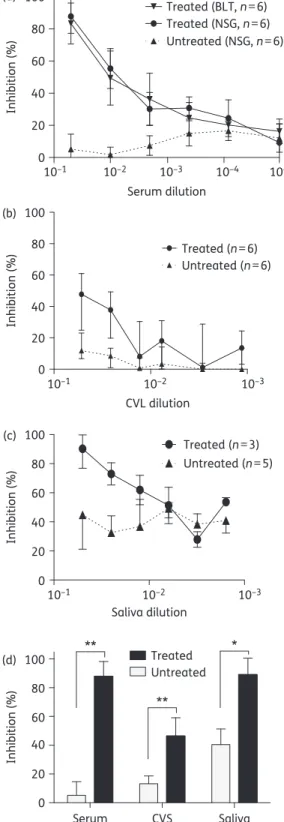
inhibitory activity (Figure
1
a and d) suggesting comparable
distribution and penetration of active 4
′-ethynyl-2-fluoro-2
′-deoxyadenosine in peripheral blood from both types of mice
(Figure
1
a). Similarly, we observed strong HIV inhibitory activity
in the CVS from 4
′-ethynyl-2-fluoro-2
′-deoxyadenosine-treated
mice (
P
¼
0.0016) (Figure
1
b and d). Consistent with the known
presence of anti-HIV factors in saliva,
36HIV infection was
decreased in the presence of saliva from untreated (control)
ani-mals (Figure
1
c and d). Nevertheless, we were able to document
strong HIV inhibitory activity in the saliva from 4
′-ethynyl-2-fluoro-2
′-deoxyadenosine-treated animals (
P
¼
0.0161) well
above that in the saliva from untreated mice (Figure
1
d).
Collectively, our analysis indicates that active 4
′-ethynyl-2-fluoro-2
′-deoxyadenosine is systemically distributed after a single
oral administration and that it efficiently penetrates into the FRT
and oral cavity, the two primary sites of HIV acquisition in women
and infants.
4
′-Ethynyl-2-fluoro-2
′-deoxyadenosine PrEP prevents
vaginal HIV transmission following multiple high-dose
challenges with T/F viruses
To assess the ability of 4
′-ethynyl-2-fluoro-2
′-deoxyadenosine to
prevent vaginal HIV transmission, we administered 4
′-ethynyl-2-fluoro-2
′-deoxyadenosine (10 mg/kg) orally to BLT mice
(
n
¼
11) once daily for 8 days. Six untreated BLT mice served as
positive controls. Mice were exposed vaginally to a high dose of
HIV-1
JR-CSF(first challenge), HIV-1
CH040(second challenge) and
HIV-1
RHPA(third challenge) 4 h after the second, fourth and
sixth 4
′-ethynyl-2-fluoro-2
′-deoxyadenosine administration,
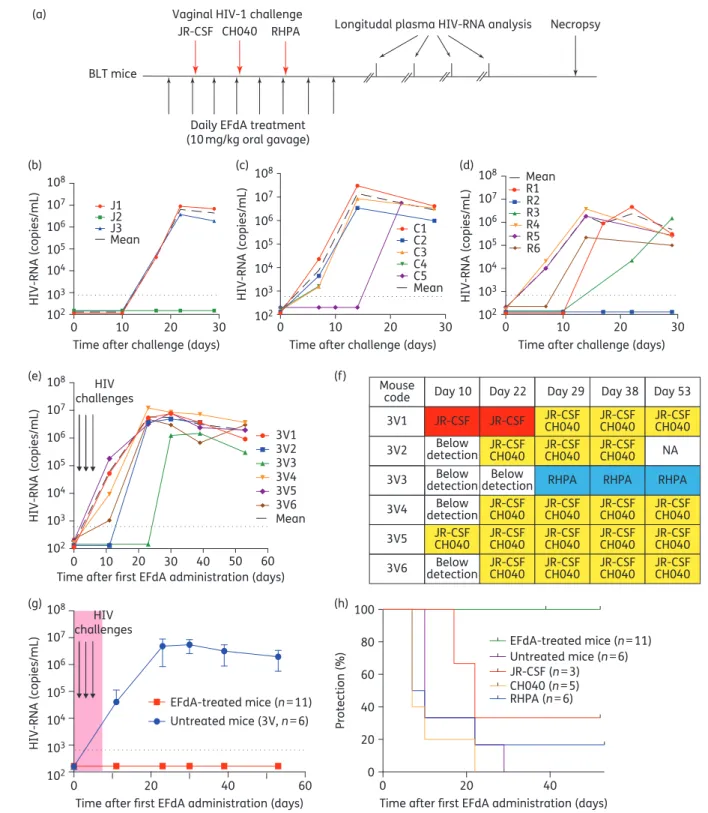
respectively (Figure
2
a). We then monitored the levels of
HIV-RNA and CD4
+
T cells in peripheral blood longitudinally.
Protection from HIV infection was confirmed at necropsy and
was defined as: (i) absence of detectable HIV-RNA in plasma; (ii)
absence of HIV-DNA in tissues; and (iii) lack of CD4
+
T cell
depletion.
HIV transmission was observed in control BLT mice following a
single individual challenge to HIV-1
JR-CSF, HIV-1
CH040or HIV-1
RHPA(Figure
2
b to d). We also detected HIV-RNA in the plasma of all
control mice challenged vaginally after repeated single exposures
to the three different viruses (Figure
2
e). Sequence analysis of
plasma HIV-RNA revealed that one or more viruses were
transmit-ted in BLT mice challenged with three different viruses. The
major-ity of BLT mice (five of six) were co-infected with HIV-1
JR-CSFand
HIV-1
CH040the first and second challenge viruses, respectively
(Figure
2
f). One animal was infected with HIV-1
RHPAonly, the
third challenge virus (Figure
2
f).
In stark contrast, we did not detect HIV-RNA in any of the
4
′-ethynyl-2-fluoro-2
′-deoxyadenosine-treated BLT mice exposed
Serum CVS Saliva 0
20 40 60 80 100
Untreated Treated
**
*
**
(a)
(b)
Saliva dilution
Treated (n=3) Untreated (n=5) 10–1
10–1 10–2 10–3
10–1 10–2 10–3
10–2 10–3 10–4 10–5
0 20 40 60 80 100
Serum dilution
Inhibition (%)
Inhibition (%)
Untreated (NSG, n=6) Treated (NSG, n=6) Treated (BLT, n=6)
0 20 40 60 80 100
(c)
Inhibition (%)
(d)
Inhibition (%)
0 20 40 60 80 100
CVL dilution
Treated (n=6) Untreated (n=6)
Figure 1. Orally administered 4′-ethynyl-2-fluoro-2′-deoxyadenosine distributes and penetrates into relevant mucosal sites of vaginal and oral HIV transmission. BLT and NSG mice were dosed orally with 10 mg/kg 4′-ethynyl-2-fluoro-2′-deoxyadenosine or left untreated. Four hours later, (a) serum (six untreated mice and six 4′-ethynyl-2-fluoro-2′ -deoxyadenosine-treated NSG and BLT mice), (b) CVS (six 4′ -ethynyl-2-fluoro-2′-deoxyadenosine-treated and six untreated NSG mice) and (c) saliva (three 4′-ethynyl-2-fluoro-2′-deoxyadenosine-treated and five
untreated NSG mice) were collected and analysed for their ability to inhibitin vitroHIV-1JR-CSFinfection of TZM-bl cells. Inhibition is expressed
as the percentage decrease in luciferase activity. Results are normalized to the luciferase activity of cells infected with HIV in the absence of serum, CVS or saliva. (d)In vitroHIV inhibitory activity of serum, CVS and saliva from 4′-ethynyl-2-fluoro-2′-deoxyadenosine-treated and untreated mice (diluted 1:20). The HIV inhibitory activity of serum, CVS and saliva from 4′-ethynyl-2-fluoro-2′-deoxyadenosine-treated and untreated mice was compared using a two-sided Mann–WhitneyU-test (*P,0.05, **P,0.01).
0 10 20 30 102 103 104 105 106 107 108 102 103 104 105 106 107 108
Time after challenge (days) Time after challenge (days) Time after challenge (days)
HIV-RNA (copies/mL)
J1 J2 J3 Mean
0 10 20 30 C1 C2 C3 C4 C5 Mean
0 10 20 30 R1 R2 R3 R4 R5 R6 Mean
0 10 20 30 40 50 60 Time after first EFdA administration (days)
HIV-RNA (copies/mL) 3V1 3V2 3V3 HIV challenges 3V4 3V5 3V6 Mean
0 20 40 60 Time after first EFdA administration (days)
Untreated mice (3V, n=6) EFdA-treated mice (n=11)
0 20 40 0 20 40 60 80 100
Time after first EFdA administration (days)
Protection (%)
JR-CSF (n=3) CH040 (n=5) RHPA (n=6)
EFdA-treated mice (n=11) Untreated mice (n=6) HIV challenges (a) (b) 102 103 104 105 106 107 108 HIV-RNA (copies/mL) (c) 102 103 104 105 106 107 108 HIV-RNA (copies/mL) (d) (e) (f) (h) 102 103 104 105 106 107 108 HIV-RNA (copies/mL) (g) Below detection Below detection
Day 10 Day 29 Day 38 Mouse
code Day 22 Day 53 3V1 3V6 3V5 3V4 3V3 3V2 JR-CSF JR-CSF JR-CSF CH040 JR-CSF CH040 JR-CSF CH040 JR-CSF CH040 JR-CSF CH040 JR-CSF CH040 JR-CSF CH040 JR-CSF CH040 JR-CSF CH040 JR-CSF
CH040 JR-CSFCH040 JR-CSFCH040 JR-CSF
CH040 JR-CSFCH040 JR-CSFCH040 JR-CSF
CH040 JR-CSFCH040 JR-CSFCH040 NA RHPA RHPA RHPA JR-CSF
CH040 BLT mice
JR-CSF CH040 RHPA Longitudal plasma HIV-RNA analysis Necropsy Vaginal HIV-1 challenge
Daily EFdA treatment (10mg/kg oral gavage)
Below detection Below detection Below detection
Figure 2. Oral EFdA PrEP significantly reduces HIV transmission following multiple high-dose vaginal HIV challenges. (a) EFdA (10 mg/kg) was administered to BLT mice orally for 8 days. Untreated (n¼6) and EFdA-treated (n¼11) BLT mice were exposed vaginally to a high dose (3.0×10⁵
TCIU) of HIV-1JR-CSF, HIV-1CH040and HIV-1RHPA4 h after administration of the second, fourth and sixth EFdA doses, respectively. Plasma HIV-RNA
levels were monitored longitudinally and tissue HIV-DNA levels were analysed at necropsy. Plasma HIV-RNA levels of untreated BLT mice exposed vaginally to a single high dose of HIV-1JR-CSF(n¼3, J1 – J3) (b), HIV-1CH040(n¼5, C1 – C5) (c) and HIV-1RHPA(n¼6, R1 – R6) (d). (e) Plasma HIV-RNA
levels of untreated BLT mice exposed vaginally to high doses of HIV-1JR-CSF, HIV-1CH040and HIV-1RHPA(n¼6, 3V1 – 3V6). (f) Sequence analysis
indicating the identity of the virus(es) detected in the plasma of HIV-infected BLT mice. (g) Plasma HIV-RNA levels of EFdA-treated (n¼11) and untreated (n¼6) BLT mice. Shown is the mean viral load (+SEM). Dashed line indicates the assay limit of detection. (h) Kaplan – Meier plot depicts the percentage of BLT mice protected from vaginal HIV transmission. Mantel – Cox log-rank test was used to compare protection between EFdA-treated and untreated BLT mice. EFdA, 4′-ethynyl-2-fluoro-2′-deoxyadenosine; NA, not applicable.
to three consecutive high-dose vaginal challenges, once each
with HIV-1
JR-CSF, HIV-1
CH040and HIV-1
RHPA(Figure
2
g). We also
did not detect HIV-DNA in any of the tissues analysed from
4
′-ethynyl-2-fluoro-2
′-deoxyadenosine-treated mice at necropsy
(Table S1, available as Supplementary data at
JAC
Online).
Longitudinal analysis of CD4
+
T cell levels in peripheral blood
and in tissues at necropsy revealed that they were preserved
in 4
′-ethynyl-2-fluoro-2
′-deoxyadenosine-treated BLT mice
(Figure S1). Collectively, these data show that oral administration
of 4
′-ethynyl-2-fluoro-2
′-deoxyadenosine protects BLT mice from
HIV infection following multiple high-dose vaginal HIV challenges
(
P
¼
0.0002) (Figure
2
h).
4
′-Ethynyl-2-fluoro-2
′-deoxyadenosine PrEP prevents oral
HIV transmission following multiple high-dose challenges
with T/F viruses
Breastfed infants are exposed to HIV in their mother’s breast milk
several times per day for periods that can extend over 1 year.
Infant HIV PrEP strategies must be able to protect against oral
HIV challenges under these extreme circumstances. Having
demonstrated strong
in vitro
anti-HIV activity in saliva after
oral administration of 4
′-ethynyl-2-fluoro-2
′-deoxyadenosine
(Figure
1
c and d), we utilized a BLT mouse model of oral HIV
trans-mission
25,27to evaluate the ability of 4
′-ethynyl-2-fluoro-2
′-deoxyadenosine PrEP to prevent HIV infection following multiple
high-dose oral HIV challenges. We administered 4
′-ethynyl-2-fluoro-2
′-deoxyadenosine (10 mg/kg) orally to BLT mice (
n
¼
8) once
daily for 8 days and challenged these mice orally to HIV-1
JR-CSF(first exposure), HIV-1
CH4419(second exposure) and HIV-1
THRO(third
exposure) 3–4 h after the second, fourth and sixth 4
′-ethynyl-2-fluoro-2
′-deoxyadenosine doses, respectively (Figure
3
a). Untreated
BLT mice (
n
¼
5) exposed orally to HIV-1
JR-CSF, HIV-1
CH4419and
HIV-1
THROserved as positive controls.
HIV-RNA was readily detected in the plasma of all positive
con-trol BLT mice (Figure
3
b). Longitudinal sequence analysis of
plasma HIV-RNA revealed that all three viruses were orally
trans-mitted in untreated BLT mice, albeit at different frequencies
(Figure
3
c). The majority of mice (four of five) were infected with
the T/F viruses HIV-1
CH4419and/or HIV-1
THRO. Two mice were
co-infected with HIV-1
CH4419and HIV-1
THRO. HIV-1
JR-CSFalone was
identified in the plasma of one control mouse.
In contrast, we did not detect HIV-RNA in the plasma or
HIV-DNA in the tissues of seven of eight 4
′-ethynyl-2-fluoro-2
′-deoxyadenosine-treated BLT mice (Figure
3
d and Table S2).
Longitudinal sequence analysis of plasma HIV-RNA in the
HIV-infected
4
′-ethynyl-2-fluoro-2
′-deoxyadenosine-treated
mouse demonstrated transmission of the first challenge virus,
HIV-1
JR-CSF(Figure
3
c). Sequence analysis also revealed that
although 4
′-ethynyl-2-fluoro-2
′-deoxyadenosine treatment
con-tinued for six additional days after HIV-1
JR-CSFexposure, no RT
mutations associated with 4
′-ethynyl-2-fluoro-2
′-deoxyadenosine
resistance emerged (Figure
3
d).
20Analysis of CD4
+
T cell levels
in peripheral blood longitudinally and in tissues at necropsy
also revealed that CD4
+
T cell levels were significantly higher
in
protected
4
′-ethynyl-2-fluoro-2
′-deoxyadenosine-treated
mice (Figure S2). Collectively these data demonstrate that oral
4
′-ethynyl-2-fluoro-2
′-deoxyadenosine PrEP significantly reduced
oral HIV transmission following multiple high-dose oral HIV
chal-lenges with relevant T/F viruses (
P
¼
0.0031) (Figure
3
e).
Discussion
Globally, adolescent girls and young women (15 – 24 years) are
twice as likely to be at risk of HIV infection compared with boys
and young men in the same age group. This higher risk of HIV is
associated with unsafe and often unwanted and forced sexual
activity and lack of access to information and health services.
37In areas such as sub-Saharan Africa, the region with the highest
incidence of HIV, the majority of new HIV infections occur in
women of reproductive age, which contributes to the increased
incidence of paediatric HIV infection.
1,2The vast majority of
HIV-infected children (
90%) acquire HIV from their mothers and
mostly through breastfeeding.
38Given the urgent need for novel
HIV prevention approaches for women and their infants, we
utilized a preclinical BLT humanized mouse model of HIV
infec-tion
22–28to evaluate the efficacy of 4
′-ethynyl-2-fluoro-2
′-deoxy-adenosine, a novel NRTI that has the highest potency to date and
low toxicity profiles to prevent vaginal and oral HIV transmission.
Effective ARVs for PrEP in women and infants must be able to
penetrate efficiently into the FRT and oral mucosa, the first
muco-sal surfaces that contact HIV following vaginal and oral exposure,
respectively. ARV distribution into mucosal tissues and secretions
has been correlated with an ARV’s affinity to bind proteins in
plasma and/or mucosal tissues. The antiviral activity of NRTIs is
also reliant on their cellular uptake and phosphorylation into an
active form that can inhibit the RT enzyme.
39HIV target cells
(CD4
+
T cells, dendritic cells and macrophages) are present
throughout the FRT, which consists of two different types of
mucosa, i.e. a monolayer of columnar epithelial cells with tight
junctions in the endocervix, endometrium and fallopian tubes
(type I mucosa), and a multilayer of squamous epithelial cells in
the vagina and ectocervix (type II mucosa).
40,41HIV-susceptible
cells have also been demonstrated in the oral cavity, which is
pro-tected by multiple layers of stratified epithelial cells. However, in
comparison to adults, the oral mucosa of infants is incompletely
stratified and contains lower levels of innate anti-HIV factors
ren-dering it much more susceptible to HIV infection.
42,43Our results
showing strong
in vitro
HIV inhibitory activity in serum, CVS and
saliva after a single oral dose of 4
′-ethynyl-2-fluoro-2
′-deoxyade-nosine demonstrates efficient penetration of active 4
′-ethynyl-2-fluoro-2
′-deoxyadenosine into highly relevant mucosal sites of
transmission following a vaginal or oral HIV challenge. Even
after a 20-fold dilution, the CVS and saliva of 4
′-ethynyl-2-fluoro-2
′-deoxyadenosine-treated animals significantly inhibited
HIV infection
in vitro
(50% inhibition CVS, 90% inhibition saliva).
It should be noted that
in vitro
antiviral activity data provide
evi-dence for efficient drug penetration in CVS and saliva. However, it
does not offer information regarding the levels of phosphorylated
drug in cells. Therefore, further analysis will be necessary to
evalu-ate 4
′-ethynyl-2-fluoro-2
′-deoxyadenosine intracellular levels, of
its active intracellular phosphorylated form, in target tissues.
BLT mice have been extensively utilized as an
in vivo
preclinical
tool to evaluate systemic and topical ARV PrEP strategies.
22–24,26,28The presence of human CD4
+
T cells, macrophages and dendritic
cells at important mucosal sites of HIV acquisition including the
FRT, oral cavity and upper gastrointestinal tract render BLT mice
susceptible to vaginal and oral HIV transmission.
24,25Here, we
utilized BLT mice to evaluate the protective efficacy of 4
′-ethynyl-2-fluoro-2
′-deoxyadenosine against repeated high-dose
vaginal and oral HIV challenges mimicking multiple high-risk
exposures. Breastfed infants in particular are challenged multiple
times per day with HIV as they ingest their mother’s breast milk.
Our results indicate that oral administration of 4
′-ethynyl-2-fluoro-2
′-deoxyadenosine provided sufficient distribution of
4
′-ethynyl-2-fluoro-2
′-deoxyadenosine into relevant mucosal
tissues to prevent vaginal and oral HIV transmission after multiple
high-dose exposures. Importantly, 4
′-ethynyl-2-fluoro-2
′-deoxy-adenosine prevented HIV infection after exposure to highly
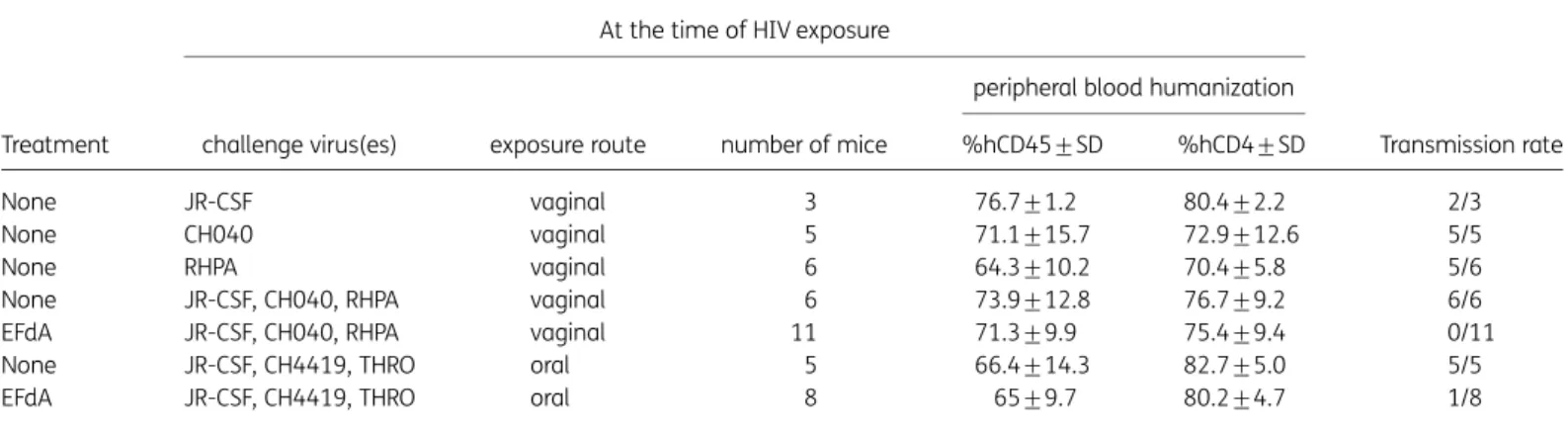
relevant T/F viruses (Table
1
) demonstrating that 4
′-ethynyl-2-fluoro-2
′-deoxyadenosine has potent
in vivo
antiviral activity
(a)
(b)
(d) (e)
Day 10 Day 25/30 Mouse Day 22
U1
T1 U5 U4 U3 U2
THRO THRO (c)
BLT mice
JR-CSF CH4419 THRO Longitudinal plasma HIV-RNA analysis Necropsy
Daily EFdA treatment (10mg/kg oral gavage)
Oral HIV-1 challenge
CH4419
THRO CH4419THRO CH4419 CH4419
JR-CSF NA
JR-CSF JR-CSF CH4419
THRO CH4419THRO Time after first EFdA administration
Protected EFdA-treated mice (n=7) Breakthrough EFdA-treated mouse (n=1)
Time after first EFdA administration (days)
Protection (%)
0 10 20 30 40 50 0
20 40 60 80 100
Untreated mice (n=5) EFdA-treated mice (n=8)
Time after first EFdA administration (days)
HIV-RNA (mean copies/mL
±
SEM)
Below detection
Below detection
Below detection
Below detection
Below detection
Below detection Time after first EFdA administration (days)
HIV-RNA (copies/mL)
0 10 20 30 102
103
104
105
106
107
108
102
103
104
105
106
107
108
U1 U2 U3 U4 U5 HIV
challenges
0 10 20 30 40 HIV
challenges
Figure 3.Oral EFdA PrEP significantly reduces HIV transmission following multiple high-dose oral HIV challenges. (a) EFdA (10 mg/kg) was administered to BLT mice orally for 8 days. Untreated (n¼5) and EFdA-treated (n¼8) BLT mice were exposed orally to a high dose (1.4×10⁶TCIU) of HIV-1
JR-CSF,
HIV-1CH4419and HIV-1THRO3 – 4 h after administration of the second, fourth and sixth EFdA doses, respectively. Plasma HIV-RNA levels were monitored
longitudinally and tissue HIV-DNA levels were analysed at necropsy. (b) Plasma HIV-RNA levels of untreated BLT mice (U1 – U5). (c) Identity of the virus(es) detected in the plasma of HIV-infected untreated (U1 – U5) and EFdA-treated (T1) BLT mice. (d) Mean plasma HIV-RNA levels (+SEM) of protected EFdA-treated BLT mice (n¼7, T2 – T8) and the breakthrough EFdA-treated BLT mouse (T1). Also shown are the results of the sequence analysis of HIV-1JR-CSFRT in the plasma of the breakthrough EFdA-treated mouse at the timepoints indicated (WT¼WT amino acid sequence).
Dashed line indicates the assay limit of detection. (e) Kaplan – Meier plot illustrates the percentage of EFdA-treated and untreated mice protected from oral HIV transmission. Mantel – Cox log-rank test was used to compare protection between EFdA and untreated BLT mice (P¼0.0031). EFdA, 4′-ethynyl-2-fluoro-2′-deoxyadenosine; NA, not applicable.
against the viruses that are responsible for establishing infection.
Recently, it was reported that the active intracellular
tri-phosphorylated form of 4
′-ethynyl-2-fluoro-2
′-deoxyadenosine
has a long intracellular half-life in humans;
44therefore, it will be
important in future experiments to evaluate lower doses of 4
′-ethynyl-2-fluoro-2
′-deoxyadenosine in BLT mice and to determine
whether a single dose of 4
′-ethynyl-2-fluoro-2
′-deoxyadenosine
can prevent vaginal and oral HIV acquisition and what is the
dur-ation of protection.
Although multiple clinical trials have indicated that ARV PrEP
can prevent HIV acquisition, protection is not 100%, raising
con-cerns about the emergence of drug resistance in individuals that
become infected with HIV despite PrEP. In clinical trials of PrEP in
serodiscordant couples, PrEP-selected drug resistance is rare
when infection occurs in the presence of PrEP.
45In contrast,
infants that become infected with HIV while receiving nevirapine
PrEP are at a significantly increased risk of developing nevirapine
resistance.
13Drug resistance can emerge in infants who receive a
single dose of nevirapine.
46In our study, we observed one
break-through infection in a 4
′-ethynyl-2-fluoro-2
′-deoxyadenosine-treated BLT mouse exposed orally to HIV. Sequence analysis
of plasma HIV-RNA indicated that HIV-1
JR-CSF, an early passage
isolate and the first challenge virus, was transmitted despite
4
′-ethynyl-2-fluoro-2
′-deoxyadenosine PrEP. In this study,
HIV-1
JR-CSFwas transmitted in only one of five control animals
despite our previously published results, which demonstrate
faith-ful transmission of HIV-1
JR-CSFin BLT mice challenged orally with a
single high virus dose.
25,27The majority of control animals were infected with the T/F
virus(es) HIV-1
THROand/or HIV-1
CH4419. Our results here support
the concept that molecular and biological determinants bestow
a selective advantage for mucosal transmission of T/F viruses.
Since HIV-1
JR-CSFwas the first challenge virus, our results could
also indicate that drug absorption in target tissue might be low
and that allowing for greater drug accumulation at sites of
expos-ure the effectiveness of 4
′-ethynyl-2-fluoro-2
′-deoxyadenosine
PrEP may increase over time. Although we did not detect the
emergence of RT resistance mutations following oral HIV
acquisi-tion in the presence of 4
′-ethynyl-2-fluoro-2
′-deoxyadenosine
PrEP, it is important to note that 4
′-ethynyl-2-fluoro-2
′-deoxyade-nosine was only administered for an additional 6 days after the
first HIV challenge. Infants that acquire HIV while receiving ARV
PrEP may continue to receive ARVs for several weeks before
infec-tion is confirmed. Therefore, future studies may be needed to
examine the emergence of 4
′-ethynyl-2-fluoro-2
′-deoxyadeno-sine resistance upon extended 4
′-ethynyl-2-fluoro-2
′-deoxyadeno-sine administration in the context of HIV infection. Nonetheless, our
results combined with those of others demonstrating 4
′-ethynyl-2-fluoro-2
′-deoxyadenosine’s high genetic barrier to resistance
20indicate that the risk of developing 4
′-ethynyl-2-fluoro-2
′-deoxy-adenosine-resistant HIV strains
in vivo
is lower compared with
nevirapine, the current first-line ARV for PrEP in infants.
Significant gender inequalities limit the ability of women to
access and exercise HIV prevention options resulting in earlier
acqui-sition of infection, higher transmission rates and increased
mother-to-child transmission of HIV. Collectively, our
in vivo
results
demon-strating 4
′-ethynyl-2-fluoro-2
′-deoxyadenosine’s excellent efficacy
in preventing both vaginal and oral HIV transmission together
with its relatively low toxicity and high potency against
drug-resist-ant HIV strains support 4
′-ethynyl-2-fluoro-2
′-deoxyadenosine as a
potential PrEP agent for use in women and infants, two of the
most vulnerable populations at risk for acquiring HIV.
Acknowledgements
We thank M. Parniak for providing 4′-ethynyl-2-fluoro-2′-deoxyadenosine. We thank I. Chen for providing pYK-JR-CSF and J. Kappes and C. Ochsenbauer for providing pCH040.c/2625, pTHRO.c/2626 and pRHPA.c/2635 via the AIDS Research and Reference Reagent Program. We thank F. Gao for providing pCH4419. We also thank Garcia laboratory members and UNC Division of Laboratory Animal Medicine technicians for their assistance.
Table 1. 4′-Ethynyl-2-fluoro-2′-deoxyadenosine prevents vaginal and oral transmission in BLT mice challenged with multiple high doses of HIV-1 T/F viruses
Treatment
At the time of HIV exposure
Transmission rate challenge virus(es) exposure route number of mice
peripheral blood humanization
%hCD45+SD %hCD4+SD
None JR-CSF vaginal 3 76.7+1.2 80.4+2.2 2/3
None CH040 vaginal 5 71.1+15.7 72.9+12.6 5/5
None RHPA vaginal 6 64.3+10.2 70.4+5.8 5/6
None JR-CSF, CH040, RHPA vaginal 6 73.9+12.8 76.7+9.2 6/6
EFdA JR-CSF, CH040, RHPA vaginal 11 71.3+9.9 75.4+9.4 0/11
None JR-CSF, CH4419, THRO oral 5 66.4+14.3 82.7+5.0 5/5
EFdA JR-CSF, CH4419, THRO oral 8 65+9.7 80.2+4.7 1/8
EFdA, 4′-ethynyl-2-fluoro-2′-deoxyadenosine.
BLT mice were dosed orally with 10 mg/kg EFdA daily for 8 days and challenged vaginally or orally with the indicated HIV-1 isolates 3 – 4 h after the second, fourth and sixth EFdA doses. Untreated mice challenged with a single dose or multiple doses of HIV-1 served as positive controls for transmis-sion. Peripheral blood humanization levels at the time of HIV exposure indicate the percentage of human CD45+(hCD45+) of live cells and the percent-age of human CD4+(hCD4+) of live hCD45+CD3+cells. HIV transmission was defined by the presence of HIV-RNA in plasma and/or HIV-DNA in tissues at necropsy.
Funding
This work was supported by National Institutes of Health grants AI073146 (J. V. G.), AI096138 (J. V. G.) and UNC Center for AIDS Research grant P30 AI50410.
Transparency declarations
None to declare.Supplementary data
Tables S1 and S2 and Figures S1 and S2 are available as Supplementary data atJACOnline (http://jac.oxfordjournals.org/).
References
1 UNAIDS. Fact Sheet 2016. http://www.unaids.org/en/resources/ campaigns/HowAIDSchangedeverything/factsheet.
2 UNAIDS.The Gap Report. 2014. http://www.unaids.org/sites/default/ files/media_asset/UNAIDS_Gap_report_en.pdf.
3 John GC, Kreiss J. Mother-to-child transmission of human immunodefi-ciency virus type 1.Epidemiol Rev1996;18: 149– 57.
4 UNAIDS. 2015 Progress Report on the Global Plan: Towards the Elimination of New HIV Infections Among Children and Keeping Their Mothers Alive. http://www.unaids.org/sites/default/files/media_asset/ JC2774_2015ProgressReport_GlobalPlan_en.pdf.
5 Abdool Karim Q, Abdool Karim SS, Frohlich JAet al. Effectiveness and safety of tenofovir gel, an antiretroviral microbicide, for the prevention of HIV infection in women.Science2010;329: 1168–74.
6 Grant RM, Lama JR, Anderson PLet al. Preexposure chemoprophylaxis for HIV prevention in men who have sex with men.N Engl J Med 2010;363: 2587– 99.
7 Baeten JM, Donnell D, Ndase Pet al. Antiretroviral prophylaxis for HIV prevention in heterosexual men and women.N Engl J Med2012;367: 399–410.
8 Thigpen MC, Kebaabetswe PM, Paxton LAet al. Antiretroviral pre-exposure prophylaxis for heterosexual HIV transmission in Botswana.N
Engl J Med2012;367: 423– 34.
9 de Vincenzi I. Triple antiretroviral compared with zidovudine and single-dose nevirapine prophylaxis during pregnancy and breastfeeding for pre-vention of mother-to-child transmission of HIV-1 (Kesho Bora study): a randomised controlled trial.Lancet Infect Dis2011;11: 171–80. 10 Marazzi MC, Nielsen-Saines K, Buonomo Eet al. Increased infant human immunodeficiency virus-type one free survival at one year of age in Sub-Saharan Africa with maternal use of highly active antiretroviral therapy during breast-feeding.Pediatr Infect Dis J2009;28: 483– 7. 11 Shapiro RL, Hughes MD, Ogwu Aet al. Antiretroviral regimens in pregnancy and breast-feeding in Botswana.N Engl J Med2010;362: 2282– 94.
12 Chasela CS, Hudgens MG, Jamieson DJet al. Maternal or infant anti-retroviral drugs to reduce HIV-1 transmission.N Engl J Med2010;362: 2271– 81.
13 Nelson JA, Fokar A, Hudgens MGet al. Frequent nevirapine resistance in infants infected by HIV-1 via breastfeeding while on nevirapine prophy-laxis.AIDS2015;29: 2131–8.
14 Nakata H, Amano M, Koh Yet al. Activity against human immunodefi-ciency virus type 1, intracellular metabolism, and effects on human DNA
polymerases of 4′-ethynyl-2-fluoro-2′-deoxyadenosine. Antimicrob
Agents Chemother2007;51: 2701–8.
15 Muftuoglu Y, Sohl CD, Mislak ACet al. Probing the molecular mechan-ism of action of the HIV-1 reverse transcriptase inhibitor 4′ -ethynyl-2-fluoro-2′-deoxyadenosine (EFdA) using pre-steady-state kinetics.Antiviral Res2014;106: 1–4.
16 Michailidis E, Marchand B, Kodama ENet al. Mechanism of inhibition of HIV-1 reverse transcriptase by 4′-ethynyl-2-fluoro-2′-deoxyadenosine tri-phosphate, a translocation-defective reverse transcriptase inhibitor.J Biol Chem2009;284: 35681– 91.
17 Kirby KA, Michailidis E, Fetterly TLet al. Effects of substitutions at the 4′ and 2′positions on the bioactivity of 4′-ethynyl-2-fluoro-2′ -deoxyadeno-sine.Antimicrob Agents Chemother2013;57: 6254–64.
18 Ohrui H, Kohgo S, Hayakawa Het al. 2′-deoxy-4′ -C-ethynyl-2-fluoroa-denosine: a nucleoside reverse transcriptase inhibitor with highly potent activity against wide spectrum of HIV-1 strains, favorable toxic profiles, and stability in plasma.Nucleosides Nucleotides Nucleic Acids2007;26: 1543– 6.
19 Sohl CD, Singh K, Kasiviswanathan Ret al. Mechanism of interaction of human mitochondrial DNA polymerase gamma with the novel nucleoside reverse transcriptase inhibitor 4′-ethynyl-2-fluoro-2′-deoxyadenosine indicates a low potential for host toxicity.Antimicrob Agents Chemother 2012;56: 1630– 4.
20 Kawamoto A, Kodama E, Sarafianos SGet al. 2′-deoxy-4′ -C-ethynyl-2-halo-adenosines active against drug-resistant human immunodeficiency virus type 1 variants.Int J Biochem Cell Biol2008;40: 2410–20. 21 Stoddart CA, Galkina SA, Joshi Pet al. Oral administration of the nucleoside EFdA (4′-ethynyl-2-fluoro-2′-deoxyadenosine) provides rapid suppression of HIV viremia in humanized mice and favorable pharmacoki-netic properties in mice and the rhesus macaque.Antimicrob Agents
Chemother2015;59: 4190– 8.
22 Denton PW, Estes JD, Sun Zet al. Antiretroviral pre-exposure prophy-laxis prevents vaginal transmission of HIV-1 in humanized BLT mice.
PLoS Med2008;5: e16.
23 Denton PW, Othieno F, Martinez-Torres Fet al. One percent tenofovir applied topically to humanized BLT mice and used according to the CAPRISA 004 experimental design demonstrates partial protection from vaginal HIV infection, validating the BLT model for evaluation of new microbicide candidates.J Virol2011;85: 7582– 93.
24 Olesen R, Wahl A, Denton PWet al. Immune reconstitution of the female reproductive tract of humanized BLT mice and their susceptibility to human immunodeficiency virus infection.J Reprod Immunol2011;88: 195–203. 25 Wahl A, Swanson MD, Nochi Tet al. Human breast milk and antiretro-virals dramatically reduce oral HIV-1 transmission in BLT humanized mice.
PLoS Pathog2012;8: e1002732.
26 Council OD, Swanson MD, Spagnuolo RA et al. Role of semen on vaginal HIV-1 transmission and maraviroc protection.Antimicrob Agents
Chemother2015;59: 7847– 51.
27 Wahl A, Baker C, Spagnuolo RAet al. Breast milk of HIV-positive mothers has potent and species-specific in vivo HIV-inhibitory activity.
J Virol2015;89: 10868–78.
28 Kovarova M, Council OD, Date AAet al. Nanoformulations of rilpivirine for topical pericoital and systemic coitus-independent administration effi-ciently prevent HIV transmission.PLoS Pathog2015;11: e1005075. 29 Permar SR, Salazar MG, Gao Fet al. Clonal amplification and maternal-infant transmission of nevirapine-resistant HIV-1 variants in breast milk following single-dose nevirapine prophylaxis.Retrovirology2013;10: 88. 30 Keele BF, Giorgi EE, Salazar-Gonzalez JFet al. Identification and char-acterization of transmitted and early founder virus envelopes in primary HIV-1 infection.Proc Natl Acad Sci USA2008;105: 7552– 7.
31 Ochsenbauer C, Edmonds TG, Ding Het al. Generation of transmitted/ founder HIV-1 infectious molecular clones and characterization of their replication capacity in CD4 T lymphocytes and monocyte-derived macro-phages.J Virol2012;86: 2715– 28.
32 Salazar-Gonzalez JF, Salazar MG, Keele BFet al. Genetic identity, biological phenotype, and evolutionary pathways of transmitted/ founder viruses in acute and early HIV-1 infection.J Exp Med2009;206: 1273– 89.
33 Koyanagi Y, Miles S, Mitsuyasu RTet al. Dual infection of the central ner-vous system by AIDS viruses with distinct cellular tropisms.Science 1987;236: 819–22.
34 Melkus MW, Estes JD, Padgett-Thomas Aet al. Humanized mice mount specific adaptive and innate immune responses to EBV and TSST-1.Nat Med2006;12: 1316– 22.
35 Sun Z, Denton PW, Estes JDet al. Intrarectal transmission, systemic infection, and CD4+T cell depletion in humanized mice infected with HIV-1.J Exp Med2007;204: 705– 14.
36 Malamud D, Wahl SM. The mouth: a gateway or a trap for HIV?AIDS 2010;24: 5 –16.
37 WHO.Women’s Health. http://www.who.int/mediacentre/factsheets/
fs334/en/.
38 UNAIDS.Prevention of Mother-To-Child Transmission of HIV. http:// www.unaids.org/sites/default/files/en/media/unaids/contentassets/ documents/programmes/programmeeffectivenessandcountrysupportde partment/gfresourcekit/20110927_Technical_brief_PMTCT.pdf.
39 Heneine W, Kashuba A. HIV prevention by oral preexposure prophy-laxis.Cold Spring Harb Perspect Med2012;2: a007419.
40 Eid SG, Mangan NE, Hertzog PJet al. Blocking HIV-1 transmission in the female reproductive tract: from microbicide development to exploring local antiviral responses.Clin Transl Immunology2015;4: e43.
41 Kumamoto Y, Iwasaki A. Unique features of antiviral immune system of the vaginal mucosa.Curr Opin Immunol2012;24: 411–6.
42 Tugizov SM, Herrera R, Veluppillai Pet al. HIV is inactivated after trans-epithelial migration via adult oral trans-epithelial cells but not fetal trans-epithelial cells.Virology2011;409: 211– 22.
43 Tugizov SM, Herrera R, Veluppillai Pet al. Differential transmission of HIV traversing fetal oral/intestinal epithelia and adult oral epithelia.J Virol 2012;86: 2556– 70.
44 Friedman E, Schuermann D, Rudd DJet al. A single monotherapy dose of MK-8591, a novel NRTI, suppresses HIV for 10 days. In:Abstracts of the Twenty-third Conference on Retroviruses and Opportunistic Infections, Boston, MA, USA,
2016. Abstract 437LB.Foundation for Retrovirology and Human Health,
Alexandria, VA, USA.
45 Lehman DA, Baeten JM, McCoy COet al. Risk of drug resistance among persons acquiring HIV within a randomized clinical trial of single- or dual-agent preexposure prophylaxis.J Infect Dis2015;211: 1211–8.
46 Eshleman SH, Hoover DR, Hudelson SEet al. Development of nevirapine resistance in infants is reduced by use of infant-only single-dose nevirapine plus zidovudine postexposure prophylaxis for the prevention of mother-to-child transmission of HIV-1.J Infect Dis2006;193: 479– 81.