DEPLOYING PLACE:
A CULTURAL ECONOMY OF ART AND URBANISM IN THE GREAT RECESSION
George M. Scheer III
A dissertation submitted to the faculty at the University of North Carolina at Chapel Hill in partial fulfillment of the requirements for the degree of Doctorate of Philosophy in the
Department of Communication in the School of Arts and Sciences.
Chapel Hill 2019
Approved by:
Pedro Lasch
Christian Lundberg Tony Perrucci
© 2019
George M. Scheer III ALL RIGHTS RESERVED
ABSTRACT
George M. Scheer III: Deploying Place: A Cultural Economy of Art and Urbanism in the Great Recession
(Under the direction of Eric Watts)
Deploying Place considers how urban and cultural policies, shaped after the
2008 financial collapse, utilize discourses of place, placemaking, and place-based
urbanism to transform social and economic conditions in American cities. This political
economic critique looks at the intersection of urban and cultural policy, federal stimulus,
private philanthropy, and artist practices directed at housing, transportation, and urban
revitalization. It examines how urbanism over the last 20 years sought to enhance
community resources, and forms of livability, access, and affordability while also
attracting advanced industries and workforces to mid-size American cities suffering
post-industrial divestment and decline.
An emerging field of creative placemaking, operating at the intersection of
community and economic development, sought to introduce artistic and
community-centered approaches to urban development. Case studies in New Orleans,
Minneapolis, Durham, Philadelphia, and Jackson, Mississippi, examine how
placemaking sought to connect social and economic resources, design healthier
environments, support local businesses and community enterprises, and bridge service
needs for low income and minority communities. At the same time, many of these
efforts accelerated processes of privatization and gentrification within a historic
continuum of displacement and disruption of low-income, communities of color.
This dissertation argues for more comprehensive urban policy, planning
processes, measurement indicators, and financing tools oriented toward retention rather
than attraction of people to a place. It also contends that a more equitable distribution of
resources focused on existing cultural infrastructures can strengthen existing
communities where they live and work. It celebrates those more radical artistic practices
that in the context of creative placemaking and urban development seek to empower
community trust, resilience, and capacity to secure their own interests and place in the
midst of urbanization.
TABLE OF CONTENTS
LIST OF FIGURES………viii
LIST OF ABBREVIATIONS………..x
CHAPTER 1: DEPLOYING PLACE………...1
Introduction……….1
Deploying Place……….6
Urbanization and the Emergence of Placemaking………...11
Cultural Planning and Creative Placemaking………18
Conclusions……….24
CHAPTER 2: STIMULATING PARTNERSHIP, PRIVATIZATION, and PLACEMAKING Introduction………..27
Public Private Partnerships………...36
Creative Placemaking………44
Conclusions……….52
CHAPTER 3: CONCENTRATION AS PLACEFORM………62
Introduction………..62
Innovation Clusters……….74
Concentrated Poverty………87
The Neighborhood Revitalization Initiative……….100
Harmony Oaks: A Case Study in Unified Strategy………102
Conclusions……….109
CHAPTER 4: LIVABILITY AS PLACEFORM………..114
Introduction………...114
Qualities of Place……….121
Indicators………...127
Transportation………...130
Cultural………..135
Outcome Problems………..145
The Green Line: Designing Growth………...150
A Narrow Scope………152
Private Partnerships……….…155
Conclusions………...162
CHAPTER 5: HOW ART WORKS………167
Introduction: The Cooperative Community of New West Jackson………..167
Conditions in Jackson……….187
The Cooperative Community Model……….201
Conclusions: How Art Works……….210
BIBLIOGRAPHY……….220
LIST OF FIGURES
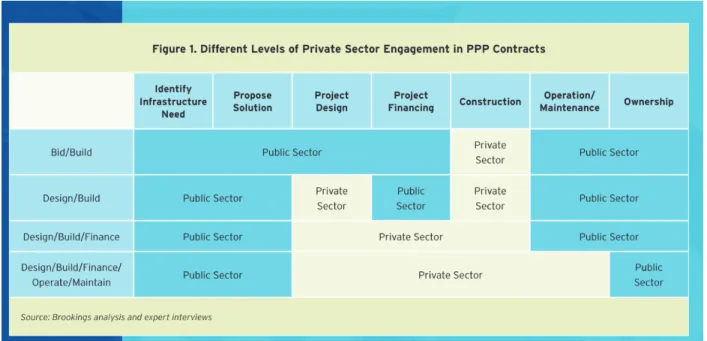
Figure 1 - Matrix for Public and Private Partnership Arrangement………38
Figure 2 - Spruce Street Harbor Park……….………...53
Figure 3 - Murals and sculptures at the Villages of Art and Humanities………...55
Figure 4 - Painted business facades at the Villages of Art and Humanities……….56
Figure 5 - Partnership for Sustainable Community Indicator Matrix………132
Figure 6 - Creative Placemaking Social Impact Design……….………...146
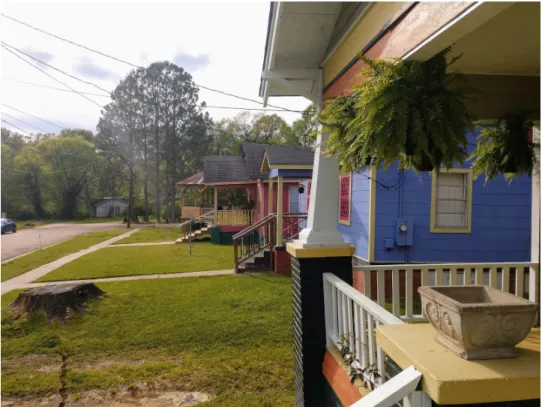
Figure 7 - View of CCNWJ Model Block……….……….170
Figure 8 - View of Grenada St. Folk Garden……….………..171
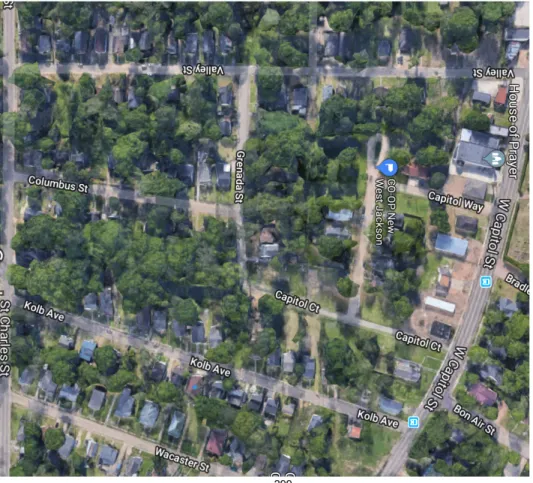
Figure 9 - Satellite View of CCNWJ……….……….……....174
Figure 10 - Nia Umoja presents plans for a tiny house village……….176
Figure 11 - Restored home of Nia and Takuma Umoja………....….176
Figure 12 - Mural at the Grenada St. Folk Garden by artist Hotep.……….…177
Figure 13 - View of the Red Banana……….180
Figure 14 - View of residencies on Model Block……….………....180
Figure 15 - Mulberry Tree Guest House and Blue Rooster Bungalow AirBnB’s….…...186
Figure 16 - Map of Jackson Mississippi and the West Jackson neighborhood….…….189
Figure 17 - Abandoned pre-1940’s house in WJ……….………191
Figure 18 - Abandoned pre-1940’s house in CCNWJ……….…………...191
Figure 19 - Affordable housing in West Jackson……….………...192
Figure 20 - Hope VI housing (on right) infilled into West Jackson neighborhood……..192
Figure 21 - Vacant property held in CCNWJ trust……….………..…194
Figure 22 - Vacant property held in CCNWJ trust………...194
Figure 23 - Opportunity Zones in Jackson, MS………...205
Figure 24 - Opportunity Zones overlay on CCNWJ……….………...206
Figure 25 - ArtPlace America’s Community Matrix……….…………....…207
Figure 26 - NEA How Art Works System Map……….210
Figure 27 - NEA How Art Works, Arts Creation Diagram……….……….215
LIST OF ABBREVIATIONS
AARP American Association of Retired Persons
AEDS African Economic Development Solutions
AIG American International Group
ARRA American Recovery and Reinvestment Act
BID Business Improvement District
BRV Biederman Redevelopment Ventures
CBO Congressional Budget Office
CCFC Central Corridor Funders Collaborative
CCNWJ Cooperative Community of New West Jackson
CDC Community Development Corporation
CDFI Community Development Financial Institutions
CED Council for Entrepreneurial Development
DBFOM Design/Build/Finance/Operate/Maintain
DPC White House Domestic Policy Council
DOJ Department of Justice
ED Education Department
EITC Earned Income Tax Credit
FHA Federal Housing Act
HANO Housing Authority of New Orleans
HBCU Historic Black Colleges and Universities
HHS Department of Health and Human Services
HUD Department of Housing and Urban Development
IRS Internal Revenue Service
LISC Local Initiatives Support Corporation
LTR Light Rail
MBS McCormack Baron Salazar
MICAH Metropolitan Interfaith Council of Affordable Housing
MWB Minority and Women Businesses
MWBE Minority and Women Business Enterprises
MSA Metropolitan Statistical Area
NEA National Endowment for the Arts
NRI Neighborhood Revitalization Initiative
PKC People’s Kitchen Collective
PPC People’s Paper Co-Op
PPP Public Private Partnership
QHWRA Quality Housing and Work Responsibility Act
RTP Raleigh-Durham Research Triangle Park
SIAP Social Impact of the Arts Project
SNAP Supplemental Nutrition Assistance Program
TARP Troubled Asset Relief Program
TOD Transportation Oriented Development
Chapter 1 | Deploying Place
Introduction
This dissertation considers an evolving discourse surrounding concepts of place in cultural policy and urbanism in the years before and following the Great Recession. Rhetorically, the use of the word place as an antecedent in phrases like “place-based urbanism” suggest policies or strategies that seek to integrate
economic, cultural, and infrastructure investments in accordance with a particular geography and set of conditions. Cultural and urban policies that strategize around the development of a place profess to design more livable environments.
Place-based strategies are applied across scale, from neighborhoods and downtowns to municipalities and metropolitan regions. They factor into the
development of housing, transportation, infrastructure, industry, commerce, cultural production and labor. Utilizing a language of place and placemaking, a coalition of public and private agencies—governments, foundations, property developers, private capital managers, art and cultural agencies, and artists—are seeking to transform the socio-economic and physical landscape of America’s cities.
The recession’s negative impacts made addressing challenges of poverty, income and racial segregation, joblessness, climate change, global immigration, and crumbling urban infrastructures more immediate. Billions of dollars in federal
stimulus was directed toward cities and states to stem foreclosures and job loss, and in some policy circles, spark a new strategy for urban innovation and prosperity.
The promise of a new, more progressive administration, coupled with a national crisis and vast amounts of congressionally approved funding, spurred the design of place-based approaches to address urban challenges. A unified strategy at the federal level sought to integrate federal departments with programs that addressed the interdependence of economic and social conditions within connected metropolitan regions. Following their lead, city leaders, foundations and private equity firms, cultural organizations, and artists, partnered on thousands of projects, big and small, meant to help revitalize local economies, address social needs, fix aging infrastructure, and reknit the cultural fabric in a post-industrial, urban landscape. This task became known as placemaking. Throughout this text, I will explore examples of placemaking being modeled in cities like Philadelphia, New Orleans, Durham, Portland, Cleveland, Minneapolis, and Jackson, Mississippi among others.
Placemaking evolved as a discourse and a field following the financial collapse. It came to incorporate thinking from both community and economic
makeup of a place, but over the last decade, artists and cultural organizations have come to play an increasing and more formalized role in the redevelopment of urban spaces. Long-standing research exists on the benefits of the arts in communities, and cultural planning, like urban planning, is a growing sub-field of urban
development. Cultural policy makers sought to qualify (and quantify) the social and economic value of the cultural economy. They examined the role of creative
industries like design, advertising, film, and architecture, alongside museums and theaters, non-profit arts organizations, individual artists, musicians, and grassroots community arts and education in their efforts to advance cultural strategies that could impact a place. Popular interest in Richard Florida’s 2003 book Rise of the Creative Class accelerated the fields of cultural planning and creative placemaking in support of urban development strategies focused on attracting advanced
industries and so called creative class millennials to cities. Advocates for the
creative economy touted art industries (i.e. film, media, performance, entertainment) as having direct economic impact on cities and local communities. Arts agencies across the US saw opportunity in becoming part of the urbanist project to revitalize urban environments with a discourse of place. In this context, the field of creative placemaking, shaped by policy makers, foundations, and practitioners created a bridge between art, urbanism, economic and community development.
have very different values, metrics, and approaches to place and community, though I will argue they should be understood more interdependently. The former
emphasizes the importance of public/private partnerships that attract new populations, resources, and capital to a place. The later designs ways to retain existing communities, build cohesion and resilience by connecting community held resources, and capturing capital locally to be accessed and distributed to
communities more equitably. This critical distinction of attraction and retention
continues to determine so much of placemaking strategy, and informs the way urban environments are designed and redeveloped. The distinction denotes differences in intended outcomes, funding structures, relationships with privatization, and decisions regarding modes of engagement with whom and for whom.
crisis. Complicating matters, patterns of concentration and notions of livability are predicated on the historical divestment, infrastructural upheaval, and
(de)concentration of low-income communities of color in previous renewal
processes. Today, they appear equally productive of increasing privatization and displacement.
There are, however, powerful examples throughout this dissertation
describing artists who are creating brilliantly within communities. Artists working
within a field of creative placemaking are helping communities build their tensile
strength, and are doing so in the context of housing, business development,
transportation access, environmental, economic, and incarceral justice. Their work is
multidisciplinary and performative, socially engaged and participatory, conceptual
and material, historical and narrative driven. While urban and cultural policies can
address how and where investments ought to be made, it takes artists, invested
critically in the concerns of their communities, to seed the way for strategies whose
outcomes are more equitable , comprehensive, and valued by those communities.
As system-thinkers, artists help can make visible the often invisible structures that
define place—how communities ground themselves, build trust, sustain and retain
value, resources and capital. As placemakers, artist can cultivate places where
communities are empowered to speak to the interdependence of their needs, make
demands, and control their development narratives. There is a lot to critique, but
Deploying Place
Over the last decade, an evolving rhetoric of ‘place’ in urban policy has sought to connect economic prosperity with the values of community health in American cities and neighborhoods. Place-based thinking marks a shift in the character of today’s urban development efforts, and signals an interest in planning that is more community-oriented, culturally and equitably aware. At the same time, place-based redevelopment policies that came into focus following the 2008 financial crisis threatened to repeat many patterns and behaviors from earlier renewal efforts by creating geographically defined wealth and income disparities, displacement of low income communities, racial and economic segregation.
Previous financial crises, dating back to the Great Depression combined federal stimulus with national infrastructure projects. These recoveries periods combined urban and cultural policy to support economic recovery by absorbing surplus-capital and labor, encouraging lending and stabilizing financing. However, 1 driven by abuses in the subprime mortgage market, the 2008 crisis eviscerated remaining manufacturing industry, created a wave of home foreclosures, and generally deepened economic and racial disparity in American cities. For Urban 2 policy experts, the financial crisis made apparent that problems of poverty, declining labor and industry, and crumbling infrastructure weakening US cities were deeply
1 Harvey, David. “The Right to the City.” New Left Review 53 (September October-2008): 23-40.
endemic, racially and economically interdependent, geographically segregated and place-specific. Moreover, the persistence of these problems confounded urban redevelopment efforts to remake American cities as the country’s most effective economic engines. Policy-makers began to emphasize place-specific economic 3 remedies.
With the passing of the 2009 American Recovery and Reinvestment Act, (ARRA), place-based economic revitalization, or ‘placemaking’ emerged as the 4 prevailing strategy directing investments into civic, cultural, and commercial infrastructure s across the United States. Over the last decade, placemaking
strategies have helped shape an interdisciplinary field of urban practitioners seeking to combine the values of community health and wellbeing with economic
development by investing in previously divested and under-valued real estate. Planning and development firms, economic and cultural agencies, municipal
departments, corporate and community foundations, arts, design, and neighborhood organizations all use a rhetoric of placemaking to catalyze public and private
investments into amenity-filled parks, plazas, river-walks, greenways, refurbished downtown streetscapes, data and research ‘corridors,’ mixed income housing complexes, light-rail, and other urban infrastructures.
3 Wial, Howard. “Is the Economic Recovery Running Out of Steam?” Washington, DC: Brookings Institution, June 15, 2010.
Despite the holistic rhetoric of place-based strategies urban policy continues to be bifurcated into economic versus community development approaches. This duality impedes the ability of placemaking to integrate social welfare into the
economic recovery of cities. Policy makers speak about urban revitalization in either an economic development or community development context without fully
embracing the interdependency of the two. Urban policy researchers report a growing concentration of economic resources, industries, and labor forces in the metropolitan assembly of cities but struggle to coordinate those resources while also managing growing disparities. Metro-policy specifically, pioneered by the Brookings Institute since the mid 1990’s, tends to deepen the bifurcation of urban design policy by orienting their strategies around two different conceptions of urban place. One place is depicted as distressed, composed of an increasingly suburban
concentrations of people living below the poverty line with a lack of access to affordable housing, transportation and jobs. The other place is also defined by its 5 concentration and density, but depicted as innovative and attractive to highly educated workforce. In this urban place, skilled talent is attracted by the vibrancy and convenience of urban life that contains live/work residential spaces attached to mixed-use commercial and cultural districts in close proximity to jobs in advanced technological and industry clusters. 6
5 Erickson, David, Carolina Reid, Lisa Nelson, Anne O’Shaughnessy, and Alan Berube, eds. The Enduring Challenge of Concentrated Poverty in America: Case Studies from Communities Across the U.S. Richmond, VA: Federal Reserve System and the Brookings Institution, 2008.
In many instances, these places occupy the same metropolitan geography, but very different policy strategies are applied to address their needs. For the former, policies tend to displace residents, raze current housing, encourage incentives for private development with housing and school vouchers so some residents can “choose” new neighborhoods. For the latter, policies encourage greater population density, coordinate business recruitment, hiring, and retention practices, encourage advancements in qualities of place, and increase access through multi-model transportation.
Social and economic impact measurements (i.e access to housing
affordability, public transit, vacancy and crime rate, quality of schools, parks and environment) attempt the measure and track the improving quality of life in a renewed place. However, those tracking these measurements often ignore corresponding metrics and secondary impacts that illustrate the implications of renewal on under-resourced communities (i.e. increasing property values, rent burden, commute times, policing). Metrics also tend to focus on deficits, such as 7 vacancy rates, blight, and unemployment without distinguishing associated structural problems. Moreover, for all the ways of measuring deficit in a community there are no metrics for reporting social and cultural trust, workarounds, and informal systems of community survival, which illustrate the ways people regularly make due in
conditions of scarcity. Perhaps with a more measured approach, basic protections for commonly valued social and economic outcomes can be obtained.
However, livability and vitality is rarely available to all, and those urban policies that appear to protect under-resourced communities by subsidizing, for example, affordable housing, still drives gentrification and displacement. More brazenly, metrics describing urban placeforms are often treated like scorecards or 8 dividend returns that rank a place’s competitiveness to attract more wealthy 9
consumers, professionals, and investors. These practices, which drive the narratives around urban redevelopment explicitly obscure the displacement of original
residents, businesses, and communities, which aggravates existing community ills all in the name of economic recovery.
The following section provides an overview of how a history of urbanization has oriented today’s discourses around place and culture. I examine an enduring bifurcation between economic and community development policy and consider how socio-economic metrics distinguish economic impact ahead of community value. I further interrogate the way metrics promoting urban revitalization are designed to privilege economically advantaged populations over disadvantaged populations, and in accordance with placemaking efforts, promote a logic of attraction rather than retention, and increase concentrations of wealth in urban cores rather than stabilizing and growing communities from their essential assets. I look at how
cultural policy addresses economic versus community development through differing strategies offered by creative placemaking and cultural planning. Finally, I consider
8 Walk Score. “Live Where You Love.” 2019. https://www.walkscore.com/ .
how the financial tools that shape urban redevelopment tactics are themselves structurally flawed and produce bad outcomes for economically impoverished communities.
Urbanization and the Emergence of Placemaking
Urbanization has historically been the engine for the expansion of global capitalism. Labor, manufacturing, and the means of production are systematically and spatially organized by cities and nation-states through urbanization projects. In this section, I consider how urbanization historically created a shift in register from infrastructure expansion and wealth accumulation to industry transformation and workforce realignment. I then look at how early placemaking efforts utilized public subsidy and cultural strategies to further concentrate wealth and industry resources in urban geographies while advancing privatization and unlocking value in
depressed and divested properties.
Writing in the wake of the 2008 financial crisis, David Harvey revises
Lefebvre’s classic “Right to the City” thesis, arguing that the organizing practices of the working class doesn’t drive the cultural and political power of the city, but instead mechanisms of global finance possess the city’s will to power. The production and absorption of surplus capital and labor is a chief motivator in a process of
urbanization. “If labour is scarce and wages are high, either existing labour has to be disciplined...or fresh labour forces must be found.” Urbanization projects not only 10 seek to attract and train advanced workforces, but more importantly, develop new
physical and financial instruments, uncover new property value, and design policies to ensure debt financing, risk diversification, and development subsidies for
investors, including the outright state seizure of land. 11
Urbanization processes, according to Harvey, respond to a need to produce and absorb surplus capital by shifting the scale of development. Like Haussmann in Paris before him, Robert Moses in the post-war period changed the scale of
urbanization, “Through a system of highways and infrastructural transformations, suburbanization and the total reengineering of not just the city but also the whole metropolitan region, he helped resolve the capital-surplus absorption problem. To do this, he tapped into new financial institutions and tax arrangements that liberated the credit to debt-finance urban expansion.” Jane Jacobs and other traditionalists 12 resisted Moses with calls for a more localized, neighborhood aesthetics and
economy. But the infrastructure of mass suburbanization was well in place by the 13 time of Jacob’s activism, laying the groundwork for decades of segregated
communities, uneven distribution of wealth, and geographic division of progressive and conservative politics.
Cultural planning emerged in the 1990s to help re-integrate physical, cultural and arts assets into a city’s broader urban development and planning efforts. 14
11 Harvey, “The Right to the City.” 26. 12 Harvey, “The Right to the City,” 27. 13 Havey, “The Right to the City,” 28.
Research into cultural planning first pioneered by the Social Impact of the Arts Project (SIAP) at the University of Pennsylvania, used GIS data and partnerships with a Community Development Corporation (CDC) to apply cultural investments into Philadelphia neighborhoods. Their research showed how cultural planning could increase social and economic security alongside economic revitalization. 15 Their research developed strategies for identifying and measuring the social and economic values of so called naturally occurring cultural district, distinct neighborhoods and district containing broad but integrated cultural offerings.
In the early 2000’s, as industries sought cheaper labor overseas and
manufacturing declined in regions across the country, the need to shift the drivers of metropolitan economies became increasingly pressing. Richard Florida’s Rise of the Creative Class , became a mainstream discourse that city leaders used to focus 16 their urban development strategies around workforce development, creative industries, and placemaking for local and regional economies. The Creative Class conceptualized the idea of ‘creative’ to encapsulate a highly educated workforce important to a growing service economy whose social activities and economic appetites were defined not solely by careers and corporate allegiance but by the places in which they lived. In this way, Florida connected the concepts of innovation, lifestyle, and economic growth with a comparative place-based identity politics . 17
15 Social Impact of the Arts (SIAP). “About SIAP.” School of Social Policy and Practice. University of Pennsylvania. http://impact.sp2.upenn.edu/siap/about.html .
16 Florida, Richard. The Rise of the Creative Class: And How It’s Transforming Work, Leisure, Community and Everyday Life . New York: Basic Books, 2002.
Despite criticisms that Florida’s model produced gentrification and other
socio-economic harms, his creative class concept remains popular in placemaking and today’s urban policy 18
As placemaking emerged within policy conversations in line with metro policy strategies for increasing population density and innovation-based capital in divested urban environments, it sought to apply cultural planning concepts to leverage public support and private investment in a place. Placemaking advocates for the use of cultural assets as “multipliers” increasing spatial and economic value and efficiency in urban cores. For example, A makeshift plaza with seating and pedestrian access is how the famed Times Square revitalization began to capture consumer interest and multiply the value in property markets. In the context of recovery and in 19
relationship to metropolitan policy, placemaking also considered how cultural assets in places could attract creative workforce, increasing surrounding property value, and enhancing the broad economic gains within an urban development process. 20
Looking to connect with the Obama administration's recovery efforts and its Office of Urban Affairs the National Endowment for the Arts (NEA) made
placemaking an essential part of national arts policy. The NEAs influential white 21
18 Florida, Richard. "America's Leading Creative Class Cities in 2015."
19 Rhodes, Margaret. “The Brilliant Simplicity of New York's New Times Square.” Wired. April 19, 2017. https://www.wired.com/2017/04/brilliant-simplicity-new-yorks-new-times-square/ .
20 Sabol, Patrick, and Robert Puentes. Private Capital, Public Good: Drivers of Successful Infrastructure Public Private Partnerships . Washington, DC: Brookings Institution, December 17, 2014.
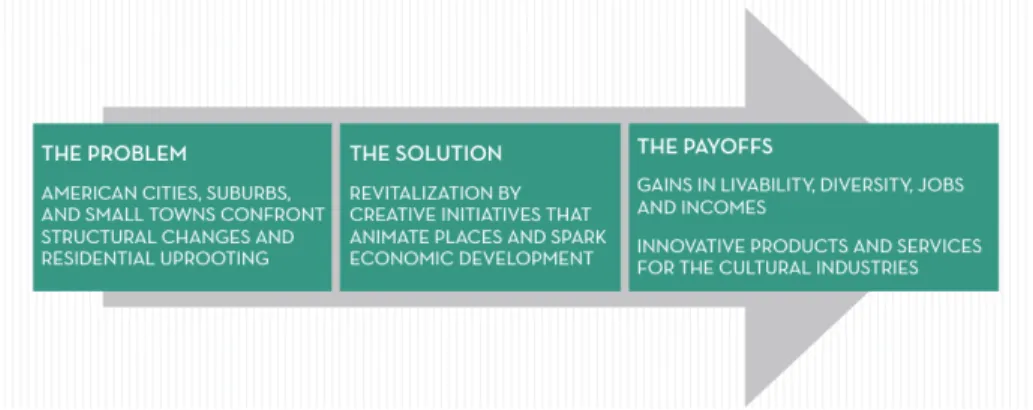
paper, “Creative Placemaking,” the Endowment further positioned placemaking and creative economy rhetoric as an integral part of municipal planning and economic development efforts. Authors Markusen and Gadwa made the case for urban revitalization by creative initiatives that “animate places and spark economic development.” The white paper helped fuel a decade of federal and foundation 22 grants, national urban-arts initiatives, and field building efforts supporting arts and cultural investment around placemaking.
Municipalities seeking additional funding for infrastructure projects and to leverage private investment, began adding public art and other creative components to their scope of work. Cultural foundations seeking to align their giving with federal recovery efforts and municipal planning began funding artists and cultural agencies to do work within an urban revitalization and economic development context. Unlike the 1930’s Work Progress Administration, which deployed federal dollars to fund artists to create work in relation to Depression era infrastructure projects, the vast majority of placemaking funds following the “great recession” came from the private sector. With “creative placemaking, partners from public, private, non-profit, and community sectors strategically shape the physical and social character of a neighborhood, town, city, or region around arts and cultural activities.” 23
Through Creative placemaking, arts organizations began producing
programming that promised economic impact while positively affecting the quality of
22 Markusen, Ann, and Anne Gadwa. Creative Placemaking: A White Paper for The Mayor’s Institute on City Design . Washington, DC: National Endowment for the Arts, 2010.
a place, including its “livability, diversity, jobs and incomes.” Artists that traditionally 24 used in aesthetic and political concepts to create public art and socially engaged practices began developing work with functional and practical approaches to create valuable impact of art on a city’s planning strategies. Public Art Saint Paul’s City Artist In Residence Program was one of the first in the nation to place an artist within a city planning department. Projects include Artist Amanda Lovelee’s “Pop Up
Meeting” which designed a municipal van vending free ice-pops to stage pop-up city planning meetings and community feedback forums in public spaces. Another
project, “Sidewalk Poetry” utilizes municipal sidewalk repair schedules to place community sourced poetry into the concrete. The unique value of the project is not simply the placement of poetry in public space, but that the project’s determination to ensure poetry was placed in every neighborhood forced the municipal repair teams to prioritize under-resourced and minority neighborhoods for sidewalk repair. Various forms of city-artist-in-residence programs can now be found across the country and in state and municipal cultural affairs, planning, and transportation departments.
As Foundations entered the placemaking and creative economy field, metrics were increasingly needed to help measure and coordinate the deployment of arts funding and determine the impact of the work. Under the banner of creative
placemaking, outcomes were designed to match strategies of economic and urban development efforts. Indicators and other evaluative frameworks like “livability,” or “vibrancy,” orient shared values around place and direct the deployment of
resources by private foundations. As a product of foundations and public funders, 25 the idea of “payoffs” and “gains” of cultural projects and how economic development is impacted became a core component for developing and measuring creative placemaking. 26
M etrics-based cultural planning has the effect of serving the evaluation model’s design , and can lead to unintended consequences. For example, ArtPlace America, a 10 year, multi-foundation, grant making initiative in direct support of
Creative Placemaking, used a measurement tool called a vibrancy indicator to
measure placemaking’s impact. The design of the metric directly supported
placemaking’s role in commercialization, but also reinforced historically segregated lines of racial and economic disparity by promoting the concentration of wealth and activity in formerly divested urban centers. Americans for the Arts Economic
Prosperity Study produced data accounting for cultural programming’s
dollar-for-dollar economic impact on consumer spending and inspired a national wave of cultural economy interest in art as an economic industry with high paying jobs and spending in entertainment and cultural tourism. These foundation driven, metric focused approaches set the bar for artistic production in the recovery period and the expansion of the cultural economy as instrument for urbanization,
capitalization, and privatization of urban spaces across America.
25 Morley, Elaine , and Mary K. Winkler. “Assessing a Set of Indicators for Creative Placemaking: Reflections From the Field.” Community Development Investment Review 10, no. 2 (2014): 49-55.
Cultural Planning and Creative Placemaking
As a key component of the urbanization process, placemaking problematically operates from a logic of attraction (i.e attract population, talent, investment, tourism) rather than retention (i.e. retain communities, businesses, housing, jobs, properties). This leads placemaking to re-inforce systematic disparities rather than integrate cultural assets. Place making by its very nature identifies a lack of social, cultural, and economic value in the areas in which investments are made. The explicit purpose of those investments is to increase value. Often this means increasing populations’ access to a place, encouraging participation from people not currently present, and building a market where there is not one. Most often, those audiences or consumers are high-asset individuals, and most often those places are targeted specifically because they are economically under-valued and therefore ripe for investment.
Early cultural planning didn’t approach communities as resources for
massive infrastructures support large public participation in the arts, and intended to rapidly increase the concentration of people in a place through cultural attraction. However, these cultural infrastructures, which might attract upwards of 19,000
people a night are designed to attract and capture capital in formerly underpopulated and under resourced places. They require extensive overhead, maintenance, and cultural capital to produce and sustain. Moreover, those visiting these kinds of
planned cultural districts from other neighborhoods or regions have only a short term investment in mostly entertainment, culture, and food products. This expanded population of a limited class of consumers doesn’t readily invest or partake in surrounding services, and instead disrupts existing community services and businesses long established for the people living in that place. While capital accumulates and is captured by these massive entertainment infrastructures, the people who most immediately reside in proximity to these places lose access to services and face increasing costs in their livability.
A naturally occurring cultural district, on the other hand, focus resources toward existent clusters of cultural assets. Places like the 4th Street Arts Block in New York City, which is composed of 51 distinct theaters, art spaces, and cultural organizations, extend promotion, funding and other resources across a network of emergent and longstanding cultural institutions, and help strengthen self-organizing efforts of surrounding communities including small business retention programs and tenant rights programs. Evidence suggests that channeling resources toward
framework fosters community cohesion, increases population and draws new residents into communities. This approach also reduces poverty, while fostering gradual growth that prevents displacement, and supports cultural, ethnic, and class diversity in a place. Today, foundations and artists are pushing the placemaking 27 field to increasingly focus on equity through the creation of more intentional, accountable, and access-centered metrics, and is giving credence to this naturally occurring strategy. However, that has not been dominant mode from which
placemaking as a cultural policy emerged.
There are several structural elements that have discourage placemaking strategy from focusing on retention. First, a focus on retention requires that development strategies center on surrounding community needs rather than
beginning with the economic strategies that identify profit in higher asset individuals and consumer classes that are currently present. Urban policy makers must find ways to interdependently address social and economic issues of under-resourced communities while attracting outside resources. Increasingly in the urban sphere, poor communities and creative workforces are competing for the same place. Policy protection and integrated programs and services may allow communities to share stable and productive places. However this requires overcoming significant racial and class biases, and an imagination around development and urban planning that undoes a basic bifurcation of community and economic development strategies.
Second, municipal financing tools cities have readily available for advancing economic redevelopment, including tax increment financing, district designations, vouchers, affordable housing, historic tax credits, and eminent domain, all promote forms of exclusivity and displacement. These municipal financing tools are
expensive, legally complex, and operate at varied scales—across regions, counties, tax districts and neighborhoods. Such complexity requires a coordination of district, municipal, and county legislators to direct investments and incentives. Access to incentives, financial tools, and supportive legislators remains primarily in the realm of private developers, economic development and government agencies, and
increasingly community development corporations and other non-profit financiers like LISC (Local Initiatives Support Corporation). 28 The recent retreat of Amazon from Long Island City in Queens, New York illustrates how competing agendas among economic development agencies, state, city and council legislatures, and
neighborhood residents and activist groups discouraged a multi-billion dollar company from building its new headquarters in New York. Most of the 29
mechanisms that finance place-based investments, except perhaps bonds and ballot measures, weaken the capacity for community-based development to lead economic revitalization.
28 LISC NYC. “NYC Inclusive Creative Economy Fund.”
http://www.lisc.org/nyc/inclusive-creative-economy-fund/ .
Third, compounding this problem is that the non-profits and cultural agencies operating in developing places, serving those communities, and often tasked with the cultural and social work of placemaking, don’t have adequate mechanisms to create and sustain surplus-capital at the same rate as private developers and municipal governments. Unlike for-profit businesses and municipalities,
not-for-profits don’t have ready access to debt financing and cash-flow investments. Local agencies might benefit from increased investment surrounding them, but they often don’t have equity in property and therefore cannot effectively capitalize or leverage those investments. While they may benefit from new sources of
placemaking funds or increased audiences, it is challenging to build capacity, adapt to new market patterns, or scale means of production without sustained access to cash flow. Eventually, market and real-estate forces may displace or dismantle not-for-profit infrastructures and their constituencies.
prohibitive tenant rules to further exclude disadvantaged and low income individuals and families from maintaining residence, despite the availability of funding subsidy. The most blatant and discriminatory practices become common because housing and social services sectors are not deeply involved in the urban and cultural
planning processes, and instead, the challenge of urban poverty is managed through technocratic means, such as tax credits for affordable-rate units and Opportunity Zones, that provide subsidies for private developers. 30
Addressing people’s needs with technocratic tools that are only able to be leveraged by organized capital (i.e. private developers, private equity, banks,
foundations), can not possibly address those people’s needs. Quite the opposite, tax incentives for mixed income affordable housing development tends to reduce the total number of affordable units and increase the number of market rate housing. Even worse, there is evidence to show that public investment in transportation infrastructure intended to create greater access to affordable housing is often a prelude for private investment into high end, market rate properties built as soon as tax-credits expire. Narrow technocratic processes and short term decisions often 31 hide long term development strategies.
Even foundations, which now appear to be leading a national discussion around equity, regularly disqualify those community organizations most effective in
30 Internal Revenue Service (IRS). “Opportunity Zones Frequently Asked Questions.” Last modified April 17, 2019. https://www.irs.gov/newsroom/opportunity-zones-frequently-asked-questions .
retaining and serving existing community fabrics. Something as simple as foundation’s deference to highly organized and professional infrastructures for allocating grants or year-long programming cycles rather than multi-year funding disqualifies those most disruptive, non-hierarchical, collectively led,
community-based and responsive organizations from accessing funding. 32 The history of foundations are bound up with the security of private wealth and progressive cultural reform programs that maintained white social-supremacy at periods of socio-economic transformation in America. Foundation funding during 33 periods of immigration reform in the 19th century and later responding to Black urban uprisings in the 1960’s, intended to tame radical social movements, disrupt unionization, and professionalize mass movement politics as a means to maintain white social hegemony. Arguably, in today’s cultural economy, which is funded 34 heavily by private foundations in partnership with global banks, a critical review of 35 the so called “non profit industrial complex,” warrants skepticism toward the 36 putative altruism driving investments in placemaking.
Conclusions
At the onset of economic crisis, with billions of dollars infused into the economy, opportunities arose to design how cities could grow and how surplus
32INCITE! The Revolution will not be Funded: Beyond the Non-Profit Industrial Complex. Durham: Duke University Press, 2007. 36
33 INCITE! The Revolution, 37 34 INCITE! The Revolution, 31
capital and federal funding would be invested in the urbanization process. Just as immediately, foreclosure and social instability was disrupting communities and devaluing their land. Alongside economic and social crisis an evolving discourse surrounding place was evolving that promised gains for both. The urbanization strategies proposed by metropolitan policy, placemaking, and cultural planning all imagined how a diverse set of inputs—housing, transportation infrastructure, industry, and culture—could integrate within a project of economic and community development. The strategy moving forward was to create a “new geography” of interdependence, according to Bruce Katz, Program Director of Brookings Institute Metropolitan Policy Program. For Katz, speaking at a 2009 NYU law school
conference entitled, “A Crisis is a Terrible Thing to Waste,” America’s 20th century geography of wealth, socio-economic, industrial, and racial patterns was
dramatically shifting. This shift, Katz argued, demanded a new conception of place, geographically, economically, and socially. It is the “spatial imperative of this
century.” 37
In the following chapter, I will examine the timeline of metropolitan and cultural policy as it emerges from the housing crisis and how place-based designs and resulting dynamics of the $700 billion American Recovery and Reinvestment Act (ARRA) stimulus package failed to respond to existing social and demographic trends present in the American landscape. Chapter three and four will consider 38
37 Katz, Bruce. The White House Office of Urban Policy: Form and Function. February 12, 2009.
https://www.brookings.edu/wp-content/uploads/2016/06/0212_housing_katz.pdf .
how cultural and economic policy gave shape to the evolving metropolitan placeform. Developing the concepts of accumulation and concentration, chapter three will examine a dual paths for place in metro policy composed by concentrated poverty and innovation districts. In chapter four, I delve deeper into the design 39 40 and function of place-based metrics as directive of social health and community cohesion. In chapter five I will examine how art works as part of a cultural policy and basis for a national field of art and creative placemaking aiming to transform the socio-economic outcomes for developing communities.
39 Kneebone, Elizabeth. The Great Recession and Poverty in Metropolitan America . Washington, DC: Brookings Institution, 2010.
Chapter 2 | Stimulating Partnership, Privatization and Placemaking
Introduction
On September 24th, 2008, presidential candidates, Barack Obama and John McCain issued a joint statement, “The jobs, savings, and prosperity of the American people are at stake.” Only ten days before, Lehman Brothers filed for bankruptcy 41 and President George W. Bush with Treasury Secretary Henry Paulson were working on the details of a $700 billion bill meant to save the American financial system by buying back troubled mortgage assets. Two days later, presidential candidate and Senator Barack Obama stated in his opening remarks of the
presidential debate, “Although we've heard a lot about Wall Street, those of you on Main Street I think have been struggling for a while.” Republican Senator John McCain echoed the place-based metaphor, “We're not talking about failure of institutions on Wall Street. We're talking about failures on Main Street, and people who will lose their jobs, and their credits, and their homes, if we don't fix the greatest fiscal crisis, probably in—certainly in our time.” 42
41 Zeleny, Jeff. “Obama and McCain Issue Joint Statement on the Economy.” The New York Times , September 24, 2008.
The dueling countenances of Wall Street and Main Street framed a national discussion on the meaning and values of American prosperity. Two places in American life intertwined. One, an actual road, so named by Dutch colonists, stood for the American marketplace, global investment, and finance capitalism. The other, a simulacra of the common downtown street where local community and business converge in a parochial and idyllic picture of a family-oriented, hardworking,
prosperous, and meritocratic American dream. In stark political and economic terms, the financial collapse demonstrated the interdependence of these two places. Wall Street assets—comprised of Main Street mortgages, backed by subprime loans, bundled and resold in financial markets—were threatening an entire global economy and the home ownership of American families across the country. More than sixty years of American home ownership, a cornerstone of postwar American prosperity, coupled with the expansive and speculative growth of the financial services markets, created a crisis of value on balance sheets and in neighborhoods.
In the fractious environment of financial disaster, a policy logic quickly took shape—stabilization and stimulus. On October 3rd, 2008, Congress passed, and President Bush signed into law the Emergency Economic Stabilization Act of 2008 (Public Law 110-343), which established the $700 billion Troubled Asset Relief Program (TARP). These two bills sought to immediately stabilize Wall Street by 43 buying troubled assets from financial institutions. Shortly following Barack Obama’s election, Congress passed the American Recovery and Reinvestment Act of 2009
43 Federal Reserve Bank of St. Louis. “Financial Crisis Timeline.” Accessed July 18, 2017.
(ARRA). Described as a stimulus plan, the legislation made appropriations for
immediate investment in employment, infrastructure, and energy. TARP insured the 44 solvency of Wall Street, but it did not address the destabilization that the financial industry wrought on Main Street. The ARRA attempted to address instability on Main Street, but it was unclear how or if stimulus could solve structural problems.
In this chapter I consider how the ARRA stimulus package was designed in accordance with metropolitan policy’s vision for an integrated place-based economy. I examine how the design of stimulus funding was stymied by federal fund
disbursement through state and country governments and how this affected efforts to integrate economies throughout metropolitan regions. I then consider how a formalized strategy of public private partnerships (PPP) aimed to overcome
blockage in the system dynamics, but ultimately lead to greater privatization of public resources and infrastructures. In this context I consider the evolution of Creative Placemaking and the launch of ArtPlace America, a public private partnership funding community and economic development efforts. I explore two Creative Placemaking projects in Philadelphia and how each address possibility for art and artists to support economic and community development.
The Emergency Economic Stabilization Act and TARP was designed for “providing stability to and preventing disruption in the economy and financial
system,” but the $800 billion appropriated by ARRA was far more distributed and 45
44 American Recovery And Reinvestment Act of 2009 : P.L. 111-5, (February 17, 2009)
place-based. Funds dispersed across federal departments aimed to support infrastructure development, transportation, urban/rural development, and housing. The ARRAs goal was to quickly modernize infrastructure, boost the economy, stem unemployment, and create jobs. Based on Congressional Budget Office (CBO) estimates, by 2015 the ARRA dispersed over $300 billion in funds. Under Title XII, 46 $61 billion was allocated to transportation, housing, and urban development with $27.5 billion to highway construction, $20 billion to other transportation needs, $4 billion to capital funding of public housing and almost $9 billion to housing
assistance. Under Title I, $11.7 billion was allocated to support rural housing 47 insurance and $2.5 billion for rural broadband programs. Interior, environment and 48 related agencies, including national parks were appropriated $10.5 billion.
The logic of stimulus appropriation was to quickly deploy funds into the economy by putting billions of dollars into the hands of state agencies through block grants distributed by federal departments. In an effort to ensure short term capital entered the economy quickly, the block grants demanded that the funds be invested immediately. For example, construction to enhance transportation infrastructures needed to be ready for bid within 120 days of the Act’s passage. This meant that construction projects had to already be identified, planned, designed, and awaiting bidding and financing to qualify for stimulus. Additional provisions sought geographic
46 Elmendorg, Douglas. HR 1 Conference Agreement . Congressional Budget Office, February 13, 2009. https://www.cbo.gov/sites/default/files/cbofiles/ftpdocs/99xx/doc9989/hr1conference.pdf . 47 Elmendorg, HR 1.
equity and fair distribution of funds across rural and urban spaces. Grants measured the effectiveness of economic stimulus simply by the “number of jobs created or saved in relation to the Federal dollars obligated.” Secondary selection criteria 49 were established to evaluate applicants ability to optimize long-term public and economic benefit as defined by investment in health technology, transportation, environmental protection, energy independence, and educational quality. 50
The new White House Office of Urban Affairs was established in February 2009 to coordinate executive branch policy for urban areas including the outlay of stimulus funds. The office promised an executive level integration of urban
development strategies that acknowledged the economic power of metro areas. The President’s executive order establishing the office advocated for a city’s role in “innovation, economic growth, and cultural enrichment through the businesses, universities, and civic, cultural, religious, and nonprofit institutions they attract,” an 51 acknowledgement of the integration of public private resources and institutions driving urban development. This strategy fit squarely with the Brookings Institute’s metropolitan policy, aimed at creating greater interdependence within regional
49 Obama, Barack, and Office of the Press Secretary. “Memorandum for the Heads of Executive Departments and Agencies: Ensuring Responsible Spending of Recovery Act Funds.” March 20, 2009.
https://obamawhitehouse.archives.gov/the-press-office/memorandum-heads-executive-departments- and-agencies-32009 .
50 Obama and the Office of the Press Secretary, “Memorandum.”
51 Office of the Press Secretary. “Executive Order: Establishment of the White House Office of Urban Affairs.” February February 19, 2009.
economies. Bruce Katz, Director of the Brookings Metropolitan Policy Program 52 described the Office of Urban Affairs as a “new vision for a federal-metropolitan partnership in service of productive, inclusive, and sustainable growth.” Successful 53 metropolitan policy, argued Katz, “marries national vision and purpose with local and metro implementation and invention, and couples public sector engagement with the private sector energy and discipline.” 54
Early assessments of the ARRA by the Brookings Institute argued that the design of stimulus funding was very much in line with a metro policy
agenda—innovation, human capital, infrastructure, and quality of place. The ARRA seemed to be appropriately designed to support each dimension. For example, the ARRA dispursed $50 billion in research and development for universities, health complexes, and research centers to support science, business, and university innovation. $20 billion in bonds for clean energy production matched strategies for industry innovation and enhancing qualities of place through more environmentally healthy communities. Regarding human capital, there was $125 billion in tax
measures for school improvements and workforce training deemed necessary for an advanced technological economy. There was $126 billion allocated to transportation, energy, and water-sewer to support the infrastructures that connect labor,
manufacturing, and distribution of goods. Lastly, quality of place enhancements, which enable cities to be more affordable and sustainable places for people to live,
52 Katz, Bruce. “The Great Recession: What Comes Next for Our Metropolitan Nation.” Brookings. October 26, 2009.