The opinions or assertions herein are those of the author and do not necessarily reflect the view of
HOME FRONT - EXPLORING ASSOCIATIONS BETWEEN HOUSEHOLD
STRUCTURE, COPING STRATEGIES AND BEHAVIORAL HEALTH VISITS
WITHIN THE MILITARY
Jessica Tsesha Meed
A dissertation submitted to the faculty of the University of North Carolina at Chapel Hill
in partial fulfillment of the requirements for the degree of Doctor of Philosophy in the
Department of Health Policy and Management, Gillings School of Global Public Health.
Chapel Hill
2012
Approved by:
James V. Porto Ph.D.
Daniel Dodgen, Ph.D.
Bruce Fried, Ph.D.
Rebecca Wells, Ph.D.
ABSTRACT
JESSICA TSESHA MEED: Home Front - Exploring Associations Between Household
Structure, Coping Strategies and Behavioral Health Visits Within the Military
(Under the direction of James V. Porto)
Research shows that family supports can mitigate military-service-related Behavioral Health (BH) problems. As women play a growing role in military operations, it is important to assess if relationships between family ties and coping skills are the same for servicemen and servicewomen. This study uses data from the 2005 Department of Defense Survey of Health Related Behaviors Among Active Duty Military (HRB) to explore interactions between the household structure and gender of a servicemember with BH symptoms, and their probability of a BH visit. This study focuses on three elements of household structure: servicemember’s relationship status; servicemember’s parental status; and servicemember’s proximity to their family.
The study’sthree aims examine:
1. The association between household structure and having a BH visit.
2. The association between marriage and the use of specific provider-types.
3. If servicemembers who use talking with informal supports as a coping mechanism are more likely turn to talking with formal supports when family and intimate relationships are under stress.
from a spouse was associated with a higher modeled probability of servicemen having a BH visit. Aim II results indicate that servicewomen were more likely than servicemen to use military provider-types for BH visits. Servicemen were more likely than servicewomen to use civilian provider-provider-types, particularly if servicemen had a history of Military Sexual Trauma (MST). Aim III results indicate that servicewomen with effective coping skills were likely to substitute BH visits (a type of formal help-seeking) for informal supports when their intimate and family relationships were under stress.
DISCLAIMER
ACKNOWLEDGEMENTS
I would like to thank my chair, Dr. James Porto for having served as my advisor and later my dissertation chair. Dr. Porto introduced me to the field of disaster response policy and taught me many things about military culture, most importantly to never call a Marine a Solider.
I would like to thank my other committee members: Dr. Daniel Dodgen for inviting me to join his team at ASPR and providing me with many years of mentorship; Dr. Bruce Fried for his practical feedback; Dr. Rebecca Wells for her knowledgeable comments on everything from women in the military to model design; and Dr. Chris Wiesen, for advising me on statistical analysis.
I also need to acknowledge a number of individuals who allowed me to work with the 2005 HRB dataset: Thank you to CAPT Thomas Doss, for sponsoring my dissertation research. Thank you to LTC Lorraine Babeu for allowing me to use data from the 2005 HRB survey for my
dissertation. A thank you to staff of the TMA Privacy office, who patiently walked me through the steps required to analyze survey data.
To the faculty and my fellow students in the Department of Health Policy and Management, thank you for many years of support. A special thank you to: Dr. Michael Foster, Dr. Felicia Mebane, Dr. Leah Masselink, Dr. Morris Weinberger, Phil White, Paul Barrett, Mona Kilany, and Dr. Wayne Psek.
To the men and women of the U.S. Public Health Service whom I have had the honor to work with –collectively, you have showed me what it means to both serve one’s nation, as well as care for the men and women who defend it. I am so grateful to each of you for welcoming me into the PHS family, and for the professional opportunities you have given me.
Thank you also to Dr. Andy Pennock and Charity Pennock, Jeannie and Steve Cox, and Eric Feld for the support you have given me throughout this project.
TABLE OF CONTENTS
List of Tables………….………..…...……xii
List of Figures.……….………..……….……...xiv
List of Abbreviations…….……….………...xv
CHAPTER 1 Introduction ... 1
1.1 Policy Significance of Research ... 3
1.2 Overview of Research Aims and Methods ... 4
CHAPTER 2 Background and Conceptual Framework ... 6
2.1 Background... 6
2.1.1 Role of Family and Gender in Coping... 6
2.1.2 Link Between Family and BH Utilization ... 8
2.1.3 Gender and BH Problems ... 8
2.1.4 Gender and Help-Seeking ... 10
2.1.5 Military Experience and BH Visits ... 10
2.2 Research Model ... 12
2.2.1 Karney and Crown’s “An Integrative Framework to Account for Success and Failure in Military Marriages”.………...………13
2.2.2 Modification of the Karney and Crown Integrative Framework ... 15
2.2.3 Predicting the Influence of Household Structure ... 18
CHAPTER 3 Methods ... 20
3.1 Sample ... 20
3.1.1 2005 Department of Defense Survey of Health Related Behaviors Among Active Duty Military Personnel. ... 20
3.1.2 Creation of a Sub-Sample of Servicemembers with Current BH Symptoms ... 20
3.2 Operationalization of Model ... 24
3.2.1 Dependent Variables ... 24
3.2.3 Legal Model of the Household ... 27
3.2.4 Social Model of the Household ... 27
3.2.5 Key Independent Variables Aim II ... 28
3.2.6 4.2.6 Control Variables Aim I & Aim III ... 29
3.2.7 Time-Invariant Traits & Time-Variant Circumstances ... 29
3.2.8 Emergent Traits ... 31
3.2.9 Military Context ... 33
3.2.10 Adaptive Process ... 35
3.2.11 Key Independent Variables Aim II ... 36
3.3 Preparation of Dataset ... 36
3.4 Data Analysis... 37
3.4.1 Creation of a Sub-Sample of Servicemembers with Current BH Symptoms ... 37
3.4.2 Analysis Methods ... 37
CHAPTER 4 Aim I - Associations Between Household Structure and Help-Seeking ... 38
4.1 Introduction ... 38
4.1.1 Building a Model for Coping and Help-Seeking ... 38
4.1.2 Aim I Hypotheses ... 39
4.2 Methods ... 41
4.2.1 Defining Marriage from Both a Legal and Social Perspective ... 41
4.2.2 Defining Children ... 44
4.2.3 Control Variables... 45
4.2.4 Outcome ... 47
4.2.5 The Dataset ... 47
4.2.6 Statistical Analysis ... 48
4.4 Discussion... 56
4.4.1 Servicemen and Relationship Status... 57
4.4.2 Servicewomen and Household Structure ... 59
4.4.3 Other Gender Differences ... 61
4.4.4 Leveraging the Findings ... 62
CHAPTER 5 Aim II - Association Between Household Structure and Use of a Provider-Type for a BH Visit……..………...…...…..64
5.1 Introduction ... 63
5.1.1 Hypotheses ... 63
5.2 Background... 65
5.2.1 Military Sexual Trauma ... 67
5.3 Methods ... 68
5.3.1 Dataset ... 69
5.4 Results ... 77
5.5 Discussion... 91
5.5.1 Policy Implications ... 92
CHAPTER 6 Aim III - Do Servicemembers Turn to Formal Supports to Replace Informal Supports ... 94
6.1 Introduction ... 94
6.1.1 Hypotheses ... 94
6.1.2 Other Coping Behaviors ... 96
6.2 Methods ... 96
6.2.1 Dataset ... 96
6.2.2 Statistical Analysis ... 97
6.2.3 Coping Behaviors Score ... 99
6.2.4 Statistical Analysis ... 100
6.4 Discussion... 114
CHAPTER 7 Discussion ... 117
7.1 Summary of Findings ... 117
7.2 Reflections ... 121
7.2 Limitations ... 125
7.2.1 Data Issue ... 125
7.2.2 Design Issue ... 126
LIST OF TABLES
Table 3-1 Dependent Variables for Aim I, Aim II & Aim III ... 24
Table 3-2 Key Independent Variables for Aim I ... 26
Table 3-3 Control Variables – Time Invariant Traits & Time Variant Circumstances ….. ... 29
Table 3-3 Control Variables – Time Invariant Traits & Time Variant Circumstances (cont) ... 30
Table 3-4 Control Variables – Emergent Traits ... 31
Table 3-5 Control Variables – Military Context ... 33
Table 3-6 Additional Measures for Adaptive Process ... 35
Table 4-1 Summary of Categories in Legal and Social Model ... 43
Table 4-2 Control Variables for Aim I ... 46
Table 4-3 Descriptive Statistics for Aim I Sample ... 50
Table 4-4 Odds Ratios for the Legal Model and Social Model, Stratified by Gender. ... 51
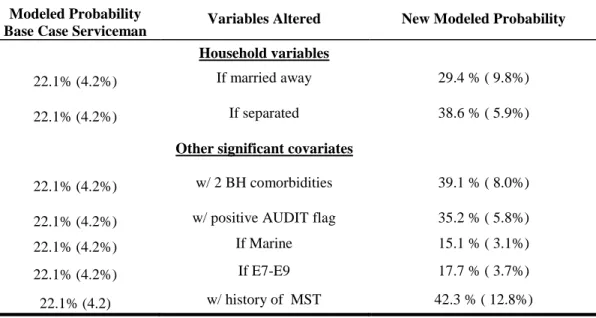
Table 4-5 Modeled Probabilities Illustrating the Impact of Significant Variables for a Servicewoman with All Other Traits Set to Central Values ... 55
Table 4-6 Modeled Probabilities Illustrating the Impact of Significant Variables for a Serviceman with All Other Traits Set to Central Values ... 56
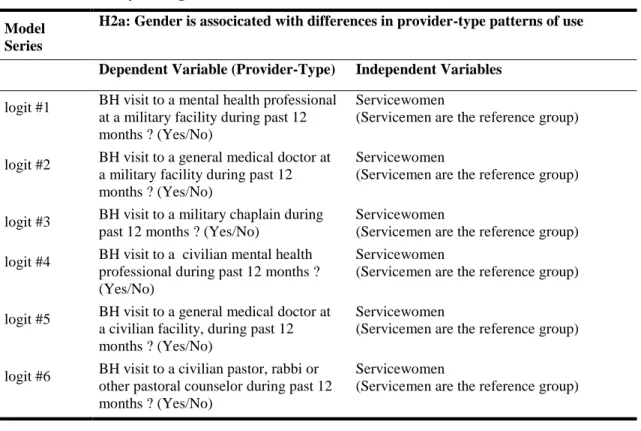
Table 5-1 Summary of Logistic Models for H2a ... 72
Table 5-2 Summary of Logistic Models for H2b ... 73
Table 5-3 Summary of Logistic Models for H2c ... 75
Table 5-4 Summary of Logistic Models for H2d ... 76
Table 5-5 Summary of Logistic Models for H2e ... 77
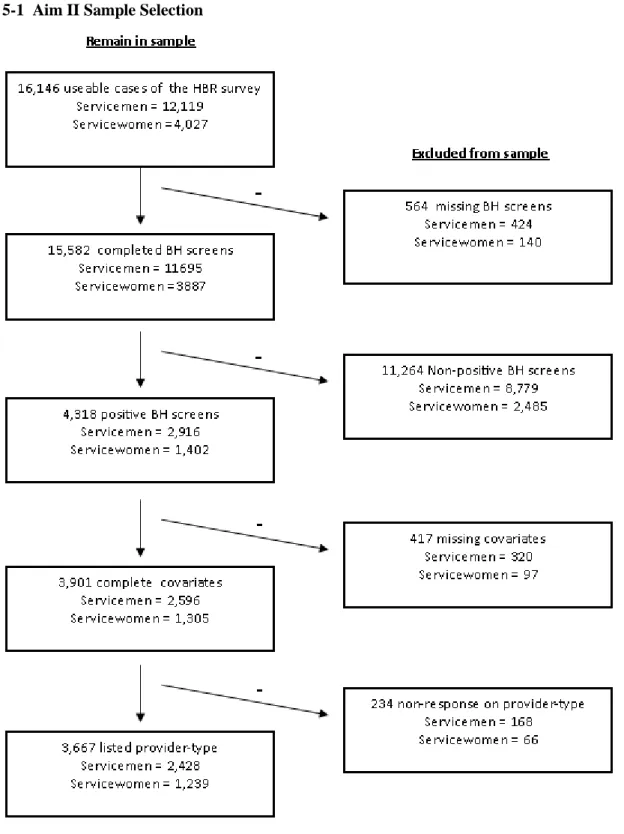
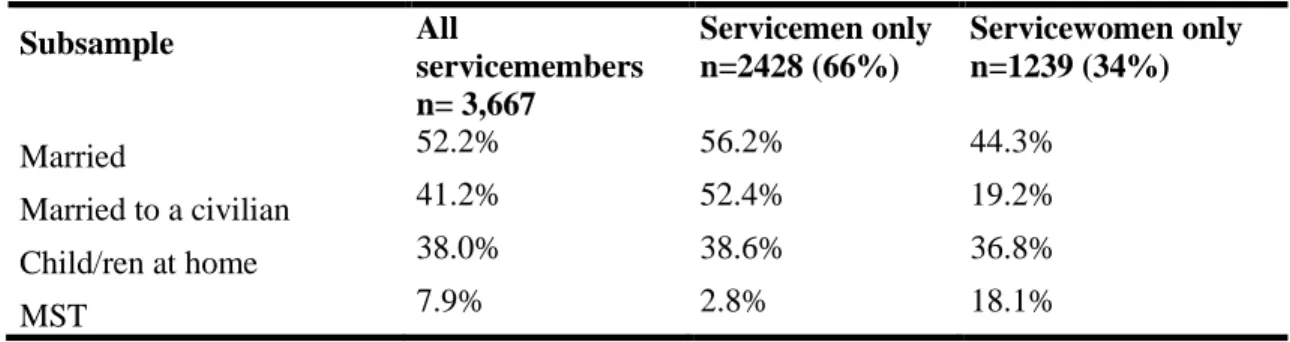
Table 5-6 Aim II Descriptive Statistics ... 77
Table 5-7 Logistic Regression Coefficients for Outcome Uses a Provider-Type ... 78
Table 5-8 P-values for Significant Differences in Modeled Probabilities (model H2a) ... 80
Table 5-9 Logistic Regression Coefficients for Outcome Uses a Provider-Type (model H2b) ... 81
Table 5-11 Logistic Regression Coefficients for Outcome Uses a Provider-Type
(model H2c) ... 83
Table 5-12 P-values for Significant Differences in Modeled Probabilities (model H2c) ... 85
Table 5-13 Logistic Regression Coefficients for Outcome Uses a Provider-Type (model H2d) ... 86
Table 5-14 P-values for Significant Differences in Modeled Probabilities (model H2d) ... 88
Table 5-15 Logistic Regression Coefficients for Outcome Uses a Provider-Type (H2e) ... 89
Table 5-16 P-values for Significant Differences in Modeled Probabilities (model H2e) ... 90
Table 6-1 Key Independent Variables for Aim III ... 98
Table 6-1 Key Independent Variables for Aim III (Cont) ... 99
Table 6-2 Descriptive Statistics for Aim III ... 102
Table 6-3 OLS Regression Results Predicating the Use of Talk (model H3a) ... 104
Table 6-4 Comparison of Significant Predictors for Models Predicting Servicewomen’s Use of BH Visit and Servicewomen’s Use of Talking to Informal Supports as a Coping Strategy ... 105
Table 6-5 Comparison of Significant Predictors for Models Predicting Servicemen’s Use of BH Visit and Servicemen’s Use of Talking to Informal Supports as a Coping Strategy ... 106
Table 6-6 OLS Regression Results Predicting Coping Behaviors Score (cbs) (model H3b) ... 107
Table 6-7 Comparison of Significant Predictors for Models Predicting Servicewomen’s Use of BH Visit and Servicewomen’s Coping Behaviors Score ... 108
Table 6-8 Comparison of Significant Predictors for Models Predicting Servicemen’s Use of BH Visit and Servicemen’s Coping Behaviors Score ... 109
Table 6-9 Multiple Regression of BH Visit in the Past 12 Months as a Function of Talk, Relationship Stress, Household Structure and Other Covariates (model H3c) ... 110
Table 6-10 Multiple regression of BH Visit in the past 12 months as a function of Coping Behaviors Score, Relationship Stress, Household Structure and other covariates (model H3d) ... 112
LIST OF FIGURES
Figure 2-1 Conceptual Model for the Adaptive Process of Military Households ... 12
Figure 2-2 Empirical Model Predicting a Servicemember Having a BH Visit in the Past 12 Months ... 17
Figure 3-1 Study Sample Selection ... 23
Figure 4-1 Aim I Sample Selection ... 48
Figure 5-1 Aim II Sample Selection ... 70
Figure 5-2 Modeled Probability of Using a Provider-type for a BH Visit (model H2a) ... 79
Figure 5-3 Modeled Probability of Using a Provider-type for a BH Visit (model H2b) ... 81
Figure 5-4 Modeled Probability of Using a Provider-type for a BH Visit (model H2c) ... 84
Figure 5-5 Modeled Probability of Using a Provider-type for a BH Visit (model H2d) ... 87
Figure 5-6 Modeled Probability of Using a Provider-type for a BH Visit (model H2e) ... 90
Figure 6-1 Aim II Sample Selection ... 97
LIST OF ABBREVIATIONS
BH Behavioral HealthCOSR Combat Operational Stress Response DOD Department of Defense
DCoE Defense Centers of Excellence for Psychological Health & Traumatic Brain Injury GAD Generalized Anxiety Disorder
HRB Survey of Health Related Behaviors MOS Military Occupational Specialty MST Military Sexual Trauma
CHAPTER 1
INTRODUCTION
Since the start of the wars in Iraq and Afghanistan, the pace of operations has placed physical and psychological demands on both deployed and non-deployed servicemembers.1 High rates of Behavioral Health (BH) problems, including post-traumatic stress disorder (PTSD) and depression were found in service members returning from the wars in Iraq and Afghanistan.2 However, BH problems are not limited to those who have experienced deployment.1,3 Over the past decade, the incidence of BH problems has increased across the whole force,4 including an upward trend in the suicide rate.1 Left untreated, BH problems put servicemembers at risk for unhealthy behaviors, additional psychological problems, decreased workplace productivity, marital issues and suicidal ideation.5,6 Despite the aforementioned problems, many members of the military do not use
professional BH services to address their symptoms.2,7,7 Stigma, time constraints and concerns about treatment efficacy are cited as barriers to the use of BH services.8 Less attention is paid to studying factors that facilitate care.
What motivates servicemembers in need of help to take action? Anecdotal evidence indicates that for married servicemen, it is often spousal pressure that finally pushes servicemen to get
servicemen are pushed into BH treatment by their wives9-11 corresponds to measureable differences in the probability of help-seeking based on relationship status.
This study is structured as three separate aims, each addressing one of the following objectives:
1. To examine the association between servicemember’s household structure and their probability of having a BH visit
2. To examine the association between servicemember’s household structure and their selection of a provider-type for a BH visit?
3. To examine whether servicemembers who use talking with informal supports as a coping mechanism are more likely turn to talking with formal supports when family relationships are under stress
In each of the three aims, I explore whether the patterns of associations between
servicemember’s household structures, use of BH services and informal supports differs by gender.
To explore my three aims I use logistic regression models on data from the 2005 DoD Survey of Health Related Behaviors Among Active Duty Servicemembers12 to test the associations within my theoretical model. To understand the coping patterns of servicemembers it is necessary to use a model that accounts for both the impact of military experiences and the influence of factors related to the household. Karney and Crown developed such a framework, “An Integrative Framework to Account for Success and Failure in Military Marriages”, in order to explain how military couples
respond to stress.13 Their proposed framework integrated constructs related to both research on families and research on servicemembers. In this study, I adapt selected constructs from their model to determine the control variables for my model explaining the impact of household structure and gender on help-seeking.
1.1
Policy Significance of Research
Improving BH service use by servicemembers with BH problems is a focus of the DOD. As stigma is one of the primary reasons for avoiding help-seeking,8,9 many of the DOD’s interventions have focused on reducing the stigma of treatment and creating a command supportive of post-combat use of BH services.14 The military has taken action to address the issue of stigma through a number of education campaigns, including the Real Warrior Campaign, 9with the goal of normalizing help-seeking for post-combat behavioral health problems. (Promoting help-help-seeking for pre-deployment stressors has not received the same focus in the Real Warriors Campaign.)
Less attention is paid to how household ties might influence the servicemember’s choice to have a BH visit. Although the anecdote of a servicemember pressed into care by his wife 9-11 suggests a path to care for married servicemen, it does not explain if social or family ties might impact the help-seeking of single servicemen, or servicewomen of any marital status. My study expands on that anecdote by using survey data to test how household structure interacts with gender to influence the likelihood of help-seeking of servicemembers.
Testing for gender differences in BH service use by servicemembers, as it relates to
1.2
Overview of Research Aims and Methods
This dissertation is organized around three primary research objectives.
Aim I. To examine the association between servicemember’s household structure and their probability of having a BH visit
Aim I focused on two elements of a household structure. The first element is relationship status, which may influence servicemembers to use appropriate health care. The second element is having a child in the household, which may put time demands on servicemembers that hinders their ability to use BH services.
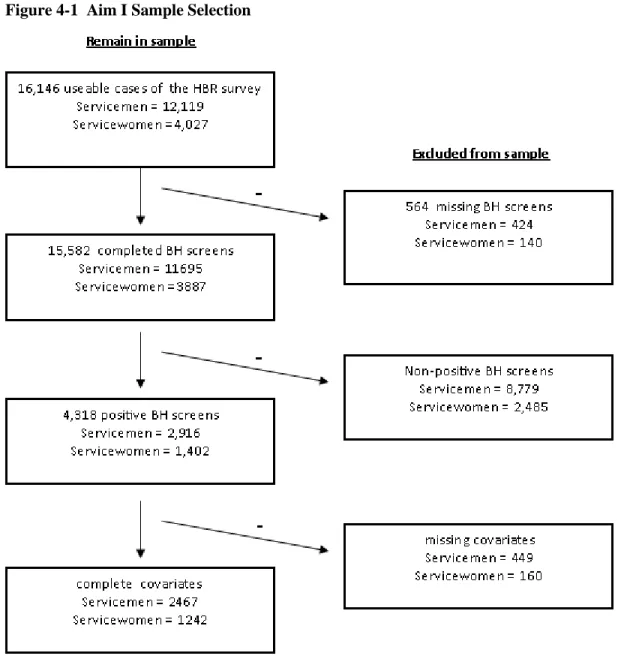
Using observations from the 2005 DOD Survey of Health Related Behaviors Among Active Duty Military Personnel, I created a dataset of all servicemembers whose responses to the survey’s behavioral health screens indicate that they may be suffering from one or more BH problems common to military populations.
I conducted logistic regressions using a BH visit as the key dependent variable and
relationship status and Child/ren in Household as key independent variables. Many models used in health services research take the approach that the same variables that predict BH problems and BH service use in servicemen will also predict BH problems and BH service use in servicewomen. To avoid this assumption, I used separate logistic regressions for male and female servicemembers. Splitting of the sample allowed me to test if any of the covariates have a differential impact on help-seeking behavior of men and women.
Aim II. To examine the association between servicemember’s household structure and their selection of a provider-type for a BH visit
choose to visit a civilian doctor using the spouse’s insurance, because the civilian doctor is less likely to have contact with the servicemember’s command. Aim II looked at gender differences in which provider-types servicemembers use to address BH problems and whether those patterns are associated with marital or parental status.
Aim II used series of logistic regressions to test the probability of servicemembers using each provider-type. To allow a direct comparison between the modeled probability of provider-type use for servicemen and servicewomen, Aim II combined servicemen and servicewomen into the same model, but included interaction terms between gender and the single covariate of interest.
Aim III. To examine if servicemembers who use talking with informal supports as a coping mechanism are more likely turn to talking with formal supports when family relationships are under stress
Using social supports is identified as a key coping skill in resilience to trauma.7,17 However, it is unknown how the preference for relying on informal social support might influence the use of formal supports. Are servicemembers who use informal supports as a coping strategy likely to use formal counseling when their relationships are under stress? Alternatively, do servicemembers with informal supports avoid formal help-seeking because they already have social resources they can use for support?
CHAPTER 2
BACKGROUND AND CONCEPTUAL FRAMEWORK
2.1
Background
2.1.1 Role of Family and Gender in Coping
There is ample evidence that household structure and gender play a role in both the individual’s probability of developing a BH problem after being exposed to a trauma, and the
likelihood that the individual will recover from the BH problem.18-20 However, studies have found conflicting estimates on the magnitude and the direction of that role.18,21 Norris summarized family and gender as risk factors for adverse outcome, explaining that the effects of family structure are modified by gender and the effects of gender are modified by cultures and situations.22
Research on civilian populations regarding marriage’s function as a protective factor against post-trauma mental health problems is inconclusive. A review of 160 samples of disaster victims showed that for women the risk of developing traumatic stress is higher if married, while for men the risk of traumatic stress is at times lowered if married.18,22 On the other hand, research on
servicemembers and veterans consistently shows that marriage acts as a buffer against traumatic stress 7,23,24and that the involvement of a spouse increases the efficacy of subsequent BH treatment.24 As most subjects in military studies are servicemen or male veterans, it is uncertain if the findings from those studies also apply to servicewomen.
social networks lowered formal help-seeking. However, they also found that higher spousal support was associated with a higher use of general medical services. Maulik et al suggest that supportive spouses might push the individual to address physical symptoms of BH problems.25 The conflicting findings by Maulik et al suggest that understanding the impact of family on help-seeking researchers requires paying attention to both the quality of the relationship, and the nature of the problem.
Historically, research on the role of family supports in response to traumatic stress has followed a gendered track. Much of the research on traumatic stress has looked either at traumatic stress in the aftermath of exposure to combat or at traumatic stress in the aftermath of a sexual assault. This has led to a field of research in which many researchers either focus on male combatants or focus on female victims of sexual trauma.26
The fact that so much of the research on the female response to trauma comes out of domestic and sexual violence literature has implications for how we understand the role of household supports in help-seeking and recovery. Domestic issues, such as violence or lack of a supportive environment, may exacerbate BH problems or prevent help-seeking. Conversely, families where members are supportive may play a positive role in the coping and recovery process.27 Smith and Fisher explain, “the relationship between psychological trauma, recovery, and family dynamics are reciprocal and multidimensional.”28
2.1.2 Link Between Family and BH Utilization
In the civilian population, marriage is associated with lower rates of BH care use. The National Comorbidity Survey Replication (NCS-R) found that for the overall population of the United States, being previously married was associated with an increased likelihood that an individual with a potential BH diagnosis would have a BH visit. The study compared previously married individuals, to a reference group of married-cohabitating individuals, and did not stratify by gender.31
The NCS-R findings stand in contrast to the stories told by the servicemembers in the Real Warriors focus groups.9,11 Within those focus groups, male servicemembers reported they sought treatment because of pressures from a spouse. The findings of the focus groups are mirrored by stories told by providers, who observed that their male combat veteran patients often justify help-seeking as a response to his wife’s ultimatum "get help or else".10,11 An implication of the anecdotes is that for military men, marriage is a facilitator of help-seeking.
If marriage is a factor that increases servicemen’s receptiveness towards help-seeking, then help-seeking may be positively correlated with a willingness to rely on informal family supports. Bowen and Richman surveyed Air Force couples about their willingness to seek marriage or family counseling services if confronted by a hypothetical marital or family problem. They discovered that a tendency to rely on relatives for advice was a predictor of the servicemember’s willingness to use BH care.32 A study of OEF/OIF veterans by Porcari found higher levels of social supports were
associated with higher help-seeking intentions.33 It is possible that members of the military
community are primed to consider help-seeking by virtue of their reliance on their social and family networks.
2.1.3 Gender and BH Problems
PTSD, depression and GAD in both the civilian population and the military population.7,19,34,35 However, gender differences diminish in the jobs associated with the highest rates of occupational trauma exposure. As part of a larger review, Tolin and Foa (2006) conducted a meta-analysis of 96 studies of PTSD in survivors of war, combat or terrorism. They discovered that among civilian survivors, PTSD rates were much higher for females. In contrast, for those who were combat veterans, there was no significant pattern of gender-differences in PTSD rates.36 Other studies have also indicated that women who have chosen a traditionally male occupations, such as police officer or war correspondent, do not suffer higher rates of PTSD than their male counterparts.37,38
Gender differences in the rates of BH problems for servicemembers seem to follow a different pattern for those serving in war zones versus those living in garrison (training). For non-deployed servicemembers, the pattern of BH problems mimics those of civilians, with females reporting significantly higher rates of BH problems.18,21 Surprisingly, gender differences seem to attenuate in service members deployed into war zones.39,40 Rona et al observed, “the deployment effect in women is similar to that described in men.” Over the last few years, the difference in the prevalence rates of BH problems for servicemen and servicewomen has been reduced 7. Since the current wars require all servicemembers to deploy more often, the change in overall prevalence may be a reflection of deployment leading to a diminishing gender prevalence differential.
It is not clear what accounts for deployment having less impact on the rate of BH problems for females than it does for males. It is possible that social supports play a different role in prevention of PTSD for men than they do for women. An analysis of 1,632 Vietnam veterans found that there was a direct link from structural social support to PTSD for men, but not for women.17 Female servicemembers may also be more adept at using social supports from long distance relationships. Early analysis of the 2005 HRB dataset shows that servicemen living with their wives had a
significantly lower rates of PTSD than those stationed away from their husbands.41 These findings suggest that the mere proximity of a spouse may play a different role in the coping strategies of servicemen then it does for servicewomen.
2.1.4 Gender and Help-Seeking
Even after accounting for differences in need, women are still more likely to engage in help-seeking behavior than men.42 Kessler et al explains that the difference in help-seeking for psychiatric problems may be due to better identification of distress by females.43 If this were the case, the argument could be made that the wives of servicemen are more attuned to emotional stress. This puts the wives in the best position to identify the need for a BH visit by a member of the household. This explanation would predict a model in which any household containing a female (i.e. married
servicemen and all servicewomen) might have higher rates of help-seeking than households without females.
2.1.5 Military Experience and BH Visits
Researchers note that many servicemembers with BH problems do not seek any BH care.8,9 Military experience likely affects both the clinical need for BH care and the willingness to use BH services. Military experience is correlated to one’s exposure to the traumatic events known to trigger BH problems. Indeed, higher rates of BH visits have been observed in the two military branches with the greatest exposure to combat.44 Military experience may also impact servicemembers’ willingness to get care. For example a servicemember involved in sensitive ground operations requiring a high-level security clearance may be hesitant to seek out behavioral health care, even as their military experience exposes them to the types of traumas associated with higher risk of BH problems.
among servicemembers than in the general population,45 suggesting that childhood sexual trauma is correlated with other factors that increase the propensity to join the military. At the same time, exposure to sexual trauma is associated with higher rates of attrition in the military,46 In-theater MST strongly increases the risk of post-deployment PTSD for both servicemen and servicewomen. In fact, Gulf War veterans who suffered from MST had a higher probability of developing PTSD then those who experienced combat.47 Within the VA system, veterans with MST have three times the
likelihood of receiving a BH diagnosis as those who do not have a history of MST.48
2.2
Research Model
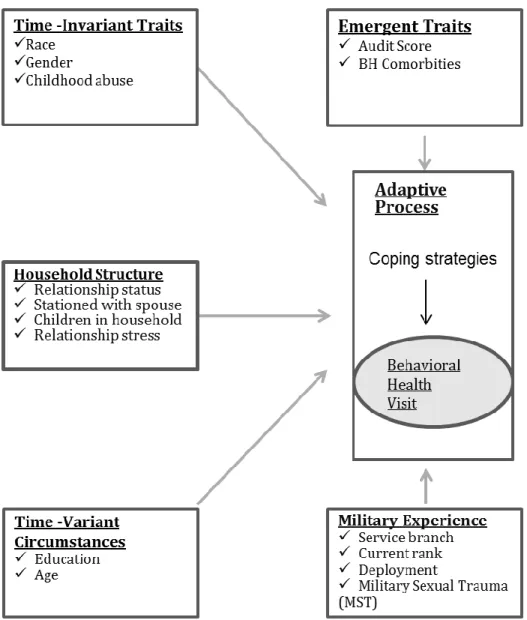
Figure 2-1 Conceptual Model for the Adaptive Process of Military Households
2.2.1 Karney and Crown’s “An Integrative Framework to Account for Success and Failure in Military Marriages”
Karney and Crown13 proposed a framework to explain how military couples responded to stressors, “An Integrative Framework to Account for Success and Failure in Military Marriages”. The framework accounts for the fact that many military marriages thrive in the face of the same
deployment stressors that cause other military marriages to dissolve.
The Karney and Crown Framework contains seven constructs (listed below) that interact with each other to influence marriage survival or dissolution. Each construct is composed of a class of elements drawn from the literature. The elements all fall within the same construct, but may not correlate with each other. For example, race and childhood abuse are both part of the construct of enduring traits, but they are not necessarily correlated with one another.
Enduring traits: These time-invariant elements originate from the birth or childhood of the servicemember. Enduring traits include biological elements like gender or a genetic pre-disposition to mental illness. Enduring traits also include developmental factors, such as childhood abuse or educational obtainment. Karney and Crown explain that these factors impact individual resiliency as well as relationship strength.13
Emergent traits: These personality elements develop in response to life events. These factors can be positive (i.e. personal growth and new skills) or negative (i.e. a post-deployment BH
problem).13
Nonmilitary circumstances: These elements are stressors or resources that affect civilian and military families. Examples include financial situation, extended community supports and housing.13 For the purposes of my adaption, I suggest that this category should be renamed Time-variant
circumstances. My new definition of the construct encompasses any element of household socio-economic situation, or non-military community, that can evolve over time. Since education can evolve throughout the servicemember’s lifetime, I believe that it should be grouped into this
construct. Although Karney and Crown include age as an enduring trait, many researchers are used to seeing “age” as a variant circumstance. Therefore, I will categorize age as part of the
Time-variant circumstance.
Adaptive process: These elements determine how a couple deals with stressors. Examples include communication, support and problem solving. Karney and Crown broadly define the adaptive process as “all ways that spouses interact, communicate, resolve problems, provide support and
understand each other.”13 They note that adaptive processes may differ between military couples and civilian couples because of the logistical constraints of the military (such as deployment) and
different cultural values for communication and conflict resolution.
Military experience: These elements reflect the individual’s military history. Examples include rank, deployment history, exposure to combat and unit culture.
Marital satisfaction: This construct is not included in my adaptation of the Karney and Crown Framework.
2.2.2 Modification of the Karney and Crown Integrative Framework
The conceptual model for my study suggests that the five constructs adapted from Karney and Crown are associated with effective coping strategies in general, including the strategy of having a BH visit by a servicemember. The five categories are: 1) Time-invariant traits (derived from Enduring traits), 2) Emergent traits, 3) Household structure (derived from Relationship resources), 4) Time-variant circumstances (derived from Nonmilitary circumstances), and 5) Military context.
I assume that individual coping strategies, including a BH visit, are the building blocks of the household’s adaptive process. Each strategy used by an individual member of the household is an
element of the larger construct of the household’s adaptive process. Strategies used by the individual may be reinforced or reproved by other members of the household. For example, servicemen willing to consider the strategy of having a formal BH visit may be more inclined to use that strategy if their spouse also supports it.
My conceptual model also proposes a few changes in the in the directional relationships between Karney and Crown’s constructs. If Enduring traits are redefined as Time-invariant traits, then it does not make sense to have any other construct involved in its determination. In my
adaptation, all arrows lead away from Time-invariant traits. In addition, research on the military has shown that adaptive process, including the use of social supports, influences emergent BH problems7. I address this in my theoretical model by making the arrow between Emergent Traits and Adaptive Process bi-directional.
I do not explore every link presented in this model within this study. Rather, the model represents a guide to help me organize confounding elements identified in the literature. Furthermore, because I am using cross-sectional data, I do not test causation. As the bi-directional arrows indicate, everything that happens in period T, including the choice to have a BH treatment, influences
predictive factors (such as emergent traits) of period T+1 makes sense on a theoretical level. However, the true causal relationship cannot be captured using the cross-sectional dataset available. For this reason my empirical models only tests the associations that exist in a single period of time.
Figure 2-2 Empirical Model Predicting a Servicemember Having a BH Visit in the Past 12 Months
the servicemembers or adults who are the dependent of the servicemembers, so they are excluded from my analysis.
As was the case with the Karney and Crown model, the variables within each construct are not necessarily correlated with each other. For example, three measured elements within my specification of the Time-invariant traits construct are the variables Race, Gender and Childhood abuse, which each have their own impact on the outcome.
2.2.3 Predicting the Influence of Household Structure
Researchers have noted that although marriage is associated with health benefits for both men and women, the correlation is much stronger for men.49 The prediction that wives may be more likely than husbands to push their servicemember- spouse into treatment could relate to gender differences in how a spouse reacts to their partner's distress. Women's physiologies are more responsive to marital discord between spouses than are men’s physiologies.49 As compared to male spouses, the wives of servicemen might have an increased motivation to push for BH treatment as a means to resolving combat/operational stress that leads to marital discord.
This model also assumes that the presence of children influences a servicemember’s help-seeking. The model theorizes that the time demands of nurturing the child makes a BH visit less likely. A study of professional therapists wishing to use BH services found that providers with a greater number of children were less likely to have a BH visit.50 In predicting the impact of children, I postulate that despite increasing professional equality many servicemembers still feel compelled to play traditional gender roles within the household. A servicewoman’s household may expect her to
fill the traditional female role of nurturer, asking her to provide emotional support for her children before she is able to turn attention to herself.
CHAPTER 3
METHODS
3.1
Sample
3.1.1 2005 Department of Defense Survey of Health Related Behaviors Among Active Duty Military Personnel.
This study uses a dataset derived from the 2005 Department of Defense Survey of Health Related Behaviors Among Active Duty Military Personnel. The Health Related Behaviors (HRB) Survey Series began in the 1980s under the direction of the DOD’s Assistant Secretary of Defense (Health Affairs) (OASD [HA]). The HRB series is conducted by researchers at Research Triangle Institute (RTI) with the goal of tracking lifestyle choices that impact the health of the nation’s armed forces. The 2005 study is the 9th HRB survey of Active Duty servicemembers and was administered between April and August of 2005. The 2005 HRB was administered to a representative sample of Active Duty troops, excluding recruits, academy cadets, and personnel who were absent without leave (AWOL), incarcerated, or undergoing a permanent change of station (PCS). Servicemembers on ships and in larger installations were administered the anonymous survey in large groups. Those in smaller installations were administered the survey by mail. All surveys were self-administered and the responses were anonymous.7,51
3.1.2 Creation of a Sub-Sample of Servicemembers with Current BH Symptoms
common in- theater BH diagnosis given to servicemembers,52 making these three diagnoses important to military health planners. Below is a description of each of the screens.
Depression: Depression was assessed using multiple questions. Respondents screen positive if they affirmed both of the following criteria: 1) Report feeling depressed for at least one full day in the past week, and 2) either report “experiencing depressive symptoms for more than 2 weeks in the past 12 months or report feeling depressed at any time during the past 12 months, and on most days over 2 or more years in the lifetime.”7
Generalized Anxiety Disorder (GAD): GAD was assessed using seven items from the Patient Health Questionnaire. The criteria is described as “being bothered by feeling nervous, anxious, on
edge, or worrying a lot about different things for several days in the past month and had at least three other symptoms for more than half the days.” 7
Serious Psychological Distress (SPD): SPD was assessed using the K-6 measure of serious psychological distress. The scale uses a five-point scale to ask how often the respondent felt specific sensations (i.e. restless, fidgety...) within the past 30 days. Items were summed and the screen was considered to be positive if the score was 13 or above 7.
Post Traumatic Stress Disorder (PTSD): PTSD was assessed using the PTSD Checklist-civilian version (PCL-C). The authors of the 2005 HRB survey made the decision to use the Checklist-civilian checklist in order to capture non-combat and pre-military traumas. The PCL-C asked 17 questions about PTSD related experiences. The respondent is asked to assess how much the 17 experiences have applied to the last 30 days, using a 5-point scale. A score of 15 of above is considered a positive screen.7
screening questions and gave each person who score exceeded threshold a “flag” for that condition.51 A servicemember who received at least one of the four potential positive flags was considered to have current BH symptoms and was eligible for inclusion in my analysis.
3.2
Operationalization of Model
3.2.1 Dependent Variables
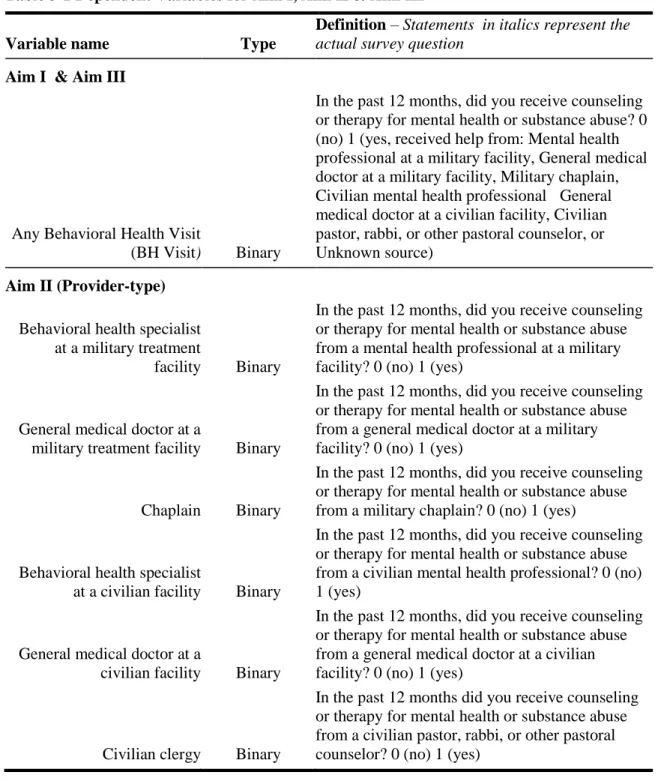
Table 3-1 Dependent Variables for Aim I, Aim II & Aim III
Variable name Type
Definition – Statements in italics represent the actual survey question
Aim I & Aim III
Any Behavioral Health Visit
(BH Visit) Binary
In the past 12 months, did you receive counseling or therapy for mental health or substance abuse? 0 (no) 1 (yes, received help from: Mental health professional at a military facility, General medical doctor at a military facility, Military chaplain, Civilian mental health professional General medical doctor at a civilian facility, Civilian pastor, rabbi, or other pastoral counselor, or Unknown source)
Aim II (Provider-type)
Behavioral health specialist at a military treatment
facility Binary
In the past 12 months, did you receive counseling or therapy for mental health or substance abuse from a mental health professional at a military facility? 0 (no) 1 (yes)
General medical doctor at a
military treatment facility Binary
In the past 12 months, did you receive counseling or therapy for mental health or substance abuse from a general medical doctor at a military facility? 0 (no) 1 (yes)
Chaplain Binary
In the past 12 months, did you receive counseling or therapy for mental health or substance abuse from a military chaplain? 0 (no) 1 (yes)
Behavioral health specialist
at a civilian facility Binary
In the past 12 months, did you receive counseling or therapy for mental health or substance abuse from a civilian mental health professional? 0 (no) 1 (yes)
General medical doctor at a
civilian facility Binary
In the past 12 months, did you receive counseling or therapy for mental health or substance abuse from a general medical doctor at a civilian facility? 0 (no) 1 (yes)
Civilian clergy Binary
Any BH Visit: The dependent variable for Aim I & Aim III is a dichotomous variable measuring if the servicemember had at least one formal BH visit in the past year. Service members were coded “1” if they affirmed the following statement “In the past 12 months, did you receive counseling or therapy for mental health or substance abuse from the following? Mental health professional at a military facility, General medical doctor at a military facility, Military chaplain, Civilian mental health professional, General medical doctor at a civilian facility, Civilian pastor, rabbi, or other pastoral counselor , Self-help group (AA, NA), No Mental Health Help” As stated earlier, a concern with this dataset is the temporal relationship between the reference period for the screens (30 days or 12 months) and the reference period for receiving counseling (12 months). In determining if 12-month behavior (seeking treatment) could be associated with symptoms reported on a 30-day screen, I considered the possible directionality of the relationship between counseling and symptoms. It seems unlikely that use of BH counseling or therapy could have proceeded the onset of all BH problems. Therefore, if servicemembers saw BH professionals in the months preceding the survey, the symptoms that motivated their visits were probably related to (although not necessarily the same as) the symptoms that are reported on a 30-day screen.
Provider-type: The dependent variables for Aim II are a series of binary variables to indicate if the servicemember had used a particular provider-type within the past 12 months.
3.2.2 Key Independent Variables for Aim I & Aim II
Table 3-2 Key Independent Variables for Aim I
Construct Variable name Type
Definition – Statements in italics represent the HRB survey question
Household Structure (adapted from Karney and Crown’s concept of marital resources) Legal Model Relationships
Legally married and residing
together Binary
0 (Servicemember does not endorse both Married/Separated & living with spouse ) 1 (Servicemember endorses both Married/Separated & living with spouse)
Legally married & residing apart Binary
0 (Servicemember does not endorse both Married/Separated & living away from spouse) 1 (Servicemember endorses both Married/Separated & living with spouse)
Not Married Reference group
Social Model Relationship
Married & stationed together Binary
0 (Servicemember is not married or not living at duty station with partner) 1 (Servicemember is married & living at duty station with spouse)
Married & stationed apart Binary
0 (Servicemember is not married or not living at duty station away from partner) 1 (Servicemember is married & living at duty station away spouse)
Engaged/ living as married Binary
0 (Servicemember is not engaged or living as married) 1 (Servicemember is engaged or living as married)
Separated Binary
0 (Servicemember is not separated) 1 (Servicemember is separated)
Divorced Binary
0 (Servicemember is not divorced) 1 (Servicemember is divorced)
Widowed Binary
0 (Servicemember is not widowed) 1 (Servicemember is widowed)
Single Reference group
Other Household Variables
Child /ren at home Binary
0 (Servicemember reports that s/he has no children or is not living with children) 1 (Servicemember is living with children)
Relationship stress Ordinal
During the past 12 months, how much stress did you experience in your family life or in a relationship with your spouse, live-in fiancé, boyfriend or girlfriend, or the person you date seriously?
3.2.3 Legal Model of the Household
Legally married & residing together: The servicemember is legally married and is living with his/her spouse at present duty station.
Legally married & residing apart: The servicemember is legally married, but is not living with his/her spouse at current duty station. This variable includes individuals who identify as separated but are still legally married.
Single: This is the reference category, and within the Legal Model it encompasses all individuals who are not considered legally married.
The focus on the legal definition of marriage divides people into the relationship categories recognized for benefits. In the military, family is defined as “spouses, children and adults
dependents.”44 Unmarried partners and non-dependents relatives are normally not eligible to access military family supports and clinical behavioral health services. Using the legal definition in analysis tests if the dichotomy of relationships (Married/Not married) is useful for understanding the impact of household on BH visits.
3.2.4 Social Model of the Household
Married & stationed together: The servicemember is married and is living with their spouse at their current duty station. Married & stationed together also excludes servicemembers who self-identify as separated, regardless of if they are still sharing a household with their legal spouse. Note: in some tables this variable is referred to as Married &together for space reasons.
Engaged/Living as married: Among the relationship categories, this one captures individuals who are in a committed romantic relationship but do not have the formal commitment or legal
benefits associated with marriage. There is reason to think that a live-in spouse might be different from a live-in fiancé, boyfriend or girlfriend because marriage represents a different level of commitment and thus impacts the couple’s adaptive process.24
Child/ren at home: My model predicts that sharing a household with children will place time constraints on servicemembers that may impede having a BH visit. The model predicts that the impact will be strongest for servicewomen, since they are more likely to be the primary caregiver.
3.2.5 Key Independent Variables Aim II
Servicewomen: A dichotomous variable to measure gender.
Married: The servicemember is married. Married excludes servicemembers who self-identify as separated, regardless of whether they are still sharing a household.
Married X Servicewomen: An interaction term between servicewomen and being married.
Married to a civilian: A dichotomous variable that indicates the servicemember’s spouse is a civilian.
Married to a civilian X Servicewomen: An interaction term between servicewomen and being married to a civilian.
Child/ren at home: A dichotomous variable that indicates if the servicemember has a child or children at home.
3.2.6 4.2.6 Control Variables Aim I & Aim III
Control variables were chosen because of their theoretical impact on a servicemember’s need and/or desire for BH treatments. Each variable is mapped to an appropriate construct within Karney and Crown’s framework. Table 3-3 provides an overview of the control variables, which are
explained in more detail in the text below. All variables were taken directly or imputed from multiple responses to questions in the 2005 HRB survey administered by RTI.7
3.2.7 Time-Invariant Traits & Time-Variant Circumstances
Table 3-3 Control Variables – Time Invariant Traits & Time Variant Circumstances
Construct Variable name Type
Definition – Statements in italics represent the 2005 HRB survey question
Time-Invariant Traits
Education* Ordinal
1 (Did not graduate from high school) 2 (GED ) 3 (High school diploma) 4 (Trade or technical school graduate ) 5 (some college but not a 4-year degree) 6 (4-year college degree) 7 (Graduate or
Professional study but no graduate degree) 8 (Post graduate education)
White – Reference Group** Binary
0 (Does not identify as non- Hispanic White) 1 (Identifies as non- Hispanic Black )
Hispanic** Binary
0 (Does not identify as Hispanic) 1 (Identifies as Hispanic)
Non-Hispanic Black** Binary
0 (Does not identify as non- Hispanic Black) 1 (Identifies as non- Hispanic Black )
Other race** Binary
0 (Identifies as White, Black or Hispanic) 1 (identifies as a race other than White, Black or Hispanic)
Victim of childhood abuse* Binary
Table 3-4 Control Variables –Time Variant Circumstances (cont)
Construct Variable name Type
Definition – Statements in italics represent the 2005 HRB survey question
Time-Variant Circumstances
Education* Ordinal
1 (Did not graduate from high school) 2 (GED ) 3 (High school diploma) 4 (Trade or technical school graduate ) 5 (some college but not a 4-year degree) 6 (4-year college degree) 7 (Graduate or
Professional study but no graduate degree) 8 (Post graduate education)
Age* Continuous 18-50
*Operationalization of item mentioned in Karney and Crown’s description of the construct **Adapted from Karney and Crown’s overall description of construct.
Education: Karney and Crown list education as a demographic variable that influences their construct of Time-invariant traits. In analysis of the NCS-R, Wang et al 31found that within the civilian population additional education was associated with higher rates of visits to a mental health specialist.Wang et al’s study did not control for the possibility of an interaction effect between gender and education. Based on the NCS-R results, my model predicts that education will be associated with a higher probability of a BH visit.
Childhood abuse: Being a victim of physical or sexual abuse before the age of 18 (Child abuse) was also included as a control variable. Karney and Crown include childhood environment as a variable within their construct of Enduring traits.13 As childhood environment is likely to influence the future of the servicemember’s Household structure, Time-variant circumstances, Emergent traits and Adaptive process, I am including it as a Time-invariant trait.
Age: Karney and Crown postulate that the youth of most military households compound their ability to deal with the demands of non-military stressors.13
The NCS-R found that within the civilian population adults age 30-44 had the highest odds ratio of a receiving any treatment. However 18-29 year olds (compared to ≥ 65) had the highest odds of seeing a mental health specialist.31
3.2.8 Emergent Traits
Table 3-4 Control Variables – Emergent Traits
Construct
Variable
name Type
Definition – Statements in italics represent the 2005 HRB survey question
Emergent Traits
Comorbidity count* Ordinal
The number of comorbities. Count based on number of positive screens for PTSD, depression or GAD. Scored 0-3
Suspected Alcohol Dependence*
Binary 0 (AUDIT SCORE <20) 1 (AUDIT Score ≥20 )
*Operationalization of element mentioned in Karney and Crown’s description of the construct **Adapted from Karney and Crown’s overall description of construct.
scored and if scores passed a threshold the servicemember received a flag for that BH problem.7 For this study, I summed the BH flags to create a BH Comorbidity Score. A score of 0 indicated that the servicemember was reporting a level of BH symptoms that indicated psychological distress, but did not appear to fit the criteria for any of the defined BH problems. A score of 1 indicated that the servicemember’s symptoms fit the criteria for any one of the defined BH problems. A score of 3
indicated that the servicemember’s symptoms fit the criteria for all three of the defined BH problems. The screen scores were based on the self-reported survey answers provided by the servicemember. Due the anonymous nature of the survey, positive screens could not be confirmed by a medical or BH provider, or with a review of medical records.
Suspected AlcoholDependence (AUDIT): Suspected alcohol dependence was determined based on the individual’s AUDIT score. The survey used an AUDIT instrument containing 10
questions scored on a 0-4 scale. A score of 20 or above is considered a flag for possible alcohol dependence. The AUDIT is used in a number of studies about BH problems in military populations.
7,53-55
A score of 20 or above is considered a flag for possible alcohol dependence.7,56
3.2.9 Military Context
Table 3-5 Control Variables – Military Context
Construct
Variable
name Type
Definition – Statements in italics represent the 2005 HRB survey question
Military Context
Rank** Ordinal
0 (E1-E3 is the reference group) 1 (E4-E6) 2(E7-E9) 3(W1-W5) 4 (01-03) 5 (04-010)
Navy ** Binary Reference group
Air force ** Binary 0 (Not in Air Force)1 (In Air Force) Army** Binary 0 (Not in Army)1 (In Army) Marines** Binary 0 (Not in Marines)1 (In Marines)
Recent combat** Binary
0 (Servicemember not deployed within last 36 months on a combat or peace keeping operation) 1 (Servicemember deployed within the last 36 months on a combat or peace keeping operation )
Never deployed** Binary
0 (Servicemember has deployed at least once during lifetime)1 (Servicemember has never deployed)
Military Sexual Trauma
(MST)** Binary
0 (Servicemember not exposed to sexual trauma since joining military) 1 (Servicemember exposed to sexual trauma since joining military)
*Specification of item mentioned in Karney and Crown’s description of the construct **Adapted from Karney and Crown’s overall description of construct.
Recent combat: Deployment to a combat zone is associated with increased levels of BH problems 2. In this model, servicemembers were considered to have experienced recent combat if they had deployed within the last 36 months on a combat or peacekeeping operation.
Never deployed: My model predicts that having never deployed is associated with being less likely to have a BH health visit.
Marines (se 1.2) vs. 16.4% (se 1.2) for the Army and 14. 6% (0.6) for the combined services reported having at least one BH visit within the previous twelve months. Additional analysis is needed to know if this is due to a difference in need, a difference in acceptability of help-seeking, or both.
Rank: Both the 2005 and 2008 HRB surveys show that officers are less likely than enlisted servicemembers to need BH care.7,44 However, it is unknown if officers are less likely to use services conditional on BH need. To create this variable, servicemembers were grouped onto, six ordinal groups E1-E3, E4-E6, E7-E9, W1-W5, 01-03, 04-010.
Military Sexual Trauma (MST): Among OEF/OIF veterans who use VHA services, MST is associated with higher rates of PTSD, depression, substance abuse 58 and anxiety disorders and as well as higher health service use.58 Within the VHA system, female OEF/OIF veterans with PTSD were four times more likely to develop PTSD then those without MST.59 MST is important as a covariate because it impacts the need for BH care and because it can potentially alter
servicemembers’ willingness to engage with other people— in particular other members of the military. The VA/DoD clinical guidelines note that women with MST may be uncomfortable seeking care from clinics that are dominated by males.60 My model predicts that women with sexual trauma since joining the military are less willing to visit a self-help group or a military clinic.
3.2.10 Adaptive Process
Table 3-6 Additional Measures for Adaptive Process
Construct
Variable
name Type
Definition – Statements in italics represent the 2005 HRB survey question
Adaptive Process
Talk Ordinal
When you feel pressured, stressed, depressed, or anxious, how often do you engage in each of the following activities? Talk to a friend or family member 1 ( Servicemember never uses talk for coping) 2 (Servicemember rarely uses talk for coping) 3 (Servicemember sometimes uses talk for coping) 4 (Servicemember always uses talk for coping)
Coping Behaviors
Score(cbs) Ordinal
When you feel pressured, stressed, depressed, or anxious, how often do you engage in each of the following activities?
Available choices included five emotion or problem-oriented options and five avoidance-problem-oriented options. The respondent was asked to rank how often they engaged in each option; “frequently, “sometimes”, “rarely” or “never”. The score is the sum of positive coping strategies plus the sum of the reverse coded negative coping measures Range 0-40 Adaptive process
interaction terms
StressXTalk Ordinal 0-12 The product of Talk and Relationship stress cbsXTalk Ordinal
0-120 The product of the Coping Behaviors Score and Talk
*Specification of item mentioned in Karney and Crown’s description of the construct **Adapted from Karney and Crown’s overall description of construct.
Coping Behaviors Score (cbs): Respondents were asked to answer the question: When you feel pressured, stressed, depressed, or anxious, how often do you engage in each of the following activities? Available choices included five emotion-oriented or problem-oriented options and five avoidance-oriented options.7 Respondents were asked to rank how often they engaged in each option: “frequently”, “sometimes”, “rarely” or “never”.51
coded positively. Avoidance-oriented strategies were reverse coded. The sum is a 1-40 point Coping Behaviors Score. This Coping Behaviors Score is not a validated instrument.
3.2.11 Key Independent Variables Aim II
Servicewomen: Dichotomous variable to measure being a servicewoman
Married: The servicemember is married. Married excludes servicemembers who self-identify as separated.
Married X servicewomen: An interaction term between servicewomen and being married
Married to civilian: The servicemember is married to a civilian.
Married to civilian X servicewomen: An interaction term between being Married to a civilian and Servicewomen.
Child/ren at home: The servicemember has a child or children at home.
Child/ren at home X Servicewomen: An interaction term between servicewomen and having a child at home.
MST: The servicemember experienced a sexual trauma since joining the military
MST X servicewomen: An interaction term between Servicewomen and MST
3.3
Preparation of Dataset
variables based on survey responses. RTI used “Hot-deck” imputation to replace missing values.51 The following is a list of RTI imputed variables included in my analysis.
PAYGRADE EDUCATION AGE
RACE HISPANIC
3.4
Data Analysis
3.4.1 Creation of a Sub-Sample of Servicemembers with Current BH Symptoms
To conduct my analysis, I created a data sub-set consisting of all servicemembers from the larger data-set who had received a flag indicating a possible BH problem. Four flags were used in selecting this population, each representing a possible positive screen for a specific psychological disorder. Each screen consisted of a series of questions from a validated screening tool. The servicemember’s response to the question on the screen was scored, and received a flag if the score crossed a specified threshold. Because the screen responses were self-administrated and not
confirmed by a medical or BH professional, a flag should be considered an indication of a probable BH diagnosis rather than a confirmation of a diagnosis. The four flags used in sample selection are General Anxiety Disorder (GAD), depression, Serious Psychological Distress (SPD) and Post Traumatic Stress Disorder (PTSD).
3.4.2 Analysis Methods
All analyses were done in STATA 12, using linear or logistic regression models.
CHAPTER 4
- AIM I ASSOCIATIONS BETWEEN HOUSEHOLD STRUCTURE
AND HELP-SEEKING
4.1
Introduction
The pace of operations has placed physical and psychological demands on both deployed 2 and non-deployed servicemembers.1 Behavioral Health (BH) problems are increasing in the military but the majority of servicemembers with symptoms do not seek professional BH care to address their symptoms.2,7,7 There is a need to identify factors associated with servicemembers entering the BH system when they are in need of BH care. Prior research on factors related to BH problems and BH service use often fails to account for the fact that barriers and factors that facilitate care may affect servicemen and servicewomen differently. This aim uses logistic regression to model the associations among gender, household structure and the probability of having a BH visit.
4.1.1 Building a Model for Coping and Help-Seeking
Military and veterans’ health providers often tell a story that goes something like this: a male veteran comes to their office and says, “I don’t have a psychological problem, but my wife told me if I didn’t see someone she would leave me.” 10
Despite the fact that there is no statistical evidence that a male servicemember’s decision to use BH care is preceded by threats of abandonment from a wife, the anecdote is repeated so often that it deserves to be tested. One possibility is that a spouse’s ultimatum is an antecedent to help-seeking
probability that a BH visit will be incorporated into the adaptive process of the servicemember’s household? Results from the Defense Centers of Excellence for Psychological Health & Traumatic Brain Injury (DCoE) study group suggest that for servicemen (but not necessarily servicewomen) pressure from the spouse is a significant factor in the servicemen’s choice to use BH care as a method of coping with BH problems.9,11
4.1.2 Aim I Hypotheses
For Aim I analysis I adapt Karney and Crown's “Framework for Survival of Military Families” to build a model that predicts how household structure might be associated with a servicemember’s decision to include a BH visit in the adaptive processof the servicemember’s
household. The analysis contained within Aim I examines how selected elements within the Karney and Crown framework are associated with the conditional probability of a BH visit. Aim I uses logistic regression to test if household structure (i.e. relationship status, cohabitation and presence of kids) predicts the use of any BH visits among servicemembers with BH symptoms.
H1a: The variables that predict the probability of a BH visit will affect servicemen and servicewomen differently.
women. There is evidence from the literature that the impact of marriage is not always the same. For example, health benefits of marriage may be greater for men then they are for women1.61 The concern that men and women are incorrectly grouped into a single subpopulation, may extend beyond the relationship variable, potentially applying to other control variables. As part of testing the proposed model, this aim tests whether the same covariates can be used for predicting the help-seeking behaviors of servicemen vs. servicewomen.
H1b: Being married is associated with a higher probability of any BH visit among servicemen but not among servicewomen.
This hypothesis is based on the observation that servicemen often say that they are having the BH visit to please their wives.9-11 This model predicts that marriage is associated with a higher probability of BH visits for servicemen, but not for servicewomen.
H1c: Having children in the household is associated with a lower probability that
servicewomen will have a BH visit and no difference in the probability that servicemen will have a BH visit.
Jebo6262 notes that despite increasing numbers of women in uniform, assumptions about traditional gender roles are still prevalent in the U.S. Military. Traditionally, the civilian wife would handle all household and childcare responsibilities, allowing the servicemember husband to focus on the mission. Having military culture built around these traditional roles may contribute to work-life/family-life challenges for servicewomen, particularly those who are married to civilian husbands. Jebo’s research found the presence of children had a negative influence on their husband’s support for the servicewomen’s career, which might be reflective of household pressure for servicewomen to act
as primary care-givers.62
1
There is little published research on the impact of parenting obligations on help-seeking behavior for mental health services. Surveys of military communities often group the two separate issues, childcare and work obligations, into a single combined question,63,64 making it difficult to determine how much of the barrier is due to childcare obligations and how much to work obligations. Research on barriers to care for civilian substance abusers has shown that that while women were initially reluctant to enter treatment because of childcare responsibilities, desire to shield their children from the deleterious effects of their drug use ultimately drove many women to help-seeking.65 Studies that look at the civilian Hispanic American populations have cited childcare as barrier to care.65,66 However, these studies were done in populations that were more economically disadvantaged then the typical servicewoman.
4.2
Methods
Creating a measurement model requires two stages of specification in order to test the relationship between household structure and BH visit. The first task was to determine how to define the household structure elements, marriage and relationship status. The second task involved identifying what measures from the 2005 HRB survey to incorporate as control variables. The methods section below describes the rational used to approach these two tasks.
4.2.1 Defining Marriage from Both a Legal and Social Perspective