Physician Opinion of the U.S. Health Care System: A Systematic Review
By
John B. Lykes
A Master's Paper submitted to the faculty of the University of North Carolina at Chapel Hill in partial fulfillment of the requirements for the degree of Master of
Public Health in the Public Health Leadership Program. Chapel Hill
Abstract
This systematic review of published research on physician attitudes toward health reform begins with a brief analytical illustration of "organized medicine" as an important political influence, before moving to a structured, critical appraisal of opinion literature. The systematic review identified 15 studies, culled from 1968-2009, which met quality standards. Physicians overall tended to be dissatisfied with the system and believed that everyone should have access to care, but they have yet to achieve consensus as to the best course for reform. Primary care, hospital-based, salaried, and urban physicians were more likely to support single payer plans. Meanwhile, surgeons, specialists, AMA members, office-based, and private practice physicians appear more likely to choose retention of the current system or a non-single-payer alternative, such as tax credits or health savings accounts. Several problems dog the literature
Acknowledgements
Thanks to Susanna Birdsong for her support and patience.
Thanks to Dr. Sue Tolleson-Rinehart for her sage guidance.
Preface
The seeds for this project were sown several years ago when I was
working on a political campaign to advance health care reform. I could not help
but wonder as we strategized about our strengths and weaknesses, where were
the doctors? Why are they not driving these policy discussions? Since that time
before I started medical school, and especially during this past year spent at the
School of Public Health, I have been fascinated with the physician role in terms
of U.S. health policy and reform.
What do physicians think about the system? Are they as dissatisfied as
the general public appears to be? This is the group that, at least in my mind,
remains the primary figures in the health care universe, yet politicians and other
special interests seem to dominate every policy debate. If doctors could snap
their fingers and craft a new health care system, what would it look like? And
most importantly, what influences these opinions?
As I began to attempt to answer these questions, it became clear that
two things needed to occur. First, I had to see what work had been done so far
in this area, and second, I needed to consider what original survey research I
would propose to fill in the gaps. This paper represents the first item, and our
pilot physician survey, distributed in June 2009 to doctors at UNC, represents a
beginning for the second. It is my hypothesis, or perhaps merely a hope, that
physicians, if unified in both the goal and the pathway, could be the key catalysts
to national-level system improvements. This clearly is far from the current reality,
Table of Contents
Abstract. ... 2
Acknowledgements ... 3
Preface ... .4
Table of Contents ... 5
List of Figures ... 6
Introduction: Doctors, Policy, and Opinion ... 1
Background ... 3
Medicare-- the Turning Point. ... 3
The Clinton Plan ... 6
Systematic Review ... 12
Introduction ... 12
Methods ... 12
Results-Overview ... 14
The Medicare Era ... 15
The "Crisis" Era ... 19
The Clinton Era ... 24
The Managed Care Era ... 32
The "What Now?" Era ... 36
Discussion ... 42
Limitations ... 50
Conclusion ... 51
References ... 56
Appendix 1: Summary of Surveys ... 61
List of Figures
1 ... Physician Surveys By Decade
2 ... Physician Support for Medicare; 1964, 1965, and 1967
3 ... Physicians' Attitude toward NHI, 1973
4 ... Perception of Colleagues' Attitude, 1973
5 ... Physician Attitude toward U.S. System, 1993
6 ... Physician Preference for Reform, 1993
7 ... Physician Attitude toward Legislation to Establish NHI, 2002
8 ... Physician Attitude toward NHI Plan Paid for by the Gov't, 2002
9 ... Physician Preference for Reform Structure, 2001
10 ... Physician Preference for Reform Structure, 2007
11 ... Physician Attitude toward NHI Over Time
12 ... Physician Reform Preference over Time: "Best/Most/Fixed"
Introduction: Doctors, Policy, and Opinion
The role of physicians in U.S. health policy-making has changed
dramatically in the last 50 years. The period following World War II has been
described as the golden age of medicine, in terms of both public esteem for the
profession and its political power.1 Fresh off a triumphant defeat of Truman's
attempt to expand the foothold of Social Security to include National Health
Insurance (NHI) for all, physicians were said to "dominate the health sector, if not
completely control it."2
The purpose of this paper is to explore the intersection of health policy
and physician opinion. What do physicians think about the system and efforts at
reform? Does their opinion matter? We will start with background on physician
role in the two most important reform attempts of the last 50 years, the
successful passage of Medicare and the failed Clinton plan to reshape the
system. Then we will report the results of a systematic review of the literature on
physician opinion of the system and health care reform.
Physicians' financial power grew under payment conditions largely of their
own making, a result of monopolistic strategies and their intimate relationship
with the exploding private insurance industry3· 4 They had few peers as an
organized political interest. "Organized medicine" commanded the trust of
political elites and the general voting public, and the organization of their many
societies along with geographical breadth combined to form a uniquely effective
Historian Paul Starr contends that starting around 1920 and continuing for
most of the century, the American Medical Association (AMA) is a synonym for
"organized medicine," while several other authors appear to use the terms
organized medicine, physicians, and the AMA interchangeably in their analyses.6·
8 But the landscape has changed. The AMA's membership, which at its peak in
the early 1960's claimed over 80% of all U.S. physicians, has plunged to less
than 30% in 2002B
Not surprisingly physicians' role in health policy debates has shifted as
well. Their traditional role as defenders of the system's status quo, politically
aligned with other conservative power bases in Washington DC, has become
murkier in the wake of Medicare's passage. Their opposition to federal efforts to
control costs (mostly through adjustments to Medicare payments) has strained
old alliances, while their political capital has shrunk. The once untouchable
reputation of the profession has been tarnished by "doubts about their
professional efficacy and [by] questions about their pecuniary motives (Laugesen
292)."3
In spite of their history of political and economic dominance, most experts
agree that doctors' authority as shapers of health policy has declined.5·10• 11 At
present, "organized medicine" may be just another interest group, or collection of
groups, in the political debates over health care. Yet through all these changes
little is known about actual physician opinion. Although the attitudes of
policy-making elites in the AMA and other professional organizations are clear from the
the perspective of their members? How well do they approximate the opinions of
unaffiliated physicians?
Medicare: The Turning Point
Medicare provides a nice pivot point to start our analysis of physician
opinion. Prior to its passage, most accounts describe physician opinion as a
largely homogenous force opposed to government expansion into health care,
represented accurately by "organized medicine," which most historians equate
with the AMA. 6· 8 The group had begun to flex its political muscle early in the
century, but saw its first great victory in 1930's. At the apex of his legislative
power in the middle of the New Deal revolution, President Roosevelt felt
compelled to cut NHI from the original Social Security package, largely because
he feared that ferocious opposition from "organized medicine" would sink the
entire bill.7
Thus began a remarkable string of successes, whereby the AMA, assisted
by a loose collection of conservative forces in Washington, was able to hold back
wave upon wave of liberal attempts to finish the work of Roosevelt, to expand the
social safety net to encompass health care. At the height of the Cold War, the
AMA could portray any expansion efforts as an irrevocable step toward a
"socialized" America, with great effect.7 Additionally, the medical establishment
had significant influence over the increasingly powerful private insurance industry,
having shrewdly shaped this voluntary market via control of the governing boards
As the 1960's approached, several developments would set the stage for
Medicare's eventual passage. After the early conquest of infectious diseases in
the first decades of the 20th century, no comparable breakthroughs had been
achieved in the degenerative diseases and cancers that now burdened an
expanding population of older Americans.13 Hospitals in particular felt the pinch
as their wards strained under the weight of lengthy elderly stays. The price of
hospital care doubled during the 1950's alone.6 While fears of Communism
faded and the insistent civil rights movement advanced in the background, a
broad band of constituencies- including liberal politicians, senior citizen groups,
and organized labor- grew louder in their support for government health
insurance?
Neither President Kennedy nor President Johnson would have the votes in
Congress until the Democratic landslide of 1964 put a 2-to-1 majority in the
house and assured the legislative action that on July 30, 1965 would make the
Medicare and Medicaid programs Titles 18 and 19 of the Social Security
Amendments.7 The AMA had suffered its first great legislative "loss," but the
decades of battle resulted in a program that was extremely generous to
physicians. The final product was limited in scope to the elderly and the poor,
and for nearly 25 years it paid doctors what they charged, with no consideration
for cost-effectiveness or clinical appropriateness. 8• 14
In some respects, Medicare deserves to be recast as a success for
physicians as an interest group. They were able to maintain what most
to practice medicine as they saw fit and the power to control the reimbursement
structure by maintenance of fee-for-service (FFS) arrangements. But through all
these changes, what do we know about the opinions of "everyday" physicians as,
albeit greatly interested, citizens?
As we have noted, experts have long taken of the policy positions of
politically active physician elites to be representative of the entire profession. We
say "everyday" physicians to acknowledge the likelihood that doctors across the
US, especially those not active in local medical societies and/or the AMA,
evinced a range of attitudes about Medicare, not the united front displayed by
organized medicine. Whether the opinions of this disparate group contributed to
the groundswell of support resulting in Medicare is difficult to know.
Starr describes most physicians as politically inactive and content to let
the AMA elites, largely wealthy Republican specialists, set the policy agenda for
all.6 Both he and Saward argue that in all likelihood many more doctors
disagreed with AMA policy than the AMA leadership recognized, but not as many
as pro-reform forces hoped for.6·13
A physician survey from our systematic review found that while a majority
did oppose Medicare before its passage, nearly two-fifths of doctors supported
the measures.15 Physicians shifted dramatically after the bill's passage to favor
the reforms, according to a follow-up survey of the same population. The
survey's author concluded that a strong perception that their peers opposed the
program may have played a role in the silence or nominal opposition displayed
"Everyday" physician quiescence is consistent with reports by Saward that
in the wake of the political battles of the late 1940's and 1950's, the medical
establishment had taken to heart the idea that further government expansion into
health care amounted to communism. Any society member who. expressed
support for the latest reform effort could be labeled a Communist and shunned by
his (or, rarely, her) local organizationn Is it possible that many doctors were in
favor of Medicare, but did not feel comfortable expressing themselves, for fear of
being blacklisted, until the law had passed? We can only hypothesize that
physician support for Medicare was greater than it was perceived to be; we
cannot test the hypothesis with so little quality data.
The Clinton Plan: A Promise Unfulfilled
Despite the fact that Medicare's authors envisioned the program as the
first push down a steep slope to NHI, attempts to build on Medicare's foothold
and further expand federal health insurance have largely failed. While many key
pieces of health care legislation have been passed since, let us fast-forward to
the Clinton reform attempt of 1992-94. The Clinton plan provides a nice bookend
after Medicare, because unlike most other intermediate efforts, the reform
attempt offers an example of comparable scope and public interest amidst both a
system and a medical profession that had drastically changed in the 30
intervening years.
The seeds of reform were sown by the victory of Harris Wofford in a
1991 special election to the U.S. Congress from Pennsylvania. Wofford rode the
with, and contributed to, renewed public enthusiasm for system reform.17 The
next year saw the election of a young, charismatic Bill Clinton to the presidency
and a Democratic majority in Congress which, combined with other factors such
as a depressed health insurance market threatening businesses and the middle
class, and widespread dissatisfaction with the system, stimulated a new national
push for health reform. 18
Physicians found themselves in a much different position in 1993 than
they had been as they faced the prospect of Medicare three decades earlier.
Increases in medical costs that well exceeded the rate of inflation had spurred
the rise of managed care and attempts to limit Medicare and Medicaid spending.
Both developments troubled the medical establishment, but managed care
especially so, and "organized medicine" disdained it as institutionalizing
unacceptable levels bureaucracy and intruding into clinical decisions. 19
Although physicians had long been wary of the insurance industry, they
had come to agree with the public view that the uninsured population was a
significant problem, and they were amenable to changes that increased
insurance coverage so long as they could prevent further interference from third
parties (e.g. managed care) and threats to their autonomy. 19 One commentator
observed at the time that "medical care providers had to work to redefine their
position [on reform] in the face of lost cultural authority and intensifying economic
pressure (Bronstein 22)." 20
For a brief time it appeared that the AMA and most other physician
Hillary Clinton's health care task force included mostly academic policy experts.
Few had ties to professional groups, as the administration was determined to
limit interest groups to a peripheral role. Several authors point to the strategies
used by the task force, such as a closed-door culture, its ivory tower makeup,
and the decision to have the First Lady as its nominal head, as blunders central
to the reform plan's eventual failure. 21'23
The relationship between the AMA and the White House was sour from
the start of the reform plan's development. Despite quiet negotiations in which
Clinton offered the AMA several significant concessions, including malpractice
reform and antitrust relief, and despite some public displays of goodwill by the
AMA, the group simultaneously began to prepare both legal battle plans and
advertising campaigns that attacked the idea of limits on health care spending. 24
The basis of the AMA's opposition was the reform's reliance on global budgets
and managed care as its primary methods of cost control. 25
Reporters at the time, and many analysts since, have focused on the
give-and-take negotiations and backroom political drama between the Clintons
and the AMA, but we must recognize that a more fundamental divide prevented
the doctors' organizational voice being raised in support of proposed health
reforms. Whether one believes their opposition was a noble quest to protect
autonomy and the traditional doctor-patient relationship, or a selfish desire to
protect their own pocketbooks, the cost-control mechanisms of the plan would
prove to be an impossible pill for many physicians to swallow. Any hope of
week after Clinton introduced his plan to Congress and the country, the AMA
mass-mailed a scathing 15-page criticism to all the nation's doctors and medical
students at a cost of nearly $700,000.26
Less than 12 months later, in August 1994, Senator George Mitchell (D),
Senate Majority Leader, would declare significant health reform dead.21 Most
analysts credit a combination of events with its defeat, including: poor legislative
timing behind budget and NAFTA battles, the aforementioned task force, and
historic anti-reform campaigns from several political machines forever embodied
by the iconic "Harry and Louise" ads from the Health Insurance Association of
America (HIAA).18· 22· 23• 27 For the first time in nearly a hundred years of
attempted health reforms, organized medicine was not given a primary credit for
the defeat.
We will never know what the outcome would have been had the Clintons
been able to arrange for the full-throated support of the AMA and organized
medicine. The AMA would go on to spend an additional $1.6 million on print ads
painting the plan as villainous government health care.28 But perhaps more
important than any advertising activities, the AMA's wavering at the plan's
introduction was one the first cracks in the armor, tarnishing the aura of
inevitability; it emboldened anti-reform actors, who quickly mobilized. Who is to
say the outcome would not have been drastically different if Clinton had included
the AMA in the process from the start?
As with the Medicare period, the challenge of assessing how the entire
accounts claim that the AMA leadership abandoned its initial support in response
to what it perceived as disapproval from the more conservative population of
AMA members throughout the country.27 Alternatively, several groups
representing mostly primary care and minority physicians, including the American
College of Physicians (second to the AMAin size), officially endorsed the Clinton
reforms and fought for their passage.29
Our systematic review shows that in the few quality physician surveys
from this era we find one theme: a lack of consensus in physician opinion as to
what changes, if any, should be made to the system. Surveys showed that
support varied based on physician specialty and area of the country, but we do
not have enough data to draw firm conclusions. Despite this uncertainty, we
must recognize several important distinctions between our two selected reform
periods.
It is very likely that more U.S. physicians supported reform during the
Clinton attempt than did when LBJ rammed Medicare through Congress in 1965.
During the intervening 30 years the political power and public esteem of both the
profession overall and the AMAin particular declined. Physician influence
became decentralized as a myriad of professional groups and specialty
associations flourished. Whether a unitary physician voice on the health system
ever existed, by the 1990s a chorus of diverse voices could be heard.
Also, doctors no longer dominated medicine as they once had. Health
care costs were now universally viewed as a problem, and managed care
authority, had to contend with pre-authorizations for tests and procedures while
they haggled with increasingly powerful insurance companies over their rates.
The public began to question doctors' motives in ways that resembled their
skepticism about insurance companies, and physicians' moral authority flagged.
The purpose of reviewing these two seminal moments in health policy is to
illustrate the traditional views of physician attitudes toward the system. It is
important to understand the narrative that has been assigned to physicians thus
far, so we can appreciate if and how valid reported measures of doctors' opinions
hew to or deviate from that narrative. We can also get a sense from these two
reform moments of how and why both the health care system, and physicians'
place in it, has changed so dramatically in the last 50 years. As we conduct our
systematic review we must keep in view this changing landscape from the
physician perspective, to attempt to assess how the landscape shaped physician
opinions of the US health system.
For the most part, authors referenced thus far have assumed that the
views of the medical establishments' policy operatives represented the general
stance of the country's physicians. Is this true? What did our "everyday" doctors
across America think about the system in which they practiced and the
developments in Washington and other policy beehives? And most importantly,
Systematic Review
Introduction
Having reviewed traditional perspectives on physician opinion and
doctors' role in several key moments of 20th century U.S. health policy, we can
only conclude that while the importance of physician elites was without question,
the attitudes of doctors in general toward the health system remain unclear. The
AMA, long considered a synonym for organized medicine and the lone voice
speaking for a mostly unified profession, experienced significant declines in
membership and influence after the 1960s30 Additionally, several authors
question how well the viewpoints of the AMA leadership represented those of the
profession overall, even at the height of the group's power in the middle of the
century_s· 13
To assess the state of research into physician opinion, we completed a
systematic review of the literature for surveys asking doctors about national
health policy or reform. The purpose of the review was to ascertain the attitudes
of physicians as measured by formal surveys. We also hoped to learn about
what shapes physician opinion in these areas and determine if and how opinion
has changed over time.
Methods
We used the PubMed, JStor, and LexisNexis databases to complete our
systematic review, with the rationale that these databases would assist us in
locating the work of survey researchers in the fields of health sciences, social
reference lists in articles identified in the database searches, as well as asking
knowledgeable faculty for suggestions.
An initial search undertaken in January 2009 yielded no acceptable
results.' Our final search was conducted in May- June 2009. The search terms
for all databases were "Physician AND Attitude AND Health Care Reform" with
the only limit being "English". The exclusion criteria can be found below in Table
1. We did not include surveys of only medical students or residents because of
concern that health system opinion in these populations is unformed or in flux
Table 1. Systematic Review Exclusion Criteria
Poor quality survey+
Paper did not include a survey of physicians
Topic of survey not U.S. health care system or reform
Survey of medical students and/or residents only
Study population too limited (any population below state level)
Quality here refers to the apparent internal validity of the survey, graded
Poor, Fair, Good, and Excellent. These are subjective ratings assigned by the
first author and concurred with by the second author We considered the
following survey design and execution issues when making quality assessments:
source of questions (including validation process for original questions); quality of
'This first search used the terms, "physician opinion AND public policy AND public opinion" with the limits, human AND English, and yielded no surveys that met exclusion criteria. After being alerted by a colleague of the existence of the McCormick et al 2009 paper, we re-visited our search terms and worked to find a combination that would identify most of the physician surveys cited in that paper. We report the results of
questions (clarity, appropriateness, bias/leading questions);, processes of
recruiting survey respondents; response type (mail, phone, etc.); use of random
sampling; response rate; and appropriateness of data analyses.
Our search resulted in an initial total of 1 ,427 articles/surveys from all
databases. We excluded 1,377 by review of title, and an additional 35 by review
of the abstract or text. The final systematic review evaluates 15 articles.
Results - Overview
See Appendix 1 for a table that provides citation information and
summarizes the survey designs, survey population. survey year, recruitment
method, response rate, survey form, survey length, question content, question
source, survey strengths, survey weakness. and quality rating. Appendix 2
contains a table that summarizes the key findings for all surveys included in our
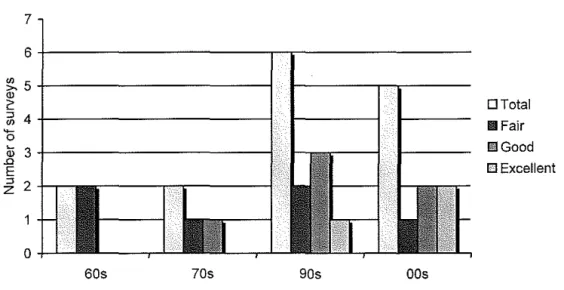
review. Figure 1 below shows a breakdown of surveys by decade along with
quality ratings. Generally, the quality of surveys improved over time.
Figure 1. Physician Surveys By Decade.
60s 70s 90s OOs
DTotal
li!IFair
l!i!Good
After an initial review of all selected papers, we decided to divide the surveys further into 5 different "eras" based on common content themes and the survey years. As with any survey, context is vital to an understanding of the results, and a breakdown by era allowed us to view physician opinion with a perspective for the health policy climate of that time. The 5 eras are the
Medicare Era (2 surveys), "Crisis" Era (2), Clinton Era (4), Managed Care Era (2), and "What Now?" Era (5).
The Medicare Era: Opinion During a Health Care Revolution
For decades starting early in the 20th century, active policy elites in the medical profession, consisting mostly of the leadership structure of the AMA, fought with great success to prevent any reform legislation involving NHI8 As Colombotos (318), the author of both of the Medicare era surveys, summarizes, "Seldom has a law been more bitterly opposed by any group than was Medicare by the medical profession."31 An aligning of pro-reform forces culminated by the 1964 Democratic election landslide allowed for the passage of legislation in July 1965 that established the Medicare and Medicaid programs as Titles 18 and 19 of the Social Security Amendments_? The early work in physician opinion attempts to understand physician views toward Medicare, both before and after its passage.
cost for those over 65."32 Fifty four percent of respondents opposed Medicare,
while 38% favored the legislation. He followed this survey with two additional
surveys of the same physicians and a resulting paper that reported attitudes
toward the new legislation before and after passage, as well as after the program
went into effect.31
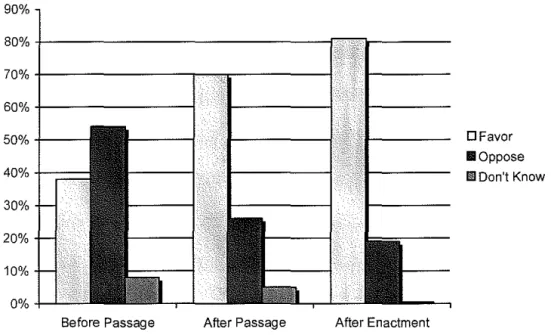
Figure 2. Physician Support for Medicare; Jan 1964-Mar 1965, May-Jun 1965, Jan-Apr 1967
Before Passage After Passage After Enactment
SOURCE: From results reported by Colombotos, 1969; summarized by author
DFavor II Oppose Ill Don't Know
Figure 2 shows the dramatic shift in physician opinion of Medicare before
and after its passage. Those in favor of the legislation jumped from 38% in
January 1964-March 1965 to 70% in May-June 1965, right before the program
was to start. The final survey saw an additional increase in those favoring
Medicare to 81% in January-Apri11967, about 6 months after its implementation.
In his first survey, Colombotos also identified several associations
be able to follow throughout the various survey eras. Physicians who were
affiliated with the Democratic Party, politically liberal on economic-welfare issues,
and located in New York City were more likely to support Medicare than were
Republican identifiers, conservatives, and upstate physicians. The pre-Medicare
survey found no major differences between generalists' and specialists' opinions
of the legislation. Colombotos concluded that political views were the best
predictor of doctors' position on Medicare. -just as decades of political science
research has confirmed for the general public.
He also asked physicians before-after questions about the perceived
effect of Medicare on the quality of medical care and on their own salaries.
Before implementation, 14% thought the program would improve quality; 54%
answered no difference; and 28% felt care would get worse. After
implementation, these shifted toward a belief in improvement, with 30% saying
they thought it would improve, 60% make no difference, and 8% harm care.
Before implementation 35% of physicians thought Medicare would mean their
salary would increase; 41% assumed there would be no change; and 12% feared
a lower salary. The percentages did not change much after implementation
(42%, 38%, and 11% respectively). Of most significance is that a majority of
physicians did not fear Medicare's effect on patient care or their earning potential
before the actual start of their participation.
We must note several weaknesses of the Colombotos' Medicare surveys,
both of which received fair quality ratings. They were limited to private practice
to be more liberal and pro-Medicare than U.S. doctors overall. The report does
not explain how the population was recruited and does not address question
validation. Finally, causality is difficult to assess, because the surveys pulled
different sub-samples from the original sample for the later two iterations.
In spite of these problems, Colombotos' work is trailblazing. After
decades of AMA resistance, one might have thought that the single largest
expansion of the government's role in health care would have triggered further
physician protest.7 Yet despite threats from a few doctors intending to organize
a physician boycott, widespread resistance never materialized and the AMA
ultimately decided it could accept the results.16 The Medicare era surveys
demonstrate this immediate acceptance upon passage of the legislation.
Colombotos proposes two reasons for doctors' about-face on Medicare.
First was the content of the legislation. The AMA had for so long predicted
disaster with government involvement that Congress went to extraordinary
lengths to guarantee that reimbursement situations would be favorable to
physicians and promised quick payments.6 The second was that public support
for Medicare was clear, as a 1965 Gallup poll had two-thirds in favor of the
program about 6 months before its passage31
The early physician opinion work frames several important issues going
forward. Will physicians quickly accept new reforms and major legislation once
they have been passed? In the case of Medicare, which ultimately was a boon to
physicians caring for the elderly, the answer appears to be yes. Do "everyday"
Saward put forth that in all likelihood many more doctors disagreed with AMA
policy than the leadership recognized, but not as many as pro-reform forces
hoped for.6· 13 The Colombotos survey seconds this assessment as he found a
weak majority (54%) opposed to the bill before passage, while nearly two-fifths
(38%) were in favor.
The "Crisis" Era: The Inevitability of NHI?
In the years after President Johnson had signed Medicare and Medicaid
into law, the momentum behind health care reform had slowed only slightly in the
wake of the tsunami of Medicare. The word "crisis" had long been used by
liberals to convince the public of the need for an even greater expansion of the
government's role in health care. However, at the start of the 1970's, in the face
of an explosion of Medicare and Medicaid costs, recently elected President
Richard Nixon used the phrase "massive crisis" to describe the health care
system during a July 1969 press conference. Several mainstream media
sources followed with "crisis" stories about health care in the U.S. and once
again major debates about reform and NHI ensued.6
Against this backdrop, Colombotos endeavored to measure physician
opinion about health care again, this time focusing on their attitudes toward NHI,
which many liberal proposals of the time advanced as the solution to the "crisis."6
In 1973 he conducted the first nationally representative survey of physicians and
medical students identified by our systematic review.33 The survey, which we
rated as good quality, covered attitudes toward NHI and how these attitudes vary
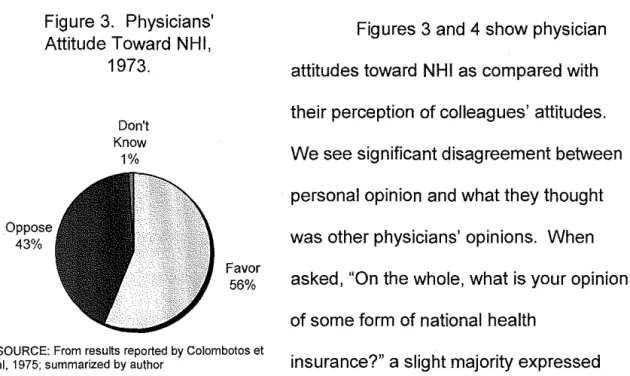
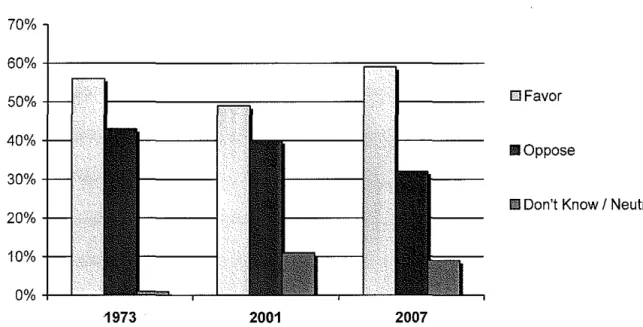
Figure 3. Physicians' Attitude Toward NHI,
1973. Oppose 43% Don't Know 1% Favor 56%
Figures 3 and 4 show physician
attitudes toward NHI as compared with
their perception of colleagues' attitudes.
We see significant disagreement between
personal opinion and what they thought
was other physicians' opinions. When
asked, "On the whole, what is your opinion
of some form of national health
SOURCE: From results reported by Colombotos et
al. 1975; summarized by author insurance?" a slight majority expressed
support. But in response to "Of the doctors you know personally, would you say
most are [in favor/opposed to/don't know] of some form of national health
insurance?"; a strong majority answered opposed. Colombotos noted that a
similar inconsistency between attitudes and perceptions can be seen in his
Medicare work.
Figure 4. Perception of Colleagues' Attitude, 1973.
Don't Know 7% Oppose 74% Favor 19%
SOURCE: From results reported by Colombotos et al, 1975; summarized by author
He found strong correlations, in
both directions, between attitudes and
perception of others' attitudes (e.g. those
who favored NHI were more likely to
perceive that other doctors favored it, and
vice versa). Opponents of NHI were
slightly more likely to feel strongly about
their opinion than did supporters. The
with their counterparts: women (62%), from Northeast (64%), under 35 years old
(64%), and hospital-based (72%). Also, those doctors at lower income levels
and those with a higher percentage of income as salary tended to support NHI.
Interestingly, only 42% of those characterized as primary care practice favored
national health insurance, continuing a trend from the Medicare Era. AMA
members were largely in agreement with those identified as "AMA leaders," but
non-AMA members were much more likely to endorse NHI.
Physicians in the 70s-era Colombotos survey overwhelmingly felt that
NHI was inevitable (83%), with 46% answering that it was inevitable within 5
years. Belief about inevitability correlated with attitude toward NHI in both
directions. As he did with Medicare, Colombotos argued that physicians continue
to appreciate trends in public opinion and popular attitudes and that these may
even influence their own opinions to a certain degree.
A final significant note about this survey is that it asked doctors to assess
their personal knowledge of health reform. Forty four percent of respondents
reported that they were "not well informed" or "not at all informed" about the
various NHI proposals despite most expressing some kind of preference (45%
felt "strongly" either for or against). As we will see in future survey eras, there is
reason to question physicians' understanding of health reform issues despite
their prominent role in the system.
This Colombotos survey was rated as good quality for nationwide sample
and high response rates, but it possesses many of the same weaknesses of the
procedures. The inclusion of medical students and residents in the study
population may have driven responses toward pro-NHI opinions, but he at least
partially addressed this by offering weighted totals to adjust for sub-population
sizes. The weighting process was not explained.
The other study from the Crisis Era is a survey conducted by Goldman of
graduates and current students of Yale University School of Medicine.34 The
study's goal was to measure respondents' support for various reform proposals
of the day, including several that could be described as NHI initiatives. The 1972
survey found that 53%, including two-thirds of physicians in office-based practice,
would accept the Medicredit plan, which was the AMA's proposal at the time.
The plan would provide tax credits to buy private insurance, basically a limited
subsidy with no cost control component(s).6
Other prominent plans of the time, including the Kennedy-Griffiths Act
and the Nixon Administration's proposal, both of which aimed for universality and
cost control, were accepted by 10% or less of the study population. The author
notes that medical school students and faculty were more likely to support radical
changes, while surgeons, solo practitioners, specialists, and members of
multi-specialty groups favored more conservative plans. As did Colombotos, Goldman
found that general practitioners never gave majority support to any single option.
Goldman also reports that relationships between political attitudes and party
identification were consistent with support for various reform proposals
The fair quality Goldman study has several limitations. We included the
study despite its very limited study population of Yale graduates and students,
because the author appropriately justifies this population as representative of
physicians nationwide, but the sample still has the potential for bias. It is unclear
how the survey described the various proposals/bills to respondents and how it
asked doctors to rate these proposals.
Taken together, what do these surveys tell us about the "Crisis" Era?
Both Goldman and Colombotos are in agreement that physicians' attitudes may
not be so closely aligned with the AMA's, although they still appear to be more
conservative than the public at large. The 2 surveys disagree on physicians'
overall attitude toward NHI, as Goldman reports that only 20% of office-based
physicians "agreed with the principle of a mandatory, federally financed health
insurance sytem," while 49% of office-based practitioners in the Colombotos
survey favored "some form of NHI." Part of this difference may be explained by
differences in wording, not to mention other methods variances including different
study populations.
The "Crisis" Era surveys do continue to support some of the other trends
first identified in the Medicare Era. We begin to get a picture of the physician
who supported further expansion of the federal government's role in health (i.e.
NH I) in the early 1970's. The typical supporter was of liberal political beliefs and
likely a Democrat; hailed from cities in the Northeast; hospital-based in internal
medicine, pediatrics or psychiatry; and made less money than other physicians
with health policy, but their confirmation is important. NHI-supporters had the
least to lose by radical system reform. Given that many doctors had a lot at
stake with further system overhaul, it should not be surprising that opinion was
more intractable than the startling post-Medicare reversal might have us think.
The Clinton Era: Dissatisfaction and Disunity
After the "Crisis" Era, we find a large gap until the next quality physician
surveys appear, the pause during a period where interest in large expansive
federal level health reform recessed. Starr argues that a confluence of forces,
including a severe 1974-1975 recession, political stalemates amongst mixed or
conservative leaning governments, and the continued explosion of Medicare
costs, combined to drive the health reform discussion toward mechanisms that
would increase efficiency while cutting or controlling costs. He characterizes this
time as the rise of "corporate mec;licine."6 We note that research interest in
physician opinion during this period seems to have faded after the
expansion-minded debates of Medicare and the early 1970s.
The phoenix-like health care discussions would rise again in the early
1990's, starting with Harris Wofford's miraculous come-from-behind 1991 victory
in a Pennsylvania special election to the U.S. Congress. Experts and polling
credited his victory to Wofford's outspoken support of and ingenious ads for
health care reformn With this catalyst, interest in the issue exploded and 1992
saw the election of a charismatic moderate Democratic President who envisioned
Democratic Congress to give reform what the editor of JAMA at the time called
"an air of inevitability (Navarro 206)."23 In this charged atmosphere, we find a
renewal of interest in U.S. physician opinion of the health care system and the
proposed Clinton changes.
Of the 4 surveys we identified from the Clinton Era, two are comparisons
of U.S. physicians with doctors from other countries, and two looked at opinion in
select state populations. The first study, by Blendon et al, was a good quality
survey that compared opinion between U.S., German, and Canadian physicians
of their own health systems. 35 We focused primarily on the nationally
representative U.S. physician results for our review. The survey asked
respondents to choose which of several statements best expressed their views
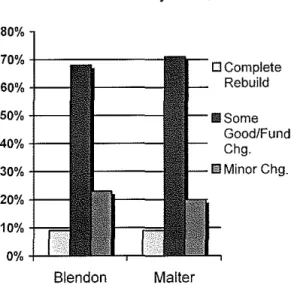
on the U.S. health system. Sixty eight percent selected "There are some good
things in our health care system, but fundamental changes are needed to make it
80%
70%
60%
50%
40%
30%
20%
10%
0%
Figure 5. Physician Attitude Toward U.S. System, 1993.
Bien don Malter
DComplete Rebuild
SOURCE: From results reported by Blendon, 1993, and Malter et al, 1994; summarized by author
work better"; 23% said "On the whole,
the health care system works pretty
well and only minor changes are
necessary to make it work better"; and
9% thought "Our health care system
has so much wrong with it that we
need to rebuild it completely." Figure
5 shows these results compared with
the same question of physician in Washington state. The nearly identical results
reassure us that this is an accurate snapshot of physician opinion at the time.
Blendon found that primary care physicians were more likely to favor
completely rebuilding the system than were their colleagues, an important shift
from earlier work that found generalists to be more wary of major reform. The
survey also asked physicians to assess the seriousness of items on a list of
potential system problems. A majority of U.S. physicians rated the following
problems as either very serious or somewhat serious: "excessive delays or
disputes in processing insurance forms or receiving payment for services
rendered" (78%); "limitations on length of hospital stay" (57%); and "external
review of clinical decisions for the purpose of controlling health care costs" (53%).
Interestingly, these were also similar to criticisms leveled at the Clinton reforms,
as the plan leaned heavily on the use of managed care and global budgets to
co ntro I costs. 27
The good quality Blendon survey had a fairly pedestrian response rate of
44%, opening the possibility of non-response bias. Some of the questions may
have been leading, as it appears the survey asked about the severity of several
problems without allowing respondents to say that they did not think the issue
was a problem. Survey strengths included its well-documented nationally
representative sample and validated questions.
The other international study was a good quality survey by Scanlan et al
that compared the attitudes of U.S. family physicians with their counterparts in
see the need for major changes to the health care system. Our family doctors
were more likely to agree that there were too many controls on physicians; that
litigation concerns influenced their clinical decisions, and that PCP incomes were
too low while sub-specialists' incomes were too high. The study targeted family
doctors, which limits the conclusions we can draw. Also, the question source or
validation process was not described.
Other studies from the Clinton Era looked at physician opinion on the
state level. The surveys provide a nice counterpoint to one another, because
both were collected in 1993 but from states that differ greatly. The Malter et al
survey was an excellent quality survey of physicians practicing in Washington
State. 37 Both this survey and the good quality Millard et al study of North
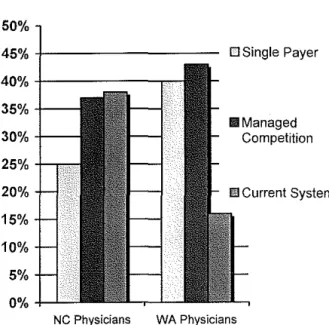
Figure 6. Physician Preference for Reform,
1993.
50%
45%
+
-40%
+ r
-35%+30% +
-25%
+-""'"'"'
20% _ j _ J , ,15%
10%
5%
D Single Payer
Ill Managed Competition
NC Physicians WA Physicians
SOURCE: From results reported by Millard eta!, 1993, and Malter eta\, 1994; summarized by author
Carolina physicians asked what
type of reform doctors preferred.38
The nearly identical questions
asked respondents to choose
between a single-payer system,
managed competition (a major
component of the Clinton plan),
and keeping the current system.
Figure 6 shows the results from
Despite evidence that physicians at the time were ready for "fundamental
change," we see doctors are far from consensus. We also observe significant
preference variances between the states.
Washington physicians had an interesting perspective on the Clinton
plan's chances of success. When asked whether the proposal would address
the shortcomings of the current system: 61% responded that it had little or no
chance; 33% thought that it had some chance; and only 3% thought it had a
good chance. This is in spite of the fact that a plurality (43%) thought the best
offered reform option was "managed competition between several private
insurance plans in which employers are required to offer employee health
insurance." This skepticism toward the Clinton plan is consistent with experts'
characterization of the physician response to the legislation as ranging from
lukewarm to hostilen
Several familiar themes appear in the Malter survey regarding
associations. Procedure-oriented specialists were more likely to want to keep
the current system, and primary care physicians were more in favor of a
single-payer system. Salaried doctors preferred single-single-payer significantly as compared
to their counterparts paid via FFS. Finally, the survey asked about several
specific elements of reform. Only two were highly-rated, with majorities agreeing
that "reduction of administrative paperwork" (68%) and "malpractice reform"
(62%) would "improve the health care system."
The final Clinton Era survey (Millard) asked North Carolina primary care
several similar questions about the system and reform. We find a population of
physicians that appears more conflicted as to the need for reform than the
Washington doctors. Sixty nine percent of respondents were either strongly or
moderately dissatisfied with the current system, and 76% felt that access to care
was not adequate in the state. Despite these findings, a plurality of doctors in
NC preferred the status quo when asked to choose from various reform options.
The Millard survey also provides further evidence calling into question
how well physicians understand issues of health reform. Even after the authors
provided participants with schematic diagrams outlining the reform plans, some
still felt they had insufficient information to judge the merit of a single-payer plan
(29%). Slightly more doctors uncomfortable with their ability to judge the
managed competition plan (34%). These numbers are fairly consistent with the
Malter survey where 28% indicated they understood the Clinton plan either "a
little" or "not at all."
The same association trends remained for the North Carolina physicians.
Doctors currently reimbursed under FFS were more likely to choose retaining the
current system compared with their salaried colleagues. Those who were
satisfied with the current system or did not think access was a problem also
tended to prefer the status quo, while those who were dissatisfied with the
system were 8 times more likely to choose single-payer as their system of choice.
The major limitation of both the Malter and Millard surveys was that they
were limited to physicians in a single state (Millard was NC primary care
Washington has traditionally leaned to the left in terms of national elections
(Clinton carried the state twice) versus North Carolina which from 1980 until2008
had gone conservative in Presidential elections (Clinton lost there twice). We
should also emphasize that Millard survey questioned primary care physicians
only, a population we might expect to be more likely to favor liberal health policy
and a major system overhaul. It is unclear to what extent this may have been
balanced by the conservative leanings of the state in general.
This review of some of the specific results from the Clinton Era surveys
elucidates several themes, some old, some new. Physicians were consistently
dissatisfied with the system, particularly with regard to access to care for all.
They had begun to feel the administrative burden of an increasingly powerful
private insurance system and the arrival of managed care. They also were
unhappy with the malpractice system and have begun to clamor for tort reform.
Despite this unrest, physicians' vision for the future of the system
remained unclear. They expressed a desire for change, but not nearly as much
as did the general public, who when surveyed in 1991 voiced a much greater
preference for complete rebuilding than physicians would a few years later (see
Figure 5). A Blendon public opinion poll found that 42% favored complete
rebuilding, with an additional 50% calling for fundamental change, and only 6%
endorsing minor changes39 Physicians and the general public do, however,
share a similar lack of consensus as to what that change should be.
Also as was true for the public at large, it appears that despite some
There are no surveys which indicated a majority support for Clinton reforms, and
physicians appear fairly evenly divided between a single-payer system, the
current system, and a Clinton-style compromise between the two. Researchers
slyly asked physicians about the Clinton plan using proxies like "managed
competition" to minimize any name-bias toward Bill and Hillary, but whether this
actually worked is unclear. What is clear is that physicians did not run with open
arms toward the proposal.
The Clinton Era surveys reinforce several now familiar associations.
Specialists and surgeons tended to prefer the FFS private insurance system and
keeping the status quo. Dissatisfaction with the current system strongly drove
support for the alternatives. One important change from previous eras is that by
the early 1990s we see that primary care physicians have arrived at their current
position as tending to champion liberal positions on health reform and the
single-payer option.
The degree to which physicians completely understand proposals and
reforms asked about in surveys remains unclear. The Mallard study found that a
significant minority of North Carolina physicians still felt uncomfortable judging
reforms even after they had been provided explanatory information. This will
become an important issue going forward as managed care grows and physician
The Managed Care Era: Doctors Hate Managed Care
Only a few years after the failed Clinton attempt at a health system
redesign, we find that managed care has continued the expansion that began in
the 1980's. Managed care, by the mid-1990's, had wrested control of the
employer insurance market from traditional fee-for-service (FFS) as it had grown
to cover 85% of employees40 Ironically, its use as a cost and quality-control
mechanism was one of the central structures, and most criticized, of the Clinton
proposal.27
The critical backlash resulting from its more organic growth was no less
fierce. Physicians decried publicly the infringements of managed care on
autonomy and their relationships with patients, while grumbling about the
accompanying administrative requirements and reimbursement declines. 41 The
public too was convinced of managed care's evils as polls in the second half of
the decade showed that American's feared managed care was more concerned
with saving dollars than lives.40
Amidst this managed care as policy pinata atmosphere, surveys from the
Managed Care Era sought once again to measure the physician opinion of the
system and the new direction it had taken. The survey by Simon et al was a fair
quality study of the opinion of deans, faculty, residents, and students at medical
schools in the U.S42 Asking respondents to rate their attitudes toward various
subjects on a 0 (as negative as possible) to 10 (as positive as possible) scale,
Simon found that attitudes toward managed in general were negative and ranged
care doctors felt better about managed care than their specialist colleagues (4.6
versus 4.0, p<0.001).
The survey posed to participants the question of whether FFS or
managed care was better with regard to several different aspects of medical care.
Across all respondents, FFS performed better than managed in all aspects,
including from strongest FFS preference to weakest: Access to care, Minimizing
ethical conflicts, Doctor-patient relationship, Continuity of care, Care at the end of
life, and Care of chronic illness. However, there was significant variation of
opinion across the multiple categories of respondents. For the three quality of
care variables, primary care physicians were more evenly divided and even
occasionally of the opinion that managed care was better.
Simon also found that more than half of physicians (excluding student,
residents and deans) reported that as a result of managed care their income had
decreased or lot a little (55.8%); their job security had diminished (54.1 %); and
collegial relations had deteriorated (52.2%). When asked to choose which
system was the best for the most people for a fixed amount of money, 57.1%
chose a single-payer system, while the remainder was closely split between
managed care (21.7%) and FFS (18.7%).
The Simon study had several quality problems. The survey was limited
to those in academic medicine, and the inclusion of medical students and
residents in some outputs makes the results challenging to interpret. Also some
of the questions had significant flaws. Several leading questions asked about
much has managed care decreased your time for research?"), without permitting
the option of saying that something was not a problem at all. Other questions
only offered limited answer choices with no intermediate options (e.g. the effect
of managed care described as "A lot, a little, or not at all").
The second study from the Managed Care Era was a fair quality study by
Deckard of Florida physican opinion.43 Interestingly, Florida had, in 1992 and
1993, enacted major health care reform at the state levels, some of which
mirrored those proposed by the Clintons. These reforms included new insurance
regulations, the use of practice parameters, and the establishment of consumer
purchasing alliances43 The survey also asked physicians about reform issues in
a novel way, requesting that they rate the importance of several reform issues to
physicians support of health care reform.
The top 5 most important issues (percentage rating as very important)
were: Tort reform/malpractice immunity (81.4%), Physician autonomy (75.0%),
Freedom from insurance hassle (69.0%), Consumer choice of providers (67.5%),
and Incentives for quality care (56.6%). The bottom 5 were: Control cost (28.1 %),
Maintain private insurance (37.6%), Coordinated state/local planning (22.1%),
Consumer advocate commission (11.7%), and Services under one entity (7.9%).
Perhaps more interesting than the top 5, which contains no surprises, is the
bottom 5. Should we call into question both physicians' concern with health care
costs so long as their autonomy and salaries are protected, as well as their true
interest in maintenance of the private insurance system that the AMA and other
Deckard also asked Florida doctors about their knowledge of health care
reform and physician input into and support of national level reform, with
eye-opening results. Nearly half (48.9%) of Florida practitioners indicated that their
knowledge of national reform was either poor or fair, with knowledge of state
reform fairing worse at 57.3%. Strong majorities indicated that they felt physician
input into national reform was either little or none (88.2%) and that they did not
support national level reforms (78.1%). Additionally, Florida physicians rated all
of the state's recent health care reforms negatively.
The Deckard study does have many limitations. A low response rate
(19.4%) and its Florida-only population open the door to multiples biases. The
paper did not describe any question validation process, the exact content and
phrasing of many of the questions is unclear, and several of the questions were
potentially leading (e.g. one of the aspects of reform was "Freedom from
insurance hassle"). Also, the timing of when the survey was administered is not
given.
In spite of containing only 2 surveys of fair quality, the Managed Care
Era does offer a few lessons. Physicians indicated that they were generally
unhappy with managed care as organizational structure for health care, but like
the results from general public polling, it remains unclear how much of this
dissatisfaction resulted from real functional problems as compared to the widely
recognized stigma against managed care, HMO's, etc.44 Primary care
surgeons, similar to their attitudes toward the Clinton plan only a few years
earlier.
Several other trends re-appear from earlier eras. The degree of
physicians' knowledge and understanding of reform issues continued to be called
into question. Doctors consistently prioritized autonomy above all else. They
have also begun rate highly malpractice reform and improvements that decrease
administrative workload, a trend we witnessed in the Clinton Era.
The "What Now?" Era: Reform Fatigue as the Search Continues
The present decade finds the various players involved in health care
reform at an impasse. The public continues to be dissatisfied with the system as
medical costs eat up more of their paycheck with each passing year, but they
remain divided as to the solution and wary of any reforms that expand
government's role45 Fatigue appears also to have set in amongst health
researchers. Democratic control of both the White House and Congress means
the prospects for health reform are as bright as they have been since the Clinton
proposal, yet several experts comment that not much has changed and familiar
obstacles remain46· 47
Opinion research from the "What Now?" Era indicates that physician
surveys have increased in both quality and quantity, as researchers continue to
search for trends and preferences that might pave the way to the next major
reform effort. In recent years, doctors have found themselves at a crossroads
with respect to the system and their place in it. Laugesen and Rice (2003)
vanquished heroes within a paradise lost." They contend that physician influence
has declined as their economic monopoly over reimbursement structures has
crumbled and their political capital has been sapped by decades of battle over
Medicare payment rates and faltering public belief in their infallibility3 .
Our first survey from the "What Now?" Era is an excellent quality study
from a nationwide sample of physicians by Ackermann and Carroll that attempted
to measure attitudes at this crossroads toward the financing of national health
care48 Their most important finding was that physician opinion about NHI
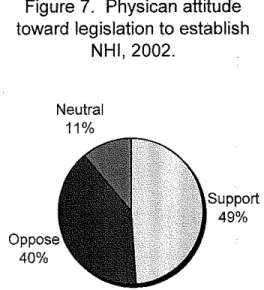
changed significantly depending on language about its financing. Figure 7 below
shows the results from the question: "In principle, do you support or oppose
governmental legislation to establish national health insurance?" Figure 8 graphs
their response to "Do you support or oppose a national health insurance plan
where all health care is paid for by the federal government?"
A near majority supported NHI in principle (18% strongly supported, 31%
generally) with significant opposition (21% strongly, 19% generally). However,
when asked about NHI that is financed by the government a clear majority was in
opposition (33% strongly, 27% generally) as opposed to support (9% strongly,
17% generally). We can surmise that while doctors were divided on the idea of
NHI they clearly were wary of a program that would be administered and paid for
publicly. A brief nationwide follow-up survey of excellent quality completed 5
years later found increased support in principle for NHI legislation of 59% (28%
strongly, 31% generally) against 32% opposed (17% strongly, 15% generally)49
Figure 7. Physican attitude toward legislation to establish
NHI, 2002.
40%
Neutral
11%
Support
49%
SOURCE: From results reported by Ackermann and Carroll, 2003; summarized by author
Associations between
physician characteristics and NHI
attitude fell along mostly familiar lines.
After adjusting for other variables in
the first survey, doctors most likely to
support NHI were: in primary care;
had greater than 20% Medicaid
patients; had greater than 10%
uninsured patients; not in private
practice; and located in inner cities. Those most likely to oppose NHI had less
than 20% and 10% of patients in Medicaid and uninsured, respectively; were
surgical subspecialists or anesthesiologists; and in rural or private practice. Both
theAckerman and Carroll studies were limited in depth because of their short
Figure 8. Physician attitude toward NHI plan paid for by the
federal governement, 2002.
Neutral 14% Oppose 60% Support 26%
SOURCE: From results reported by Ackermann and Carroll, 2003; summarized by author
designs (which may, however, have
helped achieve its high response
rate).
Next we looked at another
set of two surveys from the "What
Now?" Era completed by the same
authors six years apart. The first
survey by McCormick et al is a fair
quality survey of physicians in
preference for NHI as compared to other options50 Meanwhile its excellent
quality follow-up asks a nationwide sample of physicians for their opinion of
various options to expand health coverage. 51 Like the Ackerman study above,
the 2 McCormick studies demonstrate what may be a key contradiction in
physician thinking about health policy.
In 1993, the authors asked Massachusetts doctors, of single-payer,
managed care, and FFS, "Which ... would offer the best health care to the
greatest number of people for a fixed amount of money?" Figure 9 shows that a
significant majority chose single-payer, with the remainder split between the
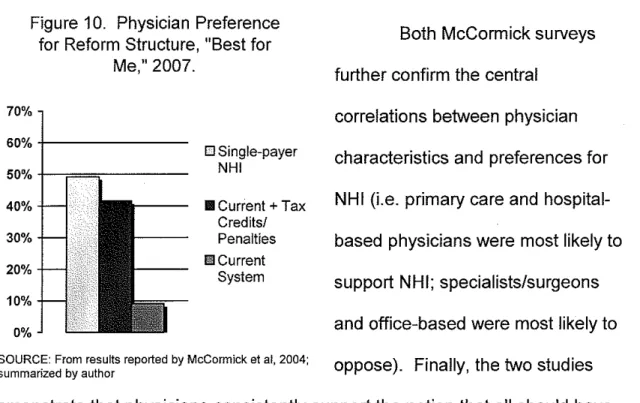
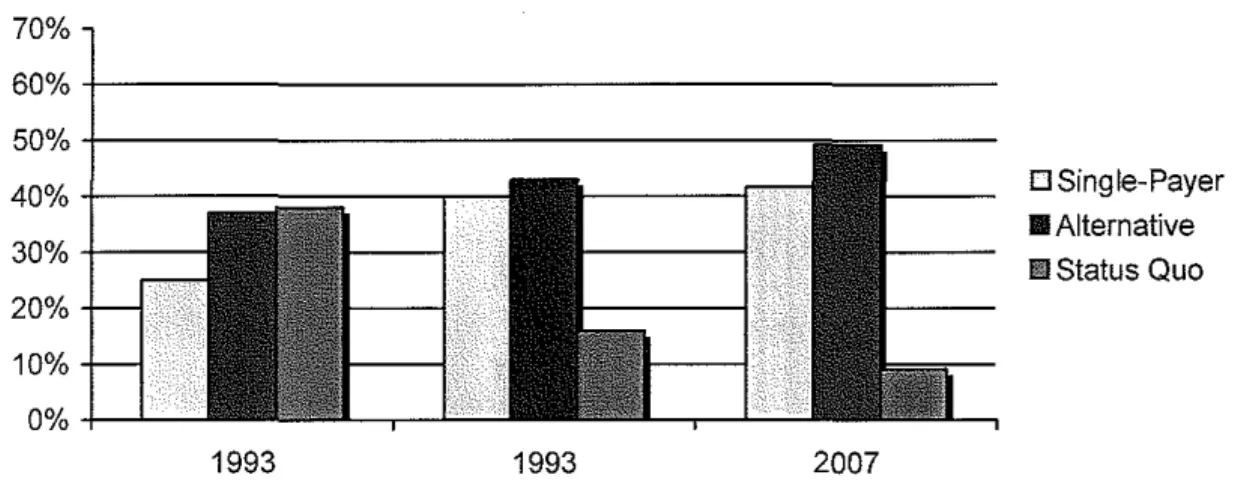
other two options. Figure 10 shows that from the follow-up 6 years later that a
nationwide sample of physicians felt differently when asked to choose which
option they most preferred of single-payer, the addition of a tax credit/penalty to
the current system, or keeping the system at present. Single-payer support
declined, while support for an alternative (in the second survey, tax reforms)
increased.
While we recognize that the samples were different, that physician
opinion may have shifted in those 6 years, and that tax credits may be a more
attractive alternative to physicians, we also offer that question wording may help
to explain the variance. The first survey asked physicians to choose from reform
options given a "best for society" perspective, yet the second survey asked for
simple personal preference (i.e. "best for me" perspective). Is it possible that
physicians experience a conflict between supporting reforms that benefit the