The Public Health Impact of Hydraulic Fracturing
By
Kelly Blanchfield Bragg, CHES
A Master’s Paper submitted to the faculty of the University of North Carolina at Chapel Hill
In partial fulfillment of the requirements for the degree of Master of Public Health in
the Public Health Leadership Program.
Chapel Hill
2013
________________________________
Advisor:
________________________________ Second Reader:
Abstract
In recent years, hydraulic fracturing has become a controversial political issue in the
United States. Proponents claim that the process, when done safely, can have substantial
economic benefits for both the areas surrounding a well and the United States in general. It has
also been claimed that hydraulic fracturing has fewer negative health effects on the public’s
health and the environment than current methods for producing other energy sources such as
coal. Opponents claim that there are myriad public health risks and no safe process for byproduct
disposal. Hydraulic fracturing occurs when large quantities of water and chemicals are injected
into rock formations to release naturally occurring oil and gas. Though the process has been used
for years, it has recently seen an increase due to advances in the technology and the advent of
horizontal drilling. Although this new technology makes hydraulic fracturing much more
economically efficient for the oil and gas companies, many questions surround the process,
including the impact on public health of surrounding communities. Air and water quality are
impacted by the chemicals used in hydraulic fracturing, as well as the practice of drilling.
Chemicals, including a variety of known carcinogens and radon are released as a result of the
process. There are secondary concerns pertaining to occupational exposure and possible
earthquake causation.
This paper presents an overview of hydraulic fracturing; the public health risks posed by
the process and possible mitigation strategies that could reduce those risks. Also presented are
recommendations for further research and the need for increased transparency of oil companies,
improved assessment of the chemicals used and where the greatest risk occurs in relation to
distance from a well. Also needed is new research on the effects of fracking, both the long term
standards and legislative actions are shown. One of the key recommendations of this paper is that
environmental public health must be better represented at the local, state, and national levels
Introduction
The increase in hydraulic fracturing in the United States has been meteoric in recent
years. The United States Energy Administration reported that the nation’s electric utilities used
27% less coal in 2012 than in 2008. That decrease has been attributed to the explosive growth of
the practice of hydraulic fracturing (also known as fracking), a method of generating energy
from natural gas reserves deep underground (Williams-Derry, 2012). A major economic driver
for certain areas of the country, this method of natural gas production comes with questions
concerning the health and safety to both environment and people exposed to fracking.
The World Health Organization defines environmental health as the branch of public
health that “addresses all the physical, chemical, and biological factors external to a person, and
all the related factors impacting behaviours” (WHO, 2013). Through anthropogenic activities,
the health of environment is often threatened. In the case of hydraulic fracturing, the threat to the
environment directly impacts the health of the public through possible increases in water and air
pollution. Despite the risks, these threats come with a beneficial tradeoff between the health of
the environment and the benefit to the economy. In the last decade, the practice has become
much more popular in the United States because of improvements in the productivity of wells
through new technology and an increase in economic feasibility. Those economic benefits,
coupled with a pervasive desire among Americans to be energy independent, have created a
veritable boom in energy production through hydraulic fracturing. Between February 2012 and
February 2013 alone there was a decrease in the amount of oil imported from foreign sources of
1.3 million barrels per day. This represents the lowest level since 1996 (Domm, 2013). Natural
gas harvested from hydraulic fracturing wells had an average annual growth rate of 48 percent
2012). On the Marcellus Shale, one of the world’s largest shale formations, over 4,000 wells
were developed in Pennsylvania between 2009 and 2010 alone (Myers, 2012). That kind of
growth comes with true economic incentives of tax revenue and job creation. According to the
University of Southern California, the Monterey Shale formation, which runs under parts of
California, may hold up to 15.4 billion barrels of oil. Developing wells for this could add up to
$24.5 billion in state and local taxes and 2.8 million jobs by the year 2020 (Vekshin, 2013).
Energy independence and economic growth are major drivers in the hydraulic fracturing
boom. But at what cost do these come to the environment and the public’s health? Many risks
resulting from hydraulic fracturing have been identified. Major concerns about the chemicals
used during hydraulic fracturing and the threat they pose to surrounding water sources and air
persist. Other risks include occupational hazards and a possible causative link between hydraulic
fracturing and earthquakes. The goals of this paper are to thoroughly define hydraulic fracturing
and the causes for the recent increase; explore the different risks involved with hydraulic
fracturing, including the impact of air and water quality, occupational risks and other secondary
concerns; identify the benefits of hydraulic fracturing; as well as explore the need for further
research on both to assess the true cost to the environment and the public’s health.
What is Hydraulic Fracturing?
Hydraulic fracturing, simply explained, is a way of generating energy from resources
stored within rock formations. The actual process of fracturing rock for oil and gas generation
has been in practice for decades. It has produced nine billion barrels of oil and more than 700
than 35,000 wells per year in the United States (ASME, 2011). Hydraulic fracturing today
involves injecting water mixed with substances known as proppants into permeable rock
formations to generate oil and natural gas.
Fracturing rock for oil has been in practice in the United States for more than 150 years.
It can be traced back to the 1860s when explosive nitroglycerin was successfully used to “shoot”
an oil well from shallow, hard rocks. The object of shooting a well was to break up the rock and
increase the flow and recovery of oil. In the 1930s, acid replaced the explosive as a successful
way to harvest oil from rock. In the 1940s, the first attempts at what we now call hydraulic
fracturing were attempted by Standard Oil in Kansas. Naphthenic-acid and- palm-oil, or napalm,
thickened gas and a gel breaker were used to “stimulate” limestone. Because of the success of
the process in producing oil, the industry continued to grow. Over the next fifty years, different
variations of the fluid mixtures used to break apart the rock to generate oil were tested. The
chemical makeup of this fluid has evolved into the modern day process we call hydraulic
fracturing or “fracking” as it is more commonly known (Beckwith, 2012). Fracking today targets
shale rock formations. Shale rock is a fine-grained sedimentary rock. Black shale rock contains
organic material that sometimes breaks down to form natural gas or oil (King 2013a). Most shale
gas is located 6,000 feet below ground level and most shale rock formations are very thin. For
example, the Marcellus Shale formation, which is a large shale gas source located in the
Appalachian Basin of the United States, is only 50 to 200 feet thick (Clark et al, 2012). Shale
formations are resource plays that exist across the 48 contiguous states. A resource play is an
accumulation of hydrocarbons that exists over a large area (Meador, n.d.) and can yield natural
gas, gas condensates, and crude oil (PennWell, 2013). Figure 1 is a map displaying the locations
Drilling
cannot occur
without the proper
tools. A well pad
provides a stable
base for a drilling
rig, retention ponds,
water storage tanks,
loading area for
water trucks,
associated piping,
pumping trucks, and control trucks. Once the drill has been installed, the well pad serves as the
location of the well head and the place where the equipment will be held. A single well pad
requires clearing several acres land (Clark et al, 2012). Even though the casing of the drill is
perforated, only a small amount of natural gas will flow into the well on its own. Fracture
networks must be created in the shale to allow gas to escape from the pores where it is trapped
(Clark et al, 2012).
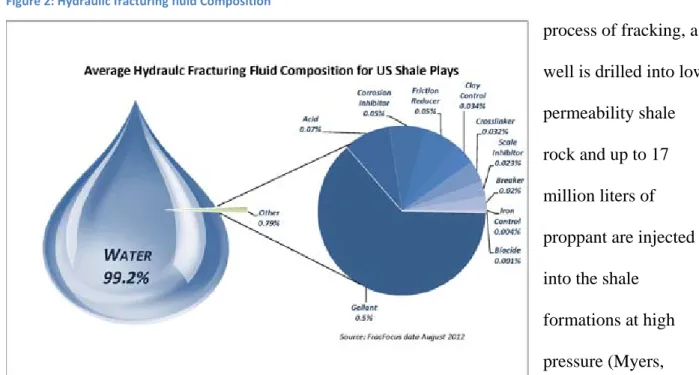
Modern fracking uses a mixture of water, sand and chemical additives known as fracking
fluids. Water and sand, which is also known as proppant, account for 98-99.5 percent of the
mixture and the remaining 0.5-2% percent is a mix of various chemical additives. Figure 2
displays the components of fracking fluids. The exact chemicals and amounts of each used are
often proprietary and vary by drilling company. Generally, they include acids to clean the shale
fractures, anti-corrosives to protect the well, gels that add viscosity and friction reducers (Clark
et al, 2012).
During the
process of fracking, a
well is drilled into low
permeability shale
rock and up to 17
million liters of
proppant are injected
into the shale
formations at high
pressure (Myers,
2012). When the fracking fluid mixture hits the shale rock, it creates small tensile fractures
through which natural gas is released and travels to the well (Moore & Glazer, 2007). The
natural gas is then extracted from the well and utilized for fuel (Myers, 2012).
Though the science of fracking has been utilized for decades, the incidence has expanded
in recent years because of the advent of a process known as high volume horizontal fracking, or
HVHHF. Originally, fracking consisted of only drilling vertically into the shale to release the
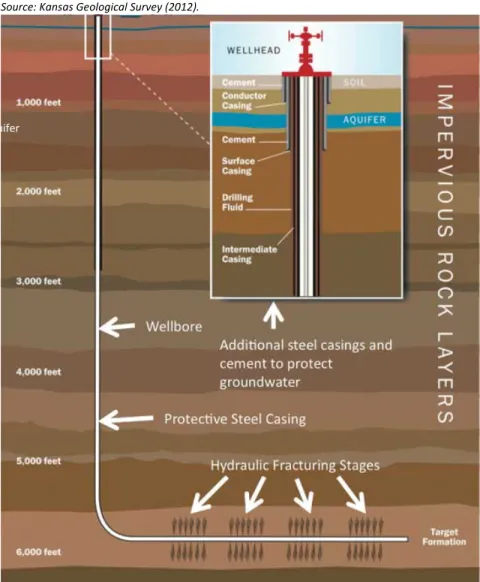
gas. HVHHF enhanced the efficiency of fracking by adding a horizontal drilling process to
increase the amount of natural gas accessed by the well. Figure 3 demonstrates the method of
horizontal drilling. Vertical-only drilling allowed only the gas immediately surrounding the well
to be accessed. The advent of HVHHF means that up to eight wells may be drilled from a single
Figure 3: Horizontal Hydraulic Fracturing.
Source: Kansas Geological Survey (2012).
more productive. Horizontal drilling creates fractured pathways with up to 9.2 million square
meters of surface area with the shale accessible to a horizontal well (Myers, 2012). This
significantly decreases the amount of time needed for chemicals, either gas or other additives
used in the fracking process, to rise to the surface (Myers, 2012). Horizontal drilling also
increases the permeability of
the shale by connecting
natural fractures in the rock to
increase the amount of natural
gas flow in the well to make it
more efficient (Myers, 2012).
Because the addition of the
horizontal drilling increased
production without raising
costs substantially, fracking
for natural gas has become an
extremely economically
efficient method of providing
energy. This economic
efficiency seems questionable when looking at the per well cost for drilling. Horizontal drilling
costs three times more than vertical drilling per well, but that cost is recovered by the increase in
production (King 2013b). This rapid increase in fracking has created myriad issues concerning
Public Health and Fracking
The process of fracking has many potential impacts on environmental public health.
Though current research concentrates primarily on water pollution, the impact on other areas
should not be overlooked. In practice when assessing health risks pertaining to fracking, the
cumulative risk to the overall health of the population should be considered.
Air Quality and Fracking
Air pollution attributed to fracking has several sources. Chemical gasses can leak from
the well, polluting the air immediately surrounding the well. Many of the chemicals released
during fracking are monitored under the Clean Air Act (CAA), a law enforced by the
Environmental Protection Agency (EPA) to keep the air safe from contaminants. Studies have
shown an increase in methane emissions, volatile organic compounds and hazardous air
pollutants around natural gas wells (EPA, 2013b). With the dramatic increase in fracking, the
wells are being constructed closer to people. The Colorado School of Public Health (CSPH)
conducted a Human Health Risk Assessment of a town in Colorado where fracking wells have
been constructed within 500 feet of residences. The Assessment showed that those living within
one half mile of a well were at a greater risk for cancer than those living over one half mile
(McKenzie et al, 2012). Though there are many references to the air quality impact of fracking,
there is not a robust amount of research on chemical dispersion in the air distances surrounding
wells. The CSPH study was the only one located after an exhaustive literature search.
Among the most dangerous of gases released during the fracking process is methane.
Methane is considered a poisonous gas and is an odorless, colorless, flammable gas that can be
gases that lead to global warming. Researchers in Colorado found that nine percent of the
methane released underground during the fracking process gets released into the atmosphere, a
much higher amount than they had anticipated (Tollefson, 2013). Though it can be formed by the
decay of natural materials, pockets also exists naturally underground. Though methane is not
linked with cancer or other long term health effects from chronic exposure, it is not without risk
(Wisconsin DHS, 2013). When inhaled, methane can lead to headache, dizziness, weakness,
nausea, loss of coordination and judgment, increased breathing rate, and loss of consciousness
(New Jersey, 2011). Methane is a known asphyxiant, meaning that it can cause suffocation and
death (New Jersey, 2011). When shale rock is drilled for gas, the naturally occurring methane is
released through the well and into the air by venting, creating an immediate risk for those
surrounding the well.
Volatile organic compounds, or VOCs, are also released during the fracking process.
VOCs include a variety of chemicals and have been linked to short and long term health effects.
According to the United States EPA, VOCs can cause ear, nose and throat irritation, headaches,
loss of coordination, nausea, damage to the liver, kidneys, and central nervous system. VOCs
have been linked to causing cancer in both animals and humans (EPA, 2012b).
Hazardous air pollutants (HAPs), also known as toxic air pollutants, are pollutants known
to cause cancer or other health effects, such as birth defects. The EPA has compiled a list of 187
of these pollutants that it tracks. People exposed to HAPs may be at an increased risk of cancer
or other serious health problems, such as damage to the immune, nervous, respiratory, or
reproductive systems (EPA, 2012c). Table 1 lists the chemicals that have been detected during
Table 1: Hazardous Air Pollutants and Carcinogens in Hydraulic Fracturing
HAP Only HAP and Carcinogen
Menthol Naphthalene
Ethylene glycol Formaldehyde
Xylene Benzyl chloride
Hydrochloric acid Benzene
Toluene Di (2-ethylhexyl) phthalate
Ethyl benzene Acetaldehyde
Diethanolamine Ethylene oxide
Cumene Lead
Dimethyl formamide
Hydrofluoric acid
Phthalic anhydride
Acrylamide
Acetophenone
Propylene oxide
p-Xylene
A very dangerous HAP associated with fracking is crystalline silica. Crystalline silica is a
compound that is a basic component of many types of rock, dirt and sand that becomes of a
respirable size when it is chipped, cut, drilled or ground (OSHA, 2002). Crystalline silica that is
respirable in size means that the particles are small enough to enter the gas-exchange regions of
the lungs, including particles that are under ten micrometers in diameter (OSHA, n.d.). When
used in fracking, it is referred to as “frac sand” and is a major component of fracking proppant.
The frac sand’s purpose is to hold the fractures within the shale open long enough for the gas or
the water and additives to make the fracking fluids at the well pad (Clark et al, 2012). There is
evidence that inhaling crystalline silica has been directly associated with the development of
cancer, chronic obstructive pulmonary disease, chronic renal disease and autoimmune diseases.
The most severe risk of crystalline silica exposure is a chronic, incurable inflammatory lung
disease called silicosis. Silicosis is usually a slowly developing chronic disease, but evidence
exists that there are rapidly fatal cases that can occur after intense exposures (CDC, 2012).
Crystalline silica poses the biggest occupational threat related to air quality and fracking.
Because of the drastic increase in fracking, there has been an increase in requests for crystalline
silica mining. These mines are regulated by the U.S. Mine Safety and Health Administration and
are monitored for respirable crystalline silica dust (Wisconsin DHS 2012). Crystalline silica also
proposes a risk for those working at fracking well sites. The Occupational Safety and Health
Administration (OSHA) conducted studies has identified several ways that workers can be
exposed to crystalline silica during fracking, including when dust is ejected from access and side
ports of sand moving trucks during refilling operations, dust generated by on-site vehicle traffic,
dust released from the transfer belt under the sand movers, and dust created as sand is moved
into the blender hopper during the mixing of the proppant (OSHA, n.d.). Most cases of silicosis
develop slowly over time, however there is evidence that rapidly fatal cases of acute silicosis
resulting from intense exposures over a matter of months can occur among certain occupational
groups, including miners and sandblasters (CDC, 2012). OSHA began monitoring crystalline
silica exposure in 2005 and has now established a Permissible Exposure Limit (PEL) for
crystalline silica on fracking sites to protect the workers (OSHA, n.d.). While workers at both
the mines and the well sites are protected by their respective federal regulatory authorities, there
from the mines, which are primarily located in the upper mid-west, to the well sites, which can
be as far away as California. One mining company in Wisconsin estimated that they ship 7,500
tons of crystalline silica sand by rail to oil and gas fields in Texas, North Dakota and
Pennsylvania (Allen 2013).
Much of the release of air pollutants related to the fracking process happens during the
drilling and extraction of gas, where the chemicals escape from the wells as they are vented into
the air as a direct results of the fracking process. Not all air pollution related to fracking comes
from the actual drilling process. Many air pollutants are released by the increase in industrial
equipment needed to build and run a well. Large vehicles are also needed to transport the water
and sand for fracking, as well as remove the wastes from the process (Kivat &
Schneller-McDonald, 2011). Increases in vehicle emissions due to well construction, gas transport and
water transport all contribute to methane emissions increases. In 2011, the EPA doubled its
estimate of methane leakage for the United States Natural Gas Industry. This is probably due to
the fact that 2011 was the first year they had ever included shale gas drilling in the estimate
(Clark et al, 2012). Emissions from diesel generators, drill rigs, trucks, and compressors all
contribute to the increase in greenhouse gases associated with fracking. Data compiled by the
National Park Service measures the additional truckloads of operational equipment per single
HVHHF well total over 2,600 in hauling used fluids, bringing water in, transporting fracking
equipment, transporting drilling materials and other added construction cost (Olenych, 2011).
In 2012, a study published in Human and Ecological Risk Assessment: An International
Journal recounts the collection of weekly air samples at sites within one mile of 130 gas wells in
a Colorado region (with little other industry than natural gas wells). The study showed that there
effects. Non-methane hydrocarbons, which can affect the brain and nervous system and harm
fetuses in vitro, were detected (Colborn et al, 2012). Also detected was methylene chloride, a
HAP that has been identified by the National Institute for Occupational Safety and Health
(NIOSH), as a chemical that provides an immediate danger to life or health (US DOL, n.d.).
Methylene chloride was detected 73 percent of the time during the study, many times at high
concentrations (Colborn, et al, 2012).
Mitigation of Risk – Air Quality
Mitigation of risk refers to acts that either eliminate or reduce a risk to an acceptable
level. When related to environmental public health issues, mitigation is the term used to describe
actions or changes in policies or standard practices to lessen the risk of injury or illness to the
public and the environment. Concerning fracking, each environmental compartment will have
different methods of risk mitigation.
.Mitigation of the risks attributed to airborne chemicals and fracking is complex, but
necessary. The Natural Resources Defense Council estimates that 90 percent of the natural gas
leakage during fracking can be contained using one of a number of mitigation measures (Clark,
2012). Fracking companies have developed methods of reducing methane emissions for safety
reasons. A process called flaring has been developed, where flow back water is sent into an open
pit or a tank where the gas is combusted. This process results in a 90% decrease in the
greenhouse gases at a well. The process also helps to remove the original VOCs and HAPs in the
flow back water, but creates other combustion emissions and the loss of valuable natural gas
called reduced emissions completions, which capture and separate the natural gas during the flow
back period.
Respiratory protection for the workers exposed to crystalline silica is the easiest easy to
minimize the risk of exposure. Following Occupational Safety and Health Administration
standards for personal protective equipment is necessary to keep inhalation of the sand at a
minimum. Other strategies for mitigating risk involve using alternate, less dangerous proppants
and dust suppression practices (Clark, 2012)
Radon Released During Fracking
Fracking could potentially impact air quality as well through the release of radon. The
danger of radon is unique because it affects not only the people immediately surrounding the
well, but also those customers who use the natural gas in their homes (EPA, 2013a). There is no
safe level of radon exposure, and it is directly linked to the development of lung cancer. The
National Academy of Sciences estimated that 15,000-22,000 Americans die every year from
radon exposure (EPA, 2013a). Radon-222 is a well-known, naturally occurring radioactive gas
that is found in rock formations. It can be released with the oil and natural gas during fracking.
Though there is a small chance that radon will be ingested in contaminated water, the major risk
associated with radon is inhalation. Once released, the radon can enter the atmosphere and
endanger workers and residents in and around the well sites. Radon can also become trapped in
the pipeline if it is gathered with other oil and gas and travel to the homes and business that
utilize natural gas from shale formations. Radon is an inert gas that cannot be removed from the
can be released in the indoor air by anyone using a natural gas power appliance or heat source
(Resnikoff, 2012).
Radioactive elements have a half-life, which is the amount of time it takes for half of its
nuclei to undergo radioactive decay. Half-lives are used to determine when a substance is losing
its radioactive risk. Radon has a half-life of 3.8 days, so to mitigate the risk of radon exposure,
the gas must be stored long enough to let the half-life fully expire. This is especially salient when
considering that shale drilling is being conducted closer to highly populated areas than it once
was. For example, the Marcellus Shale formation now produces gas used by large metropolitan
areas, including New York City. Previously, natural gas was being shipped to New York from
places far enough away so that the half-life of radon had expired. Now that it is so close, studies
estimate that over 11.2 million people are at risk. Storing gas for any period of time is not cheap
and should be considered when considering the cost for municipalities that use the natural gas
from fracking. A storage system would require a large capital output by municipalities using the
natural gas. For example, for the population of New York City that receives its natural gas from
the Marcellus Shale, it would cost $10 billion to develop a sufficiently pressurized storage tank
to hold the gas while the half-life is spent (Resnikoff, 2012).
Water Quality and Fracking
Water is extremely vital to the fracking process. Millions of gallons are needed to create
the fractures, and chemicals are added to aid the process. The process affects both the quantity
and quality of the water surrounding the wells. Of the 98-99.5 percent of the fracking fluids that
are the water-sand mixture, about 90 percent is water alone. Water is used to create pressure to
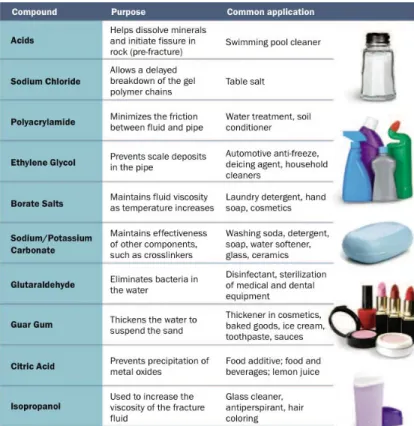
Figure 4: Chemical additives, purpose, and common use
2012a). Because of this, an incredible amount of water is needed per well head. Unique to
fracking when compared to other sources of oil and gas production is the transportation, storage
and use of significant quantities of water (Swartz, 2011). With the advent of HVHHF, there has
been an increase in the drilling area per well bed. Vertical-only drilling used thousands of gallons
of water, additional horizontal drilling has increased that to millions of gallons. Sources of this
water include groundwater withdrawal from wells drilled at the site into shallow aquifers or
municipal sources. While fracking has emerged as a more affordable method of generating gas
and oil for the industry, this raises considerable concern about the actual cost to the environment
and public health. Extracting millions of gallons of water from a municipal supply in a relatively
short amount of time could present challenges to the public water supply. This also poses a risk
for people surrounding fracking wells in places prone to drought and water scarcity issues,
including the southwestern United States where hydraulic fracturing is occurring over the Ulinta,
Piceance, Paradox, and San Juan Shale Basins (see Figure 1). Access to safe water is a public
health issue. Fracking removes a
large portion of potable water
from useable sources (Southgate
2013).
Before fracking begins,
chemicals and the frac sand are
added to the water. The purposes
of these chemicals are outlined in
Figure 4. It is the unknowns about
largest source of controversy surrounding the process of fracking (Myers, 2012). In 2004, the
EPA conducted a study that found no threat to public water was created by fracking operations.
Because there was no causative link made by the EPA, when Congress passed the Energy Policy
Act of 2005, they allowed an amendment to the Safe Drinking Water Act (SDWA)
(Congressional Digest 2011). The SDWA is a law passed in 1975 that is enforced by the EPA to
control the amount of contaminants that enter the public water system (EPA 2004). In addition,
the Comprehensive Environmental Response, Compensation, and Liability Ave (CERCLA, or
“Superfund”), the main law governing the regulation and remediation of hazardous material sites
in the United States, does not consider petroleum or natural gas to be a hazardous substance
(Joyner, 2011). As a result of these two key legislative acts, fracking has no federal permitting
requirements. Regulation is left primarily up to the states, which have encountered difficulty in
keeping up with the explosive growth (Joyner 2011).
A result of this lack of regulation is that companies are not required to release complete
lists of the chemicals used as additives (EPA, 2012a). The combination of chemicals that each
company uses may vary and is therefore considered by the companies to be proprietary.
Voluntary release of this list does occur, though the accuracy is questioned by some who
estimate that up to two thirds of the chemicals used are never disclosed (Sorashan, 2012). This
complicates the mitigation of the public’s health.
Concern over fracking safety has grown steadily over the past decade. The result of this
concern has been a renewed interest by the government to study the impact of fracking. In 2010,
the United States Agency for Toxic Substances and Disease Registry released a report on a study
done on 39 wells in Wyoming and found that there was significant water contamination in both
water sources. That report stated that nearby fracking operations were a potential source of the
water contamination (ATSDR, 2010). The following year, the EPA released a report from a
three year water contamination study in Wyoming that showed several contaminants present in
the drinking water that could not be explained by natural sources (Congressional Digest, 2012).
The results of the research in Wyoming prompted a large scale study conducted by the EPA
starting in 2011. The large study included 18 research projects that used five different methods to
research the impact of fracking on drinking water: analysis of existing data, scenario evaluations,
laboratory assessments, toxicity assessment, and case studies. The results of that study are
currently under peer review and will be released in 2014 (EPA, 2012a).
During production, gas that is recovered from the well is gathered and sent for usage via
a network of pipelines. Shale rock natural gas wells have a relatively short lifespan when
compared to traditional oil wells. Once they are no longer producing gas at an economically
efficient rate, the well is filled with cement to prevent gas from leaking into the air. The surface
is then reclaimed and the site is abandoned (Clark et al, 2012). To underscore the concern with
the health surrounding the well, upon closure, it is believed that every well site should have the
potential to become a Superfund site if fracking sites were subject to government regulations
(Colborn at al, 2011). Once an area has been named a Superfund site, a complex, long-term
cleanup process begins. Superfund sites are thoroughly assessed, listed on a national list of
hazardous waste sites and the federal government steps in, and establishes and implements
cleanup plans. Though a Superfund site is monitored by the government, the party responsible
for the contamination is responsible paying for the cleanup (EPA, 2012d).
Because there is not a standard for releasing information about the chemicals being used,
up to 944 products containing 632 chemicals are used in the fracking process (Colborn et al
2012). The EPA studied a list of 29 chemicals that have been released by the industry and are
known to be used during the fracking process (Myers, 2012). Some of these chemicals are
regulated by the SDWA, others are known carcinogens, and some are both. Table 2 lists these
chemicals (EPA, 2012a).
Table 2 Carcinogens and chemicals monitored by the Safe Drinking Water Act used in
hydraulic fracturing
Though much is not known about the exact composition of the fracking fluids used, of
the information that is available research shows correlations between fracking chemicals and
adverse health effects. A study conducted in Pennsylvania examined 41 chemicals used in the
fracking process and found that 73 percent of them were associated with between six and 14
adverse health effects, including skin, eye, and sensory organ damage, respiratory disease such
as asthma, gastrointestinal and liver disease, and brain and nervous system damage (Mitka,
2012). In Colorado and Texas, people have reported symptoms such as burning eyes,
nosebleeds, numbness, rash, skin lesions, rectal bleeding and neurological damage as a result of
fracking (Joyner 2011).
Carcinogen SDWA Regulation Carcinogen and SDWA Regulation
Thiourea Xylene Benzene
Nitrilotriacetic acid Toluene Di (2-ethylhexyl) phthalate
Propylene oxide Ethyl benzene Acrylamide
A growing concern regarding the chemical composition of fracking fluids is the number
of endocrine disruptors thought to be used. Endocrine disruptors are environmental chemicals
that affect the function of the endocrine system. They can block, alter, or disrupt normal
hormone activity (Emory, n.d.). Exposure to endocrine disruptors can result in adverse
developmental, reproductive, neurological, and immune effects in both humans and wildlife
(NIEHS, 2013). The water that returns to the surface is called “flow back” water and is thought
to have a high concentration of suspected endocrine disruptors. Because of the effect on certain
body systems, endocrine disruptors affect health and development for generations. Though some
health effects appear very quickly after exposure, others take much longer to appear. It is
possible that the true cost of exposure to these endocrine disruptors will not be seen for decades
(Finkel & Law 2011).
In addition to the chemicals listed in Table 2, methane has also been found in drinking
water in areas surrounding fracking sites. Over the Marcellus Shale formation, methane
concentrations in drinking water wells were found to be 17 times higher on average in active
drilling areas within 1,000 meters of the fracking well (Osborn et. al. 2011). According to the
Pennsylvania Department of Environmental Protection, methane contamination of drinking water
wells due to a local fracking operation was so severe that a home exploded. Home explosions
linked to fracking have also occurred in Ohio (Joyner, 2011). Methanol is an industrial
by-product of methane. Methanol concentrations in fracking fluids are 13,000 times higher than the
EPA limits for safe drinking water (Joyner 2011).
One of the most controversial additives used in fracking is diesel fuel, which is a
common solvent additive. Diesel is especially dangerous because it contains benzene, toluene,
benzene in even small amounts of can cause temporary nervous system disorders and long term
exposure can lead to cancer. Long term exposure to toluene and xylenes can lead to central
nervous system damage and liver or kidney disease. Because of the potential risk to human
health and environmental impact that the use of diesel would have, the EPA entered into a
memorandum of agreement (MOA) with leading fracking companies to stop using diesel fuel in
their fracking operations because of the great potential for risk to human health. Compliance
with this MOA was completely voluntary and is often ignored. In 2010, congress found that from
2005 to 2009, fracking companies had used over 32 million gallons of diesel fuel (Joyner 2011).
The biggest risk concerning water onsite is the Hydraulic Fracturing Waste Water
(HFWW). HFWW is made up of the flow back, which is the fluid that returns to the surface after
the fracking has occurred but no gas is being collected in the well, and the produced water,
which is the fluid that returns to the surface after the well is producing gas. HFWW could
contain both the chemicals injected as part of the fracking process as well as naturally occurring
substances, such as hydrocarbons (EPA, 2004). The EPA estimates that ten to seventy percent of
the water comes back to the surface. The water is stored in underground control wells until it is
treated. After it is treated, it is either discharged into surface bodies of water or reused for
fracking. This raises a concern for the public’s health, as treatment is sometimes conducted by
public facilities that may not be prepared to properly treat the water before it reenters the public
water supply (EPA, 2004).
Besides the chemicals used during the fracking process, actual natural gas has been
detected in drinking water, thought to be as a result of fracking. Research shows that more gas is
found in water wells near a fracking well when compared to water wells further away from
the well bore or by seeping vertically from the shale formation without fracking taking place, but
the gas would have to travel through an immense amount of sediment to do so. With the addition
of fracking, pathways for the gas to seep up into the aquifers are opened up and the process
happens much more easily (Myers, 2012).
There are many different ways that the chemicals used in fracking could enter the water
supply. Before the actual fracking begins, accidental spills could occur during pumping and
mixing. If a spill occurs above ground during this process or after it is returned to the surface in
the form of flow back, the chemicals could then be absorbed into the soil and near-surface
ground water. During the injection of the water, there could be well construction failure. Figure 3
displays how the well travels through directly drinking water aquifers, so if the integrity of the
well casing is compromised, there is nowhere else for the chemicals to leak than the aquifers. If
the casing cracks or breaks underground but does not release the chemicals directly into the
aquifer, the chemicals could then seep into the earth and enter aquifers (EPA, 2012a). There
have been documented cases of fracking equipment failing, therefore leading to the release of
tens of thousands of gallons of fracking fluids into the water source. In one case in Pennsylvania,
faulty casings around the well became compromised and that led to 8,000 gallons of fracking
fluids to be released into the nearby aquifer. Also in Pennsylvania, there was an instance of a
blowout preventer failing which led to 13,000 gallons of fracking fluid to be released into the
surface water (Joyner, 2011).
Mitigation of Risk – Water Quality
Mitigating the risk to water quality is simpler than air quality because the contaminants
system is to treat the water they use on site and then recycle it for future uses in fracking. This
also reduces the amount of waste water that must be disposed of into the public water system
(Clark et al, 2012). Innovations in the industry are also being researched to eliminate the need for
water at all. Different substances, for example, petroleum, are being tested to gauge their
effectiveness (Clark et al, 2012). Proper training and equipment maintenance can reduce the
incidence of spills and leakage into aquifers. Wastewater ponds at the well site should be lined to
minimize the risk of chemicals leaking into groundwater (Swartz, 2011). Another way for
companies to mitigate the risk is to monitor nearby water wells to assure that chemicals are not
entering the groundwater supply. Monitoring wells within 1,000 feet of an active hydraulic
fracture site is recommended as a minimum precaution for protecting the water supply (Swartz,
2011).
Earthquakes and Fracking
One of the most publically noted results of fracking is the suspected causation of
earthquakes. In the United Kingdom, where fracking has not been widely practiced as long as in
the United States, a study by Keele University found that fracking was linked to 48 seismic
events in the Blackpool area. In the United States, an investigation by Columbia University of
earthquakes occurring in northeastern Ohio found that the daily injections into a well were
almost certainly the cause of earthquakes in the Youngstown area (Rowe, 2012). A two year long
study in Texas recorded 67 total earthquakes in the Barnett Shale formation, most of which were
clustered within 3.2 km of one or more wells (Frohlich, 2012). Because the studies show that the
act of injection is what is causing the earthquakes, the only risk mitigation for earthquake
Cost versus Benefits
Cost
Beyond the risk to environmental public health, fracking presents numerous other costs.
The costs include the financial burden of abatement of pollution in the water, possible litigation,
and decrease in property values. The financial boon of fracking as it relates to job creation has
also been questioned by some.
Cleanup of contaminated water is expensive when attempted. In Pennsylvania and
Colorado, there are documented cases of costs well into the hundreds of thousands of dollars for
cleanup of contaminated water sources (Environmental New York 2012). In those cases, the
companies conducting the drilling were found liable for the damages and legally forced to pay.
For those landowners who might need to recover that cost, the costs associated with remediating
damage to their land and water quality can be substantial. Though CERCLA does not cover
petroleum or gas, it does address the chemicals used in fracking fluids. This means that people
can recover some of the costs incurred when cleaning up from the government (Joyner 2011).
Whether the landowner, industry, or government is paying, the cost to clean residential water
wells can be substantial. Municipal sources are obviously much larger and possible
contamination could affect exponentially more people. Therefore, pollution in municipal sources
could be even more costly. For example, if the water source for New York City were to be
compromised by fracking, the cost for cleanup would be approximately $6 billion (Environment
New York, 2012).
Land and landowner exploitation for financial gain of oil companies is also a serious cost
agreements for fracking, including allegations of lying and coercion. The fracking agreements
themselves are vague and often times lack any true protection for the landowner after fracking is
complete. A review of over 100,000 leases nationwide showed that less than 50% required
drilling companies to compensate landowners for damage to their land or contamination of their
water supply (Urbina & McGinty 2011). There has been an emergence of litigation against oil
and gas companies that operate fracking wells as a result of such practices. In 2009 in
Pennsylvania, 15 families sued an oil company for damage to fields and streams on their
property and drinking water contamination. The suit claimed that the oil company fracking on
their land used unsafe practices that resulted in chemical spills. The plaintiffs also said that the
oil company had been misleading about the effect the fracking process would have on them.
Tests showed that the complainants’ drinking water was high in aluminum, iron and methane and
the resultant health problems included neurological and gastrointestinal illnesses (Lustgarten,
2009). As of 2011, water contamination due to fracking has resulted in lawsuits in Arkansas,
Colorado, Louisiana, New York, Texas, and West Virginia as well (Nicholson & Blanson, 2011).
Another potential cost due to fracking is decreasing property values around fracking
operations (Lustgarten, 2009). While proximity to wells and increasing home values are directly
correlated, the risks to groundwater fully offset those gains and create decrease in property
values. Looking only at risk of groundwater containment, studies show that fracking reduces
property values by up to 24 percent (Muehlenbachs et al, 2012). A decrease in property values
due to a new health risk such as fracking can have lasting effects on the health of a population
surrounding a well. Anecdotal evidence of people who feel their health is in danger from the
fracking but are unable to sell their homes because of fracking has been documented. This
are in physical danger in their own homes due to potential hazardous substance exposure
(Lustgarden, 2009).
There are certain issues surrounding fracking that can fall on both sides of the cost versus
benefits argument. Job creation is one of those. Opponents of fracking claim that oil industry
projections are misleading. Oil and gas companies estimate that fracking will create millions of
jobs. Due to the nature of fracking and the fact that a well is used for a relatively brief amount of
time, these are usually temporary and often times unskilled jobs. This creates an issue of true
sustainability with fracking jobs and true impact it can have on local economies (CWFNC, n.d.).
Benefit
Despite the many costs and potential risks to the environment and public’s health that
fracking poses, there are benefits that cannot be ignored. Even given the costs attributed to
cleanup, litigation, and property value previously listed fracking remains beneficial for land
owners, states and industry (Finkel & Law, 2011). The Marcellus Shale formation contains
between 168 and 516 trillion cubic feet of natural gas. It is estimated that there is more than $500
million in recoverable natural gas under Pennsylvania alone (Finkel & Law, 2011).
There are strong economic reasons for supporting the development of shale gas wells.
Projections estimated by both the industry and economists are that fracking can have a true
benefit to people, municipalities, and even the federal government. Some projections posit that
the Marcellus Shale formation alone could create a generation of jobs (Resnikoff, 2012). The
American Petroleum Institute reports that over the next decade, natural gas well development in
the Marcellus shale formation could generate almost 300,000 new jobs, over $6 billion in tax
important benefit because the Marcellus Shale runs under much of the Rust Belt region of the
United States, which began losing its industrial strength decades ago. Fracking presents an
opportunity for future development and jobs for the people of that region (Casselman & Gold
2012). Jobs are not the only financial impact that fracking has. A recent study concerning well
development in the Marcellus Shale formation conducted by Pennsylvania State University
revealed that in 2009, the fracking industry in Pennsylvania added 44,000 new jobs, $389 million
in state and local tax revenue, over $1 billion in federal tax revenue, and nearly $4 billion in
value-added revenue to the state’s economy.
If groundwater is protected and air pollution held to a minimum, fracking can be an
environmentally neutral practice. Protecting air and water depend on fracking companies taking
adequate steps and making sure protections, such as rigorous inspection of equipment and frack
sites to prevent spillage from wells and leakage from wastewater pools, are secured. Because
current practices at fracking sites are not well regulated, this is hard to guarantee. Burning
natural gas creates less pollution that the traditional fossil fuel sources that have been commonly
used. Natural gas represents an alternative way to meet United States’ energy need. Using natural
gas is a better way to meet federal air quality standards because, although there is a release of
smog and greenhouse gases in the immediate area of the well, a total shift away from burning
coal would mean less smog overall. Methane leakage is a major natural gas contributor to
greenhouse gases and global warming and has been tied to fracking. Even given this, a 2012
study conducted by Princeton University showed that shifting to natural gas sources of energy
from traditional coal fired generators has immediate benefits for the climate as long methane
In addition, natural gas generated from shale, while it does pose an environmental risk,
can be safer for the environment than coal fired plants. According to Douglas Southgate,
Associate Director of the Subsurface Energy Resource Center at the Ohio State University, this
represents an opportunity. Currently under the United States, there is anywhere from 45 to 100
years of natural gas. If properly and safely harvested, this could represent a transition fuel until
renewable energy sources are further developed. Currently, environmentally friendly renewable
energy sources, such as wind or solar power, are cost prohibitive for most people and
governments. The inexpensive natural gas supplies we have can be used while working to
advance renewable energy sources.
Conclusion
The biggest issue with fracking remains the number of unknowns surrounding it. While
it is clear there are many potential environmental public health risks, these risks are exacerbated
by the fact that chemical composition of the frack fluid is unknown, the safe distance around a
well is unknown, the social impact of fracking on a community is unknown, and the
effectiveness of current mitigation strategies are unknown.
Research Recommendations
Companies are not currently required to release the data on what chemicals they are
using. This presents a major issue with protection of environmental public health. Public health,
as a field, and especially environmental public health, must support efforts to increase
transparency throughout the gas industry. Because fracking has been the topic of much debate,
the risks of fracking and methods of risk mitigation. A review showed that public health was
absent from these groups (Goldsteing et al, 2012). Environmental public health must be better
represented at the local, state, and national levels when fracking chemicals and practices are
reviewed. Water quality can be better monitored at the local level, states can create their own
regulations, and the federal government should step in with more standardized regulations and
environmental protections.
To help answer some of the unknowns created by the long history of fracking being
exempted from federal regulation, assessment and research must occur on a larger scale. No
standardized governmental pre-assessment of the water quality in areas to be fracked exists. This
leaves the responsibility of assessment in the hands of the oil companies or either the local or
state governments, which are often times lacking the resources to conduct large scale
environmental assessments. Without being mandated to do so, oil companies rarely offer to do
such assessments so there is rarely baseline data about the water and air quality surrounding well
sites (Joyner 2011). Also, more research is needed to determine the association between
negative health consequences and fracking. In particular, the distance from a fracking site that
presents the greatest risk to air and water pollution must be determined, also, the impact of
factors such as climate and well depth must be studied to determine how the risks of fracking can
be most effectively mitigated, if at all. Other questions that need to be answered by further
research and assessment include the following: Are more stringent occupational risk mitigation
strategies required? If there is a chemical spill, how should those employees be protected from
harmful levels of exposure and treated if they seek medical care? Without knowing the exact
impact of the chemicals being used, first responders cannot appropriately protect themselves
Before a fracking company takes millions of gallons of water, assessment of whether the process
will pose a risk to having adequate amounts of potable water available for the population
affected need to be done.
An emerging area that needs to be studied more completely to fully assess the impact that
fracking could have on public health is a thorough analysis of the social impact of fracking – for
example, using a Health Impact Assessment (HIA). A HIA is defined as a systematic process
that combines data and analysis with input from stakeholders to determine the potential impacts
of a proposed policy, plan, program, or project on the health of the population (CDC, 2009).
Communities, utilizing their local public health system, should engage in comprehensive health
impact assessments to determine not only the risk to environmental public health, but to the
public’s health in general. The quality of life issues that fracking could pose are real and should
be researched. Environmental issues not presented in this report but still attributed to fracking
include noise pollution and the impact of deforestation on local wildlife from the construction of
well. Social issues not presented in this report include the effect of the influx of workers on the
local economy and disease rates and the impact of fracking on the local public health system, A
comprehensive HIA would present all of these in a single report that the community could use to
determine how best to respond to the risks of fracking.
Regulation Recommendations
The Precautionary Principle, which states that when an activity presents risks or threats to
human or environmental health, precautionary measures should be taken even if scientific
fracking. Because so much research is needed and the risks are so great, the policies that offer
the most protection to the public’s health should be considered.
Enhanced assessment and research should lead to stronger regulation and more
legislation being enacted. Fracking should be closely monitored by the federal government to
assure the highest dedication to public safety. Exemptions from environmental protection
legislation should be reviewed and amended so that fracking is more regulated closely. The
fracking industry has bypassed both the SDWA and the Clean Air Act (Vermont Law School,
2012). Perhaps the largest governmental acknowledgment of the need for more information
about the effects of and the need for regulation is the mandate by the United States Congress to
the EPA requiring that fracking and its effects by studied (Nicholson & Blanson, 2011). Due to
increased pressure on lawmakers about the potential harms of fracking, Congress aimed to close
this loophole with the Fracturing Responsibility and Awareness of Chemicals Act, or FRAC Act.
The bill was introduced in 2009 and did not pass, and then reintroduced in 2011 (Nicholson &
Blanson, 2011).
Many state governments are currently acting in the interest of the health of their people to
address these public health effects. Efforts like ones in Ohio, Texas, Arkansas and New York
should be applauded and replicated wherever applicable. A 2013 bill in the Ohio General
Assembly would impose much harsher penalties on people who do not dispose of the fracking
chemicals properly (Ohio General Assembly, 2013). In 2011, Texas became the first state to
require oil companies to disclose chemicals. Other states, such as Arkansas are considering
similar laws (Vermont Law School, 2012). New York State began conducting progressive
environmental research in 2008 on the dangers of fracking and has had a moratorium drilling
moratorium while further research is done about its dangers (Downing, 2013). Governmental
involvement is key to protecting the environmental public health of the areas around fracking;
but further research and information dissemination is also needed to inform communities and
governments of the issues at stake. For example, while some states such as those listed above are
making progress to minimize health risks, others, such as North Carolina are in the process of
initiating fracking operations. A bill before the 2013 North Carolina Senate would allow
aggressive advancements in the development of fracking in that state by lifting a previous
moratorium on fracking and preventing local governments from levying taxes on oil companies
(Murawski, 2013)., This incentivizes the companies while offering little benefit to the local
governments including the local public health system, building and land development
department, and public works, which will all have a part in the development of a fracking site
and connecting the well to such things as the local water supply.
Fracking is an old method of generating energy from shale formations that has emerged
as a major energy producer over the past decade as a result of new technologies. The advent of
horizontal drilling has increased production greatly, however this increase comes at a cost. The
perceived economic benefits must be weighed against known and unknown factors that impact
public health. Many questions surround fracking and the impact it has on environmental public
health. Air and water pollution issues, radon exposure, occupational exposure to hazardous
chemicals and even possible earthquake causation are all valid concerns that must be understood
and considered when reviewing proposals to initiate fracking. Increased transparency, improved
assessment practices, new research on health effects, enhanced regulatory standards, and
References
Allen, T. (2013). Fracked in the Midwest: How hydraulic fracking in New England will bring
harm to the farmlands in Minnesota and Wisconsin. Valley Advocate. March 12, 2013.
Online. Retrieved on March 19, 2013 from
http://www.valleyadvocate.com/article.cfm?aid=16431
ASME Government Relations. (2011). Fracking con and pro. Mechanical Engineering
June 2011 p. 16
Beckwith, R. (2012). Hydraulic fracturing. History of an enduring technology. Journal of
Petroleum Technology. December 2012. Pp. 26-39
Casselman, B. and Gold, R. (2012). Cheap natural gas gives new hope to the rust belt. Wall
Street Journal. October 24, 2012. Online. Retrieved on March 19, 2013 from
http://online.wsj.com/article/SB10000872396390444549204578020602281237088.html
Lauver, L.S. (2012). Environmental health advocacy: An overview of natural gas drilling
in Northeast Pennsylvania and implications for pediatric nursing. Journal of Pediatric
Nursing. 27(4), Pp. 383-389.
Clark, C., Burnham, A, Harto, C., & Horner, R. (2012). Hydraulic Fracturing and shale gas
production: Technology, impacts, and policy. Argonne Natural Laboratories, October
Clean Water for North Carolina. (n.d.). Why would North Carolina be especially vulnerable to
fracking impacts? Online. PDF. Retrieved on March 18, 2013 from
http://www.cwfnc.org/documents/Why-is-North-Carolina-Especially-Vulnerable-revised-9-13.pdf
Colborn T, Kwiatkowski C, Schultz K, and Bachran M. 2011. Natural gas operations from a
public health perspective. Human Ecological Risk Assessment. 17(5). Pp. 1039-56.
Colborn T, Schultz K, Herrick L, and Kwiatkowski C. 2012 (in press). An exploratory study
of air quality near natural gas operation . Human Ecological Risk Assessment. Online.
Retrieved on February 23, 2013 from
www.endocrinedisruption.com/files/HERA12-137NGAirQualityManuscriptforwebwithfigures.pdf
Commonweal. (n.d.). Precautionary Principle Program. Online. Retrieved on April 2, 2013
from http://www.commonweal.org/programs/precautionary-principle.html
Congressional Digest. (2012). Fracking and drinking water safety. Developing natural gas
through hydraulic fracturing. Vol. 91. No. 3
Domm, P. (2013). Power shift: Energy boom dawning in America. CNBC. Online. Retrieved on
March18, 2013 from
Downing, B. (2013). Third town in New York wins in court on fracking ban. Associated Press.
March 20, 2013. Online. Retrieved on March 20, 2013 from
http://www.ohio.com/blogs/drilling/ohio-utica-shale-1.291290/third-new-york-town-wins-in-court-on-fracking-ban-1.382897
Emory University. (n.d.). What are endocrine disruptors? Pediatric Environmental Health
Specialty Unit. Online. Retrieved on March 18, 2013 from
http://www.sph.emory.edu/PEHSU/html/exposures/endocrine.htm
Environment New York Research and Policy Center. (2012). The cost of fracking: The price tag
of dirty drilling’s environmental damage. Online. Retrieved on March 18, 2013 from
http://environmentnewyork.org/reports/nye/costs-fracking
FracFocus. (2012). Average hydraulic fracturing fluid composition for US shale plays. Image.
Online. Retrieved on April 2, 2013 from
http://fracfocus.org/water-protection/drilling-usage
Frohlich, C. (2012). Two-year survey comparing earthquake activity and injection-well
locations in the Barnett Shale, Texas Proceedings of the National Academy of Sciences.
109(35). Pp. 13934-13938. Published ahead of print August 6, 2012,
Finkel, M. and Law, A. (2011). The rush to drill for natural gas: a public health cautionary
tale. American Journal of Public Health. 101(5). Pp. 784-5.
Goldstein, B. , Kriesky, J. and Pavliakova, B. (2012). Missing from the Table: Role
of the Environmental Public Health Community in Governmental Advisory Commissions
Related to Marcellus Shale Drilling. Environmental Health Perspectives. 120(4).Pp. 483–
486.
Joyner, S. (2011). Superfund to the rescue? Seeking potential CERCLA response authority and
cost recovery liability for releases of hazardous substances resulting from hydraulic
fracturing. Journal of Contemporary Health Literacy and Policy. 28 (111).
Kansas Geological Survey. (2012). Horizontal hydraulic fracturing. Image. Online. Retrieved on
April 1, 2013 from http://www.kgs.ku.edu/Publications/PIC/pic32.html
King, H. (2013a). What is shale gas? Online. Retrieved on March 18, 2013 from
http://geology.com/energy/shale-gas/
King, H. (2013b).Directional and horizontal drilling in oil and gas wells. Geology.com. Online.
Kivat, E. and Schneller-McDonald, K. (2011). Fracking and biodiversity: Unaddressed issues
in the New York debate. Hudsonia 25(1 & 2). Online. Retrieved on February 21, 2013
from http://hudsonia.org/wp-content/uploads/2012/01/nfh-Fracking-biodiversity-best.pdf
Lustgarten, A. (2009). Pa. residents sue gas driller for contamination, health concerns.
ProPublica. Online. Retrieved on February 26, 2013 from
www.propublica.org/feature/pa-residents-sue-gas-driller-for-contamination-health-concerns-1120
Meador, S. (2011) Evaluation of undeveloped reserves in resource plays. Presentation to UNFC
Resource Classification Conference (for Oil, Gas and Minerals). Online. Retrieved on
March 13, 2013 from
www.unece.org/fileadmin/DAM/energy/se/pp/unfc/unfc_london_feb11/15_Meador.pdf
McKenzie, L., Witter, R., Newaman, L., & Adgate, J. (2012). Human health risk assessment of
air emissions from development of unconventional natural gas resources. Science of The
Total Environment, Vol. 424. Pp. 79-87.
Mitka M. (2012). Rigorous evidence slim for determining health risks from natural
gas fracking. Journal of American Medical Association. 307(20). Pp. 2135-2136.
Moore, J. & Glaser, S. Self-potential observations during hydraulic fracturing.
Journal of Geophysical Research. Vol. 112. P. B02204
Muehlenbachs, L., Spiller, E., and Timmons, C. (2012). Shale gas development and property
values: Differences across drinking water sources. National Bureau of Economic
Research. Online. Retrieved on February 27, 2013 from www.nber.org/papers/w18390
Murawski, J. (2013). Senate committee votes to end NC fracking moratorium. Raleigh News &
Observer. February 21, 2013. Online. Retrieved on April 1, 2013 from
http://www.newsobserver.com/2013/02/21/2696785/senate-committee-votes-to-end.html
Myers, T. (2012). Potential contaminant pathways from hydraulically fractured shale to
aquifers. Ground Water. Vol. 50, No 6. Pp. 872-882.
National Institute of Environmental Health Sciences. (2013). Endocrine disruptors. Online.
Retrieved on March 18, 2013 from
http://www.niehs.nih.gov/health/topics/agents/endocrine/index.cfm
Nicholson, B. and Blanson, K. (2011). Trends emerge on hydraulic fracturing litigation. Oil and
Gas Journal, December 2011. Online. Retrieved on February 26, 2013 from
Northrup, J. (2010). Potential leaks from hydro-fracking of shale. Oswego 2000.
Online. Retrieved on February 26, 2013 from
http://www.bape.gouv.qc.ca/sections/mandats/Gaz_de_schiste/documents/DM151.1.pdf
Ohio General Assembly. (2013). Senators Schiavoni and LaRose announce legislation to crack
down on illegal dumping of brine. Press Release. February 15, 2013. Online. Retrieved
on March 18, 2013 from
http://www.ohiosenate.gov/schiavoni/press/senators-schiavoni-and-larose-announce-legislation-to-crack-down-on-illegal-dumping-of-brine
Olenych, T., Lawrence, R., Mutchler, G., Mendillo, M., Morfei, M., & Robson, A. (2011.)
Horizontal drilling with high volume hydraulic fracturing: Fact finding summary. Scipio,
NY.
Osborn, S., Vengosh, A., Warner, N., and Jackson, R. (2011). Methane contamination of
drinking water accompanying gas-well drilling and hydraulic fracturing. Proceedings of
the National Academy of Sciences. 108(20). Pp. 8172-8176.
PennWell Corporation. (2013). Oil and gas financial journal: Unconventional resources. Online.
Retrieved on March 16, 2013 from http://www.ogfj.com/unconventional.html.
Rauzi, S. (2012). Is hydraulic fracturing a threat to Arizona. Arizona Geology Magazine.
Online. Retrieved on March 18, 2013 from
Resnikoff, M. (2012). Radon in natural gas from Marcellus Shale. Executive Summary
Radioactive Waste Management Associates. Online. Retrieved on February 27, 2013
From http://www.nirs.org/radiation/radonmarcellus.pdf
Rowe, M. (2012). On shaky ground: it could help meet the world's energy needs well into the
next century, but environmental campaigners are warning about pollution, climate
change and even earthquakes. So what is 'fracking'. Geographical, 84(4), 32+. Retrieved
on March 18, 2013 from
http://go.galegroup.com.libproxy.lib.unc.edu/ps/i.do?id=GALE%7CA292086527&v=2.1
&u=unc_main&it=r&p=ITOF&sw=w
Sorashan, M. (2012). Hydraulic fracturing: Two-thirds of frack disclosures omit ’secrets’.
Energy Wire. Online. http://www.eenews.net/public/energywire/2012/09/26/1
Southgate, D. (2013). 2013 Ohio Wesleyan University Environmental and
Natural Resources Symposium – Water: Science, Economics, and Policy Panel
Discussion. February 22, 2013
State of New Jersey. (2011) Right to know hazardous substance fact sheet: Methane. Online.
Swartz, Thomas. (2011). Hydraulic fracturing: Risks and risk management. Natural Resources
& Environment. Academic OneFile. Web. 2012, January, 26 Online. Retrieved on March
5, 2013 from
http://go.galegroup.com/ps/i.do?id=GALE%7CA271595075&v=2.1&u=upitt_main&it=r
&p=AONE&sw=w
Tollefson, J. (2013). Methane leaks erode green credentials of natural gas. Nature News.
January 2013.
United States Agency for Toxic Substances and Disease Registry. (2010). Evaluation of
contaminants in private residential well water, Pavillion, Wyoming, Fremont County.
Online. PDF. Retrieved on March 18, 2013 from
http://www.atsdr.cdc.gov/hac/PHA/Pavillion/Pavillion_HC_Well_Water_08312010.pdf
United States Centers for Disease Control and Prevention. (2009). Health Impact Assessments.
Online. Retrieved on April 3, 2013 from http://www.cdc.gov/healthyplaces/hia.htm
United States Centers for Disease Control and Prevention. (2012). NIOSH Science Blog:
Worker exposure to crystalline silica during hydraulic fracturing. Online. Retrieved on
March 15, 2013 from http://blogs.cdc.gov/niosh-science-blog/2012/05/silica-fracking/