Mian Zhao. Leisure-Time Reading Habit of Older Adults in Shanghai of China, 1998 To 2008. A Master's paper for the M.S. in Library Science. May, 2011. 36 pages. Advisor: Robert M. Losee
This thesis investigates the leisure-time reading habit of elders in Shanghai, the largest city of China. The study explored the role of reading of Shanghai elders in their entire leisure-time habitual activities and the temporal changes of the reading behaviors in Shanghai elders from 1998 to 2008. The data come from the Shanghai Longitudinal Survey of Elderly Life and Opinion (SLOSELO), which has been conducted in 1998, 2003, 2005 and 2008. I find that reading is one of the major leisure-time activities in Shanghai elderly population, and in recent years, the reading habits becomes more popular when demographic factors such as age, gender and rural/urban residence are under control. I also find out that such an increasing trend of reading could be explained by the improvement of socioeconomic and health improvement in Shanghai elders. This study calls for attentions of the local librarians to adjust their information service for an increasing group of old age.
Headings:
Reading habit
Shanghai
Leisure time
LEISURE-TIME READING HABIT OF OLDER ADULTS IN
SHANGHAI OF CHINA, 1998 TO 2008
by Mian Zhao
A Master’s paper submitted to the faculty of the School of Information and Library Science of the University of North Carolina at Chapel Hill
in Partial fulfillment of the requirements for the degree of Master of Science
in Library Science
Chapel Hill, North Carolina May 2011
Approved by
Table of Contents
INTRODUCTION ... 2
RESEARCH QUESTION & SIGNIFICANCE ... 4
LITERATURE REVIEW ... 7
METHOD ... 12
Data ... 12
Measurements ... 13
Analytical Strategy... 15
RESULTS ... 16
CONCLUSION & DISCUSSION ... 24
INTRODUCTION
Our time is currently experiencing an unprecedented global wave of population aging and a
major consequence for librarians is that the elderly population is making up a significant
user group for nowadays and future libraries. According to the estimation of the United
Nations (2008), the world elderly population aged over 65 years old will increased from
6.8% in the year of 2000 to 16.2% in 2050. In the less developed areas, the ratio is from
5.0% to 14.6%, while in the developed regions, the ratio increases from 14.4% to 26.2%.
Therefore, it is very likely that in the year of 2050, for the western library system, one of
four users will come from the elder group. In the developing world, due to the
modernization and urbanization process within these societies, not only is the elderly
population growing fast, these elders will also be more likely to be educated rather than
illiterate. Therefore there should be a rapid growth of elderly users for the library systems in
the developing world. In sum, the library system of both developed and developing
countries is facing a newly-rising user group featured with old age.
The population structure dynamics greatly change the audience structure of the
library system and pose a major challenge for the new generations of librarians. It is
expected that information access and utilization of elders will make up a major content of
the library services in the very nearly future. An important and interesting issue is that the
aged population often has unique motivations, preferences, and patterns in using the library
system. To understand the characteristics of elders interacting with the library system could
group is a wise direction to move forward for librarians who are planning to advance our
information service in a new era.
Elders are linked to modern library system in their own ways. Late life represents the
last and unique stage for the human beings. Being old has many critical implications. First,
aged people decline functionally (Masoro and Austad 2006). They encounter increasing
daily life difficulties which hardly happen in youth, and develop various strategies for
coping. Second, elders tend to be isolated from the social and economic activities of the
society (Binstock and George 1995). They are away from their job positions and the familiar
social contacts. All these biological and socioeconomic status changes could greatly change
the behavioral patterns in information access and utilization for elders.
The reading habit is one of those behaviors of elders, which are significantly
affected by the aging process of human beings and reading habit in elders’ leisure time is a
critical topic for the library science, as may help the library system to be better prepared of
the challenges from population aging. This could be particularly true for the developing
societies. Firstly, the two third of the world aged population is currently hosted in the
developing world and these developing societies also have a faster aging speed than the
developing (Kinsella and He 2008). Thus, the developing societies may face a large elderly
population as the incoming new user group. Secondly, this growing population is also more
educated than previous generations because of the socioeconomic advancement of these
developing countries after the Second World War. That is, the incoming new user group is
not only aging, but also more likely to be capable to read in the developing world. At last,
the developing societies generally do not have enough public resources to establish library
capacity to encounter the challenge of increasing demand in library services. All the factors
make it very urgent to study reading habit of the elderly population in the developing world.
At least two of the major missions for the future library system to face the
population aging could aim to help old people with declining function for easy information
access, and to encourage people to spend more leisure time on reading. Moreover, it should
be mentioned that to advise elders for more reading does not only do good to the library
system itself, but also benefit the welfare of the elders themselves. “There is strong
evidence of the importance of reading in fulfilling the needs of the older person for
entertainment, knowledge, the satisfaction of intellectual curiosity, cultural development
and companionship...” (Harvey and Dutton 1979:213). In this way, the library system
goes beyond its own sphere to be an effective mechanism of public health promotion.
RESEARCH QUESTION & SIGNIFICANCE
The current study is contributing to this topic by focusing on the status and change of
leisure-time reading habits of the elderly in Shanghai from the year of 1998 to 2008. This
study has five specific aims: 1) to describe the relative position of the reading habit of
Shanghai elders in the entire leisure-time habitual activities; 2) to study the how
demographic, socioeconomic and health factors may influence the leisure-time reading
habits in Shanghai elders; 3) to document how habitual reading activities changed in
Shanghai elders for the most recent decade; 4) to explore how demographic, socioeconomic
and health factors could explain the observed trends; 5) to examine how changes of reading
habits of Shanghai elders over recent years could be different across demographic and
This study has its unique significance. This study for the first time examines the
reading habits of elders in the most aged city of the world most populous nation, China.
China keeps holding the largest elderly population in the world now and in a foreseeable
future (Flaherty et al. 2007). In the year of 2010, China’s elderly population (65+) will
reach 111.4 million, 26.7% of the world elderly population; from 2010 to 2050, the
elderly Chinese will be tripled to 330.6 million, 23.3% of the domestic population and
22.2% of the world elderly population (United Nations 2008). Shanghai is one of major
economic and financial centers of China and also the most populous (13.9 million in
2008) and aged city in the country (15.4% age 65+ in 2008) (Shanghai Statistics Bureau
2009). In 2050, the local elderly population (age 60+) is projected to be about 2/5 of the
total population, about 30% higher than the Chinese average (Xu et al. 2006a).
Table 1: The Number of Public Libraries of China, from prior to 1980 to 2009
Prior to 1980 1981-1990 1990-2000 2001-2009 Total
National Level 0 1 0 0 1
Provincial level 7 9 12 9 37
City level 43 94 94 90 321
County level 348 675 623 845 2491
All 398 779 729 944 2850
Source: Ministry of Culture, People Republic of China, 2011.
Due to the sheer population size to serve, the library systems of China also have
special weights for researchers to pay more attentions. The rapid economic growth in
China has driven much public investment to the national library system, which has been
witnessing a quick round of development in the recent decades. As can be seen from
provincial-level public library, almost 10 new libraries have been established every ten
years since 1980s; for city-level public library, about 90 new ones have been established
every ten years since 1980s; and for county-level public library, about 600 new ones have
been established every ten years from 1980s to 2000s and from 2001 to 2009, as many as
845 new libraries have been set up.
As the largest city of China and a major showcase for the Chinese modernization
process, Shanghai is an important case for China in many aspects. Shanghai long served
as an economic center in the pre-reformed China (1950s to late 1970s), its importance in
the national economy fell down in the beginning phase of the Chinese market reform (late
1970s to 1980s). However, since early 1990s, due to the regained attentions and support
from the central government, the city of Shanghai has been experiencing an
unprecedented round of economic development in history. The investigation period in
this study (1998 to 2008) indeed covers the best part of Shanghai economic
re-invigoration until present: in this period, the local gross domestic production (GDP)
increased by about 3.7 times; the local fiscal income by 5.1 times; and the local fiscal
output by 4.5 times (Shanghai Statistics Bureau 2000, 2009).
With the economic boom, the local library system is also developing very fast.
Currently, Shanghai has established the national largest public library system: from 1994
to 2009, the “Universal Library Card” program (i.e. users could access to the library
service in different stations via a same card) has be started and expanded to 161 service
stations and the current circulation of this program reached 17.5 million volumes
(Shanghai Library 2010); The municipal government invested to build up an information
stations, which include one city-level center, 19 district/county level center, 441
street/town level states and 1423 neighborhood/village stations (Shanghai Library
Association 2010).
Based on the discussion above, I propose that the results of the study could make
a meaningful contribution, both academically and practically. It may help the nowadays
Chinese librarian estimate the potential demands of library usage from the old population
in Shanghai and further help develop new strategies and models for the local library
system to better serve the new generation of users. The observed changes in Shanghai,
though not immediately applicable to the overall situation in China, may be likely to
replicate itself in many other large cities in China, sooner or later. More broadly
speaking, this study may provide valuable insights about how elders in a developing
country could change their reading habits with the process of modernization and
urbanization, thus could generate useful implications for other developing regions in the
world. Doing such an exploratory study in this rarely-studied field, I hope the results
from this study may open a gate for more investigations in the future, and may help build
a more general understanding about reading habits of the elderly population.
LITERATURE REVIEW
Studies have shown that the physical, mental, sensory declines due to the aging process may
effectively reduce the interest and behaviors of elders for reading. Reading is an advanced
intellectual process, which involved many cognitive functions. The reading comprehension
of elders is highly associated with vocabulary, decoding, phonological awareness, and
morphological awareness (Champley 2005, 2008). Moreover, physiological wellness is
reading habits. Therefore, either loss of vision, inability to walk, or dementia, which are
all possibly health outcomes in old age, could all seriously hinder the reading behaviors
of the aged people. In sum, “……physical and psychological deterioration associated
with aging also affects reading behavior. Some of the deterioration that is a part of the
natural aging process affects information processing and retrieval.” (Aiex 1987: 280).
However, away from the previous full-time employment and social duties, elders
also have much potential time to spend for various leisure-time activities including reading,
as may increase their likelihood of developing reading habits in comparison with younger
cohorts. In this case, it has been often believed that elderly people could spend more time in
reading than youth. For instance, it has been shown that about 70% elder Americans aged
over 65 read newspaper in an average week, however, for younger people aged 18-44, the
ratio is less than 55% (Journalism.org 2004).
It is still an arguable topic about whether elderly or youth spends more time in
reading (Romani 1973; Shanron 1973). According to a well-known review, Karmin (1984)
claimed that “a review of the literature over the past 21 years indicates that older adults as
a group do not read books or visit the public library as often as younger adults.” (p.22),
however, “age in and of itself does not seem to be the reason.” In this review, less
education and social inactivity were considered as two major mediating factors for the
negative effect of aging on reading. Because of the improvement of education in the
recent 50 years, the isolation in late life could become a more significant issue in the
discussion above. Reading is positively related to social connections, although reading
itself is often an individual behavior (Grubb 1982). The possible mechanisms could be
holds curiosity to the external world and thus keeps an interest in reading. Therefore,
aged person may lose their social ties as a result of getting away from previous economic
and social participations, and thus they may further lose their interest in knowing the
external world via reading.
Such an argument that elders tend to read less is further supported by a study
comparing the leisure-time activities between younger old people and oldest old people
(Hendon 1989). Basically, Hendon found out that leisure time activities declines for older
people except for television watching; however, although reading declines, it is with the
least rate among other activities.
There are some other interesting findings about the reading habits of elders. For
instance, Ngandu and O’Rourke (1977) found out that elders read more newspapers and
magazines than other materials and the top interests were about religion and news; Scales
and Biggs (1983, 1987) observed that women has less difficulty in reading advertisement
than men and married elders purchased more magazines and newspapers than elders
without spouse.
On the other hand, researchers have long paid attentions to the temporal change of
reading habit in the western societies. The modernization process of the western world
since the sixteen century increased the overall education level of the western populations.
In a historical perspective of view, the reading habits were developed among elders with
an increased rate of literacy. However, in the recent decade, people of western societies
started to experience a broad decline of leisure-time reading (Cushman et al. 1996).
such a finding: for instance, proportion of U.S. citizens reading a daily newspaper
decreased from 85% in 1957 to 63% in 1977 (Robinson 1980); meanwhile, Americans
spent less time on reading, from 3.7 hours in 1965 to 2.8 hours in 1985 (Cutler, 1990;
Robinson, 1990); A similar trend was also observed in France, the newspaper readers
declined from 60% in 1967 to only 41% in 1988 (Samuel 1996). Knulst and Kraaykamp
(1998) also reported that from 1955 to 1995, the proportion of time spent on reading as
the whole leisure time activity reduced sharply in the Netherland elders, approximately
from 25% to 15% for both men and women.
A recent report from the National Endowment for the Arts has sent a more
alarming message based on their national survey (2007, p5): “The story the data tell is
simple, consistent, and alarming. Although there has been measurable progress in recent
years in reading ability at the elementary school level, all progress appears to halt as
children enter their teenage years. There is a general decline in reading among teenage
and adult Americans. Most alarming, both reading ability and the habit of regular reading
have greatly declined among college graduates.” So, media define it as a generation of
not reading (Nearby 2007). Considering the fact that leisure time lifestyle is highly
inheritable from the younger time (Roberts 1999; Thurston and Green 2004), reading
behaviors in the late life are very closely associated with the reading habits in the
childhood and adolescence (Kingston 1981). It is predictable that these not reading
generations could result in a substantial decline of reading habits among elders in the a
few decades. One major reason for these observed declines in reading could be that the
more television programs as a major form of leisure-time entertainment has attracted
the Arts, half of the total daily leisure time of all Americans aged 15 and older has been
spent on watching TV.
Facing the population aging, more studies are definitely needed for the library
science to better understand the features of reading habit, its influence factors and temporal
trends among the elderly people. In particular, the current literature in the library science
about the aged population and library services rarely mentioned about the developing
societies (Asla, Williamson and Mills 2006; Kleiman 1995; Wicks 2004). To my
knowledge, there are currently no studies on the changes of reading habits in Chinese
elderly population. Again, this seems more urgent in consideration of the fact that two third
of the world elderly population are actually living in these underdeveloped societies, and
due to the underdeveloped economic conditions, most of these elders could be in greater
need of information services than their western counterparts.
Moreover, the existing literatures about trends of reading habits based on the western
societies could not be applied to China without carefully considerations. The reason relies
on that modernization and the introduction of TV-watching are happening in the same time
in China. One the one hand, the economic growth is quick and the education improvement is
significant in China, especially in its metropolitan areas such as Shanghai; on the other hand,
the TV is introduced as a major form of leisure time entertainment with the economic
development. Therefore there should be at least two competing forces in determining the
change of reading behaviors of the elderly Chinese population. Under such a situation, it is
METHOD
Data
My study data come from the Shanghai Longitudinal Survey of Elderly Life and Opinion
(SLOSELO). This is a longitudinal investigation on Shanghai residents aged over 60
years. The survey is administrated by Shanghai Research Center on Aging as a branch of
the Shanghai municipal government. Until present, the survey has conducted four waves
in 1998, 2003, 2005 and 2008.
Here is a brief discussion about the sampling strategy of SLOSELO. It followed a
stratified and multistage random sampling procedure. In the baseline survey of 1998,
3,525 were determined as the sample size, approximately 1.5‰ of the elderly population
in Shanghai. These cases were sampled through the following steps. Firstly, four zones in
Shanghai were delimited in Shanghai and three districts were selected in each zone; and
one street, town or village was chosen in each district: downtown (three streets from
Huangpu District, Xuhui District, and Yangpu District), peripheral of city proper (three
streets from Zhabei District, Changning District, and inner part of Pudong District),
immediate suburbs (two villages from Jiading District and the outer part of Pudong
District, one town from Minhang District), and outer suburbs (two villages from Qingpu
District and Nanhui District, one town from Jinshan District). Based on the relative
gender/age structure, the total sample was assigned into the four zones and then into each
street, town or village. Secondly, three candidate communities were randomly selected
from each street, town or village to set up a sample frame. All qualified elders from the
first community were included into the sample framework and if not enough, elders from
gender and age, subjects were randomly selected from the sample frame. The same
strategies were always adopted in later waves with an additional replenish sample to
replace attritions. Only 2,072 elders were interviewed in 2005 and 2,831 elders in 2008
due to budget shortages. This reduction of sample size should not be a serious problem
because I still have enough sample size in these two waves.
The individuals younger than age 65 are dropped in the analysis. People living in
institutions were also excluded due to the low institutionalization prevalence of Shanghai
seniors (less than 3%). Consequentially, the total sample size was 9,860 if four waves
combined. It should be noted that such a sample size contains repeated measurements for
a same participants across the four waves. The sample attrition and the missing values of
SLOSELO are within normal range for surveys of elderly populations and all missing
values in the sample have been imputed using a regression method.
Measurements
The main variables are leisure time activities. SLOSELO has a detailed
classification on elder’s leisure time activity, including 16 major leisure-time activities o
elders such as reading, exercise, calligraphy & painting, playing card, raising flowers and
birds, listening to music, watching TV, watching movie, singing & dancing, traditional
opera, going to park, collection, photography, tourism, fishing, and chatting. For each of
these activities, SLOSELO specifically ask respondent, “Do you have this habit in your
leisure time?” And the answering options are yes or no.
In the trend analysis, the major independent variable is years from 1998 to 2008. I
that the socioeconomic development in Shanghai has changed greatly in this period and I
consider the trend of the reading habit may not simply follow a linear pattern across the
ten years from 1998 to 2008.
In order to understand the responsible factors for the observed trend, I will also
add the following variables in the model of the trend analysis. Demographic factors are
age, gender and rural/urban residence. Socioeconomic conditions include self-reported
economic status (good/poor) and educational achievement (illiterate/primary and middle
school/high school or above). A comorbidity index is used for control for the health
conditions. This index contains eight major chronic diseases in the Chinese elders such as
hypotension, coronary heart disease, stroke, diabetes, bronchitis, cancer, prostatitis and
arthritis with a score ranging from 0 to 8. According to He and colleagues (2005), this
index reflect well the major chronic diseases in the Chinese population.
Activity of Daily Life (ADL) was also included as another health index. For ADL
items, SLOSELO included 8 items such as eating, dressing, moving on and off bed,
transferring indoor, washing face and brushing teeth, toileting, bathing, and moving
upstairs and downstairs. Cognitive impairment as another health covariates was measured
using ten questions including current date and month, date for the Moon Festival on the
lunar calendar, serially subtractions subtracting from 20 by 3, home address, living
district or county, age, number of minutes in a hour, the year of establishment of People’s
Republic of China, and the name of the first prime minister of China. Cognitive
Analytical Strategy
To fulfill Aim 1, namely to describe the relative position of the reading habit of
Shanghai elders in the entire leisure-time habitual activities, I will use a frequency table to
summarize all leisure-time activities and rank them according to the frequency. This
statistics is only based on data from 2008. I think it is not proper to pool all data together to
present this result because the data contain repeated measurements for a same person. And
moreover the year of 2008 is the most recent investigation time so that it could be more
useful to describe the current status of leisure-time activities of the Shanghai elders.
Additionally I also provide a frequency table by gender, age group (65-80 versus 80) and
rural/urban residence.
For Aim 2, i.e. to study the how demographic, socioeconomic and health factors
may influence the leisure-time reading habits in Shanghai elders, I will use a
random-intercept logit regression model. The dependent variable is reading, and demographic,
socioeconomic and health factors will be included as independent variables. The reason to
use a random-intercept logit regression model is as below: firstly, the dependent variable is
dichotomous, so a logit model is needed; secondly, the panel data contained repeated
measurement of a same participant and we need to correct the intra-correlation of the same
individual, so we introduce a random intercept for each participant to address this issue.
For Aim 3, i.e. to document how habitual reading activities changed in Shanghai
elders for the most recent decade, I use a frequency table to summarize the frequency of
each leisure-time activity across the four investigation years. In this way, I could not only
with other activities.
For Aim 4, i.e. to explore how demographic, socioeconomic and health factors could
explain the observed trends, I also use a random-intercept logit regression model for this
analysis, and additionally add the variable of year as one of the independent variables. I also
develop three stepwise models to examine how different factors influence the trends of
reading habits. In the first model, I control for demographic variables; the second model
adds socioeconomic covariates; and the third model includes health factors.
At last, for Aim 5, namely to examine how changes of reading habits of Shanghai
elders over recent years could be different across demographic and socioeconomic groups, I
constructed the same model of Aim 4 by demographic and socioeconomic groups. This
could examine the interaction effect between the time and the demographic and
socioeconomic groups.
RESULTS
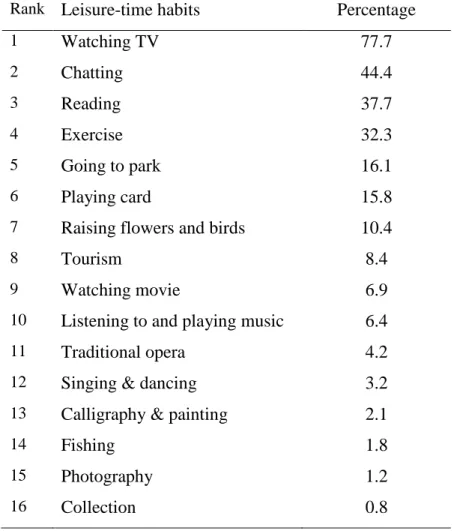
Table 2 presents descriptive results of the major 16 leisure-time activity of Shanghai
elders in the year of 2008. As can be seen from the table, reading was one of the major
activities for local elders, ranked the third about the 16 leisure time activities. About 38%
Shanghai elders took reading as one of their leisure time habits. It is noteworthy that
watching TV keeps the most popular leisure time activity (78%) in Shanghai elders for
the four investigation years. And the other most favorite habits for Shanghai included
chatting (44%), exercise (32%), going to park (16%), playing card (16%), and raising
flowers and birds (10%). There are also some minor leisure-time habits such as tourism
(4%), singing or dancing (3%). Rarely elders in Shanghai had the habits of calligraphy &
painting (2%), fishing (2%), photography (1%) and collection (1%).
Table 2: Leisure-time activity of Shanghai elders in the year of 2008
Rank Leisure-time habits Percentage
1 Watching TV 77.7
2 Chatting 44.4
3 Reading 37.7
4 Exercise 32.3
5 Going to park 16.1
6 Playing card 15.8
7 Raising flowers and birds 10.4
8 Tourism 8.4
9 Watching movie 6.9
10 Listening to and playing music 6.4
11 Traditional opera 4.2
12 Singing & dancing 3.2
13 Calligraphy & painting 2.1
14 Fishing 1.8
15 Photography 1.2
16 Collection 0.8
Table 3 shows the leisure-time activities by gender, age group and residence. As
can been see from table, with regards to the leisure-time habits, men are generally more
active than women, younger olds are more active than oldest olds, and the urban residents
are more active than rural residents. The disparity of reading between these three pairs of
comparison is the most apparent. The proportion of men with reading habits were twice
of that of women in Shanghai elders; the contrast between younger old and oldest old is
Shanghai seniors were five times in comparisons with local rural elders.
Table 3: Leisure-time activity of Shanghai by gender, age group and residence, 2008
Leisure-time habits By gender (%) By age group (%) By residence (%)
Man Woman 65-79 ≥80 Urban Rural
Watching TV 79.1 76.4 79.6 71.9 79.1 63.4
Chatting 39.8 48.2 45.2 41.9 47.0 44.1
Reading 51.7 25.9 41.0 27.8 40.6 8.4
Exercise 26.7 24.2 27.8 18.0 26.8 10.4
Going to park 16.8 15.5 17.7 11.3 17.4 3.5
Playing card 23.4 9.3 16.3 14.2 16.0 13.9
Raising flowers and birds 13.9 7.5 10.8 9.1 11.1 3.0
Tourism 9.1 7.8 9.9 4.0 8.7 5.0
Watching movie 6.8 7.1 8.0 3.8 6.9 7.4
Listening to and playing music 7.6 5.4 7.4 3.5 6.9 1.5
Traditional opera 3.0 5.1 4.7 2.5 4.3 3.0
Singing & dancing 2.0 4.2 3.8 1.3 3.2 3.0
Calligraphy & painting 3.6 0.8 2.4 0.9 2.3 0.0
Fishing 3.3 0.5 2.1 0.7 1.9 0.5
Photography 1.9 0.5 1.5 0.2 1.2 0.5
Collection 1.4 0.3 1.0 0.2 0.9 0.5
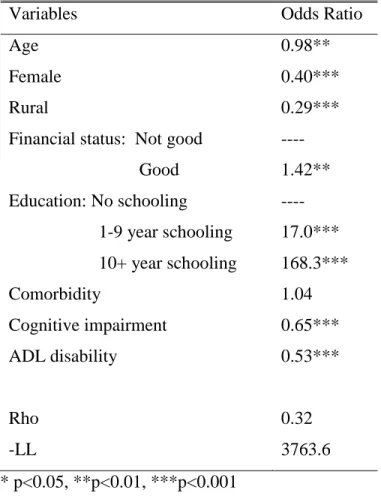
These group disparities were also confirmed in Table 4, which contains the result
from random-intercept logit regression model. According to the table, every year increase
in age reduced the likelihood of reading by 2%; female was 60% less likely to read in
leisure time than male; rural residents was about 70% less likely to read than their urban
counterparts. The table also reveals that good financial status increased the reading habits
by 42%. Education achievement had extraordinarily substantial impact on the reading
to read than people without any education. Health conditions were also associated with
the reading habits for Shanghai older adults. People with cognitive impairment and ADL
disability were less likely to read in their leisure time by 35% and 47%, respectively.
Table 4: Influence Factor of Habitual Reading in Shanghai Elders
Variables Odds Ratio
Age 0.98**
Female 0.40***
Rural 0.29***
Financial status: Not good ---- Good 1.42** Education: No schooling ---- 1-9 year schooling 17.0*** 10+ year schooling 168.3***
Comorbidity 1.04
Cognitive impairment 0.65*** ADL disability 0.53***
Rho 0.32
-LL 3763.6
* p<0.05, **p<0.01, ***p<0.001
Table 5 describes the time changes of each leisure-time activities for Shanghai
elders from 1998 to 2008. As can be seen from the table, the reading habit increased
gradually from 28% in 1998 to 38% in 2008. It is also interesting to see that TV watching
also increased its popularity at the same time from 66% to 78%, while exercising
declined from 44% to 32%. A sudden decline was observed in listening to music. In fact,
the music listening was worded as “listening to music”, but in the 2008 wave, the
wording is changed to “listening to and play music”. In this case, it is not a surprise that
people only listened to music at leisure time may not answer yes to this question any
longer. I remind readers about this issue in the following parts of the paper.
Table 5: Descriptive Results of Leisure-time Activities of Shanghai elders, 1998-2008
Leisure-time habits 1998(%) 2003(%) 2005(%) 2008(%) Watching TV 65.7 68.3 72.3 77.7
Chatting 37.4 47.7 46.5 44.4
Exercise 44.2 40.0 33.9 32.3
Reading 28.3 33.4 33.6 37.7
Playing card 18.2 16.7 16.9 15.8 Going to park 16.0 17.1 16.3 16.1 Listening to music 19.3 14.5 14.8 6.4 Raising flowers and birds 10.8 10.8 8.1 10.4
Tourism 5.0 6.6 7.7 8.4
Watching movie 4.6 7.6 8.0 6.9 Calligraphy & painting 2.6 2.4 1.6 2.1 Traditional opera 8.0 3.0 2.9 4.2 Singing & dancing 2.5 3.0 2.4 3.2
Fishing 2.4 0.9 1.0 1.8
Photography 1.1 1.4 1.1 1.2
Collection 0.9 1.0 0.5 0.8
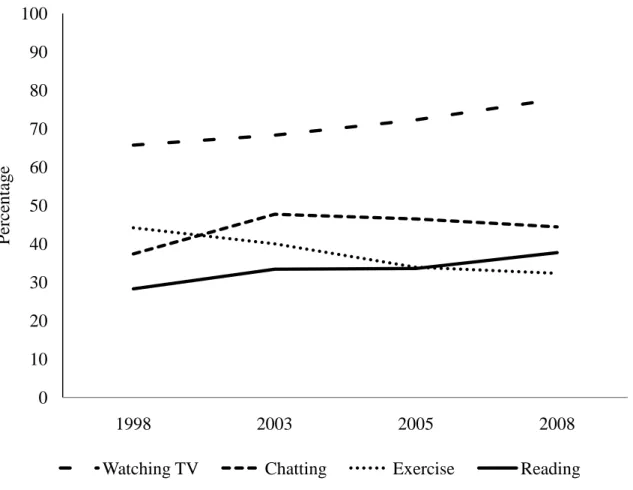
To better illustrate the trend, I choose four major leisure time habits such as TV
watching, chatting, exercising and reading, each of which had a proportion of
practitioners over than 30%. For these four habits, I make a figure to show the time trend
gradually, while chatting and exercising indeed declined in recent years. This figure
could be an important proof showing the Shanghai elders were becoming more sedentary
in recent years.
Figure 1: Major Leisure-time Activities of Shanghai Elders, 1998 to 2008
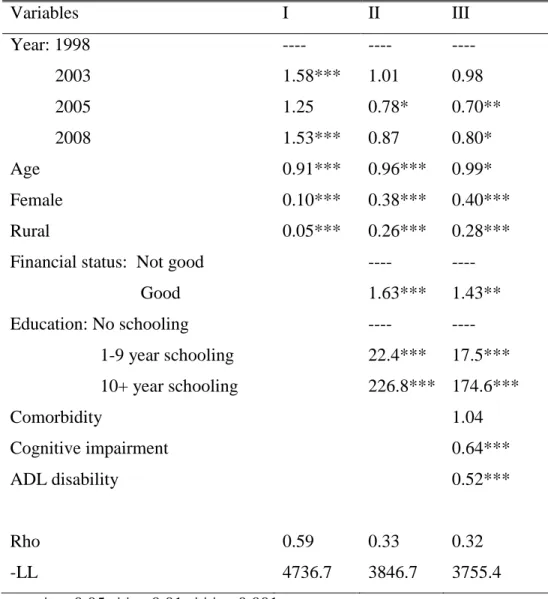
Table 6 presents the trend of reading habit of Shanghai elders based on a series of
random-intercept logit regression models. As can be seen from Model I with controlling
for demographic variables, Shanghai elders tended to develop more reading habits in the
leisure time for the past decade. In comparison with the baseline year of 1998, Shanghai
elderly had 58%, 25% and 53% more likelihood to read in leisure time, respectively.
However, when economic status and education achievement were added in Model II, the
observed trends disappeared and even reversed after the year of 2005. Such a pattern was 0
10 20 30 40 50 60 70 80 90 100
1998 2003 2005 2008
P
er
ce
nt
ag
e
further confirmed when more health covariates were under control. In comparison with
the year of 1998, Shanghai elders were less likely to develop habitual reading behavior
by 30% and 20% in 2005 and 2008 respectively.
Table 6: Trend of Habitual Reading in Shanghai Elders, 1998 to 2008
Variables I II III
Year: 1998 ---- ---- ----
2003 1.58*** 1.01 0.98 2005 1.25 0.78* 0.70** 2008 1.53*** 0.87 0.80*
Age 0.91*** 0.96*** 0.99*
Female 0.10*** 0.38*** 0.40***
Rural 0.05*** 0.26*** 0.28***
Financial status: Not good ---- ---- Good 1.63*** 1.43** Education: No schooling ---- ---- 1-9 year schooling 22.4*** 17.5*** 10+ year schooling 226.8*** 174.6***
Comorbidity 1.04
Cognitive impairment 0.64***
ADL disability 0.52***
Rho 0.59 0.33 0.32
-LL 4736.7 3846.7 3755.4
* p<0.05, **p<0.01, ***p<0.001
Table 7 checks the models by gender, age group and rural/urban residence, which
may help to illustrate the interaction effect for different demographic groups. According
to the table, the declining trends after the year of 2005 appeared more significant for
the rural females were even less likely to read than the urban ones. Holding a good
financial status played a more significantly positive role in reading promotion for women
rather than men, and it also worked better for younger old people and urban residents. To
receive education over than 10 year greatly enhanced elders to read, and the effect was
much larger for women than men, and for urban residents than rural ones. At last, the
table also shows that the health conditions did not differ greatly across the gender, age
group and rural/urban residents.
Table 7: Trend of Habitual Reading by Gender, Age Group and Residence, 1998 to 2008
Variables By gender By age group By residence Man Woman 65-79 ≥80 Urban Rural Year: 1998 ---- ---- ---- ---- ---- ---- 2003 1.04 0.89 0.99 0.83 0.89 1.56 2005 0.78* 0.62* 0.75* 0.44** 0.70** 0.55 2008 0.80 0.78 0.76* 0.74 0.78* 0.82
Age 0.98* 1.00 ---- ---- 0.98* 1.01
Female ---- ---- 0.40*** 0.49*** 0.43*** 0.23*** Rural 0.29*** 0.21*** 0.27*** 0.41** ---- ---- Financial status: Not good ---- ---- ---- ---- ---- ---- Good 1.32 1.62** 1.53*** 1.28 1.54*** 1.04 Education: No schooling ---- ---- ---- ---- ---- ---- 1-9 year schooling 11.6*** 24.5*** 16.9*** 22.4*** 20.9*** 8.7*** 10+ year schooling 96.3*** 353.7*** 177.2*** 165.2*** 206.5*** 61.4*** Comorbidity 1.06 1.02 1.05 0.99 1.04 1.06 Cognitive impairment 0.64*** 0.64*** 0.59*** 0.68** 0.65*** 0.56*** ADL disability 0.45*** 0.63* 0.49*** 0.52*** 0.54*** 0.41*
Rho 0.33 0.34 0.32 0.29 0.32 0.28
CONCLUSION & DISCUSSION
Reading habit, either for books, magazines and newspapers, is one of major activities of
elders in late life and is directly associated with the possible visits of libraries and use of the
information services (Weinstein-Shr 1995; Karmin 1984). Numerous studies in the western
countries have shown that the elderly population has its unique feature, motivation, capacity
and strategy in reading, in comparison with the younger population (Alligton and Walmsley
1980; Champley et al. 2005, 2008). It is important for the new generation of libraries to
understand the reading behaviors of this special group, especially in consideration of the fact
that the world is aging very rapidly and the elderly population is making up a structural
change for the audience of future library systems.
The study firstly finds out that among all of the leisure-time habits, reading is a
major one for Shanghai elders. This finding is consistent with many reports from the
western world, i.e. reading is a major part of elderly life (Ngandu and O’Rourke 1977;
Scales and Biggs 1983, 1987). This is good news for the local library system that Shanghai
elders enjoy reading in their late life, as indeed makes up a huge and growing user group.
However, it should also be noted that watching TV was still the dominating form of
leisure-time activity in Shanghai elders. This is a typical phenomenon of modernization.
According to the experience of the western societies, in the past century, watching TV has
quickly risen up as the dominating leisure time activity (National Endowment for the Arts
2007). The entertainment from the television program, ever since invented, has soon
occupied the leisure time for people of our time, and the elders are not exceptional at all.
What is happening in Shanghai is just a historical replication. However, it should be aware
library, because the visual media is also an important component of the library collection
(Handman 2002). In this sense, the local library service should be also related to an even
larger audience group, which is about 80% of local elders.
Another relevant issue here is the usage of internet among Shanghai elders, which
the survey did not investigate. To my knowledge, there is less statistics specifically for the
elderly population using internet. According to a news report, there are about 500
thousand elders frequently using internet (Xinhua Net 2006). In comparison with youth,
the proportion of elders using internet in Shanghai may be rather low. However there is
evidence that internet use is increasing among western elders (Leavengood 2008), and with
the internet service further developed in China, we may assume that to use internet could
rise up a new form of leisure time habit among Chinese old people, and may compete with
watching TV and reading for the leisure time of elders. In such a scenario, the library system
should be encouraged to play a role in such a transition.
To examine the gender, age, and residence disparity of the habitual reading
behaviors among Shanghai elders provides some very interesting and useful results. I find
that these disparities are very significant for reading habits. More specifically, men, younger
older adults and urban residents tended to read more in their leisure time, in comparison
with women, oldest old and rural residents. These differences are very substantial, in
comparison with disparities of other leisure time habits: the percentage of men with reading
habit reached about twice of that for women, the percentage of younger olds with reading
habit was about 1.5 times of that for oldest olds, and the percentage of urban residents with
reading habits was as high about five times as that for rural residents. As a practical
their gender- age- and residence-specific services and focus more efforts to promote the
library use of women, oldest old and rural residents.
Besides the crude distribution analysis of reading habits by gender, age and
residence, the results from modeling influence factors for elders’ reading habit provided
further information about how reading behaviors could be different across population
groups. The disparities of gender, age and residence observed above were confirmed in the
model. I also find that the education and economy status had great impacts on the reading
behavior. In particular, for an elder with over ten years’ education in Shanghai, the
likelihood of having reading habit was about 168 times in comparison with an elder with no
education. It is true that the best way of reading promotion is education. Moreover, as
expected, elders with cognitive impairment or physical disability were less likely to read in
their leisure time. This may imply a need for the local library to provide more convenience
of library use for the disabled elders.
Considering the huge impact of education on reading habit, it should be emphasized
that China still holds a large elderly population without any education (Mu et al. 2005). This
is because the currently elderly populations are actually from birth cohorts before 1950s,
when China had been in a very underdeveloped stage for socioeconomic development. With
time passing by, more and more educated elderly generations may replace the current
groups. Due to the high association between education and reading, the local library will
definitely see a growing demand from elders in the next few decades.
Another issue deserves attention. A substantial part of the gender, age and residence
different education levels between these groups. This is because in China, with regards to
education, women, oldest olds and rural residents are seriously disadvantaged in comparison
with men, younger olds and urban residents (Mu et al. 2005). However, it is also notable
that these disparities still exist even after the education was controlled in the model for
influence factors of reading habit. Many factors except education could be responsible for
the residual disparity. For example, it is very likely that the lack of library infrastructure in
the rural part of China may hinder the local elders to get information services. Obviously,
more studies are needed to further understand these disparities in order to provide more and
better advices for the local libraries.
According to the crude proportions in the trend analysis, the study shows that
reading increased gradually from 28% to 38% in the ten years. Averagely, there was 1%
increase for each year. When I compared reading with other habits, the four major
leisure-time habits had different patterns in terms of the over-time changes as illustrated
in the figure. That is, both reading and watching TV increased gradually, however,
chatting and exercising declined. Such a pattern indeed imply an increasing demand for
information service and suggest a rising challenge from the elder users for the Shanghai
library system.
Nevertheless, these patterns may suggest an interesting lifestyle trend in the
Shanghai elders. Chatting is a social activity and exercise is a physical activity, however
watching TV and reading are all individualistic behaviors, neither involving social
interactions and/or significant physical movements. Is this pattern telling us Shanghai
elders are more isolated and sedentary? Are more TV-watching and reading behaviors in
chatting and exercise are very important for the health of elders (Nelson et al. 2007; Gu et
al. 2008). They are also feasible ways of saving public health costs of elders (Fries et al
1993). I think further studies are needed to clarify whether watching TV and reading have
squeezed out the possibility of doing chatting and exercise in the elders’ leisure time.
Although in terms of crude statistics result, both reading and TV watching
increased popularity in the recent decade, the trend of reading was reversed when
socioeconomic and health factors were under control in the random-effect logit models.
This is a very intriguing finding: When demographic variables were under control, the
trend appears to be rising. That is, for elders with same gender, age and residence, those
surveyed in later wave were more likely to read in leisure time. However, when I further
consider the socioeconomic and health covariates, those surveyed in later wave were less
likely to read in leisure time. This result shows that the previous increase over time could
be explained by the improvement in the socioeconomic status and health. More clearly
speaking, it is just because Shanghai elders became more educated and healthy, the
elderly population become more likely to read in their leisure time. I think, through this
analysis, I have found out the major reason for the increasing reading habits of Shanghai
elders in the recent decade.
However, it is still a puzzle that why the reading habits could be declining after
controlling for the socioeconomic and health variables. One possible reason is that more
television watching in the recent years may attract elder people from reading. According
to the report from western societies (e.g. National Endowment for the Arts 2007), it is
very likely that the rise of watching TV has taken over the time for many leisure-time
confirm.
The results between the time trend and its collative by gender, age and residence
confirmed what we have found in the previous analysis and provide addition information
about some special audience groups in using the library service, which need close
attentions of the local library system. For instance, the rural residents, especially the
women, were particularly less likely to read; and on the other hand, women with good
financial status and education were much more likely to read. It suggests that the local
library should pay more attentions to help women living in rural areas to have
opportunities accessing to the information service. And it also seems that a reliable way
to promote reading in women is to improve their economic and education levels, as has to
involve the efforts from agents beyond the library system.
In sum, this study for the first time examines the reading habit of elders in Shanghai
of China, a largest city of a developing society which hosts the world largest aged
population. In this study upon the reading habit of the Shanghai elders, I have examined the
role of reading activity of elders in all leisure time activities, reported this role by gender,
age group and rural/urban residence, modeled the influence factors for reading habit of
elders, explored the trend of reading habits in the recent decade and compared this trend to
the trends of other leisure activities, checked the influence factors for the trend and also
examined these associations by gender, age group and rural/urban residence.
I believe the findings of this study are not only novel, but also could help the local
library system to be better informed of the current elderly audience and to develop good
strategies for better service. And due to the unique role of Shanghai, I also think the results
this study could also be implicative for us to under the reading behaviors of older
populations in the developing world in that the rapid modernization experienced in Shanghai
REFERENCE
Alligton, R. L. and Walmsley S. (1980). Functional competence in reading among the urban aged. Journal of Reading March: 494-497.
Asla, T., Williamson, K. and Mills, J. (2006).The role of information in successful aging: The case for a research focus on the oldest old. Library & Information Science Research 28: 49-63.
Binstock, R.H., George, L.K., Schulz, J.H, Myers, G.C., Marshall, V.W. and Birren, J.E. (1995). Handbook of Aging and the Social Sciences. 4th edition. Academic Press.
Champley J. et al (2008). A preliminary analysis of reading materials and strategies used by older adults. Communications Disorders Quarterly 29:131-140.
China Library Association and the National Library. (2008). China Library Development Report 2008. Beijing: National Library Press.
Cushman, G., A.J. Veal and J. Zuzanek. (1996). World Leisure Participation. Free Time in the Global Village. Cambridge: Cambridge University Press.
Cutler, B. (1990). Where does the free time go? American Demographics 12: 24-25.
Flaherty JH, Liu ML, Ding L et al. (2007). China: the ageing giant. Journal of the American Geriatrics Society 55:1295-1300.
Fries JF, Koop CE, Beadle CE, Cooper PP, England MJ, Greaves RF, Sokolov JJ, Wright D, the Health Project Consortium. (1993). Reducing health care costs by reducing the need and demand for medical services. New England Journal of Medicine 329: 321-325.
Grubb, E. A. (1983). Reading interest and activity od older adults and their sense of life satisfaction. Abstract in Reading and Study Skill and Instruction: College and Adult. Abstracts of Doctoral Dissertations.
Gu D, Feng Q, and Sautter J. (2008). Social network types, intimacy and healthy longevity among the Chinese elderly. Pp 11-49 in Social Sciences in Health Care and Medicine, edited by Colobum F. New York: Nova Publisher.
Handman, G. (2002). Video Collection Development in Multi-Type Libraries: A Handbook. Westport: Greenwood Press.
Gerontology 4: 201-214.
He, J., Gu, D., Wu, X., Reynolds, K., Duan, X., Yao, C., Wang, J., Chen, C.S., Chen, J., Wildman, R.P. et al. (2005). Major causes of death among men and women in China. New England Journal of Medicine 353: 1124-1134.
Journalism.org. (2004). 2004 Annual Report - Newspaper Audience. Who is Reading: A Question of Demographics. http://www.journalism.org/node/796, accessed on Feb 4th, 2011.
Kingston, A. J. (1981). Reading and the aged: a statement of the problem. Educational Gerontology 4: 205-207.
Kinsella K and He W. (2009). U.S. Census Bureau, International Population Reports, P95/09-1, An Ageing World: 2008. Washington, DC: U.S. Government Printing Office.
Kleiman, A. (1995). The aging agenda. Library Journal 120(7): 32.
Knulst, W. and Kraaykamp, G. (1998). Trends in leisure reading: forty years of research on reading in the Netherlands. Poetics 26: 21-41.
Leavengood, L.B. (2008). Older people and internet use. Generations 25(3): 69-71.
Masoro, E. J. and Austad, S. N. (2006). Handbook of the Biology of Aging, 6th Edition. Amsterdam, Boston: Elsevier Academic Press.
Ministry of Culture, People Republic of China. (2011). The analysis of the development of public libraries in China since the Fifth Five-Year-Plan http://www.libnet.sh.cn/tsgxh/list/list.aspx?id=6694, accessed on Jan 15th, 2011 (in Chinese).
Mu, G.Z., Wang, Z.C., Yan, Y.J. and Gu, L. (2005). The average educational level of chinese old population. Market & Demographic Analysis 11(3):60-67. (in Chinese).
National Endowment for the Arts. (2007). To Read or Not To Read: A Question of National Consequence. National Endowment for the Arts.
Nearby, L. (2007). Reading study shows remarkable decline in u.s. national public radio, http://www.npr.org/templates/story/story.php?storyId=16435529, accessed on Feb 4th, 2011.
Nelson, M.E., Rejeski, W.J., Blair, S.N., Duncan, P.W., Judge, J.O., King, A.C., Macera, C.A., and Castaneda-Sceppa, C. (2007). Physical activity and public health in older adults: recommendation from the American College of Sports Medicine and the American Heart Association. Medicine & Science in Sports & Exercise 39:1435-45.
motivations of the elderly. Pp.250-254 in Perspectives on Reading Research and Instruction, edited by Michael L. Kamil and Alden J. Moe. Rochester, NY: National Reading Conference.
Roberts, K. (1999). Leisure in Contemporary Society. Wallingford: CABI Publishing.
Roberts, K. and Brodie, D. (1992). Inner-City Sport. Culemborg: Giordano Bruno.
Robinson, J.P. (1980). The changing reading habits of the American public. Journal of Communication 30(1):141-152.
Robinson, J.P. (1990). The time squeeze. American Demographics 12: 30-33.
Romani, D. (1973). Reading interests and needs of older people. Library Trends 21: 390-403.
Samuel, N., 1996. France. Free time in the global village 77-106 in World Leisure Participation, edited by Cushman G., Veal A.J. and Zuzanek J. Cambridge: Cambridge University Press. .
Scales, A.M. and Biggs, S.A. (1983). A survey of reading habits with suggested instructional strategies: elderly adults, presented at the Annual Meeting of the International Reading Association 28th, Anaheim, CA, May 2-6.
Scales, A.M. and Biggs, S.A. (1987). Reading Habits of Elderly Adults: Implications for Instruction. Educational Gerontology 13(6): 521-32.
Shanghai Library. (2010). Shanghai establishes the largest public library system in China. http://whgx.library.sh.cn/SHlibraryNews541003.htm, accessed on Jan 25th, 2011. (in Chinese).
Shanghai Library Association, (2010). The number of service stations of “universal library card” in Shanghai has reached 161. Library Information 1:5-6. (in Chinese).
Shanghai Statistics Bureau. (2000). Shanghai Statistics Yearbook 2000. Beijing: China Statistics Press. (in Chinese)
Shanghai Statistics Bureau. (2009). Shanghai Statistics Yearbook 2009. Beijing: China Statistics Press. (in Chinese)
Sharon, A. T. (1973). What do adults read? Reading Research Quarterly 9:148-169.
Thurston, M. and Green, K. (2004). Adherence to exercise in later life: how can exercise on prescription programmes be made more effective? Health Promotion International, 19(3).
Weinstein-Shr, G. (1995). Literacy and Older Adults in the United States. NCAL Technical Report TR94-17. National Centeron Adult Literacy, University of Pennsylvania.
Wicks, Don A. (2004). Older adults and their information seeking. Behavioral & Social Sciences Librarian 22(2): 1-26.
Xinhua Net. (2006). Shanghai: lead elders enjoying digital life, http://tech.sina.com.cn/i/2006-05-18/2129944990.shtml, accessed on Feb 16th, 2011. (in Chinese).