i `THE UNIVERSITY OF NORTH CAROLINA AT CHAPEL HILL GILLINGS SCHOOL OF GLOBAL PUBLIC HEALTH:
DEPARTMENT OF HEALTH BEHAVIOR
Strengthening El Pueblo’s Sexual and
Reproductive Health Program for
Latino/a Youth in North Carolina
Capstone Summary ReportAnne Fitzgerald Jenna Garrett
Lilli Mann Christa Martens Sadiya Muqueeth
Faculty Advisor: Allan Steckler, DrPH Community Partner: Florence Siman, MPH
ii
Acknowledgements
The Capstone Team would like to acknowledge the individuals and organizations that contributed to this project and our learning. We would like to offer special thanks to our community partner at El Pueblo, Florence Simán, for her support and guidance. We are also grateful to Carol Hodgman, Carla Mena, Laura Villa, and the rest of the El Pueblo staff and Board for their insights, and for their hard work to improve the lives of Latinos/as in North Carolina. This project also would not have been possible without the participation of the youth and parents from Nuestros Derechos sin Fronteras, who generously shared their time, experiences, and ideas with us to help strengthen the program.
iii
List of Acronyms
AE
Abstinence-only Education
AFY
Advocates for Youth
APPCNC
Adolescent Pregnancy Prevention Campaign of North Carolina
CDC
Center for Disease Control and Prevention
CRR
Comprehensive Risk Reduction
DsF
Nuestros Derechos sin Fronteras (Our Rights Have No Borders)
EBI
Evidence-based Intervention
HB
Health Behavior
HIV/AIDS
Human Immunodeficiency Virus/Acquired Immune Deficiency
Syndrome
MPH
Master of Public Health
NC
North Carolina
RECAPP
Resources Center for Adolescent Pregnancy Prevention
SRH
Sexual and Reproductive Health
STI
Sexually Transmitted Infection
TPPI
Teen Pregnancy Prevention Initiatives
UFE
Utilization-Focused Evaluation
UNC
University of North Carolina – Chapel Hill
iv
Abstract
Background: Latinos/as in the United States face significant sexual and reproductive health (SRH) disparities; the rapidly growing Latino/a population in Wake County, North Carolina is no
exception. El Pueblo, Inc. is a nonprofit agency that aims to bridge the gap between the needs of the Latino/a community and available resources in Wake County. One way in which El Pueblo achieves this is through a youth SRH education program called Nuestros Derechos sin Fronteras (DsF), or Our Rights Have No Borders. During the 2011-2012 academic year, a Capstone team from the Health Behavior Department at the UNC-Chapel Hill Gillings School of Global Public Health partnered with El Pueblo to complete a project aimed at strengthening the DsF program.
Methods: The Capstone team conducted informal community engagement and formal assessment activities, including 15 in-depth interviews with El Pueblo staff and four focus groups with youth who have participated in DsF, and their parents. The Capstone team conducted a qualitative analysis of interview and focus group summary reports, the results of which were used to develop four major deliverables aimed at strengthening the DsF program. The Capstone team additionally conducted a literature review and resource scan to supplement engagement and assessment findings.
Results: The results from community engagement emphasized the key factors of upmost importance to the Latino/a community and El Pueblo; these included cultural values, structural discrimination against immigrants, and bi-cultural and generational challenges for Latino/a youth. The results from assessment activities provided direct feedback regarding the DsF program;
findings included an emphasis on funding and evaluation challenges, the importance of holistic SRH education for Latino/a youth, an increased need for synergy across El Pueblo programs, and an emphasis on male involvement. Sustainability findings place an emphasis on institutionalization of DsF within El Pueblo and capacity building for program continuation. These findings were all addressed through the four deliverables produced by the Capstone team.
Discussion: The Capstone project’s findings and subsequent deliverables add value to El Pueblo’s SRH programming and provide significant benefits to Latino/a youth in North Carolina. These deliverables will lead to improved knowledge and skills among youth participants, and enhanced program sustainability, which will ultimately lead to improved SRH outcomes for Latino/a youth in North Carolina. Specific limitations and challenges are acknowledged, and are accompanied by recommendations regarding the use of project deliverables and next steps in order to ensure that maximum benefits are achieved.
Major Deliverables
1. Revised DsF Curriculum for El Pueblo’s Youth SRH Program 2. Strategic Plan for El Pueblo’s Youth SRH Program
3. Funding Toolkit for El Pueblo’s Youth SRH Program
Table of Contents
Acknowledgements ... ii
List of Acronyms ... iii
Abstract ... iv
Major Deliverables ... iv
Introduction ... 1
Background ... 3
Literature Review ... 3
Table 1. Key Takeaways from Evidence-Based SRH Interventions for Latino/a Youth ... 10
Methods ... 12
Logic Model ... 12
Figure I: El Pueblo Capstone Logic Model ... 14
Engagement Activities ... 15
Assessment Activities ... 18
Sustainability Plan ... 20
Work Plan Deliverables ... 21
Results ... 22
Engagement Findings... 22
Assessment Findings ... 24
Sustainability Findings ... 27
Summary of Deliverables: ... 29
Deliverable 1: Revised DsF Curriculum for El Pueblo’s Youth SRH Program ... 30
Deliverable 2: Strategic Plan for El Pueblo’s Youth SRH Program ... 31
Deliverable 3: Funding Toolkit for El Pueblo’s Youth SRH Program ... 32
Deliverable 4: Community Report, a Written Brief on Project Findings for the Community and Stakeholders ... 33
Discussion ... 34
Strengths and Limitations of Engagement and Assessment ... 34
Potential Impact and Benefits ... 35
Table 2: Deliverable-specific benefits ... 36
Lessons Learned and Challenges ... 37
Considerations for Sustainability ... 38
Conclusion ... 39
Strengthening El Pueblo’s Youth SRH Program | 1
Introduction
During the 2011-2012 academic year, a team of five Master of Public Health (MPH) students from the Department of Health Behavior (HB) at the UNC-Chapel Hill Gillings School of Global Public Health conducted a Capstone project with local partner organization El Pueblo, Inc. The Capstone program is a two-semester field experience in which teams of students, under the mentorship of faculty advisors and a community partner, draft a work plan and produce a set of deliverables in partnership with a local organization (Linnan et al., 2010). The aim of this Capstone project was to address sexual and reproductive health (SRH) issues among Latino/a youth in Wake County, North Carolina and its surrounding counties.
El Pueblo is a statewide non-profit organization dedicated to serving and empowering the growing Latino community in North Carolina (El Pueblo, 2012), with a service area concentrated in Wake county and neighboring Orange, Durham and Chatham counties (see map in Appendix I). North Carolina has one of the fastest growing Latino/a populations in the United States, and Wake County is among the top North Carolina counties for Latino/a population growth (U.S. Census Bureau, 2010). Between 1990 and 2000, the Latino/a population increased 595% (Tatko & Manson, 2002) and currently comprises 9.8% of the Wake County population (U.S. Census Bureau, 2010). As recent immigrants, many Latinos/as in North Carolina face linguistic, cultural, financial and
educational barriers to healthcare, and most are uninsured (North Carolina Institute of Medicine, 2003). El Pueblo provides the Latino/a population with information and resources on immigrant rights, advocacy, education, and public safety. It also fosters community-building through both state-wide and local multi-cultural events (El Pueblo, 2012).
Strengthening El Pueblo’s Youth SRH Program | 2 program for adult lay health workers (promotores) that had been sponsored by the two
organizations. An Ipas youth advocate approached representatives of El Pueblo suggesting the need for a youth reproductive health program and thus, the partnership between Ipas and El Pueblo expanded to include DsF.
This Capstone team was the second group of MPH students to work with El Pueblo on its youth SRH program; the first evaluation and adaptation of the existing DsF program came as a result of the 2010 Capstone project and their work with El Pueblo during the 2009-2010 academic year (Bilheimer, Gieselman, Kruse, & Thanel, 2010). After implementing the previous Capstone team’s work, El Pueblo identified additional program needs and challenges, leading to the request for a follow-up Capstone project. The goal of this latest Capstone project was to strengthen DsF by improving program performance and responsiveness to the needs of the target population, strengthening program capacity, and providing a framework for program sustainability.
This summary report begins with a Background section, which includes a literature review detailing the current status of Latino/a SRH, state-level resources affecting SRH and Latino/a youth, and evidence-based interventions to inform the Capstone team’s deliverables. The Methods section introduces a logic model that illustrates the Capstone project’s planned work and intended
Strengthening El Pueblo’s Youth SRH Program | 3
Background
Literature Review
Prior to carrying out the Capstone project, the team reviewed the literature to establish the need for the project, assessed existing services, and informed project deliverables based on other evidence-based programs addressing similar health issues and target populations.
The Problem: Latino/a Youth and Sexual and Reproductive Health
National, state, and county-level epidemiological data show that Latino/a youth experience disparities related to SRH outcomes, specifically regarding teenage pregnancy and HIV/AIDS and other sexually transmitted infections (STIs), in comparison with their non-Hispanic White peers (Centers for Disease Control and Prevention, 2011; Pew Hispanic Center, 2011; North Carolina State Center for Health Statistics, 2011). Consequently, public health efforts must address this need by establishing and promoting improved access to SRH information and services for Latino/a youth. Latino/a Youth and SRH Outcomes
Strengthening El Pueblo’s Youth SRH Program | 4 North Carolina Latinos/as have a disproportionately higher rate of teen pregnancy as
compared to non-Hispanic Whites and African Americans. In 2009, Latinos/as accounted for 16% of all births in the state, but 23% of all births among mothers under age 17 (North Carolina State Center for Health Statistics, 2011). This teen pregnancy rate was almost four times the rate of non-Hispanic Whites and almost twice the rate of African Americans (NC DHHS Division of Public Health State Center for Health Statistics, 2010). With regards to the STI rates in Latinos/as, between 2004 and 2008, the rate of chlamydia infections among Latinos/as was 3 times the rate of infection among non-Hispanic Whites, and the rate of syphilis infections among Latinos/as was almost 2.5 times the rate of infection among non-Hispanic Whites (NC State Center for Health Statistics & Office of Minority Health and Health Disparities, 2010). Similarly, HIV prevalence has been
increasing rapidly among Latinos/as in North Carolina. In 2009, the HIV prevalence for Latinos/as was nearly 4 times the rate for non-Hispanic Whites (NC DHHS Division of Public Health State Center for Health Statistics, 2010; NC State Center for Health Statistics & Office of Minority Health and Health Disparities, 2010).
Wake County, the main setting for this Capstone project, follows the state trends for pregnancies and STIs. Latinos/as in Wake County accounted for about 30% of all pregnancies occurring among girls under the age of 17 years in 2009 (North Carolina State Center for Health Statistics, 2010). Neighboring counties also follow similar or more alarming trends. For example, in 2009, Chatham County reported that Latina girls younger than 17 years old accounted for 66% of all pregnancies in their age group (North Carolina State Center for Health Statistics, 2010). Latino/a Youth and Behavioral Risks
Behavioral risk factor data may help explain some epidemiological trends for SRH among Latino/a youth. According to the national 2009 Youth Risk Behavior Surveillance System (YRBSS), which measures risk behaviors among 9th through 12th graders, lower percentages of
non-Strengthening El Pueblo’s Youth SRH Program | 5 Hispanic whites. Specifically, the 2009 YRBSS reports that 89.2% of sexually active Latino/a youth did not use birth control pills, 45.1% did not use condoms, and 96.5% did not use the
recommended combination of hormonal and barrier methods. This compares with 73.2%, 36.7%, and 88% respectively for sexually active non-Hispanic Whites (CDC, 2009). In North Carolina, Latino/a youth were 1.27 times as likely as non-Hispanic White youth to ever have had sexual intercourse and female Latina youth were 4.2 times as likely as non-Hispanic White youth to have had sexual intercourse for the first time before the age of 13 years (U.S. Department of Health and Human Services & Centers for Disease Control and Prevention, 2009).
Resources in the State of North Carolina for Sexual and Reproductive Health
Understanding the current status of SRH services and resources in the state and at the county level was critical to the successful completion of the Capstone project. The Capstone team reviewed existing state and county resources, as well as existing gaps in those resources. This revealed that North Carolina has a range of resources, although few specifically address Latino/a youth or have a reproductive rights focus.
Statewide Resources
Strengthening El Pueblo’s Youth SRH Program | 6 inconsistent throughout the state; Chatham and Orange Counties have access to these programs while Wake and Durham Counties do not (North Carolina Division of Public Health, 2011).
Another resource is the Adolescent Pregnancy Prevention Campaign of North Carolina (APPCNC), which is a state-level initiative to prevent pregnancy among youth in North Carolina. APPCNC advocates for effective policies to support pregnancy prevention at the state level, and also works with schools and communities to implement evidence-based strategies for pregnancy
prevention in North Carolina (APPCNC, 2009). However, neither of the state-wide programs have a Latino/a youth focus.
Planned Parenthood, a national non-profit organization, is also widely known for their SRH services. In North Carolina, these services include abortion referral, birth control, pregnancy testing & services, STI testing, treatment and vaccines, and other services. The Central North Carolina Planned Parenthood office also provides education and training to youth, including the Joven a Joven (Youth to Youth) program, which is specifically targeted toward Latino/a youth. The program is offered to Durham, Orange, and Chatham County high school students and is geared toward preparing youth to be peer health educators (Planned Parenthood of Central North Carolina, 2011b). Although Joven a Joven aims to serve a similar purpose as the DsF program, Joven a Joven does not have follow up activities for participants after they have completed the training; DsF aims to have participant follow-up and continue engaging DsF participants after graduation. Additionally, participant space in the popular Joven a Joven program is very limited and does not meet the need for SRH health programming for the burgeoning Latino/a population in the area.
County Resources
Strengthening El Pueblo’s Youth SRH Program | 7 healthy relationships, healthy habits, and life planning (Wake County Human Services, 2011). The only youth program offered in Orange County targets tobacco prevention and smoking cessation (Orange County Health Department, 2011). The Chatham County Health Department runs the Chatham Coalition for Adolescent Health, which provides youth parenting classes, SRH educational presentations, and a peer education program focusing on STIs, HIV/AIDS, teen pregnancy,
contraception, abstinence, refusal skills, sexual decision-making, and other topics (Chatham County, North Carolina, 2011). None of these programs specifically target Latino/a youth.
School-Based Interventions
North Carolina’s public school sexual health education curriculum recently underwent some changes. From 1995 to 2010, North Carolina public school health education was controlled by the state’s Abstinence Until Marriage Education Law. The law demanded that students be taught that a “mutually faithful monogamous heterosexual relationship in the context of marriage is the best lifelong means of avoiding sexually transmitted diseases, including HIV/AIDS” (House 88, 2009). The Healthy Youth Act 2009, or House Bill 88, became effective in the 2010-2011 academic year, impacting health education instruction of students in 7th through 12th grades. SRH instruction now
reinforces what was promoted under the Abstinence Until Marriage Law by encouraging youth to remain abstinent until they are married, but expands on existing instruction by also requiring the inclusion of information about the effectiveness and safety of FDA-approved contraceptive methods, local resources for STI testing and treatment, and more thorough lessons on sexual abuse and assault.(House 88 Ratified Bill, 2009; Understanding the Healthy Youth Act, 2009).
Strengthening El Pueblo’s Youth SRH Program | 8 to provide parents with access to the selected curriculum and materials 60 days prior to the start of the class, giving parents the choice to withdraw consent for their child’s participation. Given the great variation in curriculum selection and implementation across North Carolina schools, as well as the lack of a formal mechanism to enforce the inclusion of comprehensive SRH information, it is difficult to assess what knowledge and skills youth are gaining through school-based health education statewide. Additionally, since these curricula are required to be non-biased, it is likely that they are not tailored to Latino/a youth.
The identified state and local-level services and resources informed the Capstone project in various ways. First, it revealed organizations both statewide and in Wake County that are doing work in SRH, including some that focus on Latino/a youth. Strategic collaboration with these organizations can and should be an integral part of any long-term program strategy (Mittenhal, 2002). Second, the process highlighted current coverage gaps in the provision of comprehensive youth SRH education in North Carolina. Specifically, the resource identification process revealed a lack of tailored SRH education programs for Latino/a youth. Given El Pueblo’s mission to
strengthen the Latino/a community, this information emphasizes El Pueblo’s potential role in filling the resource gap.
Evidence-Based Youth Sexual and Reproductive Health Interventions
In recent years, the field of public health has increasingly moved towards elevating the scientific rigor of program evaluation; in 1996, the Task Force on Community Preventive Services was formed to synthesize scientific information about the effectiveness of health interventions in a variety of topics, including SRH (Anderson et al., 2005). Given that many successful SRH programs already exist, the team reviewed these evidence-based interventions (EBIs) to determine how they might inform El Pueblo’s approach to youth SRH programming.
Strengthening El Pueblo’s Youth SRH Program | 9 continue using their current model rather than introducing a new program, given that DsF has already been well-received by the community. Additionally, procuring and implementing EBIs with fidelity would present a significant strain on limited organizational resources. Keeping this in mind, the Capstone team reviewed EBIs addressing youth SRH in order to identify general strategies that could be adapted and employed by El Pueblo in their DsF program.
Comprehensive Risk Reduction Interventions
One approach to preventing HIV/AIDS, STIs, and pregnancy among youth is through group-based comprehensive risk reduction (CRR) interventions. CRR interventions use group-group-based curricula to promote and educate participants on risk-reducing behaviors related to pregnancy and the transmission of HIV/AIDS and STIs (Chin et al., 2012). Based on a meta-analysis of 62 studies, the CDC Task Force on Community Preventive Services (2009) recommends the CRR approach. The meta-analysis found CRR to be effective in reducing a number of self-reported risk behaviors as well as self-reported or clinically documented incidence of STIs, though there was limited direct evidence of effectiveness in reducing pregnancy and HIV. These interventions are similar to the current DsF program because they target youth, are delivered in group settings in schools or communities, are led by adult or peer educators, and may be implemented as single or multi-component programs. The content of such programs may include discussions of abstinence, but are characterized by the promotion of sexual risk reduction strategies. The Task Force does not
recommend abstinence-only education (AE) programs, as a similar meta-analysis found insufficient evidence to determine the effectiveness of such strategies for preventing pregnancy, HIV, and other STIs (CDC Task Force on Community Preventive Services, 2009).
Sexual and Reproductive Health EBIs for Latino/a and Latina Youth
Strengthening El Pueblo’s Youth SRH Program | 10 as level of acculturation for youth of immigrant families (Lee, 2010) and cultural beliefs around family and gender roles (Mueller, 2009), as well as the increased risk for negative SRH outcomes for Latino/a youth, many agencies that serve this population prefer to implement programs that are specifically designed for Latinos/as. In 2008 and 2009, the US-based non-profit Advocates for Youth (AFY) reviewed published evaluations of programs working to prevent teen pregnancy, as well as HIV and STI transmission. AFY identified 26 programs that met their criteria for effectiveness, all of which had been included in the Task Force Report (Alford et al., 2008) and then determined that 15 such programs had demonstrated effectiveness with Latino/a participants (Alford et al., 2009). Three of these 15 programs are community-based (as opposed to school or clinic-based), making them most relevant to El Pueblo’s work: ¡Cuidate! (Take Care of Yourself), Poder Latino/a (Latino/a Strength), and Carrera Adolescent Pregnancy Prevention Program.
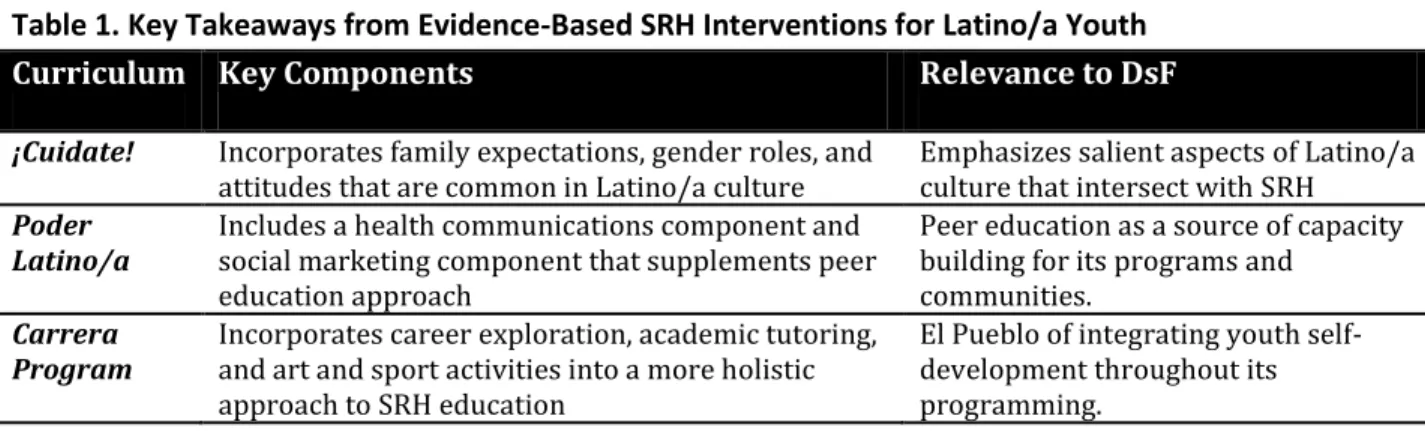
These Latino/a youth SRH programs were proven to lead to a variety of improved health outcomes, including increased knowledge of sexual health issues, delayed initiation of sexual intercourse, increased ability to refuse sex, reduced frequency of sexual intercourse, reduced number of sexual partners, reduced incidence of unprotected sex, and decreased rates of teen pregnancy (Villarruel, Jemmot, & Jemmott, 2006; McGraw et al., 2002; Philliber, Kaye, Herrling, & West, 2002). Each program included key components that informed the Capstone team’s approach to working with DsF. These key takeaways are included in Table 1:
Table 1. Key Takeaways from Evidence-Based SRH Interventions for Latino/a Youth
Curriculum Key Components Relevance to DsF
¡Cuidate! Incorporates family expectations, gender roles, and
attitudes that are common in Latino/a culture Emphasizes salient aspects of Latino/a culture that intersect with SRH
Poder
Latino/a Includes a health communications component and social marketing component that supplements peer education approach
Peer education as a source of capacity building for its programs and
communities.
Carrera
Program Incorporates career exploration, academic tutoring, and art and sport activities into a more holistic approach to SRH education
Strengthening El Pueblo’s Youth SRH Program | 11 Curricula and Other Resources Used in Deliverables
Given the challenges associated with procuring proprietary curricula associated with evidence-based interventions, the team also reviewed portions of over 30 additional curricula, resources, and youth programs in order to inform the Capstone project and deliverables. These resources were focused on activities ranging from youth development and communication to SRH and human rights, and were primarily procured through Ipas, Advocates for Youth, and the
Resources Center for Adolescent Pregnancy Prevention (RECAPP). Although these materials are not recognized as being evidence-based in their entirety, each curriculum reviewed does utilize
evidenced-based strategies. The table presented in Appendix II provides a further description of each curriculum that was reviewed, along with a description of specifically how and why they were used in the Capstone project.
Literature Review Conclusions
Based on the findings presented in this Literature Review, it is clear that (a) Latino/a youth in North Carolina experience disproportionately poor SRH outcomes, (b) local and state
organizations are currently doing some work in this area, but the needs of the Latino/a community are not fully being met, and (c) evidence-based interventions addressing Latino/a youth sexual and reproductive health exist and capitalize on cultural characteristics, peer education, health
communication and behavioral theories, and other strategies to improve SRH outcomes. The Capstone team’s work was grounded in these literature findings, providing a more comprehensive understanding of DsF’s role within the larger context of other SRH programs and the Latino/a population. Upon completing the literature review, the Capstone team then proceeded with
Strengthening El Pueblo’s Youth SRH Program | 12
Methods
Logic Model
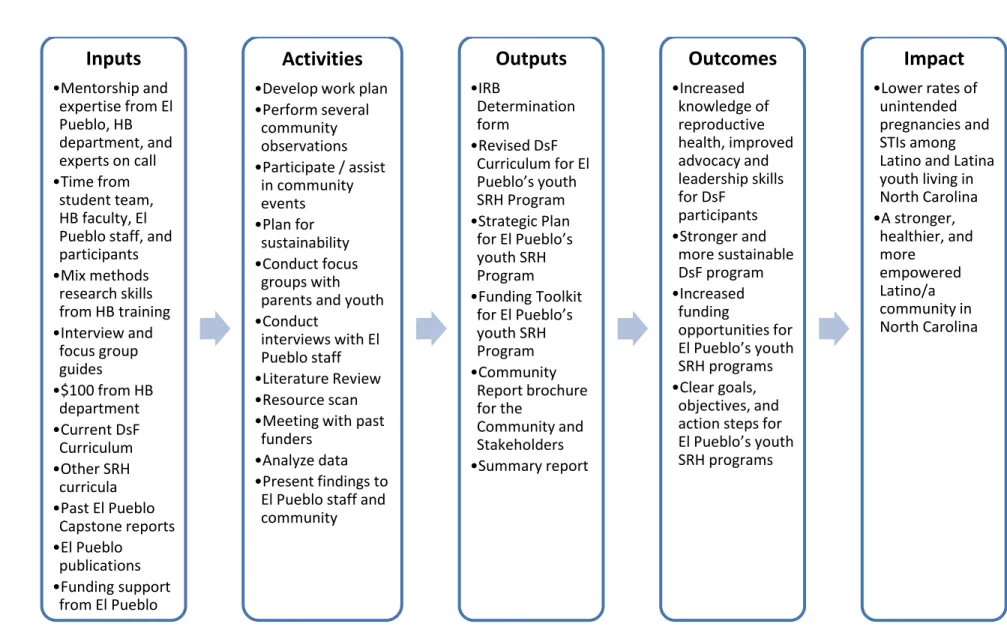
The El Pueblo Capstone team used a logic model to help “create [a] shared understanding of and focus on program goals and methodology, relating activities to projected outcomes” (W.K. Kellogg Foundation, 2004). Logic models are valuable tools as they provide a pictorial and systematic representation of the connection between a program’s planned work and its intended results. The planned work includes inputs and activities, and the intended results include outputs, outcomes, and the expected impact. A variety of resources contributed to the project activities and inputs, including the team members’ training in mixed methods research skills from the HB MPH program, mentorship and expertise from community partners at El Pueblo, HB faculty and staff and experts on-call, as well as the time investment of all persons involved in the progress of the project. Monetary resources included funding support from El Pueblo and $100 provided by the HB
Department for Capstone purposes. Finally, documents such as the El Pueblo Capstone summary reports from 2010 and 2011, the current DsF Curriculum, El Pueblo internal publications, other SRH curricula, along with current focus group and interview guides, helped to support the assessment activities of the project.
Strengthening El Pueblo’s Youth SRH Program | 13 participants and their parents. After gathering data, the team analyzed data using memos, matrices, and summary reports. Then, the team presented findings to El Pueblo and the community.
Once these activities were completed, the team was able to produce the following deliverables (project outputs): a revised DsF Curriculum for El Pueblo’s youth SRH program, a Strategic Plan for El Pueblo’s youth SRH program, a Funding Toolkit for El Pueblo’s youth SRH program, and a Community Report brochure for El Pueblo’s community members and stakeholders. In addition to the project deliverables, this Summary Report also serves as an additional project output.
These outputs will ultimately lead to a number of project outcomes and impacts. Although the outcomes described here have not yet been formally measured, evaluation is built in to the Strategic Plan and Curriculum, and will be carried out by El Pueblo staff and the next Capstone team, which has been selected for the 2011-2012 academic year. These outcomes are as follows. The revised DsF Curriculum deliverable will lead to an increase in Latino/a youth SRH knowledge, improved advocacy and leadership skills for program participants, and a stronger DsF program grounded in stakeholder and participant input. The Funding Toolkit will lead to increased funding opportunities for DsF, which along with the Strategic Plan will contribute to the long term
sustainability of the program. The Strategic Plan will do this through establishing clear goals, objectives, and action steps for DsF.
Strengthening El Pueblo’s Youth SRH Program | 14
Figure I: El Pueblo Capstone Logic Model
Inputs
•Mentorship andexpertise from El Pueblo, HB department, and experts on call •Time from
student team, HB faculty, El Pueblo staff, and participants •Mix methods
research skills from HB training •Interview and
focus group guides
•$100 from HB department •Current DsF Curriculum •Other SRH
curricula •Past El Pueblo
Capstone reports •El Pueblo
publications •Funding support
from El Pueblo
Activities
•Develop work plan •Perform severalcommunity observations •Participate / assist
in community events •Plan for sustainability •Conduct focus groups with parents and youth •Conduct
interviews with El Pueblo staff •Literature Review •Resource scan •Meeting with past
funders •Analyze data •Present findings to
El Pueblo staff and community
Outputs
•IRB Determination form •Revised DsF Curriculum for El Pueblo’s youth SRH Program •Strategic Plan for El Pueblo’s youth SRH Program •Funding Toolkitfor El Pueblo’s youth SRH Program •Community Report brochure for the Community and Stakeholders •Summary report
Outcomes
•Increased knowledge of reproductive health, improved advocacy and leadership skills for DsF participants •Stronger and more sustainable DsF program •Increased funding opportunities for El Pueblo’s youth SRH programs •Clear goals,objectives, and action steps for El Pueblo’s youth SRH programs
Impact
•Lower rates ofStrengthening El Pueblo’s Youth SRH Program | 15
Engagement Activities
As listed in the Activities section of the logic model, one of the early steps in the Capstone process was to engage with the Latino/a community in North Carolina with specific attention to Latino/a youth involved in El Pueblo’s programs and their parents. Entering a community with the intent to elicit positive behavior change, demands preparatory engagement to set the stage for effective relationships with intended beneficiaries and stakeholders. The goals of community engagement are to build trust, enlist new resources and allies, create better communication, and improve cultural sensitivity on the part of outsiders in interactions with the intended beneficiaries (McCloskey et al., 2011). From August 2011 to January 2012, the Capstone team interacted with a variety of stakeholders to obtain a more comprehensive understanding of Latino/a youth SRH issues and programs at the interpersonal, organizational, and community levels of the Socio-Ecological Framework (Sallis, Owen, & Fisher, 2008). The team took on community engagement through a diversity of venues, which fostered substantial learning from the different partners involved (Ross, 2010). The goal of engagement was twofold: (1) to elicit a better understanding of the overall experience of those associated with the DsF program, and (2) to combine knowledge obtained from the literature and from interactions with the community to bring cultural sensitivity to the project deliverables. These efforts intended to enhance SRH programming for Latino/a youth and ultimately to contribute to sustainable improvements in their overall health outcomes
(McCloskey et al., 2011).
The following sections describe the Capstone team’s engagement with three main
Strengthening El Pueblo’s Youth SRH Program | 16 for a detailed chart of the team’s engagement and assessment activities over the course of the academic year.
Engagement Activities with the North Carolina Latino/a Community
When the Capstone project first began, it was important for team members to become familiar with the Latino/a community in North Carolina. The first community-level engagement event was El Pueblo’s Latino/a cultural festival, La Fiesta del Pueblo 2011 at Moore Square in Raleigh, North Carolina in September. The team observed interactions between attendees, particularly Latinos/as, introduced themselves to El Pueblo youth volunteers, spoke with representatives from community groups participating in the event, and simply enjoyed the festivities.
The Capstone team also attended and participated in community events held at the El Pueblo office in Raleigh, North Carolina. The first of these took place in October, during a celebration for recently graduated DsF participants, and included a compelling talk by Nayely Perez-Huerta, El Pueblo’s former Advocacy Officer, to parents about the immediate need for community-wide organization against the ever-worsening political climate for undocumented immigrants in North Carolina and its implications on discrimination against Latinos/as at large. Another community event attended was an SRH forum called “Mi Sexualidad al Otro Lado de la Frontera” (My Sexuality on the Other Side of the Border) in which El Pueblo’s adult SRH promotores, or lay-health advisor group, led a discussion of men’s involvement in SRH decision-making,
Strengthening El Pueblo’s Youth SRH Program | 17 activities, it also provided an opportunity for the Capstone team to present initial project findings to the community, receive feedback, and engage in discussion.
Engagement Activities with El Pueblo
In addition to engaging with the Latino/a community at large, the team also engaged with El Pueblo itself. The team attended two staff events in September in order to better understand the organizational structure, programming planning process, potential gaps in resources, and available resources and allies. The Capstone team first attended an El Pueblo staff meeting to introduce the project, meet to staff members, and to learn about current projects and the organizational culture. The team also participated in planning meetings for Youth Links, a youth SRH conference. Youth Links is a collaborative effort by various local organizations including: APPCNC, Ipas, Planned Parenthood of Central North Carolina, Inside Out, El Vínculo Hispano, El Centro Hispano, Chatham County Together, Mujeres Mejorando el Futuro, Latijam, NC Health Start Foundation, and El Pueblo. Attending this meeting allowed the Capstone team to observe El Pueblo’s working relationship with its partners and to meet and build relationships with representatives from these organizations.
Engagement Activities with Latino/a Youth and their Families
The Capstone team engaged with Latino/a youth involved with El Pueblo’s programs, as well as their parents. Given the sensitive nature of the topics that were to be discussed in focus groups, including immigration, health disparities, and SRH education, it was important to first and foremost build relationships and trust. The team interacted with DsF youth and their families on four separate occasions.
Strengthening El Pueblo’s Youth SRH Program | 18 Youth Links conference, held at Camp New Hope outside of Chapel Hill in early November. The team facilitated an educational activity on reproductive anatomy, shared a meal with youth, and
participated in a documentary screening and discussion about sexual identity. This allowed the team to achieve a greater level of rapport with the youth and to better understand their discourse around SRH.
Capstone team members also had the opportunity to interact with members of El Pueblo’s Youth Committee at a planning meeting for Youth Links in September. The Youth Committee is comprised of youth leaders, some who have participated in the DsF program. In addition to observing the Youth Committee plan certain segments of Youth Links, Capstone team members used this meeting to introduce the well-received idea of conducting focus groups with DsF graduates and their parents in the future.
The final community engagement activity involved attending a celebration meal for DsF graduates and their parents. This meeting provided an opportunity for the team to introduce themselves and the project to youth and parents, share a meal and casual conversation, discuss focus group recruitment, and learn more about immigration issues.
Assessment Activities
The team conducted multiple qualitative assessments with key stakeholders that would inform the key deliverables, including in-depth interviews and focus groups. Participants in these assessments included El Pueblo staff members, DsF facilitators, DsF youth participants, and parents of DsF participants. To begin the assessment process, the team first met with the community
Strengthening El Pueblo’s Youth SRH Program | 19 participants. These guides and surveys were written in both Spanish and English so that they could be conducted in the participants’ preferred language, and are available in Appendix IV.
The next step in the assessment process was the recruitment of staff to participate in
interviews. Staff members were recruited either during the El Pueblo staff meeting described above, or with the help of the community partner. The team conducted nine in-depth interviews with general staff members at the El Pueblo office in October and November. Additionally, three staff members who have served as DsF facilitators (the
current DsF Program Coordinator and two additional facilitators) were each interviewed twice: once for their overall perspective (using the interview guide in Appendix IV), and a second time for specific suggestions for DsF Curriculum
revisions (using targeted questions about each existing curriculum module).
Interviews with staff members lasted
between 45 minutes and two hours, and were conducted by one or two Capstone team members. All participants were informed about the project and consented before the session began, and all sessions were audio recorded with participant permission. Following each interview, the
interviewing Capstone team member reviewed the audio file and wrote a summary of the main points expressed. After the majority of staff interviews were completed, the team held a discussion about these interviews and developed a matrix to organize the relevant data that was collected.
Next, El Pueblo assisted the team in recruiting youth who had previously participated in DsF and their parents for guided focus group discussions. Once youth and parents had been recruited, the team conducted two initial focus groups in December, one with members of the most recent group of DsF graduates and one with their parents. All participants were informed about the
El Pueblo Staff Interviewed
Advocacy Officer
Director of Health Programs
DsF Program Coordinator
DsF Facilitators (2)
Financial Manager/Board Member
Health Program Coordinator
No Fumo
Youth Program
Coordinator
Office Manager/Logistics &
Marketing Coordinator
P.A.R.E.
Program Coordinator
Public Safety Director
Strengthening El Pueblo’s Youth SRH Program | 20 Capstone project and signed a consent form written in their preferred language. Youth and parent focus groups were held concurrently in separate rooms at the El Pueblo offices. After discussing initial findings, the team revised focus group guides to follow up on issues that were identified in the next round. El Pueblo staff and program facilitators again helped with the second round of youth and parent recruitment. This round of focus groups was held in January and again consisted of one youth and one parent focus group.
Each of the four focus groups was moderated by a member of the Capstone team while another team member took notes. Focus
groups lasted approximately one and a half hours. After the focus groups were
completed, the moderator and the note taker independently reviewed the audio files and wrote a summary of the focus group. The goal of the summary was to provide the rest of the team with an understanding of the participants’ opinions and perspectives as well as key themes that emerged during the discussion.
Each team member then individually reviewed all staff interview summaries, staff matrices, and all focus group summaries. The team then discussed the data cohesively, which elicited major themes that cut across all the assessments and stimulated action steps and topics associated with the deliverables. These topics and action steps were then categorized and presented to the community partner and faculty advisor for further review.
Sustainability Plan
Given this Capstone team’s strong investment in community engagement and assessment, creating a sustainable youth SRH program was a vital pillar of this Capstone project. Sustainability is increasingly reflected in public health research and practice; in an article synthesizing existing ideas about sustainability in public health programming, Shediac-Rizkallah and Bone (1998) point
Youth and Parents Participating in Focus Groups Focus Group
Round 1 Focus Group Round 2 Total
# Youth
11
5
16
Strengthening El Pueblo’s Youth SRH Program | 21 out that while definitions of sustainability may vary, most definitions focus on the continuation of a program itself and/or a program’s health benefits over a certain period of time, as well as financial self-sufficiency. Early planning for sustainability is important because premature discontinuation of an effective public health program reduces the health benefits of the program as well as decreases community trust regarding that particular program or organization, or even of public health work as a whole.
According to Shediac-Rizkallah and Bone (1998), there are three main lenses through which program sustainability can be operationalized: “(1) maintaining health benefits achieved through the initial program, (2) continuation of the program activities within an organizational structure, and (3) building the capacity of the recipient community.” Given the nature of the four specific project deliverables, the Capstone team concentrated on two of these lenses in particular: the continuation and institutionalization of DsF program activities within El Pueblo’s organizational structure and building El Pueblo’s capacity to maintain the DsF program. Based on the information collected through the interviews and focus groups, all four interconnected deliverables were developed to have direct implications to the sustainability of DsF by incorporating long-term goals and financial feasibility into the project.
Work Plan Deliverables
Strengthening El Pueblo’s Youth SRH Program | 22 selected the aforementioned deliverables as an appropriate method to enhance the existing SRH program. These products connect the evaluation of the youth and parents’ experiences with the DsF curriculum, discover applicable funding options to maintain programming with program staff input, and cultivate an action plan based on the alignment of the future goals of youth SRH programs with the needs of the Latino/a youth as identified by DsF participants and parents.
Results
After completing all community engagement and assessment activities, the Capstone team used the findings to inform all four of the project deliverables. The following section presents findings as they relate to engagement, assessment, and sustainability, then provides the major findings of project deliverables.
Engagement Findings
Engagement with the North Carolina Latino/a Community
Opportunities to engage with the North Carolina Latino/a community gave the team insight into the resources, interests, and ideas that the community prioritizes and finds important. This engagement presented two sides of the North Carolina Latino/a experience: the ability to share and express pride in the richness and diversity of Latino/a culture, and the political challenges
associated with the immigrant experience. At the first community event, La Fiesta del Pueblo, Latinos/as had a venue to proudly showcase the diversity of their culture, history, and language amongst themselves and to the larger Raleigh community. This event also reflected the great heterogeneity within the Latino/a population, which can present a challenge in reaching out to the community as a whole.
Strengthening El Pueblo’s Youth SRH Program | 23 Latinos/as and their allies to end discrimination in the state, the contrast of these two events gave the Capstone team a reminder that the Latino/a community is in a state of flux and immigration is often the most salient and primary issue. The team became even more aware of the challenges that Latinos/as in North Carolina face in terms of limited rights, discrimination, and economic struggles. The immigration situation, therefore, at times may supersede other issues as it affects all facets of life, including health, education, transportation, safety, acculturation, and family life.
Engagement with El Pueblo
Through engagement with the organization, the Capstone team learned about El Pueblo staff’s strong commitment to their work and to the Latino/a community. The organization is a recognized educational resource; a point of reference for Latinos/as with questions regarding immigration, health and college opportunities; and a central venue for Latino/a cultural events. Staff members are very generous with their time, often working long hours and weekends to serve the community needs. Staff members willingly and openly collaborate with outside groups.
However, the challenge of limited resources is ever-present, as the organization must constantly work to secure and keep funding. El Pueblo has also found it difficult to achieve and maintain a strategic focus to guide its work overall, possibly due to this financial strain as well as the broad needs experienced by the Latino/a community. Capstone student engagement highlighted these assets and challenges, which greatly informed subsequent project work.
Engagement with Latino/a Youth
Capstone team interactions with Latino/a youth demonstrated that participants involved with DsF have a strong sense of culture, passion for learning, and call to leadership. At the same time, these youth and their families face numerous barriers to education, transportation,
Strengthening El Pueblo’s Youth SRH Program | 24 linked to sexual and reproductive health and, in the case of the youth participating in DsF, requires navigating a cross-cultural experience (El Pueblo staff member, personal interview, 2011). The Capstone team observed that the youth with whom they engaged, were committed to continued learning about these processes and sharing this information with others.
Assessment Findings
Through the described assessment activities, the Capstone team was able to gain a better understanding of the needs and concerns of the community, as well as the strengths and areas for improvement in the DsF program. Below, the specific findings for each stakeholder group are presented, followed by a description of overarching themes that connected to project deliverables.
Assessment with El Pueblo Staff
Among the fifteen staff interviews conducted, funding was a primary issue that arose repeatedly; El Pueblo’s programs depend on funding, and financial instability frequently affects ability of the youth programs to address youth needs. For example, although multiple staff interviews highlighted the need for support related to higher education and immigration issues, funding is not available to develop programming around such topics. Thus, goals and objectives of existing programming are affected.
Staff also expressed that although evaluation is conducted for all programs as required by funder, these evaluations are focused on short-term interests that may or may not support the long-term needs for strategic evaluation. Facilitators identified that the curriculum must be more
focused with clear goals that emphasize peer education, as well as SRH in the context of life with a bi-cultural identity, and that these aspects longer-term strategic goals of the program should be evaluated as well.
Strengthening El Pueblo’s Youth SRH Program | 25 programs with their younger children. Staff identified existing resources, including promotores, who can help support the needs of the curriculum. The promotores may especially be able to address the needs of the parents of youth participating in DsF. Staff also identified increasing male involvement, especially fathers, as a key focus area.
Assessment with DsF Parents
The first parent focus group had 10 participants, including nine mothers and one father, and most had learned about DsF through friends or family members involved in El Pueblo. The second parent focus group had seven parents, which included six mothers and one father, most of whom were promotores who serve as lay health advisers in El Pueblo’s adult health program.
Parents from both focus groups indicated that they trust El Pueblo as an organization and value the impact that the DsF program has on the lives of their children. Parents are proud of their children and their children’s ability to teach their peers about SRH. They are especially cognizant that the theme of the program, SRH, is a topic that they as parents often do not discuss with their children due to cultural and generational issues. Parents often identified challenges in raising children in a different cultural context than that of their own, and again were appreciative of El Pueblo’s role in supporting this process. Parents expressed a broad range of needs depending on comfort level, previous experience, and confidence in their ability to discuss SRH issues with their children.
Strengthening El Pueblo’s Youth SRH Program | 26 Assessment with DsF Youth
Eleven youth ranging in age from 10 to 14 years old participated in the first youth focus group, and the second group consisted of five youth ranging from 11 to 17 years old. Although youth focus groups varied by age and time of participation, youth were able to provide overarching themes regarding strengths and areas for improvement in the DsF Curriculum. The specific needs expressed by the youth included methods to address challenges in generational and acculturation issues when dealing with SRH. They valued the knowledge and the experience they obtained as participants in DsF. Furthermore, youth expressed the desire to move beyond SRH knowledge into areas such as community involvement and advocacy. Older youth were more aware of the value of expanding the program than younger participants. Youth were overwhelmingly satisfied with the facilitators and respected them as young role models, but also identified needs such as the inclusion of male facilitators. Youth appreciated the opportunity to address issues beyond that of basic SRH such as gender, body image, media, and healthy relationships. Finally, they preferred the manner in which the program was facilitated as compared to experiences in their school systems’ SRH
curricula, as El Pueblo’s program was much more engaging rather than being didactic.
Overarching Assessment Findings
Strengthening El Pueblo’s Youth SRH Program | 27 analytic product to organize findings into their relevance for the Curriculum, the Strategic Plan, and the Funding Toolkit.
Sustainability Findings
Continuation and Institutionalization of Program Activities
Throughout the project, and especially during the development of project deliverables, the team took the findings and critically considered how they could effectively promote program sustainability for DsF. While early implementation of DsF has been promising, the engagement and assessment revealed that DsF is not fully institutionalized as a program within El Pueblo. Since this institutionalization is key to the future sustainability of the program, working toward fully
establishing the program became a part of the overarching goals that guided the production of the Capstone deliverables. For example, the main goals of the Strategic Plan are to situate DsF within the larger context of El Pueblo’s work in the North Carolina Latino/a community and to arrive at a common vision for the program in order to increase buy-in from all staff and stakeholders,
including those who are not currently involved in DsF. Additionally, the DsF Curriculum revisions aim to capture feedback from staff and participants, including adaptations and details not originally included in the written curriculum, so that the program can be delivered consistently and
effectively in the future.
Strengthening El Pueblo’s Youth SRH Program | 28 funding for DsF within El Pueblo, independent from El Pueblo’s larger organizational funding, in order to ensure programmatic funding that is not contingent on the organizational budget.
Capacity Building
While program continuation and institutionalization is the primary sustainability focus, capacity building is a secondary sustainability goal. Capacity building, which builds on the existing strengths and problem solving skills of a community, is particularly important when the definition of the “recipient community” referred to in Shediac-Rizkallah’s (1998) third operational lens is expanded to include community organizations such as El Pueblo.
Currently, youth participants are recruited for DsF through El Pueblo’s existing community networks, mostly gleaned from the children of promotores, younger siblings, and family friends. Seven groups of youth have completed DsF sessions in the program’s three years, each adding to the learning process on optimal implementation. Since the beginning of DsF, youth participants have been encouraged to undertake a strong level of leadership in DsF and other local SRH-related programs. Many of them have expressed interest in peer education or have taken on leadership roles as members of El Pueblo’s Youth Committee. This committee is comprised of graduates of DsF who advocate for youth SRH, disseminate information amongst their peers and within their
communities, and contribute to El Pueblo’s youth projects in a variety of capacities. This
empowered group of elementary to college-aged youth brings a strong element of sustainability and capacity building of the DsF program through their ongoing involvement and time investment. The next step is for El Pueblo to decide how to best channel the energy and passion of these youth into structured roles that directly contribute to the overall mission of El Pueblo’s youth programs – a topic that is addressed in the Strategic Plan.
Strengthening El Pueblo’s Youth SRH Program | 29 occurring at a time of leadership transition, as after some time without an Executive Director, El Pueblo recently hired Angeline Echeverría to oversee all programs and guide the organization towards its vision. As new leadership prepares to lend greater institutional support, both the Strategic Plan and Funding Toolkit address some of the existing gaps in program capacity.
Fortunately, El Pueblo already has strong roots in the Latino/a community and DsF is closely linked, both in terms of its participants and its mission, to other programs within the organization.
Through community empowerment and capacity, these community connections provide promising elements of sustainability despite the current leadership transition.
Summary of Deliverables:
Strengthening El Pueblo’s Youth SRH Program | 30
Deliverable 1: Revised DsF Curriculum for El Pueblo’s Youth SRH
Program
Purpose: The revised DsF Curriculum is a product of the community assessment aimed to improve the existing DsF SRH curriculum. The revised DsF Curriculum will improve experiences of the youth and the parents participating in the program, and facilitate El Pueblo’s ability to address participant needs through the program.
Timeline:
September 2011 – January 2012: Community engagement/assessment conducted February 2012: Data analysis conducted
March 2012: Curriculum revisions written
April 2012: Feedback from community partner incorporated April 18, 2012: Final deliverable completed
April 25, 2012: Deliverable presented to the HB Department
Methods Key Findings
Relevant community assessments: o 2 youth focus groups
o 2 parent focus groups
o 9 face-to-face staff interviews
o 6 face-to-face interviews with 3 program facilitators (2 in-depth interviews each) Data analysis:
o Group discussion
o Consulting faculty advisor and community partner
o Creation of analytic products (matrices, Venn diagrams)
Review of other youth SRH curricula Writing and restructuring current DsF
Curriculum
Frequent check-ins with community partner to ensure relevance of changes
Focus groups and interviews highlighted the following areas for curriculum improvement:
Increased parent involvement Reorganization of the modules Stronger emphasis on gender
Additional skill-building activities and advanced modules for DsF graduates to participate in after completing the program
Strengthening of advocacy components Increased use of popular media
Increased participatory and engaging teaching methods and activities
Creation of a facilitator’s guide to make curriculum more user-friendly
The final deliverable incorporated these changes into a new DsF curriculum, which will be
Strengthening El Pueblo’s Youth SRH Program | 31
Deliverable 2: Strategic Plan for El Pueblo’s Youth SRH Program
Purpose: The Strategic Plan is a document for El Pueblo’s youth SRH program to assist in guiding programming decisions with measureable objectives based on existing resources and community and stakeholder feedback.Timeline:
September 2011 – January 2012: Community engagement/assessment conducted February 2012: Data analysis conducted
March 2012: Strategic Plan written
April 2012: Feedback from community partner incorporated April 18, 2012: Final deliverable completed
April 25, 2012: Deliverable presented to the HB Department
Methods Key Findings
Relevant community assessments: o 2 youth focus groups o 2 parent focus groups
o 9 face-to-face staff interviews Data analysis:
o Group discussion
o Consulting faculty advisor and community partner
o Creation of analytic products (matrices, Venn diagrams) Synthesis of stakeholder priorities Drafting vision, mission, goals, and
action steps for the program Writing Strategic Plan
Frequent check-ins with community partner to ensure relevance and feasibility of Strategic Plan
Overarching strategic goals addressed by the Strategic Plan include:
To increase the reach of DsF with a specific aims of encouraging male participation and disseminating DsF statewide
To increase knowledge and improve behaviors related to SRH and rights with Latino/a youth participants in DsF To build youth peer education and
advocacy skills
To evaluate the efficacy of the DsF activities and curriculum
To establish a structured path for El Pueblo youth to stay involved and continue developing as peer leaders To increase parent involvement in DsF,
with a special focus on fathers and male guardians
Strengthening El Pueblo’s Youth SRH Program | 32
Deliverable 3: Funding Toolkit for El Pueblo’s Youth SRH Program
Purpose: To develop a Funding Toolkit for youth SRH programming that includes a rubric for funding opportunities and written sections that can be inserted into grant applications. The Funding Toolkit utilized information from community assessment and aligned funding priorities with goals and in the Strategic Plan.Timeline:
September 2011 – January 2012: Community engagement/assessment conducted February 2012: Data analysis conducted; Funding opportunities researched
March 2012: Funding Toolkit written
April 2012: Feedback from community partner incorporated April 18, 2012: Final deliverable completed
April 25, 2012: Deliverable presented to the HB Department
Methods Key Findings
Relevant community assessments: o 2 youth focus groups o 2 parent focus groups
o 9 face-to-face staff interviews Data analysis:
o Group discussion
o Consulting faculty advisor and community partner
o Creation of analytic products (matrices, Venn diagrams) Research local and national funding
opportunities
Gather information about grant requirements and deadlines Development of Funding Toolkit
Key factors addressed in the Funding Toolkit include:
Detailed funding opportunities and the respective requirements for 2012 and 2013
Illustrative quotes to demonstrate community buy-in stakeholder investment in DsF
Highlights from program successes for future funding opportunities
Discussion of program goals and
measureable outputs as aligned with the Strategic Plan
Express a community-based interest and need for the DsF program
Strengthening El Pueblo’s Youth SRH Program | 33
Deliverable 4: Community Report, a Written Brief on Project Findings for
the Community and Stakeholders
Purpose: The written brief is a product for the community partner and members of target population, and its aim is to disseminate project findings regarding Latino/a youth SRH to the community partner organization and members of target population.
Timeline:
September 2011 – January 2012: Community engagement/assessment conducted February 2012: Data analysis conducted
March 2012: Executive Summary written
April 2012: Feedback from community partner incorporated April 18, 2012: Final deliverable completed
April 23, 2012: Deliverable presented to El Pueblo staff April 25, 2012: Deliverable presented to the HB Department
May 17, 2012: Deliverable presented to El Pueblo youth and parents
Methods Key Findings
Relevant community assessments: o 2 youth focus groups o 2 parent focus groups o 9 staff interviews
o 6 interviews with 3 program facilitators (2 in depth interviews each)
Data analysis:
o Group discussion
o Consulting faculty advisor and community partner
o Creation of analytic products (matrices, Venn diagrams) Synthesis of holistic project findings Writing and designing executive summary Frequent check-ins with community partner
Key factors addressed in the Community Report: Description of Capstone to stakeholders Description of the engagement,
assessment, and analysis processes Presentation of overall project findings Description of the deliverables
Thank you to all those who supported the project
The Community Report was provided in both English and Spanish, and was presented to El Pueblo staff as well as youth and parents who participated in the focus groups in April and May.
Strengthening El Pueblo’s Youth SRH Program | 34
Discussion
Strengths and Limitations of Engagement and Assessment
Each interaction with project stakeholders provided the Capstone team with a deeper understanding and greater humility regarding the collection of issues faced by the North Carolina Latino/a community at large, El Pueblo as an organization, and the youth involved in El Pueblo’s programs, as well as the capacity of those groups to respond to such issues. A major strength of this project is the high degree to which the Capstone team remained actively engaged with the Latino/a community and with the partner organization throughout the process. By engaging these
stakeholders at multiple stages, this project capitalized on principles of Utilization-Focused Evaluation (UFE), a process that involves stakeholders in order to collect information that is
appropriate and salient (Patton, 2002). Project work was driven by the needs of the community and the organization to ensure the relevance and use of deliverables.
Strengthening El Pueblo’s Youth SRH Program | 35 with acculturation. These insights became some of the central findings of the project and would have been missing without extensive and responsible community engagement and assessment.
Scheduling and other logistics proved to present limitations for both the Capstone team and beneficiaries. For example, due to time constraints the team was not able to carry out engagement activities with youth who had not participated in DsF; therefore, the experiences of those youth could not be fully considered. Transportation and time also posed significant challenges to the youth and parents who participated in focus groups. Given these difficulties, it was not feasible to recruit families who were not already committed to El Pueblo and its youth programs. After collecting data, the team speculated that the families who are more open to SRH education and more involved with El Pueblo programs may have self-selected to participate in DsF and in the focus groups. As such, DsF youth participants may also be more predisposed to pursue leadership roles. These potential biases presented a challenge to the team’s ability to fully understand the SRH needs of Latino/a youth at large. Engagement and assessment findings could be strengthened through a diversification of participants, particularly by including youth and parents not involved in El Pueblo’s programs, to understand outsider viewpoints.
Potential Impact and Benefits
This Capstone project offered a number of potential benefits for El Pueblo and the people it serves. The expected outcomes and impact of this project were depicted visually in the Capstone project logic model, but key deliverable-specific benefits are presented in Table 2.
Strengthening El Pueblo’s Youth SRH Program | 36 Table 2: Deliverable-specific benefits
Deliverable Benefits for Community Partner
DsF Curriculum Revision
More user-friendly curriculum for facilitators
Curriculum includes topics and teaching methods prioritized by youth, parents, and El Pueblo staff
More flexible curriculum for use with varied groups and settings Additional components to increase parental involvement and continued
participation of youth after completing curriculum modules Strategic Plan A clear vision for the SRH program
Improved decision-making and resource allocation, based on established priorities for SRH programs
Increased connection of SRH program to other program offerings at El Pueblo, creating synergy between previously disparate programs and efforts Funding Toolkit Knowledge of the expectations and key components of potential funding
sources
Increased ability to identify and apply for funding opportunities in an efficient manner
Improved programmatic sustainability through funding opportunities Community
Report
Dissemination of project findings to stakeholders
A reference document for program stakeholders to consult for future financial or programmatic development
Presentation of results in a format that is relevant to a lay audience
Overall, these benefits will allow El Pueblo to more successfully and efficiently address the SRH needs of the Latino/a youth they serve. This fulfills El Pueblo’s organizational mission, which is to strengthen the Latino/a community in North Carolina.
The potential benefits to Latino/a youth include an increase in knowledge and skills related to SRH and leadership, such as peer education, advocacy, and communication. The project